Let no one think that the past several years’ worth of very public conversations about the more chilling and uncomfortable parts of classics have had no effect. As I interviewed for a new Latin position last year (something I’ve done rather a lot of over the past fifteen years), I was asked a question that had never been put to me before: how did I handle teaching young students subject matter so thoroughly steeped in violence and horror? Writing prepares you for nothing in life: although I had drafted a series of essays on precisely this topic years ago, I offered up a stumbling response which no doubt betrayed lack of real preparedness and the stench of desperation to not say the wrong thing and ruin my prospects.
But in truth, I think that no interview-ready answer was forthcoming because there is no universally clear path to discussing the rougher bits of antiquity. When I was an undergraduate nearly twenty years ago, my first Classics professor included a clear content warning (before they became de rigeur) before all of his classes with a note that almost all of the readings in the course featured sex, violence, or (just as often) sexual violence. As a callow youth, I no doubt thought that I was learning some deep lessons about how the world really is. Conventional wisdom seems to hold that the more that we are exposed to atrocity, the more desensitized we become. But in typical essayistic fashion I will universalize from my own anecdotal experience and claim that the more one contemplates violence in all its forms, the harder it is to accept, to process, or to sanitize. (When I first learned last year that my best friend from college had murdered her daughter, I felt all of the natural shock and revulsion that one would expect; but every time I rehearse the fact in my mind, it grows more horrific and less comprehensible.)
We all know that old Sophoclean tag that captures the paradox of civilization so well:
“And nothing is more terrible/wonderful than humanity.”
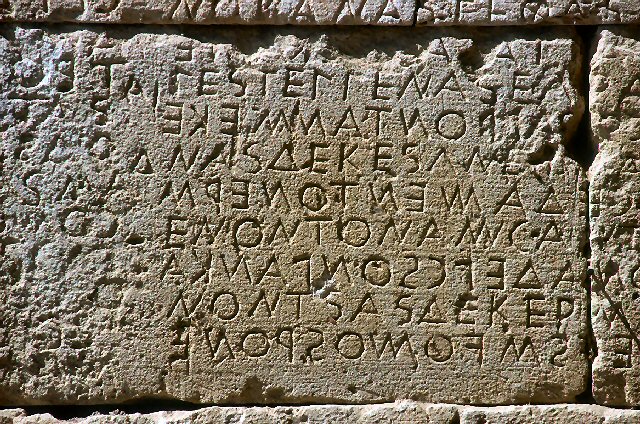
κοὐδὲν ἀνθρώπου δεινότερον πέλει.
Most of what we do as Classicists serves to answer what can be framed reductively as two entirely different questions: “What great things did these civilizations do?” and “What horrible acts did these civilizations commit and condone?”
My friend (and former professor) Rosanna Lauriola has addressed the second of these questions in a full codex treatment in Brill’s Companion to Episodes of ‘Heroic’ Rape/Abduction in Classical Antiquity and Their Reception
The book explores the treatment of sexual violence not just in the myths and formalized works of art produced in antiquity, but also in the various literary and artistic adaptations of these stories throughout the history of their reception. Being singularly unqualified to handle the material effectively myself, I have attached below an excerpt from Professor Lauriola’s introduction to the book. (Please note that this was taken from an early proof of the text, and so, while the footnotes have been included, page numbers are not provided.) I had never thought at all systematically about the treatment of sexual violence in the myths and literature of antiquity, and I found her book an essential guide to truly understanding the atrocity exhibition which the ancients left behind for us.
Introduction:
There should be a general understanding, at least for those in the field, about what classical myth is, however elusive the concept itself of myth might be. Classical myth refers to a corpus of significant stories (told and then written down by the ancient Greeks and Romans) which work as a reservoir of archetypal images and situations that explore and address the human condition in its complexity and variety of experiences, while expressing, at the same time, the values, the norms, and the concerns both of their natal and inheriting cultures.[1] Indeed, they are stories that encompass some sort of truth about human nature, which accounts for their survival and their suitability for being re-proposed and appropriated[2] over and over since antiquity. They have remained relevant to almost every era and culture because they are able to reproduce the cultural values required for their survival.[3] Hence, they are able “to still speak to us.”
In light of these common considerations, it is surprising that a particularly relevant theme, singularly pervasive in classical myth and literature, has received little consideration, at least until recently, or else, if any attention has been devoted to it, it has so far been mostly biased or narrow attention, as we shall see.[4] I refer to the motif of ‘heroic’ rape/abduction[5] of women – usually nymphs, heroines, even goddesses, but also mortal women – by the gods and the great heroes of classical myth.[6] After all, the “myth for all times,”[7] and “of superheroic proportions responsible for the fall of Troy,” i.e., the myth of the Trojan war, results from an act of abduction, controversial though it might be: the ‘abduction’ of Helen,[8] a Greek heroine whose birth is in turn the result of an act of ‘rape,’ i.e., the rape of her mother Leda by Zeus metamorphosed into a swan.[9] A ‘grand purpose’ is what ‘justifies’ the god in such an undertaking (!).[10] After all, a series of abductions/rapes of mythical women (Io, Europa, and Medea), climaxing with the aforementioned ‘abduction’ of Helen, significantly marks the opening of Herodotus’ Historiae (“The Histories” I, 1–5) to explain the origin of the war between the Persians and the Greeks.[11] And, if we are to look at the Roman reception of Greek myths by the most prolific poet to have drawn on those age-old stories, i.e., Ovid (1st century BCE–1st century CE), the motif of rape/abduction – and, more generally, of sexual violence – is the privileged one that informs his retelling. In his maius opus alone,[12] the Metamorphoses, the theme accounts for almost half of the poem’s tales.[13] What is more, perhaps not by accident, this same theme characterizes the very first Greek myth that Ovid retells, after the opening section pertaining to the creation of the world up to the flood and repopulation of our planet (Metamorphoses I, 1–433). It is the myth of Apollo and Daphne (Metamorphoses I, 438–567), which is a story of attempted rape.[14] Likewise significantly, another story of attempted rape, the story of Vertumnus and Pomona (Metamorphoses XIV, 623–772), closes the portion of the poem that is drawn from Greek mythology, i.e., the first 14 of the 15 books of which the Metamorphoses consists. Indeed, as the poet transitions from Greek themes to Roman themes at the end of this poem, stories involving the motif of rape/abduction slowly yield to historical stories devoid of sex and sexual violence.[15] Furthermore, this same motif is abundantly present in most of the other literary works of Ovid, namely Heroides, Amores, Ars Amatoria and Fasti.[16] There, too, expectedly, the related stories are mostly drawn from
Greek myths.
On these grounds, one might be tempted to look at the motif of rape/abduction as a ‘unique identifier’ of the world of Greek myth. After all, out of all the possible mythological scenes, why does a sexual pursuit and the maiden’s struggle to escape form the central image of the Greek artifact which the Romantic poet John Keats (1795–1821) describes in the incipit of his ode On a Grecian Urn?[17] That is, why is rape/abduction the figure of choice of this poet to evoke ancient Greek imagery? At the very least, this, too, gestures towards the pervasiveness of the motif, which might disguise a specific mindset, an enduring one, as seeds of contemporary attitudes toward rape can be already seen in ancient Greek myth and literature.[18]
Yet, as I have suggested above, this pervasive, unique, and thus typical motif received little attention in itself, until a few decades ago.[19] While it was touched on in the general scholarship pertaining to women, gender and sexuality from the late ‘70s on,[20] it started receiving more attention from the late ‘80s through the ‘90s,[21] until it became, from the late ‘90s to our 21st century, the central topic of some monographs. Such is the case, for instance, of Rape in Antiquity by S. Deacy and K. F. Pierce (1997), which constitutes a landmark in the history of the classical studies on this topic.[22] Even more recently, it has become one of the most frequent topics of a series of academic papers and Master’s or Ph.D. theses that deal mostly with the corpus of Ovid’s works, with a preference for the Metamorphoses,[23] and often participate in a discourse which might be of more topical relevance for a specific geographic area where the heritage of classical antiquity has taken root, although it should be of global concern, for rape is a burning, live issue of the human condition. I refer to North America, more particularly to the United States, where the rape rate is extremely high above all on college campuses,[24] i.e., in a place in which people are far more likely than elsewhere to be exposed to the study of works that belong to our classical heritage, Ovid in primis.[25] Indeed, in 2004, at Mills College, a small liberal art school for women in the San Francisco Bay area (California), a student of an Ancient Myth course “transformed a Classic,” namely Ovid, by shocking her professor, M. Kahn, with a question that would surprise all of us, at least on a general basis.
Why have you assigned a handbook on rape?[26]
This was the startling question that the student posed, referring to Ovid’s Metamorphoses. Besides challenging the professor’s perfectly good reasons for assigning that poem in a Classical Mythology class, such a question was most of all challenging the conventional and traditional view of Ovid’s Metamorphoses as a compendium of myths about the mutability of human nature (cf. Metamorphoses I, 1–2) and the fickleness of the gods, all informed by some wry overtones. The student was providing a far different perspective, one that – we should admit – has been glossed over for centuries, one that would have resonated more with her own reality, for “rape forms part of the realities of college life,”[27] just as it was, indeed, part of ancient women’s realities, a part which they might have liked to denounce, had they had a voice.
That student’s perspective reveals the way she, and many others, read the Metamorphoses, i.e., the way she ‘received’ the text, unconsciously applying one of the cornerstones of reception theory, according to which reading is not exclusively a matter of discovering what a text means; it is also a matter of discovering what it means to you, i.e., a process of interpretation,[28] appropriation, and adaptation.[29] Like the authors in their writing process, so the readers, in their reading process, are shaped and influenced by their own cultural context, which makes the analysis of the age-old stories of rape/abduction, in their own time and in their reception, even more particularly challenging, considering how elusive the concept itself of rape was and still is.[30] Yet, as we shall see, namely starting from those age-old stories it is possible to identify an almost unbroken and consistently operative existence of some specific features connoting the occurrences of rape, past and present, above all in terms of stereotypes, prejudicial attitudes, societal mindset, and the silencing of women.[31] It is, indeed, a continuity that has proven to be prominently at the woman-victim’s expense, as an erasure of the female subjective experience of rape/abduction characterizes, almost indifferently, both past and present. This ‘continuity at the woman-victim’s expense’ calls for a deeper analysis of those stories, both in their own context and in their reception, with a focus on the woman’s perspective. The intention is to uncover female subjectivity, which means to recover women, their feelings and their unheard voice in their experience of the “greatest sorrow possible,” as rape was once fairly defined.[32] Such a “sorrow” has been glossed over, practically always, by the traditionally male ways of seeing, as mirrored in the male-authored texts on which we mostly depend;[33] very often, that very “sorrow” has been additionally downplayed either by the sporadic analysis of the reception in art of some of those stories – as will be seen – or by the more specific studies of the topic in antiquity, mostly concerned with the legal issues and social perceptions that would account for all but the victim’s subjective viewpoint.
The present analysis consists of a study of some paradigmatic cases, episodes of those ancient stories of rape/abduction from this often-neglected and “forgotten”[34] subjective viewpoint and experience, the woman-victim’s one, which is what ‘spoke’ to that student of Mills College.[35] The aim is to approach those stories in a way that allows space for women, to let them set their voice free, and speak out despite the male authorial intentions and the mostly male-oriented conventional reception. The undeniably disturbing overtone characterizing myths of rape/abduction might have played a role in overlooking them for what those stories really are, i.e., cases of rape, generating a conveniently sanitizing reading which has even reinforced the male ways of seeing and has, subsequently, devalued the female’s subjective experience, including her emotional trauma.[36] It is my intention to recover this perspective and apply it to the selected episodes, which may constitute a paradigmatic sample for the whole complex narrative of rape/abduction in classical antiquity and beyond.
[1] I broadly built my definition of myth on the discussion of Zeitlin (1986) esp. 123–124. As for the inheriting cultures, I am intentionally avoiding the traditional label “Western” in the wake of the recent discourse about how using the expression ‘Western Civilization’ is inadequate and inappropriate: on the matter, see, e.g., Appiah (2016), Futo Kennedy (2017); contra Kierstead (2019a; 2019b), and Canfora – Rebenich (2021). Cf. also below, n. 000. I subscribe to the idea that there are values and concerns basic to human condition, which are thus independent from any particular ethnicity and do not constitute the ‘birthright’ of any specific culture. I see classical mythology also as a repertoire of archetypes that express what is basic to the human condition, independently from the specificity of a culture. Such is the case with rape and all it involves.
[2] I am aware of the elusive nature of the various terms belonging to the specific vocabulary of a field that plays a major role in this section and in the whole volume, i.e., Classical Reception Studies. Throughout this work, out of the several, and, at times, overlapping terms describing the types of reception which have taken place, I shall mainly use three specific, and most commonly used, words (with their related verbs), according to the definition provided by Hardwick (2003: 9–10), namely: Adaptation – a version of the source developed for a different purpose or insufficiently close to count as a translation; Appropriation – taking an ancient image or text and using it to sanction subsequent ideas or practices (explicitly or implicitly); Refiguration – selecting and reworking material from a previous or contrasting tradition. Where I deem it appropriate, I shall use a few additional and new terms, as provided through a new methodology recently applied to reception studies, a methodology called ‘transformation theory’: see Abbamonte – Kallendorf (2018) 9–12; Baker (2018) 13–20, on which below, n. 000.
[3] See also Zeitlin (1986) 124.
[4] “Little consideration” or “biased/narrow attention” compared to other motifs that have been historically explored for a long time. Unsurprisingly, adequate focus and emphasis started being put on women-related matters only with the rise of the feminism movement in the 1970’s (see below, 000). Yet only recently has the specific subject matter of rape been given due attention, and, additionally, in terms of a pedagogical discourse. About this, see more below, 000.
[5] I intentionally use this terminological “dyad” (rape/abduction) for, as I shall detail below, the ancient vocabulary related to the topic is quite ambiguous, to say the least. For details regarding this “dyad” and, additionally, its connotation as ‘heroic,’ see below, 000.
[6] The magnitude of this often-disregarded topic is such that it would require perhaps a multivolume work to cover and discuss all the cases. For the different scope of the present volume, and, subsequently, the space accordingly reserved for this section, I had to select only a few stories and specific characters, yet ones capable of providing a ‘big picture.’ On my selection and related rationale, see below, 000. As for the pervasiveness of this motif, see, e.g., Zeitlin (1986) 122–123; Rizzelli (2012) 317 with n. 54; also, below, 000.
[7] Easterling (1997) 173.
[8] The quotation is from Brownmiller (1975) 284. The case of Helen’s abduction is a
controversial one because of the contradictory ancient accounts of the story where, sometimes, she appears as a victim (more precisely of Aphrodite’s manoeuvres), and, other times, as a willing and consensual accomplice. Indeed, hers can be seen as a paradigm of the ambiguity characterizing the literary and artistic renditions of stories of heroic rape/abduction as far as the woman’s role, i.e., ‘her will/consent,’ is concerned, an ambiguity – I would venture to suggest – which is well reflected in modern narratives of rape today. I shall discuss later, at length, this problematic with reference to the ambiguous ancient terminology and stories (see below, 000). As for Helen’s case, a good overview and discussion through all the literary renditions of her story is in Rizzelli (2012) 317–326. See also Morales (2016), with a focus on the late epic poet Colluthus’ Abduction of Helen.
[9] For sources about this case of rape, see below, 000. According to a variant of this traditional myth, Helen was in fact the result of Zeus’ rape of the goddess Nemesis. Trying to escape Zeus’ assault, Nemesis turned herself into a goose, but vainly, for Zeus turned himself into a swan in order to still possess her. Upon this union, Nemesis delivered an egg; abandoned in a wood, a shepherd found it and brought it to his queen, Leda, who preserved the egg in a casket until it hatched, giving birth to Helen. Leda thus fostered Helen as her daughter: on this variant, see, e.g., Pseudo-Apollodorus, Library III, 10. 7; Pausanias, Description of Greece I, 33. 7.
[10] As I shall discuss in greater depth later, the ‘grand purpose’ motif is the crucial key, or, at least, one of the most crucial keys, of the ‘sanitizing’ view of rape in antiquity, a view that proves to be the ‘canonical’ view: see more below, 000.
[11] In the opening of his work, Herodotus reports the Persians’ version about the remote cause of the recent conflict between the Greeks and the Persians (449–448 BCE): Persian learned persons (Herodotus, Historiae I.1) say that it all started with the Phoenicians’ abduction of a Greek princess, named Io, to which the Greeks responded by abducting the Phoenician princess Europa, so that “the account between the two was balanced” (Herodotus, Historiae I, 2.1). But later on, the Greeks were the ones who committed a second wrong as, on the occasion of some business in Aea, a city of the Colchians, they abducted the King’s daughter, princess Medea (Herodotus, Historiae I, 2.2). To this abduction, in the second generation after this, Paris Alexander, son of Priam of Troy, responded by getting himself a wife from Greece, by capture: he in fact carried off Helen (Herodotus, Historiae I, 3.1–2). Hence the Trojan war took place, and, in the Persians’ opinion, it was the taking of Troy which began their hatred of the Greeks (Herodotus, Historiae I, 5.1). But – Herodotus adds – the Phoenicians have a different story about the very first case, i.e., Io’s abduction, for they tell that she sailed with the Phoenicians of her own accord (Herodotus, Historiae I, 5.2): on this version of the story, see also below, 000. The motif of rape is a recurrent topic in Herodotus’ work, although “not a topic addressed directly or consciously”: Harrison (1997) 187. On the Herodotus passages summarized above, with an attention to the terminology of rape/abduction, see Walcot (1978) and my analysis below, 000. On Herodotus’ idea of rape, as “an amalgam of conscious and unconscious attitudes and preconceptions” that would mirror a “coherent body of impressions” that the Greeks had about rape, see Harrison (1997; the quotations are from p. 187 and p. 188).
[12] As Ovid himself called his Metamorphoses: Ovid, Tristia II, 63.
[13] Including attempted rapes, according to Matz’ calculation, the motif is present in 52 out of 104 tales: Matz (2017) 50. This number is consistent with the one previously provided by Curran (1984: 263), who talks of “some fifty or so occurrences of forcible rape, attempted rape, or sexual extortion hardly distinguishable from rape”; similarly, Richlin (2014) 134. Other scholars have attempted to literally count the number of stories of rape spread throughout the Metamorphoses. The numbers provided remain high, but they are not consistent; the scholars are not explicit regarding the criteria for their calculations, although – based on tables and/or statements they sometimes offer – they tend to include ‘everything,’ meaning: attempted rape, homosexual rape (as is the case with Zeus and Ganymede: Metamorphoses X, 155–161), and more generic ‘sexual assault.’ For instance, Champanis (2012: 119–122) provided a well organized “Table of Rapes in The Metamorphoses” where I can count 40/41 cases (40 if I exclude the second mention of Europa’s story occurring in the description of Arachne’s tapestry in Metamorphoses VI, 103–128); Marturano (2017), on whose work I shall focus later, kindly shared with me a draft list of all the rape stories in Ovid’s Metamorphoses, a list that she compiled to elaborate her related MA thesis: in Marturano’s list I count ca. 47 cases, including what Marturano labels as: “possible rape” (namely, the episode of Apollo and Hyacinthus: Metamorphoses X, 162–219), “sexualized violence against Scylla by Circe” (Metamorphoses XIV, 1–74), and the “Sybil’s description of her rape by Apollo to Aeneas” (Metamorphoses XIV, 129–153), all of which are not present in Champanis’ table. Exceptionally, Murgatroyd (2000: 75) talks of 19 in the Metamorphoses, without providing any comment which could have helped us to understand what he has included and what not. On the pervasiveness of this motif in Ovid’s whole corpus, see below, nn. 16–17.
[14] See below, 000.
[15] Matz (2017) 50–51: this scholar notes that the metamorphosis linked to the rape motif is replaced “with a flurry of apotheoses” in the last two books of Ovid’s poem, where in particular male members of the Julio-Claudian line are the ones being apotheosized.
She argues that two out of the three male apotheoses occurring in the last two books of the poem, namely Romulus’ and Julius Caesar’s apotheoses, are however “modeled after the rapes of the earlier books and should be interpreted in the context of Ovid’s many rape scenes in his epic.” A relationship between violence, including rape, and apotheosis has been investigated with a focus on Ovid’s Fasti by Beek (2015), on which see also
below, n. 17.
[16] While the majority of scholars who have occupied themselves with the rape motif in Ovid have focused on the Metamorphoses, to my knowledge Marturano (2017) is the only one who has fully investigated the theme in the whole Ovidian corpus, from a specific perspective which I shall detail later: see below, 000. Based on the aforementioned shared list (above, n. 14), it is possible to approximately identify the following numeric occurrences, which range from mere, yet significant, hints/mentions or imagery to detailed accounts of rape: ca. 5 in Heroides, ca. 17 in Amores; ca. 6 in Ars Amatoria; ca. 15 in Fasti (for Metamorphoses, see above, n. 14). In her 462-page MA thesis, Marturano covered almost all of them, also adding a section about “Images of sexualized violence in Ovid’s Exile poetry.” A few other scholars have, however, expanded their investigation of the motif from the Metamorphoses to Ovid’s other works. Such are the cases of the following studies, to mention the major ones (in chronological order): Murgatroyd (2005), who focused on Fasti, has analyzed the 11 rape narratives that he counted, out of the 58 mythical and legendary passages present in Fasti (ca. 5%): Murgatroyd (2005) 63 with n. 2; Hejduk (2011), who, after a quick overview of stories of rape in Fasti, mainly focused on 2 ‘rape scenes’ in the 2nd book of the poem (i.e., Faunus’ rape of Omphale, and Sextus Tarquinius’ rape of Lucretia); Champanis (2012), who, in her work on the motif in Ovid’s Metamorphoses (see above, n. 14), devoted a chapter to cases of rape in Fasti and Ars Amatoria; Richlin (2014: 145–149, and 150–154), who discusses 2 stories in Ars Amatoria (“The Rape of the Sabines,” and “Achilles and Deidamia”) and 3 specific stories of rape in Fasti, out of the 11 that she, too, has identified in this poem, 3 cases that she labels as “comic rapes” (namely: “Priapus and Lotis,” “Faunus and Omphale/Hercules,” and “Priapus and Vesta”); last but not least Beek (above n. 16), who, in her thesis on the relationship between violence and apotheosis in Fasti, devoted a long section to the analysis of rapes (namely apotheosis via rape) in this poem (Beck [2015] 119–176).
[17] See Zeitlin (1986) 122–123. As we shall see, pursuing/chasing a maiden is the typical prelude to rape/abduction: below, 000. On the typical setting of sexual pursuit, which usually includes a meadow, or a nearby wood, see also below, 000.
[18] As I shall mention later, with some more details (below, 000), rape is also a topic particularly recurrent in Greek New Comedy, mainly in Menander (4th–3rd century BCE), and in his Roman counterparts, Plautus (3rd–2nd century BCE) and Terence (2nd century BCE), which contributes to proving the pervasiveness of this motif in classical literature, a pervasiveness that – as we shall see – mirrors specific social concerns.
[19] The silence surrounding this specific topic, and, subsequently, its consistently being downplayed and overlooked in the long-established tradition of the study of the classical world is, ultimately, a result of a likewise long-established ‘sanitizing’ attitude that has been displayed toward rape: it is something disturbing, something that would ‘stain’ the grandeur of certain poetry and art (cf. similar considerations in Richlin [2014: 134]). The ‘sanitizing’ attitude and approach to rape will be one of major topics of my analysis, for which see below, 000.
[20] Of course, as hinted at above (n. 5), which happened in the wake of the feminist movement. The very first major history of rape, and pioneering study, resulting from the rising of the feminist movements, is the still-influential book of Susan Brownmiller Against Our Will: Men, Women and Rape (1975): the author does mention the issue with reference to antiquity, but she touches on the topic mostly en passant, mentioning a few well-known cases, without offering any analysis (1975: 283–284). Some years later, Tomaselli – Porter’s historical and cultural inquiry into rape appeared (1986), which includes an entire chapter discussing rape in Greek myth by the aforementioned classicist Zeitlin (see above, n. 1). See also below, n. 22.
[21] In the ‘90s there is, indeed, a considerable increase both of feminist approaches to the Classics in general, with Rabinowitz – Richlin (1993) marking a significant milestone, and of investigations concerning specific gender/women-related issues in antiquity, including sexuality, pornography, and rape: to mention a few, see, e.g., Richlin (1992), with a chapter devoted in particular to Ovid’s rapes (reprinted in Richlin 2014; as I did above, hereafter I shall always refer to the 2014 reprint); Laiou (1993), with a chapter specifically devoted to seduction and rape in Greek myth, written by Lefkowitz (= Lefkowitz [1993] 17–37); Stewart (1995); Rabinowitz (2011: esp. pp. 1–7); and James (2018), with a specific focus on the pedagogy of Latin literature dealing with the motif of rape (on which, also below, n. 29). The bibliography is obviously wider than the one I can give as a paradigmatic sample. More will be cited as the discussion moves forward. For an in depth-review of the milestones of classicist feminists, outlining the developments in the field in the recent decades, see Gold (2018) at: https://medium.com/cloelia-wcc/twenty-five-years-of-feminist-theory-and-the-classics-now-what-487afefe83f8.
[22] It is worth noting that to mark the 20th anniversary of the first edition of this book, which remains an example of an innovative approach to the theme, in 2017 the University of Roehampton (London – UK) organized a new conference, similar to the one held in 1994 (Cardiff University, Wales – UK) on which the book was built. The conference booklet is available online, in PDF format, at https://www.academia.edu/33670918/Rape
_in_Antiquity_20_Years_On_-_22-23_June_2017_Conference_Booklet.
[23] See above, 000. For more discussion, also, below, 000.
[24] The statistics are really concerning, both in general and in particular, in college campuses, where rape is almost ‘epidemic.’ According to the website of the US’ largest anti-sexual violence organization RAINN (“Rape, Abuse & Incest National Network”), founded in 1994, “1 out of every 6 American women has been the victim of an attempted or completed rape in her lifetime,” (i.e. ca. 16.6%); 82% are girls or young women; the age group at elevated risk is 18–24; women, age 18–24, who are college students, are three times more likely than women in general to experience sexual violence (https://www.rainn.org/statistics/victims-sexual-violence). Indeed, according to some studies and statistics provided by the website of a new organization founded in 2000, i.e., the NSVRC (“National Sexual Violence Resources Center”: https://www.nsvrc.org/statistics), under the entry “Sexual Violence and College Campuses,” one can read: “In the late 2000s and early 2010s, a commonly cited prevalence rate for college women [undergraduate students who experienced episode of sexual violence] was one in five”; through more specific analysis, it was also found that “one in five undergraduate college women is sexually assaulted” was a “reasonably accurate average”: Muehlenhard – Peterson – Humphreys – Jozkowski (2017). Unfortunately, on the same website new alerting data are reported, as it states: “The 2019 Campus Climate Survey on Sexual Assault and Misconduct prepared for the Association of American Universities, updating a 2015 study of the same name, found that sexual assault and misconduct at 33 of the nation’s major universities was almost one in four undergraduate women”: Cantor – Fisher et all. (2019). Although such a high rate of rape among college students seems to be peculiar to U.S. campuses, the situation is concerning elsewhere, as well. Confining ourselves to a few other countries, see, e.g., Brennan – Taylor-Butts (2008) for Canada; Reynolds (2018) for the UK.
[25] It must be noted that Ovid, and particularly his Metamorphoses, is standardly present in the academic curricula of American institutions of High Education, from Latin language classes to more generic Ancient Civilization or Classical Mythology courses in translation.
[26] The quotation is from Kahn (2005) 1, i.e., from the opening page of her book where she expanded the discussion that she gave in a previous paper (Kahn: 2004). It is through the paper, indeed, that, at first, Kahn set in motion the whole reconsideration of the teaching of Ovid’s Metamorphoses, based upon the question of her student. It is also from Kahn’s paper that I borrowed the expression “transformed a Classic.”
[27] It should be noted that, very probably following on from the observation of the Mills College student and the ensuing reflections of her professor, M. Kahn, rape in classical antiquity, with a very major focus on Ovid’s Metamorphoses (see above, n. 14 and n. 17; also below, 000), has become the subject of pedagogical essays, in turn mostly based on lectures, projects, and students’ responses to them, included both in general courses either of Latin Literature or Ancient Civilizations/History (with the case of Lucretia being the most ‘in the spotlight’), and in more specific ones on ancient authors, such as Ovid, in primis, but also Greek and Roman New Comedy. Besides James (2018), on which above, n. 23, to mention a few, such is also the case of Lauriola (2011); Widdows (2011); Wardrop (2012); Gloyn (2013); Hong (2013); Lauriola (2013) – the last three being the result of speeches delivered in the very first panel devoted to the teaching of difficult topics, with a focus on rape, held by the then-APA 2010 National Convention at Anaheim (CA); James (2014); Thakur (2014); Hales (2018). Recently the issue has been debated with reference to secondary Classics classrooms as well: see, e.g., Hunt (2016).
[28] Eagleton (1996) 74.
[29] For this vocabulary, see above, n. 3.
[30] I shall later focus on the terminological and conceptual matters: see below, 000.
[31] For more details, see below, 000.
[32] Douleur sur toutes autres: such is the way in which the prolific and versatile medieval French poetess, and first female professional writer, Christine de Pizan (1364–1430) defined ‘rape’ in her well-known book Le livre de la cité des dames (“The Book of the City of Ladies”: ca. 1405) (Part II, section 44.1), while defending women from the stereotypical assumption they “they like to be raped.” On de Pizan’s engagement with, and rewriting of, classical mythology with such progressive (for her times) discussions and views about women and about rape see, e.g., Wolfthal (1998), on which below, 000. For more details about de Pizan’s handling of ‘heroic’ rape, below, 000.
[33] On this issue, see, e.g., Gold (1993) 76–78 who, in a way, summarizes the debate, begun in the early ‘90s, about the validity of using the canonical texts, which are basically male-authored texts, as a record of ancient women’s real experiences. About this debate, see, e.g., Culham (1990), Gamel (1990), Keuls (1990), Richlin (1990): all of them discuss this specific issue with reference to Ovid, as their contributions belong to the Helios vol. 17 (1990) devoted to “Reappropriating the Text: The Case of Ovid,” and offering a reading of Ovid from a feminist viewpoint. On a similar issue, see also below, 000.
[34] About the meaning I gave to the title of the entire section, see above, 000.
[35] With this said, by no means I am implying that the reading of Ovid’s Metamorphoses prompted that specific reaction in the aforementioned student because she might have been a rape victim. Ovid’s Metamorphoses ‘spoke’ to that student in that way because she was familiar with the college campuses’ rape issue and the related rape culture that dismisses the victim’s viewpoint. On the rape culture and its roots in the classical antiquity, see below, 000. Also on college students’ reactions to the reading of Ovid’s Metamorphoses, more recently see Waldmann (2018).
[36] I shall discuss later, in detail, the tendentiously sanitizing approach to stories of rapes, in poets, artists and subsequent re-interpreters/adapters: below, 000.
[37] I shall discuss this work’s objectives and my perspectives in more depth below (see, p, 000), by also recalling and outlining some very recent preview studies which adopt a similar approach, although they mostly confine themselves to Ovid’s works, in particular to his Metamorphoses: see, in fact, above, n. 14 and n. 17.
Like this:
Like Loading...