Throwing Some Homeric Shade: Sparta is Teucer to an Athenian Ajax

Aelius Aristides, Panathenaic Oration, 282-285

“But [the Spartans] dealt with those who entrusted their safety to them so that they defended themselves best of all people against those charges which at certain times were brought against our city. The explanation for this is not their savagery nor any of those common things which one might easily say to fault them, but the basic failure of their nature to measure up to ours. While the Athenians, furthermore, were in control for more than 70 years, the Spartans could not even hold their empire for three Olympiads. And this would not have even been a true statement if they had not taken over while the first Olympiad period ongoing!

This is why I get annoyed at those who want to compare the two cities. I might in fact seem strange to some of you in criticizing them and then proceeding to do the same thing myself all while saying these things for the very same reasons that I claim they shouldn’t be said. But this illustrates clearly that whatever favor they believe they bestow on the city is not at all remarkable and that these sorts of arguments are not be made freely. So, if someone thinks that I should not have said these things, this is why I said them. In addition, these statements were made without personal attack and because of a pressing need—for there was no other way to show what I wanted to and I was compelled to say what I said for the very reasons I tried not to.

For the Spartans seem to me to have suffered in comparison to this city what Teucer did from Ajax at Homer’s hands. For Teucer retreats to Ajax when he risks his life in front of the rest and at the same time is famous and then sullied by this. In the same way, the Spartans, who stood in front and endangered themselves for the Greeks in a time of need, are still children when compared to our city.”

οἱ δ’ οὕτω τοὺς παραδόντας αὑτοὺς διέθηκαν ὥστε κάλλιστ’ ἀνθρώπων ἀπελογήσαντο ὑπὲρ τῶν κατὰ καιρούς τινας αἰτιῶν γενομένων παρ’ ἐνίων τῇ πόλει. αἴτιον δ’ οὐκ ὠμότης οὐδ’ ἅ τις ἂν φαίη τῶν ῥᾳδίως εἰωθότων ἐπιτιμᾶν, ἀλλὰ τὸ μὴ ἐξικνεῖσθαι τὰς φύσεις ἄχρι τοῦ ἴσου. καὶ μὴν οἱ μὲν πλέον ἢ ἑβδομήκοντα ἔτη κατέσχον, οἱ δ’ οὐδ’ εἰς τρεῖς Ὀλυμπιάδας διεφύλαξαν τὴν ἀρχήν. οὔκουν ὡς ἀληθῶς ἄλλως γε ἂν εἴη, εἰ μὴ τὸ πρῶτον Ὀλυμπίων προσαγόντων παρέλαβον.

ταῦτ’ ἐστὶν ἁγὼ τοῖς παρεξετάζειν βουλομένοις ἄχθομαι. ἴσως μὲν οὖν κἀγώ τισι ποιεῖν ἄτοπον δοκῶ, μεμφόμενος μὲν, αὐτὸς δ’ εἰς τοὺς ὁμοίους λόγους προεληλυθώς, καὶ δι’ αὐτά γε ταῦτ’ εἰρηκὼς αὐτοὺς δι’ ἅ φημι δεῖν μὴ λέγειν. οὐ μὴν ἀλλ’ ἐξ αὐτῶν τούτων καὶ μάλιστ’ ἄν τις κατίδοι ὡς οὔτε ἡ χάρις θαυμαστή, ἣν οἴονται τῇ πόλει κατατίθεσθαι, οὔτ’ ἐξεπίτηδες τά γε τοιαῦτα ἀγωνιστέον. ὥστ’ εἴ τις ἀξιοῖ καὶ ἡμῖν ἄρρητα ταῦτ’ εἶναι, σχεδὸν τούτου χάριν εἴρηται. χωρὶς δὲ τούτων ἄνευ βλασφημίας οἱ λόγοι γεγόνασι καὶ τῆς παραπεσούσης χρείας ἕνεκα. οὐ γὰρ ἦν ἄλλως ὃ προειλόμην ἀποδεῖξαι, ὥστ’ ἐξ ὧν ἔφευγον, ἐκ τούτων προήχθην εἰπεῖν.

δοκοῦσι γάρ μοι Λακεδαιμόνιοι τὸ τοῦ παρ’ Ὁμήρῳ Τεύκρου πρὸς τὸν Αἴαντα πεπονθέναι πρὸς τὴν πόλιν. καὶ γὰρ ἐκεῖνος τῶν ἄλλων προκινδυνεύων ὡς τὸν Αἴαντα ἀναχωρεῖ καὶ δι’ ἐκείνου φαίνεται, ὡς δ’ αὕτως καὶ κρύπτεται, καὶ Λακεδαιμόνιοι οἱ τῶν Ἑλλήνων προέχοντες καὶ προκινδυνεύοντες ἐν ταῖς χρείαις παῖδες τῇ πόλει παραβαλεῖν εἰσίν.

Image result for teucer and ajax
Statue of Teucer by Sir William Hamo Thornycroft

He Really Thought in Greek

Rudolf Pfeiffer, History of Classical Scholarship 1300-1850 (Chp. IX):

“When Robert Étienne died in 1559 in Geneva, the press passed to the eldest of his children, Henri (who was born probably in Paris in 1531). Latin was, we may say, his mother tongue; he learnt Greek as a child and at the age of eleven attended the lectures of the great classical scholars at the Collège Royal. The forties of the sixteenth century were just the age of that passionate Grecism in France which we have tried to describe; Henri Étienne was imbued with the deepest love of the Greek language and became incredibly familiar with its idiom. He really thought in Greek and could speak it; to him it was simply not a foreign language at all. In this respect he was, as far as I can see, unique. He was indeed not an ordinary academic grammarian or critic, but a great adventurer in the field of Greek scholarship.”

[…]

For Henri Étienne was neither truly critical nor careful, and had neither the sense of poetry nor literary taste. That is the flaw in the work of this passionate genius. His prefaces are full of personal remarks and would provide ample material for an extensive authoritative biography.”

Image result for Henri Estienne greek latin

A Program for Historical Reading

Aeneas Silvius Piccolomini, de Liberorum Educatione:

“Boys should also read the historians such as Livy and Sallust, though they may need to be further advanced in order to understand them. Justin and Quintus Curtius and Arrian, whom Petrus Paulus translated are true, and not fantastic stories. They ought to run through the deeds of Alexander. Valerius, the historian and philosopher, is not unworthy to be joined with these. But Suetonius ought not to be entrusted to boys. History may also be received with no small profit from the books of Kings, Maccabees, Judith, Esdra, Esther, the evangelists, and the Acts of the Apostles. ‘For history’, as Cicero says, ‘is a witness to the times, the light of the truth, the instructor of life, the messenger of antiquity.’ It is most useful, therefore, to have read as many histories as possible and to exercise oneself in them, so that you might know from the example of others how to pursue what is useful and avoid what is harmful. I would not, however, have you occupied with excessive labor, but it is enough to have learned the histories related by famous authors.On no account, if it were up to me, would I let the histories of the Bohemians or the Hungarians be given to a boy. For they are written by the uneducated, they contain a number of imbecilities, many lies, no notable thoughts, and no ornamentation. For, as Pliny says, ‘no book is so bad that some good may not be taken from it’, and on that account appears willing to grant anything written a reading over, the thought really ought to apply to those who are already learned, and not to children. For, unless children are steeped from the beginning in the best examples, they will never be able to attain good sense.”

piccolomini1

How Does Learning Accents Help Your Soul?

Cicero to Atticus 31 May 45 (12.6)

“I now turn to Tyrannio. Do you really do this? Was this true? There without me? And this when I so many times did not go without you even though I had the ability. How will you make this up to me? There is one way, clearly, if you send me the book which I ask again that you should send  to me. Even if the book itself will not delight me any more than your admiration of it.

I adore the man who loves every kind of learning and I am truly happy that you cherish so refined a course of study. But this is completely you. For you are passionate to learn, the only thing which feeds the mind. But, I must ask, what impact does this ‘grave’ and ‘acute’ stuff have on the pursuit of the highest good?”

Venio ad Tyrannionem. ain tu? verum hoc fuit? sine me? at ego quotiens, cum essem otiosus, sine te tamen nolui! quo modo ergo hoc lues? uno scilicet, si mihi librum miseris; quod ut facias etiam atque etiam rogo. etsi me non magis ipse liber delectabit quam tua admiratio delectavit. amo enim πάντα φιλειδήμονα teque istam tam tenuem ϑεωρíαν tam valde admiratum esse gaudeo. etsi tua quidem sunt eius modi omnia. scire enim vis; quo uno animus alitur. sed, quaeso, quid ex ista acuta et gravi refertur ad τέλος?


Cicero seems to have his finger on a Senecan pulse here:

Seneca, De Brevitate Vitae 13

“This sickness used to just afflict the Greeks, to discover the number of oars Odysseus possessed, whether the Iliad was written before the Odyssey, whether the poems belong to the same author, and other matters like this which, if you keep them to yourself, cannot please your private mind; but if you publish them, you seem less learned than annoying.”

Graecorum iste morbus fuit quaerere, quem numerum Ulixes remigum habuisset, prior scripta esset Ilias an Odyssia, praeterea an eiusdem essent auctoris, alia deinceps huius notae, quae sive contineas, nihil tacitam conscientiam iuvant sive proferas, non doctior videaris sed molestior.


Seneca, Moral Epistle 108

“But some error comes thanks to our teachers who instruct us how to argue but not how to live; some error too comes from students, who bring themselves to teachers not for the nourishing of the soul, but the cultivation of our wit. Thus what was philosophy has been turned into philology.”

Sed aliquid praecipientium vitio peccatur, qui nos docent disputare, non vivere, aliquid discentium, qui propositum adferunt ad praeceptores suos non animum excolendi, sed ingenium. Itaque quae philosophia fuit, facta philologia est.

Burney_ms_108_f060v
Burney MS 108, f. 60v. (from this site)

Latin Scholarship and MURDER

Rudolf Pfeiffer, History of Classical Scholarship 1300-1850 (Chp. II):

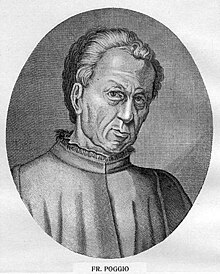
“Poggio never strove after a Ciceronian style or even a grammatically correct Latin; he treated Latin as if it were a living language, and because of that we see him in the last years of his life at feud with the leading spirit of the next generation, Lorenzo Valla.

One day in 1451 Poggio found in a copy of the collection of his letters to Niccoli, of which he was very proud, some critical and ironical comments upon his Latinity, scrawled in the margin by a pupil of Valla’s; he got so angry with Valla, whom he suspected of being the author, that he tried to have him murdered, a dramatic refutation, had he succeeded, of Schopenhauer’s saying that ‘the history of . . . learning and art’ (in contrast to the universal history of the world) ‘is always going on . . . guiltless and without bloodshed.’ But Poggio finally confined himself to a form of retaliation more appropriate in a scholar, a literary invective. Valla, no less pugnacious, replied, and a war of pamphlets, five from each side, ensued, the arguments of which were of a general importance far beyond the trivial cause.”

Image result for poggio vs vallaImage result for poggio vs valla

Work Words

Zenobius 3.71

“To dance in darkness”: A proverb applied to those who toil over unwitnessed things—their work is invisible.”

᾿Εν σκότῳ ὀρχεῖσθαι: ἐπὶ τῶν ἀμάρτυρα μοχθούντων, ὧν τὸ ἔργον ἀφανές.


Plutarch, Perikles 1.4 5-6

“Often and quite contrarily, we look down on a laborer while delighting in his work.”

πολλάκις δὲ καὶ τοὐναντίον χαίροντες τῷ ἔργῳ τοῦ δημιουργοῦ καταφρονοῦμεν


ἐργάνη: worker

ἐργασία: work, labor

ἐργαστήρ: worker

ἐργαστηριάρχος: work-leader

ἐργαστήριον: a workplace

ἐργαστικός: able to work

ἐργαστῖναι: girls who make the peplos for Athena

ἐργατεία: work, labor


Arsenius, 13.49a

“Not even time, the father of everything, can make an end of labors.”

 Οὐδ’ ἂν χρόνος ὁ πάντων πατὴρ δύνατο θέμεν ἔργων τέλος.


ἐργάτησιος: income-earning

ἐργάτης: workman

ἐργάτις: workwoman

ἐργοδιώκτης: task-master

ἐργολαβία: contract for work

ἐργοπαρέκτης: employer

ἐργόχειρον: manual labor

ἐργώδης: irksome, troublesome

μίσοεργος: hating work, lazy

φιλοεργός: fond of work, industrious


Hesiod Works and Days, 289-90

“The gods made sweat the price for virtue.”

τῆς δ’ ἀρετῆς ἱδρῶτα θεοὶ προπάροιθεν ἔθηκαν / ἀθάνατοι·

Image result for ancient greek harvest vase
The “Harvesters vase” from Agia Triada ( 1500-1400 BC). Heraklion Archaeological Museum

Leonardo Bruni Mansplains Ancient Literature

Leonardo Bruni, de Studiis et Litteris 28-29:

“I would not want to press the point too much, yet I would yield some of my right since I am writing to a lady. I confess, then: just as the people are divided into nobility and plebeians, so among poets there are certain grades of dignity. If, therefore, something is published by a comic poet and not glossed over with a sufficiently decent argument, or if a satirist rails on a little too openly about vice, a lady should not read or even look at their books! They are, as it were, the rabble of the poets. But, if she doesn’t read those aristocrats of literature – I mean Vergil, and Seneca, and Statius, and the rest of that sort – she should know that she is missing the greatest ornament of literary study. Nor can she hope to attain the best if she is lacking it.

On the whole, that superlative excellence about which I write does not come to anyone except through a knowledge of many different things. Therefore, one should have seen and read many subjects, and applied considerable labor to the study of philosophers, poets, orators, historians, and all other writers.”

Image result for leonardo bruni

Sed ne pertinax ipse sim, placet aliquid de iure meo remittere, praesertim cum ad mulierem scribam. Fateor ergo: ut populus in nobilitatem plebemque dividitur, ita inter poetas gradus quosdam dignitatis. Si quid igitur vel a comico non satis pudico argumento protexitur aut a satyro vitium aliquod apertius exprobatur, ne legat haec mulier neve inspiciat! Sunt enim veluti vulgus poetarum. At enim proceres illos, Vergilium dico et Senecam et Statium ceterosque eiusmodi, nisi legerit, maximum sibi ornamentum sciat deesse litterarum; nec summum speret, cui haec pars desit.

Omnino enim praestantia illa, de qua loquor, non nisi ex multarum variarumque rerum fit cognitione. Itaque multa vidisse legisseque oportet et philosophis et poetis et oratoribus et historicis et aliis omnibus scriptoribus operam impertisse.

In Honor of Labor Day: Collective Action and the Maturation of Rome

Livy 2.32 Secessio Plebis, 449 BCE

“A fear overcame the senators that if the army were dismissed, then secret assemblies and conspiracies would arise. And thus, even though the draft was made by a dictator—because they had sworn a consular oath they were still believed to beheld by this sacrament—they ordered the legions to depart the city on the grounds that the war had been renewed by the Aequi. This deed accelerated the rebellion.

At first, there was some interest in the murder of the consuls (to absolve them of their obligation); but when they then learned that no crime would release them from their oath, they seceded on to the Sacred Mount across the Anio river, which is three miles from the city, on the advice of a man named Sicinus.  This story is more common than the one which Piso offers—that the secession was made upon the Aventine hill.

There, the camp was fortified without any leader with a trench and wall quietly, as they took nothing unless it was necessary for their food for several days and neither offended anyone nor took offense. But there was a major panic in the city and because of mutual fear all activities were suspended. Those left behind feared violence from the senators because they were abandoned by their own class; and the senators were fearing the plebians who remained in the city because they were uncertain whether they stayed there or preferred to leave. How long could a mass of people who had seceded remain peaceful? What would happen after this if there were an external threat first? There was certainly no home left unless they could bring the people into harmony; and it was decided they must reconcile the state by just means or unjust.”

  1. timor inde patres incessit ne, si dimissus exercitus foret, rursus coetus occulti coniurationesque fierent. itaque quamquam per dictatorem dilectus habitus esset, tamen quoniam in consulum uerba iurassent sacramento teneri militem rati, per causam renouati ab Aequis belli educi ex urbe legiones iussere. [2] quo facto maturata est seditio. et primo agitatum dicitur de consulum caede, ut soluerentur sacramento; doctos deinde nullam scelere religionem exsolui, Sicinio quodam auctore iniussu consulum in Sacrum montem secessisse. trans Anienem amnem est, tria ab urbe milia passuum. [3] ea frequentior fama est quam cuius Piso auctor est, in Auentinum secessionem factam esse. [4] ibi sine ullo duce uallo fossaque communitis castris quieti, rem nullam nisi necessariam ad uictum sumendo, per aliquot dies neque lacessiti neque lacessentes sese tenuere. [5] pauor ingens in urbe, metuque mutuo suspensa erant omnia. timere relicta ab suis plebis uiolentiam patrum; timere patres residem in urbe plebem, incerti manere eam an abire mallent: [6] quamdiu autem tranquillam quae secesserit multitudinem fore? quid futurum deinde si quod externum interim bellum exsistat? [7] nullam profecto nisi in concordia ciuium spem reliquam ducere; eam per aequa, per iniqua reconciliandam ciuitati esse.

The secessio plebis was repeated at key times in Roman history and became a fundamental instrument to force the ruling (and moneyed/landed) class to make political compromises with the larger number of citizen soldiers upon whom the city (and the Republic) depended for its safety (and, really, existence). Modern labor strikes are not directly related to this Roman action–they developed with the rise of the Industrial state. In a short analogy, labor is to capital as the army was to the Roman state.

Labor unions are, in my ever so humble opinion, probably the last possible bulwark against not just the corporatization of higher education but also against the completion of our anglo-american metamorphoses in to technology-driven plutocracies. (And it may be too late.) But I take the limited coverage in our presses as a sign that such subjects are threatening to the very media corporations that deny collective bargaining to their ‘workers’ in the gig economy. 

Caesar, Civil War 1.7.5-7

“Whenever in the past the senate has made a decree asking officers to make sure that the republic meet no harm—and in this wording the senatus consultum is also a call to arms for the Roman people—it has been made under the condition of evil laws, a violent tribune, or during a secession of the plebs when they had occupied the temples and mounts. [Caesar] explained that these examples from an earlier age were paid for with the fates of Saturninus and the Gracchi. (At that time none of these things were done or even considered. No law was suggested; no assembly was called; no secession was made.)

quotienscumque sit decretum darent operam magistratus ne quid res publica detrimenti caperet, qua voce et quo senatus consulto populus Romanus ad arma sit vocatus, factum in perniciosis legibus, in vi tribunicia, in secessione populi, templis locisque editioribus occupatis. 6Atque haec superioris aetatis exempla expiata Saturnini atque Gracchorum casibus docet. (Quarum rerum illo tempore nihil factum, ne cogitatum quidem. Nulla lex promulgata, non cum populo agi coeptum, nulla secessio facta.)

Cicero, Republic II.58

“For that very principle which I introduced at the beginning is this: unless there is equal access in a state to laws, offices, and duties so that the magistrates have sufficient power, the plans of the highest citizens have enough authority, and the people have enough freedom, the state cannot be guarded against revolution. For when our state was troubled by debt, the plebeians first occupied the Sacred Mount and then the Aventine.”

Id enim tenetote, quod initio dixi, nisi aequabilis haec in civitate conpensatio sit et iuris et officii et muneris, ut et potestatis satis in magistratibus et auctoritatis in principum consilio et libertatis in populo sit, non posse hunc incommutabilem rei publicae conservari statum. nam cum esset ex aere alieno commota civitas, plebs montem sacrum prius, deinde Aventinum occupavit.


Cicero, Republic II.63

“Therefore, because of the injustice of these men [the decemviri], there was the largest rebellion and the whole state was transformed. For those rulers had created two tables of laws which included most inhumanely, a law against plebeians wedding patricians, even though marriage between different nationalities is permitted! This law was later voided by the plebeian Canuleian Decree. The [decemviri also pursued their own pleasure harshly and greedily in every exercise of power over the people.”

ergo horum ex iniustitia subito exorta est maxima perturbatio et totius commutatio rei publicae; qui duabus tabulis iniquarum legum additis, quibus, etiam quae diiunctis populis tribui solent conubia, haec illi ut ne plebei cum patribus1 essent, inhumanissima lege sanxerunt, quae postea plebei scito Canuleio abrogata est, libidinoseque omni imperio et acerbe et avare populo praefuerunt.

Here is the opening summary from Brill’s New Pauly on the secessio plebis (2006: von Ungern-Sternberg, Jürgen)

“Roman tradition terms as secessio (from Latin secedere, ‘to go away, to withdraw’) the remonstrative exodus of the Roman plebeians from the urban area delimited by the pomerium on to a neighbouring hill. This action was on a number of occasions the culmination of confrontation between the patricians ( patricii ) and the plebs . The first secessio in particular may have been instrumental in the formation of a self-conscious plebeian community under the leadership of at first two, later apparently five people’s tribunes ( tribunus plebis ), to whose protection all plebeians committed themselves by a lex sacrata (‘law subject to the sanction of execration’)”

Related image

A Medieval Criticism of Greek Myth

Vincent of Beauvais, Speculum Maius:

“Let us come then to the Greeks so that we can see what they think about God. For the Greeks, saying that they were wise, became stupid – worse even than the Chaldeans – introducing the notion that there were many gods, some of them men and others women. They claimed that they were the authors of all vices and all iniquities so that, employing the gods as the defenders of their own villainy, they could commit adultery, rape, kill, and perform every piece of wickedness under the sun. Saturn was brought out at the head of their pantheon, and they sacrifice his sons to him; he fathered many children with Rhea, and in his insanity, he ate his sons. They say that Jupiter cut off his penis and threw it into the sea, from which Venus was said to have been miraculously born. Jupiter then bound his father up and hurled him into Tartarus. Jupiter was then installed, and they say that he was the king of all the gods, and that he was transformed into animals so that he could commit adultery with mortal women. They represent him as transformed into a bull for Europa, into gold for Diana, into a swan for Leda, into a satyr for Emptione, and into lightning for Semele, and he produced from these unions many children, such as Dionysus, Zethus and Amphion, Hercules, and Apollo, and Artemis, and Perseus, and Castor and Pollux and Helen, and Juno*, and Radamanthus and Sarpedon, and the nine daughters whom they called the Muses.”

*Probably Minos is meant here.

Image result for vincent of beauvais

Veniamus itaque ad Graecos ut videamus quid forte de Deo sentiant. Graeci namque dicentes se esse sapientes stulti facti sunt, deterius Chaldaeis, introducentes plurimos deos factos esse, alios quidem masculos, alios vero feminas; omnium vitiorum cunctarumque auctores iniquitatum ut, advocates istos et patronos habentes suae nequitiae, adulterentur, rapiant, occidant, et omnia mala faciant. Inducitur enim ab eis ante omnes deus Saturnus et huic sacrificant filios suos; qui genuit multos pueros de Rea, et insaniens comedit filios suos. Aiunt autem Iovem abscidisse sibi virilia et proiecisse in mare, unde Venus fabulose dicitur fuisse nata. Alligans autem suum patrem Iupiter proiecit in Tartarum. Secundus inducitur Iupiter, quem ferunt regem esse aliorum deorum et transformatum fuisse in animalia ut cum mortalibus mulieribus adulteria committeret. Inducunt enim hunc transformatum in taurum propter Europam et in aurum propter Dianam et in cignum propter Ledam et in satyrum propter Emptionem et in fulmen propter Semelem et ita genuisse ex his filios multos, Liberum videlicet, et Zetum et Amphionem, Herculem et Apollinem et Arthenicam et Perseum Castoremque et Pollucem et Helenam et Iunonem et Radamantum et Sarpedonem et novem filias quas appellaverunt Musas.

Play The Part You’re Given: Epictetus, Teles, and Shakespeare

Epictetus, Encheiridion, 17

“Remember that you are an actor in a drama, whatever kind the playwright desires. If he wishes it to be short, it is short. If he wants it to be long, it is long.

If he wants you to act as a beggar, act even that part seriously. And the same if you are a cripple, a ruler, or a fool. This is your role: to play well the part you were given. It is another’s duty to choose.”

Μέμνησο, ὅτι ὑποκριτὴς εἶ δράματος, οἵου ἂν θέλῃ ὁ διδάσκαλος· ἂν βραχύ, βραχέος· ἂν μακρόν, μακροῦ· ἂν πτωχὸν ὑποκρίνασθαί σε θέλῃ, ἵνα καὶ τοῦτον εὐφυῶς ὑποκρίνῃ· ἂν χωλόν, ἂν ἄρχοντα, ἂν ἰδιώτην. σὸν γὰρ τοῦτ᾿ ἔστι, τὸ δοθὲν ὑποκρίνασθαι πρόσωπον καλῶς· ἐκλέξασθαι δ᾿ αὐτὸ ἄλλου.

On Facebook M. L Lech let me know that this sentiment appeared in the work of an earlier cynic philosopher

Teles the Philosopher, On Self-Sufficiency (Hense, 5)

“Just as a good actor will carry off well whatever role the poet assigns him, so too a good person should manage well whatever chance allots. For chance, as Biôn says, just like poetry, assigns the role of the first speaker and the second speaker, now a king and then a vagabond. Don’t long to be the second speaker when you have the role of the first. Otherwise, you will create disharmony.”

Δεῖ ὥσπερ τὸν ἀγαθὸν ὑποκριτὴν ὅ τι ἂν ὁ ποιητὴς περιθῇ πρόσωπον τοῦτο ἀγωνίζεσθαι καλῶς, οὕτω καὶ τὸν ἀγαθὸν ἄνδρα ὅ τι ἂν περιθῇ ἡ τύχη. καὶ γὰρ αὕτη, φησὶν ὁ Βίων, ὥσπερ ποιήτρια, ὁτὲ μὲν πρωτολόγου, ὁτὲ δὲ δευτερολόγου περιτίθησι πρόσωπον, καὶ ὁτὲ μὲν βασιλέως, ὁτὲ δὲ ἀλήτου. μὴ οὖν βούλου δευτερολόγος ὢν τὸ πρωτολόγου πρόσωπον· εἰ δὲ μή,  ἀνάρμοστόν τι ποιήσεις.

Diogenes Laertius, Ariston 160

“[He compared] the wise man to a good actor who could take up the role of both Thersites and Agamemnon and play either appropriately

εἶναι γὰρ ὅμοιον τὸν σοφὸν τῷ ἀγαθῷ ὑποκριτῇ, ὃς ἄν τε Θερσίτου ἄν τε Ἀγαμέμνονος πρόσωπον ἀναλάβῃ, ἑκάτερον ὑποκρίνεται προσηκόντως.

Epictetus, Discourses 1.29

“There will soon be a time when the tragic actors will believe that their masks and costumes are their real selves. You have these things as material and a plot. Say something so we may know whether you are a tragic actor or a comedian. For they have the rest of their material in common [apart from the words]. If one, then, should deprive the actor of his buskins and his masks and introduce him to the stage as only a ghost, has the actor been lost or does he remain? If he has a voice, he remains.”

ἔσται χρόνος τάχα, ἐν ᾧ οἱ τραγῳδοὶ οἰήσονται ἑαυτοὺς εἶναι προσωπεῖα καὶ ἐμβάδας καὶ τὸ σύρμα. ἄνθρωπε, ταῦτα ὕλην ἔχεις καὶ ὑπόθεσιν. φθέγξαι τι, ἵνα εἰδῶμεν πότερον τραγῳδὸς εἶ ἢ γελωτοποιός· κοινὰ γὰρ ἔχουσι τὰ ἄλλα ἀμφότεροι. διὰ τοῦτο ἂν ἀφέλῃ τις αὐτοῦ καὶ τὰς ἐμβάδας καὶ τὸ προσωπεῖον καὶ ἐν εἰδώλῳ αὐτὸν προαγάγῃ, ἀπώλετο ὁ τραγῳδὸς ἢ μένει; ἂν φωνὴν ἔχῃ, μένει.

 W. Shakespeare, As You Like It, Act II, Scene 7 (spoken by Jaques)
                                        All the world’s a stage,
And all the men and women merely players;
They have their exits and their entrances;
And one man in his time plays many parts…
Image result for ancient greek vase actors