Words of Mourning: Some Poems of Anyte of Tegea

The following epigrams are attributed to the poet Anyte of Tegea, one of a handful of Hellenistic women preserved in the Greek Anthology.

Gr. Anth. 7.490

“I mourn for the virgin Antibia, to whose father’s home
Many suitors came longing to marry,
Thanks to the fame of her beauty and wisdom.
But ruinous fate made all their hopes turn in the dust.”

Παρθένον Ἀντιβίαν κατοδύρομαι, ἇς ἐπὶ πολλοὶ
νυμφίοι ἱέμενοι πατρὸς ἵκοντο δόμον,
κάλλευς καὶ πινυτᾶτος ἀνὰ κλέος· ἀλλ᾿ ἐπὶ πάντων
ἐλπίδας οὐλομένα Μοῖρ᾿ ἐκύλισε πρόσω.

7.208

“Dâmis built this grave for his battle-fierce but dead
Horse, after murderous Ares pierce his chest.
The blood spurted black from his thick-hided skin
And he dyed the earth with his painful life’s blood.”

Μνᾶμα τόδε φθιμένου μενεδαΐου εἵσατο Δᾶμις
ἵππου, ἐπεὶ στέρνον τοῦδε δαφοινὸς Ἄρης
τύψε· μέλαν δέ οἱ αἷμα ταλαυρίνου διὰ χρωτὸς
ζέσσ᾿, ἐπὶ δ᾿ ἀργαλέᾳ βῶλον ἔδευσε φονᾷ.

7.724

“Your courage, Proarkhos, killed you in the fight and dying
You put the home of your father Pheidias into dark grief.
Yet this rock above you sings out a noble song:
That you died in a struggle for your dear homeland.”

Ἦ ῥα μένος σε, Πρόαρχ᾿, ὄλεσ᾿ ἐν δαΐ, δῶμά τε πατρὸς
Φειδία ἐν δνοφερῷ πένθει ἔθου φθίμενος·
ἀλλὰ καλόν τοι ὕπερθεν ἔπος τόδε πέτρος ἀείδει,
ὡς ἔθανες πρὸ φίλας μαρνάμενος πατρίδος.

7.538

“When he was alive this man was once Manês.
But now that’s dead, he can be equal to great Dareios.”

Μάνης οὗτος ἀνὴρ ἦν ζῶν ποτέ· νῦν δὲ τεθνηκὼς
ἶσον Δαρείῳ τῷ μεγάλῳ δύναται.

Image result for Ancient tegea
Tegea from Wikipedia

De Oniferibus, On Cargo Shorts

This leaflet was found in the pocket of an article of clothing thought to be worn by Julius Caesar in his leisure time. The garment was discovered centuries ago, but its numerous pockets weren’t completely emptied until recently. It is thought the author could be an associate of the person who wrote De Imaginibus Verendorum. Edited by Dani Bostick.

Once they have children, men consider whether it is proper to set aside the toga and wear a new kind of clothing. This kind of clothing is called “cargo shorts” because they can carry much cargo. I wrote this little pamphlet so that you might understand everything about them.

Although the gods give men two hands, men desire eight hands so that they can carry as many things as possible. Driven by an insatiable desire to carry everything, a clever man once invented cargo shorts, when, having set aside concern for aesthetics, he attached as many pockets as possible to shapeless shorts. In this way, he made an unfashionable type of clothing even more unfashionable. But because of the pockets, cargo shorts are as useful as they are unattractive. For with his hands free, he was able to carry many things more easily.

Now I will answer all of your questions:

What kinds of things can be kept in the pockets? Keys, change, tissues, business cards, medicine, knives, wallets, pens, writing pads, snacks, bottles of beer, puppies– amazing to say!

Can’t maps be kept in cargo shorts? No! You see, a man who wears cargo shorts always knows where he is and how to get to every place.

Can’t feminine property be kept in cargo shorts? When a wife asks her husband to hold on to feminine things, the man responds to her either that he does not have enough pockets or that all of the pockets are already full of other things, even if his pockets are completely empty.

Do they come in Tyrian purple? That is a violation of divine law! They can only be the color of dirt or stone.

Can’t they be made to fit properly? No! As it is said: Function over form! A comfortable body through shapeless clothes! Covering only part of the knee! Always socks with sandals!

Is that a javelin in your pocket? No! I am just happy to see you.*

Filiis natis viri num togam deponere ac novum vestimenti genus induere fas sit considerant. Hoc genus vestimenti “oniferes” appellatur quod multa onera ferre possunt. Hunc libellum scripsi ut vos omnia de oniferibus intelligeretis.

Quamquam di viris duas manus dent, viri octo manus cupiunt ut quam plurimas res secum ferant. Olim insatiabili omnium portandorum cupiditate commotus vir astutus oniferes machinatus est cum curis venustatis depositis bracis informis quam plurimos sacculos applicavit. Ad hunc modum illepidum vestimentum illepidius fecit sed propter sacculos oniferes tam utiles quam illepidi sunt. Nam manibus expeditis multa facilius ferre poterat. Nunc mihi respondendum ad omnia: 

Quales res in sacculis teneri possunt? Claves, sestertios, sudaria, tesseras salutrices, medicamenta, cultros, sacculos minores, stilos, tabulas, cenulas, ampullas cervisiae, catulos– mirum dictu!

Nonne tabulae geographicae in oniferibus teneri possunt? Minime! Nam vir oniferes gerens semper scit ubi sit atque quibus viis ad omnes locos advenire possit.

Nonne res muliebres in oniferibus tenentur? Cum uxor virum rogat ut res muliebres teneat, vir ei respondet aut satis sacculorum sibi deesse aut omnes sacculos iam crebros aliis rebus esse, etsi sacculi pleni araneorum sunt.

Murice tingi possunt? Nefas est! Oniferes colorem aut humi aut lapidis habent.

Nonne apte caedi possunt?  Minime! Ut dicitur: fungi quam ornare! Corpus commodum per vestem informam! partem genus modo tegere! Semper socci soleaeque!

Estne tibi pilum in sacculo? Minime! Ego modo te videre gaudeo.*

*This last question was written in a different style of handwriting.

** This piece is satire.

Medieval pants


How the Tiber Got Its Name

Varro, de Lingua Latina 5.4:

“There are various accounts of how the Tiber got its name. For both Etruria and Latium thought that the Tiber was their own, because there were those who said that it was first named the Thebris after Thebris, a neighboring prince of Veii. There are also those who committed to writing the claim that the early Latin name of the river was Albula, but it was renamed after Tiberinus ruled as king of the Latins because he died in it – the Tiber is, as they tell it, his grave.”

Image result for tiber god

Sed de Tiberis nomine anceps historia. Nam et suum Etruria et Latium suum esse credit, quod fuerunt qui ab Thebri vicino regulo Veientum, dixerint appellatum, primo Thebrim. Sunt qui Tiberim priscum nomen Latinum Albulam vocitatum litteris tradiderint, posterius propter Tiberinum regem Latinorum mutatum, quod ibi interierit: nam hoc eius ut tradunt sepulcrum.


My Sirens, My Words: Two Poems by Erinna

Some accounts make Erinna a contemporary of Sappho

Greek Anthology 7.710

“Columns, and my Sirens, and you, sorrowful urn
Who holds Hades’ small portion of ash—
Say “hello” to those who walk by my grave,
Whether they happen to be citizens or from another town.

Tell them this too so they may know it:
this grave covered me when I was a bride,
My father used to call me Baukis and Tenos was my land
Tell them also that Erinna, my friend,
Etched this poem on my Tomb.”

Στᾶλαι, καὶ Σειρῆνες ἐμαί, καὶ πένθιμε κρωσσέ,
ὅστις ἔχεις Ἀΐδα τὰν ὀλίγαν σποδιάν,
τοῖς ἐμὸν ἐρχομένοισι παρ᾿ ἠρίον εἴπατε χαίρειν,
αἴτ᾿ ἀστοὶ τελέθωντ᾿, αἴθ᾿ ἑτέρας πόλιος·
χὤτι με νύμφαν εὖσαν ἔχει τάφος, εἴπατε καὶ τό·
χὤτι πατήρ μ᾿ ἐκάλει Βαυκίδα, χὤτι γένος
Τηνία, ὡς εἰδῶντι· καὶ ὅττι μοι ἁ συνεταιρὶς
Ἤρινν᾿ ἐν τύμβῳ γράμμ᾿ ἐχάραξε τόδε.

Greek Anthology 6.352

“These outlines come from tender hands: noble Prometheus
There are people whose talent is near to yours!
Whoever drew this girl so truly
If he added a voice, she would be Agatharkhis entirely.”

Ἐξ ἁπαλᾶν χειρῶν τάδε γράμματα· λῷστε Προμαθεῦ,
ἔντι καὶ ἄνθρωποι τὶν ὁμαλοὶ σοφίαν.
ταύταν γοῦν ἐτύμως τὰν παρθένον ὅστις ἔγραψεν,
αἰ καὐδὰν ποτέθηκ᾿, ἦς κ᾿ Ἀγαθαρχὶς ὅλα.

Image result for erinna greek poet
Sappho and Erinna in a Garden at Mytilene by Simeon Solomon

“What Kinds of Things Are Roses”: More Poems from Nossis

Earlier this week I posted some fragments from Nossis. Here are some more. I noted in the earlier post that while Nossis leaves us the most lines of any woman poet from Ancient Greece other than Sappho, she is barely known.

Greek Anthology, 6. 265

“Reverent Hera, who often comes down
From the sky to gaze upon your fragrant Lakinian home.
Take the linen robe which Theophilos, the daughter of Kleokha
Wove for you with the help of her noble daughter Nossis.”

Ἥρα τιμήεσσα, Λακίνιον ἃ τὸ θυῶδες
πολλάκις οὐρανόθεν νεισομένα καθορῇς,
δέξαι βύσσινον εἷμα, τό τοι μετὰ παιδὸς ἀγαυᾶς
Νοσσίδος ὕφανεν Θευφιλὶς ἁ Κλεόχας.

6.138

“These weapons the Brettian men hurled down from their unlucky shoulders
As they were overcome by the hands of the fast-battling Lokrians.
They are dedicated here singing the Lokrians glory in the temple of the gods.
They don’t long at all for the hands of the cowards they abandoned.”

Ἔντεα Βρέττιοι ἄνδρες ἀπ᾿ αἰνομόρων βάλον ὤμων,
θεινόμενοι Λοκρῶν χερσὶν ὕπ᾿ ὠκυμάχων,
ὧν ἀρετὰν ὑμνεῦντα θεῶν ὑπ᾿ ἀνάκτορα κεῖνται,
οὐδὲ ποθεῦντι κακῶν πάχεας, οὓς ἔλιπον.

7.414

“Pass by me, give an honest laugh, and speak over me
A loving word. I am Rhintho from Syracuse,
A minor nightingale of the Muses. But from my tragic
Nonsense poems, I made my own ivy crown.”

Καὶ καπυρὸν γελάσας παραμείβεο, καὶ φίλον εἰπὼν
ῥῆμ᾿ ἐπ᾿ ἐμοί. Ῥίνθων εἴμ᾿ ὁ Συρακόσιος,
Μουσάων ὀλίγη τις ἀηδονίς· ἀλλὰ φλυάκων
ἐκ τραγικῶν ἴδιον κισσὸν ἐδρεψάμεθα.

Greek Anthology, 5.170

“There is nothing sweeter than love: all other blessings
Take second place. I even spit honey from my mouth.
This is what Nossis says. Whomever Kypris has not kissed,
Does not understand her flowers, what kinds of things roses are.”

Ἅδιον οὐδὲν ἔρωτος· ἃ δ᾽ ὄλβια, δεύτερα πάντα
ἐστίν· ἀπὸ στόματος δ᾽ ἔπτυσα καὶ τὸ μέλι.
τοῦτο λέγει Νοσσίς· τίνα δ᾽ ἁ Κύπρις οὐκ ἐφίλασεν,
οὐκ οἶδεν τήνας τἄνθεα, ποῖα ῥόδα.

Greek Anthology, 9.604

“This frame has the picture of Thaumareta. The painter
Caught the form and the age of the soft-glancing woman well.
Your house dog, the little puppy, would paw at you if she saw this,
Believing that she was looking down at the lady of her home.”

Θαυμαρέτας μορφὰν ὁ πίναξ ἔχει· εὖ γε τὸ γαῦρον
τεῦξε τό θ᾿ ὡραῖον τᾶς ἀγανοβλεφάρου.
σαίνοι κέν σ᾿ ἐσιδοῖσα καὶ οἰκοφύλαξ σκυλάκαινα,
δέσποιναν μελάθρων οἰομένα ποθορῆν.

Education, Degraded to a Trade

Mark Pattison, Suggestions on Academical Organisation

“For teaching, there is required a persuasion, as well as for advocacy, though of a different kind. The highest education cannot be given through a literature or a science which has no other than an educational value. Classical learning, or Greek and Latin, is often spoken of by its advocates in this country as if it had no intrinsic value, as if it was an instrument of training and nothing more. If this were the case, Greek and Latin, however proper a matter for school discipline, would not be an adequate subject of the superior education. The university is hereby distinguished from the school, that the pupil here takes leave of disciplinal studies, and enters upon real knowledge. The further consideration of this distinction belongs to the section on ‘Studies;’ it only concerns us here as it points to a difference between the school teacher and the university teacher. The student comes to the university to enter upon the studies of men, to grapple with those thoughts which are occupying the men of the time. He is the apprentice of a faculty which is to introduce him into the real business of life. The teacher here cannot be content with knowing a little more than his pupil, with reading ahead of him; he must be a master in the faculty. Our weakness of late years has been that we have not felt this; we have known no higher level of knowledge than so much as sufficed for teaching. Hence, education among us has sunk into a trade, and, like trading sophists, we have not cared to keep on hand a larger stock than we could dispose of in the season. Our Faculties have dried up, have become dissociated from professional practice at one end, and from scientific investigation on the other, and degrees in them have lost all value but a social one. The intrinsic value of knowledge being thus lost sight of, and its pursuit being no longer a recognised profession, it is easy to see how the true relations of teacher and learner have become distorted or inverted. The masters of arts, the heads and fellows of the colleges, who constituted the university, and who were maintained here ‘to godliness and good learning,’ have become subordinate to the uses of the students, for whom alone all our arrangements are now made. It is because our own life here is wanting in scientific dignity, in intellectual purpose, in the ennobling influences of the pursuit of knowledge, that it is owing that our action upon the young is so feeble. The trading teacher, whatever disguise he may assume whether he call himself professor or tutor is the mere servant of his young master. But true education is the moulding of the mind and character of the rising generation by the generation that now is. We cannot communicate that which we have not got. To make others anything, we must first be it ourselves.”

Image result for MARK PATTISON lincoln

The Fates: What Was, What is, What Will Be

Hesiod, Theogony 904-906

“Klôthô, Lakhesis, and Atropos, who grant to mortals
Their share of both evil and good.”

Κλωθώ τε Λάχεσίν τε καὶ ῎Ατροπον, αἵ τε διδοῦσι
θνητοῖς ἀνθρώποισιν ἔχειν ἀγαθόν τε κακόν τε.

Plato, Republic 617a

“There were another three who sat equally apart in a circle, each on her own seat, the Fates, those daughters of necessity, dressed in white clothes with fillets on their heads: Lachesis, Klotho, and Atropos, all joining the hymn with the chorus of Sirens. Lachesis sings what was; Klotho sings what is, and Atropos sings what will be.”

ἄλλας δὲ καθημένας πέριξ δι᾽ ἴσου τρεῖς, ἐν θρόνῳ ἑκάστην, θυγατέρας τῆς ἀνάγκης, Μοίρας, λευχειμονούσας, στέμματα ἐπὶ τῶν κεφαλῶν ἐχούσας, Λάχεσίν τε καὶ Κλωθὼ καὶ Ἄτροπον, ὑμνεῖν πρὸς τὴν τῶν Σειρήνων ἁρμονίαν, Λάχεσιν μὲν τὰ γεγονότα, Κλωθὼ δὲ τὰ ὄντα, Ἄτροπον δὲ τὰ μέλλοντα.

Aristotle assigns the Moirai to different stages

Aristotle, On the Universe, 401b16-23

“There are three Fates—one allotted to different times—and part of the wool of their spindle is already spun, some still needs to be, and some is currently being worked. One of the Moirai is for the past—Atropos—because all things which are behind us cannot be altered (atrepta); the future, then, is Lakhesis, because that which is allotted [lêksis] by nature awaits everything; and the present belongs to Klôthô who decides what is proper for each as she spins (klôthein). That’s how the myth ends and not improperly.”

τρεῖς μὲν γὰρ αἱ Μοῖραι, κατὰ τοὺς χρόνους μεμερισμέναι, νῆμα δὲ ἀτράκτου τὸ μὲν ἐξειργασμένον, τὸ δὲ μέλλον, τὸ δὲ περιστρεφόμενον· τέτακται δὲ κατὰ μὲν τὸ γεγονὸς μία τῶν Μοιρῶν, Ἄτροπος, ἐπεὶ τὰ παρελθόντα πάντα ἄτρεπτά ἐστι, κατὰ δὲ τὸ μέλλον Λάχεσις—[εἰς] πάντα γὰρ ἡ κατὰ φύσιν μένει λῆξις—κατὰ δὲ τὸ ἐνεστὸς Κλωθώ, συμπεραίνουσά τε καὶ κλώθουσα ἑκάστῳ τὰ οἰκεῖα. περαίνεται δὲ καὶ ὁ μῦθος οὐκ ἀτάκτως.

Inspired by this tweet

https://twitter.com/greekhistorypod/status/1102569387494723584

Moirai

Sappho’s Equal? Some Epigrams Assigned to the Poet Nossis

Nossis is one of the best attested woman poets from the ancient world. Don’t feel bad if you haven’t heard of her.

Greek Anthology, 6.353

“Melinna herself is here. Look how her pure face
Seems to glance gently at me.
How faithfully she looks like her mother in every way.
Whenever children equal their parents it is beautiful.”

Αὐτομέλιννα τέτυκται· ἴδ᾿ ὡς ἀγανὸν τὸ πρόσωπον
ἁμὲ ποτοπτάζειν μειλιχίως δοκέει·
ὡς ἐτύμως θυγάτηρ τᾷ ματέρι πάντα ποτῴκει.
ἦ καλὸν ὅκκα πέλῃ τέκνα γονεῦσιν ἴσα.

7.718

“Stranger, if you sail to the city of beautiful dances, Mytilene,
The city which fed Sappho, the flower of the muses,
Tell them that the land of Lokris bore for the Muses
A woman her equal, by the name of Nossis. Go!”

Ὦ ξεῖν᾿, εἰ τύ γε πλεῖς ποτὶ καλλίχορον Μυτιλάναν,
τὰν Σαπφὼ χαρίτων ἄνθος ἐναυσαμέναν,
εἰπεῖν, ὡς Μούσαισι φίλαν τήνᾳ τε Λοκρὶς γᾶ
τίκτεν ἴσαν ὅτι θ᾿ οἱ τοὔνομα Νοσσίς· ἴθι.

6.275

“I expect that Aphrodite will be pleased to receive
As an offering from Samutha, the band that held her hair.
For it is well made and smells sweetly of nektar,
That very nektar she uses to anoint beautiful Adonis.”

Χαίροισάν τοι ἔοικε κομᾶν ἄπο τὰν Ἀφροδίταν
ἄνθεμα κεκρύφαλον τόνδε λαβεῖν Σαμύθας·
δαιδαλέος τε γάρ ἐστι, καὶ ἁδύ τι νέκταρος ὄσδει,
τοῦ, τῷ καὶ τήνα καλὸν Ἄδωνα χρίει.

9.332

“Let’s leave for the temple and go to see Aphrodite’s
Sculpture—how it is made so finely in gold.
Polyarkhis dedicated it after she earned great
wealth from the native glory of her body.”

Ἐλθοῖσαι ποτὶ ναὸν ἰδώμεθα τᾶς Ἀφροδίτας
τὸ βρέτας, ὡς χρυσῷ διαδαλόεν τελέθει.
εἵσατό μιν Πολυαρχίς, ἐπαυρομένα μάλα πολλὰν
κτῆσιν ἀπ᾿ οἰκείου σώματος ἀγλαΐας.

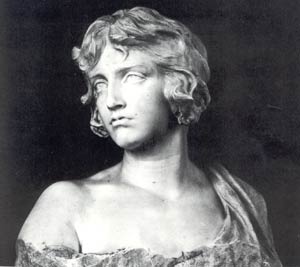
Nossis.jpg
Bust by Francesco Jerace

Advice to Students: Give Terence a Good Thumbing

Mark Pattison, Isaac Casaubon

“Of his children in general the diary says, in 1607, ‘They are almost all great troubles to me, some of them because they are always ill, some because they make no progress either in virtue or in letters.’ He is in fear that more of them will follow John’s example. This grievous disappointment was not to extend to Meric. Meric, at the date when this wail was wrung from the desponding father, was only seven. In the following year, aet. 8, he was sent to school at Sedan, under Samuel Neran. Here he remained till 1611, when he rejoined his father in England. Isaac lived to see Meric confirmed, but not to see developed in him those learned tastes and accomplishments which might have consoled the father for the degeneracy of the rest of the children. The only letter which Meric preserved of those written to him in his school-days, is so characteristic of the writer that it is thought right to give it. It is dated Paris, September 18, 1609.

‘Meric, I am glad that you write to me tolerably often, and shall be more so if you do so oftener. I shall, however, expect each letter to show some progress since the one which preceded it. I see that you are beginning to compose latin themes, but not without bad mistakes. Learn something every day. Exercise your memory diligently. If Terence is one of the books you read at school, I desire that you will commit it to memory from beginning to end. No one will ever speak latin well who has not thumbed Terence. Write me word if you read Terence, and what it is you read at school. Above all, be good, fear God, pray for father, mother, brothers, and sisters. Honour your teachers, and be obedient to them. Be careful not to waste time. If you do this, God will bless your studies. I have written to the master, and to the person with whom you board, not to let you want for anything. Your mother sends her remembrances, and desires you will, from her; kiss Mrs. Capell’s hands, as I do also. Your father, Is. Casaubon. Remember me to the Hotomans.'”

Image result for isaac casaubon

Cleobulina’s Poetic Riddles

The following is not really a single poem but rather a collection of lines cited in Athenaeus, Plutarch and others and attributed to Cleobulina

Cleobulina fr. 3.1

“I have seen a man fashioning bronze on another man with fire
Fitting it so well that he joined them in the blood.
I saw a man stealing and deceiving violently—
To accomplish this with violence is the most just thing.
A donkey corpse struck me on the ear with its horny shin.”

ἄνδρ’ εἶδον πυρὶ χαλκὸν ἐπ’ ἀνέρι κολλήσαντα
οὕτω συγκόλλως ὥστε σύναιμα ποιεῖν.
ἄνδρ’ εἶδον κλέπτοντα καὶ ἐξαπατῶντα βιαίως,
καὶ τὸ βίαι ῥέξαι τοῦτο δικαιότατον.
κνήμηι νεκρὸς ὄνος με κερασφόρωι οὖας ἔκρουσεν·

These lines are poetic riddles: the first one, according to Athenaeus, is about using a cupping glass to draw blood to the surface of the skin) the last one is about a Phrygian flute (which was made from a donkey bone)

Cleobulina 4bpblogspotcomk3VU9hBtRk0T5b6PfaiZzIAAAAAAA