The Proverb Behind Silenus’ Wisdom

https://twitter.com/ScottLepisto/status/1130858326886146048

According to Plutarch, this conversation is taken from a lost dialogue ascribed to Aristotle, entitled, On the Soul. This passage also shows up in Nietzsche’s Birth of Tragedy chapter 3.

Plutarch Consolation to Apollonius [Moralia, 115a-c]

“There is also the saying you know has been passed around the mouth of many humans over the years.” “what is that?” he asked. The other one, interrupted, “that it is best of all not to exist and then second it is better to die than to live. This has been demonstrated by many examples from the divine.

For certainly they say this concerning Midas after the hunt when he caught Silenus and was asking him and finding out from him what is best for mortals and what should be most preferred. But Silenus was willing to say nothing, but remained stubbornly silent.

After he tried nearly every kind of approach, he persuaded him to provide some answer—so compelled, he said, “brief-lived offspring of a laboring god and harsh fate, why do you force me to tell you what it is better not to know? A life lived in ignorance of your most intimate griefs is the least painful.

But for humans it is not at all possible to have the best thing of all or to have any share of the best nature—since the best thing for all men and women is not to be born. But the second best thing after this and the first available to mortals, is to die as soon as possible after being born.” It is clear that he said this because the way that exists in death is better than the one in life.”

τὸ διὰ στόματος ὂν τοῖς ἀνθρώποις ὁρᾷς ὡς ἐκ πολλῶν ἐτῶν περιφέρεται θρυλούμενον.” “τί τοῦτ᾿;” ἔφη. κἀκεῖνος ὑπολαβών “ὡς ἄρα μὴ γενέσθαι μέν,” ἔφη, “ἄριστον πάντων, τὸ δὲ τεθνάναι τοῦ ζῆν ἐστι κρεῖττον. καὶ πολλοῖς οὕτω παρὰ τοῦ δαιμονίου μεμαρτύρηται. τοῦτο μὲν ἐκείνῳ τῷ Μίδᾳ λέγουσι δήπου μετὰ τὴν θήραν ὡς ἔλαβε τὸν Σειληνὸν διερωτῶντι καὶ πυνθανομένῳ τί ποτ᾿ ἐστὶ τὸ βέλτιστοντοῖς ἀνθρώποις καὶ τί τὸ πάντων αἱρετώτατον, τὸ μὲν πρῶτον οὐδὲν ἐθέλειν εἰπεῖν ἀλλὰ σιωπᾶν ἀρρήτως· ἐπειδὴ δέ ποτε μόγις πᾶσαν μηχανὴν μηχανώμενος προσηγάγετο φθέγξασθαί τι πρὸς αὐτόν, οὕτως ἀναγκαζόμενον εἰπεῖν, ‘δαίμονος ἐπιπόνου καὶ τύχης χαλεπῆς ἐφήμερον σπέρμα, τί με βιάζεσθε λέγειν ἃ ὑμῖν ἄρειον μὴ γνῶναι; μετ᾿ ἀγνοίας γὰρ τῶν οἰκείων κακῶν ἀλυπότατος ὁ βίος. ἀνθρώποις δὲ πάμπαν οὐκ ἔστι γενέσθαι τὸ πάντων ἄριστον οὐδὲ μετασχεῖν τῆς τοῦ βελτίστου φύσεως (ἄριστον γὰρ πᾶσι καὶ πάσαις τὸ μὴ γενέσθαι)· τὸ μέντοι μετὰ τοῦτο καὶ πρῶτον τῶν ἀνθρώπῳ ἀνυστῶν, δεύτερον δέ, τὸ γενομένους ἀποθανεῖν ὡς τάχιστα.’ δῆλον οὖν ὡς οὔσης κρείττονος τῆς ἐν τῷ τεθνάναι διαγωγῆς ἢ τῆς ἐν τῷ ζῆν, οὕτως ἀπεφήνατο.”

This comment seems proverbial–split in similar attributions in hexameter and elegiac poetry.

In the Contest of Homer and Hesiod

“Son of Meles, Homer who knows the mysteries of the gods,
Tell me foremost what is best for mortals?”
Homer answered:

“First, it is best for mortals to not be born.
If born, to pass through Hades’ gates as soon as possible.”

ἀρ υἱὲ Μέλητος ῞Ομηρε θεῶν ἄπο μήδεα εἰδὼς
εἴπ’ ἄγε μοι πάμπρωτα τί φέρτατόν ἐστι βροτοῖσιν;
῞Ομηρος·
ἀρχὴν μὲν μὴ φῦναι ἐπιχθονίοισιν ἄριστον,
φύντα δ’ ὅμως ὤκιστα πύλας ᾿Αίδαο περῆσαι.

The passage floats around some. Stobaeus (4.52.22) attributes it to Alcidamas’ Mousaion but the most widely cited source is Theognis. It is listed without attribution by the paroemiographer Michael Apostolos, with the explanation that this is a proverb “[attributed] to people living in misfortune”  (ἐπὶ τῶν δυστυχῶς βιούντων, 3.85.3)

Theognis, 425-428

“First, it is best for mortals to not be born.
Not to see the rays of the piercing sun
If born, to pass through Hades’ gates as soon as possible.
And to lie with a great pile of earth heaped above you.

πάντων μὲν μὴ φῦναι ἐπιχθονίοισιν ἄριστον,
μηδ᾿ ἐσιδεῖν αὐγὰς ὀξέος ἠελίου,
φύντα δ᾿ ὅπως ὤκιστα πύλας Ἀΐδαο περῆσαι
καὶ κεῖσθαι πολλὴν γῆν ἐπαμησάμενον.

The Loeb note to this passage suggest that Theognis is merely adding to the hexameter lines, since the pentameter lines add nothing. But I think this is problematic. Consider the similar doublet to the first 2 lines above in Bacchylides.

Bacchylides 5.159–161

“And answering him, he said:
“It is best for mortals not to be born
Nor to see the sun.”

καί νιν ἀμειβόμενος
τᾶδ᾿ ἔφα· ‘θνατοῖσι μὴ φῦναι φέριστον
μηδ᾿ ἀελίου προσιδεῖν

Note how Bacchylides acknowledges the proverbial–or at least ‘other’–status of these lines by putting it into the mouths of one of his characters. Notice the stability of the infinitive construction μὴ φῦναι with the mobility of the dative θνατοῖσι and the lexical variations of θνατοῖσι instead of ἐπιχθονίοισιν and φέριστον instead of ἄριστον.

Sophocles, Oedipus Colonos 1225–1227

“Not being born conquers
every argument. But, then, if someone does emerge,
to return where you came from as fast as possible
is second best by far.”

Μὴ φῦναι τὸν ἅπαντα νι-
κᾷ λόγον· τὸ δ’, ἐπεὶ φανῇ,
βῆναι κεῖθεν ὅθεν περ ἥ-
κει, πολὺ δεύτερον, ὡς τάχιστα.

Sextus Empiricus (Outlines of Pyrrhonism 3.230–231) compares the Theognis passage to this fragment from Euripides (fr. 449)

“We should have a gathering to mourn
Someone when they are born, when they come to so many evils
And when someone has died and found a break from evils,
We should be happy and bless them as we carry them from their homes.”

ἐχρῆν γὰρ ἡμᾶς σύλλογον ποιουμένους
τὸν φύντα θρηνεῖν, εἰς ὅσ᾿ ἔρχεται κακά,
τὸν δ᾿ αὖ θανόντα καὶ κακῶν πεπαυμένον
χαίροντας εὐφημοῦντας ἐκπέμπειν δόμων.

Valerius Maximus claimed that Thracians actually did mourn births and celebrate funerals.

A clearer reflection on the proverb is Euripides fr. 235 (from Bellerophon):

“I agree with the thing reported everywhere,
That it is best for a mortal not to be born.”

ἐγὼ τὸ μὲν δὴ πανταχοῦ θρυλούμενον
κράτιστον εἶναι φημὶ μὴ φῦναι βροτῷ·

Note the different superlative at the beginning of the phrase and the singular βροτῷ. Based on the flexibility of the expression and the riffing on it, I would suggest that this is a broadly dispersed cultural idea that has proverbial status at a very early period. Note how Euripides, in another fragment, toys with the more broadly used phrase:

Euripides, fr. 908

“Not existing is better for mortals than being born.”

Τὸ μὴ γενέσθαι κρεῖσσον ἢ φῦναι βροτοῖς.

Epicurus (Diogenes Laertius, 10.127) thinks that anyone who believes this and says it is a fool since “if he says it because he believes it, how is it he does not just stop living? For this is ready for him to do, if it is completely believed by him.” (εἰ μὲν γὰρ πεποιθὼς τοῦτό φησι, πῶς οὐκ ἀπέρχεται τοῦ ζῆν; ἐν ἑτοίμῳ γὰρ αὐτῷ τοῦτ᾿ ἔστιν, εἴπερ ἦν βεβουλευμένον αὐτῷ βεβαίως).

And there is, of course, the Ancient Near Eastern context to consider!

Statue of Silenus

Ask Me No More Questions, But Tell Me Some More Lies

Dio Chrysostom, On Troy Not Being Captured §1:

“I know, roughly speaking, that while it is difficult to teach all people, it is easy to deceive them. They learn only with difficulty (if they learn at all) from a few educated people, but they are almost immediately deceived by a crowd of ignorant fools, and not just by others, but sometimes even by themselves. This is because the truth is bitter and unpleasant to people without knowledge, but falsehood is sweet and pleasant. Thus I suspect that for those with a disorder of the eyes find the light distressing to see, but think the shade painless and pleasant, since it does not permit them to see. But how could falsehood so consistently overpower the truth, if it did not conquer through pleasure?

Though teaching is, as I have said, very difficult, the most difficult thing is to teach someone to change their mind, especially when some people have spent so much time listening to falsehoods, and are not the only ones who have been deceived – their fathers, and grandfathers, and nearly everyone who came before them believed the same falsehoods. For it is not easy to take away this belief, nor can one refute it entirely. I suspect that it is much like when people have raised suppositious children, and it proves to be hard to take them away when the truth is told, but they would not have taken the children in the first place if someone had told them the truth. This has so much power that many people pretend and agree that bad ones are their own, as long as they were early convinced of this, than those who learn of good ones after a long time.”

François Lemoyne - Time saving Truth from Falsehood and Envy
François Lemoyne
Time saving Truth from Falsehood and Envy

Οἶδα μὲν ἔγωγε σχεδὸν ὅτι διδάσκειν μὲν ἀνθρώπους ἅπαντας χαλεπόν ἐστιν, ἐξαπατᾶν δὲ ῥᾴδιον. καὶ μανθάνουσι μὲν μόγις, ἐάν τι καὶ μάθωσι, παρ’ ὀλίγων τῶν εἰδότων, ἐξαπατῶνται δὲ  τάχιστα ὑπὸ πολλῶν τῶν οὐκ εἰδότων, καὶ οὐ μόνον γε ὑπὸ τῶν ἄλλων, ἀλλὰ καὶ αὐτοὶ ὑφ’ αὑτῶν. τὸ μὲν γὰρ ἀληθὲς πικρόν ἐστι καὶ ἀηδὲς τοῖς ἀνοήτοις, τὸ δὲ ψεῦδος γλυκὺ καὶ προσηνές. ὥσπερ οἶμαι καὶ τοῖς νοσοῦσι τὰ ὄμματα τὸ μὲν φῶς ἀνιαρὸν ὁρᾶν, τὸ δὲ σκότος ἄλυπον καὶ φίλον, οὐκ ἐῶν βλέπειν. ἢ πῶς ἂν ἴσχυε τὰ ψεύδη πολλάκις πλέον τῶν ἀληθῶν, εἰ μὴ δι’ ἡδονὴν ἐνίκα; χαλεποῦ δέ, ὡς ἔφην, ὄντος τοῦ διδάσκειν, τῷ παντὶ χαλεπώτερον τὸ μεταδιδάσκειν, ἄλλως τε ὅταν πολύν τινες χρόνον ὦσι τὰ ψευδῆ ἀκηκοότες καὶ μὴ μόνον αὐτοὶ ἐξηπατημένοι, ἀλλὰ καὶ οἱ πατέρες αὐτῶν καὶ οἱ πάπποι καὶ σχεδὸν πάντες οἱ πρότερον. οὐ γάρ ἐστι ῥᾴδιον τούτων ἀφελέσθαι τὴν δόξαν, οὐδ’ ἂν πάνυ τις ἐξελέγχῃ. καθάπερ οἶμαι τῶν τὰ ὑποβολιμαῖα παιδάρια θρεψάντων χαλεπὸν ὕστερον ἀφελέσθαι τἀληθῆ λέγοντα ἅ γε ἐν ἀρχῇ, εἴ τις αὐτοῖς ἔφρασεν, οὐκ ἄν ποτε ἀνείλοντο. οὕτω δὲ τοῦτο ἰσχυρόν ἐστιν ὥστε πολλοὶ τὰ κακὰ μᾶλλον προσποιοῦνται καὶ ὁμολογοῦσι καθ’ αὑτῶν, ἂν ὦσι πεπεισμένοι πρότερον, ἢ τἀγαθὰ μετὰ χρόνον ἀκούοντες.

I Did The Silly Thing You Told Me To Do

Pliny, Letters 1.1

To my friend Septicius Clarus, from your buddy Pliny:

You have often encouraged me to gather and publish any of my letters which I wrote with a little effort. I have done this, but without keeping them in chronological sequence but as they arrive to me, since I am not assembling a history. Now all we have left is for me not to regret taking your advice and you forgiving that I followed it! Here’s the way it will go: I will keep looking for letters that lie neglected still and will not hide any I add to them!

Goodbye!

    1. Plinius Septicio <Claro> Suo S.

Frequenter hortatus es ut epistulas, si quas paulo curatius scripsissem, colligerem publicaremque. Collegi non servato temporis ordine (neque enim historiam componebam), sed ut quaeque in manus venerat. Superest ut nec te consilii nec me paeniteat obsequii. Ita enim fiet, ut eas quae adhuc neglectae iacent requiram et si quas addidero non supprimam. Vale.

Image result for do you like my party hat
From your buddy, P.D. Eastman

Purchasing Political Power

Edward Gibbon, The Decline and Fall of the Roman Empire (V):

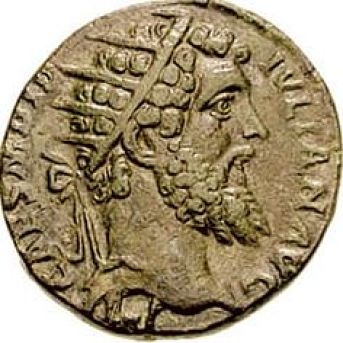
“The Praetorians had violated the sanctity of the throne by the atrocious murder of Pertinax; they dishonored the majesty of it by their subsequent conduct. The camp was without a leader, for even the praefect Laetus, who had excited the tempest, prudently declined the public indignation. Amidst the wild disorder, Sulpicianus, the emperor’s father-in-law, and governor of the city, who had been sent to the camp on the first alarm of mutiny, was endeavoring to calm the fury of the multitude, when he was silenced by the clamorous return of the murderers, bearing on a lance the head of Pertinax. Though history has accustomed us to observe every principle and every passion yielding to the imperious dictates of ambition, it is scarcely credible that, in these moments of horror, Sulpicianus should have aspired to ascend a throne polluted with the recent blood of so near a relation and so excellent a prince. He had already begun to use the only effectual argument, and to treat for the Imperial dignity; but the more prudent of the Praetorians, apprehensive that, in this private contract, they should not obtain a just price for so valuable a commodity, ran out upon the ramparts; and, with a loud voice, proclaimed that the Roman world was to be disposed of to the best bidder by public auction.

This infamous offer, the most insolent excess of military license, diffused a universal grief, shame, and indignation throughout the city. It reached at length the ears of Didius Julianus, a wealthy senator, who, regardless of the public calamities, was indulging himself in the luxury of the table. His wife and his daughter, his freedmen and his parasites, easily convinced him that he deserved the throne, and earnestly conjured him to embrace so fortunate an opportunity. The vain old man hastened to the Praetorian camp, where Sulpicianus was still in treaty with the guards, and began to bid against him from the foot of the rampart. The unworthy negotiation was transacted by faithful emissaries, who passed alternately from one candidate to the other, and acquainted each of them with the offers of his rival. Sulpicianus had already promised a donative of five thousand drachms (above one hundred and sixty pounds) to each soldier; when Julian, eager for the prize, rose at once to the sum of six thousand two hundred and fifty drachms, or upwards of two hundred pounds sterling. The gates of the camp were instantly thrown open to the purchaser; he was declared emperor, and received an oath of allegiance from the soldiers, who retained humanity enough to stipulate that he should pardon and forget the competition of Sulpicianus.

It was now incumbent on the Praetorians to fulfil the conditions of the sale. They placed their new sovereign, whom they served and despised, in the centre of their ranks, surrounded him on every side with their shields, and conducted him in close order of battle through the deserted streets of the city. The senate was commanded to assemble; and those who had been the distinguished friends of Pertinax, or the personal enemies of Julian, found it necessary to affect a more than common share of satisfaction at this happy revolution. After Julian had filled the senate house with armed soldiers, he expatiated on the freedom of his election, his own eminent virtues, and his full assurance of the affections of the senate. The obsequious assembly congratulated their own and the public felicity; engaged their allegiance, and conferred on him all the several branches of the Imperial power. From the senate Julian was conducted, by the same military procession, to take possession of the palace. The first objects that struck his eyes, were the abandoned trunk of Pertinax, and the frugal entertainment prepared for his supper. The one he viewed with indifference, the other with contempt. A magnificent feast was prepared by his order, and he amused himself, till a very late hour, with dice, and the performances of Pylades, a celebrated dancer. Yet it was observed, that after the crowd of flatterers dispersed, and left him to darkness, solitude, and terrible reflection, he passed a sleepless night; revolving most probably in his mind his own rash folly, the fate of his virtuous predecessor, and the doubtful and dangerous tenure of an empire which had not been acquired by merit, but purchased by money.”

Didius Julianus

Psst, Plutocrat: Money is No Good Unless You Use it For Good

On the Wealth of Herodes the Athenian (Philostratus, Lives of the Sophists, 547)

“[Herodes] used his wealth in the best way of all men. We do not, however, believe that this was the easiest thing to do, but instead that it was wholly difficult and unpleasant.  For men who are drunk with wealth usually afflict other people with insults. In addition, they make the specious claim that wealth is blind—but even if wealth appears rightly blind at other times, it looked upon Herodes: it gazed upon his friends, his cities, and whole nations since the man was able to keep a watch over them all and make a storehouse of his riches in the opinions of the men with whom he shared them.

For he used to say indeed that it was necessary for the man who would use wealth correctly to provide it to those who need it so that they may not be in need and also to those who didn’t need it, so that they might not become impoverished. He used to call wealth that was not used and was hoarded up by envy “corpse wealth” and the storehouses of those who hoarded their riches “prisons of wealth. He mocked those who believed it was right to sacrifice to their accumulated riches “Aloadae” because [Otos and Ephialtes] had sacrificed to Ares after they imprisoned him.”*

῎Αριστα δὲ ἀνθρώπων πλούτῳ ἐχρήσατο. τουτὶ δὲ μὴ τῶν εὐμεταχειρίστων ἡγώμεθα, ἀλλὰ τῶν παγχαλέπων τε καὶ δυσκόλων, οἱ γὰρ πλούτῳ μεθύοντες  ὕβριν τοῖς ἀνθρώποις ἐπαντλοῦσιν. προσδιαβάλλουσι δὲ ὡς καὶ τυφλὸν τὸν πλοῦτον, ὃς εἰ καὶ τὸν ἄλλον χρόνον ἐδόκει τυφλός, ἀλλ’ ἐπὶ ῾Ηρώδου ἀνέβλεψεν, ἔβλεψε μὲν γὰρ ἐς φίλους, ἔβλεψε δὲ ἐς πόλεις, ἔβλεψε δὲ ἐς ἔθνη, πάντων περιωπὴν ἔχοντος τοῦ ἀνδρὸς καὶ θησαυρίζοντος τὸν πλοῦτον ἐν ταῖς τῶν μετεχόντων αὐτοῦ γνώμαις. ἔλεγε γὰρ δή, ὡς προσήκοι τὸν ὀρθῶς πλούτῳ χρώμενον τοῖς μὲν δεομένοις ἐπαρκεῖν, ἵνα μὴ δέωνται, τοῖς δὲ μὴ δεομένοις, ἵνα μὴ δεηθῶσιν, ἐκάλει τε τὸν μὲν ἀσύμβολον πλοῦτον καὶ φειδοῖ κεκολασμένον νεκρὸν πλοῦτον, τοὺς δὲ θησαυρούς, ἐς οὓς ἀποτίθενται τὰ χρήματαἔνιοι, πλούτου δεσμωτήρια, τοὺς δὲ καὶ θύειν ἀξιοῦντας ἀποθέτοις χρήμασιν ᾿Αλωάδας ἐπωνόμαζε θύοντας ῎Αρει μετὰ τὸ δῆσαι αὐτόν.

*This story is told in the Iliad 5.385 as part of Dione’s catalogue of mortals who caused the gods harm.  Otus and Ephialtes captured Ares and put him in a bronze jar.

Image by Classical Numismatic Group


For more on plutocracy, there’s this.

Homer’s Muse and Her Fake News

Dio Chrysostom, On Troy Not Being Captured §39

“When I first asked this Egyptian priest to explain this to me, he was at first unwilling to do so, saying that the Greeks are charlatans and, though they are the most uneducated people, think themselves endowed with the highest degree of learning. He added that there was no worse disease either for an individual or the multitude than when someone without education reckons themselves most exceedingly wise, for those people are entirely unable to be released from the shackles of their ignorance. He added, ‘And you are all in such a ridiculous state because of these things that you claim that another poet who believed Homer’s tale and wrote the same things about Helen (it was Stesichorus, I think) was blinded by her for his lies and only recovered his sight when he wrote a recantation. Yet, while saying such things, you nonetheless believe that Homer’s poetry is true, and claim that Stesichorus said in the palinode that Helen never sailed, and others say that Helen was brought here to Egypt after being abducted by Paris. Yet, while the matter remains thus in doubt and wrapped up in so much ignorance, they are nevertheless unable to suspect the deception.’

He argued that the reason for this credulity was the fact that the Greeks are pleasure-lovers. Whatever they hear with pleasure while someone is speaking, they reckon all those things as true, and they give the greatest latitude to the poets to lie about whatever they want, and say that it is their poetic license. All the same, they believe whatever the poets say and they even bring them up as authorities whenever a matter is in doubt. But among the Egyptians, no one is allowed to say anything in verse, and poetry is banned entirely, because they know that pleasure in poetry is a drug which lures one to listen. Just as those who are thirsty do not need to drink wine because a drink of water is enough, so too those who want to know the truth have no need of poetry, since it is enough to hear is presented in its simplest form. Poetry persuades us to listen to lies just as wine urges us on to drink too much.”

Lagrenée Helen Recognizing Telemachus
Jean-Jacques Lagrenée (1739–1821) Helen Recognising Telemachus, Son of Odysseus

δεομένου δέ μου διηγήσασθαι, τὸ μὲν πρῶτον οὐκ ἐβούλετο, λέγων ὅτι ἀλαζόνες εἰσὶν οἱ ῞Ελληνες καὶ ἀμαθέστατοι ὄντες πολυμαθεστάτους ἑαυτοὺς νομίζουσι· τούτου δὲ μηθὲν εἶναι νόσημα χαλεπώτερον μήτε ἑνὶ μήτε πολλοῖς ἢ ὅταν τις ἀμαθὴς ὢν σοφώτατον ἑαυτὸν νομίζῃ. τοὺς γὰρ τοιούτους τῶν ἀνθρώπων μηδέποτε δύνασθαι τῆς ἀγνοίας ἀπολυθῆναι. οὕτως δέ, ἔφη, γελοίως ἀπὸ τούτων διάκεισθε ὑμεῖς ὥστε ποιητὴν ἕτερον ῾Ομήρῳ πεισθέντα καὶ ταὐτὰ πάντα ποιήσαντα περὶ ῾Ελένης, Στησίχορον, ὡς οἶμαι, τυφλωθῆναί φατε ὑπὸ τῆς ῾Ελένης, ὡς ψευσάμενον, αὖθις δὲ ἀναβλέψαι τἀναντία ποιήσαντα. καὶ ταῦτα λέγοντες οὐδὲν ἧττον ἀληθῆ φασιν εἶναι τὴν ῾Ομήρου ποίησιν καὶ <ἀκούοντες> τὸν μὲν Στησίχορον ἐν τῇ ὕστερον ᾠδῇ λέγειν ὅτι τὸ παράπαν οὐδὲ πλεύσειεν ἡ ῾Ελένη οὐδαμόσε, ἄλλους δέ τινας ὡς ἁρπασθείη μὲν ῾Ελένη ὑπὸ τοῦ ᾿Αλεξάνδρου, δεῦρο δὲ παρ’ ἡμᾶς εἰς Αἴγυπτον ἀφίκοιτο καὶ τοῦ πράγματος οὕτως ἀμφισβητουμένου καὶ πολλὴν ἄγνοιαν ἔχοντος, οὐδὲ οὕτως ὑποπτεῦσαι δύνανται τὴν ἀπάτην. τούτου δὲ αἴτιον ἔφη εἶναι ὅτι φιλήκοοί εἰσιν οἱ ῞Ελληνες· ἃ δ’ ἂν ἀκούσωσιν ἡδέως τινὸς λέγοντος, ταῦτα καὶ ἀληθῆ νομίζουσι, καὶ τοῖς μὲν ποιηταῖς ἐπιτρέπουσιν ὅ,τι ἂν θέλωσι ψεύδεσθαι καί φασιν ἐξεῖναι αὐτοῖς, ὅμως δὲ πιστεύουσιν οἷς ἂν ἐκεῖνοι λέγωσι, καὶ μάρτυρας αὐτοὺς ἐπάγονται ἐνίοτε περὶ ὧν ἀμφισβητοῦσι· παρὰ δὲ Αἰγυπτίοις μὴ ἐξεῖναι μηδὲν ἐμμέτρως λέγεσθαι μηδὲ εἶναι ποίησιν τὸ παράπαν· ἐπίστασθαι γὰρ ὅτι φάρμακον τοῦτο ἡδονῆς ἐστι πρὸς τὴν ἀκοήν. ὥσπερ οὖν οἱ διψῶντες οὐδὲν δέονται οἴνου, ἀλλ’ ἀπόχρη αὐτοῖς ὕδατος πιεῖν, οὕτως οἱ τἀληθῆ εἰδέναι θέλοντες οὐδὲν δέονται μέτρων, ἀλλ’ ἐξαρκεῖ αὐτοῖς ἁπλῶς ἀκοῦσαι. ἡ δὲ ποίησις ἀναπείθει τὰ ψευδῆ ἀκούειν ὥσπερ <ὁ> οἶνος πίνειν μάτην.

The Nature of a Kind

Pindar, Olympian 11: For Hagêsidamos, Winner of Boy’s Boxing, 476BCE

“There is a season when people have the greatest need
For winds and there is a season for water from the sky,
The pouring offspring of clouds.
But if someone should ever find success through toil,
Then honey-sweet hymns form the foundation
For future tales and offer certain promise for great accomplishments.

The praise for Olympic victors is not limited
By envy. My tongue is ready to shepherd
These words. A man similarly prospers through wise thoughts
thanks to divine assistance.
Know this now, son of Arkhestratos,
Hagêsidamos: thanks to your boxing
I will sing a sweet-songed adornment
For your crown of golden olive,
Without neglecting the race of Western Lokrians.

Join us in the revel there—Muses, I pledge
That you will visit no country who rejects a guest
a people who are ignorant of noble things,
But you will find wise spearmen there.
For not even the fire-red fox nor the roaring lions
Could change the nature of their kind.”

Ἔστιν ἀνθρώποις ἀνέμων ὅτε πλείστα
χρῆσις· ἔστιν δ᾿ οὐρανίων ὑδάτων,
ὀμβρίων παίδων νεφέλας·
εἰ δὲ σὺν πόνῳ τις εὖ πράσσοι,
μελιγάρυες ὕμνοι
ὑστέρων ἀρχὰ λόγων
τέλλεται καὶ πιστὸν ὅρκιον μεγάλαις ἀρεταῖς.

ἀφθόνητος δ᾿ αἶνος Ὀλυμπιονίκαις
οὗτος ἄγκειται. τὰ μὲν ἁμετέρα
γλῶσσα ποιμαίνειν ἐθέλει,
ἐκ θεοῦ δ᾿ ἀνὴρ σοφαῖς ἀνθεῖ
πραπίδεσσιν ὁμοίως.
ἵσθι νῦν, Ἀρχεστράτου
παῖ, τεᾶς, Ἁγησίδαμε, πυγμαχίας ἕνεκεν
κόσμον ἐπὶ στεφάνῳ χρυσέας ἐλαίας
ἁδυμελῆ κελαδήσω,
Ζεφυρίων Λοκρῶν γενεὰν ἀλέγων.
ἔνθα συγκωμάξατ᾿· ἐγγυάσομαι
μή μιν, ὦ Μοῖσαι, φυγόξεινον στρατόν
μηδ᾿ ἀπείρατον καλῶν
ἀκρόσοφόν τε καὶ αἰχματὰν ἀφίξε-
σθαι. τὸ γὰρ ἐμφυὲς οὔτ᾿ αἴθων ἀλώπηξ
οὔτ᾿ ἐρίβρομοι λέοντες διαλλάξαιντο ἦθος.

Bodleian Library, MS. Ashmole 1462, Folio 50v

The Forgetful, Hateful L.O.P.

Suetonius, Lives of the Grammarians 9

“Lucius Orbilius Pupillus from Beneventum, made an orphan because of the death of his parents who were both murdered on the same day by the deceit of their enemies, first worked as an attendant for magistrates. After that, he served as an assistant in Macedonia and later he was in the cavalry. After he was done with the military, he returned to his studies which he had not touched much since he was a boy. Once he taught for a while in his own country, he went to Rome when he was fifty in the Consulship of Caesar where he taught to greater fame than profit. In some book he admits that he was poor and lived under tiles when he was really old.

He also wrote a book, entitled On Unreasoning which is full of complaints about insults which professors receive either because of the negligence or arrogance of parents. He was, moreover, of a bitter nature not only in respect to his fellow scholars, whom he attacked at every chance, but also towards his students, which is what Horace means when he calls him “the abuser” and Domitius Martius writes about: “The people Orbilius murdered with a stick or a leather whip.”

He did not avoid laying in to men of the highest classes: when he was still unknown and he was speaking to a full courtroom and was asked by the opposing lawyer, Varro, what he did and what his career was, he said that he moves hunchbacks from the son into the shade. This is because Murena was a hunchback,

Orbilius lived to almost one hundred years and his memory failed almost completely, as Bibaculus’ line instructs: “Where is Orbilius now, that vacuum of learning.” His statue is on display at Beneventum, on the left side of the Capitol building in a seated position and holding a Greek cloak with two boxes of books next to him. He left a son named Orbilius, another grammar teacher himself.”

  1. L Orbilius Pupillus Beneventanus, morte parentum, una atque eadem die inimicorum dolo interemptorum, destitutus, primo apparituram magistratibus fecit; deinde in Macedonia corniculo, mox equo meruit; functusque militia, studia repetit, quae iam inde a puero non leviter attigerat; ac professus diu in patria, quinquagesimo demum anno Romam consule Cicerone transiit docuitque maiore fama quam emolumento. Namque iam persenex pauperem se et habitare sub tegulis quodam scripto fatetur. Librum etiam, cui est titulus Περὶ ἀλογίας, edidit continentem querelas de iniuriis, quas professores neglegentia aut ambitione parentum acciperent. Fuit autem naturae acerbae, non modo in antisophistas, quos omni occasione laceravit, sed etiam in discipulos, ut et Horatius significat “plagosum” eum appellans, et Domitius Marsus scribens:

Si quos Orbilius ferula scuticaque cecidit.

Ac ne principum quidem virorum insectatione abstinuit; siquidem ignotus adhuc cum iudicio frequenti testimonium diceret, interrogatus a Varrone diversae partis advocato, quidnam ageret et quo artificio uteretur, gibberosos se de sole in umbram transferre respondit; quod Murena gibber erat. Vixit prope ad centesimum aetatis annum, amissa iam pridem memoria, ut versus Bibaculi docet:

Orbilius ubinam est, litterarum oblivio?

Statua eius Beneventi ostenditur in Capitolio ad sinistrum latus marmorea habitu sedentis ac palliati, appositis duobus scriniis. Reliquit filium Orbilium, et ipsum grammaticum professorem.

Image result for Lucius Orbilius Pupillus
From Wikipedia


Philology and Enjoyment of the Classics

Matthew Arnold, The Study of Poetry:

Everything depends on the reality of a poet’s classic character. If he is a dubious classic, let us sift him; if he is a false classic, let us explode him. But if he is a real classic, if his work belongs to the class of the very best (for this is the true and right meaning of the word classic, classical), then the great thing for us is to feel and enjoy his work as deeply as ever we can, and to appreciate the wide difference between it and all work which has not the same high character. This is what is salutary, this is what is formative; this is the great benefit to be got from the study of poetry. Everything which interferes with it, which hinders it, is injurious. True, we must read our classic with open eyes, and not with eyes blinded with superstition; we must perceive when his work comes short, when it drops out of the class of the very best, and we must rate it, in such cases, at its proper value. But the use of this negative criticism is not in itself, it is entirely in its enabling us to have a clearer sense and a deeper enjoyment of what is truly excellent.

To trace the labour, the attempts, the weaknesses, the failures of a genuine classic, to acquaint oneself with his time and his life and his historical relationships, is mere literary dilettantism unless it has that clear sense and deeper enjoyment for its end. It may be said that the more we know about a classic the better we shall enjoy him; and, if we lived as long as Methuselah and had all of us heads of perfect clearness and wills of perfect steadfastness, this might be true in fact as it is plausible in theory. But the case here is much the same as the case with the Greek and Latin studies of our schoolboys. The elaborate philological groundwork which we require them to lay is in theory an admirable preparation for appreciating the Greek and Latin authors worthily. The more thoroughly we lay the groundwork, the better we shall be able, it may be said, to enjoy the authors. True, if time were not so short, and schoolboys wits not so soon tired and their power of attention exhausted; only, as it is, the elaborate philological preparation goes on, but the authors are little known and less enjoyed. So with the investigator of “historic origins” in poetry. He ought to enjoy the true classic all the better for his investigations; he often is distracted from the enjoyment of the best, and with the less good he overbusies himself, and is prone to over-rate it in proportion to the trouble which it has cost him.

Friends to Find, Friends to Avoid

Xenophon, Memorabilia 2.6

“Tell me, Kritoboulos, he said, if we wanted a good friend, how could we go about finding one? Must we search first for someone who is in control of his stomach, and drinking, a master of lust, sleep and sloth? For the person who is controlled by these things can’t do what is needed for for himself or a friend.

Certainly, he can’t, he said

So, you think that we need to avoid someone who is ruled by these things.

Absolutely, he said.

Ok, he said, what about the cheapskate who is never happy but is always asking those near him for hings and then does not pay back what he borrows or gets hateful when he doesn’t get anything. Does that kind of person seem to be an annoying friend?

Totally.

So, we need to avoid him too?

Yeah. Avoid that guy.

Ok. What about the person who is really good at making money and is really eager for possessions and for this reason is hard to deal with and takes pleasure in getting things but does not want to give anything?

Well, that guy seems to be to be even worse than the last one.”

Εἰπέ μοι, ἔφη, ὦ Κριτόβουλε, εἰ δεοίμεθα φίλου ἀγαθοῦ, πῶς ἂν ἐπιχειροίημεν σκοπεῖν; ἆρα πρῶτον μὲν ζητητέον, ὅστις ἄρχει γαστρός τε καὶ φιλοποσίας καὶ λαγνείας καὶ ὕπνου καὶ ἀργίας; ὁ γὰρ ὑπὸ τούτων κρατούμενος οὔτ᾿ αὐτὸς ἑαυτῷ δύναιτ᾿ ἂν οὔτε φίλῳ τὰ δέοντα πράττειν.
Μὰ Δί᾿ οὐ δῆτα, ἔφη.
Οὐκοῦν τοῦ μὲν ὑπὸ τούτων ἀρχομένου ἀφεκτέον δοκεῖ σοι εἶναι;
Πάνυ μὲν οὖν, ἔφη.
Τί γάρ; ἔφη, ὅστις δαπανηρὸς ὢν μὴ αὐτάρχης ἐστίν, ἀλλ᾿ ἀεὶ τῶν πλησίον δεῖται καὶ λαμβάνων μὲν μὴ δύναται ἀποδιδόναι, μὴ λαμβάνων δὲ τὸν μὴ διδόντα μισεῖ, οὐ δοκεῖ σοι καὶ οὗτος χαλεπὸς φίλος εἶναι;
Πάνυ γ᾿, ἔφη.
Οὐκοῦν ἀφεκτέον καὶ τούτου;
Ἀφεκτέον μέντοι, ἔφη.
Τί γάρ; ὅστις χρηματίζεσθαι μὲν δύναται, πολλῶν δὲ χρημάτων ἐπιθυμεῖ καὶ διὰ τοῦτο δυσσύμβολός ἐστι καὶ λαμβάνων μὲν ἥδεται, ἀποδιδόναι δὲ μὴ βούλεται;
Ἐμοὶ μὲν δοκεῖ, ἔφη, οὗτος ἔτι πονηρότερος ἐκείνου εἶναι.

Would this face lie to you?