The Gardens of Adonis Part II: More Gardens More Adonis

If you liked today’s earlier post about The Gardens of Adonis, then you’re in luck, because Erasmus has more!

Erasmus, Adagia 1.4:

Ἀδώνιδος κῆποι, that is ‘the Gardens of Adonis’ used to be said of trifling and unprofitable things which were suited only to the brief pleasure of the moment. Pausanius notes that the gardens of Adonis were once among the little delights, teeming with lettuce and fennel, in which seeds used to be placed in a pot, and for that reason it came to be used proverbially against worthless and trifling fools who were born for insipid pleasures. Included in thus bunch are singers, sophists, bawdy poets, gluttons, and others of that sort. There were however two gardens sacred to Venus on account of Adonis, her love who was snatched away at the first bloom of his youth and turned into a flower. Plato makes mention of these in his Phaedrus: :

Ὁ νοῦν ἔχων γεωργός, ὧν σπερμάτων κήδοιτο καὶ ἔγκαρπα βούλοιτο γενέσθαι, πότερα σπουδῇ ἂν θέρους εἰς Ἀδώνιδος κήπους ἀρῶν χαίροι θεωρῶν καλοὺς ἐν ἡμέραισιν ὀκτὼ γιγνομένους, ἢ ταῦτα μὲν δὴ παιδιᾶς τε καὶ ἑορτῆς χάριν δρώῃ ἄν, ὅτε καὶ ποιοῖ,

that is ,

‘will a farmer in his right mind, who has concern for his seeds and wants them one day to bear fruit, sow them with zeal in the gardens of Adonis during the summer, and does he rejoice to see them made beautiful within the space of eight days, or will he do those things (if ever) rather as a joke, for the sake of merriment?’

Similarly, Plutarch, in his commentary entitled Περὶ τοῦ βραδέως ὑπὸ θείου τιμωρουμένου, that is, ‘About One Punished Late by the Gods,’

Ἀλλὰ μικρός τις καὶ κενόσπουδος ὁ θεός ἐστιν ὥστε μηδὲν ἡμῶν ἐχόντων θεῖον ἐν αὑτοῖς μηδὲ προσόμοιον ἁμωσγέπως ἐκείνῳ καὶ διαρκὲς καὶ βέβαιον, ἀλλὰ φύλλοις, ὡς Ὅμηρος ἔφη, παραπλησίως ἀπομαραινομένων παντάπασι καὶ φθινόντων ἐν ὀλίγῳ, ποιεῖσθαι λόγον τοσοῦτον, ὥσπερ αἱ τοὺς Ἀδώνιδος κήπους ἐπ᾿ ὀστράκοις τισὶ τιθηνούμεναι καὶ θεραπεύουσαι γυναῖκες, ἐφημέρους ψυχὰς ἐν σαρκὶ τρυφερᾷ καὶ βίου ῥίζαν ἰσχυρὰν οὐ δεχομένῃ βλαστανούσας, εἶτα ἀποσβεννυμένας ἀεὶ ὑπο τῆς τυχούσης προφάσεως,

that is

‘He is a capricious god concerned with trifles who (though we have nothing divine in us nor anything which approaches his image and which might remain fixed and unchanged forever, but instead after the manner of leaves – as Homer says – droop in every respect and die in a short time) has such care for us, much as women who tend the gardens of Adonis which flourish for a few days and minister to the souls which endure for a brief period in our weak flesh, receiving no solid root of life and soon snuffed out by any chance accident.’

Theophrastus recounts in Idyll 8

Πὰρ δ᾿ ἁπαλοὶ κᾶποι πεφυλαγμένοι ἐν ταλαρίσκοις,

Ἀργυρέοις,

that is,

‘There are soft gardens preserved in shining baskets.’

The proverb is also given this way,

Ἀκαρπότερος τῶν Ἀδώνιδος κήπων,

that is,

‘Less fruitful than the gardens of Adonis.’

In a not dissimilar mode, Isaeus, mentioned in Philostratus, calls juvenile pleasures Ταντάλου κήπους, ‘the gardens of Tantalus’, because they are so similar to shades and dreams, and do not fill up the human mind, but rather provoke it. Similarly, Pollux used to call the speech of the sophist Athenodorus ‘the gardens of Tantalus’ because it was so juvenile and trifling, making a large pretense to be something when it was in fact nothing.”

The Gardens of Adonis (1888) by John Reinhard Weguelin

Adonis Horti.iv

Ἀδώνιδος κῆποι, id est Adonidis horti, de rebus leviculis dicebatur parumque frugiferis et ad brevem praesentemque modo voluptatem idoneis. Pausanias testatur Adonidis hortos olim in deliciis fuisse, lactucis potissimum ac feniculis frequentes, in quibus semina haud aliter atque in testa deponi consueverint, eoque rem in proverbium abiisse contra futiles ac nugones homines et voluptatibus ineptis natos ; cujusmodi sunt cantores, sophistae, poetae lascivi, cuppediarii atque id genus alii. Erant autem ii horti Veneri sacri propter Adonidem ejus amasium primo aetatis flore praereptum atque in florem conversum. Horum mentionem facit Plato in Phaedro : Ὁ νοῦν ἔχων γεωργός, ὧν σπερμάτων κήδοιτο καὶ ἔγκαρπα βούλοιτο γενέσθαι, πότερα σπουδῇ ἂν θέρους εἰς Ἀδώνιδος κήπους ἀρῶν χαίροι θεωρῶν καλοὺς ἐν ἡμέραισιν ὀκτὼ γιγνομένους, ἢ ταῦτα μὲν δὴ παιδιᾶς τε καὶ ἑορτῆς χάριν δρώῃ ἄν, ὅτε καὶ ποιοῖ; id est Num agricola qui sapiat semina quae curae haberet quaeque cuperet aliquando fructum adferre, aetatis tempore summo studio in Adonidis hortos mittet gaudetque spectare eos intra dies octo jam pulchros effectos, an ea quidem per lusum ac festi gratia faciet, si quando tamen fecerit ? Item Plutarchus in commentario, cui titulus Περὶ τοῦ βραδέως ὑπὸ θείου τιμωρουμένου, id est De eo, qui a numine sero punitur : Ἀλλὰ μικρός τις καὶ κενόσπουδος ὁ θεός ἐστιν ὥστε μηδὲν ἡμῶν ἐχόντων θεῖον ἐν αὑτοῖς μηδὲ προσόμοιον ἁμωσγέπως ἐκείνῳ καὶ διαρκὲς καὶ βέβαιον, ἀλλὰ φύλλοις, ὡς Ὅμηρος ἔφη, παραπλησίως ἀπομαραινομένων παντάπασι καὶ φθινόντων ἐν ὀλίγῳ, ποιεῖσθαι λόγον τοσοῦτον, ὥσπερ αἱ τοὺς Ἀδώνιδος κήπους ἐπ᾿ ὀστράκοις τισὶ τιθηνούμεναι καὶ θεραπεύουσαι γυναῖκες, ἐφημέρους ψυχὰς ἐν σαρκὶ τρυφερᾷ καὶ βίου ῥίζαν ἰσχυρὰν οὐ δεχομένῃ βλαστανούσας, εἶτα ἀποσβεννυμένας ἀεὶ ὑπο τῆς τυχούσης προφάσεως, id est Immo morosior quispiam et levicularum rerum curiosus est deus, qui cum nihil habeamus divinum in nobis, neque quod ullo modo ad illius similitudinem accedat quodque constet ac stabile perpetuumque sit, quin magis foliorum ritu, quemadmodum ait Homerus, undequaque marcescamus intereamusque brevi, tantam nostri curam habeat non aliter quam mulieres, quae Adonidis hortos ad dies pauculos vernantes in testulis quibusdam nutriunt foveatque animas brevi duraturas in carne tenera et solidam vitae radicem non recipiente suppullulantes ac mox ad quamvis occasionem interituras. Meminit et Theocritus Idyllio Θ :

Πὰρ δ᾿ ἁπαλοὶ κᾶποι πεφυλαγμένοι ἐν ταλαρίσκοις,

Ἀργυρέοις,

id est

Adsunt et teneri calathis candentibus horti,

Servati.

Effertur paroemia etiam hoc modo, Ἀκαρπότερος τῶν Ἀδώνιδος κήπων, id est Infructuosior Adonidis hortis. Non dissimili figura Isaeus apud Philostratum juveniles voluptates appellat Ταντάλου κήπους, quod umbris ac somniis persimiles sint nec expleant hominis animum sed irritent potius. Similiter Pollux sophistae Athenodori dictionem appellabat Tantali hortos, quod juvenilis esset ac levis, speciem prae se ferens, quasi esset aliquid, cum nihil esset.
Tawdry Tuesday: Wanton Verse, Pure Heart. And Dicks for Sale (NSFW)

Hadrian, fr. II [A minor Latin Poet and a Major Roman Emperor]

“You were wanton in verse, but pure of thought”

Lascivus versu, mente pudicus eras.

 Martial, 12.97

“Even though your wife is a girl of a kind
A man would scarcely seek with inappropriate prayers
(rich, noble, erudite, chase, what a find!)
You bust your nut, Bassus, but on the hair
Of the the men you buy with your wife’s money.

And when to its mistress your dick is returned
Though it was for so many thousands bought
It is so limp that its full size cannot be earned
Even if by sweet whispers or soft strokings sought.

For once, have some shame or let’s go to court.
Bassus, you sold it—your dick ain’t yours.”

Uxor cum tibi sit puella qualem
votis vix petat improbis maritus,
dives, nobilis, erudita, casta,
rumpis, Basse, latus, sed in comatis,
uxoris tibi dote quos parasti.
et sic ad dominam reversa languet
multis mentula milibus redempta
ut nec vocibus excitata blandis
molli pollice nec rogata surgat.
sit tandem pudor aut eamus in ius.
non est haec tua, Basse: vendidisti.

Image result for Priapus weighing penis pompeii
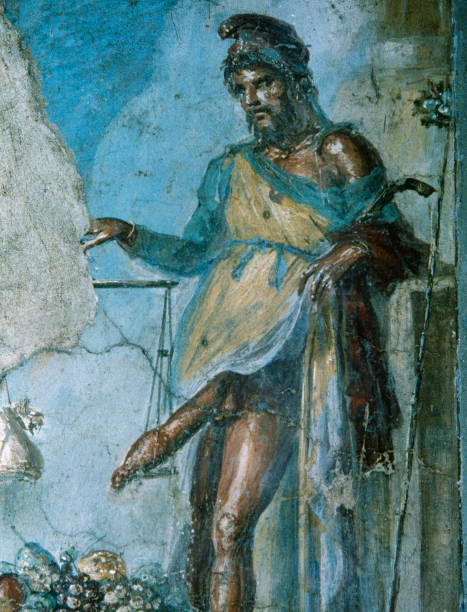
Wall-painting: Priapus weighing his phallus (Pompeii)

Declining and Falling: Commodious, Polly Beeious, and the Rooshans

Charles Dickens, Our Mutual Friend, Bk.1 Chp.5:

‘Hem!’ began Wegg, ‘This, Mr Boffin and Lady, is the first chapter of the first wollume of the Decline and Fall off — ‘ here he looked hard at the book, and stopped.

‘What’s the matter, Wegg?’

‘Why, it comes into my mind, do you know, sir,’ said Wegg with an air of insinuating frankness (having first again looked hard at the book), ‘that you made a little mistake this morning, which I had meant to set you right in, only something put it out of my head. I think you said Rooshan Empire, sir?’

‘It is Rooshan; ain’t it, Wegg?’

‘No, sir. Roman. Roman.’

‘What’s the difference, Wegg?’

‘The difference, sir?’ Mr Wegg was faltering and in danger of breaking down, when a bright thought flashed upon him. ‘The difference, sir? There you place me in a difficulty, Mr Boffin. Suffice it to observe, that the difference is best postponed to some other occasion when Mrs Boffin does not honour us with her company. In Mrs Boffin’s presence, sir, we had better drop it.’

Mr Wegg thus came out of his disadvantage with quite a chivalrous air, and not only that, but by dint of repeating with a manly delicacy, ‘In Mrs Boffin’s presence, sir, we had better drop it!’ turned the disadvantage on Boffin, who felt that he had committed himself in a very painful manner.

Then, Mr Wegg, in a dry unflinching way, entered on his task; going straight across country at everything that came before him; taking all the hard words, biographical and geographical; getting rather shaken by Hadrian, Trajan, and the Antonines; stumbling at Polybius (pronounced Polly Beeious, and supposed by Mr Boffin to be a Roman virgin, and by Mrs Boffin to be responsible for that necessity of dropping it); heavily unseated by Titus Antoninus Pius; up again and galloping smoothly with Augustus; finally, getting over the ground well with Commodus: who, under the appellation of Commodious, was held by Mr Boffin to have been quite unworthy of his English origin, and ‘not to have acted up to his name’ in his government of the Roman people. With the death of this personage, Mr Wegg terminated his first reading; long before which consummation several total eclipses of Mrs Boffin’s candle behind her black velvet disc, would have been very alarming, but for being regularly accompanied by a potent smell of burnt pens when her feathers took fire, which acted as a restorative and woke her. Mr Wegg, having read on by rote and attached as few ideas as possible to the text, came out of the encounter fresh; but, Mr Boffin, who had soon laid down his unfinished pipe, and had ever since sat intently staring with his eyes and mind at the confounding enormities of the Romans, was so severely punished that he could hardly wish his literary friend Good-night, and articulate ‘Tomorrow.’

‘Commodious,’ gasped Mr Boffin, staring at the moon, after letting Wegg out at the gate and fastening it: ‘Commodious fights in that wild-beast-show, seven hundred and thirty-five times, in one character only! As if that wasn’t stunning enough, a hundred lions is turned into the same wild-beast-show all at once! As if that wasn’t stunning enough, Commodious, in another character, kills ’em all off in a hundred goes! As if that wasn’t stunning enough, Vittle-us (and well named too) eats six millions’ worth, English money, in seven months! Wegg takes it easy, but upon-my-soul to a old bird like myself these are scarers. And even now that Commodious is strangled, I don’t see a way to our bettering ourselves.’ Mr Boffin added as he turned his pensive steps towards the Bower and shook his head, ‘I didn’t think this morning there was half so many Scarers in Print. But I’m in for it now!’

The Gardens of Adonis, A Proverb

The following passages refer to a part of the Adonia of ancient Athens.

Zenobius, Cent. 1.49

“You are more infertile than the gardens of Adonis”. A proverb which is applied to those who are able to produce nothing true. Plato brings this up in the Phaedrus. The gardens of Adonis are planted in clay pots and grow until they turn green only. Then they are carried out with the dying god and tossed into springs.”

᾿Ακαρπότερος εἶ ᾿Αδώνιδος κήπων: ἐπὶ τῶν μηδὲν γενναῖον τεκεῖν δυναμένων εἴρηται ἡ παροιμία· μέμνηται αὐτῆς Πλάτων ἐν Φαίδρῳ. Γίνονται δὲ οὗτοι οἱ κῆποι τοῦ ᾿Αδώνιδος εἰς ἀγγεῖα κεράμεια σπειρόμενοι ἄχρι χλόης μόνης· ἐκφέρονται δὲ ἅμα τελευτῶντι τῷ θεῷ καὶ ῥιπτοῦνται εἰς κρήνας.

Diogenianus, 1.14

“The gardens of Adonis: a proverb applied to things that are out of season and without roots. As the myth goes, Adonis, Aphrodite’s lover, died before adolescence. The people who celebrate his rites plant gardens in pots. They grow quickly and then die because they do not take root. They call these Adonis’ plants.”

᾿Αδώνιδος κῆποι: ἐπὶ τῶν ἀώρων καὶ μὴ ἐῤῥιζωμένων. ᾿Επειδὴ γὰρ ῎Αδωνις ἐρώμενος ὢν, ὡς ὁ μῦθος, τῆς ᾿Αφροδίτης, προήβης τελευτᾷ, οἱ ταύτῃ ὀργιάζοντες, κήπους εἰς ἀγγεῖά τινα φυτεύοντες ἢ φυτεύουσαι, ταχέως ἐκείνων διὰ τὸ μὴ ἐῤῥιζῶσθαι μαραινομένων ᾿Αδώνιδος αὐτοὺς ἐκάλουν.

Plato, Phaedrus 276b

“Would a farmer of any sense, when he cares about some seeds and wants them to grow to fruit, seriously plant them in some gardens of Adonis during the summer and then take pleasure in seem them growing beautifully only eight days later and would he do this thing only as a game or for sake of some distraction when he did it? Wouldn’t he apply the art of farming to those matters in which he was serious and plant his seeds in the ground and then be delighted when everything he planted reached full size in the eighth month?”

ὁ νοῦν ἔχων γεωργός, ὧν σπερμάτων κήδοιτο καὶ ἔγκαρπα βούλοιτο γενέσθαι, πότερα σπουδῇ ἂν θέρους εἰς Ἀδώνιδος κήπους ἀρῶν χαίροι θεωρῶν καλοὺς ἐν ἡμέραισιν ὀκτὼ γιγνομένους, ἢ ταῦτα μὲν δὴ παιδιᾶς τε καὶ ἑορτῆς χάριν δρῴη ἄν, ὅτε καὶ ποιοῖ· ἐφ᾿ οἷς δὲ ἐσπούδακε, τῇ γεωργικῇ χρώμενος ἂν τέχνῃ, σπείρας εἰς τὸ προσῆκον, ἀγαπῴη ἂν ἐν ὀγδόῳ μηνὶ ὅσα ἔσπειρεν τέλος λαβόντα;

Fragment of a red-figure wedding vase

Stupid Translation Advice

Thomas Arnold, The Use of the Classics:

Another point may be mentioned, in which the translation of the Greek and Roman writers is most useful in improving a boy’s knowledge of his own language. In the choice of his words, and in the style of his sentences, he should be taught to follow the analogy required by the age and character of the writer whom he is translating. For instance, in translating Homer, hardly any words should be employed except Saxon, and the oldest and simplest of those which are of French origin; and the language should consist of a series of simple propositions connected with one another only by the most inartificial conjunctions.

In translating the tragedians, the words should be principally Saxon, but mixed with many of French or foreign origin, like the language of Shakspeare, and the other dramatists of the reigns of Elizabeth and James I. The term “words of French origin” is used purposely to denote that large portion of our language which, although of Latin derivation, came to us immediately from the French of our Norman conquerors, and thus became a part of the natural spoken language of that mixed people, which grew out of the melting of the Saxon and Norman races into one another. But these are carefully to be distinguished from another class of words equally of Latin derivation, but which have been introduced by learned men at a much later period, directly from Latin books, and have never, properly speaking, formed any part of the genuine national language. These truly foreign words which Johnson used so largely, are carefully to be shunned in the translation of poetry, as being unnatural, and associated only with the most unpoetical period of our literature, the middle of the eighteenth century.

So also, in translating the prose writers of Greece and Rome, Herodotus should be rendered in the style and language of the chroniclers ; Thucydides in that of Bacon or Hooker, while Demosthenes, Cicero, Caesar and Tacitus, require a style completely modern — the perfection of the English language, such as we now speak and write it, varied only to suit the individual differences of the different writers, but in its range of words, and in its idioms, substantially the same.

scholar-painting-16

Spurious Lines and Bastard Sons

Some of the language used by scholiasts to designate sections of the  Odyssey as spurious is based in a metaphor drawn from the legitimacy of offspring. As such, it might be rigidly authoritarian and misogynistic in emphasizing one (paternal) authority and one legitimate text.

Schol. HQ ad Od. 13.320-323

“These lines are spurious…”

νοθεύονται δ′ στίχοι.

Schol H. ad Od. 15.19

“Some people think these lines are illegitimate…”

ἔνιοι τοὺς γ′ νοθεύουσιν…

Schol. H ad Od. 15.45

“This [line] is spurious because it is adapted from a half-line from book 10 of the Iliad

νοθεύεται ὡς διαπεπλασμένος ἐξ ἡμιστιχίου τῆς κ ᾿Ιλιάδος (158.)


νοθαγενής: “base-born, illegitimate”

νοθεία: “birth out of wedlock”

νοθεύω: “to adulterate; to consider spurious”

νοθογέννητος: “of spurious origin”

νοθοκαλλοσύνη: “counterfeit beauty”

νόθος: “bastard”; in Athens, any child born of a foreign woman.

Schol. A ad Il. 5.70a

“He really was a bastard: this is because it was the barbarian custom to make children from many wives.”

ὅς ῥα νόθος μὲν ἔην: ὅτι βαρβαρικὸν ἔθος τὸ ἐκ πλειόνων γυναικῶν παιδοποιεῖσθαι. A

Related image

An Englishman’s Fondness for Improper Pronunciation

Winston Churchill, My Early Life:

“But even as a schoolboy I questioned the aptness of the Classics for the prime structure of our education. So they told me how Mr. Gladstone read Homer for fun, which I thought served him right , and that it would be a great pleasure to me in after life. When I seemed incredulous, they added that classics would be a help in writing or speaking English. They then pointed out the number of our modern words which are derived from the Latin or Greek. Apparently one could use these words much better, if one knew the exact source from which they had sprung. I was fain to admit a practical value. But now even this has been swept away. The foreigners and the Scotch have joined together to introduce a pronunciation of Latin which divorces it finally from the English tongue. They tell us to pronounce ‘audience’ ‘owdience’; and ‘civil ‘keyweel.’ They have distorted one of my most serviceable and impressive quotations into the ridiculous booby ‘Wainy, Weedy, Weeky.’ Punishment should be reserved for those who have spread this evil.”

In contrast to this, see Milton’s advice in his Tractate on Education:

“For the studies, first they should begin with the chief and necessary rules of some good grammar, either that now used, or any better: and while this is doing, their speech is to be fashioned to a distinct and clear pronunciation, as near as may be to the Italian, especially in the vowels. For we Englishmen being far northerly, do not open our mouths in the cold air, wide enough to grace a southern tongue; but are observed by all other nations to speak exceeding close and inward: So that to smatter Latin with an English mouth, is as ill a hearing as Law-French.”

A Tyrant and A Plague

N.B This is a different Pythagoras from the one with the theorem.

Suda, s.v. Pythagoras of Ephesos

“Pythagoras of Ephesos. Once he overthrew the government called the reign of the Basilidai, Pythagoras became the harshest tyrant. He seemed and sometimes was very kind to the people and the masses, increasing their hopes, but under-delivering on their profits. Because he despoiled those in high esteem and power and liquidated their property, he was not at all tolerable.

He did not hesitate to impose the harshest punishments or to mercilessly kill those who had done no wrong—for he had gotten just this crazy. His lust for money was endless. He was also quickest to anger in response to any insults to those near to him. On their own, these things would have been enough reason for people to kill him in the worst way, but he also was contemptuous of the divine. Indeed, many of his previously mentioned victims he actually killed in temples.

When the daughters of one man took refuge in a temple, he did not dare to extract them forcefully, but he waited them out so long that the girls resolved their hunger with a rope. A plague then afflicted the people along with a famine and Pythagoras, who was worried for himself, sent representatives to Delphi, requesting relief from these sufferings. She said that he needed to build temples and take care of the dead. He lived before Cyrus of Persia, according to Batôn.”

Πυθαγόρας ᾽Εφέσιος· καταλύσας δι᾽ ἐπιβουλῆς τὴν τῶν Βασιλιδῶν καλουμένην ἀρχήν, ἀνεφάνη τε τύραννος πικρότατος. καὶ τῶι μὲν δήμωι καὶ τῆι πληθύι ἦν τε καὶ ἐδόκει κεχαρισμένος, ἅμα τὰ μὲν αὐτοὺς ἐπελπίζων ὑποσχέσεσιν, τὰ δὲ ὑποσπείρων αὐτοῖς ὀλίγα κέρδη· τούς γε μὴν ἐν ἀξιώσει τε καὶ δυνάμει περισυλῶν καὶ δημεύων φορητὸς οὐδαμὰ οὐδαμῆ ἦν. καὶ κολάσαι δὲ πικρότατα οὐκ ἂν ὤκνησε, καὶ ἀφειδέστατα ἀποκτεῖναι οὐδὲν ἀδικοῦντας (ἐξελύττησε γὰρ εἰς ταῦτα)· ἔρως τε χρημάτων ἄμετρος· καὶ διαβολαῖς ταῖς ἐς τοὺς πλησίους ἐκριπισθῆναι κουφότατος ἦν. ἀπέχρησε μὲν οὖν καὶ ταῦτα ἂν κάκιστα ἀνθρώπων ἀπολέσαι αὐτόν, ἤδη δὲ καὶ τοῦ θείου κατεφρόνει· τῶν γοῦν προειρημένων οἷς ἐπέθετο παμπόλλους ἐν τοῖς ναοῖς ἀπέκτεινεν, ἑνὸς δὲ τὰς θυγατέρας καταφυγούσας εἰς τὸ ἱερὸν ἀναστῆσαι μὲν βιαίως οὐκ ἐτόλμησε, συνεχῆ δὲ φυλακὴν ἐπιστήσας ἐξετρύχωσεν ἄρα ἐς τοσοῦτον, ὡς βρόχωι τὰς κόρας τὸν λιμὸν ἀποδρᾶναι. οὐκοῦν ἠκολούθησε δημοσίαι νόσος καὶ τροφῶν ἀπορία· καὶ σαλεύων ὑπὲρ ἑαυτοῦ ὁ Πυθαγόρας εἰς Δελφοὺς ἀπέστειλε καὶ ἤιτει λύσιν τῶν κακῶν. ἡ δὲ ἕφη νεὼν ἀναστῆσαι καὶ κηδεῦσαι τοὺς νεκρούς. ἦν δὲ πρὸ Κύρου τοῦ Πέρσου, ὥς φησι Βάτων.

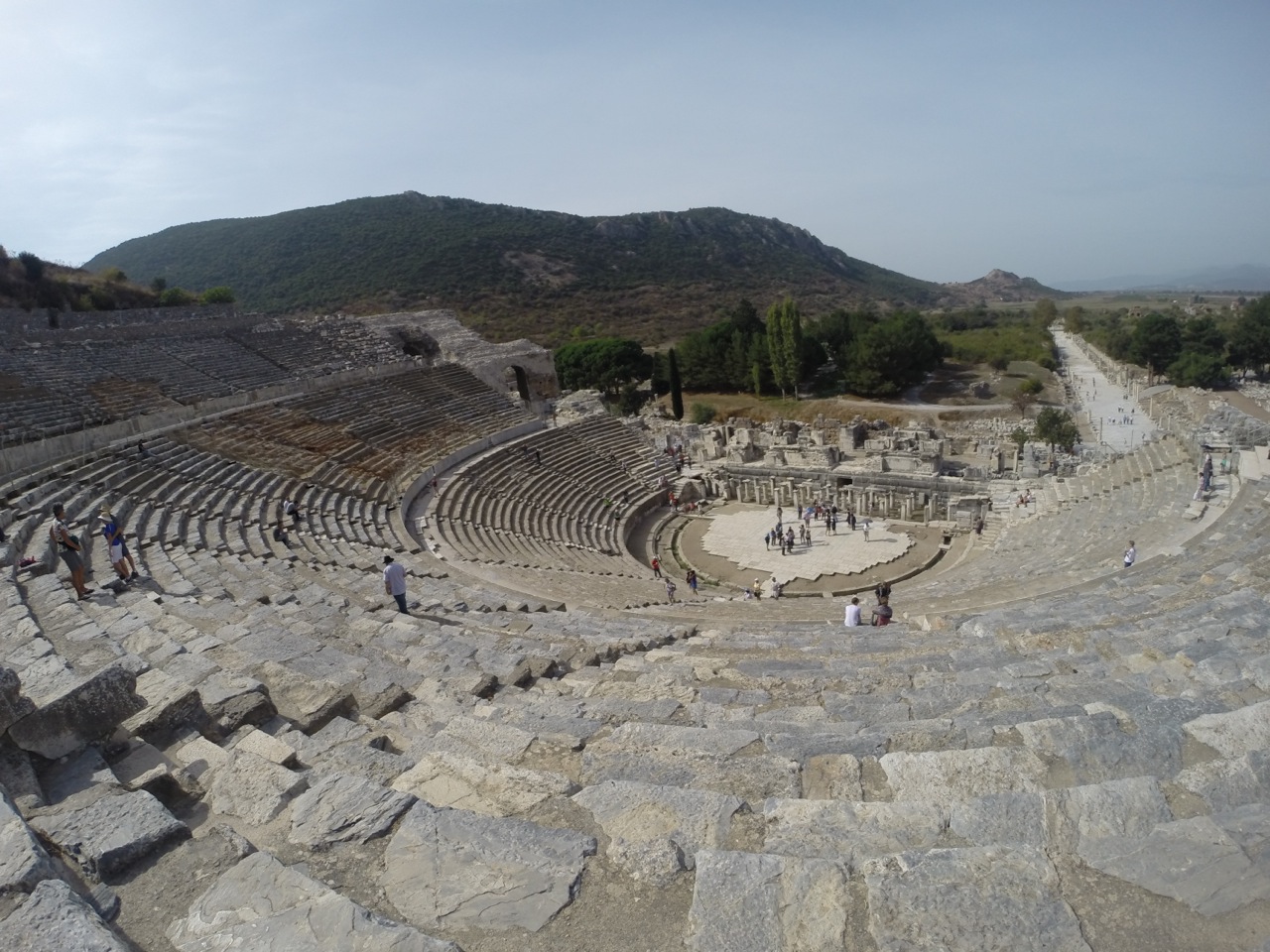
Ancient Theater at Ephesus

Keep an Open Door: Galen on Living Honestly

Galen, Affections [De propriorum animi cuiuslibet affectuum dignotione et curatione] 5.25–26

“Always be on guard against the matter which is greatest in this, once you choose to honor yourself. For it is possible always to keep at hand the memory of the hideousness of the soul of those who get angry and the beauty of those who are untroubled by rage.

For whoever, thanks to being accustomed to a mistaken behavior over time, has developed a stain of emotions which cannot be washed away,  must for as great an amount of time attend to each of those beliefs by which a man might become noble and good, should he heed them. We lose sight of a thing that falls easily from our minds because they have been previously filled by these emotions.

Therefore this must be pursued by each of those who want to be saved as if there were no proper season for taking it easy; and all of us must turn toward accusing ourselves, and we must listen to [others] gently, not for the sake of castigating them but for shaping them in turn.

Keep the door of your home open all the time and permit those who understand to enter at every opportune moment. If you are prepared in this way, be bold enough to be discovered as overcome by any of the major mistakes by none of those who enter. Just as it is possible to banish a bad feeling for one who is unwilling, it is easy to banish great ones for one who has made this decision.

When your door is open all the time, as I said, then let there be plenty of time for people who understand to enter. As all the other people who enter a public space attempt to act properly, so too act in the same way in your private home. But those who are ashamed before others only because they might be caught, do not feel shame before themselves alone: but you, feel shame before yourself especially, if you follow this precept.”

ὃ δ’ ἐϲτὶ μέγιϲτον ἐν τούτῳ, ἀεὶ φύλαττε, προῃρημένοϲ γε τιμᾶν ϲεαυτόν. ἔϲτι δὲ τοῦτο διὰ μνήμηϲ ἔχειν πρόχειρα τό τε τῶν ὀργιζομένων τῆϲ ψυχῆϲ αἶϲχοϲ τό τε τῶν ἀοργήτων κάλλοϲ. ὃϲ γὰρ ἁμαρτάνειν ἐθιϲθεὶϲ χρόνῳ πολλῷ δυϲέκνιπτον ἔϲχε τὴν κηλῖδα τῶν παθῶν, τούτῳ καὶ τῶν δογμάτων, οἷϲ πειθόμενοϲ ἀνὴρ γενήϲῃ καλὸϲ κἀγαθόϲ, ἐν πολλῷ χρόνῳ προϲήκει μελετᾶν ἕκαϲτον. ἐπιλανθανόμεθα γὰρ αὐτοῦ ῥᾳδίωϲ ἐκπίπτοντοϲ τῆϲ ψυχῆϲ ἡμῶν διὰ τὸ φθάϲαι πεπληρῶϲθαι τοῖϲ πάθεϲιν αὐτήν.

τοιγαροῦν παρακολουθητέον ἐϲτὶν ἑκάϲτῳ τῶν ϲωθῆναι βουλομένων, ὡϲ <δεῖ> μηδεμίαν ὥραν ἀπορρᾳθυμεῖν, ἐπι-τρεπτέον τε πᾶϲι κατηγορεῖν ἡμῶν <παρ>ακουϲτέον | τε πράωϲ αὐτῶν καὶ χάριν <ἰϲτέον> οὐ τοῖϲ κολακεύουϲιν, ἀλλὰ τοῖϲ ἐπιπλήττουϲιν.

ἀνεῴχθω ϲου ἡ θύρα διὰ παντὸϲ τῆϲ οἰκήϲεωϲ <καὶ> ἐξέϲτω τοῖϲ ϲυνήθεϲιν εἰϲιέναι πάντα καιρόν, ἢν οὕτωϲ ᾖϲ παρεϲκευαϲμένοϲ, ὡϲ θαρρεῖν ὑπὸ τῶν εἰϲιόντων εὑρίϲκεϲθαι μηδενὶ τῶν μεγάλων ἁμαρτημάτων ἰϲχυρῶϲ κατειλημμένον. ἔϲτι δ’ ὥϲπερ τῷ <ἄκοντι> πᾶν ἐκκόψαι δύϲκολον, οὕτω τὰ μεγάλα τῷ βουληθέντι ῥᾷϲτον.

τῆϲ θύραϲ οὖν ἀνεῳγμένηϲ ϲου διὰ παντόϲ, ὡϲ εἶπον, ἐξουϲία τοῖϲ ϲυνήθεϲιν ἔϲτω κατὰ πάντα καιρὸν εἰϲιέναι. ὡϲ δ’ οἱ ἄλλοι πάντεϲ ἄνθρωποι προελθόντεϲ εἰϲ τὸ δημόϲιον ἅπαντα πειρῶνται πράττειν κοϲμίωϲ, οὕτω ϲὺ κατὰ τὴν ἰδίαν οἰκίαν πρᾶττε. ἀλλ’ ἐκεῖνοι μὲν αἰδούμενοι τοὺϲ ἄλλουϲ ἁμαρτόντεϲ τι φωραθῆναι μόνουϲ ἑαυτοὺϲ οὐκ αἰδοῦνται, ϲὺ δὲ ϲαυτὸν αἰδοῦ μάλιϲτα πειθόμενοϲ τῷ φάντι·

Image result for ancient roman door

Also…

Laying Aside Your Greek and Latin

Thomas Arnold, The Use of the Classics:

Now when it is said, that men in manhood so often throw their Greek and Latin aside, and that this very fact shows the uselessness of their early studies, it is much more true to say that it shows how completely the literature of Greece and Rome would be forgotten, if our system of education did not keep up the knowledge of it. But it by no means shows that system to be useless, unless it followed that when a man laid aside his Greek and Latin books, he forgot also all that he had ever gained from them. This, however, is so far from being the case that even where the results of a classical education are least tangible, and least appreciated even by the individual himself still the mind often retains much of the effect of its early studies in the general liberality of its tastes and comparative comprehensiveness of its views and notions.

All this supposes, indeed, that classical instruction should be sensibly conducted ; it requires that a classical teacher should be fully acquainted with modem history and modern literature, no less than with those of Greece and Rome. What is, or perhaps what used to be, called a mere scholar, cannot possibly communicate to his pupils the main advantages of a classical education. The knowledge of the past is valuable, because without it our knowledge of the present and of the future must be scanty; but if the knowledge of the past be confined wholly to itself instead of being made to bear upon things around us, it be totally isolated from them, and so disguised by vagueness and misapprehension as to appear incapable of illustrating them, then indeed it becomes little better than laborious trifling, and they who declaim against it may be fully forgiven.

Thomas Arnold by Thomas Phillips.jpg