Plagues and (Human) Sacrifice


Christie SacrificeClement, First Letter to the Corinthians 55

“Let’s offer some examples from other peoples as well. Many kings and people in charge, have given themselves to death after listening to an oracle, so that they might save their citizens with their own blood. And many private citizens have exiled themselves in order to decrease civil strife.”

Ἵνα δὲ καὶ ὑποδείγματα ἐθνῶν ἐνέγκωμεν· πολλοὶ βασιλεῖς καὶ ἡγούμενοι, λοιμικοῦ τινος ἐνστάντος καιροῦ χρησμοδοτηθέντες παρέδωκαν ἑαυτοὺς εἰς θάνατον, ἵνα ῥύσωνται διὰ τοῦ ἑαυτῶν αἵματος τοὺς πολίτας· πολλοὶ ἐξεχώρησαν ἰδίων πόλεων, ἵνα μὴ στασιάζωσιν ἐπὶ πλεῖον.

Stobaios, Florilegium  3.7.69

“When a plague was afflicting the Spartans because of the murder of the heralds sent by Xerxes—because he demanded earth and water as signs of servitude—they received an oracle that they would be saved if some Spartans would be selected to be killed by the king. Then Boulis and Sperkhis came forward to the king because they believed they were worthy to be sacrificed. Because he was impressed by their bravery he ordered them to go home.”

Τοῦ αὐτοῦ. λοιμοῦ κατασχόντος τὴν Λακεδαίμονα διὰ τὴν ἀναίρεσιν τῶν κηρύκων τῶν ἀπεσταλέντων παρὰ Ξέρξου αἰτοῦντος γῆν καὶ ὕδωρ ὥσπερ ἀπαρχὰς δουλείας, χρησμὸς ἐδόθη ἐπαλλαγήσεσθαι αὐτούς, εἴ γέ τινες ἕλοιντο Λακεδαιμονίων παρὰ τοῦ βασιλέως ἀναιρεθῆναι. τότε Βοῦλις καὶ Σπέρχις ἀφικόμενοι πρὸς βασιλέα ἠξίουν ἀναιρεθῆναι· ὁ δὲ θαυμάσας αὐτῶν τὴν ἀρετὴν ἐπανιέναι προσέταξεν.

Diogenes Laertius, Vitae philosophorum 1.110 [Epimenides]

“Epimenides was known among the Greeks and was thought to be extremely beloved to the gods. For this reason, when the Athenians were once afflicted by a plague and the Pythian oracle prophesied that they should cleanse their city, they sent a ship along with Nikias the son of Nikêratos, summoning Epimenides.

He made it to Athens at the time of the 46th Olympiad [c. 596 BCE] and cleansed the city. He stopped it in the following manner. After obtaining white and black sheep, he led them to the Areopagos and then allowed them to go wherever they wanted there. He ordered the people following them to sacrifice the sheep to whichever god was proper to the place where each sheep laid down.

This is how the plague stopped. For this reason it is still even today possible to find altars without names in certain Athenian neighborhoods as a commemoration of that ancient cleansing. Some people report that Epimenides indicated the pollution from the Kylon scandal as the cause of the plague along with a resolution for it. For this reason, they killed two youths, Kratinos and Ktêsibios and the suffering was relieved.”

(110) γνωσθεὶς δὲ παρὰ τοῖς ῞Ελλησι θεοφιλέστατος εἶναι ὑπελήφθη. ὅθεν καὶ Ἀθηναίοις ποτὲ λοιμῶι κατεχομένοις ἔχρησεν ἡ Πυθία καθῆραι τὴν πόλιν, οἱ δὲ πέμπουσι ναῦν τε καὶ Νικίαν τὸν Νικηράτου εἰς Κρήτην, καλοῦντες τὸν Ἐπιμενίδην. καὶ ὃς ἐλθὼν ὀλυμπιάδι τεσσαρακοστῆι ἕκτηι ἐκάθηρεν αὐτῶν τὴν πόλιν, καὶ ἔπαυσε τὸν λοιμὸν τοῦτον τὸν τρόπον· λαβὼν πρόβατα μέλανά τε καὶ λευκά, ἤγαγεν πρὸς τὸν ῎Αρειον πάγον, κἀκεῖθεν εἴασεν ἰέναι οἷ βούλοιντο, προστάξας τοῖς ἀκολούθοις, ἔνθα ἂν κατακλινῆι αὐτῶν ἕκαστον, θύειν τῶι προσήκοντι θεῶι· καὶ οὕτω λῆξαι τὸ κακόν· ὅθεν ἔτι καὶ νῦν ἔστιν εὺρεῖν κατὰ τοὺς δήμους τῶν Ἀθηναίων βωμοὺς ἀνωνύμους, ὑπόμνημα τῆς τότε γενομενης ἐξιλάσεως. οἱ δὲ τὴν αἰτίαν εἰπεῖν τοῦ λοιμοῦ τὸ Κυλώνειον ἄγος σημαίνειν τε τὴν ἀπαλλαγήν· καὶ διὰ τοῦτο ἀποθανεῖν δύο νεανίας Κρατῖνον καὶ Κτησίβιον, καὶ λυθῆναι τὴν συμφοράν

Ps.-Plutarch, Parallela minora 19A, 310B-C

“Kuanippos, a Syracusan by birth, did not sacrifice to Dionysus alone. In rage over this, the god caused him to become drunk and then he raped his daughter Kuanê in some shadowy place. She took his ring and gave it to her nurse as to be proof of what had happened in the future.

When they were later struck by a plague and Pythian Apollo said that they had to sacrifice the impious person to the Gods-who-Protect, everyone else was uncertain about the oracle. Kuanê understood it. She grabbed her father by the hair and sacrificed herself over him once she’d butchered him on the altar.

That’s the story Dositheos tells in the third book of his Sicilian Tales.

Κυάνιππος γένει Συρακούσιος μόνωι Διονύσωι οὐκ ἔθυεν· ὁ δὲ θεὸς ὀργισθεὶς μέθην ἐνέσκηψε, καὶ ἐν τόπωι σκοτεινῶι τὴν θυγατέρα ἐβιάσατο Κυάνην· ἡ δὲ τὸν δακτύλιον περιελομένη ἔδωκε τῆι τροφῶι ἐσόμενον ἀναγνώρισμα. λοιμωξάντων δὲ, καὶ τοῦ Πυθίου εἰπόντος μὲν δεῖν τὸν ἀσεβῆ <᾽Απο>τροπαίοις θεοῖς σφαγιάσαι, τῶν δ᾽ ἄλλων ἀγνοούντων τὸν χρησμόν, γνοῦσα ἡ Κυάνη καὶ ἐπιλαβομένη τῶν τριχῶν εἷλκε, καὶ αὐτὴ κατασφάξασα τὸν πατέρα ἑαυτὴν ἐπέσφαξε, καθάπερ Δοσίθεος ἐν τῶι τρίτωι Σικελικῶν.

Plague of Athens - Wikipedia
The Plague of Athens, Michiel Sweerts, c. 1652–1654

Hesiod, Works and Days, 101-105

“The land is full of evils; the sea is full of evils.
Diseases come to humans at day and at night
they come on their own bringing evils to mortals in silence
Since devious Zeus took their voices away.”

πλείη μὲν γὰρ γαῖα κακῶν, πλείη δὲ θάλασσα·
νοῦσοι δ’ ἀνθρώποισιν ἐφ’ ἡμέρῃ, αἳ δ’ ἐπὶ νυκτὶ
αὐτόματοι φοιτῶσι κακὰ θνητοῖσι φέρουσαι
σιγῇ, ἐπεὶ φωνὴν ἐξείλετο μητίετα Ζεύς.
οὕτως οὔ τί πη ἔστι Διὸς νόον ἐξαλέασθαι.

Hesiod, Works and Days 240-247

“The whole state often suffers because of a wicked man
Who transgresses the gods and devises reckless deeds.
Kronos’ son rains down great pain on them from heaven:
Famine and plague and the people start to perish.
[Women don’t give birth and households waste away
Thanks to the vengeance of Olympian Zeus.] And at other times
Kronos’ son ruins their great army or their wall
Or he destroys their ships on the the sea.”

πολλάκι καὶ ξύμπασα πόλις κακοῦ ἀνδρὸς ἀπηύρα,
ὅστις ἀλιτραίνῃ καὶ ἀτάσθαλα μηχανάαται.
τοῖσιν δ’ οὐρανόθεν μέγ’ ἐπήγαγε πῆμα Κρονίων,
λιμὸν ὁμοῦ καὶ λοιμόν, ἀποφθινύθουσι δὲ λαοί·
[οὐδὲ γυναῖκες τίκτουσιν, μινύθουσι δὲ οἶκοι
Ζηνὸς φραδμοσύνῃσιν ᾿Ολυμπίου· ἄλλοτε δ’ αὖτε]
ἢ τῶν γε στρατὸν εὐρὺν ἀπώλεσεν ἢ ὅ γε τεῖχος
ἢ νέας ἐν πόντῳ Κρονίδης ἀποτείνυται αὐτῶν.

Unable to Relax

Petrarch, de Otio et Solitudine (6):

But the divine Augustus Caesar, who enjoyed more power than anyone else in the world, was unable to pursue this one thing which seems like a mere trifle to most people. To be sure, he often wished for the sweetness of leisure: whatever he was thinking or talking about would end in leisure; this was the consolation of his labors, this was the reward for his past deeds, this was the hope of time to come, the mass of all his riches and the power over all the world looked dirty in comparison to leisure. Then, finally, worn out by the abundance of all the things which can happen to the most fortunate person, he took his breath in the name of leisure alone. Seneca mentions this, and his ‘Certain Letter to the Senate’ attests to it as well.

With what pleasure should we think that he would have arrived at that leisure on which he had so sweetly bent his mind’s eye! But from the highest peak of fortune, on which the master of the world had sat, the descent to that low and simple desire seemed to steep to his mind as he chanced to think about it. And so, he stuck deliberating about it, and never made the descent until he died. For that reason (granted, among those who enjoyed leisure no place lay open to him then), because nevertheless nothing provides clearer testimony to how great the happiness of leisure is than this does: Caesar was not to be overlooked when this question was being debated – Caesar who, when he had it in his power to give anything, asked that nothing be given to him but leisure, and when he was in charge of everything, saw nothing more beautiful than his throne, except for leisure.

unnamed

at vero divus Augustus Cesar, quo nemo mortalium ampliori usus est potestate, hoc unum quod multis perexiguum videretur consequi non potuit. Otii nempe dulcedinem semper optavit: quicquid cogitabat, quicquid loquebatur in otium desinebat; hoc solamen presentium laborum, hec preteritorum merces, hec venturi temporis spes erat, omnis illi divitiarum suarum cumulus et totius orbis imperium in comparationem otii sordebat; denique in summa omnium que fortunatissimo homini contingere possunt bonorum copia defessus, in solo otii nomine respirabat. ⟨2⟩ Cuius rei et Anneus Seneca meminit et “quedam” eius “ad senatum” testatur “epystola”. ⟨3⟩ Quanta cum voluptate igitur eo perventurum fuisse credimus quo tam dulciter oculos mentis intenderat! Sed ab eminentissimo fortune culmine, cui rerum dominus insederat, ad illud humile modestumque desiderium preruptus forte cogitanti animo descensus videbatur; itaque deliberans herebat, nec unquam nisi moriens descendit. ⟨4⟩ Quocirca, licet inter otio fruentes nullus huic pateret locus, quia tamen quanta sit otii felicitas nullo clarius teste cognoscitur, non fuit cum de hoc ageretur pretermittendus Cesar, qui, cum omnia dare posset, nil sibi dari preter otium poscebat, cum omnibus preesset, nil solio suo pulcrius preter otium videbat.

Pliny Writes to a Zillow Agent

Pliny, Letters 1.24 to Baebius Hispanus

“My good friend Suetonius Tranquillus wants to buy a little land which your friend is reportedly selling. I ask you to take care to make sure he buys it for a fair price. Then he will be happy he bought it. A bad purchase is always displeasing and all the more so because it seems to remind its owner of his stupidity. Many things about this property are to Suetonius’ taste, if the price is good. It is close to the city, the roads are good, it is a moderate sized house and enough land to distract him without constraining him.

It is sufficient land for a scholar lately turned owner if it relieves a heavy head and refreshes eyes while one walks the boundary and wears out a single path, becoming familiar, taking the time to learn every little vine and keeping track of every tree.

I am explaining these things to you so you will understand how much he will be in my debt and I in yours if he can purchase this small property which has all the advantages to leave him no space at all for regret.”

C. Plinius Baebio Hispano Suo S.
1Tranquillus contubernalis meus vult emere agellum, quem venditare amicus tuus dicitur. Rogo cures, quanti aequum est emat; ita enim delectabit emisse. Nam mala emptio semper ingrata, eo maxime quod exprobrare stultitiam domino videtur. In hoc autem agello, si modo adriserit pretium, Tranquilli mei stomachum multa sollicitant, vicinitas urbis, opportunitas viae, mediocritas villae, modus ruris, qui avocet magis quam distringat. Scholasticis porro dominis, ut hic est, sufficit abunde tantum soli, ut relevare caput, reficere oculos, reptare per limitem unamque semitam terere omnesque viteculas suas nosse et numerare arbusculas possint. Haec tibi exposui, quo magis scires, quantum esset ille mihi ego tibi debiturus, si praediolum istud, quod commendatur his dotibus, tam salubriter emerit ut paenitentiae locum non relinquat. Vale.

Enter a caption

Sleep, Death, and Dying: Some Anecdotes for a Monday

These sayings come from the Gnomologium Vaticanum

128 “When Aesop was asked by someone how the greatest trouble might occur among people he responded “If the dead return and ask for their stuff back.”

῾Ο αὐτὸς ἐρωτώμενος ὑπό τινος πῶς ἂν μεγίστη ταραχὴ γένοιτο ἐν ἀνθρώποις ἔφη· „εἰ οἱ τετελευτηκότες ἀναστάντες ἀπαιτοῖεν τὰ ἴδια.”

160 “Biôn used to say that [we have] two teachers for death: the time before we were born and sleep.”

Βίων ἔλεγε δύο διδασκαλίας θανάτου εἶναι, τόν τε πρὸ τοῦ γενέσθαι χρόνον καὶ τὸν ὕπνον.

446 “Plato said that sleep was a short-lived death but death was a long-lived sleep.”

῾Ο αὐτὸς ἔφησε τὸν μὲν ὕπνον ὀλιγοχρόνιον θάνατον, τὸν δὲ θάνατον πολυχρόνιον ὕπνον.

64 “Anaxarkhos, the natural philosopher, when king Alexander said to him “I will hang you” responded: “Threaten others. It is no difference to me whether I rot above or below the earth.”

᾿Ανάξαρχος, ὁ φυσικὸς φιλόσοφος, ᾿Αλεξάνδρου τοῦ βασιλέως εἰπόντος αὐτῷ· „κρεμῶ σε”, „ἄλλοις”, ἔφη, „ἀπείλει· ἐμοὶ δὲ οὐδὲν διαφέρει ὑπὲρ γῆς ἢ κατὰ γῆς σήπεσθαι.”

Image result for ancient greek sleep and death vase
Sleep and Death on the Euphronios Krater

Just Acts and Raising Children

4 Stob. 2.31.38 = Aelian Frag 4

“Noble Socrates used to rebuke those fathers who failed to educate their sons and then, when they fell into poverty, took their boys to court and were suing them for lack of gratitude because they were not supporting their fathers. He said the fathers were expecting the impossible because people who have not learned just acts are never able to perform them.”

Σωκράτης ὁ γενναῖος ᾐτιᾶτο τῶν πατέρων ἐκείνους, ὅσοι <μὴ> παιδεύσαντες αὑτῶν τοὺς υἱεῖς, εἶτα ἀπορούμενοι ἦγον ἐπὶ τὰς ἀρχὰς τοὺς νεανίσκους καὶ ἔκρινον αὐτοὺς ἀχαριστίας, ὅτι οὐ τρέφονται ὑπ᾿ αὐτῶν. εἶπε γὰρ ἀδύνατον ἀξιοῦν τοὺς πατέρας· μὴ γὰρ οἵους τε εἶναι τοὺς μὴ μαθόντας τὰ δίκαια ποιεῖν αὐτά.

 Euripides, Herakles 586

“It is your right, child, to be a friend to friends
And to hate your enemies. But don’t do it to excess.”

Αμ. πρὸς σοῦ μέν, ὦ παῖ, τοῖς φίλοις <τ’> εἶναι φίλον
τά τ’ ἐχθρὰ μισεῖν· ἀλλὰ μὴ ‘πείγου λίαν.

Euripides, Herakles 631-636

“I will lead you taking you by the hands like a ship
That pulls smaller ships behind it. I do not refuse
Care to my children. All humans have this
Richer people love their children and so do
Those who have nothing. They differ in wealth.
Some have, some don’t. But every kind loves their children.”

ἄξω λαβών γε τούσδ’ ἐφολκίδας χεροῖν,
ναῦς δ’ ὣς ἐφέλξω· καὶ γὰρ οὐκ ἀναίνομαι
θεράπευμα τέκνων. πάντα τἀνθρώπων ἴσα·
φιλοῦσι παῖδας οἵ τ’ ἀμείνονες βροτῶν
οἵ τ’ οὐδὲν ὄντες· χρήμασιν δὲ διάφοροι·
ἔχουσιν, οἱ δ’ οὔ· πᾶν δὲ φιλότεκνον γένος.

Gift wine vessel

A Description of Genius or Madness: An Epistle on Democritus

Hippocrates, Letter 10

A man of ours takes the greatest risks in the city now, Hippocrates, who both in the present moment and in the future has been a hope for fame for the city. May this, by the all the gods, never be a source of envy! When he has become so sick because of the great wisdom which possesses him that as a result he was afraid he might not obtain it—well, that’s how Democritus himself lost hits mind, and then abandoned our city of Abdera.

When he forgot everything, even himself before, he was awake both night and day and was laughing at everything great and small and believing that he would accomplish nothing at all for his whole life. Someone marries, another goes into business, another is a public speaker, another serves in office, he is old, he votes, he votes against things, he is sick, he is wounded, he dies. He laughs at everything, even when he sees the downcast and angry or even those who are happy.

The man is researching into the matters of Hades and he is writing these things and he says that the air is full of ghosts and he heeds the voices of birds. He often gets up alone at night and seems to be singing songs in the silence. And he claims that he often travels into the boundlessness and says that there are an endless number of Democriteis like himself. He lives with his skin ruined as ruined judgment. We fear these things, Hippocrates, and we are anxious about them: so save us, and come home quickly and help our country, do not put us off.”

     Κινδυνεύεται τὰ μέγιστα τῇ πόλει νῦν, ῾Ιππόκρατες, ἀνὴρ τῶν ἡμετέρων, ὃς καὶ τῷ παρόντι χρόνῳ καὶ τῷ μέλλοντι αἰεὶ κλέος ἠλπίζετο τῇ πόλει· μηδὲ νῦν ὅδε, πάντες θεοὶ, φθονηθείη· οὕτως ὑπὸ πολλῆς τῆς κατεχούσης αὐτὸν σοφίης νενόσηκεν, ὥστε φόβος οὐχ ὁ τυχὼν, ἂν φθαρῇ τὸν λογισμὸν Δημόκριτος, ὄντως δὴ τὴν πόλιν ἡμῶν ᾿Αβδηριτῶν καταλειφθήσεσθαι. ᾿Εκλαθόμενος γὰρ ἁπάντων καὶ ἑωυτοῦ πρότερον, ἐγρηγορὼς καὶ νύκτα καὶ ἡμέρην, γελῶν ἕκαστα μικρὰ καὶ μεγάλα, καὶ μηδὲν οἰόμενος εἶναι τὸν βίον ὅλον διατελεῖ. Γαμεῖ τις, ὁ δὲ ἐμπορεύεται, ὁ δὲ δημηγορεῖ, ἄλλος ἄρχει, πρεσβεύει, χειροτονεῖται, ἀποχειροτονεῖται, νοσεῖ, τιτρώσκεται,  τέθνηκεν, ὁ δὲ γελᾷ πάντα, τοὺς μὲν κατηφεῖς τε καὶ σκυθρωποὺς, τοὺς δὲ χαίροντας ὁρῶν. Ζητεῖ δὲ ὁ ἀνὴρ καὶ περὶ τῶν ἐν Αδου,

Ζητεῖ δὲ ὁ ἀνὴρ καὶ περὶ τῶν ἐν Αδου, καὶ γράφει ταῦτα, καὶ εἰδώλων φησὶ πλήρη τὸν ἠέρα εἶναι, καὶ ὀρνέων φωνὰς ὠτακουστεῖ, καὶ πολλάκις νύκτωρ ἐξαναστὰς μοῦνος ἡσυχῇ ᾠδὰς ᾄδοντι ἔοικε, καὶ ἀποδημεῖν ἐνίοτε λέγει ἐς τὴν ἀπειρίην, καὶ Δημοκρίτους εἶναι ὁμοίους ἑωυτῷ ἀναριθμήτους, καὶ συνδιεφθορὼς τῇ γνώμῃ τὸ χρῶμα ζῇ. Ταῦτα φοβούμεθα, ῾Ιππόκρατες, ταῦτα ταραττόμεθα, ἀλλὰ σῶζε, καὶ ταχὺς ἐλθὼν νουθέτησον τὴν ἡμῶν πατρίδα, μηδὲ ἡμᾶς ἀποβάλῃς·

Suda s.v. γλουτῶν

“Democritus of Abdera was called the “Laugher” because he laughed at the useless seriousness of human beings”

ὅτι ὁ Δημόκριτος ὁ ᾿Αβδηρίτης ἐπεκλήθη Γελασῖνος διὰ τὸ γελᾶν πρὸς τὸ κενόσπουδον τῶν ἀνθρώπων.


More on Democritus:

Robert Burton’s Sketch

Aulus Gellius with Laberius’ Play on Democritus’ Blinding

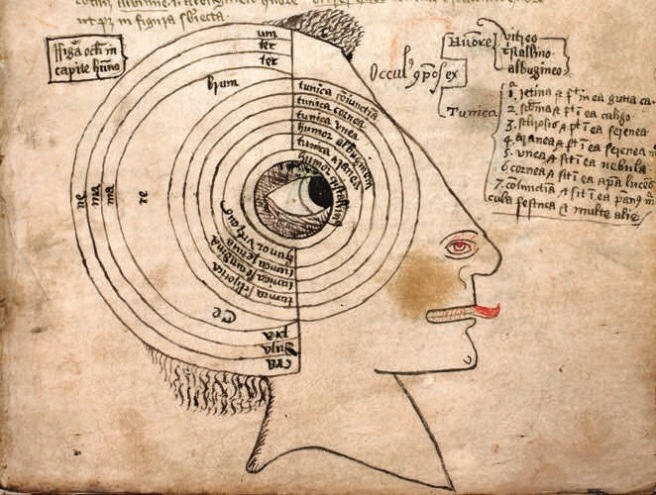
From ‘The Book of Macharius on the eye’, late 14th-century. BL, Sloane MS 981, f.68.

Never Quote Greek or French

Benjamin Disraeli, Endymion (Chp. 76):

“Hume was the first man who attacked the estimates. What are you going to do with yourself to-day? Will you take your mutton with me? You must come in boots, for it is now dinner-time, and you must return, I fancy. Twenty years ago, no man would think of coming down to the House except in evening dress. I remember so late as Mr. Canning, the minister always came down in silk stockings and pantaloons, or knee breeches. All things change, and quoting Virgil, as that young gentleman has just done, will be the next thing to disappear. In the last parliament we often had Latin quotations, but never from a member with a new constituency. I have heard Greek quoted here, but that was long ago, and a great mistake. The House was quite alarmed. Charles Fox used to say as to quotation—‘No Greek; as much Latin as you like; and never French under any circumstances. No English poet unless he had completed his century.’ These were like some other good rules, the unwritten orders of the House of Commons.”

Benjamin Disraeli - Wikipedia

Hold Olympics, End a Plague? Make Herakles Your Friend Too

Pausanias, Description of Greece, 5.4.5-6

“After Oksulos, Laias, his son, held power, but I have learned that his descendants did not rule as kings. I am going to pass over them even though I know who they are, since I do not want my story to descend to talking about private citizens.

Later on, Iphitos, who was a descendant of Oksulos and around the same age as Lukourgos who wrong the laws for the Spartans, he organized the contests at Olympia and re-organized the Olympic festival and the truce from the beginning, since the games had been neglected for some amount of time. I explain this in the parts of my record which discuss the region of Olympia.

It was Iphitos’ responsibility to ask the god in Delphi for a relief from suffering since Greece was at that time especially suffering destruction from civil strife and epidemic disease. The story is that the Pythia commanded that Iphitos himself had to renew the Olympic Games along with the Eleians. Iphitos persuaded the Eleians to sacrifice to Herakles too, even though that had previously believed that Herakles was their enemy.

The inscription at Olympia claims that Iphitos was the child of Haimon. But most Greeks say that he was the son of Praksônides, not Haimôn. But the Eleians’ ancient writings attribute Iphitos to a father of the same name.”

μετὰ δὲ ῎Οξυλον Λαίας ἔσχεν ὁ ᾽Οξύλου τὴν ἀρχήν, οὐ μὴν τούς γε ἀπογόνους αὐτοῦ βασιλεύοντας εὕρισκον, καὶ σφᾶς ἐπιστάμενος ὅμως παρίημι· οὐ γάρ τί μοι καταβῆναι τὸν λόγον ἠθέλησα ἐς ἄνδρας ἰδιώτας. χρόνωι δὲ ὕστερον ῎Ιφιτος, γένος μὲν ὢν ἀπὸ ᾽Οξύλου, ἡλικίαν δὲ κατὰ Λυκοῦργον τὸν γράψαντα Λακεδαιμονίοις τοὺς νόμους, τὸν ἀγῶνα διέθηκεν ἐν ᾽Ολυμπίαι πανήγυρίν τε Ολυμπικὴν αὖθις ἐξ ἀρχῆς καὶ ἐκεχειρίαν κατεστήσατο, ἐκλιπόντα ἐπὶ χρόνον ὁπόσος δὴ οὗτος ἦν. αἰτίαν δέ, δι᾽ ἥντινα ἐξέλιπε τὰ ᾽Ολύμπια, ἐν τοῖς ἔχουσιν ἐς ᾽Ολυμπίαν τοῦ λόγου δηλώσω. (6) τῶι δὲ ᾽Ιφίτωι, φθειρομένης τότε δὴ μάλιστα τῆς ῾Ελλάδος ὑπὸ ἐμφυλίων στάσεων καὶ ὑπὸ νόσου λοιμώδους, ἐπῆλθεν αἰτῆσαι τὸν ἐν Δελφοῖς θεὸν λύσιν τῶν κακῶν· καί οἱ προσταχθῆναί φασιν ὑπὸ τῆς Πυθίας ὡς αὐτόν τε ῎Ιφιτον δέοι καὶ ᾽Ηλείους τὸν ᾽Ολυμπικὸν ἀγῶνα ἀνανεώσασθαι. ἔπεισε δὲ ᾽Ηλείους ῎Ιφιτος καὶ ῾Ηρακλεῖ θύειν, τὸ πρὸ τούτου πολέμιόν σφισιν ῾Ηρακλέα εἶναι νομίζοντας. τὸν δὲ ῎Ιφιτον τὸ ἐπίγραμμα τὸ ἐν ᾽Ολυμπίαι φησὶν Αἵμονος παῖδα εἶναι· ῾Ελλήνων δὲ οἱ πολλοὶ Πραξωνίδου καὶ οὐχ Αἵμονος εἶναί φασι· τὰ δὲ ᾽Ηλείων γράμματα ἀρχαῖα ἐς πατέρα ὁμώνυμον ἀνῆγε τὸν ῎Ιφιτον.

File:A competitor in the long jump, Black-figured Tyrrhenian amphora showing athletes and a combat scene, Greek, but made for the Etruscan market, 540 BC, found near Rome, Winning at the ancient Games, British Museum (7675649600).jpg
Jump Your Way to Health! Black Figure Vase, British Museum

How To Talk to a (Potentially Deranged) Patient

Rufus of Ephesus, Quest. Medic. 2

“It is right to ask someone who is sick questions from which something of the matters concerning the sickness might be diagnosed and might be treated better. First, I advise to make inquiries from the one who is sick himself. For you might from this learn how much the person is sick or healthy in respect to judgment along with his strength and weakness and what type of sickness and what place he has suffered.

If the patient answers right away and properly and plausibly and without stumbling in speech or sense and if it is according to is typical matter—if he is otherwise orderly, in a gentle and orderly way, but, if otherwise bold or fearful, in a brash or timid manner—it is right to consider him to be in his right mind. But if you ask him some things and he should answer others or forget in the middle of speaking, if his speech is unsteady and unclear and there are shifts from his first manner to the opposite, these are all signs of being deranged.”

     ᾿Ερωτήματα χρὴ τὸν νοσοῦντα ἐρωτᾶν, ἐξ ὧν ἂν καὶ διαγνωσθείη τι τῶν περὶ τὴν νόσον ἀκριβέστερον καὶ θεραπευθείη κάλλιον. πρῶτον δὲ ἐκεῖνο ὑποτίθημι τὰς πεύσεις αὐτοῦ τοῦ νοσοῦντος ποιεῖσθαι. μάθοις γὰρ ἂν ἐνθένδε ὅσα τε κατὰ γνώμην νοσεῖ ἢ ὑγιαίνει ὁ ἄνθρωπος καὶ ῥώμην αὐτοῦ καὶ ἀσθένειαν, καὶ τίνα ἰδέαν νόσου καὶ τίνα τόπον πεπονηκὼς <εἴη>. εἰ μὲν γὰρ ἐφεξῆς τε ἀποκρίνοιτο καὶ μνημονικῶς καὶ τὰ εἰκότα καὶ μηδαμῆ σφαλλόμενος μήτε τῇ γλώττῃ μήτε τῇ γνώμῃ καὶ εἰ καθ’ ὁρμὴν τὴν οἰκείαν, —εἰ μέν ἐστιν ἄλλως κόσμιος, πράως καὶ

κοσμίως, ὁ δ’ αὖ φύσει θρασὺς ἢ δειλὸς θρασέως ἢ δεδοικ<ότ>ως—τοῦτον μὲν χρὴ νομίζειν τὰ γοῦν κατὰ γνώμην καλῶς ἔχειν. εἰ δὲ καὶ ἄλλα σὺ μὲν ἐρωτᾷς, ὁ δὲ ἄλλα ἀποκρίνοιτο καὶ εἰ μεταξὺ λέγων ἐπιλανθάνοιτο, αἱ δὲ τρομώδεις καὶ ἀσαφεῖς γλῶσσαι καὶ αἱ μεταστάσεις ἀπὸ τοῦ ἀρχαίου τρόπου πρὸς τὸ ἐναντίον, πάντα ταῦτα παρακρουστικά.


Image result for medieval manuscript medicine doctor
Sloane MS 1975, f. 91v

Infinity Games in the Mind

Lucretius, De Rerum Natura 4.973-983

“And whenever people give uninterrupted attention
To games many days in a row, we often see
That when they have stopped training their senses on this,
There are still certain pathways left open in the mind
Where the impressions of these things still may enter.

For many days later then, they see these same images
Before their eyes so that even when they are alert
They think they see dancers moving their soft limbs,
And their ears catch bits of the lyre’s liquid song or ringing chords
And along with it the marvelous props of the stage shine on”

Et quicumque dies multos ex ordine ludis
adsiduas dederunt operas, plerumque videmus,
cum iam destiterunt ea sensibus usurpare,
relicuas tamen esse vias in mente patentis,
qua possint eadem rerum simulacra venire.
per multos itaque illa dies eadem obversantur
ante oculos, etiam vigilantes ut videantur
cernere saltantis et mollia membra moventis,
et citharae liquidum carmen chordasque loquentis
auribus accipere, et consessum cernere eundem
scenaique simul varios splendere decores.

Image result for super mario bros 1