The Second Best of the Achaeans? Introducing the NANAIHB

As the world heats up, burns, and faces the uncertainty of our current mix of plague and politics, we seem desperate to look away from our Anglo-American race to the bottom to the distraction of sports. Yes, indeed, in the US the professional leagues are on the way to save us from Marble Races with plans for baseball and basketball to stage shortened seasons and professional football to proceed as normal (because the NFL is traditionally so concerned with player health). Given the players withdrawing or already testing positive for coronavirus, it seems likely that the smarter bets are on things falling apart rather than on the outcomes of particular games.

So, if you don’t want to feel too smug with Pliny (“I wonder that so many thousands of men can feel such a childish desire to watch horses running over and over”), we are launching our own bracket competition for the next few weeks: the Non-Atreid Non-Achilles Iliadic Hero Bracket (NANAIHB) to finally end the question of who just is the [second] best of the Achaeans. There are 12 14 contestants for 4 rounds of competition.

Now, this is is some sensitive ground, I know. but we’ve talked it over and we’re willing to forgo some usual debates about Ajax vs. Odysseus (that never ends well) or Diomedes as the alter-Akhilleus to turn to a time-tested, truly perfect solution: polling. We will run a poll every other day for the duration of the bracket on twitter in a single-elimination combination for the crown (or, um scepter?).

Before you get too upset about this one, let me be clear: Achilles complains that Agamemnon boasts to be “best of the Achaeans” (ὃς νῦν πολλὸν ἄριστος ᾿Αχαιῶν εὔχεται εἶναι, 1.91) while later asserting that he will be upset because he did not honor the one who is (χωόμενος ὅ τ’ ἄριστον ᾿Αχαιῶν οὐδὲν ἔτισας, 1.244). The narrative later claims that Telamonian Ajax was the “best of men while Achilles was raging” (ἀνδρῶν αὖ μέγ’ ἄριστος ἔην Τελαμώνιος Αἴας ὄφρ’ ᾿Αχιλεὺς μήνιεν, 1.768-769) and I suspect that the difference between being “best of men” and “best of the Acheans” might be meaningful….

Why NANAIHB? Since Achilles is the best of the Achaeans, he’s obviously out. After him, the picture is more complicated. Tradition pits Ajax and Odysseus against one another in claiming Achilles’ special weapons, but our Iliad clearly makes Diomedes the man to beat when Achilles is off his feet. And, yet, in crucial moments Idomeneus and Thoas (also members of the ‘council of elders’) jump in to save the day. Don’t sleep on Idomeneus! Agamemnon lists him with Ajax, Odysseus and Achilles as a leader!(εἷς δέ τις ἀρχὸς ἀνὴρ βουληφόρος ἔστω, / ἢ Αἴας ἢ ᾿Ιδομενεὺς ἢ δῖος ᾿Οδυσσεὺς / ἠὲ σὺ Πηλεΐδη πάντων ἐκπαγλότατ’ ἀνδρῶν, 1.145-147). Thoas, is listed as one of the nine who stand to fight Hektor in a dual in book 7 (168) and he’s the best of the Aitolians….(15.281).

We’ve left out the Atreids (Agamemnon and Menelaos) because (1) no one wins when someone fights with them and (2) if Menelaos loses, what would the whole Trojan War even matter? (Yes, that was a dig against a certain movie…)

NANAIHB (2)

We split the groups into Front-runners (Patroklos, Diomedes, Odysseus, Ajax, Idomeneus, and Thoas) and then a collection of wannabes, pretenders, and sneaky contenders (Tlepolemos, Sthenelos, Teucer, Thersites, Antilochus, Oilean Ajax). This second list was winnowed down using random numbers, shedding Makhaon, Meriones, and Eurypylos, shedding Eurupylos: Makhaon and Meriones were reintroduced by divine intervention and now there are 14 contestants!

I gave the clear front-runners preferential treatment and assigned them the top four seeds using a random-number generator. I did the same thing to set up the rest of the competition. the random number generator has the added cleruchal bonus of functioning like the drawing of lots before the duel in Iliad 7; polling of the twitter masses replicates the time-honored judgment of Greek contests by popular acclaim (see, for instance, the contest of Hesiod and Homer). Yes, Odysseus randomly got the first seed, twice. What can you do when Athena is on someone’s side?

So, here we are, day 1, battle 1: Teucer vs. Tlepolemos.

NANAIHB day 1

Teucer, Ajax’s brother, another son of Telemon, a legendary founder of Salamis in some traditions and a fabulous archer. He does not get mentioned in the Catalogue of Ships and he has his first kill in book 6. He sometimes appears taking shots from behind his brother’s shield (8.266) but that’s a sign of his intelligence and not a lack of valor! He mows down a group of Trojans in book 8 (272-277) and Agamemnon exclaims “You were born as a saving light / to the Danaans and your father Telamon who raised you up when you were little / in his home even though you are a bastard.” (αἴ κέν τι φόως Δαναοῖσι γένηαι / πατρί τε σῷ Τελαμῶνι, ὅ σ’ ἔτρεφε τυτθὸν ἐόντα, / καί σε νόθον περ ἐόντα κομίσσατο ᾧ ἐνὶ οἴκῳ, 8.282-284).

Tlepolemos? Well, he’s the “big and noble” son o Herakles who sailed from Rhodes with nine ships! (2.653-666). Tlepolemos might have been a bit of a wild child: he fled to Rhodes after killing his father’s uncle accidentally when old Likymnios got in the way of him beating an enslaved servant. So, Tlepolemos becomes something of a foundational hero in Rhodes. In the Iliad, he draws the short straw and faces Sarpedon in a lengthy battle in book 5, which our epic uses as an opportunity to set a minor son of Herakles against an iliadic son of Zeus. He’s a big, strong, brash-talking  warrior. (Spoiler: Sarpedon kills him.)

These two are competing for a chance to face Odysseus….so, who’s it going to be? This sets the island of Salamis against the traditions of Rhodes, an archer against a bruiser, a bastard son of Telamon against an uncle-killing Heraklean braggart. All for the the dubious honor of most likely getting shivved in the night by Odysseus.

Look to twitter for the poll and the announcement of the victor when the contest is done.

Recap the Competition Here.


Day 2

Day 3

Book Collections in Antiquity

Athenaeus, Deipnosophistae 1.4:

“His acquisition of ancient Greek books was so great as to outstrip all of those known for their collections – Polycrates of Samos, Peisistratus the Athenian tyrant, Eucleides (himself also an Athenian), Nicocrates of Cyprus, and even the kings of Pergamum, Euripides the poet, and Aristotle and Theophrastus the philosophers, as well as Neleus, who was eminently concerned with books. Our own compatriot Ptolemy, surnamed Philadelphos, bought all of the books from Neleus and brought them from Athens and Rhodes to beautiful Alexandria. Consequently, one might apply the verses of Antiphanes to him:

‘Always be zealous for the Muses and for words wherever some work of wisdom is laid out.”

Image result for library of alexandria

ἦν δέ, φησί, καὶ βιβλίων κτῆσις αὐτῷ ἀρχαίων Ἑλληνικῶν τοσαύτη ὡς ὑπερβάλλειν πάντας τοὺς ἐπὶ συναγωγῇ τεθαυμασμένους, Πολυκράτην τε τὸν Σάμιον καὶ Πεισίστρατον τὸν Ἀθηναίων τυραννήσαντα Εὐκλείδην τε τὸν καὶ αὐτὸν Ἀθηναῖον καὶ Νικοκράτην τὸν Κύπριον ἔτι τε τοὺς Περγάμου βασιλέας Εὐριπίδην τε τὸν ποιητὴν Ἀριστοτέλην τε τὸν φιλόσοφον <καὶ Θεόφραστον> καὶ τὸν τὰ τούτων διατηρήσαντα βιβλία Νηλέα: παρ᾽ οὗ πάντα, φησί, πριάμενος ὁ ἡμεδαπὸς βασιλεὺς Πτολεμαῖος, Φιλάδελφος δὲ ἐπίκλην, μετὰ τῶν Ἀθήνηθεν καὶ τῶν ἀπὸ Ῥόδου εἰς τὴν καλὴν Ἀλεξάνδρειαν μετήγαγε. διόπερ ἐκεῖνα τῶν Ἀντιφάνους ἐρεῖ τις εἰς αὐτόν ῾II 124 K’:’

ἀεὶ δὲ πρὸς Μούσαισι καὶ λόγοις πάρει,
ὅπου <τι> σοφίας ἔργον ἐξετάζεται. —

If Our Republic Falls Apart

Cicero, Letters to Friends 6.2 To A. Torquatus, April 45

“Truly our republic will either be oppressed by constant fighting, will flourish again if weapons or put down, or face complete ruin. If we turn to fighting, you don’t need to worry about which side forgives you or which you help. If we put weapons down in a treaty, give them up in exhaustion, or have them taken away in victory, the the state will breathe anew and you will be allowed to enjoy your status and your luck. But if everything falls apart—that every outcome which the most prudent man, Marcus Antonius was already fearing when he gazed at the great, impending destruction—then one solace will remain for you, even if it is sad however necessary for someone like you: that what happens to an individual will need be mourned no less than what has transpired for the state.

The detail contained in these few words—and there would have been more best not written in a letter—you will understand something you probably already do without any update from me that you have something to hope for and nothing to be afraid of in this or any other state. If all goes to hell, then you must bear what chance brings since you would not wish to survive the end of the republic, even if it is possible, especially since you are free of guilt. That’s enough of these things.”

est enim aut armis urgeri rem publicam sempiternis aut iis positis recreari aliquando aut funditus interire. si arma valebunt, nec eos a quibus reciperis vereri debes nec eos quos adiuvisti; si armis aut condicione positis aut defatigatione abiectis aut victoria detractis civitas respiraverit, et dignitate tua frui tibi et fortunis licebit; sin omnino interierint omnia fueritque is exitus quem vir prudentissimus, M. Antonius, iam tum timebat cum tantum instare malorum suspicabatur, misera est illa quidem consolatio, tali praesertim civi et viro, sed tamen necessaria, nihil esse praecipue cuiquam dolendum in eo quod accidat universis.

Quae vis insit in his paucis verbis (plura enim committenda epistulae non erant) si attendes, quod facis profecto etiam sine meis litteris, intelleges te aliquid habere quod speres, nihil quod aut hoc aut aliquo rei publicae statu timeas; omnia si interierint, cum superstitem te esse rei publicae ne si liceat quidem velis, ferendam esse fortunam, praesertim quae absit a culpa. sed haec hactenus.

File:Cicerone - panoramio.jpg
Cicero

Oh, the Humanity!

Aulus Gellius, Attic Nights 13.17:

“That the term Humanity” does not mean that which the common herd of people thinks, but those who have spoken sincerely have used that word more properly.

Those who have produced Latin words and have used them properly did not wish “humanity” to be what the common people think – what is called “philanthropia” in Greek and means a kind of dexterity and a promiscuous benevolence toward all people. Rather, they “humanity” what the Greeks call “paideia”, though we say that this is erudition and instruction in the good arts. Those who sincerely desire and seek these good arts out are called humanissimi. The concern for and instruction in this knowledge is given to humans alone of all the animals in the world, and it is for that reason that it is called “humanity”.

Therefore, almost all books make it clear that the ancients used the word in this way, especially Varro and Cicero. For this reason, I have thought it enough to produce just one example. And so, I have excerpted the words of Varro in his first book Of Human Affairs, the beginning of which reads:

‘Praxiteles, who on account of his exceptional art is unknown to no one who is in any way more humane (humaniori).’

By ‘humaniori’, he does not mean (as common people do) someone more easy and tractable and benevolent, though uneducated in literature – for this is wholly out of keeping with the sentence – but rather, someone who is more erudite and learned, and who knows who Praxiteles was from books and history.


“Humanitatem” non significare id, quod volgus putat, sed eo vocabulo, qui sinceriter locuti sunt, magis proprie esse usos.

I. Qui verba Latina fecerunt quique his probe usi sunt, “humanitatem” non id esse voluerunt, quod volgus existimat quodque a Graecis philanthropia dicitur et significat dexteritatem quandam benivolentiamque erga omnis homines promiscam, sed “humanitatem” appellaverunt id propemodum, quod Graeci paideian vocant, nos eruditionem institutionemque in bonas artis dicimus. Quas qui sinceriter cupiunt adpetuntque, hi sunt vel maxime humanissimi. Huius enim scientiae cura et disciplina ex universis animantibus uni homini datast idcircoque “humanitas” appellata est. II. Sic igitur eo verbo veteres esse usos et cumprimis M. Varronem Marcumque Tullium omnes ferme libri declarant. Quamobrem satis habui unum interim exemplum promere. III. Itaque verba posui Varronis e libro rerum humanarum primo, cuius principium hoc est: “Praxiteles, qui propter artificium egregium nemini est paulum modo humaniori ignotus”. IV. “Humaniori” inquit non ita, ut vulgo dicitur, facili et tractabili et benivolo, tametsi rudis litterarum sit – hoc enim cum sententia nequaquam convenit -, sed eruditiori doctiorique, qui Praxitelem, quid fuerit, et ex libris et ex historia cognoverit.


Ennius the Press Secretary

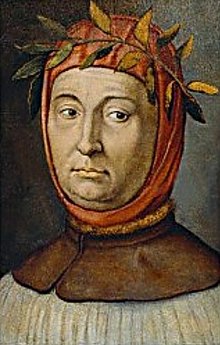
Petrarch, Africa 9.10-31:

Ennius sat silently meditating on the deck, the constant witness to and companion in Scipio’s affairs. Scipio approached him and began in these pleasant words:

‘Will you never break your silence, o my sweet solace of my many labors? Speak, I beg you. For you can see my heart melting away from many cares. You’re accustomed to ease them with your pleasant speech. Just relax your face, loosen your expression, if highest Apollo gave you the talent which you excel in at your birth, if the crowd of the goddesses washed you as an infant submerged in the Castalian pool on sacred Helicon, led you to the high hills, and have you the pen, the voice, and the mind of a poet.’

Ennius raised his head at these words and spoke thus: ‘O young flower of Italy, certain pledge of divine offspring, why does it please you to be moved by my mouth, or why do you order me thus? Indeed, I was considering in my silent heart that no age will ever bring forth a greater work of outstanding virtue than the one which our happy age sees; no one will ever move anything great under his mind for whom an honest name does not sound among his great hopes, who will not, coming to the point, wish to recall the deeds of Scipio, who would not wish to see your face as a gift. The greater fame of the grave will remain for you after the grave, for Spite plucks away at mortal achievements. But Death consumes Envy and wards it off from the funeral busts. Your glory had already conquered this pest, and now it safely flees the ground, the diseases and malignant habits of people, through the lofty breezes, and bore itself as the equal to the gods.”

Petrarch - Wikipedia

Puppe ducis media tacitus meditansque sedebat

Ennius, assiduus rerum testisque comesque;

Scipio quem tandem aggreditur verbisque benignis

Excitat incipiens: “Nunquamne silentia rumpes,

O michi multorum solamen dulce laborum?

Fare, precor; nam perpetuis tabentia curis

Pectora nostra vides. Placido sermone levare

Illa soles; faciesque modo, tantum ora resolve,

Si tibi nascenti, quo polles, summus Apollo

Ingenium celeste dedit, si turba dearum

Castalio infantem demersum gurgite lavit

Ex Elicone sacro, collesque eduxit in altos,

Et calamum et vocem tribuit mentemque poete.”

Ennius auditis caput extulit atque ita fatur:

“O flos Italie, iuvenis, stirpisque deorum

Certa fides, quid nunc nostro placet ore moveri,

Quidve iubes? Equidem tacito modo pectore mecum

Volvebam quod nulla ferent iam secula maius

Eximie virtutis opus, quam nostra quod etas

Leta videt, nullusque unquam sub mente movebit

Grande aliquid, cui non, magnas spes inter, honestum

Nomen in ore sonet, qui non venturus ad actum

Scipiade meminisse velit, pro munere vultus

Non cupiat vidisse tuos. Maiorque sepulcri

Post cineres te fama manet. Mortalia Livor

Carpit enim; at Mors Invidiam consumit et arcet

Ac procul a bustis abigit. Tua gloria pridem

Vicerat hanc pestem, iamque altas tuta per auras

Fugit humum morbosque hominum moresque malignos,

Seque parem tulit alma deis.

Terence on His Haters

Terence, The Woman of Andros Prologue 15-23

“These people attack the poem and deny
That it is proper to ruin stories in this way.
But aren’t they showing that they understand nothing in being so clever?
When they criticize me, they accuse Naevius, Plautus and Ennius,
Those authorities I hold as my my own,
Since it is better to take their negligence as a model
Than to copy the pedantic diligence of those fools.
I warn them to be quiet from now on and stop
Talking shit unless they want to own up to their own failings.”

id isti vituperant factum atque in eo disputant
contaminari non decere fabulas.
faciuntne intellegendo ut nil intellegant?
qui quom hunc accusant, Naevium, Plautum, Ennium
accusant, quos hic noster auctores habet,
quorum aemulari exoptat neglegentiam
potius quam istorum obscuram diligentiam.
dehinc ut quiescant porro moneo et desinant
maledicere, malefacta ne noscant sua.


Divine Justice is a Lot Slower than it Used to Be

Anonymus, Origin of the Roman Tribe, 18, 2

“Aremulus Silvius ruled after him, and he was reported to be a man of such arrogance against not only humans but even against the gods that he declared that he was greater than Jupiter and when the sky was thundering told his troops to slap their shields with their swords to make a louder sound.

Well, he suffered retribution for this almost immediately: he was struck by lightning, ripped away by a wind, and plunged into the Alban Lake, according to the fourth book of the Annals and in the second Epitome following Piso. Aufidius claims in his Epitome—and Domitius repeats this in his first book—that Aremulus was not hit by lightning, but that he was immersed in the Alban Lake along with his whole palace thanks to an earthquake.”

Post eum regnavit Aremulus Silvius, qui tantae superbiae non adversum homines modo, sed etiam deos fuisse traditur, ut praedicaret superiorem se esse ipso Jove ac tonante caelo militibus imperaret, ut telis clipeos quaterent, dictitaretque clariorem sonum se facere. (3) qui tamen praesenti affectus est poena; nam fulmine ictus raptusque turbine in Albanum lacum praecipitatus est, ut scriptum est Annalium libro quarto et Epitomarum Pisonis secundo. (4) Aufidius sane in Epitomis et Domitius libro primo non fulmine ictum, sed terrae motu prolapsam simul cum eo regiam in Albanum lacum tradunt.

The status of Zeus at Tonnerre de Zeus at Parc Astérix

Who’s Your Favorite Historian, and Why Is It Tacitus?

Edward Gibbon, The Decline and Fall of the Roman Empire (XVI):

“Notwithstanding it is probable that Tacitus was born some years before the fire of Rome, he could derive only from reading and conversation the knowledge of an event which happened during his infancy. Before he gave himself to the public, he calmly waited till his genius had attained its full maturity, and he was more than forty years of age, when a grateful regard for the memory of the virtuous Agricola extorted from him the most early of those historical compositions which will delight and instruct the most distant posterity. After making a trial of his strength in the life of Agricola and the description of Germany, he conceived, and at length executed, a more arduous work; the history of Rome, in thirty books, from the fall of Nero to the accession of Nerva. The administration of Nerva introduced an age of justice and propriety, which Tacitus had destined for the occupation of his old age; but when he took a nearer view of his subject, judging, perhaps, that it was a more honorable or a less invidious office to record the vices of past tyrants, than to celebrate the virtues of a reigning monarch, he chose rather to relate, under the form of annals, the actions of the four immediate successors of Augustus.

To collect, to dispose, and to adorn a series of fourscore years, in an immortal work, every sentence of which is pregnant with the deepest observations and the most lively images, was an undertaking sufficient to exercise the genius of Tacitus himself during the greatest part of his life. In the last years of the reign of Trajan, whilst the victorious monarch extended the power of Rome beyond its ancient limits, the historian was describing, in the second and fourth books of his annals, the tyranny of Tiberius; and the emperor Hadrian must have succeeded to the throne, before Tacitus, in the regular prosecution of his work, could relate the fire of the capital, and the cruelty of Nero towards the unfortunate Christians. At the distance of sixty years, it was the duty of the annalist to adopt the narratives of contemporaries; but it was natural for the philosopher to indulge himself in the description of the origin, the progress, and the character of the new sect, not so much according to the knowledge or prejudices of the age of Nero, as according to those of the time of Hadrian. Tacitus very frequently trusts to the curiosity or reflection of his readers to supply those intermediate circumstances and ideas, which, in his extreme conciseness, he has thought proper to suppress.”

Historical Wallpapers: Great Fire of Rome (Magnum ...

The Right To Criticize the King: The Iliad and Freedom of Speech

Homer, Iliad 9.32-34

“After a while, Diomedes good-at-the warcry, addressed them:
“I will fight with you first because you are being foolish, son of Atreus,
Which is right, Lord, in the assembly. So don’t get angry at all.”

ὀψὲ δὲ δὴ μετέειπε βοὴν ἀγαθὸς Διομήδης·
᾿Ατρεΐδη σοὶ πρῶτα μαχήσομαι ἀφραδέοντι,
ἣ θέμις ἐστὶν ἄναξ ἀγορῇ· σὺ δὲ μή τι χολωθῇς.

Schol. T ad Il. 9.32b ex

[“I will fight with you first”] “It is clear that he is also criticizing the rest of the Greeks because they are consenting to the retreat through their silence. For he says the fight in opposition to the speech.”

ex. σοὶ πρῶτα μαχήσομαι: δῆλον ὡς καὶ τοῖς ἄλλοις μέμφεται ὡς συναινοῦσι τῇ φυγῇ διὰ τοῦ σιωπᾶν. μάχην δέ φησι τὴν ἐναντίωσιν τοῦ λόγου. T

Schol. A ad Il. 9.33b ex

[“which is right in the assembly, lord”] This is the custom, in a democracy. It is established in the agora because it is the custom to speak with freedom of speech [parrêsia] in the assembly.

D | Nic. ἣ θέμις <ἐστίν, ἄναξ, ἀγορῇ>: ὡς νόμος ἐστὶν—ἐν δημοκρατίᾳ. | ἐπὶ δὲ τὸ ἀγορῇ στικτέον, ὡς νόμος ἐστὶν ἐκκλησίας μετὰ παρρησίας λέγειν.

Schol. bT ad Il. 9.33 ex

[“don’t get angry at all”] this is an anticipatory warning, since he is about to criticize him more severely than he has been reproached at anytime, [alleging that it is right] to speak against kings during assemblies. He asks him to set anger aside because he believes it is right to accept advantageous truth and he is clarifying the purpose of what is said—that it is not to insult.

ex. ἣ θέμις ἐστίν, ἄναξ, <ἀγορῇ· σὺ δὲ μή τι χολωθῇς>: προδιόρθωσις, ἐπειδὴ σφοδρότερον αὐτοῦ μέλλει καθάπτεσθαι ὡς ἐφιεμένου μὴ ἄλλοτε, ἐν δὲ ταῖς ἐκκλησίαις ἀντιλέγειν τοῖς βασιλεῦσιν. προπαραιτεῖται δὲ τὴν ὀργήν, ἀξιῶν δέξασθαι τὴν πρὸς τὸ συμφέρον ἀλήθειαν καὶ δηλῶν ὡς τοῖς εἰρημένοις, οὐκ αὐτῷ ἀπέχθεται

Image result for ancient greek political assembly
Painting of Perikles by Philipp von Foltz

Another Day Of Freedom

ἐλευθερία: “freedom” Chantraine: sens “libre”, par opposition à δοῦλος

αὐτονομία: “independence”

παρρησία: “freedom of speech”

Sophocles, fr. 873 [= Mich. Apostol 13.8]

“Whoever does business with a tyrant is
That man’s slave, even if he starts out free.”

ὅστις γὰρ ὡς τύραννον ἐμπορεύεται
κείνου ‘στι δοῦλος, κἂν ἐλεύθερος μόλῃ.

Iliad 6.450-455 (Hektor to Andromakhe)

“But no grief over the Trojans weighs as heavy on me,
Not even for Hekabê herself or lord Priam or
Any of my brothers who have died in their great, fine numbers
In the dust at the hands of wicked men,
As my grief for you, when one of the bronze-dressed Akhaians
Will lead you off and steal away your day of freedom.”

ἀλλ’ οὔ μοι Τρώων τόσσον μέλει ἄλγος ὀπίσσω,
οὔτ’ αὐτῆς ῾Εκάβης οὔτε Πριάμοιο ἄνακτος
οὔτε κασιγνήτων, οἵ κεν πολέες τε καὶ ἐσθλοὶ
ἐν κονίῃσι πέσοιεν ὑπ’ ἀνδράσι δυσμενέεσσιν,
ὅσσον σεῦ, ὅτε κέν τις ᾿Αχαιῶν χαλκοχιτώνων
δακρυόεσσαν ἄγηται ἐλεύθερον ἦμαρ ἀπούρας·

Publius Syrus, 724

“Where freedom has died, no one may dare to speak freely”
Ubi libertas cecidit, audet libere nemo loqui

vase

Gnomologica Vat.

“Wise Periander, when asked what freedom is, said “a good conscience”.

Περίανδρος ὁ σοφὸς ἐρωτηθεὶς τί ἂν εἴη ἐλευθερία εἶπεν· „ἀγαθὴ συνείδησις”.

Cicero, Phillipic 3.36

“We were born to honor and freedom: let us keep them or die with dignity.”

Ad decus et ad libertatem nati sumus: aut haec teneamus aut cum dignitate moriamur.

Plato, Rep. 564.a4

“Excessive freedom seems to lead to nothing other than excessive slavery both in private and in public.”

῾Η γὰρ ἄγαν ἐλευθερία ἔοικεν οὐκ εἰς ἄλλο τι ἢ εἰς ἄγαν δουλείαν μεταβάλλειν καὶ ἰδιώτῃ καὶ πόλει.

Cicero, Philippic 10.20

“So glorious is the reclamation of freedom that not even death should be avoided when freedom must be regained.”

Ita praeclara est recuperatio libertatis ut ne mors quidem sit in repetenda libertate fugienda

Naevius, fr. 5-6

“I have always considered freedom more powerful than money.”

potioremque habui libertatem multo quam pecuniam.

Sidonius, Letters 7.7

“We have been made slaves as the price of others’ security”

 facta est servitus nostra pretium securitatis alienae

Sallust, Second Letter to Caesar 12

“I consider freedom more precious than fame”

Libertatem gloria cariorem habeo

Demades On the Twelve Years 45

“Freedom is not well prepared for espionage”

Ἐλευθερία ὠτακουστὴν οὐκ εὐλαβεῖται.

[also proposed via twitter: “freedom does not respect eavesdropping”; more literal, less provocative!]

Cicero, Letters to Brutus 5.2

“I [said] everything for the sake of freedom: without peace, it is nothing. I used to believe that peace itself could be achieved through war and weapons.”

ego omnia ad libertatem, qua sine pax nulla est. pacem ipsam bello atque armis effici posse arbitrabar.

Livy, 24.25

“This is the nature of the crowd: it serves humbly or rules arrogantly. Freedom, which is between these two things, they cannot manage to take or keep moderately. And there is no lack of indulgent assistants of their rage, men who provoke eager and unbalanced minds to blood and murder.”

Ea natura multitudinis est: aut servit humiliter aut superbe dominatur; libertatem, quae media est, nec suscipere modice nec habere sciunt; et non ferme desunt irarum indulgentes ministri, qui avidos atque intemperantes suppliciorum animos ad sanguinem et caedes inritent;

Arsenius, 7.9c

“It is impossible to be free if you are a slave to the senses and ruled by them” Attributed to Pythagoras

 ᾿Ελεύθερον ἀδύνατον εἶναι τὸν πάθεσι δουλεύοντα καὶ ὑπὸ παθῶν κρατούμενον Πυθαγόρου.

Livy, 24.29

“They were not happy with freedom unless they might also rule and be masters”

nec iam libertate contentos esse nisi etiam regnent ac dominentur

Seneca, De Vita Beata 15.7

“We were born in a  monarchy: freedom is obeying god.”

In regno nati sumus; deo parere libertas est.

Seneca, EM 3.5

’Think upon death.’ He who orders you to do thus, orders you to think upon freedom.”

‘meditare mortem’: qui hoc dicit, meditari libertatem iubet.

Arsenius, 17.43 a

“Agamemnon had less concern for Thersites’ freedom of speech than a tortoise does for flies.”

Τῷ δὲ ᾿Αγαμέμνονι τῆς Θερσίτου παῤῥησίας ἧττον ἔμελεν ἢ χελώνη μυιῶν τὸ τῆς παροιμίας.

[The grammar is a little strange in this one, but I think the translation is right. Michael. Apostol provides a slightly different version: τῷ δὲ ᾿Αγαμέμνονι τῆς Θερσίτου παῤῥησίας ἔλαττον ἔμελλεν, ἢ χελώνῃ μυῶν. Here I prefer the dative χελώνῃ but not ἔλαττον ἔμελλεν]

Tacitus, Histories 1.16

“You will be ruling over a people who cannot endure total servitude, nor total freedom.”

sed imperaturus es hominibus qui, nec totam servitutem pati possunt nec totam libertatem.

Epicurus (Gnom. Vat. Epic, fr. 77)

“Freedom is the greatest fruit of self-sufficiency”

Τῆς αὐταρκείας καρπὸς μέγιστος ἐλευθερία.

Publilius Syrus, 61

“To accept a bribe is to offer freedom for sale”

Beneficium accipere libertatem est vendere.

Epictetus, Diss 1.12.10

“What, then, is freedom insanity? May it not be so, for freedom and insanity do not overlap!”

τί οὖν; ἀπόνοιά ἐστιν ἡ ἐλευθερία; μὴ γένοιτο. μανία γὰρ καὶ ἐλευθερία εἰς ταὐτὸν οὐκ ἔρχεται

Epictetus, Diss. 2.1.22

“What is the profit of these beliefs? The very thing which is the most noble and ennobling for those who are truly educated, tranquility, lack of fear, freedom. For we must not trust the masses who say that it is only possible for the free to be educated. No, we must heed the philosophers who say that only the educated can be free.”

Τίς οὖν τούτων τῶν δογμάτων καρπός; ὅνπερ δεῖ κάλλιστόν τ’ εἶναι καὶ πρεπωδέστατον τοῖς τῷ ὄντι παιδευομένοις, ἀταραξία ἀφοβία ἐλευθερία. οὐ γὰρ τοῖς πολλοῖς περὶ τούτων πιστευτέον, οἳ λέγουσιν μόνοις ἐξεῖναι παιδεύεσθαι τοῖς ἐλευθέροις, ἀλλὰ τοῖς φιλοσόφοις μᾶλλον, οἳ λέγουσι μόνους τοὺς παιδευθέντας ἐλευθέρους εἶναι.

freedom (n.)

Old English freodom “power of self-determination, state of free will; emancipation from slavery, deliverance;” see free (adj.) + -dom. Meaning “exemption from arbitrary or despotic control, civil liberty” is from late 14c. Meaning “possession of particular privileges” is from 1570s. Similar formation in Old Frisian fridom, Dutch vrijdom, Middle Low German vridom. Freedom-rider recorded 1961 in reference to civil rights activists in U.S. trying to integrate bus lines.

“Freedom’s just another word for nothing left to lose” Kris Kristofferson “Me and My Bobby McGee”

Here’s an etymology from Beekes 2010:

Beekes on Freedom