“Clear hatred and open insurrection are repelled. Fraud and treason are hidden and for this reason unavoidable. Civilis stands in front and forms a battleline. Hordeonius orders whatever helps the enemy from his bedroom and little bed. The whole army of the bravest men are ruled by the will of a single old man. Let’s have the traitor killed and liberate our fortune and virtue from this evil sign.”
Aperta odia armaque palam depelli: fraudem et dolum obscura eoque inevitabilia. Civilem stare contra, struere aciem: Hordeonium e cubiculo et lectulo iubere quidquid hosti conducat. Tot armatas fortissimorum virorum manus unius senis valetudine regi: quin potius interfecto traditore fortunam virtutemque suam malo omine exolverent.
After the death of Hektor in Iliad 22, the poem moves to Andromache who gives a remarkable speech, most of which is occupied with thoughts of their son.
Iliad 22.482-507
“And now you go under the hidden places of the earth to Hades’ home,
But you leave me in hateful grief, a widow in our home—
And your child too, still an infant, the one we bore
You and I, ill-fated, Hektor, you will not be of any use to him
Since you have died, and he won’t be to you.
For even if he should escape the Achaeans’ war of many tears,
Still there would be toil and griefs for this child afterward.
For others will deprive him of his lands.
The day that makes a child an orphan separates him from his peers.
He looks down all the time; his cheeks are covered in tears;
And the child goes in need to his father’s friends,
Asking one for a cloak and another for a tunic.
He holds out his little cup while they pity him—
He can moisten his lips but never fill his hunger.
A luckier child chases him from the feast,
Striking him with his hands and laying into him with words:
“Go away—your father doesn’t dine with us.”
And the cheerful child will return to his widowed mother,
Atsyanax, who used to eat only marrow and the rich fat
Of sheep as he sat on his father’s needs.
Then when sleep would come over him, he would stop playing
And rest on a bed in the arms of a nurse, his heart full
Of everything good on that soft bed.
But now, he would suffer much once he has lost this dear father,
Astyanax, as the Trojans call him as a nickname,
For you alone defended their bulwarks and great walls.”
I was profoundly moved by this speech for its vividness and terrible irony long before I was a parent myself. The first time I read this passage in Greek as I prepared for my PhD exams, I wept while completing it. As a parent now, I struggle even to think about reading it. The terrible irony of course is that Astyanax is actually killed by the victors before he can suffer the deprivations his mother predicts, although she does fear this fate:
Iliad 24.732–738
“You, child, will also either follow me
Where you will toil completing the wretched works
Of a cruel master or some Achaean will grab you
And throw you from the wall to your evil destruction
Because he still feels anger at Hektor killing his brother
Or father or son, since many a man of the Achaeans dined
On the endless earth under Hektor’s hands.”
In the popular tradition the one who carries out the killing of Astyanax is Odysseus, that ‘hero’ of that other epic who gets to go home to his own son and father. If the way we talk about and treat our enemies dehumanizes them—and us—what does it mean when we murder, torture, or harm children?
In the future Andromache imagines, Astyanax is marginalized even among his own people by the loss of his father–he loses his status, his friends, and his former happiness. But in a foreign land, he loses all hope of happiness–he is a slave to another if he is lucky to be alive. I have to ask myself every time I read this whether or not an orphaned child is significantly better off today.
I can’t stop thinking about some of the details that surfaced last week about the separation of children from families by the US Government at our borders and within them. This is not some new legacy of course—from slavery through the devastation of indigenous families up into the modern judicial system and its enforcement of the new (and old) “Jim Crows”, we have a powerful and inescapable legacy of separating children from families. This creates an essential cognitive dissonance. You cannot be ‘pro-family’ and tear families apart.
I know that there has been extensive prevarication about the extent and severity of these separations. I don’t want to hear more of this because it all just amounts to fragile attempts of denial and blame shifting. We are obliterating families for being unlucky, brown-skinned, poor, and on the wrong side of man-made borders. We can’t comfort ourselves that our essential goodness has changed much in a few thousand years.
“My son was crying as I put him in the seat. I did not even have a chance to try to comfort my son, because the officers slammed the door shut as soon as he was in his seat. I was cry, too. I cry even now when I think about that moment when the border officers took my son away.” pic.twitter.com/2EmdndFIKo
How does one say “shithole” in Ancient Greek?As with other such esoteric considerations, this takes us into the depths of metaphor and meaning. Is a “shithole” a place whence shit emerges or one in which shit properly settles to age? To be more pointed, when we say “shithole”, do we mean the rectum (so is it a synonym for “asshole”) or do we mean a receptacle too primitive and unformed to be graced with the designation ‘toilet’?
I think when the leader of what was once the free world uses the term , he probably means the second meaning–that the countries designated so are “primitive”, bereft of proper sanitation, and, as such, both filled with excrement (in his excitable mind) and a worthy place for excrement to stay. Thanks to the magic of the conceptual metaphor, of course, the “shithole” can simultaneously indicate both origin and receptacle. One reason it is terribly racist is that the people who move from one to the other or inhabit them are, by extension, excrement.
Because I process trauma and horror through ancient Greek and lexicography, I need to ‘own’ this word by putting it in Greek. I think the stronger force of this metaphor is the location of discarded shit not the organ of excretion. Ancient Greek does not have a clear parallel (and believe me, gentle reader, I looked). I would love to hear some other suggestions. I put the call on Twitter.
The best suggestion, I think, is σκατοχάσμα (skatokhasma, see below). I like it because it has clear parallels (e.g. skatophage). Also, it sounds like “shit-gasm” which is what I think happens every time a certain chief executive speaks. Weaknesses: khasma is not very productive in ancient Greek compounds and is also rather ‘epic’ in scope. In English, “hole” is dimunitive a small. Shitholes are thus additionally awful because of their insignificance.
Honorable Mentions: τὸ σκατώρυγμον (skatorugmon). this has the sense of something hastily and poorly made by people. Also, κοπροβάραθρον is, as one correspondent declared, totally “metal” and, really epic. (Also, coprophilia is something the captain of our ship might cop to). The Lexicographer Zonaras treats all three of these nouns as synonyms (“Barathron: A ditch. A depth. The maw of the earth.” Βάραθρον. ὄρυγμα· βάθος· χάσμα γῆς). For me, barathron is mythical; orugmon is man-made, and khasma is more generic and ‘natural’. I prefer it, in sum, because of its huuugeness. It is really big. And the speaker mentioned above doesn’t do anything small.
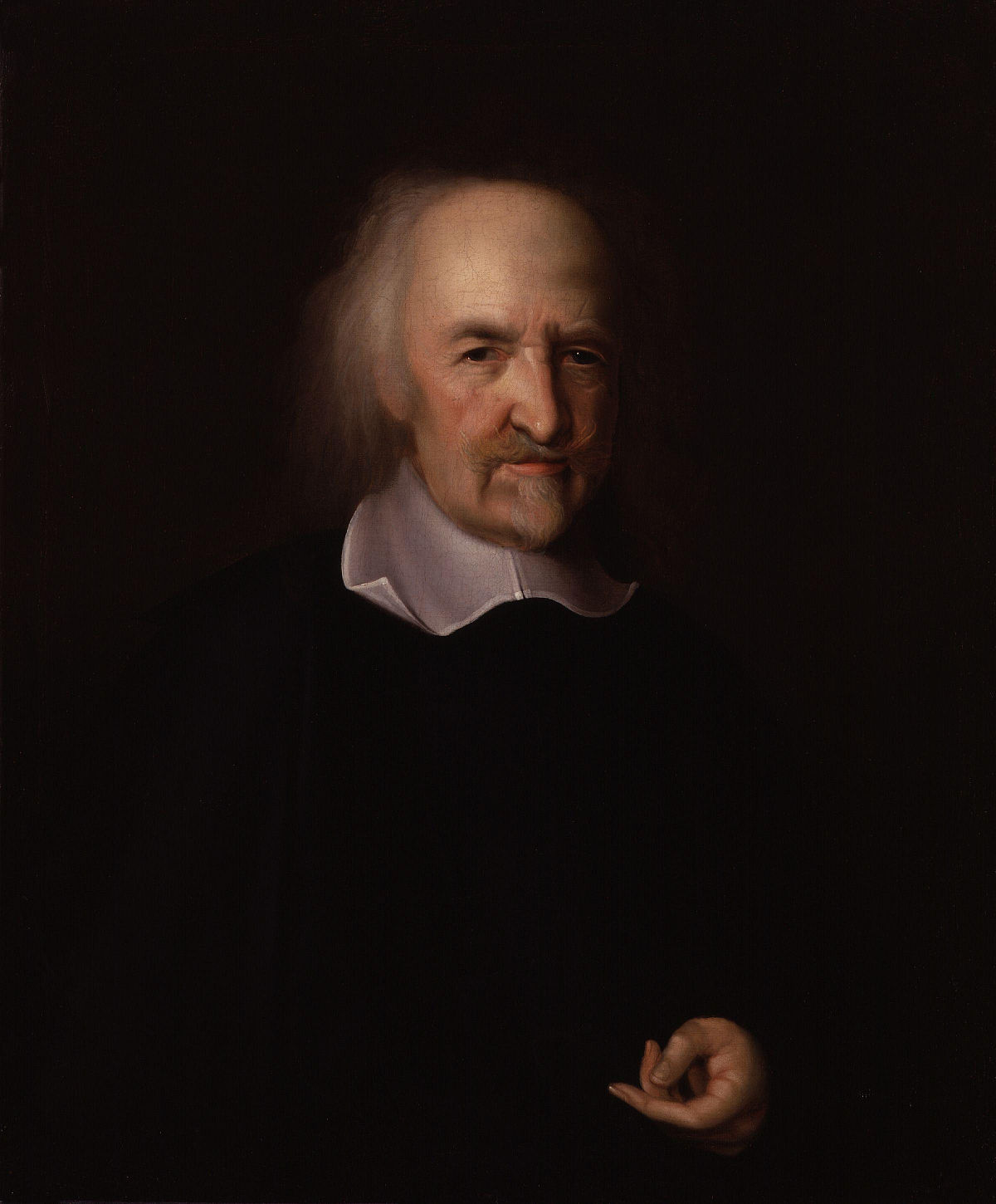
But it is an easy thing, for men to be deceived, by the specious name of Libertie; and for want of Judgement to distinguish, mistake that for their Private Inheritance, and Birth right, which is the right of the Publique only. And when the same errour is confirmed by the authority of men in reputation for their writings in this subject, it is no wonder if it produce sedition, and change of Government. In these westerne parts of the world, we are made to receive our opinions concerning the Institution, and Rights of Common-wealths, from Aristotle, Cicero, and other men, Greeks and Romanes, that living under Popular States, derived those Rights, not from the Principles of Nature, but transcribed them into their books, out of the Practice of their own Common-wealths, which were Popular; as the Grammarians describe the Rules of Language, out of the Practise of the time; or the Rules of Poetry, out of the Poems of Homer and Virgil. And because the Athenians were taught, (to keep them from desire of changing their Government,) that they were Freemen, and all that lived under Monarchy were slaves; therefore Aristotle puts it down in his Politiques,(lib.6.cap.2) “In democracy, Liberty is to be supposed: for ’tis commonly held, that no man is Free in any other Government.” And as Aristotle; so Cicero, and other Writers have grounded their Civill doctrine, on the opinions of the Romans, who were taught to hate Monarchy, at first, by them that having deposed their Soveraign, shared amongst them the Soveraignty of Rome; and afterwards by their Successors. And by reading of these Greek, and Latine Authors, men from their childhood have gotten a habit (under a false shew of Liberty,) of favouring tumults, and of licentious controlling the actions of their Soveraigns; and again of controlling those controllers, with the effusion of so much blood; as I think I may truly say, there was never any thing so deerly bought, as these Western parts have bought the learning of the Greek and Latine tongues.
“Citizens, this elder pride of Argives,
I will feel not shame at revealing
my spousal love to you. In time, human fear
turns to dust. I will tell you of my own
miserable live, not something I learned from others,
all that time when this man was below the city of Troy.”
This week we turn to the first play of Aeschylus’ Oresteia, the Agamemnon. How famous is the story of Orestes and his father? So famous that it is the story Zeus contemplates at the beginning of the Homeric Odyssey as he looks down in frustration on the man who murdered Agamemnon. Atreus’ son, Agamemnon, appears in the middle of the epic (book 11) and at its end, complaining at each point bitterly about his disloyal wife, Klytemnestra, and praising the vengeance meted out by his son Orestes.
The story of the family of Agamemnon, however, extends before the Trojan War and then after until the death of Achilles’ son Neoptolemos. it starts back with Tantalos and Pelops in Asia Minor before it moves to the Peloponnese through sacrilegious meals, infanticide and fraternal war, all themes highlighted in the main cause of Klytemnestra’s rage, the killing of their daughter Iphigenia at Aulis.
If this story sounds familiar, it is because it is! In this series, we have heard variations of this tale from Sophocles and Euripides, contemplating both its beginnings and its ends. Indeed, ancient audiences would have been as familiar with the story as Zeus at the beginning of the Odyssey, shaking their heads and wondering how this version will play out.
This play begins with Agamemnon’s return home, but focuses on Klytemnestra’s anger and her power. It features some of the most challenging and memorable choral odes extant from the ancient world. It has a raving, yet lucid Kassandra. And at the core of the play, a murderous king’s bloody return home.
Aeschylus, Agamemnon 914-917
“Child of Leda, guardian of my home,
“You have spoken aptly to my absence,
Since you have gone on at length. But proper praise
Ought to be a prize won from different sources.”
Agamemnon/Aegisthus – Tim Delap
Watchman/Cassandra – Evelyn Miler
Clytemnestra – Eunice Roberts
Chorus – Carlos Bellato and Tamieka Chavis
Special Guests: Fiona Macintosh and Oliver Taplin
Special Director: Toph Marshall
Aeschylus, Agamemnon 684-696
“Whoever pronounced a name
So thoroughly true?
Wasn’t it someone we’d not see
Guiding the tongue with luck
From a foreknowledge of fate?
Who named the spear-bride,
Struggled-over woman
Helen?
For, appropriately,
That ship-killer [hele-nas], man-killer [hel-andros]
City-killer [hele-ptolis], sailed
From her fine-spun, curtains
On the breath of great Zephyr
and many-manned bands
Of shield-bearers followed
The vanished journey struck
By the oars to the banks
Of leafy Simois
Artistic Director: Paul O’Mahony (Out of Chaos Theatre) Associate Director: Liz Fisher Director of Outreach: Amy Pistone (Gonzaga University) Dramaturg: Emma Pauly Executive Producer: Lanah Koelle (Center for Hellenic Studies) Producers: Keith DeStone (Center for Hellenic Studies), Hélène Emeriaud, Janet Ozsolak, and Sarah Scott (Kosmos Society) Poster Artist: John Koelle Poster Designer: Allie Marbry (Center for Hellenic Studies)
Aristophanes, Assemblywomen 176-183
“[Zeus] puts mortals on
The journey of comprehension.
And made this the powerful law:
We learn by suffering.
Pain-recalling trouble trickles
Through the heart in sleep—
And wisdom comes just so
To the unwilling.
The gods seated on their sacred seats
Bestow a hard grace I think.”
If then in Sophocles the play is concentrated in the figures themselves, and in Euripides is to be retrieved from flashes of poetry and questions far flung and unanswered, Aeschylus makes these little dramas (the Agamemnon has 1663 lines; Lear about 2600) tremendous by stretching every phrase to the utmost, by sending them floating forth in metaphors, by bidding them rise up and stalk eyeless and majestic through the scene. To understand him it is not so necessary to understand Greek as to understand poetry. It is necessary to take that dangerous leap through the air without the support of words which Shakespeare also asks of us. For words, when opposed to such a blast of meaning, must give out, must be blown astray, and only by collecting in companies convey the meaning which each one separately is too weak to express. Connecting them in a rapid flight of the mind we know instantly and instinctively what they mean, but could not decant that meaning afresh into any other words. There is an ambiguity which is the mark of the highest poetry; we cannot know exactly what it means. Take this from the Agamemnon for instance–
ὀμμάτων δ’ ἐν ἀχηνίαις
ἔρρει πᾶσ’ ᾿Αφροδίτα.
The meaning is just on the far side of language. It is the meaning which in moments of astonishing excitement and stress we perceive in our minds without words; it is the meaning that Dostoevsky (hampered as he was by prose and as we are by translation) leads us to by some astonishing run up the scale of emotions and points at but cannot indicate; the meaning that Shakespeare succeeds in snaring.
Aeschylus thus will not give, as Sophocles gives, the very words that people might have spoken, only so arranged that they have in some mysterious way a general force, a symbolic power, nor like Euripides will he combine incongruities and thus enlarge his little space, as a small room is enlarged by mirrors in odd corners. By the bold and running use of metaphor he will amplify and give us, not the thing itself, but the reverberation and reflection which, taken into his mind, the thing has made; close enough to the original to illustrate it, remote enough to heighten, enlarge, and make splendid.
Aeschylus, Agamemnon, 37-39
“This house itself, if it found a voice,
Would be able to speak most clearly. I am talking
Willingly to those who know and forget for those who know nothing.”
Recollections of the Table Talk of Samuel Rogers, to which is added Porsoniana:
“For all modern Greek and Latin poetry he had the profoundest contempt. When Herbert published the Musae Etonenses, Porson said, after looking over one of the volumes, ‘Here is trash, fit only to be put behind the fire.’
His favourite authors in Greek (as, I believe, everybody knows) were the tragedians and Aristophanes; he had them almost by heart.
He confessed to me and the present Bishop of Durham (Maltby), that he knew comparatively little of Thucydides that, when he read him, he was obliged to mark with a pencil, in almost every page, passages which he did not understand.
He dabbled a good deal in Galen.
He cared less about Lucian than, considering the subjects of that writer, you might suppose; the fact was, he did not relish such late Greek.”
“Whoever wants to find a perjurer should go to the public assembly”
qui periurum conuenire uolt hominem ito in comitium
Cicero, De legibus II.22
“For perjury the divine punishment is destruction, the human punishment is shame”
Periurii poena divina exitium, humana dedecus.
Lucan 4.218-226
“Must we beg Caesar to handle us no worse than
His other slaves? Have your generals’ lives been begged?
Our safety will never be the price and bribe for foul treason.
This is not a civil war they fight for us to live.
We are dragged this way under the claims of peace.
People would not search for iron in a deep mine,
They would not strengthen any city with walls,
No fierce steed would rush to war,
No sea would bear towered ships of the fleet,
If it were ever just to trade freedom for peace.”
Utque habeat famulos nullo discrimine Caesar,
Exorandus erit? ducibus quoque vita petita est?
Numquam nostra salus pretium mercesque nefandae
Proditionis erit; non hoc civilia bella,
Ut vivamus, agunt. Trahimur sub nomine pacis.
Non chalybem gentes penitus fugiente metallo
Eruerent, nulli vallarent oppida muri,
Non sonipes in bella ferox, non iret in aequor
Turrigeras classis pelago sparsura carinas
Si bene libertas umquam pro pace daretur
From the Twelve Tables
“The Law of the Twelve Tables commands that anyone who has conspired with an enemy against the state or handed a citizen to a public enemy, should suffer capital punishment.”
Marcianus, ap. Dig., XLVIII, 4, 3: Lex XII Tabularum iubet eum qui hostem concitaverit quive civem hosti tradiderit capite puniri.
Tacitus Histories 3. 57
“How much power the audacity of single individuals can have during civil discord! Claudius Flaventinus, a centurion dismissed by Galba in shame, made the fleet at Misenum revolt with forged letters from Vespasian promising a reward for treason. Claudius Apollinaris, a man neither exceptional for his loyalty nor dedicated in his betrayal, was in charge of the fleet; and Apinius Tiro, an ex-praetor who was by chance at Minturnae then, put himself forth as the leader of the defectors.”
Sed classem Misenensem (tantum civilibus discordiis etiam singulorum audacia valet) Claudius Faventinus centurio per ignominiam a Galba dimissus ad defectionem traxit, fictis Vespasiani epistulis pretium proditionis ostentans. Praeerat classi Claudius Apollinaris, neque fidei constans neque strenuus in perfidia; et Apinius Tiro praetura functus ac tum forte Minturnis agens ducem se defectoribus obtulit.
“Dêmadês: He was king in Thebes after Antipater. A son of Dêmeas the sailor, he was also a sailor, a shipbuilder, and a ferry-operator. He gave up these occupations to enter politics and turned out to be a traitor—he grew very wealthy from this and obtained, as a bribe from Philip, property in Boiotia.”
[Elektra] Did he not speak for you, eager that you not die,
Menelaos the coward, our father’s traitor?
[Orestes] He didn’t show his face, because he yearning
For the scepter—he was careful not to save his relatives
“Don’t you understand that while, in other cases, it is necessary to impose a penalty on those who have committed crimes after examining the matter precisely and uncovering the truth over time, but for instances of clear and agreed-upon treason, we must yield first to anger and what comes from it? Don’t you think that this man would betray any of the things most crucial to the state, once you made him in charge of it?”
“It is right that punishments for other crimes come after them, but punishment for treason should precede the dissolution of the state. If you miss that opportune moment when those men are about to do something treacherous against their state, it is not possible for you to obtain justice from the men who did wrong: for they become stronger than the punishment possible from those who have been wronged.”
Just a few days left to win money and immortal fame! (For students in the US and Canada, at least. The competition in Greece is open to December 18 and so is the UK version)
Let’s start with the basic details:
High School and College students in North America (and UK and Greece): Create a short video of yourselves performing part of Euripides’ Medea
The contest is open to high school and college students in the US and Canada (as well as the UK and Greece, but on a different schedule with different translations) and there is a $400 prize for first place, and two $200 prizes for second place. We’re using Diane Rayor’s translation and you can choose from a selection of scenes, all of which are available here.
So, record a scene from Medea and submit it by 23rd October 2020. Our panel of judges (including representatives from the British American Drama Academy) will watch all submissions and then announce the winners during the Reading Greek Tragedy Online episode on Medea on 11th November 2020.
This competition has grown out of the weekly meetings of Reading Greek Tragedy Online. We started this project during the early days of the pandemic lockdown in the United States and have learned a lot about Greek tragedy and performance while also maintaining some sense of community even while living alone. We know that this is a year of unparalleled isolation and stress for students and teachers alike, so we designed this project to expand our community and encourage others to strengthen their own.
We encourage creativity and daring, and we welcome all contributions however modest they may seem. Entries can be recorded entirely on zoom, or by groups who are able to share the same space. University or high school groups can enter multiple times, but each actor can appear in only one submission.
Our website also includes a dramaturgy pack (thanks to Emma Pauly for putting it together) which includes information about the play, its characters, and its production history. There is also a wonderful Medea ebook created by the Archive of Performances of Greek and Roman Drama.
Here’s a video of Amy Pistone, Paul O‘Mahony and me trying to be clear in on 3 or 5 takes.
Diogenes Laertius, Lives of the Philosophers – Aristippus (70)
“When someone proposed a riddle to Aristippus and asked him to solve it, Aristippus responded, ‘You idle fool, you want this solved, even though it offers us plenty of trouble in its unsolved state?’
He said that it was better to be a beggar than to be uneducated, for a beggar is lacking money, but the uneducated person is lacking humanity.
One time, when upbraided, he ran away. When someone pursued him, asking why he fled, he responded, ‘Because you have the power of talking trash, and I have the power of not listening.’
When someone said that he always saw philosophers at the doorways of the rich, Aristippus replied, ‘So too you always find doctors at the doorways of the sick. But one would not on that account choose rather to be sick than to be a doctor.”
Diogenes Laertius, Lives of the Eminent Philosophers 5.5: Life of Demetrius (c. 350-280 BCE) 75 and 77
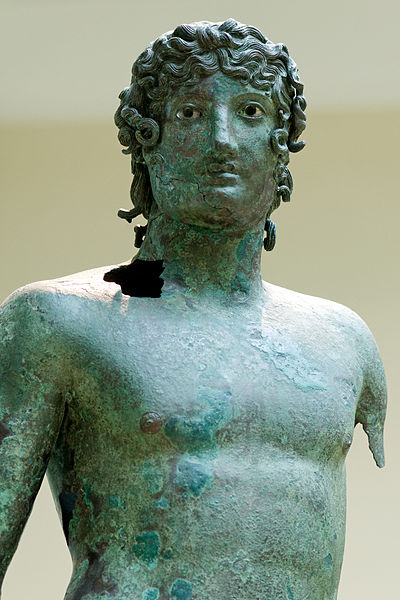
“Demetrios, the son of Phanostratos, from Phalerum. This guy was a student of Theophrastus. He was the lead of the city of Athens for ten years through his public speeches and was publicly awarded three hundred bronze statues for this, the vast majority of them had him on horse or chariot or with a pair of horse. He was supported so much that these statues were finished in not even 30 days.
“Although he was super famous among the Athenians, his light dimmed later on under the shadow of envy, which consumes everything. After he was indicted by some people on a charge carrying a penalty of death, he did not appear in court. When his opponents could not catch him in person, they took it out on his statues. Once they tore the statues down, they sold some, sank some in the sea, and broke others up for chamber pots. A single one is left on the Akropolis.”