DISSIMULATION is but a faint kind of policy or wisdom; for it asketh a strong wit and a strong heart to know when to tell truth, and to do it. Therefore it is the weaker sort of politics that are the great dissemblers.
Tacitus saith, Livia sorted well with the arts of her husband and dissimulation of her son; attributing arts or policy to Augustus, and dissimulation to Tiberius. And again, when Mucianus encourageth Vespasian to take arms against Vitellius, he saith, We rise not against the piercing judgment of Augustus, nor the extreme caution or closeness of Tiberius. These properties, of arts or policy and dissimulation or closeness, are indeed habits and faculties several, and to be distinguished. For if a man have that penetration of judgment as he can discern what things are to be laid open, and what to be secreted, and what to be showed at half lights, and to whom and when (which indeed are arts of state and arts of life, as Tacitus well calleth them), to him a habit of dissimulation is a hinderance and a poorness.
But if a man cannot obtain to that judgment, then it is left to him generally to be close, and a dissembler. For where a man cannot choose or vary in particulars, there it is good to take the safest and wariest way in general; like the going softly by one that cannot well see. Certainly the ablest men that ever were have had all an openness and frankness of dealing; and a name of certainty and veracity; but then they were like horses well managed; for they could tell passing well when to stop or turn; and at such times when they thought the case indeed required dissimulation, if then they used it, it came to pass that the former opinion spread abroad of their good faith and clearness of dealing made them almost invisible.
Edward Gibbon, The Decline and Fall of the Roman Empire, Chp. V:
“The power of the sword is more sensibly felt in an extensive monarchy, than in a small community. It has been calculated by the ablest politicians, that no state, without being soon exhausted, can maintain above the hundredth part of its members in arms and idleness. But although this relative proportion may be uniform, the influence of the army over the rest of the society will vary according to the degree of its positive strength. The advantages of military science and discipline cannot be exerted, unless a proper number of soldiers are united into one body, and actuated by one soul. With a handful of men, such a union would be ineffectual; with an unwieldy host, it would be impracticable; and the powers of the machine would be alike destroyed by the extreme minuteness or the excessive weight of its springs. To illustrate this observation, we need only reflect, that there is no superiority of natural strength, artificial weapons, or acquired skill, which could enable one man to keep in constant subjection one hundred of his fellow-creatures: the tyrant of a single town, or a small district, would soon discover that a hundred armed followers were a weak defence against ten thousand peasants or citizens; but a hundred thousand well-disciplined soldiers will command, with despotic sway, ten millions of subjects; and a body of ten or fifteen thousand guards will strike terror into the most numerous populace that ever crowded the streets of an immense capital. The Praetorian bands, whose licentious fury was the first symptom and cause of the decline of the Roman empire, scarcely amounted to the last-mentioned number. They derived their institution from Augustus. That crafty tyrant, sensible that laws might color, but that arms alone could maintain, his usurped dominion, had gradually formed this powerful body of guards, in constant readiness to protect his person, to awe the senate, and either to prevent or to crush the first motions of rebellion. He distinguished these favored troops by a double pay and superior privileges; but, as their formidable aspect would at once have alarmed and irritated the Roman people, three cohorts only were stationed in the capital, whilst the remainder was dispersed in the adjacent towns of Italy. But after fifty years of peace and servitude, Tiberius ventured on a decisive measure, which forever rivetted the fetters of his country. Under the fair pretences of relieving Italy from the heavy burden of military quarters, and of introducing a stricter discipline among the guards, he assembled them at Rome, in a permanent camp, which was fortified with skilful care, and placed on a commanding situation. “
“Men who drink a lot of wine are rather sluggish at intercourse and they ejaculate semen not at all strong or good for fertilization; instead their attempts at sex with women are cursory and incomplete because of the weakness and frigidity of their seed.
Indeed, however much men suffer because of the cold occurs to them when they are drunk: tremors, heaviness, paleness, sudden jumps in the limbs, senseless speech, a lack of feeling in the joints and extremities. For most men, being drunk results in paralysis, whenever the wine totally expels and defeats the heat.”
“Terrify this person, if you find anyone like this, with threats of death or exile. Whatever happens to me in so ungrateful a state will happen without any protest from me, not just without fighting back. For what have I accomplished or what I done or to what end have my anxieties and thoughts kept me awake all night if I have actually pursued nothing at all which puts me in a place that cannot be weakened by lapses in fortune or harm from my enemies?
Do you threaten death so I will leave the presence of people or exile so I must depart from wicked men? Death is frightening for people who lose everything along with life but not for those whose glory cannot perish. Exile is frightening to those whose homes are prescribed by a border line, not for those who believe that the whole world is just one city.
No, every bit of sorrow and misfortune oppresses you because you think you are happy and wealthy. Your desires torture you; you are in pain day and night because what you have is not enough and you worry that even this bit will not last. Your memory of wicked deeds works away at you; fear of judges and laws make your heart race. Wherever you look, the harms you have inflicted on others assail you like Furies who will not even let you breathe.”
tum tu hominem terreto, si quem eris nactus, istis mortis aut exilii minis; mihi vero quidquid acciderit in tam ingrata civitate ne recusanti quidem evenerit, non modo non repugnanti, Quid enim ego laboravi aut quid egi aut in quo evigilaverunt curae et cogitationes meae, si quidem nihil peperi tale nihil consecutus sum ut in eo statu essem quem neque fortunae temeritas neque inimicorum labefactaret iniuria? Mortemne mihi minitaris ut omnino ab hominibus, an exilium ut ab improbis demigrandum sit? Mors terribilis est eis quorum cum vita omnia exstinguuntur, non eis quorum laus emori non potest, exilium autem illis quibus quasi circumscriptus est habitandi locus, non eis qui omnem orbem terrarum unam urbem esse ducunt. Te miseriae te aerumnae premunt omnes, qui te beatum qui florentem putas; tuae libidines te torquent, tu dies noctesque cruciaris, cui nec sat est quod est et id ipsum ne non sit diuturnum times; te conscientiae stimulant maleficiorum tuorum, te metus exanimant iudiciorum atque legum; quocumque aspexisti, ut furiae sic tuae tibi occurrunt iniuriae quae te respirare non sinunt.
“Marcus Pomponius Marcellus was the most irritating enforcer of proper Latinity. Once, when he was serving as an advocate (for he took on a case now and then), he persisted in arguing about a solecism committed by his opponent for so long that, Cassius Severus interrupted the judges and asked for a recess so that his litigator could get another grammarian ‘since he does not think that the controversy against his adversary will be about the law, but about a solecism.’
This same Marcellus had once criticized a word in a speech of the emperor Tiberius, and when Aetius Capito asserted that the word was actually Latin or, if it hadn’t been, certainly would be now that Tiberius had used it. Marcellus responded, ‘You lie, Capito. For you, Caesar, can give citizenship to people, but not to a word.”
M. Pomponius Marcellus sermonis Latini exactor molestissimus, in advocatione quadam—nam interdum et causas agebat—soloecismum ab adversario factum usque adeo arguere perseveravit quoad Cassius Severus, interpellatis iudicibus, dilationem petiit ut litigator suus alium grammaticum adhiberet ‘quando non putat is cum adversario de iure sibi sed de soloecismo controversiam futuram.’ hic idem cum ex oratione Tiberii verbum reprehendisset, adfirmante Ateio Capitone et esse illud Latinum et si non esset futurum certe iam inde, ‘Mentitur,’ inquit, Capito. tu enim, Caesar, civitatem dare potes hominibus, verbo non potes.’
“Don’t be at all surprised that I hold on to my money,
Lord, Even mortals who have immense wealth
Still clutch to profits when humans put everything
In second place after money.
Some people envy the person who isn’t sick.
But no poor person seems healthy to me—the poor are always sick.”
“The most noble thing is to be just.
The best thing is to live without sickness.
But the most pleasurable is to have the power
To take what you want every day.”
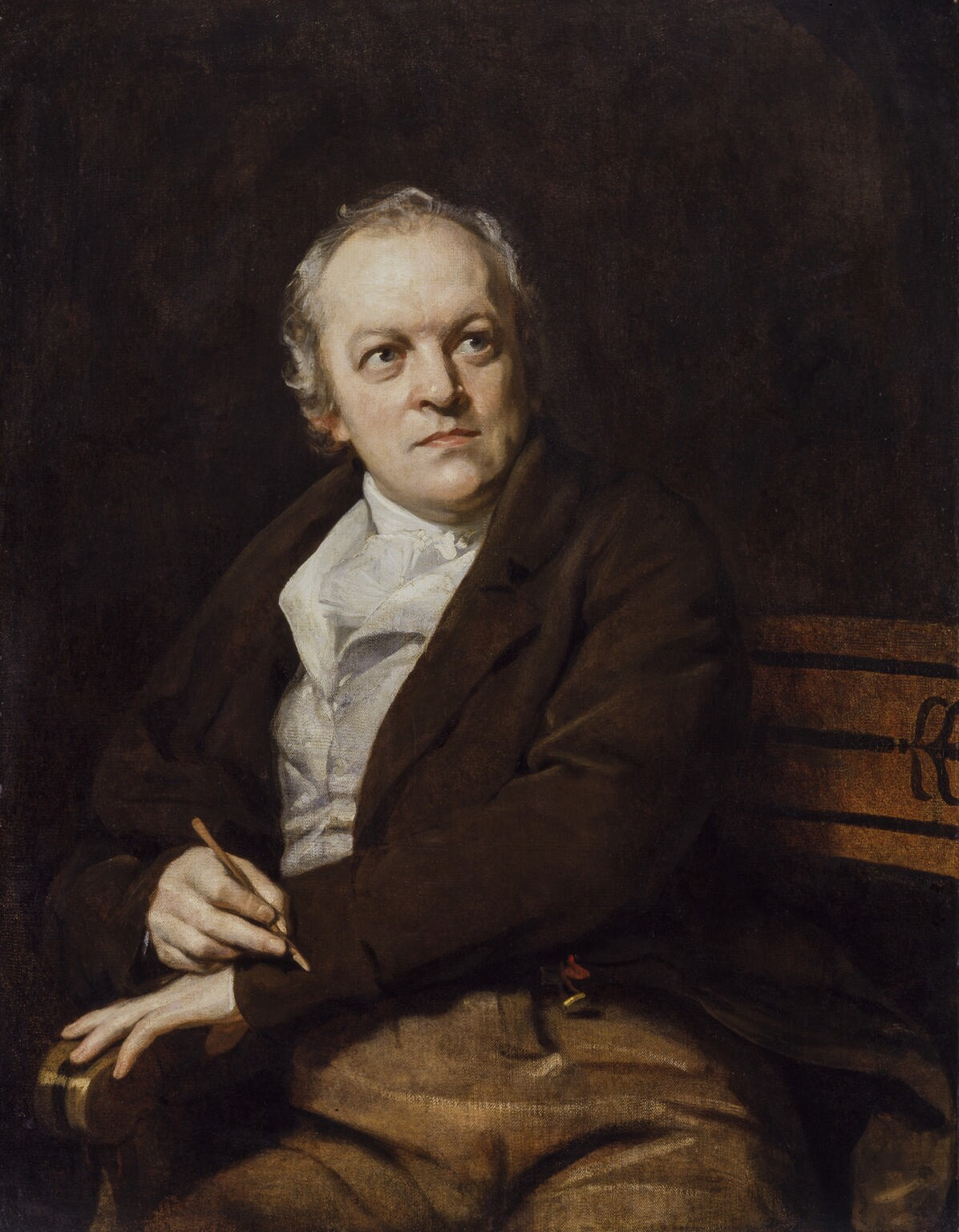
William Blake, Annotations to Boyd’s Historical Notes on Dante
Such were the effects of intolerance even in the extreme. In a more moderate degree, every well-regulated government, both ancient and modern, were so far intolerant, as not to admit the pollutions of every superstition and every pernicious opinion. It was from a regard to the morals of the people, that the Roman Magistrates expelled the Priest of Bacchus, in the first and most virtuous ages of the republic. It was on this principle that the Persians destroyed the temples of Greece wherever they came.
If Well regulated Governments act so who can tell so well as the hireling Writer whose praise is contrary to what he Knows to be true
Persians destroy the Temples & are praised for it
The Athenians and Romans kept a watchful eye, not only over the grosser superstitions, but over impiety . . . Polybius plainly attributes the fall of freedom in Greece to the prevalence of atheism . . . It was not till the republic was verging to its fall, that Caesar dared in open senate to laugh at the SPECULATIVE opinion of a future state. These were the times of universal toleration, when every pollution, from every clime, flowed to Rome, whence they had carefully been kept out before.
Sacred Truth has pronounced that Greece & Rome as Babylon & Egypt: so far from being parents of Arts & Sciences as they pretend: were destroyers of all Art. Homer Virgil & Ovid confirm this opinion & make us reverence The Word of God, the only light of antiquity that remains unperverted by War. Virgil in the Eneid Book VI. line 848 says Let others study Art: Rome has somewhat better to do, namely War & Dominion
Rome & Greece swept Art into their maw & destroyd it a Warlike State never can produce Art. It will Rob & Plunder & accumulate into one place, & Translate & Copy & Buy & Sell & Criticise, but not Make.
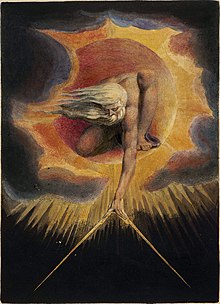
Mathematic Form is Eternal in the Reasoning Memory. Living Form is Eternal Existence.
“Now I am going to leave this speech behind. I have mourned the kind of thing that I need to do After this: For I will kill my children. There is no one who will save them.”
I have not done a scientific survey on this, but I am pretty sure that Medea is one of the most famous women from Greek myth. And I also know that what most people think they know about her comes from (or around) this week’s play, Euripides’ Medea. In this play, w find a wronged wife, a foreign sorceress, a sorrowful mother–and they are all the same, powerful person. But the message people carry with them is that Medea killed her children.
Euripides is never a simple poet. Medea is easy to remember as a villain, but less so to see or hare as one who is simply so. read again; listen to the performances; see Medea for the first time
Euripides, Medea 535-541
“You profited more than you sacrificed for saving me. I’ll explain: first, you now live in Greece Instead of a barbarian land and you know justice And how to follow laws instead of serving strength. Second, all the Greeks have learned that you are clever And you’ve earned fame. If you lived beyond the borders Of the civilized world, no one would know who you are.”
Artistic Director: Paul O’Mahony (Out of Chaos Theatre) Associate Director: Liz Fisher Director of Outreach: Amy Pistone (Gonzaga University) Dramaturg: Emma Pauly Executive Producer: Lanah Koelle (Center for Hellenic Studies) Producers: Keith DeStone (Center for Hellenic Studies), Hélène Emeriaud, Janet Ozsolak, and Sarah Scott (Kosmos Society) Poster Artist: John Koelle Poster Designer: Allie Marbry (Center for Hellenic Studies)
Euripides, Medea 235-240
“The greatest contest in our life is this: getting a good husband Or a bad one. For divorces do not bring women A good reputation and it is impossible to refuse a husband. When she enters the new ways and laws of his house She needs to be a prophet, since she has not learned at home How best to live with this partner. ”
November 18 Heracleidae, Euripides with Helene Foley (Columbia University)
November 25 Special Edition: Tragic Fragments with Melissa Funke (University of Winnipeg) and Charlotte Parkyn (University of Notre Dame)
December 2 Oedipus at Colonus, Sophocles – 3:30pm EST with Laura Slatkin (New York University)
Euripides, Medea 1090-1111
“I say that mortals who have no experience Of and have never had children Have a better chance for happiness Than those who bear them. The childless are ignorant from inexperience Whether children bring pleasure or pain Because they do not have them they Avoid many toils But those whose comes receive the sweet Surprise of children, I watch all their time Worn down by care— First who they will raise them well And then what kind of life they leave to them. And then from these it remains unclear Whether they labored over good Or weak worries. But one final suffering of all I will speak remains for all mortals. Once they have found enough of a living, And they make it to adulthood whole And good. If fate so chooses then, Death just takes them to Hades Carrying their children’s corpses.”
EVERY poem must necessarily be a perfect Unity, but why Homer’s is peculiarly so I cannot tell: he has told the story of Bellerophon, and omitted the Judgement of Paris, which is not only a part but a principal part of Homer’s subject.
But when a work has Unity, it is as much in a part as in the whole. The Torso is as much a Unity as the Laocoon.
As Unity is the cloak of Folly, so Goodness is the cloak of Knavery. Those who will have Unity exclusively in Homer come out with a Moral like a sting in the tail. Aristotle says Characters are either good or bad; now Goodness or Badness has nothing to do with Character. An apple tree, a pear tree, a horse, a lion are Characters; but a good apple tree or a bad is an apple tree still: a horse is not more a lion for being a bad horse; that is its Character: its Goodness or Badness is another consideration.
It is the same with the Moral of a whole poem as with the Moral Goodness of its parts. Unity and Morality are secondary considerations, and belong to Philosophy and not to poetry, to Exception and not to Rule, to Accident and not to Substance. The Ancients called it eating of the Tree of Good and Evil.
The Classics! it is the Classics, and not Goths nor Monks, that desolate Europe with wars.