Webster Says: “F**k All Your Proconsuls!”

Peter Harvey, Reminiscences and Anecdotes of Daniel Webster (pp.160-163)

Mr. Webster became Secretary of State under General Harrison, in 1841. They had no interview before he was appointed. It was done by correspondence; by an offer of the place on the part of General Harrison by letter, and acceptance by letter on that of Mr. Webster. They did not meet until eight or ten days previous to the inauguration. General Harrison arrived at Washington, from Cincinnati, about the time Mr. Webster arrived from Massachusetts. Mr. Webster was invited by Mr. Seaton, one of the editors of the “National Intelligencer,” and a very warm personal friend of his, to come to his house, as he would be more quiet there, and less exposed to intrusion than at a hotel; and to stay until he should get a house and move his family into it. He was constantly occupied with General Harrison on matters connected with the formation of the Cabinet, from early morning until the dinner hour, which was six o’clock. It seems that he had prepared an inaugural message for General Harrison. One day, among other arrangements, he suggested to the new President, in as delicate a way as he could, the fact that he had sketched an inaugural, knowing that General Harrison would be overwhelmed with calls and business after his election, and he himself having leisure to write. The General at once replied that it was not necessary; that he had prepared his own inaugural.

“Oh yes,” said he, ” I have got that all ready.”

“Will you allow me to take it home and read it to-night? ” asked Mr. Webster.

“Certainly,” the President replied;” and please to let me take yours.”

So they exchanged the documents; and the next morning, when they met, General Harrison said to Mr. Webster : —

“If I should read your inaugural instead of mine, everybody would know that you wrote it, and that I did not. Now, this is the only official paper which I propose to write, for I do not intend to interfere with my secretaries; but this is a sort of acknowledgment on my part to the American people of the great honor they have conferred upon me in elevating me to this high office; and although, of course, it is not so suitable as yours, still it is mine, and I propose to let the people have it just as I have written it. I must deliver my own instead of yours.”

Mr. Webster told me that he was a good deal annoyed; because the message was, according to his judgment and taste, so inappropriate. It entered largely into Roman history, and had a great deal to say about the States of antiquity and the Roman proconsuls, and various matters of that kind. Indeed, the word “proconsul” was repeated in it a great many times.

When he found that the President was bent upon using his own inaugural, Mr. Webster said that his desire was to modify it, and to get in some things that were not there, and get out some things that were there; for, as it then stood, he said, it had no more to do with the affairs of the American government and people than a chapter in the Koran. Mr. Webster suggested to General Harrison that he should like to put in some things, and General Harrison rather reluctantly consented to let him take it. Mr. Webster spent a portion of the next day in modifying the message. Mrs. Seaton remarked to him, when he came home rather late that day, that he looked fatigued and worried; but he replied that he was sorry that she had waited dinner for him.

“That is of no consequence at all, Mr. Webster,” said she; “but I am sorry to see you looking so worried and tired. I hope nothing has gone wrong. I really hope nothing has happened.”

“You would think that something had happened,” he replied, “if you knew what I have done. I have killed seventeen Roman proconsuls as dead as smelts, every one of them!”
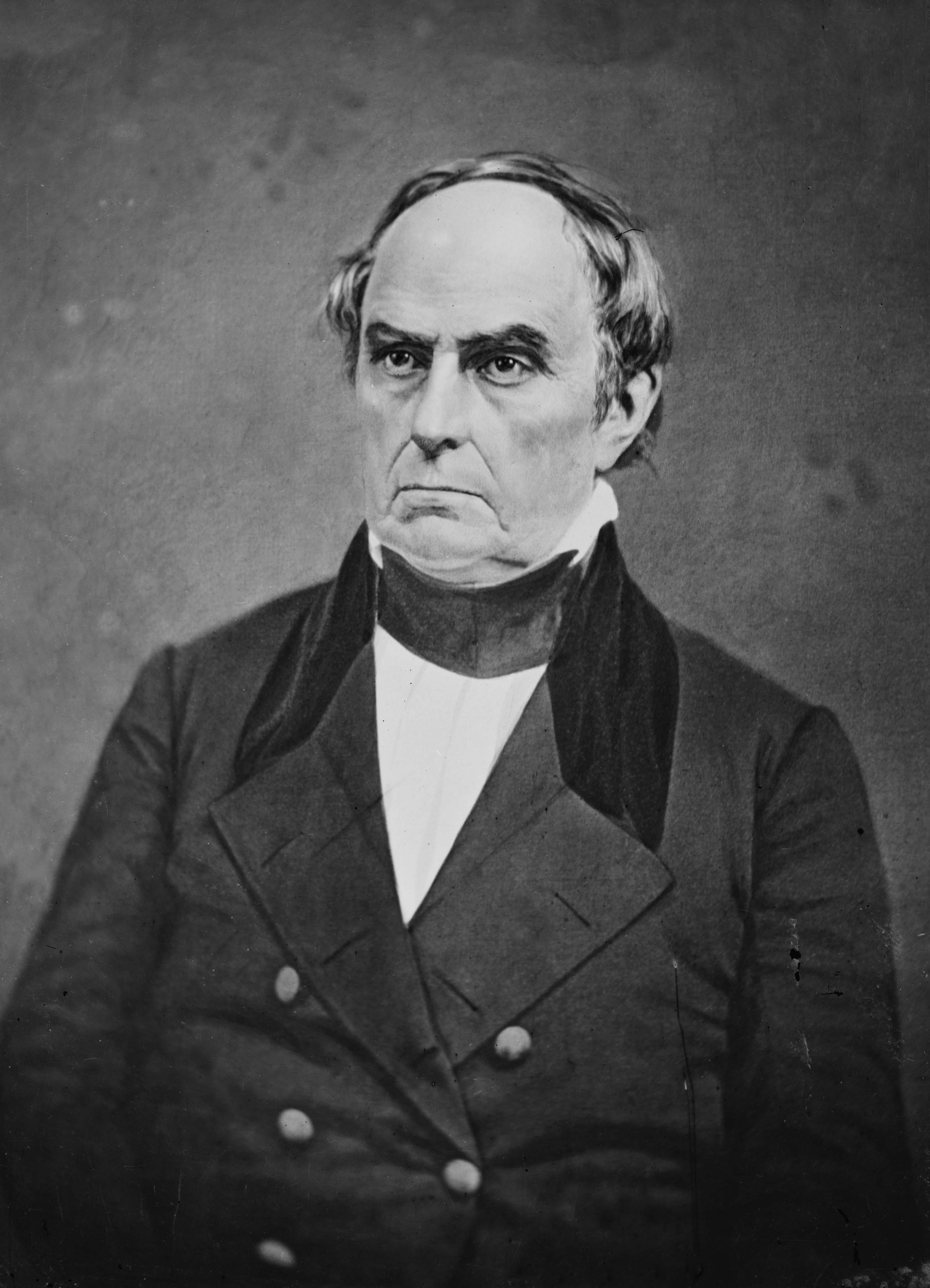
Daniel Webster - Wikipedia
Daniel Webster wants you to take proconsuls down to noconsuls.

Cicero’s Height and Demosthenes’ Lamp

John Adams, Draft of a Letter to Richard Cranch (October – December 1758):

Should a Student in History inquire chiefly of the Dress, Entertainments and Diversions, instead of the Arts, Characters, Virtues and Opinions of ancient Nations, and the Effects of these on their public and private Happiness would not you laugh? There was nothing in the Lamp, by which Demosthenes wrote his orations, that deserved the Attention of the present Race of men, more than there is in the Candle by which I write this Letter. And I would pay no more Admiration to a man who could tell me the exact Highth of Cicero, or the Number of Hairs that grew upon his Head, a Pi[e]ce of Knowledge that I cannot now attain, than I would to one who could tell me the exact Number of Letters, Comma’s and semicolons that are in all his Works, which have the means of knowing.

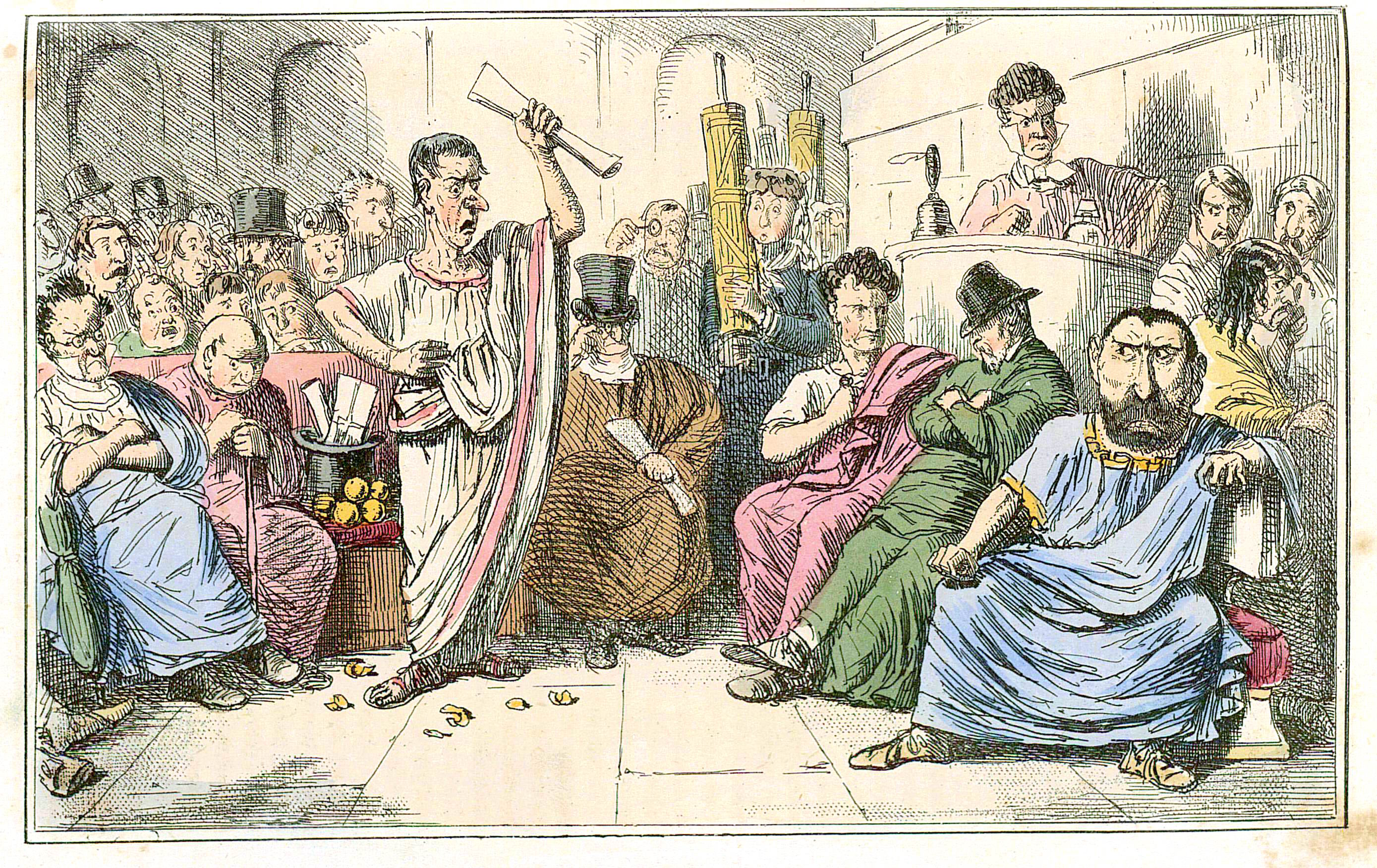
File:Comic History of Rome Table 10 Cicero denouncing Catiline.jpg -  Wikimedia Commons

“No Knife for A Child”: A Proverb

Michael Apostolios, Centuria 11.51

“No knife for a child: don’t delegate serious matters to the inexperienced, lest they somehow use them for their own advantage.”

Μὴ παιδὶ μάχαιραν: μὴ τοῖς ἀπείροις ἐγχειρίζειν πράγματα μεγάλα, μή πως καθ’ ἑαυτῶν χρήσωνται.

Suda

“No knife for a child: for those who entrust to the incompetent. Eupolis also writes in the Demes “public affairs are not for a child.”

Μὴ παιδὶ μάχαιραν: ἐπὶ τῶν εἰκῆ ἐγχειριζόντων. καὶ Εὔπολις Δήμοις· μὴ παιδὶ τὰ κοινά.

children

Different takes on the two proverbs:

“Don’t give children a knife”

“Public affairs aren’t child’s play”

The Dog and His Treasure: A Fable about Priorities

Phaedrus, 1.27

“This tale has something to say to the greedy
And those who want to be  rich, though born needy.

A dog was digging up human bones when he found
A treasure and, because he offended the gods in the ground,
He was struck by a love of riches he couldn’t forget
To pay sacred religion back this debt.

And so, the dog thought not of food as he guarded his gold
And he died from hunger, and as a vulture took hold
he reportedly said, “Dog, you deserve it—
To lie there when you wanted royal wealth
After you were born in a gutter and raised on shit!”

dog

I.27. Canis et Thesaurus

Haec res avaris esse conveniens potest,
et qui, humiles nati, dici locupletes student.
Humana effodiens ossa thesaurum canis
invenit, et, violarat quia Manes deos,
iniecta est illi divitiarum cupiditas,
poenas ut sanctae religioni penderet.
Itaque, aurum dum custodit oblitus cibi,
fame est consumptus. Quem stans vulturius super
fertur locutus “O canis, merito iaces,
qui concupisti subito regales opes,
trivio conceptus, educatus stercore”.

The Exploding Frog, A Fable

Phaedrus 1.24 The Exploding Frog

“A poor man, when he tries to imitate the powerful, dies.
Once in a meadow a frog saw a bull
Whose great size exerted on her such a pull
That she inflated her wrinkled skin and asked
Her children whether she was bigger than that.
They denied it and she puffed herself out self again
But when she asked who was bigger, they said “him”.
Finally angry, she didn’t want to blow it,
She puffed again and her body exploded.”

frog

I.24. Rana Rupta

Inops, potentem dum vult imitari, perit.
In prato quondam rana conspexit bovem,
et tacta invidia tantae magnitudinis
rugosam inflavit pellem. Tum natos suos
interrogavit an bove esset latior.
Illi negarunt. Rursus intendit cutem
maiore nisu, et simili quaesivit modo,
quis maior esset. Illi dixerunt “bovem”.
Novissime indignata, dum vult validius
inflare sese, rupto iacuit corpore.

Tis the Season to Drink With Reason: Put a Philosopher in Charge!

In Plutarch’s “Table-Talk” we find three books of ten ‘conversation prompts’ followed by an imagined conversation based on them. Below is just the beginning of the discussion about what kind of a man should be named the symposiarch–a office tasked with setting the conversation, number of drinks, and strength of the wine during the symposium.

Table-Talk: Moralia 620: What kind of man should be in charge of drinking?

My brother-in-law Kratôn and my friend Theôn were at a drinking party when everyone was beginning to get tipsy but then calmed down and they began to speak about the symposiarch, because they were of the opinion that I should take up the duty and not allow an ancient custom to be abandoned by everyone. No, they thought I should renew it and reestablish the position’s authority over drinking parties and their rules. This seemed right to the other guests as well to the extent that they raised a shout and called on me to do the job.

Then I said, “Since this is agreed upon by all of you, I select myself as the symposiarch and I order the rest of you to drink as you would want to for the present, but Kratôn and Theôn—the men who introduced this idea and carried it, they must elaborate in brief outline what kind of many should be selected as symposiarch, and what goal he will make the priority of his office, and how he will apply the customs of the symposium. I entrust to them to choose their order of speaking.

They tried a little to deny what they were asked, but when everyone was insisting that they obey the leader and do what he asked. Kratôn first said that it is necessary that the chief of the guards be the most guardianly among them, as Plato says, and therefore the chief symposiast must be the most sympotic. And he explained “He is this kind of a man should he be neither easily overcome by drunkenness nor disinclined to drink, as Kuros used to say when he wrote to the Lakedaimonians that he was more kingly than his brother and could handle a lot of unmixed wine well. For a drunk is arrogant and rude but someone who doesn’t drink at all is a buzzkill and better suited to watching the children than running a drinking party.”

Image result for ancient greek symposium


Ποῖόν τινα δεῖ τὸν συμποσίαρχον εἶναι;

Κράτων ὁ γαμβρὸς ἡμῶν καὶ Θέων ὁ ἑταῖρος ἔν τινι πότῳ παροινίας ἀρχὴν λαβούσης εἶτα παυσαμένης λόγον ἐποιήσαντο περὶ τῆς συμποσιαρχίας, οἰόμενοί με δεῖν στεφανηφοροῦντα μὴ περιιδεῖν παλαιὸν ἔθος ἐκλειφθὲν παντάπασιν, ἀλλ᾿ ἀνακαλεῖν καὶ καταστῆσαι πάλιν τῆς ἀρχῆς τὴν νενομισμένην ἐπιστασίαν περὶ τὰ συμπόσια καὶ διακόσμησιν. ἐδόκει δὲ ταῦτα καὶ τοῖς ἄλλοις, ὥστε θόρυβον ἐκ πάντων καὶ παράκλησιν γενέσθαι.

“Ἐπεὶ τοίνυν,” ἔφην ἐγώ, “δοκεῖ ταῦτα πᾶσιν, ἐμαυτὸν αἱροῦμαι συμποσίαρχον ὑμῶν καὶ κελεύω τοὺς μὲν ἄλλους ὡς βούλονται πίνειν ἐν τῷ παρόντι, Κράτωνα δὲ καὶ Θέωνα, τοὺς εἰσηγητὰς καὶ νομοθέτας τοῦ δόγματος, ἔν τινι τύπῳ βραχέως διελθεῖν, ὁποῖον ὄντα δεῖ τὸν συμποσίαρχον αἱρεῖσθαι καὶ τί ποιούμενος τέλος ὁ αἱρεθεὶς ἄρξει καὶ πῶς χρήσεται τοῖς κατὰ τὸ συμπόσιον· διελέσθαι δὲ τὸν λόγον ἐφεξῆς αὐτοῖς ἐπιτρέπω.”. Μικρὰ μὲν οὖν ἠκκίσαντο παραιτούμενοι· κελευόντων δὲ πάντων πείθεσθαι τῷ ἄρχοντι καὶ ποιεῖν τὸ προσταττόμενον, ἔφη πρότερος ὁ Κράτων ὅτι δεῖ τὸν μὲν φυλάκων ἄρχοντα φυλακικώτατον, ὥς φησιν ὁ Πλάτων, εἶναι, τὸν δὲ συμποτῶν συμποτικώτατον. “ἔστι δὲ τοιοῦτος ἂν μήτε τῷ μεθύειν εὐάλωτος ᾖ μήτε πρὸς τὸ πίνειν ἀπρόθυμος, ἀλλ᾿ ὡς ὁ Κῦρος ἔλεγεν πρὸς Λακεδαιμονίους γράφων ὅτι τά τ᾿ ἄλλα τοῦ ἀδελφοῦ βασιλικώτερος εἴη καὶ φέροι καλῶς πολὺν ἄκρατον· ὅ τε γὰρ παροινῶν ὑβριστὴς καὶ ἀσχήμων, ὅ τ᾿ αὖ παντάπασι νήφων ἀηδὴς καὶ παιδαγωγεῖν μᾶλλον ἢ συμποσιαρχεῖν ἐπιτήδειος.

Plato and Friends on Why We Need to Partay

Democritus, fr. 230

“A life without parties is a long journey without inns.”

βίος ἀνεόρταστος μακρὴ ὁδὸς ἀπανδόκευτος.

Plato, Laws 653d

“Great. Now, since many of these kinds of education—which accustom us to correctly manage pleasures and pains—lose their effectiveness during life, the gods took pity on  the human race because it is born to toil and assigned to us as well parties as vacations from our toil. In addition, they have also given us the Muses, Apollo the master of music, and Dionysus as party-guests so that people can straighten out their habits because they are present at the festival with the gods.”

ΑΘ. Καλῶς τοίνυν. τούτων γὰρ δὴ τῶν ὀρθῶς τεθραμμένων ἡδονῶν καὶ λυπῶν παιδειῶν οὐσῶν χαλᾶται τοῖς ἀνθρώποις καὶ διαφθείρεται τὰ πολλὰ ἐν τῷ βίῳ, θεοὶ δὲ οἰκτείραντες τὸ τῶν ἀνθρώπων ἐπίπονον πεφυκὸς γένος ἀναπαύλας τε αὐτοῖς τῶν πόνων ἐτάξαντο τὰς τῶν ἑορτῶν ἀμοιβὰς [τοῖς θεοῖς] καὶ Μούσας Ἀπόλλωνά τε μουσηγέτην καὶ Διόνυσον ξυνεορταστὰς ἔδοσαν, ἵν᾿ ἐπανορθῶνται τάς γε τροφὰς γενόμενοι ἐν ταῖς ἑορταῖς μετὰ θεῶν.

Thucydides, 2.38.1

“Certainly we have furnished our mind with the greatest reliefs from our labors, maintaining games and feasts throughout the year in public and in private living with care and finery, all those things which provide pleasure to expel our grief. Because of the greatness of our city, everything comes to us from the earth and we are lucky enough to harvest all of the goods from our own land with no less familiar pleasure than those we gather from other peoples.”

‘Καὶ μὴν καὶ τῶν πόνων πλείστας ἀναπαύλας τῇ γνώμῃ ἐπορισάμεθα, ἀγῶσι μέν γε καὶ θυσίαις διετησίοις νομίζοντες, ἰδίαις δὲ κατασκευαῖς εὐπρεπέσιν, ὧν καθ’ ἡμέραν ἡ τέρψις τὸ λυπηρὸν ἐκπλήσσει. ἐπεσέρχεται δὲ διὰ μέγεθος τῆς πόλεως ἐκ πάσης γῆς τὰ πάντα, καὶ ξυμβαίνει ἡμῖν μηδὲν οἰκειοτέρᾳ τῇ ἀπολαύσει τὰ αὐτοῦ ἀγαθὰ γιγνόμενα καρποῦσθαι ἢ καὶ τὰ τῶν ἄλλων ἀνθρώπων.

Special thanks to Dr. Liv Yarrow for tweeting these passages


File:Ancient Greek Symposium. Museum of Nicopolis.jpg
Marble Anaglyph of ancient symposium. A couple in love time. Archaeological Museum of Nicopolis, Preveza.

waynes world wayne GIF by chuber channel

Wealth, A Guide for Wickedness

Euripides, Elektra 369-376 (Full text on the Scaife Viewer)

“I have known a man of a noble father who turns out
To be nothing while powerful men can rise from the low.
I have seen emptiness in a rich man’s thought
And great judgement in a poor person’s frame.

How can anyone take these things on and judge them?
Wealth? Whoever uses that uses wickedness as a guide.
Or those who have nothing? Poverty has a sickness:
it teaches a person to be cruel because of need.”

ἤδη γὰρ εἶδον ἄνδρα γενναίου πατρὸς
τὸ μηδὲν ὄντα, χρηστά τ᾿ ἐκ κακῶν τέκνα,
λιμόν τ᾿ ἐν ἀνδρὸς πλουσίου φρονήματι,
γνώμην δὲ μεγάλην ἐν πένητι σώματι.
πῶς οὖν τις αὐτὰ διαλαβὼν ὀρθῶς κρινεῖ;
πλούτῳ; πονηρῷ τἄρα χρήσεται κριτῇ.
ἢ τοῖς ἔχουσι μηδέν; ἀλλ᾿ ἔχει νόσον
πενία, διδάσκει δ᾿ ἄνδρα τῇ χρείᾳ κακόν.

938-945

“What deceived you the most, what you misunderstood,
Is that someone can be strong because of money.
Money can only stay with us for a brief time.
Character is strength, not money.

Character always stands at our sides and bears our troubles.
Wealth shacks up with fools unjustly and then disappears
Leaving their houses after it bloomed for a little while.”

ὃ δ᾿ ἠπάτα σε πλεῖστον οὐκ ἐγνωκότα,
ηὔχεις τις εἶναι τοῖσι χρήμασι σθένων·
τὰ δ᾿ οὐδὲν εἰ μὴ βραχὺν ὁμιλῆσαι χρόνον.
ἡ γὰρ φύσις βέβαιος, οὐ τὰ χρήματα.
ἡ μὲν γὰρ αἰεὶ παραμένουσ᾿ αἴρει κακά·
ὁ δ᾿ ὄλβος ἀδίκως καὶ μετὰ σκαιῶν ξυνὼν
ἐξέπτατ᾿ οἴκων, σμικρὸν ἀνθήσας χρόνον.

Orestes, Electra and Hermes at the tomb of Agamemnonlucanian red-figure pelikec. 380–370 BC, Louvre (K 544)

Check out scenes from this play and more in the CHS and Out of Chaos Theatre series Reading Greek Tragedy Online

A Banquet of Learning; A Dinner No-Show

Cicero Topica V (Full Latin text on the Scaife Viewer)

“But because I have welcomed someone eager for a feast of learning, I shall prepare it so well that there will be some leftovers rather than allow you to leave still hungry for more….”

Sed quoniam avidum hominem ad has discendi epulas recepi, sic accipiam, ut reliquiarum sit potius aliquid quam te hinc patiar non satiatum discedere.

Pliny the Younger to Septimius Clarus (Letter 15) (Full Latin text on the Scaife Viewer)

“Who do you think you are?! You agree to come do dinner…but you don’t come? The judgment is passed: You must pay my cost to a penny, and this is not moderate. All was set out: a lettuce for each, three snails, two eggs, wine with honey chilled with snow—for you should include this too among the highest expense since it dissolves on the plate—and there were olives, beets, pickles, onions and countless other things no less neat.

You would have heard a comedy or a reader or a singer of all of them, given my generosity. But you went where I don’t know, preferring oysters, a sow’s belly, sea-urchins, and Spanish dancers. You will suffer for this, somehow, believe me. You did something bad to one of us, certainly to me, but perhaps to yourself too. How much we played, laughed, and studied! You might eat better food at many homes, but nowhere will you eat so enjoyably, simply, and freely. In sum: try me: and if later you don’t excuse yourself from another’s meal, you can always lie to me again. Goodbye!”

Plinius Septicio Claro Suo S.

Heus tu! promittis ad cenam, nec venis? Dicitur ius: ad assem impendium reddes, nec id modicum. Paratae erant lactucae singulae, cochleae ternae, ova bina, halica cum mulso et nive (nam hanc quoque computabis, immo hanc in primis quae perit in ferculo), olivae betacei cucurbitae bulbi, alia mille non minus lauta. Audisses comoedos vel lectorem vel lyristen vel (quae mea liberalitas) omnes. At tu apud nescio quem ostrea vulvas echinos Gaditanas maluisti. Dabis poenas, non dico quas. Dure fecisti: invidisti, nescio an tibi, certe mihi, sed tamen et tibi. Quantum nos lusissemus risissemus studuissemus! Potes adparatius cenare apud multos, nusquam hilarius simplicius incautius. In summa experire, et nisi postea te aliis potius excusaveris, mihi semper excusa. Vale.

Image result for Ancient Roman library food
Fresco from Pompeii

Giovanni Judges Jokes

Giovanni Pontano, de Sermone 3.18:

Martial’s sayings are such that most of them have a lot of wit and no less of bile and bombast, and in their place they joke and delight, while now and then inciting a blush rather than a laugh. But there are others which aren’t just prurient or titillating, but even offer up petulance and jokes which are on the whole lacking in modesty. On so many occasions, he is so unacquainted with shame that he openly plays the clown, and seems not just to envy the sycophants, but even the parasites and the mimes.

Yet, he has embraced all these types so completely and is so much and so often among them that he wishes to seem to have taken the material for his play from other jokes of this sort. But since we seek a middle road in this matter and since extremity is to be avoided, we should look for other types of sayings and types of jokes which are entirely appropriate. And as in no small part the sayings of this Valerius are so little in keeping with our program, so too are many of Cicero’s to be rejected, especially since they are more appropriate to an orator trying to gain victory in a case than they are to that relaxation of the mind which we seek with honesty and dignity, and for which there is an innate appetite in all humans. And so, we ought not to skip over what and how Cicero thinks about these things.

Giovanni Pontano - Wikipedia

Eiusmodi sunt igitur Martialis dicta, ut pleraque multum habeant salis nec minus fellis atque ampullosi proque loco et iocentur et delectent, interdum ruborem inducant magis quam risum; alia vero quae non pruritum tantum exciant aut titillatum verum etiam petulantiam prae se ferant lususque parum omnino modestos. Persaepe autem verecundari ita nescit ut vel aperte scurretur, nec solum invidere sicophantis videatur ac parasitis verum etiam mimis. Adeo autem cuncta haec complexus est genera estque in iis ita frequens et multus ut aliis in eiusmodi iocis ludendi praeripuisse videri velit materiam. A nobis autem cum mediocritas parte in hac quaeratur defugianturque extrema, alia dictorum tum genera quaerenda sunt tum species quae facetorum sint omnino propria. Utque Valeri huius dicta, parte quidem non exigua, institutioni huic nostrae parum consentiunt, sic et Marci Ciceronis quaedem etiam explodenda, quippe quae oratori magis conveniant, ad victoriam causae comparandam, quam ad eam animorum relaxationem, quae a nobis cum honestate ac dignitate quaeritur, cuiusque insita est hominibus a natura appetitio. Itaque quid et quomodo Cicero de iis sentiat, a nobis praetereundum non est.