Explaining the Cuckoo: Women Know Everything

Scholion on Theokritos, Idylls 15.64

“Women know everything, even how Zeus married Hera.”

Homer has, “They traveled together to bed, avoiding their parents’ notice”. Aristokles in his work “On the Cults of Hermione”, provides something of an odd tale about the marriage of Zeus and Hera. For, as the story goes, Zeus was planning on having sex with Hera when he noticed that she was separated from the other gods. Because he did not want to be obvious and did not want to be seen by her, he changed his appearance into a cuckoo and was waiting on a mountain which was first called Thornax but is now just called Cuckoo.

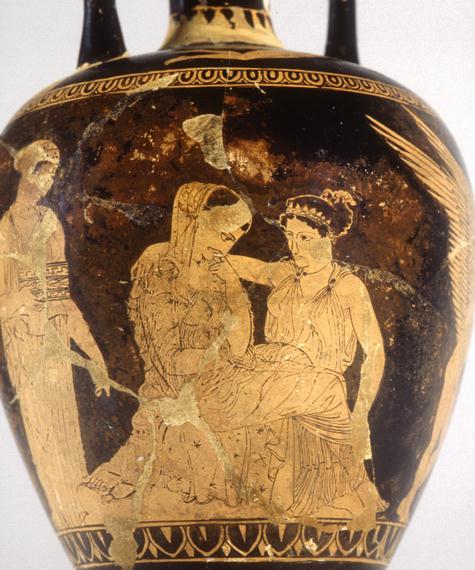
Zeus made a terrible storm on that day and when Hera was going toward the mountain alone, she stopped at the very place where there is currently a temple to Hera Teleia. The cuckoo, flew down and sat on her lap when he saw her, shivering and freezing because of the weather. Hera saw the bird and pitied him and covered him with her cloak. Then Zeus suddenly transformed his appearance and grabbed a hold of Hera. Because she was refusing him due to their mother, he promised that he would marry her.

Among the Argives, who honor the goddess the most of all the Greeks, the cult image of Hera sits in the temple on a throne holding a scepter in one hand on which a cuckoo is seated.”

πάντα γυναῖκες ἴσαντι, καὶ ὡς Ζεὺς ἀγάγεθ᾽ ῞Ηραν] … ῞Ομηρος «εἰς εὐνὴν φοιτῶντε φίλους λήθοντο τοκῆας.» ᾽Αριστοκλῆς δὲ ἐν τῶι Περὶ τῶν ῾Ερμιόνης ἱερῶν ἰδιωτέρως ἱστορεῖ περὶ τοῦ Διὸς καὶ [τοῦ τῆς] ῞Ηρας γάμου. τὸν γὰρ Δία μυθολογεῖται ἐπιβουλεύειν τῆι ῞Ηραι μιγῆναι, ὅτε αὐτὴν ἴδοι χωρισθεῖσαν ἀπὸ τῶν ἄλλων θεῶν. βουλόμενος δὲ ἀφανὴς γενέσθαι καὶ μὴ ὀφθῆναι ὑπ᾽ αὐτῆς τὴν ὄψιν μεταβάλλει εἰς κόκκυγα καὶ καθέζεται εἰς ὄρος, ὃ πρῶτον μὲν Θόρναξ ἐκαλεῖτο, νῦν δὲ Κόκκυξ. τὸν δὲ Δία χειμῶνα δεινὸν ποιῆσαι τῆι ἡμέραι ἐκείνηι· τὴν δὲ ῞Ηραν πορευομένην μόνην ἀφικέσθαι πρὸς τὸ ὄρος καὶ καθέζεσθαι εἰς αὐτό, ὅπου νῦν ἐστιν ἱερὸν ῞Ηρας Τελείας. τὸν δὲ κόκκυγα ἰδόντα καταπετασθῆναι καὶ καθεσθῆναι ἐπὶ τὰ γόνατα αὐτῆς πεφρικότα καὶ ῥιγῶντα ὑπὸ τοῦ χειμῶνος. τὴν δὲ ῞Ηραν ἰδοῦσαν αὐτὸν οἰκτεῖραι καὶ περιβαλεῖν τῆι ἀμπεχόνηι. τὸν δὲ Δία εὐθέως μεταβαλεῖν τὴν ὄψιν καὶ ἐπιλαβέσθαι τῆς ῞Ηρας. τῆς δὲ τὴν μίξιν παραιτουμένης διὰ τὴν μητέρα, αὐτὸν ὑποσχέσθαι γυναῖκα αὐτὴν ποιήσασθαι. καὶ παρ᾽ ᾽Αργείοις δέ, οἳ μέγιστα τῶν ῾Ελλήνων τιμῶσι τὴν θεόν, τὸ [δὲ] ἄγαλμα τῆς ῞Ηρας ἐν τῶι ναῶι καθήμενον ἐν τῶι θρόνωι τῆι χειρὶ ἔχει σκῆπτρον, καὶ ἐπ᾽ αὐτῶι τῶι σκήπτρωι κόκκυξ.

Pausanias (2.17.4) describes a statue in a temple to Hera outside of Corinth:

“The statue of Hera—extraordinarily huge—sits on a throne made of gold and ivory, a work of Polykleitos. She has a crown embossed with Graces and the Seasons and carries in one hand a pomegranate fruit and in the other a scepter. I must pass over the reason for the pomegranate, since the tale is protected by sacred rite. But people say that the cuckoo bird sitting on the scepter is Zeus: because he was in love with Hera when she was a maiden and turned himself into this bird which she hunted to have as a pet. I record this story as much as the others of the gods which I offer incredulously—but I record them still.”

τὸ δὲ ἄγαλμα τῆς ῞Ηρας ἐπὶ θρόνου κάθηται μεγέθει μέγα, χρυσοῦ μὲν καὶ ἐλέφαντος, Πολυκλείτου δὲ ἔργον· ἔπεστι δέ οἱ στέφανος Χάριτας ἔχων καὶ ῞Ωρας ἐπειργασμένας, καὶ τῶν χειρῶν τῇ μὲν καρπὸν φέρει ῥοιᾶς, τῇ δὲ σκῆπτρον. τὰ μὲν οὖν ἐς τὴν ῥοιὰν—ἀπορρητότερος γάρ ἐστιν ὁ λόγος—ἀφείσθω μοι· κόκκυγα δὲ ἐπὶ τῷ σκήπτρῳ καθῆσθαί φασι λέγοντες τὸν Δία, ὅτε ἤρα παρθένου τῆς ῞Ηρας, ἐς τοῦτον τὸν ὄρνιθα ἀλλαγῆναι, τὴν δὲ ἅτε παίγνιον θηρᾶσαι. τοῦτον τὸν λόγον καὶ ὅσα ἐοικότα εἴρηται περὶ θεῶν οὐκ ἀποδεχόμενος γράφω, γράφω δὲ οὐδὲν ἧσσον.

 

Jupiter and Juno on Mt. Ida, by James Barry (1773)


Helen’s Serving Girl Wrote the First Greek Sex Manual

From the Suda

Astuanassa: A handmaid of Helen, Menelaos’ wife. She first discovered positions for intercourse and wrote On Sexual Positions. Philainis and Elephantinê rivaled her in this later—they were women who danced out these sorts of wanton acts.

Ἀστυάνασσα, Ἑλένης τῆς Μενελάου θεράπαινα: ἥτις πρώτη τὰς ἐν τῇ συνουσίᾳ κατακλίσεις εὗρε καὶ ἔγραψε περὶ σχημάτων συνουσιαστικῶν: ἣν ὕστερον παρεζήλωσαν Φιλαινὶς καὶ Ἐλεφαντίνη, αἱ τὰ τοιαῦτα ἐξορχησάμεναι ἀσελγήματα.

Photius Bibl. 190.149a 27-30

We have learned about this embroidered girdle, that Hera took it from Aphrodite and gave it to Helen. Her handmaid Astuanassa stole it but Aphrodite took it back from her again.

Περὶ τοῦ κεστοῦ ἱμάντος ὡς λάβοιμὲν αὐτὸν ῞Ηρα παρὰ ᾿Αφροδίτης, δοίη δ’ ῾Ελένῃ, κλέψοι δ’ αὐτὸν ἡ ῾Ελένης θεράπαινα ᾿Αστυάνασσα, ἀφέλοι δ’ αὐτὸν ἐξ αὐτῆς πάλιν ᾿Αφροδίτη.

Hesychius, sv. Astuanassa

Astuanassa: A handmaiden of Helen and the first to discover Aphrodite and her licentious positions.

᾿Αστυάνασσα· ῾Ελένης θεράπαινα ἥτις πρώτη ἐξεῦρεν ᾿Αφροδίτην καὶ ἀκόλαστα σχήματα

Image result for Ancient Greek Helen vase

As is largely unsurprising from the perspective of Greek misogyny, excessive interest in sexual behavior is projected a female quality. Expertise beyond interest is made the province of female ‘professionals’ (slaves) who may act as scapegoats and marginal figures for the corruption of both men and women. There is a combination of such interest with an excessive emphasis on eating (and eating really well) in Athenaeus where the pleasures of the body are combined.

Athenaeus, Deipnosophists 8.335c

“Dear men, even though I have great admiration for Chrysippus as the leader of the Stoa, I praise him even more because he ranks Arkhestratos, well-known for his Science of Cooking along with Philainis who is credited with a licentious screed about sexual matters—even though the iambic poet of Samos, Aiskhriôn, claims that Polycrates the sophist started this slander of her when she was really quite chaste. The lines go like this:

“I, Philainis, circulated among men
Lie here thanks to great old age.
Don’t laugh, foolish sailor, as your trace the cape
Nor make me a target of mockery or insult
For, by Zeus and his sons in Hell
I was never a slut with men nor a public whore.
Polykrates, Athenian by birth,
A bit clever with words and with a nasty tongue,
Wrote what he wrote. I don’t know anything about it.”

But the most amazing Chrysippus combines in the fifth book of his On Goodness and Pleasure that both “the books of Philianis and the Gastronomiai of Arkhestratos and forces of erotic and sexual nature, and in the same way slave-girls who are expert at these kinds of movements and positions and who are engaged in their practice.” He adds that they learn this type of material completely and then thoroughly possess what has been written on these topics by Philainis and Arkhestratos and those who have written on similar topics. Similarly, in his seventh book, he says ‘As you cannot wholly learn the works of Philianis and Arkhestratos’ Gastronomia because they do have something to offer for living better.’ “

Χρύσιππον δ᾿, ἄνδρες φίλοι, τὸν τῆς στοᾶς ἡγεμόνα κατὰ πολλὰ θαυμάζων ἔτι μᾶλλον ἐπαινῶ τὸν πολυθρύλητον ἐπὶ τῇ Ὀψολογίᾳ Ἀρχέστρατον αἰεί ποτε μετὰ Φιλαινίδος κατατάττοντα, εἰς ἣν ἀναφέρεται τὸ περὶ ἀφροδισίων ἀκόλαστον cσύγγραμμα, ὅπερ φησὶ | ποιῆσαι Αἰσχρίων ὁ Σάμιος ἰαμβοποιὸς Πολυκράτη τὸν σοφιστὴν ἐπὶ διαβολῇ τῆς ἀνθρώπου σωφρονεστάτης γενομένης. ἔχει δὲ οὕτως τὰ ἰαμβεῖα·

ἐγὼ Φιλαινὶς ἡ ᾿πίβωτος ἀνθρώποις
ἐνταῦθα γήρᾳ τῷ μακρῷ κεκοίμημαι.
μή μ᾿, ὦ μάταιε ναῦτα, τὴν ἄκραν κάμπτων
χλεύην τε ποιεῦ καὶ γέλωτα καὶ λάσθην.
ὐ γὰρ μὰ τὸν Ζῆν᾿, οὐ μὰ τοὺς κάτω κούρους, |
dοὐκ ἦν ἐς ἄνδρας μάχλος οὐδὲ δημώδης.
Πολυκράτης δὲ τὴν γενὴν Ἀθηναῖος,
λόγων τι παιπάλημα καὶ κακὴ γλῶσσα,
ἔγραψεν οἷ᾿ ἔγραψ᾿· ἐγὼ γὰρ οὐκ οἶδα.

ἀλλ᾿ οὖν ὅ γε θαυμασιώτατος Χρύσιππος ἐν τῷ πέμπτῳ Περὶ τοῦ Καλοῦ καὶ τῆς Ἡδονῆς φησι· καὶ βιβλία τά τε Φιλαινίδος καὶ τὴν τοῦ Ἀρχεστράτου Γαστρονομίαν καὶ δυνάμεις ἐρωτικὰς καὶ συνουσιαστικάς, ὁμοίως δὲ καὶ τὰς θεραπαίνας ἐμπείρους τοιῶνδε κινήσεών τε καὶ σχημάτων καὶ περὶ τὴν eτούτων μελέτην γινομένας. καὶ πάλιν· ἐκμανθάνειν | τ᾿ αὐτοὺς τὰ τοιαῦτα καὶ κτᾶσθαι τὰ περὶ τούτων γεγραμμένα Φιλαινίδι καὶ Ἀρχεστράτῳ καὶ τοῖς τὰ ὅμοια γράψασιν. κἀν τῷ ἑβδόμῳ δέ φησι· καθάπερ γὰρ οὐκ ἐκμανθάνειν τὰ Φιλαινίδος καὶ τὴν Ἀρχεστράτου Γαστρονομίαν ἔστιν ὡς φέροντά τι πρὸς τὸ ζῆν ἄμεινον.

First-Wives’ Club: Oinone and Her Son

Here’s some mythical-grade misogyny, with a variation on the Potiphar’s wife motif, and some infanticide.

Apollodorus, Bibliotheca, 3.155

“Hektor married Andromache, Êetiôn’s daughter, and Alexandros [Paris] married Oinônê the daughter of Kebren the river. She learned the power of prophecy from Rhea and warned Alexander not to sail to Helen. Because she did not persuade him, she said that if he was wounded, he should come to her because she alone would be able to heal him.

But he did steal Helen from Sparta and, while Troy was attacked, he was struck by Herakles’ arrows from Philoktêtes. He went to Oinône in Ida. She, because she took delight in his suffering, said she would not heal him. Alexandros returned to Troy and was dying, but Oinônê changed her mind and was bringing medicine to heal him only to find him dead. She hanged herself.”

῞Εκτωρ μὲν οὖν ᾿Ανδρομάχην τὴν ᾿Ηετίωνος γαμεῖ, ᾿Αλέξανδρος δὲ Οἰνώνην τὴν Κεβρῆνος τοῦ ποταμοῦ θυγατέρα. αὕτη παρὰ ῾Ρέας τὴν μαντικὴν μαθοῦσα προέλεγεν ᾿Αλεξάνδρῳ μὴ πλεῖν ἐπὶ ῾Ελένην. μὴ πείθουσα δὲ εἶπεν, ἐὰν τρωθῇ, παραγενέσθαι πρὸς αὐτήν· μόνην γὰρ θεραπεῦσαι δύνασθαι. τὸν δὲ ῾Ελένην ἐκ Σπάρτης ἁρπάσαι, πολεμουμένης δὲ Τροίας τοξευθέντα ὑπὸ Φιλοκτήτου τόξοις ῾Ηρακλείοις πρὸς Οἰνώνην ἐπανελθεῖν εἰς ῎Ιδην. ἡ δὲ μνησικακοῦσα θεραπεύσειν οὐκ ἔφη. ᾿Αλέξανδρος μὲν οὖν εἰς Τροίαν κομιζόμενος ἐτελεύτα, Οἰνώνη δὲ μετανοήσασα τὰ πρὸς θεραπείαν φάρμακα ἔφερε, καὶ καταλαβοῦσα αὐτὸν νεκρὸν ἑαυτὴν ἀνήρτησεν.

This story is the one basically told in Parthenius (Love Tales, 4.7). Another version of the tale is preserved in Photios but is attributed to the historian and mythographer Konon (BNJ 26 F1 = Photios, Bibliotheka 186). A few notes of caution: Konon is dated to the 1st century CE; Photios to the 9th Century CE

 Konon BNJ 26 F1 = Photios, Bibliotheka 186

[This section] is about how a child Koruthos, who surpassed his father in beauty, was born from Alexander/Paris and Oinône, the woman he married before he kidnapped Helen. His mother sent him to Helen to make Alexandros jealous and devise some evil for Helen. When Koruthos got to ‘know’ Helen, Alexandros arrived in the bedroom, and saw Koruthos sitting near her, and, already enraged out of suspicion, he killed him.

Because of the outrage against herself and the killing of her child, she cursed Alexandros a lot and predicted—for she had the inspiration of prophecy and was skilled in preparing medicines—that he would be wounded by one of the Achaeans some day and because he could not find treatment, he would need her and come home.

Later on, Alexander was wounded in the battle against the Achaeans in front of Troy by Philoktetes and he was suffering terribly. He was brought in a wagon to Idea and sent a herald to ask for Oinône. She arrogantly reproached him, saying that he should go back to Helen. Then Alexander died along the road because of the wound.

A powerful change of mind over took her at the time of his death before she heard of it, and once she gathered some medicine, she rushed to overtake him. Once she learned from the herald that he was dead and that she had killed him, she killed the herald for his arrogance by smashing a stone on his head. She threw herself over Alexander’s corpse and, after repeatedly blaming their shared fate, she hanged herself with her belt.”


[23] Οἰνώνη. ἡ κ̄γ̄· ὡς ᾽Αλεξάνδρου τοῦ Πάριδος καὶ Οἰνώνης, ἣν ἐγήματο πρὶν ἢ τὴν ῾Ελένην ἁρπάσαι, παῖς Κόρυθος γίνεται, κάλλει νικῶν τὸν πατέρα. τοῦτον ἡ μήτηρ ῾Ελένηι προσέπεμψε, ζηλοτυπίαν τε κινοῦσα ᾽Αλεξάνδρωι καὶ κακόν τι διαμηχανωμένη ῾Ελένηι. ὡς δὲ συνήθης ὁ Κόρυθος πρὸς ῾Ελένην ἐγένετο, ᾽Αλέξανδρός ποτε παρελθὼν εἰς τὸν θάλαμον καὶ θεασάμενος τὸν Κόρυθον τῆι ῾Ελένηι παρεζόμενον καὶ ἀναφλεχθεὶς ἐξ ὑποψίας εὐθὺς ἀναιρεῖ.

(2) καὶ Οἰνώνη τῆς τε εἰς αὐτὴν ὕβρεως καὶ τῆς τοῦ παιδὸς ἀναιρέσεως πολλὰ ᾽Αλέξανδρον ἀρασαμένη καὶ ἐπειποῦσα (καὶ γὰρ ἦν ἐπίπνους μαντείας καὶ τομῆς φαρμάκων ἐπιστήμων) ὡς τρωθείς ποτε ὑπ᾽ ᾽Αχαιῶν καὶ μὴ τυγχάνων θεραπείας δεήσεται αὐτῆς, οἴκαδε ἤιει. (3) ὕστερον δ᾽ ᾽Αλέξανδρος ἐν τῆι πρὸς ᾽Αχαιοὺς ὑπὲρ Τροίας μάχηι τρωθεὶς ὑπὸ Φιλοκτήτου καὶ δεινῶς ἔχων δι᾽ ἀπήνης ἐκομίζετο πρὸς τὴν ῎Ιδην· καὶ προεκπέμψας κήρυκα ἐδεῖτο Οἰνώνης· ἡ δὲ ὑβριστικῶς μάλα τὸν κήρυκα διωσαμένη πρὸς ῾Ελένην ἰέναι ᾽Αλέξανδρον ἐξωνείδιζε. καὶ ᾽Αλέξανδρος μὲν κατὰ τὴν ὁδὸν ὑπὸ τοῦ τραύματος τελευτᾶι. τὴν δὲ μήπω πεπυσμένην τὴν τελευτὴν μειάμελος ὅμως δεινὸς εἶχε, καὶ δρεψαμένη τῆς πόας ἔθει φθάσαι ἐπειγομένη. ὡς δ᾽ ἔμαθε παρὰ τοῦ κήρυκος ὅτι τεθνήκοι καὶ ὅτι αὐτὴ αὐτὸν ἀνήιρηκεν, ἐκεῖνον μὲν ἀντὶ τῆς ὕβρεως λίθωι τὴν κεφαλὴν πατάξασα ἀναιρεῖ, τῶι δ᾽ ᾽Αλεξάνδρου νεκρῶι περιχυθεῖσα καὶ πολλὰ τὸν κοινὸν ἀμφοῖν καταμεμψαμένη δαίμονα ἑαυτὴν ἀνήρτησε τῆι ζώνηι.

A couple of takeaways from this one. First, it seems that Oinône knew about Paris’ lust for Helen before he departed for Sparta and remained behind on Mt. Ida once he returned to Troy. Second, it is entirely unclear when the child returns to Troy to tempt Helen. This story is a variation on the same story told about Phoinix in book 9 (his mother had him seduce his father’s lover; his father exiled him). No one in this story looks great (except for Koruthos, he looks real great). Paris is, well, a jerk. Poor Oinône is depicted as a witch-prophetess who, despite all the abuse, still loves her terrible husband.

Like Apollodorus’ version above, Ovid’s Heroides (5) do not mention the son. The earliest extant reference to Oinône seems to be Hellanicus, but some speculation links her to Bacchylides fr. 20d (where three letters OIN[….] seem to refer to a wife of Paris. See Gantz Early Greek Myth, 1993 n. 67 on page 839

Image result for Ancient Greek vase paris
This guy? Helen and Paris. Side A from an Apulian (Tarentum?) red-figure bell-krater, 380–370 BC.

Whacking Off Wards Off War

Dio Chrysostom, Discourse VI: Diogenes (17-20):

Diogenes said that the wealthy were like newly-born babies because they always needed swaddling clothes. The thing over which people had the greatest hassles and spent the most money, for which many cities were ruined and for the sake of which many of their peoples have been miserably wasted – to him, it was the least troublesome of all things, and certainly the cheapest. For he did not need to go anywhere for the sake venereal delights. Jokingly, he said that Aphrodite attended upon him straightaway in all placed, and that the poets slandered the goddess through their own licentiousness when they called her ‘golden’. Since a lot of people did not believe this, he jerked off in the open with everyone watching.

And he said that if all men did this, Troy would never have been taken, nor would Priam, king of the Phrygians and a descendant of Zeus, had been slain at that god’s altar. He added that the Achaeans were so stupid that they thought that even dead men still lusted for women, and killed Polyxena at the tomb of Achilles. He said that fish seemed a hell of a lot smarter than people: when they needed to blow a wad of sperm, they went out and rubbed themselves on something rough.

Indeed, he wondered that people wouldn’t pay a piece of silver to have their foot, or their hand, or any other part of their body rubbed, and even the very rich wouldn’t lose a drachma in this way. But that one part often cost whole talents of silver, and some people even wagered their lives for it. He joked that masturbation was the discovery of Pan. When he lusted after Echo but could not have her and wandered night and day through the mountains, Hermes took pity on his predicament and, since Pan was his son, taught him how to do it. When Pan had learned this, he was spared a lot of suffering, and shepherds learned how to do it from him.

“Wanna see a trick?”

ἔφη δὲ τοὺς πλουσίους ὁμοίους εἶναι τοῖς νεογνοῖς βρέφεσι· δεῖσθαι γὰρ ἀεί ποτε σπαργάνων. ὑπὲρ οὗ δὲ πλεῖστα μὲν πράγματα ἔχουσιν ἄνθρωποι, πλεῖστα δὲ χρήματα ἀναλίσκουσι, πολλαὶ δὲ ἀνάστατοι πόλεις διὰ ταῦτα γεγόνασι, πολλὰ δὲ ἔθνη τούτων ἕνεκεν οἰκτρῶς ἀπόλωλεν, ἁπάντων ἐκείνῳ χρημάτων ἀπονώτατον ἦν καὶ ἀδαπανώτατον. οὐ γὰρ ἔδει αὐτὸν οὐδαμόσε ἐλθεῖν ἀφροδισίων ἕνεκεν, ἀλλὰ παίζων ἔλεγεν ἁπανταχοῦ παρεῖναι αὐτῷ τὴν᾿Αφροδίτην προῖκα· τοὺς δὲ ποιητὰς καταψεύδεσθαι τῆς θεοῦ διὰ τὴν αὑτῶν ἀκρασίαν, πολύχρυσον καλοῦντας. ἐπεὶ δὲ πολλοὶ τοῦτο ἠπίστουν, ἐν τῷ φανερῷ ἐχρῆτο καὶ πάντων ὁρώντων· καὶ ἔλεγεν ὡς εἴπερ οἱ ἄνθρωποι οὕτως εἶχον, οὐκ ἂν ἑάλω ποτὲ ἡΤροία, οὐδ’ ἂν ὁ Πρίαμος ὁ Φρυγῶν βασιλεύς, ἀπὸ Διὸς γεγονώς, ἐπὶ τῷ βωμῷ τοῦ Διὸς ἐσφάγη. τοὺς δὲ ᾿Αχαιοὺς οὕτως εἶναι ἄφρονας ὥστε καὶ τοὺς νεκροὺς νομίζειν προσδεῖσθαι γυναικῶνκαὶ τὴν Πολυξένην σφάττειν ἐπὶ τῷ τάφῳ τοῦ ᾿Αχιλλέως. ἔφη δὲ τοὺς ἰχθύας σχεδόν τι φρονιμωτέρους φαίνεσθαι τῶν ἀνθρώπων· ὅταν γὰρ δέωνται τὸ σπέρμα ἀποβαλεῖν, ἰόντας ἔξω προσκνᾶσθαι πρὸς τὸ τραχύ. θαυμάζειν δὲ τῶν ἀνθρώπων τὸ τὸν μὲν πόδα μὴ θέλειν ἀργυρίου κνᾶσθαι μηδὲ τὴν χεῖρα μηδὲ ἄλλο μηδὲν τοῦ σώματος, μηδὲ τοὺς πάνυ πλουσίους ἀναλῶσαι ἂν μηδεμίαν ὑπὲρ τούτου δραχμήν· ἓν δὲ ἐκεῖνο τὸ μέρος πολλάκις πολλῶν ταλάντων, τοὺς δέ τινας ἤδη καὶ τῇ ψυχῇ παραβαλλομένους.ἔλεγε δὲ παίζων τὴν συνουσίαν ταύτην εὕρεμα εἶναι τοῦ Πανός, ὅτε τῆς ᾿Ηχοῦς ἐρασθεὶς οὐκ ἐδύνατο λαβεῖν, ἀλλ’ ἐπλανᾶτο ἐν τοῖς ὄρεσι νύκτα καὶ ἡμέραν, τότε οὖν τὸν ῾Ερμῆν διδάξαι αὐτόν, οἰκτείραντα τῆς ἀπορίας, ἅτε υἱὸν αὐτοῦ. καὶ τόν, ἐπεὶ ἔμαθε, παύσασθαι τῆς πολλῆς ταλαιπωρίας· ἀπ’ ἐκείνου δὲ τοὺς ποιμένας χρῆσθαι μαθόντας.

First-Wives’ Club: Oinone and Her Son

Here’s some mythical-grade misogyny, with a variation on the Potiphar’s wife motif, and some infanticide.

Apollodorus, Bibliotheca, 3.155

“Hektor married Andromache, Êetiôn’s daughter, and Alexandros [Paris] married Oinônê the daughter of Kebren the river. She learned the power of prophecy from Rhea and warned Alexander not to sail to Helen. Because she did not persuade him, she said that if he was wounded, he should come to her because she alone would be able to heal him.

But he did steal Helen from Sparta and, while Troy was attacked, he was struck by Herakles’ arrows from Philoktêtes. He went to Oinône in Ida. She, because she took delight in his suffering, said she would not heal him. Alexandros returned to Troy and was dying, but Oinônê changed her mind and was bringing medicine to heal him only to find him dead. She hanged herself.”

῞Εκτωρ μὲν οὖν ᾿Ανδρομάχην τὴν ᾿Ηετίωνος γαμεῖ, ᾿Αλέξανδρος δὲ Οἰνώνην τὴν Κεβρῆνος τοῦ ποταμοῦ θυγατέρα. αὕτη παρὰ ῾Ρέας τὴν μαντικὴν μαθοῦσα προέλεγεν ᾿Αλεξάνδρῳ μὴ πλεῖν ἐπὶ ῾Ελένην. μὴ πείθουσα δὲ εἶπεν, ἐὰν τρωθῇ, παραγενέσθαι πρὸς αὐτήν· μόνην γὰρ θεραπεῦσαι δύνασθαι. τὸν δὲ ῾Ελένην ἐκ Σπάρτης ἁρπάσαι, πολεμουμένης δὲ Τροίας τοξευθέντα ὑπὸ Φιλοκτήτου τόξοις ῾Ηρακλείοις πρὸς Οἰνώνην ἐπανελθεῖν εἰς ῎Ιδην. ἡ δὲ μνησικακοῦσα θεραπεύσειν οὐκ ἔφη. ᾿Αλέξανδρος μὲν οὖν εἰς Τροίαν κομιζόμενος ἐτελεύτα, Οἰνώνη δὲ μετανοήσασα τὰ πρὸς θεραπείαν φάρμακα ἔφερε, καὶ καταλαβοῦσα αὐτὸν νεκρὸν ἑαυτὴν ἀνήρτησεν.

This story is the one basically told in Parthenius (Love Tales, 4.7). Another version of the tale is preserved in Photios but is attributed to the historian and mythographer Konon (BNJ 26 F1 = Photios, Bibliotheka 186). A few notes of caution: Konon is dated to the 1st century CE; Photios to the 9th Century CE

 Konon BNJ 26 F1 = Photios, Bibliotheka 186

[This section] is about how a child Koruthos, who surpassed his father in beauty, was born from Alexander/Paris and Oinône, the woman he married before he kidnapped Helen. His mother sent him to Helen to make Alexandros jealous and devise some evil for Helen. When Koruthos got to ‘know’ Helen, Alexandros arrived in the bedroom, and saw Koruthos sitting near her, and, already enraged out of suspicion, he killed him.

Because of the outrage against herself and the killing of her child, she cursed Alexandros a lot and predicted—for she had the inspiration of prophecy and was skilled in preparing medicines—that he would be wounded by one of the Achaeans some day and because he could not find treatment, he would need her and come home.

Later on, Alexander was wounded in the battle against the Achaeans in front of Troy by Philoktetes and he was suffering terribly. He was brought in a wagon to Idea and sent a herald to ask for Oinône. She arrogantly reproached him, saying that he should go back to Helen. Then Alexander died along the road because of the wound.

A powerful change of mind over took her at the time of his death before she heard of it, and once she gathered some medicine, she rushed to overtake him. Once she learned from the herald that he was dead and that she had killed him, she killed the herald for his arrogance by smashing a stone on his head. She threw herself over Alexander’s corpse and, after repeatedly blaming their shared fate, she hanged herself with her belt.”


[23] Οἰνώνη. ἡ κ̄γ̄· ὡς ᾽Αλεξάνδρου τοῦ Πάριδος καὶ Οἰνώνης, ἣν ἐγήματο πρὶν ἢ τὴν ῾Ελένην ἁρπάσαι, παῖς Κόρυθος γίνεται, κάλλει νικῶν τὸν πατέρα. τοῦτον ἡ μήτηρ ῾Ελένηι προσέπεμψε, ζηλοτυπίαν τε κινοῦσα ᾽Αλεξάνδρωι καὶ κακόν τι διαμηχανωμένη ῾Ελένηι. ὡς δὲ συνήθης ὁ Κόρυθος πρὸς ῾Ελένην ἐγένετο, ᾽Αλέξανδρός ποτε παρελθὼν εἰς τὸν θάλαμον καὶ θεασάμενος τὸν Κόρυθον τῆι ῾Ελένηι παρεζόμενον καὶ ἀναφλεχθεὶς ἐξ ὑποψίας εὐθὺς ἀναιρεῖ.

(2) καὶ Οἰνώνη τῆς τε εἰς αὐτὴν ὕβρεως καὶ τῆς τοῦ παιδὸς ἀναιρέσεως πολλὰ ᾽Αλέξανδρον ἀρασαμένη καὶ ἐπειποῦσα (καὶ γὰρ ἦν ἐπίπνους μαντείας καὶ τομῆς φαρμάκων ἐπιστήμων) ὡς τρωθείς ποτε ὑπ᾽ ᾽Αχαιῶν καὶ μὴ τυγχάνων θεραπείας δεήσεται αὐτῆς, οἴκαδε ἤιει. (3) ὕστερον δ᾽ ᾽Αλέξανδρος ἐν τῆι πρὸς ᾽Αχαιοὺς ὑπὲρ Τροίας μάχηι τρωθεὶς ὑπὸ Φιλοκτήτου καὶ δεινῶς ἔχων δι᾽ ἀπήνης ἐκομίζετο πρὸς τὴν ῎Ιδην· καὶ προεκπέμψας κήρυκα ἐδεῖτο Οἰνώνης· ἡ δὲ ὑβριστικῶς μάλα τὸν κήρυκα διωσαμένη πρὸς ῾Ελένην ἰέναι ᾽Αλέξανδρον ἐξωνείδιζε. καὶ ᾽Αλέξανδρος μὲν κατὰ τὴν ὁδὸν ὑπὸ τοῦ τραύματος τελευτᾶι. τὴν δὲ μήπω πεπυσμένην τὴν τελευτὴν μειάμελος ὅμως δεινὸς εἶχε, καὶ δρεψαμένη τῆς πόας ἔθει φθάσαι ἐπειγομένη. ὡς δ᾽ ἔμαθε παρὰ τοῦ κήρυκος ὅτι τεθνήκοι καὶ ὅτι αὐτὴ αὐτὸν ἀνήιρηκεν, ἐκεῖνον μὲν ἀντὶ τῆς ὕβρεως λίθωι τὴν κεφαλὴν πατάξασα ἀναιρεῖ, τῶι δ᾽ ᾽Αλεξάνδρου νεκρῶι περιχυθεῖσα καὶ πολλὰ τὸν κοινὸν ἀμφοῖν καταμεμψαμένη δαίμονα ἑαυτὴν ἀνήρτησε τῆι ζώνηι.

A couple of takeaways from this one. First, it seems that Oinône knew about Paris’ lust for Helen before he departed for Sparta and remained behind on Mt. Ida once he returned to Troy. Second, it is entirely unclear when the child returns to Troy to tempt Helen. This story is a variation on the same story told about Phoinix in book 9 (his mother had him seduce his father’s lover; his father exiled him). No one in this story looks great (except for Koruthos, he looks real great). Paris is, well, a jerk. Poor Oinône is depicted as a witch-prophetess who, despite all the abuse, still loves her terrible husband.

Like Apollodorus’ version above, Ovid’s Heroides (5) do not mention the son. The earliest extant reference to Oinône seems to be Hellanicus, but some speculation links her to Bacchylides fr. 20d (where three letters OIN[….] seem to refer to a wife of Paris. See Gantz Early Greek Myth, 1993 n. 67 on page 839

Image result for Ancient Greek vase paris
This guy? Helen and Paris. Side A from an Apulian (Tarentum?) red-figure bell-krater, 380–370 BC.

Words of Mourning: Some Poems of Anyte of Tegea

The following epigrams are attributed to the poet Anyte of Tegea, one of a handful of Hellenistic women preserved in the Greek Anthology.

Gr. Anth. 7.490

“I mourn for the virgin Antibia, to whose father’s home
Many suitors came longing to marry,
Thanks to the fame of her beauty and wisdom.
But ruinous fate made all their hopes turn in the dust.”

Παρθένον Ἀντιβίαν κατοδύρομαι, ἇς ἐπὶ πολλοὶ
νυμφίοι ἱέμενοι πατρὸς ἵκοντο δόμον,
κάλλευς καὶ πινυτᾶτος ἀνὰ κλέος· ἀλλ᾿ ἐπὶ πάντων
ἐλπίδας οὐλομένα Μοῖρ᾿ ἐκύλισε πρόσω.

7.208

“Dâmis built this grave for his battle-fierce but dead
Horse, after murderous Ares pierce his chest.
The blood spurted black from his thick-hided skin
And he dyed the earth with his painful life’s blood.”

Μνᾶμα τόδε φθιμένου μενεδαΐου εἵσατο Δᾶμις
ἵππου, ἐπεὶ στέρνον τοῦδε δαφοινὸς Ἄρης
τύψε· μέλαν δέ οἱ αἷμα ταλαυρίνου διὰ χρωτὸς
ζέσσ᾿, ἐπὶ δ᾿ ἀργαλέᾳ βῶλον ἔδευσε φονᾷ.

7.724

“Your courage, Proarkhos, killed you in the fight and dying
You put the home of your father Pheidias into dark grief.
Yet this rock above you sings out a noble song:
That you died in a struggle for your dear homeland.”

Ἦ ῥα μένος σε, Πρόαρχ᾿, ὄλεσ᾿ ἐν δαΐ, δῶμά τε πατρὸς
Φειδία ἐν δνοφερῷ πένθει ἔθου φθίμενος·
ἀλλὰ καλόν τοι ὕπερθεν ἔπος τόδε πέτρος ἀείδει,
ὡς ἔθανες πρὸ φίλας μαρνάμενος πατρίδος.

7.538

“When he was alive this man was once Manês.
But now that’s dead, he can be equal to great Dareios.”

Μάνης οὗτος ἀνὴρ ἦν ζῶν ποτέ· νῦν δὲ τεθνηκὼς
ἶσον Δαρείῳ τῷ μεγάλῳ δύναται.

Image result for Ancient tegea
Tegea from Wikipedia

Helen’s Sisters Were Unfaithful, But it Was Their Father’s Fault

Ever wondered why Helen left Menelaos or why her sister cheated on Agamemnon (other than the obvious)? Ancient poetry traced it back to a sin of their father

Schol. Ad Euripides’ Orestes 249

“Stesichorus says that when Tyndareus was sacrificing to the gods he overlooked Aphrodite. For this reason, the angry goddess made his daughters thrice and twice married deserters of husbands. The segment reads like this:

“Because when Tyndareus was sacrificing to all the gods
He neglected only the gentle-giving Kyprian
She was enraged and she made the daughters of Tyndareus
Twice and thrice married deserters of husbands.”

A fragment of Hesiod agrees with this (fr. 176):

“Smile-loving Aphrodite
Was enraged when she saw them: then she hung bad fame upon them.
After that, Timandra abandoned Ekhemos and left;
She went to Phyleus who was dear to the holy gods.
And so Klytemnestra abandoned shining Agamemnon
To lie alongside Aigisthos as she chose a lesser husband;
In the same way, Helen shamed the marriage-bed of fair Menelaos…”

Στησίχορός φησιν ὡς θύων τοῖς θεοῖς Τυνδάρεως ᾿Αφροδίτης ἐπελάθετο• διὸ ὀργισθεῖσαν τὴν θεὸν διγάμους τε καὶ τριγάμους καὶ λειψάνδρους αὐτοῦ τὰς θυγατέρας ποιῆσαι. ἔχει δὲ ἡ χρῆσις οὕτως [frg. 26]•
‘οὕνεκά ποτε Τυνδάρεως
ῥέζων πᾶσι θεοῖς μόνης λάθετ’ ἠπιοδώρου
Κύπριδος, κείνα δὲ Τυνδάρεω κούραις
χολωσαμένη διγάμους τε καὶ τριγάμους τίθησι
καὶ λιπεσάνορας’.

καὶ ῾Ησίοδος δέ [frg. 117]•
τῆισιν δὲ φιλομμειδὴς ᾿Αφροδίτη
ἠγάσθη προσιδοῦσα, κακῆι δέ σφ’ ἔμβαλε φήμηι.
Τιμάνδρη μὲν ἔπειτ’ ῎Εχεμον προλιποῦσ’ ἐβεβήκει,
ἵκετο δ’ ἐς Φυλῆα φίλον μακάρεσσι θεοῖσιν•
ὣς δὲ Κλυταιμνήστρη <προ>λιποῦσ’ ᾿Αγαμέμνονα δῖον
Αἰγίσθῳ παρέλεκτο, καὶ εἵλετο χείρον’ ἀκοίτην.
ὣς δ’ ῾Ελένη ᾔσχυνε λέχος ξανθοῦ Μενελάου…

This passage provides an explanation for why the daughters of Tyndareus—Helen and Klytemnestra—were unfaithful: it was Aphrodite’s game from the beginning because their father did not worship her correctly. A few interesting aspects here: first, Helen is “thrice-married” because after Paris dies, she marries Deiphobus (although some accounts associate her with Theseus too). Second, Hesiod’s fragmentary poems seems to be in the process of cataloging women who leave their husbands.

The first woman in the tale is Timandra, who, according to only this passage, was a third daughter of Tyndareus who left her husband Ekhemos, a king of Arcadia. They had a son together, named Leodocus before she eloped with Phyleus. In another fragment from Hesiod (fr. 23) we learn more about the family of Tyndareus and Leda:

“After climbing into the lush bed of Tyndareus
Well-tressed Leda, as fair as the rays of the moon,
Gave birth to Timandra, cow-eyed Klytemnestra,
And Phylonoe whose body was most like the immortal goddesses.
Her…the arrow bearing goddess
Made immortal and ageless for all days.”

ἣ μὲν [Τυνδαρέου θαλερὸν λέχο]ς εἰσαναβᾶσα
Λήδη ἐ̣[υπλόκαμος ἰκέλη φαέεσσ]ι σελήνης
γείνατ[ο Τιμάνδρην τε Κλυταιμήστρ]ην τε βοῶπ[ιν
Φυλο̣[νόην θ’ ἣ εἶδος ἐρήριστ’ ἀθαν]άτηισι.
τ̣ὴ̣ν[ ἰο]χέαιρα,
θῆκ[εν δ’ ἀθάνατον καὶ ἀγήραον ἤ]ματα πάντ̣[α. (7-12)

Later on in the same fragment –after hearing about the marriage and children of Klytemnestra—we learn about Timandra:

“Ekhemos made Timandra his blooming wife,
The man who was the lord of all Tegea and Arcadia, wealthy in sheep,
A rich man who was dear to the gods.
She bore to him Laodakos, the horse-taming shepherd of the host,
After she was subdued by golden Aphrodite.”

Τιμάνδρην δ’ ῎Εχεμος θαλερὴν ποιήσατ’ ἄκοιτιν,
ὃς πάσης Τεγ[έης ἠδ’ ᾿Αρκαδίης] πολυμήλου
ἀφνειὸς ἤνασ[σε, φίλος μακάρεσσι θ]ε̣ο[ῖ]σ̣ιν•
ἥ οἱ Λαόδοκον̣ μ[εγαλήτορα ποιμέν]α̣ λαῶν
γ]είνα[θ]’ ὑποδμη[θεῖσα διὰ] χρυσῆν ᾿Αφ[ροδίτην (28-31)

This section of the Hesiodic Catalogue of Women seems to be mentioning only Leda’s children with Tyndareus and not those possibly fathered by Zeus (Helen, Kastor, Polydeukes). But we hear nothing of the future of Leda’s attractive daughter Phylonoe (also spelled Philonoe) other than that Artemis made her immortal. The ancient sources? Nothing at all to explain this.

Image result for helen and her sisters greek
The Rape of Helen by Francesco Primaticcio (c. 1530–1539, Bowes Museum)

Ashes and Nightingales

Callimachus and Heraclitus of Halicarnassus, poets of the 3rd Century BC, were friends, as Callimachus’ tribute makes clear in the following poem:

Callimachus 2 (Gow-Page 34)

Someone spoke of your death, Heraclitus,
Moving me to tears.
I remembered how often we, talking,
Made the sun go down.
But now, my Halicarnassian friend,
Somewhere, and for almost too long to count,
You’ve been a pile of ashes.
Yet, your nightingales live on.
Hades, the god who steals everything,
Will not lay his hand on them.

εἶπέ τις, Ἡράκλειτε, τεὸν μόρον, ἐς δέ με δάκρυ
ἤγαγεν, ἐμνήσθην δ᾽ ὁσσάκις ἀμφότεροι
ἥλιον ἐν λέσχῃ κατεδύσαμεν: ἀλλὰ σὺ μέν που,
ξεῖν᾽ Ἁλικαρνησεῦ, τετράπαλαι σποδιή:
αἱ δὲ τεαὶ ζώουσιν ἀηδόνες, ᾗσιν ὁ πάντων
ἁρπακτὴς Ἀίδης οὐκ ἐπὶ χεῖρα βαλεῖ.

Only one of Heraclitus’ “nightingales” survives, and it is the sepulchral poem below:

Heraclitus 7.465 (Greek Anthology)

Earth just recently dug up.
On the face of the tombstone
Half-green leafy garlands sway.
When the writing’s deciphered,
Traveler, we’ll know whose smooth bones
The stone claims to enclose:

“Stranger, I am Aretemias from Cnidus.
It was with Euphronus that I shared the marriage bed.
Rites of child birth were not denied me, and I bore twins:
One I left as a guide for his father in old age;
One I took with me—a reminder of my husband.”

ἁ κόνις ἀρτίσκαπτος, ἐπὶ στάλας δὲ μετώπων
σείονται φύλλων ἡμιθαλεῖς στέφανοι
γράμμα διακρίναντες, ὁδοιπόρε, πέτρον ἴδωμεν,
λευρὰ περιστέλλειν ὀστέα φατὶ τίνος. —
ξεῖν᾽, Ἀρετημιάς εἰμι: πάτρα Κνίδος: Εὔφρονος ἦλθον
εἰς λέχος: ὠδίνων οὐκ ἄμορος γενόμαν
δισσὰ δ᾽ ὁμοῦ τίκτουσα, τὸ μὲν λίπον ἀνδρὶ ποδηγὸν
γήρως: ὃν δ᾽ ἀπάγω μναμόσυνον πόσιος.

Attic terracotta grave marker. 750-735 BC.
Metropolitan Museum of Art.

Larry Benn has a B.A. in English Literature from Harvard College, an M.Phil in English Literature from Oxford University, and a J.D. from Yale Law School. Making amends for a working life misspent in finance, he’s now a hobbyist in ancient languages and blogs at featsofgreek.blogspot.com.

My Sirens, My Words: Two Poems by Erinna

Some accounts make Erinna a contemporary of Sappho

Greek Anthology 7.710

“Columns, and my Sirens, and you, sorrowful urn
Who holds Hades’ small portion of ash—
Say “hello” to those who walk by my grave,
Whether they happen to be citizens or from another town.

Tell them this too so they may know it:
this grave covered me when I was a bride,
My father used to call me Baukis and Tenos was my land
Tell them also that Erinna, my friend,
Etched this poem on my Tomb.”

Στᾶλαι, καὶ Σειρῆνες ἐμαί, καὶ πένθιμε κρωσσέ,
ὅστις ἔχεις Ἀΐδα τὰν ὀλίγαν σποδιάν,
τοῖς ἐμὸν ἐρχομένοισι παρ᾿ ἠρίον εἴπατε χαίρειν,
αἴτ᾿ ἀστοὶ τελέθωντ᾿, αἴθ᾿ ἑτέρας πόλιος·
χὤτι με νύμφαν εὖσαν ἔχει τάφος, εἴπατε καὶ τό·
χὤτι πατήρ μ᾿ ἐκάλει Βαυκίδα, χὤτι γένος
Τηνία, ὡς εἰδῶντι· καὶ ὅττι μοι ἁ συνεταιρὶς
Ἤρινν᾿ ἐν τύμβῳ γράμμ᾿ ἐχάραξε τόδε.

Greek Anthology 6.352

“These outlines come from tender hands: noble Prometheus
There are people whose talent is near to yours!
Whoever drew this girl so truly
If he added a voice, she would be Agatharkhis entirely.”

Ἐξ ἁπαλᾶν χειρῶν τάδε γράμματα· λῷστε Προμαθεῦ,
ἔντι καὶ ἄνθρωποι τὶν ὁμαλοὶ σοφίαν.
ταύταν γοῦν ἐτύμως τὰν παρθένον ὅστις ἔγραψεν,
αἰ καὐδὰν ποτέθηκ᾿, ἦς κ᾿ Ἀγαθαρχὶς ὅλα.

Image result for erinna greek poet
Sappho and Erinna in a Garden at Mytilene by Simeon Solomon

The Names of Agamemnon’s Daughters and the Death of Iphigenia

The sacrifice of Iphigenia is a pivotal moment in the tale of the House of Atreus—it motivates Agamemnon’s murder and in turn the matricide of Orestes—and the Trojan War, functioning as it does as a strange sacrifice of a virgin daughter of Klytemnestra in exchange for passage for a fleet to regain the adulteress Helen, Iphigeneia’s aunt by both her father and mother. The account is famous in Aeschylus’ Agamemnon and the plays Iphigenia at Aulis and Iphigenia among the Taurians by Euripides. Its earliest accounts, however, provide some interesting variations:

Hes. Fr. 23.13-30

“Agamemnon, lord of men, because of her beauty,
Married the dark-eyed daughter of Tyndareus, Klytemnestra.
She gave birth to fair-ankled Iphimede in her home
And Elektra who rivaled the goddesses in beauty.
But the well-greaved Achaeans butchered Iphimede
on the altar of thundering, golden-arrowed Artemis
on that day when they sailed with ships to Ilium
in order to exact payment for fair-ankled Argive woman—
they butchered a ghost. But the deer-shooting arrow-mistress
easily rescued her and anointed her head
with lovely ambrosia so that her flesh would be enduring—
She made her immortal and ageless for all days.
Now the races of men upon the earth call her
Artemis of the roads, the servant of the famous arrow-mistress.
Last in her home, dark-eyed Klytemnestra gave birth
after being impregnated by Agamemnon to Orestes,
who, once he reached maturity, paid back the murderer of his father
and killed his mother as well with pitiless bronze.”

γ̣ῆμ̣[ε δ’ ἑὸν διὰ κάλλος ἄναξ ἀνδρ]ῶν ᾿Αγαμέμνων
κού[ρην Τυνδαρέοιο Κλυταιμήσ]τρην κυανῶπ[ιν•
ἣ̣ τ̣[έκεν ᾿Ιφιμέδην καλλίσφυ]ρον ἐν μεγάρο[ισιν
᾿Ηλέκτρην θ’ ἣ εἶδος ἐρήριστ’ ἀ[θανά]τηισιν.
᾿Ιφιμέδην μὲν σφάξαν ἐυκνή[μ]ιδες ᾿Αχαιοὶ
βωμῶ[ι ἔπ’ ᾿Αρτέμιδος χρυσηλακ]ά̣τ[ου] κελαδεινῆς,
ἤματ[ι τῶι ὅτε νηυσὶν ἀνέπλ]εον̣ ῎Ιλιον ε̣[ἴσω
ποινὴ[ν τεισόμενοι καλλισ]φύρου ᾿Αργειώ̣[νη]ς̣,
εἴδω[λον• αὐτὴν δ’ ἐλαφηβό]λο̣ς ἰοχέαιρα
ῥεῖα μάλ’ ἐξεσά[ωσε, καὶ ἀμβροσ]ίην [ἐρ]ατ̣ε̣[ινὴν
στάξε κατὰ κρῆ[θεν, ἵνα οἱ χ]ρ̣ὼς̣ [ἔ]μ̣πε[δ]ο̣[ς] ε̣[ἴη,
θῆκεν δ’ ἀθάνατο[ν καὶ ἀγήρ]αον ἤμα[τα πάντα.
τὴν δὴ νῦν καλέο[υσιν ἐπὶ χ]θ̣ονὶ φῦλ’ ἀν̣[θρώπων
῎Αρτεμιν εἰνοδί[ην, πρόπολον κλυ]τοῦ ἰ[ο]χ[ε]αίρ[ης.
λοῖσθον δ’ ἐν μεγά[ροισι Κλυτ]αιμ̣ή̣στρη κυα[νῶπις
γείναθ’ ὑποδμηθ[εῖσ’ ᾿Αγαμέμν]ον[ι δῖ]ον ᾿Ορέ[στην,
ὅς ῥα καὶ ἡβήσας ἀπε̣[τείσατο π]ατροφο[ν]ῆα,
κτεῖνε δὲ μητέρα [ἣν ὑπερήν]ορα νηλέι [χαλκῶι.

This fragment presents what is possibly the earliest account of the tale of Iphigenia and contains the major elements: the sacrifice of Agamemnon’s daughter is tied to vengeance against Helen; the daughter is rescued by Artemis, made immortal and made her servant. [In some traditions she is either made immortal or made into a priestess of Artemis at Tauris]. Orestes kills the murderer of his father and his mother.
Continue reading “The Names of Agamemnon’s Daughters and the Death of Iphigenia”