Pliny Plans a Staycation

Pliny, Letters 3.1 to Calvisius Rufus

“I am incapable of recalling a time I spent as pleasantly as I just did when I went to see Spurinna—and, in fact, I cannot imagine anyone I would rather imitate more in my old age, should I be allowed to grow old. For no way of living is better designed than his. A well-planned life pleases me as much as the circuit of the stars. This is especially true when it comes to the old—for while a limited amount of chaos and excitement is not inappropriate for the young, a completely calm and ordered life is better for the elderly. Their public service is over and any aims for advancement is perverse at this point.

Spurinna insistently follows this rule and even in small things—minor if they did not happen daily—he follows a plan as if an orbiting body. He lies abed a bit every morning but then asks for his shoes in the second hour and takes a three-mile walk to exercise his mind no less than his body. If his friends are present, they have the most earnest conversations. If they are not there, he has a book read—something he also does at times when his friends are there if it will not annoy them too much. Then, once he sits down, the book is read again or, even better, the conversation continues. Then he climbs into his carriage and takes his wife—a model of her gender—or some friend—recently, me!—along with him.

How fine it is, how sweet a secret! How much of the past one finds there—what deeds and what heroes you hear of! What principles you absorb! He bows to his own modesty, however, and does not seem to give orders. After he has been driven seven miles or so, he walks another mile, and then returns to sit again or he goes back to his writing. For then he writes the most learned lyric lines in both Latin and Greek—they are amazingly sweet and impressive as well for their charm, humor, and grace which the taste of the one who writes them only increases.”

Nescio an ullum iucundius tempus exegerim, quam quo nuper apud Spurinnam fui, adeo quidem ut neminem magis in senectute, si modo senescere datum est, aemulari velim; nihil est enim illo vitae genere distinctius. Me autem ut certus siderum cursus ita vita hominum disposita delectat. Senum praesertim: nam iuvenes confusa adhuc quaedam et quasi turbata non indecent, senibus placida omnia et ordinata conveniunt, quibus industria sera turpis ambitio est.

Hanc regulam Spurinna constantissime servat; quin etiam parva haec—parva si non cotidie fiant—ordine quodam et velut orbe circumagit. Mane lectulo continetur, hora secunda calceos poscit, ambulat milia passuum tria nec minus animum quam corpus exercet. Si adsunt amici, honestissimi sermones explicantur; si non, liber legitur, interdum etiam praesentibus amicis, si tamen illi non gravantur. Deinde considit, et liber rursus aut sermo libro potior; mox vehiculum ascendit, adsumit uxorem singularis exempli vel aliquem amicorum, ut me  proxime. Quam pulchrum illud, quam dulce secretum! quantum ibi antiquitatis! quae facta, quos viros audias! quibus praeceptis imbuare! quamvis ille hoc temperamentum modestiae suae indixerit, ne  praecipere videatur. Peractis septem milibus passuum iterum ambulat mille, iterum residit vel se cubiculo ac stilo reddit. Scribit enim et quidem utraque lingua lyrica doctissima; mira illis dulcedo. mira suavitas, mira hilaritas, cuius gratiam cumulat sanctitas scribentis.

Image result for pliny the younger

Just Think Your Way Out of Sickness!

For more on plagues and leadership, see this post.

Aelian, Varia Historia 13.27

“Remember that Socrates’ body was thought to be orderly and in control of wisdom for this reason too. When the Athenians were suffering a pandemic and some were dying and others were near death, Socrates was the only one who was not sick. What mind do we think shared space with such a body?”

Ὅτι τὸ Σωκράτους σῶμα πεπίστευτο κόσμιον καὶ σωφροσύνης ἐγκρατὲς γεγονέναι καὶ ταύτῃ. ἐνόσουν Ἀθηναῖοι πανδημεί, καὶ οἱ μὲν ἀπέθνῃσκον, οἱ δὲ ἐπιθανατίως εἶχον, Σωκράτης δὲ μόνος οὐκ ἐνόσησε τὴν ἀρχήν. ὁ τοίνυν τοιούτῳ συνὼν σώματι τίνα ἡγούμεθα ἐσχηκέναι ψυχήν;

Apollonius of Tyana, 8.28

“Do these practices merely make a refinement of the senses or establish power over the greatest and most amazing forces? You need to see what I mean from different things, not the least of which were done during that epidemic in Ephesus.

When the disease was in the shape of an old beggar, I saw it and once I saw it I tackled it. I did not stop the disease but instead I destroyed it. The one I prayed to is clear as day in the temple which I built in thanks. It was for Herakles the Defender, the one I chose as a helper—because he is wise and brave, he once cleansed Elis of a plague and wiped away the waves of filth which the earth released when Augeas was tyrant.”

“Ἆρ᾿ οὖν τὸ οὕτως διαιτᾶσθαι λεπτότητα μόνον ἐργάζεται τῶν αἰσθήσεων ἢ ἰσχὺν ἐπὶ τὰ μέγιστά τε καὶ θαυμασιώτατα; θεωρεῖν δ᾿ ἔξεστιν ὃ λέγω καὶ ἀπ᾿ ἄλλων μέν, οὐχ ἥκιστα δὲ κἀκ τῶν ἐν Ἐφέσῳ περὶ τὴν νόσον ἐκείνην πραχθέντων· τὸ γὰρ τοῦ λοιμοῦ εἶδος, πτωχῷ δὲ γέροντι εἴκαστο, καὶ εἶδον καὶ ἰδὼν εἷλον, οὐ παύσας νόσον, ἀλλ᾿ ἐξελών, ὅτῳ δ᾿ εὐξάμενος, δηλοῖ τὸ ἱερόν, ὃ ἐν Ἐφέσῳ ὑπὲρ τούτου ἱδρυσάμην, Ἡρακλέους μὲν γὰρ Ἀποτροπαίου ἐστί, ξυνεργὸν δ᾿ αὐτὸν εἱλόμην, ἐπειδὴ σοφός τε καὶ ἀνδρεῖος ὢν ἐκάθηρέ ποτε λοιμοῦ τὴν Ἦλιν, τὰς ἀναθυμιάσεις ἀποκλύσας, ἃς παρεῖχεν ἡ γῆ κατ᾿ Αὐγέαν τυραννεύοντα.

File:Philosopher probably Apollonius of Tyana Heraklion museum original.jpg
Statue of a philosopher, probably Apollonius of Tyana. Late 2nd – 3rd century AD.

A Mind Devouring Sickness

Sophocles, Ajax, 621–635 (go here for the full text on the Scaife viewer)

“His mother, old age’s roommate
And pale in old age
When she hears he is afflicted with a mind-devouring sickness
Will not hold back her mourning,
Her mourning nor the pitiful lament of the nightingale
But she will wail the sharp funereal tones.
Strikes will sound as they fall on her breasts
And she will rip out her white hair.

Anyone who is pointlessly sick is better off
When he lies down with Hades.”

ἦ που παλαιᾷ μὲν σύντροφος ἁμέρᾳ,
λευκῷ τε γήρᾳ μάτηρ νιν ὅταν νοσοῦν-
τα φρενοβόρως ἀκούσῃ,
αἴλινον αἴλινον
οὐδ᾿ οἰκτρᾶς γόον ὄρνιθος ἀηδοῦς
σχήσει δύσμορος, ἀλλ᾿ ὀξυτόνους μὲν ᾠδὰς
θρηνήσει, χερόπληκτοι δ᾿
ἐν στέρνοισι πεσοῦνται
δοῦποι καὶ πολιᾶς ἄμυγμα χαίτας.
κρείσσων γὰρ Ἅιδᾳ κεύθων ὁ νοσῶν
μάταν

640-645

“Someone who is pointlessly sick
Is better when lying in Hades.
Look—one who came from one of the best lines
Of the much suffering Achaeans
Is no longer secure
In his childhood’s mind.
He wanders outside of it.
Miserable parent, what kind of a fate
remains for you to learn of your child,
the kind of life no other the descendants of Aiakos
faced before now.”

κρείσσων γὰρ Ἅιδᾳ κεύθων ὁ νοσῶν
μάταν,
ὃς εἷς πατρῴας ἥκων γενεᾶς ἄρι-
στα πολυπόνων Ἀχαιῶν,
οὐκέτι συντρόφοις
ὀργαῖς ἔμπεδος, ἀλλ᾿ ἐκτὸς ὁμιλεῖ.
ὦ τλᾶμον πάτερ, οἵαν σε μένει πυθέσθαι
παιδὸς δύσφορον ἄταν,
ἃν οὔπω τις ἔθρεψεν
αἰὼν Αἰακιδᾶν ἄτερθε τοῦδε.

Aelian Varia Historia, 9. 6-7

“Perikles, when he lost his sons in the plague, took their deaths most bravely and persuaded the Athenians to endure the deaths of their closest friends more graciously.

Xanthippe was in the habit of saying that even through endless troubles had afflicted Athens and themselves, she always saw the same expression on Socrates’ face when he left the home and returned. He kept a level response to all things and was always pleasant in attitude, above any kind of grief, and entirely stronger than fear.”

Ὅτι Περικλῆς ἐν τῷ λοιμῷ τοὺς παῖδας ἀποβαλὼν ἀνδρειότατα τὸν θάνατον αὐτῶν ἤνεγκε καὶ πάντας Ἀθηναίους εὐθυμότερον ἔπεισε τοὺς τῶν φιλτάτων θανάτους φέρειν.

Ἡ Ξανθίππη ἔφη μυρίων μεταβολῶν τὴν πόλιν <καὶ αὐτοὺς> κατασχουσῶν ἐν πάσαις ὅμοιον τὸ Σωκράτους πρόσωπον καὶ προϊόντος ἐκ τῆς οἰκίας καὶ ἐπανιόντος ἀεὶ θεᾶσθαι·ἥρμοστο γὰρ πρὸς πάντα ἐπιεικῶς, καὶ ἦν ἵλεως ἀεὶ τὴν διάνοιαν καὶ λύπης ὑπεράνω πάσης καὶ φόβου κρείττων παντὸς ὤν.

The Body as A Cloak for the Soul

Plato, Phaedo 89b-e

“Why, therefore, the reasoning would go, do you still not believe it when you see that the weaker part still exists after the person has died? Doesn’t it seem to you necessary that the part which lasts long should be preserved still in this time? Think about this when you consider what I am saying. Like Simmias, I guess, I need some kind of an analogy.

It seems to me as if someone is saying similar things when he makes the comparison of an old weaver who has died. He claims that the man is not dead, but is still somewhere safe somehow because he can provide as proof a cloak which the man wove himself and was wearing and is still safe and has not perished. And if someone were skeptical at this, he would ask whether a human being lives longer than a cloak which was used and worn and the when he answered that human beings last longer than cloaks in general, he would think he had proved that the person remains sound since the shorter-lived thing had not withered.

This, Simmias, I do not think is true. Think about what I am saying. Everyone would imagine that it is stupid when someone says this. For this weaver, although he has worn out and then woven many of these kinds of cloaks, died and disappeared long after they did when there were many of them. But he did not before the last one. Even in this the person is no weaker or less complex than the cloak.

I think that the soul responds to the same analogy and anyone who said the same things about it would seem sensible to me. The soul is longer-lived, and the body is weaker and has less time. But if you were to say that each soul wears out many bodies, or something else if it has many years—since the body wears out and could be ruined while the person still lives, but the soul could always reweave what gets worn out—whenever the soul perishes, it would the be necessary for it to have taken on its final garment and to perish before only this one. Once the soul dies then, the body would display the nature of its weakness and disappear by rotting quickly.”

 τί οὖν, ἂν φαίη ὁ λόγος, ἔτι ἀπιστεῖς, ἐπειδὴ ὁρᾷς ἀποθανόντος τοῦ ἀνθρώπου τό γε ἀσθενέστερον ἔτι ὄν; τὸ δὲ πολυχρονιώτερον οὐ δοκεῖ σοι ἀναγκαῖον εἶναι ἔτι σῴζεσθαι ἐν τούτῳ τῷ χρόνῳ; πρὸς δὴ τοῦτο τόδε ἐπίσκεψαι, εἴ τι λέγω· εἰκόνος γάρ τινος, ὡς ἔοικεν, κἀγὼ ὥσπερ Σιμμίας δέομαι. ἐμοὶ γὰρ δοκεῖ ὁμοίως λέγεσθαι | ταῦτα ὥσπερ ἄν τις περὶ ἀνθρώπου ὑφάντου πρεσβύτου ἀποθανόντος λέγοι τοῦτον τὸν λόγον, ὅτι οὐκ ἀπόλωλεν ὁ ἄνθρωπος ἀλλ’ ἔστι που σῶς, τεκμήριον δὲ παρέχοιτο θοιμάτιον ὃ ἠμπείχετο αὐτὸς ὑφηνάμενος ὅτι ἐστὶ σῶν καὶ οὐκ ἀπόλωλεν, καὶ εἴ τις ἀπιστοίη αὐτῷ, ἀνερωτῴη πότερον πολυχρονιώτερόν ἐστι τὸ γένος ἀνθρώπου ἢ ἱματίου ἐν χρείᾳ τε ὄντος καὶ φορουμένου, ἀποκριναμένου δή ὅτι πολὺ τὸ τοῦ ἀνθρώπου, οἴοιτο ἀποδεδεῖχθαι ὅτι παντὸς ἄρα μᾶλλον ὅ γε ἄνθρωπος σῶς ἐστιν, | ἐπειδὴ τό γε ὀλιγοχρονιώτερον οὐκ ἀπόλωλεν. τὸ δ’ οἶμαι, ὦ Σιμμία, οὐχ οὕτως ἔχει· σκόπει γὰρ καὶ σὺ ἃ λέγω. πᾶς ἂν ὑπολάβοι ὅτι εὔηθες λέγει ὁ τοῦτο λέγων· ὁ γὰρ ὑφάντης οὗτος πολλὰ κατατρίψας τοιαῦτα ἱμάτια καὶ ὑφηνάμενος ἐκείνων μὲν ὕστερος ἀπόλωλεν πολλῶν ὄντων, τοῦ δὲ τελευταίου οἶμαι πρότερος, καὶ οὐδέν τι μᾶλλον τούτου ἕνεκα ἄνθρωπός ἐστιν ἱματίου φαυλότερον οὐδ’ ἀσθενέστερον. τὴν αὐτὴν δὲ ταύτην οἶμαι εἰκόνα δέξαιτ’ ἂν ψυχὴ πρὸς σῶμα, καί τις λέγων αὐτὰ ταῦτα περὶ αὐτῶν μέτρι’ ἄν μοι φαίνοιτο λέγειν, | ὡς ἡ μὲν ψυχὴ πολυχρόνιόν ἐστι, τὸ δὲ σῶμα ἀσθενέστερον καὶ ὀλιγοχρονιώτερον· ἀλλὰ γὰρ ἂν φαίη ἑκάστην τῶν ψυχῶν πολλὰ σώματα κατατρίβειν, ἄλλως τε κἂν πολλὰ ἔτη βιῷ—εἰ γὰρ ῥέοι τὸ σῶμα καὶ ἀπολλύοιτο ἔτι ζῶντος τοῦ ἀνθρώπου, ἀλλ’ ἡ ψυχὴ ἀεὶ τὸ κατατριβόμενον ἀνυφαίνοι—ἀναγκαῖον μεντἂν εἴη, ὁπότε ἀπολλύοιτο ἡ ψυχή, τὸ τελευταῖον ὕφασμα τυχεῖν αὐτὴν ἔχουσαν καὶ τούτου μόνου προτέραν ἀπόλλυσθαι, ἀπολομένης δὲ τῆς ψυχῆς τότ’ ἤδη τὴν φύσιν τῆς ἀσθενείας ἐπιδεικνύοι | τὸ σῶμα καὶ ταχὺ σαπὲν διοίχοιτο.

Hieronymous Bosch, “Christ in Limbo”

Demosthenes Gaetz it: Remorse for 10,000 Drachmas

Aulus Gellius on Demosthenes and the Courtesan Lais (Attic Nights 1.VIII)

8 A detail excerpted from the writings of the philosopher Sotion about the prostitute Lais and the orator Demosthenes

Sotion was a rather well known man from the peripatetic school. He wrote a book filled with varied and extensive anecdotes and named it The Horn of Amaltheia, which in our tongue is pretty close to saying The Horn of Plenty.

In that book he included this anecdote about Demosthenes the orator and Lais the prostitute. “Lais”, he says, “the Corinthian, used to earn a lot of money through the elegance and beauty of her body. Often, some of the most well-known wealthy men from all of Greece came to see her, but not a one was admitted unless he gave what she asked: and she used to ask for no small amount.” He says that this is where the common saying was born among Greeks that “It is not possible for everyman to sail to Corinth”, since a man went to Corinth to Lais in vain if he could not give what she asked.

“And the famous Demosthenes went to her in secret and asked for her services. But she asked for 10,000 drachmas” [1]–an amount which would be exchanged for ten thousand of our denarii—“Struck dumb by the woman’s daring and by the great heap of money, Demosthenes turned away pale and said “I cannot buy regret for such a price”. But the Greek which he is said to have spoken is more charming: “I will not buy remorse for 10,000 drachmas.”

8 Historia in libris Sotionis philosophi reperta super Laide meretrice et Demosthene rhetore.
1 Sotion ex peripatetica disciplina haut sane ignobilis vir fuit. Is librum multae variaeque historiae refertum composuit eumque inscripsit Κέρας Ἀμαλθείας. 2 Ea vox hoc ferme valet, tamquam si dicas “cornum Copiae”. 3 In eo libro super Demosthene rhetore et Laide meretrice historia haec scripta est: “Lais” inquit “Corinthia ob elegantiam venustatemque formae grandem pecuniam demerebat, conventusque ad eam ditiorum hominum ex omni Graecia celebres erant, neque admittebatur, nisi qui dabat, quod poposcerat; poscebat autem illa nimium quantum.” 4 Hinc ait natum esse illud frequens apud Graecos adagium:

Οὐ παντὸς ἀνδρὸς ἐς Κόρινθον ἔσθ᾿ ὁ πλοῦς

quod frustra iret Corinthum ad Laidem, qui non quiret dare, quod posceretur. 5 “Ad hanc ille Demosthenes clanculum adit et, ut sibi copiam sui faceret, petit. At Lais myrias drachmas poposcit”, hoc facit nummi nostratis denarium decem milia. 6 “Tali petulantia mulieris atque pecuniae magnitudine ictus expavidusque Demosthenes avertitur et discedens “ego” inquit “paenitere tanti non emo”. Sed Graeca ipsa, quae fertur dixisse, lepidiora sunt: οὐκ ὠνοῦμαι μυρίων δραχμῶν μεταμέλειαν.

demosthenes-bust
Does this face merit a surcharge?

[1] If we use the popular idea that a drachma was worth one day of a skilled worker’s wages, then Lais’ services cost 10,000 working days. Perhaps less overwhelming, but still impressive is valuing a drachma at $25 USD: A night with Lais is only $250,000 dollars. But maybe that’s just because it was Demosthenes….

Another Plague: Profiteering

For more on how leaders make plagues worse, look around, or go here.

Philo, On the Virtues 92

“They were so messed up in the mind and so obsessed with making money, they treated every kind of profit as if they were dying”

εἰσὶ δ᾿ οἳ οὕτως ῥυπῶσι τὰς διανοίας προστετηκότες ἀργυρισμῷ καὶ δυσθανατῶντες περὶ πᾶσαν ἰδέαν κέρδους

Plato, Laws 906c

“But there are some souls who live with us on the earth and have come to possess unjust profit, which is clearly inhuman. They implore the guards, whether they are shepherds or guard-dogs, or the highest of all masters as they beg them, trying to persuade them with pleasing words and enchanting spells—as the stories of evil men go. They are able to profiteer among human beings without suffering anything!

But we say that the crime we call now “profiteering” is the same as a disease in the body’s flesh, or what we would call a plague in some seasons and years, or what, once the word is translated, is injustice itself in cities and states.”

ψυχαὶ δή τινες ἐπὶ γῆς οἰκοῦσαι καὶ ἄδικον λῆμμα κεκτημέναι, δῆλον ὅτι θηριώδεις πρὸς τὰς τῶν φυλάκων ψυχὰς ἄρα κυνῶν ἢ τὰς τῶν νομέων ἢ πρὸς τὰς τῶν παντάπασιν ἀκροτάτων δεσποτῶν προσπίπτουσαι πείθουσι θωπείαις λόγων, καὶ ἐν εὐκταίαις τισὶν ἐπῳδαῖς, ὡς αἱ φῆμαί φασιν αἱ τῶν κακῶν, ἐξεῖναι πλεονεκτοῦσι σφίσιν ἐν ἀνθρώποις πάσχειν μηδὲν χαλεπόν. φαμὲν δ᾿ εἶναί που τὸ νῦν ὀνομαζόμενον ἁμάρτημα τὴν πλεονεξίαν ἐν μὲν σαρκίνοις σώμασι νόσημα  καλούμενον, ἐν δὲ ὥραις ἐτῶν καὶ ἐνιαυτοῖς λοιμόν, ἐν δὲ πόλεσι καὶ πολιτείαις τοῦτο αὐτό, ῥήματι μετεσχηματισμένον, ἀδικίαν.

Theognis, 725-726

“No one goes to Hell with all his precious possessions”

… τὰ γὰρ περιώσια πάντα/ χρήματ’ ἔχων οὐδεὶς ἔρχεται εἰς ᾿Αίδεω

Image result for ancient greek money hoard
Money hoard. From the Smithsonian Magazine

When the Plow Was Not a Blessing

The following sepulchral epigram is ascribed to Antiphilus of Byzantium. He appears to have been active in the 1st century AD. Nothing else is known about him.

Antiphilus 7.176 (Greek Anthology)

It’s not that I was denied burial
And was, as a consequence, left to rot.
But here I lie, on the wheat-bearing land,
A naked corpse.
I once received a fitting burial.
Since then though, the iron blades of a plow
Have, by some plowing-man’s hands, turned me up.
Stranger, who calls death the release from ills
When the grave was not my last misfortune?

οὐχ ὅτι με φθίμενον κῆδος λίπεν, ἐνθάδε κεῖμαι
γυμνὸς ὑπὲρ γαίης πυροφόροιο νέκυς:
ταρχύθην γὰρ ἐγὼ τὸ πρίν ποτε, νῦν δ᾽ ἀροτῆρος
χερσὶ σιδηρείη μ᾽ ἐξεκύλισεν ὕνις.
ἦ ῥα κακῶν θάνατόν τις ἐρεῖ λύσιν, ὁππ
ότ᾽ ἐμεῖο,
ξεῖνε, πέλει παθέων ὕστατον οὐδὲ τάφος;

A terracotta votive tablet depicting a body surrounded by mourners. The tablet, dating from the 6th century BC, is attributed to the Gela Painter. Walters Art Museum, Baltimore.

Larry Benn has a B.A. in English Literature from Harvard College, an M.Phil in English Literature from Oxford University, and a J.D. from Yale Law School. Making amends for a working life misspent in finance, he’s now a hobbyist in ancient languages and blogs at featsofgreek.blogspot.com.

Beautiful Mirrors of Beautiful Things

Plutarch, Moralia Dialogue on Love 765 a-b

“When we are sent back there, love does not come near our soul through its own devising but through the body. Just so, teachers of geometry, when their students are not yet capable of comprehending thoughts of the incorporeal or the concepts of immutable essence, they make shapes, manipulable and visible representations of spheres, cubes, and dodecahedrons to give them. In this way, heavenly love creates beautiful mirrors of the beautiful things, mortal versions of the divine, changeable manifestations of the unchanging, and merely sensible representations of pure thought.

By creating these things in the shape and color and image of the beautiful people in their youth, Love moves our memory carefully, and it is kindled first by these things.”

Ἐνταῦθα δὲ πάλιν πεμπομένων αὐτῇ μὲν οὐ πλησιάζει ψυχῇ καθ᾿ ἑαυτήν, ἀλλὰ διὰ σώματος. ὡς δὲ γεωμέτραι παισὶν οὔπω δυναμένοις ἐφ᾿ ἑαυτῶν τὰ νοητὰ μυηθῆναι τῆς ἀσωμάτου καὶ ἀπαθοῦς οὐσίας εἴδη πλάττοντες ἁπτὰ καὶ ὁρατὰ μιμήματα σφαιρῶν καὶ κύβων καὶ δωδεκαέδρων προτείνουσιν· οὕτως ἡμῖν ὁ οὐράνιος Ἔρως ἔσοπτρα καλῶν καλά, θνητὰ μέντοι θείων καὶ ἀπαθῶν παθητὰ καὶ νοητῶν αἰσθητὰ μηχανώμενος ἔν τε σχήμασι καὶ χρώμασι καὶ εἴδεσι νέων ὥρᾳ στίλβοντα δείκνυσι καὶ κινεῖ τὴν μνήμην ἀτρέμα διὰ τούτων ἀναφλεγομένην τὸ πρῶτον.

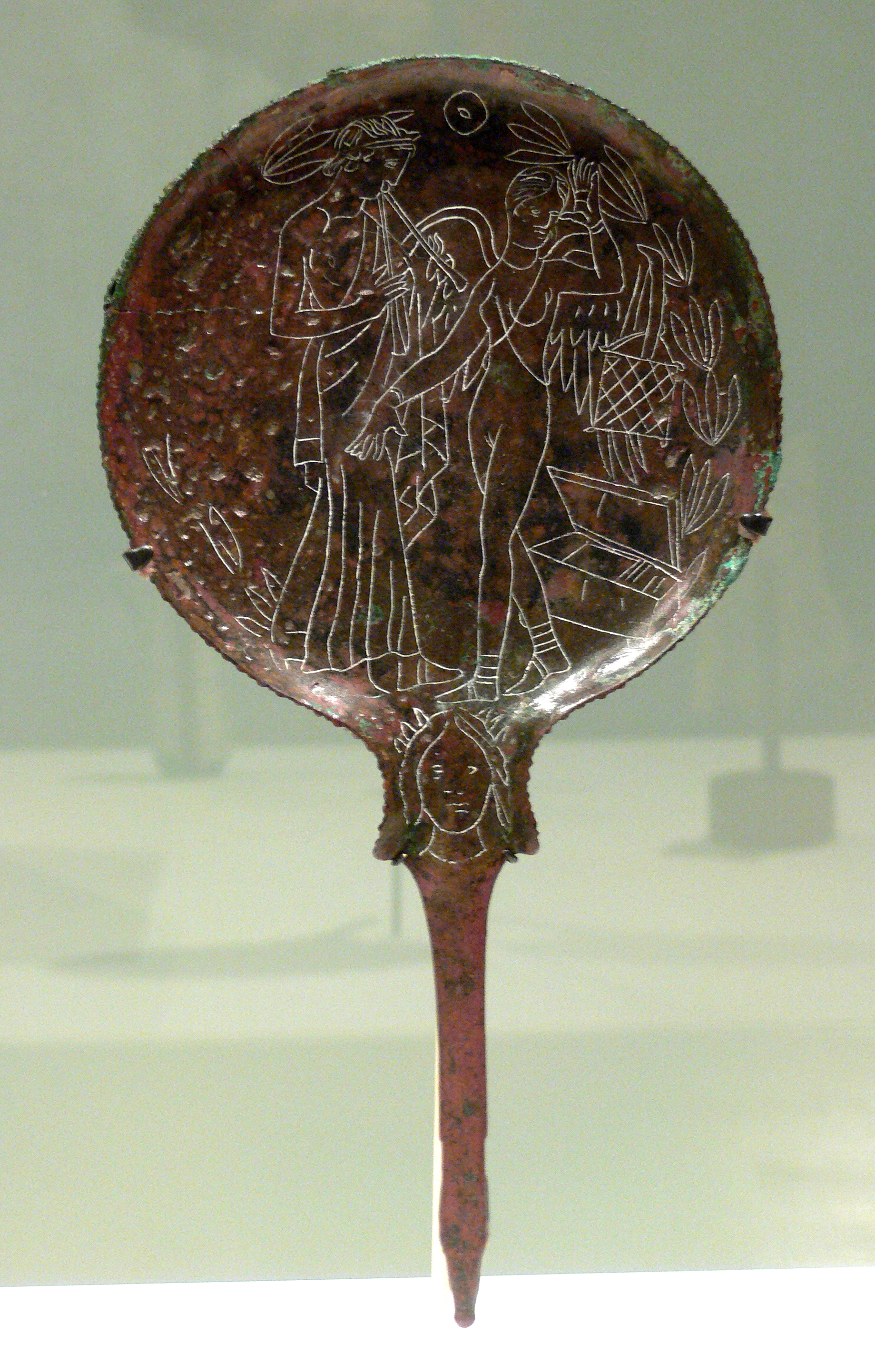
an Etruscan Mirror and the Dallas Museum of Art

Social Distancing in the Field: Be Goats, Not Sheep

Varro, On Agriculture 2. 9-11

“What can I say about the health of animals that are never healthy? There’s only this: the masters of the flock have special written instructions on what treatments to use for some of their diseases and for bodily wounds which they often suffer, since they are often fighting one another with horns and since they graze in thorny areas.

All that remains is the topic of numbers. This is smaller for herds of goats than for flocks of sheep, since goats are horny and spread themselves out but sheep gather together and crowd in a single space. In the Gallic territory, people keep greater numbers of flocks instead of bigger ones because an epidemic develops quickly in large ones, which will bring an owner to ruin. They believe that a flock of fifty people is big enough.”

Quid dicam de earum sanitate, quae numquam sunt sanae? Nisi tamen illud unum: quaedam scripta habere magistros pecoris, quibus remediis utantur ad morbos quosdam earum ac vulneratum corpus, quod usu venit iis saepe, quod inter se cornibus pugnant atque in spinosis locis pascuntur. Relinquitur de numero, qui in gregibus est minor caprino quam in ovillo, quod caprae lascivae et quae dispargant se; contra oves quae se congregent ac condensent in locum unum. Itaque in agro Gallico greges plures potius faciunt quam magnos, quod in magnis cito existat pestilentia, quae ad perniciem eum perducat. Satis magnum gregem putant esse circiter quinquagenas.

A daily reminder, Od. 17.246 (for more, go here)

“Bad shepherds ruin their flocks.”

… αὐτὰρ μῆλα κακοὶ φθείρουσι νομῆες.

Also, to practice your imitation:

Sheep say baa, βῆ λέγειν. while goats say may, Μῆ μῆ (as in, may I stand at least six feet away from you?)

File:KAMA Ulysse fuyant Polyphème.jpg
For some cognitive dissonance. Pelikè représentant Ulysse s’échappant de la caverne de Polyphème en s’agrippant à la toison d’un bélier. Vers 500 a. C. Musée archéologique du Céramique n°THW 195.

Theano: Philosopher, Author, Wit

These sayings are drawn from the Gnomologium Vaticanum. For other testimonia see below.

“Theano used to say “It is shameful to be silent on matters about which it is noble to speak and noble to be silent on those shameful to mention”

Θεανὼ ἔφη· ” περὶ ὧν λέγειν καλὸν περὶ τούτων σιωπᾶν αἰσχρὸν καὶ περὶ ὧν αἰσχρὸν λέγειν περὶ τούτων σιωπᾶν καλόν.”

“Theano the Pythagorean philosopher was asked how a man and woman might live together and said ‘if they learn to bear each other’s moods’.”

Θεανὼ ἡ πυθαγορικὴ φιλόσοφος ἐρωτηθεῖσα πῶς ἂν δύναιτο γυνὴ καὶ ἀνὴρ συμπεριφέρεσθαι ἀλλήλοις εἶπεν· ” ἐὰν μάθωσι τὰς ἀλλήλων ὀργὰς φέρειν.”

“Theano suggested that a woman coming to her husband should strip off her shame along with her clothes and put them all back on again when she left.”

Θεανὼ παρεκελεύσατο ἅμα τοῖς ἱματίοις καὶ τὴν αἰσχύνην ἀποτίθεσθαι τὴν πρὸς τὸν ἄνδρα βαδίζουσα<ν>, περιβαλλομένην δὲ πάλιν κομίζεσθαι.

“Theano, when asked what number of days a woman was clean from her husband and is was right for her to go to the temple, said ” ‘on the same day from her own husband, but never from another.’ “

Θεανὼ ἐρωτηθεῖσα ποσταία ἡ γυνὴ ἀπὸ ἀνδρὸς καθαρεύει καὶ εἰς ἱερὸν ἰέναι δεῖ αὐτὴν ἔφη· ” ἀπὸ μὲν τοῦ ἰδίου αὐθημερόν, ἀπὸ δὲ τοῦ ἀλλοτρίου οὐδέποτε.”

“Theano said ‘It is better to trust oneself to an unbridled horse than an illogical woman.’ “

Θεανὼ εἶπε· “κρεῖττόν ἐστιν ἵππῳ ἀχαλινώτῳ ἑαυτὸν πιστεύειν ἢ γυναικὶ ἀλογίστῳ.”

“While Theano was walking she showed her forearm and some youth when he saw it said “Nice skin”. She responded, “it’s not communal”.

Θεανὼ πορευομένη ἔξω εἶχε τὸν βραχίονα· νεανίσκος δέ τις ἰδὼν εἶπε· ” καλὸν τὸ δέμας·” ἡ δὲ ἀπεκρίνατο· ” ἀλλ’ οὐ κοινόν.”

“When Theano the Pythagorean philosopher was asked what eros is, she said ‘the passion of a soul with spare time.’ “

Θεανὼ ἡ πυθαγορικὴ φιλόσοφος ἐρωτηθεῖσα τί ἐστιν ἔρως ἔφη· ” πάθος ψυχῆς σχολαζούσης.”

Suda s.v. Theano (theta 83)

“Theano: from Metapontum or Thurii. A Pythagorean, daughter of Leôphrôn, wife of Karustos of Krotôn, or Brôtinos the Pythagorean. She wrote On Pythagoras, On Virtue to Hippodamos of Thurii, Advice for Woman, and Sayings of the Pythagoreans.”

Θεανώ, Μεταποντίνη ἢ Θουρία, Πυθαγορεία, θυγάτηρ Λεώφρονος, γαμετὴ δὲ Καρύστου ἢ Κρότωνος ἢ Βρωτίνου τοῦ Πυθαγορείου. αὕτη ἔγραψε περὶ Πυθαγόρου, Περὶ ἀρετῆς ῾Ιπποδάμῳ Θουρίῳ,  Παραινέσεις γυναικείας καὶ ᾿Αποφθέγματα Πυθαγορείων.

Diogenes Laertius, 8.42

“Pythagoras also had a wife, named Theanô, the daughter of Brontinus of Kroton. Others say she was Brontinus’ wife and Pyhtagoras’ student.”

[42] Ἦν δὲ τῷ Πυθαγόρᾳ καὶ γυνή, Θεανὼ ὄνομα, Βροντίνου τοῦ Κροτωνιάτου θυγάτηρ: οἱ δέ, γυναῖκα μὲν εἶναι Βροντίνου, μαθήτριαν δὲ Πυθαγόρου…

Image result for ancient greek Theano