Debate-Me Guys and the Nature of Bigness

Plato, Phaedo 101 and 102

“But you wouldn’t mix things up like those debate-me guys who talk about a principle and its results at the same time if you really want to discover something real. These guys probably have not one single understanding or concern for the truth.

They’re just good enough to please themselves with their ‘wisdom’, even though they’re mixing everything up.”

ἅμα δὲ οὐκ ἂν φύροιο ὥσπερ οἱ ἀντιλογικοὶ περί τε τῆς ἀρχῆς διαλεγόμενος καὶ τῶν ἐξ ἐκείνης ὡρμημένων, εἴπερ βούλοιό τι τῶν ὄντων εὑρεῖν; ἐκείνοις μὲν γὰρ ἴσως οὐδὲ εἷς περὶ τούτου λόγος οὐδὲ φροντίς· ἱκανοὶ γὰρ ὑπὸ σοφίας ὁμοῦ πάντα κυκῶντες ὅμως δύνασθαι αὐτοὶ αὑτοῖς ἀρέσκειν· σὺ δ’, εἴπερ εἶ τῶν φιλοσόφων, οἶμαι ἂν ὡς ἐγὼ λέγω ποιοῖς.

“Bigness seems to me not only never willing to be big and small at the same time, but the bigness in us is never eager to accept smallness nor to be surpassed, but it does two things: it flees or shrinks whenever the opposite—smallness—is present or, once it has approached, it perishes.”

ἐμοὶ γὰρ φαίνεται οὐ μόνον αὐτὸ τὸ μέγεθος οὐδέποτ’ ἐθέλειν ἅμα μέγα καὶ σμικρὸν εἶναι, ἀλλὰ καὶ τὸ ἐν ἡμῖν μέγεθος οὐδέποτε προσδέχεσθαι τὸ σμικρὸν οὐδ’ ἐθέλειν ὑπερέχεσθαι, ἀλλὰ δυοῖν τὸ ἕτερον, ἢ φεύγειν καὶ ὑπεκχωρεῖν ὅταν αὐτῷ προσίῃ τὸ ἐναντίον, τὸ σμικρόν, ἢ προσελθόντος ἐκείνου ἀπολωλέναι· ὑπομένον δὲ καὶ δεξάμενον τὴν σμικρότητα.

Bigness

Subjection Is My Subject, or “Your Empire Sucks!”

Dionysius of Halicarnassus, Roman Antiquities 1.2:

The fact that I have taken as my subject a thing that is noble, elevated, and useful to many will not, I think, require a great profusion of words for those who are not totally ignorant blockheads where history is concerned. For if one directs their attention to the reigns of cities and races of past time as they followed upon one another, and then considers each of them independently and then each one in comparison with the other; and if one wishes to determine which of them held the greatest power and which is famed for the noblest deeds in peace and war, then they will see that the power of the Romans by far outstripped that of the other empires which preceded it, not only in respect to the greatness of its sway and the nobility of its deeds (which no account has yet worthily put in order), but also respecting the length of time during which it has existed up to our own age.

For the Assyrian empire, though suitably ancient and extending back into the mythical past, still only controlled a small part of Asia. The empire of the Medes overtook that of the Assyrians, and surpassed it with even greater power, but it did not maintain that strength for much time, and instead dissolved in its fourth generation. The Persians, having defeated the Medes, held sway over almost all of Asia, but when they set out against European peoples, they did not defeat many of them, and they remained in power for not much more than two hundred years. The Macedonian dynasty overtook the Persian power in greatness, and surpassed all previous empires, but it did not blossom for long – after the death of Alexander, it took a turn for the worse. Immediately split among several rulers after the Diadochoi, and following them maintaining its strength for another two or three generations, it became weak under its own influence and was finally obliterated by the Romans. And not even Macedon made all of the land and sea its subject. For it held no sway over Libya, except a bit not far from Egypt, nor did it subject all of Europe, but went north only as far as Thrace, and in the west terminated at the Adriatic Sea.

Τὴν μὲν οὖν ὑπόθεσιν ὅτι καλὴν εἴληφα καὶ μεγαλοπρεπῆ καὶ πολλοῖς ὠφέλιμον οὐ μακρῶν οἶμαι δεήσειν λόγων τοῖς γε δὴ μὴ παντάπασιν ἀπείρως ἔχουσι τῆς κοινῆς ἱστορίας. εἰ γάρ τις ἐπιστήσας τὴν διάνοιαν ἐπὶ τὰς παραδεδομένας ἐκ τοῦ παρεληλυθότος χρόνου πόλεών τε καὶ ἐθνῶν ἡγεμονίας, ἔπειτα χωρὶς ἑκάστην σκοπῶν καὶ παρ’ ἀλλήλας ἐξετάζων διαγνῶναι βουληθείη, τίς αὐτῶν ἀρχήν τε μεγίστην ἐκτήσατο καὶ πράξεις ἀπεδείξατο λαμπροτάτας ἐν εἰρήνῃ τε καὶ κατὰ πολέμους, μακρῷ δή τινι τὴν ῾Ρωμαίων ἡγεμονίαν ἁπάσας ὑπερβεβλημένην ὄψεται τὰς πρὸ αὐτῆς μνημονευομένας, οὐ μόνον κατὰ τὸ μέγεθος τῆς ἀρχῆς καὶ κατὰ τὸ κάλλος τῶν πράξεων, ἃς οὔπω κεκόσμηκε λόγος οὐδεὶς ἀξίως, ἀλλὰ καὶ κατὰ τὸ μῆκος τοῦ περιειληφότος αὐτὴν χρόνου μέχρι τῆς καθ’ ἡμᾶς ἡλικίας. ἡ μὲν γὰρ Ασσυρίων ἀρχὴν παλαιά τις οὖσα καὶ εἰς τοὺς μυθικοὺς ἀναγομένη χρόνους ὀλίγου τινὸς ἐκράτησε τῆς ᾿Ασίας μέρους. ἡ δὲ Μηδικὴ καθελοῦσα τὴν ᾿Ασσυρίων καὶ μείζονα δυναστείαν περιβαλομένη χρόνον οὐ πολὺν κατέσχεν, ἀλλ’ ἐπὶ τῆς τετάρτης κατελύθη γενεᾶς. Πέρσαι δὲ οἱ  Μήδους καταγωνισάμενοι τῆς μὲν ᾿Ασίας ὀλίγου δεῖν πάσης τελευτῶντες ἐκράτησαν, ἐπιχειρήσαντες δὲ καὶ τοῖς Εὐρωπαίοις ἔθνεσιν οὐ πολλὰ ὑπηγάγοντο, χρόνον τε οὐ πολλῷ πλείονα διακοσίων ἐτῶν ἔμειναν ἐπὶ τῆς ἀρχῆς. ἡ δὲ Μακεδονικὴ δυναστεία τὴν Περσῶν καθελοῦσα ἰσχὺν μεγέθει μὲν ἀρχῆς ἁπάσας ὑπερεβάλετο τὰς πρὸ αὐτῆς, χρόνον δὲ οὐδὲ αὕτη πολὺν ἤνθησεν, ἀλλὰ μετὰ τὴν ᾿Αλεξάνδρου τελευτὴν ἐπὶ τὸ χεῖρον ἤρξατο φέρεσθαι. διασπασθεῖσα γὰρ εἰς πολλοὺς ἡγεμόνας εὐθὺς ἀπὸ τῶν διαδόχων καὶ μετ’ ἐκείνους ἄχρι τῆς δευτέρας ἢ τρίτης ἰσχύσασα προελθεῖν γενεᾶς, ἀσθενὴς αὐτὴ δι’ ἑαυτῆς ἐγένετο καὶ τελευτῶσα ὑπὸ ῾Ρωμαίων ἠφανίσθη. καὶ οὐδὲ αὕτη μέντοι πᾶσαν ἐποιήσατο γῆν τε καὶ θάλασσαν ὑπήκοον· οὔτε γὰρ Λιβύης ὅτι μὴ τῆς πρὸς Αἰγύπτῳ <οὐ> πολλῆς οὔσης ἐκράτησεν, οὔτε τὴν Εὐρώπην ὅλην ὑπηγάγετο, ἀλλὰ τῶν μὲν βορείων αὐτῆς μερῶν μέχρι Θρᾴκης προῆλθε, τῶν δ’ ἑσπερίων μέχρι τῆς ᾿Αδριανῆς κατέβη θαλάσσης.

Untroubled as Day Passes to Night?

Euripides, Herakles Mainomenos 502-507

“I guess it is necessary that we die.
Old men—the matters of life are brief,
So complete this course as sweetly as you can,
Going untroubled as the days pass to night.

Time has no idea how to keep hope alive;
No, it hurries on for itself and flits away.

Just look at me: I was once something special to look at,
Famous for my deeds, but luck stole me away
In a single day, just like a feather on the wind.”

θανεῖν γάρ, ὡς ἔοικ’, ἀναγκαίως ἔχει.
ἀλλ’, ὦ γέροντες, σμικρὰ μὲν τὰ τοῦ βίου,
τοῦτον δ’ ὅπως ἥδιστα διαπεράσατε
ἐξ ἡμέρας ἐς νύκτα μὴ λυπούμενοι.
ὡς ἐλπίδας μὲν ὁ χρόνος οὐκ ἐπίσταται
σώιζειν, τὸ δ’ αὑτοῦ σπουδάσας διέπτατο.
ὁρᾶτ’ ἔμ’ ὅσπερ ἦ περίβλεπτος βροτοῖς
ὀνομαστὰ πράσσων, καί μ’ ἀφείλεθ’ ἡ τύχη
ὥσπερ πτερὸν πρὸς αἰθέρ’ ἡμέραι μιᾶι.

Hercules and the Hesperides, by G. A. Pellegrini

We Need An Art of Forgetting

Cicero De Finibus 2 104-5

“What kind of sense, then, is there to the idea that a wise person should not let go of good memories but forget bad ones? First, is what we remember under our control? Themistocles, it is said, when Simonides promised to teach him the art of memory, responded, “I’d prefer learning to forget. For I remember things I wish I didn’t and I can’t forget the things I want to.” [Epicurus] was a man of great insight, but the fact us that a philosopher who prohibits remembering asks too much of us.”

Iam illud quale tandem est, bona praeterita non effluere sapienti, mala meminisse non oportere? Primum in nostrane est potestate quid meminerimus? Themistocles quidem, cum ei Simonides an quis alius artem memoriae polliceretur, ‘Oblivionis,’ inquit, ‘mallem; nam memini etiam quae nolo, oblivisci non possum quae volo.’ Magno hic ingenio; sed res se tamen sic habet ut nimis imperiosi philosophi sit vetare meminisse.

Magic Words and Quack Cures: An ‘Epic’ Fail During a Plague

Lucian, Alexander the False Prophet 36

“There was one oracle, also an autophone, which he had sent to all peoples during the plague. It was a single line of verse, “Phoebus, with uncut hair, keeps off the cloud of plague.”

This line was to be seen everywhere, written on doorposts as a spell against the plague. In most cases it produced the opposite result. For, through some fortune, those homes on which the line was written were those which were especially impacted. Don’t imagine that I am saying that they were destroyed because of the line, but that it happened this way in some fashion. Perhaps the people who were encouraged by the words acted negligently or took everything too easily and did nothing to help the oracle against the disease because they believed they had these syllables to fight for them and “long-haired” Apollo to shoot down the plague with his bow.”

ἕνα δέ τινα χρησμόν, αὐτόφωνον καὶ αὐτόν, εἰς ἅπαντα τὰ ἔθνη ἐν τῷ λοιμῷ διεπέμψατο· ἦν δὲ τὸ ἔπος ἕν·

Φοῖβος ἀκειρεκόμης λοιμοῦ νεφέλην ἀπερύκει.

καὶ τοῦτο ἦν ἰδεῖν τὸ ἔπος πανταχοῦ ἐπὶ τῶν πυλώνων γεγραμμένον ὡς τοῦ λοιμοῦ ἀλεξιφάρμακον. τὸ δ᾿ εἰς τοὐναντίον τοῖς πλείστοις προὐχώρει· κατὰ γάρ τινα τύχην αὗται μάλιστα αἱ οἰκίαι ἐκενώθησαν αἷς τὸ ἔπος ἐπεγέγραπτο. καὶ μή με νομίσῃς τοῦτο λέγειν, ὅτι διὰ τὸ ἔπος ἀπώλλυντο· ἀλλὰ τύχῃ τινὶ οὕτως ἐγένετο. τάχα δὲ καὶ οἱ πολλοὶ θαρροῦντες τῷ στίχῳ ἠμέλουν καὶ ῥᾳθυμότερον διῃτῶντο, οὐδὲν τῷ χρησμῷ πρὸς τὴν νόσον συντελοῦντες, ὡς ἂν ἔχοντες προμαχομένας αὑτῶν τὰς συλλαβὰς καὶ τὸν ἀκειρεκόμην Φοῖβον ἀποτοξεύοντα τὸν λοιμόν.

Herakles tripod Louvre F341.jpg
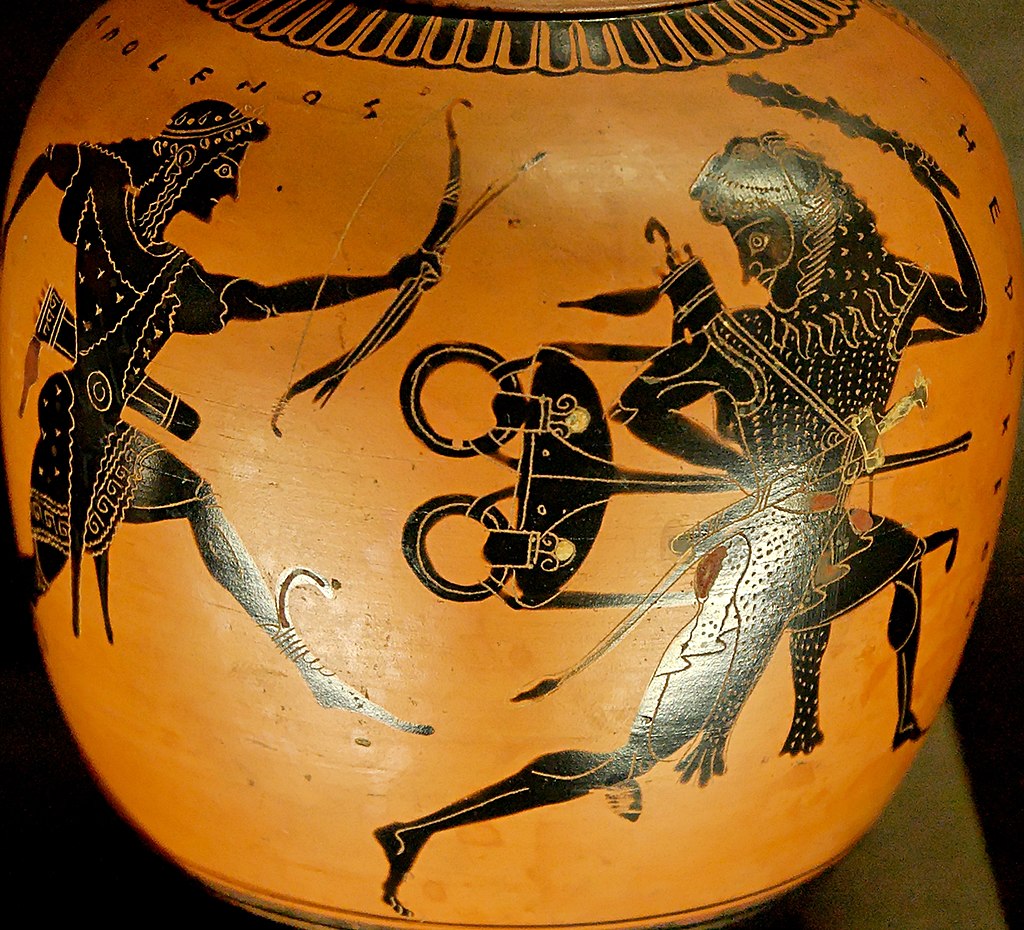
Apollo and Herakles fight over tripod, Taleides painter

The Sorrow of Times Like These

Lucretius, De Rerum Natura 6.1230-1251

“This thing alone had to be mourned the most,
This lamented: how when anyone would give up
when they realized they had contracted the disease
As condemned to die, they would stretch out with a sad heart,
Surrendering their spirit while considering the rites of the dead.

For the spread of that greedy sickness did not stop
Even for a single moment from one to another,
Thick together as woolly flocks and horned heads—
That’s the reason why grave was piling on grave.
Whoever was reluctant to see their own sick,
For this very excessive love of life and fear of death
They were punished eventually with a foul and evil end,
As deserters without help, paid back for their neglect.

But those who stayed to help faced contagion too,
And the suffering which shame compelled them to meet.
The pleading voice of the weary mixed with cries of complaint.
Well, the best kinds of souls met death like this.

…Then some falling upon others, fighting to bury their masses
Of dead, worn out by tears and grief as they returned.
They surrendered to their beds for the better part.

No one could be found anywhere who was untouched by the disease
By the death, by the sorrow of times like these.”

Illud in his rebus miserandum magnopere unum
aerumnabile erat, quod ubi se quisque videbat
implicitum morbo, morti damnatus ut esset,
deficiens animo maesto cum corde iacebat,
funera respectans animam amittebat ibidem.

quippe etenim nullo cessabant tempore apisci
ex aliis alios avidi contagia morbi,
lanigeras tamquam pecudes et bucera saecla;
idque vel in primis cumulabat funere funus.
nam quicumque suos fugitabant visere ad aegros,
vitai nimium cupidos mortisque timentis
poenibat paulo post turpi morte malaque,
desertos, opis expertis, incuria mactans.

qui fuerant autem praesto, contagibus ibant
atque labore, pudor quem tum cogebat obire
blandaque lassorum vox mixta voce querellae.
optimus hoc leti genus ergo quisque subibat.
. . . . . . .
inque aliis alium, populum sepelire suorum
certantes; lacrimis lassi luctuque redibant;
inde bonam partem in lectum maerore dabantur.
nec poterat quisquam reperiri, quem neque morbus
nec mors nec luctus temptaret tempore tali.


Palermo-trionfo-della-morte-bjs.jpg
Triumph of Death Fresco, Palermo

File:Follower of Jheronimus Bosch - The Harrowing of Hell.jpg
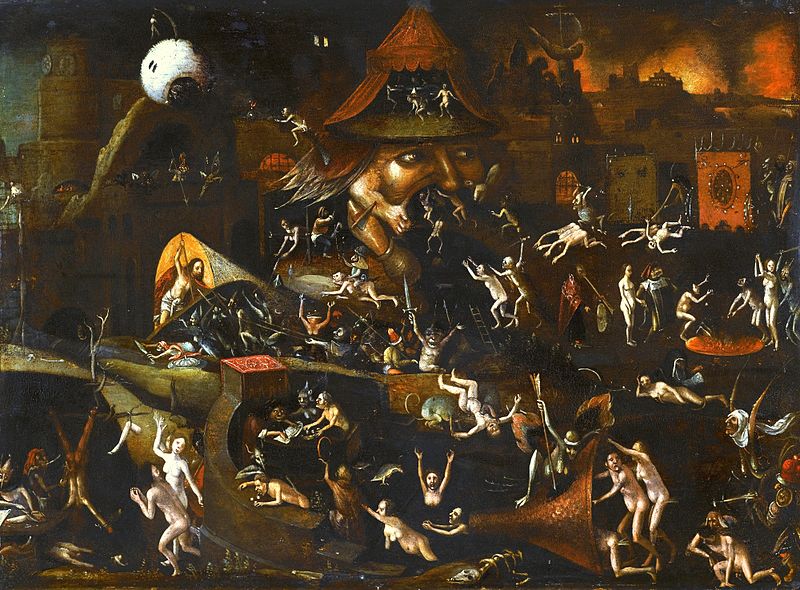
“The Harrowing of Hell” Hieronymus Bosch

Tommy A, the Polonius of Medieval Churchmen

Thomas Aquinas, Letter on a Method of Study

Because you have asked me, Ioannes, my dearest companion in Christ, in what manner it is proper for you to study in acquiring a treasury of knowledge, such a plan is handed on from me to you: that you should choose to enter through little streams, and not suddenly into the sea, because it is proper that one come gradually through the easier things to the more difficult ones.

This is, therefore, my advice and your instruction. I order you to be slow in speech and slow in acceding to the mouthpiece. Embrace purity of conscience. Do not allow yourself to be free for speech. You should frequently esteem the wine cellar if you wish to be brought into it. Present yourself as lovable to everyone. Don’t look at all deeply into the deeds of others. Don’t show yourself as very familiar with anyone, because excessive familiarity breeds contempt and offers material for subtraction from study. Don’t in any way get yourself embroiled in secular words or deeds. Don’t forget to follow the footsteps of the holy and the good. Don’t consider from whom you are hearing something, but commend to memory whatever good is spoken.

Make sure that you understand what you read and hear. Make yourself certain about doubtful things. Try to store up whatever you can in the wardrobe of your mind as if you wanted to fill up a jar. Don’t seek things higher than your station. Following these steps, you will profer and lead forth the useful blooms and fruits on the vine of the God of Heavenly Hosts as long as you live. If you will have followed all of this eagerly, you will be able to attain what you affect.

St-thomas-aquinas.jpg

Quia quaesisti a me, in Christo mihi carissime Ioannes, qualiter te studere oporteat in thesauro scientiae acquirendo, tale a me tibi traditur consilium: ut per rivulos, non statim in mare, eligas introire, quia per faciliora ad difficiliora oportet devenire. Haec est ergo monitio mea et instructio tua. Tardiloquum te esse iubeo et tarde ad locutorium accedentem; conscientiae puritatem amplectere. Orationi vacare non desinas; cellam frequenter diligas si vis in cellam vinariam introduci. Omnibus te amabilem exhibe; nihil quaere penitus de factis aliorum; nemini te multum familiarem ostendas, quia nimia familiaritas parit contemptum et subtractionis a studio materiam subministrat; de verbis et factis saecularium nullatenus te intromittas; discursus super omnia fugias; sanctorum et bonorum imitari vestigia non omittas; non respicias a quo audias, sed quidquid boni dicatur, memoriae recommenda; ea quae legis et audis, fac ut intelligas; de dubiis te certifica; et quidquid poteris in armariolo mentis reponere satage, sicut cupiens vas implere; altiora te ne quaesieris. Illa sequens vestigia, frondes et fructus in vinea Domini Sabaoth utiles, quandiu vitam habueris, proferes et produces. Haec si sectatus fueris, ad id attingere poteris, quod affectas

Write This Down: You are the City. You Are the people

Aeschylus, Suppliants 179-180

“I suggest you safeguard my words by writing them on tablet in your minds”
αἰνῶ φυλάξαι τἄμ᾿ ἔπη δελτουμένας

Aeschylus, Suppliants, 200-204

“Don’t be too aggressive or broken in speech:
These people are especially ready to be angry.
Remember to be accommodating: you are a foreign refugee in need.
To speak boldly is not a fitting move for the weak.”

καὶ μὴ πρόλεσχος μηδ᾿ ἐφολκὸς ἐν λόγῳ
γένῃ· τὸ τῇδε κάρτ᾿ ἐπίφθονον γένος.
μέμνησο δ᾿ εἴκειν· χρεῖος εἶ, ξένη, φυγάς·
θρασυστομεῖν γὰρ οὐ πρέπει τοὺς ἥσσονας.

Aeschylus, Suppliants, 370-375

“You are the city, really. You are the people.
An unjudged chief of state rules
The altar, the city’s hearth,
With only your votes and nods,
With only your scepter on the throne
You judge every need. Be on guard against contamination!”

σύ τοι πόλις, σὺ δὲ τὸ δάμιον·
πρύτανις ἄκριτος ὢν
κρατύνεις βωμόν, ἑστίαν χθονός,
μονοψήφοισι νεύμασιν σέθεν,
μονοσκήπτροισι δ᾿ ἐν θρόνοις χρέος
πᾶν ἐπικραίνεις· ἄγος φυλάσσου.

File:Nicolas Bertin - The Danaides in Hell.jpg

The Danaides in hell, by Nicolas Bertin

Aeschylus, Suppliants 991-997

“Write this down with the many other notes
In your mind of the wisdoms from your father:
An unfamiliar mob is evaluated by time,
But everyone has an evil tongue prepared to lash out
over immigrants and speaking foully is somehow easy.
I advise you not to bring me shame
Now that you are in the age which turns mortal gazes.”

καὶ ταῦτα μὲν γράψασθε πρὸς γεγραμμένοις
πολλοῖσιν ἄλλοις σωφρονίσμασιν πατρός,
ἀγνῶθ᾿ ὅμιλον ἐξελέγχεσθαι χρόνῳ·
πᾶς δ᾿ ἐν μετοίκῳ γλῶσσαν εὔτυκον φέρει
κακήν, τό τ᾿ εἰπεῖν εὐπετὲς μύσαγμά πως.
ὑμᾶς δ᾿ ἐπαινῶ μὴ καταισχύνειν ἐμέ,
ὥραν ἐχούσας τήνδ᾿ ἐπίστρεπτον βροτοῖς

It’s Not Fate, It’s My Fault

Cicero, Letter to Terentia 14.1

“Many letters—every letter—come to me with news about your incredible character and bravery, that you are overhwelmed by neither mental nor physical exertions. I am filled with sorrow to think that you, my noble, faithful, honest, kind wife would experience so much grief because of me. Or that our Tulliola would also take as much grief from her father as he ever gave her pleasure! When it comes to Marcus, our son, what can I say? From the moment he first began to understand the world, he has experienced the most bitter griefs and pains.

If, as you write, I could believe that this all happened because of fate, I could endure it more easily. But everything is my fault. I used to believe that I was loved by people who envied me and I did not follow people who were reaching out to help me. The fact is that if I had listened to my own mind instead of heeding our friends’ chatter—both the fools and the criminals—we might have ended up really happy.

But now, since our friends command us to hope, I will try not to let my health add to your burdens. I do understand how momentous this matter is, how much easier it would have been to remain at home than come back. But, still, if we have all the tribunes with us, if Lentulus is as eager as he appears, and if we still have Caesar and Pompey, we should not lose hope.”

Et litteris multorum et sermone omnium perfertur ad me incredibilem tuam virtutem et fortitudinem esse teque nec animi neque corporis laboribus defatigari. me miserum! te ista virtute, fide, probitate, humanitate in tantas aerumnas propter me incidisse, Tulliolamque nostram, ex quo patre tantas voluptates capiebat, ex eo tantos percipere luctus! nam quid ego de Cicerone dicam? qui cum primum sapere coepit, acerbissimos dolores miseriasque percepit. quae si, tu ut scribis, fato facta putarem, ferrem paulo facilius; sed omnia sunt mea culpa commissa, qui ab iis me amari putabam qui invidebant, eos non sequebar qui petebant. quod si nostris consiliis usi essemus neque apud nos tantum valuisset sermo aut stultorum amicorum aut improborum, beatissimi viveremus. nunc, quoniam sperare nos amici iubent, dabo operam ne mea valetudo tuo labori desit. res quanta sit intellego quantoque fuerit facilius manere domi quam redire. sed tamen, si omnis tribunos pl. habemus, si Lentulum tam studiosum quam videtur, si vero etiam Pompeium et Caesarem, non est desperandum.

Studiolo di Federico da Montefeltro

Cicero and ‘Big Bow-Wow’ Style

Gilbert Highet, The Classical Tradition (18):

With the beginning of the Renaissance, the amazing strength and flexibility of Cicero’s style was recognized once more. It was copied by writers of Latin prose on almost every subject. For centuries the diplomacy of the European chanceries was carried on not only in the language, but in the precise vocabulary, and word order, and cadences of Cicero’s speeches. There was a long and fierce dispute between scholars who held that Cicero was an unchallengeable ‘authority’ and that no modern writer could use Latin words or constructions not found in his works, and those, more liberal, who pointed out that Latin was still a living language which modern authors could expand and alter to their own needs. Since this was a dispute about the use of the Latin language, it does not come within the scope of our book. But it was closely connected with another dispute which does.

Many writers in the vernacular languages felt that the ‘big bow-wow’ style of speaking and writing was bogus. All style is artificial, no doubt; but they held that prose should at least give the appearance of being natural. They therefore turned away from Cicero and most of the devices he had developed, and, as models for modem prose, picked Seneca and Tacitus. Some of them went farther back, to Demosthenes and Plato. The aim of them all was to be personal, to avoid formalism. On the models of Seneca’s moral essays and Tacitus’ histories — and, to a much smaller extent, Demosthenes’ plainer speeches and Plato’s quieter dialogues — they created the prose of most modem essays and character-sketches, the prose in which some great modem sermons have been written.