Serious People Don’t Get Drunk

Diogenes Laertius, Zeno 7.1. 118-119

“Serious people are truly dedicated and on guard to make themselves better by preparing both to keep corrupting things away from them and trying to ensure that good things are near at hand. But they are also unaffected: they have peeled away adornments from their voice and their face.

They also have no concern for business since they abstain from doing anything which transgresses their duty. They do drink, but they do not get drunk. Indeed, they will also not go mad—even though the sometimes the same fantasies will still occur to them because of depression or delirium, but because of the logic of what they have selected but against nature.

And a wise person will never grieve because they understand that grief is an illogical closure of the soul, as Apollodorus says in his Ethics. These people are also godlike because they have some divine aspect in them; the scoundrel is godless.”

Ἀκιβδήλους τοὺς σπουδαίους φυλακτικούς τ᾿ εἶναι τοῦ ἐπὶ τὸ βέλτιον αὑτοὺς παριστάναι, διὰ παρασκευῆς τῆς τὰ φαῦλα μὲν ἀποκρυπτούσης, τὰ δ᾿ ὑπάρχοντα ἀγαθὰ φαίνεσθαι ποιούσης. ἀπλάστους τε· περιῃρηκέναι γὰρ ἐν τῇ φωνῇ τὸ πλάσμα καὶ τῷ εἴδει. ἀπράγμονάς τ᾿ εἶναι· ἐκκλίνειν γὰρ τὸ πράττειν τι παρὰ τὸ καθῆκον. καὶ οἰνωθήσεσθαι μέν, οὐ μεθυσθήσεσθαι δέ. ἔτι δ᾿ οὐδὲ μανήσεσθαι· προσπεσεῖσθαι μέντοι ποτὲ αὐτῷ φαντασίας ἀλλοκότους διὰ μελαγχολίαν ἢ λήρησιν, οὐ κατὰ τὸν τῶν αἱρετῶν λόγον, ἀλλὰ παρὰ φύσιν. οὐδὲ μὴν λυπηθήσεσθαι τὸν σοφόν, διὰ τὸ τὴν λύπην ἄλογον εἶναι συστολὴν τῆς ψυχῆς, ὡς Ἀπολλόδωρός φησιν ἐν τῇ Ἠθικῇ.

Θείους τ᾿ εἶναι· ἔχειν γὰρ ἐν ἑαυτοῖς οἱονεὶ θεόν. τὸν δ᾿ φαῦλον ἄθεον.


Stobaeus, 2.7.11.41

“It is not possible to think when you’re drunk. For drunkenness is extremely prone to error and people are really talkative over wine…”

Οὐχ οἷον δὲ μεθυσθήσεσθαι τὸν νοῦν ἔχοντα· τὴν γὰρ μέθην ἁμαρτητικὸν περιέχειν, λήρησιν εἶναι <γὰρ> παρὰ τὸν οἶνον,

Attic Lamb’s head Rhyton, MET

The Swiss Army Spear

Archilochus Fr. 2 (West)

Thanks to the spear I’ve got kneaded barley cake,
And thanks to the spear Ismarian wine too.
And so I recline and drink, thanks to the spear.

ἐν δορὶ μὲν μοι μᾶζα μεμαγμένη, ἐν δορὶ δ᾽ οἶνος
Ἰσμαρικός, πίνω δ᾽ ἐν δορὶ κεκλιμένος.

Hybrias Fragment (PMG 25)

My great wealth is spear and sword
And handsome shield, protector of skin–
For thanks to it I sow and thanks to it I reap.
Thanks to it I stomp sweet wine from grape vines,
And thanks to it I’m called the master of slaves.

As for those who won’t hold spear and sword
And handsome shield, protector of skin,
They all fall at my knee,
Kowtowing to their master
And saying “great king.”

ἐστί μοι πλοῦτος μέγας δόρυ καὶ ξίφος
καὶ τὸ καλὸν λαισήϊον, πρόβλημα χρωτός·
τούτῳ γὰρ ἀρῶ, τούτῳ θερίζω,
τούτῳ πατέω τὸν ἁδὺν οἶνον ἀπ᾿ ἀμπέλων,
τούτῳ δεσπότας μνοΐας κέκλημαι.
τοὶ δὲ μὴ τολμῶντ᾿ ἔχειν δόρυ καὶ ξίφος
καὶ τὸ καλὸν λαισήϊον, πρόβλημα χρωτός,
πάντες γόνυ πεπτηῶτες ἁμὸν
< >κυνέοντι δεσπόταν < >
καὶ μέγαν βασιλῆα φωνέοντες.

These rightly famous and enigmatic lyrics (drinking songs, it appears) are attributed to Archilochus (c.7th century BC) and Hybrias (c.6th century BC). I describe them as enigmatic, and perhaps a small example from Archilochus’s song will demonstrate why.

Archilochus’s Greek admits of a wide range of interpretations. For example, I translate the refrain ἐν δορὶ as “thanks to the spear.” That translation, fair to say, might be entirely wrong. 

But if I’m wrong, I’m in extraordinarily good company. So many scholars have offered so many different interpretations of ἐν δορὶ that they can’t all be right–and in fact most, or all, of them are wrong too. 

How varied are the interpretations of this simple preposition and dative-case noun? My “thanks to the spear” takes its place alongside “in the spear,” “on my spear,” “in my ship,” “on the ship’s deck,” and “on active service,” to name just a handful of alternative readings. And obviously one’s entire reading of the poem alters with one’s interpretation of those two little words. 

Bronze spear-head. c.900-780BC. Excavated in Olympia.
The British Museum.

Larry Benn has a B.A. in English Literature from Harvard College, an M.Phil in English Literature from Oxford University, and a J.D. from Yale Law School. Making amends for a working life misspent in finance, he’s now a hobbyist in ancient languages and blogs at featsofgreek.blogspot.com.

Announcing New Season of Movies We Dig: A Podcast about Film, Antiquity and Everything In-Between

About a year ago, I asked my friend and colleague, Elijah Fleming, what she thought about hosting a movie review podcast. I had just defended my dissertation, the pandemic was in full swing and the year ahead promised mostly solitary work punctuated by the occasional zoom meeting. I needed something new, something engaging, something fun. So, I asked Eli, a fellow grad student at UT Austin, if she’d be interested in talking about movies, a frequent hobby of ours, but into a microphone and (hopefully) for an audience. Thus, Movies We Dig was born. You can listen to our first season on our website or on multiple streaming platforms.

Now, as the school year enters full swing, we’re excited to announce we’re returning for another season. We recently released a short episode laying out some teasers and plans, but I wanted to reflect a little more about our past and future plans, for both current and potential listeners.

From its first conception, we wanted MWD to go beyond nitpicking what movies get right or wrong, though shedding our pedantic tendencies remains a struggle (2004’s Troy has llamas!). Instead, we wanted to review movies as both works of art and of reception; how perceptions of the past intersect with contemporary media and culture. Moreover, we wanted to approach our material without the formal trappings of academic presentations or lectures, to get earnest and humorous reactions from experts but also movie-lovers. If it wasn’t fun, then what’s the point?

Looking ahead, our initial goal of a lighthearted but (somewhat) informed show remains largely unchanged. If anything, we’re expanding. In addition to tackling some big titles we’ve kept in reserve (looking at you, Gladiator), we’re also branching out into other media. The ancient world has been a popular setting for many television programs, from the foundational I, Claudius to several current historical dramas like Barbarians and Britannia. Additionally, the last few years have seen a small blossoming of Classical myth and history in video games just begging for attention from our field, including two Assassin’s Creed titles and the indie smash hit Hades. It’s all on our radar.

Concerning expansion, our other goal for S2 is to bring in more voices to our hot-take-centric approach to ancient film criticism. Our first season was graced by a wonderful array of guests from public-facing classicists and archaeologists, including SA’s own Joel Christensen, and we’ve already got several exciting guests booked already. Still, we’re constantly seeking new guests, especially non-professors. Last year, we were joined by a fantastic group of first-year students from Adam Rabinowtiz’s class on the Trojan War to discuss Troy: Fall of a City.

This brings us to our final vocatio. Classicists near and far, if you, your colleagues or your students know a film, show or game that needs discussion, reach us at movieswedig@gmail.com or on Twitter at @dig_movies. Please listen, like, review, subscribe and get ready to dig some more movies, not-movies and all the hot takes.

You can learn more about us the hosts on our website, where you can also find links on where to listen.

Philosophical Benefits and Warnings

Seneca, Moral Epistle 5.4

“The first thing philosophy promises is a shared communion, humanity and friendship with others. Our differences from others will keep us from this promise. We must examine that those very values through which we hope to create admiration do not become laughable and hateful”

Hoc primum philosophia promittit, sensum communem,humanitatem et congregationem. A qua professione dissimilitudo nos separabit. Videamus, ne ista, per quae admirationem parare volumus, ridicula et odiosa sint.

Orphica fr. 334

“I will sing to those who understand: blockheads, close your doors.”
ἀείσω ξυνετοῖσι, θύρας δ᾿ ἐπίθεσθε βεβήλοι

Epicurus’ Maxims

“Nature’s wealth is the finest and easiest to obtain. But the ‘wealth’ of empty beliefs trails endlessly away.”

XV. ῾Ο τῆς φύσεως πλοῦτος καὶ ὥρισται καὶ εὐπόριστός ἐστιν· ὁ δὲ τῶν κενῶν δοξῶν εἰς ἄπειρον ἐκπίπτει.

On Melissos, Diogenes Laertius, 9.24

“It seemed to him that all of creation was boundless, unchangeable, unmoveable, and a single thing, uniform and multiple. That there was no actual movement, only the appearance of motion. He also thought we should not talk about the gods since we have no knowledge about them.”

Ἐδόκει δ᾽ αὐτῷ τὸ πᾶν ἄπειρον εἶναι καὶ ἀναλλοίωτον καὶ ἀκίνητον καὶ ἓν ὅμοιον ἑαυτῷ καὶ πλῆρες: κίνησίν τε μὴ εἶναι, δοκεῖν δ᾽ εἶναι. ἀλλὰ καὶ περὶ θεῶν ἔλεγε μὴ δεῖν ἀποφαίνεσθαι: μὴ γὰρ εἶναι γνῶσιν αὐτῶν.

Diogenes of Apollonia (D. L. 9.57)

“Diogenes believed these things: that the first principle is air, there are endless universes and empty space.

     ᾿Εδόκει δὲ αὐτῷ τάδε· στοιχεῖον εἶναι τὸν ἀέρα, κόσμους ἀπείρους καὶ κενὸν ἄπειρον·

Image result for Ancient Philosophy medieval manuscript

A Natural Fix for the Public Housing Crisis

Strabo 16

“The Khelônophagoi live underneath turtle shells that are big enough to sail in too. Some of them, because a lot of seaweed is cast onto the shore and makes piles as high as hills, dig into them and live inside. They dispose of corpses as food for fish by allowing them to be drawn away in the high tides.

Three islands are situated in a row: they are named Turtle Island, Seal Island, and Hawk Island. The whole shoreline has palm-trees, olive trees, and laurels and this is not just in the straits but on the outside too. There is a certain Philip’s island, facing which, above the coastline, is a hunting preserve for elephants which is called Pythangelos’ Hunting Ground.

Next to this is Arsinoê which has a city and harbor and beyond these, to Deirê above which is another hunting preserve for elephants. The land right above Deirê is rich in aromatics: the first part part produces myrrh—and it is the land of the Fish-Eaters and Meat-Eaters—and it also produces persea and the Egyptian sykamin. Beyond this land is Likha, another hunting ground for elephants. Frequently there are pools of rain water in the region and when these dry, the elephants dig with their tusks and teeth and uncover water.

On that coast, there are two enormous lakes extending up as far as the Pytholaian headland. One of them has salt water and they call it a sea; the other is fresh and contains both hippopotamuses and crocodiles. It also has papyrus on its shores. People also find the Ibis around this lake. Starting near the Pytholaus, the people who live there have unblemished bodies….”

  1. Οἱ δὲ Χελωνοφάγοι τοῖς ὀστράκοις αὐτῶν σκεπάζονται μεγάλοις οὖσιν, ὥστε καὶ πλεῖσθαι ἐν αὐτοῖς· ἔνιοι δὲ τοῦ φύκους ἀποβεβλημένου πολλοῦ καὶ θῖνας ὑψηλὰς καὶ λοφώδεις ποιοῦντος, ὑπορύττοντες ταύτας ὑποικοῦσι. τοὺς δὲ νεκροὺς ῥίπτουσι τροφὴν τοῖς ἰχθύσιν, ἀναλαμβανομένους ὑπὸ τῶν πλημμυρίδων. τῶν δὲ νήσων τινὲς τρεῖς ἐφεξῆς κεῖνται, ἡ μὲν Χελωνῶν, ἡ δὲ Φωκῶν, ἡ δ᾿ Ἱεράκων λεγομένη· πᾶσα δ᾿ ἡ παραλία φοίνικάς τε ἔχει καὶ ἐλαιῶνας καὶ δαφνῶνας, οὐχ ἡ ἐντὸς τῶν στενῶν μόνον, ἀλλὰ καὶ τῆς ἐκτὸς πολλή. ἔστι δέ τις καὶ Φιλίππου νῆσος, καθ᾿ ἣν ὑπέρκειται τὸ Πυθαγγέλου καλούμενον τῶν ἐλεφάντων κυνήγιον· εἶτ᾿ Ἀρσινόη πόλις καὶ λιμήν, καὶ μετὰ ταῦτα ἡ Δειρή· καὶ τούτων ὑπέρκειται θήρα τῶν ἐλεφάντων. ἀπὸ δὲ τῆς Δειρῆς ἡ ἐφεξῆς ἐστιν ἀρωματοφόρος, πρώτη μὲν ἡ τὴν σμύρναν φέρουσα (καὶ αὕτη μὲν Ἰχθυοφάγων καὶ Κρεοφάγων), φύει δὲ καὶ περσέαν καὶ συκάμινον Αἰγύπτιον· ὑπέρκειται δὲ ἡ Λίχα θήρα τῶν ἐλεφάντων· πολλαχοῦ δ᾿ εἰσὶ συστάδες τῶν ὀμβρίων ὑδάτων, ὧν ἀναξηρανθεισῶν οἱ ἐλέφαντες ταῖς προβοσκίσι καὶ τοῖς ὀδοῦσι φρεωρυχοῦσι καὶ ἀνευρίσκουσιν ὕδωρ. ἐν δὲ τῇ παραλίᾳ ταύτῃ μέχρι τοῦ Πυθολάου ἀκρωτηρίου δύο λίμναι εἰσὶν εὐμεγέθεις· ἡ μὲν ἁλμυροῦ ὕδατος, ἣν καλοῦσι θάλατταν, ἡ δὲ γλυκέος, ἣ τρέφει καὶ ἵππους ποταμίους καὶ κροκοδείλους, περὶ τὰ χείλη δὲ πάπυρον· ὁρῶνται δὲ καὶ ἴβεις περὶ τὸν τόπον. ἤδη δὲ καὶ οἱ πλησίον τῆς ἄκρας τῆς Πυθολάουτὰ σώματα ὁλόκληροί
Related image
Silver Turtle Stater from Aigina

Like Something Written By a Child: Self-Publishing Rich Guys

Pliny, Letters 4.7

To My Friend Catius Lepidus,

I have often told you about the force of Regulus. It is a wonder how he completes whatever he dreams up. It was to his taste to mourn his son, so he mourns as no one does. It was to his taste to have as many statues and images of him made as possible. He assigned this to all the shops: he makes boy in colors, the boy in wax, the boy in bronze, the boy in silver, the boy in gold, ivory, marble.

He also recently recited a book on the life of his son to a huge audience he had summoned. It was about he life of a boy, but he read it still. And then he sent that same story copied out countless times through all of Italy and the provinces. He wrote openly to the members of the town leaderships so that the most eloquent of their number would read the book in public: it is done!

If he had used this force—or by whatever other name the desire to get what we want should be called—if he had focused on better things, how much good he could have accomplished! A good person is just less forceful than a bad one, as the saying goes, “ignorance makes you bold, thought makes you hesitate. A sense of propriety weakens right thinking people; depravity encourages rash daring.”

Regulus is a good example of this. His lungs are weak, his mouth is muddled, his tongue isn’t fluent, he is really slow at composing with a worthless memory and has nothing apart from a crazy wit. But his lack of shame has won him so much passion that he is considered an orator. For this reason, Herennius Senecio has marvelously altered that Catonian comment on an oratory for him: “This orator is a bad man, untrained at speaking.” My god, Cato himself did not define an orator as well as Senecio described Regulus!

Are you at all able of making a letter equal to this one in thanks? You are if you will write about whether any of my friends in your town—even you—has been forced to read out Regulus’ mournful book like a carnival barker in the forum or, putting it the way Demosthenes does, “crying out and harmonizing his voice”. For it is so ridiculous that it is as likely to elicit laughter as sorrow. You would think it was written by a boy not about one! Goodbye!

C. Plinius Catio Lepido Suo S.

Saepe tibi dico inesse vim Regulo. Mirum est quam efficiat in quod incubuit. Placuit ei lugere filium: luget ut nemo. Placuit statuas eius et imagines quam plurimas facere: hoc omnibus officinis agit, illum coloribus illum cera illum aere illum argento illum auro ebore marmore effingit. Ipse vero nuper adhibito ingenti auditorio librum de vita eius recitavit; de vita pueri, recitavit tamen. Eundem in exemplaria mille transcriptum per totam Italiam provinciasque dimisit. Scripsit publice, ut a decurionibus eligeretur vocalissimus aliquis ex ipsis, qui legeret eum populo: factum est. Hanc ille vim, seu quo alio nomine vocanda est intentio quidquid velis optinendi, si ad potiora vertisset, quantum boni efficere potuisset! Quamquam minor vis bonis quam malis inest, ac sicut ἀμαθíα μὲν θράσoς, λoγισμòς δὲ ὄκνoν φέρει, ita recta ingenia debilitat verecundia, perversa confirmat audacia. Exemplo est Regulus. Imbecillum latus, os confusum, haesitans lingua, tardissima inventio, memoria nulla, nihil denique praeter ingenium insanum, et tamen eo impudentia ipsoque illo furore pervenit, ut orator habeatur. Itaque Herennius Senecio mirifice Catonis illud de oratore in hunc e contrario vertit: “Orator est vir malus dicendi imperitus.” Non mehercule Cato ipse tam bene verum oratorem quam hic Regulum expressit. Habesne quo tali epistulae parem gratiam referas? Habes, si scripseris num aliquis in municipio vestro ex sodalibus meis, num etiam ipse tu hunc luctuosum Reguli librum ut circulator in foro legeris, ἐπάρας scilicet, ut ait Demosthenes, τὴν φωνὴν καì γεγηθὼς καì λαρυγγíζων. Est enim tam ineptus ut risum magis possit exprimere quam gemitum: credas non de puero scriptum sed a puero. Vale.

Image result for roman funeral masks

Isolation and Self-Sufficiency

Aristotle, Nicomachean Ethics 1. 6-9

“We use ‘self-sufficient’ not to mean a person alone—someone living in isolation—but to include one’s parents, children, spouse, friends, and even fellow citizens, since a human being is a social creature by nature. Now, some limit needs to be observed in these ties—for it will go on endlessly if you extend it to someone’s ancestors and descendants.  But that’s a problem for another time.

We posit that self-sufficiency is something which in itself makes life attractive and lacks nothing and for this reason we think it is happiness, since we imagine that happiness is the most preferable of all things when it is not counted with others. It is clear that it is desirable even with the least of the goods—the addition of goods increases the total, since the greater good is always desirable.”

τὸ δ᾿ αὔταρκες λέγομεν οὐκ αὐτῷ μόνῳ, τῷ ζῶντι βίον μονώτην, ἀλλὰ καὶ γονεῦσι καὶ τέκνοις καὶ γυναικὶ καὶ ὅλως τοῖς φίλοις καὶ πολίταις, ἐπειδὴ φύσει πολιτικὸν ὁ ἄνθρωπος. τούτων δὲ ληπτέος ὅρος τις· ἐπεκτείνοντι γὰρ ἐπὶ τοὺς γονεῖς καὶ τοὺς ἀπογόνους καὶ τῶν φίλων τοὺς φίλους εἰς ἄπειρον πρόεισιν. ἀλλὰ τοῦτο μὲν εἰσαῦθις ἐπισκεπτέον, τὸ δ᾿ αὔταρκες τίθεμεν ὃ μονούμενον αίπετὸν ποιεῖ τὸν βίον καὶ μηδενὸς ἐνδεᾶ· τοιοῦτον δὲ τὴν εὐδαιμονίαν οἰόμεθα εἶναι. ἔτι δὲ πάντων αἱρετωτάτην μὴ συναριθμουμένην—συναριθμουμένην γὰρ δῆλον ὡς αἱρετωτέραν μετὰ τοῦ ἐλαχίστου τῶν ἀγαθῶν, ὑπεροχὴ γὰρ ἀγαθῶν γίνεται τὸ προστιθέμενον, ἀγαθῶν δὲ τὸ μεῖζον αἱρετώτερον

John Donne, Meditation 17

No man is an Iland, intire of itselfe; every man
is a peece of the Continent, a part of the maine;
if a Clod bee washed away by the Sea, Europe
is the lesse, as well as if a Promontorie were, as
well as if a Manor of thy friends or of thine
owne were; any mans death diminishes me,
because I am involved in Mankinde;
And therefore never send to know for whom
the bell tolls; It tolls for thee.

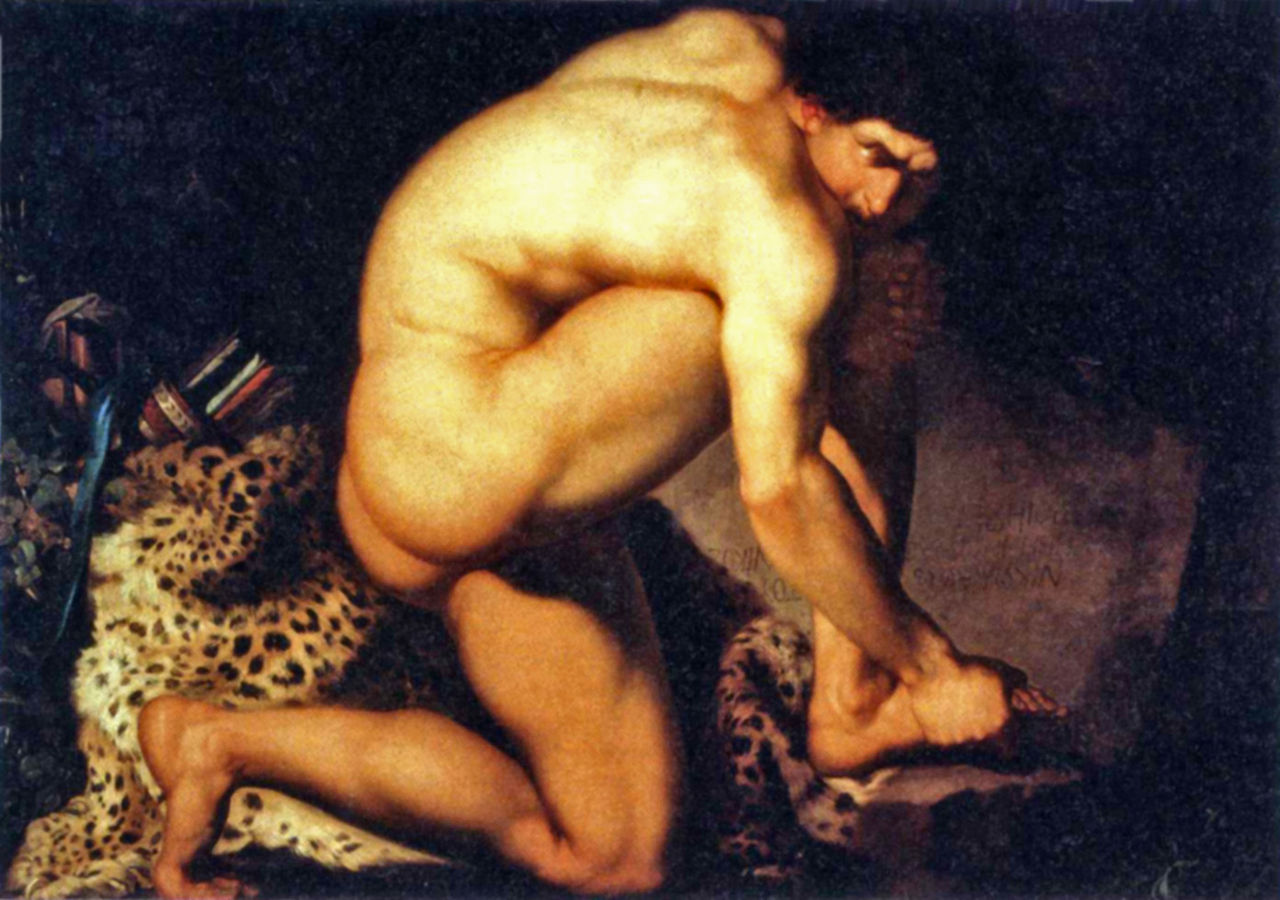
Wounded Philoctetes by Nicolai Abildgaard

Tawdry Tuesday: A Careful Choice of Words (NSFW)

CW: sexual language

Priapea 28

May I die, Priapus, if I am not ashamed
To use obscene words and nasty names
But when you, a god, has cast shame down
And show your balls out shaking around
Then a cock must be a cock and a cunt the same.

Obscenis, peream, Priape, si non
uti me pudet improbisque verbis.
sed cum tu posito deus pudore
ostendas mihi coleos patentes,
cum cunno mihi mentula est vocanda

Image result for medieval manuscript priapus
An apocryphal origin for the term ‘money shot’.

Saved from Atomism!

Claudian, Against Rufinus 1.1-24

Often my doubtful mind was drawn in two directions by the thought of whether the gods cared for the earth or whether there was no divine director and all mortal things flowed on as if by chance. For when I sought the laws of the world and the prescribed limits of the sea and the wanderings of the year and the interchange of night and day, then I thought that all things were established by the plan of a god who ordered crops to come forth at various times, ordered the moon to burn with an alien fire and for the sun to be filled with its own; who stretched the shores to the waves and balanced the earth on the middle of its axis. But when I saw human affairs wrapped in such darkness and the wicked flourishing for so long while the pious were vexed, and while religion was once again shaken and in decline, I began to follow the path of another school (not by my own will) which affirms that the seeds of things move through a vacuum and that fortune is not ruled by any art, and which thinks, in an ambiguous way, either that there are no gods or that their do not care for us. But finally, the punishment of Rufinus resolved this mental tumult and absolved the gods. No longer do I complain that the unjust gave reached the heights of the world: they are raised high so that they can rush headlong with a greater fall.

Saepe mihi dubiam traxit sententia mentem,
curarent superi terras an nullus inesset
rector et incerto fluerent mortalia casu.
nam cum dispositi quaesissem foedera mundi
praescriptosque mari fines annique meatus
et lucis noctisque uices, tunc omnia rebar
consilio firmata dei, qui lege moueri
sidera, qui fruges diuerso tempore nasci,
qui uariam Phoeben alieno iusserit igni
conpleri Solemque suo, porrexerit undis
litora, tellurem medio librauerit axe.
sed cum res hominum tanta caligine uolui
aspicerem laetosque diu florere nocentes
uexarique pios, rursus labefacta cadebat
religio causaeque uiam non sponte sequebar
alterius, uacuo quae currere semina motu
adfirmat magnumque nouas per inane figuras
fortuna non arte regi, quae numina sensu
ambiguo uel nulla putat uel nescia nostri.
abstulit hunc tandem Rufini poena tumultum
absoluitque deos. iam non ad culmina rerum
iniustos creuisse queror; tolluntur in altum
ut lapsu grauiore ruant.

The Distinguished Antiquity of the Mushroom as a Membrum Virile

μύκης, μύκητος: “mushroom”…2. membrum virile

mushroom

Herodian. Anecd. Ox. iii.231.5 = Archilochus 252

“Mushroom: can also mean a man’s genitals—which is what Archilochus says when he presents it with the same number of syllables: “The tendons of my ‘mushroom’ were ruptured.”

(μύκης) σημαίνει δὲ καὶ τὸ αἰδοῖον τοῦ ἀνθρώπου, ὅπερ καὶ ἰσοσυλλάβως ἔκλινεν Ἀρχίλοχος εἰπὼν

ἀλλ᾿ ἀπερρώγασι μύκεω τένοντες.

Henderson, The Maculate Muse 1991: 20

mushroom henderson

Beekes, Etymological Dictionary of Ancient Greek 2010

beekes mush 1

beekes mush 2

Dio Cassius, Rom. Hist. Ep. 41

“Nero has also left for us a saying worth remembering. For he used to say that mushrooms were food of the gods because [Claudius] became a god thanks to a mushroom”

Καὶ ὁ Νέρων δὲ οὐκ ἀπάξιον μνήμης ἔπος κατέλιπε· τοὺς γὰρ μύκητας θεῶν βρῶμα ἔλεγεν εἶναι, ὅτι καὶ ἐκεῖνος διὰ τοῦ μύκητος θεὸς ἐγεγόνει.

Hippocrates of Cos, Epidemics 7.102

“The young daughter of Pausanias ate a raw mushroom and felt nausea, choking, and stomach pain. Drinking warm melicrêt and puking relieved her along with a warm bath. She puked up the mushroom in the bath and she sweated while she was getting better”

Τῇ Παυσανίου κούρῃ μύκητα ὠμὸν φαγούσῃ ἄση, πνιγμός, ὀδύνη γαστρός. μελίκρητον θερμὸν πίνειν καὶ ἐμεῖν ξυνήνεγκε, καὶ λουτρὸν θερμόν· ἐν τῷ λουτρῷ ἐξήμεσε τὸν μύκητα, καὶ ἐπεὶ λήξεινἔμελλεν ἐξίδρωσεν.