Father Neleus Had How Many Sons?

Schol. A ad 11.692a

“There were twelve sons of blameless Neleus. According to the Separatists, Homer records that there were twelve children of Neleus in the Iliad but had three in the Odyssey where he provides the genealogy: “And I saw surpassingly beautiful Khloris” and soon after, “Nestor and Khromios, and proud Periklymenos”. It is likely that the children born before came to him from another woman and these three came from Khloris, for Priamos said, “I had fifty children. When the sons of the Achaeans came / 19 of them were from a single womb / the rest women bore to me in my home.”

δώδεκα γὰρ Νηλῆος <ἀμύμονος υἱέες ἦμεν>: πρὸς τοὺς Χωρίζοντας (fr. 5 K.), ὅτι ἐν μὲν ᾿Ιλιάδι δώδεκα Νηλῆος παῖδας λέγει, ἐν δὲ τῇ ᾿Οδυσσείᾳ τρεῖς γεγονέναι, ὡς γενεαλογεῖ· „καὶ Χλῶριν εἶδον περικαλλέα” (λ 281) καὶ ἐν τοῖς ἑξῆς „Νέστορά τε Χρομίον τε Περικλύμενόν τ’ ἀγέρωχον” (λ 286). ἐνδέχεται δὲ προγεγονότων αὐτῷ ἐξ ἑτέρας γυναικὸς παίδων ὕστερον ἐκ Χλώριδος τοὺς τρεῖς γεγονέναι· καὶ γὰρ ὁ Πρίαμός φησι· „πεντήκοντά μοι ἦσαν, ὅτ’ ἤλυθον υἷες ᾿Αχαιῶν· / ἐννεακαίδεκα μέν μοι ἰῆς ἐκ νηδύος ἦσαν, / τοὺς δ’ ἄλλους μοι ἔτικτον ἐνὶ μεγάροισιν <γυναῖ-κες>”

Image result for neleus and pelias
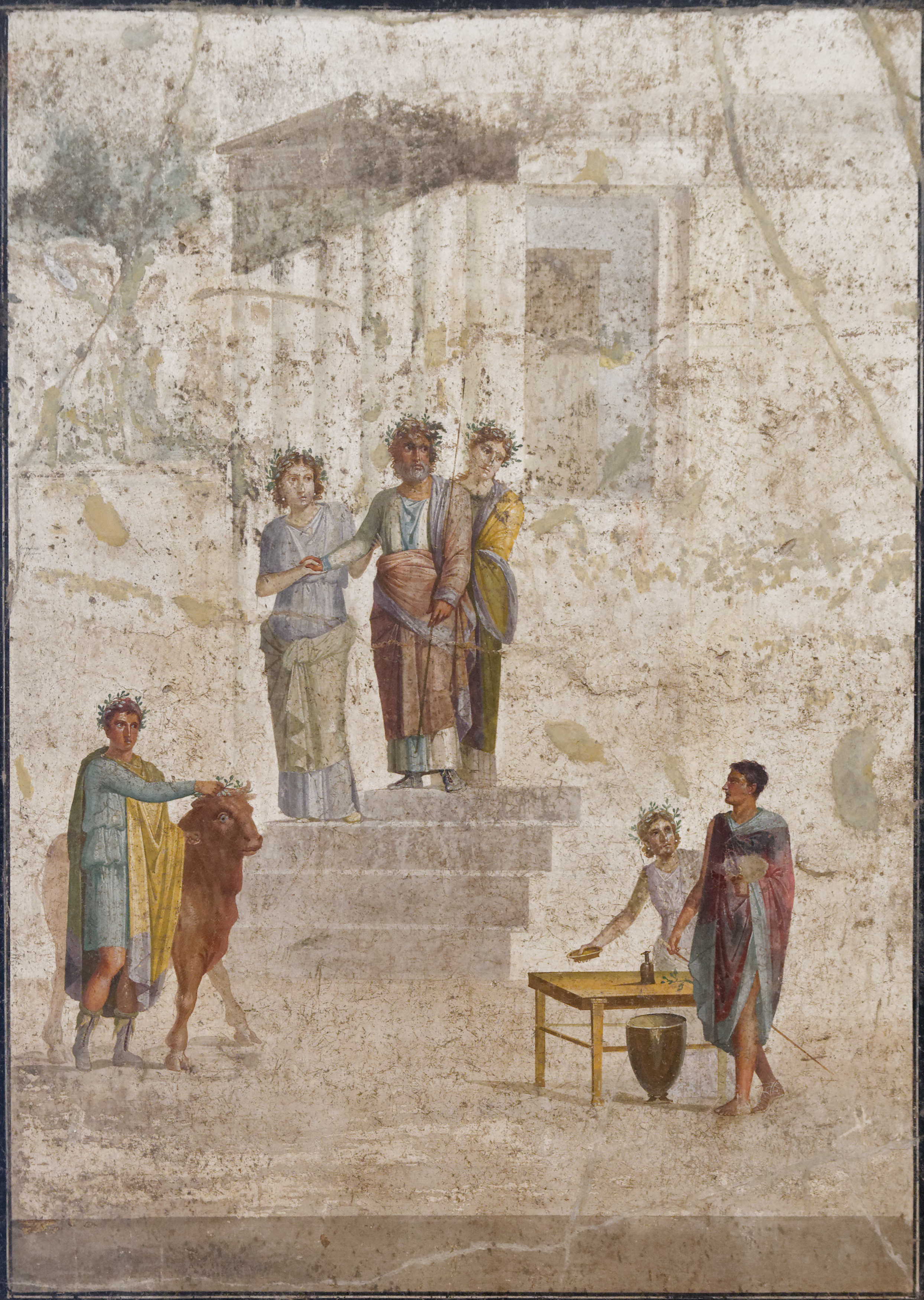
Neleus’ Brother Pelias on a Fresco from Pompeii

Madness, Philosophy, and the Natural Realm

Menander, Aspis 305-310

[Khairestratos]:
“Daos, boy, I am not well
I am depressed because of these events. By the gods
I am not under my own control. I am almost completely crazy.
That fine brother of mine is forcing me
To such insanity with his vile behavior.
He is about to get married!”

ΧΑΙΡΕΣΤΡΑΤΟΣ
Δᾶε παῖ, κακῶς ἔχω.
μελαγχολῶ τοῖς πράγμασιν· μὰ τοὺς θεούς,
οὐκ εἴμ᾿ ἐν ἐμαυτοῦ, μαίνομαι δ᾿ ἀκαρὴς πάνυ·
ὁ καλὸς ἀδελφὸς εἰς τοσαύτην ἔκστασιν
ἤδη καθίστησίν με τῇ πονηρίᾳ.
μέλλει γαμεῖν γὰρ αὐτός.

Cicero, De Finibus 1.64

“In this way strength is drawn from natural philosophy against death; so too is determination against the fears of religion and a calmness of mind once the ignorance of all natural mysteries has been removed. So too comes moderation, once the nature and number of desires have been explained. And, finally, as I was just arguing, we can learn how to divine a lie from the truth, since this philosophy provides the Rule or Judgment of knowledge.”

Sic e physicis et fortitudo sumitur contra mortis timorem et constantia contra metum religionis et sedatio animi, omnium rerum occultarum ignoratione sublata, et moderatio, natura cupiditatum generibusque earum explicatis, et, ut modo docui, cognitionis regula et iudicio ab eodem illo constituto veri a falso distinctio traditur.

Image result for medieval manuscript marriage
Enter a caption

Homer’s “Mistake”

In the Iliad, Pandarus’ status as hero is marked by his distinctive weapon: a bow. On battlefields where spears are most common, a bow stands out.

In the Catalogue of Ships Homer gives the bow’s genealogy:

Iliad 2. 824-827

They who lived in Zeleia, under Mt. Ida’s farthest foot,
Rich from drinking the dark water of the river Aesepus,
They were Trojans, and their leader was Lycaon’s brave son,
Pandarus, the man to whom Apollo himself gave a bow.

οἳ δὲ Ζέλειαν ἔναιον ὑπαὶ πόδα νείατον Ἴδης
ἀφνειοὶ πίνοντες ὕδωρ μέλαν Αἰσήποιο
Τρῶες, τῶν αὖτʼ ἦρχε Λυκάονος ἀγλαὸς υἱὸς
Πάνδαρος, ᾧ καὶ τόξον Ἀπόλλων αὐτὸς ἔδωκεν.

Later, however, when Pandarus violates the truce by shooting Menelaus, Homer gives the bow a different genealogy:

Iliad 4.105-113

And right away he grabbed his polished bow.
It was made from the horns of a prancing goat,
A wild goat he himself had shot beneath the breastplate.
There he’d been, lying in wait, when it capered out
A hollow in the rocks. He shot it square in the chest
And down it went, back into the rocky crevice.
Horns sixteen palms long–some 4 feet, that is–grew from its head.
It was these a craftsman, expert in making bows from horns,
Joined together, polished top to bottom, and tipped with gold.
This was the bow he set down with care to string,
Bracing it on the ground.

ὣς φάτʼ Ἀθηναίη, τῷ δὲ φρένας ἄφρονι πεῖθεν·
αὐτίκʼ ἐσύλα τόξον ἐΰξοον ἰξάλου αἰγὸς
ἀγρίου, ὅν ῥά ποτʼ αὐτὸς ὑπὸ στέρνοιο τυχήσας
πέτρης ἐκβαίνοντα δεδεγμένος ἐν προδοκῇσι
βεβλήκει πρὸς στῆθος· ὃ δʼ ὕπτιος ἔμπεσε πέτρῃ.
τοῦ κέρα ἐκ κεφαλῆς ἑκκαιδεκάδωρα πεφύκει·
καὶ τὰ μὲν ἀσκήσας κεραοξόος ἤραρε τέκτων,
πᾶν δʼ εὖ λειήνας χρυσέην ἐπέθηκε κορώνην.
καὶ τὸ μὲν εὖ κατέθηκε τανυσσάμενος ποτὶ γαίῃ
ἀγκλίνας·

Let’s call these contradictory accounts something other than a mistake on Homer’s part.

The two passages show two methods at the singer’s disposal for accomplishing the same end–namely, to mark the bow (and by extension, Pandarus) as special. 

But having two genealogies also allows Homer to make two points, and those points reinforce one another.

When Homer makes the bow a gift from Apollo, the gift is both the bow itself and the skill of archery. Like Agamemnon’s scepter, fashioned by a god and passed to men, the bow exists in, and yet it is not of, human time. The object, and what it represents, will outlast the mortal recipient. It is imperishable. 

In the second genealogy, the bow is special precisely because it is the product of human making. And this allows Homer to make a point about mortal frailty. The skillful killing of the goat would seem to anticipate how Pandarus will kill his man. But of course he fails, and ultimately he is killed while trying to kill. Human excellence, Homer seems to say, is only so reliable. 

And let’s put another of Homer’s “mistakes” to use. Homer’s craftsman fashions the bow by joining the goat’s two horns. Commentators have noted that a bow made in this way would not produce enough power to kill anything at a distance. And that’s precisely the point! What comes from human hands–even the best of hands–is fallible. 

All of this is to say, even Homer’s “mistakes” accomplish a lot.  

Greek terracotta jug depicting an archer.
c.430-420 B.C. Metropolitan Museum of Art.

Larry Benn has a B.A. in English Literature from Harvard College, an M.Phil in English Literature from Oxford University, and a J.D. from Yale Law School. Making amends for a working life misspent in finance, he’s now a hobbyist in ancient languages and blogs at featsofgreek.blogspot.com.

Stop the Presses! The Character of an Oligarch

Theophrastus, Characters: Authoritarianism

1. Authoritarianism [oligarchy] would appear to be a certain lust for power that is greedy for power and profit. An oligarch is the sort who:

2. When the people are debating who should be selected to assist leading a parade, steps right up and declares that absolute control is required. If others propose ten people to do a job, he declares that “one is enough, provided he is a real man”. He can recall only that one Homeric verse—“the rule of many is not good, there should be one ruler’—and he understands nothing of the rest.

3. Don’t miss out that he uses these kinds of statements: “We should get together and deliberate about this on our own and avoid the democrat mob and the assembly. Stop being insulted or honored by them when we hold public offices” or “They should run the state or we should.”

4. In the middle of the day he goes out finely dressed with his hair hanging at mid-length and his fingernails finely done, peacocking around, laying about with words like this:

5. “Thanks to all these whistleblowers, this country is unlivable!” “We are being treated the worst in the courts because of their corruption!” “I can’t imagine what these people pursuing politics even want!” “The people are completely ungrateful—all they want is a handout!” He says he is ashamed in the assembly whenever some skinny person sits next to him.”

Letter (2)
There may be a universe in which this is real

(1) δόξειεν δ᾿ ἂν εἶναι ἡ ὀλιγαρχία φιλαρχία τις ἰσχύος καὶ κέρδους γλιχομένη, ὁ δὲ ὀλιγαρχικὸς τοιοῦτος,

(2) οἷος τοῦ δήμου βουλευομένου, τίνας τῷ ἄρχοντι προσαιρήσονταιτῆς πομπῆς τοὺς συνεπιμελησομένους, παρελθὼν ἀποφήνασθαι ὡς δεῖ αὐτοκράτορας τούτους εἶναι, κἂν ἄλλοι προβάλλωνται δέκα, λέγειν “ἱκανὸς εἷς ἐστι, τοῦτον δὲ” ὅτι “δεῖ ἄνδρα εἶναι·” καὶ τῶν Ὁμήρου ἐπῶν τοῦτο ἓν μόνον κατέχειν, ὅτι “οὐκ ἀγαθὸν πολυκοιρανίη, εἷς κοίρανος ἔστω,” τῶν δὲ ἄλλων μηδὲν ἐπίστασθαι·

(3) ἀμέλει δὲ δεινὸς τοῖς τοιούτοις τῶν λόγων χρήσασθαι, ὅτι “δεῖ αὐτοὺς ἡμᾶς συνελθόντας περὶ τούτων βουλεύσασθαι, καὶ ἐκ τοῦ ὄχλου καὶ τῆς ἀγορᾶς ἀπαλλαγῆναι, καὶ παύσασθαι ἀρχαῖς πλησιάζοντας καὶ ὑπὸ τούτων οὕτως ὑβριζομένους ἢ τιμωμένους,” <καὶ> ὅτι “ἢ τούτους δεῖ ἢ ἡμᾶς οἰκεῖν τὴν πόλιν.”

(4) καὶ τὸ μέσον δὲ τῆς ἡμέρας ἐξιὼν καὶ τὸ ἱμάτιον ἀναβεβλημένος καὶ μέσην κουρὰν κεκαρμένος καὶ ἀκριβῶς ἀπωνυχισμένος σοβεῖν τοὺς τοιούτους λόγους τραγῳδῶν·

(5) “διὰ τοὺς συκοφάντας οὐκ οἰκητόν ἐστιν ἐν τῇ πόλει,” καὶ ὡς “ἐν τοῖς δικαστηρίοις δεινὰ πάσχομεν ὑπὸ τῶν δεκαζομένων,” καὶ ὡς “θαυμάζω τῶν πρὸς τὰ κοινὰ προσιόντων τί βούλονται,” καὶ ὡς “ἀχάριστόν ἐστι <τὸ πλῆθος καὶ ἀεὶ>τοῦ νέμοντος καὶ διδόντος,” καὶ ὡς αἰσχύνεται ἐν τῇ ἐκκλησίᾳ, ὅταν παρακάθηταί τις αὐτῷ λεπτὸς

arrogant finger

“Will I Conceive Like Other Women?” Mary and Gabriel in the Protoevangelium of James

This is a continuation of the Christmas Story in the apocryphal Gospel of James [also sometimes called the “Infancy” Gospel” or the Protoevangelium of James].

The Gospel According to James, 10–11

10.“There was another council of the priests where they were saying, “Let’s make a veil for the temple of the Lord.” Then a priest said, “Call to me her seven unsullied maidens from the tribe of David.” So his assistants went out and looked for seven and found six. Then the priest remembered that Mary was from the tribe of David and was unsullied. So his assistants went and brought her back.

The priest led the virgins into the temple of the Lord and said, “Draw lots for me here as to who will weave the gold and unsullied cloth and the silk and linen and hyacinth and the red and the undiluted purple. The red and purple lot fell to Mary. She took it and went to her home. In that season, Zakharias went silent. Mary took the red and was weaving it.

11. Later, she went out with a pitcher to fill it with water, and , look, there was a voice speaking, “Greetings, most gracious one, the Lord is with you and you are blessed among women.” Then Mary was looking left and right for where the voice came from. Filled with a tremble, she returned to her house where she put the pitcher down, took up the purple again, sat down on a seat and was working it. Then, look, an angel of the Lord appeared and said to hear, “Don’t be afraid, Mary, for you have found grace from the Lord openly and you will conceive from his word.”

Once Mary heard this, she responded, asking, “Will I conceive, as every woman bears children?” and the messenger responded to her, “Not, in that way, Mary. For the power of God will cast a shadow over you and from that a sacred child will be born from you who will be called the Son of the Highest. And you will give him the name Jesus. For he will save his people from their sins.” And Mary said, “Look, I am the slave of the Lord. May it happen according to your word.”

10.1 Ἐγένετο δὲ συμβούλιον τῶν ἱερέων λεγόντων: ποιήσωμεν καταπέτασμα τῷ ναῷ κυρίου. καὶ εἶπεν ὁ ἱερεύς: καλέσατέ μοι ὧδε ἑπτὰ παρθένους ἀμιάντους ἐκ φυλῆς Δαυίδ. καὶ ἀπῆλθον οἱ ὑπηρέται καὶ εὕρησαν ἑπτά (εὗρον ἕξ). καὶ ἐμνήσθη ὁ ἱερεύς, ὅτι Μαρία ἐκ φυλῆς Δαυίδ ἐστι καὶ ἀμίαντός ἐστιν. καὶ ἀπῆλθαν οἱ ὑπηρέται καὶ ἤγαγον αὐτήν. καὶ εἰσήγαγεν αὐτὰς ὁ ἱερεὺς ἐν τῷ ναῷ κυρίου καὶ εἶπεν: λάχετέ μοι ὧδε, τίς νήσει τὸ χρυσίον καὶ τὸ ἀμίαντον καὶ τὸ βύσσινον καὶ τὸ σηρικοῦν καὶ τὸ ὑάκινθον καὶ τὸ κόκκινον καὶ τὴν ἀληθινὴν πορφύραν. καὶ ἔλαχεν τὴν Μαριὰμ τὸ κόκκινον καὶ ἡ ἀληθινὴ πορφύρα. καὶ λαβοῦσα ἀπῆλθεν εἰς τὸν οἶκον αὐτῆς. τῷ δὲ καιρῷ ἐκείνῳ Ζαχαρίας ἐσίγησεν. Μαριὰμ δὲ λαβοῦσα τὸ κόκκινον ἔκλωσεν.

11.1 Καὶ λαβοῦσα κάλπιν ἐξῆλθεν γεμίσαι ὕδωρ, καὶ ἰδοὺ φωνὴ λέγουσα: χαῖρε κεχαριτωμένη, ὁ κύριος μετὰ σοῦ, εὐλογημένη σὺ ἐν γυναιξί. καὶ περιεβλέπετο δεξιὰ καὶ ἀριστερά, πόθεν αὕτη ἡ φωνὴ ὑπάρχει, καὶ ἔντρομος γενομένη ἀπῆλθεν εἰς τὸν οἶκον αὐτῆς. καὶ ἀναπαύσασα τὴν κάλπην ἔλαβε πάλιν τὴν πορφύραν καὶ ἐκάθισεν ἐπὶ τὸν θρόνον καὶ εἷλκεν αὐτήν. 2 καὶ ἰδοὺ ἄγγελος κυρίου ἐπέστη λέγων αὐτῇ: μὴ φοβοῦ, Μαριάμ, εὗρες γὰρ χάριν ἐνώπιον τοῦ θεοῦ καὶ συλλήψῃ ἐκ λόγου αὐτοῦ. ἀκούσασα δὲ Μαριὰμ διεκρίθη ἐν ἑαυτῇ λέγουσα: ἐγὼ συλλήψομαι, ὡς πᾶσα γυνὴ γεννᾷ; 3 καὶ λέγει πρὸς αὐτὴν ὁ ἄγγελος: οὐχ οὕτως, Μαριάμ: δύναμις γὰρ θεοῦ ἐπισκιάσει σοι, διὸ καὶ τὸ γεννόμενον (ἐκ σοῦ) ἅγιον κληθήσεται υἱὸς ὑψίστου, καὶ καλέσεις τὸ ὄνομα αὐτοῦ Ἰησοῦν: αὐτὸς γὰρ σώσει τὸν λαὸν αὐτοῦ ἀπὸ τῶν ἁμαρτιῶν αὐτῶν. καὶ εἶπεν Μαριάμ: ἰδοὺ ἡ δούλη κυρίου: γένοιτό μοι κατὰ τὸ ῥῆμά σου.

The Annunciation (detail) by Philippe de Champaigne

The Trial of an Unexpected Pregnancy: The Protoevangelium of James

This is a continuation of the Christmas Story in the apocryphal Gospel of James [also sometimes called the “Infancy” Gospel” or the Protoevangelium of James].

The Gospel According to James 15-16.

“Then the Scribe Annas came to him and said to him, “Why didn’t you appear at our assembly?” And Joseph said to him, “Because I was completely worn out from my travel and I had rested only a day.” Then Annas turned and saw the pregnant virgin. Then he left the house quickly and told the top-priest, “Joseph, whom you will witness, has broken the law severely.” And the Priest said, “What is this?” and Annas responded, “The virgin whom he took from the temple of the Lord, he has defiled her. And the priest said to him in response, “Joseph, Joseph did this?” And Annas said, “Send your attendants and you will discover a pregnant virgin.

So the attendants left and they found her, just as he said, and they led her with Joseph to judgment. The priest said, “Mary, why did you do this and lay low your soul and forget the Lord, your God, when you were raised up in the Holiest of Holies and took food from an angel’s hand—you even heard their hymn and you danced among them? Why did you do this?” She wept bitterly, saying, “As the Lord God lives, I am clean before him and I have known no man.”

So then the priest said, “Joseph, why did you do this?” And Joseph responded, “As the Lord, my God lives, I am innocent concerning her.” Then the priest said, “Do not bear false witness, but speak the truth. You hid your marriage and you did not declare it openly to the sons of Israel, and you did not bow your head under the powerful hand so that your seed would be blessed.” Then Joseph was silent.

Then the priest spoke, “Give the virgin whom you took from the temple of the Lord back. And, as he cried, Joseph stood still. Then the Priest said, “I will make you drink the Lord’s water of testing and it will make your sins clear in your eyes.” Then the priest had Joseph drink the water and sent him to the hills. And he came back, whole. He also made the virgin drink and sent her into the hills. She came back too. The whole people wondered at this, that there was no sin revealed among them. And the priest said, “If the Lord God does not make their sin manifest, then I do not judge them and he has freed them.” Then Joseph took Mary and returned to his own home, feeling joy and glorying the god of Israel.”

151 Ἠλθεν δὲ Ἄννας ὁ γραμματεὺς πρὸς αὐτὸν καὶ εἶπεν αὐτῷ: διὰ τί οὐκ ἐφάνης ἐν τῇ συναγωγῇ (συνόδῳ) ἡμῶν; καὶ εἶπεν αὐτῷ Ἰωσήφ: ὅτι κεκμηκὼς ἤμην ἐκ τῆς ὁδοῦ καὶ ἀνεπαυσάμην ἡμέραν μίαν . καὶ ἐστράφη Ἄννας καὶ εἶδεν τὴν παρθένον ὀγκωμένην. 2 καὶ ἀπελθὼν δρομαίως πρὸς τὸν (ἀρχ-)ἱερέα εἶπεν αὐτῷ: Ἰωσήφ, ὅν σὺ μαρτυρεῖς, ἠνόμησε σφόδρα. καὶ εἶπεν ὁ ἱερεύς: τί τοῦτο; καὶ εἶπεν Ἄννας: τὴν παρθένον, ἥν παρέλαβεν ἐκ ναοῦ κυρίου, ἐμίανεν αὐτήν. καὶ ἀποκριθεὶς ὁ ἱερεὺς εἶπεν αὐτῷ: Ἰωσὴφ; Ἰωσὴφ τοῦτο ἐποίησεν; καὶ εἶπεν Ἄννας: ἀπόστειλον ὑπηρέτας καὶ εὑρέσεις τὴν παρθένον ὀγκωμένην. καὶ ἀπῆλθον οἱ ὑπηρέται καὶ εὗρον αὐτήν, καθὼς εἶπεν, καὶ ἀπήγαγον ἅμα τῷ Ἰωσὴφ εἰς τὸ κριτήριον. 3 καὶ εἶπεν ὁ ἱερεύς: Μαριάμ, τί τοῦτο ἐποίησας καὶ ἐταπείνωσας τὴν ψυχήν σου καὶ ἐπελάθου κυρίου τοῦ θεοῦ σου, ἡ ἀνατραφεῖσα εἰς τὰ ἅγια τῶν ἁγίων καὶ λαβοῦσα τροφὴν ἐκ χειρὸς ἀγγέλων, σὺ ἡ ἀκούσασα τὸν ὕμνον αὐτῶν καὶ χορεύσασα ἐνώπιον αὐτῶν; τί τοῦτο ἐποίησας; ἡ δὲ ἔκλαυσε πικρῶς λέγουσα: ζῇ κύριος ὁ θεός, ὅτι καθαρά εἰμι ἐγὼ ἐνώπιον αὐτοῦ καὶ ἄνδρα οὐ γινώσκω. 4 καὶ εἶπεν ὁ ἀρχιερεύς: Ἰωσήφ, τί τοῦτο ἐποίησας; καὶ εἶπεν Ἰωσήφ: ζῇ κύριος ὁ θεός μου, ὅτι καθαρός εἰμι ἐξ αὐτῆς. καὶ εἶπεν ὁ ἀρχιερεύς: μὴ ψευδομαρτύρει, ἀλλὰ λέγε τὸ ἀληθές: ἔκλεψας τοὺς γάμους καὶ οὐκ ἐφανέρωσας τοῖς υἱοῖς Ἰσραήλ, καὶ οὐκ ἔκλινας τὴν κεφαλήν σου ὑπὸ τὴν κραταιὰν χεῖρα, ὅπως εὐλογηθῇ τὸ σπέρμα σου. καὶ Ἰωσὴφ ἐσίγησεν.

16.1 Καὶ εἶπεν ὁ ἱερεύς: ἀπόδος τὴν παρθένον, ἥν παρέλαβες ἐκ ναοῦ κυρίου. καὶ περίδακρυς γενόμενος ὁ Ἰωσὴφ ἔστη. καὶ εἶπεν ὁ ἱερεύς: ποτιῶ ὑμᾶς τὸ ὕδωρ τῆς ἐλέγξεως κυρίου καὶ φανερώσει τὰ ἁμαρτήματα ὑμῶν ἐν ὀφθαλμοῖς ὑμῶν. 2 καὶ λαβὼν ὁ ἱερεὺς ἐπότισε τὸν Ἰωσὴφ καὶ ἔπεμψεν αὐτὸν εἰς τὴν ὀρεινήν: καὶ ἦλθεν ὁλόκληρος. ἐπότισεν δὲ καὶ τὴν παρθένον καὶ ἔπεμψεν καὶ αὐτὴν εἰς τὴν ὀρεινήν: καὶ ἦλθεν ὁλόκληρος, καὶ ἐθαύμασε πᾶς ὁ λαός, ὅτι ἁμαρτία οὐχ εὑρέθη ἐν αὐτοῖς. 3 καὶ εἶπεν ὁ ἱερεύς: εἰ κύριος ὁ θεὸς οὐκ ἐφανέρωσεν τὴν ἁμαρτίαν ὑμῶν, οὐδὲ ἐγὼ κρίνω ὑμᾶς καὶ ἀπέλυσεν αὐτούς. καὶ παρέλαβεν Ἰωσὴφ τὴν Μαριὰμ καὶ ἀπίει εἰς τὸν οἶκον αὐτοῦ χαίρων καὶ δοξάζων τὸν θεὸν τοῦ Ἰσραήλ.

Image result for pregnant mary and joseph ancient

Reading Lucilian Satire in the Age of Twitter

Dealing with the fragmentary nature of the evidence for the ancient world is frustrating to say the least. Take for example the so-called inventor of satire Gaius Lucilius. Out of the thirty books of his satires we have a mere few hundred lines.

Most of these books are filled with seemingly random one-liners such as “et mercedimerae legiones,” which means “and wage-earning legions.” After reading several lines that were similar to this one, I struggled to appreciate Lucilius’ art. And even after digesting massive amounts of secondary scholarship on the satirist I found myself lost. I wrestled to figure out what was it that made reading Lucilius so frustrating. The answer was so obvious. He is in fragments. Perhaps if I understood the context of “ut iure peritus (like one skilled in law),” it would not have given me such a headache. And while not all of Lucilius’ satires are this obscure a large chunk of them are.

The frustration and puzzlement I felt reminded me of how I feel when I read a politician’s twitter. Like Lucilius, tweets can often be confusing. For example, on February 10th, 2013 Sean Spicer tweeted “whomever just unfollowed me- show yourself you coward.” I remember my high school teacher at the time sharing this in class and having more questions than I did answers. Besides the fact that I did not know who Sean Spicer was at the time. I was confused by the nature of the tweet itself.

Sean had over 400,000 followers on twitter and he could have been unfollowed by anyone of them. Apparently, Sean was not being sarcastic at the time and was legitimately upset by losing a follower. Similarly, Lucillius could have been referring to any number of wage-earning legions. Even scholars with an impressively dense breadth of knowledge on the context in which Lucilius wrote have scrambled trying to understand lines like this. In fact, it is unlikely that we will ever know Lucilius’ merry band of money-hungry legions. And poor Sean will probably never know who unfollowed him.

In Book 14 of his satires Lucilius writes that, “nemo est halicarius posterior te,” which means “No wheat-grinder is second to you.” There are a few things that frustrate the reader here. One, who is the worst miller of all time that Lucilius is referring to here? Two, it appears as though Lucilius disagrees with the common spelling of alicarius, which scholars debated over. However, the correct spelling is alicarius. So, was Lucilius just trying to be funny? Did he not know any better? The sad truth is, we will never know.

On May 31st, 2017 Donald J. Trump tweeted “Despite the constant negative press covfefe.” He later claimed that this was an intentional mistake, but the truth was that he fell asleep while tweeting. It is obvious that he meant to say conference not covfefe. However, regardless of the spelling error there is still a problem with this tweet that puzzles the reader. Let us imagine that Trump had tweeted out “Despite the constant negative press conference.” There is still a lack of context that leaves the reader guessing. What happened as a result? Was he successful in some business deal? Did his approval rating go up? Did he pass a new bill? The questions that come to one’s mind are endless.

Another issue is the matter of invective. Twitter seems to be a great place for such things these days. If you scroll through Twitter at any time during the day, there is guaranteed to be some post where someone is putting someone else on blast. This is not unlike Roman satire. Lucilius for example makes a satire out of a legal despute between a certain Albicius and a man named Scaevola. In fact, this seems to be the longest fragment of Lucilius that we have recovered thus far. It reads (Lucilius 87-93). :

Graecum te, Albuci, quam Romanum atque Sabinum, municipem Ponti, Tritani,
centurionum, praeclarorum hominum ac primorum signiferumque, maluisti dici. Graece
ergo praetor Athenis, id quod maluisti, te, cum ad me accedis, saluto: ‘chaere’, inquam,
‘Tite’. lictores, turma omnis chorusque [cohorsque Manutius]: ‘chaere, Tite’. hinc hostis
mi Albucius, hinc inimicus (Lucilius 87-93).

Albucius, you wanted to be called a Greek instead of a Roman and a Sabine, a citizen of
Pontius and Tritanus, of centurions, of illustrious and first men and of standard-bearers.
Therefore, I as a praetor salute you at Athens in Greek, when you get to me, as you
wanted “Hey, Titus,” I said. The lictors, all of the squadron and the chorus, said “Hey
Titus.” (My translation).

While reading Lucilius is frustrating, because there is so much missing, it is also addicting. I kept reading line after line for the slim chance that I would better understand the poet and his satires. On the other hand, understanding tweets like the ones I mentioned above do not require nearly as much effort. One can simply google “why did Trump say the following?” or “why did Sean Spicer freak out on Twitter?” Even if at first these tweets leave the reader confused, they can quickly find an adequate answer. Unfortunately, Lucilius and many other authors that are left in fragments will most likely remain mysterious.

If someone were to google “why did Lucilius say the following?” or “why did Lucilius insult this miller?” There would probably be tons of suggested reading that would pop up which ask similar questions. Studying the ancient world can be frustrating. Especially when dealing with authors like Lucilius who are severely fragmented. If we want to know about what is going on in today’s world, we simply have to open a browser and ask away. Though, that in itself is a tricky process.


Javal A. Coleman was born and raised in Fort Worth Texas. After receiving his Bachelors in History with a minor in Latin and Classical Studies at the University of North Texas, he married his wife who he met at UNT and  moved to Austin to pursue a Phd in Classics at the University of Texas. Javal is primarily interested in the history of enslavement and more generally disenfranchised people and how law and gender contributed to their lived experience. In his free time he loves to read, play video games, and spend time with his wife and their beautiful daughter. 

Tawdry Tuesday: Zeus, Ganymede, and a Cock

Greek Anthology, Antipater 5.77

“Hera twisted by the beauty of Ganymede once spoke
As she suffered the heart-rending stab of jealousy in her heart:
“Troy ignited a male fire for Zeus—and so I will send
A fire at Troy, a pain bearing Paris.
No eagle will come to Troy again, but vultures
Will go to the feast when the Greeks get the spoils for their toils.”

Πριομένα κάλλει Γανυμήδεος εἶπέ ποθ᾿ Ἥρα,
θυμοβόρον ζάλου κέντρον ἔχουσα νόῳ·
“Ἄρσεν πῦρ ἔτεκεν Τροία Διΐ· τοιγὰρ ἐγὼ πῦρ
πέμψω ἐπὶ Τροίᾳ, πῆμα φέροντα Πάριν·
ἥξει δ᾿ Ἰλιάδαις οὐκ ἀετός, ἀλλ᾿ ἐπὶ θοίναν
γῦπες, ὅταν Δαναοὶ σκῦλα φέρωσι πόνων.”

Sometimes an Eagle Does show up in stories of Zeus and Ganymede. 

Greek Anthology 12.211

“Go to bright heaven, go carrying the child,
Eagle, keep your twin wings spread wide.
Go holding gentle Ganymede and do not drop
Zeus’ wine-bearer of the sweetest cups.
But be careful not to bloody him with your clawed feet
So that Zeus, upset, won’t hurt you.”

Στεῖχε πρὸς αἰθέρα δῖον, ἀπέρχεο παῖδα κομίζων,
αἰετέ, τὰς διφυεῖς ἐκπετάσας πτέρυγας,
στεῖχε τὸν ἁβρὸν ἔχων Γανυμήδεα, μηδὲ μεθείης
τὸν Διὸς ἡδίστων οἰνοχόον κυλίκων·
φείδεο δ᾿ αἱμάξαι κοῦρον γαμψώνυχι ταρσῷ,
μὴ Ζεὺς ἀλγήσῃ, τοῦτο βαρυνόμενος.

MFA #01.8114

Image result for ganymede rooster Zeus
Terracotta of Zeus with Ganymede (LIMC 56; from Olympia)
Image result for ganymede rooster Zeus
Attic red-figured hydria
Attributed to Eupolis P. by Beazley
Approx. 450 -440 BC
This image from the MFA shows Zeus contemplating what to do with his cock.
Image result for ganymede rooster Zeus Black figure
Zeus pursuing Ganymedes, Athenian red-figure kantharos C5th B.C., Museum of Fine Arts Boston

While We Live, Sing a Song for Me

These are fragments which may or may not be a whole. 

P. Oxy. xv. 1921, no. 1795, p. 113 [Anonymous = LCL Anonymous Hexamers 125]

“Don’t try to do injustice nor to return injustice done
Avoid murders and avoid battles, don’t deign to argue—
Then you will hurt only a short time and you won’t think about it later.

Play a song for me.

You saw the spring, winter, the summer. These are eternal.
Even the sun has set and night is taking what’s owed her.
Don’t try to find where the sun comes from or where the water’s home,
But where you can buy some fragrance and and wreaths.

Play a song for me.

I used to want to have three free-flowing honey springs,
five milk rivers, ten of wine, twelve of perfume
two from clear fountains and three from snow.
I used to want a boy and a girl near a fountain.

Play a song for me.

The Lydian pipe and the Lydian games of the lyre work for me.
The Phrygian reed and the leather-topped drum work for me too.
As long as I live I love to sing these things and when I die
Put a flute above my head and a lyre near my feet.

Play a song for me.

Who has ever discovered how to measure wealth and poverty?
Or who again has ever found how much gold human beings need?
Today, still, whoever has money always wants more of it
And the wretch is tortured like the poor even though he’s rich.

Play a song for me.

If you ever see a corpse or walk by quiet graves,
That’s when you look into the mirror we all share: the dead expected this.
Time is on loan and life’s lender is a prick.
Whenever he demands repayment, you must pay the bill by grieving.

Play a song for me.

It was the king Xerxes who said he shared everything with god,
But he crossed the Lemnian water in defeat with a single rudder.
Midas was rich; Kinyras was triply blest,
But who has ever gone to Hades with more than a single coin?

Play a song for me.,.”

μηδ᾿ ἀδικεῖν ζήτει, μηδ᾿ ἂν ἀδι[κῆι πρ]οσερίσηις·
φεῦγε φόνους καὶ φεῦγε μάχας, φ[εῖ]σαι διαφρονε[ῖ]ν,
εἰς δ᾿ ὀλίγον πονέσεις, καὶ δεύτερον οὐ μεταμέληι.

αὔ[λει μοι

Ἶδες ἔαρ, χειμῶνα, θέρος· ταῦτ᾿ ἐστι διόλου·
ἥλιος αὐτὸς [ἔδυ], καὶ νὺξ τὰ τεταγμέν᾿ ἀπέχει·
μὴ κοπία ζητεῖν πόθεν ἥλιος ἢ πόθε[ν] ὕδωρ,
ἀλλὰ π[ό]θεν τ[ὸ] μύρον καὶ τοὺς στεφάνου[ς] ἀγοράσηις.

αὔλει μο[ι.

Κρήνας αὐτορύ[το]υς μέλ[ιτ]ος τρεῖς ἤθελον ἔχειν,
πέντε γαλακτορύτους, οἴνου δέκα, δ[ώδε]κα μύρου,
καὶ δύο πηγαίων ὑδάτων, καὶ τρεῖς χιονέων·
παῖδα κατὰ κρήνην καὶ παρθένον ἤθελον ἔχειν.
αὔλει μο[ι.

Λύδιος αὐλὸς ἐμοὶ τὰ δὲ Λύδια παίγματα λύρας
κα[ὶ] Φρύγ[ιο]ς κάλαμος τὰ δὲ ταύρεα τύμπανα πονεῖ·
ταῦτα ζῶν ἆισαί τ᾿ ἔραμαι καὶ ὅταν ἀποθάνω
αὐλὸν ὑπὲρ κεφαλῆς θέτε μοι παρὰ ποσ(σ)ὶ δὲ λύρη[ν.

αὔλει μοι.

Μέτρα τί[ς] ἀν πλούτου, τίς ἀνεύρατο μέτρα πενίας
ἢ τίς ἐν ἀνθρώποις χρυσοῦ πάλιν εὕρατο μέτρον;
νῦν γὰρ ὁ χρήματ᾿ ἔχων ἔτι πλε[ί]ονα χρήματα θέλει,
πλούσιος ὢν δ᾿ ὁ τάλας βασανίζεται ὥσπερ ὁ πένης.

αὔλ[ει μοι.

Νεκρὸν ἐάν ποτ᾿ ἴδηις καὶ μνήματα κωφὰ παράγηις
κοινὸν ἔσοπτρον ὁρᾶι(ς)· ὁ θανὼν οὕτως προσεδόκα.
ὁ χρό[ν]ος ἐστὶ δάνος, τὸ ζῆν πικρός ἐσθ᾿ ὁ δανίσας,
κἂν τότ᾿ ἀπαιτῆσαί σε θέληι, κλαίων [ἀ]ποδιδοῖς.

αὔλει μοι.

Ξέρξης ἦν βασιλε[ὺ]ς ὁ λέγων Διὶ πάντα μερίσαι,
ὃς δυσ(ὶ) πηδαλ[ί]ο[ι]ς μόνος ἔσχισε Λήμνιον ὕδωρ.
ὄλβι(ο)ς ἦν ὁ Μίδας, τρὶς δ᾿ ὄλβιος ἦν ὁ [Κ]ινύρ[α]ς,
ἀλλὰ τίς εἰς Ἀίδα ὀβολοῦ πλέον ἤλυθεν ἔχων;

αὔλει μοι.

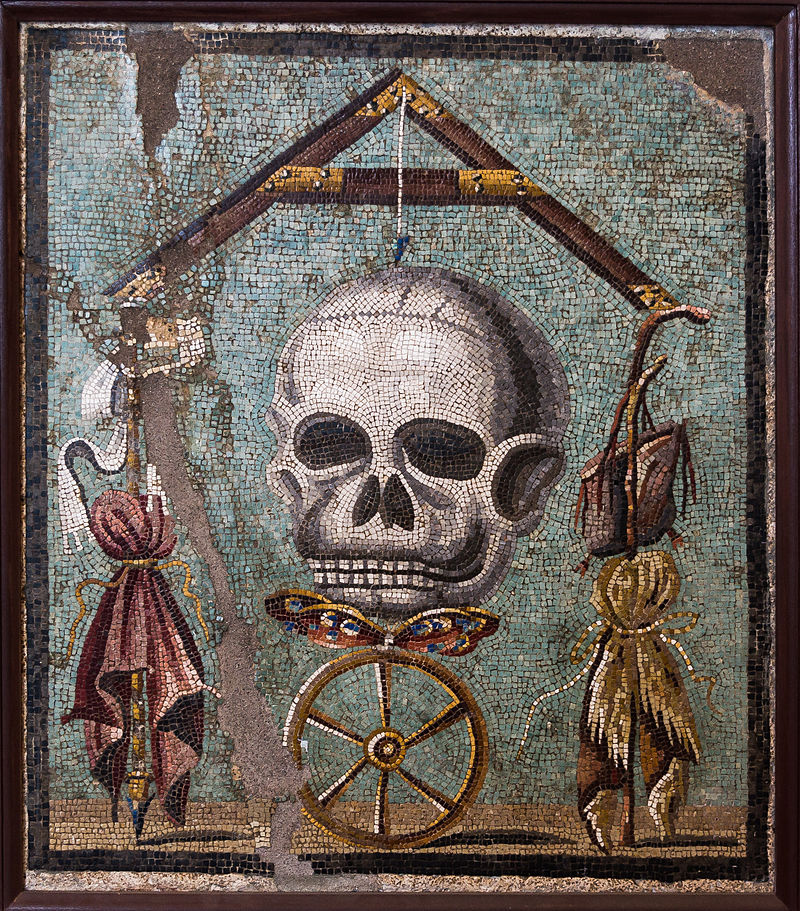
Memento mori
Mosaic from Pompeii

Then, there’s always this:

Small Parts Make A Whole: Writing Advice from Demetrius

For more on Demetrius and our words for period, comma, and colon, see this post

Demetrius, On Style, 1-2

“Just as poetry is separated by meters—such as half-lines, hexameters, and the rest—so too will sections called clauses [kôla] separate and define prose composition. They allow rests to the speaker and what is spoken and they give the composition boundaries in many places, since it would be long and endless and would just exhaust anyone reading it otherwise.

These clauses are really meant to bring an end to a thought. Sometimes they convey a complete thought on their own, as when Hekataios says at the beginning of his History, “Hekataios speaks thus”. In this a case a whole thought coincides with a single clause and both end together. At another time, a clause doesn’t effect a complete thought, but merely part of one.

For, just as the hand is a whole thing but has individual parts of the whole, such as the fingers and the wrist—each of which has its own particular shape and recognizable parts—so too will the parts of a larger thought which is complete and whole be subsumed within it even though they too are recognizable and defined.”

(1) Ὥσπερ ἡ ποίησις διαιρεῖται τοῖς μέτροις, οἷον ἡμιμέτροις ἢ ἑξαμέτροις ἢ τοῖς ἄλλοις, οὕτω καὶ τὴν ἑρμηνείαν τὴν λογικὴν διαιρεῖ καὶ διακρίνει τὰ καλούμενα κῶλα, καθάπερ ἀναπαύοντα τὸν λέγοντά τε καὶ τὰ λεγόμενα αὐτά, καὶ ἐν πολλοῖς ὅροις ὁρίζοντα τὸν λόγον, ἐπεί τοι μακρὸς ἂν εἴη καὶ ἄπειρος καὶ ἀτεχνῶς πνίγων τὸν λέγοντα.

(2) βούλεται μέντοι διάνοιαν ἀπαρτίζειν τὰ κῶλα ταῦτα, ποτὲ μὲν ὅλην διάνοιαν, οἷον ὡς Ἑκαταῖός φησιν ἐν τῇ ἀρχῇ τῆς ἱστορίας, “Ἑκαταῖος Μιλήσιος ὧδε μυθεῖται”· συνείληπται γὰρ διάνοια τῷ κώλῳ ὅλῳ ὅλη, καὶ ἄμφω συγκαταλήγουσιν. ἐνίοτε μέντοι τὸ κῶλον ὅλην μὲν οὐ συμπεραιοῖ διάνοιαν, μέρος δὲ ὅλης ὅλον. ὡς γὰρ τῆς χειρὸς οὔσης ὅλου τινὸς μέρη αὐτῆς ὅλα ὅλης ἐστίν, οἷον δάκτυλοι καὶ πῆχυς (ἰδίαν γὰρ περιγραφὴν ἔχει τούτων τῶν μερῶν ἕκαστον, καὶ ἴδια μέρη), οὕτω καὶ διανοίας τινὸς ὅλης οὔσης μεγάλης ἐμπεριλαμβάνοιτ᾿ ἂν μέρη τινὰ αὐτῆς ὁλόκληρα ὄντα καὶ αὐτά·

Image result for greek bronze hand
From Christie’s Auction Catalogue