Knowing Helps, but Hurts a Lot Too: Some Words Go Back to School

These sayings [‘Apophthegmata’] are drawn from the Gnomologium Vaticanum.

470: “Socrates, when asked what is sweetest in life, said “education, virtue, and the investigation of the unknown”

Σωκράτης ὁ φιλόσοφος ἐρωτηθεὶς τί ἥδιστον ἐν τῷ βίῳ εἶπε· „παιδεία καὶ ἀρετὴ καὶ ἱστορία τῶν ἀγνοουμένων”.


24: “Aristippos used to say the he took money from students not in order to straighten their lives but so they might learn to spend their money on fine things.”

῾Ο αὐτὸς παρὰ τῶν μαθητῶν λαμβάνειν ἔφασκε μισθόν, οὐχ ὅπως τὸν βίον ἐπανορθώσῃ, ἀλλ’ ὅπως ἐκεῖνοι μάθωσιν εἰς τὰ καλὰ δαπανᾶν.


50: “Aristotle said that education is a decoration for the lucky but a refuge for the unfortunate.”

῾Ο αὐτὸς ἔφη τὴν παιδείαν εὐτυχοῦσι μὲν εἶναι όσμον, ἀτυχοῦσι δὲ καταφύγιον.


87: “When he was asked whom he loved more, Phillip or Aristotle, Alexander said “both the same—for the first gave me the gift of life and the second taught me to live well.”

῾Ο αὐτὸς ἐρωτηθεὶς τίνα μᾶλλον ἀγαπᾷ, Φίλιππον ἢ ᾿Αριστοτέλην, εἶπεν· „ὁμοίως ἀμφοτέρους· ὁ μὲν γάρ μοι τὸ ζῆν ἐχαρίσατο, ὁ δὲ τὸ καλῶς ζῆν ἐπαίδευσεν.”


164: “Glukôn the philosopher called education a sacred refuge.”

Γλύκων ὁ φιλόσοφος τὴν παιδείαν ἔλεγεν ἱερὸν ἄσυλον εἶναι.

259: “When Demetrios [of Phalerus] was asked what was the noblest of animals he said “A human adorned by education.”

῾Ο αὐτὸς ἐρωτηθεὶς τί τῶν ζώων κάλλιστόν ἐστιν εἶπεν· „ἄνθρωπος παιδείᾳ κεκοσμημένος”.


302: “[Zeno the Stoic] used to say that education was sufficient for happiness”

῾Ο αὐτὸς ἔφη τὴν παιδείαν πρὸς εὐδαιμονίαν αὐτάρκη.


314: “Heraclitus used to say that learning is a second sun for the educated”

῾Ηράκλειτος τὴν παιδείαν ἕτερον ἥλιον εἶναι τοῖς πεπαιδευμένοις ἔλεγεν.


439: [Plato] used to say that someone being educated needs three things: ability, practice and time.”

῾Ο αὐτὸς ἔλεγεν ὅτι ὁ παιδευόμενος τριῶν τούτων χρῄζει· φύσεως, μελέτης, χρόνου.


469: “[Protagoras] used to say “knowing a lot helps a lot and hurts a lot.”

῾Ο αὐτὸς ἔφη· „πολυμαθίη κάρτα μὲν ὠφελέει, κάρτα δὲ βλάπτει”.

Other passages

Euripides, Iphigenia at Aulis 559-567

“People have different natures;
They have different ways. But acting rightly
Always stands out.
The preparation of education
points the way to virtue.
For it is a mark of wisdom to feel shame
and it brings the transformative grace
of seeing through its judgment
what is right; it is reputation that grants
an ageless glory to your life.”

διάφοροι δὲ φύσεις βροτῶν,
διάφοροι δὲ τρόποι· τὸ δ’ ὀρ-
θῶς ἐσθλὸν σαφὲς αἰεί·
τροφαί θ’ αἱ παιδευόμεναι
μέγα φέρουσ’ ἐς τὰν ἀρετάν·
τό τε γὰρ αἰδεῖσθαι σοφία,
†τάν τ’ ἐξαλλάσσουσαν ἔχει
χάριν ὑπὸ γνώμας ἐσορᾶν†
τὸ δέον, ἔνθα δόξα φέρει
κλέος ἀγήρατον βιοτᾶι.

Stobaeus 2.31 88

“Diogenes used to say that educating children was similar to potters’ sculpting because they take clay that is tender and shape it and decorate it how they wish.  But once it has been fired, it can’t be shaped any longer.  This is the way it is for those who were not educated when they were children: once they are grown, they have been hardened to change.”

Διογένης ἔλεγε τὴν τῶν παίδων ἀγωγὴν ἐοικέναι τοῖς τῶν κεραμέων πλάσμασιν· ὡς γὰρ ἐκεῖνοι ἁπαλὸν μὲν τὸν πηλὸν ὄντα ὅπως θέλουσι σχηματίζουσι καὶ ῥυθμίζουσιν, ὀπτηθέντα δὲ οὐκέτι δύνανται πλάσσειν, οὕτω καὶ τοὺς ἐν νεότητι μὴ διὰ πόνων παιδαγωγηθέντας, τελείους γενομένους ἀμεταπλάστους γίνεσθαι.

Antisthenes, fr. 38

“The examination of words is the beginning of education.”

ἀρχὴ παιδεύσεως ἡ τῶν ὀνομάτων ἐπίσκεψις

Alcman, fr. 125

“Trying is the first step of learning”

πῆρά τοι μαθήσιος ἀρχά

Dionysus Thrax, On the Art of Grammar (2nd to 1st Centuries BCE; go here for a nice translation of the remaining works)

“The art of grammar is the experience-derived knowledge of how things are said, for the most part, by poets and prose authors. It has six components. First, reading out loud and by meter; second, interpretation according to customary compositional practice; third, a helpful translation of words and their meanings; fourth, an investigation of etymology; fifth, a categorization of morphologies; and sixth—which is the most beautiful portion of the art–the critical judgment of the compositions.”

Γραμματική ἐϲτιν ἐμπειρία τῶν παρὰ ποιηταῖϲ τε καὶ ϲυγγραφεῦϲιν ὡϲ ἐπὶ τὸ πολὺ λεγομένων.   Μέρη δὲ αὐτῆϲ ἐϲτιν ἕξ· πρῶτον ἀνάγνωϲιϲ ἐντριβὴϲ κατὰ προϲῳδίαν, δεύτερον ἐξήγηϲιϲ κατὰ τοὺϲ ἐνυπάρχονταϲ ποιητικοὺϲ τρόπουϲ,  τρίτον γλωϲϲῶν τε καὶ ἱϲτοριῶν πρόχειροϲ ἀπόδοϲιϲ, τέταρτον ἐτυμολογίαϲ εὕρεϲιϲ, πέμπτον ἀναλογίαϲ ἐκλογιϲμόϲ, ἕκτον κρίϲιϲ ποιημάτων, ὃ δὴ κάλλιϲτόν ἐϲτι πάντων τῶν ἐν τῇ τέχνῃ.

Sophocles, fr. 843

“I learn what can be taught; I seek what
can be found; and I ask the gods what must be prayed for.”

τὰ μὲν διδακτὰ μανθάνω, τὰ δ’ εὑρετὰ
ζητῶ, τὰ δ’ εὐκτὰ παρὰ θεῶν ᾐτησάμην

Phocylides

“It is right to teach noble things to one who is still a child”

χρὴ παῖδ᾿ ἔτ᾿ ἐόντα / καλὰ διδάσκειν ἔργα


Aristotle, According to Diogenes Laertius, Vitae Philosophorum 5.21

“He said that the root of education is bitter but the fruit is sweet.”

Τῆς παιδείας ἔφη τὰς μὲν ῥίζας εἶναι πικράς, τὸν δὲ καρπὸν γλυκύν.

“He used to say that three things are needed for education: innate ability, study, and practice”

τριῶν ἔφη δεῖν παιδείᾳ, φύσεως, μαθήσεως, ἀσκήσεως.

When asked what the difference was between those who were educated and those who were not, Aristotle said “as great as between the living and the dead.” He used to say that education was an ornament in good times and a refuge in bad.

ἐρωτηθεὶς τίνι διαφέρουσιν οἱ πεπαιδευμένοι τῶν ἀπαιδεύτων, “ὅσῳ,” εἶπεν, “οἱ ζῶντες τῶν τεθνεώτωντὴν παιδείαν ἔλεγεν ἐν μὲν ταῖς εὐτυχίαις εἶναι κόσμον, ἐν δὲ ταῖς ἀτυχίαις καταφυγήν

Heraclitus, fr. 40

“Knowing much doesn’t teach you how to think.”

πολυμαθίη νόον ἔχειν οὐ διδάσκει.
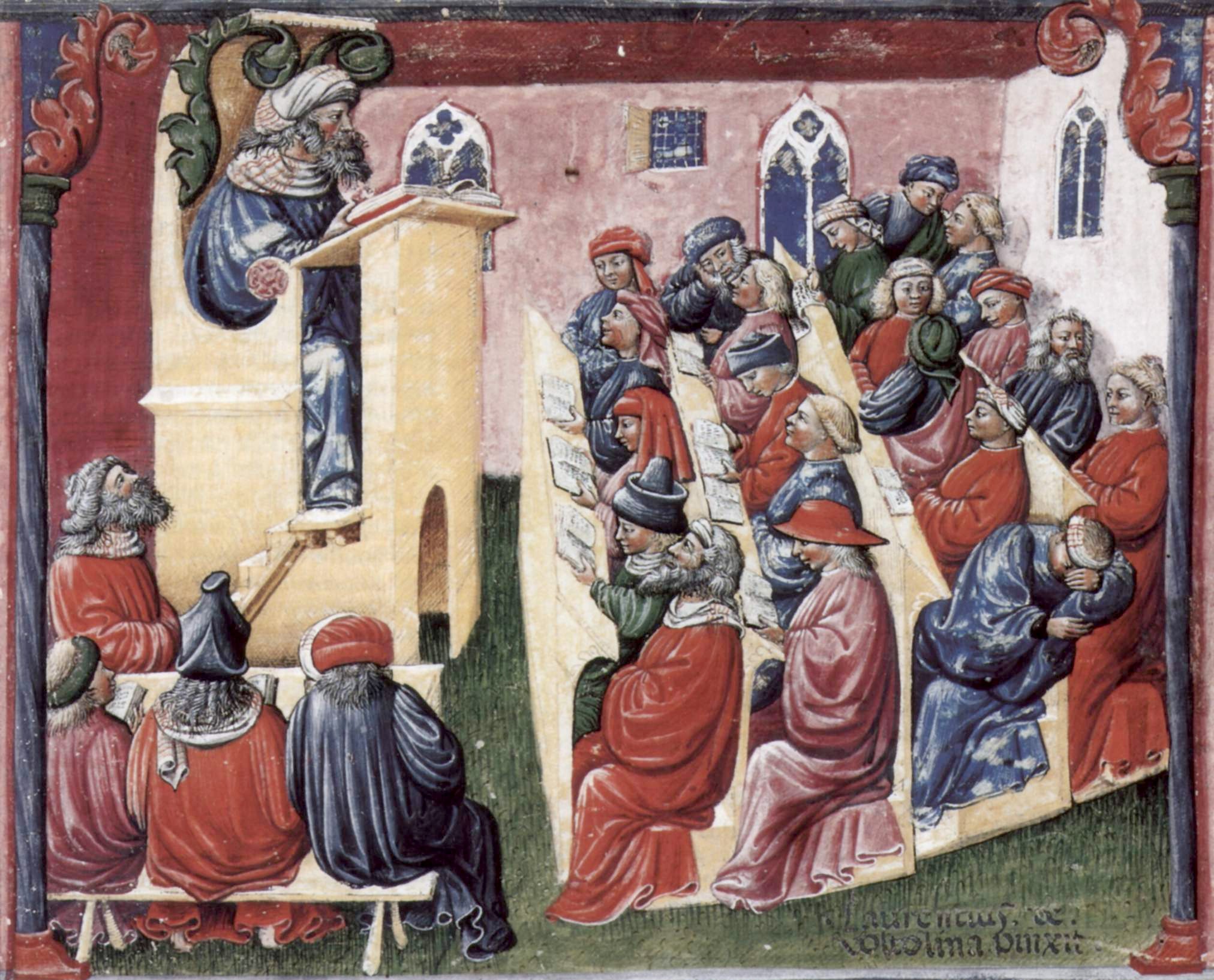
Image result for medieval manuscript school room
Laurentius de Voltolina

A Dream to Remember, Repeat

Anacreonta 37

“As I slept through the night
Under sea-purple blankets,
Stretched out, drunk,
I was dreaming I stretched out
Mid-run on a fast course,
On the very tips of my toes.
I was enjoying myself with the girls
But some boys younger
Than Luaios were mocking me,
Teasing me harshly,
Because of those pretty girls.

Then, they all ran away from my dream
When I reached out to kiss them.
They left me alone and poor me,
I only wanted to sleep again.”

διὰ νυκτὸς ἐγκαθεύδων
ἁλιπορφύροις τάπησι
γεγανυμένος Λυαίῳ,
ἐδόκουν ἄκροισι ταρσῶν
δρόμον ὠκὺν ἐκτανύειν
μετὰ παρθένων ἀθύρων,
ἐπεκερτόμουν δὲ παῖδες
ἁπαλώτεροι Λυαίου
δακέθυμά μοι λέγοντες
διὰ τὰς καλὰς ἐκείνας.

ἐθέλοντα δ᾿ ἐκφιλῆσαι
φύγον ἐξ ὕπνου με πάντες·
μεμονωμένος δ᾿ ὁ τλήμων
πάλιν ἤθελον καθεύδειν.

a knight dozes at a table on the left. An angel looks at him. in the center and the right lies a table cluttered with objects, including coins, books, and a skull
Antonio de Pereda “The Knight’s Dream” 1650

Philosophers Need Life-Coaches

Cicero, Letter Fragments. Nepos to Cicero IIa

Nepos Cornelius also writes to the same Cicero thus: it is so far away from me thinking that philosophy is a teacher of life and the guardian of a happy life, that I do not believe that anyone needs teachers of living more than the many men who are dedicated to philosophical debate. I certainly see that a great number of those who rush into speeches about restraint and discipline in the classroom live amidst the desire for every kind of vice.”

Nepos quoque Cornelius ad eundem Ciceronem ita scribit: tantum abest ut ego magistram putem esse vitae philosophiam beataeque vitae perfectricem ut nullis magis existimem opus esse magistros vivendi quam plerisque qui in ea disputanda versantur. video enim magnam partem eorum qui in schola de pudore <et> continentia praecipiant argutissime eosdem in omnium libidinum cupiditatibus vivere. (Lactant. Div. inst. 3.5.10)

Image result for Cornelius Nepos

Pain-Relieving Dance

Anacreonta 49

“When Zeus’ child, Bacchus,
That pain-reliever Luaios,
That giver of wine, joins my thoughts
He teaches me how to dance.

I get a bit of pleasure too,
As a lover of drinking:
With the dances and the songs
Aphrodite makes me happy.
I want to dance again.”

τοῦ Διὸς ὁ παῖς ὁ Βάκχος,
ὁ λυσίφρων ὁ Λυαῖος,
ὅταν εἰς φρένας τὰς ἐμὰς
εἰσέλθῃ μεθυδώτας,
διδάσκει με χορεύειν.

ἔχω δέ τι καὶ τερπνὸν
ὁ τᾶς μέθας ἐραστάς·
μετὰ κρότων, μετ᾿ ᾠδᾶς
τέρπει με κἀφροδίτα·
πάλιν θέλω χορεύειν.

Anacreonta 43

Let’s get drunk and giggle,
Once we’ve fastened
Rose garlands to our heads.

Have a girl with cute ankles
Dance to the lyre, carrying
A thyrsus with ivy braids.

Have a soft-haired boy
Play alongside her, letting
A clear voice free
from a sweet smelling mouth.

Then golden-haired Love
Along with pretty Luaios
And pretty Aphrodite
Will join the party
An old man might enjoy.”

στεφάνους μὲν κροτάφοισι
ῥοδίνους συναρμόσαντες
μεθύωμεν ἁβρὰ γελῶντες.

ὑπὸ βαρβίτῳ δὲ κούρα
κατακίσσοισι βρύοντας
πλοκάμοις φέρουσα θύρσους
χλιδανόσφυρος χορεύῃ.

ἁβροχαίτας δ᾿ ἅμα κοῦρος
στομάτων ἁδὺ πνεόντων
κατὰ πηκτίδων ἀθύρῃ
προχέων λίγειαν ὀμφάν.

ὁ δ᾿ Ἔρως ὁ χρυσοχαίτας
μετὰ τοῦ καλοῦ Λυαίου
καὶ τῆς καλῆς Κυθήρης
τὸν ἐπήρατον γεραιοῖς
κῶμον μέτεισι χαίρων.

Oil on wood painting, a crowded barn with men and women dancing, drinking and dining
Peter Brueghel the Younger, “The Wedding Dance in a Barn” 1610

The Mind Rules All (Or Fails…)

Sallust, Bellum Jugurthinum 1

“The race of man complains wrongly about its nature, namely the fact that it is feeble in strength, limited in years and ruled more by chance than virtue. To the contrary, you can realize through contemplation that nothing else is greater or more extraordinary—that human nature lacks only perseverance instead of strength or time.

The leader and ruler of mortal life is the mind. When it proceeds to glory along virtue’s path, it is fully powerful, potent and famous; it does not need fortune since fortune cannot grant or revoke honesty, perseverance, or any other good quality from any man.

But a mind seized by desires is dedicated to laziness and worn by obedience to physical pleasure; accustomed to ruinous temptation for too long, when, thanks to sloth, strength, age and wit have diminished, only then is the weakness of nature at fault. Every man shifts his own responsibility to his circumstances.”

[1] Falso queritur de natura sua genus humanum, quod inbecilla atque aevi brevis forte potius quam virtute regatur. Nam contra reputando neque maius aliud neque praestabilius invenias magisque naturae industriam hominum quam vim aut tempus deesse. Sed dux atque imperator vitae mortalium animus est. Qui ubi ad gloriam virtutis via grassatur, abunde pollens potensque et clarus est neque fortuna eget, quippe quae probitatem, industriam aliasque artis bonas neque dare neque eripere cuiquam potest. Sin captus pravis cupidinibus ad inertiam et voluptates corporis pessum datus est, perniciosa libidine paulisper usus, ubi per socordiam vires tempus ingenium diffluxere, naturae infirmitas accusatur: suam quisque culpam auctores ad negotia transferunt.

BH- Zeus Olympia


New Youth on the Dance Floor

Anacreonta 53

“When I look upon a group
Of young men, my youth reappears.

And then, I fly into the dance
Even though I am an old man,
I go out of my mind, in a frenzy.

Give me that, I want to wear a crown.
Gray age is far away still.

I will dance, a young man among the young,
Let someone bring me
A pour of Dionysian fruit,
Then you’ll see an old man’s courage,
From a man who has learned how to speak,
Who has learned both how to drink
And how to go crazy with charm.”

ὅτ᾿ ἐγὼ᾿ ς νέων ὅμιλον
ἐσορῶ, πάρεστιν ἥβα.

τότε δή, τότ᾿ ἐς χορείην
ὁ γέρων ἐγὼ πτεροῦμαι,
παραμαίνομαι, κυβηβῶ.

παράδος· θέλω στέφεσθαι.
πολιὸν δ᾿ ἑκὰς τὸ γῆρας·

νέος ἐν νέοις χορεύσω,
Διονυσίης δέ μοί τις
φερέτω ῥοὰν ὀπώρης,
ἵν᾿ ἴδῃ γέροντος ἀλκὴν
δεδαηκότος μὲν εἰπεῖν,
δεδαηκότος δὲ πίνειν,
χαριέντως τε μανῆναι.

Black figure vase: orange background with youths dancing
Vase with youths playing Firenze, Museo Archaeologico Nazionale 3784

No Bull, Just Zeus

Anacreonta 54

“Child, this bull
Looks a bit like Zeus to me.
Since he is carrying on his back
A Sidonian lady.

He is crossing the broad sea!
He carves the waves with his feet!

No other bull could
Separate himself from the herd and
Sail across the sea except
this bull alone.”

ὁ ταῦρος οὗτος, ὦ παῖ,
δοκεῖ τις εἶναί μοι Ζεύς·
φέρει γὰρ ἀμφὶ νώτοις
Σιδωνίαν γυναῖκα·
περᾷ δὲ πόντον εὐρύν,
τέμνει δὲ κῦμα χηλαῖς.
οὐκ ἂν δὲ ταῦρος ἄλλος
ἐξ ἀγέλης λιασθεὶς
ἔπλευσε τὴν θάλασσαν,
εἰ μὴ μόνος ἐκεῖνος.

Segment of a fresco (wall painting). Woman, half-clothed, sits on bull while friends calm him. The bull looks suspicious.
Wall painting from pompeii, Europa already sitting on the back of the bull (Zeus)

The Glory and Story of the Rose

Anacreonta 55

“Along with garland bearing spring
I plan to sing clearly
Of her gentle companion, the rose.

This is the immortals’ breath,
This is delight for mortals,
And the Graces’ pride in all seasons,
The lovely plaything
Of blossoming Loves.

This is a theme for myths,
This charming shoot of the Muses,
Sweet to find when one is making
Their way along prickly paths;
Sweet to take in turn, to warm
In gentle hands, pressing
This light flower of Love.

Could we ever be without
The rose at the tables
And feasts of Dionysus?

Dawn is called rosy-toed,
The Nymphs are rosy-armed,
Aphrodite is tinted-rose
When named by people who know.

This pleasure is the same for the ignorant;
This is helpful to the sick too;
This helps protect the dead and
This even fights against time:
For the old age of roses
Retains the charming scent of something new

Come, let’s talk of its creation:
When from the murky sea
The water was giving birth to
Aphrodite dampened with foam,
And Zeus was displaying on his brow
War-loving Athena
A terror for Olympus to see,
The earth let flower
A new surprising growth of roses,
An intricate creation.

She made the rose to be
Like the blessed gods themselves–
Then Luaios watered it with nektar,
Joining it to the haughty thorn,
a life to last forever.

στεφανηφόρου μετ᾿ ἦρος
μέλομαι ῥόδον τέρεινον
συνέταιρον ὀξὺ μέλπειν.
τόδε γὰρ θεῶν ἄημα,
τόδε καὶ βροτοῖσι χάρμα,
Χάρισίν τ᾿ ἄγαλμ᾿ ἐν ὥραις,
πολυανθέων Ἐρώτων
ἀφροδίσιόν τ᾿ ἄθυρμα·

τόδε καὶ μέλημα μύθοις
χαρίεν φυτόν τε Μουσῶν·
γλυκὺ καὶ ποιοῦντι πεῖραν
ἐν ἀκανθίναις ἀταρποῖς,
γλυκὺ δ᾿ αὖ λαβόντι, θάλπειν
μαλακαῖσι χερσί, κοῦφον
προσάγοντ᾿ Ἔρωτος ἄνθος.

θαλίαις τί κἀν τραπέζαις
Διονυσίαις τ᾿ ἑορταῖς
δίχα τοῦ ῥόδου γένοιτ᾿ ἄν;

ῥοδοδάκτυλος μὲν Ἠώς,
ῥοδοπήχεες δὲ Νύμφαι,
ῥοδόχρους δὲ κἀφροδίτα
παρὰ τῶν σοφῶν καλεῖται.

ἀσόφῳ τόδ᾿ αὐτὸ τερπνόν·
τόδε καὶ νοσοῦσιν ἀρκεῖ,
τόδε καὶ νεκροῖς ἀμύνει,
τόδε καὶ χρόνον βιᾶται·
χαρίεν ῥόδων δὲ γῆρας
νεότητος ἔσχεν ὀδμήν.

φέρε δὴ φύσιν λέγωμεν·
χαροπῆς ὅτ᾿ ἐκ θαλάττης
δεδροσωμένην Κυθήρην
ἐλόχευε πόντος ἀφρῷ
πολεμόκλονόν τ᾿ Ἀθήνην
κορυφῆς ἔδειξεν ὁ Ζεύς,
φοβερὰν θέαν Ὀλύμπῳ,
τότε καὶ ῥόδων ἀγητὸν
νέον ἔρνος ἤνθισε χθών,
πολυδαίδαλον λόχευμα·

μακάρων θεῶν δ᾿ ὅμοιον
ῥόδον ὡς γένοιτο, νέκταρ
ἐπιτέγξας ἀνέθηλεν
ἀγέρωχον ἐξ ἀκάνθης
φυτὸν ἄμβροτον Λυαῖος.

Impressionistic oil painting of pink roses
Pierre August Renoir, “Roses” 1910

A Model Response to an Engagement

Pliny, Letters 26

To Julius Servianus,

“I am happy and I congratulate because that your daughter is engaged to Fuscus Salinator. His house is patrician; his father most honorable and his mother his equal; the boy himself is educated, literate and even an orator—a boy in his directness, a youth for his charm, yet an older man when it comes to serious matters. I certainly am not deceived by my adoration—for I love as fully as he merits for his actions and his reverence for me—but I have my judgment still and it is as much sharper thanks to the depth of my affection.

I promise you as one who has known him that you will have a son-in-law who will be better than any prayer could anticipate. The only task left is that he will make a grandson like himself sooner rather than later. How happy a day it well be which delivers his children from your embrace—your grandchildren—as if they were my own children or grandchildren and my equal right to care for them. Farewell!

C. Plinius Serviano Suo S.
Gaudeo et gratulor, quod Fusco Salinatori filiam tuam destinasti. Domus patricia, pater honestissimus, mater pari laude; ipse studiosus litteratus etiam disertus, puer simplicitate comitate iuvenis senex gravitate. Neque enim amore decipior. Amo quidem effuse (ita officiis ita reverentia meruit), iudico tamen, et quidem tanto acrius quanto magis amo; tibique ut qui exploraverim spondeo, habiturum te generum quo melior fingi ne voto quidem potuit. Superest ut avum te quam maturissime similium sui faciat. Quam felix tempus illud, quo mihi liberos illius nepotes tuos, ut meos vel liberos vel nepotes, ex vestro sinu sumere et quasi pari cure tenere continget! Vale.

C13123-17 Royal 14 C vii, f. 124v
Matthew Paris, Historia Anglorum, England (St Albans), 1235-1259, Royal 14 C. vii, f. 124v

Love, And Some of His Own Medicine

Anacreonta 35

“Once, among the roses
Love didn’t notice
A sleeping bee
And it wounded him, biting his finger.
How he howled over his hand!

He rushed and flew
To beautiful Kythera and said
“I am dying, my mother.
I have been killed. I am dying.
That tiny snake struck me
The snake with wings. The one
The farmers call a honey-bee.”

She responded, “if the bee’s
Little sting hurts, then
How much do you imagine
All the people suffer
From your attacks?”

Ἔρως ποτ᾿ ἐν ῥόδοισι
κοιμωμένην μέλιτταν
οὐκ εἶδεν, ἀλλ᾿ ἐτρώθη·
τὸν δάκτυλον παταχθεὶς
τᾶς χειρὸς ὠλόλυξε.

δραμὼν δὲ καὶ πετασθεὶς
πρὸς τὴν καλὴν Κυθήρην
῾ὄλωλα, μῆτερ,’ εἶπεν,
῾ὄλωλα κἀποθνήσκω·
ὄφις μ᾿ ἔτυψε μικρὸς
πτερωτός, ὃν καλοῦσιν
μέλιτταν οἱ γεωργοί.’

ἁ δ᾿ εἶπεν· ῾εἰ τὸ κέντρον
πονεῖ τὸ τᾶς μελίττας,
πόσον δοκεῖς πονοῦσιν,
Ἔρως, ὅσους σὺ βάλλεις;’

Small GReek coin from the city of Ephesus. The side facing the camera shows a bee in the middle with the GReek letters epsilon and phi on other side
394-295 BC – silver tetradrachm – bee – München