“We say that being happy is what follows nature. And, moreover, what is according to nature is clear and obvious just as something that is complete is. That which is according to nature, what we touch at birth, I say is not the good but the beginning of the good.
You attribute the highest good–pleasure–to infants so that at the moment of birth a baby starts where the perfected adult should end. You place the branch in the root’s position! If anyone should claim that that child, hidden in the maternal womb, with unclear gender, tender, incomplete, and unshaped, that this child is already in some true good, then they would clearly seem to be lost in their ideas.
And yet how small is the difference between one who has just entered life and one who is still a hidden burden to their mother’s womb! They are equally knowing of the good and equally mature; An infant is no more conscious of the Good than a tree or any other speechless creature.”
Dicimus beata esse, quae secundum naturam sint, Quid autem secundum naturam sit, palam et protinus apparet, sicut quid sit integrum. Quod secundum naturam est, quod contigit protinus nato, non dico bonum, sed initium boni. Tu summum bonum, voluptatem, infantiae donas, ut inde incipiat nascens, quo consummatus homo pervenit.
Cacumen radicis loco ponis. Si quis diceret illum in materno utero latentem, sexus quoque incerti,tenerum et inperfectum et informem iam in aliquo bono esse, aperte videretur errare. Atqui quantulum interest inter eum, qui cum1 maxime vitam accipit, et illum, qui maternorum viscerum latens onus est? Uterque, quantum ad intellectum boni ac mali, aeque maturus est, et non magis infans adhuc boni capax est quam arbor aut mutum aliquod animal.
“A friend’s sickness has lately reminded me that we are the best people when we are sick. Does greed or lust ever bother a sick person? They are not controlled by their desires or their love of honors. They don’t care about wealth and think whatever little bit they have is enough, because they will leave it behind! The sick remember the gods and realize they are mortal. They don’t feel envy or awe or contempt for other people. Slander doesn’t attract or encourage the sick and all they dream of are baths and fountains.
These are the end of their concerns, the object of their prayers. And they promise that will be enough if they are lucky to survive. I can now say briefly and clearly what the philosophers try to convey in so many endless words: When we’re healthy we should strive to be the kind of people we promised to be when we were sick. Goodbye!”
Nuper me cuiusdam amici languor admonuit, optimos esse nos dum infirmi sumus. Quem enim infirmum aut avaritia aut libido sollicitat? Non amoribus servit, non adpetit honores, opes neglegit et quantulumcumque, ut relicturus, satis habet. Tunc deos tunc hominem esse se meminit, invidet nemini, neminem miratur neminem despicit, ac ne sermonibus quidem malignis aut attendit aut alitur: balinea imaginatur et fontes.
Haec summa curarum, summa votorum mollemque in posterum et pingue destinat vitam. Possum ergo quod plurimis verbis plurimis etiam voluminibus philosophi docere conantur, ipse breviter tibi mihique praecipere, ut tales esse sani perseveremus, quales nos futuros profitemur infirmi. Vale.
Euricius Cordus (1486-1535); Fur die newe, hievor vnerhorte und erschrocklich todtliche Kranckheyt und schnellen todt, die English schweyee-sucht geant, Strassbourg: 1529.Early books on medicine..Published: 1928..Copyrighted work available under Creative Commons Attribution only licence CC BY 4.0 http://creativecommons.org/licenses/by/4.0/
“Serious people are truly dedicated and on guard to make themselves better by preparing both to keep corrupting things away from them and trying to ensure that good things are near at hand. But they are also unaffected: they have peeled away adornments from their voice and their face.
They also have no concern for business since they abstain from doing anything which transgresses their duty. They do drink, but they do not get drunk. Indeed, they will also not go mad—even though the sometimes the same fantasies will still occur to them because of depression or delirium, but because of the logic of what they have selected but against nature.
And a wise person will never grieve because they understand that grief is an illogical closure of the soul, as Apollodorus says in his Ethics. These people are also godlike because they have some divine aspect in them; the scoundrel is godless.”
“As winter started coming on, the disease afflicted the Athenians a second time—even though it hadn’t totally disappeared before, there was still a period of relief. Then it lingered no less than a year when the first encounter was two. The overall result was that nothing overwhelmed the Athenians and sapped their power more than this.
No fewer than 4400 hoplites died from the ranks along with three hundred cavalry. And the number of the rest of the masses that died was never discovered.”
The famous plague is described at 2.47-55 and first fell on the Athenians in 430 BCE. Three years later, after a respite, it returned.
The tenth plague: the death of the first-born including Pharaoh’s son. From the Haggadah for Passover (the ‘Sister Haggadah’). 2nd or 3rd quarter of the 14th century. British Library
“And then [Menelaos] was intending to give Adrastus
To an attendant to take back to the Achaeans’ swift ships
But Agamemnon came rushing in front of him and spoke commandingly
“Oh my fool Menelaos, why do you care so much about people?
Did your house suffer the best treatment by the Trojans?
Let none of them flee dread death at our hands,
Not even a mother who carries in her womb
a child that will be a boy, let not one flee, but instead
Let everyone at Troy perish, unwept and unseen.”
The hero spoke like this and changed his brother’s mind,
Since he advised properly…
Schol, bT ad Il 6.58-59 ex [from the Erbse edition]
“these words are hateful and ill-fit to a noble manner. For they indicate a savageness of spirit and any human audience member will hate the excess bitterness and inhumanity. This is why tragedians hide people who do these kinds of things on stage and signal what was done either through the sound of some voices or through messengers later, for no other reason than they might be hated for what was done”
“Who is a boy”: because a female infant would be useless for battle
<κοῦρον ἐόντα:> ἄχρηστον γὰρ εἰς μάχην τὸ θῆλυ.
Schol bT ad Il. 6.60a
ἀκήδεστοι: “unmourned” for people who don’t have someone grieving them
ἄφαντοι: “unseen” because no one leaves behind a grave marker for them
ἀκήδεστοι: μὴ ἔχοντες τὸν κηδεύοντα.
ἄφαντοι: ὡς μηδὲ μνημεῖον αὐτῶν παραλείπεσθαι.
Schol bT ad Il. 6.62
αἴσιμα παρειπών: “fated things” or “things proper for people who have done wrong”. The poet bears witness to how correctly Agamemnon has ordered his speech.”
Pindar, Paean, fr. 8a [=52i(A) P. Oxy. 841 (5, 1908)]
[She felt him] hurrying and her divine heart
Wailed with horrible groans
And she explained the reason
With words like this: So wholly…
Wide-browed son of Kronos–
You are bringing about the fated
Pain from when Hekabe [informed]
The Dardanian women when she
Was carrying this man in her body,
She believed that she would give birth
To a fire-breathing hundred-hander
One who would drag all Ilion
To the ground with his wicked [ways]
And she spoke [of him] [confessing]
The sign that came into her dreams
[shuddering in fear] at her foreknowledge.”
“Mortals have no other medicine for pain
Like the advice of a good man, a friend
Who has experience with this sickness.
A man who troubles then calms his thoughts with drinking,
Finds immediate pleasure, but laments twice as much later on.”
“The one who strengthens someone in pain,
Who comforts a young one in love,
Who makes the dancer beautiful over drinks,
That god has descended to the ground,
Offering a calming lovespell for mortals,
A medicine against grief,
The vine’s child, wine.
He is guarding it safe,
Within the vines’ bunches of grapes,
So, whenever they cut the fruit,
Everyone remains free of sickness,
Healthy with shining skin
And a sweet-hearted mind,
Until the passing of another year.”
“I have so much joy and comfort in literature that there’s nothing that can’t be made happier because of it and there’s nothing sad enough to detract from its effect. I am so troubled by the sickness of my wife and the danger to my household, even the threat of death, that I have fled to my study as the only distraction from pain. I may sense my troubles more in this way but I yet bear them more easily. ”
Et gaudium mihi et solacium in litteris, nihilque tam laetum quod his laetius, tam triste quod non per has minus triste. Itaque et infirmitate uxoris et meorum periculo, quorundam vero etiam morte turbatus, ad unicum doloris levamentum studia confugi, quae praestant ut adversa magis intellegam sed patientius feram.
Drugs as therapy for pain
Morphine, “Cure for Pain” (1993)
“Where is the ritual
And tell me where where is the taste
Where is the sacrifice
And tell me where where is the faith
Someday there’ll be a cure for pain
That’s the day I throw my drugs away…”
Homer, Odyssey 4.219–232
“But then Zeus’ daughter Helen had different plans.
She immediately cast into the wine they were drinking a drug,
A pain neutralizer and anger reducer, an eraser of all evils.
Whoever consumes this drug once it is mixed in the wine,
Could not let a single tear loose upon their cheeks for a whole day.
Not even if their mother or father died,
Nor again if they lost their brother and dear son,
Cut down by bronze right their in front of their own eyes.
These are the kinds of complex drugs, good ones, Zeus’s daughter
Possesses. Polydamna, the wife of Thôn, gave them to her
In Egypt where the fertile land grows the most drugs—
Many there are mixed fine; but many cause pain too.
Each man there is a doctor whose knowledge surpasses most men,
For they are the offspring of Paieon.”
“There are some people who get puffed up if they manage to talk about something tolerably after they have themselves selected a strange and impossible subject. Men have also grown old claiming that it is impossible to say or disprove a lie or to speak two ways about the same matters. Others claim that courage, wisdom, and justice are the same thing, that we have none of these by nature, and that there is a single knowledge about them all. Others waste their time in conflicts which bring no benefit, which can only create more trouble for those who approach them.
I, if I saw that this superfluity had only just emerged in speeches and that these men were eager for honor in the novelty of what they discover, I would not be a surprised at them. But, now, who is such a late-learner that he does not know Protagoras and the sophists who were active at his time and that they left to us these types of things and speeches even more excessively composed than these? How could anyone overcome Gorgias who dared to say that nothing exists at all or Zeno who tried to demonstrate that the same things are possible and impossible or even Melissos who—although some things are countless in number—tried to provide a proof that everything is one!”
“Kosmos for a city is a good-population; for a body it is beauty; for a soul, wisdom. For a deed, excellence; and for a word, truth. The opposition of these things would be akosmia. It is right, on the one hand, to honor a man and a woman and a deed and a city and a deed worthy of praise with praise and to lay reproach on the unworthy. For it is equally mistaken and ignorant to rebuke the praiseworthy and praise things worthy of rebuke.
It is thus necessary for the same man to speak truly and refute those who reproach Helen, a woman about whom the belief from what the poets say and the fame of her name are univocal and single-minded, that memory of sufferings. I want, by giving some reckoning in speech, to relieve her of being badly spoken, and, once I demonstrate and show that those who reproach her are liars, to protect the truth from ignorance”
“The swallow has come, has come,
Bringing us the best weather
The most wonderful time of the year,
White on its stomach and
White on its back–
Why don’t you toss out
From your well-stocked house
A cup of wine,
And a basket of cheese and wheat?
That bird won’t decline
A bit of flatbread either.
Should we leave or take something?
If you’re going to give us something, great!
If not, we won’t leave you alone.
We will steal your door
Or maybe your threshold or
Your wife who is sitting indoors.
She’s small. We’ll carry her easily.
Would you give us something? Could you give us something big?
Open up, open the door to the swallow.
We aren’t old men, but little kids.”
Seneca the Elder, Historical Fragments, 1 [=Lactant. Inst. Div. 7.15.14]
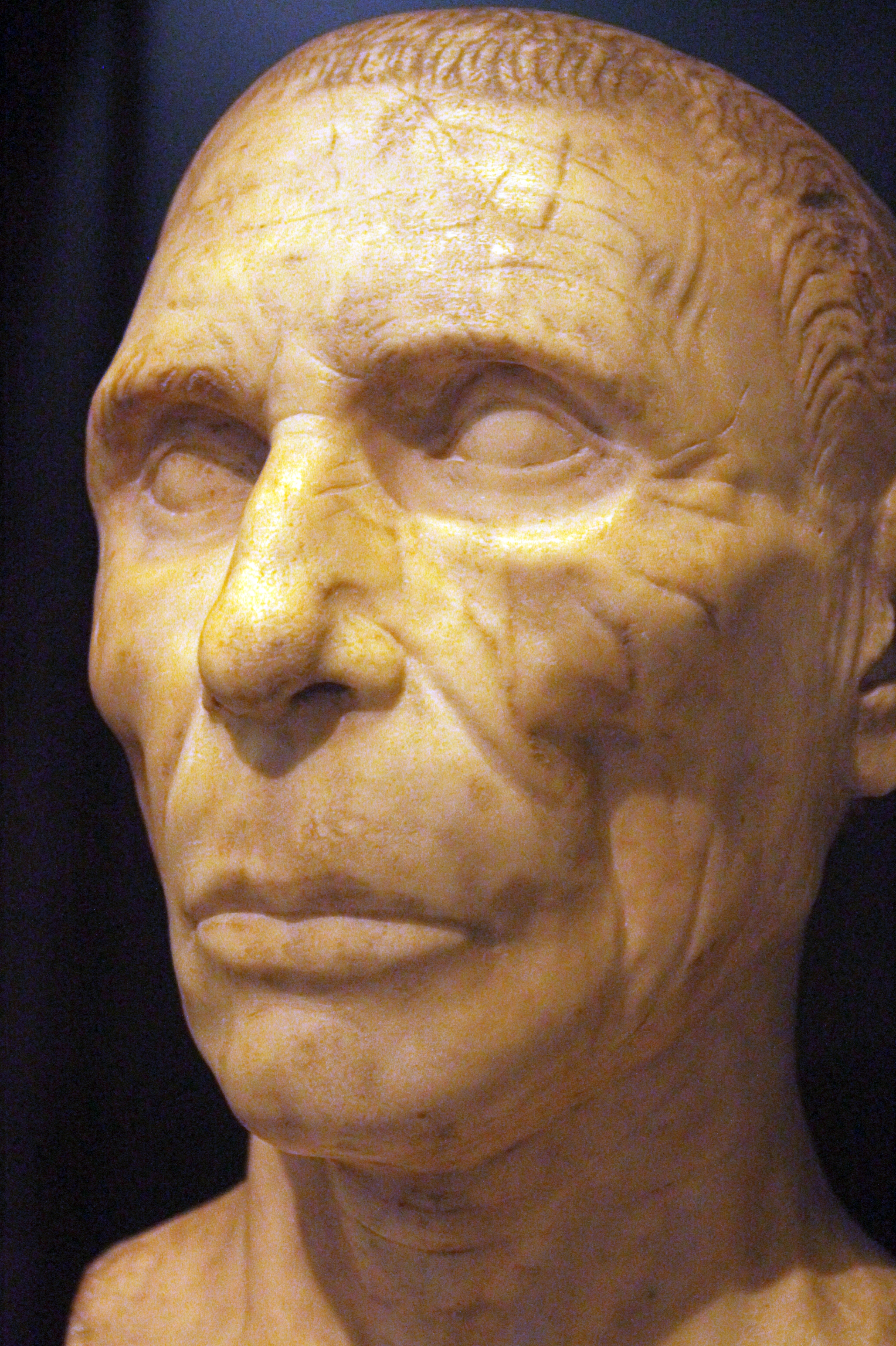
“Seneca outlined the periods of Roman history in “life-stages”. The first was her infancy under the king Romulus, who parented Rome and educated her. Then there followed a childhood under various kings thanks to whom the city grew and was shaped by many practices and institutions. Then, while Tarquin was king and Rome began to become more adult, it could not endure servitude and, once the yoke of arrogant rule was thrown off, preferred to heed laws instead of kings.
Once the Roman adolescence ended with the close of the Punic war, it began to show the full strength of adulthood. For, when Carthage was subdued, that city which was an ancient rival for power, Rome extended her hands over the whole earth, both land and sea until every king and nation had bent to her power.
But, since there was no reason left for wars, Rome began to use her strengths poorly and wore herself out. This was the first step of old age: when Rome was wounded by civil wars and suffering from internal evil, she returned again to the practice of individual rule, as if she had devolved into a second infancy. Thus she lost the freedom which she defended when Brutus was its agent and champion and grew weak in old age, as if she had not the strength to support herself unless she could use the ‘cane’ of kings.”
Seneca Romanae urbis tempora distribuit in aetates; primam enim dixit infantiam sub rege Romulo fuisse, a quo et genita et quasi educata sit Roma, deinde pueritiam sub ceteris regibus, a quibus et aucta sit et disciplinis pluribus institutisque formata. At vero Tarquinio regnante, cum iam quasi adulta esse coepisset, servitium non tulisse, et reiecto superbae dominationis iugo maluisse legibus obtemperare quam regibus, cumque esset adulescentia eius fine Punici belli terminata, tum denique confirmatis viribus coepisse iuvenescere. Sublata enim Carthagine, quae diu aemula imperii fuit, manus suas in totum orbem terra marique porrexit, donec regibus cunctis et nationibus imperio subiugatis, cum iam bellorum materia deficeret, viribus suis male uteretur, quibus se ipsa confecit. Haec fuit prima eius senectus, cum bellis lacerata civilibus atque intestino malo pressa rursus ad regimen singularis imperii recidit quasi ad alteram infantiam revoluta. Amissa enim libertate, quam Bruto duce et auctore defenderat, ita consenuit tamquam sustentare se ipsa non valeret nisi adminiculo regentium uteretur.


_MET_GR1036.jpg)
