Phalaris, a Phucking Phine Phriend

Sir William Temple, Of Ancient and Modern Learning:

It may perhaps be further affirmed, in favour of the ancients, that the oldest books we have are still in their kind the best. The two most ancient that I know of in prose, among those we call profane authors, are Aesop’s Fables and Phalaris’s Epistles, both living near the same time, which was that of Cyrus and Pythagoras. As the first has been agreed by all ages since for the greatest master in his kind, and all others of that sort have been but imitations of his original; so I think the Epistles of Phalaris to have more grace, more spirit, more force of wit and genius, than any others I have ever seen, either ancient or modern. I know several learned men (or that usually pass for such, under the name of critics) have not esteemed them genuine; and Politian, with some others, have attributed them to Lucian: but I think he must have little skill in painting, that cannot find out this to be an original; such diversity of passions, upon such variety of actions and passages of life and government, such freedom of thought, such boldness of expression, such bounty to his friends, such scorn of his enemies, such honour of learned men, such esteem of good, such knowledge of life, such contempt of death, with such fierceness of nature and cruelty of revenge, could never be presented but by him that possessed them; and I esteem Lucian to have been no more capable of writing, than of acting what Phalaris did. In all one writ, you find the scholar or the sophist; and in all the other, the tyrant and the commander.

Image result for phalaris bronze bull

Ancients vs. Moderns

R.C. Jebb, Richard Bentley (Chp. IV):

Sir William Temple, in his ‘Essay on Ancient and Modem Learning’ — published in 1692, and dedicated to his own University, Almae Matri Cantabrigiensi — was not less uncompromising in the opposite direction. His general view is that the Ancients surpassed the Moderns, not merely in art and literature, but also in every branch of science, though the records of their science have perished. ‘The Moderns,’ Temple adds, gather all their learning out of Books in the Universities.’ The Ancients, on the contrary, travelled with a view to original re- search, and advanced the limits of knowledge in their subjects by persistent interviews with reserved specialists in foreign parts. Thales and Pythagoras are Sir William’s models in this way.  Thales acquired his knowledge in Egypt, Phoenicia, Delphos, and Crete; Pythagoras spent twenty-two years in Egypt, and twelve years more in Chaldea; and then returned laden with all their stores.’ Temple’s performance was translated into French, and made quite a sensation in the Academy, — receiving, among other tributes, the disinterested homage of the Modern Horace.

On the Anvil of Horatian Criticism

R.C. Jebb, Bentley (Chp. VIII):

Now, Horace was one of the most perilous subjects that Bentley could have chosen. Not so much because the text of Horace, as we have it, is particularly pure. There are many places in which corruption is certain, and conjecture is the only resource. But, owing to his peculiar cast of mind and style, Horace is one of the very last authors whose text should be touched without absolute necessity. In the Satires and Epistles his language is coloured by two main influences, subtly interfused, each of which is very difficult, often impossible, for a modern reader to seize. One is the colloquial idiom of Roman society. The other is literary association, derived from sources, old Italian or Greek, which in many cases are lost. In the Odes, the second of these two influences is naturally predominant; and in them the danger of tampering is more obvious, though perhaps not really greater, than in the Satires or Epistles. Now, Bentley’s tendency was to try Horace by the tests of clear syntax, strict logic, and normal usage. He was bent on making Horace ‘sound’ in a sense less fine, but even more rigorous, than that in which Pope is ‘correct.’

Thus, in the ‘Art of Poetry,’ Horace is speaking of a critic : — ‘If you told him, after two or three vain attempts, that you could not do better, he would bid you erase your work, and put your ill-turned verses on the anvil again‘ (et male tornatos incudi reddere versus). ‘Ill-turned ‘ — ‘anvil’! said Bentley : ‘what has a lathe to do with an anvil?’ And so, for male tornatos, he writes male ter natos, ‘thrice shaped amiss.’ Horace elsewhere speaks of verses as incultis . . .et male natis. To Bentley’s reading, however, it may be objected that the order of words required by the sense is ter male natos: for male ter natos ought to mean, either ‘unhappily thrice-born’ — like the soul of a Pythagorean, unfortunate in two migrations; or ‘barely thrice-born’ — as if, in some process which required three refinements, the third was scarcely completed. And then, if we are not satisfied with the simplest account of tornatos — viz., that Horace lapsed into a mixture of common metaphors — it admits of a strict defence. The verses have been put on the lathe, but have not been successfully rounded and polished. Then, says Horace’s critic, they must go back to the anvil, and be forged anew, passing again through that first process by which the rough material is brought into shape for the lathe. Yet Bentley was so sure of his ter natos that persons who doubted it seemed no better than ‘moles.’

Peter Paul Rubens, Hephaestus

Stoicism for a Shitty World

Edwyn Bevan, Stoics and Sceptics (1913, pp.32-33):

“If you are determined to limit yourself to what is called objective fact, you certainly diminish the chances of your making mistakes, but you also renounce all your chances of get- ting below the surface. What, for instance, is mainly interesting, to my mind, in the physical theories of Zeno, is not their detail, but the fact that he felt it necessary to enunciate a theory of Nature at all. We cannot under- stand what he was about unless we realize the necessity which was on him to give a complete answer to the enigma of the Universe, compact in all its parts, since nothing which left any room for doubt to get in could give a bewildered world security and guidance.

Stoicism, as it appears to me, was a system put to- gether hastily, violently, to meet a desperate emergency. Some ring-wall must be built against chaos. High over the place where Zeno talked could be descried the wall, built generations before, under the terror of a Persian attack, built in haste of the materials which lay to hand, the drums of columns fitted together, just as they were, with the more regular stones. That heroic wall still looks over the roofs of modern Athens. To Zeno it might have been a parable of his own teaching.

Even the passion of the Stoics for definition may in this way be regarded with human sympathy. It began with Zeno himself, who established numerous brief formulae as fixed and canonical definitions in the school tradition. Short definitions of this kind were well adapted to become current coin of all the philosophic schools and even of the market-place. As a matter of fact the Stoic definitions had a wide circulation in later antiquity. It is always the catch-words of a philosophical theory which lay hold of the general mind. Stoicism issued its own catch-words, one might say, with the official stamp. One of Zeno’s disciples, Sphaerus, seems to have shown a special aptitude for their manufacture. One is at first inclined to treat all this as a kind of dry philosophical pedantry. Perhaps with Chrysippus and the later Stoics such a vice of the mind was not altogether absent. But I think the motive behind it does take on another, and even a pathetic, aspect, when we consider the necessity to have a cut-and-dried answer ready to every question, if a coherent dogmatic system was to be fitted out such as the ordinary man could grasp, and consider also the bitter need for such a system which the world felt at that time.”

Get Bent! (ley)

Dynamic and divisive figures like Bentley are apt to leave in their wake a mass of biographical recollection neatly divided into hagiography and hate. Though the average person may be surprised to learn that some of the most bitterly partisan divisions outside of politics can be found within the realm of scholarship, there is a long tradition of scholarly work serving as the basis of personal animus, and there are few scholars whose work ignited as much passionate controversy in the broader literary world as did Richard Bentley. While famous among Classical scholars, Bentley is largely forgotten to the broader intellectual world, except to those who recall him as the butt of the joke in Pope’s Dunciad and Swift’s Battle of the Books. Our man Bentley, a graduate of St. John’s College, Oxford, spent much of the 1680s in the household of Edward Stillingfleet before rolling on to the scholarly scene in the 1690s with two works which display what Gibbon would call “a stock of erudition which would have puzzled a doctor.”

Bentley’s Letter to Mill and Dissertations on the Epistles of Phalaris represent apparently epochal moments in the history of English Classical scholarship, and they were certainly important. Yet there is a temptation to regard Bentley’s work as wholly sui generis, if for no other reason than because his towering genius and the fame accruing to him for his polemical savagery place him so high in the pantheon of English scholarship that his predecessors have been largely effaced from memory. (Indeed, so strong is this tendency, that C.O. Brink’s volume on English Classical scholarship was entitled Bentley, Porson, Housman – not because there were no other English Classical scholars, but rather because these three are so manifestly preeminent as to force the rest into the unenviable position of ambient historical noise.) One may compare Bentley’s reputation with that of his contemporary, Isaac Newton. While Newton, too, was working within a tradition of scientific work laid out before him, the singularity of his individual achievement led to the elision of his predecessors.

Image result for phalaris bronze bull

In her study Richard Bentley: Poetry and Enlightenment, Kristine Louise Haugen positions Bentley within a well-established set of scholarly work in 17th century England. A chapter on Restoration Cambridge lays the ground for understanding Bentley’s development by analyzing the work of Thomas Stanley, John Pearson, and Thomas Gale. Thomas Stanley’s History of Philosophy, a scholarly engagement with Diogenes Laertius’ Lives of the Philosophers, sought to augment and correct the biographies which Laertius wrote. Much of the value of this work is attributed to Stanley’s extensive compilation of chronological and biographical material supplemental to Diogenes. Stanley also produced the “first large-scale edition of a classical poet ever published” with his Aeschylus. Stanley was not endowed with the same keen power for textual criticism which characterized Bentley, and Haugen notes that it is his preoccupation with and commentary upon the more strictly literary qualities of the text which set him apart from Bentley, whose own process inclined toward commenting only upon textual problems in need of remedy.

While Thomas Stanley played the literary gentleman, John Pearson was the polemical scholar whose edition of the philosopher Hierocles dove into the weeds of commentary upon pseudo-Pythagorean verses with a hint of polemical fire. Haugen paints Pearson as something like a Mr. Casaubon (not the scholar, but the character from Middlemarch), who “evidently never hit on the reigning ideas that could have turned his masses of notes into a meaningful narrative or a decisive editorial procedure.” [p.30] Pearson was also the author of the Vindication of the letters of Ignatius of Antioch, which set a precedent for Bentley in its striving to find a way to blend scholarship and polemic.

The methods of Thomas Gale approach more closely to the methodical rigor of Bentley. Gale composed a series of comments and notes upon the Library of Apollodorus. Haugen devotes some pages to explicating Gale’s methods by analyzing his approach to the corruptions at Apollodorus 1.9.26. Gale’s approach drew on comparative analysis between passages in Apollodorus, Apollonius of Rhodes, Hesychius, Strabo, and a scholiast in order to restore Apollodorus’ text. She notes the parallel between the method of comparative reading in Gale’s work and that in Bentley’s Horace of 1711, and demonstrates that Bentley’s approach, though it was both criticized and ridiculed, simply represented the employment of an established scholarly procedure. Bentley’s fault was in offending the sensibilities of 18th century literary gentlemen, for whom the received text was regarded as canon passed down to them from their school days, and reinforced through a series of endless and ostentatious quotations in periodical publication.

Bentley’s major works can be separated into roughly three periods: the polemical works on obscure books (Letter to Mill and Dissertation on the Epistles of Phalaris) in the 1690’s; the scholarly analysis of canonical literature (Horace, New Testament, Terence, and the discovery of digamma in the works of Homer); and his preoccupation with the figure of the meddling editor (in his edition of Manilius, and in the much maligned edition of Paradise Lost).

Bentley’s intellectual development was fostered by privileged patronage. For all that has been made about “Bentley’s idexes”, it is worth noting that one cannot embark profitably on the project of indexing unless one has access to books. In 1682, Bentley became the tutor to James Stillingfleet, the younger son of Edward Stillingfleet. This position involved more than simply educating young James. Bentley was a member of the household, and served as an all-purpose toady for Stillingfleet: amanuensis, ghost writer, and procurer of books. In this last function, it serves to note that Bentley was charged with purchasing volumes for Stillingfleet’s library, a task which on some occasions led to the acquisition of rare or useful classical books. Moreover, Bentley’s position also meant that he had access to the whole of Stillingfleet’s library, and it would be hard to overstate the effect which access to such a treasury would have had on Bentley’s later stock of erudition. Later, owing in part to the boost in life granted him by Stillingfleet’s patronage, Bentley was made Keeper of the Royal Library in 1693. We are perhaps liable now to underestimate the value of access to information in light of the relative cheapness of both books and information today. While Bentley was undoubtedly endowed with a remarkably acute intellect, one must concede that he would not have become the colossus of English classical scholarship were it not for the patronage of the rich and powerful.

Bentley rolled on to the public scholarly scene in 1691 with his Letter to Mill, which is ostensibly intended as commentary upon Mill’s edition of the Byzantine historian John Malalas. The story goes that Bentley wanted to see the edition before its publication, and Mill agreed to let him take a look in exchange for penning a commentary essay on it. The text of Malalas as it stood offered fertile ground for Bentley’s intellect, and what was supposed to be simply some “remarks” morphed into a full blown essay, focused in large part on Greek drama. Haugen judges that the “Letter to Mill was largely the work of an autodidact, with all of the freedoms and some of the deficiencies that this implies.” [p.82] Yet it is perhaps this very sense of freedom which makes Bentley’s scholarship so novel and invigorating.

The Battle of the Books (or The Quarrel Between Ancients and Moderns) has been forgotten by the public at large, perhaps because the debate has been so firmly settled on the side of modernity, but it was still capable of exciting tempers at the end of the 17th century, and served as the foundation for Bentley’s famous Dissertation Upon the Epistles of Phalaris. The epistles were literary forgeries (or playful literary exercises) written in the persona of Phalaris, the tyrant of Akragas, who cooked his enemies inside a brazen bull which he kept at his court. Many astute readers had long seen that the Epistles were not actually written by the tyrant himself, but that did not prevent Sir William Temple from blundering his way into citing them as proof for his claim that the achievements of antiquity far surpassed those of the modern world. Temple described the Epistles as having “more Race, more Spirit, more Force of Wit and Genius than any others I have ever seen, either antient or modern.” William Wotton, one of Bentley’s friends, penned a response to Temple arguing for the superiority of modern achievement, and published it along with the 78 page first edition of the Dissertation, composed by Bentley, which showed that the Epistles were neither original, nor as ancient as Temple had supposed. This led to a counterattack by Francis Atterbury, which in turn drove Bentley to publish a substantially enlarged, 540 page edition of the Dissertation. Unsurprisingly, the second edition of the Dissertation was far more diffuse and digressive than the first, and it does more than simply prove its point about the Epistles – it provides commentary upon and solutions to a wide range of textual and chronographic problems which are tangentially related to issues suggested by the Epistles themselves.

The expanded Dissertation makes for a tough read, but Haugen does an admirable job of summarizing the key arguments and conclusions, with helpful notes on Bentley’s method of scholarly exposition. It is unlikely that readers today would take sufficient interest in the controversy to read through Bentley’s work, and even a Classical scholar can be forgiven for feeling somewhat stupefied when confronted with the sheer mass of intimidating erudition which Bentley drew up for the book. Yet, the expanded edition was written and published with remarkable haste (released only one year after Atterbury’s attack), suggesting that this was all material which Bentley had ready in the chamber. Nevertheless, the literary world found the massive display of erudition distasteful, and served as the basis for the ridicule which Jonathan Swift and Alexander Pope leveled against Bentley in The Battle of the Books and The Dunciad. Moreover, the 1699 publication of the Dissertation marks the end of Bentley’s publication in the realm of the rarefied and minutely obscure, as he ceased after this point to write on forgotten Greek works, and turned his attention to something a bit more canonical.

Bentley’s edition of Horace, published in 1712, exposed him to broader public notice than his earlier works on account of Horace’s widespread popularity as a gentleman’s reading material. The broad popularity and canonical status of that poet meant that many of Bentley’s contemporaries had learned Horace by heart in their school days. Thus, when Bentley produced a triple decker quarto edition of Horace consisting of over 700 pages (more than 400 of which were devoted to his notes and commentary), it is not surprising that Horace’s drawing room readers were disconcerted and even offended by Bentley’s apparent audacity. Much of the impetus for the publication came from Bentley’s position at the head of Cambridge University Press, which was busily engaged in the project of releasing ‘editions’ – that is, collected volumes of a single author’s work – in an effort to catch up with the rival Oxford University Press.

Haugen spends some time examining Bentley’s method in emending the text of Horace, which marked a departure from the scholarly practice of the Letter and the Dissertation. In each of those works, Bentley was offering broader scholarly commentary on particular issues, not trying to correct the problems of a single text. And so, where his previous publications relied heavily on the marshalling of masses of erudition, Bentley relied far more on his own innate critical and aesthetic genius to produce the conjectures in his edition of Horace. This could on occasion produce the right result, but Bentley’s enthusiasm for emendation (Haugen notes that nearly every page of Bentley’s text features some deviation from the received text) suggests that he got a bit carried away by his own critical spirit. As such, Bentley’s edition of Horace, while surely a work of critical genius in its own right, is nevertheless remembered today more for the interest of its methods and arguments than for its textual soundness.

Image result for bentley horace

Bentley’s later work is still suffused with his characteristic critical acuity and deep erudition, but there is something less immediately gratifying about the metrical arcana of his edition of Terence, or the marked emphasis on manuscript work (as contrasted to conjectural enthusiasm in his Horace) found in his New Testament work. Haugen’s chapter Vi Commodavi provides a clear and readable account of Bentley’s metrical expertise and its bearing on his edition of Terence, but it is hard to imagine a reader waking up early to peruse these pages unless they are already captivated by the subject of meter. While the documentation and explication of Bentley’s later work are all just as thoroughgoing as in earlier chapters, it is Bentley’s work itself which lacks the potent polemical interest of the early publications. Perhaps it is because we see here Bentley the scholar, while the Letter and the Dissertation presented us with Bentley the bumptious genius.

Of course, no study of Bentley would be complete without a treatment of his most embarrassing mistake: his edition of Milton’s Paradise Lost. The publication of critical editions of English poets was not wholly unexampled, as is clear from Pope’s own critical edition of Shakespeare, but Bentley’s mangling of Milton was ill-conceived, and may be more responsible for the posthumous ridicule which he received than were the attacks leveled against him by Pope and Swift. Bentley thought that he detected errors in Milton’s epic which had been introduced intentionally by a shadowy and malicious figure known as the Editor. Having postulated the existence of this literary villain, Bentley could then frame his conjectural emendation of Paradise Lost as a restoration of Milton’s true intent, and not an attempt to correct Milton’s diction by the standards of Bentleian genius.

In her discussion of this colossal wreck of abortive scholarship, Haugen draws the connection between Bentley’s anti-editorial crusade in his Milton to a similar impulse characterizing his edition of the Roman astronomical poet, Manilius. Although he had begun his edition of Manilius decades before its publication in 1739, it is characterized more by the preoccupation with evil interpolators found in his Milton (1732) than it is with the broad scholarship which had interested him in the 1680s-1690s. “At the same time, it is quite possible that the Paradise Lost edition stood behind the final form of Bentley’s Manilius, centrally devoted as both editions were to exposing the work of spectacularly active interpolators.” [p.212]

Haugen’s study of Bentley is engaging, and one could easily spend months reading it to mine a full history of 17th and 18th century English scholarship from its pages. Certainly, it does not have the same racy and gossipy quality which can be found in Jebb’s or Monk’s biographies. The latter two gentlemen were certainly concerned with Bentley’s scholarship, and addressed the intellectual side of his life, but they were also far more keen to include extensive details about Bentley’s disastrously pugnacious life as the head of Trinity College. In eschewing the more gossipy (though exceptionally entertaining) bits of Bentley’s life and focusing in such detail both on the development of Bentley’s intellect and the history of his intellectual milieu stemming from the work of scholars in Restoration era Cambridge, Haugen has provided an essential volume for anyone who has anything more than a passing interest in the history of scholarship.


Some More Things Were Published

Seneca, De Brevitate Vitae 13

“It would be annoying to list all the people who spent their lives pursuing board games, ball games, or sunbathing. Men whose pleasures are so busy are not at leisure. For example, no one will be surprised that those occupied by useless literary studies work strenuously—and there is great band of these in Rome now too.

This sickness used to just afflict the Greeks, to discover the number of oarsmen Odysseus possessed, whether the Iliad was written before the Odyssey, whether the poems belong to the same author, and other matters like this which, if you keep them to yourself, cannot please your private mind; but if you publish them, you seem less learned than annoying.”

Persequi singulos longum est, quorum aut latrunculi aut pila aut excoquendi in sole corporis cura consumpsere vitam. Non sunt otiosi, quorum voluptates multum negotii habent. Nam de illis nemo dubitabit, quin operose nihil agant, qui litterarum inutilium studiis detinentur, quae iam apud Romanos quoque magna manus est. Graecorum iste morbus fuit quaerere, quem numerum Ulixes remigum habuisset, prior scripta esset Ilias an Odyssia, praeterea an eiusdem essent auctoris, alia deinceps huius notae, quae sive contineas, nihil tacitam conscientiam iuvant sive proferas, non doctior videaris sed molestior.

This year’s publications were not as numerous as last, but there was a book, some articles and some things. N.B. If you want a copy of anything, just email me.

Books

E. T. E. Barker and Joel P. Christensen. Homer’s Thebes: Epic Rivalries and the Appropriation of Mythical Pasts Center for Hellenic Studies

Our “Frogs and Mice Book” came out in paperback, with corrections and a vastly improved price.

Joel P. Christensen and Erik Robinson. The Homeric Battle of Frogs and Mice: Introduction, Translation and Commentary  Bloomsbury [Paperback, 2019]

HT Cover.jpg


J. P. Christensen. “Revising Athena’s Rage: Kassandra and the Homeric Appropriation of Nostos.” YAGE  3: 88–116.

Becoming Powerful Through Compromise: Hesiod’s Zeus as Chairman of the Gods,” SAGE Business Cases, Ancient  Leadership


Book Reviews

Loving Latin at the end of the World” a Review of N. Gardini, Long Live Latin!  (2019), Boston Review

Review of M. Alden, Para-Narratives in the Odyssey (Oxford, 2017), CR  69.1

Pliny the Younger, Letters 1.2

“Clearly, something must be published – ah, it would be best if I could just publish what I have already finished! (You may hear in this the wish of laziness)”

Est enim plane aliquid edendum — atque utinam hoc potissimum quod paratum est! Audis desidiae votum

Online Things

with Erik Robinson, “VII Philosophies for the Modern Bro.” Eidolon, Apr. 1, 2019.

with Evan McDuff, “Pour Some Pepper on Me: the King of Spices in Greece and Rome.” Eidolon, Feb. 19, 2018.

Annual Atopia: the Not-Top 10

Yesterday I posted a list of the top 10 posts on the site based on page-views. Sometimes we can guess which posts are going to generate some traffic; other times, we are surprised both by those that are popular and those.

Here’s a list of some of my favorite posts that didn’t make the top 10 (for comparison, last year’s list).

1. Brillionaire’s Club

An essay about the labor practices of academic publishing and the economics of exploitation. Also, I paean to open access.

2. An Unlikely Hybrid: Medusa, Miley Cyrus, and the Politics of the Female Tongue

Amy Lather’s post on the modern and ancient iconographies of the tongue

3. The Vanity of Virtue: Contemporary Pseudo-Stoicism

We mocked modern Stoics in an Eidolon piece, but this essay by Erik is less amused.

4. Shitizens United

When Erik gets on a roll, we all just want to tag along. One of a few essays on the curmudgeonly creep masquerading as a Classicist named Victor Hanson

5. A Hero Shot A Man, Just to…

So, one day we asked the question whether Odysseus or Achilles was more likely to “shoot a man in Reno /  just to watch him die”. Feelings happened.

6. The Aeneid‘s Pot Brownie, Commentary on 6.420

I just don’t know why this title alone did not win the Internet. Another fabulous piece by Dani Bostick

7. “Our Culture” Anatolian Edition

Ari Akkermans’ balanced and thorough overview of appropriations of Classical culture in Turkey.

8. Ipse Dixit: Citation and Authority

Hannah Čulík-Baird’s essay on quotation and authority–kind of her specialty.

9. Give Your Money to the Sportula

Just read the title and do it.

10. Aeriportus Virumque Cano: Trump’s Revolutionary War Airports

11. Emolument’s Claws

Please read this essay. It is really fucking smart (Joel said this. Erik wrote it)

12. Counting Matters: The National Latin Exam and the Politics of Record Keeping

Some of Dani Bostick’s great public work for Classical Studies.

13. The Future of the Past

People didn’t get into this essay on how we should be thinking about preserving our work for the coming civilization collapse. I wonder why?

14. A New Musical Papyrus

Christopher Brunelle’s “discovery” is hilarious and deeply learned. This should have broken the Internet. You know, if more people knew about papyri and ancient music…


Valentine's Fart

Thanks to our friends Deborah Beck, Christopher Brunelle, Amy Coker, Brandon Conley, Hannah Čulík-Baird, Ari Akkermans, Dani Bostick, Amy Lather, Alexandra Ratzlaff for making this year fabulous.

Looking For A Good Game for Your Holiday Get-Togethers? Try Plutarch’s Questions

Plutarch’s “Table-talk” stands alongside Athenaeus’ Deipnosophists and Petronius Satyricon as presenting a wide variety of fragments and subjects discussed within a somewhat fragile narrative frame. When compared to the other works, Plutarch’s seems to offer even less of an effort to unite the various topics as “Table-talk”. Over nine books, Plutarch presents 90 topics for discussion by a rotating case of characters (often including himself).

Below I have excerpted all of the questions without any of the answers. For a dinner party or get-together with classical or philosophical themes, or just any gathering you might fear will lack good cheer and exciting conversation, I suggest putting each question on a card and distributing them randomly for hilarity.

[PS: if you do this, take notes or record it and share it with the world]

Plutarch Table Talk, [Moralia]

1.1 [612] “Is it right to practice philosophy while drinking?
Εἰ δεῖ φιλοσοφεῖν παρὰ πότον

1.2 [615] “Should the host assign seats to his guests or should they arrange themselves?”
Πότερον αὐτὸν δεῖ κατακλίνειν τοὺς ἑστιωμένους τὸν ὑποδεχόμενον ἢ ἐπ᾿ αὐτοῖς ἐκείνοις ποιεῖσθαι;

1.3 [619] “Why the position called the ‘consul’s’ gained honor?”
Διὰ τί τῶν τόπων ὁ καλούμενος ὑπατικὸς ἔσχε τιμήν

1.4 [620] “What sort of person should be in charge of drinking?”
Ποῖόν τινα δεῖ τὸν συμποσίαρχον εἶναι;

1.5 [622] “Why do people say that “Love teaches the poet”?
Πῶς εἴρηται τὸ “ποιητὴν δ᾿ ἄρα Ἔρως διδάσκει”;

1.6 [623] “On Alexander the Great’s excessive drinking”
Περὶ τῆς Ἀλεξάνδρου πολυποσίας;

1.7 [625] “On why old men like strong drinks”
Διὰ τί μᾶλλον ἀκράτῳ χαίρουσιν οἱ γέροντες;

1.8 [625] “Why do the elderly have to read words from farther away?”
Διὰ τί τὰ γράμματα πόρρωθεν οἱ πρεσβύτεροι μᾶλλον ἀναγιγνώσκουσιν

1.9 [626] “Why are clothes washed with fresh water instead of salt water?”
Διὰ τί τῷ ποτίμῳ μᾶλλον ἢ τῷ θαλαττίῳ πλύνεται τὰ ἱμάτια

1.10 [628] “Why is any representative of the trivbe of Ajas never judged last in Athens?”
Διὰ τί τῆς Αἰαντίδος φυλῆς Ἀθήνησιν οὐδέποτε τὸν χορὸν ἔκρινον ὕστατον;

2.1 [629] What are the matters about which Xenophon says that people are pleased to be questioned and mocked about while drinking?”
Τίν᾿ ἐστὶν ἃ Ξενοφῶν παρὰ πότον ἥδιον ἐρωτᾶσθαί φησι καὶ σκώπτεσθαι ἢ μή;

2.2 [635] “Why do people get hungrier in the fall?”
Διὰ τί βρωτικώτεροι γίγνονται περὶ τὸ μετόπωρον;

2.3 [635] “Which came first, the hen or the egg?”
Πότερον ἡ ὄρνις πρότερον1 ἢ τὸ ᾠὸν ἐγένετο;

2.4 [638] “Is wrestling really the oldest sport?”
Εἰ πρεσβύτατον ἡ πάλη τῶν ἀγωνισμάτων;

2.5 [639] “Why does Homer always put the boxing first, following by wrestling and ending with racing in the athletic contests?”
Διὰ τί τῶν ἀθλημάτων Ὅμηρος πρῶτον ἀεὶ τάττει τὴν πυγμὴν εἶτα τὴν πάλην καὶ τελευταῖον τὸν δρόμον;

2.6 [640] “Why are pine and firm and similar plants not grafted?”
Διὰ τί πεύκη καὶ πίτυς καὶ τὰ ὅμοια τούτοις οὐκ ἐνοφθαλμίζεται;

2.7 [641] “Concerning the sucking-fish?”
Περὶ τῆς ἐχενηίδος

2.8 [641] “Why people say that horses who are bitten by wolves are temperamental”
Διὰ τί τοὺς λυκοσπάδας ἵππους θυμοειδεῖς εἶναι λέγουσιν

2.9 [642] “Why do sheep which are wolf-bitten have meat which is sweeter but wool which is covered in lice?”
Διὰ τί τὰ λυκόβρωτα τῶν προβάτων τὸ κρέας μὲν γλυκύτερον τὸ δ᾿ ἔριον φθειροποιὸν ἴσχει;

2.10 [642] “Did people in ancient days do better with their individual portions than people of today who dine from a shared plate?”
Πότερον οἱ παλαιοὶ βέλτιον ἐποίουν πρὸς μερίδας ἢ οἱ νῦν ἐκ κοινοῦ δειπνοῦντες;

3.1 [646A] “Should flower-garlands be used at Drinking parties?
Εἰ χρηστέον ἀνθίνοις στεφάνοις παρὰ πότον;

3.2 [648] Is the nature of ivy hot or cold?”
Περὶ τοῦ κιττοῦ πότερον τῇ φύσει θερμὸς ἢ ψυχρός ἐστιν

3.3 [650] “Why women are hardest to get drunk but old men easiest?”
Διὰ τί γυναῖκες ἥκιστα μεθύσκονται τάχιστα δ᾿ οἱ γέροντες

3.4 [650]“Are women colder in their mettle than men or hotter?”
Πότερον ψυχρότεραι τῇ κράσει τῶν ἀνδρῶν ἢ θερμότεραί εἰσιν αἱ γυναῖκες

3.5 [651] “Is wine more cold in is strength?”
Εἰ ψυχρότερος τῇ δυνάμει ὁ οἶνος

3.6 [653] “When is the right time for sex?”
Περὶ καιροῦ συνουσίας

3.7 [655] “Why does sweet wine intoxicate the least?”
Διὰ τί τὸ γλεῦκος ἥκιστα μεθύσκει

3.8 [653] “Why are very drunk less crazy than the merely tipsy?”
Διὰ τί τῶν ἀκροθωράκων λεγομένων οἱ σφόδρα μεθύοντες ἧττον παρακινητικοί εἰσιν;

3.9 [657] “On the proposal to “drink five or three not four”
Περὶ τοῦ “ἢ πέντε πίνειν ἢ τρί᾿ μὴ τέσσαρα”

3.10 “Why does meat rot more under the moon than the sun?”
Διὰ τί τὰ κρέα σήπεται μᾶλλον ὑπὸ τὴν σελήνην ἢ τὸν ἥλιον;

4.1 [660] “Is a variety of food easier to digest than simple fare?”
Εἰ ἡ ποικίλη τροφὴ τῆς ἁπλῆς εὐπεπτοτέρα;

4.2 [664] “Why do truffles seem to be created by thunder and why do people think that lightning never strikes sleeping people?”
Διὰ τί τὰ ὕδνα δοκεῖ τῇ βροντῇ γίνεσθαι, καὶ διὰ τί τοὺς καθεύδοντας οἴονται μὴ κεραυνοῦσθαι;

4.2 [666] “Why do people invite as many as possible to wedding meals?”
Διὰ τί πλείστους ἐν γάμοις ἐπὶ δεῖπνον καλοῦσιν;

4.4 [667] “Is the sea more full of delicacies than the land?”
Εἰ ἡ θάλασσα τῆς γῆς εὐοψοτέρα;

4.5 [669] “Do Jews avoid the meat because they revere or despise pork?”
Πότερον οἱ Ἰουδαῖοι σεβόμενοι τὴν ὗν ἢ δυσχεραίνοντες ἀπέχονται τῶν κρεῶν;

4.6 [671] “Who is the Jews’ god?”
Τίς ὁ παρ᾿ Ἰουδαίοις θεός;

4.7 [672] “Why are days named for the planets arranged in an order different from the planets’ order? And, on the position of the sun?”
Διὰ τί τὰς ὁμωνύμους τοῖς πλάνησιν ἡμέρας οὐ κατὰ τὴν ἐκείνων τάξιν ἀλλ᾿ ἐνηλλαγμένως ἀριθμοῦσιν· ἐν ᾧ καὶ περὶ ἡλίου τάξεως

4.8 “Why do people carry seal rings on the finger next to the middle finger?”
Διὰ τί τῶν δακτύλων μάλιστα τῷ παραμέσῳ σφραγῖδας φοροῦσιν

4.9 “Is it more appropriate to wear images of gods or wise men on seal rings?”
Εἰ δεῖ θεῶν εἰκόνας ἐν ταῖς σφραγῖσιν ἢ σοφῶν ἀνδρῶν φορεῖν

4.10 “Why don’t women eat lettuce hearts?”
Διὰ τί τὸ μέσον τῆς θρίδακος αἱ γυναῖκες οὐ τρώγουσιν

5.1 [673] “Why do we feel pleasure hearing people act like they are angry and sad but displeasure when people are actually feeling these things?”
Διὰ τί τῶν μιμουμένων τοὺς ὀργιζομένους καὶ λυπουμένους ἡδέως ἀκούομεν, αὐτῶν δὲ τῶν ἐν τοῖς πάθεσιν ὄντων ἀηδῶς;

5.2 [674] “Was the poetic competition truly ancient?”
Ὅτι παλαιὸν ἦν ἀγώνισμα τὸ τῆς ποιητικῆς;

5.3 “For what reason was the pine considered sacred to Poseidon and Dionysus?
Τίς αἰτία δι᾿ ἣν ἡ πίτυς ἱερὰ Ποσειδῶνος ἐνομίσθη καὶ Διονύσου;

5.4 [677] “What do we think about the Homeric phrase “mix the wine stronger?”
Περὶ τοῦ “ζωρότερον δὲ κέραιε”;

5.5 [678]“What do we think of those who invite many to dinner?”
Περὶ τῶν πολλοὺς ἐπὶ δεῖπνον καλούντων;

5.6 [679] “What’s the reason there is not enough space for diners at the beginning of a meal but plenty later?”
Τίς αἰτία τῆς ἐν ἀρχῇ στενοχωρίας τῶν δειπνούντων εἶθ᾿ ὕστερον εὐρυχωρίας;

5.7 [680] “What do we think of those who cast a spell and have an evil eye?”
Περὶ τῶν καταβασκαίνειν λεγομένων καὶ βάσκανον ἔχειν ὀφθαλμὸν

5.8 [683] “Why does Homer call an apple tree “splendid in fruit while Empedocles calls apples hyperphloia?”
Διὰ τί τὴν μηλέαν “ἀγλαόκαρπον” ὁ ποιητὴς εἶπεν, Ἐμπεδοκλῆς δ᾿ “ὑπέρφλοια” τὰ μῆλα;

5.9 [684] “What’s the reason that the fig tree produces the sweetest fruit even though it is the most bitter tree?”
Τίς ἡ αἰτία, δι᾿ ἣν ἡ συκῆ δριμύτατον οὖσα δένδρον γλυκύτατον παρέχει τὸν καρπόν

5.10 [684] “Who are ‘salt and bean’ friends and, in connection, why does Homer call salt holy?”
Τίνες οἱ περὶ ἄλα καὶ κύαμον· ἐν ᾧ καὶ διὰ τί τὸν ἅλα “θεῖον” ὁ ποιητὴς εἶπεν;

6.1 [686] “What is the reason those who are fast are thirstier than they are hungry?”
Τίς ἡ αἰτία, δι᾿ ἣν οἱ νηστεύοντες διψῶσι μᾶλλον ἢ πεινῶσιν;

6.2 [687] “Are hunger and thirst caused by something missing or by a transformation of passages?”
Πότερον ἔνδεια ποιεῖ τὸ πεινῆν καὶ διψῆν ἢ πόρων μετασχηματισμός;

6.3 [689] “Why people stop being hungry if they drink but they get thirstier when they eat?”
Διὰ τί πεινῶντες μέν, ἐὰν πίωσι, παύονται, διψῶντες δ᾿, ἐὰν φάγωσιν, ἐπιτείνονται;

6.4 [689] “What is the reason that water which is drawn from awell gets cooler if remains in the air of the well over night?”
Διὰ τίν᾿ αἰτίαν τὸ φρεατιαῖον ὕδωρ ἀρυσθέν, ἐὰν ἐν αὐτῷ τῷ τοῦ φρέατος ἀέρι νυκτερεύσῃ, ψυχρότερον γίνεται

6.5 [690] “What is the reason that pebbles and bits of led thrown into water make it colder?”
Διὰ τίν᾿ αἰτίαν οἱ χάλικες καὶ αἱ μολιβδίδες ἐμβαλλόμεναι ψυχρότερον τὸ ὕδωρ ποιοῦσιν;

6.6 [691] “Why do people preserve snow with a covering of straw and cloths?”
Διὰ τίν᾿ αἰτίαν ἀχύροις καὶ ἱματίοις τὴν χιόνα διαφυλάττουσι;

6.7 [692] “Is it necessary to strain wine or not?”
Εἰ δεῖ τὸν οἶνον ἐνδιηθεῖν;

6.8 [693] “What is the cause of bulimia?”
Τίς αἰτία βουλίμου;

6.9 [694] “Why does Homer use particular epithets for other liquids while he only calls olive oil liquid?”
Διὰ τί ὁ ποιητὴς ἐπὶ μὲν τῶν ἄλλων ὑγρῶν τοῖς ἰδίοις ἐπιθέτοις χρῆται, μόνον δὲ τὸ ἔλαιον ὑγρὸν καλεῖ;

6.10 [696] “what is the reason that sacrificial meat becomes more tender when it is suspended on a fig tree?”
Τίς αἰτία, δι᾿ ἣν ψαθυρὰ γίνεται ταχὺ τὰ ἐκ συκῆς κρεμαννύμενα τῶν ἱερείων;

7.1 [698] “Against those who attack Plato because he says that drink goes through the lungs?”
Πρὸς τοὺς ἐγκαλοῦντας Πλάτωνι τὸ ποτὸν εἰπόντι διὰ τοῦ πλεύμονος ἐξιέναι;

7.2 [700] “Who is the “hornstruck” man according to Plato and why are seeds that fall on the horns of cattle harder?”
Τίς ὁ παρὰ τῷ Πλάτωνι κερασβόλος, καὶ διὰ τί τῶν σπερμάτων ἀτεράμονα γίγνεται τὰ προσπίπτοντα τοῖς κέρασι τῶν βοῶν;

7.3 [701] “What is the reason that the middle of wine is best, while olive oil is better at the top and honey is better near the bottom?”
Διὰ τί τοῦ μὲν οἴνου τὸ μέσον, τοῦ δ᾿ ἐλαίου τὸ ἐπάνω, τοῦ δὲ μέλιτος τὸ κάτω γίνεται βέλτιον;

7.4 [702] “Why did ancient Romans forbid that an empty table be removed or that a lamp be extinguished?”
Διὰ τί τοῖς πάλαι Ῥωμαίοις ἔθος ἦν μήτε τράπεζαν αἰρομένην περιορᾶν κενὴν μήτε λύχνον σβεννύμενον;

7.5 [703] “Is it the case that it is necessary to guard against the pleasures of degenerate music and how one must do it?”
Ὅτι δεῖ μάλιστα τὰς διὰ τῆς κακομουσίας ἡδονὰς φυλάττεσθαι, καὶ πῶς φυλακτέον;

7.6 [706] “A question about so-called “shadows” and if it is right to go to one person’s dinner at the invitation of others and when this is right and what kinds of hosts it is right for.”
Περὶ τῶν λεγομένων σκιῶν, καὶ εἰ δεῖ βαδίζειν καλούμενον πρὸς ἑτέρους ὑφ᾿ ἑτέρων ἐπὶ δεῖπνον, καὶ πότε, καὶ παρὰ τίνας;
7.7 [710] “is the music of flute girls right while drinking?
Εἰ δεῖ παρὰ πότον αὐλητρίσι χρῆσθαι;

7.8 [712] “What is the best entertainment at dinner?”
Τίσι μάλιστα χρηστέον ἀκροάμασι παρὰ δεῖπνον;

7.9 [714] “is it true that taking council on public affairs while drinking is no less Greek than Persian?”
Ὄτι βουλεύεσθαι παρὰ πότον οὐχ ἧττον ἦν Ἑλληνικὸν ἢ Περσικόν

7.10 [714] “Do those who deliberate while drinking do it well?”
Εἰ καλῶς ἐποίουν βουλευόμενοι παρὰ πότον;

8.1 [717] “About the days on which famous people were born and, in addition on births alleged from divine parents”
Περὶ ἡμερῶν ἐν αἷς γεγόνασί τινες τῶν ἐπιφανῶν· ἐν ᾧ καὶ περὶ τῆς λεγομένης ἐκ θεῶν γενέσεως

8.2 [718] “How did Plato mean that god was always doing geometry.”
Πῶς Πλάτων ἔλεγε τὸν θεὸν ἀεὶ γεωμετρεῖν;

8.3 [720] “Why is night more echoic than the day.”
Διὰ τί τῆς ἡμέρας ἠχωδεστέρα ἡ νύξ;

8.4 [724] “What’s the reason that different athletic competitions have different wreaths but all if them have the palm-frond. Also, why do people call large dates Nicolauses”
Διὰ τί τῶν ἱερῶν ἀγώνων ἄλλος ἄλλον ἔχει στέφανον, τὸν δὲ φοίνικα πάντες· ἐν ᾧ καὶ διὰ τί τὰς μεγάλας φοινικοβαλάνους Νικολάους καλοῦσιν;

8.5 [725] “Why do those who sail take water from the Nile before day?”
Διὰ τί πρὸ ἡμέρας ἐκ τοῦ Νείλου οἱ πλέοντες ὑδρεύονται;

8.6 [725] “Concerning people who come late to dinner. In addition, where the term akratisma [“breakfast”] and ariston [“lunch/breakfast”] and deipnon [“dinner”]
Περὶ τῶν ὀψὲ παραγινομένων ἐπὶ τὸ δεῖπνον· ἐν ᾧ καὶ πόθεν ἀκράτισμα καὶ ἄριστον καὶ δεῖπον ὠνομάσθη;

8.7 [727] “Concerning the Pythagorean injunction against inviting a swallow into the home and not to shake out the bedclothes right after rising.”
Περὶ συμβόλων Πυθαγορικῶν, ἐν οἷς παρεκελεύοντο χελιδόνα οἰκίᾳ. μὴ δέχεσθαι καὶ τὰ στρώματα συνταράττειν εὐθὺς ἀναστάντας

8.8 [728] “What’s the reason that Pythagoreans resist eating fish more than any other creature.”
Διὰ τί μάλιστα οἱ Πυθαγορικοὶ ἐμψύχων τοὺς ἰχθῦς παρῃτοῦντο;

8.9 [731] “Is it possible for new diseases to develop and what are their causes?”
Εἰ δυνατόν ἐστι συστῆναι νοσήματα καινὰ καὶ δι᾿ ἃς αἰτίας;

8.10 [734] “Why do we believe our dreams least in the autumn?”
Διὰ τί τοῖς φθινοπωρινοῖς ἐνυπνίοις ἥκιστα πιστεύομεν;

9.1 [736] “On timely and untimely quotations”
Περὶ στίχων εὐκαίρως ἀναπεφωνημένων καὶ ἀκαίρως;

9.2 [737] “Why is it that alpha is the first letter in the alphabet?”
Τίς αἰτία, δι᾿ ἣν τὸ ἄλφα προτέτακται τῶν στοιχείων;

9.3 [738] “What is the numerical relationship between vowels and semi-vowels?”
Κατὰ ποίαν ἀναλογίαν ὁ τῶν φωνηέντων καὶ ἡμιφώνων ἀριθμὸς συντέτακται;

9.4 [739] “Which of Aphrodite’s hands did Diomedes wound?”
Ποτέραν χεῖρα τῆς Ἀφροδίτης ἔτρωσεν ὁ Διομήδης;

9.5 “Why did Plato claim that Ajax’s soul was the twentieth to come to the drawing of lots?”
Διὰ τί Πλάτων εἰκοστὴν ἔφη τὴν Αἴαντος ψυχὴν ἐπὶ τὸν κλῆρον ἐκθεῖν;

9.6 [740] “What secret meaning does the tale of Poseidon’s defeat have? Also, why did the Athenians skip the second day of the month of Boedromion?”
Τί αἰνίττεται ὁ περὶ τῆς ἥττης τοῦ Ποσειδῶνος μῦθος; ἐν ᾧ καὶ διὰ τί τὴν δευτέραν Ἀθηναῖοι τοῦ Βοηδρομιῶνος ἐξαιροῦσιν;

9.7 [741] “What’s the cause for the division of melodies into a triad?”
Τίς αἰτία τῆς εἰς τριάδα διαιρέσεως τῶν μελῶν;

9.8 [741] “What difference is there between consonant and melodic intervals?”
Τίνι διαφέρει τὰ ἐμμελῆ διαστήματα τῶν συμφώνων;

9.9 [741] “What causes consonance? Also, why, when consonant notes are sounded, does the melody follow the one with lower pitch?”
Τίς αἰτία συμφωνήσεως; ἐν ᾧ καὶ διὰ τί, τῶν συμφώνων ὁμοῦκρουομένων, τοῦ βαρυτέρου γίνεται τὸ μέλος;

9.10 “What’s the reason that, when the sun and moon have equal ecliptic periods, the moon seems to enter into eclipse more often than the sun?”
Διὰ τί, τῶν ἐκλειπτικῶν περιόδων ἡλίου καὶ σελήνης ἰσαρίθμων οὐσῶν,3 ἡ σελήνη φαίνεται πλεονάκις ἐκλείπουσα τοῦ ἡλίου;

I swear, this idea could make me a million dollars.

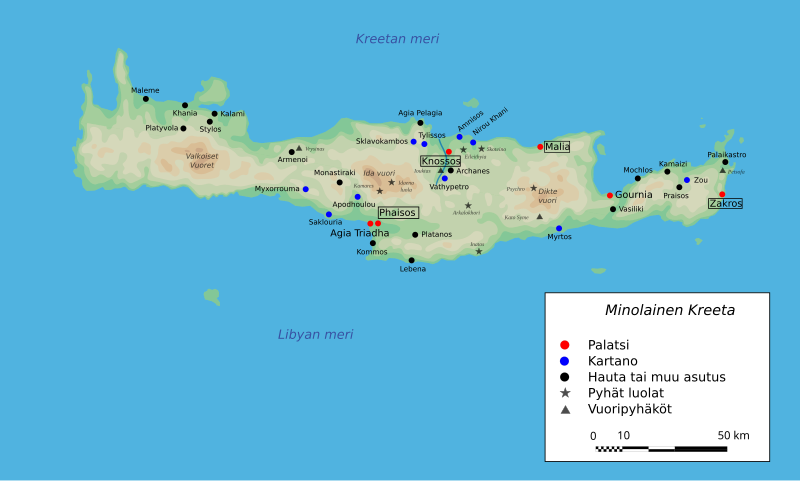
How Many Cities in Crete?

Schol. A. ad Il. 2.649

“Others have instead “those who occupy hundred-citied Crete” in response to those Separatists because they say that it is “hundred-citied Crete” here but “ninety-citied” in the Odyssey. Certainly we have “hundred-citied” instead of many cities, or he has a similar and close count now, but in the Odyssey lists it more precisely as is clear in Sophocles. Some claim that the Lakedaimonian founded ten cities.”

Ariston. ἄλλοι θ’ οἳ Κρήτην <ἑκατόμπολιν ἀμφενέμοντο>: πρὸς τοὺς Χωρίζοντας (fr. 2 K.), ὅτι νῦν μὲν ἑκατόμπολιν τὴν Κρήτην, ἐν ᾿Οδυσσείᾳ (cf. τ 174) δὲ ἐνενηκοντάπολιν. ἤτοι οὖν ἑκατόμπολιν ἀντὶ τοῦ πολύπολιν, ἢ ἐπὶ τὸν σύνεγγυς καὶ ἀπαρτίζοντα ἀριθμὸν κατενήνεκται νῦν, ἐν ᾿Οδυσσείᾳ δὲ τὸ ἀκριβὲς ἐξενήνοχεν, ὡς παρὰ Σοφοκλεῖ (fr. 813 N.2 = 899 P. = 899 R.). τινὲς δέ †φασι πυλαιμένη† τὸν Λακεδαιμόνιον δεκάπολιν κτίσαι.

Strabo, 10.15

“Because the poet sometimes calls Krete “hundred-citied” but at others, “ninety-cited”, Ephorus says that ten cities were founded after the battles at Troy by the Dorians who were following Althaimenes the Argive. But he also says that Odysseus names it “ninety-cities” This argument is persuasive. But others say that ten cities were destroyed by Idomeneus’ enemies. But the poet does not claim that Krete is “hundred-citied” during the Trojan War but in his time—for he speaks in his own language even if it is the speech of those who existed then, just as in the Odyssey when he calls Crete “ninety-citied”, it would be fine to understand it in this way. But if we were to accept that, the argument would not be saved. For it is not likely that the cities were destroyed by Idomeneus’ enemies when he was at war or came home from there, since the poet says that “Idomeneus led to Crete all his companions who survived the war and the sea killed none of them.

He would have mentioned that disaster. For Odysseus certainly would not have known of the destruction of the cities because he had not encountered any of the Greeks either during his wandering or after. And one who accompanied Idomeneus against Troy and returned with him would not have known what happened at home either during the expedition or the return from there. If Idomeneus was preserved with all his companions, he would have come back strong enough they his enemies were not going to be able to deprive him of ten cities. That’s my overview of the land of the Kretans.”

Τοῦ δὲ ποιητοῦ τὸ μὲν ἑκατόμπολιν λέγοντος τὴν Κρήτην, τὸ δὲ ἐνενηκοντάπολιν, Ἔφορος μὲν ὕστερον ἐπικτισθῆναι τὰς δέκα φησὶ μετὰ τὰ Τρωικὰ ὑπὸ τῶν Ἀλθαιμένει τῷ Ἀργείῳ συνακολουθησάντων Δωριέων· τὸν μὲν οὖν Ὀδυσσέα λέγει ἐνενηκοντάπολιν ὀνομάσαι· οὗτος μὲν οὖν πιθανός ἐστιν ὁ λόγος· ἄλλοι δ᾿ ὑπὸ τῶν Ἰδομενέως ἐχθρῶν κατασκαφῆναί φασι τὰς δέκα. ἀλλ᾿ οὔτε κατὰ τὰ Τρωικά φησιν ὁ ποιητὴς εκατοντάπολιν ὑπάρξαι τὴν Κρήτην, ἀλλὰ μᾶλλον κατ᾿ αὐτόν (ἐκ γὰρ τοῦ ἰδίου προσώπου λέγει· εἰ δ᾿ ἐκ τῶν τότε ὄντων τινὸς ἦν ὁ λόγος, καθάπερ ἐν τῇ Ὀδυσσείᾳ, ἡνίκα ἐνενηκοντάπολιν φράζει, καλῶς εἶχεν ἂν οὕτω δέχεσθαι), οὔτ᾿ εἰ συγχωρήσαιμεν τοῦτό γε, ὁ ἑξῆς λόγος σώζοιτ᾿ ἄν. οὔτε γὰρ κατὰ τὴν στρατείαν οὔτε μετὰ τὴν ἐπάνοδον τὴν ἐκεῖθεν τοῦ Ἰδομενέως εἰκός ἐστιν ὑπὸ τῶν ἐχθρῶν αὐτοῦ τὰς πόλεις ἠφανίσθαι ταύτας· ὁ γὰρ ποιητὴς φήσας, πάντας δ᾿ Ἰδομενεὺς Κρήτην εἰσήγαγ᾿ ἑταίρους, οἳ φύγον ἐκ πολέμου, πόντος δέ οἱ οὔτιν᾿ἀπηύρα·

καὶ τούτου τοῦ πάθους ἐμέμνητ᾿ ἄν· οὐ γὰρ δήπου Ὀδυσσεὺς μὲν ἔγνω τὸν ἀφανισμὸν τῶν πόλεων ὁ μηδενὶ συμμίξας τῶν Ἑλλήνων μήτε κατὰ τὴν πλάνην μήθ᾿ ὕστερον. ὁ δὲ καὶ συστρατεύσας τῷ Ἰδομενεῖ καὶ συνανασωθεὶς οὐκ ἔγνω τὰ συμβάντα οἴκοι αὐτῷ οὔτε κατὰ τὴν στρατείαν οὔτε τὴν ἐπάνοδον τὴν ἐκεῖθεν· ἀλλὰ μὴν οὐδὲ μετὰ τὴν ἐπάνοδον· εἰ γὰρ μετὰ πάντων ἐσώθη τῶν ἑταίρων, ἰσχυρὸς ἐπανῆλθεν, ὥστ᾿ οὐκ ἔμελλον ἰσχύσειν οἱ ἐχθροὶ τοσοῦτον, ὅσον δέκα ἀφαιρεῖσθαι πόλεις αὐτόν. τῆς μὲν οὖν χώρας τῶν Κρητῶν τοιαύτη τις ἡ περιοδεία.

File:Map Minoan Crete-fi.svg
There are not one hundred cities here.

Obscenity Watch: Walk Like an Egyptian

We are happy to have new contributions from the Fabulous Dr. Amy Coker. She shares a certain scatalogical interest, but brings considerable expertise to the matter.

This latest word is not to do with sex, but rather with another bodily action which is often a source of taboo words, excretion. More specifically, this post is about words I have been affectionately characterising as denoting ‘solid waste’ (or ‘poo’, ‘faeces’, etc.). One of the words in ancient Greek for the noun ‘poo’ is κόπρος (ko-pross), the word which gives us English scientific words beginning with ‘copro-‘ such as ‘coprolite’ – fossilised faeces – coined in the early nineteenth century.

Despite the unpleasantness of the substance κόπρος indicates, the word itself is not really ‘taboo’ or offensive, and is found in a range of Classical works from Homer’s epics to medical works in the Hippocratic corpus: κόπρος is milder in tone than the English four-letter word, ‘sh*t’. What sparked this post is an example in our ancient texts of a word similar to κόπρος – κόπριον (ko-pree-on). In technical parlance, this word is the stem κοπρ- plus the diminutive suffix -ιον (-ee-on): this last part is a segment which makes a word meaning the same thing as the stem, or a smaller version of it, or indicates affection from the speaker to the object (a bit like English ‘toe’, diminutive ‘toe-sie’).

The example of κόπριον we are interested in comes from a papyrus letter written in Egypt in the late 2nd or 3rd century AD, known as P.Oxy. 1761. Greek was the dominant language of Egypt for around a thousand years from the conquest of Alexander the Greek to the Arab conquest in the mid 7th century AD, so that fact that this letter is written in Greek in Egypt is not unusual. This letter is in other respects too typical of those written in vast numbers by individuals about everyday matters; these people are otherwise lost to history, but their correspondence by chance survives. (See picture for an example of what a papyrus letter looks like).

P.Oxy. 1672 Oxyrhynchus, Egypt, AD 37-41. Image courtesy of The Garstang Museum, University of Liverpool.
The first two lines read: Δημήτριος καὶ Παυσανίας Παυσαν[ί]αι | τῶι πατρὶ πλεῖστα χαίρειν καὶ ὑγι(αίνειν)- ‘Demetrius and Pausanias to their father Pausanias very many greetings and wishes for good health.’
It is lines 6-7 of P.Oxy. 1761 where the surprise lies: as Grenfell and Hunt put it in their edition in the early twentieth century, here ‘A very singular symptom of regret for an absent friend is specified’. Here is a full translation of the letter, as given by Montserrat’s Sex & Society in Graeco-Roman Egypt (1996, 8); the bold words are the ones which concerns us:

Callirhoë to her dear Sarapis, greetings. I say a prayer for you every day in the presence of the lord Sarapis. Since you have been away I go on the trail of your shit in my desire to see you. Greet Thermouthis and Helias and Ploution and Aphrodite and Nemesianus. Carabus and Harpocration greet you, and everyone at home. I pray for your health.

The Greek text which lies behind this ‘singular symptom of regret’ is: ἐπιζῃητοῦμέν σου τὰ κόπρια, literally, ‘I/we look for (or miss?) your κόπριον-s’ (κόπρια is the plural of κόπριον). There is no wandering about here, despite the impression the translation might give. A slightly more recent translation by Bagnall & Cribiore in their collection of women’s letters (2006, 392) renders these words as the striking ‘we are searching for your turds’.

Is Callirhoë really looking through the dunghill because she misses her friend? Even when we accept that ancient peoples did things differently, this seems a stretch. We could be tempted to think that this is an idiom peculiar to Egypt, perhaps stemming from a native expression, but there seems to be no obvious parallel (suggestions are welcome). I think rather the best explanation comes back to what κόπρος/κόπριον means.

Both these words are also used more broadly of ‘rubbish’, or things which can be taken away to be used as fertiliser: remember that most ancient waste was organic. κόπριον is found in this kind of sense in the Magical Papyri, an ancient collection of spells, where it is something picked up from the ground where a corpse has lain (PGM 4.1395-8, 4.1441-2). Dieter Betz translates this as ‘polluted dirt’, but the pollution comes only from the context of the spell.

I think here and in our letter we should rather take κόπρια as indicating ‘useless remains’ or ‘traces’, akin to English ‘crap’: note how ‘crap’ has just this double meaning of ‘excrement’ and ‘rubbish’ in contemporary UK English (e.g. ‘there is so much crap in my house’). The result is that Callirhoë is not looking for any particular bodily waste produced by her dear Sarapis, but rather for indications that she has been around: a rather loose translation of this sentiment might therefore be ‘I go through your crap wanting to find you there’.

Thanks to the Gartang Museum for use of the image of P.Oxy. 1672: follow the Museum’s blog at: http://garstangmuseum.wordpress.com.

Copyright © 2014/2019 Amy Coker. Not to be reproduced without permission.

Amy Coker has over the last decade held positions in Classics and Ancient History at the Universities of Manchester, Liverpool and Bristol in the UK. After undergraduate studies in Classics at Downing College, Cambridge, and an MA in Linguistics at the University of Manchester, she was awarded funding from the Arts & Humanities Research Council to support her doctoral work on gender variation in Ancient Greek (2007-2009, PhD Manchester 2010). She later secured a Leverhulme Trust Early Career Fellowship (2013-2016) for a project on Greek sexual and scatological vocabulary, and ancient offensive language. She was a Visiting Fellow at the Institute for Classical Studies, University of London (2017-2018), and is now an Honorary Research Fellow of the University of Bristol (2018-), and teacher of Classics at Cheltenham Ladies College (2018-).

She has published work in the fields of historical linguistics, pragmatics, and classics, and has pieces about to appear on the treatment of obscene language in the most well-known lexicon of Ancient Greek, Liddell and Scott, and on a filthy joke told by Cleopatra involving a ladle.

She is a keen supporter of outreach and public engagement, and has worked with the UK charity Classics for All running projects to bring Latin and Greek teaching to schools which have no tradition of teaching these subjects. She can be found on Twitter at @AECoker.