Vergerio, de ingenuis moribus et liberalibus adulescentiae studiis, LIV:
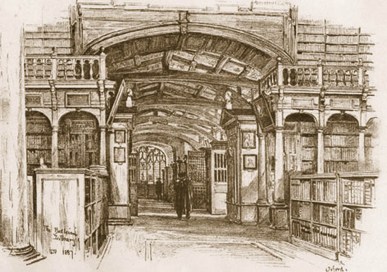
“There is indeed good reason to gather together those times which others tend to neglect, as when we read at dinner or awaits sleep (or avoids it) by reading. Yet, the doctors tell us that these practices are bad for our sight and eyes; this is true if we read too much, that is to say, either too intently or after an excessive meal. But it will also be to our advantage if we set up, in our libraries and right before our eyes, those instruments which are used to measure the hours and times more generally, so that we may see time as it flows and slips away from us. It would also be useful if we were to use those places for nothing else than what they were established, allowing there no external business or thought.”
Bonae etenim rationis est ea quoque bona colligere quae solent neglegere ceteri, ut si quis super cenam legat et somnum quidem inter libros exspectet aut certe per libros fugiat. Quamquam physici obesse ea visui luminibusque contendunt; quod et verum est, si modo praeter modum, id est, aut intentione nimia aut super multam saturitatem id fiat. Sed et illud quoque proderit nonnihil, si intra bibliothecas nostras coram atque in oculis instrumenta haec constituamus, quibus horas ac tempora metiri solent, ut quasi tempus ipsum fluere labique videamus, et si eis ipsis locis ad nihil aliud quam ad quod instituta sunt utamur, nullam ibi aut occupationem aut cogitationem extremam admittentes.
On the Advantages and Disadvantages of Literature (Part I):
“Lorenzo Alberti, our father, a man who was in his time easily the best in many things, including in the education of his family (as you yourself know, Carolus), was accustomed to wish us so educated as to appear both at home and outside never to be entirely idle. Having been educated and imbued with this ingenuous and shining discipline of our father, you have always been involved either in the management of business or in the study of literature; I, however, who have applied myself entirely to literature by setting other things at naught, can probably do anything in the world more willingly than to pass a day without either reading or composing something.
For that reason, I am glad that we have brought it about that we can in some part bear moderately, and in some part prudently avoid the adversity and sufferings which have long pressed upon us by resorting to the consultation of literature. Indeed, it seems to me that we should strive with our studies not only to render them beneficial to ourselves, but even more so to make them satisfy the expectation of our friends. Every day all of our friends, to whom my dignity and reputation are dear, beg me to draw forth some fruit of my late nights, so that they can be sure that I have actually achieved something in the labor and assiduity of my studies.”
Laurentius Albertus parens noster, vir cum multis in rebus, tum in educanda familia temporibus suis facile nostrorum omnium princeps, ut meministi, Carole, solitus erat nos ita instructos velle et domi et foris videri, ut nunquam essemus otiosi. Qua quidem ingenua et preclara patris nostri disciplina instituti atque imbuti, tu semper aut gerendis negotiis aut in litterarum cognitione versaris; ego autem, qui me totum tradidi litteris, ceteris posthabitis rebus, omnia posse libentius debeo quam diem aliquam nihil aut lectitando aut commentando preterire.
Qua ex re illud quidem nos assecutos gaudeo, ut adversas quibus diutius premimur erumnas partim ferre moderate, partim vitare prudenter licuerit documentis litterarum. Ac mihi quidem studiis nostris non modo ut nobis tantum prosint, sed magis etiam ut amicorum expectationi satisfaciant enitendum videtur. Namque in dies nostri, quibus et dignitas mea cara est et fama, omnes exposcunt ut fructum aliquem depromam vigiliarum mearum, quo intelligant me meo studiorum labore et assiduitate aliquid profecisse.
“I don’t say these things in an effort to avoid their judgment, but so that they who are ignorant may feel some shame (if they are capable of it) in making their judgment. For, on this subject, I do not just embrace the opinion of friendly jealousy, but even the judgment of hostile hatred, and in sum, if someone pronounces that I am ignorant, I agree with him! When I myself think over how many things are lacking to me, toward which my mind, eager for knowledge, exerts itself, I sadly and silently recognize my own ignorance. But in the meantime, while the end of my present exile is near, at which point this imperfection (from whence our knowledge derives) will be terminated, I am consoled by the thought of our shared nature. I think that it happens to all good and modest minds, that they learn about themselves and derive consolation therefrom. For those who get hold of great knowledge (I am speaking according to the standards of human learning), it is always small when considered in itself, but it becomes great in light of the narrow circumstances from which it is derived, and certainly looks great when compared to others. Otherwise, I ask you, how small and insignificant is the knowledge granted to one mind? Nay, how much like nothing is the knowledge of any one person, whoever they be, when it is compared not just to the knowledge of God, but to one’s own fund of ignorance?”
Non hec dico, ut declinem forum, sed ut pudeat, siquis est pudor, iudicasse qui nesciunt. Ego etenim de hac re non modo sententiam amicabilis amplector invidie, sed hostilis odii, et ad summam, quisquis ignarum me pronuntiat, mecum sentit. Nam et ego ipse recogitans quam multa michi desint ad id quo sciendi avida mens suspirat, ignorantiam meam dolens ac tacitus recognosco. Sed me interim, dum presentis exilii finis adest, quo nostra hec imperfectio terminetur, qua ex parte nunc scimus, nature communis extimatione consolor. Idque omnibus bonis ac modestis ingeniis evenire arbitror, ut agnoscant se pariter ac solentur; his etiam quibus ingens obtigit scientia — secundum humane scientie morem loquor — que in se semper exigua, pro angustiis quibus excipitur, et collata aliis ingens fit. Alioquin quantulum, queso, est, quantumcunque est, quod nosse uni ingenio datum est? Imo quam nichil est scire hominis, quisquis sit, si non dicam scientie Dei, sed sui ipsius ignorantie comparetur?
“But to return to my topic, these men do not know that their teacher Aristotle did not spurn poets, but rather brought them forth as authorities. They also know that he treated of the art of poetry specially in a singular book, in order to provide a complement to his literary philosophy. To that extent, the chief of philosophers (I do not omit Plato as Cicero did) did not neglect poetry. But the successors of his studies (though they perhaps are more worthy of that title than that reality), censure poetry in direct proportion to their ignorance. But this is not surprising: they want to be called Aristotelians without any Aristotle. You would injure them if you called them Platonists, although they seem to hold an even more extreme opinion than Plato, in thinking that poets should not be expelled from an imagined state, but should be prohibited from the entire world.
Plato, however, did not expel all the poets from every city, but only the disreputable Attelani and comic poets, who exercised too much license in noting and describing various vices; even then, he expelled them from a city which he had never seen, but rather invented. For, though in portraying an ideal republic, rather than one he had seen, yet neither in his speech in life nor his authority after death (granted, from admiration of his divinity, eloquence, and the length of his life, which ended in the eighty-first year of his age – a number which is said to possess the highest perfection because it possesses multiplied roots of odd numbers – he was honored with temples and shrines), I repeat, neither his speech in life nor his authority after death prevailed to such a degree that even the comic poets were excluded from real cities. Perhaps some people were receptive to all of that in the schools – but it is manifest that the people were not receptive to that in the theaters, which were bustling with daily recitations of plays and new productions of the poets. The admiration for and authority of the poets was so great among the Athenians, and even all of Greece, that they were not only not expelled from the cities, but were received as the chief administrators of government, placed in command of wars, and welcomed into the counsel chambers of kings, so that the business of the greatest empires was conducted in accordance with the plans of the poets themselves.”
Jean-Baptiste Regnault: Socrates Tears Alcibiades from the Embrace of Sensual Pleasure
Sed uti ad propositum redeam, nesciunt hi magistrum suum Aristotilem non sprevisse sed allegasse poetas. Nesciunt et ipsum, ut sermocinali philosophie traderet complementum, de arte poetica singulari libro specialiter tractavisse. Adeo princeps ille philosophorum (nec Platonem ut Arpinas excipio) poeticam non contempsit. Quam hi successores studiorum suorum, si tamen id esse vel potius dici merentur, non minus nesciunt quam reprehendunt. Sed hoc mirum non est: sine Aristotile quidem volunt Aristotelici nominari. Quibus iniuriam feceris si Platonicos appellaris, quanquam et hoc ultra Platonem sentire videantur ut poete non de ficta solum per ipsum civitate pellendi sint sed a totius orbis ambitu prohibendi. Sed expulit Plato poetas non quoslibet nec ex qualibet civitate sed inhonestos Athelanos et comicos veteres, quorum nimia licentia fuit circa obicienda et describenda flagitia. Et istos ex illa solum urbe depulit cuius statum nullo modo videre potuit sed confinxit. Nam licet rem publicam describens non qualem vidit sed qualem esse debere sibi persuaserat depinxerit civitatem, non tamen tantum valuit vel viventis oratio vel mortui autoritas (licet admiratione divinitatis et eloquentie ac vite sue periodo, que octogesimo primo anno sue etatis terminata est, qui numerus propter imparium numerorum radices in se, imo per se, multiplicatas perfectionis maxime predicatur, templis et aris cultus fuerit), non, inquam, tantum valuit vel viventis oratio vel mortui autoritas quod ex veris civitatibus etiam comici truderentur. Receperunt illa forsan aliqui tunc in scolis. Palam autem est quod id populi non receperunt in theatris, que quotidianis recitationibus fabularum et novis poetarum editionibus effervebant. Tantaque fuit apud Athenienses et totam Greciam admiratio et autoritas poetarum ut non solum non pulsi de civitate fuerint sed inter principes administrande rei publice sint recepti, prepositi bellis, et regum asciti consiliis, ut iuxta determinationes ipsorum maximorum regnorum negocia gererentur.
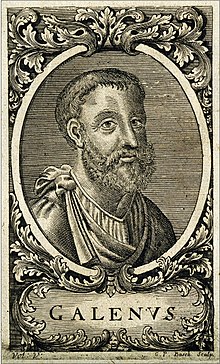
I expect in your next letter, you most absurd censor of the world, that you will order that grammar be subservient to the wool trade, that dialectic be subservient to weapons manufacturing. What could I think that you would not dare to do, when you think that I have set my mouth against even by touching on doctors, that divine and celestial race, when you yourself were not afraid to open your disgusting mouth against Pliny, the most preeminent man in learning and intellect of his entire age? Thus I see that they wrote about him, without excepting Galen, his contemporary (if I am not mistaken) who was himself a not unlearned man, but he had the most ample supply of uneducated and talkative successors.
Proximis tuis literis expecto, ridiculosissime rerum censor, ut lanificio iubeas subesse grammaticam, dyaleticam armature. Quid enim te rursus non ausurum putem, qui me os in celum posuisse dicas, quoniam medicos divinum ac celeste genus attigerim, cum tu impurissimum os aperire non sis veritus in Plinium Secundum, virum ex omnibus sue etatis doctrina ingenioque prestantissimum? Ita enim de illo scriptum video; nec excipitur Galienus, coetaneus – nisi fallor – suus, vir et ipse non indoctus, sed indoctorum atque loquacium abundantissimus successorum.
Beyond these people of each type, whom we consider to go wrong and slip into excess either in praise or in contentious wrangling, there are those who are called verbose, and the fault itself is called verbosity. As these people are eager to please and be gratifying, they are indeed not pleasing at all, and offer no pleasure. Indeed, they offer instead annoyance and give birth to a tedium full of exhaustion and satiety, so deceived by their judgment of things and their mountains of words that you don’t even know, from the fact that they either offend or satisfy your ears, whether they should be placed among the contentious or the stupid. But the contentious conduct themselves in such a way as to spare no one, and they don’t care at all whether they offend others. But the verbose have set their aim and intention upon delighting the audience, but while they maintain no measure and offer no delight, they cross over into the camp of the enemy and appear similar to traitors. And so, the verbose are able to please at the beginning and in the middle of the speech occasionally, but they are not held in hatred, and their speeches are refused rather than fled. But the contentious offend everywhere, and all good people direct their hatred at them as they shrink from listening to them, and even hound them with curses.
Giovanni Boccaccio, Genealogy of the Pagan Gods (1.5):
“Proper names have already been discussed, so we must speak now of common names. Cicero calls the Fates the Parcae, through antiphrasis as I believe, because they would spare (parcant) no one. They admit no exceptions for any persons, and God alone is able to change their power and order. The name Fatum or Fata is, however, derived from the verb for fari [=to speak], as if the people who imposed the name on them wished to indicate that what they do is irrevocable, as if spoken or preordained by God. We can see this readily enough in the words of Boethius, and even Augustine seems to agree in his City of God. But he holds back from using the word itself, advising us that if anyone should wish to call the will or power of God by the name of Fate, they should hold their opinion and bridle their tongue.”
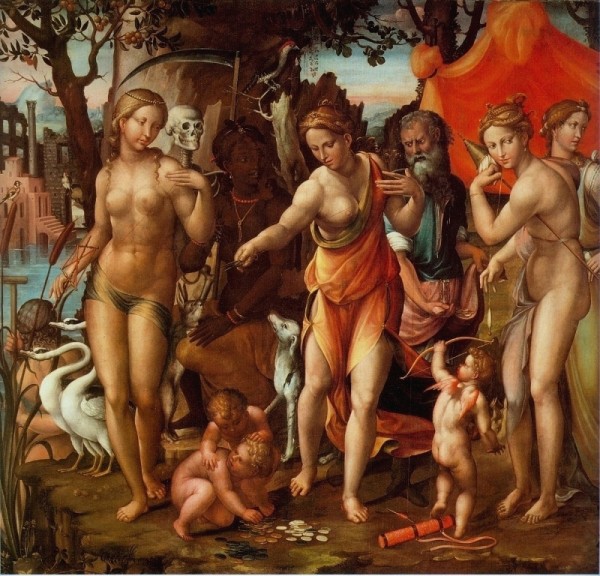
Marco Bigio, The Three Parcae (1550)
De nominibus propriis predictum est, de appellativis dicendum. Vocat igitur has Tullius Parcas, ut reor per antiphrasin, quia nemini parcant; nulla enim apud eas est acceptio personarum, solus deus potest pervertere earum vires et ordinem. Fatum autem aut Fata a for faris tractum nomen est, quasi velint, qui id imposuere nomen, quod ab eis agitur a deo quasi irrevocabile dictum sit seu previsum, ut per verba Boetii satis assumitur, et etiam sentire videtur Augustinus, ubi De civitate dei. Sed abhorret ipse vocabulum admonens, ut si quisquam voluntatem dei seu potestatem nomine Fati appellet, sententiam teneat, linguam coerceat.
“Cosimo, if you read the title of my book in the upper margin, you will see that it is The Hermaphrodite. There is a bit of pussy in this book, and a bit of cock as well. Ah, what a fitting name it has, then! But if you called my book The Asshole because it sings with the old rectal flute, it will still have a pretty fitting name. If neither this name nor that seems good to you, put down whatever you would like – just make sure that it isn’t chaste!
Si titulum nostri legisti, Cosme, libelli
Marginibus primis, Hermaphroditus erat.
Cunnus et est nostro, simul est et mentula, libro:
Conveniens igitur quam bene nomen habet!
At si podicem vocites, quod podice cantet,
Non inconveniens nomen habebit adhuc.
Quod si non placeat nomen nec et hoc nec et illud,
Dummodo non castum, pone quod ipse velis.
I think that Aristotle was a great and learned man, but also that he was just a human, and for that reason I think that there are some things – nay, many things, which he was unable to know. I would say a little more if it be allowed by those who are better friends to sects than to the truth. I believe, and by Hercules I don’t doubt it, that he went totally off the rails not only in small matters (in which a mistake is a small and hardly dangerous thing), but even in the greatest things which bear upon the key point of our health. And though he may have discussed many things concerning felicity in the beginning and in the end of his Ethics, I will dare to say – and my detractors may shout as they like – that he was so deeply ignorant of true happiness that any pious old lady, or fisherman, or faithful pastor, or farmer would be happier, and perhaps even more subtle, in their knowledge of it.
Ego vero magnum quendam virum ac multiscium Aristotilem, sed fuisse hominem, et idcirco aliqua, imo et multa nescire potuisse arbitror; plus dicam, si per istos liceat non tam veri amicos quam sectarum: credo hercle, nec dubito, illum non in rebus tantum parvis, quarum parvus et minime periculosus est error, sed in maximis et spectantibus ad salutis summam aberrasse tota, ut aiunt, via. Et licet multa Ethicorum in principio et in fine de felicitate tractaverit, audebo dicere — clament ut libuerit censores mei — veram illum felicitatem sic penitus ignorasse, ut in eius cognitione, non dico subtilior, sed felicior fuerit vel quelibet anus pia, vel piscator pastorve fidelis, vel agricola.
“You know how I eat, and even how I sleep – no fortune could ever persuade me to add anything to these. Rather, I subtract a little every day, and it has reached the point now that only a little bit can be subtracted. Even if some royal fortune befell me, it could not drive frugality from my table or drive me to look for more sleep at night. My bed never holds me if I am healthy and awake, and I never toss in the sheets unless I am sick or sleeping. As soon as sleep departs from me, I depart from the bed, and I will lie enough or even more than enough on a bed of earth or rock.
Thinking about it, I hate my bed and I never return to it but at the urging of necessity, but soon I sense that I am freed from it as from the chains of nature, and without delay I rip myself out of it and flee to the closest library as though it were a citadel. This divorce occurs between me and my bed in the middle of the night: if by chance a shorter night or some late hours drag on, yet certainly dawn never sees us together. Finally, I strive with all my heart to prevent anything from coming between me and my more pleasant concerns, except that which the necessity of nature extracts from me in an imperious way – I mean things like sleep, food, and the short and honorable solace which is just enough for relaxing the body and replenishing the spirit.”
Victum meum nosti, somnum quoque; his ut addam, nulla michi unquam fortuna suaserit; demo potius aliquid in dies, iamque eo perventum est ut modicum demi possit; denique non si regie opes advenerint, aut e mensa frugalitatem pellere poterunt aut in cubiculum longos somnos arcessere. Nunquam me sanum ac vigilem lectus habet, nunquam nisi eger aut dormiens stratis versor; simul et me somnus et ego lectum desero, et somnum morti et lectulum busto simillimum duco. Cum supremus sopor obrepserit, satis superque satis in cubiculo terreo seu saxeo iacebimus; id meditans lectulum meum odi et ad illum nisi urgente necessitate non redeo, sed ab illo mox ut me nature vinclis explicitum sentio, incuntanter avellor inque bibliothecam illi proximam velut in arcem fugio. Fit hoc inter nos media nocte divortium, quod siquando forte vel nox brevior vel vigilie longiores traxerint, at profecto nunquam simul aurora nos invenit; postremo modis omnibus nitor nequid melioribus curis interveniat, preter id solum quod imperiose necessitas nature exigit, somnum dico et cibum et breve honestumque solatium vegetando corpori refovendoque animo duntaxat ydoneum. Id enimvero quia pro varietate temporum ac locorum variari oportet, et quale michi nunc sit nisi audias nosse non potes, dicam. Amo solitudinem ut soleo sectorque silentium nisi inter amicos, inter quos nemo me loquacior, hanc reor ob causam quod amicorum presentia solito rarior nunc est; raritas autem desiderium accendit. Sepe igitur annuum silentium diurna loquacitate compenso rursumque amicis abeuntibus mutus fio; importunum negotium cum vulgo loqui aut omnino cum homine quem non amor tibi seu doctrina conciliet.