Paris’ First Wife and Astyanax’s Post-Trojan Life

Things are getting really strange with Servius (=Jacoby Abas 46, f1)

Servius  on Virgil, Aeneid 9.262

devicta genitor (sc. Aeneas) quae cepit Arisba]

“Which his father took once Arisba was conquered…”

“(And yet, according to Homer, Arisba sent aid to the Trojans and was overcome by Achilles)…the city is called Arisba after the daughter of Merpos or Macareus who was the first wife of Paris. According to some authors, Abas, who wrote the Troika, related that after the Greeks left Troy, the rule of this city was given to Astyanax. Antenor expelled him once he had allied himself with the states neighboring where Arisba’s location. Aeneas took this badly and took up arms for Astyanax; once the expedition was prosecuted successfully, he returned the kingdom to Astyanax.”

[[atqui secundum Homerum Arisba Troianis misit auxilia et ab Achille subversa est …]] dicta est Arisba ab Meropis vel Macarei filia, quam primum Paris in coniugio habuit. quidam ab Abante, qui Troica scripsit, relatum ferunt, post discessum a Troia Graecorum Astyanacti ibi datum regnum. hunc ab Antenore expulsum sociatis sibi finitimis civitatibus, inter quas et Arisba fuit. Aeneam hoc aegre tulisse et pro Astyanacte arma cepisse, ac prospere gesta re Astyanacti restituisse regnum.


Several details of this are strange. First, the fact that Paris had a first wife, though not strange on the surface, is rarely mentioned. Second, Astyanax’s survival after the fall of Troy is far from typical—the typical tale is his murder at the hands of Odysseus. Less surprising but still worth mentioning is the antagonism between Antenor—who is depicted in some sources as being friendly to Menelaos and Agamemnon—and the surviving heir of the house of Priam. Finally, I find it touching that Aeneas would take a break from all of his own troubles to help his cousin’s star-crossed son.

Image result for Ancient Greek Paris vase

A Tunic of Flesh and Kirke as an Allegory

Plutarch’s Moralia Fr. 200

“Our fated nature is identified by Empedocles as the force behind this remaking, “wrapping [us] in a tunic of strange flesh” and transferring souls to a new place. Homer has called this circular revolution and the return of rebirth by the name Kirke, a child of Helios, the one who unites every destruction with birth and destruction again, binding it endlessly.

The Island Aiaia is that place which revives the person who dies, a place where the souls first step when they are wandering and feel like strangers to themselves as they mourn and cannot figure out which direction is west nor where the “sun which brings life to people over the land / descends again into the earth.”

These souls long for their habits of pleasure and their life in the flesh and the way they lived with their flesh and they fall again into that mixture where birth swirls together and truly stirs into one the immortal and moral, the material of thought and experience, elements of heaven and earth. The souls are enchanted but also weakened by the pleasures that pull them to birth again. At that time, souls require a great amount of good luck and much wisdom to find some way to resist and depart from their worst characters and become bound to their most base parts or passions and take up a terrible and beastly life.”

Αὐτῆς γὰρ τῆς μετακοσμήσεως εἱμαρμένη καὶ φύσις ὑπὸ Ἐμπεδοκλέους δαίμων ἀνηγόρευται σαρκῶν ἀλλογνῶτι περιστέλλουσα χιτῶνι καὶ μεταμπίσχουσα τὰς ψυχάς, Ὅμηρος δὲ τὴν ἐν κύκλῳ περίοδον καὶ περιφορὰν παλιγγενεσίας Κίρκην προσηγόρευκεν, Ἡλίου παῖδα τοῦ πᾶσαν φθορὰν γενέσει καὶ γένεσιν αὖ πάλιν φθορᾷ συνάπτοντος ἀεὶ καὶ συνείροντος. Αἰαίη δὲ νῆσος ἡ δεχομένη τὸν ἀποθνήσκοντα μοῖρα καὶ χώρα τοῦ περιέχοντος, εἰς ἣν ἐμπεσοῦσαι πρῶτον αἱ ψυχαὶ πλανῶνται καὶ ξενοπαθοῦσι καὶ ὀλοφύρονται καὶ οὐκ ἴσασιν ὅπῃ ζόφος οὐδ᾿ ὅπῃ ἠέλιος φαεσίμβροτος εἶσ᾿ ὑπὸ γαῖαν,ποθοῦσαι δὲ καθ᾿ ἡδονὰς τὴν συνήθη καὶ σύντροφον ἐν σαρκὶ καὶ μετὰ σαρκὸς δίαιταν ἐμπίπτουσιν αὖθις εἰς τὸν κυκεῶνα, τῆς γενέσεως μιγνύσης εἰς ταὐτὸ καὶ κυκώσης ὡς ἀληθῶς ἀίδια καὶ θνητὰ καὶ φρόνιμα καὶ παθητὰ καὶ ὀλύμπια καὶ γηγενῆ, θελγόμεναι καὶ μαλασσόμεναι ταῖς ἀγούσαις αὖθις ἐπὶ τὴν γένεσιν ἡδοναῖς, ἐν ᾧ δὴ μάλιστα πολλῆς μὲν εὐτυχίας αἱ ψυχαὶ δέονται πολλῆς δὲ σωφροσύνης, ὅπως μὴ τοῖς κακίστοις ἐπισπόμεναι καὶ συνενδοῦσαι μέρεσιν ἢ πάθεσιν αὑτῶν κακοδαίμονα καὶ θηριώδη βίον ἀμείψωσιν.

Aristotle, Physiognomics 808b

“[in this case] the soul and the body would experience things together, but they would not have the same reactions as one another. But, now, it is entirely clear that one follows another. This is especially obvious from the following. For madness seems to be a matter of the mind; doctors, however, respond to it by cleansing the body with medicines and also by telling them to pursue certain habits in life which may relieve the mind of madness.

So, the form of the body is relieved by treatments to the body at the very same time that the soul is freed from madness. Since they are both relieved together, it is clear that their reactions are in synchrony. It is also clear from this that the forms special to the body are similar to the capabilities of the mind, with the result that all similarities in living things are clear signs of some kind of sameness.”

ἡ ψυχή τε καὶ τὸ σῶμα συμπαθῆ, οὐ μέντοι συνδιατελοῦντα ἀλλήλοις. νῦν δὲ καταφανὲς ὅτι ἑκάτερον ἑκατέρῳ ἕπεται. μάλιστα μέντοι ἐκ τοῦδε δῆλον γένοιτο. μανία γὰρ δοκεῖ εἶναι περὶ ψυχήν, καὶ οἱ ἰατροὶ φαρμάκοις καθαίροντες τὸ σῶμα καὶ διαίταις τισὶ πρὸς αὐτοῖς χρησάμενοι ἀπαλλάττουσι τὴν ψυχὴν τῆς μανίας. ταῖς δὴ τοῦ σώματος θεραπείαις καὶ ἅμα ἥ τε τοῦ σώματος μορφὴ λέλυται καὶ ἡ ψυχὴ μανίας ἀπήλλακται. ἐπειδὴ οὖν ἅμα ἀμφότερα λύονται, δῆλον ὅτι συνδιατελοῦσιν ἀλλήλοις. συμφανὲς δὲ καὶ ὅτι ταῖς δυνάμεσι τῆς ψυχῆς ὅμοιαι αἱ μορφαὶ τοῖς σώμασιν ἐπιγίνονται, ὥστ᾿ ἐστὶν ἅπαντα ὅμοια ἐν τοῖς ζῴοις τοῦ αὐτοῦ τινὸς δηλωτικά.

Epictetus, Fr. 26

“Epictetus used to say, ‘you’re a tiny soul lugging around a corpse’.”

Ψυχάριον εἶ βαστάζον νεκρόν, ὡς Ἐπίκτητος ἔλεγεν.

Wright Barker (British, 1863-1941) – “Circe” c.1889Color photograph of an oil painting. A woman, nude to the waste, gestures towards the viewer from the top of marble steps. Lions and wolves gather around her

Rich People Need the Poor

Lucian, Saturnalia 33 (for more Lucian go to the Scaife viewer)

“See that they don’t blame you any longer but honor you and have affection for you because they take part in these things. While the cost is of little account to you, the gift in their time of need will always be remembered. Furthermore, you would not be able to live in cities if the poor did not live there with you and make your happiness possible in countless ways. You would have no one to amaze with your wealth if you were rich alone, in private, and without anyone knowing.

So, let the masses gaze upon and wonder at your silver, your fine tables, and then, when you are toasting them, have them weigh their cups while they drink, consider the weight of the gold applied with skill, and contemplate the truth of the story it tells. In addition to hearing them call you noble and philanthropic, you will fall outside their envy. For who begrudges someone who shares and gives a little portion? And who wouldn’t pray for him to live as long as possible, benefiting from his goods? Right now, your blessings go unwitnessed, your wealth is an object of envy, and your life is not pleasant.”

Ὁρᾶτε οὖν ὅπως μηκέτι ὑμᾶς αἰτιάσωνται, ἀλλὰ τιμήσωσι καὶ φιλήσωσι τῶν ὀλίγων τούτων μεταλαμβάνοντες· ὧν ὑμῖν μὲν ἡ δαπάνη ἀνεπαίσθητος, ἐκείνοις δὲ ἐν καιρῷ τῆς χρείας ἡ δόσις ἀείμνηστος. ἄλλως τε οὐδ᾿ ἂν οἰκεῖν δύναισθε τὰς πόλεις μὴ οὐχὶ καὶ πενήτων συμπολιτευομένων καὶ μυρία πρὸς τὴν εὐδαιμονίαν ὑμῖν συντελούντων, οὐδ᾿ ἂν ἔχοιτε τοὺς θαυμάζοντας ὑμῶν τὸν πλοῦτον, ἢν μόνοι καὶ ἰδίᾳ καὶ ὑπὸ σκότῳ πλουτῆτε. ἰδέτωσαν οὖν πολλοὶ καὶ θαυμασάτωσαν ὑμῶν τὸν ἄργυρον καὶ τὰς τραπέζας καὶ προπινόντων φιλοτησίας, μεταξὺ πίνοντες περισκοπείτωσαν τὸ ἔκπωμα καὶ τὸ βάρος ἴστωσαν αὐτοὶ διαβαστάσαντες καὶ τῆς ἱστορίας τὸ ἀκριβὲς καὶ τὸν χρυσὸν ὅσος, ὃς ἐπανθεῖ τῇ τέχνῃ. πρὸς γὰρ τῷ χρηστοὺς καὶ φιλανθρώπους ἀκούειν καὶ τοῦ φθονεῖσθαι ὑπ᾿ αὐτῶν ἔξω γενήσεσθε. τίς γὰρ ἂν φθονήσειε τῷ κοινωνοῦντι καὶ διδόντι τῶν μετρίων; τίς δ᾿ οὐκ ἂν εὔξαιτο εἰς τὸ μήκιστον διαβιῶναι αὐτὸν ἀπολαύοντα τῶν ἀγαθῶν; ὡς δὲ νῦν ἔχετε, ἀμάρτυρος μὲν ἡ εὐδαιμονία, ἐπίφθονος δὲ ὁ πλοῦτος, ἀηδὴς δὲ ὁ βίος.

Midas, transmitting all gold into paper, print by James Gillray


Wild and Desolate: The True Story of Odysseus’ Journey Home

Joannes Malalas, Chronographia, 5.20, p. 121

“After he left from Circe’s island, Odysseus arrived at another island, tossed up on it by struggling winds. Calypso, Circe’s sister welcomed him there and considered him worthy of a great deal of help. She had sex with him almost as if in marriage.

He went from there to a massive lake near the sea which was called the Nekyopompos. The people who live around that lake are prophets and they told him everything that had happened to him and what would happen in the future. When he left there, he was thrown from the sea when a great storm arose onto “the Sirens,” rocks which have that name from the peculiar sound that comes from waves crashing around them. Once he freed himself from there, he arrived at the place called “Charybdis,” a wild and desolate territory. He lost all his ships and his army here.

Then Odysseus was carried alone on a ship’s plank in the sea, waiting for a death from violence. But some Phoenician sailors passing by saw him swimming in the water and saved him in their pity. They took him to the island Crete to Idomeneus, a leader of the Greeks. When he saw Odysseus naked and impoverished, he sympathetically gave him a great of gifts because he had been a general with him at Troy along with two ships and people to guard him safely home. He sent him back to Ithaka like this. Wise Dictys wrote these details down after he heard them from Odysseus.”

ἀπὸ δὲ τῆς νήσου τῆς Κίρκης ἐξορμήσας ὁ ᾽Οδυσσεὺς ἀνήχθη εἰς τὴν ἄλλην νῆσον, ὑπὸ ἀνέμων ἐναντίων ἐκριφείς. ὅντινα ἐδέξατο καὶ ἡ Καλυψὼ ἡ ἀδελφὴ τῆς Κίρκης καὶ πολλῆς θεραπείας ἠξίωσεν αὐτόν, συμμιγεῖσα αὐτῶι καὶ πρὸς γάμον.

κἀκεῖθεν ἀνήχθη ἔνθα λίμνη ὑπῆρχε μεγάλη πλησίον τῆς θαλάσσης λεγομένη ἡ Νεκυόπομπος, καὶ οἱ οἰκοῦντες ἐν αὐτῆι ἄνδρες μάντεις· οἵτινες ἐξεῖπον αὐτῶι πάντα τὰ συμβάντα αὐτῶι καὶ τὰ μέλλοντα.  καὶ ἀναχθεὶς ἐκεῖθεν χειμῶνος μεγάλου γενομένου θαλάσσης ἐκρίπτεται εἰς τὰς Σειρῆνας, οὕτω καλουμένας πέτρας αἳ ἐκ τῶν κρουσμάτων τῶν κυμάτων ἦχος ἀποτελοῦσιν ἴδιον.  κἀκεῖθεν ἐξειλήσας ἦλθεν εἰς τὴν καλουμένην Χάρυβδιν, εἰς τόπους ἀγρίους καὶ ἀποτόμους· κἀκεῖ πάσας τὰς ὑπολειφθείσας αὐτῶι ναῦς καὶ τὸν στρατὸν ἀπώλεσεν, αὐτὸς δὲ ὁ ᾽Οδυσσεὺς μόνος ἐν σανίδι τοῦ πλοίου ἐν τῶι πελάγει ἐφέρετο, ἀναμένων τὸν μετὰ βίας θάνατον. τοῦτον δὲ ἑωρακότες τινὲς ἀποπλέοντες ναῦται Φοίνικες νηχόμενον ἐν τοῖς ὕδασιν ἐλεήσαντες διέσωσαν, καὶ ἤγαγον αὐτὸν ἐν τῆι Κρήτηι νήσωι πρὸς τὸν ᾽Ιδομενέα, ἔξαρχον ῾Ελλήνων. καὶ ἑωρακὼς τὸν ᾽Οδυσσέα ὁ ᾽Ιδομενεὺς γυμνὸν καὶ δεόμενον, συμπαθῶς φερόμενος <καὶ> δῶρα αὐτῶι πλεῖστα δεδωκὼς ὡς συστρατήγωι αὐτοῦ καὶ δύο νῆας καὶ διασώζοντας αὐτόν τινας, ἐξέπεμψεν αὐτὸν εἰς ᾽Ιθάκην. ἅτινα καὶ ὁ σοφὸς Δίκτυς παρὰ τοῦ ᾽Οδυσσέως ἀκηκοὼς συνεγράψατο.

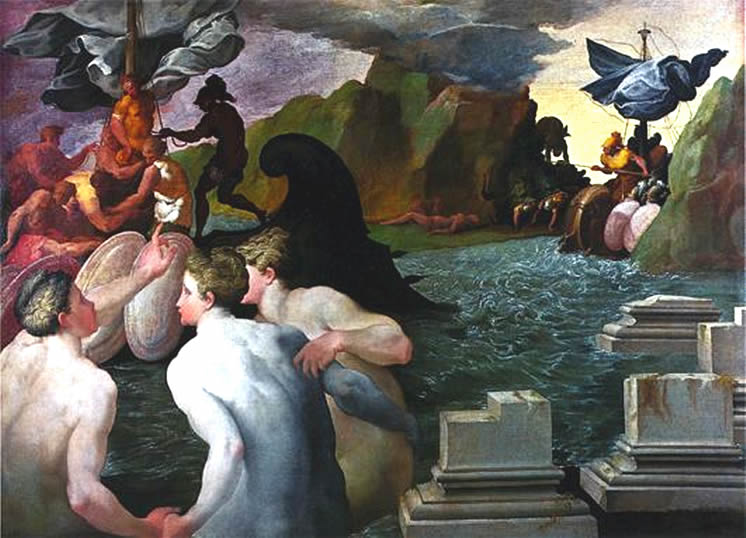
File:Sirens and Odysseus by Francesco Primaticcio.jpg
Sirens and Odysseus by Fracesco Primaticcio, 1560

Helen’s Sisters Were Unfaithful, But it Was Their Father’s Fault

Ever wondered why Helen left Menelaos or why her sister cheated on Agamemnon (other than the obvious)? Ancient poetry traced it back to a sin of their father

Schol. Ad Euripides’ Orestes 249

“Stesichorus says that when Tyndareus was sacrificing to the gods he overlooked Aphrodite. For this reason, the angry goddess made his daughters thrice and twice married deserters of husbands. The segment reads like this:

“Because when Tyndareus was sacrificing to all the gods
He neglected only the gentle-giving Kyprian
She was enraged and she made the daughters of Tyndareus
Twice and thrice married deserters of husbands.”

A fragment of Hesiod agrees with this (fr. 176):

“Smile-loving Aphrodite
Was enraged when she saw them: then she hung bad fame upon them.
After that, Timandra abandoned Ekhemos and left;
She went to Phyleus who was dear to the holy gods.
And so Klytemnestra abandoned shining Agamemnon
To lie alongside Aigisthos as she chose a lesser husband;
In the same way, Helen shamed the marriage-bed of fair Menelaos…”

Στησίχορός φησιν ὡς θύων τοῖς θεοῖς Τυνδάρεως ᾿Αφροδίτης ἐπελάθετο• διὸ ὀργισθεῖσαν τὴν θεὸν διγάμους τε καὶ τριγάμους καὶ λειψάνδρους αὐτοῦ τὰς θυγατέρας ποιῆσαι. ἔχει δὲ ἡ χρῆσις οὕτως [frg. 26]•
‘οὕνεκά ποτε Τυνδάρεως
ῥέζων πᾶσι θεοῖς μόνης λάθετ’ ἠπιοδώρου
Κύπριδος, κείνα δὲ Τυνδάρεω κούραις
χολωσαμένη διγάμους τε καὶ τριγάμους τίθησι
καὶ λιπεσάνορας’.

καὶ ῾Ησίοδος δέ [frg. 117]•
τῆισιν δὲ φιλομμειδὴς ᾿Αφροδίτη
ἠγάσθη προσιδοῦσα, κακῆι δέ σφ’ ἔμβαλε φήμηι.
Τιμάνδρη μὲν ἔπειτ’ ῎Εχεμον προλιποῦσ’ ἐβεβήκει,
ἵκετο δ’ ἐς Φυλῆα φίλον μακάρεσσι θεοῖσιν•
ὣς δὲ Κλυταιμνήστρη <προ>λιποῦσ’ ᾿Αγαμέμνονα δῖον
Αἰγίσθῳ παρέλεκτο, καὶ εἵλετο χείρον’ ἀκοίτην.
ὣς δ’ ῾Ελένη ᾔσχυνε λέχος ξανθοῦ Μενελάου…

This passage provides an explanation for why the daughters of Tyndareus—Helen and Klytemnestra—were unfaithful: it was Aphrodite’s game from the beginning because their father did not worship her correctly. A few interesting aspects here: first, Helen is “thrice-married” because after Paris dies, she marries Deiphobus (although some accounts associate her with Theseus too). Second, Hesiod’s fragmentary poems seems to be in the process of cataloging women who leave their husbands.

The first woman in the tale is Timandra, who, according to only this passage, was a third daughter of Tyndareus who left her husband Ekhemos, a king of Arcadia. They had a son together, named Leodocus before she eloped with Phyleus. In another fragment from Hesiod (fr. 23) we learn more about the family of Tyndareus and Leda:

“After climbing into the lush bed of Tyndareus
Well-tressed Leda, as fair as the rays of the moon,
Gave birth to Timandra, cow-eyed Klytemnestra,
And Phylonoe whose body was most like the immortal goddesses.
Her…the arrow bearing goddess
Made immortal and ageless for all days.”

ἣ μὲν [Τυνδαρέου θαλερὸν λέχο]ς εἰσαναβᾶσα
Λήδη ἐ̣[υπλόκαμος ἰκέλη φαέεσσ]ι σελήνης
γείνατ[ο Τιμάνδρην τε Κλυταιμήστρ]ην τε βοῶπ[ιν
Φυλο̣[νόην θ’ ἣ εἶδος ἐρήριστ’ ἀθαν]άτηισι.
τ̣ὴ̣ν[ ἰο]χέαιρα,
θῆκ[εν δ’ ἀθάνατον καὶ ἀγήραον ἤ]ματα πάντ̣[α. (7-12)

Later on in the same fragment –after hearing about the marriage and children of Klytemnestra—we learn about Timandra:

“Ekhemos made Timandra his blooming wife,
The man who was the lord of all Tegea and Arcadia, wealthy in sheep,
A rich man who was dear to the gods.
She bore to him Laodakos, the horse-taming shepherd of the host,
After she was subdued by golden Aphrodite.”

Τιμάνδρην δ’ ῎Εχεμος θαλερὴν ποιήσατ’ ἄκοιτιν,
ὃς πάσης Τεγ[έης ἠδ’ ᾿Αρκαδίης] πολυμήλου
ἀφνειὸς ἤνασ[σε, φίλος μακάρεσσι θ]ε̣ο[ῖ]σ̣ιν•
ἥ οἱ Λαόδοκον̣ μ[εγαλήτορα ποιμέν]α̣ λαῶν
γ]είνα[θ]’ ὑποδμη[θεῖσα διὰ] χρυσῆν ᾿Αφ[ροδίτην (28-31)

This section of the Hesiodic Catalogue of Women seems to be mentioning only Leda’s children with Tyndareus and not those possibly fathered by Zeus (Helen, Kastor, Polydeukes). But we hear nothing of the future of Leda’s attractive daughter Phylonoe (also spelled Philonoe) other than that Artemis made her immortal. The ancient sources? Nothing at all to explain this.

Image result for helen and her sisters greek
The Rape of Helen by Francesco Primaticcio (c. 1530–1539, Bowes Museum)

Helen’s Sisters Were Unfaithful, But it Was Their Father’s Fault

Ever wondered why Helen left Menelaos or why her sister cheated on Agamemnon (other than the obvious)? Ancient poetry traced it back to a sin of their father

Schol. Ad Euripides’ Orestes 249

“Stesichorus says that when Tyndareus was sacrificing to the gods he overlooked Aphrodite. For this reason, the angry goddess made his daughters thrice and twice married deserters of husbands. The segment reads like this:

“Because when Tyndareus was sacrificing to all the gods
He neglected only the gentle-giving Kyprian
She was enraged and she made the daughters of Tyndareus
Twice and thrice married deserters of husbands.”

A fragment of Hesiod agrees with this (fr. 176):

“Smile-loving Aphrodite
Was enraged when she saw them: then she hung bad fame upon them.
After that, Timandra abandoned Ekhemos and left;
She went to Phyleus who was dear to the holy gods.
And so Klytemnestra abandoned shining Agamemnon
To lie alongside Aigisthos as she chose a lesser husband;
In the same way, Helen shamed the marriage-bed of fair Menelaos…”

Στησίχορός φησιν ὡς θύων τοῖς θεοῖς Τυνδάρεως ᾿Αφροδίτης ἐπελάθετο• διὸ ὀργισθεῖσαν τὴν θεὸν διγάμους τε καὶ τριγάμους καὶ λειψάνδρους αὐτοῦ τὰς θυγατέρας ποιῆσαι. ἔχει δὲ ἡ χρῆσις οὕτως [frg. 26]•
‘οὕνεκά ποτε Τυνδάρεως
ῥέζων πᾶσι θεοῖς μόνης λάθετ’ ἠπιοδώρου
Κύπριδος, κείνα δὲ Τυνδάρεω κούραις
χολωσαμένη διγάμους τε καὶ τριγάμους τίθησι
καὶ λιπεσάνορας’.

καὶ ῾Ησίοδος δέ [frg. 117]•
τῆισιν δὲ φιλομμειδὴς ᾿Αφροδίτη
ἠγάσθη προσιδοῦσα, κακῆι δέ σφ’ ἔμβαλε φήμηι.
Τιμάνδρη μὲν ἔπειτ’ ῎Εχεμον προλιποῦσ’ ἐβεβήκει,
ἵκετο δ’ ἐς Φυλῆα φίλον μακάρεσσι θεοῖσιν•
ὣς δὲ Κλυταιμνήστρη <προ>λιποῦσ’ ᾿Αγαμέμνονα δῖον
Αἰγίσθῳ παρέλεκτο, καὶ εἵλετο χείρον’ ἀκοίτην.
ὣς δ’ ῾Ελένη ᾔσχυνε λέχος ξανθοῦ Μενελάου…

This passage provides an explanation for why the daughters of Tyndareus—Helen and Klytemnestra—were unfaithful: it was Aphrodite’s game from the beginning because their father did not worship her correctly. A few interesting aspects here: first, Helen is “thrice-married” because after Paris dies, she marries Deiphobus (although some accounts associate her with Theseus too). Second, Hesiod’s fragmentary poems seems to be in the process of cataloging women who leave their husbands.

The first woman in the tale is Timandra, who, according to only this passage, was a third daughter of Tyndareus who left her husband Ekhemos, a king of Arcadia. They had a son together, named Leodocus before she eloped with Phyleus. In another fragment from Hesiod (fr. 23) we learn more about the family of Tyndareus and Leda:

“After climbing into the lush bed of Tyndareus
Well-tressed Leda, as fair as the rays of the moon,
Gave birth to Timandra, cow-eyed Klytemnestra,
And Phylonoe whose body was most like the immortal goddesses.
Her…the arrow bearing goddess
Made immortal and ageless for all days.”

ἣ μὲν [Τυνδαρέου θαλερὸν λέχο]ς εἰσαναβᾶσα
Λήδη ἐ̣[υπλόκαμος ἰκέλη φαέεσσ]ι σελήνης
γείνατ[ο Τιμάνδρην τε Κλυταιμήστρ]ην τε βοῶπ[ιν
Φυλο̣[νόην θ’ ἣ εἶδος ἐρήριστ’ ἀθαν]άτηισι.
τ̣ὴ̣ν[ ἰο]χέαιρα,
θῆκ[εν δ’ ἀθάνατον καὶ ἀγήραον ἤ]ματα πάντ̣[α. (7-12)

Later on in the same fragment –after hearing about the marriage and children of Klytemnestra—we learn about Timandra:

“Ekhemos made Timandra his blooming wife,
The man who was the lord of all Tegea and Arcadia, wealthy in sheep,
A rich man who was dear to the gods.
She bore to him Laodakos, the horse-taming shepherd of the host,
After she was subdued by golden Aphrodite.”

Τιμάνδρην δ’ ῎Εχεμος θαλερὴν ποιήσατ’ ἄκοιτιν,
ὃς πάσης Τεγ[έης ἠδ’ ᾿Αρκαδίης] πολυμήλου
ἀφνειὸς ἤνασ[σε, φίλος μακάρεσσι θ]ε̣ο[ῖ]σ̣ιν•
ἥ οἱ Λαόδοκον̣ μ[εγαλήτορα ποιμέν]α̣ λαῶν
γ]είνα[θ]’ ὑποδμη[θεῖσα διὰ] χρυσῆν ᾿Αφ[ροδίτην (28-31)

This section of the Hesiodic Catalogue of Women seems to be mentioning only Leda’s children with Tyndareus and not those possibly fathered by Zeus (Helen, Kastor, Polydeukes). But we hear nothing of the future of Leda’s attractive daughter Phylonoe (also spelled Philonoe) other than that Artemis made her immortal. The ancient sources? Nothing at all to explain this.

Image result for helen and her sisters greek
The Rape of Helen by Francesco Primaticcio (c. 1530–1539, Bowes Museum)

The Names of Agamemnon’s Daughters and the Death of Iphigenia

The sacrifice of Iphigenia is a pivotal moment in the tale of the House of Atreus—it motivates Agamemnon’s murder and in turn the matricide of Orestes—and the Trojan War, functioning as it does as a strange sacrifice of a virgin daughter of Klytemnestra in exchange for passage for a fleet to regain the adulteress Helen, Iphigeneia’s aunt by both her father and mother. The account is famous in Aeschylus’ Agamemnon and the plays Iphigenia at Aulis and Iphigenia among the Taurians by Euripides. Its earliest accounts, however, provide some interesting variations:

Hes. Fr. 23.13-30

“Agamemnon, lord of men, because of her beauty,
Married the dark-eyed daughter of Tyndareus, Klytemnestra.
She gave birth to fair-ankled Iphimede in her home
And Elektra who rivaled the goddesses in beauty.
But the well-greaved Achaeans butchered Iphimede
on the altar of thundering, golden-arrowed Artemis
on that day when they sailed with ships to Ilium
in order to exact payment for fair-ankled Argive woman—
they butchered a ghost. But the deer-shooting arrow-mistress
easily rescued her and anointed her head
with lovely ambrosia so that her flesh would be enduring—
She made her immortal and ageless for all days.
Now the races of men upon the earth call her
Artemis of the roads, the servant of the famous arrow-mistress.
Last in her home, dark-eyed Klytemnestra gave birth
after being impregnated by Agamemnon to Orestes,
who, once he reached maturity, paid back the murderer of his father
and killed his mother as well with pitiless bronze.”

γ̣ῆμ̣[ε δ’ ἑὸν διὰ κάλλος ἄναξ ἀνδρ]ῶν ᾿Αγαμέμνων
κού[ρην Τυνδαρέοιο Κλυταιμήσ]τρην κυανῶπ[ιν•
ἣ̣ τ̣[έκεν ᾿Ιφιμέδην καλλίσφυ]ρον ἐν μεγάρο[ισιν
᾿Ηλέκτρην θ’ ἣ εἶδος ἐρήριστ’ ἀ[θανά]τηισιν.
᾿Ιφιμέδην μὲν σφάξαν ἐυκνή[μ]ιδες ᾿Αχαιοὶ
βωμῶ[ι ἔπ’ ᾿Αρτέμιδος χρυσηλακ]ά̣τ[ου] κελαδεινῆς,
ἤματ[ι τῶι ὅτε νηυσὶν ἀνέπλ]εον̣ ῎Ιλιον ε̣[ἴσω
ποινὴ[ν τεισόμενοι καλλισ]φύρου ᾿Αργειώ̣[νη]ς̣,
εἴδω[λον• αὐτὴν δ’ ἐλαφηβό]λο̣ς ἰοχέαιρα
ῥεῖα μάλ’ ἐξεσά[ωσε, καὶ ἀμβροσ]ίην [ἐρ]ατ̣ε̣[ινὴν
στάξε κατὰ κρῆ[θεν, ἵνα οἱ χ]ρ̣ὼς̣ [ἔ]μ̣πε[δ]ο̣[ς] ε̣[ἴη,
θῆκεν δ’ ἀθάνατο[ν καὶ ἀγήρ]αον ἤμα[τα πάντα.
τὴν δὴ νῦν καλέο[υσιν ἐπὶ χ]θ̣ονὶ φῦλ’ ἀν̣[θρώπων
῎Αρτεμιν εἰνοδί[ην, πρόπολον κλυ]τοῦ ἰ[ο]χ[ε]αίρ[ης.
λοῖσθον δ’ ἐν μεγά[ροισι Κλυτ]αιμ̣ή̣στρη κυα[νῶπις
γείναθ’ ὑποδμηθ[εῖσ’ ᾿Αγαμέμν]ον[ι δῖ]ον ᾿Ορέ[στην,
ὅς ῥα καὶ ἡβήσας ἀπε̣[τείσατο π]ατροφο[ν]ῆα,
κτεῖνε δὲ μητέρα [ἣν ὑπερήν]ορα νηλέι [χαλκῶι.

This fragment presents what is possibly the earliest account of the tale of Iphigenia and contains the major elements: the sacrifice of Agamemnon’s daughter is tied to vengeance against Helen; the daughter is rescued by Artemis, made immortal and made her servant. [In some traditions she is either made immortal or made into a priestess of Artemis at Tauris]. Orestes kills the murderer of his father and his mother.
Continue reading “The Names of Agamemnon’s Daughters and the Death of Iphigenia”

“Feminine Fame”: Homer on Why We Disbelieve Women

After the suitor Amphimedon arrives in the underworld and tells the story of Penelope’s shroud and Odysseus’ return, Agamemnon responds:

Odyssey 24.192-202:

“Blessed child of Laertes, much-devising Odysseus,
You really secured a wife with magnificent virtue!
That’s how good the brains are for blameless Penelope,
Ikarios’ daughter, how well she remembered Odysseus,
Her wedded husband. The fame of her virtue will never perish,
And the gods will craft a pleasing song
Of mindful Penelope for mortals over the earth.
This is not the way for Tyndareos’ daughter.
She devised wicked deeds and since she killed
Her wedded husband, a hateful song
Will be hers among men, she will attract harsh rumor
To the race of women, even for those who are good.”

“ὄλβιε Λαέρταο πάϊ, πολυμήχαν’ ᾿Οδυσσεῦ,
ἦ ἄρα σὺν μεγάλῃ ἀρετῇ ἐκτήσω ἄκοιτιν·
ὡς ἀγαθαὶ φρένες ἦσαν ἀμύμονι Πηνελοπείῃ,
κούρῃ ᾿Ικαρίου, ὡς εὖ μέμνητ’ ᾿Οδυσῆος,
ἀνδρὸς κουριδίου. τῶ οἱ κλέος οὔ ποτ’ ὀλεῖται
ἧς ἀρετῆς, τεύξουσι δ’ ἐπιχθονίοισιν ἀοιδὴν
ἀθάνατοι χαρίεσσαν ἐχέφρονι Πηνελοπείῃ,
οὐχ ὡς Τυνδαρέου κούρη κακὰ μήσατο ἔργα,
κουρίδιον κτείνασα πόσιν, στυγερὴ δέ τ’ ἀοιδὴ
ἔσσετ’ ἐπ’ ἀνθρώπους, χαλεπὴν δέ τε φῆμιν ὀπάσσει
θηλυτέρῃσι γυναιξί, καὶ ἥ κ’ εὐεργὸς ἔῃσιν.”

More than half of this speech praises Penelope for being a loyal, ‘good’ wife (and that is another issue of its own). Of course, this makes Agamemnon think of Klytemnestra. There’s a lot to be said about how this passage sets up the end of the Odyssey, but Agamemnon’s words are striking because they reflect a sad reality not just about misogynistic thinking but about the operation of human thought.

Let’s start with the misogyny: Agamemnon says here, quite clearly, that because of the behavior of one woman (well, two if we hear ambiguity in the phrase “Tyndareos’ daughter” and think of Helen too) all women have bad fame, even if they are “good”? A simple response to this is to wonder whether the same applies to men (of course not…) Let’s pass over the fact that the murder of Agamemnon was probably well deserved.  I think this passage also reflects human cognition: the story of Klytemnestra is paradigmatic. We learn basic patterns about people and the world and apply these patterns (prejudices) as substitutions for deeper thought.

I am not sure whether this serves as a bit of an anticipatory apologetic on the part of epic–that the tale of Penelope cannot match up to negative messages about women. It probably stands as an acknowledgement of a “negative expectancy effect”–we are primed to hear negative tales and to believe negative things. I suspect that on Homer’s part this is probably less about women and more about anticipating the reception of this poem.

But, at the very least, this is a clear indication that Homer knows the way it goes: we live in a cultural system that discounts positive stories about women in favor of negative ones and which, accordingly, downgrades the authority of the stories they tell. In our responses to the testimonies of men and women, men have the privilege of being individuals whose lives might be ruined by rumor and false claims, while women are always already undermined. This is is an example of structural misogyny.

For discussions of this passage see: On the contrasting fame of Klytemnestra and Penelope, see Franco 2012, 60–61. For invocations of Klytemnestra as an example of how a woman can ruin a nostos, see Murnaghan 2011, chapter 4 and Nagy 1999, 36–39.

orestes
Classical myth deserves trigger warnings.

Franco, Cristina. 2012. “Women in Homer,” in Sharon L. James and Sheila Dillon, eds., A Companion to Women in the Ancient World. London. 55­–65.

Marquardt, Patricia. 1989. “Love’s Labor’s Lost: Women in the Odyssey,” in Robert Sutton, ed., Daidalikon: Studies in Honor of Raymond V. Schoder, S.J. Chicago. 239-248.

Murnaghan, Sheila. 2011. Disguise and Recognition in the Odyssey, Second Edition. Lanham.

Nagy, Gregory 1996. Poetry as Performance: Homer and Beyond. Cambridge

Achilles’ (Missing) Sister

Iliad, 16.173-178

“Menestheus of the dancing-breastplate led one contingent,
son of the swift-flowing river Sperkheios
whom the daughter of Peleus, beautiful Poludôrê bore
when she shared the bed with the indomitable river-god, Sperkheios
although by reputation he was the son of Boros, the son of Periêrês
who wooed her openly by offering countless gifts.”

τῆς μὲν ἰῆς στιχὸς ἦρχε Μενέσθιος αἰολοθώρηξ
υἱὸς Σπερχειοῖο διιπετέος ποταμοῖο·
ὃν τέκε Πηλῆος θυγάτηρ καλὴ Πολυδώρη
Σπερχειῷ ἀκάμαντι γυνὴ θεῷ εὐνηθεῖσα,
αὐτὰρ ἐπίκλησιν Βώρῳ Περιήρεος υἷι,
ὅς ῥ’ ἀναφανδὸν ὄπυιε πορὼν ἀπερείσια ἕδνα.

The confusion, shock and horror of this detail—which I presume the vast majority of Homer’s audiences have overlooked or forgotten as with the sad fate of Odysseus’ sister—can be felt as well in the various reactions of the Scholia where we encounter (a) denial—it was a different Peleus!; (b) sophomoric prevarication—why doesn’t Achilles talk about her, hmmm?; (c) conditional acceptance through anachronistic assumptions—she’s suppressed because it is shameful that she is a bastard; (d) and, finally, citation of hoary authorities to insist upon a ‘truth’ unambiguous in the poem.

I have translated the major scholia below. Note that we can see where the ‘fragments’ of several authors come from here (hint: they’re just talked about by the scholiasts). We can also learn a bit about the pluralistic and contradictory voices to be found in the Homeric scholia. The bastard child bit is my favorite part.


Schol A. ad Il. 16.175

“Pherecydes says that Polydora was the sister of Achilles. There is no way that this has been established in Homer. It is more credible that this is just the same name, as in other situations, since [the poet] would have added some sign of kinship with Achilles.”

ὃν τέκε Πηλῆος θυγάτηρ: ὅτι Φερεκύδης (Fr. 61-62) τὴν Πολυδώραν φησὶν ἀδελφὴν ᾿Αχιλλέως. οὐκ ἔστι δὲ καθ’ ῞Ομηρον διαβεβαιώσασθαι. πιθανώτερον οὖν ὁμωνυμίαν εἶναι, ὥσπερ καὶ ἐπ’ ἄλλων, ἐπεὶ προσέθηκεν ἂν τεκμήριον τῆς πρὸς ᾿Αχιλλέα συγγενείας.


Schol T. ad Il. 16.175

”  “Daughter of Peleus”: A different Peleus, for if he were a nephew of Achilles, this would be mentioned in Hades when they speak about his father and son or in the allegory of the Litai when he says “a great spirit compelled me there” or “my possessions and serving women” he might mention the pleasure of having a sister. The poet does not recognize that Peleus encountered some other woman. Neoteles says that Achilles’ cousin leads the first contingent and gives evidence of knowledge of war. And he gave countless gifts to marry the sister of Achilles. Should he not mentioned her in Hades? Odysseus does not mention Ktimene [his sister].

Pherecydes says that [Polydore] was born from Antigonê, the daughter of Eurytion; the Suda says her mother was Laodameia the daughter of Alkmaion; Staphulos says she was Eurudikê the daughter of Aktôr. Zenodotos says the daughter’s name was Kleodôrê; Hesiod and everyone else calls her Poludôrê.”

ex. Πηλῆος θυγάτηρ: ἑτέρου Πηλέως· εἰ γὰρ ἦν ἀδελφιδοῦς ᾿Αχιλλέως, καὶ ἐμνήσθη αὐτοῦ ἐν τῷ ῞Αιδῃ περὶ τοῦ πατρὸς καὶ τοῦ υἱοῦ ἐρωτῶν (cf. λ 494—537), καὶ ἐν ταῖς Λιταῖς, φάσκων „ἔνθα δέ μοι μάλα <πολλὸν> ἐπέσσυτο θυμός” (Ι 398), „κτῆσιν ἐμὴν δμῶάς τε” (Τ 333), ἔφασκεν ἂν καὶ τῆς ἀδελφῆς ἀπόλαυσιν. Πηλέα τε οὐκ οἶδεν ὁ ποιητὴς ἑτέρᾳ γυναικὶ συνελθόντα. Νεοτέλης δὲ ὡς ἀδελφιδοῦν᾿Αχιλλέως φησὶ τῆς πρώτης τάξεως ἡγεῖσθαι, ὡς καὶ μαρτυρεῖ ἐπιστήμην πολέμου· †ὡς ἀχιλλέως τε ἀδελφὴν γαμεῖν† ἀπερείσια δίδωσιν ἕδνα (cf. Π 178). εἰ δὲ μὴ ἐμνήσθη αὐτῆς ἐν ῞Αιδου· οὐδὲ γὰρ ᾿Οδυσσεὺς Κτιμένης (cf. ο 363 cum λ 174—9). Φερεκύδης (FGrHist 3, 61 b) δὲ ἐξ ᾿Αντιγόνης τῆς Εὐρυτίωνος, Σουίδας (FGrHist 602, 8) ἐκ Λαοδαμείας τῆς ᾿Αλκμαίωνος, Στάφυλος (FGrHist 269,5) ἐξ Εὐρυδίκης τῆς῎Ακτορος. Ζηνόδοτος (FGrHist 19,5) δὲ Κλεοδώρην φησίν, ῾Ησιόδου (fr. 213 M.—W.) καὶ τῶν ἄλλων Πολυδώρην αὐτὴν καλούντων.

Schol. BCE ad Il. 16.175

“They say that she is from another Peleus. For if he were a nephew of Achilles wouldn’t this be mentioned or wouldn’t he ask about his sister in Hades along with his father and son? At the same time, the poet does not know that Peleus encountered some other women. More recent poets say that Menestheus is his nephew and that this is the reason he leads the first contingent and shows knowledge of war and that ‘he gave countless gifts to marry the sister of Achilles’. But if he does not mention it, it is not necessarily foreign to him. For the poet is rather sensitive to certain proprieties.”

ἑτέρου, φασί, Πηλέως· εἰ γὰρ ἦν ἀδελφιδοῦς ᾿Αχιλλέως, πῶς οὐκ ἐμνήσθη αὐτοῦ ἢ τῆς ἀδελφῆς ἐν τῷ ῞Αιδῃ περὶ τοῦ πατρὸς ἐρωτῶν καὶ τοῦ υἱοῦ; ἅμα τε οὐκ οἶδεν ὁ ποιητὴς Πηλέα ἑτέρᾳ συνελθόντα γυναικί. οἱ δὲ νεώτεροι ἀδελφιδοῦν αὐτοῦ λέγουσιν· ὅθεν καὶ τῆς πρώτης τάξεως ἡγεῖται καὶ πολέμων ἐπιστήμων μαρτυρεῖται, καὶ ὡς †ἀχιλλέως ἀδελφὴν γαμῶν ἀπερείσια δίδωσιν. εἰ δὲ μὴ ἐμνήσθη αὐτῆς ἢ τούτου, οὐ ξένον· περὶ γὰρ τῶν καιριωτέρων αὐτῷ ἡ φροντίς.

Schol. b ad Il. 16.175

“Since, otherwise, if Polydora were his sister, she would be a bastard and he would not want to mention her. Or, maybe it is because she has already died.”

ἄλλως τε ἐπειδὴ νόθη ἦν ἡ Πολυδώρη αὐτοῦ ἀδελφή, τάχα οὐδὲ μνημονεύειν αὐτῆς ἐβουλήθη. ἢ ὅτι καὶ αὐτὴ ἤδη τετελευτηκυῖα ἦν.

Schol D ad Il. 16.175

“Did Peleus have a daughter Polydôrê from another? Staphulos says in the third book of his Thessalika that she was born from Eurydike the daughter of Aktôr. Pherecydes says it was the daughter of Eurytion; others says Laodameia, the daughter of Alkmaion.”

ἐκ τίνος Πηλεὺς Πολυδώρην ἔσχεν; ὡς μὲν Στάφυλός φησιν ἐν τῇ τρίτῃ Θεσσαλικῶν, ἐξ Εὐρυδίκης τῆς ῎Ακτορος θυγατρός. Φερεκύδης δὲ ἐξ ᾿Αντιγόνης τῆς Εὐρυτίωνος, ἄλλοι δὲ ἐκ Λαοδαμείας τῆς ᾿Αλκμαίωνος.

What happened to Peleus’ first wife—if they were married? According to John Tzetzes (see Fowler 2013, 444) Peleus accidentally killed his father-in-law during the Kalydonian Boar Hunt, so he had to go abroad and in Iolkos the king’s wife tried to seduce him and told Antigone that Peleus would abandon her. Antigone killed herself, leaving Peleus free to marry Thetis. (But who took care of their daughter?).

It can get more confusing: some traditions (Apollodorus, 3.163 and 168) make a Polymele the daughter of Peleus and Patroklos’ mother whereas Polydora is Peleus’ wife in between Antigone and Thetis. Whatever the case, we can do our own scholiastic justification for Achilles not talking about his sister without creating a second Peleus. She must have been a bit older than Achilles since by all accounts Peleus fathered her before (1) the Kalydonian Boar Hunt, (2) the sacking of Iolkos and (3) the Voyage of the Argo. She would likely have been raised in a separate household from Achilles and married off before he went to study with the centaur Cheiron!

(More importantly: In the poetic world of Homer, sisters just don’t matter. Brothers do. Helen does not mention missing her sisters. Hektor talks to multiple brothers, but where are his sisters? In the Odyssey, Achilles asks about his father and son because Odysseus is interested in fathers and sons. This may make it more, not less, appropriate that Achilles says nothing of his sister: Odysseus just doesn’t care about sisters. Nor, it seems, does Homer.)

Works Consulted (apart from the Greek Texts).

Timothy Gantz. Early Greek Myth. Baltimore, 1993.
Robert Fowler. Early Greek Mythography. Vol. 2:Commentary, 2013.

Image result for ancient greek achilles

Alexis, What is Love?

Alexis (fr.386k from his Phaedrus; found at Athenaeus 13.13)

“As I was walking from the Peiraios beset
By troubles and despair, philosophy came over me.
And all the painters now seem to me to be ignorant
About love, and, to put it simply, so is everyone else
Who fashions images of him as a god.

For he is neither female nor male, and again,
He is not a god or mortal; nor is he foolish
Or wise, but he is drawn together from everywhere
And carries many shapes in one form.

For he has a man’s boldness with a woman’s restraint;
he has the senselessness of madness
But the reason of a thinker; he has a beast’s ferocity,
The toil of the unbreakable, and the avarice of a god.

Indeed, by Athena and the gods, I do not understand
What love is, but still it is the type of thing
I have said only without this name.”

πορευομένῳ δ᾽ ἐκ Πειραιῶς ὑπὸ τῶν κακῶν
καὶ τῆς ἀπορίας φιλοσοφεῖν ἐπῆλθέ μοι.
καί μοι δοκοῦσιν ἀγνοεῖν οἱ ζωγράφοι
τὸν Ἔρωτα, συντομώτατον δ᾽ εἰπεῖν, ὅσοι
τοῦ δαίμονος τούτου ποιοῦσιν εἰκόνας.
ἐστὶν γὰρ οὔτε θῆλυς οὔτ᾽ ἄρσην, πάλιν
οὔτε θεὸς οὔτ᾽ ἄνθρωπος, οὔτ᾽ ἀβέλτερος
οὔτ᾽ αὖθις ἔμφρων, ἀλλὰ συνενηνεγμένος
πανταχόθεν ἑνὶ τύπῳ <τε> πόλλ᾽ εἴδη φέρων.
ἡ τόλμα μὲν γὰρ ἀνδρός, ἡ <δὲ> δειλία
γυναικός, ἡ δ᾽ ἄνοια μανίας, ὁ δὲ λόγος
φρονοῦντος, ἡ σφοδρότης δὲ θηρός, ὁ δὲ πόνος
ἀδάμαντος, ἡ φιλοτιμία δὲ δαίμονος.
καὶ ταῦτ᾽ ἐγώ, μὰ τὴν Ἀθηνᾶν καὶ θεούς,
οὐκ οἶδ᾽ ὅ τι ἐστίν, ἀλλ᾽ ὅμως ἔχει γέ τι
τοιοῦτον, ἐγγύς τ᾽ εἰμὶ τοὐνόματος.

Cf. the philosopher Haddaway

And Foreigner’s desperate plea:


Pace the rejoinder from Turner 1984:

Related image
From here