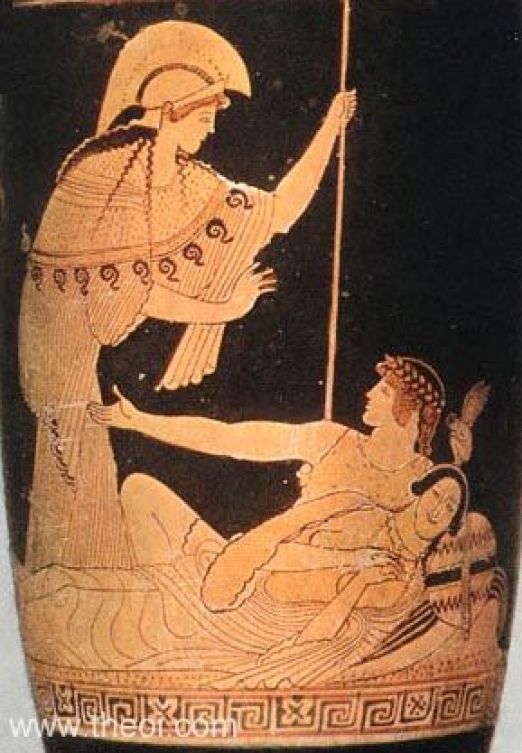
Hymning the Praises of Women and Men: A Lost Singer in the Odyssey

Homer Odyssey 3. 265-72

“Shining Klytemnestra was resisting the shameful deed
Previously, for she had use of some good advice for her mind.
See, a man was there beside her, a singer whom Agamemnon
Ordered much to safeguard his wife when he went to Troy.
But when the fate of the gods was bound to overcome him,
Then [he*] packed off the singer to some lonely island
And left him there as food and booty for the birds
And he, willingly, took her willing to his own home”

ἡ δ’ ἦ τοι τὸ πρὶν μὲν ἀναίνετο ἔργον ἀεικές,
δῖα Κλυταιμνήστρη· φρεσὶ γὰρ κέχρητ’ ἀγαθῇσι·
πὰρ δ’ ἄρ’ ἔην καὶ ἀοιδὸς ἀνήρ, ᾧ πόλλ’ ἐπέτελλεν
᾿Ατρεΐδης Τροίηνδε κιὼν εἴρυσθαι ἄκοιτιν.
ἀλλ’ ὅτε δή μιν μοῖρα θεῶν ἐπέδησε δαμῆναι,
δὴ τότε τὸν μὲν ἀοιδὸν ἄγων ἐς νῆσον ἐρήμην
κάλλιπεν οἰωνοῖσιν ἕλωρ καὶ κύρμα γενέσθαι,
τὴν δ’ ἐθέλων ἐθέλουσαν ἀνήγαγεν ὅνδε δόμονδε.

*note how carefully the Homeric text leaves the subject of the action in doubt until the final line.

Schol. EM ad Od. 3.267

“In olden days, singers used to hold the position of philosopher, everyone used to consider them wise and they entrusted their kind to them to be educated. When gathering in festivals and to rest for many days, they used to listen to them if any famous or noble deed had happened. So, the singer who was left with Klytemnestra was trying to hinder wicked thoughts from happening by narrating the virtues of men and women. And she was acting prudently as long as that singer was present. Some people say that the singer did not have genitals, wrongly. Some named him Khariades, others call him Demodokos, others Glaukos.”

τὸ ἀρχαῖον οἱ ἀοιδοὶ φιλοσόφου τάξιν ἐπέσχον καὶ πάντες αὐτοῖς προσεῖχον ὡς σοφοῖς, καὶ παιδευθῆναι τούτοις παρεδίδοσαν τοὺς ἀναγκαίους· ἔν τε ταῖς ἑορταῖς ἔν τε ταῖς ἀναπαύσεσιν ἐπὶ πολλὰς ἡμέρας συλλεγόμενοι τούτων ἤκουον εἴ που γέγονεν ἐπιφανὲς ἢ καλὸν ἔργον. καὶ ὁ καταλειφθεὶς οὖν παρὰ τῇ Κλυταιμνήστρᾳ ᾠδὸς πονηρὰς ἐπινοίας ἐγγίνεσθαι ἐκώλυε, διηγούμενος ἀνδρῶν καὶ γυναικῶν ἀρετάς. καὶ ἕως τούτου ἐσωφρόνει ἕως αὐτῇ παρῆν οὗτος. τινὲς ἀοιδὸν τὸν μὴ αἰδοῖα ἔχοντα, κακῶς. τοῦτόν τινες Χαριάδην, οἱ δὲ Δημόδοκον καλοῦσιν, οἱ δὲ Γλαῦκον.

Woodcut illustration of Clytemnestra and Aegisthus murdering Agamemnon and their subsequent deaths at the hand of Orestes
https://commons.wikimedia.org/wiki/File:Woodcut_illustration_of_Clytemnestra_and_Aegisthus_murdering_Agamemnon_and_their_subsequent_deaths_at_the_hand_of_Orestes_-_Penn_Provenance_Project.jpg

Schol MQV 3.267

“A singer was stationed with her too. For in ancient times, singers used to have the position of philosophers. Some people who know things badly report that he was a Eunuch”

συμπαρῆν γὰρ αὐτῇ καὶ ᾠδός. τὸ γὰρ ἀρχαῖον οἱ ᾠδοὶ φιλοσόφων τάξιν ἐπεῖχον. τινὲς δὲ κακῶς νοήσαντες τὸν εὐνοῦχον ἀπέδοσαν.

Schol. M. ad Od. 3.367

“There some people report he was a Eunuch from the alpha privative morios and aidoios for singer, that his genitals were removed.”

ἐνταῦθα δέ τινες ἀοιδὸν τὸν εὐνοῦον νοοῦσιν ἐκ τοῦ α στερητικοῦ μορίου καὶ τοῦ αἰδοίου, τὸν ἐστερη-μένον τῶν αἰδοίων.

Schol P. ad Od. 3.367

“Some say that the singers were tragedians. For the ancients treated these people with honor. And others say that the singer he mentions was a eunuch”

ἀοιδὸς] οἱ μὲν ἀοιδοὺς λέγουσι τοὺς τραγῳδούς. διὰ τιμῆς γὰρ οἱ παλαιοὶ τούτους ἦγον· οἱ δὲ …. φασὶν εἶναι εὐνοῦχον λέγοντα τὸν ἀοιδὸν εἶναι τῆς Κλυταιμνήστρας.

Schol. EHMQR Ad Od. 3.267

“Demetrius of Phalerum has as follows: “Menelaos, when he went with Odysseus to Delphi asked about the expedition which was about to happen against Troy. At that time, in fact, Kreon was running the nine-year contest of the Pythian games. The Spartan Demodokos won, a student of Automedon of Mycenae who was the first who composted the Battle of Amphritryon against the Teleboans and the Conflict of Kithairon and Helikon for whom the mountains in Boiotia are named. He was also a student of Perimedes the Argive who taught the Mycenean Automedes himself along with Likymnios the Bouprasian and Sinis along with Dôrieus, the Laconian Pharides and the Spartan Probolos.

At that time, Menelaos dedicated the expedition for Helen to Athena thanks to forethought. Agamemnon led Demodokos to Mycenae and ordered him to watch over Klytemnestra.

People used to honor singers excessively as teachers of the gods and other ancient acts of good men and they used to delight in the lyre beyond the other instruments. Klytemnestra clearly honored him—she didn’t have him murdered but instead ordered him to be exiled. Timolaus suggest that he was the brother of Phemios who accompanied Penelope to Ithaca to keep a watch over her. He sang for the suitors under compulsion.”

οὕτω Δημήτριος ὁ Φαληρεύς· Μενέλαος ἅμα τῷ ᾿Οδυσσεῖ ἐλθὼν εἰς Δελφοὺς τὸν θεὸν ἤρετο περὶ τῆς μελλούσης ἔσεσθαι εἰς ῎Ιλιον στρατείας. τότε δὴ καὶ τὸν ἐνναετηρικὸν τῶν Πυθίων ἀγῶνα ἀγωνοθετεῖ Κρέων, ἐνίκα δὲ Δημόδοκος Λάκων μαθητὴς Αὐτομήδους τοῦ Μυκηναίου, ὃς ἦν πρῶτος δι’ ἐπῶν γράψας τὴν ᾿Αμφιτρύωνος πρὸς Τηλεβόας μάχην καὶ τὴν ἔριν Κιθαιρῶνός τε καὶ ῾Ελικῶνος, ἀφ’ ὧν δὴ καὶ τὰ ἐν Βοιωτίᾳ ὄρη προσαγορεύεται· ἦν δὲ καὶ αὐτὸς μαθητὴς Περιμήδους ᾿Αργείου, ὃς ἐδίδαξεν αὐτόν τε τὸν Μυκηναῖον Αὐτομήδην, καὶ Λικύμνιον τὸν Βουπράσιον καὶ Σίνιν, καὶ τὸν Δωριέα, καὶ Φαρίδαν τὸν Λάκωνα, καὶ Πρόβολον τὸν Σπαρτιάτην. τότε δὴ Μενέλαος τῇ προνοίᾳ τῆς ῾Ελένης ἀνέθηκεν ὅρμον ᾿Αθηνᾷ. τὸν δὲ Δημόδοκον εἰς Μυκήνας λαβὼν ᾿Αγαμέμνων ἔταξε τὴν Κλυταιμνήστραν τηρεῖν. ἐτίμων δὲ λίαν τοὺς ᾠδοὺς ὡς διδασκάλους τῶν τε θείων καὶ παλαιῶν ἀνδραγαθημάτων, καὶ τῶν ἄλλων ὀργάνων πλέον τὴν λύραν ἠγάπων. δηλοῖ δὲ καὶ Κλυταιμνήστρα τὴν εἰς αὐτὸν τιμήν· οὐ γὰρ φονεύειν, ἀλλ’ ἀφορίζειν αὐτὸν ἐκέλευσε. Τιμόλαος δὲ ἀδελφὸν αὐτόν φησιν εἶναι Φημίου, ὃν ἀκολουθῆσαι τῇ Πηνελόπῃ εἰς ᾿Ιθάκην πρὸς παραφυλακὴν αὐτῆς· διὸ καὶ βίᾳ τοῖς μνηστῆρσιν ᾄδει.

Schol. EQ ad. Od. 3.367

“The music of rhapsodes applied so much to political matters that people report that the city of Sparta used it especially to encourage like-mindedness and preservation of the customs. They also say that once the Pythia, when a disturbance developed, told people to listen a Lesbian song and stop their rivalry.”

τοσοῦτον δὲ καὶ πρὸς τὰ πολιτικὰ διέτεινεν ἡ τῶν κιθαρῳδῶν μουσικὴ ὡς τῶν Σπαρτιατῶν τὴν πόλιν ὠφελεῖσθαι λέγουσιν ὑπὸ τούτων τῶν ἀνδρῶν τὰ μέγιστα καὶ πρὸς ὁμόνοιαν καὶ πρὸς τὴν τῶν νόμων φυλακήν. ὡς καὶ τὴν Πυθὼ, αὐτόθι φυομένης ταραχῆς, εἰπεῖν, τὸν Λέσβιον ᾠδὸν ἀκούειν καὶ παύσασθαι τῆς φιλονεικίας. ὃ καὶ γέγονεν. E.Q.

No, Virginia…There is No Tragic Flaw

Aristotle, Poetics 1452e34-1453a9

“Since it is right that the structure of the best tragedy not be simple but be complex instead and evoking both fearful and pitiful emotions—for that is the particular power of this kind of artistic representation—as an initial principle, it is clear that decent men should not be  be shown undergoing a change from good fortune to bad fortune, for that is repugnant rather than pitiful or fearful. And it is also not right for depraved people to enjoy a change from bad fortune to good fortune, because that is the least tragic notion of all and has none of the necessary qualities. Such a plot does not create empathy and fails to produce pity or fear.

[Tragedy] should also not show an especially bad person falling from good fortune to bad—for this might engender empathy but without pity or fear since the first is felt for someone who is unworthy of bad fortune and the second is for someone who is similar [to us] (pity is for someone unworthy of suffering; fear is for someone like us suffering). The response to [a wicked person] falling is not pitiful or fearful. What remains [for tragedy] is the person in between. A person like this is not impeccable in terms of justice nor for his wickedness and evil, but he falls into misfortune because of some kind of mistake. This kind of person is from those well-known families, like Oedipus or Thyestes.”

γον, ἐφεξῆς ἂν εἴη λεκτέον τοῖς νῦν εἰρημένοις. ἐπειδὴ οὖν δεῖ τὴν σύνθεσιν εἶναι τῆς καλλίστης τραγῳδίας μὴ ἁπλῆν ἀλλὰ πεπλεγμένην καὶ ταύτην φοβερῶν καὶ ἐλεεινῶν εἶναι μιμητικήν (τοῦτο γὰρ ἴδιον τῆς τοιαύτης μιμήσεώς ἐστιν), πρῶτον μὲν δῆλον ὅτι οὔτε τοὺς ἐπιεικεῖς ἄνδρας δεῖ μεταβάλλοντας φαίνεσθαι ἐξ εὐτυχίας εἰς δυστυχίαν, οὐ γὰρ φοβερὸν οὐδὲ ἐλεεινὸν τοῦτο ἀλλὰ μιαρόν ἐστιν· οὔτε τοὺς μοχθηροὺς ἐξ ἀτυχίας εἰς εὐτυχίαν, ἀτραγῳδότατον γὰρ τοῦτ’ ἐστὶ πάντων, οὐδὲν γὰρ ἔχει ὧν δεῖ, οὔτε γὰρ φιλάνθρωπον οὔτε ἐλεεινὸν οὔτε φοβερόν ἐστιν· οὐδ’ αὖ τὸν σφόδρα πονηρὸν συμβαῖνον. ὁ μεταξὺ ἄρα τούτων λοιπός. ἔστι δὲ τοιοῦτος ὁ μήτε ἀρετῇ διαφέρων καὶ δικαιοσύνῃ μήτε διὰ κακίαν καὶ μοχθηρίαν μεταβάλλων εἰς τὴν δυστυχίαν ἀλλὰ δι’ ἁμαρτίαν τινά, τῶν ἐν μεγάλῃ δόξῃ ὄντων καὶ εὐτυχίᾳ, οἷον Οἰδίπους καὶ Θυέστης καὶ οἱ ἐκ τῶν τοιούτων γενῶν ἐπιφανεῖς ἄνδρες.

This passage (and a few others) have been misread since the rise of Christianity to mean that the tragic protagonist “suffers a fall because of a tragic flaw”. This is essentially bogus for lexicographical and contextual reasons. In early Greek, hamartia means to make a mistake: it comes from an archery metaphor and is related to the verb hamartanô, which means “to miss the mark”. This is a mistake that is not connected to an essential character goodness or badness.

from Beekes 2010

hamartano

The Christian use of hamartia is “sin”, which, as we all know from our Sunday School, is innate and a sign of our essential badness. Wanting to have sex with people is a sin; driving badly and hitting someone from inattention is an accident. In my understanding of tragedy, hamartia means the latter. Yes, one might be distractable and an essentially bad driver and we may see this as in some way a flaw, but this is a cultural perspective that mixes determinism and responsibility in a strange way.

Contextually, Aristotle makes the specific point that the tragic hero should not be essentially wicked. If one is essentially wicked, the audience cannot make the key identification necessary to feel pity or fear. Now, one could argue that in a Christian context where everyone is flawed because of sin, the doctrine might still be said to apply. But this is not the Aristotelian context and this is not what Aristotle had in mind.

[The Wikipedia article is pretty good on this]

C6668-05a
MS Yates Thompson 13, f. 68v

“Dying is the Sweetest Thing”: The Gods Love Those Who Give The Most

This poem moves from praising the victory of Hiero’s horses at Olympos to the tale of Croesus’ reaction to the sacking of Sardis. In this version of the tale, he prepares to sacrifice his family on a pyre. The story is, well, a bit horrifying.

Bacchylides, Victory Odes 3.1-60

“Kleio, sweetness-giver, sing of Demeter
Who rules rich-grained Sicily, and also
Her purple-crowned daughter, and the swift
Olympic-racing horses of Hiero.

For they rushed with overwhelming Victory
And Glory alongside the broad-eddying
Alpheos where they made the blessed son of Deinomenes
A master of the crowns.

And the people shouted out:
“Oh, thrice-blessed man
Who obtained from Zeus
The widest-ruling power of all the Greeks
And knows not to hide his towered health
With black-cloaked shadow.

The temples overflow with sacrificial feasts
And the streets overflow with hospitality.
And god shines too in glancing light
From the tall-wrought tripods which were set up

In front of the temple where the Delphians
Take care of the greatest grove of Apollo
Alongside the waters of Kastalia—let someone
Glory in god, in god—this is the best of the blessings.

For once there was a time when
Even though the Sardians were sacked by the Persian army
Because Zeus had brought to an end
The judgment which was fated,
The leader of the horse-taming
Lydians, Kroisos, golden-sworded

Apollo protected. For Kroisos,
When he had come to that lamentable, unhoped for day
Was not about to wait for slavery any more. But he
Had a pyre built up in front of his bronze-walled yard.

There he climbed up with his dear wife
And his well-tressed daughters who were
Mourning uncontrollably. Then he raised his hands
Up to the high sky above

And he shouted: “Powerful god
Where is divine gratitude now?
Where is Leto’s son the lord?
Alyattes’ halls are falling down.
[what of the] myriad [gifts I gave you?]
[What trust can mortals give to gods?]

[Look now, the enemy has sacked my] city,
And the gold-eddying Paktôlos runs red
With blood and women are shamefully dragged away
From the well-built halls.

What was hated before is now dear. Dying is the sweetest thing.”
So much he said, and he ordered his light-stepping attendant
To Set fire to the wooden home. Then the girls were crying out
And they were throwing their hands to their

Mother. For mortals most hateful death
Is the one we see coming.
But as the shining strength
Of the terrible fire was leaping forth
Zeus sent over a dark-covering cloud
To extinguish the yellow flame.

Nothing is unbelievable when divine care
Makes it. Then Delian-born Apollo
Carried the old man to the Hyperboreans
And settled him there with his thin-ankled daughters

Because of his piety, because he sent to sacred Pytho
Gifts greatest of all the mortals.

᾿Αριστο[κ]άρπου Σικελίας κρέουσαν
Δ[ά]ματρα ἰοστέφανόν τε Κούραν
ὕμνει, γλυκύδωρε Κλεοῖ, θοάς τ’ ᾿Ο-
[λυμ]πιοδρόμους ῾Ιέρωνος ἵππ[ο]υς.

[Σεύον]το γὰρ σὺν ὑπερόχῳ τε Νίκᾳ
[σὺν ᾿Αγ]λαΐᾳ τε παρ’ εὐρυδίναν
[᾿Αλφεόν, τόθι] Δεινομένεος ἔθηκαν
ὄλβιον τ[έκος στεφάνω]ν κυρῆσαι·

θρόησε δὲ λ[αὸς ]
[] ἆ τρισευδαίμ[ων ἀνὴρ]
ὃς παρὰ Ζηνὸς λαχὼν πλείστ-
αρχον ῾Ελλάνων γέρας
οἶδε πυργωθέντα πλοῦτον μὴ μελαμ-
φαρέϊ κρύπτειν σκότῳ.

Βρύει μὲν ἱερὰ βουθύτοις ἑορταῖς,
βρύουσι φιλοξενίας ἀγυιαί·
λάμπει δ’ ὑπὸ μαρμαρυγαῖς ὁ χρυσός,
ὑψιδαιδάλτων τριπόδων σταθέντων

πάροιθε ναοῦ, τόθι μέγι[στ]ον ἄλσος
Φοίβου παρὰ Κασταλίας [ῥ]εέθροις
Δελφοὶ διέπουσι. Θεόν, θ[εό]ν τις
ἀγλαϊζέθὠ γὰρ ἄριστος [ὄ]λβων·

ἐπεί ποτε καὶ δαμασίπ-
[π]ου Λυδίας ἀρχαγέταν,
εὖτε τὰν πεπ[ρωμέναν] Ζη-
νὸς τελέ[σσαντος κρί]σιν
Σάρδιες Περσᾶ[ν ἁλίσκοντο στρ]ατῷ,
Κροῖσον ὁ χρυσά[ορος]

φύλαξ’ ᾿Απόλλων. [῾Ο δ’ ἐς] ἄελπτον ἆμαρ
μ[ο]λὼν πολυδ[άκρυο]ν οὐκ ἔμελλε
μίμνειν ἔτι δ[ουλοσύ]ναν, πυρὰν δὲ
χαλκ[ο]τειχέος π[ροπάροι]θεν αὐ[λᾶς]
ναήσατ’, ἔνθα σὺ[ν ἀλόχῳ] τε κεδ[νᾷ]
σὺν εὐπλοκάμοι[ς τ’] ἐπέβαιν’ ἄλα[στον]
[θ]υ[γ]ατράσι δυρομέναις· χέρας δ’ [ἐς]
[αἰ]πὺν αἰθέρα σ[φ]ετέρας ἀείρας

[γέ]γ[ω]νεν· «῾Υπέρ[βι]ε δαῖ-
μον, [πο]ῦ θεῶν ἐστι[ν] χάρις;
[πο]ῦ δὲ Λατοίδ[ας] ἄναξ; [ἔρ-]
[ρουσ]ιν ᾿Αλυά[τ]τα δόμοι

[] μυρίων
[]ν.
[]ν ἄστυ,
[ἐρεύθεται αἵματι χρυσο]δίνας
Πακτωλός, ἀ[ε]ικελίως γυνα[ῖ]κες
ἐξ ἐϋκτίτων μεγάρων ἄγονται·

τὰ πρόσθεν [ἐχ]θρὰ φίλα· θανεῖν γλύκιστον.»
Τόσ’ εἶπε, καὶ ἁβ[ρο]βάταν κ[έλε]υσεν
ἅπτειν ξύλινον δόμον. ῎Εκ[λα]γον δὲ
παρθένοι, φίλας τ’ ἀνὰ ματρὶ χεῖρας

ἔβαλλον· ὁ γὰρ προφανὴς
θνατοῖσιν ἔχθιστος φόνων·
ἀλλ’ ἐπεὶ δεινο[ῦ π]υρὸς λαμ-
πρὸν διάϊ[σσεν μέ]νος,
Ζεὺς ἐπιστάσας [μελαγκευ]θὲς νέφος
σβέννυεν ξανθὰ[ν φλόγα.]

῎Απιστον οὐδὲν ὅ τι θ[εῶν μέ]ριμνα
τεύχει· τότε Δαλογενὴ[ς ᾿Από]λλων
φέρων ἐς ῾Υπερβορέο[υς γ]έροντα
σὺν τανισφύροις κατ[έν]ασσε κούραις

δι’ εὐσέβειαν, ὅτι μέ[γιστα] θνατῶν
ἐς ἀγαθέαν <ἀν>έπεμψε Π[υθ]ώ.


Oil painting of decadently dressed early modern king pointing out his wealth to a Greek visitor
Nikolaus Knüpfer, “Solon Before Croesus” c 1650

Write This Down: You are the City. You Are the people

Aeschylus, Suppliants 179-180

“I suggest you safeguard my words by writing them on tablet in your minds”

αἰνῶ φυλάξαι τἄμ᾿ ἔπη δελτουμένας

Aeschylus, Suppliants, 200-204

“Don’t be too aggressive or broken in speech:
These people are really ready to be angry.
Remember to be accommodating: you are a foreign refugee in need.
To speak boldly is not a fitting move for the weak.”

καὶ μὴ πρόλεσχος μηδ᾿ ἐφολκὸς ἐν λόγῳ
γένῃ· τὸ τῇδε κάρτ᾿ ἐπίφθονον γένος.
μέμνησο δ᾿ εἴκειν· χρεῖος εἶ, ξένη, φυγάς·
θρασυστομεῖν γὰρ οὐ πρέπει τοὺς ἥσσονας.

Aeschylus, Suppliants, 370-375

“You are the city, truly. You are the people.
An unjudged chief of state rules
The altar, the city’s hearth,
With only your votes and nods,
With only your scepter on the throne
You judge every need. Be on guard against contamination!”

σύ τοι πόλις, σὺ δὲ τὸ δάμιον·
πρύτανις ἄκριτος ὢν
κρατύνεις βωμόν, ἑστίαν χθονός,
μονοψήφοισι νεύμασιν σέθεν,
μονοσκήπτροισι δ᾿ ἐν θρόνοις χρέος
πᾶν ἐπικραίνεις· ἄγος φυλάσσου.


original DELACROIX Eugène française Fonds des dessins et miniatures Album Delacroix Eugène -31-

Aeschylus, Suppliants 991-997

“Write this down with the many other notes
In your mind of the wisdoms from your father:
An unfamiliar mob is evaluated by time,
But everyone has an evil tongue prepared to lash out
over immigrants and speaking foully is somehow easy.
I advise you not to bring me shame
Now that you are in the age which turns mortal gazes.”

καὶ ταῦτα μὲν γράψασθε πρὸς γεγραμμένοις
πολλοῖσιν ἄλλοις σωφρονίσμασιν πατρός,
ἀγνῶθ᾿ ὅμιλον ἐξελέγχεσθαι χρόνῳ·
πᾶς δ᾿ ἐν μετοίκῳ γλῶσσαν εὔτυκον φέρει
κακήν, τό τ᾿ εἰπεῖν εὐπετὲς μύσαγμά πως.
ὑμᾶς δ᾿ ἐπαινῶ μὴ καταισχύνειν ἐμέ,
ὥραν ἐχούσας τήνδ᾿ ἐπίστρεπτον βροτοῖς

Write This Down: You are the City. You Are the people

Aeschylus, Suppliants 179-180

“I suggest you safeguard my words by writing them on tablet in your minds”
αἰνῶ φυλάξαι τἄμ᾿ ἔπη δελτουμένας

Aeschylus, Suppliants, 200-204

“Don’t be too aggressive or broken in speech:
These people are especially ready to be angry.
Remember to be accommodating: you are a foreign refugee in need.
To speak boldly is not a fitting move for the weak.”

καὶ μὴ πρόλεσχος μηδ᾿ ἐφολκὸς ἐν λόγῳ
γένῃ· τὸ τῇδε κάρτ᾿ ἐπίφθονον γένος.
μέμνησο δ᾿ εἴκειν· χρεῖος εἶ, ξένη, φυγάς·
θρασυστομεῖν γὰρ οὐ πρέπει τοὺς ἥσσονας.

Aeschylus, Suppliants, 370-375

“You are the city, really. You are the people.
An unjudged chief of state rules
The altar, the city’s hearth,
With only your votes and nods,
With only your scepter on the throne
You judge every need. Be on guard against contamination!”

σύ τοι πόλις, σὺ δὲ τὸ δάμιον·
πρύτανις ἄκριτος ὢν
κρατύνεις βωμόν, ἑστίαν χθονός,
μονοψήφοισι νεύμασιν σέθεν,
μονοσκήπτροισι δ᾿ ἐν θρόνοις χρέος
πᾶν ἐπικραίνεις· ἄγος φυλάσσου.

File:Nicolas Bertin - The Danaides in Hell.jpg

The Danaides in hell, by Nicolas Bertin

Aeschylus, Suppliants 991-997

“Write this down with the many other notes
In your mind of the wisdoms from your father:
An unfamiliar mob is evaluated by time,
But everyone has an evil tongue prepared to lash out
over immigrants and speaking foully is somehow easy.
I advise you not to bring me shame
Now that you are in the age which turns mortal gazes.”

καὶ ταῦτα μὲν γράψασθε πρὸς γεγραμμένοις
πολλοῖσιν ἄλλοις σωφρονίσμασιν πατρός,
ἀγνῶθ᾿ ὅμιλον ἐξελέγχεσθαι χρόνῳ·
πᾶς δ᾿ ἐν μετοίκῳ γλῶσσαν εὔτυκον φέρει
κακήν, τό τ᾿ εἰπεῖν εὐπετὲς μύσαγμά πως.
ὑμᾶς δ᾿ ἐπαινῶ μὴ καταισχύνειν ἐμέ,
ὥραν ἐχούσας τήνδ᾿ ἐπίστρεπτον βροτοῖς

Dio Chrysostom on Preferring Even Unpleasant Lies to the Truth

Dio Chrysostom, Oration 11 (“On the Fact that Troy Was Never Sacked”)

“I know with some certainly that it is hard to teach all people, but easy to deceive them. And if they learn anything, they scarcely learn it from the few who do really know, while they are easily deceived by many who know nothing, and not only by others, but by themselves too. For the truth is bitter and unpleasant to the ignorant; a lie, however, is sweet and appealing. In the same way, I suppose, light is unpleasant for those with diseased eyes to see, while the darkness is harmless and dear, even if they cannot see. Or, how else would lies often be stronger than the truth, unless they prevailed because of pleasure? Although it is hard to teach, as I was saying, it is harder in every way to re-teach when people have heard lies for a long time and, even worse, when they have not been alone in their delusion, but their fathers, grandfathers and nearly every forebear has been deceived with them.

For it is not easy to take a false belief from them, not even if someone should refute it completely. Similarly, I imagine that, when children have been raised with superstitious beliefs, it is hard for someone to speak the truth later regarding the very things they would not have accepted if someone had just told them in the beginning. This impulse is so strong that many prefer wicked things and agree that they belong to them properly, if they have previously believed so, instead of good things they hear later on.”

Image result for Trojan Horse ancient Greek

Οἶδα μὲν ἔγωγε σχεδὸν ὅτι διδάσκειν μὲν ἀνθρώπους ἅπαντας χαλεπόν ἐστιν, ἐξαπατᾶν δὲ ῥᾴδιον. καὶ μανθάνουσι μὲν μόγις, ἐάν τι καὶ μάθωσι, παρ’ ὀλίγων τῶν εἰδότων, ἐξαπατῶνται δὲ  τάχιστα ὑπὸ πολλῶν τῶν οὐκ εἰδότων, καὶ οὐ μόνον γε ὑπὸ τῶν ἄλλων, ἀλλὰ καὶ αὐτοὶ ὑφ’ αὑτῶν. τὸ μὲν γὰρ ἀληθὲς πικρόν ἐστι καὶ ἀηδὲς τοῖς ἀνοήτοις, τὸ δὲ ψεῦδος γλυκὺ καὶ προσηνές. ὥσπερ οἶμαι καὶ τοῖς νοσοῦσι τὰ ὄμματα τὸ μὲν φῶς ἀνιαρὸν ὁρᾶν, τὸ δὲ σκότος ἄλυπον καὶ φίλον, οὐκ ἐῶν βλέπειν. ἢ πῶς ἂν ἴσχυε τὰ ψεύδη πολλάκις πλέον τῶν ἀληθῶν, εἰ μὴ δι’ ἡδονὴν ἐνίκα;

χαλεποῦ δέ, ὡς ἔφην, ὄντος τοῦ διδάσκειν, τῷ παντὶ χαλεπώτερον τὸ  μεταδιδάσκειν, ἄλλως τε ὅταν πολύν τινες χρόνον ὦσι τὰ ψευδῆ ἀκηκοότες καὶ μὴ μόνον αὐτοὶ ἐξηπατημένοι, ἀλλὰ καὶ οἱ πατέρες αὐτῶν καὶ οἱ πάπποι καὶ σχεδὸν πάντες οἱ πρότερον. οὐ γάρ ἐστι ῥᾴδιον τούτων ἀφελέσθαι τὴν δόξαν, οὐδ’ ἂν πάνυ τις ἐξελέγχῃ. καθάπερ οἶμαι τῶν τὰ ὑποβολιμαῖα παιδάρια θρεψάντων χαλεπὸν ὕστερον ἀφελέσθαι τἀληθῆ λέγοντα ἅ γε ἐν ἀρχῇ, εἴ τις αὐτοῖς ἔφρασεν, οὐκ ἄν ποτε ἀνείλοντο. οὕτω δὲ τοῦτο ἰσχυρόν ἐστιν ὥστε πολλοὶ τὰ κακὰ μᾶλλον προσποιοῦνται καὶ ὁμολογοῦσι καθ’ αὑτῶν, ἂν ὦσι πεπεισμένοι πρότερον, ἢ τἀγαθὰ μετὰ χρόνον ἀκούοντες.


“I would not even be surprised, Trojan men, that you believed Homer was more trustworthy when he told the harshest lies about you than me when I told that truth—since you believe him to be a divine man and wise and you have taught your children epic right from the beginning, even though he has only curses for your city, and untrue ones at that. But you wouldn’t accept that I describe things as they are and have been, because I am many years younger than Homer. Certainly, most people say that time is also the best judge of affairs, and, whenever they hear something after a long time, they disbelieve it for this very reason.

If I were dare to speak against Homer among the Argives and to show in addition that his poetry was false concerning the greatest matters, chances are they would be rightfully angry with me and expel me from the city if I appeared to be erasing and cleansing their fame. But it is right that you have some gratitude towards me and listen eagerly. I have stood in defense of your ancestors. I say at the outset to you that these stories have by necessity already been recited by others and that many have learned them. Some of those men will not understand them; others will pretend to discount them, even though they do not, and still others will try to refute them, especially, I think, those ill-fated sophists. But I know clearly that they will not be pleasing to you. For most men have their minds corrupted by fame to the extent that they would prefer to be infamous for the greatest failures rather than be unknown and suffer no evil.”

οὐκ ἂν οὖν θαυμάσαιμι καὶ ὑμᾶς, ἄνδρες ᾿Ιλιεῖς, εἰ πιστότερον ἡγήσασθαι ῞Ομηρον τὰ χαλεπώτατα ψευσάμενον καθ’ ὑμῶν ἢ ἐμὲ τἀληθῆ λέγοντα, κἀκεῖνον μὲν ὑπολαβεῖν θεῖον ἄνδρα καὶ σοφόν, καὶ τοὺς παῖδας εὐθὺς ἐξ ἀρχῆς τὰ ἔπη διδάσκειν οὐθὲν ἄλλο ἢ κατάρας ἔχοντα κατὰ τῆς πόλεως, καὶ ταύτας οὐκ ἀληθεῖς, ἐμοῦ δὲ μὴ ἀνέχοισθε τὰ ὄντα καὶ γενόμενα λέγοντος, ὅτι πολλοῖς ἔτεσιν ὕστερον ῾Ομήρου γέγονα. καίτοι φασὶ μὲν οἱ πολλοὶ τὸν χρόνον τῶν πραγμάτων * καὶ κριτὴν ἄριστον εἶναι, ὅτι δ’ ἂν ἀκούωσι μετὰ πολὺν χρόνον, διὰ τοῦτο ἄπιστον νομίζουσιν. εἰ μὲν οὖν παρ’ ᾿Αργείοις ἐτόλμων ἀντιλέγειν ῾Ομήρῳ, καὶ τὴν ποίησιν αὐτοῦ δεικνύναι ψευδῆ περὶ τὰ μέγιστα, τυχὸν ἂν εἰκότως ἤχθοντό μοι καὶτῆς πόλεως ἐξέβαλλον εἰ τὴν παρ’ ἐκείνων δόξαν ἐφαινόμην ἀφανίζων καὶ καθαιρῶν· ὑμᾶς δὲ δίκαιόν ἐστί μοι χάριν εἰδέναι καὶ ἀκροᾶσθαι προθύμως· ὑπὲρ γὰρ τῶν ὑμετέρων προγόνων ἐσπούδακα. προλέγω δὲ ὑμῖν ὅτι τοὺς λόγους τούτους ἀνάγκη καὶ  παρ’ ἑτέροις ῥηθῆναι καὶ πολλοὺς πυθέσθαι· τούτων δὲ οἱ μέν τινες οὐ συνήσουσιν, οἱ δὲ προσποιήσονται καταφρονεῖν, οὐ καταφρονοῦντες αὐτῶν, οἱ δέ τινες ἐπιχειρήσουσιν ἐξελέγχειν, [μάλιστα δὲ οἶμαι τοὺς κακοδαίμονας σοφιστάς.] ἐγὼ δὲ ἐπίσταμαι σαφῶς ὅτι οὐδὲ ὑμῖν πρὸς ἡδονὴν ἔσονται. οἱ γὰρ πλεῖστοι τῶν ἀνθρώπων οὕτως ἄγαν εἰσὶν ὑπὸ δόξης διεφθαρμένοι τὰς ψυχὰς ὥστε μᾶλλον ἐπιθυμοῦσι περιβόητοι εἶναι ἐπὶ τοῖς μεγίστοις ἀτυχήμασιν ἢ μηδὲν κακὸν ἔχοντες ἀγνοεῖσθαι.


“For I think that the Argives themselves would not wish for the matters concerning Thyestes, Atreus and the descendants of Pelops to have been any different, but would be severely angry if someone were to undermine the myths of tragedy, claiming that Thyestes never committed adultery with Atreus wife, nor did the other kill his brother’s children, cut them up, and set them out as feast for Thyestes, and that Orestes never killed his mother with his own hand. If someone said all of these things, they would take it harshly as if they were slandered.

I imagine that things would go the same among the Thebans, if someone were to declare that their misfortunes were lies, that Oedipus never killed his father nor had sex with his mother, nor then blinded himself, and that his children didn’t die in front of the wall at each other’s hands, and the Sphinx never came and ate their children. No! instead, they take pleasure in hearing that the Sphinx came and ate their children, sent to them because of Hera’s anger, that Laios was killed by his own son, and Oedipus did these things and wandered blind after suffering, or how the children of previous king of theirs and founder of the city, Amphion, by Artemis and Apollo because they were the most beautiful men. They endure musicians and poets singing these things in their presence at the theater and they make contests for them, whoever can sing or play the most stinging tales about them. Yet they would expel a man who claimed these things did not happen. The majority has gone so far into madness that their obsession governs them completely. For they desire that there be the most stories about them—and it does not matter to them what kind of story it is. Generally, men are not willing to suffer terrible things because of cowardice, because they fear death and pain. But they really value being mentioned as if they suffered.”


αὐτοὺς γὰρ οἶμαι τοὺς ᾿Αργείους μὴ ἂν ἐθέλειν ἄλλως γεγονέναι τὰ περὶ τὸν Θυέστην καὶ τὸν ᾿Ατρέα καὶ τοὺς Πελοπίδας, ἀλλ’ ἄχθεσθαι σφόδρα, ἐάν τις ἐξελέγχῃ τοὺς μύθους τῶν τραγῳδῶν, λέγων ὅτι οὔτε Θυέστης ἐμοίχευσε τὴν τοῦ ᾿Ατρέως οὔτε ἐκεῖνος ἀπέκτεινε τοὺς τοῦ ἀδελφοῦ παῖδας οὐδὲ κατακόψας εἱστίασε τὸν Θυέστην οὔτε ᾿Ορέστης αὐτόχειρ ἐγένετο τῆς μητρός. ἅπαντα ταῦτα εἰ λέγοι τις, χαλεπῶς ἂν φέροιεν ὡς λοιδορούμενοι.

τὸ δὲ αὐτὸ τοῦτο κἂν Θηβαίους οἶμαι παθεῖν, εἴ τις τὰ παρ’ αὐτοῖς ἀτυχήματα ψευδῆ ἀποφαίνοι, καὶ οὔτε τὸν πατέρα Οἰδίπουν ἀποκτείναντα οὔτε τῇ μητρὶ συγγενόμενον οὔθ’ ἑαυτὸν τυφλώσαντα οὔτε τοὺς παῖδας αὐτοῦ πρὸ τοῦ τείχους ἀποθανόντας ὑπ’ ἀλλήλων, οὔθ’ ὡς ἡ Σφὶγξ ἀφικομένη κατεσθίοι τὰ τέκνα αὐτῶν, ἀλλὰ τοὐναντίον ἥδονται ἀκούοντες καὶ τὴν Σφίγγα ἐπιπεμφθεῖσαν αὐτοῖς διὰ χόλον ῞Ηρας καὶ τὸν Λάϊον ὑπὸ τοῦ υἱέος ἀναιρεθέντα καὶ τὸν Οἰδίπουν ταῦτα ποιήσαντα καὶ παθόντα τυφλὸν ἀλᾶσθαι, καὶ πρότερον ἄλλου βασιλέως αὐτῶν καὶ τῆς πόλεως οἰκιστοῦ, ᾿Αμφίονος, τοὺς παῖδας, ἀνθρώπων καλλίστους γενομένους, κατατοξευθῆναι ὑπὸ ᾿Απόλλωνος καὶ ᾿Αρτέμιδος· καὶ ταῦτα καὶ αὐλούντων καὶ ᾀδόντων ἀνέχονται παρ’ αὑτοῖς ἐν τῷ θεάτρῳ, καὶ τιθέασιν ἆθλα περὶ τούτων, ὃς ἂν οἰκτρότατα εἴπῃ περὶ αὐτῶν ἢ αὐλήσῃ· τὸν δὲ εἰπόντα ὡς οὐ γέγονεν οὐδὲν αὐτῶν ἐκβάλλουσιν. εἰς τοῦτο μανίας οἱ πολλοὶ ἐληλύθασι καὶ οὕτω πάνυ ὁ τῦφος αὐτῶν κεκράτηκεν. ἐπιθυμοῦσι γὰρ ὡς πλεῖστον ὑπὲρ αὐτῶν γίγνεσθαι λόγον· ὁποῖον δέ τινα, οὐθὲν μέλει αὐτοῖς. ὅλως δὲ πάσχειν μὲν οὐ θέλουσι τὰ δεινὰ  διὰ δειλίαν, φοβούμενοι τούς τε θανάτους καὶ τὰς ἀλγηδόνας· ὡς δὲ παθόντες μνημονεύεσθαι περὶ πολλοῦ ποιοῦνται.

Reputable Tales about Ariadne; And Strange Ones

The following account is interesting for the variations in the story of Ariadne and Theseus but also for the strange detail of the ritual where young men imitate a woman in childbirth. 

Other tales about Ariadne, According to Plutarch (Theseus 20)

“There are many other versions circulated about these matters still and also about Ariadne, none of which agree. For some say that she hanged herself after she was abandoned by Theseus. Others claim that after she was taken to Naxos by sailors she lived with Oinaros a priest of Dionysus and that she was abandoned by Theseus because he loved another.

“A terrible lust for Aiglê the daughter of Panopeus ate at him” [fr. 105]—this is a line Hereas the Megarean claims Peisistratus deleted from the poems of Hesiod, just as again he says that he inserted into the Homeric catalogue of dead “Theseus and Perithoos, famous children of the gods” [Od. 11.631] to please the Athenans. There are some who say that Ariadne gave birth to Oinipiôn and Staphulos with Theseus. One of these is Ion of  Khios who has sung about his own city “Oinopiôn, Theseus’ son, founded this city once.” [fr. 4D]

The most reputable of the myths told are those which, as the saying goes, all people have in their mouths. But Paiôn the Amathousian has handed down a particular tale about these events. For he says that Theseus was driven by a storm, to Cyprus and that he had Ariadne with him, who was pregnant and doing quite badly because of the sea and the rough sailing. So he set her out alone and he was carried back into the sea from the land while he was tending to the ship. The native women, then, received Ariadne and they tried to ease her depression because of her loneliness by offering her a counterfeit letter written to her by Theseus and helping her and supporting her during childbirth. They buried her when she died before giving birth.

Paiôn claims that when Theseus returned he was overcome with grief and he left money to the island’s inhabitants, charging them to sacrifice to Ariadne and to have two small statues made for her—one of silver and one of bronze. During the second day of the month of Gorpiaon at the sacrifice, one of the young men lies down and mouns and acts as women do during childbirth. They call the grove in which they claim her tomb is that of Ariadne Aphrodite.

Some of the Naxians claim peculiarly that there were two Minoses and two Ariadnes. They claim one was married to Dionysus on Naxos and bore the child Staphulos, and the young one was taken by Theseus and left when he came to Naxos with a nurse named Korkunê—whose tomb they put on display. They claim that Ariadne died there and has honors unequal to those of the earlier one. The first has a festival of singing and play; the second has one where sacrifices are performed with grief and mourning.”

Πολλοὶ δὲ λόγοι καὶ περὶ τούτων ἔτι λέγονται καὶ περὶ τῆς Ἀριάδνης, οὐδὲν ὁμολογούμενον ἔχοντες. οἱ μὲν γὰρ ἀπάγξασθαί φασιν αὐτὴν ἀπολειφθεῖσαν ὑπὸ τοῦ Θησέως, οἱ δὲ εἰς Νάξον ὑπὸ ναυτῶν κομισθεῖσαν Οἰνάρῳ τῷ ἱερεῖ τοῦ Διονύσου συνοικεῖν, ἀπολειφθῆναι δὲ τοῦ Θησέως ἐρῶντος ἑτέρας· Δεινὸς γάρ μιν ἔτειρεν ἔρως Πανοπηΐδος Αἴγλης. τοῦτο γὰρ τὸ ἔπος ἐκ τῶν Ἡσιόδου Πεισίστρατον ἐξελεῖν φησιν Ἡρέας ὁ Μεγαρεύς, ὥσπερ αὖ πάλιν ἐμβαλεῖν εἰς τὴν Ὁμήρου νέκυιαν τὸ Θησέα Πειρίθοόν τε θεῶν ἀριδείκετα τέκνα,χαριζόμενον Ἀθηναίοις· ἔνιοι δὲ καὶ τεκεῖν ἐκ Θησέως Ἀριάδνην Οἰνοπίωνα καὶ Στάφυλον· ὧν καὶ ὁ Χῖος Ἴων ἐστὶ περὶ τῆς ἑαυτοῦ πατρίδος λέγων· Τήν ποτε Θησείδης ἔκτισεν Οἰνοπίων.

Ἃ δ᾿ ἐστὶν εὐφημότατα τῶν μυθολογουμένων, πάντες ὡς ἔπος εἰπεῖν διὰ στόματος ἔχουσιν. ἴδιον δέ τινα περὶ τούτων λόγον ἐκδέδωκε Παίων ὁ Ἀμαθούσιος. τὸν γὰρ Θησέα φησὶν ὑπὸ χειμῶνος εἰς Κύπρον ἐξενεχθέντα καὶ τὴν Ἀριάδνην ἔγκυον ἔχοντα, φαύλως δὲ διακειμένην ὑπὸ τοῦ σάλου καὶ δυσφοροῦσαν, ἐκβιβάσαι μόνην, αὐτὸν δὲ τῷ πλοίῳ βοηθοῦντα πάλιν εἰς τὸ πέλαγος ἀπὸ τῆς γῆς φέρεσθαι. τὰς οὖν ἐγχωρίους γυναῖκας τὴν Ἀριάδνην ἀναλαβεῖν καὶ περιέπειν ἀθυμοῦσαν ἐπὶ τῇ μονώσει, καὶ γράμματα πλαστὰ προσφέρειν, ὡς τοῦ Θησέως γράφοντος αὐτῇ, καὶ περὶ τὴν ὠδῖνα συμπονεῖν καὶ βοηθεῖν· ἀποθανοῦσαν δὲ θάψαι μὴ τεκοῦσαν. ἐπελθόντα δὲ τὸν Θησέα καὶ περίλυπον γενόμενον τοῖς μὲν ἐγχωρίοις ἀπολιπεῖν χρήματα, συντάξαντα θύειν τῇ Ἀριάδνῃ, δύο δὲ μικροὺς ἀνδριαντίσκους ἱδρύσασθαι, τὸν μὲν ἀργυροῦν, τὸν δὲ χαλκοῦν. ἐν δὲ τῇ θυσίᾳ τοῦ Γορπιαίου μηνὸς ἱσταμένου δευτέρᾳ κατακλινόμενόν τινα τῶν νεανίσκων φθέγγεσθαι καὶ ποιεῖν ἅπερ ὠδίνουσαι γυναῖκες· καλεῖν δὲ τὸ ἄλσος Ἀμαθουσίους, ἐν ᾧ τὸν τάφον δεικνύουσιν, Ἀριάδνης Ἀφροδίτης.

Καὶ Ναξίων δέ τινες ἰδίως ἱστοροῦσι δύο Μίνωας γενέσθαι καὶ δύο Ἀριάδνας, ὧν τὴν μὲν Διονύσῳ γαμηθῆναί φασιν ἐν Νάξῳ καὶ τοὺς περὶ Στάφυλον τεκεῖν, τὴν δὲ νεωτέραν ἁρπασθεῖσαν ὑπὸ τοῦ Θησέως καὶ ἀπολειφθεῖσαν εἰς Νάξον ἐλθεῖν, καὶ τροφὸν μετ᾿ αὐτῆς ὄνομα Κορκύνην, ἧς δείκνυσθαι τάφον. ἀποθανεῖν δὲ καὶ τὴν Ἀριάδνην αὐτόθι καὶ τιμὰς ἔχειν οὐχ ὁμοίας τῇ προτέρᾳ. τῇ μὲν γὰρ ἡδομένους καὶ παίζοντας ἑορτάζειν, τὰς δὲ ταύτῃ δρωμένας θυσίας εἶναι πένθει τινὶ καὶ στυγνότητι μεμιγμένας.

Image result for Ariadne and Theseus ancient
Athena, Ariadne, and Theseus: IL MUSEO ARCHEOLOGICO NAZIONALE DI TARANTO

Andromache’s Sons With Neoptolemos

Scholia ad Eur. Andromache, 24

“In these halls, I [Andromache] produced this male child / after sleeping with Achilles’ son, my master]:

One source says that she bore only one son to Neoptolemos while others say that there were three: Pyrrhos, Molossos, Aiakos and a daughter named Troas. Lysimachus, in the second volume of his On Homecomings, writes that Proxenos and Nikomedes the Akanthian report in Macedonian Matters that Andromache gave birth to those who were just mentioned, and from Leonassa, Kleodaios’ daughter, [he fathered?] Argos, Pergamos, Pandaros, Dorieus, Genyos, Danae and Eurylockus. They also say that Pyrrhos received the kingdom from his father and that the country was named Mossia to give honor to Molossos.”

κἀγὼ δόμοις [τοῖσδ᾽ ἄρσεν᾽ ἐντίκτω κόρον / πλαθεῖσ᾽ ᾽Αχιλλέως παιδί, δεσπότῃ γ᾽ ἐμῷ] ἰδίως ἕνα φησὶ παῖδα γενέσθαι τῷ Νεοπτολέμῷ, ἄλλων τρεῖς λεγόντων Πύρρον, Μολοσσόν, Αἰακίδην καὶ Τρωάδα. Λυσίμαχος δὲ ἐν τῷ δευτέρῳ τῶν Νόστων φησὶ Πρόξενον καὶ τὸν ᾽Ακάνθιον Νικομήδην ἐν τοῖς Μακεδονικοῖς ἱστορεῖν ἐκ μὲν ᾽Ανδρομάχης γενέσθαι τοὺς προειρημένους, ἐκ δὲ Λεωνάσσης τῆς Κλεοδαίου ῎Αργον, Πέργαμον, Πάνδαρον, Δωριέα, Γένυον, †δανάην, Εὐρύλοχον. φασὶ δὲ Πύρρῳ μὲν ἐγχειρίσαι τὴν βασιλείαν τὸν πατέρα, Μολοσσῷ δὲ τὴν ἐκ τῆς προσηγορίας τιμὴν προστάξαντα τὴν χώραν Μολοσσίαν ὀνομάζειν.

Andromache and Neoptolemus, by Pierre-Narcisse Guerin

The Most Musical and Bellicose Men

Pindar, Fragments from Uncertain Places, 199

“Where the plans of the old
And the spears of young men are the best,
Along with the choruses and the Mouse and Aglaia…”

ἔνθα βουλαὶ γερόντων
καὶ νέων ἀνδρῶν ἀριστεύοισιν αἰχμαί,
καὶ χοροὶ καὶ Μοῖσα καὶ ᾿Αγλαΐα

This is quoted by Plutarchin the Life of Lycurgus (21.3) where he says

“For he has composed this about the Spartans, “where the spear of the young flourishes along with the clear-voiced Muse, and wide-wayed justice”

Pindar also says, “where the councils of the old and the spears of the young are the best along with the choruses and the Muse and Aglaia…”

For these lines demonstrate that they are the most musical and the most bellicose people at the same time.”

ὁ μὲν γὰρ οὕτως πεποίηκε περὶ τῶν Λακεδαιμονίων·

῎Ενθ’ αἰχμά τε νέων θάλλει καὶ μοῦσα λίγεια
καὶ δίκα εὐρυάγυια— —

Πίνδαρος δέ φησιν·

῎Ενθα βουλαὶ γερόντων
καὶ νέων ἀνδρῶν ἀριστεύοντι αἰχμαὶ
καὶ χοροὶ καὶ Μοῦσα καὶ ἀγλαΐα.

Μουσικωτάτους γὰρ ἅμα καὶ πολεμικωτάτους ἀποφαίνουσιν αὐτούς

JordanImage from:

Jordan, Borimir. “The Honors for Themistocles after Salamis.” The American Journal of Philology, vol. 109, no. 4, 1988, pp. 547–571. JSTOR, http://www.jstor.org/stable/295081.

Wild and Desolate: The True Story of Odysseus’ Journey Home

Joannes Malalas, Chronographia, 5.20, p. 121

“After he left from Circe’s island, Odysseus arrived at another island, tossed up on it by struggling winds. Calypso, Circe’s sister welcomed him there and considered him worthy of a great deal of help. She had sex with him almost as if in marriage.

He went from there to a massive lake near the sea which was called the Nekyopompos. The people who live around that lake are prophets and they told him everything that had happened to him and what would happen in the future. When he left there, he was thrown from the sea when a great storm arose onto “the Sirens,” rocks which have that name from the peculiar sound that comes from waves crashing around them. Once he freed himself from there, he arrived at the place called “Charybdis,” a wild and desolate territory. He lost all his ships and his army here.

Then Odysseus was carried alone on a ship’s plank in the sea, waiting for a death from violence. But some Phoenician sailors passing by saw him swimming in the water and saved him in their pity. They took him to the island Crete to Idomeneus, a leader of the Greeks. When he saw Odysseus naked and impoverished, he sympathetically gave him a great pile of gifts because he had been a general with him at Troy, along with two ships and people to guard him safely home. He sent him back to Ithaka like this. Wise Dictys wrote these details down after he heard them from Odysseus.”

ἀπὸ δὲ τῆς νήσου τῆς Κίρκης ἐξορμήσας ὁ ᾽Οδυσσεὺς ἀνήχθη εἰς τὴν ἄλλην νῆσον, ὑπὸ ἀνέμων ἐναντίων ἐκριφείς. ὅντινα ἐδέξατο καὶ ἡ Καλυψὼ ἡ ἀδελφὴ τῆς Κίρκης καὶ πολλῆς θεραπείας ἠξίωσεν αὐτόν, συμμιγεῖσα αὐτῶι καὶ πρὸς γάμον.

κἀκεῖθεν ἀνήχθη ἔνθα λίμνη ὑπῆρχε μεγάλη πλησίον τῆς θαλάσσης λεγομένη ἡ Νεκυόπομπος, καὶ οἱ οἰκοῦντες ἐν αὐτῆι ἄνδρες μάντεις· οἵτινες ἐξεῖπον αὐτῶι πάντα τὰ συμβάντα αὐτῶι καὶ τὰ μέλλοντα.  καὶ ἀναχθεὶς ἐκεῖθεν χειμῶνος μεγάλου γενομένου θαλάσσης ἐκρίπτεται εἰς τὰς Σειρῆνας, οὕτω καλουμένας πέτρας αἳ ἐκ τῶν κρουσμάτων τῶν κυμάτων ἦχος ἀποτελοῦσιν ἴδιον.  κἀκεῖθεν ἐξειλήσας ἦλθεν εἰς τὴν καλουμένην Χάρυβδιν, εἰς τόπους ἀγρίους καὶ ἀποτόμους· κἀκεῖ πάσας τὰς ὑπολειφθείσας αὐτῶι ναῦς καὶ τὸν στρατὸν ἀπώλεσεν, αὐτὸς δὲ ὁ ᾽Οδυσσεὺς μόνος ἐν σανίδι τοῦ πλοίου ἐν τῶι πελάγει ἐφέρετο, ἀναμένων τὸν μετὰ βίας θάνατον. τοῦτον δὲ ἑωρακότες τινὲς ἀποπλέοντες ναῦται Φοίνικες νηχόμενον ἐν τοῖς ὕδασιν ἐλεήσαντες διέσωσαν, καὶ ἤγαγον αὐτὸν ἐν τῆι Κρήτηι νήσωι πρὸς τὸν ᾽Ιδομενέα, ἔξαρχον ῾Ελλήνων. καὶ ἑωρακὼς τὸν ᾽Οδυσσέα ὁ ᾽Ιδομενεὺς γυμνὸν καὶ δεόμενον, συμπαθῶς φερόμενος <καὶ> δῶρα αὐτῶι πλεῖστα δεδωκὼς ὡς συστρατήγωι αὐτοῦ καὶ δύο νῆας καὶ διασώζοντας αὐτόν τινας, ἐξέπεμψεν αὐτὸν εἰς ᾽Ιθάκην. ἅτινα καὶ ὁ σοφὸς Δίκτυς παρὰ τοῦ ᾽Οδυσσέως ἀκηκοὼς συνεγράψατο.

Sirens and Odysseus by Fracesco Primaticcio, 1560