The Sacrifice of the Lokrian Maidens: Four Sources

Aelian, fr. 47 on the Locrian Women (cf. Apd. E. 6.20-22 below)

De virginibus Locrensibus ob stupratam Cassandram Troiam missis.

“Apollo told the Locrians that the horror would not stop for them unless they sent two maidens to Troy every year as recompense to Athena for Kasandra, “until you have fully propitiated the goddess.”

And the maidens who were sent would grow old in Troy unless replacements came.

[Meanwhile] the women were giving birth to cripples and monsters. Those who had suffered forgetfulness of the outrages done sent [representatives] to Delphi. Then the oracle did not receive them, because the god was angry with them. When they managed to learn the cause of the anger, the oracle prophesied. And it told them what was required concerning the virgins.

And they, since they could not deny the command, submitted the issue for judgment to Antigonus, concerning which Locrian city should send the payment. And the king decreed that the very thing which was entrusted to him for judgment would be decided by vote.”

ὁ ᾿Απόλλων φησὶ πρὸς Λοκροὺς μὴ ἂν αὐτοῖς τὸ δεινὸν λωφῆσαι, εἰ μὴ πέμποιεν ἀνὰ πᾶν ἔτος δύο παρθένους ἐς τὴν ῎Ιλιον τῇ ᾿Αθηνᾷ, Κασάνδρας ποινήν, ‘ἕως ἂν ἱλεώσητε τὴν θεόν.’
καὶ αἵ γε πεμφθεῖσαι κατεγήρασαν ἐν τῇ Τροίᾳ, τῶν διαδόχων μὴ ἀφικνουμένων.
αἱ δὲ γυναῖκες ἔτικτον ἔμπηρα καὶ τέρατα· οἳ δὲ τῶν τετολμημένων σφίσι λήθην καταχέαντες ἧκον ἐς Δελφούς.οὔκ ουν ἐδέχετο αὐτοὺς τὸ μαντεῖον, τοῦ θεοῦ μηνίοντος αὐτοῖς. καὶ λιπαρούντων μαθεῖν τὴν αἰτίαν τοῦ κότου, ὀψέ ποτε χρῆσαι.
καὶ τὸ ἐλλειφθὲν κατὰ τὰς παρθένους προφέρει αὐτοῖς.
οἳ δὲ (οὐδὲ γὰρ ἔσχον ἀνήνασθαι τὸ πρόσταγμα) ἐπ’ ᾿Αντιγόνῳ τίθενται τὴν κρίσιν ὑπὲρ τοῦ τίνα χρὴ Λοκρικὴν πόλιν πέμπειν δασμόν.
ὁ δὲ βασιλεὺς ᾿Αντίγονος, ἐφεθέν οἱ δικάσαι προσέταξε κλήρῳ διακριθῆναι.

Plutarch, De Sera Numinis Vindicta 557c-d

“And, truly, it has not been so long since the Lokrians stopped sending their virgins to Troy, “the girls who like the lowest slaves, with naked feet / sweep Athena’s temple around the altar / and come to great old age without a veil”—for the crime of Ajax!”

καὶ μὴν οὐ πολὺς χρόνος ἀφ’ οὗ Λοκροὶ πέμποντες εἰς Τροίαν πέπαυν-
ται τὰς παρθένους,

‘αἳ καὶ ἀναμπέχονοι γυμνοῖς ποσὶν ἠύτε δοῦλαι
ἠοῖαι σαίρεσκον ᾿Αθηναίης περὶ βωμόν,
νόσφι κρηδέμνοιο, καὶ εἰ βαθὺ γῆρας ἱκάνοι,’

διὰ τὴν Αἴαντος ἀκολασίαν.

Timaios, FrGrH 555 F146b (=Schol. to Lyk. 1141)

“After Ajax of Lokros was shipwrecked near Guraia and buried in Tremont, in the land of Delos, the Locrians who were saved, barely, returned home. A plague and famine gripped Lokris for tree years because of Ajax’s lawless act against Kasandra. The god prophesied that they needed to propitiate the goddess Athena in Troy each year by sending two virgins by lot and vote. The Trojans who went out to meet the women who were sent, if they caught them, they would kill them, and they would burn their bones with wild, unfruited wood from the Traronian mountain near Troy and then through the ash into the sea. And the Lokrians would have to send other women. If any of them fled, once they returned secretly into Athena’s temple, they would sweep and clean it and they would not approach the goddess or exit the shrine unless if was night. They were shaven, wearing a single tunic, and barefoot.

The first of the Lokrian maidens were Periboia and Kleopatra. First they sent virgins, then the Locrians sent year-old infants with their nurses. When one thousand years had past, after the Phocian War, they stopped that type of sacrifice. This is according to the Sicilian, Timaios. The Cyrenian Kallimakhos also mentions this story.”

TZETZ. LYKOPHR. Al. 1141: Αἴαντος τοῦ Λοκροῦ περὶ τὰς Γυραίας ναυαγήσαντος καὶ ταφέντος ἐν Τρέμοντι χώραι τῆς Δήλου, οἱ Λοκροὶ μόλις σωθέντες ἦλθον εἰς τὴν οἰκείαν. φθορὰ δὲ καὶ λοιμὸς μετὰ τρίτον ἔτος ἔσχε τὴν Λοκρίδα διὰ τὴν εἰς Κασάνδραν ἀθέμιτον πρᾶξιν τοῦ Αἴαντος. ἔχρησε δὲ ὁ θεὸς ἱλάσκεσθαι τὴν θεὰν ᾿Αθηνᾶν τὴν ἐν ᾿Ιλίωι ἐπ’ ἔτη α, β παρθένους πέμποντας κλήρωι καὶ λαχήσει. πεμπομένας δὲ αὐτὰς προυπαντῶντες οἱ Τρῶες εἰ κατέσχον, ἀνήιρουν, καὶ καίοντες ἀκάρποις καὶ ἀγρίοις ξύλοις τὰ ὀστᾶ αὐτῶν ἀπὸ Τράρωνος ὄρους τῆς Τροίας τὴν σποδὸν εἰς θάλασσαν ἔρριπτον· καὶ πάλιν οἱ Λοκροὶ ἑτέρας ἔστελλον. εἰ δέ τινες ἐκφύγοιεν, ἀνελθοῦσαι λάθρα εἰς τὸ τῆς ᾿Αθηνᾶς ἱερόν, ἔσαιρον αὐτὸ καὶ ἔραινον, τῆι δὲ θεῶι οὐ προσήρχοντο οὔτε τοῦ ἱεροῦ ἐξήρχοντο, εἰ μὴ νύκτωρ. ἦσαν δὲ κεκαρμέναι, μονοχίτωνες καὶ ἀνυπόδητοι. πρῶται δὲ τῶν Λοκρίδων παρθένων Περίβοια καὶ Κλεοπάτρα ἀφίκοντο. καὶ πρῶτον μὲν τὰς παρθένους, εἶτα τὰ βρέφη ἐνιαύσια μετὰ τῶν τροφῶν αὐτῶν ἔπεμπον οἱ Λοκροί· χιλίων δ’ ἐτῶν παρελθόντων, μετὰ τὸν Φωκικὸν πόλεμον, ἐπαύσαντο τῆς τοιαύτης θυσίας 〚ὥς φησι Τίμαιος ὁ Σικελός〛. μέμνηται δὲ τῆς ἱστορίας καὶ ὁ Κυρηναῖος Καλλίμαχος (F 13d Schn = F 35 Pf).

Apollodorus 6.20–22

“The Lokrians barely made it back to their own land; three years later, a plague struck Lokris and they obtained an oracle to propitiate Athena in Troy by sending two maidens there for one thousand years. Periboia and Kleopatra were the first selected by lot.

But when they went to Troy, they were pursued by the local inhabitants until they entered the shrine. They did not approach the goddess, but they swept and sprinkled water on the temple. They did not exit the temple; their hair was cut, they wore single-tunics and no shoes.

When they died, the Lokrians sent others and they entered the city at night so that they would not be murdered if seen outside the precinct. Later, the Lokrians started sending infants with nurses. When one thousand years had passed, they stopped sening suppliants after the Phocian War.”

Λοκροὶ δὲ μόλις τὴν ἑαυτῶν καταλαβόντες, ἐπεὶ μετὰ τρίτον ἔτος τὴν Λοκρίδα κατέσχε φθορά, δέχονται χρησμὸν ἐξιλάσασθαι τὴν ἐν Ἰλίῳ Ἀθηνᾶν καὶ δύο παρθένους πέμπειν ἱκέτιδας ἐπὶ ἔτη χίλια. καὶ λαγχάνουσι πρῶται Περίβοια καὶ Κλεοπάτρα.

αὗται δὲ εἰς Τροίαν ἀφικόμεναι, διωκόμεναι παρὰ τῶν ἐγχωρίων εἰς τὸ ἱερὸν κατέρχονται: καὶ τῇ μὲν θεᾷ οὐ προσήρχοντο, τὸ δὲ ἱερὸν ἔσαιρόν τε καὶ ἔρραινον: ἐκτὸς δὲ τοῦ νεὼ οὐκ ἐξῄεσαν, κεκαρμέναι δὲ ἦσαν καὶ μονοχίτωνες καὶ ἀνυπόδετοι.

τῶν δὲ πρώτων ἀποθανουσῶν ἄλλας ἔπεμπον: εἰσῄεσαν δὲ εἰς τὴν πόλιν νύκτωρ, ἵνα μὴ φανεῖσαι τοῦ τεμένους ἔξω φονευθῶσι: μετέπειτα δὲ βρέφη μετὰ τροφῶν ἔπεμπον. χιλίων δὲ ἐτῶν παρελθόντων μετὰ τὸν Φωκικὸν πόλεμον ἱκέτιδας ἐπαύσαντο πέμποντες.

There is actually an inscription from the historical period making arrangements for this sacrifice.

womans-cult

Tawdry Tuesday, Myth Edition: Zeus’ Golden Rain–The Greek Anthology on Persuading Women

DanaeLouvreCA925
This is a real vase, held in the Louvre.

The Fifth Book of the Greek Anthology is a collection of erotic epigrams. Many of them use myth in amusing ways, for instance, the poem where the speaker claims to be Telephus and asks his addressee to be his Achilles. There are a series of poems that reflect on the practice of giving women gold using the story of Danae. These are a little funny, but if you observe some of the motifs in advertising around Valentine’s Day, they get a little less amusing….

Paulus Silentiarius, Greek Anthology, 5.219

“Golden Zeus cut through the seal of untouched maidenhood
after he entered Danae’s chamber of beaten bronze.
I think that what the story means is this: Gold, the all-conquerer,
Overcomes walls and chains.
Gold reproaches all reins and every lock,
Gold bends all blinking women its way.
It turned around Danae’s mind too: No lover needs
To beg the Paphian’s favor if he has money.”

Χρύσεος ἀψαύστοιο διέτμαγεν ἅμμα κορείας
Ζεὺς διαδὺς Δανάας χαλκελάτους θαλάμους.
φαμὶ λέγειν τὸν μῦθον ἐγὼ τάδε• „Χάλκεα νικᾷ
τείχεα καὶ δεσμοὺς χρυσὸς ὁ πανδαμάτωρ.”
χρυσὸς ὅλους ῥυτῆρας, ὅλας κληῖδας ἐλέγχει,
χρυσὸς ἐπιγνάμπτει τὰς σοβαροβλεφάρους•
καὶ Δανάας ἐλύγωσεν ὅδε φρένα. μή τις ἐραστὰς
λισσέσθω Παφίαν, ἀργύριον παρέχων.

Parmenion, Greek Anthology 5.33

“You poured onto Danae as gold, Olympian, so that the girl
Might be persuaded by a gift, and not tremble before Kronos’ son.”

᾿Ες Δανάην ἔρρευσας, ᾿Ολύμπιε, χρυσός, ἵν’ ἡ παῖς
ὡς δώρῳ πεισθῇ, μὴ τρέσῃ ὡς Κρονίδην.

5.34

“Zeus got Danae for gold, and I’ll get you for some too:
I cannot give more than Zeus did!”

῾Ο Ζεὺς τὴν Δανάην χρυσοῦ, κἀγὼ δὲ σὲ χρυσοῦ•
πλείονα γὰρ δοῦναι τοῦ Διὸς οὐ δύναμαι.

Antipater of Thessalonica, 5.30

“Once there was a golden race, a bronze age, and a silver one too.
But today, Cytherea takes every form.
She honors the golden man, has loved the bronze one
And never turns her face from silver men.
The Paphian stretches out like Nestor—and I don’t think that Zeus
Rained on Danae in gold: he came carrying a hundred gold coins!”

Χρύσεος ἦν γενεὴ καὶ χάλκεος ἀργυρέη τε
πρόσθεν• παντοίη δ’ ἡ Κυθέρεια τὰ νῦν•
καὶ χρυσοῦν τίει καὶ χάλκεον ἄνδρ’ ἐφίλησεν
καὶ τοὺς ἀργυρέους οὔ ποτ’ ἀποστρέφεται.
Νέστωρ ἡ Παφίη. δοκέω δ’, ὅτι καὶ Δανάῃ Ζεὺς
οὐ χρυσός, χρυσοῦς δ’ ἦλθε φέρων ἑκατόν.

Danae 2
Yes. Another one.
danae-1908
The Greek vases make Gustav Klimt’s painting look tame.

“Why Do I Recount Odysseus’ Troubles?”

In the following passage Kassandra prophesies Odysseus’ travails in returning home. Although she seems to refer to a few events not in our Odyssey (fast rocks, talking meat), what I find interesting is the possible poetic engagement with Kassandra’s presentation in the Odyssey where she is not mentioned as the cause of Athena’s anger or marked as a prophet. 

Euripides, Trojan Women 424–447

“Really, a clever servant. Why do heralds have
the name they have, when one hatred is common to people:
the servants of tyrants and their regimes?
You say that my mother will arrive at
Odysseus’ home? Where then are Apollo’s words
which say—when I have translated them—
that she will die here? I will not insult her with the rest.
The wretched man, he doesn’t know what suffering awaits him—
how even these Phrygian horrors of mine will seem
golden to him. For ten years after sailing out added to ten
spent here he will finally arrive at his fatherland alone
< >
where the swiftest rocks [make] the passage narrow,
and dreadful Charybdis, near the man-eating, cliff-walking [Skyla],
The Kyklops, and the Ligurian, swine-witch
Kirkê, and shipwrecks over the salted-sea,
lusts for lotus, and the sacred cattle of Helios,
whose flesh will sing in human voice one day
a bitter song for Odysseus—I will cut this short:
he will go into Hades still alive and though feeling the water’s flow
he will come home and find countless evils at home.
But why do I enumerate the toils of Odysseus?
Take me right away, let me marry a bridegroom for Hades’ home.
You are evil and you will be evilly buried at night, not at day
Captain of the Danaid women, believing you are doing something good.”

Κα. ἦ δεινὸς ὁ λάτρις. τί ποτ’ ἔχουσι τοὔνομα
κήρυκες, ἓν ἀπέχθημα πάγκοινον βροτοῖς,
οἱ περὶ τυράννους καὶ πόλεις ὑπηρέται;
σὺ τὴν ἐμὴν φὴις μητέρ’ εἰς ᾿Οδυσσέως
ἥξειν μέλαθρα; ποῦ δ’ ᾿Απόλλωνος λόγοι,
οἵ φασιν αὐτὴν εἰς ἔμ’ ἡρμηνευμένοι
αὐτοῦ θανεῖσθαι; τἄλλα δ’ οὐκ ὀνειδιῶ.
δύστηνος, οὐκ οἶδ’ οἷά νιν μένει παθεῖν·
ὡς χρυσὸς αὐτῶι τἀμὰ καὶ Φρυγῶν κακὰ
δόξει ποτ’ εἶναι. δέκα γὰρ ἐκπλήσας ἔτη
πρὸς τοῖσιν ἐνθάδ’ ἵξεται μόνος πάτραν
< >
†οὗ δὴ στενὸν δίαυλον ὤικισται πέτρας†
δεινὴ Χάρυβδις ὠμοβρώς τ’ ὀρειβάτης
Κύκλωψ Λιγυστίς θ’ ἡ συῶν μορφώτρια
Κίρκη θαλάσσης θ’ ἁλμυρᾶς ναυάγια
λωτοῦ τ’ ἔρωτες ῾Ηλίου θ’ ἁγναὶ βόες,
αἳ σαρξὶ φοινίαισιν ἥσουσίν ποτε
πικρὰν ᾿Οδυσσεῖ γῆρυν. ὡς δὲ συντέμω,
ζῶν εἶσ’ ἐς ῞Αιδου κἀκφυγὼν λίμνης ὕδωρ
κάκ’ ἐν δόμοισι μυρί’ εὑρήσει μολών.
ἀλλὰ γὰρ τί τοὺς ᾿Οδυσσέως ἐξακοντίζω πόνους;
στεῖχ’ ὅπως τάχιστ’· ἐν ῞Αιδου νυμφίωι γημώμεθα.
ἦ κακὸς κακῶς ταφήσηι νυκτός, οὐκ ἐν ἡμέραι,
ὦ δοκῶν σεμνόν τι πράσσειν, Δαναϊδῶν ἀρχηγέτα.
κἀμέ τοι νεκρὸν φάραγγες γυμνάδ’ ἐκβεβλημένην
ὕδατι χειμάρρωι ῥέουσαι νυμφίου πέλας τάφου
θηρσὶ δώσουσιν δάσασθαι, τὴν ᾿Απόλλωνος λάτριν.

Kassandra is most famous in ancient art and myth for the sexual violence she suffers at Oilean Ajax’s hands. But when there is an opportunity to refer to this, the Odyssey avoids it. Instead, it creates a new reason for Ajax to suffer:

Continue reading ““Why Do I Recount Odysseus’ Troubles?””

A Lyric Take on the Death of Agamemnon

Pind. Pyth. 11.17-37

“The nurse Arsinoe took [Orestes]
from his father murdered
by the strong hands of Klytemnestra
by the grievous trick
when she sent the Dardanian girl, Kassandra,
with Agamemnon’s soul by means of grey bronze
to the dusty banks of Acheron,
the pitiless woman.

Was it Iphigenia, slaughtered
far away from her home near the Euripos
that moved her to heavy-handed rage?
Or was she overwhelmed by another bed,
made crazy by their nightly ‘sharing’?
This is the most hateful mistake
of young brides
and it is impossible to keep from other people’s tongues.
Citizens are vile-gossips.

Prosperity brings with it an equal-sized envy;
while the man who breathes close to the ground moves by unseen.
The hero son of Atreus himself died
when he came after a long time to famous Amyklai.
And he destroyed the prophetic girl too
after he despoiled the homes of the Trojans, burned for Helen.”

agdeath

Β′ τὸν δὴ φονευομένου πατρὸς ᾿Αρσινόα Κλυταιμήστρας
χειρῶν ὕπο κρατερᾶν
ἐκ δόλου τροφὸς ἄνελε δυσπενθέος,
ὁπότε Δαρδανίδα κόραν Πριάμου
Κασσάνδραν πολιῷ χαλκῷ σὺν ᾿Αγαμεμνονίᾳ
ψυχᾷ πόρευ’ ᾿Αχέροντος ἀκτὰν παρ’ εὔσκιον
νηλὴς γυνά. πότερόν νιν ἄρ’ ᾿Ιφιγένει’ ἐπ’ Εὐρίπῳ
σφαχθεῖσα τῆλε πάτρας
ἔκνισεν βαρυπάλαμον ὄρσαι χόλον;
ἢ ἑτέρῳ λέχεϊ δαμαζομέναν
ἔννυχοι πάραγον κοῖται; τὸ δὲ νέαις ἀλόχοις
ἔχθιστον ἀμπλάκιον καλύψαι τ’ ἀμάχανον
ἀλλοτρίαισι γλώσσαις·
κακολόγοι δὲ πολῖται.
ἴσχει τε γὰρ ὄλβος οὐ μείονα φθόνον·
ὁ δὲ χαμηλὰ πνέων ἄφαντον βρέμει.
θάνεν μὲν αὐτὸς ἥρως ᾿Ατρεΐδας
ἵκων χρόνῳ κλυταῖς ἐν ᾿Αμύκλαις,
Γ′ μάντιν τ’ ὄλεσσε κόραν, ἐπεὶ ἀμφ’ ῾Ελένᾳ πυρωθέντας
Τρώων ἔλυσε δόμους.

Oedipus Parody Vases

One of the most iconic images of Oedipus in the 5th century BCE depicts the moment of his interview with the Sphinx. Here is a representative example (Beazley Archive 205372; Gregorian Etruscan Museum, Vatican City, Vat. 16541):


oedipussphinxv

This is the moment when the Sphinx asks Oedipus her famous question. The iconic nature of this also makes it ripe for parody.

oedipus-parody-3

This is the best picture I could manage of the scene (if you are interested, see J. Boardman’s article in JHS 90 (1970) 194-195. This vase features the beast masturbating and ejaculating while the hero looks on and holds his sword. It is dated to the mid-fifth century BCE. (I found it in the LIMC, number 69).

There is a much more tame version of the later, which maintains the phallus, but skimps on the erections and ejaculations. This vase is in the Boston MFA, 01.8036.

oedipus-parody-2


Monkey and Fox: An Election Fable

Several times during the election season I have tweeted the following lines attributed (weakly) to Archilochus.

Archilochus, fab. 81

“After he danced at a gathering of unreasoning animals and earned a reputation, a monkey was elected their king.”

ἐν συνόδῳ τῶν ἀλόγων ζῴων πίθηκος ὀρκησάμενος καὶ εὐδοκιμήσας βασιλεὺς ὑπ᾿ αὐτῶν ἐχειροτονήθη

Archilochus talks about the monkey in another fragment. Here, the monkey meets a fox.

Archilochus, Fr. 185

“I will tell you a fable, Cerycides,
With a mournful message [stick]:
A monkey was traveling ahead of the other animals,
Alone into the distance,
When a clever fox met him,
Possessing a well-formed mind.”

ἐρέω τιν’ ὕμιν αἶνον, ὦ Κηρυκίδη,
ἀχνυμένηι σκυτάληι,
πίθηκος ἤιει θηρίων ἀποκριθεὶς
μοῦνος ἀν’ ἐσχατιήν,
τῶι δ’ ἆρ’ ἀλώπηξ κερδαλῆ συνήντετο,
πυκνὸν ἔχουσα νόον.

monkey-and-fox
Les Fables d’Esope Phrygien, mises en Ryme Francoise. Auec la vie dudit Esope extraite de plusieurs autheurs par M. Antoine du Moulin Masconnois. A Lyon, Par Iean de Tournes, & Guillaume Gazeau. 1547. Fable 41. Du Singe & du Renard.

(confused about the “message stick” [ἀχνυμένηι σκυτάληι]? Me too. For a discussion, see

See Katerina Philippides’ “The Fox and the Wolf: Archilochus’ 81 D/185 W and Pindar’s “Olympian” 6, 87-91 (With Reference to “Pythian” 2)” Quaderni Urbinati di Cultura Classica. 9 (2009) 11-21).

The fabulous meeting of the monkey and fox may have even more to say to our times. Here are two fables from the Aesopic tradition. (For an embarrassment of riches when it comes to resources for fables, go to mythfolklore.net)

Aesop, Fable 83

“A monkey danced at a gathering of unreasoning animals and, impressing them, was elected king. But a fox, envying him for this, noticed a piece of meat lying in a trap. She led the monkey to where it was, and said that she had discovered a storehouse on her own but did not use it because she had saved the prize for his kingdom. She advised him to take it. When he stupidly approached, he was caught by the trap. When he blamed the fox for leading him to the trap, she said, “Monkey, how are you going to be king of the animals with this kind of mind?”

In this way, people who attempt deeds without any experience slip into misfortune and absurdity.”

ΑΛΩΠΗΞ ΚΑΙ ΠΙΘΗΚΟΣ
ἐν συνόδῳ τῶν ἀλόγων ζῴων πίθηκος ὀρχησάμενος καὶ εὐδοκιμήσας βασιλεὺς ὑπ’ αὐτῶν ἐχειροτονήθη. ἀλώπηξ δὲ αὐτῷ φθονήσασα ὡς ἐθεάσατο ἔν τινι πάγῃ κρέας κείμενον, ἀγαγοῦσα αὐτὸν ἐνταῦθα ἔλεγεν, ὡς εὑροῦσα θησαυρὸν αὐτὴ μὲν οὐκ ἐχρήσατο, γέρας δὲ αὐτῷ τῆς βασιλείας τετήρηκε καὶ παρῄνει αὐτῷ λαβεῖν. τοῦ δὲ ἀμελετήτως ἐπελθόντος καὶ ὑπὸ τῆς παγίδος συλληφθέντος αἰτιωμένου τε τὴν ἀλώπεκα ὡς ἐνεδρεύσασαν αὐτῷ ἐκείνη ἔφη· „ὦ πίθηκε, σὺ δὲ τοιαύτην ψυχὴν ἔχων τῶν ἀλόγων ζῴων βασιλεύεις;”

οὕτως οἱ τοῖς πράγμασιν ἀπερισκέπτως ἐπιχειροῦντες πρὸς τῷ δυστυχεῖν καὶ γέλωτα ὀφλισκάνουσιν.

Aesop, Fab. 14

“While traveling together a fox and a monkey started arguing about their family trees. They were arguing for a while until they came to a graveyard. After he looked there, the monkey moaned. When the fox was asking why, the monkey pointed to the monuments and said, “How can I fail to weep looking at the graves of my ancestors?” The fox responded, “Lie as much as you want. None of them will stand up to refute you!”

It is the same way with men: braggarts lie the most whenever they won’t be challenged.”

ΑΛΩΠΗΞ ΚΑΙ ΠΙΘΗΚΟΣ
ἀλώπηξ καὶ πίθηκος ἐν ταὐτῷ ὁδοιποροῦντες περὶ εὐγενείας ἤριζον. πολλὰ δὲ ἑκατέρου διεξιόντος ἐπειδὴ ἐγένοντο κατά τι<νας τύμβους>, ἐνταῦθα ἀποβλέψας ἀνεστέναξεν ὁ πίθηκος. τῆς δὲ ἀλώπεκος ἐρομένης τὴν αἰτίαν ὁ πίθηκος ἐπιδείξας αὐτῇ τὰ μνήματα εἶπεν· „ἀλλ’ οὐ μέλλω κλαίειν ὁρῶν τὰς στήλας τῶν πατρικῶν μου ἀπελευθέρων καὶ δούλων;” κἀκείνη πρὸς αὐτὸν ἔφη· „ἀλλὰ ψεύδου, ὅσα βούλει. οὐδεὶς γὰρ τούτων ἀναστὰς ἐλέγξει σε.”

οὕτω καὶ τῶν ἀνθρώπων οἱ ψευδολόγοι τότε μάλιστα καταλαζονεύονται, ὅταν τοὺς ἐλέγχοντας μὴ ἔχωσι.

Here’s a strange variation from Phaedrus:

Phaedrus, Appendix: Simius et Vulpes (Monkey and Fox)

“A monkey was asking a fox for part of her tail
So he could properly cover his naked ass.
The mean fox said, “even if it should grow longer still
I would rather drag my tail through muck and spines
Than share with you the smaller part of mine!”

Vulpem rogabat partem caudae simius,
contegere honeste posset ut nudas nates;
cui sic maligna: “Longior fiat licet,
tamen illam citius per lutum et spinas traham,
partem tibi quam quamvis parvam impartiar.”

And just because I cannot leave well-enough alone:

Diogenes Laertius, Lives of the Philosophers 5.6 (Heracleides)

“Dionysius said to him: “you will also find these lines: ‘an old monkey is not caught in a trap’; ‘he is caught, he is caught after some time’. And in addition to these, he said: “Heracleides is illiterate, but not ashamed of it.”

Διονύσιος ὅτι “καὶ ταῦτα εὑρήσεις:
α. γέρων πίθηκος οὐχ ἁλίσκεται πάγῃ:
β. ἁλίσκεται μέν, μετὰ χρόνον δ᾽ ἁλίσκεται.”
καὶ πρὸς τούτοις: “Ἡρακλείδης γράμματα οὐκ ἐπίσταται οὐδ᾽ ᾐσχύνθη.”

Happy Halloween: Here’s Some Byzantine Verse on Lycanthropy

There is a Byzantine didactic poem based on Greek medical treatises. Thankfully, it does not skip the good stuff.

Master Psellos, What can you tell us about wolves about men and anything else you embellish?
Master Psellos,
What can you tell us
about wolves
about men
and anything else you embellish?

The poem is from a collection of didactic verses attributed to Michael Psellos of Constantinople who lived and worked in the 11th century CE. The text comes from the Teubner edition of his poems edited by L. G. Westernik (1982).

Poemata 9.841

“One kind of melancholy is lykanthropy.
And it is clearly a type of misanthropy.
Mark thus a man who rushes from the day
When you see him at night running round graves,
With a pale face, dumb dry eyes, not a care in his rage.”

Μελάγχολόν τι πρᾶγμα λυκανθρωπία·
ἔστι γὰρ αὐτόχρημα μισανθρωπία,
καὶ γνωριεῖς ἄνθρωπον εἰσπεπτωκότα
ὁρῶν περιτρέχοντα νυκτὸς τοὺς τάφους,
ὠχρόν, κατηφῆ, ξηρόν, ἠμελημένον.


wolfbyz2

Werewolf Week, Therapeutic Edition: Diagnosing and Treating Lycanthropy

This week in honor of Halloween we are returning to an obsession with lycanthropy. There is a trove of ancient Greek medical treatises on the diagnosing and treatment of the disease.

wolfbyz

Oribasius (Pergamum, c. 4th Century CE)

Oribasius is said to have studied medicine in Alexandria; he later served as the court doctor to Julian the Apostate. He wrote several encyclopedic summaries of medical knowledge at the time. The text produced for a friend’s son (Synopsis ad Eustathium) is identical to that attributed to Paulus of Aegina and seems to form the core of medical treatises on lycanthropy.

On Lycanthropy:

“Men who are afflicted with lycanthropy go out at night and imitate wolves in every way, spending time until daybreak among the gravestones. You will recognize that someone is suffering from this by the following symptoms. They appear pale and look weak; they have dry eyes and cannot cry. You may observe that their eyes are hollow and their tongue is especially dry: they cannot really produce saliva. They are thus thirsty and in addition they have wounded shins from scraping the ground frequently.

These are the symptoms; for treatment it is important to recognize that this is a type of melancholy which you may treat at the time the disease is noticed by cutting open the veins and draining blood until the patient almost passes out. Let him be washed in a sweet bath. After rubbing him down with milk-whey for three days, apply a pumpkin salve* to him on the second and third day. Following these cleansings, anoint him with the antidote for viper-venom and do the rest of the things prescribed for melancholy. When they disease has already come over those who are accustomed to sleepwalk, anoint them with lotion. And rub opium on their ears and nostrils when they are ready to sleep.”

Περὶ λυκανθρωπίας.

Οἱ τῇ λυκανθρωπίᾳ κατεχόμενοι νυκτὸς ἐξίασι τὰ πάντα λύκους μιμούμενοι καὶ μέχρις ἡμέρας περὶ μνήματα διατρίβουσιν. γνωριεῖς δὲ τὸν οὕτω πάσχοντα διὰ τῶνδε· ὠχροὶ τυγχάνουσι καὶ ὁρῶσιν ἀδρανὲς καὶ ξηροὺς τοὺς ὀφθαλμοὺς ἔχουσι καὶ οὐδὲ δακρύουσιν· θεάσῃ δ’αὐτῶν κοίλους τοὺς ὀφθαλμοὺς καὶ τὴν γλῶσσαν ξηροτάτην, καὶ σίελον οὐδ’ ὅλως προχωροῦν αὐτοῖς· εἰσὶ δὲ καὶ διψώδεις καὶ τὰς κνήμας διὰ τὸ πολλάκις προσπταίειν ἀνιάτως ἡλκωμένας ἴσχουσιν.

τοιαῦτα μὲν αὐτῶν τὰ γνωρίσματα· γινώσκειν δὲ χρὴ εἶδος μελαγχολίας εἶναι τὴν λυκανθρωπίαν, ἣν θεραπεύσεις κατὰ τὸν χρόνον τῆς ἐπισημασίας τέμνων φλέβα καὶ κενῶν τοῦ αἵματος ἄχρι λειποθυμίας καὶ διαιτῶν τὸν κάμνοντα εὐχύμοις τροφαῖς. κεχρήσθω δὲ τοῖς λουτροῖς γλυκέσιν· εἶτ’ ὀρῷ γάλακτος χρησάμενος ἐπὶ τρεῖς ἡμέρας κάθαιρε τῇ διὰ τῆς κολοκυνθίδος ἱερᾷ, καὶ δεύτερον καὶ τρίτον· μετὰ δὲ τὰς καθάρσεις καὶ τῇ διὰ τῶν ἐχιδνῶν θηριακῇ χρήσῃ καὶ τὰ ἄλλα παραλήψῃ ὅσα ἐπὶ τῆς μελαγχολίας εἴρηται. ἐπερχομένης δ’ ἤδη τῆς νόσου τοῖς ὕπνους ἐμποιεῖν εἰωθόσιν ἐπιβρέγμασι χρήσῃ· καὶ ὀπίῳ δὲ χρῖσον ὦτα καὶ μυκτῆρας εἰς ὕπνον τρεπομένοις.

* The pumpkin or gourd (Gr. kolokunthos) was associated with life and health due to its “juicy nature”; see LSJ s.v. This may explain its ritual/therapeutic use both in cleansing an association with death and with treating a patient exhibiting extreme symptoms of dryness.

Dolon the Trojan Wears a Wolf Skin on a Red Figure Vase...His 'treatment' was less than therapeutic...
Dolon the Trojan Wears a Wolf Skin on a Red Figure Vase…His ‘treatment’ was less than therapeutic…

Continue reading “Werewolf Week, Therapeutic Edition: Diagnosing and Treating Lycanthropy”

Werewolf Week, Ritual Edition: Pausanias on Human Sacrifice and Lycanthropy

In the second century CE, Pausanias composed ten books on the sights and wonders of ancient Greece. His text provides some of the only accounts of architecture, art and culture that have been lost in intervening centuries.  In his eighth book, he turns to Arcadia and starts by discussing the rituals performed in honor of Lykian Zeus.

The story, mentioned by Plato too, is one of those ‘original sin’ tales from Greek myth–like the story of Tantalos and Pelops, it hearkens back to a golden age when gods and men hung out together. Its details about werewolves are similar to those offered by Pliny (especially the 9-10 year period as a wolf).

It turns out that recent archaeological studies may support human sacrifice at the site!

Hendrik Goltzius' 1589 engraving of Lycaon
Hendrik Goltzius’ 1589 engraving of Lycaon

Pausanias, 8.2.3-7

“Cecrops was the first to declare Zeus the Highest god and he thought it wrong to sacrifice anything that breathed, so he burned on the altar the local cakes which the Athenians call pelanoi even today. But Lykaon brought a human infant to the altar of Lykaian Zeus, sacrificed it, spread its blood on the altar, and then, according to the tale, turned immediately from a man into a wolf.

This tale convinces me for the following reasons: it has circulated among the Arcadians since antiquity and it also seems probable. For in those days men were guests and tablemates of the gods because of their just behavior and reverence. Those who were good received honor openly from the gods; divine rage fell upon the unjust—then, truly, gods were created from men, gods who have rites even today such as Aristaios, Britomartis the Cretan, Herakles the son of Alkmene, Amphiaros the son of Oicles and, finally, Kastor and Polydeukes.

For this reason we should entertain that Lykaon was turned into a beast and that Niobe became a stone. In our time, when wickedness has swelled to its greatest size and looms over every land and city, no god can come from men, except in the blandishment offered to rulers. Today, divine rage lies in wait for the wicked when they leave for the lower world.

In every age many ancient events—and even those that are current—end up disbelieved because of those who create lies by using the truth. Men report that since the time of Lykaon a man always transforms from a human into a wolf at the sacrifice of Lykaian Zeus, but that he doesn’t remain a wolf his whole life.  Whenever someone turns into a wolf, if he refrains from human flesh, people say he can become a man again ten years later. But if he does taste it, he will always remain a beast.”

ὁ μὲν γὰρ Δία τε ὠνόμασεν ῞Υπατον πρῶτος, καὶ ὁπόσα ἔχει ψυχήν, τούτων μὲν ἠξίωσεν οὐδὲν θῦσαι, πέμματα δὲ ἐπιχώρια ἐπὶ τοῦ βωμοῦ καθήγισεν, ἃ πελάνους καλοῦσιν ἔτι καὶ ἐς  ἡμᾶς ᾿Αθηναῖοι· Λυκάων δὲ ἐπὶ τὸν βωμὸν τοῦ Λυκαίου Διὸς βρέφος ἤνεγκεν ἀνθρώπου καὶ ἔθυσε τὸ βρέφος καὶ ἔσπεισεν ἐπὶ τοῦ βωμοῦ τὸ αἷμα, καὶ αὐτὸν αὐτίκα ἐπὶ τῇ θυσίᾳ γενέσθαι λύκον φασὶν ἀντὶ ἀνθρώπου.

καὶ ἐμέ γε ὁ λόγος οὗτος πείθει, λέγεται δὲ ὑπὸ ᾿Αρκάδων ἐκ παλαιοῦ, καὶ τὸ εἰκὸς αὐτῷ πρόσεστιν. οἱ γὰρ δὴ τότε ἄνθρωποι ξένοι καὶ ὁμοτράπεζοι θεοῖς ἦσαν ὑπὸ δικαιοσύνης καὶ εὐσεβείας, καί σφισιν ἐναργῶς ἀπήντα παρὰ τῶν θεῶν τιμή τε οὖσιν ἀγαθοῖς καὶ ἀδικήσασιν ὡσαύτως ἡ ὀργή, ἐπεί τοι καὶ θεοὶ τότε ἐγίνοντο ἐξ ἀνθρώπων, οἳ γέρα καὶ ἐς τόδε ἔτι ἔχουσιν ὡς ᾿Αρισταῖος καὶ Βριτόμαρτις ἡ Κρητικὴ καὶ ῾Ηρακλῆς ὁ ᾿Αλκμήνης καὶ ᾿Αμφιάραος ὁ ᾿Οικλέους, ἐπὶ δὲ αὐτοῖς Πολυδεύκης τε καὶ Κάστωρ.

οὕτω πείθοιτο ἄν τις καὶ Λυκάονα θηρίον καὶ τὴν Ταντάλου Νιόβην γενέσθαι λίθον. ἐπ’ ἐμοῦ δὲ—κακία γὰρ δὴ ἐπὶ πλεῖστον ηὔξετο καὶ γῆν τε ἐπενέμετο πᾶσαν καὶ πόλεις πάσας—οὔτε θεὸς ἐγίνετο οὐδεὶς ἔτι ἐξ ἀνθρώπου, πλὴν ὅσον λόγῳ καὶ κολακείᾳ πρὸς τὸ ὑπερέχον, καὶ ἀδίκοις τὸ μήνιμα τὸ ἐκ τῶν θεῶν ὀψέ τε καὶ ἀπελθοῦσιν ἐνθένδε ἀπόκειται. ἐν δὲ τῷ παντὶ αἰῶνι πολλὰ μὲν πάλαι συμβάντα, <τὰ> δὲ καὶ ἔτι γινόμενα ἄπιστα εἶναι πεποιήκασιν ἐς τοὺς πολλοὺς οἱ τοῖς ἀληθέσιν ἐποικοδομοῦντες ἐψευσμένα. λέγουσι γὰρ δὴ ὡς Λυκάονος ὕστερον ἀεί τις ἐξ ἀνθρώπου λύκος γίνοιτο ἐπὶ τῇ θυσίᾳ τοῦ Λυκαίου Διός, γίνοιτο δὲ οὐκ ἐς ἅπαντα τὸν βίον· ὁπότε δὲ εἴη λύκος, εἰ μὲν κρεῶν ἀπόσχοιτο ἀνθρωπίνων, ὕστερον ἔτει δεκάτῳ  φασὶν αὐτὸν αὖθις ἄνθρωπον ἐκ λύκου γίνεσθαι, γευσάμενον δὲ ἐς ἀεὶ μένειν θηρίον.

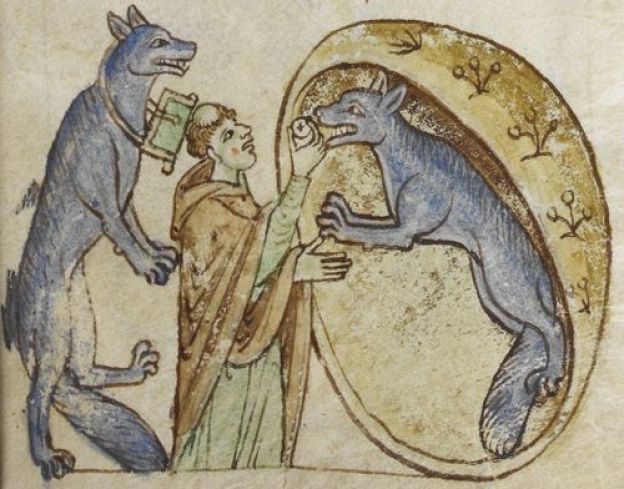
Werewolf Week Continues: A Ghost Story from Petronius

Earlier this week we saw how Plato makes being a tyrant equivalent to a type of lycanthropy. The Romans were also into that kind of thing. One of our oldest werewolf tales comes from Petronius’ Satyricon (61-62):

“Trimalchio turned to Niceros and said: “You used to be more pleasant company—I don’t know why you are now so quiet and subdued. If you want to make me happy, please tell us what happened to you.

Niceros, excited at his friend’s request, replied: “May all profit escape me, if I cannot deflate your joy—when I see how you are. Nevertheless, may happiness be ours, even if I am afraid that these scholars will laugh at me. Let them look on: I will tell the story nonetheless, what difference is it to me? It is better to tell a joke than be one.”

werewolf

Once he had uttered these words, he began the following tale:

‘When I was a slave, we were living in a narrow street where the home of Gavus is now. There is was where the gods decided I would fall in love with the wife of Terence the Innkeeper. You do remember Melissa from Tarentum—that most beautiful little package? By god, I loved her less for her body and sexcapades than I did for her fine morals. She didn’t deny me anything I sought. She made a penny, I got half! I put everything I had into her lap, and I was never cheated.

Her husband passed away at the inn one day. As you can imagine, I risked Skylla and Charybdis so I could get to her: for, as they say, Friends are present in times of need.

By chance, my master was visiting Capua in pursuit of some business. I took my chance and compelled a guest to accompany me to the fifth milestone. He was a soldier and as strong as Orcus. We blundered off around the time of the cock’s crow while the moon was shining as bright as midday. We went among the graves and my friend went among the stones to defecate. I sat singing and counting gravemarkers. And then, as I looked for my companion, he appeared and placed all his clothes near the road.

My breath nearly jumped out my nose—I was standing like a corpse. But he pissed around his clothes and suddenly became a wolf! Don’t you dare imagine I am joking, that I am lying. I make up nothing for such an inheritance as this! But, back to what I started to say, after he turned into a wolf, he began to howl and fled into the forest. At first, I didn’t remember where I was: then I went to gather up his clothes, but they had transformed into stones! What could I do but die from fear?

I drew my sword and struck all the shadows before me until I made it to my girlfriend’s home. I entered as pale as a ghost with sweat rushing down to my groin, my eyes nearly dead. I could hardly regain myself. My Melissa was at first surprised because I had gone out so late. And then she said “I wish you had come earlier, you could have helped us: a wolf entered the house and loosed more blood from the ship than a butcher! He escaped, but he didn’t laugh: an older slave tore his throat with a spear.”

Once I heard these words, I could not sleep any longer. At first light I fled the home of Gaius like an angry landlord. But once I came to the place where his clothing had turned into stone, I found nothing but blood. Honestly, I went home and my soldier was lying like a bull on his bed as a doctor was tending to his neck. I knew that he was a shapeshifter* then, and I wouldn’t have been able to share a meal with him even if you threatened to kill me. Let these men believe what they want about this, but if I am lying, let the gods hate me.”

*”shapeshifter”: Latin, versipellis (lit. “pelt-changer”) is used several times for form-changing in Latin literature. Often, this example and that of Pliny EN 8.80 (cf. LSJ s.v.) are translated as “werewolf”. I chose the more general sense.

[LXI] … Trimalchio ad Nicerotem respexit et: “Solebas, inquit, suavius esse in convictu; nescio quid nunc taces nec muttis. Oro te, sic felicem me videas, narra illud quod tibi usu venit.” Niceros delectatus affabilitate amici: “Omne me, inquit, lucrum transeat, nisi iam dudum gaudimonio dissilio, quod te talem video. Itaque hilaria mera sint, etsi timeo istos scolasticos ne me rideant. Viderint: narrabo tamen, quid enim mihi aufert, qui ridet? satius est rideri quam derideri.”

Haec ubi dicta dedit talem fabulam exorsus est:

“Cum adhuc servirem, habitabamus in vico angusto; nunc Gavillae domus est. Ibi, quomodo dii volunt, amare coepi uxorem Terentii coponis: noveratis Melissam Tarentinam, pulcherrimum bacciballum. Sed ego non mehercules corporaliter aut propter res venerias curavi, sed magis quod benemoria fuit. Si quid ab illa petii, nunquam mihi negatum; fecit assem, semissem habui; in illius sinum demandavi, nec unquam fefellitus sum. Huius contubernalis ad villam supremum diem obiit. Itaque per scutum per ocream egi aginavi, quemadmodum ad illam pervenirem: nam, ut aiunt, in angustiis amici apparent.
[LXII] “Forte dominus Capuae exierat ad scruta scita expedienda. Nactus ego occasionem persuadeo hospitem nostrum, ut mecum ad quintum miliarium veniat. Erat autem miles, fortis tanquam Orcus. Apoculamus nos circa gallicinia; luna lucebat tanquam meridie. Venimus inter monimenta: homo meus coepit ad stelas facere; sedeo ego cantabundus et stelas numero. Deinde ut respexi ad comitem, ille exuit se et omnia vestimenta secundum viam posuit. Mihi anima in naso esse; stabam tanquam mortuus. At ille circumminxit vestimenta sua, et subito lupus factus est. Nolite me iocari putare; ut mentiar, nullius patrimonium tanti facio. Sed, quod coeperam dicere, postquam lupus factus est, ululare coepit et in silvas fugit. Ego primitus nesciebam ubi essem; deinde accessi, ut vestimenta eius tollerem: illa autem lapidea facta sunt. Qui mori timore nisi ego? Gladium tamen strinxi et umbras cecidi, donec ad villam amicae meae pervenirem. In larvam intravi, paene animam ebullivi, sudor mihi per bifurcum volabat, oculi mortui; vix unquam refectus sum. Melissa mea mirari coepit, quod tam sero ambularem, et: ‘Si ante, inquit, venisses, saltem nobis adiutasses; lupus enim villam intravit et omnia pecora tanquam lanius sanguinem illis misit. Nec tamen derisit, etiamsi fugit; senius enim noster lancea collum eius traiecit’. Haec ut audivi, operire oculos amplius non potui, sed luce clara Gai nostri domum fugi tanquam copo compilatus; et postquam veni in illum locum, in quo lapidea vestimenta erant facta, nihil inveni nisi sanguinem. Vt vero domum veni, iacebat miles meus in lecto tanquam bovis, et collum illius medicus curabat. Intellexi illum versipellem esse, nec postea cum illo panem gustare potui, non si me occidisses. Viderint quid de hoc alii exopinissent; ego si mentior, genios vestros iratos habeam.”