Tawdry Tuesday: A Band of F**kers

Martial, Epigrams 1.73

No one in this city would
touch your wife, while free they could;
now she’s guarded, there’s a band
of fuckers for her – clever man!

Nullus in urbe fuit tota qui tangere uellet
uxorem gratis, Caeciliane, tuam,
dum licuit: sed nunc positis custodibus ingens
turba fututorum est: ingeniosus homo es.

F**k Caesar! (And Cicero Too!) [FTS Week]

Alston Hurd Chase, Time Remembered 2.1:

“Another change which I introduced was a widening of the number of authors read in the second and third years of Latin. In Greek there is a perfect text for beginning consecutive reading after the basics have been learned. This is the Anabasis of Xenophon which is at once easy and lively. In the third year, students read some of the very greatest Greek in Homer. But in Latin II, the traditional curriculum presented the boring, repetitious military annals of Caesar which, I am sure, were in part responsible for the very large number who bade Latin farewell after the second year. The third year was almost as bad with the windy, egotistic orations of Cicero which had no appeal to a generation who were talked to death and distrusted all rhetoric.”

Don’t lump me in with him!

Great Authors Err Too!

Quintilian, Inst. Orat. 10.1.24-26

“Let the reader not be persuaded as a matter of course that everything the best authors said is perfect. For they slip at times, they give in to their burdens, and they delight in the pleasure of their own abilities. They do not always pay attention; and they often grow tired. Demosthenes seems to doze to Cicero; Homer naps for Horace. Truly, they are great, but they are still mortals and it happens that those who believe that whatever appears in these authors should be laws for speaking often imitate their lesser parts, since this is easier—and they believe they are enough like them if they emulate the faults of great authors.

Still, one must pass judgment on these men with modesty and care to avoid what often happens when people condemn what they do not understand. If it is necessary to err in either part, I would prefer readers to enjoy everything in these authors rather than dismiss much.”

Neque id statim legenti persuasum sit, omnia quae summi auctores dixerint utique esse perfecta. Nam et labuntur aliquando et oneri cedunt et indulgent ingeniorum suorum voluptati, nec semper intendunt animum, nonnumquam fatigantur, cum Ciceroni dormitare interim Demosthenes, Horatio vero etiam Homerus ipse videatur.  Summi enim sunt, homines tamen, acciditque iis qui quidquid apud illos reppererunt dicendi legem putant ut deteriora imitentur (id enim est facilius), ac se abunde similes putent si vitia magnorum consequantur. Modesto tamen et circumspecto iudicio de tantis viris pronuntiandum est, ne, quod plerisque accidit, damnent quae non intellegunt. Ac si necesse est in alteram errare partem, omnia eorum legentibus placere quam multa displicere maluerim.

Image result for Ancient Roman Literature

F**k The Aeneid! [FTS Week]

Augustine, Confessions 1.13:

“Even now I have not yet sufficiently explored why I then hated the Greek literature on which with which I was glutted as a little boy. Indeed, I loved Latin literature – not the stuff which our elementary teachers taught us, but the stuff that we learned from the philologists. To tell the truth, I considered those first readings, where one learns to read and write and count, almost as burdensome and punishing as all of Greek literature. But what caused this, except the sinfulness and vanity of life, which made me nothing but flesh, a passing wind which never returned. Surely those first readings were better, because they were more certain; by their aid it was happening – has happened – that I am able to read if I come across some writing and I myself am able to write if I please. They were better, I say, than those in which I was compelled to remember the wanderings of some Aeneas, while forgetting of my own wanderings, and to bewail Dido’s death because she committed suicide, while in the midst of these trifles I, wretched as could be, allowed myself to die away from you with dry eyes.

For what could be more wretched than a wretch not pitying himself as he cries about the death of Dido, which came about from loving Aeneas, all the while not crying over his own death, which happens from not loving you, God, the light of my heart and the bread of the internal mouth of my soul and the virtue marrying together my mind and the breast of my thoughts? I did not love you, and I was fornicating away from you, and as I fornicated everyone shouted, ‘Great job, great job!’ The friendship of this world is a kind of fornication away from you, and the phrase ‘Great job, great job!’ is spoken so that one might feel shame if he does not conform. I did not weep over all of these things. Instead, I wept over Dido, now dead after seeking her end with the sword, while I myself followed the lowest things which you created as I, no more than dirt, hastened to the dirt myself. Were I prevented from reading those things, I would have grieved, because I had no reading material to grieve over. With such madness did I think that literature more noble and fruitful than the things which taught me to read and write.”

Sandro Botticelli 050.jpg
Sandro Botticelli, St. Augustine in His Study

quid autem erat causae cur graecas litteras oderam, quibus puerulus imbuebar? ne nunc quidem mihi satis exploratum est. adamaveram enim latinas, non quas primi magistri sed quas docent qui grammatici vocantur. nam illas primas, ubi legere et scribere et numerare discitur, non minus onerosas poenalesque habebam quam omnes graecas. unde tamen et hoc nisi de peccato et vanitate vitae, qua caro eram et spiritus ambulans et non revertens? nam utique meliores, quia certiores, erant primae illae litterae quibus fiebat in me et factum est et habeo illud ut et legam, si quid scriptum invenio, et scribam ipse, si quid volo, quam illae quibus tenere cogebar Aeneae nescio cuius errores, oblitus errorum meorum, et plorare Didonem mortuam, quia se occidit ab amore, cum interea me ipsum in his a te morientem, deus, vita mea, siccis oculis ferrem miserrimus.
quid enim miserius misero non miserante se ipsum et flente Didonis mortem, quae fiebat amando Aenean, non flente autem mortem suam, quae fiebat non amando te, deus, lumen cordis mei et panis oris intus animae meae et virtus maritans mentem meam et sinum cogitationis meae? non te amabam, et fornicabar abs te, et fornicanti sonabat undique: ‘euge! euge!’ amicitia enim mundi huius fornicatio est abs te et ‘euge! euge!’ dicitur ut pudeat, si non ita homo sit. et haec non flebam, et flebam Didonem extinctam ferroque extrema secutam, sequens ipse extrema condita tua relicto te et terra iens in terram. et si prohiberer ea legere, dolerem, quia non legerem quod dolerem. tali dementia honestiores et uberiores litterae putantur quam illae quibus legere et scribere didici.

Longing to Forget

Cicero, de Oratore 2.74:

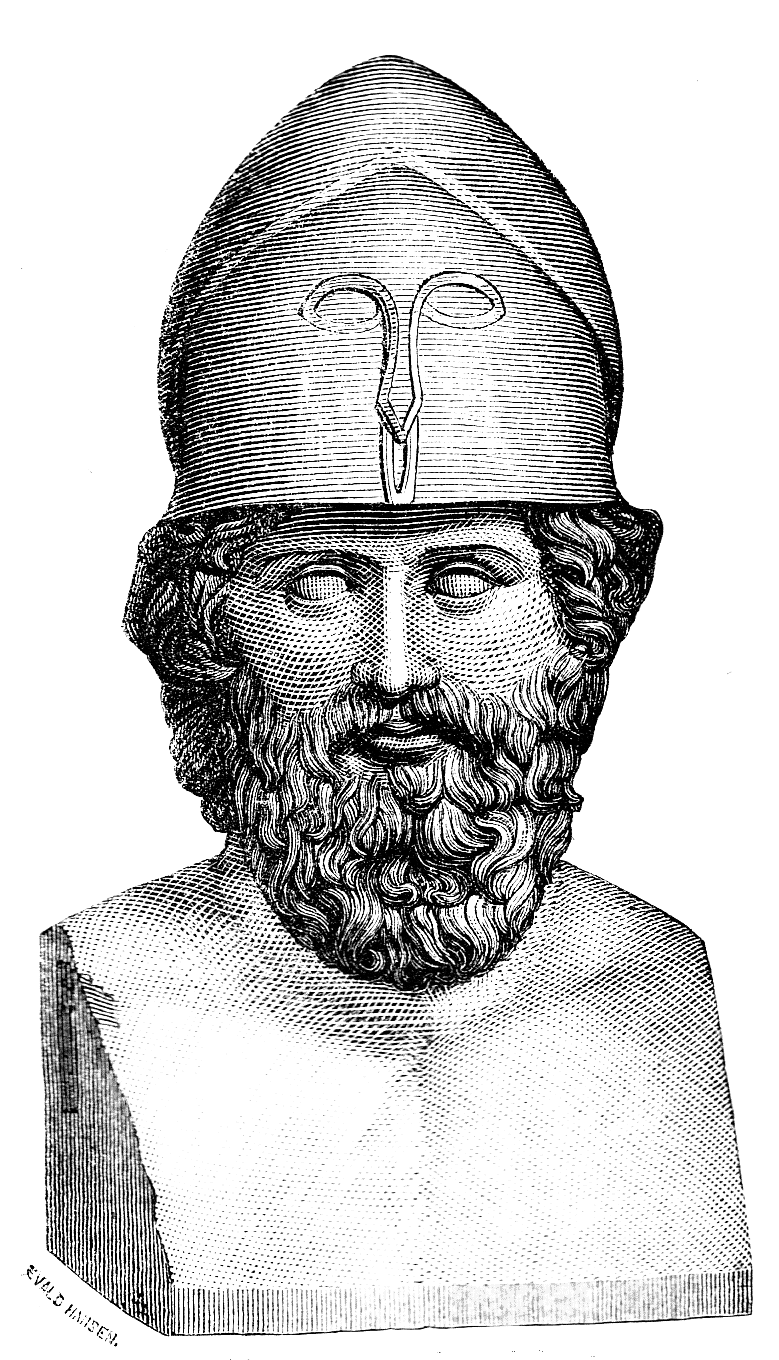
It is said among the Greeks that Themistocles was endowed with a certain incredible greatness of thought and intellect. It is said that once a certain learned man, one of the most educated of his time, approached him and promised to teach him the art of memory, which was then first becoming popular. When Themistocles asked what that could do, the teacher responded that it could make one remember everything. Themistocles responded in turn that the teacher would be doing him a much greater favor if he taught him to forget rather than remember what he wanted. Do you see what force, what a great and powerful mind there was in this man of such sharp intellect? He responded in such a way that we can understand that nothing was ever able to flow out of his mind when once it had gotten in there, since indeed he thought it preferable to be able to forget what he did not want to remember than to remember what he had heard or seen only once.

tumblr_n8sg18VaKi1r6rjufo1_500

Ita apud Graecos fertur incredibili quadam magnitudine consili atque ingeni Atheniensis ille fuisse Themistocles; ad quem quidam doctus homo atque in primis eruditus accessisse dicitur eique artem memoriae, quae tum primum proferebatur, pollicitus esse se traditurum; cum ille quaesisset quidnam illa ars efficere posset, dixisse illum doctorem, ut omnia meminisset; et ei Themistoclem respondisse gratius sibi illum esse facturum, si se oblivisci quae vellet quam si meminisse docuisset. Videsne quae vis in homine acerrimi ingeni, quam potens et quanta mens fuerit? Qui ita responderit, ut intellegere possemus nihil ex illius animo, quod semel esset infusum, umquam effluere potuisse; cum quidem ei fuerit optabilius oblivisci posse potius quod meminisse nollet quam quod semel audisset vidissetve meminisse.

Songs of Our Own Glory

Cicero, Pro Archia (20):

There is no one so averse to the Muses that he would not readily submit to having an eternal monument of his own labors made in verse. They say that Themistocles, the chief man in Athens, when he was asked what entertainment or whose voice he would most gladly listen to, responded that he would most gladly hear the voice of the one by whom his own glory was best celebrated. And so, in the same way, Marius esteemed Lucius Plotius, by whose talent he thought that his own accomplishments could be best celebrated.

Illustrerad Verldshistoria band I Ill 116.png

Neque enim quisquam est tam aversus a Musis, qui non mandari versibus aeternum suorum laborum facile praeconium patiatur. Themistoclem illum, summum Athenis virum, dixisse aiunt, cum ex eo quaereretur, quod acroama aut cuius vocem libentissime audiret: “Eius, a quo sua virtus optime praedicaretur.” Itaque ille Marius item eximie L. Plotium dilexit, cuius ingenio putabat ea quae gesserat posse celebrari.

Nothing is So Simple. Nothing is So Great.

Lucretius, De Rerum Natura 2.1023-1039

“Listen, put your mind now on true reason.
For a new matter rises fiercely to meet your ears
and a new image of the universe strives to show itself.

Nothing is so simple that at first sight
it is not rather difficult to believe;
and in the same way nothing is so great or miraculous
that over time we don’t slowly fail to behold it with wonder.

Consider first the clear and pure color of the sky
and everything it holds, the wandering stars
the moon and the gleam of the sun with its bright light;
If suddenly mortals now saw all these things
for the first time with no prior experience of them,
could anything possibly be said to be more wondrous
or would the races of men have dared to believe they existed?
Nothing. I believe that is how striking the sight would be.
But now, since we are so used to seeing them,
no one thinks it worthwhile to gaze at heaven’s bright splendor.”

Nunc animum nobis adhibe veram ad rationem.
nam tibi vehementer nova res molitur ad auris
accedere et nova se species ostendere rerum.
sed neque tam facilis res ulla est, quin ea primum
difficilis magis ad credendum constet, itemque
nil adeo magnum neque tam mirabile quicquam,
quod non paulatim minuant mirarier omnes,
principio caeli clarum purumque colorem
quaeque in se cohibet, palantia sidera passim,
lunamque et solis praeclara luce nitorem;
omnia quae nunc si primum mortalibus essent
ex improviso si sint obiecta repente,
quid magis his rebus poterat mirabile dici,
aut minus ante quod auderent fore credere gentes?
nil, ut opinor; ita haec species miranda fuisset.
quam tibi iam nemo fessus satiate videndi,
suspicere in caeli dignatur lucida templa.


Image result for Ancient Roman Night sky
Image taken from Pinterest,

Pigs and Minerva, Round II

Erasmus, Adagia 1.41

A Pig Has Undertaken a Contest with Minerva

This saying is the same or at least as close as possible to what we read in Theocritus’ Travelers: Ὗς ποτ᾽ Ἀθηναίαν ἔριν ἤρισε, that is, A pig has dared to compete with the goddess Minerva. How often the uneducated and the stupid and those prepared for a fight are not afraid to provoke the most eminent men in every discipline to a literary contest. The interpreter of Theocritus says that this saying is circulated among the common people thus: Ὗς ὢν πρὸς Ἀθήνην ἐρίζεις, that is, Though you are a pig, you contend with Minerva. Some scholiast or other adds that those are said to ἐρίζειν who contend with words, and those who content with facts are said to ἐρείδειν. So it’s all the more ridiculous if an unteachable pig vies with Minerva, the custodian of learning.

Athena | Luvin Arms Animal Sanctuary

1.41

SVS CVM MINERVA CERTAMEN SVSCEPIT

Cum hoc aut idem aut certe quam maxime finitimum, quod apud Theocritum legitur in Hodoeporis:  Ὗς ποτ᾽ Ἀθηναίαν ἔριν ἤρισε,  id est  Cum diua est ausus sus decertare Minerua. Quoties indocti stolidique et depugnare parati non verentur summos in omni doctrina viros in certamen literarium prouocare. Theocriti enarrator sic efferri vulgo παροιμίαν scribit: Ὗς ὢν πρὸς Ἀθήνην ἐρίζεις, id est Sus cum sis, cum Minerua contendis.  Scholiastes nescio quis addit eos ἐρίζειν dici, qui verbis certant, ἐρείδειν, qui factis, quo magis ridiculum est, si sus indocilis certet cum Minerua disciplinarum praeside.

Stultifying Sentiments

Stultus, a, um -adj. “Foolish, simple, silly, fatuous”

Stultus, m. “a fool”

Publilius Syrus 451

“It is impossible for one who knows he is a fool not have some intelligence”

Non pote non sapere qui se stultum intellegit.

Dicta Catonis 18

“Be foolish when the time or the affair demands: sometimes to pretend foolishness is the greatest wisdom.”

Insipiens esto, cum tempus postulat aut res: stultitiam simulare loco, prudentia summa est.

Publilius Syrus 692

“Silence works as wisdom for a foolish person”

Taciturnitas stulto homini pro sapientia est.

Lucilius, 19.591

“Finally, nothing is enough for a fool even when he has everything”

Denique uti stulto nil sit satis, omnia cum sint

Publilius Syrus 144

“You make a criminal from a fool by forgiving too much”

Crebro ignoscendo facies de stulto improbum.

Seneca, EM 9.14 [Paraphrasing Chrysippus]

“A fool needs nothing since he knows how to use nothing but wants everything”

Contra stulto nulla re opus est, nulla enim re uti scit, sed omnibus eget

Publilius Syrus 118

“Contempt is harder on the wise than a beating is on a fool”

Contemni gravius est quam stulto percuti.

Macrobius, Saturnalia 1.10

“If someone who wants to buy a horse inspects not the horse itself but its saddle and bridle, he is a fool. Even more foolish is the one who thinks a person can be judged from his clothing or the chance that covers us like clothing.”

quemadmodum stultus est qui empturus equum non ipsum inspicit sed stratum eius ac frenos, sic stultissimus est qui hominem aut ex veste aut ex condicione quae nobis vestis modo circumdata est aestimandum putat.

Publilius Syrus 671

“Fortune makes whomever she wants to destroy into a fool”

Stultum facit Fortuna quem vult perdere

Seneca, EM 58

“Since the danger from living badly is greater than the danger of dying quickly, he is a fool who does not bet the price of a little time on a throw of great gain”

Et cum maius periculum sit male vivendi quam cito moriendi, stultus est, qui non exigua temporis mercede magnae rei aleam redimit.

Publilius Syrus 40

“The wise man rules his spirit, a fool serves his”

Animo imperabit sapiens, stultus serviet.

Ennius, Fr. 306

“It is a fool who, in desiring, desires desirously with a desirous mind.”

Stultus est qui cupida mente cupiens cupienter cupit


Image result for Medieval manuscript fool

A Pig Teaches Minerva

Erasmus, Adages 1.40:

A Pig…Minerva

The saddest adage among Latin authors is Ὗς τὴν Ἀθηνᾶν, that is, ‘A pig…Minerva’, where ‘advises’ or ‘teaches’ must be understood as the verb. It is typically said whenever someone uneducated or lacking in wit tries to teach someone from whom they should rather be taught. To use the words of Pompeius Festus, it is when someone teaches another that of which they themselves are ignorant. This is because the guardianship of the arts and the intellect is attributed to Minerva by the poets, as we have said. Further, there is no other animal more brutish or filthy than the big, either because it takes immeasurable delight in shit, which comes about because of the size of its liver, which is the seat of lust and desire, or because of the thickness of its nose and its blunt sense of smell, from which it occurs that it is not offended by the filth. Further, it is so prone and given to food that if by chance it is compelled to look upward, it suddenly falls into a stuporous silence because of the novelty, as Alexander Aphrodiseus tells us. Nor is there anything less capable of instruction, and seems not to be of any use (as some other animals are), but rather to have been given to us by nature simply for feasts. Pliny, in Book VIII Chapter 51 of his Natural History, attests to this when he says, Of all the animals, the pig is especially brutish and is thought, not unwittily, to have received a soul as salt. Varro, in the second book of On Agricultural Affairs says the same thing: They say that the swinish herd was given by nature for feasting. And so, they were given souls in place of salt, to preserve the meat. Indeed, in the fifth book of On the Ends of Good and Evil, Cicero explains what these words mean:

For of all things, which nature creates and guards, which are either lacking mind or not far from it, the highest good lies in their body, as it seems not unwisely said of the pig that a mind was given to that flock in place of salt, so that it would not rot. There are however beasts in which there is something similar to virtue, as for example in lions, in dogs, in horses, in which we see not only some motions in their bodies (as is the case in pigs), but even in some part of their minds.

Aristotle, in his Physiognomics, writes that people with a small forehead are incapable of instruction and unsuited for learning, and seem to belong to their own race, as if they were the farthest removed of all from docility and human arts. For the rest seem full of docility, from which now too we are accustomed commonly to call those who are lacking intelligence and born as if for their guts and stomachs alone ‘pigs’.

Nay, even Suetonius in his catalogue of illustrious grammarians relates that Palaemon was endowed with such arrogance that he called Marcus Varro a pig, and said that his letters were born with and would die with him. Further, if we wish to signify anything uneducated or illiterate, we say that it came from the pig sty, as Cicero says in Against Piso: Brought forth from the sty, not from the school. From this, then, comes the adage a pig Minerva. Luciius Caesar in Cicero’s second book of The Orator says, Thus I, as Crassus listens, will speak first about jokes and I the pig will teach him, the orator of whom, when Catulus had recently heard him, said that the rest might as well eat hay. Cicero also says in the first book of his Academic Questions: For even if it is not a case of the pig teaching Minerva, as they say, nevertheless whoever ineptly teaches Minerva…

Jerome says, in Against Rufinus: I pass over the Greeks, the knowledge of whom you toss about, and while you run after foreign things, you have almost entirely forgotten your speech, lest according to the old adage a pig seems to teach Minerva. Jerome also uses this phrase with different wording in a letter to Marcella, the beginning of which is Charity does not have measure.

Marcus Varro and Euhemerus refer the saying to fables, which can be conjectured from the words of Pompeius Festus, who says, They preferred to involve this thing, placed in the middle, with inept stories rather than relating it simply. The joke of Demosthenes is celebrated; when Demades was crying out to him Δημοσθένης ἐμὲ βούλεται διορθοῦν, ἡ ὗς τὴν Ἀθηνᾶν, that is, Demosthenes wants to correct me, like a pig correcting Minerva, Demosthenes responded, Αὕτη μέντοι πέρυσιν ἡ Ἀθηνᾶ μοιχεύουσα εἰλήφθη, that is, And indeed, this Minerva was recently caught out in adultery. The saying alluded to Minerva the virgin.

sir-oinks-a-lot

SVS MINERVAM

Tritissimum apud Latinos autores adagium Ὗς τὴν Ἀθηνᾶν, id est Sus Mineruam, subaudiendum ‘docet’ aut ‘monet’, dici solitum, quoties indoctus quispiam atque insulsus eum docere conatur, a quo sit ipse magis docendus aut, vt Festi Pompeii verbis vtar, cum quis id docet alterum, cuius ipse est inscius. Propterea quod Mineruae artium et ingeniorum, vt diximus, tutela tribuitur a poetis. Porro sue nullum aliud animal magis brutum magisque sordidum, vt quod stercoribus impense gaudeat vel ob iecoris magnitudinem, quae sedes est concupiscentiae ac libidinis, vel ob narium crassitudinem et olfactum hebetem, vnde fit vt non offendatur foetore; tum adeo pronum ciboque deditum, vt si forte sursum aspicere cogatur, protinus stupore sileat ob insolentiam, vt tradit Alexander Aphrodiseus. Nec est aliud magis indocile, proinde non ad vsum aliquem, quemadmodum pecudes nonnullae, sed ad epulas duntaxat a natura donatum videtur. Cui rei testis est Plinius lib. viii., cap. li. Animalium, inquit, hoc maxime brutum animamque ei pro sale datam, non illepide existimabatur. Idem affirmat Varro libro De re rustica secundo, Suillum, inquit, pecus donatum a natura dicunt ad epulandum. Itaque his animam datam pro sale, quae seruaret carnem. Atque haec quidem verba quid sibi velint, explicat M. Tullius libro De finibus bonorum quinto,

Etenim omnium rerum, inquit, quas et creat natura et tuetur, quae aut sine animo sunt aut non multo secus, eorum summum bonum in corpore est, vt non inscite illud dictum videatur in suem, animum illi pecudi datum pro sale, ne putresceret. Sunt autem bestiae, in quibus inest aliquid simile virtutis vt in leonibus, vt in canibus, vt in equis, in quibus non corporum solum vt in suibus, sed etiam animorum aliqua ex parte motus aliquos videmus.

Aristoteles in Physiognomicis scribit exigua fronte homines indociles et ad disciplinas ineptos videri atque ad suum genus pertinere, tanquam a docilitate humanisque artibus longe omnium alienissimum. Nam reliqua ferme docilitatis esse capacia, vnde nunc quoque vulgo insipidos istos et quasi ventri atque abdomini natos sues appellare consueuimus.

Quin et Suetonius in catalogo illustrium grammaticorum refert Palaemonem arrogantia tanta fuisse, vt M. Varronem porcum appellaret, secum et natas et morituras literas. Praeterea si quid indoctum atque illiteratum significare volumus, id ex hara profectum dicimus. Quemadmodum M. Tullius in

Pisonem: Ex hara productae, non schola. Hinc igitur natum adagium Sus Mineruam. L. Caesar apud Ciceronem libro De oratore secundo, Sic ego, inquit, Crasso audiente primum loquar de facetiis et docebo sus, vt aiunt, oratorem eum, quem cum Catulus nuper audisset, foenum alios aiebat esse oportere. Idem Cicero libro de

Academicis quaestionibus primo: Nam etsi non sus Mineruam, vt aiunt, tamen inepte quisquis Mineruam docet.

Hieronymus in Rufinum: Praetermitto Graecos, quorum tu iactas scientiam, et dum peregrina sectaris, pene tui sermonis oblitus es, ne vetere prouerbio sus Mineruam docere videatur. Vsurpat idem verbis commutatis in epistola ad Marcellam, cuius initium Mensuram charitas non habet.

Varro et Euemerus adagium ad fabulas retulerunt, id quod ex Pompeii verbis licet coniicere. Quam rem, inquit, in medio, quod aiunt, positam ineptis μύθους inuoluere maluerunt, quam simpliciter referre. Celebratur a multis Demosthenis scomma, qui cum Demades vociferaretur in eum: Δημοσθένης ἐμὲ βούλεται διορθοῦν, ἡ ὗς τὴν Ἀθηνᾶν, id est Demosthenes vult me corrigere, sus Mineruam, respondit: Αὕτη μέντοι πέρυσιν ἡ Ἀθηνᾶ μοιχεύουσα εἰλήφθη, id est Atqui nuper haec Minerua in adulterio fuit deprehensa. Dictum allusit ad Mineruam virginem.