Death, A Pre-existing Condition

Lucretius, De Rerum Natura 3.1076-1094

“Finally, what great and vile desire for life compels us
To quake so much amidst doubts and dangers?
Mortals have an absolute end to our lives:
Death cannot be evaded—we must leave.
Nevertheless, we move again and still persist—
No new pleasure is procured by living;
But while what we desire is absent, that seems to overcome
All other things; but later, when we have gained it, we want something else—
An endless thirst for life grips us as we gasp for it.
It remains unclear what fortune life will offer,
What chance may bring us and what end awaits.
But by extending life we do not subtract a moment
Of time from death nor can we shorten it
So that we may somehow have less time after our ends.

Therefore, you may continue as living as many generations as you want,
But that everlasting death will wait for you still,
And he will be there for no less a long time, the man who
Has found the end of life with today’s light, than the man who died
Many months and many years before.”

Denique tanto opere in dubiis trepidare periclis
quae mala nos subigit vitai tanta cupido?
certe equidem finis vitae mortalibus adstat
nec devitari letum pote, quin obeamus.
praeterea versamur ibidem atque insumus usque
nec nova vivendo procuditur ulla voluptas;
sed dum abest quod avemus, id exsuperare videtur
cetera; post aliud, cum contigit illud, avemus
et sitis aequa tenet vitai semper hiantis.
posteraque in dubiost fortunam quam vehat aetas,
quidve ferat nobis casus quive exitus instet.
nec prorsum vitam ducendo demimus hilum
tempore de mortis nec delibare valemus,
quo minus esse diu possimus forte perempti.
proinde licet quod vis vivendo condere saecla,
mors aeterna tamen nihilo minus illa manebit,
nec minus ille diu iam non erit, ex hodierno
lumine qui finem vitai fecit, et ille,
mensibus atque annis qui multis occidit ante.

Seneca, Letters to Lucilius, 1.1:

“Act thus, my Lucilius: justify yourself, collect and save all of the time which to this point has been taken off, or stolen, or simply slipped away. Persuade yourself that the matter stands as I write: some time is stolen from us, some is drawn off, and some just flows away. The most shameful loss, though, is the one which occurs through negligence. If you wish to take note, you will see that a large part of life slips away from those who act badly, the greatest portion slips away from those who do nothing, and all of life slips away from those who are busy doing something else. What person can you cite who places a price upon his time, who takes an account of the day, who understands that he is dying every day? We are deceived in this, that we look forward to death: a large part of it has already gone by, and whatever part of our lives is in the past is death’s property now. Therefore, act as you claim to do, and embrace every hour; thus it will happen that you weigh out less of tomorrow, if you throw your hand upon today.

Life runs away when it is delayed. All things, my Lucilius, are foreign to us: time alone is ours. Nature has granted us the possession of this one fleeting, slippery thing, from which she expels whoever wishes it. The stupidity of humans is so great that they allow the smallest, most worthless things (certainly, those which can be retrieved) to be added to their account when they have accomplished them, but no one thinks that he owes any debt when he receives time, though this is the one thing which no one is able to pay back readily.

You will perhaps ask how I act, I who deliver these precepts to you. I will confess honestly: as happens among the diligent partaker of luxury, I keep an account of the cost. I can not say that I have wasted nothing, but I can give an account of why and how I wasted it. I will explain the causes of my poverty. But it happens to me as to many who have been reduced to poverty through no fault of their own: all ignore him, no one helps him.

What then? I do not consider a man poor if whatever is left to him seems enough to him. I advise you, though to hold on to what is yours, and do it in good time. For, as the ancients say, ‘Parsimony is too late on the ground,’ for not only is the remaining portion at the bottom the smallest, but it is also the worst. Goodbye.”

Ita fac, mi Lucili: vindica te tibi, et tempus quod adhuc aut auferebatur aut subripiebatur aut excidebat collige et serva. Persuade tibi hoc sic esse ut scribo: quaedam tempora eripiuntur nobis, quaedam subducuntur, quaedam effluunt. Turpissima tamen est iactura quae per neglegentiam fit. Et si volueris attendere, magna pars vitae elabitur male agentibus, maxima nihil agentibus, tota vita aliud agentibus. [2] Quem mihi dabis qui aliquod pretium tempori ponat, qui diem aestimet, qui intellegat se cotidie mori? In hoc enim fallimur, quod mortem prospicimus: magna pars eius iam praeterit; quidquid aetatis retro est mors tenet. Fac ergo, mi Lucili, quod facere te scribis, omnes horas complectere; sic fiet ut minus ex crastino pendeas, si hodierno manum inieceris. [3] Dum differtur vita transcurrit. Omnia, Lucili, aliena sunt, tempus tantum nostrum est; in huius rei unius fugacis ac lubricae possessionem natura nos misit, ex qua expellit quicumque vult. Et tanta stultitia mortalium est ut quae minima et vilissima sunt, certe reparabilia, imputari sibi cum impetravere patiantur, nemo se iudicet quicquam debere qui tempus accepit, cum interim hoc unum est quod ne gratus quidem potest reddere.

[4] Interrogabis fortasse quid ego faciam qui tibi ista praecipio. Fatebor ingenue: quod apud luxuriosum sed diligentem evenit, ratio mihi constat impensae. Non possum dicere nihil perdere, sed quid perdam et quare et quemadmodum dicam; causas paupertatis meae reddam. Sed evenit mihi quod plerisque non suo vitio ad inopiam redactis: omnes ignoscunt, nemo succurrit. [5] Quid ergo est? non puto pauperem cui quantulumcumque superest sat est; tu tamen malo serves tua, et bono tempore incipies. Nam ut visum est maioribus nostris, ‘sera parsimonia in fundo est’; non enim tantum minimum in imo sed pessimum remanet. Vale.

Hieronymous Bosch, “Death and the Miser” 1494

and it keeps going……

Poems on Hangovers and the Cures

Crapulous: def. 2: Sick from excessive indulgence in liquor.

kraipale

From the Suda:

Kraipalê: The pounding that comes from drinking too much wine. We also have the participle “carousing” which is when someone acts poorly because of drinking, or just being drunk. It derives from the word “head” (kara) and “pound” (pallein). Or, it could also come from screwing up (sphallesthai) timely matters (kairiôn)

Κραιπάλη: ὁ ἐκ πολλῆς οἰνώσεως παλμός. καὶ Κραιπαλῶν, ἀντὶ τοῦ ἐκ μέθης ἀτακτοῦντα, μεθύοντα. ἀπὸ τοῦ κάρα πάλλειν τοὺς μεθύοντας. ἢ ἀπὸ τοῦ σφάλλεσθαι τῶν καιρίων.

Kraipalôdês: “Prone to drunkenness”: The ancients knew well the weaknesses of the spirit, weather it was a person who was prone to excessive drinking or a love-seeker who has his brain in his genitals.”

Κραιπαλώδης· τῆς ψυχῆς τὰ ἐλαττώματα κατηπίσταντο, εἴτε κραιπαλώδης τις εἴη καὶ μέθυσος εἴτε φιλήδονος καὶ ἐν τοῖς αἰδοίοις ἔχων τὸν ἐγκέφαλον.

Kraipalaikômos“Hangover-revel”: Metonymically, this a song that happens while drunk

Κραιπαλαίκωμος: μετωνυμικῶς ὁ κατὰ μέθην γινόμενος ὕμνος.

Vase with image of reveller vomiting. Getty Villa 86.AE.285

Alexis, fr. 287

“Yesterday you drank too much and now you’re hungover.
Take a nap—this will help it. Then let someone give you
Cabbage, boiled.”

ἐχθὲς ὑπέπινες, εἶτα νυνὶ κραιπαλᾷς.
κατανύστασον· παύσῃ γάρ. εἶτά σοι δότω
ῥάφανόν τις ἑφθήν.

Eubulus, fr. 124

“Woman, it’s because you think I am a cabbage that you’re trying
To give me your hangover. At least, that’s how it seems to me.”

γύναι,
ῥάφανόν με νομίσασ’ εἰς ἐμέ σου τὴν κραιπάλην
μέλλεις ἀφεῖναι πᾶσαν, ὡς ἐμοὶ δοκεῖς.

Nikokharês

“Tomorrow we will boil acorns instead of cabbage
To treat our hangover.”

εἰσαύριον .. ἀντὶ ῥαφάνων ἑψήσομεν
βαλάνιον, ἵνα νῷν ἐξάγῃ τὴν κραιπάλην.

Alexis, fr. 390

“If only we got hangovers before we drank
Then no one would ever drink more
Than is good for them. But now, because
We do not expect to escape drinking’s penalty,
We too eagerly drink unmixed wines”

εἰ τοῦ μεθύσκεσθαι πρότερον τὸ κραιπαλᾶν
παρεγίνεθ’ ἡμῖν, οὐδ’ ἂν εἷς οἶνόν ποτε
προσίετο πλείω τοῦ μετρίου. νυνὶ δὲ τὴν
τιμωρίαν οὐ προσδοκῶντες τῆς μέθης
ἥξειν προχείρως τοὺς ἀκράτους πίνομεν.

Sopater

“It is sweet for men to drink at dawn
Streams of honey when they are struck by thirst
Driven by the last night’s hangover”

νᾶμα μελισσῶν ἡδὺ μὲν ὄρθρου
καταβαυκαλίσαι τοῖς ὑπὸ πολλῆς
κραιπαλοβόσκου δίψης κατόχοις.

How to Cure a Hangover…

Aristotle, Problemata 873a-b

“Wine (being of a wet nature) stretches those who are slow and makes them quick, but it tends to restrain those who are quick already. On that account, some who are melancholic by nature become entirely dissipated in drunken stupors (kraipalais). Just as a bath can make those who are all bound up and stiff more readily able to move, so does it check those who are already movable and loose, so too does wine, which is like a bath for your innards, accomplish this same thing.

Why then does cabbage prevent drunkenness (kraipale)? Either because it has a sweet and purgative juice (and for this reason doctors use it to clean out the intestines), even though it is itself of a cold nature. Here is a proof: doctors use it against exceptionally bad cases of diarrhea, after preparing it by cooking it, removing the fiber, and freezing it. It happens in the case of those suffering from the effects of drunkenness (kraipalonton) that the cabbage juice draws the wet elements, which are full of wine and still undigested, down to their stomachs, while the body chills the rest which remains in the upper part of the stomach. Once it has been chilled, the rest of the moist element can be drawn into the bladder. Thus, when each of the wet elements has been separated through the body and chilled, people are likely to be relieved of their drunkenness (akraipaloi). For wine is wet and warm.”

καὶ ὁ οἶνος (ὑγρὸς γάρ ἐστι τὴν φύσιν) τοὺς μὲν βραδυτέρους ἐπιτείνει καὶ θάττους ποιεῖ, τοὺς δὲ θάττους ἐκλύει. διὸ ἔνιοι τῶν μελαγχολικῶν τῇ φύσει ἐν ταῖς κραιπάλαις ἐκλελυμένοι γίνονται πάμπαν. ὥσπερ γὰρ τὸ λουτρὸν τοὺς μὲν συνδεδεμένους τὸ σῶμα καὶ σκληροὺς εὐκινήτους ποιεῖ, τοὺς δὲ εὐκινήτους καὶ ὑγροὺς ἐκλύει, οὕτως ὁ οἶνος, ὥσπερ λούων τὰ ἐντός, ἀπεργάζεται τοῦτο.

Διὰ τί ἡ κράμβη παύει τὴν κραιπάλην; ἢ ὅτι τὸν  μὲν χυλὸν γλυκὺν καὶ ῥυπτικὸν ἔχει (διὸ καὶ κλύζουσιν αὐτῷ τὴν κοιλίαν οἱ ἰατροί), αὐτὴ δ’ ἐστὶ ψυχρά. σημεῖον δέ· πρὸς γὰρ τὰς σφοδρὰς διαρροίας χρῶνται αὐτῇ οἱ ἰατροί, ἕψοντες σφόδρα καὶ ἀποξυλίζοντες καὶ ψύχοντες. συμβαίνει δὴ τῶν κραιπαλώντων τὸν μὲν χυλὸν αὐτῆς εἰς τὴν κοιλίαν κατασπᾶν τὰ ἐν αὐτοῖς ὑγρά, οἰνηρὰ καὶ ἄπεπτα ὄντα, αὐτὴν δὲ ὑπολειπομένην ἐν τῇ ἄνω κοιλίᾳ ψύχειν τὸ σῶμα. ψυχομένου δὲ ὑγρὰ λεπτὰ συμβαίνει εἰς τὴν κύστιν φέρεσθαι. ὥστε κατ’ ἀμφότερα τῶν ὑγρῶν ἐκκρινομένων διὰ τοῦ σώματος, καὶ καταψυχομένου, εἰκότως ἀκραίπαλοι γίνονται· ὁ γὰρ οἶνος ὑγρὸς καὶ θερμός ἐστιν.

Hippocrates of Cos, Epidemics 2.30

“If someone has head pain from a hangover, have him drink a cup of unmixed wine. For different head pains, have the patient eat bread warm from unmixed wine.”

Ἢν ἐκ κραιπάλης κεφαλὴν ἀλγέῃ, οἴνου ἀκρήτου κοτύλην πιεῖν· ἢν δὲ ἄλλως κεφαλὴν ἀλγέῃ, ἄρτον ὡς θερμότατον ἐξ οἴνου ἀκρήτου ἐσθίειν.

Plutarch, Table-Talk 3 (652F)

“Those who are suffering bodily from drinking and being hungover can find relief from sleeping immediately, warmed with a cover. On the next day, they can be restored with a bath, a massage, and whatever food does not cause agitation but restores the warmth dispelled and lost from the body by wine.”

 ἰῶνταί γε μὴν τὰς περὶ τὸ σῶμα τῶν μεθυσκομένων καὶ κραιπαλώντων κακώσεις εὐθὺς μὲν ὡς ἔοικε περιστολῇ καὶ κατακλίσει συνθάλποντες, μεθ᾿ ἡμέραν δὲ λουτρῷ καὶ ἀλείμματι καὶ σιτίοις, ὅσα μὴ ταράττοντα τὸν ὄγχον ἅμα πράως ἀνακαλεῖται τὸ θερμὸν ὑπὸ τοῦ οἴνου διεσπασμένον καὶ πεφυγαδευμένον ἐκ τοῦ σώματος.

 Latin: crapula, from Grk. Kraipalê

Plautus, Rudens 585-590

“But why am I standing here, a sweating fool?
Maybe I should leave here for Venus’ temple to sleep off this hangover
I got because I drank more than I intended?
Neptune soaked us with the sea as if we were Greek wines
And he hoped to relieve us with salty-beverages.
Shit. What good are words?”

sed quid ego hic asto infelix uuidus?
quin abeo huc in Veneris fanum, ut edormiscam hanc crapulam,
quam potaui praeter animi quam lubuit sententiam?
quasi uinis Graecis Neptunus nobis suffudit mare,
itaque aluom prodi sperauit nobis salsis poculis;
quid opust uerbis?

Plautus, Stichus 226-230

“I am selling Greek moisturizers
And other ointments, hangover-cures
Little jokes, blandishments
And a sycophant’s confabulations.
I’ve got a rusting strigil, a reddish flask,
And a hollowed out follower to hide your trash in.”

uel unctiones Graecas sudatorias
uendo uel alias malacas, crapularias;
cauillationes, assentatiunculas,
ac periuratiunculas parasiticas;
robiginosam strigilim, ampullam rubidam,
parasitum inanem quo recondas reliquias.


Advice more useful the day before

John of Damascus, Sacra Parallela 96.161:

“When the membranes become full of the vapors which wine produces when it is vaporized, the head is stricken with unbearable pains. No longer can it stay upright upon the shoulders, but it constantly drops this way and that, slipping around upon its joints. But who would say such things to those stricken by wine? Their heads are heavy from drunkenness (kraipale), they nod off, they yawn, they see through a fog, and they feel nauseous. On that account, they do not listen to their teachers yelling out to them all of the time. Don’t get drunk on wine, in which there is profligacy. Therein lie trembling and weakness, the breath is beaten out by immoderate indulgence in wine, the nerves are slackened, and the entire mass of the body is put into disorder. “

A woman holding the head of a man who is vomiting. Gouache painting.

῞Οταν γὰρ πλήρεις αἱ μένιγγες γίνωνται τῆς αἰθάλης, ἣν ὁ οἶνος ἐξατμιζόμενος ἀναφέρει, βάλλεται μὲν ὀδύναις ἀφορήτοις ἡ κεφαλή· μένειν δὲ ὀρθὴ ἐπὶ τῶν ὤμων μὴ δυναμένη, ἄλλοτε ἐπ’ ἄλληλα καταπίπτει, τοῖς σπονδύλοις ἐνολισθαίνουσα. ᾿Αλλὰ τίς εἴποι ταῦτα τοῖς οἰνοπλήκτοις; καρηβαροῦσι γὰρ ἐκ τῆς κραιπάλης, νυστάζουσι, χασμῶνται, ἀχλὺν βλέπουσιν, ναυτιῶσιν. Διὰ τοῦτο οὐκ ἀκούουσι τῶν διδασκάλων πολλαχόθεν αὐτοῖς ἐκβοώντων· Μὴ μεθύσκεσθε οἴνῳ, ἐν ᾧ ἐστιν ἀσωτία. ᾿Εντεῦθεν οἱ τρόμοι καὶ αἱ ἀσθένειαι, κοπτομένου αὐτοῖς τοῦ πνεύματος ὑπὸ τῆς ἀμετρίας τοῦ οἴνου, καὶ τῶν νεύρων λυομένων, ὁ κλόνος τῷ σύμπαντι ὄγκῳ τοῦ σώματος ἐπιγίνεται.

Retreat or Resist? Seneca and Plutarch Disagree on Peace of Mind

How do we maintain equanimity in the midst of chaos? 

Seneca, Moral Epistle 94.68-69

“Don’t believe it is possible for anyone to be happy because of someone else’s unhappiness. These examples placed before our ears and ears, must be taken apart—we have to empty our hearts of the corrupting tales that fill them. Virtue must be introduced into the place they held—a virtue which can uproot these lies and contrafactual ideologies; a virtue which may separate us from the people whom we have trusted too much, to return us to sane beliefs.

This is wisdom, truly: to be returned to a prior state and to that place from where public sickness dislodged us. A great part of health is to have rejected the champions of madness and to have abandoned that union which was destructive for everyone involved.”

Non est quod credas quemquam fieri aliena infelicitate felicem. Omnia ista exempla, quae oculis atque auribus nostris ingeruntur, retexenda sunt et plenum malis sermonibus pectus exhauriendum. Inducenda in occupatum locum virtus, quae mendacia et contra verum placentia exstirpet, quae nos a populo, cui nimis credimus, separet ac sinceris opinionibus reddat. Hoc est enim sapientia, in naturam converti et eo restitui,unde publicus error expulerit. Magna pars sanitatis est hortatores insaniae reliquisse et ex isto coitu invicem noxio procul abisse.

Seneca seems to be unfamiliar with schadenfreude (probably because it was a Greek word). Or, perhaps he refuses to acknowledge it as real tranquility. Plutarch may have agreed that Seneca’s prescription was good for attaining ataraxia, but Plutarch does not see it as a efficacious for mental health. 

Plutarch, On the Tranquility of the Mind 465c-d

“The one who said that “it is necessary that someone who would be tranquil avoid doing much both in private and public” makes tranquility extremely pricey for us since its price is doing nothing. This would be like advising a sick man “Wretch, stay unmoving in your sheets” [Eur. Orestes 258.].

And certainly, depriving the body of experience is bad medicine for mental illness. The doctor of the mind is no better who would relieve it of trouble and pain through laziness, softness and the betrayal of friends, relatives and country. Therefore, it is also a lie that tranquility comes to those who don’t do much. For it would be necessary for women to be more tranquil than men since they do most everything at home….”

Ὁ μὲν οὖν εἰπὼν ὅτι “δεῖ τὸν εὐθυμεῖσθαι μέλλοντα μὴ πολλὰ πρήσσειν μήτε ἰδίῃ μήτε ξυνῇ,” πρῶτον μὲν ἡμῖν πολυτελῆ τὴν εὐθυμίαν καθίστησι, γινομένην ὤνιον ἀπραξίας· οἷον ἀρρώστῳ παραινῶν ἑκάστῳ
μέν᾿, ὦ ταλαίπωρ᾿, ἀτρέμα σοῖς ἐν δεμνίοις.
καίτοι κακὸν μὲν ἀναισθησία σώματος φάρμακον ἀπονοίας· οὐδὲν δὲ βελτίων ψυχῆς ἰατρὸς ὁ ῥᾳθυμίᾳ καὶ μαλακίᾳ καὶ προδοσίᾳ φίλων καὶ οἰκείων καὶ πατρίδος ἐξαιρῶν τὸ ταραχῶδες αὐτῆς καὶ λυπηρόν.
Ἔπειτα καὶ ψεῦδός ἐστι τὸ εὐθυμεῖν τοὺς μὴ πολλὰ πράσσοντας. ἔδει γὰρ εὐθυμοτέρας εἶναι γυναῖκας ἀνδρῶν οἰκουρίᾳ τὰ πολλὰ συνούσας·

Let Nothing External Spark Joy, the Stoic Way

Seneca, Moral Epistles 23.1-2

“Do you think that I am going to write about how mild our winter has been, since it is over and was brief, or how terrible the spring is with its prolonged cold and all those foolish things people write when they’re grasping for words?

Nope. I will write you something else which is a huge advantages for me and for you. What, then, will this be unless it is me encouraging you to a stable mind? What is the foundation of what you are seeking? That you not take joy in minor things.

I said this is the foundation, but it is the peak. Someone crests the summit when they know what really brings them joy, when they do not invest their own happiness in an external power.”

Putas me tibi scripturum, quam humane nobiscum hiemps egerit, quae et remissa fuit et brevis, quam malignum ver sit, quam praeposterum frigus, et alias ineptias verba quaerentium? Ego vero aliquid, quod et mihi et tibi prodesse possit, scribam. Quid autem id erit, nisi ut te exhorter ad bonam mentem? Huius fundamentum quod sit quaeris? Ne gaudeas vanis. Fundamentum hoc esse dixi; culmen est. Ad summa pervenit, qui scit, quo gaudeat, qui felicitatem suam in aliena potestate non posuit

no joy in small things? no thank you stoicism

couple in bed meme with latin quotations drawn from the passage saying, in english, what is the foundation you are seeking? That you do not take joy in minor things

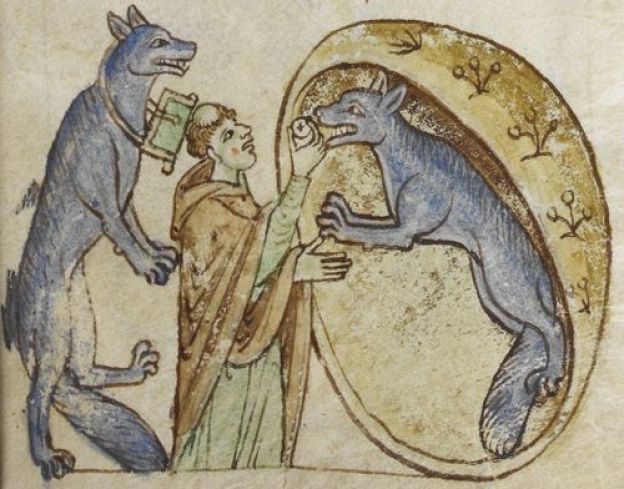
Werewolf Week, Religious Returns: St. Augustine on Lycanthropy

In discussing tales of Diomedes’ companions being turned into birds, Augustine in De Civitate Dei (City of God) discusses werewolves (18.17, the full text):

“In order to make this seem more likely, Varro reports other fantastic tales concerning the infamous witch Circe, who transformed Odysseus’ companions into beasts, and concerning the Arcadians, who were by chance transformed when they swam across a certain lake in which they were turned into wolves. Then, they lived as wolves in the same region. If they did not eat human flesh, then they would be returned to human form after swimming across the same lake again.

werewolf-histories

And he also specifies that a certain Demanaetus tasted of the sacrifice which the Arcadians used to make to the Lycaean god, after the child was burned on the altar, and that he transformed into a wolf and, once he became a man again, competing in boxing at the Olympian games and achieved a victory. Varro does not believe for this reason that Pan or Jupiter were given the name “Lykaios” in Arcadia for any other reason than their ability to turn men into wolves, since they did not believe that this could happen except through divine power. As you know, a wolf is called lykos in Greek, and this is where the name Lykaian comes from. Varro adds that the Roman Luperci arose from their own mysteries similarly.

But what can we who talk about these things say about this kind of deceit by the devil’s forces?”

Augustine goes on to object to these tales and discuss Apuleius’ Golden Ass. I started translating this, but it is a bit of a Halloween buzzkill..

No Room For Werewolves in this city...
No Room For Werewolves in this city…

[XVII] Hoc Varro ut astruat, commemorat alia non minus incredibilia de illa maga famosissima Circe, quae socios quoque Vlixis mutauit in bestias, et de Arcadibus, qui sorte ducti tranabant quoddam stagnum atque ibi conuertebantur in lupos et cum similibus feris per illius regionis deserta uiuebant. Si autem carne non uescerentur humana, rursus post nouem annos eodem renatato stagno reformabantur in homines.

Denique etiam nominatim expressit quendam Demaenetum gustasse de sacrificio, quod Arcades immolato puero deo suo Lycaeo facere solerent, et in lupum fuisse mutatum et anno decimo in figuram propriam restitutum pugilatum sese exercuisse et Olympiaco uicisse certamine. Nec idem propter aliud arbitratur historicus in Arcadia tale nomen adfictum Pani Lycaeo et Ioui Lycaeo nisi propter hanc in lupos hominum mutationem, quod eam nisi ui diuina fieri non putarent. Lupus enim Graece *lu/kos dicitur, unde Lycaei nomen apparet inflexum. Romanos etiam Lupercos ex illorum mysteriorum ueluti semine dicit exortos.

Sed de ista tanta ludificatione daemonum nos quid dicamus…

A Ghost Story from Petronius for Werewolf Week

Earlier  we saw how Plato makes being a tyrant equivalent to a type of lycanthropy. The Romans were also into that kind of thing. One of our oldest werewolf tales comes from Petronius’ Satyricon (61-62):

“Trimalchio turned to Niceros and said: “You used to be more pleasant company—I don’t know why you are now so quiet and subdued. If you want to make me happy, please tell us what happened to you.

Niceros, excited at his friend’s request, replied: “May all profit escape me, if I cannot deflate your joy—when I see how you are. Nevertheless, may happiness be ours, even if I am afraid that these scholars will laugh at me. Let them look on: I will tell the story nonetheless, what difference is it to me? It is better to tell a joke than be one.”

werewolf

Once he had uttered these words, he began the following tale:

‘When I was a slave, we were living in a narrow street where the home of Gavus is now. There is was where the gods decided I would fall in love with the wife of Terence the Innkeeper. You do remember Melissa from Tarentum—that most beautiful little package? By god, I loved her less for her body and sexcapades than I did for her fine morals. She didn’t deny me anything I sought. She made a penny, I got half! I put everything I had into her lap, and I was never cheated.

Her husband passed away at the inn one day. As you can imagine, I risked Skylla and Charybdis so I could get to her: for, as they say, Friends are present in times of need.

By chance, my master was visiting Capua in pursuit of some business. I took my chance and compelled a guest to accompany me to the fifth milestone. He was a soldier and as strong as Orcus. We blundered off around the time of the cock’s crow while the moon was shining as bright as midday. We went among the graves and my friend went among the stones to defecate. I sat singing and counting gravemarkers. And then, as I looked for my companion, he appeared and placed all his clothes near the road.

My breath nearly jumped out my nose—I was standing like a corpse. But he pissed around his clothes and suddenly became a wolf! Don’t you dare imagine I am joking, that I am lying. I make up nothing for such an inheritance as this! But, back to what I started to say, after he turned into a wolf, he began to howl and fled into the forest. At first, I didn’t remember where I was: then I went to gather up his clothes, but they had transformed into stones! What could I do but die from fear?

I drew my sword and struck all the shadows before me until I made it to my girlfriend’s home. I entered as pale as a ghost with sweat rushing down to my groin, my eyes nearly dead. I could hardly regain myself. My Melissa was at first surprised because I had gone out so late. And then she said “I wish you had come earlier, you could have helped us: a wolf entered the house and loosed more blood from the ship than a butcher! He escaped, but he didn’t laugh: an older slave tore his throat with a spear.”

Once I heard these words, I could not sleep any longer. At first light I fled the home of Gaius like an angry landlord. But once I came to the place where his clothing had turned into stone, I found nothing but blood. Honestly, I went home and my soldier was lying like a bull on his bed as a doctor was tending to his neck. I knew that he was a shapeshifter* then, and I wouldn’t have been able to share a meal with him even if you threatened to kill me. Let these men believe what they want about this, but if I am lying, let the gods hate me.”

*”shapeshifter”: Latin, versipellis (lit. “pelt-changer”) is used several times for form-changing in Latin literature. Often, this example and that of Pliny EN 8.80 (cf. LSJ s.v.) are translated as “werewolf”. I chose the more general sense.

[LXI] … Trimalchio ad Nicerotem respexit et: “Solebas, inquit, suavius esse in convictu; nescio quid nunc taces nec muttis. Oro te, sic felicem me videas, narra illud quod tibi usu venit.” Niceros delectatus affabilitate amici: “Omne me, inquit, lucrum transeat, nisi iam dudum gaudimonio dissilio, quod te talem video. Itaque hilaria mera sint, etsi timeo istos scolasticos ne me rideant. Viderint: narrabo tamen, quid enim mihi aufert, qui ridet? satius est rideri quam derideri.”

Haec ubi dicta dedit talem fabulam exorsus est:

“Cum adhuc servirem, habitabamus in vico angusto; nunc Gavillae domus est. Ibi, quomodo dii volunt, amare coepi uxorem Terentii coponis: noveratis Melissam Tarentinam, pulcherrimum bacciballum. Sed ego non mehercules corporaliter aut propter res venerias curavi, sed magis quod benemoria fuit. Si quid ab illa petii, nunquam mihi negatum; fecit assem, semissem habui; in illius sinum demandavi, nec unquam fefellitus sum. Huius contubernalis ad villam supremum diem obiit. Itaque per scutum per ocream egi aginavi, quemadmodum ad illam pervenirem: nam, ut aiunt, in angustiis amici apparent.

[LXII] “Forte dominus Capuae exierat ad scruta scita expedienda. Nactus ego occasionem persuadeo hospitem nostrum, ut mecum ad quintum miliarium veniat. Erat autem miles, fortis tanquam Orcus. Apoculamus nos circa gallicinia; luna lucebat tanquam meridie. Venimus inter monimenta: homo meus coepit ad stelas facere; sedeo ego cantabundus et stelas numero. Deinde ut respexi ad comitem, ille exuit se et omnia vestimenta secundum viam posuit. Mihi anima in naso esse; stabam tanquam mortuus. At ille circumminxit vestimenta sua, et subito lupus factus est. Nolite me iocari putare; ut mentiar, nullius patrimonium tanti facio. Sed, quod coeperam dicere, postquam lupus factus est, ululare coepit et in silvas fugit. Ego primitus nesciebam ubi essem; deinde accessi, ut vestimenta eius tollerem: illa autem lapidea facta sunt. Qui mori timore nisi ego? Gladium tamen strinxi et umbras cecidi, donec ad villam amicae meae pervenirem. In larvam intravi, paene animam ebullivi, sudor mihi per bifurcum volabat, oculi mortui; vix unquam refectus sum. Melissa mea mirari coepit, quod tam sero ambularem, et: ‘Si ante, inquit, venisses, saltem nobis adiutasses; lupus enim villam intravit et omnia pecora tanquam lanius sanguinem illis misit. Nec tamen derisit, etiamsi fugit; senius enim noster lancea collum eius traiecit’. Haec ut audivi, operire oculos amplius non potui, sed luce clara Gai nostri domum fugi tanquam copo compilatus; et postquam veni in illum locum, in quo lapidea vestimenta erant facta, nihil inveni nisi sanguinem. Vt vero domum veni, iacebat miles meus in lecto tanquam bovis, et collum illius medicus curabat. Intellexi illum versipellem esse, nec postea cum illo panem gustare potui, non si me occidisses. Viderint quid de hoc alii exopinissent; ego si mentior, genios vestros iratos habeam.”

Dabbling in the Occult: Odysseus, Necromancer

It is the right time of the year for raising the dead. A student paper on the Elpenor Pelike at the MFA in Boston drew my attention to the following passage.

Servius ad Aen. 6.107

“For this reason the place is named without joy since, as people claim, it would not have been there but for necromancy or spell-craft. For, Aeneas completed these sacred rites when Misenus was killed and Ulysses did it with the death of Elpenor.

This very scene Homer himself presented falsely from the detail of its location which he specifies along with the length of time of the journey. For he claims that Ulysses sailed for one night and came to the place where he completed these sacrifices. For this reason it is abundantly clear that he doesn’t mean the ocean but Campania.”

sine gaudio autem ideo ille dicitur locus, quod necromantia vel sciomantia, ut dicunt, non nisi ibi poterat fieri: quae sine hominis occisione non fiebant; nam et Aeneas illic occiso Miseno sacra ista conplevit et Vlixes occiso Elpenore. quamquam fingatur in extrema Oceani parte Vlixes fuisse: quod et ipse Homerus falsum esse ostendit ex qualitate locorum, quae commemorat, et ex tempore navigationis; dicit enim eum a Circe unam noctem navigasse et ad locum venisse, in quo haec sacra perfecit: quod de Oceano non procedit, de Campania manifestissimum est.

The relevant passages from the Odyssey don’t give any hint that Elpenor was intentionally killed for black magic. When Odysseus actually does summon the dead, now that gets a little dark.

Odyssey, 10.552–560

“I could not even lead my companions unharmed from there.
The youngest of my companions was a certain Elpênor,
He was neither especially brave in battle or composed in his thoughts.
He separated himself from the companions in Kirkê’s holy home
Because he needed some air; then he fell asleep because he was drunk.
When he heard the noise and trouble of our companions moving out,
He got up immediately and it completely escaped his thoughts
To climb down again by the long ladder—
So he fell straight from the roof and his neck
Shattered along his spine; then his spirit flew down to Hades.”

οὐδὲ μὲν οὐδ’ ἔνθεν περ ἀπήμονας ἦγον ἑταίρους.
᾿Ελπήνωρ δέ τις ἔσκε νεώτατος, οὔτε τι λίην
ἄλκιμος ἐν πολέμῳ οὔτε φρεσὶν ᾗσιν ἀρηρώς,
ὅς μοι ἄνευθ’ ἑτάρων ἱεροῖσ’ ἐν δώμασι Κίρκης,
ψύχεος ἱμείρων, κατελέξατο οἰνοβαρείων·
κινυμένων δ’ ἑτάρων ὅμαδον καὶ δοῦπον ἀκούσας
ἐξαπίνης ἀνόρουσε καὶ ἐκλάθετο φρεσὶν ᾗσιν
ἄψορρον καταβῆναι ἰὼν ἐς κλίμακα μακρήν,
ἀλλὰ καταντικρὺ τέγεος πέσεν· ἐκ δέ οἱ αὐχὴν
ἀστραγάλων ἐάγη, ψυχὴ δ’ ῎Αϊδόσδε κατῆλθεν.

Elpênor appears twice more in the epic: 11.51–80 (Odysseus meets Elpênor’s ghost when he summons the dead); 12.9-15 (Odysseus buries Elpênor).

picture of red figure vase with three figures. the ghost of elpenor on the left, odysseus in the middle, and hermes on the right

MFA Boston, Accession Number 34.79; Caskey-Beazley, Attic Vase Paintings (MFA), no. 111; Highlights: Classical Art (MFA), p. 070-071.

Nekuomanteia, glossed by Hesychius as nekromanteia (i.e. “necromancy”) is an alternate name for the Nekyuia, the parade of the dead in book 11 of the Odyssey. From the Greek Anthology: ᾿Εν τῷ Η ἡ τοῦ ᾿Οδυσσέως νεκυομαντεία· (3.8); Scholia to the Odyssey, Hypotheses: Λ. Νεκυομαντεία, ἢ, Νεκυία. Cf. Eustathius, Comm. Ad Od. 1.396.10

Werewolf Week In Rome: Don’t Look a Wolf in the Eyes!

Here is the rather famous account of Werewolves from Pliny the Elder’s Natural History 8.34) (for the full text: see Perseus). The Latin text on Perseus is incorrect, but fortunately Lacus Curtius is there to save the day.

wolfboys

Pliny, NH 8.34 80-83

“But in Italy they also believe that the gaze of a wolf is harmful—specifically that it will take the voice from any man they see first. Africa and Egypt have wolves that are slow and small, while the colder climates produce fierce and wild animals. We ought to believe with certainty that accounts of men turning into wolves and then back to themselves again are false; or we should be prepared  to believe all the tales that are fantastic from as many generations.

Nevertheless, since the tale is popular enough that it has earned the curse-term “versepellis”, I will explain its origin. Euanthes, not unknown among Greek authors, reports that the Arcadians hold that a member of a family of a certain Anthus is selected by lot, transported to a certain lake in the region, and, after he hangs his clothes on an oak tree, he crosses the lake and enters the desert where he turns into a wolf and joins with others of his kind for nine years.

If he keeps himself from humans for this period of time, he returns to the same lake and once he has crossed it regains his form, except that nine years of age have accumulated. Fabius adds to this tale that he also regains his clothing. It is amazing how far Greek gullibility will go! There is no lie so shameful that it will lack partisans.

Similarly, the author Apollas who wrote the Olympionics, claims that Demaenetus of Parrhasia, when the Arcadians were still performing human sacrifices to Jupiter Lycaeus, sampled the entrails of a child who had been sacrificed, and transformed into a wolf. That same man transformed back 10 years later, became an athlete, and returned to the Olympic games as a victor.

It is also believed that there is a thin tip of hair on the tail of this animal which acts as an aphrodisiac—when the animal is caught, it has no force unless it is plucked while the animal is still alive.”

Sed in Italia quoque creditur luporum visus esse noxius vocemque homini, quem priores contemplentur, adimere ad praesens. inertes hos parvosque Africa et Aegyptus gignunt, asperos trucesque frigidior plaga. homines in lupos verti rursusque restitui sibi falsum esse confidenter existimare debemus aut credere omnia quae fabulosa tot saeculis conperimus. unde tamen ista vulgo infixa sit fama in tantum, ut in maledictis versipelles habeat, indicabitur.

Euanthes, inter auctores Graeciae non spretus, scribit Arcadas tradere ex gente Anthi cuiusdam sorte familiae lectum ad stagnum quoddam regionis eius duci vestituque in quercu suspenso tranare atque abire in deserta transfigurarique in lupum et cum ceteris eiusdem generis congregari per annos VIIII. quo in tempore si homine se abstinuerit, reverti ad idem stagnum et, cum tranaverit, effigiem recipere, ad pristinum habitum addito novem annorum senio. id quoque adicit, eandem recipere vestem.

mirum est quo procedat Graeca credulitas! nullum tam inpudens mendacium est, ut teste careat. item Apollas, qui Olympionicas scripsit, narrat Demaenetum Parrhasium in sacrificio, quod Arcades Iovi Lycaeo humana etiamtum hostia facebant, immolati pueri exta degustasse et in lupum se convertisse, eundem X anno restitutum athleticae se exercuisse in pugilatu victoremque Olympia reversum.

quin et caudae huius animalis creditur vulgo inesse amatorium virus exiguo in villo eumque, cum capiatur, abici nec idem pollere nisi viventi dereptum.

The Child-Killing Lamia: What’s Really Scary on Halloween is Misogyny

This is the second post about ancient Greek Vampires. The first looked at the Empousa. 

Lucian, Lover of Lies 2

“…these are various and disturbing tales, able to rattle the minds of children who still fear Mormo and Lamia.”

πάνυ ἀλλόκοτα καὶ τεράστια μυθίδια παίδων ψυχὰς κηλεῖν δυνάμενα ἔτι τὴν Μορμὼ καὶ τὴν Λάμιαν δεδιότων.

The Lamia (or, just Lamia to her friends) is one of the figures from Greek myth who seems like a frightening monster but really is a particular distillation of misogyny. She is often called a Greek ‘vampire’ along with Empousa. Unlike the latter, however, Lamia is specifically associated with killing children.

Diodorus Siculus, 20.40

“At the rock’s root there was a very large cave which was roofed with ivy and bryony in which the myths say the queen Lamia, exceptional for her beauty, was born. But, because of the beastliness of her soul, they say that her appearance has become more monstrous in the time since then.

For, when all her children who were born died, she was overwhelmed by her suffering and envied all the women who were luckier with their children. So she ordered that the infants be snatched from their arms and killed immediately. For this reason, even in our lifetime, the story of that women has lingered among children and the mention of her name is most horrifying to them.

But, whenever she was getting drunk, she would allow people to do whatever pleased them without observation. Because she was not closely watching everything at that time, the people in that land imagined that she could not see. This is why the myth developed that she put her eyes into a bottle, using this story a metaphor for the carelessness she enacted in wine, since that deprived her of sight.”

 περὶ δὲ τὴν ῥίζαν αὐτῆς ἄντρον ἦν εὐμέγεθες, κιττῷ καὶ σμίλακι συνηρεφές, ἐν ᾧ μυθεύουσι γεγονέναι βασίλισσαν Λάμιαν τῷ κάλλει διαφέρουσαν· διὰ δὲ τὴν τῆς ψυχῆς ἀγριότητα διατυπῶσαί φασι τὴν ὄψιν αὐτῆς τὸν μετὰ ταῦτα χρόνον θηριώδη. τῶν γὰρ γινομένων αὐτῇ παίδων ἁπάντων τελευτώντων βαρυθυμοῦσαν ἐπὶ τῷ πάθει καὶ φθονοῦσαν ταῖς τῶν ἄλλων γυναικῶν εὐτεκνίαις κελεύειν ἐκ τῶν ἀγκαλῶν ἐξαρπάζεσθαι τὰ βρέφη καὶ παραχρῆμα ἀποκτέννειν. διὸ καὶ καθ᾿ ἡμᾶς μέχρι τοῦ νῦν βίου παρὰ τοῖς νηπίοις διαμένειν τὴν περὶ τῆς γυναικὸς ταύτης φήμην καὶ φοβερωτάτην αὐτοῖς εἶναι τὴν ταύτης προσηγορίαν. ὅτε δὲ μεθύσκοιτο, τὴν ἄδειαν διδόναι πᾶσιν ἃ βούλοιντο ποιεῖν ἀπαρατηρήτως. μὴ πολυπραγμονούσης οὖν αὐτῆς κατ᾿ ἐκεῖνον τὸν χρόνον τὰ γινόμενα τοὺς κατὰ τὴν χώραν ὑπολαμβάνειν μὴ βλέπειν αὐτήν· καὶ διὰ τοῦτ᾿ ἐμυθολόγησάν τινες ὡς εἰς ἄρσιχον ἐμβάλοι τοὺς ὀφθαλμούς, τὴν ἐν οἴνῳ συντελουμένην ὀλιγωρίαν εἰς τὸ προειρημένον μέτρον μεταφέροντες, ὡς τούτου παρῃρημένου τὴν ὅρασιν.

Euripides, fr. 472m (=Diodorus Siculus 20.41.6)

“Who does not know my name, most hateful to men,
The Lamia, a Libyan by birth?”

τίς τοὐ<μὸν ὄ>νομα τοὐπονείδιστον βροτοῖς
οὐκ οἶδε Λαμίας τῆς Λιβυστικῆς γένος;

The story of why Lamia killed children gets a little more depressing in the Fragments of the Greek Historians

Duris, BNJ 76 F17 [= Photios s.v. Lamia]

“In the second book of his Libyan History, Duris reports that Lamia was a fine looking woman but after Zeus had sex with her, Hera killed the children she bore because she was envious. As a result she was disfigured by grief and would seize and kill the children of others.”

ταύτην ἐν τῆι Λιβύηι Δοῦρις ἐν δευτέρωι Λιβυκῶν ἱστορεῖ γυναῖκα καλὴν γενέσθαι, μιχθέντος δ᾽ αὐτῆι Διὸς ὑφ᾽ ῞Ηρας ζηλοτυπουμένην ἃ ἔτικτεν ἀπολλύναι· διόπερ ἀπὸ τῆς λύπης δύσμορφον γεγονέναι καὶ τὰ τῶν ἄλλων παιδία ἀναρπάζουσαν διαφθείρειν.

Elsewhere, the evidence of narratives about Lamia are rather limited. She becomes just another negative, female monster.

Suda, Lambda 85

“Lamia: a monster. The name comes from having a gaping throat, laimia and lamia. Aristophanes: “It has the smell of a seal, the unwashed balls of a Lamia.” For testicles are active—and he is making a fantasy image of Lamia’s balls, since she is female.

Λάμια: θηρίον. ἀπὸ τοῦ ἔχειν μέγαν λαιμόν, λαίμια καὶ λάμια. ᾿Αριστοφάνης· φώκης δ’ εἶχεν ὀσμήν, λαμίας ὄρχεις ἀπολύτους. δραστικοὶ γὰρ οἱ ὄρχεις. εἰδωλοποιεῖ δέ τινας ὄρχεις λαμίας· θῆλυ γάρ.

Unlike Empousa and some others, Lamia is interestingly integrated in some other genealogical traditions.

Schol. G ad Ap. Rhodes 4.825-831

“Stesichorus says in his Skylla, regarding her form, that Skylla is the daughter of Lamia.”

Στησίχορος δὲ ἐν τῇ Σκύλλῃ †εἶδός τινος† Λαμίας τὴν Σκύλλαν φησὶ θυγατέρα εἶναι.

Pausanias on Phocis, 12

“There is a crag rising up over the ground on which the Delphians claim that a woman stood singing oracles, named Hêrophilê but known as Sibyl. There is the earlier Sibyl, the one I have found to be equally as old as the others, whom the Greeks claim is the daughter of Zeus and Lamia, the daughter of Poseidon. She was the first woman to sing oracles and they say that she was named Sibyl by the Libyans. Hêrophilê was younger than here, but she was obviously born before the Trojan War since she predicted Helen in her oracles, that was raised up in Sparta as the destruction for Asia and Europe and that Troy would be taken by the Greeks because of her.”

XII. Πέτρα δέ ἐστιν ἀνίσχουσα ὑπὲρ τῆς γῆς· ἐπὶ ταύτῃ Δελφοὶ στᾶσάν φασιν ᾆσαι τοὺς χρησμοὺς γυναῖκα ὄνομα Ἡροφίλην, Σίβυλλαν δὲ ἐπίκλησιν. τὴν δὲ πρότερον γενομένην, ταύτην ταῖς μάλιστα ὁμοίως οὖσαν ἀρχαίαν εὕρισκον, ἣν θυγατέρα Ἕλληνες Διὸς καὶ Λαμίας τῆς Ποσειδῶνός φασιν εἶναι, καὶ χρησμούς τε αὐτὴν γυναικῶν πρώτην ᾆσαι καὶ ὑπὸ τῶν Λιβύων Σίβυλλαν λέγουσιν ὀνομασθῆναι. ἡ δὲ Ἡροφίλη νεωτέρα μὲν ἐκείνης, φαίνεται δὲ ὅμως πρὸ τοῦ πολέμου γεγονυῖα καὶ αὕτη τοῦ Τρωικοῦ, καὶ Ἑλένην τε προεδήλωσεν ἐν τοῖς χρησμοῖς, ὡς ἐπ᾿ ὀλέθρῳ τῆς Ἀσίας καὶ Εὐρώπης τραφήσοιτο ἐν Σπάρτῃ, καὶ ὡς Ἴλιον ἁλώσεται δι᾿ αὐτὴν ὑπὸ Ἑλλήνων.

Dionysus of Halicarnassus, On Thucydides 6

“Foremost he differed from previous authors in this, by which I mean how he took on a subject that was not a single thread nor one divided in many different and also disconnected parts. And then, because did not include mythical material in his work and he did not use his writing for the deception and bewitchment of many, as every author before him did when they told the stories of certain Lamiai rising up from the earth in groves and glens and of amphibious Naiads rushing out of Tartaros, half-beasts swimming through the seas and then joining together in groups among humans, and producing offspring of mortals and gods, demigods—and other stories which seem extremely unbelievable and untrustworthy to us now.”

πρῶτον μὲν δὴ κατὰ τοῦτο διήλλαξε τῶν πρὸ αὐτοῦ συγγραφέων, λέγω δὲ κατὰ τὸ λαβεῖν ὑπόθεσιν μήτε μονόκωλον παντάπασι μήτ᾿ εἰς πολλὰ μεμερισμένην καὶ ἀσυνάρτητα κεφάλαια· ἔπειτα κατὰ τὸ μηδὲν αὐτῇ μυθῶδες προσάψαι, μηδ᾿ εἰς ἀπάτην καὶ γοητείαν τῶν πολλῶν ἐκτρέψαι τὴν γραφήν, ὡς οἱ πρὸ αὐτοῦ πάντες ἐποίησαν, Λαμίας τινὰς ἱστοροῦντες ἐν ὕλαις καὶ νάπαις ἐκ γῆς ἀνιεμένας, καὶ Ναΐδας ἀμφιβίους ἐκ Ταρτάρων ἐξιούσας καὶ διὰ πελάγους νηχομένας καὶ μιξόθηρας, καὶ ταύτας εἰς ὁμιλίαν ἀνθρώποις συνερχομένας, καὶ ἐκ θνητῶν καὶ θείων συνουσιῶν γονὰς ἡμιθέους, καὶ ἄλλας τινὰς ἀπίστους τῷ καθ᾿ ἡμᾶς βίῳ καὶ πολὺ τὸ ἀνόητον ἔχειν δοκούσας ἱστορίας.

There is another variant name–she might get her own entry some day

Suda, s.v.Μορμώ 

Mormô, in the genitive Mormous, declined like Sappho. There is also the form Mormôn, genitive Mormonos. Aristophanes says “I ask you, take this Mormo away from me”. This meant to dispel frightening things. For Mormo is frightening. And again in Aristophanes: “A Mormo for courage”. There is also a mormalukeion which they also call a Lamia. They also frightening things this.

Μορμώ: λέγεται καὶ Μορμώ, Μορμοῦς, ὡς Σαπφώ. καὶ Μορμών, Μορμόνος. Ἀριστοφάνης: ἀντιβολῶ σ’, ἀπένεγκέ μου τὴν Μορμόνα. ἄπο τὰ φοβερά: φοβερὰ γὰρ ὑπῆρχεν ἡ Μορμώ. καὶ αὖθις Ἀριστοφάνης: Μορμὼ τοῦ θράσους. μορμολύκειον, ἣν λέγουσι Λαμίαν: ἔλεγον δὲ οὕτω καὶ τὰ φοβερά.

 In some traditions, Lamia became proverbial

Plutarch, De Curiositate [On Being a Busybod y] 516a

“Now, just as in the myth they say that Lamia sleeps at home, putting her eyes set aside in some jar, but when she goes out she puts them back in and peers around, in the same way each of us puts his curiosity, as if fitting in an eye, into meanness towards others. But we often stumble over our own mistakes and faults because of ignorance, since we fail to secure sight or light for them.

For this reason, a busybody is rather useful to his enemies, since he rebukes and emphasizes their faults and shows them what they should guard and correct, even as he overlooks most of his own issues thanks to his obsession with everyone else. This is why Odysseus did not stop to speak with his mother before he inquired from the seer about those things for which he had come to Hades. Once he had made his inquiry, he turned to his own mother and also the other women, asking who Tyro was, who beautiful Khloris was, and why Epikaste had died.”

Lamia is not well-attested in art and myth

νῦν δ’ ὥσπερ ἐν τῷ μύθῳ τὴν Λάμιαν λέγουσιν οἴκοι μὲν εὕδειν τυφλήν, ἐν ἀγγείῳ τινὶ τοὺς ὀφθαλμοὺς ἔχουσαν ἀποκειμένους, | ἔξω δὲ προϊοῦσαν ἐντίθεσθαι καὶ βλέπειν, οὕτως ἡμῶν ἕκαστος ἔξω καὶ πρὸς ἑτέρους τῇ κακονοίᾳ τὴν περιεργίαν ὥσπερ ὀφθαλμὸν ἐντίθησι, τοῖς δ’ ἑαυτῶν ἁμαρτήμασι καὶ κακοῖς πολλάκις περιπταίομεν ὑπ’ ἀγνοίας, ὄψιν ἐπ’ αὐτὰ καὶ φῶς οὐ ποριζόμενοι. διὸ καὶ τοῖς ἐχθροῖς ὠφελιμώτερός ἐστιν ὁ πολυπραγμονῶν· τὰ γὰρ ἐκείνων ἐλέγχει καὶ προφέρεται καὶ δείκνυσιν αὐτοῖς ἃ δεῖ φυλάξασθαι καὶ διορθῶσαι, τῶν δ’ οἴκοι τὰ πλεῖστα παρορᾷ διὰ τὴν περὶ τὰ ἔξω πτόησιν. ὁ μὲν γὰρ ᾿Οδυσσεὺς (λ 84 sqq.) οὐδὲ τῇ μητρὶ διαλεχθῆναι πρότε- ρον ὑπέμεινεν ἢ πυθέσθαι παρὰ τοῦ μάντεως, ὧν ἕνεκ’ ἦλθεν εἰς ῞Αιδου, πυθόμενος δὲ οὕτω πρός τε ταύτην ἔτρεψεν αὑτόν, καὶ τὰς ἄλλας γυναῖκας ἀνέκρινε, τίς ἡ Τυρὼ καὶ τίς ἡ καλὴ Χλωρὶς καὶ διὰ τί ἡ ᾿Επικάστη ἀπέθανεν…

Image result for Ancient Greek Lamia vase
Skylla, relative of Lamia. More Misogyny.

Some other misogynistic tales from myth with telling variants

The Lemnian Women and their Terrible Smell

The Privileging of Klytemnestra’s Infamy

The Terrible Tale of Asclepius’ Two Mothers

Pretty Much Everything about Medea

Kassandra’s Prophecy and Life

Kassandra’s Children

The Death of Hecuba

Helen and Iphigenia

John William Waterhouse , Lamia

Fear of Ghosts in Imperial Rome

Pliny, Natural History 27.98

“For treatment against night terrors and fear of ghosts it is suggested that a string of big teeth will help”

contra nocturnos pavores umbrarumque terrorem unus e magnis dentibus lino alligatus succurrere narratur.

Seneca, Moral Epistle 82.16

“Death should be hated more than it is customarily. For we believe many things about death. There has been a struggle among geniuses to increase its bad reputation. The world below is depicted as a prison and the region is oppressed by eternal night where:

“The huge guardian of death / laying upon half-eaten bones in his gory cave / horrifies the bloodless ghosts with eternal barking”*

Even if you can persuade someone that these are stories and that there is nothing there for the dead to fear, another fright comes over you. For they fear going to the underworld no less than they fear going nowhere.”

Mors contemni debet magis quam solet. Multa enim de illa credidimus. Multorum ingeniis certatum est ad augendam eius infamiam. Descriptus est carcer infernus et perpetua nocte oppressa regio, in qua

Ingens ianitor Orci

Ossa super recubans antro semesa cruento,

Aeternum latrans exsangues terreat umbras.

Etiam cum persuaseris istas fabulas esse nec quicquam defunctis superesse, quod timeant, subit alius metus. Aeque enim timent, ne apud inferos sint, quam ne nusquam.

*From Vergil’s Aeneid.