Poets, Philosophers, Fools

Aeneas Silvius Piccolomini, de Puerorum Educatione:

“What should I say about theologians? What error in faith has not stemmed from them? Who brought about the Arrian insanity, who separated the Greeks from the church, who seduced the Bohemians, if not theologians? At one time, the Romans expelled every kind of doctor from the city because they were guilty of all sorts of crimes; once the guilty had been punished, they allowed the innocent to return to the city. What about orators? Does Cicero not say that many cities were razed to the very ground because of the eloquence of evil people? But just as neither all orators nor all doctors nor all theologians nor all philosophers ought to be rejected on account of a few bad apples, similarly, we ought not to shrink from all poets on account of the vices of a few. Otherwise, even Plato himself should have been ejected from the city which he formed, since he was given to tragedy and Macrobius relates some of his poems which prove that he was a poet. Nor would Cicero have remained in that city, since he was not only the greatest cultivator of poets, but even wrote out three books On His Own Times in verse, in the old poetic fashion. Boethius’ objection merits laughter rather than a response. For who could hold back a laugh when it is said that a poet is condemning poetry? Is Boethius not a poet in all ways? For in his work, Philosophy (who speaks with him) goes on in verse and fiction. How many stories are found there? How many types of meters? Boethius seems similar to that guy who used to swear that no one should swear. But let us not impute what those others think to Boethius, who was both a philosopher and a poet. Let us suppose that he had something else in mind, which it would be tedious to discuss right now.”

piccolomini2

Celestial and Parental Debts of Gratitude

Seneca, De Beneficiis 6.4

“Therefore, we owe a great debt to the sun and the moon and the rest of the celestial bodies since, even if the reasons for which they rise are more important to them, still they help us greatly in our march towards greater things. Consider to that they help us from a certain purpose and for that reason we are obligated to them, because we do not happen upon an advantage from the ignorant but from those who knew we would accept their help.

So, even though it may be proposed that they have a greater purpose and profit for what they do beyond serving mortal creatures, still from the beginning of nature their concern has been oriented towards us and in this organization given to the universe it is clear that concern oriented towards us was not held among the most minor concerns.

We owe a debt of duty to our parents even though though most did not have sex in order for us to be born. The gods cannot be thought to be so ignorant of what they would create when they immediately provided nourishment and aid to everything, nor did they produce through negligence those for whom they created so many things.”

Debemus ergo et soli et lunae et ceteris caelestibus beneficium, quia, etiam si potiora illis sunt, in quae oriuntur, nos tamen in maiora ituri iuvant. Adice, quod ex destinato iuvant, ideoque obligati sumus, quia non in beneficium ignorantium incidimus, sed haec, quae accipimus, accepturos scierunt; et quamquam maius illis propositum sit maiorque actus sui fructus, quam servare mortalia, tamen in nostras quoque utilitates a principio rerum praemissa mens est et is ordo mundo datus, ut appareat curam nostri non inter ultima habitam. Debemus parentibus nostris pietatem, et multi non, ut gignerent, coierant. Di non possunt videri nescisse, quid effecturi essent, cum omnibus alimenta protinus et auxilia providerint, nec eos per neclegentiam genuere, quibus tam multa generabant.

From Wikipedia

Seneca on Why Presents Should be Opened RIGHT AWAY

Seneca, De Beneficiis 2.2

When the spirit is worn out and begins to hate a benefit while it waits for it, is it possible to still be grateful? Just as it is the most bitter cruelty which makes a punishment last longer and that killing quickly is a kind of mercy since torment supplies its own final end and the time which comes before death is the greatest period of suffering, so too gratitude for a gift will be greater the shorter the duration of suspense.

For the expectation of good things is upsetting too and since most gifts bring relief from some kind of thing, if anyone allows someone else to be tortured for a while when he was able to free him of burden or if he is slow to rejoice, he has added a punitive slap to his good deed. All generosity should move quickly—someone who acts quickly is someone who acts voluntarily. If someone drags his feet day to day, he does not act according to his spirit. He has thus lost two precious things: time and the demonstration of willing friendship. Consenting slowly is an indication of someone who is unwilling.”

Ubi in taedium adductus animus incipit beneficium odisse, dum expectat, potest ob id gratus esse? Quemadmodum acerbissima crudelitas est, quae trahit poenam, et misericordiae genus est cito occidere, quia tormentum ultimum finem sui secum adfert, quod antecedit tempus, maxima venturi supplicii pars est, ita maior est muneris gratia, quo minus diu pependit. Est enim etiam bonarum rerum sollicita expectatio, et cum plurima beneficia remedium alicuius rei adferant, qui aut diutius torqueri patitur, quem protinus potest liberare, aut tardius gaudere, beneficio suo manus adfert. Omnis benignitas properat, et proprium est libenter facientis cito facere; qui tarde et diem de die extrahens profuit, non ex animo fecit. Ita duas res maximas perdidit, et tempus et argumentum amicae voluntatis; tarde velle nolentis est.

Gift Meme

The Merits of Translation

James Boswell, The Life of Samuel Johnson:

After wandering about in a kind of pleasing distraction for some time, I got into a corner, with Johnson, Garrick, and Harris.

GARRICK: (to Harris.) ‘Pray, Sir, have you read Potter’s Aeschylus?’

HARRIS. ‘Yes; and think it pretty.’

GARRICK. (to Johnson.) ‘And what think you, Sir, of it?’

JOHNSON. ‘I thought what I read of it verbiage: but upon Mr. Harris’s recommendation, I will read a play. (To Mr. Harris.) Don’t prescribe two.’

Mr. Harris suggested one, I do not remember which.

JOHNSON. ‘We must try its effect as an English poem; that is the way to judge of the merit of a translation. Translations are, in general, for people who cannot read the original.’

I mentioned the vulgar saying, that Pope’s Homer was not a good representation of the original.

JOHNSON. ‘Sir, it is the greatest work of the kind that has ever been produced.’

BOSWELL. ‘The truth is, it is impossible perfectly to translate poetry. In a different language it may be the same tune, but it has not the same tone. Homer plays it on a bassoon; Pope on a flagelet.’

HARRIS. ‘I think Heroick poetry is best in blank verse; yet it appears that rhyme is essential to English poetry, from our deficiency in metrical quantities. In my opinion, the chief excellence of our language is numerous prose.’

JOHNSON. ‘Sir William Temple was the first writer who gave cadence to English prose. Before his time they were careless of arrangement, and did not mind whether a sentence ended with an important word or an insignificant word, or with what part of speech it was concluded.’

Mr. Langton, who now had joined us, commended Clarendon.

JOHNSON. ‘He is objected to for his parentheses, his involved clauses, and his want of harmony. But he is supported by his matter. It is, indeed, owing to a plethory of matter that his style is so faulty. Every substance, (smiling to Mr. Harris,) has so many accidents.—To be distinct, we must talk analytically. If we analyse language, we must speak of it grammatically; if we analyse argument, we must speak of it logically.’

GARRICK. ‘Of all the translations that ever were attempted, I think Elphinston’s Martial the most extraordinary. He consulted me upon it, who am a little of an epigrammatist myself, you know. I told him freely, “You don’t seem to have that turn.” I asked him if he was serious; and finding he was, I advised him against publishing. Why, his translation is more difficult to understand than the original. I thought him a man of some talents; but he seems crazy in this.’

JOHNSON. ‘Sir, you have done what I had not courage to do. But he did not ask my advice, and I did not force it upon him, to make him angry with me.’

GARRICK. ‘But as a friend, Sir—’

JOHNSON. ‘Why, such a friend as I am with him—no.’

GARRICK. ‘But if you see a friend going to tumble over a precipice?’

JOHNSON. ‘That is an extravagant case, Sir. You are sure a friend will thank you for hindering him from tumbling over a precipice; but, in the other case, I should hurt his vanity, and do him no good. He would not take my advice. His brother-in-law, Strahan, sent him a subscription of fifty pounds, and said he would send him fifty more, if he would not publish.’

GARRICK. ‘What! Is Strahan a good judge of an Epigram? Is not he rather an obtuse man, eh?’

JOHNSON. ‘Why, Sir, he may not be a judge of an Epigram: but you see he is a judge of what is not an Epigram.’

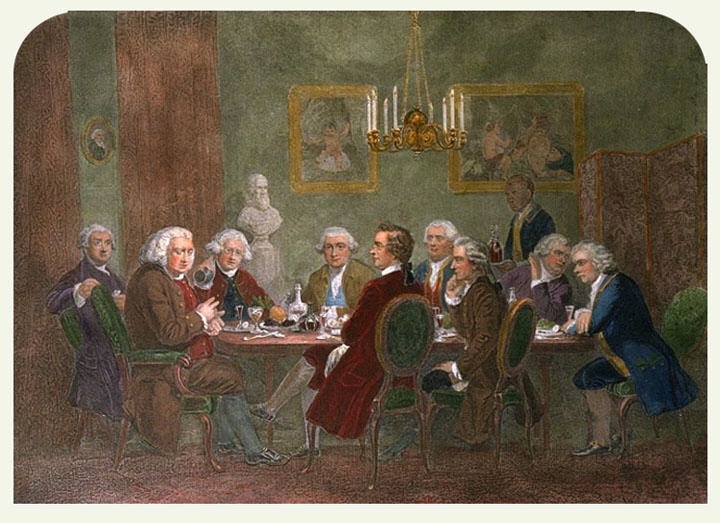
Image result for boswell johnson garrick

Bellum Incivile: Ryan Zinke Profits From His Position

oxyrhynchus4

Another text tentatively attributed to Caesar was discovered along with the fragments of the De Silvis and an appendix to De Bello Gallico. This is almost surely the lost Bellum Incivile.

3.2 Even though he had no understanding of physical science, Ryan Zinke kept telling everyone he was a geologist and oversaw the health of the seas, rivers, mountains, and forests. As soon as he was appointed by Manicula, he began to scheme and turn over in his mind how he could make the most money during his term. Having abandoned science, he denied that terrible storms had arisen because of global warming and that lakes had been polluted because of man with the result that he was calling the whole nation to death and devastation, thinking the earth should be destroyed rather than conserved. Manicula approved of this travesty for a rather long time.

3.2 Cum ignarus physicorum esset, R. Zincus omnibus se geologum esse semper praedicebat salutique marium et rivorum et montium et silvorum praeerat. Simul atque a Manicula praefectus est, quaerere et in animo agitare coepit quomodo maximam quattuor annis pecuniam facere posset. Scientia relicta miserandas tempestates caelo ob aestum orbis coortas lacosque ob homines corruptos adeo negabat ut rem publicam universam ad exitum et vastitatem vocaret, existimans tellus delendum quam conservandum. Manicula hunc malum diutius fovebat.

December Debates on Gifts: Some Classical Warnings

Epigonoi Fr. 4 (From Clement of Alexandria)

“Many evils come to men from gifts”

ἐκ γὰρ δώρων πολλὰ κάκ’ ἀνθρώποισι πέλονται.

Ovid, Ars Amatoria 2.275

“Poems are certainly praised, but great gifts are what is sought.”

carmina laudantur sed munera magna petuntur.

Sophocles, Ajax, 664-5

“But the old saying is true: the gifts of enemies are no gifts, and sure to yield no profit.”

ἀλλ᾽ ἔστ᾽ ἀληθὴς ἡ βροτῶν παροιμία,
ἐχθρῶν ἄδωρα δῶρα κοὐκ ὀνήσιμα

Image result for medieval manuscript gift-giving

Aeschylus, fr. 279a2

“Alone of the gods, Death doesn’t long for gifts.”

μόνος θεῶν γὰρ Θάνατος οὐ δώρων ἐρᾶι·


Solon, 13.64

“The gifts of the gods must not be rejected”

δῶρα δ᾿ ἄφυκτα θεῶν γίγνεται ἀθανάτων


Nostoi, fr. 8.1

“Gifts debase the minds and actions of men”

δῶρα γὰρ ἀνθρώπων νόον ἤπαφεν ἠδὲ καὶ ἔργα


Lucretius, De Rerum Natura 5.1430-1439

“The race of man, then, labors uselessly and in vain
as we always consume our time in empty concerns
because we don’t understand that there’s a limit to having—
and there’s an end to how far true pleasure can grow.
This has dragged life bit by bit into the deep sea
and has stirred at its bottom great blasts of war.
But the guardian of the earth turns around the great sky
and teaches men truly that the year’s seasons come full circle
and that all must be endured with a sure reason and order.”

Ergo hominum genus in cassum frustraque laborat
semper et [in] curis consumit inanibus aevom,
ni mirum quia non cognovit quae sit habendi
finis et omnino quoad crescat vera voluptas;
idque minutatim vitam provexit in altum
et belli magnos commovit funditus aestus.
at vigiles mundi magnum versatile templum
sol et luna suo lustrantes lumine circum
perdocuere homines annorum tempora verti
et certa ratione geri rem atque ordine certo.

Madness, Philosophy, and the Natural Realm

Menander, Aspis 305-310

[Khairestratos]:
“Daos, boy, I am not well
I am depressed because of these events. By the gods
I am not under my own control. I am almost completely crazy.
That fine brother of mine is forcing me
To such insanity with his vile behavior.
He is about to get married!”

ΧΑΙΡΕΣΤΡΑΤΟΣ
Δᾶε παῖ, κακῶς ἔχω.
μελαγχολῶ τοῖς πράγμασιν· μὰ τοὺς θεούς,
οὐκ εἴμ᾿ ἐν ἐμαυτοῦ, μαίνομαι δ᾿ ἀκαρὴς πάνυ·
ὁ καλὸς ἀδελφὸς εἰς τοσαύτην ἔκστασιν
ἤδη καθίστησίν με τῇ πονηρίᾳ.
μέλλει γαμεῖν γὰρ αὐτός.

Cicero, De Finibus 1.64

“In this way strength is drawn from natural philosophy against death; so too is determination against the fears of religion and a calmness of mind once the ignorance of all natural mysteries has been removed. So too comes moderation, once the nature and number of desires have been explained. And, finally, as I was just arguing, we can learn how to divine a lie from the truth, since this philosophy provides the Rule or Judgment of knowledge.”

Sic e physicis et fortitudo sumitur contra mortis timorem et constantia contra metum religionis et sedatio animi, omnium rerum occultarum ignoratione sublata, et moderatio, natura cupiditatum generibusque earum explicatis, et, ut modo docui, cognitionis regula et iudicio ab eodem illo constituto veri a falso distinctio traditur.

Image result for medieval manuscript marriage
Enter a caption

Generosity and Charity: Some Seasonal Reminders from Greece and Rome

Cicero, De Legibus 1.18

What about generosity? Is it for free or with a view towards some benefit? If someone is kind without payment, then it is freely done. If it is for payment, it is contractual. There is no doubt that a person who is called generous or kind responds to duty not to benefit. Therefore, equity seeks no reward or purchase price but it is pursued for its own worth. This is the same cause and claim for every virtue.”

quid? liberalitas gratuitane est an mercennaria? si sine praemio benignus est, gratuita, si cum mercede, conducta; nec est dubium, quin is, qui liberalis benignusve dicitur, officium, non fructum sequatur; ergo item iustitia nihil expetit praemii, nihil pretii; per se igitur expetitur. eademque omnium virtutum causa atque sententia est.

Clement, Letter 16.4

“Giving to charity is therefore noble as repentance from sin. Fasting is stronger than prayer, but charity surpasses both. Love overcomes a mass of sins, and prayer from a noble conscience provides rescue from death. Everyone who is discovered to abound in these things is blessed. For charity lightens the weight of sin.”

καλὸν οὖν ἐλεημοσύνη ὡς μετάνοια ἁμαρτίας· κρείσσων νηστεία προσευχῆς, ἐλεημοσύνη δὲ ἀμφοτέρων· ἀγάπη δὲ καλύπτει πλῆθος ἁμαρτιῶν, προσευχὴ δὲ ἐκ καλῆς συνειδήσεως ἐκ θανάτου ῥύεται. μακάριος πᾶς ὁ εὑρεθεὶς ἐν τούτοις πλήρης· ἐλεημοσύνη γὰρ κούφισμα ἁμαρτίας γίνεται.

gift giving middle ages - Cutting from a choir book, 1470s - Photo courtesy
From medievalists.net

Lycurgus’ Legs

Servius, Commentary on the Aeneid 3.14:

“This Lycurgus was the son of Dryas, the king of the race of the Thracian Bistones. As the story has it, he cut his own legs while contemptuously attempting to cut Dionysus’ vines. In truth, he abstained from drink, which is agreed to be a characteristic of a harsh nature, and is even said about Demosthenes. But as other people say, Lycurgus, being vexed that Dionysus was cultivated by other races and learning that he had entered Thrace with his band of followers, lashed some of the Bacchants whom he captured with rods, and began to pursue Dionysus himself with the aim of killing him. But after Dionysus hurled himself into the sea to escape Lycurgus and was taken in and set free by the nymph Thetis, Lycurgus began to cut his vines; in so doing, through the madness visited upon him by the gods, he actually cut his own legs.”

Image result for lycurgus thrace

Lycurgus autem hic filius Dryantis, rex gentis Bistonum Thraciae fuit: qui ut habet fabula, dum contempnens Liberum eius amputat vites, crura sua incidit. re vera autem abstemius fuit: quos constat acrioris esse naturae, quod etiam de Demosthene dictum est. Lycurgus vero, ut alii dicunt, cum indignaretur Liberum ab omnibus gentibus coli, ut primum eum Thraciae fines cum suo comitatu introisse cognovit, comprehensas Bacchas eius flagellis verberavit, ipsum vero insequi, ut occideret, coepit. sed postquam se Liber fugiens ut evaderet praecipitavit in mare et a Thetide nympha exceptus liberatusque est, Lycurgus vites eius amputare coepit: quapropter per furorem a diis inmissum ipse sibi crura succidit.

For Term Paper Season, Some Random Thoughts on Quotation

Plutarch, Table-Talk 9, (736e)

“Then he included an argument about the apt quotation of poetry, that the one which was most potent was not only charming but also useful.”

ἔπειτα περὶ στίχων εὐκαιρίας ἐνέβαλεν λόγον, ὡς μὴ μόνον χάριν ἀλλὰ καὶ χρείαν ἔστιν ὅτε μεγάλην ἐχούσης. #Plutarch

Athenaeus, 3.107a

“since the whole excerpt is useful for many reasons, but you don’t control it in your memory right now, I will go through the whole thing.”

πᾶσα δ᾿ ἡ ἐκλογὴ χρησίμη οὖσα εἰς πολλά, ἐπεὶ τὰ | νῦν διὰ μνήμης οὐ κρατεῖς, αὐτὸς ἐγὼ διεξελεύσομαι.

Libanius, Letters 3, to Entrechius

“You and I and each man of good intention will quote many passages from tragedy now that this kind of a person has left us.”

ἀλλ᾿ ἐκ τραγῳδίας μὲν πολλὰ μὲν ἐγώ, πολλὰ δὲ σύ, πολλὰ δὲ τῶν εὖ φρονούντων ἕκαστος φθεγξόμεθα τοιαύτης οἰχομένης κεφαλῆς·

Seneca, De Tranquillitate Animi  8

“Quoting the good words of a bad author will never shame me.”

Numquam me in voce bona mali pudebit auctoris

Image result for medieval manuscript man yelling
Ah, the wheel of fortune. British Library Harley MS 4431, f. 129.