That Scipio who first earned the title of Africanus through his deeds and virtue was a lover of solitude and leisure. And so, he was in the habit of withdrawing that spirit which dominated so many peoples, that military body exercised in wars, and those ears filled with the murmur of the camp and the blasts of the trumpets, not so that his virtue could languish in idleness, but so that his mind, distracted by the variety of his occupations, could compose itself. For this reason, he never seemed to himself to be entirely at leisure, given that he was always contriving something important with the perpetual occupation of his mind, nor did he ever seem to himself to be alone, since he was always accompanied by the gravest and noblest cares, nor did he ever seek the theater or the applause of the masses, since the memory of his own affairs applauded for him, and he was content with the testimony of his own conscience. Therefore, we understand that he was right to say that he was ‘never less at leisure than when he was at leisure, and never less alone than when he was lone.’ Cicero is the authority for the claim that Cato, hardly a middling imitator of that famous Africanus, left behind this account in writing.
Scipio ille qui primus agnomen Africani rebus gestis et virtute meruit, amator solitudinis atque otii fuit. Itaque spiritum domitorem gentium et militare illud corpus bellis exercitum auresque castrorum strepitu et tubarum fragoribus oppletas huc referre consueverat, non ut virtus otio langueret, sed ut se se mens varietate negotiorum distracta colligeret. Quamobrem neque sibi unquam otiosus, perpetua mentis occupatione grande aliquid moliens, neque sibi solus unquam videbatur, altissimis atque pulcerrimis comitatus curis, neque theatrum aut vulgi plausum querebat, rerum suarum plaudente memoria et conscientie testimonio contentus. ⟨2⟩ Iure ergo dicere solitum accepimus «nunquam se minus otiosum esse quam cum otiosus, nec minus solum quam cum solus esset». Idque ipsius Africani non mediocrem emulum M. Porcium Catonem scriptum reliquisse auctor est Cicero.
I shall try, even though at an advanced age, to keep learning, so that by my vigilance I can reduce the charge against me as much as is given to me to do so. Plenty of people have learned a lot in old age: for years do not extinguish the mind, and indeed, they readily set ablaze the desire for learning, while cautious senescence looks about at what is lacking to it, because insolent youth had not seen it. Solon learned in old age, as did Socrates, as did Plato, and even Cato learned to the end. In fact, the older he got, the more thirsty for literature he was!
What is to prevent me from standing in their tracks – though with an unequal stride, it will yet be with equal desire. No one is so fast that you can’t at least chase them from far behind. Perhaps I will learn, great censor, perhaps I will learn something which will make me appear not uneducated in your eyes. I wish that you had advised me in my youth, and has left a fitting space for this fine undertaking. Yet, I will persist, and (what alone is left) I will compensate for the brevity of time with my haste. Often, in a short time or narrow space, great and illustrious things have been accomplished.
Nitar, etsi plena sit etas, adhuc discere, ut obiectum crimen, qua dabitur, vigilando diluam. Multa in senectute didicerunt multi; neque enim ingenium anni exstinguunt, et noscendi desiderium ultro accendunt, dum quid desit sibi senectus cauta circumspicit, quod insolens iuventa non viderat. Didicit in senio Solon, didicit Socrates, didicit Plato, didicit ad extremum Cato, qui quo senior, eo sitientior literarum fuit. Quid me prohibet horum vestigiis insistere, gressu licet impari, desiderio tamen pari? Nemo est tam velox, quem non longe saltem sequi valeas. Discam fortasse, magne censor, discam aliquid, quo non tam indoctus videar tibi. Vellem me in adolescentia monuisses, et iustum spatium pulcro conatui reliquisses. Instabo tamen, et, quod unum est iam reliquum, brevitatem temporis velocitate pensabo. Sepe in angusto seu temporum seu locorum magne res atque egregie geste sunt.
“What can I think is the reason, Brutus, that since we consist of soul and body an art for the care and keeping of the body has been sought out and its utility has been accredited to the discovery of the immortal gods, but a art of healing for the soul as not as much been desired because its discover nor has it been practiced once it was known, nor has it been applauded with gratitude by so many, and has in fact been held with suspicion or anger by most?
Is this because we judge the body’s sickness and sorrow with the mind but we cannot use the body to sense sickness of the spirit? The outcome is that the mind must render judgment on itself at that moment when the very tool it needs to do this is sick.
But if nature had crafted us at birth to be able to see the soul itself and to perceive it with it as our guide to complete the course of life, there would clear be no one who would require argument and doctrine. As it stands we have received a tiny spark of understanding that we put out so fast because we are twisted by bad habits and opinions that none of nature’s light remains.
Truly, the seeds of virtue are implanted naturally within us and if we let them develop nature would guide us to a happy life. But, still, we find ourselves taken out into the light in a world of evil and the most twisted ideas possible so that it seems like we sucked down madness with our nurse’s milk. When we go with our parents and are given over to teachers, we have already been so steeped in different fallacies that truth has to yield to vanity and nature bows before the confirmation of opinions.”
Quidnam esse, Brute, causae putem cur, cum constemus ex animo et corpore, corporis curandi tuendique causa quaesita sit ars atque eius utilitas deorum immortalium inventioni consecrata, animi autem medicina nec tam desiderata sit, ante quam inventa, nec tam culta, postea quam cognita est, nec tam multis grata et probata, pluribus etiam suspecta et invisa? An quod corporis gravitatem et dolorem animo iudicamus, animi morbum corpore non sentimus? Ita fit ut animus de se ipse tum iudicet, cum id ipsum, quo iudicatur, aegrotet.
Quod si tales nos natura genuisset, ut eam ipsam intueri et perspicere eademque optima duce cursum vitae conficere possemus, haud erat sane quod quisquam rationem ac doctrinam requireret. Nunc parvulos nobis dedit igniculos, quos celeriter malis moribus opinionibusque depravati sic restinguimus, ut nusquam naturae lumen appareat. Sunt enim ingeniis nostris semina innata virtutum, quae si adolescere liceret, ipsa nos ad beatam vitam natura perduceret: nunc autem, simul atque editi in lucem et suscepti sumus, in omni continuo pravitate et in summa opinionum perversitate versamur, ut paene cum lacte nutricis errorem suxisse videamur. Cum vero parentibus redditi, dein magistris traditi sumus, tum ita variis imbuimur erroribus, ut vanitati veritas et opinioni confirmatae natura ipsa cedat.
“Now all good things dependent upon the body may be understood as we have said. Strength and size seem to confer prominence; beauty and speed bring fame; health brings pleasure. It is clear that happiness alone is sought through all of these qualities. For whatever any man seeks foremost is the very thing he believes is the greatest good. But we have then defined the greatest good as happiness, which is why each man judges the state of happiness to be the very thing he desires beyond all else.
Therefore, you have laid bare before your eyes the basic shape of human happiness: wealth, honor, power, glory and pleasure. When Epicurus examined these things, he decided that his highest good was pleasure because all others seemed to bring enjoyment to the mind. But I return to human desires: for human minds even when the memory is hazy still seeks its own good but, just like a drunk, does not know which path will lead home. Certainly how can those who struggle not to lack anything seem to do wrong?”
Iam vero corporis bona promptum est ut ad superiora referantur. Robur enim magnitudoque videtur praestare valentiam, pulchritudo atque velocitas celebritatem, salubritas voluptatem; quibus omnibus solam beatitudinem desiderari liquet. Nam quod quisque prae ceteris petit, id summum esse iudicat bonum. Sed summum bonum beatitudinem esse definivimus; quare beatum esse iudicat statum quem prae ceteris quisque desiderat.
Habes igitur ante oculos propositam fere formam felicitatis humanae—opes, honores, potentiam, gloriam, voluptates. Quae quidem sola considerans Epicurus consequenter sibi summum bonum voluptatem esse constituit, quod cetera omnia iucunditatem animo videantur afferre. Sed ad hominum studia revertor, quorum animus etsi caligante memoria tamen bonum suum repetit, sed velut ebrius domum quo tramite revertatur ignorat. Num enim videntur errare hi qui nihilo indigere nituntur?
“I believe it is in his fifth book that Scipio says ‘Just as a favorable trip is a captain’s task, health is the doctor’s, victory is the generals, the duty of the leader of a state is the happy life of its citizens: strength for their safety, abundance for their goods, fame for their self-worth, and truth for their virtue. I wish for the accomplishment of the best men among us to be this.’
‘Our’ Gnaeus has never before thought about this, nor now in the present affair at all. Domination has been sought by both of them—nothing has been done for the happiness and honesty of the state. [Pompey] did not leave the city because he could not defend it nor Italy because he was driven away, but from the beginning he planned to attack every land and sea, to annoy foreign kings, and to bring alien peoples to Italy in arms—to raise the largest armies. He has been salivating for a long time for that type of Sullan rule—and many who follow him long for it to. Do you believe that there was no way for them to come to an agreement, that no pact was possible? It is possible today, but neither man cares whether we are happy. Both want to rule.”
nam sic quinto, ut opinor, in libro loquitur Scipio: ‘ut enim gubernatori cursus secundus, medico salus, imperatori victoria, sic huic moderatori rei publicae beata civium vita proposita est, ut opibus firma, copiis locuples, gloria ampla, virtute honesta sit; huius enim operis maximi inter homines atque optimi illum esse perfectorem volo.’ hoc Gnaeus noster cum antea numquam tum in hac causa minime cogitavit. dominatio quaesita ab utroque est, non id actum, beata et honesta civitas ut esset. nec vero ille urbem reliquit quod eam tueri non posset nec Italiam quod ea pelleretur, sed hoc a primo cogitavit, omnis terras, omnia maria movere, reges barbaros incitare, gentis feras in Italiam armatas adducere, exercitus conficere maximos. genus illud Sullani regni iam pridem appetitur, multis qui una sunt cupientibus. an censes nihil inter eos convenire, nullam pactionem fieri potuisse? hodie potest. sed neutri σκοπὸς est ille, ut nos beati simus; uterque regnare vult.
Uncertain about injecting bleach or buying a tanning booth? Maybe try some Ancient Roman nonsense first!
Pliny the Elder Natural History, 28.33
“The treatment is for their hands to be washed in water first and then for that water to be sprinkled on patients. However, those who are struck at some point by a scorpion are never attacked again by wasps and bees. Someone who knows that clothes worn at a funeral are never touched by moths or that snakes are only with great labor pulled out out of their holes except by the left hand will not be shocked by this.
Of the discoveries of Pythagoras, this will not prove false: an unequal number of vowels foretells lameness, blindness, or some similar disability on the right side; an even number predicts this on the left. People claim that a difficult birth labor will result in an immediate delivery if a stone or a missile which has killed three animals with a single strike (a human, a boar and a bear) is thrown over the home containing the pregnant woman. This is done with more success with a spear that has been pulled from a human body and has not touched the ground. This works the same if the spear is carried inside.”
remedio est ablui prius manus eorum aquaque illa eos quibus medearis inspergi. rursus a scorpione aliquando percussi numquam postea a crabronibus, vespis apibusve feriuntur. minus miretur hoc qui sciat vestem a tineis non attingi quae fuerit in funere, serpentes aegre praeterquam laeva manu extrahi. e Pythagorae inventis non temere fallere, inpositivorum nominum inparem vocalium numerum clauditates oculive orbitatem ac similes casus dextris adsignare partibus, parem laevis. ferunt difficiles partus statim solvi, cum quis tectum in quo sit gravida transmiserit lapide vel missili ex his qui tria animalia singulis ictibus interfecerint, hominem, aprum, ursum. probabilius id facit hasta velitaris evulsa corpori hominis, si terram non attigerit. eosdem enim inlata effectus habet.
“You encourage me to be brave and have hope of recuperating my safety—and I wish that the situation were so that we might rightly hope. For now, when may miserable me expect your letters? Who will carry them to me? I would have awaited them at Brundisium if the sailors had allowed it, though they did not wish to await a storm.
Whatever remains, endure with all of your great dignity, my Terentia. We have lived and flourished. It was not vice but virtue which has afflicted us! Nothing has been done wrong, other than not losing life with its accessories. But if this was better for our children, that we live, we will endure what remains even if they should not be endured. And, yet, as I urge you to stand firm, I cannot convince myself.”
Tu quod me hortaris ut animo sim magno et spem habeam reciperandae salutis, id velim sit eius modi ut recte sperare possimus. nunc miser quando tuas iam litteras accipiam? quis ad me perferet? quas ego exspectassem Brundisi si esset licitum per nautas, qui tempestatem praetermittere noluerunt.
Quod reliquum est, sustenta te, mea Terentia, ut potes honestissime. viximus, floruimus; non vitium nostrum sed virtus nostra nos adflixit. peccatum est nullum, nisi quod non una animam cum ornamentis amisimus. sed si hoc fuit liberis nostris gratius, nos vivere, cetera, quamquam ferenda non sunt, feramus. atqui ego, qui te confirmo, ipse me non possum.
Vergerio, de ingenuis moribus et liberalibus adulescentiae studiis, LIV:
“Everything will turn out well enough if our time is disposed of properly, if we on every day give fixed hours to the pursuit of literature, and he we are never dragged away by any business which prevents us from reading something every day. For, if Alexander was in the habit of reading much in his camp, and if Caesar wrote books as he was setting off with his army, and if Augustus after undertaking something so great in the Battle of Mutina nevertheless always read or wrote or declaimed every day in his tent, what could come upon us in our urban leisure which could call us far off from the study of literature? It is useful, however, for us to consider even the smallest loss of time as a great one; we should also keep an account of our time, just as we do of our life and health, so that nothing is uselessly lost, as when we commit our idle hours, (and those which others commit to leisure) to lighter studies or a bit of pleasant reading.”
Fient autem commode omnia si rite tempora dispensabuntur, si singulis diebus statutas horas litteris dabimus, neque ullo negotio abstrahemur quominus aliquid quotidie legamus. Nam si Alexander in castris lectitare plurimum solebat, si Caesar etiam cum exercitu proficiscens libros scribebat, et Augustus Mutinensi bello rem tantam adortus, semper tamen in castris legere aut scribere quotidieque declamitare consueverat, quid poterit urbano otio intervenire quod nos diu prorsus a litterarum studiis avocet? Utile autem est, ut vel cuiuslibet minimi temporis iacturam pro magna deputemus, et ita temporis, quemadmodum et vitae ac salutis, rationem habeamus, ut nihil inutiliter nobis depereat, veluti si inertes horas et quae apud ceteros otiosae sunt aut studiis levioribus dabimus aut lectione iucunda transigemus.
If you liked today’s earlier post about The Gardens of Adonis, then you’re in luck, because Erasmus has more!
Erasmus, Adagia 1.4:
Ἀδώνιδος κῆποι, that is ‘the Gardens of Adonis’ used to be said of trifling and unprofitable things which were suited only to the brief pleasure of the moment. Pausanius notes that the gardens of Adonis were once among the little delights, teeming with lettuce and fennel, in which seeds used to be placed in a pot, and for that reason it came to be used proverbially against worthless and trifling fools who were born for insipid pleasures. Included in thus bunch are singers, sophists, bawdy poets, gluttons, and others of that sort. There were however two gardens sacred to Venus on account of Adonis, her love who was snatched away at the first bloom of his youth and turned into a flower. Plato makes mention of these in his Phaedrus: :
‘will a farmer in his right mind, who has concern for his seeds and wants them one day to bear fruit, sow them with zeal in the gardens of Adonis during the summer, and does he rejoice to see them made beautiful within the space of eight days, or will he do those things (if ever) rather as a joke, for the sake of merriment?’
Similarly, Plutarch, in his commentary entitled Περὶ τοῦ βραδέως ὑπὸ θείου τιμωρουμένου, that is, ‘About One Punished Late by the Gods,’
‘He is a capricious god concerned with trifles who (though we have nothing divine in us nor anything which approaches his image and which might remain fixed and unchanged forever, but instead after the manner of leaves – as Homer says – droop in every respect and die in a short time) has such care for us, much as women who tend the gardens of Adonis which flourish for a few days and minister to the souls which endure for a brief period in our weak flesh, receiving no solid root of life and soon snuffed out by any chance accident.’
Theophrastus recounts in Idyll 8
Πὰρ δ᾿ ἁπαλοὶ κᾶποι πεφυλαγμένοι ἐν ταλαρίσκοις,
Ἀργυρέοις,
that is,
‘There are soft gardens preserved in shining baskets.’
The proverb is also given this way,
Ἀκαρπότερος τῶν Ἀδώνιδος κήπων,
that is,
‘Less fruitful than the gardens of Adonis.’
In a not dissimilar mode, Isaeus, mentioned in Philostratus, calls juvenile pleasures Ταντάλου κήπους, ‘the gardens of Tantalus’, because they are so similar to shades and dreams, and do not fill up the human mind, but rather provoke it. Similarly, Pollux used to call the speech of the sophist Athenodorus ‘the gardens of Tantalus’ because it was so juvenile and trifling, making a large pretense to be something when it was in fact nothing.”
The Gardens of Adonis (1888) by John Reinhard Weguelin
Adonis Horti.iv
Ἀδώνιδος κῆποι, id est Adonidis horti, de rebus leviculis dicebatur parumque frugiferis et ad brevem praesentemque modo voluptatem idoneis. Pausanias testatur Adonidis hortos olim in deliciis fuisse, lactucis potissimum ac feniculis frequentes, in quibus semina haud aliter atque in testa deponi consueverint, eoque rem in proverbium abiisse contra futiles ac nugones homines et voluptatibus ineptis natos ; cujusmodi sunt cantores, sophistae, poetae lascivi, cuppediarii atque id genus alii. Erant autem ii horti Veneri sacri propter Adonidem ejus amasium primo aetatis flore praereptum atque in florem conversum. Horum mentionem facit Plato in Phaedro : Ὁ νοῦν ἔχων γεωργός, ὧν σπερμάτων κήδοιτο καὶ ἔγκαρπα βούλοιτο γενέσθαι, πότερα σπουδῇ ἂν θέρους εἰς Ἀδώνιδος κήπους ἀρῶν χαίροι θεωρῶν καλοὺς ἐν ἡμέραισιν ὀκτὼ γιγνομένους, ἢ ταῦτα μὲν δὴ παιδιᾶς τε καὶ ἑορτῆς χάριν δρώῃ ἄν, ὅτε καὶ ποιοῖ; id est Num agricola qui sapiat semina quae curae haberet quaeque cuperet aliquando fructum adferre, aetatis tempore summo studio in Adonidis hortos mittet gaudetque spectare eos intra dies octo jam pulchros effectos, an ea quidem per lusum ac festi gratia faciet, si quando tamen fecerit ? Item Plutarchus in commentario, cui titulus Περὶ τοῦ βραδέως ὑπὸ θείου τιμωρουμένου, id est De eo, qui a numine sero punitur : Ἀλλὰ μικρός τις καὶ κενόσπουδος ὁ θεός ἐστιν ὥστε μηδὲν ἡμῶν ἐχόντων θεῖον ἐν αὑτοῖς μηδὲ προσόμοιον ἁμωσγέπως ἐκείνῳ καὶ διαρκὲς καὶ βέβαιον, ἀλλὰ φύλλοις, ὡς Ὅμηρος ἔφη, παραπλησίως ἀπομαραινομένων παντάπασι καὶ φθινόντων ἐν ὀλίγῳ, ποιεῖσθαι λόγον τοσοῦτον, ὥσπερ αἱ τοὺς Ἀδώνιδος κήπους ἐπ᾿ ὀστράκοις τισὶ τιθηνούμεναι καὶ θεραπεύουσαι γυναῖκες, ἐφημέρους ψυχὰς ἐν σαρκὶ τρυφερᾷ καὶ βίου ῥίζαν ἰσχυρὰν οὐ δεχομένῃ βλαστανούσας, εἶτα ἀποσβεννυμένας ἀεὶ ὑπο τῆς τυχούσης προφάσεως, id est Immo morosior quispiam et levicularum rerum curiosus est deus, qui cum nihil habeamus divinum in nobis, neque quod ullo modo ad illius similitudinem accedat quodque constet ac stabile perpetuumque sit, quin magis foliorum ritu, quemadmodum ait Homerus, undequaque marcescamus intereamusque brevi, tantam nostri curam habeat non aliter quam mulieres, quae Adonidis hortos ad dies pauculos vernantes in testulis quibusdam nutriunt foveatque animas brevi duraturas in carne tenera et solidam vitae radicem non recipiente suppullulantes ac mox ad quamvis occasionem interituras. Meminit et Theocritus Idyllio Θ :
Πὰρ δ᾿ ἁπαλοὶ κᾶποι πεφυλαγμένοι ἐν ταλαρίσκοις,
Ἀργυρέοις,
id est
Adsunt et teneri calathis candentibus horti,
Servati.
Effertur paroemia etiam hoc modo, Ἀκαρπότερος τῶν Ἀδώνιδος κήπων, id est Infructuosior Adonidis hortis. Non dissimili figura Isaeus apud Philostratum juveniles voluptates appellat Ταντάλου κήπους, quod umbris ac somniis persimiles sint nec expleant hominis animum sed irritent potius. Similiter Pollux sophistae Athenodori dictionem appellabat Tantali hortos, quod juvenilis esset ac levis, speciem prae se ferens, quasi esset aliquid, cum nihil esset.
Hadrian, fr. II [A minor Latin Poet and a Major Roman Emperor]
“You were wanton in verse, but pure of thought”
Lascivus versu, mente pudicus eras.
Martial, 12.97
“Even though your wife is a girl of a kind
A man would scarcely seek with inappropriate prayers
(rich, noble, erudite, chase, what a find!)
You bust your nut, Bassus, but on the hair
Of the the men you buy with your wife’s money.
And when to its mistress your dick is returned
Though it was for so many thousands bought
It is so limp that its full size cannot be earned
Even if by sweet whispers or soft strokings sought.
For once, have some shame or let’s go to court.
Bassus, you sold it—your dick ain’t yours.”
Uxor cum tibi sit puella qualem
votis vix petat improbis maritus,
dives, nobilis, erudita, casta,
rumpis, Basse, latus, sed in comatis,
uxoris tibi dote quos parasti.
et sic ad dominam reversa languet
multis mentula milibus redempta
ut nec vocibus excitata blandis
molli pollice nec rogata surgat.
sit tandem pudor aut eamus in ius.
non est haec tua, Basse: vendidisti.
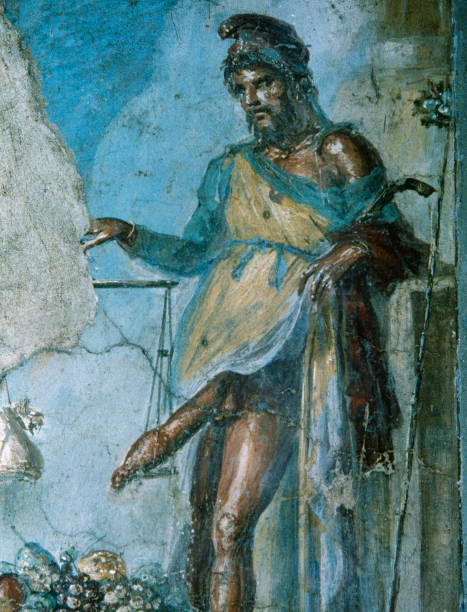
Wall-painting: Priapus weighing his phallus (Pompeii)