Marcus Cornelius Fronto to Antoninus Augustus Ambr. 390 17
“Aesopus the tragedian reportedly never put a mask on his face until he had looked at it for awhile from the other side so that he might change his gestures and alter his voice in line with the appearance of the mask.”
Tragicus Aesopus fertur non prius ullam suo induisse capiti personam, antequam diu ex adverso contemplaret, ut pro personae voltu gestum sibi capessere ac vocem <adsimulare posset>
“The renaissance, the spring-tide of modern life, with its genial freshness, is far behind us. The creative period is past, the accumulative is set in. Genius can now do nothing, the day is to dull industry. The prophet is departed, and in his place we have the priest of the book. Casaubon knows so much of ancient lore, that not only his faculties, but his spirits are oppressed by the knowledge. He can neither create nor enjoy; he groans under his load. The scholar of 1500 gambols in the free air of classical poetry, as in an atmosphere of joy. The scholar of 1600 has a century of compilation behind him, and ‘drags at each remove a lengthening chain.’ If anyone thinks that to write and read books is a life of idleness, let him look at Casaubon’s diary. Pope, during his engagement on Homer, used to be haunted by it in his dreams, and ‘wished to be hanged a hundred times.’ Vergil, having undertaken the Aeneid, said of himself that ‘he thought he must have been out of his senses when he did so.’ But of the blood and sweat, the groans and sighs, which enter into the composition of a folio volume of learned research, no more faithful record has ever been written than Casaubon’s ‘Ephemerides.’ Throughout its entire progress, the ‘ Animadversiones’ on Athenaeus was an ungrateful and irksome task, ‘catenati in ergastulo labores [the chained-up labors in the little workshop].‘ He can hardly open Athenaeus without disgust, and he prays God, day by day, that he may get away from such trifles to better reading.”
Rudolf Pfeiffer, History of Classical Scholarship 1300-1850 (Chp. II):
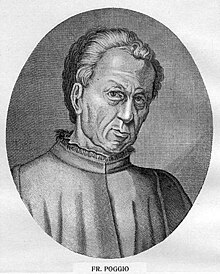
“Poggio never strove after a Ciceronian style or even a grammatically correct Latin; he treated Latin as if it were a living language, and because of that we see him in the last years of his life at feud with the leading spirit of the next generation, Lorenzo Valla.
One day in 1451 Poggio found in a copy of the collection of his letters to Niccoli, of which he was very proud, some critical and ironical comments upon his Latinity, scrawled in the margin by a pupil of Valla’s; he got so angry with Valla, whom he suspected of being the author, that he tried to have him murdered, a dramatic refutation, had he succeeded, of Schopenhauer’s saying that ‘the history of . . . learning and art’ (in contrast to the universal history of the world) ‘is always going on . . . guiltless and without bloodshed.’ But Poggio finally confined himself to a form of retaliation more appropriate in a scholar, a literary invective. Valla, no less pugnacious, replied, and a war of pamphlets, five from each side, ensued, the arguments of which were of a general importance far beyond the trivial cause.”
A friend of mine (not a classicist) found a vintage Latin Magnetic Poetry set and gave it to me. It’s not so much for Latinists as it is for English-speakers familiar with Latin: it’s got all the familiar phrases from law (habeas corpus) and Catholicism (in nomine patris) and general fancy talk (caveat emptor).
I decided to give it a go, and see what syntactically coherent sentences and phrases I could put together in classical-ish Latin. I set myself the rule of using every word in the kit, and not reusing any word that wasn’t duplicated in the kit. Don’t bother scanning them, as they’re not metrical, but who’s to say they aren’t Saturnians?
some Magnetic Poetry, in Latin, assembled during a frantic semester teaching Latin Prose Composition
Some of them sound like they could plausibly have been written or at least thought by an actual historical Roman:
ars firma uitae est scientia in libris life’s reliable skill is book-knowledge
homini est nihil beati humankind has no share of happiness
Magna Mater omnes forma mala amat the Great Mother loves everyone who has a bad body
uidi populum facile errare et labi ad bellum
I’ve seen the populace easily going astray and slipping towards war
aurea uox mea non est pura my golden voice is not pure
sic ego rebus maximis gratias non emeritus sum that’s why I haven’t earned thanks for my super-great accomplishments
Some had a feeling of banter that could, if you squint real hard, fit in a comedy of Plautus:
amor ab ipso bono quem hominem amas; te uici, Maria
I’m loved by the very nobleman whom you love; I’ve beaten you, Maria
idem sum de quo delirium est I’m the very guy everyone’s crazy about
tu Brute carpe artes pauperes salis dum gratia patris fiat tibi absurdo
you, Brutus, pick out the impoverished arts of wit so long as you’ve got your dad’s good will, you ridiculous man
aue homo quid in curriculum uadis de quo non bene cogito?
hey, dude, why are you wandering onto the racetrack that I don’t think well of?
Others entered the danger zone, of either hanky panky or sacrilege:
ueni ad opus sub toga filii proximi I got to work underneath the toga of the boy next door
coitus habeas tremens ante nauseam may you, trembling, have sex to the point of nausea
pax alma mirabilis pacifici Satanas domini beati toto anno aureo in cetera terra beata
the wondrous nourishing peace of the peace-bringing blessed lord, o Satan, within the entire golden year in the remaining blessed land
nosce unum partum e culpa dei: filius caueat de te pater et de poena dura et nomine minimo delicti
recognize one born out of God’s mistake: the Son is on guard against you, Father, and against harsh punishment and against the slightest name of criminal action
But the best ones took me into the realm of the bizarre:
lupus bipes Christum in flumina sequitur minima cum cura
a wolf walking on its hind legs chases Christ into the rivers he don’t give a fuck
alter emptor lupi mortui exit e gloria populi the dead wolf’s other buyer has lost the good reputation of the public
uiam inueniam aut bona faciam absentia nulla fide
I’ll find a way— or I’ll make all my property disappear with no regrets
mortem malo sed corpus magnum uirile ago per uitam annum perpetuum
I prefer death but I drag my giant manly body through life for an endless year
And in case it wasn’t clear what the whole Magnetic Poetry set was trying (with middling results) to do, notice that one standalone magnet at the top of the photo: LATIN.
I managed to use every single word in the kit, which means this page has the sum of all Latin Magnetic Poetry options — so now it’s your turn to mix & match. Post your handiwork in the comments!
“Why do you rave, trusting too much in the boldness of youth? With a headlong dive, curved old age comes upon us. Look: the earth is not always clothed in green grass, nor is it always sun-scorched and firm; the land does not always bring forth golden and snowy colors alike along with the purple roses; the lilies often shine redolent with their gentle scent; often the sweet fruits weigh down their branches; the vine often gives us those sweet foods, the grapes. But take any tree you want – it doesn’t always have its fruits. Thus will beautiful, charming youth deceive you, though it’s now compliant with your desires.”
“Around noon, when the sun’s flame was already hot, we turned off in some village to the home of some old men known well to the thieves. This was easy to understand for even a donkey thanks to the prolonged conversation and shared kisses. They also gave some gifts to them which I had carried on my back and seemed to relate that they were obtained through theft with secret whispers. Once we were unburdened of every bag, they left us to amble and eat in a field next to the home.
But I was not really drawn to a pastoral communion with either the ass or my old horse and I was also not quite used to eating grass. I could see a garden on the other side of the stable, so I broke into it, already wracked by hunger. I filled my stomach immediately with those vegetables, even though they were raw, and I was saying a little prayer to all the gods as I looked around the place, hoping I might find the light of rose bushes in the nearby gardens.
This isolation was providing me confidence I did not have before, if once I was away from the road and hidden by bushes, I could eat the medicine and rise from the curved-hoof of four-footed pack animal to stand straight like a man, while no one was looking.”
Diem ferme circa medium, cum iam flagrantia solis caleretur, in pago quodam apud notos ac familiares latronibus senes devertimus. Sic enim primus aditus et sermo prolixus et oscula mutua quamvis asino sentire praestabant. Nam et rebus eos quibusdam dorso meo depromptis munerabantur, et secretis gannitibus quod essent latrocinio partae videbantur indicare. Iamque nos omni sarcina levatos in pratum proximum passim libero pastui tradidere. Nec me cum asino vel equo meo compascuus coetus attinere potuit, adhuc insolitum alioquin prandere faenum; sed plane pone stabulum prospectum hortulum iam fame perditus fidenter invado, et quamvis crudis holeribus affatim tamen ventrem sagino, deosque comprecatus omnes cuncta prospectabam loca, sicubi forte conterminis in hortulis candens reperirem rosarium. Nam et ipsa solitudo iam mihi bonam fiduciam tribuebat, si devius et frutectis absconditus, sumpto remedio, de iumenti quadripedis incurvo gradu rursum erectus in hominem inspectante nullo resurgerem.
“Mercury’s form has the power to please.
And Apollo’s body sticks out especially.
Lyaeus in pictures has a shapely line,
And Cupid is still finest of the fine.
My body lacks a certain beauty, I confess
But, look, my dick’s a jewel beyond the rest.
Any girl should prefer it to the gods I named,
And if she doesn’t, then a greedy pussy’s to blame.”
Forma Mercurius potest placere,
forma conspiciendus est Apollo,
formosus quoque pingitur Lyaeus,
formosissimus omnium est Cupido.
me pulchra fateor carere forma,
verum mentula luculenta nostra est:
hanc mavult sibi quam deos priores,
si qua est non fatui puella cunni.
Woman painting a statue of Priapus, from a fresco at Pompeii
The moral and psychological interests of Tacitus are developed at the cost of what nowadays is believed to be the true historical insight. The French scholar Boissier remarks that it is impossible to read the History and the Annals without wondering how the Roman Empire could possibly have held together through the eighty years of mutiny, infamy, intrigue, riot, expenditure, and irresponsibility which the two books tell us of. At any moment, we think, the political structure must collapse under this unnatural weight. Yet almost any modern account of the post-Augustan Empire suggests that we are wrong to make this supposition and seems to imply a radical criticism of Tacitus’s methods. Breasted, for example, includes the period from Tiberius to Vespasian in a chapter which he calls “The First of Two Centuries of Peace.” And Rostovtzeff in his authoritative work gives us to understand that Rome, despite the usual minor troubles, was a healthy, developing society. Yet Tacitus finds it worthy of comment that at this time a certain man died a natural death — “a rare incident in so high a rank,” he says.
It is not, as I gather, that Tacitus lacks veracity. What he lacks is what in the thirties used to be called “the long view” of history. But to minds of a certain sensitivity “the long view” is the falsest historical view of all, and indeed the insistence on the length of perspective is intended precisely to overcome sensitivity — seen from sufficient distance, it says, the corpse and the hacked limbs are not so very terrible, and eventually they even begin to compose themselves into a “meaningful pattern.” Tacitus had no notions of historical development to comfort him; nor did he feel it his duty to look at present danger and pain with the remote, objective eyes of posterity. The knowledge, if he had it, that trade with the East was growing or that a more efficient bureaucracy was evolving by which well-trained freedmen might smoothly administer affairs at home and in the provinces could not have consoled him for what he saw as the degradation of his class and nation. He wrote out of his feelings of the present and did not conceive the consolations of history and the future.
“Before any certain plans were completed, another disaster was suddenly reported: four thousand cavalry under the command of Gaius Cenentius and sent by the consul Servilius to his colleague in Umbria had turned around after hearing news of the Battle of Lake Trasimene and was trapped by Hannibal.
This news affected people differently: some, whose minds were overcome by a greater sorrow, believed that this recent loss of cavalry was a minor matter when compared to earlier events. Another group did not judge what happened on its own, but just as when a body was already sick any anguish, however minor, would be sensed more deeply than when in wealth, so too this should be judged not by some abstract measure but in realization of the fact that the country was sick and weakened and was incapable of withstanding any more grief.
For this reason, the people took refuge in a solution which had been neither desired nor used for a long time: the declaration of a dictator. But since the consul was away and they believed only he could announce a dictator, and because it was not easy to send a messenger or letter through an Italian countryside overcome by Carthaginian soldiers, the people did something that had never been done before that day: they made Quintus Fabius Maximus dictator and Marcus Mincius Rufus Master of Horse.”
Priusquam satis certa consilia essent, repens alia nuntiatur clades, quattuor milia equitum cum C. Centenio propraetore missa ad collegam ab Servilio consule in Umbria, quo post pugnam ad Trasumennum auditam averterant iter, ab Hannibale circumventa. eius rei fama varie homines adfecit. pars occupatis maiore aegritudine animis levem ex comparatione priorum ducere recentem equitum iacturam; pars non id quod acciderat per se aestimare sed, ut in adfecto corpore quamvis levis causa magis quam in valido gravior sentiretur, ita tum aegrae et adfectae civitati quodcumque adversi inciderit, non rerum magnitudine sed viribus extenuatis, quae nihil quod adgravaret pati possent, aestimandum esse.
Itaque ad remedium iam diu neque desideratum nec adhibitum, dictatorem dicendum, civitas confugit; et quia et consul aberat, a quo uno dici posse videbatur, nec per occupatam armis Punicis Italiam facile erat aut nuntium aut litteras mitti, quod nunquam ante eam diem factum erat, dictatorem populus creavit Q. Fabium Maximum et magistrum equitum M. Minucium Rufum
Edmund Wilson, Reflections on the Teaching of Latin:
In preparation for writing this article, I asked a Latin professor of my acquaintance – probably one of the most brilliant in the English-speaking world – for a professional explanation of the methods of teaching Latin that were followed in my own schooldays and that are still in practice today. He made no attempt to defend them. “It’s just like the Court of Chancery at the beginning of Bleak House,” he said. “Nobody has paid any attention to it or tried to do anything about it for ages.” Reassured, I attack the problem. I had feared that my personal experience might have been exceptionally unfortunate – in Greek it was the other way – but I shall assume that it was more or less typical. I apologize for speaking to teachers exclusively in terms of this personal experience. They may well feel that I do not grasp their problems. But I should like to put certain things up to them.
My first drill in Latin – and it was nothing but drill – was designed to get me into prep school. I remember of it nothing but paradigms, which I endlessly wrote out in the evenings and which seemed to me very much the same kind of thing as algebraic equations; and a difficult progress through Caesar, who impressed me, as he did John Jay Chapman, as “not an author but a stone-crushing machine.” It would be possible, no doubt, to make Caesar interesting even to schoolboys in their early teens, but I do not believe it is often done, and in any case the teacher starts in with a discouraging handicap. At prep school, I went on to Cicero, who was a good deal more complicated and, at my age, hardly more attractive.
The worst feature of these two writers – and also of Virgil, whom I shall come to later – is that neither of them seems to a schoolboy to represent anything imaginable as actual human speech. Caesar appears impersonal to the point of not being human; Cicero, despite his invective, infinitely artificial. It was only in my freshman year at college that, arriving at Plautus and Terence, I was able to see that Latin had once been a spoken language, with colloquial contractions like other languages, in which people transacted business, gossiped, made love and quarreled. I was exhilarated at finding that a Latin author could be read rather than solved like a quadratic equation, and I read Terence almost through. But I did not find him very distinguished or even enormously amusing; nor, though my professor had a passion for Livy and was excellent on Livy’s style, was I able to share his enthusiasm. In the meantime, I had grown to love Greek, and I continued to take Greek courses all through college. I elected a few Latin courses, too, and, exploring the subject for myself, I succeeded in discovering at last the magnificence of Latin poetry. (I may previously have been somewhat prejudiced by having listened to the foolish old platitude that Greek literature is the real thing and Latin a second-rate imitation.) I also came at last to realize how badly I had been taught.




.jpg)

