Evidence vs. Greek History

George Grote, The History of Greece (Preface):

The law respecting sufficiency of evidence ought to be the same for ancient times as for modern; and the reader will find in this History an application, to the former, of criteria analogous to those which have been long recognized in the latter. Approaching, though with a certain measure of indulgence, to this standard, I begin the real history of Greece with the first recorded Olympiad, or 776 B. C.

To such as are accustomed to the habits once universal, and still not uncommon, in investigating the ancient world, I may appear to be striking off one thousand years from the scroll of history; but to those whose canon of evidence is derived from Mr. Hallam, M. Sismondi, or any other eminent historian of modern events, I am well assured that I shall appear lax and credulous rather than exigent or sceptical. For the truth is, that historical records, properly so called, do not begin until long after this date: nor will any man, who candidly considers the extreme paucity of attested facts for two centuries after 776 B. C., be astonished to learn that the state of Greece in 900, 1000, 1100, 1200, 1300, 1400 B. C., etc.,—or any earlier century which it may please chronologists to include in their computed genealogies,—cannot be described to him upon anything like decent evidence.

I shall hope, when I come to the lives of Socrates and Plato, to illustrate one of the most valuable of their principles,—that conscious and confessed ignorance is a better state of mind, than the fancy, without the reality, of knowledge. Meanwhile, I begin by making that confession, in reference to the real world of Greece anterior to the Olympiads; meaning the disclaimer to apply to anything like a general history,—not to exclude rigorously every individual event.

George Grote - Wikipedia

On Rivers and Poets: Quintilian And Callimachus

Quintilian, An Orator’s Education 10.1.47

“Hence, as Aratus believes that we must begin with Zeus, we think that it is right to begin with Homer. For, truly, just as what he says about the ocean, which he says is the source and the force of every river and stream, so too does Homer furnish the model and origin for every type of eloquence. No one has exceeded him for sublimity in the large themes or quiet sense in the personal ones. At the same time he is ebullient and terse, joyful and severe, a source of wonder for his expansions and his brevity—preeminent by far for both his poetic and rhetorical mastery.”

Igitur, ut Aratus ab Iove incipiendum putat, ita nos rite coepturi ab Homero videmur. Hic enim, quem ad modum ex Oceano dicit ipse 〈omnium〉 amnium fontiumque cursus initium capere, omnibus eloquentiae partibus exemplum et ortum dedit. Hunc nemo in magnis rebus sublimitate, in parvis proprietate superaverit. Idem laetus ac pressus, iucundus et gravis, tum copia tum brevitate mirabilis, nec poetica modo sed oratoria virtute eminentissimus.

Callimachus, Hymn to Apollo 2.108-112

“Envy spoke surreptitiously into Apollo’s ears:
“I don’t love the singer who doesn’t sing as wide as the sea”
Apollo then kicked Envy with his foot and said this:
“The flowing of the Assyrian river is huge, but it carries a great deal
Of trash from the earth and hauls garbage with its water.
The bees do not carry water from just anywhere to Demeter
But only that which is clean and unmixed and flows down
From a sacred fountain, a little stream from a high peak.”

ὁ Φθόνος ᾿Απόλλωνος ἐπ’ οὔατα λάθριος εἶπεν·
‘οὐκ ἄγαμαι τὸν ἀοιδὸν ὃς οὐδ’ ὅσα πόντος ἀείδει.’
τὸν Φθόνον ὡπόλλων ποδί τ’ ἤλασεν ὧδέ τ’ ἔειπεν·
‘᾿Ασσυρίου ποταμοῖο μέγας ῥόος, ἀλλὰ τὰ πολλά
λύματα γῆς καὶ πολλὸν ἐφ’ ὕδατι συρφετὸν ἕλκει.
Δηοῖ δ’ οὐκ ἀπὸ παντὸς ὕδωρ φορέουσι μέλισσαι,
ἀλλ’ ἥτις καθαρή τε καὶ ἀχράαντος ἀνέρπει
πίδακος ἐξ ἱερῆς ὀλίγη λιβὰς ἄκρον ἄωτον.’

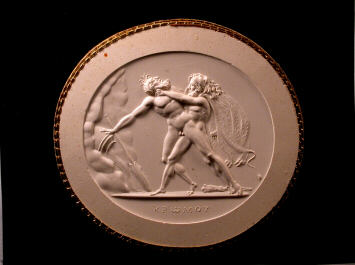
Gem showing the River Achelous overcome by Herakles. From the Beazley Archive https://www.beazley.ox.ac.uk/record/2C5AF364-B4F1-4AE3-B4F2-435330C4B9C8

“If Misfortune is Beautiful…” Helen on The Trojan War

Euripides, Helen 16–36

“The land of my father is not nameless,
Sparta, nor my father Tyndareus. And, indeed, there is
a certain story that Zeus flew to my mother Leda
after he took the form of a swan, a bird,
when he completed this ‘bedding’ deceptively
under the pretext of fleeing an eagle, if the story is true.

I am called Helen. And I should tell you the evils
I have suffered. Three goddesses went to the folds
O Mt. Ida to Alexander about their beauty,
Hera, the Kyprian, and the Zeus-born maiden,
Because they wanted him to complete a judgement of their ‘form’.

My beauty–if misfortune is beautiful–
Is what the Kyprian offered, for Alexander to marry,
In order to win. After Idaian Paris left the cow-stall
He went to Sparta seeking my bed.
But Hera, miffed because she did not defeat the goddesses,
Made my bed with Alexander an empty thing.

She did not give me, but instead, she made
A breathing ghost like me, crafting it from the sky,
For tyrant Priam’s son. He seemed to have me,
And it was an empty thing, because he did not have me….”

ἡμῖν δὲ γῆ μὲν πατρὶς οὐκ ἀνώνυμος
Σπάρτη, πατὴρ δὲ Τυνδάρεως· ἔστιν δὲ δὴ
λόγος τις ὡς Ζεὺς μητέρ’ ἔπτατ’ εἰς ἐμὴν
Λήδαν κύκνου μορφώματ’ ὄρνιθος λαβών,
ὃς δόλιον εὐνὴν ἐξέπραξ’ ὑπ’ αἰετοῦ
δίωγμα φεύγων, εἰ σαφὴς οὗτος λόγος·
῾Ελένη δ’ ἐκλήθην. ἃ δὲ πεπόνθαμεν κακὰ
λέγοιμ’ ἄν. ἦλθον τρεῖς θεαὶ κάλλους πέρι
᾿Ιδαῖον ἐς κευθμῶν’ ᾿Αλέξανδρον πάρα,
῞Ηρα Κύπρις τε διογενής τε παρθένος,
μορφῆς θέλουσαι διαπεράνασθαι κρίσιν.
τοὐμὸν δὲ κάλλος, εἰ καλὸν τὸ δυστυχές,
Κύπρις προτείνασ’ ὡς ᾿Αλέξανδρος γαμεῖ,
νικᾶι. λιπὼν δὲ βούσταθμ’ ᾿Ιδαῖος Πάρις
Σπάρτην ἀφίκεθ’ ὡς ἐμὸν σχήσων λέχος.
῞Ηρα δὲ μεμφθεῖσ’ οὕνεκ’ οὐ νικᾶι θεὰς
ἐξηνέμωσε τἄμ’ ᾿Αλεξάνδρωι λέχη,
δίδωσι δ’ οὐκ ἔμ’ ἀλλ’ ὁμοιώσασ’ ἐμοὶ
εἴδωλον ἔμπνουν οὐρανοῦ ξυνθεῖσ’ ἄπο
Πριάμου τυράννου παιδί· καὶ δοκεῖ μ’ ἔχειν,
κενὴν δόκησιν, οὐκ ἔχων….

Education and Gardening: Two Plant Metaphors for Learning and Teaching

Hippocrates of Cos, Law 3

“Learning about medicine is a bit like the development of plants in the earth. For our native skill is like the land; the beliefs of our teachers are like seeds. Childhood learning is similar to when seeds are planted in the field. And the place where learning happens is like the nourishment that comes to plants from the sky around them. Hard work is like the working of the field. Time brings strength to all these things so that they grow to completion.”

III. Ὁκοίη γὰρ τῶν ἐν γῇ φυομένων θεωρίη, τοιήδε καὶ τῆς ἰητρικῆς ἡ μάθησις. ἡ μὲν γὰρ φύσις ἡμέων ὁκοῖον ἡ χώρη· τὰ δὲ δόγματα τῶν διδασκόντων ὁκοῖον τὰ σπέρματα· ἡ δὲ παιδομαθίη, τὸ καθ᾿ ὥρην αὐτὰ πεσεῖν ἐς τὴν ἄρουραν· ὁ δὲ τόπος ἐν ᾧ ἡ μάθησις, ὁκοῖον ἡ ἐκ τοῦ περιέχοντος ἠέρος τροφὴ γιγνομένη τοῖσι φυομένοισιν· ἡ δὲ φιλοπονίη, ἐργασίη· ὁ δὲ χρόνος ταῦτα ἐνισχύει πάντα, † ὡς τραφῆναι τελέως.


Plutarch, On the Education of Children 4c-d

“I am now going to consider one of the most significant and influential things I have said. For we must select teachers for our students who are also free of slander in their own lives, whose habits cannot be criticized and who are best in regards to experience. For obtaining a proper education is the spring and root of goodness. Just as a farmer helps straighten young plants, so too may good teachers guide students with precepts and advice so that their characters may grow correctly. These days there are certain fathers one might condemn because, before considering the people who will teach their children, entrust them to inexperienced or unworthy teachers, either because of ignorance or naivete.”

Τὸ δὲ πάντων μέγιστον καὶ κυριώτατον τῶν εἰρημένων ἔρχομαι φράσων. διδασκάλους γὰρ ζητητέον τοῖς τέκνοις, οἳ καὶ τοῖς βίοις εἰσὶν ἀδιάβλητοι καὶ τοῖς τρόποις ἀνεπίληπτοι καὶ ταῖς ἐμπειρίαις ἄριστοι· πηγὴ γὰρ καὶ ῥίζα καλοκαγαθίας τὸ νομίμου τυχεῖν παιδείας. καὶ καθάπερ τὰς χάρακας οἱ γεωργοὶ τοῖς φυτοῖς παρατιθέασιν, οὕτως οἱ νόμιμοι τῶν διδασκάλων ἐμμελεῖς τὰς ὑποθήκας καὶ παραινέσεις παραπηγνύουσι τοῖς νέοις, ἵν᾿ ὀρθὰ τούτων βλαστάνῃ τὰ ἤθη. νῦν δέ τις κἂν καταπτύσειε τῶν πατέρων ἐνίων, οἵτινες πρὶν δοκιμάσαι τοὺς μέλλοντας διδάσκειν, δι᾿ ἄγνοιαν, ἔσθ᾿ ὅτε καὶ δι᾿ ἀπειρίαν, ἀνθρώποις ἀδοκίμοις καὶ παρασήμοις ἐγχειρίζουσι τοὺς παῖδας.

When I was in kindergarten, my teacher had us sing this song all the time. I did not realize it at the time that we were engaged in an ultra meta-educative reflection. Do you like to grow ideas in the garden of your mind?

Against Plato: The Doctrine of Ideas Is Ridiculous

Heraclitus, Homeric Problems 78

“It is therefore appropriate that Homer’s message is the life of heroes and Plato’s dialogues are the loves of young men. Everything in Homer overflows with noble virtue; Odysseus is prudent; Ajax is brave; Penelope is chaste; Nestor is just in all things; and Telemachus is reverent towards his father while Achilles is most loyal in his friendships.

What of these things remain in Plato, the philosopher? Unless we were to claim that there was some useful honor in the sacred chirpings of his ‘ideas’, mocked even by his student Aristotle! For this reason, I imagine he suffered worthy punishment for his words about Homer, that man “who has an unhindered tongue, the most shameful sickness” [Eur. Or. 10] just like Tantalos or Kapaneus, who suffered endless misfortunes because of their grievous tongue.

Plato often wore himself out going to the doors of tyrants and he submitted a free body to a slave’s fortune, even being sold. No one is ignorant about Pollis the Spartan* or how Plato was saved by a Libyan’s deed when his price had been set at twenty minae, cheap for a slave. These events were the punishment he owed for his slandering of Homer and for his ungoverned and unguarded tongue. Even though I could say more still against Plato, I’ll let it be because I respect the name of Socratic wisdom.”

*Dionysius the Tyrant of Syracuse gave Plato to Pollis as a slave

         Τοιγαροῦν εἰκότως ὁ μὲν ῾Ομήρου λόγος ἡρώων ἐστὶ βίος, οἱ δὲ Πλάτωνος διάλογοι μειρακίων ἔρωτες.  Καὶ πάντα τὰ παρ’ ῾Ομήρῳ γεννικῆς ἀρετῆς γέμει· φρόνιμος ᾿Οδυσσεύς, ἀνδρεῖος Αἴας, σώφρων Πηνελόπη, δίκαιος ἐν ἅπασι Νέστωρ, εὐσεβὴς εἰς πατέρα Τηλέμαχος, ἐν φιλίαις πιστότατος ᾿Αχιλλεύς·  ὧν <τί> παρὰ Πλάτωνι  τῷ φιλοσόφῳ; πλὴν εἰ μὴ νὴ Δία τιμὴν <καὶ> ὠφέλ<ειαν φ>ήσομεν εἶναι τὰ σεμνὰ τῶν ἰδεῶν τερετίσματα καὶ παρ’ ᾿Αριστοτέλει τῷ μαθητῇ γελώμενα.  Διὰ τοῦτ’ ἀξίας οἶμαι τῶν καθ’ ῾Ομήρου λόγων δίκας ὑπέσχεν,

          “ἀκόλαστον ἔχων γλῶσσαν, αἰσχίστην νόσον,

ὡς Τάνταλος, ὡς Καπανεύς, ὡς οἱ διὰ γλωσσαλγίαν μυρίαις κεχρημένοι συμφοραῖς.     Πολλάκις ἐπὶ τὰς τυραννικὰς ἐφθείρετο θύρας, ἐν ἐλευθέρῳ δὲ σώματι δουλικὴν τύχην ἠνέσχετο καὶ μέχρι πράσεως·  οὐδὲ εἷς γὰρ ἀγνοεῖ τὸν Σπαρτιάτην Πόλλιν, [ᾧ] οὐδ’ ὡς Λιβυκοῦ χάριν ἐλέου σέσωσται, καὶ μνῶν εἴκοσι καθάπερ ἀνδράποδον εὐτελὲς ἐτιμήθη.  τῶν εἰς ῞Ομηρον ἀσεβημάτων ὀφειλομένην τιμωρίαν τῆς ἀχαλίνου καὶ ἀπυλώτου γλώττης.  Πρὸς μὲν οὖν Πλάτωνα καὶ πλείω λέγειν δυνάμενος ἐῶ, τοὔνομα τῆς Σωκρατικῆς σοφίας αἰδούμενος.


The School of Athens (detail). Fresco, Stanza della Segnatura, Palazzi Pontifici, Vatican.


Knowing Helps and Hurts a Lot Too: Some Sayings for Back to School

These sayings [‘Apophthegmata’] are drawn from the Gnomologium Vaticanum.

470: “Socrates, when asked what is sweetest in life, said “education, virtue, and the investigation of the unknown”

Σωκράτης ὁ φιλόσοφος ἐρωτηθεὶς τί ἥδιστον ἐν τῷ βίῳ εἶπε· „παιδεία καὶ ἀρετὴ καὶ ἱστορία τῶν ἀγνοουμένων”.

24: “Aristippos used to say the he took money from students not in order to straighten their lives but how so they might learn to spend their money on fine things.”

῾Ο αὐτὸς παρὰ τῶν μαθητῶν λαμβάνειν ἔφασκε μισθόν, οὐχ ὅπως τὸν βίον ἐπανορθώσῃ, ἀλλ’ ὅπως ἐκεῖνοι μάθωσιν εἰς τὰ καλὰ δαπανᾶν.

50: “Aristotle said that education is a decoration for the lucky but a refuge for the unfortunate.”

῾Ο αὐτὸς ἔφη τὴν παιδείαν εὐτυχοῦσι μὲν εἶναι όσμον, ἀτυχοῦσι δὲ καταφύγιον.

87: “When he was asked whom he loved more, Phillip or Aristotle, Alexander said “both the same—for the first gave me the gift of life and the second taught me to live well.”

῾Ο αὐτὸς ἐρωτηθεὶς τίνα μᾶλλον ἀγαπᾷ, Φίλιππον ἢ ᾿Αριστοτέλην, εἶπεν· „ὁμοίως ἀμφοτέρους· ὁ μὲν γάρ μοι τὸ ζῆν ἐχαρίσατο, ὁ δὲ τὸ καλῶς ζῆν ἐπαίδευσεν.”

164: “Glukôn the philosopher called education a sacred refuge.”

Γλύκων ὁ φιλόσοφος τὴν παιδείαν ἔλεγεν ἱερὸν ἄσυλον εἶναι.

259: “When Demetrios [of Phalerus] was asked what was the noblest of animals he said “A human adorned by education.”

῾Ο αὐτὸς ἐρωτηθεὶς τί τῶν ζώων κάλλιστόν ἐστιν εἶπεν· „ἄνθρωπος παιδείᾳ κεκοσμημένος”.

302: “[Zeno the Stoic] used to say that education was sufficient for happiness”

῾Ο αὐτὸς ἔφη τὴν παιδείαν πρὸς εὐδαιμονίαν αὐτάρκη.

314: “Heraclitus used to say that learning is a second sun for the educated”

῾Ηράκλειτος τὴν παιδείαν ἕτερον ἥλιον εἶναι τοῖς πεπαιδευμένοις ἔλεγεν.

439: [Plato] used to say that someone being educated needs three things: ability, practice and time.”

῾Ο αὐτὸς ἔλεγεν ὅτι ὁ παιδευόμενος τριῶν τούτων χρῄζει· φύσεως, μελέτης, χρόνου.

469: “[Protagoras] used to say “knowing a lot helps a lot and hurts a lot.”

῾Ο αὐτὸς ἔφη· „πολυμαθίη κάρτα μὲν ὠφελέει, κάρτα δὲ βλάπτει”.

Other passages

Euripides, Iphigenia at Aulis 559-567

“Men have different natures;
They have different ways. But acting rightly
Always stands out.
The preparation of education
points the way to virtue.
For it is a mark of wisdom to feel shame
and it brings the transformative grace
of seeing through its judgment
what is right; it is reputation that grants
an ageless glory to your life.”

διάφοροι δὲ φύσεις βροτῶν,
διάφοροι δὲ τρόποι· τὸ δ’ ὀρ-
θῶς ἐσθλὸν σαφὲς αἰεί·
τροφαί θ’ αἱ παιδευόμεναι
μέγα φέρουσ’ ἐς τὰν ἀρετάν·
τό τε γὰρ αἰδεῖσθαι σοφία,
†τάν τ’ ἐξαλλάσσουσαν ἔχει
χάριν ὑπὸ γνώμας ἐσορᾶν†
τὸ δέον, ἔνθα δόξα φέρει
κλέος ἀγήρατον βιοτᾶι.

Stobaeus 2.31 88

“Diogenes used to say that educating children was similar to potters’ sculpting because they take clay that is tender and shape it and decorate it how they wish.  But once it has been fired, it can’t be shaped any longer.  This is the way it is for those who were not educated when they were children: once they are grown, they have been hardened to change.”

Διογένης ἔλεγε τὴν τῶν παίδων ἀγωγὴν ἐοικέναι τοῖς τῶν κεραμέων πλάσμασιν· ὡς γὰρ ἐκεῖνοι ἁπαλὸν μὲν τὸν πηλὸν ὄντα ὅπως θέλουσι σχηματίζουσι καὶ ῥυθμίζουσιν, ὀπτηθέντα δὲ οὐκέτι δύνανται πλάσσειν, οὕτω καὶ τοὺς ἐν νεότητι μὴ διὰ πόνων παιδαγωγηθέντας, τελείους γενομένους ἀμεταπλάστους γίνεσθαι.

Antisthenes, fr. 38

“The examination of words is the beginning of education.”

ἀρχὴ παιδεύσεως ἡ τῶν ὀνομάτων ἐπίσκεψις

Alcman, fr. 125

“Trying is the first step of learning”

πῆρά τοι μαθήσιος ἀρχά

Dionysus Thrax, On the Art of Grammar (2nd to 1st Centuries BCE; go here for a nice translation of the remaining works)

“The art of grammar is the experience-derived knowledge of how things are said, for the most part, by poets and prose authors. It has six components. First, reading out loud and by meter; second, interpretation according to customary compositional practice; third, a helpful translation of words and their meanings; fourth, an investigation of etymology; fifth, a categorization of morphologies; and sixth—which is the most beautiful portion of the art–the critical judgment of the compositions.”

Γραμματική ἐϲτιν ἐμπειρία τῶν παρὰ ποιηταῖϲ τε καὶ ϲυγγραφεῦϲιν ὡϲ ἐπὶ τὸ πολὺ λεγομένων.   Μέρη δὲ αὐτῆϲ ἐϲτιν ἕξ· πρῶτον ἀνάγνωϲιϲ ἐντριβὴϲ κατὰ προϲῳδίαν, δεύτερον ἐξήγηϲιϲ κατὰ τοὺϲ ἐνυπάρχονταϲ ποιητικοὺϲ τρόπουϲ,  τρίτον γλωϲϲῶν τε καὶ ἱϲτοριῶν πρόχειροϲ ἀπόδοϲιϲ, τέταρτον ἐτυμολογίαϲ εὕρεϲιϲ, πέμπτον ἀναλογίαϲ ἐκλογιϲμόϲ, ἕκτον κρίϲιϲ ποιημάτων, ὃ δὴ κάλλιϲτόν ἐϲτι πάντων τῶν ἐν τῇ τέχνῃ.

Sophocles, fr. 843

“I learn what can be taught; I seek what
can be found; and I ask the gods what must be prayed for.”

τὰ μὲν διδακτὰ μανθάνω, τὰ δ’ εὑρετὰ
ζητῶ, τὰ δ’ εὐκτὰ παρὰ θεῶν ᾐτησάμην

Phocylides

“It is right to teach noble things to one who is still a child”

χρὴ παῖδ᾿ ἔτ᾿ ἐόντα / καλὰ διδάσκειν ἔργα


Aristotle, According to Diogenes Laertius, Vitae Philosophorum 5.21

“He said that the root of education is bitter but the fruit is sweet.”

Τῆς παιδείας ἔφη τὰς μὲν ῥίζας εἶναι πικράς, τὸν δὲ καρπὸν γλυκύν.

“He used to say that three things are needed for education: innate ability, study, and practice”

τριῶν ἔφη δεῖν παιδείᾳ, φύσεως, μαθήσεως, ἀσκήσεως.

When asked what the difference was between those who were educated and those who were not, Aristotle said “as great as between the living and the dead.” He used to say that education was an ornament in good times and a refuge in bad.

ἐρωτηθεὶς τίνι διαφέρουσιν οἱ πεπαιδευμένοι τῶν ἀπαιδεύτων, “ὅσῳ,” εἶπεν, “οἱ ζῶντες τῶν τεθνεώτωντὴν παιδείαν ἔλεγεν ἐν μὲν ταῖς εὐτυχίαις εἶναι κόσμον, ἐν δὲ ταῖς ἀτυχίαις καταφυγήν

Heraclitus, fr. 40

“Knowing much doesn’t teach you how to think.”

πολυμαθίη νόον ἔχειν οὐ διδάσκει.

Socrates’ Two Wives

A few years back, when I was collecting some anecdotes about Socrates’ wife Xanthippê, I willfully ignored the Suda’s comments on his second wife:

“And Socrates took home two wives: he had a son Lamprokles from Xanthippê and two sons with Myrto the daughter of Aristeides the just, Sophroniskos and Menedêmos or Menexenos, as some believe.”

καὶ γαμεταῖς δὲ συνῴκησε δύο, Ξανθίππῃ, ἀφ’ ἧς ἔσχεν υἱὸν Λαμπροκλέα·καὶ δευτέρᾳ Μυρτοῖ, τῇ ᾿Αριστείδου τοῦ δικαίου θυγατρί, ἐξ ἧς ἐγένετο Σωφρονίσκος καὶ Μενέδημος ἢ Μενέξενος, ὥς τισι δοκεῖ.

This detail doesn’t fit the basic narrative of an impoverished philosopher with a nagging wife. There is an explanation in the tradition found in Diogenes Laertius’, Lives of the Eminent Philosophers 2.26

“Aristotle records that Socrates had two wives. The first was Xanthippe who gave him a son, Lamprokles. The second was Myrto, who was the daughter of Aristeides the Just, whom he married without a dowry. She gave him two sons, Sophroniskos and Menexenos. Others report that he married Myrto second. And some—including Satyros and Hieronymous of Rhodes— claim that he married both at the same time. (They assert that because the Athenians had a lack of men and wanted to increase their number, they voted that citizen may marry one woman and have children with another. This is what Socrates did.)”

Φησὶ δ’ ᾿Αριστοτέλης (Rose 93) δύο γυναῖκας αὐτὸν ἀγαγέσθαι· προτέραν μὲν Ξανθίππην, ἐξ ἧς αὐτῷ γενέσθαι Λαμπροκλέα· δευτέραν δὲ Μυρτώ, τὴν ᾿Αριστείδου τοῦ δικαίου θυγατέρα, ἣν καὶ ἄπροικον λαβεῖν, ἐξ ἧς γενέσθαι Σωφρονίσκον καὶ Μενέξενον. οἱ δὲ προτέραν γῆμαι τὴν Μυρτώ φασιν· ἔνιοι δὲ καὶ ἀμφοτέρας ἔχειν ὁμοῦ, ὧν ἐστι Σάτυρός τε (FHG iii. 163) καὶ ῾Ιερώνυμος ὁ῾Ρόδιος (Hiller, xxvi. 3). φασὶ γὰρ βουληθέντας ᾿Αθηναίους διὰ τὸ λειπανδρεῖν συναυξῆσαι τὸ πλῆθος, ψηφίσασθαι γαμεῖν μὲν ἀστὴν μίαν, παιδοποιεῖσθαι δὲ καὶ ἐξ ἑτέρας· ὅθεν τοῦτο ποιῆσαι καὶ Σωκράτην.

Most of the anecdotes in Diogenes’ life speak of Xanthippe and not Myrto. Athenaeus repeats the detail (13.556a) and notes that if it were true, it probably would have been mentioned by the comic poets. But are there other records of legalized polygamy in classical Greece?

And what about the sons? Regardless of the mother, the number accords with what Plato has Socrates say in the Apology (34d) “I have three sons, Athenians, one an adolescent and two still children….” (μοί εἰσι καὶ ὑεῖς γε, ὦ ἄνδρες ᾿Αθηναῖοι, τρεῖς, εἷς μὲν μειράκιον ἤδη, δύο δὲ παιδία·)

Socrates
A face only (two) women could love….

Strabo (6.3.3) mentions something similar among the Spartans during their conflict with the Messenians. The Spartans are also said to have a concern about their lack of population at 8.5.4). Apart from some fragmentary historians, however, there’s not much evidence for the laws. Our good friend and contributor the Fabulous Festus pointed me to a Roman account:

Aulus Gellius, Attic Nights, 15.20

[Euripides] is reported to have hated women in a rather serious way, either because he despised the company of women by nature or because he had two wives at the same time (which was the law made by Athenian decree) and was worn down by his marriages. Aristophanes also memorializes his hatred in the first version of the Thesmophoriazusae:

Now, then, I address and advise all women
To punish this man for many reasons:
He has accosted us with bitter evils,
This man raised on a garden’s bitter harvest.

And Alexander the Aitolian composed these lines about Euripides:

The strident student of strong Anaxagoras, the mirth-hater,
Addressed me and never got used to making jokes while drinking.
But what he wrote, honey or a Siren could have made.”

6 Mulieres fere omnes in maiorem modum exosus fuisse dicitur, sive quod natura abhorruit a mulierum coetu sive quod duas simul uxores habuerat, cum id decreto ab Atheniensibus facto ius esset, quarum matrimonii pertaedebat. 7 Eius odii in mulieres Aristophanes quoque meminit en tais proterais Thesmophoriazousais in his versibus:

Νῦν οὖν ἁπάσαισιν παραινῶ καὶ λέγω
τοῦτον κολάσαι τὸν ἄνδρα πολλῶν οὕνεκα·
ἄγρια γὰρ ἡμᾶς, ὦ γυναῖκες, δρᾷ κακά,
ἅτ’ ἐν ἀγρίοισι τοῖς λαχάνοις αὐτὸς τραφείς.

8 Alexander autem Aetolus hos de Euripide versus composuit:

Ὁ δ᾽ Ἀναξαγόρου τρόφιμος χαιου στρίφνος μὲν ἔμοιγε προσειπεῖν
καὶ μισογελος καὶ τοθαζειν οὐδὲ παρ᾽ οἶνον μεμαθεκως,
ἀλλ᾽ ὅ τι γράψαι, τοῦτ᾽ ἂν μέλιτος καὶ Σειρηνον ἐτετεύχει.

Peleus’ Knife, A Proverb

Appendix Prov.

“Peleus’ knife” The knife was a prize of prudence which was given to Peleus—it was made by Hephaistos.”

Πηλέως μάχαιρα: σωφροσύνης γέρας ἡ μάχαιρα τῷ Πηλεῖ δέδοται, ῾Ηφαιστότευκτος οὖσα.

“Peleus’ knife”: this is a proverb. Aristophanes also records this: “he thinks more of himself than Peleus did with the knife”. It seems that this thing which Peleus took was a Hephaistos-made gift of prudence.”

Πηλέως μάχαιρα: παροιμία: ταύτην ἀναγράφει καὶ Ἀριστοφάνης οὕτως: μέγα φρονεῖ μᾶλλον ἢ Πηλεὺς ἐπὶ τῇ μαχαίρᾳ. ἣ ἐδόκει σωφροσύνης γέρας ἡφαιστότευκτος, ἣν εἰλήφει μάχαιραν ὁ Πηλεύς.

Photios

“Peleus’ knife. Aristophanes also records this: “he thinks more of himself than Peleus did with the knife”. It seems that this thing which Peleus took was a Hephaistos-made gift of prudence.

This proverb is used for rare and extremely honored possessions. For they say that Peleus received a sword from the gods because of his surplus of prudence. It was made by Hephaistos.”

Πηλέως μάχαιρα: παροιμία· ταύτην ἀναγράφει καὶ ᾿Αριστοφάνης οὕτως· μέγα φρονεῖ μᾶλλον ἢ Πηλεὺς ἐν τηῖ μαχαίρηι· ἐδόκει σωφροσύνης γέρας ῾Ηφαιστότευκτος ἣν εἰλήφει μάχαιραν ὁ Πηλεύς· λαμβάνεται δὲ ἐπὶ τῶν σπανίων καὶ τιμιωτάτων κτημάτων· διὰ γὰρ σωφροσύνης ὑπερβολὴν παρὰ θεῶν λαβεῖν φασὶ τὸν Πηλέα ξίφος, ῾Ηφαίστου κατασκευάσαντος.

Keeping Classics Classy: Ancient Greek Excrement

These may or may not be useful in your daily life

Σκῶρ ἀείνων, “ever-flowing shit” (Ar. Frogs, 145-6)

ὁ τῆς διαροίας ποταμὸς, “river of diarrhea” (Ar. Fr. 150.3)

σφυράδων πολλῶν ἀναμεστή, “full of many shitballs” (Eupolis, fr. 16; see Henderson 1991, 193)

μεμαγμένον σκῶρ ἐσθίειν, —αὐτὴ δ’ ἔματτεν αὐτοῖς, — “to eat the shit-cake she baked for them” (Ar. Wealth, 304)

Κάκκη 

Kakka:  it also has a vulgar meaning as something unclean; especially bad-smelling feces. Aristophanes writes, “holding your nose away from the kakka”.

Κάκκη: ἔχει δὲ καὶ τὸ κακέμφατον. ἡ ἀκαθαρσία, καὶ μάλιστα τὸ δύσοσμον ἀποπάτημα. Ἀριστοφάνης: ἀπὸ μὲν κάκκης ῥῖν’ ἀπέχων.

Some other words

ἀποπάτημα: feces, cf. Photius: “musikelendron: mouse excrement, muokhodon. Μυσικέλενδρον: τὸ τοῦ μυὸς ἀποπάτημα· μυόχοδον.

διαχώρημα: “leavings”; cf. Hesychius: σπατίλη· τὸ ὑγρὸν διαχώρημα: “moist feces”

ἀφόδευμα: “excrement”; cf. Hesychius, kokkilondis: A child’s excrement. κοκκιλόνδις· παιδὸς ἀφόδευμα

Compounds, etc.

Scholia in Aristophanes, Pacem, 24a

“boar and dog”: manure-eating animals

ὗς καὶ κύων: κοπροφάγα τὰ ζῷα.

Tondo of Drinking Cup wth a bearded man with cloak and staff squatting right--he is shown defecating--scatological themes rarely appear on drinking vessels, but were meant to appeal to bawdy humor and reference orgiastic behavior.
Attributed to the Ambrosius Painter, 510–500 B.C. MFA Boston

Necessary Compounds

κοπρόνους: “manure-minded”

κοπράγωγεω: “to collect crap”

κόπρειος: “full of crap”

κοπρολογεῖν: “to gather crap”

κοπροφαγεῖν: “to eat crap”

κοπροστόμος: “foul-mouthed”

σκατοφάγος: “shit-eater”

κόπρανα: “excrements”

κοπραγωγός: “shit-bearer”

κοπρία: “dung-heap”

κοπρίζω: “to make dung”

κοπρικός: “full of it”

κοπροθέσιον: “a place where dung is put”. ‘Shit-bucket”

κοπροδοχεῖον: “cess pool”

κοπροποιός: “dung-making”

σκατοφάγος: “shit eater”

σκαταιβάτης: “shit-walker”

σκωραμὶς: “shit pot”; cf. Ar.Lys. 371: σκωραμὶς κωμῳδική: “comedic shitpot”


More from the Suda

Ἅλα [usually, salt]

Hala: fecal matter [manure]. In the Odyssey “you wouldn’t even give the shit from your home to a suppliant

Ἅλα: τὰ κόπρια. ἐν Ὀδυσσείᾳ: οὐ σύ γ’ ἐξ οἴκου σῷ ἐπιστάτῃ οὐδ’ ἅλα δοίης.

Βόλιτος

Bolitos: cow-patty. Attic speakers say this without a beta, the way we say bolbitos

Βόλιτος: Ἀττικοὶ οὕτω λέγουσι χωρὶς τοῦ β, ὅπερ ἡμεῖς βόλβιτον

Also, “bullshit”; cf. Henderson 1991, 90

Δεισαλέα

Deiselea: Fecal matter. For excrement is deisa.

Δεισαλέα: κοπρώδη. δεῖσα γὰρ ἡ κόπρος.

Ὀνιαία

Oniaia: the excrement of a horse. Also, onides, the feces of donkeys which are shaped usefully.

Ὀνιαία: τοῦ ἵππου τὸ ἀφόδευμα. καὶ Ὀνίδες, τὰ τῶν ὄνων ἀποπατήματα, ἃ ἐπίτηδες πεπλασμένα ἐστίν.

Ὄνθος

onthos: manure. Properly, this is bull-manure.

Ὄνθος: βόλβιτον. τουτέστιν ἡ τῶν βοῶν κόπρος.

Οἰσυπηρός

Oisupêros: muddy, greasy as in “oily-fleeces”, wool that is filthy, covered with manure. For oisupê is the excrement of sheep.

Οἰσυπηρός: ῥυπαρός. Ἔρια οἰσυπηρά, ῥύπου πεπληρωμένα, ῥυπάσματα ἀπὸ τῆς κόπρου. οἰσύπη δέ ἐστι τὸ διαχώρημα τῶν προβάτων.

Σκῶρ

Skôr: manure, feces, it declines using skatos.

Σκῶρ: κόπρος, ἀποπάτημα. καὶ κλίνεται σκατός.

“σκῶρ, shit, expresses definite affective feelings, while κόπρος, dung, refers simply to excrement.” Henderson, The Maculate Muse (1991) 36

Φωρυτός

“Phôrutos: manure, or a trash-pile.”

Φωρυτός: κόπρος, ἢ χῶμα.

For more like this, see J. Henderson, The Maculate Muse. Oxford, 1991.


Blessed Weddings and Cursed Children: Pindar on Peleus and Cadmus

Pindar, Pythian 3.86–115

“Neither Aiakos’s son Peleus
Nor godlike Kadmos had a secure life
For of all mortals they are said to have
Have received the highest blessing of mortals
Since they listened to the Muses with golden-headbands
Singing on the mountain and in seven-gated Thebes
When one married ox-eyed Harmonia
And the other married Thetis, the famous child of wise-counseled Nereus.
The gods feasted with both of them
And they say the kingly sons of Kronos
On golden seats, and accepted from theme
Bride-gifts. Thanks to Zeus,
They made their hearts straight again
From their previous suffering.

In time, however, [Kadmos’] three daughters
Stripped him of his share of joy
with piercing pains—
even though father Zeus went to the desirable bed
of white-armed Thuonê.

And Peleus’s child, the only one immortal Thetis
Bore in Phthia, raised the mourning cry
From the Danaans as he was burned
On the pyre, after he lost his life
To war’s arrows.

If any mortal keeps
The road of truth in mind
He must suffer and obtain well
From the gods. But from the high winds
Different breaths blow different ways.

Human happiness does not last long
safe, when it turns after bringing great abundance.
I will be small in small times and then great
In great ones. I will work out the fate
That comes to me always in my thoughts, ministering to it with my own devices.
But if god were to grant me great wealth,
I have hope that I would find the highest fame afterwards.
Nestor and Lycian Sarpedon, we know from the stories of men
From honeyed words which skilled artisans
Fit together. Virtue grows eternal through famous songs.
But few find this easy to do.”

…. αἰὼν δ’ ἀσφαλής
οὐκ ἔγεντ’ οὔτ’ Αἰακίδᾳ παρὰ Πηλεῖ
οὔτε παρ’ ἀντιθέῳ Κάδμῳ· λέγονται γε μὰν βροτῶν
ὄλβον ὑπέρτατον οἳ σχεῖν, οἵτε καὶ χρυσαμπύκων
μελπομενᾶν ἐν ὄρει Μοισᾶν καὶ ἐν ἑπταπύλοις
ἄϊον Θήβαις, ὁπόθ’ ῾Αρμονίαν γᾶμεν βοῶπιν,
ὁ δὲ Νηρέος εὐβούλου Θέτιν παῖδα κλυτάν,
Ε′ καὶ θεοὶ δαίσαντο παρ’ ἀμφοτέροις,
καὶ Κρόνου παῖδας βασιλῆας ἴδον χρυ-
σέαις ἐν ἕδραις, ἕδνα τε
δέξαντο· Διὸς δὲ χάριν
ἐκ προτέρων μεταμειψάμενοι καμάτων
ἔστασαν ὀρθὰν καρδίαν. ἐν δ’ αὖτε χρόνῳ
τὸν μὲν ὀξείαισι θύγατρες ἐρήμωσαν πάθαις
εὐφροσύνας μέρος αἱ
τρεῖς· ἀτὰρ λευκωλένῳ γε Ζεὺς πατήρ
ἤλυθεν ἐς λέχος ἱμερτὸν Θυώνᾳ.
τοῦ δὲ παῖς, ὅνπερ μόνον ἀθανάτα
τίκτεν ἐν Φθίᾳ Θέτις, ἐν πολέμῳ τό-
ξοις ἀπὸ ψυχὰν λιπών
ὦρσεν πυρὶ καιόμενος
ἐκ Δαναῶν γόον. εἰ δὲ νόῳ τις ἔχει
θνατῶν ἀλαθείας ὁδόν, χρὴ πρὸς μακάρων
τυγχάνοντ’ εὖ πασχέμεν. ἄλλοτε δ’ ἀλλοῖαι πνοαί
ὑψιπετᾶν ἀνέμων.
ὄλβος δ’ οὐκ ἐς μακρὸν ἀνδρῶν ἔρχεται
σάος, πολὺς εὖτ’ ἂν ἐπιβρίσαις ἕπηται.
σμικρὸς ἐν σμικροῖς, μέγας ἐν μεγάλοις
ἔσσομαι, τὸν δ’ ἀμφέποντ’ αἰεὶ φρασίν
δαίμον’ ἀσκήσω κατ’ ἐμὰν θεραπεύων μαχανάν.
εἰ δέ μοι πλοῦτον θεὸς ἁβρὸν ὀρέξαι,
ἐλπίδ’ ἔχω κλέος εὑρέσθαι κεν ὑψηλὸν πρόσω.
Νέστορα καὶ Λύκιον Σαρπηδόν’, ἀνθρώπων φάτις,
ἐξ ἐπέων κελαδεννῶν, τέκτονες οἷα σοφοί
ἅρμοσαν, γινώσκομεν· ἁ δ’ ἀρετὰ κλειναῖς ἀοιδαῖς
χρονία τελέθει· παύροις δὲ πράξασθ’ εὐμαρές.

Thetis raptured by Peleus. Tondo of an Attic red-figured kylix, ca. 490 BC. From Vulci, Etruria.