Need To Plan A Holiday Meal? Grill Some Meat With Achilles

Homer, Il. 9.206–217

“He put a large meat block on a burning fire
And placed on top of it the back of a sheep and a fat goat
And a slab of succulent hog, rich with fat.
As Automedon held them, Achilles cut.
Then he sliced them well into pieces and put them on spits
While the son of Menoitios, a godlike man, built up the fire.
But when the fire had burned up and the flame was receding,
He spread out the coal and stretched the spits over it.
Once he put the meat on the fire he seasoned it with holy salt.
When he cooked the meat and distributed it on platters,
Patroclus retrieved bread and placed it on a table
In beautiful baskets. Then Achilles gave out the meat.”

αὐτὰρ ὅ γε κρεῖον μέγα κάββαλεν ἐν πυρὸς αὐγῇ,
ἐν δ’ ἄρα νῶτον ἔθηκ’ ὄϊος καὶ πίονος αἰγός,
ἐν δὲ συὸς σιάλοιο ῥάχιν τεθαλυῖαν ἀλοιφῇ.
τῷ δ’ ἔχεν Αὐτομέδων, τάμνεν δ’ ἄρα δῖος ᾿Αχιλλεύς.
καὶ τὰ μὲν εὖ μίστυλλε καὶ ἀμφ’ ὀβελοῖσιν ἔπειρε,
πῦρ δὲ Μενοιτιάδης δαῖεν μέγα ἰσόθεος φώς.
αὐτὰρ ἐπεὶ κατὰ πῦρ ἐκάη καὶ φλὸξ ἐμαράνθη,
ἀνθρακιὴν στορέσας ὀβελοὺς ἐφύπερθε τάνυσσε,
πάσσε δ’ ἁλὸς θείοιο κρατευτάων ἐπαείρας.
αὐτὰρ ἐπεί ῥ’ ὤπτησε καὶ εἰν ἐλεοῖσιν ἔχευε,
Πάτροκλος μὲν σῖτον ἑλὼν ἐπένειμε τραπέζῃ
καλοῖς ἐν κανέοισιν, ἀτὰρ κρέα νεῖμεν ᾿Αχιλλεύς.

Related image

Oedipus’ Wisdom and Healing’s Soft Touch

Pindar, Pythian 4.262-275

“Now recognize the wisdom of Oedipus:
If someone could cleave the branches from
A giant oak tree with a sharp-edged axe
And wreck its eye-catching beauty,
It would still weigh in about itself even though
It could no longer bear fruit
If it came face to face with a winter’s fire in the end
Or if set upon columns for some master,
It provides the labor for someone else’s walls,
Leaving its place deserted.

But you are the most timely healer and Paian
Honors your light.
You need a soft touch to work on
An open wound.

It is easy for cowards to shake up a state,
But it is hard indeed to make it stable again,
Unless the leaders suddenly have a god
For a pilot.”

γνῶθι νῦν τὰν Οἰδιπόδα σοφίαν· εἰ
γάρ τις ὄζους ὀξυτόμῳ πελέκει
ἐξερείψειεν μεγάλας δρυός, αἰσχύ-
νοι δέ οἱ θαητὸν εἶδος,
καὶ φθινόκαρπος ἐοῖσα διδοῖ ψᾶφον περ᾿ αὐτᾶς,
εἴ ποτε χειμέριον πῦρ ἐξίκηται λοίσθιον,
ἢ σὺν ὀρθαῖς κιόνεσσιν
δεσποσύναισιν ἐρειδομένα
μόχθον ἄλλοις ἀμφέπει δύστανον ἐν τείχεσιν,
ἑὸν ἐρημώσαισα χῶρον.
ἐσσὶ δ᾿ ἰατὴρ ἐπικαιρότατος, Παι-
άν τέ σοι τιμᾷ φάος.
χρὴ μαλακὰν χέρα προσβάλ-
λοντα τρώμαν ἕλκεος ἀμφιπολεῖν.
ῥᾴδιον μὲν γὰρ πόλιν σεῖσαι καὶ ἀφαυροτέροις·
ἀλλ᾿ ἐπὶ χώρας αὖτις ἕσσαι δυσπαλὲς
δὴ γίνεται, ἐξαπίνας
εἰ μὴ θεὸς ἁγεμόνεσσι κυβερνατὴρ γένηται.

Schol. Ad Pin. Pyth. 3.467

“Now recognize the wisdom of Oedipus”: Pindar encourages Arkesilaos to examine his own riddle. For he wants him to consider the wisdom of Oedipus because he solved the riddle of the Sphinx. And he is riddling here, and he means this kind of thing. Some people were in revolt in Kyrene during Arkesilaos’ reign because they wanted to expel him from power. But because he was stronger than them, he sent them into exile from the country. Demophilos was among the rebels because he was an insurrectionist himself. He also went as exile into Thebes. Some people thought—since others claim that he gave money to Pindar for the victory ode—that Pindar was using the poem to reconcile him to Arkesilaos

γνῶθι νῦν τὰν Οἰδιπόδα σοφίαν: προτρέπεται τὸν ᾿Αρκεσίλαον ὁ Πίνδαρος συνορᾶν αὐτοῦ τὸ αἴνιγμα. τὸ γὰρ Οἰδιπόδα σοφίαν τοῦτο βούλεται, ὅτι κἀκεῖνος τὸ τῆς Σφιγγὸς αἴνιγμα ἔλυσεν. ὃ δὲ αἰνίττεται, ἔστι τοιοῦτον. ἐστασίασάν τινες ἐν τῇ Κυρήνῃ κατὰ τοῦ ᾿Αρκεσιλάου, βουλόμενοι αὐτὸν μεταστῆσαι τῆς ἀρχῆς· ὁ δὲ ἐπικρατέστερος αὐτῶν γενόμενος ἐφυγάδευσεν αὐτοὺς τῆς πατρίδος. ἐν τοῖς οὖν στασιώταις ἦν καὶ ὁ Δημόφιλος, ὃς καὶ αὐτὸς ἀνάστατος γέγονε τῆς πατρίδος, καὶ φυγαδευθεὶς ἔρχεται εἰς Θήβας καὶ ἀξιοῖ τὸν Πίνδαρον (τινὲς δὲ, ὅτι καὶ τὸν μισθὸν τοῦ ἐπινίκου δίδωσι τῷ Πινδάρῳ αὐτός), ὥστε τῇ τοῦ ἐπινίκου γραφῇ διαλλάξαι αὐτὸν πρὸς τὸν ᾿Αρκεσίλαον.

Oil painting of Oedipus and the Sphinx. Oedipus is mostly nude, knee raised on a stone, staff on his shoulder. He is pointing his hand at the Sphinx on the left hand margin in conversation
Jean-Auguste Dominique Ingres, Oedipus and the Sphinx (1808–27). Oil on canvas, 189 x 144 cm. Louvre, Paris

A Short Path To Wisdom

Pindar, Pythian 4.246-248

“The path for me to walk is long, since
The hour narrows–but I know a shortcut.
I lead many others to wisdom.”

μακρά μοι νεῖσθαι κατ᾿ ἀμαξιτόν· ὥρα
γὰρ συνάπτει· καί τινα
οἶμον ἴσαμι βραχύν· πολ-
λοῖσι δ᾿ ἄγημαι σοφίας ἑτέροις.

Schol. ad Pin. Pyth 4 var.

“Along the wagon-path: [this means] to travel and speak along that path of the praising of Jason.”

κατ’ ἀμαξιτόν: κατὰ τὴν ὁδὸν ταύτην τὴν τῶν ἐγκωμίων τοῦ ᾿Ιάσονος πορεύεσθαι καὶ λέγειν.

“The hour is narrowing”: the right time is urging me to recount this to Arkesliaos.

ὥρα γὰρ συνάπτει: καιρός με ἐπείγει, ὥστε πρὸς τὸν ᾿Αρκεσίλαον ἀναδραμεῖν.

“I know some way”: this means I know some short path, which means that I also know how to speak this explanation briefly.”

καί τινα οἶμον ἴσαμι: καί τινα οἶδα ὁδὸν βραχεῖαν, τουτέστιν οἶδα κατὰ τὰς ἐξηγήσεις καὶ βραχέα λέγειν.

“Wisdom to others”: This is about that wisdom from earlier, speaking concisely, and becoming and exemplar to others, which means a teacher. What he’s saying is I am showing many others about concision, how to explain things concisely.”

σοφίας ἑτέροις: ἤτοι ταύτης τῆς σοφίας, τῆς περὶ τὸ συντόμως λέγειν, καὶ ἄλλων γέγονα καθηγητὴς, ὅ ἐστι διδάσκαλος· ἢ πολλοῖς προσέσχον ἄλλοις, ὡς ἐν συντομίᾳ, ὥστε ταχέως αὐτὰ ἐξειπεῖν.

Color photograph of museum display with a horse and wheeled wagon made out of clay.
Ancient Greek Vase Gallery, National Archaeological Museum of Greece, Athens, Greece.

Famous Songs for a Precious Few

Pindar, Pythian 3.108-116

“I’ll be small for minor matters but big for big ones
and I will cultivate in my thoughts
The fate that comes to me, serving it by my own design.

So if god allows me wealth’s luxury
I have hope of finding fame’s height as well.

We know about Nestor and Lykian Sarpedon–
People’s legends, from famous songs which
The wise craftsmen assembled. And excellence blooms
In famous songs for all time. But it is easy for only a few to earn.”

σμικρὸς ἐν σμικροῖς, μέγας ἐν μεγάλοις
ἔσσομαι, τὸν δ᾿ ἀμφέποντ᾿ αἰεὶ φρασίν
δαίμον᾿ ἀσκήσω κατ᾿ ἐμὰν θεραπεύων μαχανάν.
εἰ δέ μοι πλοῦτον θεὸς ἁβρὸν ὀρέξαι,
ἐλπίδ᾿ ἔχω κλέος εὑρέσθαι κεν ὑψηλὸν πρόσω.
Νέστορα καὶ Λύκιον Σαρπηδόν᾿, ἀνθρώπων φάτις,
ἐξ ἐπέων κελαδεννῶν, τέκτονες οἷα σοφοί
ἅρμοσαν, γινώσκομεν· ἁ δ᾿ ἀρετὰ κλειναῖς ἀοιδαῖς
χρονία τελέθει· παύροις δὲ πράξασθ᾿ εὐμαρές.

White vase with brown/black line figures. Hypnos and Thanatos carrying the body of Sarpedon from the battlefield of Troy.
Hypnos and Thanatos carrying the body of Sarpedon from the battlefield of Troy. Detail from an Attic white-ground lekythos, ca. 440 BC. British Museum D56

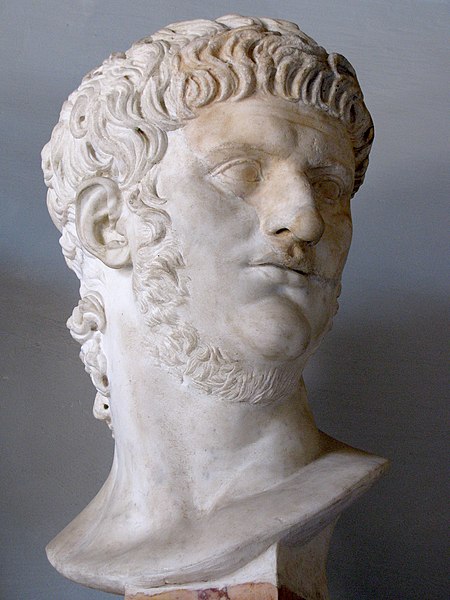
On His Birthday: Nero Sings and Renames Things

Ps-Lucian, Nero 6

Menekrates: “Musonius, that voice which made him music-mad and longing for Olympian and Pythian games, how was the tyrant’s voice? Some people who sailed to Lemnos were amazed by it, others mock it.”

Musonius: “Well, Menekrates, his voice really merits neither wonder nor mockery, since nature has made him moderately and unquestionably in tune. He speaks with a naturally open and deep voice, since his throat is deep, and when he sings he buzzes a little because of his throat shape. Nevertheless, the tones of his voice make him seem smoother if he does not try too hard, but relies instead on the melody, good accompaniment, and selecting the right time to walk, to stop, to move, and to nod his head along with the music. What is shameful is that a king appears to want success in these pursuits.”

ΜΕΝΕΚΡΑΤΗΣ
6. Ἡ φωνὴ δέ, Μουσώνιε, δι᾿ ἣν μουσομανεῖ καὶ τῶν Ὀλυμπιάδων τε καὶ Πυθιάδων ἐρᾷ, πῶς ἔχει τῷ τυράννῳ; τῶν γὰρ Λήμνῳ προσπλεόντων οἱ μὲν ἐθαύμαζον, οἱ δὲ κατεγέλων.
ΜΟΥΣΩΝΙΟΣ
Ἀλλ᾿ ἐκεῖνός γε, ὦ Μενέκρατες, οὔτε θαυμασίως ἔχει τοῦ φθέγματος οὔτ᾿ αὖ γελοίως· ἡ γὰρ φύσις αὐτὸν ἀμέμπτως τε καὶ μέσως ἥρμοκε. φθέγγεται δὲ κοῖλον μὲν φύσει καὶ βαρύ, ἐγκειμένης αὐτῷ τῆς φάρυγγος· μέλη δ᾿ οὕτω κατεσκευασμένης βομβεῖ πως. οἱ δέ γε τόνοι τῶν φθόγγων ἐπιλεαίνουσι τοῦτον, ἐπεὶ μὴ θαρρεῖ αὑτῷ, χρωμάτων δὲ φιλανθρωπίᾳ καὶ μελοποιίᾳ εὐαγώγῳ μὲν δὴ καὶ κιθαρῳδίᾳ εὐσταλεῖ καὶ <τῷ> οὗ καιρὸς βαδίσαι καὶ στῆναι καὶ μεταστῆναι καὶ τὸ νεῦμα ἐξομοιῶσαι τοῖς μέλεσιν, αἰσχύνην ἔχοντος μόνου τοῦ βασιλέα δοκεῖν ἀκριβοῦν ταῦτα.

Suetonius, Lives of the Caesars: Nero 53, 55

“He was mostly deranged by a desire for popularity and was an enemy to anyone who had any sway over the popular mob. Most believed that after all of his accomplishments on the stage he was going to compete among the Athletes at the next Olympian games. He was wrestling endlessly and he had watched the gymnastic contests all over Greece as a judge would, sitting on the ground of the stadium. If any competitors withdrew too far back, he would push them forth again with his own hand. Because he was alleged to have equaled Apollo in song and the Sun in chariot-driving, Nero planned to rival the deeds of Herakles too. People claim that a lion had been trained which he would be able to kill naked in the amphitheater in front of all the people with either a club or his arms’ embrace.”

Maxime autem popularitate efferebatur, omnium aemulus, qui quoquo modo animum vulgi moverent. Exiit opinio post scaenicas coronas proximo lustro descensurum eum ad Olympia inter athletas; nam et luctabatur assidue nec aliter certamina gymnica tota Graecia spectaverat quam brabeutarum more in stadio humi assidens ac, si qua paria longius recessissent, in medium manibus suis protrahens. Destinaverat etiam, quia Apollinem cantu, Solem aurigando aequiperare existimaretur, imitari et Herculis facta; praeparatumque leonem aiunt, quem vel clava vel brachiorum nexibus in amphitheatri harena spectante populo nudus elideret.

“He had a desire for eternal and endless fame, but it was ill-considered. Because of this he changed the names of many things and places from their ancient titles to something from his own name. So, he called the month of April Neroneus and planned to have Rome renamed Neropolis.”

Erat illi aeternitatis perpetuaeque famae cupido, sed inconsulta. Ideoque multis rebus ac locis vetere appellatione detracta novam indixit ex suo nomine, mensem quoque Aprilem Neroneum appellavit; destinaverat et Romam Neropolim nuncupare.

File:Nero 1.JPG
Bust of Nero at the Capitoline Museum

Foot Ailments and Fools! Save us From Democrates


Aelian, Miscellany 4.5

“Democrates the wrestler also had a foot ailment. When he went to a competition he stood in the arena, drew a circle around himself and dared his opponents to drag him over the line. Those who couldn’t, were defeated. He left crowned victor, having stood his ground strongly.”

Δημοκράτης ὁ παλαιστὴς καὶ αὐτὸς νοσήσας τοὺς πόδας, παριὼν εἰς τοὺς ἀγῶνας καὶ στὰς ἐν τῷ σταδίῳ, περιγράφων ἑαυτῷ κύκλον προσέταττε τοῖς ἀντιπαλαισταῖς ἔξω τῆς γραμμῆς αὐτὸν προέλκειν·οἱ δὲ ἡττῶντο ἀδυνατοῦντες. ὁ δὲ εὖ διαβὰς ἐν τῇ στάσει καὶ ἐγκρατῶς, στεφανούμενος ἀπῄει


Democrates or Heraclitus

“Friendship with a single smart person is better than many fools”

ἑνὸς φιλίη ξυνετοῦ κρέσσων ἀξυνέτων πάντων.


From Brill’s New Pauly, s.v. Democrates

[1] Attic orator of the 4th cent. BC from Aphidna

Attic orator of the 4th cent. BC from Aphidna, probably an older contemporary of Demosthenes [2] (about 338 BC he is called γέρων (gérōn; old man), cf. Stob. Floril. 3,22,43). As the descendant of  Harmodius or  Aristogeiton, he had a claim to free provisions in the Prytaneion (Hyp. 4,3). He belonged to the Pro-Macedonian party (Hyp. 4,2). He is also mentioned in Aeschin. Leg. 2,17 and Isaeus 6,22.

A Night On Cheese Mountain

With the holidays come all the extra opportunities for festive eating and drinking. Here’s Augustine imagining a cheesy paradise:

Fidelis promissor reddes Verecundo pro rure illo eius Cassiciaco, ubi ab aestu saeculi requievimus in te, amoenitatem sempiterne virentis paradisi tui, quoniam dimisisti ei peccata super terram in monte incaseato, monte tuo, monte uberi (Augustine, Confessions 9.3.5)

You are faithful in your promise—and for the use of his villa in Cassiciacum where we rested in you apart from the strain of this world—you are rewarding Verecundus with the delights of your eternally green garden. You have forgiven his earthly sins on the mountain where there is cheese, your mountain, the mountain of abundance.

The phrase in monte incaseato can strike the reader as odd. Thomas Williams renders it as “the mountain flowing with milk.” Sarah Ruden highlights and amplifies the wordplay with the site of Verecundus’s villa and translates it as “the mountain of Cassiciacum’s choice cheese.” Both Williams and Ruden note that it’s a citation of Ps 68:16-17 (67:16-17) in the Old Latin. Both Williams and J.J. O’Donnell cite Augustine’s explanation of this verse in the Enarrationes in Psalmos 67:22:

Hunc autem montem consequenter dicit “montem Dei, montem uberem, montem incaseatum, vel montem pinguem” … Sed quem montem intellegere debemus “montem Dei, montem uberem, montem incaseatum,” nisi eumdem Dominum Christum … Ipse est mons incaseatus, propter parvulos gratia tamquam lacte nutriendos; nam et ipsum lac, unde fit caseus, miro modo significat gratiam; manat quippe ex abundantia viscerum maternorum, et misericordia delectabili parvulis gratis infunditur.

This mountain is suitably called, “the mountain of God, the mountain of abundance, the mountain where there is cheese,” or “the mountain of fat.” … How ought we to understand this mountain to be anything other than Christ the Lord? … He is the mountain of cheese, since his little ones are fed with grace as with milk … For milk itself from which comes cheese, miraculously symbolizes grace, gushing abundantly from the breasts of mothers and poured forth upon the little ones with delicious compassion.

***

How did this mountain of cheese get into Augustine’s Psalter? As is so often the case with the interesting, odd, or otherwise noteworthy renderings in the Old Latin or Vulgate Psalms, the cheese was delivered via the Septuagint.

Here are the relevant phrases in the Masoretic text of Ps 68:16-17, with the word in question underlined:

har-ʾĕlōhîm har-bāšān

har gabnūnnîm har-bāšān

hārîm gabnūnnîm

hāhār ḥāmad ʾĕlōhîm lǝšibtô

The word in question here, gabnūnnîm, derives from the root  g.b.n., which occurs sparingly in the Hebrew Bible. It is used in reference to a person with a hunched back (Lev 21:20) and in its form here, the plural of gabnōn, extends that meaning metaphorically to describe the shape of a mountain. Consequently, the NRSV renders gabnūnnîm in Ps 68 as “many-peaked.” Here’s my translation:

mountain of God, mountain of Bashan

humpbacked mountain, mountain of Bashan

humpbacked mountains,

the mountain where God desires to make his dwelling.

However, the root g.b.n. can also refer to curds or cheese—(as it still does in Modern Hebrew, gǝbînâ)—and as the parallelism in Job 10:10 shows:

hălōʾ keḥālāb tattîkēnî

wǝkaggǝbinnâ taqpîʾēnî

Haven’t you poured me out like milk?

And congealed me like cheese?

Faced with gabnūnnîm in Psalm 68, the LXX chose the tasty fermented dairy food:

ὄρος τοῦ θεοῦ, ὄρος πῖον,

ὄρος τετυρωμένον, ὄρος πῖον.

ὄρη τετυρωμένα,

τὸ ὄρος, ὃ εὐδόκησεν ὁ θεὸς κατοικεῖν ἐν αὐτῷ;

God’s mountain, a fertile mountain,

a curdled mountain, a fertile mountain

curdled mountains,

the mountain on which God has chosen to dwell

This is what we see in the Old Latin quoted by Augustine:

montem dei, montem uberem,

mons incaseatum, mons pinguem (Augustine’s text)

mountain of God, mountain of abundance,

mountain where there is cheese, mountain of fat

For comparison, here’s the Old Latin edition of Sabatier:

montem dei, montem uberum.

montem caseatum, montem uberem (Sabatier edition)

mountain of God, mountain of abundance,

cheesy (or curdled) mountain, mountain of abundance

Ever the party-pooper, Jerome leaves no traces of cheese on the mountain in the Vulgate:

mons Dei mons pinguis

mons excelsus mons pinguis

mountain of God, mountain of fat,

high mountain, mountain of fat.

***

The imagery of uninhabited land full of processed or manufactured food can be found in several places in the Hebrew Bible, most notably the repeated reference to Canaan as “the land flowing with milk and honey,” but also visions of the hills flowing with sweet wine (Amos 9:13) and mountains flowing with milk (Joel 3:18). The utopian vision of a mountain with food ready to hand has a long life. Harry McClintock’s famous 1928 recording of the “The Big Rock Candy Mountain” describes hens who lay soft-boiled eggs, revels in the “the little streams of alcohol” that “come a-trickling down the rocks” and “a lake of stew, and of whiskey too” where “you can paddle all around ‘em in a big canoe.”

As always, whatever mountain you choose to graze on this holiday season, consume responsibly.

color photograph of large wheels of cheese; a tower on the left side; shelves of wheels on the right

Thomas M. Bolin is Professor of Religious Studies & Classical Studies at St. Norbert College in Wisconsin. 

Fox Temper Meet Hunting Wolf

Pindar, Pythian 2.77-89

“Slander merchants are an incurable headache for everyone–
They have tempers like foxes–
But what kind of profit does that cleverness produce?
It is just like when the rest of the equipment
Struggles in the the depth of the sea and I go
Floating untouched like a cork on the salty swell.

It’s impossible for a lying citizen to speak a strong word
Among good people–yet they’ll keep sucking up to everyone
To weave total ruin.
I don’t share his audacity! I want to love a friend
And be hateful to an enemy and
Run him to ground like a wolf does–

Creeping up on him by indirect paths.
Someone who speaks straight rises to the top
In any constitution–in a tyranny, when the mob rules or
When wise people oversee the state.
You shouldn’t fight with a god.”

ἄμαχον κακὸν ἀμφοτέροις διαβολιᾶν ὑποφάτιες,
ὀργαῖς ἀτενὲς ἀλωπέκων ἴκελοι.
κέρδει δὲ τί μάλα τοῦτο κερδαλέον τελέθει;
ἅτε γὰρ ἐννάλιον πόνον ἐχοίσας βαθύν
σκευᾶς ἑτέρας, ἀβάπτιστος εἶμι φελ-
λὸς ὣς ὑπὲρ ἕρκος ἅλμας.
ἀδύνατα δ᾿ ἔπος ἐκβαλεῖν κραταιὸν ἐν ἀγαθοῖς
δόλιον ἀστόν· ὅμως μὰν σαίνων ποτὶ πάντας ἄ-
ταν πάγχυ διαπλέκει.
οὔ οἱ μετέχω θράσεος. φίλον εἴη φιλεῖν·
ποτὶ δ᾿ ἐχθρὸν ἅτ᾿ ἐχθρὸς ἐὼν λύκοιο
δίκαν ὑποθεύσομαι,

ἄλλ᾿ ἄλλοτε πατέων ὁδοῖς σκολιαῖς.
ἐν πάντα δὲ νόμον εὐθύγλωσσος ἀνὴρ προφέρει,
παρὰ τυραννίδι, χὠπόταν ὁ λάβρος στρατός,
χὤταν πόλιν οἱ σοφοὶ τηρέωντι. χρὴ
δὲ πρὸς θεὸν οὐκ ἐρίζειν

Photograph of the inside of a red figure vase. A large headed figure sits and talks to a fox, who is gesticulating
Red Figure Vase c. 460 BCE Vatican Museum

Everyone’s Heard of Peleus

Pindar, Isthmian 6.23-30

“There’s no city so foreign
Nor so tongue-tied that
It has not heard the fame of the Hero Peleus,
Blessed son-in-law to the gods,
Nor Ajax, the son of Telamon,
And his father–Alkmene’s son took him in ships
To the bronze-delighting war,
When he went as a willing ally
From Tiryns to Troy, that labor for heroes,
Because of Laomedon’s duplicity.”

οὐδ᾿ ἔστιν οὕτω βάρβαρος
οὔτε παλίγγλωσσος πόλις,
ἅτις οὐ Πηλέος ἀίει κλέος ἥ-
ρωος, εὐδαίμονος γαμβροῦ θεῶν,
οὐδ᾿ ἅτις Αἴαντος Τελαμωνιάδα
καὶ πατρός· τὸν χαλκοχάρμαν ἐς πόλεμον
ἆγε σὺν Τιρυνθίοισιν πρόφρονα σύμμαχον ἐς
Τροΐαν, ἥρωσι μόχθον,
Λαομεδοντιᾶν ὑπὲρ ἀμπλακιᾶν
ἐν ναυσὶν Ἀλκμήνας τέκος.

Oil painting with banquet scene in profile. Large number of semi-clothed divine people in post-renaissance romanticized style. All the figures are looking right at the appearance of a golden apple
Painting of the Feast of Peleus by Edward Burne-Jones, ca. 1872/1881.

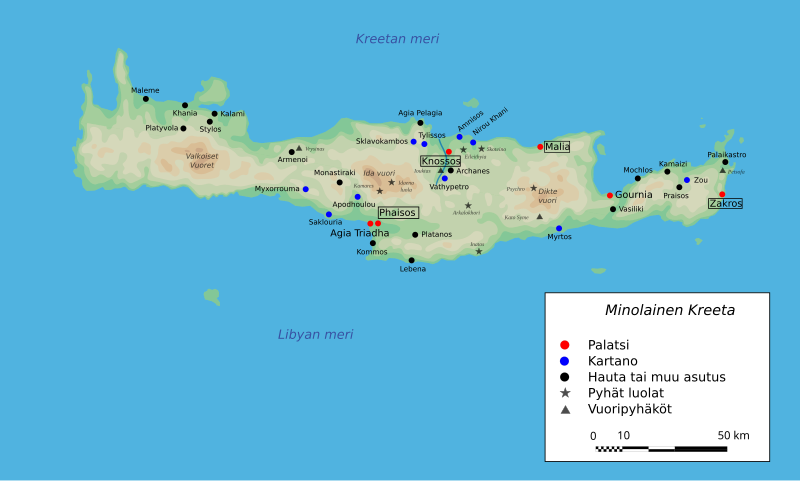
How Many Cities in Crete?

Schol. A. ad Il. 2.649

“Others have instead “those who occupy hundred-citied Crete” in response to those Separatists because they say that it is “hundred-citied Crete” here but “ninety-citied” in the Odyssey. Certainly we have “hundred-citied” instead of many cities, or he has a similar and close count now, but in the Odyssey lists it more precisely as is clear in Sophocles. Some claim that the Lakedaimonian founded ten cities.”

Ariston. ἄλλοι θ’ οἳ Κρήτην <ἑκατόμπολιν ἀμφενέμοντο>: πρὸς τοὺς Χωρίζοντας (fr. 2 K.), ὅτι νῦν μὲν ἑκατόμπολιν τὴν Κρήτην, ἐν ᾿Οδυσσείᾳ (cf. τ 174) δὲ ἐνενηκοντάπολιν. ἤτοι οὖν ἑκατόμπολιν ἀντὶ τοῦ πολύπολιν, ἢ ἐπὶ τὸν σύνεγγυς καὶ ἀπαρτίζοντα ἀριθμὸν κατενήνεκται νῦν, ἐν ᾿Οδυσσείᾳ δὲ τὸ ἀκριβὲς ἐξενήνοχεν, ὡς παρὰ Σοφοκλεῖ (fr. 813 N.2 = 899 P. = 899 R.). τινὲς δέ †φασι πυλαιμένη† τὸν Λακεδαιμόνιον δεκάπολιν κτίσαι.

Strabo, 10.15

“Because the poet sometimes calls Krete “hundred-citied” but at others, “ninety-cited”, Ephorus says that ten cities were founded after the battles at Troy by the Dorians who were following Althaimenes the Argive. But he also says that Odysseus names it “ninety-cities” This argument is persuasive. But others say that ten cities were destroyed by Idomeneus’ enemies. But the poet does not claim that Krete is “hundred-citied” during the Trojan War but in his time—for he speaks in his own language even if it is the speech of those who existed then, just as in the Odyssey when he calls Crete “ninety-citied”, it would be fine to understand it in this way. But if we were to accept that, the argument would not be saved. For it is not likely that the cities were destroyed by Idomeneus’ enemies when he was at war or came home from there, since the poet says that “Idomeneus led to Crete all his companions who survived the war and the sea killed none of them.

He would have mentioned that disaster. For Odysseus certainly would not have known of the destruction of the cities because he had not encountered any of the Greeks either during his wandering or after. And one who accompanied Idomeneus against Troy and returned with him would not have known what happened at home either during the expedition or the return from there. If Idomeneus was preserved with all his companions, he would have come back strong enough they his enemies were not going to be able to deprive him of ten cities. That’s my overview of the land of the Kretans.”

Τοῦ δὲ ποιητοῦ τὸ μὲν ἑκατόμπολιν λέγοντος τὴν Κρήτην, τὸ δὲ ἐνενηκοντάπολιν, Ἔφορος μὲν ὕστερον ἐπικτισθῆναι τὰς δέκα φησὶ μετὰ τὰ Τρωικὰ ὑπὸ τῶν Ἀλθαιμένει τῷ Ἀργείῳ συνακολουθησάντων Δωριέων· τὸν μὲν οὖν Ὀδυσσέα λέγει ἐνενηκοντάπολιν ὀνομάσαι· οὗτος μὲν οὖν πιθανός ἐστιν ὁ λόγος· ἄλλοι δ᾿ ὑπὸ τῶν Ἰδομενέως ἐχθρῶν κατασκαφῆναί φασι τὰς δέκα. ἀλλ᾿ οὔτε κατὰ τὰ Τρωικά φησιν ὁ ποιητὴς εκατοντάπολιν ὑπάρξαι τὴν Κρήτην, ἀλλὰ μᾶλλον κατ᾿ αὐτόν (ἐκ γὰρ τοῦ ἰδίου προσώπου λέγει· εἰ δ᾿ ἐκ τῶν τότε ὄντων τινὸς ἦν ὁ λόγος, καθάπερ ἐν τῇ Ὀδυσσείᾳ, ἡνίκα ἐνενηκοντάπολιν φράζει, καλῶς εἶχεν ἂν οὕτω δέχεσθαι), οὔτ᾿ εἰ συγχωρήσαιμεν τοῦτό γε, ὁ ἑξῆς λόγος σώζοιτ᾿ ἄν. οὔτε γὰρ κατὰ τὴν στρατείαν οὔτε μετὰ τὴν ἐπάνοδον τὴν ἐκεῖθεν τοῦ Ἰδομενέως εἰκός ἐστιν ὑπὸ τῶν ἐχθρῶν αὐτοῦ τὰς πόλεις ἠφανίσθαι ταύτας· ὁ γὰρ ποιητὴς φήσας, πάντας δ᾿ Ἰδομενεὺς Κρήτην εἰσήγαγ᾿ ἑταίρους, οἳ φύγον ἐκ πολέμου, πόντος δέ οἱ οὔτιν᾿ἀπηύρα·

καὶ τούτου τοῦ πάθους ἐμέμνητ᾿ ἄν· οὐ γὰρ δήπου Ὀδυσσεὺς μὲν ἔγνω τὸν ἀφανισμὸν τῶν πόλεων ὁ μηδενὶ συμμίξας τῶν Ἑλλήνων μήτε κατὰ τὴν πλάνην μήθ᾿ ὕστερον. ὁ δὲ καὶ συστρατεύσας τῷ Ἰδομενεῖ καὶ συνανασωθεὶς οὐκ ἔγνω τὰ συμβάντα οἴκοι αὐτῷ οὔτε κατὰ τὴν στρατείαν οὔτε τὴν ἐπάνοδον τὴν ἐκεῖθεν· ἀλλὰ μὴν οὐδὲ μετὰ τὴν ἐπάνοδον· εἰ γὰρ μετὰ πάντων ἐσώθη τῶν ἑταίρων, ἰσχυρὸς ἐπανῆλθεν, ὥστ᾿ οὐκ ἔμελλον ἰσχύσειν οἱ ἐχθροὶ τοσοῦτον, ὅσον δέκα ἀφαιρεῖσθαι πόλεις αὐτόν. τῆς μὲν οὖν χώρας τῶν Κρητῶν τοιαύτη τις ἡ περιοδεία.

File:Map Minoan Crete-fi.svg
There are not one hundred cities here.