Between the Altar and the Knife

Erasmus, Adagia, 1.1.15:

“Tyndarus, one of the captives in the play of that name by Plautus, was caught red-handed in the middle of his scheming. Having no device by which he could escape, he said

Now I am utterly destroyed. Now I stand between the altar and the knife, and I don’t know what to do.

Apuleius, in the eleventh book of his Golden Ass, writes:

At a time when the hardness of poverty was interfering with my life, I was – as the ancient proverb has it – being put to torture between the altar and the knife .

Apuleius, however, explains the saying allegorically as referring to the priesthood to which he was about to be initiated, and the poverty which was harder than a rock, on account which no resources were at hand. It is clear that this has been taken from the earliest ceremonies of striking up a treaty, in which the Fetial would strike a pig while pronouncing these words: ‘whoever breaks this treaty first, let Jupiter smite him just as I smite this pig with this rock.’ But though the proverb has flowed this way and that, it is clear enough that it was usually applied to those who, in their perplexity, are driven to the most extreme danger.”

Image result for roman sacrifice pig

Inter sacrum et saxum.xv

Tyndarus apud Plautum, alter e captivis, cum jam proditis dolis esset deprehensus nec haberet, quanam arte possit elabi,

Nunc ego, inquit, omnino occidi.

Nunc ego inter saxum sacrumque sto, nec quid faciam scio.

Apuleius Asini sui libro undecimo:

Plurimum ergo duritia paupertatis intercedente, quod ait vetus proverbium, inter sacrum et saxum positus cruciabar.

Explicat autem Apuleius allegoriam adagii videlicet alludens ad sacerdotium, cui erat initiandus, et paupertatem saxo duriorem, per quo non suppetebant sumptus. Sumptum apparet ex priscis foederis feriendi ceremoniis, in quibus fecialis porcum saxo feriebat haec interim pronuntians : Qui prior populus foedus rumpet, Jupiter eum feriat, quemadmodum ego porcum hoc lapide ferio. Sed undecumque fluxit adagium, satis liquet dici solitum in eos, qui perplexi ad extremum periculum rediguntur.

A Lengthy Disquisition on Shit-Talking

Erasmus, Adagia 27:

If you say what you want to say, you will hear what you do not want to hear. St. Jerome cites this in the place of a proverb in his work Against Rufinus: ‘You will hear nothing more than this, except that from the crossroads: when you say what you want, you will hear what you don’t. Terence, in his Andria, writes:

If he continues to say what he wants, he will hear what he doesn’t.

and in his prologue to Phormio:

If he had contended against him with well-chosen words, he would have heard something good in return,

and he even alluded to the same thing in his prologue to Andria:

Let them cease to talk shit, lest they learn of their own crimes.

and somewhat more obscurely, he writes in his prologue to The Eunuch:

Then, if there is anyone who thinks that something here has been spoken a little ungenerously about him, let him think so, but understand that this was not an attack…

for by the word responsum, he means an attack made in return for another. But this passage reminds me that I should contradict the error of certain people who had written in the margin that I read in the following lines because he first did harm [quia laesit prius: indeed, thus it was written in the common copies. I, before anyone else, restored the proper reading, to wit:

Just as [quale sit] he who, first translating them well and describing them badly made bad Latin plays out of good Greek ones, and who now recently did the same for Menander’s Phasma

where the phrase quale sit has the same force as the Greek οἷον or the Latin velut or quod genus sit, which we use when we are about to lay out an example. For he was recounting the act of returning an assault, and then he added an example, and then first [prius] responds to the adverb which follows, recently [nuper]. So the sense is something like, ‘who earlier had translated many plays badly, which you now do not remember, also recently produced that shitty version of the Phasma, which you can remember.’

But, to return to the subject at hand, it seems that Homer was the father of this adage, and we read in this verse of Book 20,

              Ὁπποῖόν κ᾽ εἴπῃσθα ἔπος, τοῖόν κ᾽ ἐπακούσαις, that is,

You will hear such a speech as you have just made.

Similarly, Hesiod, in his Works and Days, writes,

Εἰ δὲ κακόν τ᾽ εἴποις, τάχα κ᾽ αὐτὸς μεῖζον ἀκούσαις,  that is

It is likely that to one talking shit, much shit will be talked in turn.

And again in that same book,

Εἰ δέ κεν ἄρχῃ

Ἤ τι ἔπος εἰπὼν ἀποθύμιον ἠὲ καὶ ἔρξας,

Δὶς τόσα τίννυσθαι μεμνημένος,  that is,

If first you yourself either say or do some bad word or deed, you will see it return to you with doubled interest.

Euripides, in his Alcestis, writes:

Εἰ δ᾽ ἡμᾶς κακῶς

Ἐρεῖς, ἀκούσῃ πολλὰ κοὐ ψευδῆ κακά,  that is,

If you talk some shit to me, you will hear a lot of shit in turn, and it will be true.

But Sophocles expressed the same sentiment in a much more charming way, and Plutarch cites him thus:

Φιλεῖ γὰρ γλῶτταν ἐκχέας μάτην

Ἄκων ἀκούειν οὒς ἑκὼν εἴπῃ λόγους, that is,

Indeed, the one who has tossed about his words carelessly is usually unwilling to hear what he was willing to say.

But the phrase from Sophocles is actually:

Φιλεῖ δὲ πολλὴν γλῶσσαν ἐκχέας μάτην

Ἄκων ἀκούειν οὓς ἑκὼν εἶπεν κακῶς,  that is

The one who pours out words carelessly is usually unwilling to hear the kind of shit he talked.

Indeed, even in our own times, the common saying goes, As you greet someone, so too will you be greeted, which is to say that people will respond to you in the manner of your own speech. Plautus writes, If you speak an insult, you will hear one. Caecilius, in his Chrysius as cited by Gellius, writes: You will hear an insult if you speak one to me. The same sense can be had from that Euripidean verse which one encounters in some authors, Ἀχαλίνων στομάτων ἀνόμου τ᾽ ἀφροσύνης τὸ τέλος δυστυχία, that is, The end of unbridled mouths and ungoverned madness is calamity. Celebrated among Chilon’s sayings is, Μὴ κακολογεῖν τοὺς πλησίον·εἰ δὲ μή, ἀκούσεσθαι ἐφ᾽ οἷς λυπήσεσθαι, that is, Don’t talk shit to those near you; otherwise you will hear what may case you pain. I think one could also add the little verse which Quintilian said was popular among the common people: He did not really insult him, because the other guy insulted him first.

              440px-Phlyax_scene_Louvre_CA7249

QVI QVAE VVLT DICIT, QVAE NON VVLT AVDIET

Si dixeris quae vis, quae non vis audies. Diuus Hieronymus in Rufinum nominatim prouerbii loco citat: Nihilque super hoc audies, inquit, nisi illud e triuio: cum dixeris quae vis, audies quae non vis. Terentius in Andria:  Si mihi pergit quae vult dicere, quae non vult audiet. Rursum in prologo Phormionis: Benedictis si certasset, audisset bene. Eodem allusit in prologo Andriae: Desinant Maledicere, malefacta ne noscant sua. Obscurius etiam in prologo Eunuchi: Tum si quis est, qui dictum in se inclementius Existimet esse, sic existimet, sciat  Responsum non dictum esse, responsum enim vocat conuicium conuicio redditum. Sed hic locus admonet, vt quorundam errorem coarguam, qui in margine  dscripserant me in his quae sequuntur legere, quia laesit prius: imo sic legebatur in vulgatis exemplaribus. Ego primus ex fide veterum restitui germanam lectionem, nimirum hanc:

Quale sit, prius   Qui bene vertendo et eas describendo male

Ex Graecis bonis Latinas fecit non bonas, Idem Menandri Phasma nunc nuper dedit,

vt quale sit idem valeat quod apud Graecos οἷον, apud Latinos ‘velut’ aut ‘quod genus sit’, quibus vtimur exemplum proposituri. Meminerat enim de conuicio regerendo, eius mox subiicit exemplum, deinde prius respondet ad aduerbium quod sequitur, nuper. Qui prius male verterat multas fabulas, quarum non meministis, idem nuper dedit ineptam fabulam Phasma, cuius potestis meminisse. Verum vt ad rem redeamus, primus huius adagii pater Homerus fuisse videtur, apud quem hic versus est in Iliadis Υ:

Ὁπποῖόν κ᾽ εἴπῃσθα ἔπος, τοῖόν κ᾽ ἐπακούσαις,  id est Talia dicentur tibi, qualia dixeris ipse.

Item Hesiodus libro, cui titulus Opera et dies: Εἰ δὲ κακόν τ᾽ εἴποις, τάχα κ᾽ αὐτὸς μεῖζον ἀκούσαις,  id est  Fors male dicenti dicentur plura vicissim. Rursus in eodem:

Εἰ δέ κεν ἄρχῃ

Ἤ τι ἔπος εἰπὼν ἀποθύμιον ἠὲ καὶ ἔρξας,

Δὶς τόσα τίννυσθαι μεμνημένος,  id est

Si quod prior ipse

Aut verbum aut factum dicasue gerasue molestum,

Ad te cum duplici rediturum foenore noris.

Euripides in Alcestide:

Εἰ δ᾽ ἡμᾶς κακῶς

Ἐρεῖς, ἀκούσῃ πολλὰ κοὐ ψευδῆ κακά,  id est

Si dixeris nobis male,

Mala inuicem permulta nec falsa audies.

Longe venustius idem extulit Sophocles citante Plutarcho:

Φιλεῖ γὰρ γλῶτταν ἐκχέας μάτην

Ἄκων ἀκούειν οὒς ἑκὼν εἴπῃ λόγους,  id est

Etenim solet qui dicta temere iecerit,

Audire nolens verba, quae dixit volens.

Refertur ex Sophocle:

Φιλεῖ δὲ πολλὴν γλῶσσαν ἐκχέας μάτην

Ἄκων ἀκούειν οὓς ἑκὼν εἶπεν κακῶς,  id est

Qui multa temere verba fudit, is solet

Audire nolens quae volens dixit male.

Quin etiam his nostris temporibus eiusmodi quiddam vulgo dictitant: Vt salutabis, ita et resalutaberis, hoc est vt tua fuerit oratio, ita tibi respondebitur. Plautus: Contumeliam si dices, audies. Caecilius in Chrysio apud Gellium: Audibis male, si male dicis mihi. Eodem pertinet Euripideum illud apud autores passim obuium: Ἀχαλίνων στομάτων ἀνόμου τ᾽ ἀφροσύνης τὸ τέλος δυστυχία, id est Infrenis oris et iniquae vecordiae finis seu vectigal, calamitas. Celebratur et hoc inter Chilonis apophthegmata: Μὴ κακολογεῖν τοὺς πλησίον· εἰ δὲ μή, ἀκούσεσθαι ἐφ᾽ οἷς λυπήσεσθαι, id est Non esse maledicendum iis, quibuscum agimus; alioquin audituros, quae molestiam adferant. Huc arbitror asscribendum versiculum, quem Quintilianus vt vulgo iactatum citat: Nec male respondit, male enim prior ille rogarat.

Hand Washing and Corruption

Erasmus, Adagia 33:

Socrates in the Axiochus of Plato, says to the sophist Prodicus that this little verse of the comic Epicharmus was always in his mouth: Ἡ δὲ χεὶρ τὴν χεῖρα κνίζει, δός τι καὶ λάβοις τι, that is, one hand wipes the other, give something and get something, obviously reproaching in a humorous way the greed of a man who taught no one for free, and from whom he affirmed that he himself had learned what he was about to speak not for free, but by paying a fee. This idea was worthy then of a Sicilian, then of a ‘cunning poet.’ For thus Cicero labels him. It does, however, advise us that no one can be found who would wish to do someone a service without wishing that the other would repay the favor in turn: rather, duty is called forth by duty, favors called forth by favors. The same adage is expressed this way: Χεὶρ χεῖρα νίπτει, that is, one hand washes the other. Either metaphor has the same sense, for it is a kind of shared benefit when one hand either wipes or washes the other. There is a distich of this sort which was fashionable among the Greeks: Ἀνὴρ γὰρ ἄνδρα καὶ πόλις σῴζει πόλιν.  Χεὶρ χεῖρα νίπτει, δάκτυλος τε δάκτυλον, that is, one man saves another, one citiy saves the other; the hand washes the hand and the finger cleans the finger. Seneca uses this phrase in that ridiculous little book about the death of Claudius.

3266865562_31bfd7563c_b

MANVS MANVM FRICAT

              Socrates in Axiocho Platonis ait Prodico sophistae hunc Epicharmi comici versiculum semper in ore fuisse:  Ἡ δὲ χεὶρ τὴν χεῖρα κνίζει, δός τι καὶ λάβοις τι,  id est Affricat manum manus, da quiddam et aliquid accipe, videlicet hominis quaestum facete taxans, qui neminem gratis doceret et a quo se quoque quae tum dicturus esset, didicisse affirmabat, at ne id quidem gratuito, imo numerata mercede. Sententia digna tum homine Siculo tum ‘vafro poeta’; sic enim illum appellat Cicero. Monet autem neminem ferme mortalium inueniri, qui velit in quempiam beneficium collocare, a quo non speret aliquid emolumenti vicissim ad se rediturum, sed officium inuitari officio, beneficium beneficio prouocari. Idem adagium effertur et hoc pacto: Χεὶρ χεῖρα νίπτει, id est Manum manus lauat. Idem pollet vtraque metaphora. Nam mutua commoditas est, quoties vel fricat vel abluit manus manum. Circunfertur inter Graecanicas sententias huiusmodi distichon: Ἀνὴρ γὰρ ἄνδρα καὶ πόλις σῴζει πόλιν.

Fools Learn Too Late

Erasmus, Adagia 30:

The same thought is put forth by others: Ῥεχθὲν δε τε νήπιος ἔγνω, that is, ‘The fool understands the matter once it’s done.’ It has, however, been taken from Homer, who has taken up this thought in many places, as in Μήτε ἀντίος ἵστασ᾽ ἐμοῖο,  Πρίν τι κακὸν παθέειν· ῥεχθὲν δέ τε νήπιος ἔγνω, that is, Beware of coming up against me, before you take up some harm; for even the stupid person understands the deed once it’s done. Euripides has alluded to this in his Bacchae: Κακοῦ γὰρ ἐγγὺς ὢν ἐμάνθανεν, that is, For he learned, being close to the misfortune; this was said of Pentheus, who learned too late and not without danger to himself to revere Bacchus. Not entirely dissimilar to this is that senarius renowned among the Greek sententiae: Ἡ δὲ μετάνοια γίγνετ᾽ ἀνθρώποις κρίσης, that is, Then people judge, when they already have regret. This expression of Vergil has the same bearing: Having been warned, learn justice and not to spurn the gods. Similarly, the thought of Demosthenes: I do not purchase regret at such a price. And so, in the most elegant way, Fabius (in Livy) calls the outcome the teacher of the fool, saying, Nor would the outcome, which is the teacher of the fool, teach this. Pliny, in his Panegyric which he spoke to Trajan, calls prudence of this sort fruitless and wretched, saying Terror, and fear, and that wretched prudence made out of dangers warned us to turn our eyes, our ears, our minds away from the republic (though there was, however, no republic at all).

id56-2b-43ec

FACTVM STVLTVS COGNOSCIT

Idem aliter effertur ab aliis: Ῥεχθὲν δε τε νήπιος ἔγνω, id est• Rem peractam stultus intellexit•. Sumptum est autem ex Homero, qui pluribus locis hanc vsurpauit sententiam. Vt in Iliados Μήτε ἀντίος ἵστασ᾽ ἐμοῖο,  Πρίν τι κακὸν παθέειν· ῥεχθὲν δέ τε νήπιος ἔγνω,  id est  Mihi obuius ire caueto, prius quam Noxae aliquid capias; nam factum nouit et excors. Huc allusit Euripides in Bacchis: Κακοῦ γὰρ ἐγγὺς ὢν ἐμάνθανεν,  id est Nam didicit affinis malo, de Pentheo, qui sero nec nisi sua pernicie doctus coepit reuereri Bacchum. Neque huic diuersum est, quod admonet senarius ille inter Graecanicas sententias celebris:  Ἡ δὲ μετάνοια γίγνετ᾽ ἀνθρώποις κρίσης,  id est  Tum iudicant homines, vbi iam poenitet. Eodem pertinet Vergilianum illud: Discite iustitiam moniti et non temnere diuos. Item illud Demosthenicum: Non emo tanti poenitere. Vnde perquam eleganter Fabius apud Titum Liuium euentum stultorum magistrum appellat Nec euentus doceat hoc, inquiens, qui stultorum magister est, sed ratio. Plinius in Panegyrico, quem Traiano dixit, huiusmodi seram et infrugiferam prudentiam miseram vocat. Terror, inquit, et metus et misera illa ex periculis facta prudentia monebat, vt a republica (erat autem omnino nulla respublica) oculos, aures, animos auerteremus.

It’s Too Late!

Erasmus, Adagia 28

This proverb is taken in term from the oldest tragedy of Livius Andronicus, which is called The Trojan Horse: ‘The Trojans understand too late.’ This is taken up by Cicero in his Familiar Letters. He says, ‘You know that in The Trojan Horse there is this line: “the Trojans understand too late.”’ This is an apt expression for those who foolishly regret their deeds when it is too late. Since indeed, the Trojans, after suffering so many disasters, only began to discuss returning Helen in the tenth year of the war. If they had immediately given her back to Menelaus when he had asked at the beginning, they would have exempted themselves from innumerable calamities. Euripides writes in his Orestes:

Ὀψέ γε φρονεῖς εὖ, τότε λιποῦσ᾽ αἰσχρῶς δόμους,

that is, But now surely you understand too late, since you then left the home                shamefully.

For these are the words of Electra to Helen. It is also recalled by Festus Pompeius in the inscription of a proverb. According to Plutarch, Demades was accustomed to say that the Athenians never decided on peace unless they had already put on their mourning clothes, hinting to the fact that they were more desirous of waging war than was appropriate, and did not wish to think of peace unless they had first been warned by the loss of their own. But how much more foolish than the Athenians are we, who after learving from the sufferings of so many years even now do not hate war, and do not even finally begin to think of the peace which should always exist among Christians.

File:Master of the Eneid Legend - Greek soldiers hide into the Trojan horse (Louvre, OA 7553).jpg

SERO SAPIVNT PHRYGES

Hoc prouerbium ex vetustissima tragoedia Liuii Andronici mutuo sumptum est, quae inscribitur Equus Troianus: Sero sapiunt Phryges. Vsurpatur a Cicerone in Epistolis familiaribus: In equo, inquit, Troiano scis esse: sero sapiunt Phryges. Conuenit in eos, quos stulte factorum sero poenitet. Siquidem Troiani tot iam acceptis cladibus vix decimo demum anno de restituenda Helena consultare coeperunt; quam si statim initio reposcenti Menelao reddidissent, innumerabilibus sese calamitatibus subduxissent. Euripides in Oreste:

 Ὀψέ γε φρονεῖς εὖ, τότε λιποῦσ᾽ αἰσχρῶς δόμους,

id est. At nunc profecto serius sapis bene, 

Cum tunc penates turpiter reliqueris.

Nam verba sunt ad Helenam Electrae. Refertur et a Festo Pompeio prouerbii titulo. Demades autore Plutarcho dicere solebat Athenienses nunquam decernere pacem nisi pullis vestibus indutos, innuens eos bellandi cupidiores quam sat esset, nec nisi clade suorum admonitos de pace cogitare. At nos quanto sumus Atheniensibus vecordiores, qui ne tot quidem annorum malis docti bellum odimus nec de pace, quam inter Christianos perpetuam esse oportebat, tandem incipimus cogitare.

Taking Extreme Measures

Erasmus, Adagia 25:

Diogenianus thinks that this has the same force: Κινῶ τὸν ἀφ᾽ ἱερᾶς, that is, I move the die from the sacred line. This is said of those who are about to undertake the most extreme measures. Julius Pollux, laying this out in his ninth book, says that the adage derives from a certain kind of dice game, and that the game was of this sort: for each of the players, there were five little stones placed upon the same number of lines, from which Sophocles said πεσσὰ πεντέγραμμα, that is, the dice of the five lines. Between those lines (five on each side) there was one in the middle, which they called sacred. Whoever moved the die past that point was said to have moved the die of the sacred line. But that never happened except when the game demanded it, when the player needed to flee to their last resort.

Plato employs this adage in the fifth book of his Laws: Καθάπερ πεττῶν ἀφ᾽ ἱεροῦ, that is, As if from the sacred die. Plutarch, in his book, Whether the Republic Should Be Run by an Old Man, writes: Τελευταίαν ὥσπερ τὴν ἀφ᾽ ἱερᾶς ἐπάγουσιν ἡμῖν τὸ γῆρας, that is, they charge us with senility as if moving the die from the sacred line, which is to say, this is the gravest charge. Plutarch also says in his Comparison of Terrestrial and Marine Things: Φέρε κινήσαντες τὴν ἀφ᾽ ἱερᾶς βραχέα περὶ θειότητος αὐτῶν καὶ μαντικῆς εἴπωμεν, that is, Come on, let’s move the die from the sacred line and talk a little about their divinity and divination. And again he writes in his essay Against Colotes: Εὐθὺς οὖν τὸν ἀφ᾽ ἱερᾶς κεκίνηκεν ὁ Κολώτης, that is, Colotes straightaway moved the die from the sacred line, which is to say that he immediately proceeded to the most extreme measure, so that he could attack the judgment of Apollo concerning Socrates. Plutarch also writes in the life of Martius Coriolanus, about the Roman people being disturbed by Coriolanus’ threats, Ἄρα τὴν ἀφ᾽ ἱερᾶς ἀφῆκεν, that is, he tossed away the die taken from the sacred line, because the Romans, with all hope of success having been lost, fleed to the religion of the gods and sent priests, temple custodians, initiators, and augurs to supplicate the gods. Theocritus alludes to this in his Bucolics: Καὶ τὸν ἀπὸ γραμμᾶς κινεῖ λίθον, that is, and he moves the stone from the little line, which I have mentioned elsewhere.

Mosaic of Gamblers

MOVEBO TALVM A SACRA LINEA

Idem pollere putat Diogenianus: Κινῶ τὸν ἀφ᾽ ἱερᾶς, id est Sacrae lineae talum moueo. De iis, qui extrema parant experiri. Id Iulius Pollux libro nono exponens ait a ludo quopiam tesserarum natum esse adagium. Lusum autem fuisse huiusmodi, vt vtrique ludentium essent calculi quinque totidem impositi lineis; vnde et Sophocles dixerit πεσσὰ πεντέγραμμα, id est tesserae quinque linearum. Inter eas lineas, vtrinque quinas, vnam fuisse mediam, quam sacram vocabant; vnde qui talum mouisset, is sacrae lineae calculum mouere dicebatur. Id vero non fiebat, nisi cum res posceret, vt ludens ad extrema confugeret auxilia. Vsurpat hoc adagium Plato libro De legibus quinto: Καθάπερ πεττῶν ἀφ᾽ ἱεροῦ, id est Tanquam a sacra tessera. Plutarchus in libro, qui inscribitur An seni sit gerenda respublica: Τελευταίαν ὥσπερ τὴν ἀφ᾽ ἱερᾶς ἐπάγουσιν ἡμῖν τὸ γῆρας, id est Postremam nobis tanquam a sacra linea senectam allegant, hoc est veluti causam grauissimam. Idem commentario De comparatione terrestrium ac marinorum: Φέρε κινήσαντες τὴν ἀφ᾽ ἱερᾶς βραχέα περὶ θειότητος αὐτῶν καὶ μαντικῆς εἴπωμεν, id est Age moto talo a sacra linea paucis de diuinitate eorum et diuinatione dicamus. Rursum idem Aduersus Colotam Epicureum: Εὐθὺς οὖν τὸν ἀφ᾽ ἱερᾶς κεκίνηκεν ὁ Κολώτης, id est Protinus igitur talum a sacra mouit Colotes, hoc est statim id quod est grauissimum aggressus est, vt impugnaret Apollinis de Socrate iudicium. Idem in vita Martii Coriolanide ciuitate Romana ob Coriolani minas perturbata: Ἄρα τὴν ἀφ᾽ ἱερᾶς ἀφῆκεν, id est Sublatam a sacra linea tesseram misit. Desperatis enim rebus ad deorum religionem confugiebat supplicatum missis sacrificis, aedituis, initiatoribus, auguribus etc. Huc allusit et Theocritus in Bucoliastis: Καὶ τὸν ἀπὸ γραμμᾶς κινεῖ λίθον, id est Atque a lineola lapidem mouet, de quo nobis et alias facta mentio.

An Iliad of Troubles

Erasmus, Adagia 226:

Ἰλιὰς κακῶν, that is, an Iliad of troubles; used when speaking of the greatest and most numerous calamities, because in Homer’s Iliad there is no type of problem which isn’t covered. For this reason, the learned think that the premises of tragedies were taken from it, just as the plots of comedies were taken from the Odyssey. It is, however, a rather wordy work, hardly finished in twenty-four volumes. Thus, they call any speech which is a little more prolix than necessary ‘longer than the Iliad,’ as Aeschines, against Demosthenes wrote, ‘Ταῦτα δὲ εἰπὼν δίδωσιν ἀναγνῶναι ψήφισμα τῷ γραμματεῖ, μακρότερον μὲν τῆς Ἰλιάδος, κενώτερον δὲ τῶν λόγων οὓς εἴωθε λέγειν’ that is, ‘with these words he gave the decision to the scribe to be read, more long-winded than the Iliad, but more empty than the words with which he usually speaks.’

Eustathius inverts the saying thus: ‘Καὶ παροιμία μέντοι κακῶν Ἰλιάδα φησίν, αὕτη δὲ καλοῦ παντὸς Ἰλιάς,’ that is, ‘the proverb says an Iliad of troubles, but this is an Iliad of everything good.’ Synesius writes in a letter to his brother, Καὶ ὅλως κακῶν ἂν Ἰλιάς περιέστη τὴν πόλιν ἡμῶν, that is, ‘in sum, an Iliad of troubles has surrounded our city.’ Plutarch, in his Conjugal Precepts, writes, ‘Ὁ δὲ ἐκείνων Ἰλιάδα κακῶν Ἕλλησι καὶ βαρβάροις ἐποίησεν,’ that is, ‘but their marriage rites brought a whole Iliad of troubles upon the Greeks and the barbarians.’ For he is talking about the wedding of Paris and Helen, which was the cause of inestimable troubles. Cicero, too, uses this expression in his letters to Atticus: ‘such a great Iliad of troubles hangs over us.’

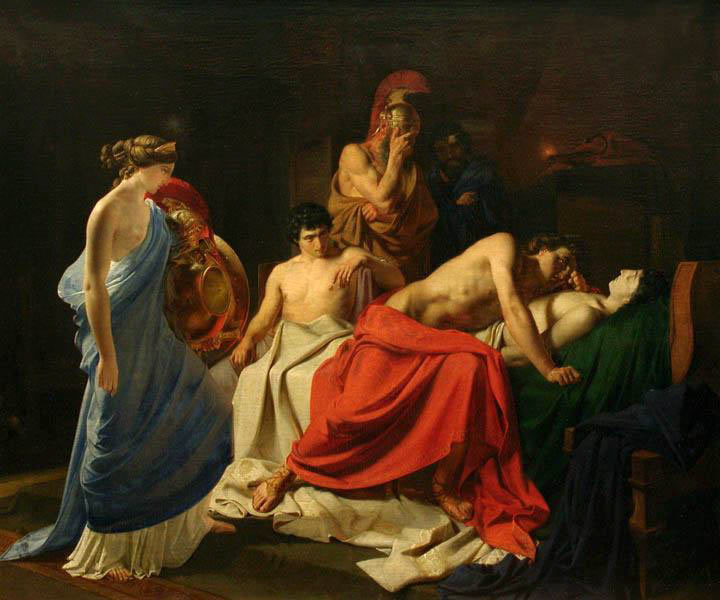
Achilles Lamenting the Death of Patroclus, by Nikolay Ge

Ἰλιὰς κακῶν, id est Ilias malorum. De calamitatibus maximis simul et plurimis. Propterea quod in Iliade Homerica nullum mali genus non recensetur. Vnde ex hac docti putant tragoediarum argumenta fuisse sumpta, sicut ex Odyssea comoediarum. Est autem opus verbosum, viginti quatuor voluminibus vix absolutum. Vnde et quamuis orationem plus satis prolixam Iliade longiorem vocant, vt Aeschines aduersus Demosthenem. Ταῦτα δὲ εἰπὼν δίδωσιν ἀναγνῶναι ψήφισμα τῷ γραμματεῖ, μακρότερον μὲν τῆς Ἰλιάδος, κενώτερον δὲ τῶν λόγων οὓς εἴωθε λέγειν, id est His dictis decretum scribae legendum tradit, prolixius quidem lliade, vanius autem verbis iis quae dicere consueuit.

Eustathius inuertit adagionem ad hunc modum: Καὶ παροιμία μέντοι κακῶν Ἰλιάδα φησίν, αὕτη δὲ καλοῦ παντὸς Ἰλιάς, id est Iliadem malorum prouerbium ait, at haec omnium bonorum llias. Synesius in epistola quadam ad fratrem: Καὶ ὅλως κακῶν ἂν Ἰλιάς περιέστη τὴν πόλιν ἡμῶν, id est In summa,  malorum Ilias circunstetit vrbem nostram. Plutarchus in Praeceptis coniugalibus: Ὁ δὲ ἐκείνων Ἰλιάδα κακῶν Ἕλλησι καὶ βαρβάροις ἐποίησεν, id est At illorum nuptiae Iliada malorum Graecis ac barbaris inuexerunt. Loquitur enim de coniugio Paridis et Helenae, quod inaestimabilium malorum fuit causa. Vtitur et M. Tullius in Epistolis ad Atticum: Tanta malorum impendet Ilias.

Don’t Piss Before the Sun

Erasmus, Adagia 1.20:

Πρὸς τὸν ἥλιον τετραμμένον μὴ ὀμιχεῖν, that is, Don’t turn and piss against the sun. I think that this recommends modesty. Yet Pliny offers a superstitious account of this thing in book 28, chapter 6 of his history, and I will put down his words below:

Tokens of health are conveyed by one’s urine. If it is clear in the morning, then reddish, the first means that it is seething, and the second that it has finished seething. The indications of red urine are bad, but the worst are those of black urine; the signs of bubbling and thick urine are bad, in which, if the subsident material be white, it means that pain is impending around the joints or the organs. Similarly, if it is green, it indicates a disease of the organs, pale indicates a disease of the bile, and red indicates a disease of the blood. It is also a bad sign if what appear to be bran chunks or clouds are found in the urine. Pale white urine is also bad. But thick urine with a heavy odor and (in children) light and diluted urine can be deadly. For that reason, magi forbid one to get naked in front of the sun and moon, or to sprinkle anyone’s shadow with urine. Hesiod advises that it should be done next to some object standing in the way, lest nudity offend some god.

The place to which Pliny here refers and from which the symbol of Pythagoras appears to have been taken is in the poem named Works and Days:

Μηδ᾽ ἄντ᾽ ἠελίοιο τετραμμένος ὀρθὸς ὀμιχεῖν,
Αὐτὰρ ἐπεί κε δύῃ μεμνημένος ἔς τ᾽ ἀνιόντα.
Μήτ᾽ ἐν ὁδῷ μήτ᾽ ἐκτὸς ὁδοῦ προβάδην οὐρησῃς
Μηδ᾽ ἀπογυμνωθείς, μακάρων τοι νύκτες ἔασσιν.
Ἑζόμενος δ᾽ ὅ γε θεῖος ἀνήρ, πεπνυμένα εἰδώς,
Ἢ ὅ γε πρὸς τοῖχον πελάσας ἐυερκέος αὐλῆς,

That is,

“Don’t stand upright and piss facing the sun, but when it goes down, remember this until it rises. Don’t piss on the road, nor off the road as you walk, and don’t get naked, since indeed nights are sacred to the blessed gods. But the man who is smart and pious will either piss recumbent, or only after moving his body near the walls of the house.”

XX. ADVERSVS SOLEM NE MEIITO

Πρὸς τὸν ἥλιον τετραμμένον μὴ ὀμιχεῖν, id est Aduersus solem ne meiito. Opinor
commendari verecundiam. Tametsi Plinius superstitiosam huius rei causam
reddit lib. xxviii., cap. vi., verba ipsius subscribam: Auguria valetudinis ex vrina
traduntur. Si mane candida, dein rufa sit, illo modo concoquere, hoc concoxisse
significatur. Mala signa rubrae, pessima nigrae, mala bullantis et crassae, in qua quod
subsidit, si album est, significat circa articulos aut viscera dolorem imminere, eadem
viridis morbum viscerum, pallida bilis, rubens sanguinis. Mala et in qua veluti furfures
atque nubeculae apparent. Diluta quoque alba vitiosa est. Mortifera vero crassa graui
odore et in pueris tenuis ac diluta. Magi vetant eius rei causa contra solem lunamque
nudari aut vmbram cuiusquam ab ipsa aspergi. Hesiodus iuxta obstantia reddi suadet,
ne deum nudatio aliquem• offendat. Locus hic quem Plinius citat et ex quo
symbolum Pythagorae sumptum apparet, est in opere, cui titulus Ἔργα καὶ
ἡμέραι:

Μηδ᾽ ἄντ᾽ ἠελίοιο τετραμμένος ὀρθὸς ὀμιχεῖν,105
Αὐτὰρ ἐπεί κε δύῃ μεμνημένος ἔς τ᾽ ἀνιόντα.
Μήτ᾽ ἐν ὁδῷ μήτ᾽ ἐκτὸς ὁδοῦ προβάδην οὐρησῃς |
Μηδ᾽ ἀπογυμνωθείς, μακάρων τοι νύκτες ἔασσιν.
Ἑζόμενος δ᾽ ὅ γε θεῖος ἀνήρ, πεπνυμένα εἰδώς,106
Ἢ ὅ γε πρὸς τοῖχον πελάσας ἐυερκέος αὐλῆς, id est
Aduersus solem rectus ne meiito, verum vt
Occiderit, donec redeat, facere ista memento.
Sed neque progrediens locium desperseris vnquam,
Inue viis extraue vias, neque membra renudes
Micturus, siquidem diuis nox sacra beatis.
At qui• vir fuerit prudensque piusque, recumbens
Siue domus muris admotus corpore, meiet.


How to Console a F**k-Up

Erasmus, Colloquia Familiaria:

“Mauritius: You have returned to us fatter than usual. You have come back a bit longer.

Cyprianus: Yet I would have loved to come back more intelligent or more learned.

M: You left unbearded and have returned with a little growth. You contracted a bit of age while you were gone. What’s up with this paleness? What about this leanness? What of your goat-like forehead?

C: Just as fortune, so too goes one’s body…

M: Was your fortune bad?

C: It was never indeed favorable otherwise, but it never blew more hatefully than now.

M: I grieve for your misfortune – your calamity distresses me. But what evil was there?

C: I made a shipwreck of all my money.

M: In the sea?

C: Nope – on the shore, before I ever set sail.

M: Where the hell was that?

C: On the shore of Britain.

M: Well, it’s good that you swam back here alive. Better to lose your money than your life. The payment of money is lighter than the expense of one’s reputation.

C: Yet with life and reputation intact, all my money is lost.

M: Life can never be recovered, reputation can but with difficulty, yet it’s easy enough to repair the loss of money somehow. How did this disaster happen?

C: I don’t know – it must just be my fate. Thus it seemed best to the gods. Thus it pleased my evil genius.

M: You see then that learning and virtue are the safest riches, since they can never be taken away and they never burden their possessor.

C: That’s a pretty piece of philosophy you’re spouting, but I’m still pissed.”

erasmus2

How to Pronounce Ancient Greek

Ulrich von Wilamowitz-Moellendorff,

History of Classical Scholarship (trans. Alan Harris):

“Erasmus’ name is linked with the Erasmian pronunciation of Greek, with the result that modern Greeks to a man – except the few trained philologists among them – curse him loud and long. Having learnt the languages from books, rather than from the lips of Greeks, he very naturally insisted on the pronunciation that had been current at the time when the script was formed. Nor was he even the first person to do so (as Ingram Bywater has demonstrated with rare learning); that was the Spanish humanist Antonius Nebrissenis, and no less a man than Aldus Manutius shared his view. Now that scholars have come to realize that every language in every age sounds differently as spoken by different people, and that in the course of time the accepted pronunciation of the written characters also changes, the dispute has lost its relevance. How we are to pronounce, or try to pronounce, ancient Greek is a purely practical question that admits of no universally valid answer, and the idea of condemning the living language of modern Greece as ugly, because, like ours, it has lost its sonority, is one that no scholar at least should ever entertain.”

Image result for erasmus greek new testament