The Content of a True Education

Isocrates, Panathenaicus 30-32

“Which people do I call educated when I set aside the arts, sciences, and specialties? First, I prize those who handle well the events they meet each day and who have an appropriate judgment for each and the ability to plot the most advantageous path through them.

Then, I esteem those who always treat the people they are near appropriately and justly and who bear the unpleasantness and meanness of others with ease and good temper, and comport themselves towards their associates as lightly and measuredly as possible.

Then, I value those who always control their desires, who are not overcome by their misfortunes, but manage them bravely in a fashion worthy of the nature which we all happen to share.

Fourth—and most important—I consider people educated who are not ruined by their successes, who do not rebel against themselves and become arrogant, but instead remain positioned to be reflective and do not delight more in the goods they have received by chance than those which were theirs from the beginning by nature or thought. Those who have a mind well-fit not just to one of these qualities but to all of them are the men I say are prudent, complete people exhibiting all the virtues.”

Τίνας οὖν καλῶ πεπαιδευμένους, ἐπειδὴ τὰς τέχνας καὶ τὰς ἐπιστήμας καὶ τὰς δυνάμεις ἀποδοκιμάζω; Πρῶτον μὲν τοὺς καλῶς χρωμένους τοῖς πράγμασι τοῖς κατὰ τὴν ἡμέραν ἑκάστην προσπίπτουσι, καὶ τὴν δόξαν ἐπιτυχῆ τῶν καιρῶν ἔχοντας καὶ δυναμένην ὡς ἐπὶ τὸ πολὺ στοχάζεσθαι τοῦ συμφέροντος·

ἔπειτα τοὺς πρεπόντως καὶ δικαίως ὁμιλοῦντας τοῖς ἀεὶ πλησιάζουσι, καὶ τὰς μὲν τῶν ἄλλων ἀηδίας καὶ βαρύτητας εὐκόλως καὶ ῥᾳδίως φέροντας, σφᾶς δ’ αὐτοὺς ὡς δυνατὸν ἐλαφροτάτους καὶ μετριωτάτους τοῖς συνοῦσι παρέχοντας· ἔτι τοὺς τῶν μὲν ἡδονῶν ἀεὶ κρατοῦντας, τῶν δὲ συμφορῶν μὴ λίαν ἡττωμένους, ἀλλ’ ἀνδρωδῶς ἐν αὐταῖς διακειμένους καὶ τῆς φύσεως ἀξίως ἧς μετέχοντες τυγχάνομεν·

τέταρτον, ὅπερ μέγιστον, τοὺς μὴ διαφθειρομένους ὑπὸ τῶν εὐπραγιῶν μηδ’ ἐξισταμένους αὑτῶν μηδ’ ὑπερηφάνους γιγνομένους, ἀλλ’ ἐμμένοντας τῇ τάξει τῇ τῶν εὖ φρονούντων καὶ μὴ μᾶλλον χαίροντας τοῖς διὰ τύχην ὑπάρξασιν ἀγαθοῖς ἢ τοῖς διὰ τὴν αὑτῶν φύσιν καὶ φρόνησιν ἐξ ἀρχῆς γιγνομένοις. Τοὺς δὲ μὴ μόνον πρὸς ἓν τούτων, ἀλλὰ καὶ πρὸς ἅπαντα ταῦτα τὴν ἕξιν τῆς ψυχῆς εὐάρμοστον ἔχοντας, τούτους φημὶ καὶ φρονίμους εἶναι καὶ τελέους ἄνδρας καὶ πάσας ἔχειν τὰς ἀρετάς.

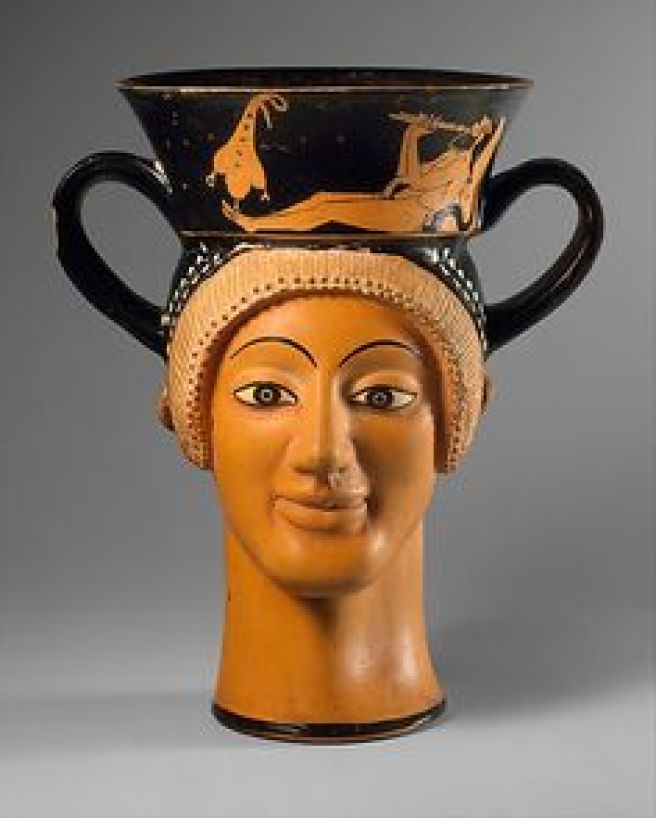
Image result for ancient greek education medieval manuscript

A Sardinian Laugh, A Sardonic Smile? A Proverb and State of Mind

From the Suda:

“Sardinian Laugh”: A proverb used for people who laugh at their own death. According to Demôn it developed from the fact that the Sardinians used to sacrifice the best and the oldest of their captives each year to Cronus as they laughed to display their courage. Timaios, on the other hand, claims that men who had lived a long enough time were in the habit of laughing when they were pushed by their sons into the trenches in which they would bury them. But others claim the saying comes from smiling with devious intent.

Others say—and this includes Cleitarchus—that when they place a small child in Kronos’ hand in Carthage during their most important prayers (a bronze statue is set out with hands stretched out over a cooking pot) and after they light the fire, the boy seems to laugh as he is shriveled by the fire. But Simonides says that when the Sardinians were not willing to hand over Talos—the fabricated man—to Minos, that Talos leapt into the fire, because he was bronze, clutched them to his chest and killed them as they gasped for air.

Silenus argues in the fourth book of his On the Syracusans that there is a sweet plant similar celery which when people eat it they bite off segments of their own faces.  There are also some who say that this is to laugh at danger. This is what happens when Homer says that “shining Odysseus grinned sardonically” and in other places,” she laughed with her lips, but she was not pleased under her dark brows”

Σαρδάνιος γέλως: παροιμία ἐπὶ τῶν ἐπ’ ὀλέθρῳ τῷ σφῶν αὐτῶν γελώντων· ἣν Δήμων μὲν διαδοθῆναι, ὅτι οἱ Σαρδόνα κατοικοῦντες αἰχμαλώτων τε τοὺς καλλίστους καὶ πρεσβυτέρους ὑπὲρ ο′ ἔτη τῷ Κρόνῳ ἔθυον, γελῶντας, ἕνεκα τοῦ τὸ εὔανδρον ἐμφῆναι (τουτ έστιν ἀνδρεῖον). Τίμαιος δέ, τοὺς ἱκανὸν βεβιωκότας χρόνον ἐν Σαρδοῖ συνωθουμένους σχίζαις ὑπὸ τῶν υἱῶν εἰς ὃν ἔμελλον θάπτεσθαι βόθρον γελᾶν. οἱ δέ, ἀπὸ τοῦ σεσηρέναι μετὰ ἀνίας. καί φασιν ἄλλοι τε καὶ Κλείταρχος, ἐν Καρχηδόνι ἐν ταῖς μεγάλαις εὐχαῖς παῖδα ταῖς χερσὶ τοῦ Κρόνου ἐπιτιθέντας (ἵδρυται δὲ χαλκοῦς, προβεβλημένας ἔχων τὰς χεῖρας ὑφ’ ᾧ κρίβανος), ἔπειτα ὑποκαίειν· τὸν δὲ συνελκόμενον ὑπὸ τοῦ πυρὸς δοκεῖν γελᾶν. Σιμωνίδης δὲ Τάλων τὸν ἡφαιστότευκτον Σαρδωνίους οὐ βουλομένους περαιῶσαι πρὸς Μίνῳα, εἰς πῦρ καθαλλόμενον, ὡς ἂν χαλκοῦν, προστερνιζόμενον ἀναιρεῖν ἐπιχάσκοντας. Σιληνὸς δὲ ἐν δ′ τῶν περὶ Συρακούσας λάχανον εἶναι παρὰ Σαρδωνίοις ἡδύ, σελίνῳ ἐμφερές· οὗ τοὺς γευσαμένους τάς τε σιαγόνας καὶ τὰς σάρκας ἑαυτῶν ἀποδάκνειν. ἔνιοι δὲ τοὺς ἐπὶ κακῷ γελῶντας· ὡς καὶ ᾿Οδυσσέα φησὶν ῞Ομηρος· μείδησε δὲ δῖος ᾿Οδυσσεὺς Σαρδώνιον. καὶ ἐν ἄλλοις· ἡδὺ γέλασσε χείλεσσιν, οὐδὲ μέτωπον ἐπ’ ὀφρύσι κυανέῃσιν ἰάνθη.

Smile Vase

A New Perception of Things Beautiful

George Gissing, By the Ionian Sea:

“Last night the wind changed and the sky began to clear; this morning I awoke in sunshine, and with a feeling of eagerness for my journey. I shall look upon the Ionian Sea, not merely from a train or a steamboat as before, but at long leisure: I shall see the shores where once were Tarentum and Sybaris, Croton and Locri. Every man has his intellectual desire; mine is to escape life as I know it and dream myself into that old world which was the imaginative delight of my boyhood. The names of Greece and Italy draw me as no others; they make me young again, and restore the keen impressions of that time when every new page of Greek or Latin was a new perception of things beautiful. The world of the Greeks and Romans is my land of romance; a quotation in either language thrills me strangely, and there are passages of Greek and Latin verse which I cannot read without a dimming of the eyes, which I cannot repeat aloud because my voice fails me. In Magna Graecia the waters of two fountains mingle and flow together; how exquisite will be the draught!”

Image result for croton italy

A Description of Genius or Madness: An Epistle on Democritus

Hippocrates, Letter 10

A man of ours takes the greatest risks in the city now, Hippocrates, who both in the present moment and in the future has been a hope for fame for the city. May this, by the all the gods, never be a source of envy! When he has become so sick because of the great wisdom which possesses him that as a result he was afraid he might not obtain it—well, that’s how Democritus himself lost hits mind, and then abandoned our city of Abdera.

When he forgot everything, even himself before, he was awake both night and day and was laughing at everything great and small and believing that he would accomplish nothing at all for his whole life. Someone marries, another goes into business, another is a public speaker, another serves in office, he is old, he votes, he votes against things, he is sick, he is wounded, he dies. He laughs at everything, even when he sees the downcast and angry or even those who are happy.

The man is researching into the matters of Hades and he is writing these things and he says that the air is full of ghosts and he heeds the voices of birds. He often gets up alone at night and seems to be singing songs in the silence. And he claims that he often travels into the boundlessness and says that there are an endless number of Democriteis like himself. He lives with his skin ruined as ruined judgment. We fear these things, Hippocrates, and we are anxious about them: so save us, and come home quickly and help our country, do not put us off.”

     Κινδυνεύεται τὰ μέγιστα τῇ πόλει νῦν, ῾Ιππόκρατες, ἀνὴρ τῶν ἡμετέρων, ὃς καὶ τῷ παρόντι χρόνῳ καὶ τῷ μέλλοντι αἰεὶ κλέος ἠλπίζετο τῇ πόλει· μηδὲ νῦν ὅδε, πάντες θεοὶ, φθονηθείη· οὕτως ὑπὸ πολλῆς τῆς κατεχούσης αὐτὸν σοφίης νενόσηκεν, ὥστε φόβος οὐχ ὁ τυχὼν, ἂν φθαρῇ τὸν λογισμὸν Δημόκριτος, ὄντως δὴ τὴν πόλιν ἡμῶν ᾿Αβδηριτῶν καταλειφθήσεσθαι. ᾿Εκλαθόμενος γὰρ ἁπάντων καὶ ἑωυτοῦ πρότερον, ἐγρηγορὼς καὶ νύκτα καὶ ἡμέρην, γελῶν ἕκαστα μικρὰ καὶ μεγάλα, καὶ μηδὲν οἰόμενος εἶναι τὸν βίον ὅλον διατελεῖ. Γαμεῖ τις, ὁ δὲ ἐμπορεύεται, ὁ δὲ δημηγορεῖ, ἄλλος ἄρχει, πρεσβεύει, χειροτονεῖται, ἀποχειροτονεῖται, νοσεῖ, τιτρώσκεται,  τέθνηκεν, ὁ δὲ γελᾷ πάντα, τοὺς μὲν κατηφεῖς τε καὶ σκυθρωποὺς, τοὺς δὲ χαίροντας ὁρῶν. Ζητεῖ δὲ ὁ ἀνὴρ καὶ περὶ τῶν ἐν Αδου,

Ζητεῖ δὲ ὁ ἀνὴρ καὶ περὶ τῶν ἐν Αδου, καὶ γράφει ταῦτα, καὶ εἰδώλων φησὶ πλήρη τὸν ἠέρα εἶναι, καὶ ὀρνέων φωνὰς ὠτακουστεῖ, καὶ πολλάκις νύκτωρ ἐξαναστὰς μοῦνος ἡσυχῇ ᾠδὰς ᾄδοντι ἔοικε, καὶ ἀποδημεῖν ἐνίοτε λέγει ἐς τὴν ἀπειρίην, καὶ Δημοκρίτους εἶναι ὁμοίους ἑωυτῷ ἀναριθμήτους, καὶ συνδιεφθορὼς τῇ γνώμῃ τὸ χρῶμα ζῇ. Ταῦτα φοβούμεθα, ῾Ιππόκρατες, ταῦτα ταραττόμεθα, ἀλλὰ σῶζε, καὶ ταχὺς ἐλθὼν νουθέτησον τὴν ἡμῶν πατρίδα, μηδὲ ἡμᾶς ἀποβάλῃς·

Suda s.v. γλουτῶν

“Democritus of Abdera was called the “Laugher” because he laughed at the useless seriousness of human beings”

ὅτι ὁ Δημόκριτος ὁ ᾿Αβδηρίτης ἐπεκλήθη Γελασῖνος διὰ τὸ γελᾶν πρὸς τὸ κενόσπουδον τῶν ἀνθρώπων.


More on Democritus:

Robert Burton’s Sketch

Aulus Gellius with Laberius’ Play on Democritus’ Blinding

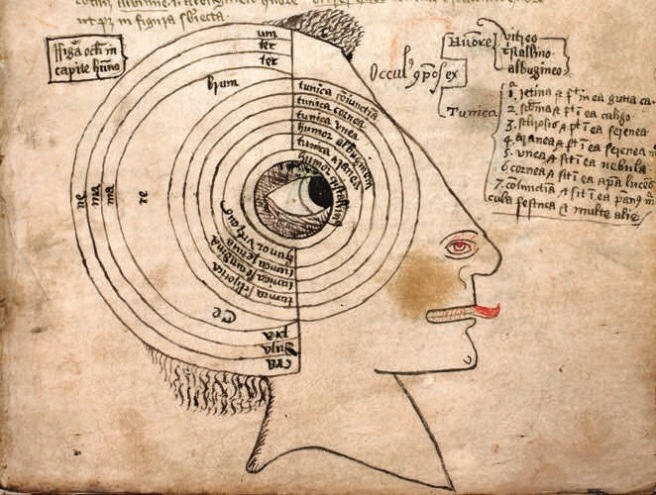
From ‘The Book of Macharius on the eye’, late 14th-century. BL, Sloane MS 981, f.68.

Poets, Fishmongers and Memes

Are memes “viruses of the mind?”

Luke, 5.37

“No one puts new wine into old containers…”

 καὶ οὐδεὶς βάλλει οἶνον νέον εἰς ἀσκοὺς παλαιούς

Xenarchus’ Porphyra fr. 7 (preserved in Athenaeus’ Deipnosophists, 6. 224-225)

“Poets are ridiculous. They never invent
anything new—each one of them simply
remixes the same things again and again.
But there is no race more creative or profane
than the fish-sellers!
Since it is no longer permitted to them to dampen
Their fish, a practice forbidden by the law,
When some man completely hateful to the gods
Saw that his fish were drying, well,
He started a brawl among them quite intentionally
There were punches; he acted as if he were hit hard,
Fell to the ground pretending to pass out lying
Among his fish. Someone shouted “water, water”!
And a different guy grabbed a pitcher and poured it out—
A little on the man, but the rest on the fish!
You would have claimed they’d just been caught!”

Fish Vase
Google “Ancient Greek Fish Vase”

οἱ μὲν ποιηταὶ (φησὶ) λῆρός εἰσιν· οὐδὲ ἓν
καινὸν γὰρ εὑρίσκουσιν, ἀλλὰ μεταφέρει
ἕκαστος αὐτῶν ταὔτ’ ἄνω τε καὶ κάτω.
τῶν δ’ ἰχθυοπωλῶν φιλοσοφώτερον γένος
οὐκ ἔστιν οὐδὲν οὐδὲ μᾶλλον ἀνόσιον.
ἐπεὶ γὰρ αὐτοῖς οὐκέτ’ ἔστ’ ἐξουσία
ῥαίνειν, ἀπείρηται δὲ τοῦτο τῷ νόμῳ,
εἷς τις θεοῖσιν ἐχθρὸς ἄνθρωπος πάνυ
ξηραινομένους ὡς εἶδε τοὺς ἰχθῦς, μάχην
ἐποίησ’ ἐν αὐτοῖς ἐξεπίτηδες εὖ πάνυ.
ἦσαν δὲ πληγαί, καιρίαν δ’ εἰληφέναι
δόξας καταπίπτει καὶ λιποψυχεῖν δοκῶν
ἔκειτο μετὰ τῶν ἰχθύων. βοᾷ δέ τις
‘ὕδωρ <ὕδωρ.>’ ὃ δ’ εὐθὺς ἐξάρας πρόχουν
τῶν ὁμοτέχνων τις τοῦ μὲν ἀκαρῆ παντελῶς
κατέχει, κατὰ δὲ τῶν ἰχθύων ἁπαξάπαν.
εἴποις γ’ ἂν αὐτοὺς ἀρτίως ἡλωκέναι.


From Twitter today:

Media preview

Iliad 1 english

Silent in Seven Languages

J.E. Sandys, A History of Classical Scholarship Vol. 3:

“As a contribution to Greek lexicography, he [Immanuel Bekker] produced a new edition of the small Greek lexicon of Niz, in which the words are arranged according to their etymology. The only Latin texts which he edited (apart from a few items in the Byzantine series) were Livy, with short notes by Raschig, and Tacitus, with the commentaries of earlier scholars. His extraordinary activity as an editor seems to have left him little energy for anything else; he was held in the highest esteem by scholars, but he did not shine in ordinary conversation. It was said of the editor of some sixty volumes of Greek texts, and the collator of more than four hundred MSS, that he could be silent in seven languages.”

How To Talk to a Patient (And Look for the Signs of the Deranged)

Rufus of Ephesus, Quest. Medic. 2

“It is right to ask someone who is sick questions from which something of the matters concerning the sickness might be diagnosed and might be treated better. First, I advise to make inquiries from the one who is sick himself. For you might from this learn how much the person is sick or healthy in respect to judgment along with his strength and weakness and what type of sickness and what place he has suffered.

If the patient answers right away and properly and plausibly and without stumbling in speech or sense and if it is according to is typical matter—if he is otherwise orderly, in a gentle and orderly way, but, if otherwise bold or fearful, in a brash or timid manner—it is right to consider him to be in his right mind. But if you ask him some things and he should answer others or forget in the middle of speaking, if his speech is unsteady and unclear and there are shifts from his first manner to the opposite, these are all signs of being deranged.”

     ᾿Ερωτήματα χρὴ τὸν νοσοῦντα ἐρωτᾶν, ἐξ ὧν ἂν καὶ διαγνωσθείη τι τῶν περὶ τὴν νόσον ἀκριβέστερον καὶ θεραπευθείη κάλλιον. πρῶτον δὲ ἐκεῖνο ὑποτίθημι τὰς πεύσεις αὐτοῦ τοῦ νοσοῦντος ποιεῖσθαι. μάθοις γὰρ ἂν ἐνθένδε ὅσα τε κατὰ γνώμην νοσεῖ ἢ ὑγιαίνει ὁ ἄνθρωπος καὶ ῥώμην αὐτοῦ καὶ ἀσθένειαν, καὶ τίνα ἰδέαν νόσου καὶ τίνα τόπον πεπονηκὼς <εἴη>. εἰ μὲν γὰρ ἐφεξῆς τε ἀποκρίνοιτο καὶ μνημονικῶς καὶ τὰ εἰκότα καὶ μηδαμῆ σφαλλόμενος μήτε τῇ γλώττῃ μήτε τῇ γνώμῃ καὶ εἰ καθ’ ὁρμὴν τὴν οἰκείαν, —εἰ μέν ἐστιν ἄλλως κόσμιος, πράως καὶ

κοσμίως, ὁ δ’ αὖ φύσει θρασὺς ἢ δειλὸς θρασέως ἢ δεδοικ<ότ>ως—τοῦτον μὲν χρὴ νομίζειν τὰ γοῦν κατὰ γνώμην καλῶς ἔχειν. εἰ δὲ καὶ ἄλλα σὺ μὲν ἐρωτᾷς, ὁ δὲ ἄλλα ἀποκρίνοιτο καὶ εἰ μεταξὺ λέγων ἐπιλανθάνοιτο, αἱ δὲ τρομώδεις καὶ ἀσαφεῖς γλῶσσαι καὶ αἱ μεταστάσεις ἀπὸ τοῦ ἀρχαίου τρόπου πρὸς τὸ ἐναντίον, πάντα ταῦτα παρακρουστικά.


Image result for medieval manuscript medicine doctor
Sloane MS 1975, f. 91v

Seeking One Who Explains; Or, The Difference Between Grammar and Philosophy

Epictetus Encheiridion, 49

“Whenever someone is haughty because he understands and can explain the books of Chrysippus, say to him: “If Chrysippus hadn’t written so obscurely, you’d have nothing to be haughty about.”

But what do I desire? To understand nature and follow it. Therefore, I seek one who explains it. And because I have heard that Chrysippus does this, I go to him. But I do not understand what he has written. Therefore, I seek out someone who explains him. And within these steps there is nothing worthy of pride. Whenever I find the right interpreter, it is still up to me to practice his precepts. This alone is worthy of pride.

But if I am amazed at this act of explanation, have I done anything but transform into a grammarian instead of a philosopher? (Except, I interpret Chryippos instead of Homer.) Hence, whenever anyone says to me “Read me Chrysippus,” I turn red when I am incapable of demonstrating actions equal to and harmonious with his words

Ὅταν τις ἐπὶ τῷ νοεῖν καὶ ἐξηγεῖσθαι δύνασθαι τὰ Χρυσίππου βιβλία σεμνύνηται, λέγε αὐτὸς πρὸς ἑαυτὸν ὅτι “εἰ μὴ Χρύσιππος ἀσαφῶς ἐγεγράφει, οὐδὲν ἂν εἶχεν οὗτος, ἐφ᾿ ᾧ ἐσεμνύνετο.

 Ἐγὼ δὲ τί βούλομαι; καταμαθεῖν τὴν φύσιν καὶ ταύτῃ ἕπεσθαι. ζητῶ οὖν, τίς ἐστὶν ὁ ἐξηγούμενος· καὶ ἀκούσας, ὅτι Χρύσιππος, ἔρχομαι πρὸς αὐτόν. ἀλλ᾿ οὐ νοῶ τὰ γεγραμμένα· ζητῶ οὖν τὸν ἐξηγούμενον. καὶ μέχρι τούτων οὔπω σεμνὸν οὐδέν. ὅταν δὲ εὕρω τὸν ἐξηγούμενον, ἀπολείπεται χρῆσθαι τοῖς παρηγγελμένοις· τοῦτο αὐτὸ μόνον σεμνόν ἐστιν. ἂν δὲ αὐτὸ τοῦτο τὸ ἐξηγεῖσθαι θαυμάσω, τί ἄλλο ἢ γραμματικὸς ἀπετελέσθην ἀντὶ φιλοσόφου; πλήν γε δὴ ὅτι ἀντὶ Ὁμήρου Χρύσιππον ἐξηγούμενος. μᾶλλον οὖν, ὅταν τις εἴπῃ μοι “ἐπανάγνωθί μοι Χρύσιππον,” ἐρυθριῶ, ὅταν μὴ δύνωμαι ὅμοια τὰ ἔργα καὶ σύμφωνα ἐπιδεικνύειν τοῖς λόγοις.

Image result for medieval manuscript chrysippus
Chrysippus

On an Idiot, a Philosopher, and the Signs of Progress

Epictetus, Encheiridion, 48

“The state and character of an ‘idiot’ is this: he never expects harm or help from himself, but he always looks elsewhere. This is the state and character of a philosopher: he expects all help and harm to come from himself

These are signs of someone making progress: he blames no one; praises no one; criticizes no one; impugns no one; and says nothing about himself as if he were someone or knew something. Whenever he meets an obstacle or is held back, he takes the blame. Whenever anyone praises him, he chuckles to himself while they praise. If someone criticizes him, he offers no defense. He proceeds just like the feeble, taking care not to disturb anything he is developing before it grows firm.

He has banished every desire from himself and he has admitted to disinclination only those aspects of nature which are under our control, He applies a disinterested impulse toward all things. Should he seem to be simple or unlearned, he doesn’t care. In sum, he guards against himself as if he were an enemy conspirator.”

48. Ἰδιώτου στάσις καὶ χαρακτήρ· οὐδέποτε ἐξ ἑαυτοῦ προσδοκᾷ ὠφέλειαν ἢ βλάβην, ἀλλ᾿ ἀπὸ τῶν ἔξω. φιλοσόφου στάσις καὶ χαρακτήρ· πᾶσαν ὠφέλειαν καὶ βλάβην ἐξ ἑαυτοῦ προσδοκᾷ.

Σημεῖα προκόπτοντος· οὐδένα ψέγει, οὐδένα ἐπαινεῖ, οὐδένα μέμφεται, οὐδενὶ ἐγκαλεῖ, οὐδὲν περὶ ἑαυτοῦ λέγει ὡς ὄντος τινὸς ἢ εἰδότος τι. ὅταν ἐμποδισθῇ τι ἢ κωλυθῇ, ἑαυτῷ ἐγκαλεῖ. κἄν τις αὐτὸν ἐπαινῇ, καταγελᾷ τοῦ ἐπαινοῦντος αὐτὸς παρ᾿ ἑαυτῷ· κἂν ψέγῃ, οὐκ ἀπολογεῖται. περίεισι δὲ καθάπερ οἱ ἄρρωστοι, εὐλαβούμενός τι κινῆσαι τῶν καθισταμένων, πρὶν πῆξιν λαβεῖν.

ὄρεξιν ἅπασαν ἦρκεν ἐξ ἑαυτοῦ· τὴν δ᾿ ἔκκλισιν εἰς μόνα τὰ παρὰ φύσιν τῶν ἐφ᾿ ἡμῖν μετατέθεικεν. ὁρμῇ πρὸς ἅπαντα ἀνειμένῃ χρῆται. ἂν ἠλίθιος ἢ ἀμαθὴς δοκῇ, οὐ πεφρόντικεν. ἑνί τε λόγῳ, ὡς ἐχθρὸν ἑαυτὸν παραφυλάσσει καὶ ἐπίβουλον.

Image result for medieval manuscript idiot
Horas de Leonor de la Vega. BNE Vitr/24/2 Fol. 185v (my daughter likes this image)


Incremental Progress Leads to Sudden Transformation

Plutarch, How One Becomes Aware of Progress in Virtue 75c

“For neither in music nor in grammar could someone understand that he is gaining any ground in learning if he does not chip away at ignorance in these matters but instead senses the presence of an ever constant level of ignorance; nor for a sick man, should treatment fail to effect an easing or lightening  and provide no perception of the affliction yielding and harming until the opposite state unfolds when the body has regained its health in every way.

No, but just as in these categories people make no progress unless they progress by the lightening of their burden, as if on a scale they are raised in the opposite direction, they do not recognize the change.

So too in the pursuit of philosophy no change nor even the perception of change must be supposed unless the soul can cast aside and cleanse itself of stupidity—up to the acquisition of the unmixed and perfect good, it clutches to an equally unmixed evil. For in one part of time or a season, the wise person transforms from a previous abject baseness to a nearly unobtainable excess of virtue, and they suddenly depart completely from a share of wickedness which was unshakeable for so great a length of time.”

οὐδὲ γὰρ ἐν μουσικοῖς τις ἢ γραμματικοῖς ἐπιδιδοὺς ἂν γνοίη μηδὲν ἐν τῷ μανθάνειν ἀπαρύτων τῆς περὶ ταῦτα ἀμαθίας ἀλλ᾿ ἴσης ἀεὶ τῆς ἀτεχνίας αὐτῷ παρούσης, οὐδὲ κάμνοντι θεραπεία μὴ ποιοῦσα ῥᾳστώνην μηδὲ κουφισμὸν ἁμωσγέπως τοῦ νοσήματος ὑπείκοντος καὶ χαλῶντος αἴσθησιν ἂν παρέχοι διαφορᾶς, πρὶν εἰλικρινῆ τὴν ἐναντίαν ἕξιν ἐγγενέσθαι παντάπασιν ἀναρρωσθέντος τοῦ σώματος. ἀλλ᾿ ὥσπερ ἐν τούτοις οὐ προκόπτουσιν, ἂν προκόπτοντες ἀνέσει τοῦ βαρύνοντος οἷον ἐπὶ ζυγοῦ πρὸς τοὐναντίον ἀναφερόμενοι μὴ γιγνώσκωσι τὴν μεταβολήν, οὕτως ἐν τῷ φιλοσοφεῖν οὔτε προκοπὴν οὔτε τινὰ προκοπῆς αἴσθησιν ὑποληπτέον, εἰ μηδὲν ἡ ψυχὴ μεθίησι μηδ᾿ ἀποκαθαίρεται τῆς ἀβελτερίας, ἄχρι δὲ τοῦ λαβεῖν ἄκρατον τὸ ἀγαθὸν καὶ τέλειον ἀκράτῳ τῷ κακῷ χρῆται. καὶ γὰρ ἀκαρεὶ χρόνου καὶ ὥρας ἐκ τῆς ὡς ἔνι μάλιστα φαυλότητος εἰς οὐκ ἔχουσαν ὑπερβολὴν ἀρετῆς διάθεσιν μεταβαλὼν ὁ σοφός, ἧς οὐδ᾿ ἐν χρόνῳ πολλῷ μέρος ἀφεῖλε κακίας ἅμα πᾶσαν ἐξαίφνης ἐκπέφευγε.

Image result for medieval manuscript scale weighing
Book of Hours, ca. 1325-1330
MS M.700 fol. 2r