Weary Wednesday: Two Scenes of Post-Coital Remorse

Ovid, Remedia Amoris, 413–424

“But as soon as pleasure, spent, comes to its goal
And bodies lie thoroughly exhausted with the mind
When it gets annoying and you prefer to have touched no girl
And you seem unlikely to touch one again for a while,
Then gather in your mind whatever faults are in her flesh
And hold each of her imperfections in your eyes.
Perhaps someone else will consider them small—as they are,
But what is no advantage alone aids in numbers.
A viper slays a giant bull will a small bite;
A boar is often held by a hound of no great size.
Make sure you fight with such a number: collect your judgments,
A mountain will grow from so much sand.”

At simul ad metas venit finita voluptas,
Lassaque cum tota corpora mente iacent,
Dum piget, et malis nullam tetigisse puellam,
Tacturusque tibi non videare diu,
Tunc animo signa, quaecumque in corpore menda est,
Luminaque in vitiis illius usque tene.
Forsitan haec aliquis (nam sunt quoque) parva vocabit,
Sed, quae non prosunt singula, multa iuvant.
Parva necat morsu spatiosum vipera taurum:
A cane non magno saepe tenetur aper.
Tu tantum numero pugna, praeceptaque in unum
Contrahe: de multis grandis acervus erit.

Homeric Hymn to Aphrodite, 168–176

“But when the shepherds gather back to the fold
Their cattle and strong sheep from the blooming meadows,
Then over Anchises she was pouring sweet sleep
Gently and she wrapped her shining cloths around her.
Once clothed well over her entire body, the shining goddess
Stood near the bed, and her head touched the well-made roof,
And the immortal beauty shone from her cheeks
As it does from well-crowned Kytherea.
And she woke him from sleep and spoke his name:
“Get up, Dardanian. Why do you still stretch out in deep sleep?…”

῏Ημος δ’ ἂψ εἰς αὖλιν ἀποκλίνουσι νομῆες
βοῦς τε καὶ ἴφια μῆλα νομῶν ἐξ ἀνθεμοέντων,
τῆμος ἄρ’ ᾿Αγχίσῃ μὲν ἐπὶ γλυκὺν ὕπνον ἔχευε
νήδυμον, αὐτὴ δὲ χροῒ ἕννυτο εἵματα καλά.
ἑσσαμένη δ’ εὖ πάντα περὶ χροῒ δῖα θεάων
ἔστη ἄρα κλισίῃ, εὐποιήτοιο μελάθρου
κῦρε κάρη, κάλλος δὲ παρειάων ἀπέλαμπεν
ἄμβροτον, οἷόν τ’ ἐστὶν ἐϋστεφάνου Κυθερείης.
ἐξ ὕπνου τ’ ἀνέγειρεν, ἔπος τ’ ἔφατ’ ἔκ τ’ ὀνόμαζεν·
῎Ορσεο Δαρδανίδη· τί νυ νήγρετον ὕπνον ἰαύεις;

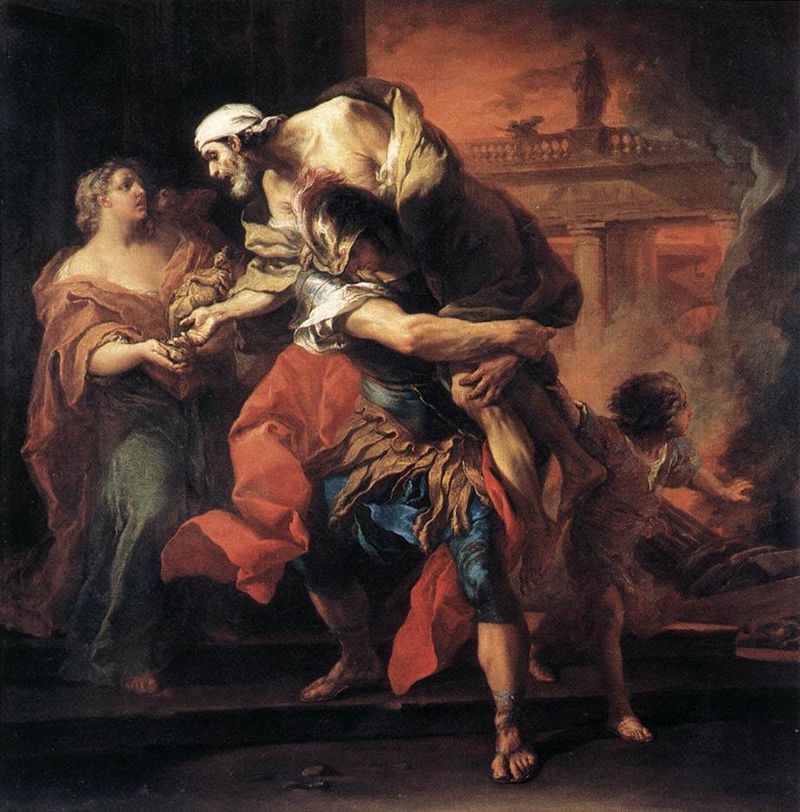
Aeneas Bearing Anchises from Troy, by Carle van Loo, 1729 (Louvre).

Tawdry Tuesday: Zeus, Ganymede, and a Cock

Greek Anthology, Antipater 5.77

“Hera twisted by the beauty of Ganymede once spoke
As she suffered the heart-rending stab of jealousy in her heart:
“Troy ignited a male fire for Zeus—and so I will send
A fire at Troy, a pain bearing Paris.
No eagle will come to Troy again, but vultures
Will go to the feast when the Greeks get the spoils for their toils.”

Πριομένα κάλλει Γανυμήδεος εἶπέ ποθ᾿ Ἥρα,
θυμοβόρον ζάλου κέντρον ἔχουσα νόῳ·
“Ἄρσεν πῦρ ἔτεκεν Τροία Διΐ· τοιγὰρ ἐγὼ πῦρ
πέμψω ἐπὶ Τροίᾳ, πῆμα φέροντα Πάριν·
ἥξει δ᾿ Ἰλιάδαις οὐκ ἀετός, ἀλλ᾿ ἐπὶ θοίναν
γῦπες, ὅταν Δαναοὶ σκῦλα φέρωσι πόνων.”

Sometimes an Eagle Does show up in stories of Zeus and Ganymede. 

Greek Anthology 12.211

“Go to bright heaven, go carrying the child,
Eagle, keep your twin wings spread wide.
Go holding gentle Ganymede and do not drop
Zeus’ wine-bearer of the sweetest cups.
But be careful not to bloody him with your clawed feet
So that Zeus, upset, won’t hurt you.”

Στεῖχε πρὸς αἰθέρα δῖον, ἀπέρχεο παῖδα κομίζων,
αἰετέ, τὰς διφυεῖς ἐκπετάσας πτέρυγας,
στεῖχε τὸν ἁβρὸν ἔχων Γανυμήδεα, μηδὲ μεθείης
τὸν Διὸς ἡδίστων οἰνοχόον κυλίκων·
φείδεο δ᾿ αἱμάξαι κοῦρον γαμψώνυχι ταρσῷ,
μὴ Ζεὺς ἀλγήσῃ, τοῦτο βαρυνόμενος.

MFA #01.8114

Image result for ganymede rooster Zeus
Terracotta of Zeus with Ganymede (LIMC 56; from Olympia)
Image result for ganymede rooster Zeus
Attic red-figured hydria
Attributed to Eupolis P. by Beazley
Approx. 450 -440 BC
This image from the MFA shows Zeus contemplating what to do with his cock.
Image result for ganymede rooster Zeus Black figure
Zeus pursuing Ganymedes, Athenian red-figure kantharos C5th B.C., Museum of Fine Arts Boston

Tawdry Tuesday: Ovid’s Minerva, Thiqqq With a Q (NSFW!)

Ovid leaves off of verbal foreplay and penetrates to the matter at hand:

“I could say to you, ‘Give me that which you could constantly give without diminishing at all. Give me that which you will at some time wish to give me in vain, when an ugly beard holds your cheeks hostage, or give me that which Ganymede gave to Jove; Ganymede, who was seized by a sacred eagle and now mixes fine wine for his lover. Give me that which a maiden gives to her eager lover on the first night, while she in her ignorance fears a prick in another place.’ Ah, but it is much simpler to say in plain Latin, ‘Let me fuck you in the ass.’ What can I say? My Minerva is rather crass.”

Translator’s Note: This particularly jocular poem – as is more generally true of both jokes and poetry singularly – poses substantial obstacles to effective translation. I expanded a bit beyond the Latin to make the line of thought somewhat clearer, but the final line contains a totally untranslatable pun. The adjective “crassus” has some topically appropriate significations:

001

Obscure poteram tibi dicere “da mihi, quod tu

des licet assidue, nil tamen inde perit.

Da mihi, quod cupies frustra dare forsitan olim,

cum tenet obsessas invida barba genas,

quodque Iovi dederat, qui raptus ab alite sacra

miscet amatori pocula grata suo,

quod virgo prima cupido dat nocte marito,

dum timet alterius vulnus inepta loci.”

simplicius multo est “da pedicare” Latine

dicere: quid faciam? crassa Minerva mea est.

Zonaras, Prefacing the Preface

Ioannes Zonaras, Epitome Historiarum

Preface, Part I

“Some one could rightly jeer at me for assuming a side-project greater than my actual work. Yet it was in truth necessary for one who had set aside his old works, who had held off from disturbance, who had taken himself away from the middle of things, who had chosen a life alone while being condemned to exile from himself, with the one above us thus organizing our affairs (since he broke my chains in depriving me of friends, and he knows for what reasons, in a way which was grievous to me yet nevertheless entirely correct) to enjoy no relaxations except those which would order and purify the soul of the pollution burning inside it through the triviality of its affairs, and those other things which appease God for the offenses which I have committed against him in transgressing his commandments and laws, and in so doing to seek pardon for my sins. Thus, having carelessly performed my actual work through my own indolence respecting beautiful things, I have directed no small zeal to the completion of this side-project.”

Image result for ioannes zonaras

Εὐστόχως ἄν τις εἴποι ἐπιτωθάζων μοι, μεῖζόν σοι τοῦ ἔργου τὸ πάρεργον. ἔδει γάρ με ὡς ἀληθῶς πάλαι τῶν πραγμάτων ἀφέμενον καὶ τυρβάζεσθαι ἀποσχόμενον καὶ τοῦ μέσου μεταναστεύσαντα καὶ καθ’ ἑαυτὸν ἑλόμενον ζῆν ἀειφυγίαν τε ἑαυτοῦ καταψηφισάμενον, οὕτω τὰ καθ’ ἡμᾶς οἰκονομήσαντος τοῦ ὑπὲρ ἡμᾶς, ἐπεὶ τοὺς δεσμούς μου διέρρηξε τῶν φιλτάτων στερήσας με, οἷς οἶδεν ἐκεῖνος λόγοις, ἀλγεινῶς μὲν ἐμοί, συμφερόντως δὲ πάντως, μηδὲν ἕτερον μετιέναι ἢ ὅσα ψυχὴν καταρτίζουσι καὶ καθαίρουσι τῶν ἐντακέντων αὐτῇ μολυσμάτων διὰ φαυλότητα πράξεων, καὶ ἅττα ἐξιλεοῦνται τὸ θεῖον ἐφ’ οἷς παρώργισται παρ’ ἐμοῦ, παραβεβηκότος τὰς ἐντολὰς αὐτοῦ καὶ τὰ δικαιώματα, καὶ ζητεῖν οὕτω συγγνώμην ἐπὶ τοῖς πταίσμασιν. ἐγὼ δ’ ἀμελῶς πρὸς τὸ ἔργον ἐκ τῆς πρὸς τὰ καλὰ νωθρείας διατιθέμενος περὶ τὸ πάρεργον κατέτεινα τὴν σπουδήν.

The Odyssey Within the Epic: Allegory and the Making of Meaning

In response to yesterday’s anecdote about the absurdity of the Odyssey a reminder: generations of readers believed that the epic is a crypto-text conveying many deeper meanings.

Heraclitus, Homeric Problems 70

“Generally, then, if one wants to examine it carefully, you will find Odysseus’ wandering to be an allegory. Homer has positioned Odysseus as some kind of an instrument of every kind of virtue and he has used him to philosophize, since he hated the wickedness which governs human life.

The land of the Lotus-eaters, a farm of exotic temptation, represents the temptation of pleasure through which Odysseus sailed in perfect control. He snuffs out the savage anger of each of us with the advice from his words as if cauterizing it. This anger is named the Cyclops, the one who steals away [hypoklôpôn] our faculties of reason.

What of this—does it not seem that Odysseus who ‘overcame the winds’ was the first to anticipate fair sailing through his knowledge of the stars? And he was superior to Kirkê’s drugs because he discovered a cure for addictive delicacies thanks to his deep wisdom.

And his intelligence extends even to Hades so that nothing in the underworld might go unexplored. Who listens to the Sirens and learns a diverse history of all time? Charybdis is an obvious name for luxury and endless drinking. Homer has allegorized manifold shamelessness in Skylla, which is why she would logically have a belt of dogs, guardians for her rapacity, daring, and pugnacity. The cattle of the sun are about controlling your eating—for he would not even allow starvation to be a compulsion to do injustice.

These stories were told mythically for their audiences, if someone delves into the allegorized wisdom, it will be the most useful to those who apprehend it.”

Καθόλου δὲ τὴν ᾿Οδυσσέως πλάνην, εἴ τις ἀκριβῶς ἐθέλει σκοπεῖν, ἠλληγορημένην εὑρήσει·

 πάσης γὰρ ἀρετῆς καθάπερ ὄργανόν τι τὸν ᾿Οδυσσέα παραστησάμενος ἑαυτῷ διὰ τοῦτο πεφιλοσόφηκεν, ἐπειδὴ τὰς ἐκνεμομένας τὸν ἀνθρώπινον βίον ἤχθηρε κακίας.

 ῾Ηδονὴν μέν γε, τὸ Λωτοφάγον χωρίον, ξένης γεωργὸν ἀπολαύσεως, ἣν ᾿Οδυσσεὺς ἐγκρατῶς παρέπλευσεν·  τὸν δ’ ἄγριον ἑκάστου θυμὸν ὡσπερεὶ καυτηρίῳ τῇ παραινέσει τῶν λόγων ἐπήρωσε.  Κύκλωψ δὲ οὗτος ὠνόμασται, ὁ τοὺς λογισμοὺς ὑποκλωπῶν.

     Τί δ’; οὐχὶ πρῶτος εὔδιον πλοῦν δι’ ἐπιστήμης ἀστρονόμου τεκμηράμενος ἔδοξεν ἀνέμους δεδωκέναι; Φαρμάκων τε τῶν παρὰ Κίρκης γέγονε κρείττων, ὑπὸ πολλῆς σοφίας πεμμάτων ἐπεισάκτων κακῶν λύσιν εὑρόμενος.

     ῾Η δὲ φρόνησις ἕως ῞Αιδου καταβέβηκεν, ἵνα μηδὲ τῶν νέρθεν ἀδιερεύνητον ᾖ.  Τίς δὲ Σειρήνων ἀκούει, τὰς πολυπείρους ἱστορίας παντὸς αἰῶνος ἐκμαθών;  Καὶ Χάρυβδις μὲν ἡ δάπανος ἀσωτία καὶ περὶ πότους ἄπληστος  εὐλόγως ὠνόμασται·  Σκύλλαν δὲ τὴν πολύμορφον ἀναίδειαν ἠλληγόρησε, διὸ δὴ κύνας οὐκ ἀλόγως ὑπέζωσται προτομαῖς ἁρπαγῇ, τόλμῃ καὶ πλεονεξίᾳ πεφραγμέναις·

 αἱ δ’ ἡλίου βόες ἐγκράτεια γαστρός εἰσιν, εἰ μηδὲ λιμὸν ἔσχεν ἀδικίας ἀνάγκην.

     ῝Α δὴ μυθικῶς μέν ἐστιν εἰρημένα περὶ τοὺς ἀκούοντας, εἰ δ’ ἐπὶ τὴν ἠλληγορημένην σοφίαν καταβέβηκεν, ὠφελιμώτατα τοῖς μιμουμένοις γενήσεται.

From Porphyry’s essay, On the Cave of the Nymphs 35

“In Plato, the water, the sea and the storm are material matter. For this reason, I think, Homer named the harbor “Phorkus’” (“and this is the harbor of Phorkus”) after the sea-god whose daughter, Thoôsa, he genealogized in the first book of the Odyssey. The Kyklôps is her son whose eye Odysseus blinded. [Homer named the harbor thus] so that right before his home [Odysseus] would receive a reminder of his mistakes. For this reason, the location under the olive tree is also fitting for Odysseus as a suppliant of the god who might win over his native deity through suppliancy.

For it would not be easy for one who has blinded [the spirit] and rushed to quell his energy to escape this life of the senses; no, the rage of the sea and the material gods pursues anyone who has dared these things. It is right first to appease these gods with sacrifices, the labors of a beggar, and endurance followed by battling through sufferings, deploying spells and enchantments and changing oneself through them in every way in order that, once he has been stripped of the rags he might restore everything. And thus one may not escape from his toils, but when he has emerged from the sea altogether that his thoughts are so untouched of the sea and material matters, that he believes that an oar is a winnowing fan because of his total inexperience of the tools and affairs of the sea.”

πόντος δὲ καὶ θάλασσα καὶ κλύδων καὶ παρὰ Πλάτωνι ἡ ὑλικὴ σύστασις. διὰ τοῦτ’, οἶμαι, καὶ τοῦ Φόρκυνος ἐπωνόμασε τὸν λιμένα·

                    ‘Φόρκυνος δέ τίς ἐστι λιμήν,’

ἐναλίου θεοῦ, οὗ δὴ καὶ θυγατέρα ἐν ἀρχῇ τῆς ᾿Οδυσσείας τὴν Θόωσαν ἐγενεαλόγησεν, ἀφ’ ἧς ὁ Κύκλωψ, ὃν ὀφθαλμοῦ ᾿Οδυσσεὺς ἀλάωσεν, ἵνα καὶ ἄχρι τῆς πατρίδος ὑπῇ τι τῶν ἁμαρτημάτων μνημόσυνον. ἔνθεν αὐτῷ καὶ ἡ ὑπὸ τὴν ἐλαίαν καθέδρα οἰκεία ὡς ἱκέτῃ τοῦ θεοῦ καὶ ὑπὸ τὴν ἱκετηρίαν ἀπομειλισσομένῳ τὸν γενέθλιον δαίμονα. οὐ γὰρ ἦν ἁπλῶς τῆς αἰσθητικῆς ταύτης ἀπαλλαγῆναι ζωῆς τυφλώσαντα αὐτὴν καὶ καταργῆσαι συντόμως σπουδάσαντα, ἀλλ’ εἵπετο τῷ

ταῦτα τολμήσαντι μῆνις ἁλίων καὶ ὑλικῶν θεῶν, οὓς χρὴ πρότερον ἀπομειλίξασθαι θυσίαις τε καὶ πτωχοῦ πόνοις καὶ καρτερίαις, ποτὲ μὲν διαμαχόμενον τοῖς πάθεσι, ποτὲ δὲ γοητεύοντα καὶ ἀπατῶντα καὶ παντοίως πρὸς αὐτὰ μεταβαλλόμενον, ἵνα γυμνωθεὶς τῶν ῥακέων καθέλῃ πάντα καὶ οὐδ’ οὕτως ἀπαλλαγῇ τῶν πόνων, ἀλλ’ ὅταν παντελῶς ἔξαλος γένηται καὶ ἐν ψυχαῖς ἀπείροις θαλασσίων καὶ ἐνύλων ἔργων, ὡς πτύον εἶναι ἡγεῖσθαι τὴν κώπην διὰ τὴν τῶν ἐναλίων ὀργάνων καὶ ἔργων παντελῆ ἀπειρίαν.

Robert Lamberton 1986, 131 [Homer the Theologian]: “The bungling, dimwitted, sensual giant of book 9 is, then, a projection into the myth of the life of the senses—specifically Odysseus’ own life in this physical universe. The blinding of Polyphemus is a metaphor for suicide…The cyclops becomes a part of Odysseus—a part he wants desperately to escape—but his ineptitude in handling his escape at that early point in his career involves him in an arduous spiritual journey.”


Some Allegorical Readings from the Scholia Vetera to the Odyssey (Dindorf)

Schol. E. ad Od. 1.38

“Allegorically, an uttered speech is called Hermes because of his hermeneutic nature and he is the director because he manages the soul’s thoughts and the mind’s reflections. He is Argeiphontes because he is bright and pure of murder. For he teaches, and evens out and calms the emotional part of the soul. Or, it is because he killed the dog Argos, which stands for madness and disordered thoughts. He is the one who makes the reflections of the mind appear bright and clean.

ἀλληγορικῶς δὲ ὁ προφορικὸς λόγος ῾Ερμῆς λέγεται παρὰ τὸ ἑρμηνευτικὸς εἶναι, καὶ διάκτορος ὅτι διεξάγει τὰ τῆς ψυχῆς καὶ νοῦ ἐνθυμήματα, ᾿Αργειφόντης δὲ ὡς ἀργὸς καὶ καθαρὸς φόνου. παιδεύει γὰρ καὶ ῥυθμίζει καὶ πραΰνει τὸ θυμικὸν τῆς ψυχῆς. ἢ ὅτι τὸν ῎Αργον κύνα ἀναιρεῖ, τουτέστι τὰ λυσσώδη καὶ ἄτακτα ἐνθυμήματα. καὶ παρὰ τὸ ἀργεννὰ ἤτοι καθαρὰ φαίνειν τὰ τῆς ψυχῆς ἐνθυμήματα. E.

*Heraclitus the Obscure claims that Hermes is a representation of Odysseus’ rational mind (Homeric Problems 72-73)

Schol. EM ad Od. 4.384

“The winds and every sort of breeze”: Some allegorize Proteus as matter itself. For without matter, they claim that the creator [could not] have made everything distinct. For, although matter is never clear to us, men, trees, water and all things come from it. Eidothea, you see, is thought. Matter produces thought once it is condensed. Others allegorize Proteus as the right part of the spring when the earth first begins to make the shapes of grapes and offspring. Menelaos, since it was not the right time for sailing and he missed the spring, sailed in the wrong direction. The name Proteus is suitable for allegory.”

ἀνέμων καὶ παντελοῦς ἀπνοίας. τινὲς δὲ καὶ ἀλληγορικῶς Πρωτέα τὴν ὕλην. ἄνευ γὰρ ὕλης φασὶ τὸν δημιουργὸν πάντα τὰ ὁρώμενα **** ὕλης δὲ τῆς μὴ φαινομένης ἡμῖν, ἐξ ἧς ἄνθρωποι, δένδρα, ὕδατα καὶ πάντα τἄλλα. Εἰδοθέη γὰρ τὸ εἶδος. ὕλη γὰρ ἀποτελεῖ εἶδος κατεργασθεῖσα. ἄλλοι δὲ Πρωτέα φασὶν ἀλληγορικῶς τὸν πρὸ τοῦ ἔαρος καιρὸν, μεθ’ ὃν ἄρχεται ἡ γῆ εἴδη ποιεῖν βοτανῶν καὶ γενῶν. ὁ δὲ Μενέλαος μὴ ὄντος καιροῦ ἐπιτηδείου πρὸς τὸ πλεῖν φθάσαντος τοῦ ἔαρος ἀπέπλευσε. τὸ δὲ Πρωτέως ὄνομα εἰς τὴν ἀλληγορίαν ἐπιτήδειον. E.M.


Schol V ad Od. 5.1

“Tithonos is the son of Laomedon, Priam’s brother. He is a husband of Dawn [Eos]. Endumiôn is said to have married Selenê and Tithonos, the Day. The allegory works like this. Endumiôn is concerned with hunting man, and he goes to bed at night, but not so much at day because he is occupying his time with hunting affairs. Tithonos is appropriate for those interested in the stars and who take to bed at day but stay awake at night because they are occupying themselves with the stars.”

Τιθωνοῖο] Τιθωνὸς Λαομέδοντος παῖς, Πριάμου ἀδελφὸς, ᾿Ηοῦς ἀνήρ. ὁ ᾿Ενδυμίων λέγεται συνευνᾶσθαι τῇ Σελήνῃ καὶ ὁ Τιθωνὸς τῇ ῾Ημέρᾳ. ἀλληγορεῖται δὲ οὕτως. ὁ ᾿Ενδυμίων εἰς ἄνδρα κυνηγέτην, καὶ τῇ μὲν νυκτὶ κοιμώμενον, τῇ δὲ ἡμέρᾳ οὐδὲ ποσῶς, διὰ τὸ ἠσχολῆσθαι περὶ τὰ κυνηγέσια· ὁ δὲ Τιθωνὸς εἰς ἀστρονόμον καὶ τῇ μὲν ἡμέρᾳ κοιμώμενον, τῇ δὲ νυκτὶ ἐπαγρυπνοῦντα, διὰ τὸ ἠσχολῆσθαι περὶ τὰ ἄστρα. V.

Schol. HQV ad Od. 10.6

There are other interpretations. Some allegorize Aiolos as the year and his children as the twelve months. Some say that he that he paid special attention, because he was knowledgeable of astrology, of when the sun was blowing in the west in the bull position. Some winds blow sometimes and then move against themselves, as many do….

῎Αλλως. τινὲς ἀλληγοροῦντες Αἴολον μὲν λέγουσι τὸν ἐνιαυτὸν, δώδεκα δὲ παῖδας τοὺς μῆνας. τινὲς δὲ ὅτι παρετήρησεν, ἀστρολογίας ἔμπειρος ὢν, ἡλίου ὄντος ἐν ταύρῳ ζέφυρον πνεῦσαι. οἱ δὲ ἄνεμοι πνέουσιν ἐνίοτε καὶ καθ’ ἑαυτοὺς, ὡς καὶ πολλοί· καὶ γὰρ ἡμεῖς δίχα βασιλικοῦ προστασσόμενοι προστάγματος. H.Q.V.

Quintilian 8.6.44

“Allegory, which we translate into Latin as inversion, either communicates different things in words or meaning or something completely contrary. The first type emerges from continued metaphor as in “Ship, new waves will return you to this sea—What can you do? Make bravely for the harbor!” And that whole passage in which the ship stands for the state, the waves and storms stand for civil war and he makes the harbor stand for peace and agreement.”

[44] allegoria, quam inversionem interpretantur, aut aliud verbis aliud sensu ostendit aut etiam interim contrarium. prius fit genus plerumque continuatis translationibus, ut

O navis, referent id mare te novi
fluctus; o quid agis? fortiter occupa
portum,

totusque ille Horatii locus, quo navem pro re publica, fluctus et tempestates pro bellis civilibus, portum pro pace atque concordia dicit.

Image result for ancient greek odysseus

The Unnatural Odyssey

G.C. Lewis to George Grote, (Jan. 23, 1841):

“My dear Grote,

I am sorry that you took the trouble of sending to enquire after me. I have this evening reached the stage of the crapula of a headache which though more or less unpleasant is a far better thing than the headache itself.

I hope that Mrs. Grote is recovered to day, and that she has escaped this transition state.

I return two out of the several books of yours in my possession. If you are by chance sitting in your own room pray send me the volume of Seneca, the philosopher, which contains a treatise styled Apocolocyntosis. If you are sitting upstairs, pray put it out for me to-morrow, and I will send again.

When you are next within reach of the ‘Odyssey,’ pray see if you can satisfy yourself as to the connexion of the two verses, xvii. 322-3 ἣμισυ γάρ τ’ἀρετῆς,  &c., with what precedes. The use of πότνια in Od. i. 14 disproves Hawtrey’s theory about the word: viz., that it means wife. Qu. Why is it never used in the masculine gender?

How artificial and forced the beginning of the Odyssey is, as compared with the beginning of ‘Iliad’! Aegisthus in v. 29 is lugged in by the head and shoulders without there being any apparent reason why Jupiter should be thinking of him and Orestes rather than of any other conceivable person or thing.

The speech of Minerva beginning at v. 45 is, however, quite worthy of the author of the ‘Iliad’. The verses 55-62 are, in particular, most beautiful.

Ever yours truly,

G.C. Lewis.”


aegisthusRI.1-0152

Learning Thucydides Takes Some Steady Sitting

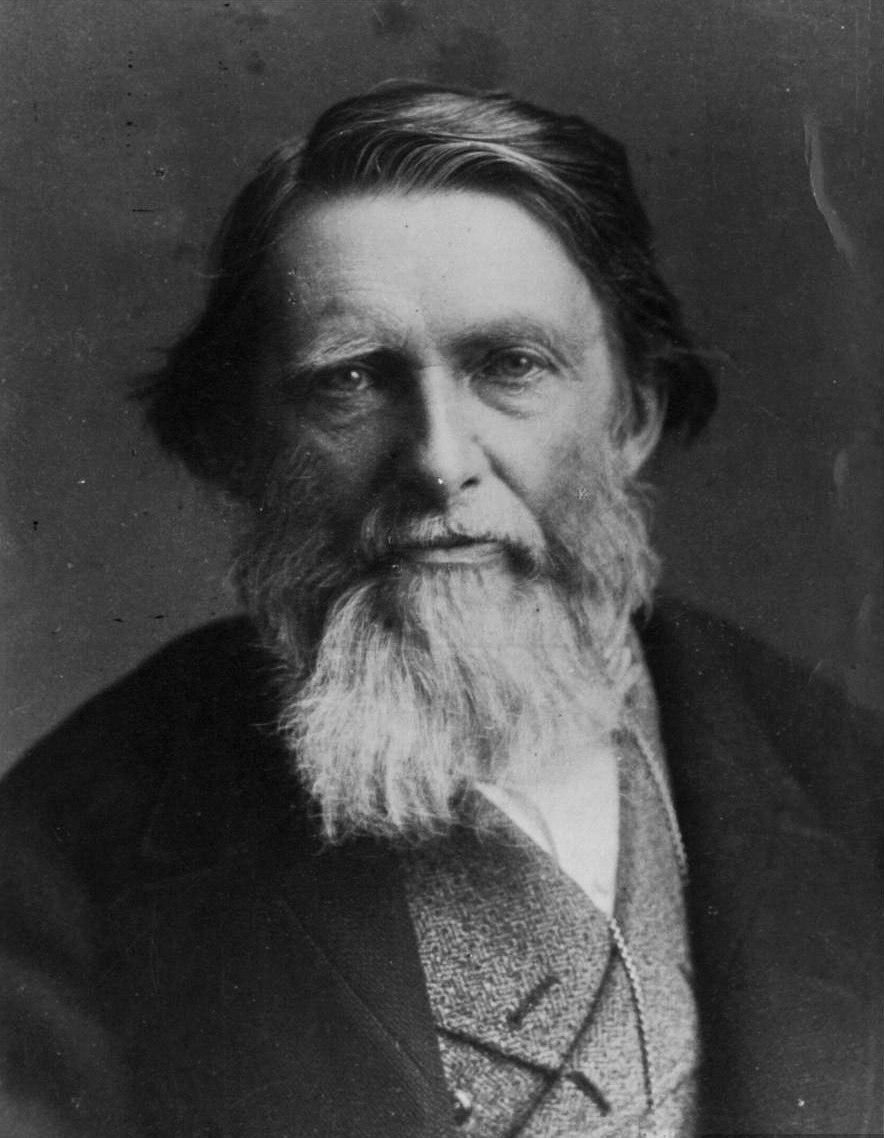
John Ruskin, Praeterita:

“Under these luxurious, and — in the world’s sight — honourable, conditions, my mind gradually recovering its tranquillity and spring, and making some daily, though infinitesimal, progress towards the attainment of common sense, I believe that I did harder and better work in my college reading than I can at all remember. It seems to me now as if I had known Thucydides, as I knew Homer (Pope’s!), since I could spell; but the fact was, that for a youth who had so little Greek to bless himself with at seventeen, to know every syllable of his Thucydides at half past eighteen meant some steady sitting at it. The perfect honesty of the Greek soldier, his high breeding, his political insight, and the scorn of construction with which he knotted his meaning into a rhythmic strength that writhed and wrought every way at once, all interested me intensely in him as a writer; while his subject, the central tragedy of all the world, the suicide of Greece, was felt by me with a sympathy in which the best powers of my heart and brain were brought up to their fullest, for my years.”

Image result for john ruskin

The Birth of Philology

Again, from the Prolegomena ad Homerum by F. A. Wolf:

“This story allows us a chance to make a few overarching comments about the birth of the practice of criticism. And this also permits us to evaluate the nature of the recensions which were reportedly made in that period. For I don’t think that anyone will be surprised today that the Greeks of the time—who were by chance more men of genius than of learning,—even though they were completely estranged from the polymathy to which kings eventually provided ample time, that they were already starting to turn their attention to that art which is the collected sum of the various disciplines of literature and antiquity.

Indeed, all the foundations which would guide the ancients to the art of criticism already existed at that time. Among them I would put in first place the ancient method of preserving songs by only the use of memory; in the second, the errors and frauds perpetrated in ascribing authorship; and in the third, the many kinds of easy mistakes made by untrained hands in preparing the first manuscripts.

But even if this last case would precipitate a need for this art after many generations, anyone who is familiar with the Greeks will easily see that their genius would not have been able of declining so severely or so eagerly to such nitpicking concerns if their writings were only corrupted in the way that most books are. Let it stand as the singular fate of the monuments of Homer and his peers that in some sense they forced philology to be born—and that they did so even before the word for Critic or Grammarian was commonly spoken.”

Haec narratio nobis occasionem offert in universum dicendi nonnulla de ortu studii critici, ex quibus existimare liceat de conditione earum recensionorum, quae hoc saeculo offeruntur factae esse. Nunc enim nemo, puto, mirabitur, Graecos iam tum, quum prosperrima sorte sua ingeniosiores essent quam doctiores, et ab illa [corrupt text] cui reges deinde otium praebuerunt alienissimi, animum paullatim applicuisse ad eam artem, quae tota collecta est ex multiplici doctrina litterarum et antiquitatis. Etenim quae causae maxime perduxerunt veteres ad criticam artem, iam tum eaedem exstiterant omnes. In quibus primo loco posuerim modum illum conservandorum olim Carminum ope unius memoriae, proximo errores et fraudes in prodendis auctoribus eorum, tertio varios facillimosque lapsus rudium manuum in primis exemplaribus parandis. Sed etsi haec postrema causa eius- modi est, ut post aliquot saecula istius artis desiderium necessario fuisset allatura, tamen qui Graecos norit, facile intelliget, ad tam minutulas curas ingenium eorum nec tam mature-nec tanto studio potuisse descendere, si sola omni scripturae communia menda libros corrupissent. Maneat igitur, singularem fortunam Homericorum et supparum monumentorum extudisse quodammodo philologam criticen, idque etiam antea, quam nomen Critici aut Grammatici vulgo auditum esset.

Image result for friedrich august wolf
Wolf was a hard worker….

J.E. Sandys attempts to put Wolf’s accomplishment in historical context. Sandys also provides an overview of what he sees as the differences between classical scholarship at large and philology.

Jakobson: “ is the art of reading slowly”

Nietszche: “the art of reading well” (die Kunst gut zu lesen)

Vico: “By philology, I mean the science of everything that depends on human volition.”

Novalis: “Philology in general is the science of literature.”

[H/T to Patrick Burns (@diyclassics) for these last two]

What Does it Mean to Have an Oral Homer?

The ‘modern’ Homeric ‘Question’ simmered for many centuries before it received its most clear articulation at the end of the 18th century when Wolf, who had been working on an edition of the Homeric text, published his Prolegomena.  He was one of the first to argue persuasively for the oral derivation of the Homeric poems. In the (declining) style of the time, Wolf published in Latin.

The full Latin text is available from Google books and on the Homer Multitext Project website. A fine translation was published in English in 1985/1988 by Anthony Grafton, Glenn W. Most, and James E. G. Zetzel.

Friedrich Augustus Wolf, Prolegomena ad Homerum (1795) section 23

“But what if the suspicion of a few scholars is likely, that these and the other compositions of those days were not written down but were first created by poets using memory and circulated as songs and then were ‘published’ widely by the singing of rhapsodes who were trained by their particular discipline to learn them? And if because of this, before they were fixed in writing, what if many changes naturally occurred either intentionally or by chance?

What if, for this reason itself, as soon as they began to be written, they exhibited many divergences and soon added new ones from the hasty adjustments by those who were eager to polish them and to align them with the best laws of the poetic art and their own custom And what if then this whole creation and series of two eternal songs are not of a single poet whom we are used to crediting for his genius but more from the dedication of a more polished time and thanks to the collected efforts of many—that the very songs from which the Iliad and the Odyssey were composed did not have a single author and this can be argued from likely propositions and reasons? What if, I ask, we must take up a belief different from the popular one about all of this, what then will it mean to restore the ancient gleam and original form to these poems?”

At vero, si nonnullorum probabilis est suspicio , haec et reliqua Carmina illorum temporum nullis litterarum mandata notis, sed primum a poetis memoriter facta et cantu edita, tum per rhapsodos, in iis ediscendis propria arte occupatos, canendo divulgata esse; ex quo, antequam scripto velut figerentur, plura in iis vel consilio vel casu immutari necesse esset; si hanc ipsam ob causam, statim ut scribi coepta sunt, multas diversitates habuerunt, mox novas subinde adsciverunt temeritate et coniecturis eorum, qui ea certatim expolire, et ad optimas leges poeticae artis ad suamque consuetudinem loquendi corrigere studebant; si denique totum hunc contextum ac seriem duorum perpetuorum Carminum non tam eius, cui eam tribuere consuevimus, ingenio, quam sollertiae politioris aevi et multorum coniunctis studiis deberi, neque adeo ipsas docdd, ex quibus Ilias et Odyssea compositae sunt, unum omnes auctorem habere, verisimilibus argumentis et rationibus effici potest; si, inquam, aliter de his omnibus, ac vulgo fit, existimandum est: quid tum erit, his Carminibus pristinum nitorem et germanam formam suam restituere?

Prolegomena

Pleasant Initiation in Greek

John Ruskin, Praeterita:

“I might be eleven or going on twelve by that time. Miss Andrews, the eldest sister of the ‘Angel in the House,’ was an extremely beautiful girl of seventeen; she sang ‘Tambourgi, Tambourgi’ with great spirit and a rich voice, went at blackberry time on rambles with us at the Norwood Spa, and made me feel generally that there was something in girls that I did not understand, and that was curiously agreeable. And at last, because I was so fond of the Doctor, and he had the reputation (in Walworth) of being a good scholar, my father thought he might pleasantly initiate me in Greek, such initiation having been already too long deferred. The Doctor, it afterwards turned out, knew little more of Greek than the letters, and declensions of nouns; but he wrote the letters prettily, and had an accurate and sensitive ear for rhythm. He began me with the odes of Anacreon, and made me scan both them and my Virgil thoroughly, sometimes, by way of interlude, reciting bits of Shakespeare to me with force and propriety. The Anacreontic metre entirely pleased me, nor less the Anacreontic sentiment. I learned half the odes by heart merely to please myself, and learned with certainty, what in later study of Greek art it has proved extremely advantageous to me to know, that the Greeks liked doves, swallows, and roses just as well as I did.”

Image result for john ruskin praeterita