Post-Classical Intellectualism in the Latin Classroom

The following is a guest editorial submitted by Zachary Taylor, a middle and high school Latin teacher:

My Advanced Placement Latin students, in their third week into the Aeneid, just read Helen Bacon’s excellent article, “The Aeneid as a Drama of Election.”

Bacon interprets Rome’s most famous poem as a visionary epic of transcendence, wherein the hero, Aeneas, “is the bearer of a divine and specifically national mission, first resisted, ultimately accepted.” Unlike in the Iliad and the Odyssey, personal heroism and fulfillment take a notable back-seat to the predestined establishment of the Roman people, and thus Aeneas must constantly set aside his personal desires and ambitions to follow the decrees of Fate. As he slowly loses his “humanity,” as Bacon puts it, he simultaneously becomes divine. “Aeneas is a hero destined for immortality,” she writes.

For perhaps the first time in their academic careers, my students had encountered in Bacon’s article inscrutable ideas and concepts such as transcendence, metaphysics, deification, and election. They were at a loss to comprehend the notion that in the Aeneid, we encounter “not pure metaphysics but metaphysical poetry” that manifests a “poetized vision of the transcendent reality of the soul” articulated by Plato, the Neoplatonists, Plotinus, and Pseudo-Dionysius. Such philosophical and conjectural ideas went entirely over their heads, not because they were unable to understand them—my Advanced Placement students are extremely smart—but because never before had they been exposed to late antique intellectual history. While they can discuss quite competently the ideas of Socrates and Cicero, whom they encountered in history and literature classes, they had not, until our Latin class, ever heard of Plotinus and only vaguely knew of Augustine. I must have sounded like an utter quack.

Even when I tried to relate Bacon’s interpretation of the Aeneid to the letters of Saint Paul, my students were at a loss. In fact, I believe they mistakenly assumed that I had started to preach and that our discussion of metaphysics, the afterlife, and deification had taken an unwanted Christian turn in which I aimed to defend Paul and the notion of transcendence. I quickly realized that my attempt to approach the Aeneid, a classical first century BCE text, via the late antique lens of Neoplatonism and the Christian lens of Pauline mysticism had utterly failed. They did not have a clue what they could add to or even contest in Bacon’s thesis.

What explains this? It is far too easy to say that my students could not handle literary criticism informed by unfamiliar philosophical or theological ideas. They can. Had they been exposed to late antique history and the period’s philosophy and philosophical theology, and had they learned about the numerous connections between the late antique Roman world, Christianity, and the classical era they know so well, they would have participated in our conversation with aplomb.

I venture that our failed discussion stems from a recurrent lacuna in Latin curriculum in secondary schools and universities across the country. For quite some time now, “classical studies” has stood apart from “late antique and medieval studies,” and in particular the field has made a concerted effort to distance itself from the study of Christianity. Simon Goldhill, in a paper titled “Classics in the Providential Order of the World” presented at the 2017 Society for Classical Studies annual conference, noted how, after a close-knitted affair between classics and Christian theology, both of which the same nineteenth century practitioners often studied, the disciplines have taken radically different paths. “Modern classicists in general are loathe to give theology the attention it requires in the development of our discipline,” he added, “and such a repression has consequently hugely distorted the field of reception studies.” Beyond Goldhill’s more narrow critique in relation to theology and reception studies, I wish to call attention to the study of late antique intellectual history, and by connection Christianity, in Latin classrooms. While I by no means wish to advocate for the study of theology over and above or even in between the study of Virgil and Caesar in the Advanced Placement curriculum, I do want to promote a broader, more inclusive advanced Latin curriculum that exposes students to the complex intellectual (and entirely Roman) world of Augustine, Ambrose, and Jerome in addition to that of Cicero, Caesar, and Virgil.

Why? Beyond the obvious fact that such a curriculum provides students with a more comprehensive portraiture of the ancient world and Latin literature, it also helps students understand and substantively interact with claims like those made by Helen Bacon. In other words, a Latin curriculum that has students read Augustine opens interpretative doors to the Aeneid they may not have opened otherwise.

Catherine Conybeare, in a paper titled “Virgil, Creator of the World,” which she also presented at the 2017 Society for Classical Studies conference, claimed that “the intellectual heritage of classicists is radically incomplete if we continue to ignore the pressure of the cultural divisions of the fourth and fifth centuries on how we write and read and, indeed, select our objects of concern today.” As Conybeare made clear in her paper, the study of classical Latin texts in the nascent Christian cultural milieu of the fifth century—she drew attention to Macrobius’s Saturnalia—incorporated new interpretive techniques molded by debates within Christianity itself. “Pressure from the cultural and intellectual ferment of Christianity in the Western empire,” Conybeare said, “tacitly shapes the work of Macrobius”; moreover, his description of the reader’s approaches to the “holy recesses (adyta)” of the Aeneid, which Macrobius calls “sacred (sacri poematis)” (Saturnalia 1.24.13), parallels Augustine’s approach to biblical hermeneutics in Confessions (3.5.9). Ultimately, Conybeare concluded that Macrobius’s Saturnalia “provides a model for readers of classical texts in . . . the twenty-first century.” Macrobius, while a non-Christian representative of an intellectual culture that revered Rome’s pre-Christian literary past, nevertheless adopts interpretive tools inflected by Christianity in his analyses of a canonical classical text.

We must also remember that, on the other end of the spectrum, non-Christian authors exerted a massive influence on the new Christian intellectual elite of the fourth and fifth centuries. Augustine, like many of his episcopal peers, received a standard Roman education that led him to a career at Rome as a professor of rhetoric. Evidence of his instruction in philosophy, rhetoric, and poetry abounds in his work, wherein he often explicitly discusses canonical texts, such as the Aeneid (Confessions 2.2) or confronts philosophical ideas from the classical Roman period, such as Cicero’s definition of the res publica, the focal point of City of God Book XIX. In fact, apropos rhetoric as it concerns the didactic role of the Christian preacher, Augustine was part of an entire movement, led by Christian bishops educated in the typical fashion for Roman elites, who accepted the authority of classical rhetoric yet abhorred its sophistic tendencies. In response, they tried to create “an oasis of literary culture,” in the words of Peter Brown, that was unselfconscious, unacademic, uncompetitive, and devoted to the comprehension of biblical texts, evidently in opposition to the non-Christian intellectual milieu. In short, just as Macrobius (perhaps unselfconsciously) employed Christian interpretive techniques in his literary analyses, late antiquity’s Christian thinkers appropriated what they found useful in classical literary culture and dispensed with what they perceived was harmful.

I do not think that secondary school Latin students should learn all this. I nevertheless call attention to this rich period of Roman intellectual history because, like Conybeare, I contend that late antiquity’s “cross-disciplinary approach,” as it were, to the study of classical texts like the Aeneid offers a model for Latin educators just as well as readers or scholars. Latin teachers more familiar with late antiquity can, in turn, expose their students in the years prior to advanced Latin to the philosophical, literary, and theological ideas of late antiquity, not merely because well-rounded future classicists should know this information, but also because such an approach aids them in their own comprehension and analysis of traditional Latin texts from the first century BCE and the early years of the Principate. Armed with such interpretive tools, students could more fully appreciate the finer points made by scholars such as Helen Bacon.

I should note that some Latin textbooks already take seriously the idea that Latin students should learn more about late antiquity and the post-classical life of Latin, if for somewhat different reasons. Most notably, Bolchazy-Carducci’s Latin for the New Millennium series, written by Milena Minkova and Terence Tunberg, introduces students to adapted Latin texts from Augustine, Boethius, and Ammianus Marcellinus as early as Level 1. Brief introductions to these authors’ lives, which expose students to the historical and literary contexts in which they wrote, accompany the selections students are expected to translate. The Level 2 textbook, which commences with an introduction to the subjunctive mood (trial by fire, Level 2 students!), takes as its thematic foci post-classical Latin in medieval and Renaissance contexts. Students therefore read selections from the Venerable Bede, Einhard, and Petrarch, and learn about medieval Britain, the rise of the Holy Roman Empire, and the Renaissance reception of Cicero, respectively. Level 2 even includes excerpts from Juan Ginés de Sepúlveda on the New World and from Nicolaus Copernicus on “the revolution of the celestial bodies.” With a textbook series such as Latin for the New Millennium, which I use in my own Latin classroom, a Latin teacher can craft a curriculum extraordinarily rich in late antique intellectual history.

The alterations to the conventional secondary school Latin curriculum that I propose here may not be at the top of every teacher’s priorities. Many of us are concerned with Latin’s exclusionary and elitist reputation, with its whiteness and maleness, and with the appropriation of classical culture by neo-Nazis and white supremacists. Others seek to transform Latin curriculum in other, more fundamental ways, such as those committed to comprehensible input. I, too, share these sociopolitical and curricular concerns, and have tried to address issues of race and racism, white supremacy, and sexism in my Latin classes. I have also tried to speak Latin more frequently, convinced that my students and I can truly benefit from comprehensible input. By no means, then, do I wish to imply that exposure to late antique intellectual history will radically transform our Latin classes in the most relevant or consequential ways. I do, however, believe that students can benefit considerably from a more inclusive Latin curriculum that does not shy away from Latin’s extensive post-classical, Christian life out of fear that such a curriculum would stray uncomfortably into non-secular academic realms. To conclude, I cite Macrobius once more—an excerpt from his Saturnalia that Catherine Conybeare quoted at the start of her paper at last year’s conference, which I shared with my Advanced Placement students after we dissected Helen Bacon’s “The Aeneid as a Drama of Election.” On the Aeneid, Macrobius writes:

Videsne eloquentiam omni varietate distinctam? quam quidem mihi videtur Virgilius non sine quodam praesagio . . . de industria permiscuisse, idque non mortali sed divino ingenio praevidisse: atque adeo non alium ducem secutus quam ipsam rerum omnium matrem naturam hanc praetexuit velut in musica concordiam dissonorum. Quippe si mundum ipsum diligenter inspicias, magnam similitudinem divini illius et huius poetici operis invenies.

Do you see the eloquence, distinct in every kind of variety? Indeed, Virgil seems to me to have mixed assiduously with a certain prescience that which he foresaw with a divine, not mortal talent: and thus having followed no other guide except nature itself, the mother of all things, he wove together this harmony of discordant sounds just as if it were music. Indeed, if you look carefully at the world itself, you will discover a profound similarity between the creation of the divine and that of this poet.

Saturnalia, 5.1.18-19, my translation.


Zachary Taylor is a new Latin teacher at an independent school in Delaware. In between his Latin classes, he draws up plays he hopes will help his middle school boys basketball team win a few close contests.

St Augustine Teaching Rhetoric (1)
“St. Augustine Teaching Rhetoric.” By Jan van Scorel. 1495-1562.


Philagros, Angry Philosopher and Bad Father

Philostratus, Lives of the Sophists, 581

“Philagros was shorter than average, his brow was harsh, and his eye watchful. He was quick to get fall into a rage, but he wasn’t ignorant of his own character. When one of his friends asked him why he didn’t enjoy raising children, he said “Because I don’t even enjoy myself.” Some say he died on the sea; others report that he reached the first part of old age in Italy.”

Μέγεθος μὲν οὖν ὁ Φίλαγρος μετρίου μείων, τὴν δὲ ὀφρὺν πικρὸς καὶ τὸ ὄμμα ἕτοιμος καὶ ἐς ὀργὴν ἐκκληθῆναι πρόθυμος, καὶ τὸ ἐν αὐτῷ δύστροπον οὐδ’ αὐτὸς ἠγνόει· ἐρομένου γοῦν αὐτὸν ἑνὸς τῶν ἑταίρων, τί μαθὼν παιδοτροφίᾳ οὐ χαίροι, „ὅτι” ἔφη „οὐδ’ ἐμαυτῷ χαίρω.” ἀποθανεῖν δὲ αὐτὸν οἱ μὲν ἐν τῇ θαλάττῃ, οἱ δὲ ἐν ᾿Ιταλίᾳ περὶ πρῶτον γῆρας.

This Vita seems a bit strange in its characterization. Here’s the introductory segment (578):

“Philagros of Cilicia, a student of Lollianos, was the most volatile and irascible of the sophists.  There’s a story that when a member of his audience dozed off, he struck him with an open hand. He made a start on fame when he was young and did not let off even as he grew old—he achieved enough that he was considered a model of a teacher. After living among many different nations and becoming famous for his management of arguments, he could not control his own anger well in Athens where he fell into a fight with Herodes as if he had come there for that reason.”

η′. Φίλαγρος δὲ ὁ Κίλιξ Λολλιανοῦ μὲν ἀκροατὴς ἐγένετο, σοφιστῶν δὲ θερμότατος καὶ ἐπιχολώτατος, λέγεται γὰρ δὴ νυστάζοντά ποτε ἀκροατὴν καὶ ἐπὶ κόρρης πλῆξαι, καὶ ὁρμῇ δὲ λαμπρᾷ ἐκ μειρακίου χρησάμενος οὐκ ἀπελείφθη αὐτῆς οὐδ’ ὁπότε ἐγήρασκεν, ἀλλ’ οὕτω τι ἐπέδωκεν, ὡς καὶ σχῆμα τοῦ διδασκάλου νομισθῆναι. πλείστοις δὲ ἐπιμίξας ἔθνεσι καὶ δοκῶν ἄριστα μεταχειρίζεσθαι τὰς ὑποθέσεις οὐ μετεχειρίσατο ᾿Αθήνησιν εὖ τὴν αὑτοῦ  χολήν, ἀλλ’ ἐς ἀπέχθειαν ῾Ηρώδῃ κατέστησεν ἑαυτόν, καθάπερ τούτου ἀφιγμένος ἕνεκα.

He should have listened to Plutarch On Controlling Anger 455c

“It is best, as one might gather, to be in control and either to depart and conceal ourselves, anchoring oneself into some quiet place, just as if we perceive that a seizure is beginning, that we might not fall—or rather, that we might not fall on someone else. We most often turn on our friends; for we neither love everyone, nor envy everyone, nor fear everyone to the extent that there is anything that is untouched or untried by anger. We grow angry with enemies, children, parents the gods, by Zeus, with wild animals and even with lifeless tools…”

ἀτρεμεῖν οὖν κράτιστον ἢ φεύγειν καὶ ἀποκρύπτειν καὶ καθορμίζειν ἑαυτὸν εἰς ἡσυχίαν, ὥσπερ ἐπιληψίας ἀρχομένης συναισθανομένους, ἵνα μὴ πέσωμεν μᾶλλον δ’ ἐπιπέσωμεν· ἐπιπίπτομεν δὲ τοῖς φίλοις μάλιστά γε καὶ πλειστάκις, οὐ γὰρ πάντων ἐρῶμεν οὐδὲ πᾶσι φθονοῦμεν οὐδὲ πάντας φοβούμεθα, θυμῷ δ’ ἄθικτον οὐδὲν οὐδ’ ἀνεπιχείρητον, ἀλλ’ ὀργιζόμεθα καὶ πολεμίοις καὶ τέκνοις καὶ γονεῦσι καὶ θεοῖς νὴ Δία καὶ θηρίοις καὶ ἀψύχοις σκεύεσιν…

Image result for Medieval Manuscript anger controlling

Always in Fear: The Justice (?) of Servants

Homer, Odyssey 14. 55-72

“Then you answered him in address, swineherd Eumaios

“It is not right for me, not even if someone worse than you should come,
To dishonor a guest. For all guests and beggars come
From Zeus and our gift to them is small and dear.
This is the justice of servants
Of those who are always afraid, when their masters rule over them,
Young men. For the gods have kept him from his homeland
The one who would have cared for me rightly and given me possessions,
A house, some land, and a much-wooed wife—
The kinds of things a good-spirited master gives to his servant
Who works hard for him and then a god increases his labor.
So for me my labor—to which I attend—always produces.
This is why my lord would have repaid me if he grew old here.
But he died. I wish the entire race of Helen had perished
Since it brought many men to their knees.
For he too went for the sake of Agamemnon’s honor
To well-horsed Troy so that he might fight the Trojans”

τὸν δ’ ἀπαμειβόμενος προσέφης, Εὔμαιε συβῶτα·
“ξεῖν’, οὔ μοι θέμις ἔστ’, οὐδ’ εἰ κακίων σέθεν ἔλθοι,
ξεῖνον ἀτιμῆσαι· πρὸς γὰρ Διός εἰσιν ἅπαντες
ξεῖνοί τε πτωχοί τε. δόσις δ’ ὀλίγη τε φίλη τε
γίνεται ἡμετέρη· ἡ γὰρ δμώων δίκη ἐστίν,
αἰεὶ δειδιότων, ὅτ’ ἐπικρατέωσιν ἄνακτες
οἱ νέοι. ἦ γὰρ τοῦ γε θεοὶ κατὰ νόστον ἔδησαν,
ὅς κεν ἔμ’ ἐνδυκέως ἐφίλει καὶ κτῆσιν ὄπασσεν,
οἷά τε ᾧ οἰκῆϊ ἄναξ εὔθυμος ἔδωκεν,
οἶκόν τε κλῆρόν τε πολυμνήστην τε γυναῖκα,
ὅς οἱ πολλὰ κάμῃσι, θεὸς δ’ ἐπὶ ἔργον ἀέξῃ,
ὡς καὶ ἐμοὶ τόδε ἔργον ἀέξεται, ᾧ ἐπιμίμνω.
τῶ κέ με πόλλ’ ὤνησεν ἄναξ, εἰ αὐτόθ’ ἐγήρα·
ἀλλ’ ὄλεθ’. ὡς ὤφελλ’ ῾Ελένης ἀπὸ φῦλον ὀλέσθαι
πρόχνυ, ἐπεὶ πολλῶν ἀνδρῶν ὑπὸ γούνατ’ ἔλυσε·
καὶ γὰρ κεῖνος ἔβη ᾿Αγαμέμνονος εἵνεκα τιμῆς
῎Ιλιον εἰς εὔπωλον, ἵνα Τρώεσσι μάχοιτο.”
ὣς εἰπὼν ζωστῆρι θοῶς συνέεργε χιτῶνα,

Schol. HQ ad Od. 14.68

“How would the father of Penelope, Ikarios, the Laconian be in race? Or what would it mean that Penelope is a cousin of Helen? For master-loving Eumaios would not curse Telemachus and Penelope in wishing that the race of Helen be destroyed…”

πῶς ἂν ὁ Πηνελόπης πατὴρ ᾿Ικάριος Λάκων εἴη τὸ γένος; ἢ πῶς ἂν ἡ Πηνελόπη τῆς ῾Ελένης ὑπάρχοι ἀνεψιά; οὐ γὰρ ἂν ὁ φιλοδεσπότης Εὔμαιος Τηλεμάχῳ καὶ Πηνελόπῃ κατηρᾶτο βουλόμενος διεφθάρθαι τὸ τῆς ῾Ελένης γένος. H.Q.

For Ikarios and Tyndareus as brothers, see these details.


A Friendly Philosopher is Useless

Plutarch, Fr. 203, recorded in Themistios’ On the Soul (From Stobaeus, iii.13. 68)

“Others will decide whether Diogenes spoke rightly about Plato “What good is a man who has practiced philosophy for a long time and pissed off no one? Perhaps it is right that the philosopher’s speech has a sweetness that wounds like honey.”

Θεμιστίου περὶ ψυχῆς·

Εἰ μὲν οὖν ὀρθῶς ἐπὶ Πλάτωνος εἶπε Διογένης, “τί δαὶ ὄφελος ἡμῖν ἀνδρὸς ὃς πολὺν ἤδη χρόνον φιλοσοφῶν οὐδένα λελύπηκεν;” ἕτεροι κρινοῦσιν. ἴσως γὰρ ὡς τὸ μέλι δεῖ καὶ τὸν λόγον τοῦ φιλοσόφου τὸ γλυκὺ δηκτικὸν ἔχειν τῶν ἡλκωμένων.

Diogenes Laertius, 10.8

“[Epicurus] used to call Nausiphanes an illiterate jellyfish, a cheat and a whore. He used to refer to Plato’s followers as the Dionysus-flatters; he called Aristotle a waste who, after he spent his interitance, fought as a mercenary and sold drugs. He maligned Protagoras as a bellboy, and called Protagoras Democritus’ secretary and a teacher from the sticks. He called Heraclitus mudman, Democritus  Lerocritus [nonsense lord].

Antidorus he called Sannidôros [servile-gifter]. He named the Cynics “Greece’s enemies”; he called the dialecticians Destructionists and, according to him, Pyrrho was unlearned and unteachable.”

πλεύμονά τε αὐτὸν ἐκάλει καὶ ἀγράμματον καὶ ἀπατεῶνα καὶ πόρνην: τούς τε περὶ Πλάτωνα Διονυσοκόλακας καὶ αὐτὸν Πλάτωνα χρυσοῦν, καὶ Ἀριστοτέλη ἄσωτον, <ὃν> καταφαγόντα τὴν πατρῴαν οὐσίαν στρατεύεσθαι καὶ φαρμακοπωλεῖν: φορμοφόρον τε Πρωταγόραν καὶ γραφέα Δημοκρίτου καὶ ἐν κώμαις γράμματα διδάσκειν: Ἡράκλειτόν τε κυκητὴν καὶ Δημόκριτον Ληρόκριτον καὶ Ἀντίδωρον Σαννίδωρον: τούς τε Κυνικοὺς ἐχθροὺς τῆς Ἑλλάδος: καὶ τοὺς διαλεκτικοὺς πολυφθόρους, Πύρρωνα δ᾽ ἀμαθῆ καὶ ἀπαίδευτον.

Cicero, Letter Fragments. Nepos to Cicero IIa

Nepos Cornelius also writes to the same Cicero thus: it is so far away from me thinking that philosophy is a teacher of life and the guardian of a happy life, that I do not believe that anyone needs teachers of living more than the many men who are dedicated to philosophical debate. I certainly see that a great number of those who rush into speeches about restraint and discipline in the classroom live amidst the desire for every kind of vice.”

Nepos quoque Cornelius ad eundem Ciceronem ita scribit: tantum abest ut ego magistram putem esse vitae philosophiam beataeque vitae perfectricem ut nullis magis existimem opus esse magistros vivendi quam plerisque qui in ea disputanda versantur. video enim magnam partem eorum qui in schola de pudore <et> continentia praecipiant argutissime eosdem in omnium libidinum cupiditatibus vivere. (Lactant. Div. inst. 3.5.10)

Image result for Cornelius Nepos

On Timon, D. L. 9.12

“Antigonos says that Timon was fond of drinking; and, whenever he had free time from philosophizing, he wrote poems”

Ἦν δέ, φησὶν ὁ Ἀντίγονος, καὶ φιλοπότης καὶ ἀπὸ τῶν φιλοσόφων εἰ σχολάζοι ποιήματα συνέγραφε

Seneca, Moral Epistle 3.3

“For this is most shameful (and often brought up against us as a reproach), to deal in the words, and not the actual work, of philosophy.”

hoc enim turpissimum est, quod nobis obici solet, verba nos philosophiae, non opera tractare.

A Measure of Wine for Madness or Pain

Two fragments from Euenus

Anth. Pal. 11.49 Εὐήνου 

“The best measure of Bacchus is not too much
Nor too little
For this he is the cause of pain or madness.
He is happy to be mixed fourth with three Nymphs—
Then he is most prepared for the bedroom.
But if he puffs too much, he turns away from loves
And dips into sleep, the next-door neighbor of death.”

Βάκχου μέτρον ἄριστον ὃ μὴ πολὺ μηδ᾿
ἐλάχιστον·
ἔστι γὰρ ἢ λύπης αἴτιος ἢ μανίης.
χαίρει κιρνάμενος δὲ τρισὶν Νύμφαισι τέταρτος·
τῆμος καὶ θαλάμοις ἐστὶν ἑτοιμότατος.
εἰ δὲ πολὺς πνεύσειεν, ἀπέστραπται μὲν ἔρωτας,
βαπτίζει δ᾿ ὕπνῳ, γείτονι τοῦ θανάτου.

5 Stob. 3.20.2 Εὐήνου

“Anger often eclipses humans’ hidden mind.
This is much worse than madness.”

πολλάκις ἀνθρώπων ὀργὴ νόον ἐξεκάλυψεν
κρυπτόμενον· μανίης πουλὺ χερειότερον.

Nouvelle acquisition latine 1673, fol. 76v, Marchand de vin. Tacuinum sanitatis, Milano or Pavie (Italy), 1390-1400.

Intestinal Fortitude: Adventures in Ancient Medical Treatments

Galen, Method of Medicine 14: 10, 856

“The man was forty years old, as you know. While he was believed to be colic, he not only failed to profit from fomentations, heat treatments, ointments, and enemas—those kinds of things which doctors typically apply—but his condition was exacerbated by most of them. When rue-oil was applied rectally, he got worse; and he was worse still after the application of castor oil. When honey which had been prepared with pepper was inserted, he felt the worst find of pain. And he also suffered when he took the juice of fenugreek finished with honey.* For these reasons, I surmised that the biting fluids had worked themselves into the intestinal walls to begin with and that these were causing infection along with the treatments that had been inserted through his rectum, with the additional complication of the substances that had been ingested orally.

I gave him some food that would not cause problems. Then when I saw him in more pain, I realized that it was critical to purse the kakokhumia [bad-bile]. Although the medicine which is best for this sort of bile-issue is mad from aloe which people now call bitter, I did not date have this man purged right away because he was in pain and without proper nutrition for two months. Once I purged him in stages and moderately over a period of fifteen days I healed him and did not have to provide any other treatment. This man was at that time not afflicted for the first time, and he no longer had stomach pains.”

ὁ μέν γε τεσσαρακοντούτης ἦν, ὡς οἶσθα, | κωλικὸς εἶναι νομιζόμενος, οὐ μόνον οὐδὲν ὀνινάμενος ὑπὸ καταντλήσεων καὶ πυρίας καὶ καταπλασμάτων καὶ κλυσμάτων, οἷς συνήθως εἰώθασιν ἐπὶ τῶν τοιούτων χρῆσθαι διαθέσεων, ἀλλὰ καὶ παροξυνόμενος ὑπὸ τῶν πλείστων. ἐπὶ γοῦν ἐλαίῳ πηγανίνῳ διὰ τῆς ἕδρας ἐνεθέντι χείρων ἐγένετο καὶ αὖθις ἐπὶ καστορίῳ· καὶ μέντοι καὶ μέλι ποτὲ προσενεγκάμενος ἑφθὸν ἔχον πέπερι ἐσχάτως ὠδυνήθη· καὶ τὸν χυλὸν δὲ τῆς ἑφθῆς τήλεως ἅμα μέλιτι λαβὼν ἱκανῶς παρωξύνθη. στοχασάμενος οὖν ἐγὼ χυμοὺς δακνώδεις ἐν αὐτοῖς τοῖς χιτῶσι τῶν ἐντέρων ἀναπεπόσθαι, συνδιαφθείροντας ἑαυτοῖς τά τε κάτωθεν ἐνιέμενα καὶ τὰ διὰ τοῦ στόματος λαμβανόμενα, δύσφθαρτον αὐτῷ τροφὴν δούς.

εἶτ᾿ ἰδὼν ὀδυνώμενον ἔγνων χρῆναι τὴν κακοχυμίαν ἐκκαθαίρειν. ὄντος δ᾿ ἀρίστου πρὸς τὰς τοιαύτας κακοχυμίας φαρμάκου τοῦ διὰ τῆς ἀλόης, ὃ καλοῦσιν ἤδη συνήθως πικράν, ἀθρόως μὲν οὐκ ἐτόλμησα καθαίρειν αὐτὸν τὸν ἄνθρωπον, ὑπό τε τῆς ὀδύνης καὶ τῆς ἐνδείας καθῃρημένον ἤδη που δυοῖν μηνῶν. ἐκ διαστημάτων δέ τινων σύμμετρον | τοῦτ᾿ ἐργαζόμενος ἡμέρας ὡς οἶσθά που πεντεκαίδεκα τελέως ἰασάμην αὐτὸν οὐδὲν οὐκέτι αὐτῷ προσαγαγὼν ἄλλο βοήθημα. οὗτος μὲν οὖν ἐν ἐκείνῳ τῷ χρόνῳ πρῶτον οὕτως ἠνωχλεῖτο, μηδέπω πρότερον ἀλγήσας ἔντερα.

*In case the reader is uncertain, it does in fact seem that all of these substances were applied to the intestines rectally. 

Medieval depiction of an enema being performed
This image is from Pinterest

F**k Grammar, I’m the King!

Thomas Carlyle, History of Friedrich II of Prussia:

“He is now (A.D. 1414) holding this Council of Constance, by way of healing the Church, which is sick of Three simultaneous Popes and of much else. He finds the problem difficult; finds he will have to run into Spain, to persuade a refractory Pope there, if eloquence can (as it cannot): all which requires money, money. At opening of the Council, he “officiated as deacon;” actually did some kind of litanying ‘with a surplice over him,’ [25th December, 1414 (Kohler, p. 340).] though Kaiser and King of the Romans. But this passage of his opening speech is what I recollect best of him there: “Right Reverend Fathers, date operam ut illa nefanda schisma eradicetur,” exclaims Sigismund, intent on having the Bohemian Schism well dealt with,—which he reckons to be of the feminine gender. To which a Cardinal mildly remarking, “Domine, schisma est generis neutrius (Schisma is neuter, your Majesty),”—Sigismund loftily replies, “Ego sum Rex Romanus et super grammaticam (I am King of the Romans, and above Grammar)!” [Wolfgang Mentzel, Geschichte der Deutschen, i. 477.] For which reason I call him in my Note-books Sigismund SUPER GRAMMATICAM, to distinguish him in the imbroglio of Kaisers.”

Pisanello 024b.jpg

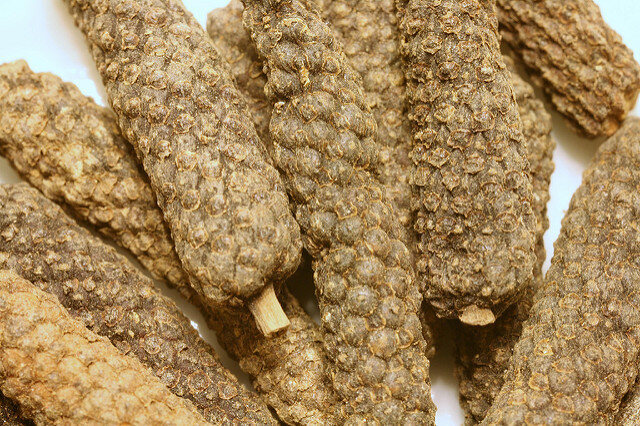
Pour Some Pepper on Me….

Theophrastus, Inquiry in Plants, 9.20.1

“Pepper is in fact a fruit and there are two kinds of it. One is rounded just like orobos [bitter vetch], it has a husk and flesh just like bay-berries [daphnides]. The other is long and has black seeds just like poppies [mekônika]. This is far stronger than the former one. Both are warming [thermantika]. In addition to frankincense [libanôtos] these help against hemlock.”

XX. Τὸ δὴ πέπερι καρπὸς μέν ἐστι διττὸν δὲ αὐτοῦ τὸ γένος· τὸ μὲν γὰρ στρογγύλον ὥσπερ ὄροβος, κέλυφος ἔχον καὶ σάρκα καθάπερ αἱ δαφνίδες, ὑπέρυθρον· τὸ δὲ πρόμηκες μέλαν σπερμάτια μηκωνικὰ ἔχον· ἰσχυρότερον δὲ πολὺ τοῦτο θατέρου· θερμαντικὰ δὲ ἄμφω· δι᾿ ὃ καὶ πρὸς τὸ κώνειον βοηθεῖ ταῦτά τε καὶ ὁ λιβανωτός.

Orobos: vicia ervilia
Mêkônika: papaver somniferum

Pepper is carminative, causing increased flow of gastric juices

Dioscorides, De materia medica 2.159:2-3

“Both kinds of pepper commonly have the following effects:, digestive, uretic, absorbent [antidiarrheal], pro-perspirant and a purgative for things which overshadow girls. It also treats those who drink it and rub it on for periodic shakes and helps those bitten by wild beasts and also compels [out?] fetuses. It seems to make someone not pregnant when applied after sex.

It helps with coughs and aids with all kinds of ailments in the chest cavity, when it is taken in lozenges and suspensions, and it helps with sore throats when rubbed in with honey. It also treats constricted bowels when drunk with young laurel leaves. When it is crushed with stavesacre, it helps to produces phlegm, which is both painless and healthy to do. It stimulates your libido and helps as well in a soup mixed over heat. When it is prepared with pitch it helps neck swelling, and it darkens white spots with washing. Like lentils, pepper jumps in a pan right on the coals when it is roasting.”

δύναμιν δὲ ἔχει κοινῶς θερμαντικήν, πεπτικήν, οὐρητικήν, ἐπισπαστικήν, διαφορητικήν, σμηκτικὴν τῶν ταῖς κόραις ἐπισκοτούντων· ἁρμόζει καὶ ῥίγεσι περιοδικοῖς πινόμενον καὶ συγχριόμενον, καὶ θηριοδήκτοις ἀρήγει, ἄγει καὶ ἔμβρυα. ἀτόκιον δὲ εἶναι δοκεῖ μετὰ συνουσίαν προστιθέμενον, βηξί τε καὶ πᾶσι τοῖς περὶ θώρακα πάθεσιν ἁρμόζει, ἔν τε ἐκλεικτοῖς καὶ ποτήμασι λαμβανόμενον, καὶ συνάγχαις ἁρμόζει διαχριόμενον σὺν μέλιτι, καὶ στρόφους λύει πινόμενον μετὰ δάφνης φύλλων ἁπαλῶν. ἀποφλεγματίζει δὲ σὺν σταφίδι διαμασηθέν, ἀνώδυνόν τέ ἐστι καὶ ὑγιεινόν, καὶ ὄρεξιν κινεῖ καὶ πέψει συνεργεῖ μειγνύμενον ἐμβάμμασιν. ἀναλημφθὲν δὲ πίσσῃ χοιράδας διαφορεῖ, σμήχει δὲ ἀλφοὺς σὺν νίτρῳ. φώγνυται δὲ ἐν ὀστράκῳ καινῷ ἐπ’ ἀνθράκων κινούμενον ὡς φακοί.

Image result for long black pepper ancient Greek

Madness to Grieve for One Who Cannot Grieve

Seneca, De Consolatione ad Polybium 9

“Do I grieve for myself or the one who died? If I grieve for me, this torment of emotion is useless and sorrow—excused only because it is honorable—begins to depart from duty when it aims for advantage. Nothing fits a good person less than to make grief for a brother an issue of calculation.

If I grieve on his account, then one of the following two judgments must be true. For, if the dead have no feeling at all, then my brother has escaped the misfortunes of life and has returned to that place where he was before he was born where he is free of every evil, he fears nothing, desires nothing, endures nothing. What madness this is to never stop grieving for someone who will never grieve again?”

“Utrumne meo nomine doleo an eius qui decessit? Si meo, perit indulgentiae iactatio et incipit dolor hoc uno excusatus, quod honestus est, cum ad utilitatem respicit, a pietate desciscere; nihil autem minus bono viro convenit quam in fratris luctu calculos ponere. Si illius nomine doleo, necesse est alterutrum ex his duobus esse iudicem. Nam si nullus defunctis sensus superest, evasit omnia frater meus vitae incommoda et in eum restitutus est locum, in quo fuerat antequam nasceretur, et expers omnis mali nihil timet, nihil cupit, nihil patitur. Quis iste furor est pro eo me numquam dolere desinere, qui numquam doliturus est?


Talking Heads, “This Must be The Place (Naive Melody)

“…There was a time before we were born
If someone asks, this is where I’ll be…”


Image result for Ancient Greek hero vase

Not the Least Part of Wisdom

An epigram attributed to Euenus

3 Stob. 2.15.4 Ζήνου (Εὐήνου Bach, Ζηνοδότου Gaisford)

“I believe that a share of wisdom not too small
Is knowing rightly what each person is like”

ἡγοῦμαι σοφίης εἶναι μέρος οὐκ ἐλάχιστον
ὀρθῶς γινώσκειν οἷος ἕκαστος ἀνήρ.

Not too small a measure of wisdom I believe
Is knowing exactly what kind of person each may be.

Come on, play along. Make a better couplet than this!


Image result for Ancient Greek hero vase