Will Our Story Shine?

“I’ve done what I came here to do.”
-Tina Turner, 2013 interview with Oprah Winfrey

Bacchylides.3.85-92

To the wise person I say wise things:
The deep heavens are undefiled;
The waters of the sea are not moldering;
And gold is happiness!

But it is not in the nature of things
For gray old age to let a person revive
Her vibrant youth. And yet—

The luster of a mortal’s greatest hits
Does not fade with her body.
On the contrary, the Muse sustains it.

φρονέοντι συνετὰ γαρύω: βαθὺς μὲν
αἰθὴρ ἀμίαντος: ὕδωρ δὲ πόντου
οὐ σάπεται: εὐφροσύνα δ᾽ ὁ χρυσός:
ἀνδρὶ δ᾽ οὐ θέμις, πολιὸν παρέντα
γῆρας, θάλειαν αὖτις ἀγκομίσσαι
ἥβαν. ἀρετᾶς γε μὲν οὐ μινύθει
βροτῶν ἅμα σώματι φέγγος, ἀλλὰ
Μοῦσά νιν τρέφει.

Black and white photograph of Tina Turner on stage singing in the 1970s
Tina Turner, 1939-2023

Larry Benn has a B.A. in English Literature from Harvard College, an M.Phil in English Literature from Oxford University, and a J.D. from Yale Law School. Making amends for a working life misspent in finance, he’s now a hobbyist in ancient languages and blogs at featsofgreek.blogspot.com.

The Lifespan of Happiness

Pindar, Isthmian 3

“If some person has been lucky
Either with glorifying contests or
By dint of wealth and still subdues wretched excess in their thoughts,
Then they are worthy to receive their fellow citizens’ praise.

Zeus, great kinds of excellence come to mortals from you!
And happiness lives longer when people revere the gods.
But it does not bloom for nearly as long
When it is mixed with crooked thoughts.

It’s my job to sing of a noble person
In exchange for well-famed deeds–
But it is also my task to praise them with kind verses,
While they revel through the street.

Melissos has the good luck of twin prizes
To turn his heart to sweet joy–
He received crowns in the Isthmian groves
And in the deep valley of the barrel-chested lion
He had Thebes announced as eminent,
By mastering the chariot race.

He brings no shame to his ancestors,
Surely, you must have heart of the ancient fame
If Kleonymos for his chariots,
And his cousins on his mothers side among the Labdakids,
They applied their wealth to the work of the four-horsed races.

Life turns one way and another as the days roll by–
But the gods’ children stay unharmed.”

Εἴ τις ἀνδρῶν εὐτυχήσαις
ἢ σὺν εὐδόξοις ἀέθλοις
ἢ σθένει πλούτου κατέχει φρασὶν αἰανῆ κόρον,
ἄξιος εὐλογίαις ἀστῶν μεμίχθαι.
Ζεῦ, μεγάλαι δ᾿ ἀρεταὶ θνατοῖς ἕπονται
ἐκ σέθεν· ζώει δὲ μάσσων
ὄλβος ὀπιζομένων, πλαγίαις δὲ φρένεσσιν
οὐχ ὁμῶς πάντα χρόνον θάλλων ὁμιλεῖ.
εὐκλέων δ᾿ ἔργων ἄποινα
χρὴ μὲν ὑμνῆσαι τὸν ἐσλόν,
χρὴ δὲ κωμάζοντ᾿ ἀγαναῖς χαρίτεσσιν βαστάσαι.
ἔστι δὲ καὶ διδύμων ἀέθλων Μελίσσῳ
μοῖρα πρὸς εὐφροσύναν τρέψαι γλυκεῖαν
ἦτορ, ἐν βάσσαισιν Ἰσθμοῦ
δεξαμένῳ στεφάνους, τὰ δὲ κοίλᾳ λέοντος
ἐν βαθυστέρνου νάπᾳ κάρυξε Θήβαν

ἱπποδρομίᾳ κρατέων· ἀνδρῶν δ᾿ ἀρετάν
σύμφυτον οὐ κατελέγχει.
ἴστε μὰν Κλεωνύμου
δόξαν παλαιὰν ἅρμασιν·
καὶ ματρόθε Λαβδακίδαισιν σύννομοι
πλούτου διέστειχον τετραοριᾶν πόνοις.
αἰὼν δὲ κυλινδομέναις ἁμέραις ἄλλ᾿ ἄλλοτ᾿ ἐξ
ἄλλαξεν. ἄτρωτοί γε μὰν παῖδες θεῶν.

Reconstruction from clay fragments of a toy or model charioteer with a horse. Rough figures.
Chariot and Charioteer. Reconstructed from fragments. Offerings from funeral pyre. 725 BC.

Praise? What Praise?

Pindar, Olympian Ode 11

There’s a time when man’s greatest need is wind,
and there’s a time when it’s waters from the sky,
the rainy offspring of clouds.
But when an individual toils and prevails
dulcet hymns are where his future fame begins
and testify to his great achievements.

Lavish is the praise offered up
for Olympic victors. My tongue would lead the way,
but here too, it’s only because of god
a man’s art blossoms.
Now then, son of Archestratus, know this:
Hagesidamus, because of your boxing,

as an adornment of your golden-olives crown
I will shout a sweet song
which recognizes your Western Lokrian tribe.
Go join the revels there, O muses!
I promise you will not encounter a host
unwelcoming and unschooled in beauty,
but one quite wise, and spear-fighting at that.
I can promise, for neither flame-colored fox
nor loud-roaring lions change their natural ways.

ἔστιν ἀνθρώποις ἀνέμων ὅτε πλείστα
χρῆσις, ἔστιν δ᾽ οὐρανίων ὑδάτων,
ὀμβρίων παίδων νεφέλας:
εἰ δὲ σὺν πόνῳ τις εὖ πράσσοι, μελιγάρυες ὕμνοι
ὑστέρων ἀρχὰ λόγων
τέλλεται καὶ πιστὸν ὅρκιον μεγάλαις ἀρεταῖς.
ἀφθόνητος δ᾽ αἶνος Ὀλυμπιονίκαις
οὗτος ἄγκειται. τὰ μὲν ἁμετέρα
γλῶσσα ποιμαίνειν ἐθέλει,
ἐκ θεοῦ δ᾽ ἀνὴρ σοφαῖς ἀνθεῖ πραπίδεσσιν ὁμοίως.
ἴσθι νῦν, Ἀρχεστράτου
παῖ, τεᾶς, Ἁγησίδαμε, πυγμαχίας ἕνεκεν
κόσμον ἐπὶ στεφάνῳ χρυσέας ἐλαίας
ἁδυμελῆ κελαδήσω,
Ζεφυρίων, Λοκρῶν γενεὰν ἀλέγων.
ἔνθα συγκωμάξατ᾽: ἐγγυάσομαι
ὔμμιν, ὦ Μοῖσαι, φυγόξενον στρατὸν
μηδ᾽ ἀπείρατον καλῶν,
ἀκρόσοφον δὲ καὶ αἰχματὰν ἀφίξεσθαι. τὸ γὰρ
ἐμφυὲς οὔτ᾽ αἴθων ἀλώπηξ
οὔτ᾽ ἐρίβρομοι λέοντες διαλλάξαντο ἦθος.

Where’s the Praise?

In Pindar’s cosmos, contingency reigns. Neither wind nor rain, whatever the need, can be counted on. The athlete isn’t assured success (it depends on the god), and if he attains it, his greatest need (an enduring and relied-upon hymn) may go unmet (it too depends on the god). That seems to be the point of the priamel: the athlete, like those who rely on specific weather, might be frustrated in their greatest need.

It’s against this backdrop that we should interpret the singer’s promise to the Muses. It’s not irrelevant that the promise is couched in the language of oaths (ἐγγυάσομαι: I promise, I pledge); after all, the ambitious claims for the hymn were too (πιστὸν ὅρκιον: literally “a reliable oath”). Those claims were of course undermined by the singer’s reminder about contingency.

And so we should read the gnomic statement about fox and lion as also unreliable. Fox and lion are constant, just as the character of Western Lokrians is constant. What the ode has not done is identify a constant in an inconstant world. Rather, claims of predictability should have been sufficiently undermined by now that we hear irony in the lines, or perhaps a test of whether we have absorbed the ode’s lesson.

I ask where’s the praise in the ode, precisely because the singer who questions his ability to hymn the Olympic victor, by extension undermines his praise of the athletes tribe as well.

Black figure vase: two boxers face each other with hands held high
Black figure amphora.
Athens, 550-500 BCE.
British Museum.

Larry Benn has a B.A. in English Literature from Harvard College, an M.Phil in English Literature from Oxford University, and a J.D. from Yale Law School. Making amends for a working life misspent in finance, he’s now a hobbyist in ancient languages and blogs at featsofgreek.blogspot.com.

Pindar, Nemean 8.24


“No memory awaits the brave-hearted man who is speechless”


ἦ τιν’ ἄγλωσσον μέν, ἦτορ δ’ ἄλκιμον, λάθα κατέχει


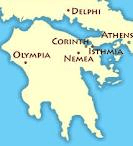
The Nemean odes were written in honor of victors at the Nemean games, held, of course, at Nemea.