Four Years of Presidential Memories: Plutocrats, Listen Up, Equal is Better Than More

Diodorus Siculus, History 9.12 (Full text on Lacus Curtius)

“There is also the story that when the people of Mitylene allowed Pittacus to have half the land over which he fought in single combat, he would not take it. Instead, he assigned an equal portion to each man, saying that an “equal amount is greater than more”. For, since he took the measure of what was greater by fairness not by profit, he judged wisely. He believed that fame and safety would follow equality while gossip and fear followed greed, and they would have quickly reclaimed his gift.”

12. Ὅτι τῶν Μιτυληναίων διδόντων τῷ Πιττακῷ τῆς χώρας ὑπὲρ ἧς ἐμονομάχησε τὴν ἡμίσειαν οὐκ ἐδέξατο, συνέταξε δὲ ἑκάστῳ κληρῶσαι τὸ ἴσον, ἐπιφθεγξάμενος ὡς τὸ ἴσον ἐστὶ τοῦ πλείονος πλεῖον. μετρῶν γὰρ ἐπιεικείᾳ τὸ πλεῖον, οὐ κέρδει, σοφῶς ἐγίνωσκεν· τῇ μὲν γὰρ ἰσότητι δόξαν καὶ ἀσφάλειαν ἀκολουθήσειν, τῇ δὲ πλεονεξίᾳ βλασφημίαν καὶ φόβον, δι᾿ ὧν ταχέως ἂν αὐτοῦ τὴν δωρεὰν ἀφείλαντο.

Cf. Diogenes Laertius, Lives of the Philosophers 1.75

“Then, the Mityleneans honored Pittakos powerfully and gave the rule of the state to him alone. During the ten years he held power, he also corrected the constitution and then surrendered power even though he lived ten years more. The Mityleneans gave him some land, but he donated it as sacred. The plot is called after his name even today. Sôsicrates says that he cut off a little bit for himself, saying that “half is greater than the whole.”

[75] Τότε δ᾽ οὖν τὸν Πιττακὸν ἰσχυρῶς ἐτίμησαν οἱ Μυτιληναῖοι, καὶ τὴν ἀρχὴν ἐνεχείρισαν αὐτῷ. ὁ δὲ δέκα ἔτη κατασχὼν καὶ εἰς τάξιν ἀγαγὼν τὸ πολίτευμα, κατέθετο τὴν ἀρχήν, καὶ δέκα ἐπεβίω ἄλλα. καὶ χώραν αὐτῷ ἀπένειμαν οἱ Μυτιληναῖοι: ὁ δὲ ἱερὰν ἀνῆκεν, ἥτις νῦν Πιττάκειος καλεῖται. Σωσικράτης δέ φησιν ὅτι ὀλίγον ἀποτεμόμενος ἔφη τὸ ἥμισυ τοῦ παντὸς πλεῖον εἶναι.

The idea of “half being greater than the whole” is likely proverbial, showing up as well in Hesiod’s Works and Days where the narrator uses it when he complains about how the judges act unfairly in their evaluation of cases (by taking bribes): “the fools don’t know how much greater the half is than the whole” νήπιοι, οὐδὲ ἴσασιν ὅσῳ πλέον ἥμισυ παντὸς.

Diodorus Siculus’ statement that “an equal part is greater than more” is probably a clever departure from the Hesiodic statement. Hesiod’s statement seems to be about greed (wanting more than your due), as glossed by Michael Apostolius:

13.77

“They don’t know how much greater the half is than the whole”: [this is a proverb used] for those who desire more and lose what they have.

Οὐδ’ ἴσασιν ὅσῳ πλέον ἥμισυ παντός: ὅτι οἱ τῶν πλειόνων ἐπιθυμοῦντες καὶ ἃ ἔχουσιν ἀποβάλλουσιν.

A unifying theme between the two versions is that in early Greek culture that which is isos is not fair in terms of being equal but it possesses equity in terms of being proper to the recipient’s social status. So, Diodorus’ isos share can map out onto Hesiod’s “half” share.

Image result for pittacus

Another proverbial moment for Pittakos:

Diodorus Siculus, History 9.12.3 (Full text on Lacus Curtius)

“When Pittacus finally caught up with the poet Alcaeus, a man especially hateful to him who had mocked him savagely in his poems, he released him, remarking that forgiveness is a better choice than vengeance.”

ὅτι καὶ τὸν ποιητὴν Ἀλκαῖον, ἐχθρότατον αὐτοῦ γεγενημένον καὶ διὰ τῶν ποιημάτων πικρότατα λελοιδορηκότα, λαβὼν ὑποχείριον ἀφῆκεν, ἐπιφθεγξάμενος ὡς συγγνώμη τιμωρίας αἱρετωτέρα.

Four Years of Presidential Memories: Why Democracies Vote for Tyrants

Plutarch, Precepts of Statecraft 802 E

“Public leadership comes from persuading people through argument. But manipulating a mob in this way differs little from the capture and herding of stupid animals.”

δημαγωγία γὰρ ἡ διὰ λόγου πειθομένων ἐστίν, αἱ δὲ τοιαῦται τιθασεύσεις τῶν ὄχλων οὐδὲν ἀλόγων ζῴων ἄγρας καὶ βουκολήσεως διαφέρουσιν.

 The passage above made me think of Peisistratus and how he subverted a democratic state.

Aristophanes gets in on this game with his presentation of the advantages of the Unjust Argument over the just, see a friend’s post on this topic.

Herodotus, 1.59

Peisistratos becomes a tyrant through histrionic lies

“After that, [Hippokrates] had a son named Peisistratos. Then the Athenians on the coasts were in strife with those who lived inland and Megakles, the son of Almeôn, was the leader of the first group, and Lykourgos the son of Aristolaidos was the leader of the inlanders. Peisistratos, because he had designs on a tyranny, led a third faction; after he gathered his partisans and claimed to be a defender of the heartland-Greeks, he enacted the following plans. He wounded himself and his mules and then drove his wagon into the marketplace as if he had fled enemies who wished to kill him as he was traveling to the country. Because of this, he asked the people for a bodyguard under his power, since he had previously earned good repute as a general against the Megarians when he took Nisaia and displayed many other great accomplishments. The Athenian people, utterly deceived, permitted him to choose from the citizens men three hundred men who were not spear-bearers under Peisistratus but club-carriers: for they followed behind him, carrying clubs. Once these men rebelled with Peisistratos, they occupied the acropolis.”

γενέσθαι οἱ μετὰ ταῦτα τὸν Πεισίστρατον τοῦτον, ὃς στασιαζόντων τῶν παράλων καὶ τῶν ἐκ τοῦ πεδίου ᾿Αθηναίων, καὶ τῶν μὲν προεστεῶτος  Μεγακλέος τοῦ ᾿Αλκμέωνος, τῶν δὲ ἐκ τοῦ πεδίου Λυκούργου <τοῦ> ᾿Αριστολαΐδεω, καταφρονήσας τὴν τυραννίδα ἤγειρε τρίτην στάσιν, συλλέξας δὲ στασιώτας καὶ τῷ λόγῳ τῶν ὑπερακρίων προστὰς μηχανᾶται τοιάδε· τρωματίσας ἑωυτόν τε καὶ ἡμιόνους ἤλασε ἐς τὴν ἀγορὴν τὸ ζεῦγος ὡς ἐκπεφευγὼς τοὺς ἐχθρούς, οἵ μιν ἐλαύνοντα ἐς ἀγρὸν ἠθέλησαν ἀπολέσαι δῆθεν, ἐδέετό τε τοῦ δήμου φυλακῆς τινος πρὸς αὐτοῦ κυρῆσαι, πρότερον εὐδοκιμήσας ἐν τῇ πρὸς Μεγαρέας γενομένῃ στρατηγίῃ, Νίσαιάν τε ἑλὼν καὶ ἄλλα ἀποδεξάμενος μεγάλα ἔργα. ῾Ο δὲ δῆμος ὁ τῶν ᾿Αθηναίων ἐξαπατηθεὶς ἔδωκέ οἱ τῶν ἀστῶν καταλέξασθαι ἄνδρας τριηκοσίους οἳ δορυφόροι μὲν οὐκ ἐγένοντο Πεισιστράτου, κορυνηφόροι δέ· ξύλων γὰρ κορύνας ἔχοντες εἵποντό οἱ ὄπισθε. Συνεπαναστάντες δὲ οὗτοι ἅμα Πεισιστράτῳ ἔσχον τὴν ἀκρόπολιν. ῎Ενθα δὴ ὁ Πεισίστρατος

Peisistratos is exiled after ruling for a short time. But, with the help of a foreign tyrant, regains the tyranny through more deceit and stupidity

Image result for Pisistratus

Herodotus, 1.60

“Once Peisistratos accepted this argument and agreed to these proposals, they devised the dumbest plan for his return that I can find, by far, if, even then, those in Athens, said to be among the first of the Greeks in wisdom, devised these things. (From antiquity, the Greek people have been set apart from barbarians by being more clever and freer from silly stupidity). In the country there was a Paianiean woman—her name was Phuê—and she was three inches short of six feet and altogether fine looking. After they dressed her up in a panoply, they put her in a chariot, and adorned her with the kind of scene which would make her a completely conspicuous sight to be seen. Then they drove her into the city, sending heralds out in front of her, who were announcing after they entered the city the words they had been assigned, saying something like “O Athenians, receive Peisistratos with a good thought, a man Athena herself honored beyond all men as she leads him to her own acropolis.” They went everywhere saying these things. And as soon as the rumor circulated among the people, they believed that the woman was Athena herself: then they were praying to the woman and were welcoming Peisistratos!

After he regained the tyranny in the way I have narrated, Peisistratos married the daughter of Megakles in accordance with the agreement they made. But because he already had young sons and since the family of the Alkmeaonids were said to be cursed, he did not wish to have children with his newly wedded wife, and he was not having sex with her according to custom…”

᾿Ενδεξαμένου δὲ τὸν λόγον καὶ ὁμολογήσαντος ἐπὶ τούτοισι Πεισιστράτου, μηχανῶνται δὴ ἐπὶ τῇ κατόδῳ πρῆγμα εὐηθέστατον, ὡς ἐγὼ εὑρίσκω, μακρῷ  (ἐπεί γε ἀπεκρίθη ἐκ παλαιτέρου τοῦ βαρβάρου ἔθνεος τὸ ῾Ελληνικὸν ἐὸν καὶ δεξιώτερον καὶ εὐηθείης ἠλιθίου ἀπηλλαγμένον μᾶλλον), εἰ καὶ τότε γε οὗτοι ἐν ᾿Αθηναίοισι τοῖσι πρώτοισι λεγομένοισι εἶναι ῾Ελλήνων σοφίην μηχανῶνται τοιάδε. ᾿Εν τῷ δήμῳ τῷ Παιανιέϊ ἦν γυνή, τῇ οὔνομα ἦν Φύη, μέγαθος ἀπὸ τεσσέρων πήχεων ἀπολείπουσα τρεῖς δακτύλους καὶ ἄλλως εὐειδής. Ταύτην τὴν γυναῖκα σκευάσαντες πανοπλίῃ, ἐς ἅρμα ἐσβιβάσαντες καὶ προδέξαντες σχῆμα οἷόν τι ἔμελλε εὐπρεπέστατον φανέεσθαι ἔχουσα, ἤλαυνον ἐς τὸ ἄστυ, προδρόμους κήρυκας προπέμψαντες, οἳ τὰ ἐντεταλμένα ἠγόρευον ἀπικόμενοι ἐς τὸ ἄστυ, λέγοντες τοιάδε· «῏Ω ᾿Αθηναῖοι, δέκεσθε ἀγαθῷ νόῳ Πεισίστρατον, τὸν αὐτὴ ἡ ᾿Αθηναίη τιμήσασα ἀνθρώπων μάλιστα κατάγει ἐς τὴν ἑωυτῆς ἀκρόπολιν.» Οἱ μὲν δὴ ταῦτα διαφοιτῶντες ἔλεγον, αὐτίκα δὲ ἔς τε τοὺς δήμους φάτις ἀπίκετο ὡς ᾿Αθηναίη Πεισίστρατον κατάγει, καὶ <οἱ> ἐν τῷ ἄστεϊ πειθόμενοι τὴν γυναῖκα εἶναι αὐτὴν τὴν θεὸν προσεύχοντό τε τὴν ἄνθρωπον καὶ ἐδέκοντο Πεισίστρατον. ᾿Απολαβὼν δὲ τὴν τυραννίδα τρόπῳ τῷ εἰρημένῳ ὁ Πεισίστρατος κατὰ τὴν ὁμολογίην τὴν πρὸς Μεγακλέα γενομένην γαμέει τοῦ Μεγακλέος τὴν θυγατέρα. Οἷα δὲ παίδων τέ οἱ ὑπαρχόντων νεηνιέων καὶ λεγομένων ἐναγέων εἶναι τῶν᾿Αλκμεωνιδέων, οὐ βουλόμενός οἱ γενέσθαι ἐκ τῆς νεογάμου γυναικὸς τέκνα ἐμίσγετό οἱ οὐ κατὰ νόμον.

Post-fact is pre-fascism?  Seems like an understatement…

Polybius has an explanation for this:

Continue reading “Four Years of Presidential Memories: Why Democracies Vote for Tyrants”

Aristotle, Politics 1287b

“There’s no natural tyranny”

τυραννικὸν δ᾿ οὐκ ἔστι κατὰ φύσιν

Dio Chrysostom, 6.52-53 On Tyranny

“Therefore, whenever there is war, tyrants long for peace, but when there is peace, they immediately plan for war. When people have everything they need in life, tyrants fear the arrogance of the masses, but whenever there is too little, they fear their rage. They believe that it is is neither safe to go out nor to stay at home, nor to appear in public, nor to remain isolated. They do not even think they can go where it is clearly safe to go. They think that every corner is full of plots and deceit. Each tyrant brings to mind the deaths of other tyrants and all the plots that ever developed around them, imaging that every one of them is coming toward him…”

τοιγαροῦν πολέμου μὲν ὄντος εἰρήνης ἐρῶσιν, εἰρήνης δὲ γενομένης εὐθὺς μηχανῶνται πόλεμον. καὶ τοῦτο μὲν τῶν ἐπιτηδείων ἀφθόνων ὄντων δεδοίκασι τοῦ πλήθους τὴν ὕβριν, τοῦτο δὲ εἴ τις ἔνδεια καταλαμβάνοι, τὴν ὀργήν. ἡγοῦνται δὲ μήτε ἀποδημεῖν ἀσφαλὲς μήτε μένειν μήτε προϊέναι μήτ᾿ ἔνδον διαιτᾶσθαι παρ᾿ αὑτοῖς, ἀλλὰ μηδὲ ἐπιβαίνειν οὗ ἂν ἐπιβαίνωσιν ἀσφαλῶς, ἅπαντα δὲ εἶναι μεστὰ ἐνέδρας καὶ δόλων. ἀναλογίζεται δὲ ἕκαστος αὐτῶν καὶ τοὺς θανάτους τῶν τυράννων καὶ τὰς ἐπιβουλάς, ὅσαι πώποτε γεγόνασι, καὶ ξύμπαντα ταῦτα ἐφ᾿ αὑτὸν ἰέναι νομίζει

Dio Chrysostom, On Custom 76.2

“I guess that I can compare the written law to the power of tyranny: for each law is enacted by means of fear and prohibition. Custom, then, I could compare to the ease of kingship when all people follow it because they want to and without compulsion. So, we know many laws which have been taken back by the very people who made them because they were bad, but no one could easily demonstrate a custom that has been eliminated.”

Διό μοι δοκεῖ τις ἂν προσεικάσαι τὸν μὲν ἔγγραφον νόμον τῇ δυνάμει τῆς τυραννίδος, φόβῳ γὰρ ἕκαστον καὶ μετὰ προστάγματος διαπράττεται· τὸ δὲ ἔθος μᾶλλον τῇ φιλανθρωπίᾳ τῆς βασιλείας, βουλόμενοι γὰρ αὐτῷ πάντες καὶ δίχα ἀνάγκης ἕπονται καὶ νόμους μὲν ἴσμεν πολλοὺς ἀνῃρημένους ὑπὸ τῶν θέντων αὐτούς, ὡς πονηρούς· ἔθος δὲ οὐκ ἂν οὐδεὶς ῥᾳδίως δείξειε λελυμένον. 

Tyrannosaurus Rex is a tyrant and a king and this confuses me

Four Years of Precious Memories: The Way of Kings, To Love and Hate Without Reason

Homer, Odyssey 4.687–693

“Did they not hear from you, when they were children,
What kind of a man Odysseus was among your parents,
He did nothing unfair nor said anything [unfair]
Among the people? This is the right of divine kings—
They can hate some people and love another.”

ὑμετέρων τὸ πρόσθεν ἀκούετε, παῖδες ἐόντες,
οἷος ᾿Οδυσσεὺς ἔσκε μεθ’ ὑμετέροισι τοκεῦσιν,
οὔτε τινὰ ῥέξας ἐξαίσιον οὔτε τι εἰπὼν
ἐν δήμῳ; ἥ τ’ ἐστὶ δίκη θείων βασιλήων·
ἄλλον κ’ ἐχθαίρῃσι βροτῶν, ἄλλον κε φιλοίη.

Scholia PQ ad. Hom. Od. 4.691

“this is the way of kings, to hate one person but love another. Etc. This line is presented gnomically about kings, because they hate some people but love another. This is not strictly applicable to Odysseus. Therefore line must be taken for use in this particular situation.”

ἥτ’ ἐστὶ δίκη] ὥσπερ τρόπος ἐστὶ τῶν βασιλέων τὸ ἄλλον μὲν μισεῖν, ἄλλον δὲ φιλεῖν. Καὶ ἄλλως. γνωμικὸς ὁ στίχος περὶ τῶν βασιλέων λεγόμενος, ὅτι τοὺς μὲν μισοῦσι, τοὺς δὲ φιλοῦσιν· ὅπερ οὐ προσῆν ᾿Οδυσσεῖ. καὶ αὐτὸν οὖν κατ’ ἰδίαν προενεκτέον τὸν στίχον. P.Q.

Image result for medieval manuscript evil king
Royal_ms_20_a_ii_f005r_detail from British Library

4 Years of Presidential Memories: Some Greek Passages for Treason For No Particular Reason

[We previously posted some similar passages in Latin]

Some Greek Words for Treason

ἀπιστία, “treachery”
προδοσία, “high treason”, “betrayal”
προδότης “traitor”
ἐπιβουλή, “plot”

From the Suda (Full text on the Scaife Viewer)

“Dêmadês: He was king in Thebes after Antipater. A son of Dêmeas the sailor, he was also a sailor, a shipbuilder, and a ferry-operator. He gave up these occupations to enter politics and turned out to be a traitor—he grew very wealthy from this and obtained, as a bribe from Philip, property in Boiotia.”
Δημάδης, μετ’ ᾿Αντίπατρον βασιλεύσας Θήβας ἀνέστησε, Δημέου ναύτου, ναύτης καὶ αὐτός, ναυπηγὸς καὶ πορθμεύς. ἀποστὰς δὲ τούτων ἐπολιτεύσατο καὶ ἦν προδότης καὶ ἐκ τούτου εὔπορος παντὸς καὶ κτήματα ἐν Βοιωτίᾳ παρὰ Φιλίππου δωρεὰν ἔλαβεν. οὗτος Δημο-

Euripides’ Orestes 1057-1060 (Full text on the Scaife Viewer)

[Elektra] Did he not speak for you, eager that you not die,
Menelaos the coward, our father’s traitor?
[Orestes] He didn’t show his face, because he yearning
For the scepter—he was careful not to save his relatives

Ηλ. οὐδ’ εἶφ’ ὑπὲρ σοῦ μὴ θανεῖν σπουδὴν ἔχων
Μενέλαος ὁ κακός, ὁ προδότης τοὐμοῦ πατρός;
Ορ. οὐδ’ ὄμμ’ ἔδειξεν, ἀλλ’ ἐπὶ σκήπτροις ἔχων
τὴν ἐλπίδ’ ηὐλαβεῖτο μὴ σώιζειν φίλους.

Dinarchus, Against Philocles, 8-9 

“Don’t you understand that while, in other cases, it is necessary to impose a penalty on those who have committed crimes after examining the matter precisely and uncovering the truth over time, but for instances of clear and agreed-upon treason, we must yield first to anger and what comes from it? Don’t you think that this man would betray any of the things most crucial to the state, once you made him in charge of it?”

ἆρ᾿ ἴσθ᾿ ὅτι ἐπὶ μὲν τῶν ἄλλων ἀδικημάτων σκεψαμένους ἀκριβῶς δεῖ μεθ᾿ ἡσυχίας καὶ τἀληθὲς ἐξετάσαντας, οὕτως ἐπιτιθέναι τοῖς ἠδικηκόσι τὴν τιμωρίαν, ἐπὶ δὲ ταῖς φανεραῖς καὶ παρὰ πάντων ὡμολογημέναις προδοσίαις πρώτην5 τετάχθαι τὴν ὀργὴν καὶ τὴν μετ᾿ αὐτῆς6 γιγνομένην τιμωρίαν; τί γὰρ τοῦτον οὐκ ἂν οἴεσθε ἀποδόσθαι τῶν ἐν τῇ πόλει σπουδαιοτάτων, ὅταν ὑμεῖς ὡς πιστὸν αὐτὸν καὶ δίκαιον φύλακα καταστήσητε;

Lycurgus, Against Leocrates, 126-7

“It is right that punishments for other crimes come after them, but punishment for treason should precede the dissolution of the state. If you miss that opportune moment when those men are about to do something treacherous against their state, it is not possible for you to obtain justice from the men who did wrong: for they become stronger than the punishment possible from those who have been wronged.”

τῶν μὲν γὰρ ἄλλων ἀδικημάτων ὑστέρας δεῖ τετάχθαι τὰς τιμωρίας, προδοσίας δὲ καὶ δήμου καταλύσεως προτέρας. εἰ γὰρ προήσεσθε τοῦτον τὸν καιρὸν, ἐν ᾧ μέλλουσιν ἐκεῖνοι κατὰ τῆς πατρίδος φαῦλόν τι πράττειν, οὐκ ἔστιν ὑμῖν μετὰ ταῦτα δίκην παρ’ αὐτῶν ἀδικούντων λαβεῖν· κρείττους γὰρ ἤδη γίγνονται τῆς παρὰ τῶν ἀδικουμένων τιμωρίας.

thracian-tattoos

Distracted from Justice by Profit

Plutarch, Life of Brutus 29

“Faith in his sense of principle provided was the foundation of his great good will and fame. For Pompey the Great was not expected—should he overcome Caesar—to put down his power in deference to the laws, but people thought he would keep his political control, smooth-talking the people with the name of consulship or dictator or some other more palatable office.

Now it was imagined that Cassius, an eager and emotional man often distracted from justice by profit, was pursuing war and adventure to create some dynasty for himself rather than freedom for his fellow citizens. For in an earlier time than that, people like Cinna, Marius, and Carbo, even though they made their own country their victory prize and source for spoils, they warred by their own confession for tyranny alone.”

καὶ μέγιστον ὑπῆρχεν αὐτῷ πρὸς εὔνοιαν καὶ δόξαν ἡ τῆς προαιρέσεως πίστις, οὔτε γὰρ ἐκεῖνος ὁ μέγας Πομπήϊος, εἰ Καίσαρα καθεῖλεν, ἠλπίζετο βεβαίως προήσεσθαι τοῖς νόμοις τὴν δύναμιν, ἀλλ᾿ ἀεὶ τὰ πράγματα καθέξειν, ὑπατείας ὀνόματι καὶ δικτατορίας ἤ τινος ἄλλης μαλακωτέρας ἀρχῆς παραμυθούμενος τὸν 5δῆμον· Κάσσιον δὲ τοῦτον, σφοδρὸν ἄνδρα καὶ θυμοειδῆ καὶ πολλαχοῦ πρὸς τὸ κερδαλέον ἐκφερόμενον τοῦ δικαίου, παντὸς μᾶλλον ᾤοντο πολεμεῖν καὶ πλανᾶσθαι καὶ κινδυνεύειν αὑτῷ τινα δυναστείαν κατασκευαζόμενον, οὐκ ἐλευθερίαν 6τοῖς πολίταις. τὰ μὲν γὰρ ἔτι τούτων πρεσβύτερα, Κίνναι καὶ Μάριοι καὶ Κάρβωνες, ἆθλον ἐν μέσῳ καὶ λείαν προθέμενοι τὴν πατρίδα, μονονουχὶ ῥητῶς ὑπὲρ τυραννίδος ἐπολέμησαν.


File:Crassus Kopenhagen.jpg

Dying to Kill a Tyrant

Cod. Paris. Suppl. gr., Gnomologium Parisinum , 134f. 266v

“Phalaris, after Peristhenes sent him the wives of Euboulos and Aristophantes who had conspired against them so they might die, asked the women if they had known about the conspiracy their husbands planned. They said that not only did they know about it, but that they had begged them to kill the tyrant. And when he asked in turn what evil this was for, they responded, “It is nothing personal, but for a communal injustice. For it is a communal crime when a free state is enslaved.”

He followed up with another question, “What fate did you meet? For you would certainly pay a deserved penalty for your hatred…” and they interrupted, “if we died.” This stalled his anger because he was amazed by the extreme nobility of these answers and judged that women who were prepared to die with such uprightness should live instead of dying.”

Φάλαρις, Περισθένους τὴν Εὐβούλου καὶ τὴν ᾽Αριστοφάντου γυναῖκα τῶν ἐπιβουλευσάντων αὐτῶι πέμψαντος ὡς ἀπολουμένας, ἐπεὶ ἤιρετο, εἰ συνήιδεσαν τὴν ἐπιβουλὴν τοῖς ἀνδράσιν, αἱ δὲ ἔφασαν οὐ τοῦτο μόνον ἀλλὰ καὶ παροτρῦναι τυραννοκτονῆσαι. καὶ αὖθις ἐρομένου τοῦ Φαλάριδος ἀνθ᾽ ὅτου κακοῦ, αἱ δὲ εἶπον· ‘οὐδενὸς μὲν ἰδίου, τῆς δὲ κοινῆς ἀδικίας· κοινὴ γὰρ τὸ καταδουλοῦσθαι πόλιν ἐλευθέραν’. εἶθ᾽ αὖθις ἐπανερομένου ‘ὑμεῖς δὲ τί πεπόνθατε; τοιγαροῦν δίκην ἀποτίσαιτ’ ἄν μοι τοῦ μίσους τὴν κατ᾽ ἀξίαν᾽, αἱ δὲ προσέθησαν ‘ἀποθανοῦσαι’, ὑφήιρηκε τῆς ὀργῆς, ἀγασθεὶς τὸ ὑπερβάλλον τῆς εὐγενείας ἐν ταῖς ἀποκρίσεσι, καὶ ζῆν μᾶλλον ἢ τεθνάναι κρίνας τὰς μετὰ τοιαύτης ἀρετῆς ἀποθνήσκειν προηιρημένας.

Phalaris condemning the sculptor Perillus to the Bronze Bull, after Baldassare Peruzzi by Pierre Woeiriot

A Tyrant and A Plague

N.B This is a different Pythagoras from the one with the theorem.

Suda, s.v. Pythagoras of Ephesos

“Pythagoras of Ephesos. Once he overthrew the government called the reign of the Basilidai, Pythagoras became the harshest tyrant. He seemed and sometimes was very kind to the people and the masses, increasing their hopes, but under-delivering on their profits. Because he despoiled those in high esteem and power and liquidated their property, he was not at all tolerable.

He did not hesitate to impose the harshest punishments or to mercilessly kill those who had done no wrong—for he had gotten just this crazy. His lust for money was endless. He was also quickest to anger in response to any insults to those near to him. On their own, these things would have been enough reason for people to kill him in the worst way, but he also was contemptuous of the divine. Indeed, many of his previously mentioned victims he actually killed in temples.

When the daughters of one man took refuge in a temple, he did not dare to extract them forcefully, but he waited them out so long that the girls resolved their hunger with a rope. A plague then afflicted the people along with a famine and Pythagoras, who was worried for himself, sent representatives to Delphi, requesting relief from these sufferings. She said that he needed to build temples and take care of the dead. He lived before Cyrus of Persia, according to Batôn.”

Πυθαγόρας ᾽Εφέσιος· καταλύσας δι᾽ ἐπιβουλῆς τὴν τῶν Βασιλιδῶν καλουμένην ἀρχήν, ἀνεφάνη τε τύραννος πικρότατος. καὶ τῶι μὲν δήμωι καὶ τῆι πληθύι ἦν τε καὶ ἐδόκει κεχαρισμένος, ἅμα τὰ μὲν αὐτοὺς ἐπελπίζων ὑποσχέσεσιν, τὰ δὲ ὑποσπείρων αὐτοῖς ὀλίγα κέρδη· τούς γε μὴν ἐν ἀξιώσει τε καὶ δυνάμει περισυλῶν καὶ δημεύων φορητὸς οὐδαμὰ οὐδαμῆ ἦν. καὶ κολάσαι δὲ πικρότατα οὐκ ἂν ὤκνησε, καὶ ἀφειδέστατα ἀποκτεῖναι οὐδὲν ἀδικοῦντας (ἐξελύττησε γὰρ εἰς ταῦτα)· ἔρως τε χρημάτων ἄμετρος· καὶ διαβολαῖς ταῖς ἐς τοὺς πλησίους ἐκριπισθῆναι κουφότατος ἦν. ἀπέχρησε μὲν οὖν καὶ ταῦτα ἂν κάκιστα ἀνθρώπων ἀπολέσαι αὐτόν, ἤδη δὲ καὶ τοῦ θείου κατεφρόνει· τῶν γοῦν προειρημένων οἷς ἐπέθετο παμπόλλους ἐν τοῖς ναοῖς ἀπέκτεινεν, ἑνὸς δὲ τὰς θυγατέρας καταφυγούσας εἰς τὸ ἱερὸν ἀναστῆσαι μὲν βιαίως οὐκ ἐτόλμησε, συνεχῆ δὲ φυλακὴν ἐπιστήσας ἐξετρύχωσεν ἄρα ἐς τοσοῦτον, ὡς βρόχωι τὰς κόρας τὸν λιμὸν ἀποδρᾶναι. οὐκοῦν ἠκολούθησε δημοσίαι νόσος καὶ τροφῶν ἀπορία· καὶ σαλεύων ὑπὲρ ἑαυτοῦ ὁ Πυθαγόρας εἰς Δελφοὺς ἀπέστειλε καὶ ἤιτει λύσιν τῶν κακῶν. ἡ δὲ ἕφη νεὼν ἀναστῆσαι καὶ κηδεῦσαι τοὺς νεκρούς. ἦν δὲ πρὸ Κύρου τοῦ Πέρσου, ὥς φησι Βάτων.

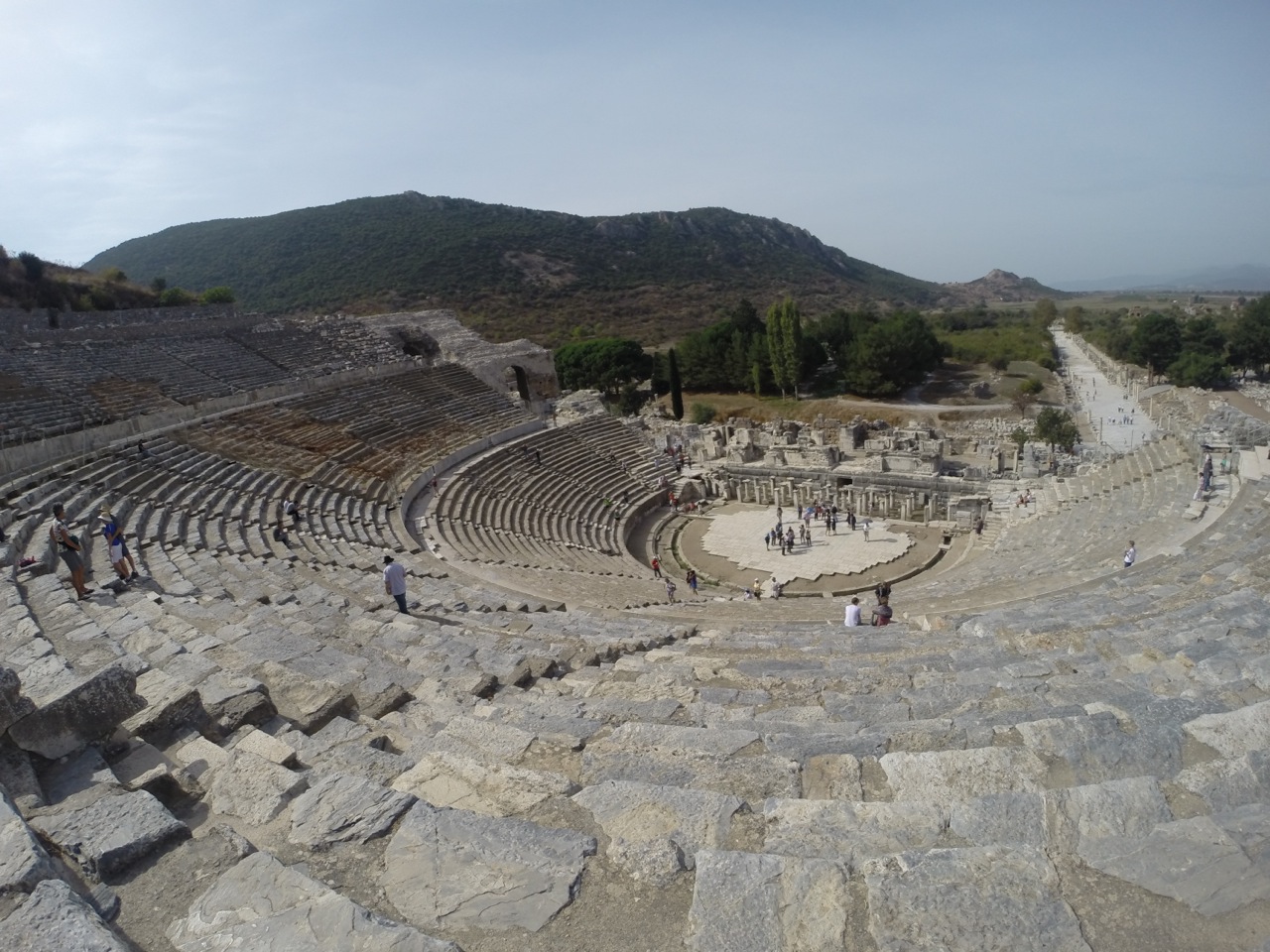
Ancient Theater at Ephesus

A Solid Gold Colossus: Why Tyrants Spend Other Peoples’ Money

Suda,  Κυψελιδῶν ἀνάθημα

At Olympia. Plato claims in the Phaedrus that a metal Colossos was set up next to the dedication of the Kypselids at Olympia. But they claim that this from Kypselos himself and not the Kypselids. Agaklutos speaks about this in his On Olympia. “An ancient temple of Hera, dedicated by the Skillians. Those people are Eleians. Inside the temple is a gold colossus, a dedication from Kypselos of Korinth. For people say that Kypselos promised that if he should become tyrant of the Korinthians, then he would make everyone’s property sacred for ten years. Once he collected the taxes from this sacred assessment, he had the metal colossus created.”

Didymos, however, reports that Periander, his son, had the colossus made to restrain the luxury and audacity of the Korinthians. Theophrastus also reports in the second book of his Magic Moments, “while others spend funds on more masculine affairs, like raising an army and conquering enemies, as Dionysius the tyrant did. For he believed that it was necessary not only to waste others’ money but also his own in order to make sure that there would be no funds for plots against him. The pyramids of Egypt and the colossus of the Kypselids and all those kinds of things have similar or identical designs.

It is also reported that there was an an epigram on the colossus: “If I am not a colossus made of gold / then may the race of the Kypselids be wiped away.”

Apellas of Pontos, however, claims that he inscription was, “If I am not a solid-cold Colossus, may the race of Kypselids be completely destroyed”

ἐν ᾽Ολυμπίαι. Πλάτων ἐν Φαίδρωι (236 B)· παρὰ τὸ Κυψελιδῶν ἀνάθημα σφυρήλατος ἐν ᾽Ολυμπίαι ἐστάθη κολοσσός. ἀλλ᾽ οὐ τῶν Κυψελιδῶν, Κυψέλου δέ φασι τὸ ἀνάθημα, ὡς ᾽Αγάκλυτος ἐν τῶι Περὶ ᾽Ολυμπίας φησὶν οὕτως· «ναὸς τῆς ῞Ηρας παλαιός, ἀνάθημα Σκιλλουντίων· οὗτοι δέ εἰσιν ᾽Ηλείων. ἔνεστι δὲ ἐν αὐτῶι χρυσοῦς κολοσσός, ἀνάθημα Κυψέλου τοῦ Κορινθίου· φασὶ γὰρ τὸν Κύψελον εὐξάμενον, εἰ Κορινθίων τυραννεύσειε, τὰς οὐσίας πάντων εἰς δέκατον ἔτος ἀνιερώσειν, τὰς δεκάτας τῶν τιμημάτων εἰσπραξάμενον, κατασκευάσαι τὸν σφυρήλατον κολοσσόν».

Δίδυμος δὲ κατασκευάσαι τὸν κολοσσόν φησι Περίανδρον ὑπὲρ τοῦ τῆς τρυφῆς καὶ τοῦ θράσους ἐπισχεῖν τοὺς Κορινθίους· καὶ γὰρ Θεόφραστος ἐν τῶι Περὶ καιρῶν β̄ λέγει οὕτω· «ἕτεροι δὲ εἰς ἀνδρωδέστερα καταδαπανῶντες, οἷον στρατείας ἐξάγοντες καὶ πολέμους ἐπαναιρούμενοι, καθάπερ καὶ Διονύσιος ὁ τύραννος· ἐκεῖνος γὰρ οὐ μόνον ὤιετο δεῖν τὰ τῶν ἄλλων καταναλίσκειν ἀλλὰ καὶ τὰ αὑτοῦ πρὸς τὸ μὴ ὑπάρχειν ἐφόδια τοῖς ἐπιβουλεύουσιν· ἐοίκασι δὲ καὶ αἱ πυραμίδες ἐν Αἰγύπτωι καὶ ὁ τῶν Κυψελιδῶν κολοσσὸς καὶ πάντα τὰ τοιαῦτα τὴν αὐτὴν καὶ παραπλησίαν ἔχειν διάνοιαν».

φέρεται δέ τι καὶ ἐπίγραμμα τοῦ κολοσσοῦ· «εἰ μὴ ἐγὼ χρυσοῦς σφυρήλατός εἰμι κολοσσός, / ἐξώλης εἴη Κυψελιδῶν γενεά», ὅπερ ᾽Απελλᾶς ὁ Ποντικὸς οὕτω προφέρεται· «εἰ μὴ ἐγὼ ναξὸς παγχρύσεός εἰμι κολοσσός, / ἐξώλης εἴη Κυψελιδῶν γενεά».

Publication1

From Martial, 1.37

“Bassus, you unload your bowels into a golden bowl and feel no shame, but you drink from glass: so you’re paying more to shit.”

Ventris onus misero, nec te pudet, excipis auro,
Basse, bibis vitro: carius ergo cacas.

Tyrants: The Power to Do Everything in a Rage

Dio Chrysostom, On Kingship and Tyranny (Discourse 62) (Full text on Lacus Curtius)

“Really, if someone is incapable of governing a single person and that person is also really close to them, even there all the time, and, if they cannot keep a single mind on the straight and narrow (and by that I mean their own) how could they possibly rule over countless thousands of people like you, people who are spread all over the earth, most of whom you have’t seen and could never see and whose language you can’t understand?

It’s almost as if saying that someone whose vision is so impaired they cannot see their feet and they need someone to lead them by the hand can somehow see objects really far away, as when people see mountains or islands from afar on the sea.  Or, it is as if someone who cannot speak loudly enough to be heard by those right nearby can raise a voice to whole cities and armies!

Truly, intelligence is something like vision: for, when sight begins to diminish it cannot see the closest things even if it could touch the stars and heaven when healthy. Just so, a wise person’s mind can has the power to guide all people while the fool’s can’t keep even his own body or a single home safe”

Καὶ μὴν εἴ τις ἑνὸς ἀνδρὸς οὐχ οἷός τε ἄρχειν ἐστί, καὶ τούτου σφόδρα ἐγγὺς ὄντος, ᾧ δὴ ξύνεστιν, οὐδὲ αὖ μίαν ψυχὴν κατευθύνειν τὴν αὑτοῦ, πῶς ἂν δύναιτο βασιλεύειν μυριάδων ἀναριθμήτων πανταχοῦ διεσπαρμένων, ὥσπερ σύ, καὶ πολλῶν γε οἰκούντων ἐπὶ πέρασι γῆς, ὧν οὐδὲ ἑώρακε τοὺς πλείστους οὐδ᾿ ἂν ἴδοι ποτὲ οὐδὲ τῆς φωνῆς ξυνήσει; ὅμοιον γὰρ ὥσπερ εἴ τις λέγοι τὸν οὕτως ἀδύνατον τὴν ὄψιν ὡς μηδὲ τὰ ἐν ποσὶν ὁρᾶν, ἀλλὰ προσδεόμενον χειραγωγοῦ, τοῦτον ἐφικνεῖσθαι βλέποντα μέχρι τῶν πλεῖστον ἀπεχόντων, ὥσπερ οἱ πόρρωθεν ὁρῶντες ἐκ τοῦ πελάγους τά τε ὄρη καὶ τὰς νήσους, ἢ τὸν οὐ δυνάμενον φθέγγεσθαι τοῖς παρεστῶσιν ἱκανὸν ὅλοις δήμοις καὶ στρατοπέδοις εἰς ἐπήκοον φθέγγεσθαι. καὶ γὰρ οὖν ἔχει τι παραπλήσιον ὁ νοῦς τῇ ὄψει· ὡς ἐκείνη διεφθαρμένη μὲν οὐδὲν οὐδὲ τῶν πλησιαίτατα ὁρᾷ, ὑγιὴς δὲ οὖσα μέχρις οὐρανοῦ τε καὶ ἀστέρων ἐξικνεῖται· ταὐτὸ δὴ τοῦτο ἡ μὲν τοῦ φρονίμου διάνοια καὶ πάντας ἀνθρώπους ἱκανὴ γίγνεται διοικεῖν, ἡ δὲ τοῦ ἄφρονος οὐδὲ ἓν σῶμα τὸ ἐκείνου δύναται φυλάττειν οὐδὲ ἕνα οἶκον.

Continuing….

“Many people in dynastic power, to explain further, because they can grab everything, desire to have everything. Because they determine justice, they become unjust. Because they do not fear the laws, they do not believe they exist. Because they are not forced to work, they never stop their conspicuous consumption.

Because no one stands up to them when they harm them, they never stop doing the same things; because there is no end to their pleasure, they never actually find their fill of it. Because no one criticizes them directly, they never miss a chance to slander someone else. Because no one wants to upset them, they find reason to be harsh to everyone. And because they have the power to do anything when enraged, they are forever in a state of anger.”

Οἱ μὲν γὰρ πολλοὶ τῶν ἐν ταῖς δυναστείαις, ὅτι μὲν ἔξεστιν αὐτοῖς πάντα λαμβάνειν, πάντων ἐπιθυμοῦσιν· ὅτι δὲ ἐπ᾿ αὐτοῖς ἐστι τὸ δίκαιον, διὰ τοῦτό εἰσιν ἄδικοι· ὅτι δὲ οὐ φοβοῦνται τοὺς νόμους, οὐδὲ εἶναι νομίζουσιν· ὅτι δὲ οὐκ ἀναγκάζονται πονεῖν, οὐδέποτε παύονται τρυφῶντες· ὅτι δὲ οὐδεὶς ἀμύνεται κακῶς πάσχων, οὐδέποτε παύονται ποιοῦντες· ὅτι δὲ οὐδεμιᾶς σπανίζουσιν ἡδονῆς, οὐδέποτε ἐμπίμπλανται ἡδόμενοι· ὅτι δὲ οὐδεὶς ψέγει ἐκ τοῦ φανεροῦ, οὐδὲν ἀπολείπουσι τῶν οὐ δικαίως λεγομένων· ὅτι δὲ οὐδεὶς αὐτοὺς βούλεται λυπεῖν, διὰ τοῦτο πᾶσι χαλεπαίνουσιν· ὅτι δὲ ὀργισθεῖσιν ἔξεστι πάντα ποιεῖν, διὰ τοῦτο συνεχῶς ὀργίζονται.