“When Menander was asked what the difference was between Sophokles and Euripides he said that Sophokles makes people feel pleasure while Euripides makes his audience feel anger.”
“When he was asked why he made people with noble characters and Euripides made those of base ones, Sophokles answered “Because I make people how they should be and he makes people as they are.”
These are the Suda entries of Sophokles, the famous tragedian, and his grandson.
Σοφοκλῆς, sigma 815
Sophocles, son of Sophilos, from Kolonos, an Athenian and Tragic poet who was born in the 73rd olympian and was 17 years older than Socrates. This poet was the first to use three actors on stage, the one called the tritagonist, and the first to introduce a chorus of fifty young men. Previously they put twelve on the stage. He was nicknamed “Honey-bee” because of his sweetness.
He began by entering the competition with a play against another, but he did not raise the funds for the play. He also wrote elegy and Paeans and a record of the chorus, in which he was competing with Thespis and Choirilos. These were the children he had: Iophôn, Leôsthenes, Aristôn, Stephanos, and Menekleidês. He died after Euripides at 90 years old. He staged 123 plays, although some claim more, and he was a victor 23 times.
You Looked up Sophocles son of Aristôn? How about Apollonios of Tyana?
Suda, s.v Sophocles, Sigma 816
“Sophocles, son of Aristôn, the son of the earlier, older Sophokles; an Athenian and Tragedian. He put on 40 plays, but some people claim 11. He won 7 times. He also wrote elegy. It is understood that Apollonios was not surpassed by Sophocles regarding prudence, for Sophocles himself claims that when he arrived at old age he was escaping a rabid and savage master.
But Apollonios of Tyana was not dominated by these passions even when he was a young because of his virtue and prudence, instead, even as a young man who was especially lively, he was in control of his body and master of the madness. Still, some people spread rumors about his sexual affairs, and because of some kind of a sexual mistake he spend a year living among the Skythians. Not even Euphrates, then, ever slandered the man for sexual behavior, even though he wrote lies about him. He was at odds with Apollonious, since Apollonous was criticizing him for doing everything for money, and he was dragging him for his money-grubbing and selling his wisdom.”
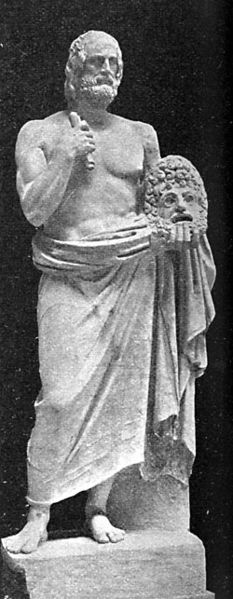
“Euripides was the son of Mnêsarkhos or Mnêsarkhidês and Kleitô, who settled in Boiotia as exiles and then in Attica. It is not true that his mother was a vegetable vendor. For she was actually of real highborn lineage as Philokhoros demonstrates.
His mother became pregnant when Xerxes was crossing the Hellespont and gave birth the day the Greeks routed the Persians. At first, he was a painter and then a student of Prodikos among the orators and Socrates for ethics and philosophy. He also learned from Anaxagoras the Klazomenian. But he tried his hand at tragedy after he observed the dangers Anaxagoras faced because of the beliefs he introduced.
Euripides had a grumpy character and was irritable and avoided people. For this reason, he was also believed to be a misogynist. Still, first he married Mnêsilokhos’ daughter Khoirine. With her he fathered Mnesilokhos and Mnesikhardê as well as little Euripidês. He divorced her and remarried another woman whom he also discovered to be unfaithful
He left Athens and when to the court of Arkhelaos, king of the Macedonians, where he lived enjoying the highest honors. But he died thanks to the plot of Arribaios the Macedonian and Krateuas of Thessaly, two poets who were jealous of him and who used 10 minai to convince one of the king’s servants, Lysimakhos, to set the king’s dogs—animals he had trained himself—on Euripides.
But some people record that he was torn apart at night by women instead of dogs when he was sneaking out for a late night meeting with Krateros, Archelaus’ lover [since he was enamored with him too and had a lot of these kinds of lovers]. But there are those who say he was on his way to meet the wife of Nikodikos of Arethousa.
Euripides lived until he was 75 years old and the king had his bones interred at Pella. He wrote 75 plays—although some claim 92—but there are 77 attributed to him. He was victorious 5 times, 4 while alive and once after his death when his nephew, also named Euripides, staged his play. He staged plays for 22 years in a row and performed his last in the 93rd Olympiad.”
“People report these kinds of stories about Aeschylus too and of similar men. When Aeschylus was watching a boxing match at the Isthmian games, one of the boxers was hit and the crowd shouted out. Aeschylus elbowed Ion the Chian and said, “See how training works: the man says nothing when he is struck, but the spectators yell!”
When Brasidas caught some mouse in dried figs and it bit him, he let it got. Then, he said to himself, “By Herakles, there is nothing small or weak enough that it won’t try to live when it’s brave enough to defend itself.
Diogenes, once he witnessed a man drinking with his hands, threw his cup out of his bag. In this way, paying attention and observation make people ready to perceive anything which helps in the pursuit of virtue. This works better when people mix theories with actions, not merely, as Thucydides used to put it, “trying super hard when in peril” but also when facing pleasures and conflicts, when occupied with lawsuits and politics, in this way providing proof to themselves of their beliefs, or, perhaps, affirming their beliefs by using them.”
“Euripides was the son of Mnêsarkhos or Mnêsarkhidês and Kleitô, who settled in Boiotia as exiles and then in Attica. It is not true that his mother was a vegetable vendor. For she was actually of real highborn lineage as Philokhoros demonstrates.
His mother became pregnant when Xerxes was crossing the Hellespont and gave birth the day the Greeks routed the Persians. At first, he was a painter and then a student of Prodikos among the orators and Socrates for ethics and philosophy. He also learned from Anaxagoras the Klazomenian. But he tried his hand at tragedy after he observed the dangers Anaxagoras faced because of the beliefs he introduced.
Euripides had a grumpy character and was irritable and avoided people. For this reason, he was also believed to be a misogynist. Still, first he married Mnêsilokhos’ daughter Khoirine. With her he fathered Mnesilokhos and Mnesikhardê as well as little Euripidês. He divorced her and remarried another woman whom he also discovered to be unfaithful
He left Athens and when to the court of Arkhelaos, king of the Macedonians, where he lived enjoying the highest honors. But he died thanks to the plot of Arribaios the Macedonian and Krateuas of Thessaly, two poets who were jealous of him and who used 10 minai to convince one of the king’s servants, Lysimakhos, to set the king’s dogs—animals he had trained himself—on Euripides.
But some people record that he was torn apart at night by women instead of dogs when he was sneaking out for a late night meeting with Krateros, Archelaus’ lover [since he was enamored with him too and had a lot of these kinds of lovers]. But there are those who say he was on his way to meet the wife of Nikodikos of Arethousa.
Euripides lived until he was 75 years old and the king had his bones interred at Pella. He wrote 75 plays—although some claim 92—but there are 77 attributed to him. He was victorious 5 times, 4 while alive and once after his death when his nephew, also named Euripides, staged his play. He staged plays for 22 years in a row and performed his last in the 93rd Olympiad.”
“When Menander was asked what the difference was between Sophokles and Euripides he said that Sophokles makes people feel pleasure while Euripides makes his audience feel anger.”
“When he was asked why he made people with noble characters and Euripides made those of base ones, Sophokles answered “Because I make people how they should be and he makes people as they are.”
These are the Suda entries of Sophokles, the famous tragedian, and his grandson.
Σοφοκλῆς, sigma 815
Sophocles, son of Sophilos, from Kolonos, an Athenian and Tragic poet who was born in the 73rd olympian and was 17 years older than Socrates. This poet was the first to use three actors on stage, the one called the tritagonist, and the first to introduce a chorus of fifty young men. Previously they put twelve on the stage. He was nicknamed “Honey-bee” because of his sweetness.
He began by entering the competition with a play against another, but he did not raise the funds for the play. He also wrote elegy and Paeans and a record of the chorus, in which he was competing with Thespis and Choirilos. These were the children he had: Iophôn, Leôsthenes, Aristôn, Stephanos, and Menekleidês. He died after Euripides at 90 years old. He staged 123 plays, although some claim more, and he was a victor 23 times.
You Looked up Sophocles son of Aristôn? How about Apollonios of Tyana?
Suda, s.v Sophocles, Sigma 816
“Sophocles, son of Aristôn, the son of the earlier, older Sophokles; an Athenian and Tragedian. He put on 40 plays, but some people claim 11. He won 7 times. He also wrote elegy. It is understood that Apollonios was not surpassed by Sophocles regarding prudence, for Sophocles himself claims that when he arrived at old age he was escaping a rabid and savage master.
But Apollonios of Tyana was not dominated by these passions even when he was a young because of his virtue and prudence, instead, even as a young man who was especially lively, he was in control of his body and master of the madness. Still, some people spread rumors about his sexual affairs, and because of some kind of a sexual mistake he spend a year living among the Skythians. Not even Euphrates, then, ever slandered the man for sexual behavior, even though he wrote lies about him. He was at odds with Apollonious, since Apollonous was criticizing him for doing everything for money, and he was dragging him for his money-grubbing and selling his wisdom.”
“Euripides was the son of Mnêsarkhos or Mnêsarkhidês and Kleitô, who settled in Boiotia as exiles and then in Attica. It is not true that his mother was a vegetable vendor. For she was actually of real highborn lineage as Philokhoros demonstrates.
His mother became pregnant when Xerxes was crossing the Hellespont and gave birth the day the Greeks routed the Persians. At first, he was a painter and then a student of Prodikos among the orators and Socrates for ethics and philosophy. He also learned from Anaxagoras the Klazomenian. But he tried his hand at tragedy after he observed the dangers Anaxagoras faced because of the beliefs he introduced.
Euripides had a grumpy character and was irritable and avoided people. For this reason, he was also believed to be a misogynist. Still, first he married Mnêsilokhos’ daughter Khoirine. With her he fathered Mnesilokhos and Mnesikhardê as well as little Euripidês. He divorced her and remarried another woman whom he also discovered to be unfaithful
He left Athens and when to the court of Arkhelaos, king of the Macedonians, where he lived enjoying the highest honors. But he died thanks to the plot of Arribaios the Macedonian and Krateuas of Thessaly, two poets who were jealous of him and who used 10 minai to convince one of the king’s servants, Lysimakhos, to set the king’s dogs—animals he had trained himself—on Euripides.
But some people record that he was torn apart at night by women instead of dogs when he was sneaking out for a late night meeting with Krateros, Archelaus’ lover [since he was enamored with him too and had a lot of these kinds of lovers]. But there are those who say he was on his way to meet the wife of Nikodikos of Arethousa.
Euripides lived until he was 75 years old and the king had his bones interred at Pella. He wrote 75 plays—although some claim 92—but there are 77 attributed to him. He was victorious 5 times, 4 while alive and once after his death when his nephew, also named Euripides, staged his play. He staged plays for 22 years in a row and performed his last in the 93rd Olympiad.”
“People report these kinds of stories about Aeschylus too and of similar men. When Aeschylus was watching a boxing match at the Isthmian games, one of the boxers was hit and the crowd shouted out. Aeschylus elbowed Ion the Chian and said, “See how training works: the man says nothing when he is struck, but the spectators yell!”
When Brasidas caught some mouse in dried figs and it bit him, he let it got. Then, he said to himself, “By Herakles, there is nothing small or weak enough that it won’t try to live when it’s brave enough to defend itself.
Diogenes, once he witnessed a man drinking with his hands, threw his cup out of his bag. In this way, paying attention and observation make people ready to perceive anything which helps in the pursuit of virtue. This works better when people mix theories with actions, not merely, as Thucydides used to put it, “trying super hard when in peril” but also when facing pleasures and conflicts, when occupied with lawsuits and politics, in this way providing proof to themselves of their beliefs, or, perhaps, affirming their beliefs by using them.”
“When Menander was asked what the difference was between Sophokles and Euripides he said that Sophokles makes people feel pleasure while Euripides makes his audience feel anger.”
“When he was asked why he made people with noble characters and Euripides made those of base ones, Sophokles answered “Because I make people how they should be and he makes people as they are.”




.jpg)
