Achilles’ (Missing) Sister

Reading over Merkelbach and West’s Fragmenta Hesiodea often reminds me of many things I have forgotten. I am too young to blame this forgetfulness on senility; and yet too old to blame it on youthful ignorance.

Today’s particular disturbance comes from fragment 213 which tells us that Achilles, like Odysseus, has a sister (fragment included within the scholia below).

At first, I thought that this was some sort of Lykophrontic fantasy. But, alas, upon looking into the details, she is actually mentioned in the Iliad!

Iliad, 16.173-178

“Menestheus of the dancing-breastplate led one contingent,
son of the swift-flowing river Sperkheios
whom the daughter of Peleus, beautiful Poludôrê bore
when she shared the bed with the indomitable river-god, Sperkheios
although by reputation he was the son of Boros, the son of Periêrês
who wooed her openly by offering countless gifts.”

τῆς μὲν ἰῆς στιχὸς ἦρχε Μενέσθιος αἰολοθώρηξ
υἱὸς Σπερχειοῖο διιπετέος ποταμοῖο·
ὃν τέκε Πηλῆος θυγάτηρ καλὴ Πολυδώρη
Σπερχειῷ ἀκάμαντι γυνὴ θεῷ εὐνηθεῖσα,
αὐτὰρ ἐπίκλησιν Βώρῳ Περιήρεος υἷι,
ὅς ῥ’ ἀναφανδὸν ὄπυιε πορὼν ἀπερείσια ἕδνα.

The confusion, shock and horror of this detail—which I presume the vast majority of Homer’s audiences have overlooked or forgotten as with the sad fate of Odysseus’ sister—can be felt as well in the various reactions of the Scholia where we encounter (a) denial—it was a different Peleus!; (b) sophomoric prevarication—why doesn’t Achilles talk about her, hmmm?; (c) conditional acceptance through anachronistic assumptions—she’s suppressed because it is shameful that she is a bastard; (d) and, finally, citation of hoary authorities to insist upon a ‘truth’ unambiguous in the poem.

I have translated the major scholia below. Note that we can see where the ‘fragments’ of several authors come from here (hint: they’re just talked about by the scholiasts). We can also learn a bit about the pluralistic and contradictory voices to be found in the Homeric scholia. The bastard child bit is my favorite part.


Schol A. ad Il. 16.175

“Pherecydes says that Polydora was the sister of Achilles. There is no way that this has been established in Homer. It is more credible that this is just the same name, as in other situations, since [the poet] would have added some sign of kinship with Achilles.”

ὃν τέκε Πηλῆος θυγάτηρ: ὅτι Φερεκύδης (Fr. 61-62) τὴν Πολυδώραν φησὶν ἀδελφὴν ᾿Αχιλλέως. οὐκ ἔστι δὲ καθ’ ῞Ομηρον διαβεβαιώσασθαι. πιθανώτερον οὖν ὁμωνυμίαν εἶναι, ὥσπερ καὶ ἐπ’ ἄλλων, ἐπεὶ προσέθηκεν ἂν τεκμήριον τῆς πρὸς ᾿Αχιλλέα συγγενείας.


Schol T. ad Il. 16.175

”  “Daughter of Peleus”: A different Peleus, for if he were a nephew of Achilles, this would be mentioned in Hades when they speak about his father and son or in the allegory of the Litai when he says “a great spirit compelled me there” or “my possessions and serving women” he might mention the pleasure of having a sister. The poet does not recognize that Peleus encountered some other woman. Neoteles says that Achilles’ cousin leads the first contingent and gives evidence of knowledge of war. And he gave countless gifts to marry the sister of Achilles. Should he not mentioned her in Hades? Odysseus does not mention Ktimene [his sister].

Pherecydes says that [Polydore] was born from Antigonê, the daughter of Eurytion; the Suda says her mother was Laodameia the daughter of Alkmaion; Staphulos says she was Eurudikê the daughter of Aktôr. Zenodotos says the daughter’s name was Kleodôrê; Hesiod and everyone else calls her Poludôrê.”

ex. Πηλῆος θυγάτηρ: ἑτέρου Πηλέως· εἰ γὰρ ἦν ἀδελφιδοῦς ᾿Αχιλλέως, καὶ ἐμνήσθη αὐτοῦ ἐν τῷ ῞Αιδῃ περὶ τοῦ πατρὸς καὶ τοῦ υἱοῦ ἐρωτῶν (cf. λ 494—537), καὶ ἐν ταῖς Λιταῖς, φάσκων „ἔνθα δέ μοι μάλα <πολλὸν> ἐπέσσυτο θυμός” (Ι 398), „κτῆσιν ἐμὴν δμῶάς τε” (Τ 333), ἔφασκεν ἂν καὶ τῆς ἀδελφῆς ἀπόλαυσιν. Πηλέα τε οὐκ οἶδεν ὁ ποιητὴς ἑτέρᾳ γυναικὶ συνελθόντα. Νεοτέλης δὲ ὡς ἀδελφιδοῦν᾿Αχιλλέως φησὶ τῆς πρώτης τάξεως ἡγεῖσθαι, ὡς καὶ μαρτυρεῖ ἐπιστήμην πολέμου· †ὡς ἀχιλλέως τε ἀδελφὴν γαμεῖν† ἀπερείσια δίδωσιν ἕδνα (cf. Π 178). εἰ δὲ μὴ ἐμνήσθη αὐτῆς ἐν ῞Αιδου· οὐδὲ γὰρ ᾿Οδυσσεὺς Κτιμένης (cf. ο 363 cum λ 174—9). Φερεκύδης (FGrHist 3, 61 b) δὲ ἐξ ᾿Αντιγόνης τῆς Εὐρυτίωνος, Σουίδας (FGrHist 602, 8) ἐκ Λαοδαμείας τῆς ᾿Αλκμαίωνος, Στάφυλος (FGrHist 269,5) ἐξ Εὐρυδίκης τῆς῎Ακτορος. Ζηνόδοτος (FGrHist 19,5) δὲ Κλεοδώρην φησίν, ῾Ησιόδου (fr. 213 M.—W.) καὶ τῶν ἄλλων Πολυδώρην αὐτὴν καλούντων.

Schol. BCE ad Il. 16.175

“They say that she is from another Peleus. For if he were a nephew of Achilles wouldn’t this be mentioned or wouldn’t he ask about his sister in Hades along with his father and son? At the same time, the poet does not know that Peleus encountered some other women. More recent poets say that Menestheus is his nephew and that this is the reason he leads the first contingent and shows knowledge of war and that ‘he gave countless gifts to marry the sister of Achilles’. But if he does not mention it, it is not necessarily foreign to him. For the poet is rather sensitive to certain proprieties.”

ἑτέρου, φασί, Πηλέως· εἰ γὰρ ἦν ἀδελφιδοῦς ᾿Αχιλλέως, πῶς οὐκ ἐμνήσθη αὐτοῦ ἢ τῆς ἀδελφῆς ἐν τῷ ῞Αιδῃ περὶ τοῦ πατρὸς ἐρωτῶν καὶ τοῦ υἱοῦ; ἅμα τε οὐκ οἶδεν ὁ ποιητὴς Πηλέα ἑτέρᾳ συνελθόντα γυναικί. οἱ δὲ νεώτεροι ἀδελφιδοῦν αὐτοῦ λέγουσιν· ὅθεν καὶ τῆς πρώτης τάξεως ἡγεῖται καὶ πολέμων ἐπιστήμων μαρτυρεῖται, καὶ ὡς †ἀχιλλέως ἀδελφὴν γαμῶν ἀπερείσια δίδωσιν. εἰ δὲ μὴ ἐμνήσθη αὐτῆς ἢ τούτου, οὐ ξένον· περὶ γὰρ τῶν καιριωτέρων αὐτῷ ἡ φροντίς.

Schol. b ad Il. 16.175

“Since, otherwise, if Polydora were his sister, she would be a bastard and he would not want to mention her. Or, maybe it is because she has already died.”

ἄλλως τε ἐπειδὴ νόθη ἦν ἡ Πολυδώρη αὐτοῦ ἀδελφή, τάχα οὐδὲ μνημονεύειν αὐτῆς ἐβουλήθη. ἢ ὅτι καὶ αὐτὴ ἤδη τετελευτηκυῖα ἦν.

Schol D ad Il. 16.175

“Did Peleus have a daughter Polydôrê from another? Staphulos says in the third book of his Thessalika that she was born from Eurydike the daughter of Aktôr. Pherecydes says it was the daughter of Eurytion; others says Laodameia, the daughter of Alkmaion.”

ἐκ τίνος Πηλεὺς Πολυδώρην ἔσχεν; ὡς μὲν Στάφυλός φησιν ἐν τῇ τρίτῃ Θεσσαλικῶν, ἐξ Εὐρυδίκης τῆς ῎Ακτορος θυγατρός. Φερεκύδης δὲ ἐξ ᾿Αντιγόνης τῆς Εὐρυτίωνος, ἄλλοι δὲ ἐκ Λαοδαμείας τῆς ᾿Αλκμαίωνος.

What happened to Peleus’ first wife—if they were married? According to John Tzetzes (see Fowler 2013, 444) Peleus accidentally killed his father-in-law during the Kalydonian Boar Hunt, so he had to go abroad and in Iolkos the king’s wife tried to seduce him and told Antigone that Peleus would abandon her. Antigone killed herself, leaving Peleus free to marry Thetis. (But who took care of their daughter?).

It can get more confusing: some traditions (Apollodorus, 3.163 and 168) make a Polymele the daughter of Peleus and Patroklos’ mother whereas Polydora is Peleus’ wife in between Antigone and Thetis. Whatever the case, we can do our own scholiastic justification for Achilles not talking about his sister without creating a second Peleus. She must have been a bit older than Achilles since by all accounts Peleus fathered her before (1) the Kalydonian Boar Hunt, (2) the sacking of Iolkos and (3) the Voyage of the Argo. She would likely have been raised in a separate household from Achilles and married off before he went to study with the centaur Cheiron!

(More importantly: In the poetic world of Homer, sisters just don’t matter. Brothers do. Helen does not mention missing her sisters. Hektor talks to multiple brothers, but where are his sisters? In the Odyssey, Achilles asks about his father and son because Odysseus is interested in fathers and sons. This may make it more, not less, appropriate that Achilles says nothing of his sister: Odysseus just doesn’t care about sisters. Nor, it seems, does Homer.)

Works Consulted (apart from the Greek Texts).

Timothy Gantz. Early Greek Myth. Baltimore, 1993.
Robert Fowler. Early Greek Mythography. Vol. 2:Commentary, 2013.

Image result for ancient greek achilles

On Falling in Love in Old Age

87 Plato Parmen. 137a and Ibykos fr. 287

“And I certainly seem to be experiencing the fate of Ibykos’ horse, a prize-winner who, even though old, was about to compete in the chariot race and was trembling because of experience at what was about to happen. Ibykos compared himself to him when he said that he too was old and was being compelled to move towards lust”

καίτοι δοκῶ μοι τὸ τοῦ Ἰβυκείου ἵππου πεπονθέναι ᾧ ἐκεῖνος ἀθλητῇ ὄντι καὶ πρεσβυτέρῳ ὑφ᾿ ἅρματι μέλλοντι ἀγωνιεῖσθαι καὶ δι᾿ ἐμπειρίαν τρέμοντι τὸ μέλλον ἑαυτὸν ἀπεικάζων ἄκων ἔφη καὶ αὐτὸς οὕτω πρεσβευτὴς ὢν εἰς τὸν ἔρωτα ἀναγκάζεσθαι ἰέναι.

schol. ad loc. 

[Scholiast] Here is the saying of Ibykos the lyric poet:

τὸ τοῦ μελοποιοῦ Ἰβύκου ῥητόν·

“Love again, gazing up from under dark lashes,
Throws me down with every kind of spell
Into the Cyprian’s endless nets.
In truth, I tremble at this arrival,
Just as a prize-winning horse on the yoke in old age
Goes into the contest with his swift wheels, but not willingly.”

Ἔρος αὖτέ με κυανέοισιν ὑπὸ
βλεφάροις τακέρ᾿ ὄμμασι δερκόμενος
κηλήμασι παντοδαποῖς ἐς ἀπειρα
δίκτυα Κύπριδος ἐσβάλλει·
ἦ μὰν τρομέω νιν ἐπερχόμενον,
ὥστε φερέζυγος ἵππος ἀεθλοφόρος ποτὶ γήρᾳ
ἀέκων σὺν ὄχεσφι θοοῖς ἐς ἅμιλλαν ἔβα

Greek Anthology, 5.26

“If I saw you shining with dark hair
Or at another time with blond locks, mistress,
The same grace would gleam from both.
Love will make its home in your hair even when it’s gray.”

Εἴτε σε κυανέῃσιν ἀποστίλβουσαν ἐθείραις,
εἴτε πάλιν ξανθαῖς εἶδον, ἄνασσα, κόμαις,
ἴση ἀπ’ ἀμφοτέρων λάμπει χάρις. ἦ ῥά γε ταύταις
θριξὶ συνοικήσει καὶ πολιῇσιν ῎Ερως.

Image result for ancient greek chariot horse
A force of nature

An Absurd Etymology for Dithyramb

Scholia to Lykophron’s Alexandra, Introduction

“In addition to these, here are the characteristics of prominent poets, the lyric ones who sing their songs to a lyre and who may have a chorus of fifty men set up in a circle, those who also used to take a bull as a prize. These features are shared with the dithyrambic poets. The dithyrambic poets are in the habit of composing their fine hymns do Dionysus and they used to take tripods [as gifts?]. These poems are called dithyramboi thanks to the “two exit doors” of Dionysus, Semele’s stomach and Zeus’ thigh. “

καὶ ταῦτα μὲν τὰ γνωρίσματα τῶν καλουμένων κατ’ ἐξοχὴν ποιητῶν, λυρικῶν δὲ γνωρίσματα τὸ πρὸς λύραν τὰ τούτων ἄδεσθαι μέλη καὶ χορὸς ἑστὼς κυκλικῶς ἄνδρας ἔχων πεντήκοντα, οἵπερ καὶ δῶρον ταῦρον ἐλάμβανον.

καὶ διθυραμβικοῖς δὲ τοῦτο κοινόν. οἱ διθυραμβικοὶ δὲ τῶν λυρικῶν εἶχόν τι πλέον τὸ πρὸς τὸν Διόνυσον πολυστρόφους πλέκειν τοὺς ὕμνους καὶ τρίποδας ἐλάμβανον διὸ καὶ διθύραμβοι ἀπὸ τοῦ Διονύσου ἐλέγοντο τοῦ διὰ δύο θυρῶν βάντος, τῆς τε γαστρὸς τῆς Σεμέλης καὶ τοῦ μηροῦ τοῦ Διός.

If you didn’t get the joke, it is because di-thura-ba- [here, duo-thuron-bantos; “two-doors-walking”] presents the essential sounds of dithyramb.  Byzantine etymological text repeats the origin and explains it a bit, not without adding another on its own.


Etymologicum Magnum, s.v. dithyrambos

“Dithyrambos: Dionysus. It is an epithet of Dionysus because he was raised in a cave with two doors in Nussê. This is also the hymn named for the god and dedicated to him.  It comes from “coming through two doors”, the womb of his mother Semele and Zeus’ thigh—since he was born twice: once from his mother, and once from Zeus’ thigh. This is how he exited the ‘door’ twice.”

Διθύραμβος: ῾Ο Διόνυσος. ᾿Επίθετόν ἐστι τοῦ Διονύσου, ὅτι ἐν διθύρῳ ἄντρῳ τῆς Νύσσης ἐτράφη· καὶ ὁμωνύμως τῷ θεῷ ὁ εἰς αὐτὸν ὕμνος. ῍Η ἀπὸ τοῦ δύο θύρας βαίνειν, τήν τε κοιλίαν τῆς μητρὸς Σεμέλης, καὶ τὸν μηρὸν τοῦ Διός· ἀπὸ τοῦ δεύτερον τετέχθαι, ἀπό τε τῆς μητρὸς, καὶ ἀπὸ τοῦ μηροῦ τοῦ Διός· ἵν’ ᾖ ὁ δὶς θύραζε βεβηκώς.

Dionysusbirth
Birth 2/2. The first was from Semele…

Why Does Apollo Kill the Mules and Dogs First?

Hint: Either because he likes people. Or, animals have a good sense of smell.

Schol. A ad Il. 1.50c ex.

“First he [attacked] the mules and the fast dogs”

“Because the god is well-disposed toward human beings, he kills mules, dogs, and the other irrational beasts first, so that, by inducing fear through these [deaths], he might nurture proper reverence in the Greeks.

Or, it is because the mules and dogs have a more powerful perception of smell. For, dogs are really good at tracking beasts because of their sense of smell, and mules, when they are left behind, often rediscover their paths thanks to their sense of smell.”

<οὐρῆας μὲν πρῶτον ἐπῴχετο καὶ κύνας ἀργούς:>

φιλάνθρωπος ὢν ὁ θεὸς πρῶτον τὰς ἡμιόνους καὶ τοὺς κύνας καὶ τὰ ἄλογα ζῷα ἀναιρεῖ, ἵνα διὰ τούτων εἰς δέος ἀγαγὼν τοὺς ῞Ελληνας ἐπὶ τὸ εὐσεβεῖν παρασκευάσῃ. ἢ ὅτι αἱ ἡμίονοι καὶ οἱ κύνες τὴν αἴσθησιν τῆς ὀσφρήσεως ἐνεργεστέραν ἔχουσιν· οἱ μὲν γὰρ κύνες ἀπὸ τῆς ὀσφρήσεως τῶν ἰχνῶν ἐν αἰσθήσει τῶν θηρίων γίνονται, αἱ δὲ ἡμίονοι πολλάκις ἀπολειφθεῖσαι τινων ἀπὸ τῆς ὀσφρήσεως καὶ τὰς ὁδοὺς ἀνευρίσκουσιν.

Additional note: On 1.50, Aristonicus denies the claims by by some rogues that “mules” here is a word for “guards”; the bT scholia make the quasi-scientific claim that these animals are more susceptible to diseases than humans. I like the idea of Apollo trying to teach people a lesson before just murdering them all.

What are some bad things that the Greek god Apollo did? - Quora

Lessons.

Silver For Gold: Strategic Gift Exchange for the Holiday Season

Julian, Letter 63 (To Hecebolus)

“…but the story is from ancient men. If, then, I were to give to you silver as swap of equal worth when you sent me gold, do not value the favor less nor, as Glaukos did, believe that the exchange is harmful, since not even Diomedes would switch silver armor for gold since the former is much more practical than the latter in the way of lead that is shaped for the ends of spears.

I am joking with you! I have assumed a certain freedom of speech based on the example you have written yourself. But, if in truth you want to send me gifts worth more than gold, write and don’t ever stop writing to me! For even a brief note from you is more dear to me than anything someone else might consider good.”

ἀλλὰ παλαιῶν ἀνδρῶν ὁ λόγος ἐστίν. εἰ δέ σοι τοῦ πεμφθέντος ὑπὸ σοῦ χρυσοῦ νομίσματος εἰς τὸ ἴσον τῆς τιμῆς ἕτερον ἀργύρεον ἀντιδίδομεν, μὴ κρίνῃς ἥττω τὴν χάριν, μηδὲ ὥσπερ τῷ Γλαύκῳ πρὸς τὸ ἔλαττον οἰηθῇς εἶναι τὴν ἀντίδοσιν, ἐπεὶ μηδὲ ὁ Διομήδης ἴσως ἀργυρᾶ χρυσῶν ἀντέδωκεν ἄν,1 ἅτε δὴ πολλῷ τῶν ἑτέρων ὄντα χρησιμώτερα καὶ τὰς αἰχμὰς οἱονεὶ μολίβδου δίκην ἐκτρέπειν εἰδότα. ταῦτά σοι προσπαίζομεν, ἀφ᾿ ὧν αὐτὸς γράφεις τὸ ἐνδόσιμον εἰς σὲ τῆς παρρησίας λαμβάνοντες. σὺ δὲ εἰ τῷ ὄντι χρυσοῦ τιμιώτερα ἡμῖν δῶρα ἐθέλεις ἐκπέμπειν, γράφε, καὶ μὴ λῆγε συνεχῶς τοῦτο πράττων· ἐμοὶ γὰρ καὶ γράμμα παρὰ σοῦ μικρὸν ὅτου περ ἂν εἴπῃ τις ἀγαθοῦ κάλλιον εἶναι κρίνεται.

Who knew that the popular Christmas song was inspired by Julian the Apostate?

Julian is referring to the famous scene of exchange between Diomedes and Glaukos in the Iliad (6.230-236)

“Let’s exchange armor with one another so that even these people
May know that we claim to be guest-friends from our fathers’ lines.”

So they spoke and leapt down from their horses,
Took one another’s hands and made their pledge.
Then Kronos’s son Zeus stole away Glaukos’ wits,
For he traded to Diomedes golden arms in exchange for bronze,
weapons worth one hundred oxen traded for those worth nine.”

τεύχεα δ’ ἀλλήλοις ἐπαμείψομεν, ὄφρα καὶ οἷδε
γνῶσιν ὅτι ξεῖνοι πατρώϊοι εὐχόμεθ’ εἶναι.
῝Ως ἄρα φωνήσαντε καθ’ ἵππων ἀΐξαντε
χεῖράς τ’ ἀλλήλων λαβέτην καὶ πιστώσαντο·
ἔνθ’ αὖτε Γλαύκῳ Κρονίδης φρένας ἐξέλετο Ζεύς,
ὃς πρὸς Τυδεΐδην Διομήδεα τεύχε’ ἄμειβε
χρύσεα χαλκείων, ἑκατόμβοι’ ἐννεαβοίων.

Schol. ad. Il. 6.234b ex.

“Kronos’ son Zeus took Glaukos’ wits away”. Because he was adorning him among his allies with more conspicuous weapons. Or, because they were made by Hephaistos. Or, as Pios claims, so that [the poet?] might amplify the Greek since they do not make an equal exchange—a thing which would be sweet to the audience.

Or, perhaps he credits him more, that he was adorned with conspicuous arms among his own and his allies. For, wherever these arms are, it is a likely place for an enemy attack.”

ex. ἔνθ’ αὖτε Γλαύκῳ <Κρονίδης> φρένας ἐξέλετο: ὅτι κατὰ τῶν συμμάχων ἐκόσμει λαμπροτέροις αὐτὸν ὅπλοις. ἢ ὡς ῾Ηφαιστότευκτα. ἢ, ὡς Πῖος (fr. 2 H.), ἵνα κἀν τούτῳ αὐξήσῃ τὸν ῞Ελληνα μὴ ἐξ ἴσου ἀπηλ<λ>αγμένον, ὅπερ ἡδὺ τοῖς ἀκούουσιν. T
ἢ μᾶλλον αἰτιᾶται αὐτόν, ὅτι λαμπροῖς ὅπλοις ἐκοσμεῖτο κατὰ ἑαυτοῦ καὶ τῶν συμμάχων· ὅπου γὰρ ταῦτα, εὔκαιρος ἡ τῶν πολεμίων ὁρμή. b(BE3E4)

I always thought that Glaukos got a raw deal from interpreters here. Prior to the stories Diomedes and Glaukos tell each other, Diomedes was just murdering everyone in his path. Glaukos—who already knew who Diomedes was before he addressed him—tells a great tale, gives Diomedes his golden weapons, and actually lives to the end of the poem. I think this is far from a witless move. And, if the armor is especially conspicuous, maybe the plan-within-a-plan is to put a golden target on Diomedes’ back.

Image result for silver and gold still

Father Neleus Had How Many Sons?

Schol. A ad 11.692a

“There were twelve sons of blameless Neleus. According to the Separatists, Homer records that there were twelve children of Neleus in the Iliad but had three in the Odyssey where he provides the genealogy: “And I saw surpassingly beautiful Khloris” and soon after, “Nestor and Khromios, and proud Periklymenos”. It is likely that the children born before came to him from another woman and these three came from Khloris, for Priamos said, “I had fifty children. When the sons of the Achaeans came / 19 of them were from a single womb / the rest women bore to me in my home.”

δώδεκα γὰρ Νηλῆος <ἀμύμονος υἱέες ἦμεν>: πρὸς τοὺς Χωρίζοντας (fr. 5 K.), ὅτι ἐν μὲν ᾿Ιλιάδι δώδεκα Νηλῆος παῖδας λέγει, ἐν δὲ τῇ ᾿Οδυσσείᾳ τρεῖς γεγονέναι, ὡς γενεαλογεῖ· „καὶ Χλῶριν εἶδον περικαλλέα” (λ 281) καὶ ἐν τοῖς ἑξῆς „Νέστορά τε Χρομίον τε Περικλύμενόν τ’ ἀγέρωχον” (λ 286). ἐνδέχεται δὲ προγεγονότων αὐτῷ ἐξ ἑτέρας γυναικὸς παίδων ὕστερον ἐκ Χλώριδος τοὺς τρεῖς γεγονέναι· καὶ γὰρ ὁ Πρίαμός φησι· „πεντήκοντά μοι ἦσαν, ὅτ’ ἤλυθον υἷες ᾿Αχαιῶν· / ἐννεακαίδεκα μέν μοι ἰῆς ἐκ νηδύος ἦσαν, / τοὺς δ’ ἄλλους μοι ἔτικτον ἐνὶ μεγάροισιν <γυναῖ-κες>”

Image result for neleus and pelias
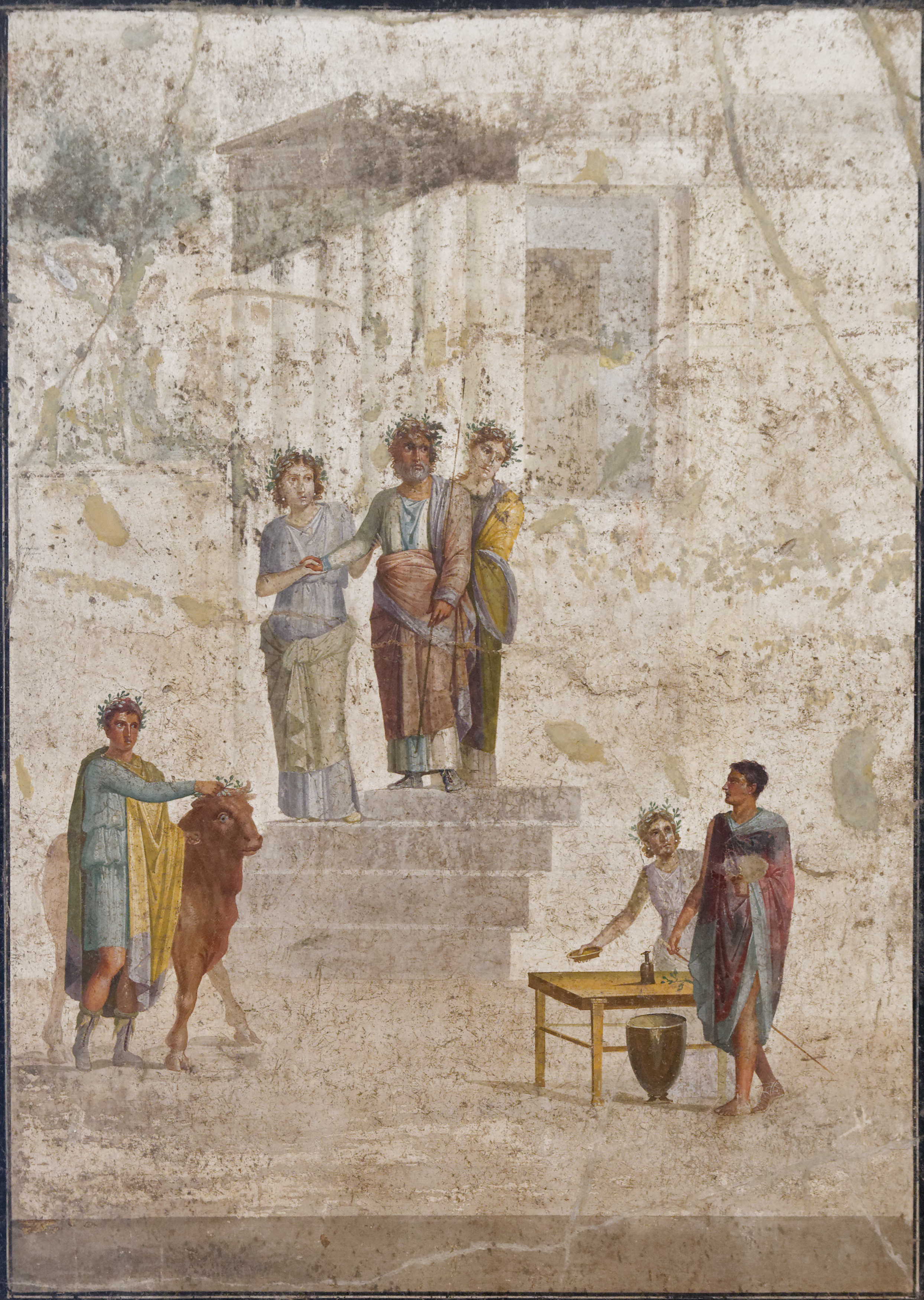
Neleus’ Brother Pelias on a Fresco from Pompeii

Odysseus, Older Brother

A re-post in honor of Odyssey Round the World

Od. 14.145-147

“But a longing for Odysseus who has gone wrecks me.
I am feel ashamed to name him, stranger, even though he is absent.
For he used to really care about me and take pains in his heart.
But I call him my older brother even though he is not here.”

ἀλλά μ’ ᾿Οδυσσῆος πόθος αἴνυται οἰχομένοιο.
τὸν μὲν ἐγών, ὦ ξεῖνε, καὶ οὐ παρεόντ’ ὀνομάζειν
αἰδέομαι· περὶ γάρ μ’ ἐφίλει καὶ κήδετο θυμῷ·
ἀλλά μιν ἠθεῖον καλέω καὶ νόσφιν ἐόντα.”

Translators who contend with this passage may struggle with it because it seems odd in English to say “I feel shame to name…” someone. In fact, I don’t think I would understand this passage at all (and I still might be wrong) if it were not for my wife’s language and culture (she speaks Tamil, a language from southern India). In many cultures, naming someone by their personal name is a sign of privilege; not naming them or using an honorific is a token of respect. In Tamil, for instance, there are different names for aunts and uncles depending on whether they are older or younger than your parents.

Outside of the family, as a sign of respect, one calls older men and women aunt and uncle (or grandfather and grandmother) and family friends or cousins of close age but still older “big sister” (akka) or big brother (anna).

The passage above hinges, I think, on some kind of a token of respect. Eumaios, the swineherd, is hesitant to speak Odysseus’ name and declares that he should call him êtheion. Most translators render this as “lord”, “sir”, “master”. But the scholia give a different answer.

Schol. BQHV ad Hom. Od. 14.147

BQ. “But I call him elder…” I do not call Odysseus ‘master’ but big brother because of his loving-care for me. For to êtheie is the address of a younger [brother] to an older.”

ἀλλά μιν ἠθεῖον καλέω] οὐ καλῶ αὐτὸν ᾿Οδυσσέα ἢ δεσπότην, ἀλλὰ ἀδελφὸν μείζονα διὰ τὴν πρὸς ἐμὲ φιλοστοργίαν. τὸ δὲ ἠθεῖε προσφώνησίς ἐστι νεωτέρου πρὸς μείζονα. B.Q.

H. “This is one part of the speech [?]. But it clearly means older brother”

ἓν μέρος λόγου ἐστί· δηλοῖ δὲ τὸν πρεσβύτερον ἀδελφόν. H.

êtheion: Older brother, really amazing.

ἠθεῖον, πρεσβύτερον ἀδελφὸν, θαυμαστὸν ἄγαν. V.

The sociolinguistic apparatus that conveys the full force of Eumaios’ feeling here is not fully present in English. But even just translating this as “brother” would make sense since, earlier, Eumaios claims that he would not even mourn his parents as much as he would Odysseus.

(This is a little disturbing from the perspective of how a slave defers to the master, but it works out even better for Eumaios’ view of his position in the ‘family’ since later he says that he was raised with Odysseus’ sister Ktimene).

Image result for ancient GReek vase odysseus and eumaeus

The Cave is the Universe and Hermes is in Your Mind: More Homeric Allegories

In honor of the Odyssey Round the World, a re-post


Metrodorus of Lampascus 48 Diels-Krantz 

Fr. 4 (=Philodemus voll. Herc. 8.3.90)

“[Metrodorus said] concerning the laws and customs among men that Agamemnon was the sky, Achilles was the sun, Helen was the earth, and Alexander was air, that Hektor was the moon and that the rest were named analogically with these. He claimed that Demeter was the liver, Dionysus the spleen, and Apollo was bile [anger].”

καὶ περὶ νόμων καὶ ἐθισμῶν τῶν παρ’ ἀνθρώποις, καὶ τὸν ᾿Αγαμέμνονα μὲν αἰθέρα
εἶναι, τὸν ᾿Αχιλλέα δ’ ἥλιον, τὴν ῾Ελένην δὲ γῆν καὶ τὸν ᾿Αλέξανδρον ἀέρα, τὸν
῞Εκτορα δὲ σελήνην καὶ τοὺς ἄλλους ἀναλόγως ὠνομάσθαι τούτοις. τῶν δὲ θεῶν
τὴν Δήμητρα μὲν ἧπαρ, τὸν Διόνυσον δὲ σπλῆνα, τὸν ᾿Απόλλω δὲ χολήν.

Fr. 6

“The Anaxagoreans interpret the mythical gods with Zeus as the mind and Athena as skill…”

ἑρμηνεύουσι δὲ οἱ ᾿Αναξαγόρειοι τοὺς μυθώδεις θεοὺς νοῦν μὲν τὸν Δία, τὴν δὲ ᾿Αθηνᾶν τέχνην

Some Allegorical Readings from the Scholia Vetera to the Odyssey (Dindorf)

Schol. E. ad Od. 1.38

“Allegorically, an uttered speech is called Hermes because of his hermeneutic nature and he is the director because he manages the soul’s thoughts and the mind’s reflections. He is Argeiphontes because he is bright and pure of murder. For he teaches, and evens out and calms the emotional part of the soul. Or, it is because he killed the dog Argos, which stands for madness and disordered thoughts. He is the one who makes the reflections of the mind appear bright and clean.

ἀλληγορικῶς δὲ ὁ προφορικὸς λόγος ῾Ερμῆς λέγεται παρὰ τὸ ἑρμηνευτικὸς εἶναι, καὶ διάκτορος ὅτι διεξάγει τὰ τῆς ψυχῆς καὶ νοῦ ἐνθυμήματα, ᾿Αργειφόντης δὲ ὡς ἀργὸς καὶ καθαρὸς φόνου. παιδεύει γὰρ καὶ ῥυθμίζει καὶ πραΰνει τὸ θυμικὸν τῆς ψυχῆς. ἢ ὅτι τὸν ῎Αργον κύνα ἀναιρεῖ, τουτέστι τὰ λυσσώδη καὶ ἄτακτα ἐνθυμήματα. καὶ παρὰ τὸ ἀργεννὰ ἤτοι καθαρὰ φαίνειν τὰ τῆς ψυχῆς ἐνθυμήματα. E.

*Heraclitus the Obscure claims that Hermes is a representation of Odysseus’ rational mind (Homeric Problems 72-73)

Schol E.M. ad Od. 4.384

“The winds and every sort of breeze”: Some allegorize Proteus as matter itself. For without matter, they claim that the creator [could not] have made everything distinct. For, although matter is never clear to us, men, trees, water and all things come from it. Eidothea, you see, is thought. Matter produces thought once it is condensed. Others allegorize Proteus as the right part of the spring when the earth first begins to make the shapes of grapes and offspring. Menelaos, since it was not the right time for sailing and he missed the spring, sailed in the wrong direction. The name Proteus is suitable for allegory.”

ἀνέμων καὶ παντελοῦς ἀπνοίας. τινὲς δὲ καὶ ἀλληγορικῶς Πρωτέα τὴν ὕλην. ἄνευ γὰρ ὕλης φασὶ τὸν δημιουργὸν πάντα τὰ ὁρώμενα **** ὕλης δὲ τῆς μὴ φαινομένης ἡμῖν, ἐξ ἧς ἄνθρωποι, δένδρα, ὕδατα καὶ πάντα τἄλλα. Εἰδοθέη γὰρ τὸ εἶδος. ὕλη γὰρ ἀποτελεῖ εἶδος κατεργασθεῖσα. ἄλλοι δὲ Πρωτέα φασὶν ἀλληγορικῶς τὸν πρὸ τοῦ ἔαρος καιρὸν, μεθ’ ὃν ἄρχεται ἡ γῆ εἴδη ποιεῖν βοτανῶν καὶ γενῶν. ὁ δὲ Μενέλαος μὴ ὄντος καιροῦ ἐπιτηδείου πρὸς τὸ πλεῖν φθάσαντος τοῦ ἔαρος ἀπέπλευσε. τὸ δὲ Πρωτέως ὄνομα εἰς τὴν ἀλληγορίαν ἐπιτήδειον. E.M.

Schol. B ad Od. 13.103

“The holy cave of the Nymphs”: Some allegorize the cave as the universe, the nymphs are souls, they are also bees and the bodies are men. The two gates are the exit of souls, and one is creation, the entry point of the soul, in which no part of the body enters, but there are only souls. They are immortal. From this they call them olive—or, because of the victorious crown, or because…which is nourishing…”

ἄντρον ἱρὸν Νυμφάων] ἀλληγορικῶς λέγει ἄντρον τὸν κόσμον, νύμφας τὰς ψυχὰς, τὰς αὐτὰς καὶ μελίσσας, καὶ ἄνδρας τὰ σώματα. δύο δὲ θύρας τὴν τῶν σωμάτων ἔξοδον, ἤτοι τὴν γένεσιν, καὶ τὴν τῶν ψυχῶν εἴσοδον, ἐν ᾗ οὐδὲν τῶν σωμάτων εἰσέρχεται, μόναι δὲ αἱ ψυχαί. ἀθάνατοι γάρ εἰσι. ὅθεν καὶ ἐλαίαν φησὶν, ἢ διὰ τὸν νικητικὸν στέφανον, ἢ διὰ τὸ … ὅ ἐστι τὴν τροφὴν … B.

Image result for Hermes ancient greek vase

Many Meanings for Many-Wayed

A re-post in honor of Odyssey Round the World

Homer, Odyssey, 1.1

“Sing to me, Muse, of the man of many ways…”

῎Ανδρα μοι ἔννεπε, Μοῦσα, πολύτροπον, ὃς μάλα πολλὰ

Scholia Od ad 1.1

“The problem: Polytropos [“many-wayed”] Antisthenes claims that Homer doesn’t praise Odysseus as much as he criticizes him when he calls him polytropos. He didn’t make Achilles and Ajax polytropoi, but they were direct [‘simple’] and noble. Nor did he make Nestor the wise tricky, by Zeus, and devious in character—he simply advised Agamemnon and the rest and if he had anything good to counsel, he would not stand apart keeping it hidden; in the manner Achilles showed that he believed the man the same as death “who says one thing but hides another in his thoughts.”

᾿Απορία. πολύτροπον] οὐκ ἐπαινεῖν φησιν ᾿Αντισθένης ῞Ομηρον τὸν ᾿Οδυσσέα μᾶλλον ἢ ψέγειν, λέγοντα αὐτὸν πολύτροπον. οὐκ οὖν τὸν ᾿Αχιλλέα καὶ τὸν Αἴαντα πολυτρόπους πεποιηκέναι, ἀλλ’ ἁπλοῦς καὶ γεννάδας· οὐδὲ τὸν Νέστορα τὸν σοφὸν οὐ μὰ Δία δόλιον καὶ παλίμβολον τὸ ἦθος, ἀλλ’ ἁπλῶς τε ᾿Αγαμέμνονι συνόντα καὶ τοῖς ἄλλοις ἅπασι, καὶ εἰς τὸ στρατόπεδον εἴ τι ἀγαθὸν εἶχε συμβουλεύοντα καὶ οὐκ ἀποκρυπτόμενον τοσοῦτον ἀπεῖχε τοιοῦτον τρόπον ἀποδέχεσθαι ὁ ᾿Αχιλλεὺς ὡς ἐχθρὸν ἡγεῖσθαι ὁμοίως τῷ θανάτῳ ἐκεῖνον “ὅς χ’ ἕτερον μὲν κεύθει ἐνὶ φρεσὶν, ἄλλο δὲ εἴπῃ” (Il. ι, 313.).

“Antisthenes in interpreting this asks “why, then, is wretched Odysseus called polytropos? Really, this is the way to mark him out as wise. Isn’t it true that his manner never indicates his character, but that instead it signals his use of speech? The man who has a character difficult to penetrate is well-turned. These sorts of inventions of words are tropes/ways/manners

λύων οὖν ὁ ᾿Αντισθένης φησὶ, Τί οὖν; ἆρά γε πονηρὸς ὁ ᾿Οδυσσεὺς ὅτι πολύτροπος ἐκλήθη; καὶ μὴν διότι σοφὸς οὕτως αὐτὸν προσείρηκε. μήποτε οὖν ὁ τρόπος τὸ μέν τι σημαίνει τὸ ἦθος, τὸ δέ τι σημαίνει τὴν τοῦ λόγου χρῆσιν; εὔτροπος γὰρ ἀνὴρ ὁ τὸ ἦθος ἔχων εἰς τὸ εὖ τετραμμένον· τρόποι δὲ λόγων αἱ ποιαὶ πλάσεις.

Schol. ad Demosthenes. Orat. 20

“For a man of many ways changes himself in accordance with the nature of the matters at hand.”

πολύτροπος γὰρ ὁ ἀνὴρ καὶ πρὸς τὴν τῶν πραγμά-των φύσιν συμμεταβάλλεται.

Plato, Hippias Minor 366a

Soc. “People who are many-wayed are deceptive because of their foolishness and thoughtlessness, or because of wickedness and some thought?

Hippias: Most of all, because of wickedness and intelligence.

Soc. So, it seems, they are really intelligent.

Hip. Yes, by Zeus, wicked smart.

Soc. And men who are smart—are they ignorant of what they do or do they understand it?

Hip. They really understand what they are doing. For this reason, they also do evil.

Soc. So, is it the ignorant or the wise who know these things which they understand?

Hip. The wise know these very things, how to deceive.

—ΣΩ. Πολύτροποι δ’ εἰσὶ καὶ ἀπατεῶνες ὑπὸ ἠλιθιότητος καὶ ἀφροσύνης, ἢ ὑπὸ πανουργίας καὶ φρονήσεώς τινος;

—ΙΠ. ῾Υπὸ πανουργίας πάντων μάλιστα καὶ φρονήσεως.

—ΣΩ. Φρόνιμοι μὲν ἄρα εἰσίν, ὡς ἔοικεν.

—ΙΠ. Ναὶ μὰ Δία, λίαν γε.

—ΣΩ. Φρόνιμοι δὲ ὄντες οὐκ ἐπίστανται ὅτι ποιοῦσιν, ἢ ἐπίστανται; —

—ΙΠ. Καὶ μάλα σφόδρα ἐπίστανται· διὰ ταῦτα καὶ κακουργοῦσιν.

—ΣΩ. ᾿Επιστάμενοι δὲ ταῦτα ἃ ἐπίστανται πότερον ἀμαθεῖς εἰσιν ἢ σοφοί;

—ΙΠ. Σοφοὶ μὲν οὖν αὐτά γε ταῦτα, ἐξαπατᾶν.

Pseudo-Phocylides, Sententiae

“Don’t trust the people;  the mob is many-wayed. For the people, water, and fire are all uncontrollable things.”

Λαῶι μὴ πίστευε, πολύτροπός ἐστιν ὅμιλος· λαὸς <γὰρ> καὶ ὕδωρ καὶ πῦρ ἀκατάσχετα πάντα.

Hesychius

Polytropos: One who [is turned] toward many things; or, someone who changes his understanding at each opportune moment.”

πολύτροπος· ὁ ἐπὶ πολλὰ τρεπόμενος, ἢ τρέπων τὴν ἑαυτοῦ διάνοιαν ὑφ’ ἕνα καιρόν

Schol HM 1.1 ex 62-74 (Attributed to Porphyry)

“If wise men are clever at speaking to others, then they also know how to speak the same thought in different ways; and, because they know the many different ways of words about the same matter. And if wise men are also good, then this is reason Homer says that Odysseus who is wise is many-wayed: he knew how to engage with people in many ways.

Thus Pythagoras is said to have known the right way to address speeches to children, to make those addresses appropriate for women to women, those fit for leaders to leaders, and those appropriate for youths to youths. It is a mark of wisdom to find the manner best for each group of people; and it is a mark of ignorance to use a single type of address toward people who are unaccustomed to it. It is the same for medicine in the successful use of its art, which fits the many-wayed nature of therapy through the varied application to those who need assistance. This manner of character is unstable, much-changing.

Many-wayedness of speech is also a finely crafted use of language for different audiences and it becomes single-wayed. For, one approach is appropriate to each. Therefore, fitting the varied power of speech to each, shaping what is proper to each for the single iteration, makes the many-wayed in turns single in form and actually ill-fit to different types of audiences, rejected by many because it is offensive to them.

εἰ δὲ οἱ σοφοὶ δεινοί εἰσι διαλέγεσθαι, καὶ ἐπίστανται τὸ αὐτὸ νόημα κατὰ πολλοὺς τρόπους λέγειν· ἐπιστάμενοι δὲ πολλοὺς τρόπους λόγων περὶ τοῦ αὐτοῦ πολύτροποι ἂν εἶεν. εἰ δὲ οἱ σοφοὶ καὶ ἀγαθοί εἰσι, διὰ τοῦτό φησι τὸν ᾿Οδυσσέα ῞Ομηρος σοφὸν ὄντα πολύτροπον εἶναι, ὅτι δὴ τοῖς ἀνθρώποις ἠπίστατο πολλοῖς τρόποις συνεῖναι. οὕτω καὶ Πυθαγόρας λέγεται, πρὸς παῖδας ἀξιωθεὶς ποιήσασθαι λόγους, διαθεῖναι πρὸς αὐτοὺς λόγους παιδικούς, καὶ πρὸς γυναῖκας γυναιξὶν ἁρμοδίους, καὶ πρὸς ἄρχοντας ἀρχοντικούς, καὶ πρὸς ἐφήβους ἐφηβικούς. τὸ γὰρ ἑκάστοις πρόσφορον τρόπον ἐξευρίσκειν σοφίας εἶναι, ἀμαθίας δὲ τὸ πρὸς τοὺς ἀνομοίως ἔχοντας τῷ τοῦ λόγου χρῆσθαι μονοτρόπῳ. ἔχειν δὲ τοῦτο καὶ τὴν ἰατρικὴν ἐν τῇ τῆς τέχνης κατορθώσει, ἠσκηκυῖαν τῆς θεραπείας τὸ πολύτροπον, διὰ τὴν τῶν θεραπευομένων ποικίλην σύστασιν. τρόπος μὲν οὖν τὸ παλίμβολον τοῦτο τοῦ ἤθους, τὸ πολυμετάβολον. λόγου δὲ πολυτροπία καὶ χρῆσις ποικίλη λόγου εἰς ποικίλας ἀκοὰς μονοτροπία γίνεται. ἓν γὰρ τὸ ἑκάστῳ οἰκεῖον· διὸ καὶ τὸ ἁρμόδιον ἑκάστῳ τὴν ποικιλίαν τοῦ λόγου εἰς ἓν συναγείρει τὸ ἑκάστῳ πρόσφορον, τὸ δ’ αὖ μονοειδές, ἀνάρμοστον ὂν πρὸς ἀκοὰς διαφόρους, πολύτροπον ποιεῖ τὸν ὑπὸ πολλῶν ἀπόβλητον ὡς αὐτοῖς ἀπότροπον λόγον. H M1 Q R

Image result for Ancient Greek Odysseus

Tawdry Tuesday: What Did the Greeks Eat and Screw for 10 Years at Troy?

Students often complain about the lack of verisimilitude in the heroic diet–even though the Odyssey  mentions that Odysseus’ companions fish and hunt birds before they kill the cattle in Thrinacia, students find something odd about a diet of meat, bread and wine.

Apparently ancient comic poets did too–and they were concerned about the reality of heroic sexual habits as well. Obviously, as the beginning of book 1 of the Iliad makes clear, eligible ladies were not in excess supply.

[Warning: this next passage is a little, well, explicit]
Athenaeus, Deipnosophists 1.46

“Sarpedon makes it clear that they ate fish when he says that being captured is similar to hunting with a fishing net. In the comic charm, Eubolos also says jokingly:

Where dies Homer say that any of the Achaeans
Ate fish? They only ever roast meat—he never has
Anyone of them boil it at all!
And not a one of them sees a single prostitute—
They were stroking themselves for ten years!
They knew a bitter expedition, those men who
After taking a single city went back home
With assholes much wider than the city they captured.

The heroes also didn’t allow freedom to the birds in the air, but they set snares and nets for thrushes and doves. They practices for bird hunting when they tied the dove to the mast of the ship and shot arrows at it, as is clear from the Funeral Games. But Homer leaves out their consumption of vegetables, fish and birds because of gluttony and because cooking is inappropriate, he judged it inferior to heroic and godly deeds.”

prostitute
The Achaeans did not have this option…

ὅτι δὲ καὶ ἰχθῦς ἤσθιον Σαρπηδὼν δῆλον ποιεῖ (Ε 487), ὁμοιῶν τὴν ἅλωσιν πανάγρου δικτύου θήρᾳ. καίτοι Εὔβουλος κατὰ τὴν κωμικὴν χάριν φησὶ παίζων (II 207 K)·

ἰχθὺν δ’ ῞Ομηρος ἐσθίοντ’ εἴρηκε ποῦ
τίνα τῶν ᾿Αχαιῶν; κρέα δὲ μόνον ὤπτων, ἐπεὶ
ἕψοντά γ’ οὐ πεποίηκεν αὐτῶν οὐδένα.
ἀλλ’ οὐδὲ μίαν ἀλλ’ ἑταίραν εἶδέ τις
αὐτῶν, ἑαυτοὺς δ’ ἔδεφον ἐνιαυτοὺς δέκα.
πικρὰν στρατείαν δ’ εἶδον, οἵτινες πόλιν
μίαν λαβόντες εὐρυπρωκτότεροι πολὺ
τῆς πόλεος ἀπεχώρησαν ἧς εἷλον τότε.

οὐδὲ τὸν ἀέρα δ’ <οἱ> ἥρωες τοῖς ὄρνισιν εἴων ἐλεύθερον, παγίδας καὶ νεφέλας ἐπὶ ταῖς κίχλαις καὶ πελειάσιν ἱστάντες. ἐγυμνάζοντο δὲ πρὸς ὀρνεοθηρευτικὴν [καὶ] τὴν πελειάδα τῇ μηρίνθῳ κρεμάντες ἀπὸ νηὸς ἱστοῦ καὶ τοξεύοντες ἑκηβόλως εἰς αὐτήν, ὡς ἐν τῷ ἐπιταφίῳ δηλοῦται (Ψ 852). παρέλιπε δὲ τὴν χρῆσιν τῶν λαχάνων καὶ ἰχθύων καὶ τῶν ὀρνίθων διά τε τὴν λιχνείαν καὶ προσέτι τὴν ἐν ταῖς σκευασίαι ἀπρέπειαν, ἐλάττω κεκρικὼς ἡρωικῶν καὶ θείων ἔργων.