Rome Was Built By Expanding Citizenship

Velleius Paterculus, History of Rome 2.16.4

“Gradually, then, by granting citizenship to those who had not carried arms or had put them down rather late, the population was rebuilt as Pompeius, Sulla and Marius restored the flagging and sputtering power of the Roman people.”

Paulatim deinde recipiendo in civitatem, qui arma aut non ceperant aut deposuerant maturius, vires refectae sunt, Pompeio Sullaque et Mano fluentem procumbentemque rem populi Romani restituentibus.

wolfboys

Any student of Roman history understands that Rome’s expansion and strength relied in part on its ability to absorb and assimilate hostile populations. Today we often forget that the Italian peninsula was far from a uniform culture. (And a tour through modern Italy will confirm the persistence of many differences).  The process, of course, was not without pain and hard compromises, as Vergil echoes in Aeneid 6 during Anchises’ prophecy to Aeneas (851-3):

tu regere imperio populos, Romane, memento
(hae tibi erunt artes), pacique imponere morem,
parcere subiectis et debellare superbos.

“Roman, remember that your arts are to rule
The nations with your empire, to enforce the custom of peace,
To spare the conquered and to subjugate the proud.”

Where Did the Lacus Curtius Come From?

Varro, On the Latin Language, 148

“In the forum one finds the Lacus Curtius (“Pool of Curtius”), which opinion holds was named for Curtius. But the story about why has three forms: Procilus does not report the same thing which Piso does and Cornelius doesn’t follow it either. Proclius reports that in this place the earth opened wide and this fact was referred by senatorial decree to the haruspices: they responded that the gods of the dead asked for completion of a vow that had been forgotten: a promise to send down the bravest citizen. At that time, a certain Curtius, a brave man, armed, climbed atop his horse, and, after he turned from the temple of Concord, threw himself into the hole with his horse. When that deed was done, the place close and entombed his body divinely: it created a monument to his family.

In his Annales, Piso writes that during the Sabine war that occurred between Romulus and Tatius, a most stout Sabine named Mettius Curtius, at the moment when Romuus brought his men on a charge from higher ground, escaped into a marshy spot which was then what the Forum was because the sewers were built and then retreated to his own men on the Capitoline. Well, Piso records this is how the place got its name.

Cornelius and Lutatius write instead that the place was struck by lightning and as a result was fenced in by a senatorial decree. This was done under the leadership of a Consul named Curtius who was a colleague of Marcus Genucius. For this reason, it was named Lacus Curtius.”

Cornelius et Lutatius scribunt eum locum esse fulguritum et ex S. C. septum esse: id quod factum esset a Curtio consule, cui M. Genucius fuit collega, Curtium appellatum.

In Foro Lacum Curtium a Curtio dictum constat, et de eo triceps historia: nam et Procilius non idem prodidit quod Piso, nec quod is Cornelius secutus. A Procilio relatum in eo loco dehisse terram et id ex S.C. ad haruspices relatum esse; responsum deum Manium postilionem postulare, id est civem fortissimum eo demitti. Tum quendam Curtium virum fortem armatum ascendisse in equum et a Concordia versum cum eo praecipitatum; eo facto locum coisse atque eius corpus divinitus humasse ac reliquisse genti suae monumentum.

Piso in Annalibus scribit Sabino bello, quod fuit Romulo et Tatio, virum fortissimum Mettium Curtium Sabinum, cum Romulus cum suis ex superiore parte impressionem fecisset, in locum palustrem, qui tum fuit in Foro antequam cloacae sunt factae, secessisse atque ad suos in Capitolium recepisse; ab eo lacum Curtium invenisse nomen.

The Mind Rules All (Or Fails…)

Sallust, Bellum Jugurthinum 1

“The race of man complains wrongly about its nature, namely the fact that it is feeble in strength, limited in years and ruled more by chance than virtue. To the contrary, you can realize through contemplation that nothing else is greater or more extraordinary—that human nature lacks only perseverance instead of strength or time. The leader and ruler of mortal life is the mind. When it proceeds to glory along virtue’s path, it is fully powerful, potent and famous; it does not need fortune since fortune cannot grant or revoke honesty, perseverance, or any other good quality from any man. But a mind seized by desires is dedicated to laziness and worn by obedience to physical pleasure; accustomed to ruinous temptation for too long, when, thanks to sloth, strength, age and wit have diminished, only then is the weakness of nature at fault. Every man shifts his own responsibility to his circumstances.”

[1] Falso queritur de natura sua genus humanum, quod inbecilla atque aevi brevis forte potius quam virtute regatur. Nam contra reputando neque maius aliud neque praestabilius invenias magisque naturae industriam hominum quam vim aut tempus deesse. Sed dux atque imperator vitae mortalium animus est. Qui ubi ad gloriam virtutis via grassatur, abunde pollens potensque et clarus est neque fortuna eget, quippe quae probitatem, industriam aliasque artis bonas neque dare neque eripere cuiquam potest. Sin captus pravis cupidinibus ad inertiam et voluptates corporis pessum datus est, perniciosa libidine paulisper usus, ubi per socordiam vires tempus ingenium diffluxere, naturae infirmitas accusatur: suam quisque culpam auctores ad negotia transferunt.

BH- Zeus Olympia

I can’t help but thinking that maybe Sallust had read (or heard) the beginning of the Odyssey where Zeus complains that Aigisthus ignored divine warnings (1.32-34)

ὢ πόποι, οἷον δή νυ θεοὺς βροτοὶ αἰτιόωνται.
ἐξ ἡμέων γάρ φασι κάκ’ ἔμμεναι• οἱ δὲ καὶ αὐτοὶ
σφῇσιν ἀτασθαλίῃσιν ὑπὲρ μόρον ἄλγε’ ἔχουσιν

“Mortals! They are always blaming the gods and saying that evil comes from us when they themselves suffer pain beyond their lot because of their own recklessness.”

But, of course, there is a typically eclectic blend of Roman philosophy in Sallust’s statements: some Stoicism, an echo, perhaps, of Empedocles and much more….

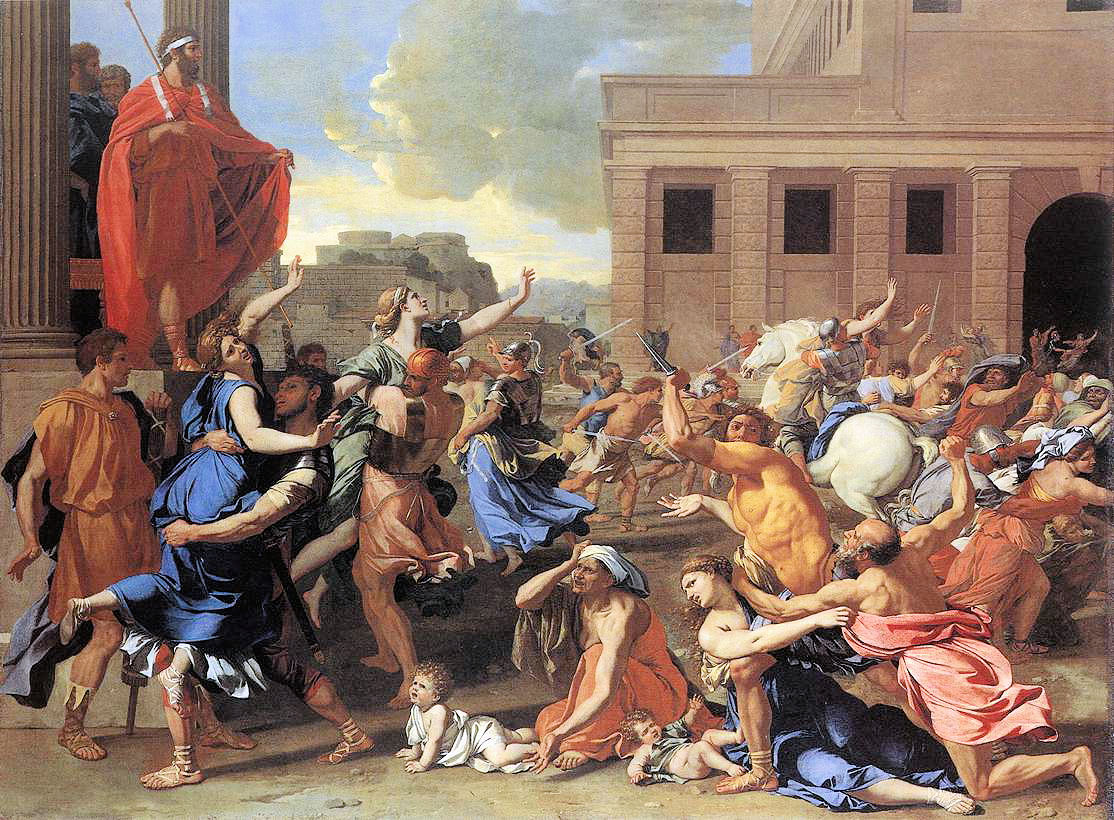
Zonaras 7.3 Part III – The Rape of the Sabine Women

Zonaras relates the well-known story of Romulus’ plan to increase the Roman population:

There were now many men living in the city, of whom very few were wedded to wives. So, Romulus had the idea that they could unite women to themselves. For they were just a mob who had come from difficult and undistinguished circumstances, and they were despised in their marriage suits by all of the neighboring tribes. Romulus then planned for his citizens to take wives by means of forcible seizure, so he announced that there would be a sacrifice, some games, and a religious assembly on the pretext that a strange new altar of the gods had been discovered. Many people came together for this. Romulus himself, however, sat at the front among the nobles, outfitted in a purple robe. He gave as the sign that the undertaking should commence the sudden spreading and re-fastening of his robe. Once this sign was given, the men, grabbing their swords, set out and grabbed the maiden daughters of the Sabines – not, indeed, anyone’s wife.

Πολλῶν δὲ τῇ πόλει ἐνοικισθέντων, ὧν ὀλίγοι γυναιξὶ συνεζεύγνυντο, φροντὶς τῷ ῾Ρωμύλῳ ἐγένετο ἵνα κἀκεῖνοι γυναῖκας ἑαυτοῖς συνοικίσωσι. σύγκλυδες γὰρ καὶ ἐξ ἀπόρων ὄντες καὶ ἀφανῶν, ὑπερωρῶντο πρὸς κῆδος παρὰ τῶν γειτνιώντων ἐθνῶν. βουλεύεται τοίνυν ἐξ ἁρπαγῆς λαβεῖν γυναῖκας τοὺς πολίτας αὐτοῦ, καὶ κηρύσσει θυσίαν καὶ ἀγῶνα καὶ θέαν μέλλειν τελεῖν πανηγυρικήν, ὡς βωμοῦ εὑρημένου θεοῦ καινοῦ. καὶ πολλοὶ συνῆλθον. αὐτὸς δὲ προυκάθητο μετὰ τῶν ἀρίστων, ἁλουργίδι κεκοσμημένος· δέδωκε δὲ τῷ δήμῳ τῆς ἐπιχειρήσεως σύμβολον τὴν τῆς ἁλουργίδος διάπτυξιν καὶ αὖθις ταύτης περιβολήν. οὗ γενομένου σπασάμενοι τὰ ξίφη μετὰ βοῆς ὥρμησαν καὶ ἥρπαζον τὰς θυγατέρας τῶν Σαβίνων παρθένους, οὐ μέντοι γυναῖκάς τινων

Zonaras 7.2 – Alba Longa Retaken

Romulus and Romus come of age; their identity is revealed; Amulius is expelled.

When they [Romulus and Romus] grew up, they were both manly and high-spirited. Romulus seemed more distinguished for his intelligence and was more inclined to command than obey. When a dispute arose between the cowherds of Numitor and those of Amulius, the brothers beat them and took a great share of the cattle. The cowherds of Numitor then laid a trap for Romus when he was walking alone with a few others; they captured him and brought him to Numitor. He feared retribution for coming up against Amulius, being his brother and often maltreated by the members of his household. But Amulius gave Romus to Numitor to do with him as he wished. As Numitor was returning home and gazing upon Romus, who was distinguished for his size and strength, he marveled at his boldness and indomitable nature, and then asked him in a low voice who he was and who his parents were. Romus boldly replied, ‘We are twin brothers; our lineage is said to be unspeakable, and our rearing and nursing is even more incredible, since we were nursed by beasts and birds after being set in a tiny cradle next to the great river; indeed, it still exists, with some faint words engraved on the bronze ribs which hold it together.’

Numitor was then led on by both the speech and appearance of Romus to think about the exposure of his daughter’s children. When Faustulus learned of the seizure of Romus, he urged Romulus to help him, and at that time told him clearly about his own lineage which was previously kept secret in order to prevent them from becoming small-minded. He then got the cradle and brought it to Numitor in the full bloom of zeal and anxiety. When he was seen by the guards posted outside the gates of Amulius, and appeared to be anxious under their questioning, it did not escape notice that he was hiding the cradle underneath his mantle. Thinking that he was concealing something which he had stolen, they brought the cradle out into the open. There happened to be present one of the men who had exposed the boys. He recognized the cradle, and ran to tell Amulius. When Faustulus was interrogated by the king, he laid out that the boys were alive, and further were cowherds in Alba Longa. He brought the cradle to Ilia, the mother of the boys, who wanted to see it. Disturbed by all of this, Amulius sent a man to Numitor to find out whether he could learn anything of the boys, since they were still alive. The man who had been sent on this expedition was one of Numitor’s friends. He went away and found Numitor lost in the complicated puzzle about Romus; he then urged Numitor on and counseled that there should be no delay, and he himself helped with the deed. Just then, Romulus arrived with a large band of rustics. A few of the city dwellers had also joined him from hatred of Amulius. Since matters had fallen out those, Amulius – neither doing nor contriving anything – ran away to save his life.

Αὐξανόμενοι δὲ θυμοειδεῖς ἦσαν καὶ ἀνδρώδεις ἀμφότεροι· ὁ δὲ ῾Ρωμύλος ἐδόκει συνέσει διαφορώτερος καὶ ἡγεμονικὸς μᾶλλον τὴν φύσιν ἢ πειθαρχικός.γενομένης δέ ποτε πρὸς τοὺς Νομίτωρος βουκόλους τοῖς τοῦ ᾿Αμουλίου διαφορᾶς, συγκόπτουσιν αὐτοὺς οἱ ὁμαίμονες καὶ τῆς ἀγέλης συχνὴν ἀποτέμνονται μοῖραν. μόνῳ δὲ τῷ ῾Ρώμῳ σὺν ὀλίγοις ἄλλοις βαδίζοντι οἱ τοῦ Νομίτωρος βουκόλοι λοχήσαντες συνέλαβον αὐτὸν καὶ ἀπήγαγον πρὸς Νομίτωρα· καὶ ὃς πρὸς ᾿Αμούλιον ἐλθὼν ἐδεῖτο τυχεῖν δίκης, ἀδελφὸς ὢν καὶ ὑπὸ τῶν οἰκείων αὐτοῦ ὑβρισμένος. ὁ δὲ παραδίδωσι τῷ Νομίτωρι τὸν ῾Ρῶμον ὡς βούλοιτο χρήσασθαι. ὃς οἴκοι ἐλθὼν καὶ τὸν νεανίσκον ὁρῶν ὑπερφέροντα μεγέθει καὶ ῥώμῃ, καὶ τὸ θαρραλέον αὐτοῦ καὶ ἀδούλωτον τῆς ψυχῆς θαυμάζων, ἀνέκρινεν ὅστις εἴη καὶ ὅθεν γένοιτο, φωνῇ πραείᾳ. ὁ δὲ θαρρῶν ἔλεγεν ὡς “δίδυμοι μέν ἐσμεν ἀδελφοί, γοναὶ δὲ ἡμῶν ἀπόρρητοι λέγονται καὶ τροφαὶ καὶ τιθηνήσεις θαυμασιώτεραι, θηρίοις καὶ οἰωνοῖς τραφέντων παρὰ τὸν μέγαν ποταμὸν ἐν σκάφῃ τινὶ κειμένων, ἣ ἔτι σώζεται, χαλκοῖς ὑποζώμασι γραμμάτων ἀμυδρῶν ἐγκεχαραγμένων.”

῾Ο μὲν οὖν Νομίτωρ τοῖς τε λόγοις τοῦ ῾Ρώμου καὶ τῇ ὄψει πρὸς ἔννοιαν τῆς ἐκθέσεως τῶν τῆς θυγατρὸς ἐνήγετο παίδων, ὁ δὲ Φαυστοῦλος τὴν τοῦ῾Ρώμου μαθὼν σύλληψιν τὸν μὲν ῾Ρωμύλον βοηθεῖν παρεκάλει, τότε σαφῶς διδάξας αὐτὸν περὶ τῆς γενέσεως, πρότερον γὰρ ὑπῃνίττετο, ὥστ’ αὐτοὺς μὴ μικροφρονεῖν, αὐτὸς δὲ τὴν σκάφην κομίζων ἐχώρει πρὸς τὸν Νομίτωρα σπουδῆς καὶ δέους μεστός. τοῖς δὲ περὶ τὰς πύλας τοῦ ᾿Αμουλίου φρουροῖς ὑφορώμενος, καὶ ταραττόμενος περὶ τὰς ἀποκρίσεις, οὐκ ἔλαθε τὴν σκάφην τῷ χλανιδίῳ περικαλύπτων. ὑπολαβόντες δὲ κλοπιμαῖόν τι φέρειν αὐτόν, εἰς μέσον τὴν σκάφην προήγαγον. ἔτυχε δέ τις παρὼν ἐκεῖ τῶν τὰ παιδάρια ἐκθεμένων· ὃς τὴν σκάφην γνωρίσας, δραμὼν φράζει τῷ ᾿Αμουλίῳ. καὶ ὁ Φαυστοῦλος ἀνακρινόμενος παρὰ τοῦ βασιλέως σώζεσθαι μὲν τοὺς παῖδας κατέθετο, πόρρω δὲ τῆς ῎Αλβης νέμοντας εἶναι· τὴν δὲ σκάφην πρὸς τὴν ᾿Ιλίαν κομίζειν τὴν τῶν παίδων μητέρα, ποθοῦσαν ἰδεῖν. τεταραγμένος δὲ τούτοις ᾿Αμούλιος ἄνδρα πρὸς τὸν Νομίτωρα πέπομφε πυνθανόμενος εἴ τι μάθοι περὶ τῶν παίδων ὡς περιόντων. ἦν δὲ τῶν φίλων ὁ πεμφθεὶς τοῦ Νομίτωρος. ἀπελθὼν οὖν καὶ ἐν περιπλοκαῖς τοῦ῾Ρώμου εὑρηκὼς τὸν Νομίτωρα, παρεθάρρυνέ τε καὶ μὴ μέλλειν αὐτοῖς συνεβούλευε, καὶ αὐτὸς δὲ συνέπραττεν. ἄρτι δὲ καὶ ὁ ῾Ρωμύλος ἐγγὺς ἦν, χεῖρα συχνὴν ἀγροικικὴν ἐπαγόμενος· καὶ τῶν πολιτῶν δὲ αὐτῷ οὐκ ὀλίγοι προσῄεσαν μίσει τοῦ ᾿Αμουλίου. ὃς οὕτω τῶν πραγμάτων συνενεχθέντων οὐδὲν οὔτε πράξας οὔτε βουλεύσας σωτήριον ἀνῃρέθη.

Zonaras: The Foundation of Rome (6.29-7.1)

This post will be the beginning of a much longer project, which I hope to sustain, of translating all of the specifically Roman history from Ioannes Zonaras’ vast Epitome. Books I-VI of the work are primarily concerned with Biblical and Judaic history; the rest of the work is a synopsis of Roman history from the founding of the city. Zonaras draws heavily on other historians, and even preserves substantial information which would have otherwise been lost. He is occasionally faulted for not being the most accurate historian, but this is a charge leveled against ancient writers of history all the way back to Herodotus. Gibbon makes heavy use of Zonaras in his Decline and Fall, and it is perhaps not coincidental that Gibbon himself is censured on occasion for his reliance on sources of dubious reliability.

Nevertheless, there is also (as far as I know) no full-scale English translation of all of Zonaras’ Roman history, and Byzantine chroniclers are not much in fashion (and perhaps never will be), so it may not be entirely out of place here to post it. I can swear no solemn oath that I will complete the project, but I will try to provide small daily updates.

Epitome Historiarum: 6.29-7.1

Since mention has been made of the history of the Romans, including their unconquerable strength, it is absolutely necessary to say and teach, or at least to recall those who are recorded in that book, and who these Romans were, and whence their race originally sprang, how they got their name, what sort of government they employed, what fortunes they enjoyed, and how they progressed to the highest point of happiness when they commanded but a tiny portion of the inhabited world and restrained the power of nearly all others; further, how they proceeded from their original monarchy to an aristocracy (that is, the dictatorship and the consulship), then to democracy, and finally back to monarchy. I must therefore discourse upon these things and set out in detail as much as it is possible for one trying to cut the wide breadth, and manage the tediousness, of such a wide subject, so that all pertaining to the history may be readily intelligible and not escape the memory of posterity.

Following the Trojan War, Aeneas came to the Aborigines, who first inhabited the region where Rome was founded, and where Latinus, the son of Faunus, then ruled. He continued on to Laurentum, near the river Numicium, where it is said that he prepared to found his city in accordance with a certain oracle. But Latinus, who was then the king of that land, prevented Aeneas from establishing a foundation there, and when it came to blows he was beaten. They were then reconciled by dreams which appeared to each of them. Latinus conceded the right of settlement to Aeneas, and even gave him his daughter Lavinia in marriage, for which reason Aeneas named the city which he founded Lavinium. The region was called Latium and the people who lived there were then called Latins.

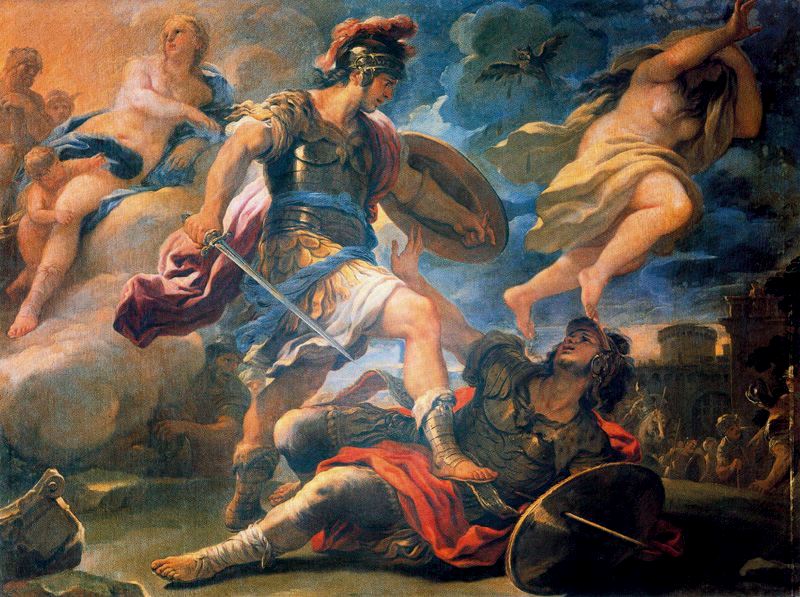
But the neighboring Rutulians set out from their city of Ardea and since they were previously ill-disposed toward the Latins, they then initiated a war with the help of Turnus, a man both noble and formerly allied with Latinus. He had however become enraged with Latinus on account of Lavinia’s marriage, because she was previously promised to him. During the war, both Turnus and Latinus fell, and Aeneas won both the victory as well as his father-in-law’s throne. After a little time, however, the Rutulians received some aid from the Tyrsenians and came up against Aeneas again, this time winning the war. Aeneas disappeared, and since he was never again seen either living or dead, he was honored among the Latins as a god. Therefore, the Romans consider him their founder, and they boastfully call themselves the children of Aeneas (Aeneidae). Aeneas’ son Ascanius, who had followed his father from Troy, then assumed the throne, for Aeneas had not yet had a child with Lavinia, though he did leave her pregnant at his death. The enemy then surrounded Ascanius and besieged him, but the Latins set upon them at night and ended both the siege and the war.
῾Ρωμαίων δὲ μνησθείσης τῆς ἱστορίας καὶ τούτοις κράτος ἀναθεμένης ἀήττητον, ἀναγκαῖον πάν-
τως εἰπεῖν καὶ διδάξαι ἢ ἀναμνῆσαι τοὺς ἐντευξομένους τούτῳ δὴ τῷ συγγράμματι τίνες τε οἱ ῾Ρωμαῖοικαὶ ὅθεν τὸ τούτων ἔθνος συνέστη τὸ ἐξ ἀρχῆς, καὶπόθεν τὴν κλῆσιν ἔσχε, καὶ τίσι πολιτείαις ἐχρήσατο,καὶ οἵαις τύχαις ἐνέκυρσε, καὶ ὅπως προύκοψεν εἰςεὐδαιμονίας ἀκρότητα ὡς μικροῦ κυριεῦσαι τῆς οἰκουμένης ἁπάσης καὶ τὸ κράτος κατὰ πάντων σχεδὸν ἀναδήσασθαι, καὶ ὅπως βασιλευθὲν ἐξ ἀρχῆςεἰς ἀριστοκρατίαν ἤτοι δικτατωρείας καὶ ὑπατείαςμετέπεσε, καὶ εἰς δημοκρατίαν αὖθις μετήνεκτο,εἶτα εἰς μοναρχίαν ἐπανελήλυθεν. ῥητέον μοι τοίνυν καὶ περὶ τούτων καὶ διηγητέον ὡς ἐνὸν ἐπιτέμνοντι τὸ πλάτος τῆς διηγήσεως καὶ τὴν μακρηγορίαν συστέλλοντι, ἵν’ εἶεν εὐσύνοπτα τὰ τῆςἱστορίας καὶ τὴν τῶν ἐπιόντων μνήμην μὴ διαφεύγοιεν. Αἰνείας μετὰ τὸν Τρωικὸν πόλεμον ἀφῖκτο πρὸ᾿Αβορίγινας, οἳ πρῴην τὴν χώραν ᾤκουν καθ’ ἣν ἡ῾Ρώμη πεπόλισται, Λατίνου τοῦ Φαύνου τότε τὴν τούτων ἀρχὴν ἔχοντος, καὶ προσέσχε Λαυρεντῷ κατὰτὸν Νουμίκιον ποταμόν, ἔνθα κατά τι δὴ θεοπρόπιον λέγεται παρασκευάζεσθαι ποιήσασθαι τὴν κατοίκησιν. ὁ δὲ τῆς χώρας ἄρχων Λατῖνος ἀπεῖργε τῷ Αἰνείᾳ τὴν ἐν τῇ χώρᾳ καθίδρυσιν. καὶ συμβαλὼν ἡττᾶται· εἶτα δι’ ὀνειράτων φανέντων ἀμφοῖν καταλλάττονται· καὶ τῆς κατοικίας αὐτῷ παραχωρεῖ, καὶ τὴν θυγατέρα Λαουινίαν εἰς γάμον ἐκδίδωσιν. ἔνθα πόλιν ὁ Αἰνείας οἰκοδομήσας ὠνόμασε Λαουίνιον· ἥ τε χώρα Λάτιον ἐπεκλήθη καὶ οἱ ἄνθρωποι οἱ ἐκεῖ Λατῖνοι προσηγορεύθησαν.

῾Ρουτοῦλοι δὲ ὁμοροῦντες τῇ χώρᾳ ἐκ πόλεως᾿Αρδέας ὁρμώμενοι, καὶ πρόσθεν δυσμενῶς ἔχοντες πρὸς Λατίνους, καὶ τότε πόλεμον ἤραντο, ἐπαρήγοντος αὐτοῖς καὶ Τούρνου ἀνδρὸς ἐπιφανοῦς καὶ τῷΛατίνῳ προσήκοντος, ὃς δι’ ὀργῆς τὸν Λατῖνον πεποίητο διὰ τὸν Λαουινίας γάμον· ἐκείνῳ γὰρ ἡ κόρη προωμολόγητο. μάχης οὖν γενομένης πίπτουσιν ὅ τε Τοῦρνος καὶ ὁ Λατῖνος, τὴν δὲ νίκην ὁ Αἰνείας κεκόμιστο καὶ τὴν τοῦ πενθεροῦ βασιλείαν. μετὰ δέ τινα χρόνον συμμαχίας ἐκ Τυρσηνῶν οἱ ῾Ρουτοῦλοι τυχόντες ἐπῆλθον τῷ Αἰνείᾳ, καὶ τὸν πόλεμον νενικήκασιν· ἀφανὴς δὲ ὁ Αἰνείας γενόμενος, οὔτε γὰρ ζῶν ὤφθη ἔτι οὔτε μὴν τεθνεώς, ὡς θεὸς παρὰ Λατίνοις τετίμητο. ἐντεῦθεν καὶ τοῖς ῾Ρωμαίοις τοῦ σφετέρου γένους ἀρχηγέτης νενόμισται, καὶ Αἰνειάδαι καλεῖσθαι αὐχοῦσι. τὴν δὲ τῶν Λατίνων ἀρχὴν ὁ ἐκείνου υἱὸς ᾿Ασκάνιος διεδέξατο, ὃς οἴκοθεν συνείπετο τῷ πατρί· οὐδέπω γὰρ ἐκ τῆς Λαουινίας παῖδα ἐγείνατο, ἔγκυον δ’ αὐτὴν καταλέλοιπε. τὸν δὲ ᾿Ασκάνιον κατακλείσαντες οἱ πολέμιοι ἐπολιόρκουν· νυκτὸςδ’ οἱ Λατῖνοι αὐτοῖς ἐπιθέμενοι τήν τε πολιορκίαν ἔλυσαν καὶ τὸν πόλεμον.


Feats of Mind Beat Feats of Strength

Sallust, War with Catiline 1.1 

“All men who desire to be better than the rest of the animals should try with all their strength not to move through life in silence like cattle, creatures nature has made low and slaves to their stomachs. But all our ability resides in either mind or body: we use the mind to rule and the body as its servant; one is our common ground with the gods, the other with the beasts. For this reason, it seems better to me to seek glory through feats of intelligence instead of strength. And, since the life we experience is brief, to fashion for it a remembrance that is as robust as possible. For, while the fame of riches and beauty is fickle and weak, excellence is bright and eternal.”


Omnis homines, qui sese student praestare ceteris animalibus, summa ope niti decet, ne vitam silentio transeant veluti pecora, quae natura prona atque ventri oboedientia finxit. 2 Sed nostra omnis vis in animo et corpore sita est: animi imperio, corporis servitio magis utimur; alterum nobis cum dis, alterum cum beluis commune est. 3 Quo mihi rectius videtur ingeni quam virium opibus gloriam quaerere et, quoniam vita ipsa, qua fruimur, brevis est, memoriam nostri quam maxume longam efficere. 4 Nam divitiarum et formae gloria fluxa atque fragilis est, virtus clara aeternaque habetur.

The Rise of Publius Clodius Wasn’t Pulcher


Velleius Paterculus History of Rome 2.50

“At the same time, Publius Clodius, a man of noble family,  daring and eloquent, who acknowledged no limit to speech or deed other than his own desire and was most eager in the performance of evil plans, also well-known as the defiler of a sister and a defendant against a charge of incestuous violation of the most holy of Roman rites, was pursuing a severe enmity against Marcus Cicero—for how could there be friendship  between such dissimilar men?. This Clodius had been transferred from patrician to plebian class and then as tribune proposed a law that would impose exile [“prohibition on water and fire”] on anyone who killed a Roman citizen without trial. Even though Cicero was not named directly, he was the only one targeted.

CiceroBust_0
What Kind of a Monster Could Hate this Man? Mommsen.

In this way, a man who had rightly earned the thanks from the republic received the punishment of exile as the price of saving the country. Caesar and Pompey did not lack suspicion for the suppression of Cicero. Cicero seemed to have asked for this from them because he did not want to be among the twenty men who divided land in Campania. Within two years, thanks to Pompey’s attention—though late, effective once begun—and thanks to the prayers of Italy, the decrees of the senate, and the virtue and effort of Annius Milo, the tribune of the people, Cicero was returned to his station and his country. No exile after the return of Numidicus was banished so unpopularly or welcomed back so happily. As viciously as Cicero’s home was torn down by Clodius, so spectacularly did the senate rebuild it.”


Per idem tempus P. Clodius, homo nobilis, disertus, audax, quique neque dicendi neque faciendi ullum nisi quem vellet nosset modum, malorum propositorum executor acerrimus, infamis etiam sororis stupro et actus incesti reus ob initum inter religiosissima populi Romani sacra adulterium, cum graves inimicitias cum M. Cicerone exerceret (quid enim inter tam dissimiles amicum esse poterat?) et a patribus ad plebem transisset, legem in tribunatu tulit, qui civem Romanum indemnatum interemisset, ei aqua et igni interdiceretur: cuius verbis etsi non nominabatur Cicero, tamen solus petebatur. 2 Ita vir optime meritus de re publica conservatae patriae pretium calamitatem exilii tulit. Non caruerunt suspicione oppressi Ciceronis Caesar et Pompeius. Hoc sibi contraxisse videbatur Cicero, quod inter viginti viros dividendo agro Campano esse noluisset. 3 Idem intra biennium sera Cn. Pompei cura, verum ut coepit intenta, votisque Italiae ac decretis senatus, virtute atque actione Annii Milonis tribuni plebis dignitati patriaeque restitutus est. Neque post Numidici exilium aut reditum quisquam aut expulsus invidiosius aut receptus est laetius. Cuius domus quam infeste a Clodio disiecta erat, tam speciose a senatu restituta est.

Velleius Paterculus on the death of Augustus, II.123


“This is the time attended by the most fear. Augustus had sent his own grandson Germanicus to Germany to handle the end of the conflict there. And he was about to send his son Tiberius to Illyricum to shore up the peace where he had subjugated with war. Following him and at the same time intending to visit the athletic competitions which had been established in his honor by the Neapolitans, Augustus traveled to Campania. Although he had already at that point felt the growth of weakness and sensed the beginning of his own deterioration, he followed his son with a resolute strength of spirit—he parted from him at Beneventum and left for Nola. There, as his strength dissipated by the day, and he recognized whom it was necessary to summon if he wished for everything to remain safe once he was gone, he quickly recalled his son.

Tiberius returned back to the father of his fatherland more quickly than he was expected. Then, confessing that he has more content because he was surrounded by the embrace of his son, he entrusted to him their common efforts without any kind of an end, allowing that, if the fates demanded, he was ready. Even though he was renewed at first by the sight of his son and at the voice of someone dearest to him, soon, since the fates can conquer every kind of care, he released his elements and returned his divine soul to heaven in his seventy-sixth year, during the consulship of Pompeius and Apuleius” (14 CE).

Venitur ad tempus, in quo fuit plurimum metus. Quippe Caesar Augustus cum Germanicum nepotem suum reliqua belli patraturum misisset in Germaniam. Tiberium autem filium missurus esset in Illyricum ad firmanda pace quae bello subegerat, prosequens eum simulque interfuturus athletarum certaminis ludicro, quod eius honori sacratum a Neapolitanis est, processit in Campaniam. Quamquam iam motus imbecillitatis inclinataeque in deterius principia valetudinis senserat, tamen obnitente vi animi prosecutus filium digressusque ab eo Beneventi ipse Nolam petiit: et ingravescente in dies valetudine, cum sciret, quis volenti omnia post se salva remanere accersendus foret, festinanter revocavit filium; ille ad patrem patriae expectato revolavit maturius. 2 Tum securum se Augustus praedicans circumfususque amplexibus Tiberii sui, commendans illi sua atque ipsius opera nec quidquam iam de fine, si fata poscerent, recusans, subrefectus primo conspectu alloquioque carissimi sibi spiritus, mox, cum omnem curam fata vincerent, in sua resolutus initia Pompeio Apuleioque consulibus septuagesimo et sexto anno animam caelestem caelo reddidit.


How Far Should Historical Analysis Go? Polybius on Rome

Polybius, Histories 3.4

“If it were possible to develop a sufficient analysis of whether or not men and states should be praised or criticized from only their victories and defeats, then I think I could stop here and end my investigation, and end the work at these most immediately narrated events, according to my original plan. For the fifty-three years end here which brought about the expansion and advance of Roman power. In later years, it seems it was agreed that it was necessary for everyone to heed the Romans and obey what they commanded.

But since evaluations of rulers and the conquered, if based merely on the contests themselves, are not at all complete—this is because what seems to many to be the greatest successes, if they are not used correctly, may bring the greatest disasters; and, in turn, the most shocking disasters at times can turn into the advantage of those who suffer them if they handle them well—we must add to the events that have been described the policy of the conquerors, what it was like after this and how they ruled in general, the various beliefs and evaluations of those who were ruled by them, and in addition to these things, I must investigate the actions and passions which overpowered and dominated men in their private lives and in their shared governments. It is obvious that it will be clear from these things whether the Roman rule should be avoided or instead should be sought and for future generations whether the Roman rule should be praised and envied or criticized. And this indeed will be the most useful contribution of my work both for the present day and years to come.”

Εἰ μὲν οὖν ἐξ αὐτῶν τῶν κατορθωμάτων ἢ καὶ τῶν ἐλαττωμάτων ἱκανὴν ἐνεδέχετο ποιήσασθαι τὴν διάληψιν ὑπὲρ τῶν ψεκτῶν ἢ τοὐναντίον ἐπαινετῶν
ἀνδρῶν καὶ πολιτευμάτων, ἐνθάδε που λήγειν ἂν ἡμᾶς ἔδει καὶ καταστρέφειν ἅμα τὴν διήγησιν καὶ τὴν πραγματείαν ἐπὶ τὰς τελευταίας ῥηθείσας πράξεις κατὰ τὴν ἐξ ἀρχῆς πρόθεσιν. ὅ τε γὰρ χρόνος ὁ πεντηκοντακαιτριετὴς εἰς ταῦτ’ ἔληγεν, ἥ τ’ αὔξησις καὶ προκοπὴ τῆς ῾Ρωμαίων δυναστείας ἐτετελείωτο· πρὸς δὲ τούτοις ὁμολογούμενον ἐδόκει τοῦτ’ εἶναι καὶ κατηναγκασμένον ἅπασιν ὅτι λοιπόν ἐστι ῾Ρωμαίων ἀκούειν καὶ τούτοις πειθαρχεῖν ὑπὲρ τῶν παραγγελλομένων.

ἐπεὶ δ’ οὐκ αὐτοτελεῖς εἰσιν οὔτε περὶ τῶν κρατησάντων (οὔτε περὶ τῶν) ἐλαττωθέντων αἱ ψιλῶς ἐξ αὐτῶν τῶν ἀγωνισμάτων διαλήψεις, διὰ τὸ πολλοῖς μὲν τὰ μέγιστα δοκοῦντ’ εἶναι τῶν κατορθωμάτων, ὅταν μὴ δεόντως αὐτοῖς χρήσωνται, τὰς μεγίστας ἐπενηνοχέναι συμφοράς, οὐκ ὀλίγοις δὲ τὰς ἐκπληκτικωτάτας περιπετείας, ὅταν εὐγενῶς αὐτὰς ἀναδέξωνται, πολλάκις εἰς τὴν τοῦ συμφέροντος περιπεπτωκέναι μερίδα, προσθετέον ἂν εἴη ταῖς προειρημέναις πράξεσι τήν τε τῶν κρατούντων αἵρεσιν, ποία τις ἦν μετὰ ταῦτα καὶ πῶς προεστάτει τῶν ὅλων, τάς τε τῶν ἄλλων ἀποδοχὰς καὶ διαλήψεις, πόσαι καὶ τίνες ὑπῆρχον περὶ τῶν ἡγουμένων, πρὸς δὲ τούτοις τὰς ὁρμὰς καὶ τοὺς ζήλους ἐξηγητέον, τίνες παρ’ ἑκάστοις ἐπεκράτουν καὶ κατίσχυον περί τε τοὺς κατ’ ἰδίαν βίους καὶ τὰς κοινὰς πολιτείας. δῆλον γὰρ ὡς ἐκ τούτων φανερὸν ἔσται τοῖς μὲν νῦν οὖσιν πότερα φευκτὴν ἢ τοὐναντίον αἱρετὴν εἶναι συμβαίνει τὴν ῾Ρωμαίων δυναστείαν, τοῖς δ’ ἐπιγενομένοις πότερον ἐπαινετὴν καὶ ζηλωτὴν ἢ ψεκτὴν γεγονέναι νομιστέον τὴν ἀρχὴν αὐτῶν. ἀρχὴν αὐτῶν. τὸ γὰρ ὠφέλιμον τῆς ἡμετέρας ἱστορίας πρός τε τὸ παρὸν καὶ πρὸς τὸ μέλλον ἐν τούτῳ πλεῖστον κείσεται τῷ μέρει.