Arrogance, Some Words

Theophrastus, Characters 24

“Arrogance is a kind of contempt for others apart from yourself.”

ἔστι δὲ ἡ ὑπερηφανία καταφρόνησίς τις πλὴν αὑτοῦ τῶν ἄλλων

Cicero, Philippic 5.30

“I know the man’s insanity, his arrogance. I know the ruinous plans of the friends he has entrusted himself to.”

Novi hominis insaniam, adrogantiam; novi perdita consilia amicorum, quibus ille est deditus.

Sophocles, Oedipus Tyrannos 873

“Arrogance grows tyrants”

ὕβρις φυτεύει τύραννον·

Plutarch, Solon 14.2

“Solon says that he at first was hesitating to enter politics because he dreaded the greed of one party and the arrogance of the other.”

ἀλλ᾿ αὐτός φησιν ὁ Σόλων ὀκνῶν τὸ πρῶτον ἅψασθαι τῆς πολιτείας καὶ δεδοικὼς τῶν μὲν τὴν φιλοχρηματίαν, τῶν δὲ τὴν ὑπερηφανίαν.

Lucian, Wisdom of Nigrinus 23

“I believe that ass-kissers are much worse than those they flatter and that they are nearly totally to blame for the arrogance they create in others.”

Ἐγὼ μέντοι γε πολὺ τῶν κολακευομένων ἐξωλεστέρους τοὺς κόλακας ὑπείληφα, καὶ σχεδὸν αὐτοὺς ἐκείνοις καθίστασθαι τῆς ὑπερηφανίας αἰτίους·

Image may contain: one or more people, people sitting and outdoor, text that says '"Arrogance is a certain contempt for others apart from oneself." έστι δέ ή ύπερηφανία καταφρόνησίς τις πλήν αύτού τών άλλων Theophrastus'

Aeschylus, Prometheus Bound, 436-438

“Don’t imagine I am silent because
Of self-regard or arrogance—I having been eating
My own heart with my thoughts
As I see myself abused in this way.”

μήτοι χλιδῇ δοκεῖτε μήτ᾿ αὐθαδίᾳ
σιγᾶν με· συννοίᾳ δὲ δάπτομαι κέαρ
ὁρῶν ἐμαυτὸν ὧδε προυσελούμενον.

Isocrates, On the Peace 119

“If you go through these things and those like them, you will discover that a lack of control and arrogance are the cause of our suffering while careful thought has produced our success.”

ἢν γὰρ ταῦτα καὶ τὰ τοιαῦτα διεξίητε πρὸς ὑμᾶς αὐτούς, εὑρήσετε τὴν μὲν ἀκολασίαν καὶ τὴν ὕβριν τῶν κακῶν αἰτίαν γιγνομένην, τὴν δὲ σωφροσύνην τῶν ἀγαθῶν.

Seneca, De Ira 31

“So, either arrogance or an ignorance of affairs makes people inclined to rage.”

Itaque nos aut insolentia iracundos facit aut ignorantia rerum

Cicero, De Inventione 43

“Hatred emerges from arrogance; arrogance comes from pride.”

Ex arrogantia odium, ex insolentia arrogantia

Seneca the Elder, Suasoriae 6.3

“You will see eyes burning with cruelty and arrogance at the same time. You won’t see the face of a man but one of civil war”

Videbis ardentes crudelitate simul ac superbia oculos; videbis illum non hominis sed belli civilis vultum

Publilius Syrus, 109

“Arrogance’s bragging turns quickly to shame”

Cito ignominia fit superbi gloria.

Marcus Aurelius, Meditations 33

“Accept without being arrogant; give in without reluctance.”

Ἄτύφως μὲν λαβεῖν, εὐλύτως δὲ ἀφεῖναι

arrogant cicero

4 Years of Presidential Memories: What is Wealth for? Corpses and Prisons

On the Wealth of Herodes the Athenian (Philostratus, Lives of the Sophists, 547)

“[Herodes] used his wealth in the best way of all men. We do not, however, believe that this was the easiest thing to do, but instead that it was wholly difficult and unpleasant.  For men who are drunk with wealth usually afflict other people with insults. In addition, they make the specious claim that wealth is blind—but even if wealth appears rightly blind at other times, it looked upon Herodes: it gazed upon his friends, his cities, and whole nations since the man was able to keep a watch over them all and make a storehouse of his riches in the opinions of the men with whom he shared them.

For he used to say indeed that it was necessary for the man who would use wealth correctly to provide it to those who need it so that they may not be in need and also to those who didn’t need it, so that they might not become impoverished. He used to call wealth that was not used and was hoarded up by envy “corpse wealth” and the storehouses of those who hoarded their riches “prisons of wealth. He mocked those who believed it was right to sacrifice to their accumulated riches “Aloadae” because [Otos and Ephialtes] had sacrificed to Ares after they imprisoned him.”*

῎Αριστα δὲ ἀνθρώπων πλούτῳ ἐχρήσατο. τουτὶ δὲ μὴ τῶν εὐμεταχειρίστων ἡγώμεθα, ἀλλὰ τῶν παγχαλέπων τε καὶ δυσκόλων, οἱ γὰρ πλούτῳ μεθύοντες  ὕβριν τοῖς ἀνθρώποις ἐπαντλοῦσιν. προσδιαβάλλουσι δὲ ὡς καὶ τυφλὸν τὸν πλοῦτον, ὃς εἰ καὶ τὸν ἄλλον χρόνον ἐδόκει τυφλός, ἀλλ’ ἐπὶ ῾Ηρώδου ἀνέβλεψεν, ἔβλεψε μὲν γὰρ ἐς φίλους, ἔβλεψε δὲ ἐς πόλεις, ἔβλεψε δὲ ἐς ἔθνη, πάντων περιωπὴν ἔχοντος τοῦ ἀνδρὸς καὶ θησαυρίζοντος τὸν πλοῦτον ἐν ταῖς τῶν μετεχόντων αὐτοῦ γνώμαις. ἔλεγε γὰρ δή, ὡς προσήκοι τὸν ὀρθῶς πλούτῳ χρώμενον τοῖς μὲν δεομένοις ἐπαρκεῖν, ἵνα μὴ δέωνται, τοῖς δὲ μὴ δεομένοις, ἵνα μὴ δεηθῶσιν, ἐκάλει τε τὸν μὲν ἀσύμβολον πλοῦτον καὶ φειδοῖ κεκολασμένον νεκρὸν πλοῦτον, τοὺς δὲ θησαυρούς, ἐς οὓς ἀποτίθενται τὰ χρήματαἔνιοι, πλούτου δεσμωτήρια, τοὺς δὲ καὶ θύειν ἀξιοῦντας ἀποθέτοις χρήμασιν ᾿Αλωάδας ἐπωνόμαζε θύοντας ῎Αρει μετὰ τὸ δῆσαι αὐτόν.

*This story is told in the Iliad 5.385 as part of Dione’s catalogue of mortals who caused the gods harm.  Otus and Ephialtes captured Ares and put him in a bronze jar.

Don’t Worry, As Long As We’re Alive, Death Is Not Here!

Diogenes Laertius, Epicurus 125-6

“Get used to believing that death is nothing to us since all good and evil reside in perception and death is the removal of perception. For this reason, a correct belief holding that death is nothing to us makes the mortality of life appreciable not because it adds a boundless amount of time but because it removes desire for immortality.

This is because there is nothing frightening in life when someone has fully understood that there is nothing frightening in not being alive. It is, therefore, foolish when someone says they will fear death not because it will cause harm when it is present but because its approach causes pain. Whatever does not annoy when it is present causes pointless pain in its expectation.

As the most frightening of evils, then, death is nothing to us since, whenever we are alive, death is not there. But when death is there, we are not! And it is nothing at all to either the living or the dead since it is nothing for the living and the dead are nothing too. But many people flee death as if it is the greatest of evils and then later choose it as a release from the evils in life. The wise person neither condemns life nor fears its end. Living does not bother them nor does not living seem to be an evil.”

“Συνέθιζε δὲ ἐν τῷ νομίζειν μηδὲν πρὸς ἡμᾶς εἶναι τὸν θάνατον· ἐπεὶ πᾶν ἀγαθὸν καὶ κακὸν ἐν αἰσθήσει· στέρησις δέ ἐστιν αἰσθήσεως ὁ θάνατος. ὅθεν γνῶσις ὀρθὴ τοῦ μηθὲν εἶναι πρὸς ἡμᾶς τὸν θάνατον ἀπολαυστὸν ποιεῖ τὸ τῆς ζωῆς θνητόν, οὐκ ἄπειρον προστιθεῖσα χρόνον ἀλλὰ τὸν τῆς ἀθανασίας ἀφελομένη πόθον. οὐθὲν γάρ ἐστιν ἐν τῷ ζῆν δεινὸν τῷ κατειληφότι γνησίως τὸ μηθὲν ὑπάρχειν ἐν τῷ μὴ ζῆν δεινόν. ὥστε μάταιος ὁ λέγων δεδιέναι τὸν θάνατον οὐχ ὅτι λυπήσει παρών, ἀλλ᾿ ὅτι λυπεῖ μέλλων. ὃ γὰρ παρὸν οὐκ ἐνοχλεῖ, προσδοκώμενον κενῶς λυπεῖ. τὸ φρικωδέστατον οὖν τῶν κακῶν ὁ θάνατος οὐθὲν πρὸς ἡμᾶς, ἐπειδή περ ὅταν μὲν ἡμεῖς ὦμεν, ὁ θάνατος οὐ πάρεστιν· ὅταν δ᾿ ὁ θάνατος παρῇ, τόθ᾿ ἡμεῖς οὐκ ἐσμέν. οὔτε οὖν πρὸς τοὺς ζῶντάς ἐστιν οὔτε πρὸς τοὺς τετελευτηκότας, ἐπειδήπερ περὶ οὓς μὲν οὐκ ἔστιν, οἱ δ᾿ οὐκέτι εἰσίν. ἀλλ᾿ οἱ πολλοὶ τὸν θάνατον ὁτὲ μὲν ὡς μέγιστον τῶν κακῶν φεύγουσιν, ὁτὲ δὲ ὡς ἀνάπαυσιν τῶν ἐν τῷ ζῆν <κακῶ> αἱροῦνται. ὁ δὲ σοφὸς οὔτε παραιτεῖται τὸ ζῆν> οὔτε φοβεῖται τὸ μὴ ζῆν

Death and the Miser, Hieronymus Bosch 1494

Cicero Says August Is the Start of a Whole New Year!

Cicero, Letters to Atticus, 5.15 [=LCL 108]

“I made it to Laodicea on July 31st: you will start the reckoning of the year from this day. Nothing was lacking or unexpected in my arrival, but it is amazing how much this work wears me out. It provides me far too little space for my intellectual curiosity and the work for which I have earned my position.”

Laodiceam veni prid. Kal. Sext.; ex hoc die clavum anni movebis. nihil exoptatius adventu meo, nihil c<>arius; sed est incredibile quam me negoti taedeat, non habeat satis magnum campum ille tibi non ignotus cursus animi et industriae meae, praeclara opera cesset.

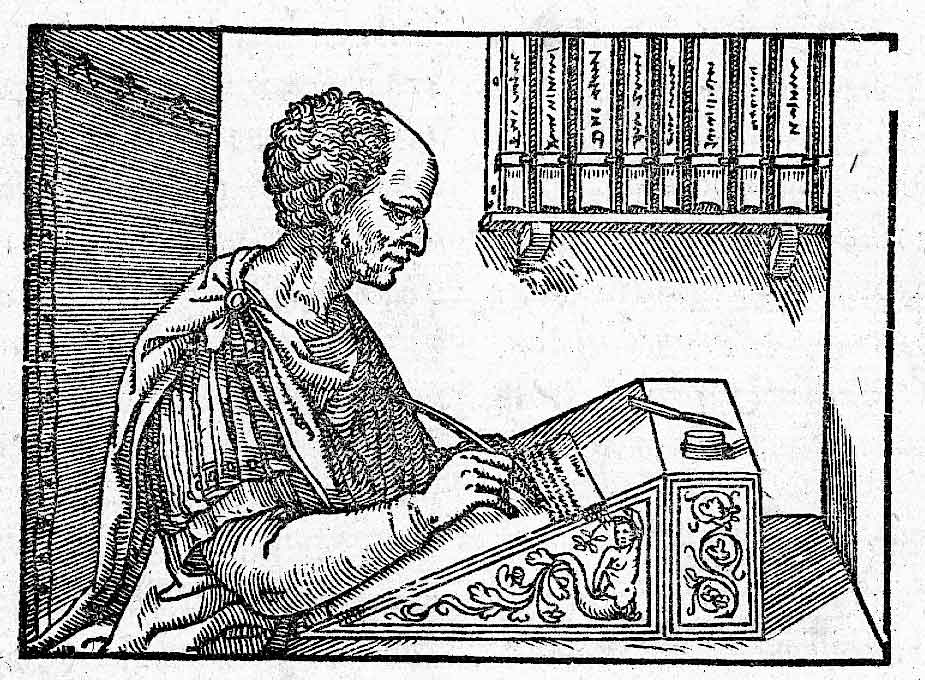
Cicero writing his letters, woodcut 1547

Fronto on How to Wear a Mask

Marcus Cornelius Fronto to Antoninus Augustus Ambr. 390 17

“Aesopus the tragedian reportedly never put a mask on his face until he had looked at it for awhile from the other side so that he might change his gestures and alter his voice in line with the appearance of the mask.”

Tragicus Aesopus fertur non prius ullam suo induisse capiti personam, antequam diu ex adverso contemplaret, ut pro personae voltu gestum sibi capessere ac vocem <adsimulare posset>

Enter a caption

Weak fact checking like this from USA Today misses out on the complex factors attending mask wearing. Math and logic can fix this. WashPo aggregates some studies which support it.

You can support the Sportula and get a cool mask from redbubble designed by Amy Pistone

Owl Hoplite color - Amy Pistone


Oxen, Horses, and Priam Are Not Happy

Aristotle, Nicomachean Ethics 1100a

“We would not rightly say that an ox or a horse or any other animal is happy. For it is not possible for any of these to have a common share of ennobling work. This is the reason a child is not happy—they are not yet capable of ennobling actions because of their age. When children are called this, they are being blessed because of their hope for future nobility. There is a need yet, as we said, for complete excellence and a full lifetime.

There are certainly many changes and fortunes of every sort throughout life. It is possible for someone who is extremely fortunate to meet great troubles in old age, just as the story is told about Priam in the heroic epics. No one considers someone who faces these kinds of misfortunes and then dies terribly happy.

But if we then believe that no human being should be considered happy while they live, according to that Solonic saying, “look to the end”—if indeed it must mean this—is it really the case that a person is happy when they’re dead? Well, that would be really strange, right, for us to say others size that this is a kind of obvious happiness? Unless we mean that that dead person is happy, not in the way that Solon wants, but that someone can only say that someone is happy safely when he is out of the way of evils and misfortune.

Even this interpretation has some controversy. For then evil and good seem to be possible for the dead, even as it is for the living even when they do not perceive it, as in the case of honors, and dishonors or the noble or ignoble deeds of children and all of their descendants.

These things are a problem too. For it is possible that someone has lived a rather blessed life up to old age and died in the same way, he could still experience many troubles because of his descendants—some of whom are good and received a life worthy of this, and others who were opposite. It is clear that it is possible for them to be different in every way from their forebears. It would be strange if the dead man would change along with them and become wretched when he was blessed before. But it would also be strange if the affairs of descendants had no impact on their ancestors at all.”

ἰκότως οὖν οὔτε βοῦν οὔτε ἵππον οὔτε ἄλλο τῶν ζῴων οὐδὲν εὔδαιμον λέγομεν· οὐδὲν γὰρ αὐτῶν οἷόν τε κοινωνῆσαι νωνῆσαι τοιαύτης ἐνεργείας. διὰ ταύτην δὲ τὴν αἰτίαν οὐδὲ παῖς εὐδαίμων ἐστίν· οὔπω γὰρ πρακτικὸς τῶν τοιούτων διὰ τὴν ἡλικίαν· οἱ δὲ λεγόμενοι διὰ τὴν ἐλπίδα μακαρίζονται. δεῖ γάρ, ὥσπερ εἴπομεν, καὶ ἀρετῆς τελείας καὶ βίου τελείου. πολλαὶ γὰρ μεταβολαὶ γίνονται καὶ παντοῖαι τύχαι κατὰ τὸν βίον, καὶ ἐνδέχεται τὸν μάλιστ᾿ εὐθενοῦντα μεγάλαις συμφοραῖς περιπεσεῖν ἐπὶ γήρως, καθάπερ ἐν τοῖς ἡρωϊκοῖς περὶ Πριάμου μυθεύεται· τὸν δὲ τοιαύταις χρησάμενον τύχαις καὶ τελευτήσαντα ἀθλίως οὐδεὶς εὐδαιμονίζει.

Πότερον οὖν οὐδ᾿ ἄλλον οὐδένα ἀνθρώπων εὐδαιμονιστέον ἕως ἂν ζῇ, κατὰ Σόλωνα δὲ χρεὼν “τέλος ὁρᾶν”; εἰ δὲ δὴ καὶ θετέον οὕτως, ἆρά γε καὶ ἔστιν εὐδαίμων τότε ἐπειδὰν ἀποθάνῃ; ἢ τοῦτό γε παντελῶς ἄτοπον, ἄλλως τε καὶ τοῖς λέγουσιν ἡμῖν ἐνέργειάν τινα τὴν εὐδαιμονίαν; εἰ δὲ μὴ λέγομεν τὸν τεθνεῶτα εὐδαίμονα, μηδὲ Σόλων τοῦτο βούλεται, ἀλλ᾿ ὅτι τηνικαῦτα ἄν τις ἀσφαλῶς μακαρίσειεν ἄνθρωπον ὡς ἐκτὸς ἤδη τῶν κακῶν ὄντα καὶ τῶν δυστυχημάτων, ἔχει μὲν καὶ τοῦτ᾿ ἀμφισβήτησίν τινα· δοκεῖ γὰρ εἶναί τι τῷ τεθνεῶτι καὶ κακὸν καὶ ἀγαθόν, εἴπερ καὶ τῷ ζῶντι <μὲν> μὴ αἰσθανομένῳ δέ, οἷον τιμαὶ καὶ ἀτιμίαι καὶ τέκνων καὶ ὅλως ἀπογόνων εὐπραξίαι τε καὶ δυστυχίαι. ἀπορίαν δὲ καὶ ταῦτα παρέχει· τῷ γὰρ μακαρίως βεβιωκότι μέχρι γήρως καὶ τελευτήσαντι κατὰ λόγον ἐνδέχεται πολλὰς μεταβολὰς συμβαίνειν περὶ τοὺς ἐκγόνους, καὶ τοὺς μὲν αὐτῶν ἀγαθοὺς εἶναι καὶ τυχεῖν βίου τοῦ κατ᾿ ἀξίαν, τοὺς δ᾿ ἐξ ἐναντίας· δῆλον δ᾿ ὅτι καὶ τοῖς ἀποστήμασι πρὸς τοὺς γονεῖς παντοδαπῶς ἔχειν αὐτοὺς ἐνδέχεται. ἄτοπον δὴ γίνοιτ᾿ ἂν εἰ συμμεταβάλλοι καὶ ὁ τεθνεὼς καὶ γίνοιτο ὁτὲ μὲν εὐδαίμων πάλιν δ᾿ ἄθλιος· ἄτοπον δὲ καὶ τὸ μηδὲν μηδ᾿ ἐπί τινα χρόνον συνικνεῖσθαι τὰ τῶν ἐκγόνων τοῖς γονεῦσιν.

Don’t we look happy? From Bestiary.ca

Really, We Have To Go to War

Thucydides, Peloponnesian War 1.144

“I have many other reasons to hope for the outcome if you are willing not to grow your empire by warring more and not to add dangers of your own choosing. For I am much more afraid of our own mistakes than our enemies’ plans.

But these are topics which will be explained in another speech on those matters. For now, let use send them away with these answers, that we will allow the Megarians to use our marketplace and harbors provided that the Spartans do not continue their foreign actions against us or our allies—for nothing stops this action or that one in the treaties we have. In addition, we will leave cities independent if they were independent when we came into contact with them and when those cities did not give in to them, they should be independent too, as each of them desires.

Add as well that we are willing to submit to judgments according to the treaties and we will not begin the war, although we will defend against those who do start it. These answers are just and proper answers for the city. You need to understand that we must go to war—but if we welcome it willingly, we will have less enthusiastic opponents.

Remember also that the greatest honors come both in private and public from the greatest dangers. Didn’t our fathers stand up against the Medes even though they started from so unequal a position? And when they left everything they had behind, they fought off the barbarian with greater intelligence than luck and greater daring than power and raised our state to what it is today. For this reason, we must not fall back, but we must defend against our enemies in every way and strive to give to our descendants a state no weaker at all.”

‘Πολλὰ δὲ καὶ ἄλλα ἔχω ἐς ἐλπίδα τοῦ περιέσεσθαι, ἢν ἐθέλητε ἀρχήν τε μὴ ἐπικτᾶσθαι ἅμα πολεμοῦντες καὶ κινδύνους αὐθαιρέτους μὴ προστίθεσθαι· μᾶλλον γὰρ πεφόβημαι τὰς οἰκείας ἡμῶν ἁμαρτίας ἢ τὰς τῶν ἐναντίων διανοίας. ἀλλ’ ἐκεῖνα μὲν καὶ ἐν ἄλλῳ λόγῳ ἅμα τοῖς ἔργοις δηλωθήσεται· νῦν δὲ τούτοις ἀποκρινάμενοι ἀποπέμψωμεν, Μεγαρέας μὲν ὅτι ἐάσομεν ἀγορᾷ καὶ λιμέσι χρῆσθαι, ἢν καὶ Λακεδαιμόνιοι ξενηλασίας μὴ ποιῶσι μήτε ἡμῶν μήτε τῶν ἡμετέρων ξυμμάχων (οὔτε γὰρ ἐκεῖνο κωλύει ἐν ταῖς σπονδαῖς οὔτε τόδε), τὰς δὲ πόλεις ὅτι αὐτονόμους ἀφήσομεν, εἰ καὶ αὐτονόμους ἔχοντες ἐσπεισάμεθα, καὶ ὅταν κἀκεῖνοι ταῖς ἑαυτῶν ἀποδῶσι πόλεσι μὴ σφίσι [τοῖς Λακεδαιμονίοις] ἐπιτηδείως αὐτονομεῖσθαι, ἀλλ’ αὐτοῖς ἑκάστοις ὡς βούλονται· δίκας τε ὅτι ἐθέλομεν δοῦναι κατὰ τὰς ξυνθήκας, πολέμου δὲ οὐκ ἄρξομεν, ἀρχομένους δὲ ἀμυνούμεθα. ταῦτα γὰρ δίκαια καὶ πρέποντα ἅμα τῇδε τῇ πόλει ἀποκρίνασθαι. εἰδέναι δὲ χρὴ ὅτι ἀνάγκη πολεμεῖν, ἢν δὲ ἑκούσιοι μᾶλλον δεχώμεθα, ἧσσον ἐγκεισομένους τοὺς ἐναντίους ἕξομεν, ἔκ τε τῶν μεγίστων κινδύνων ὅτι καὶ πόλει καὶ ἰδιώτῃ μέγισται τιμαὶ περιγίγνονται. οἱ γοῦν πατέρες ἡμῶν ὑποστάντες Μήδους καὶ οὐκ ἀπὸ τοσῶνδε ὁρμώμενοι, ἀλλὰ καὶ τὰ ὑπάρχοντα ἐκλιπόντες, γνώμῃ τε πλέονι ἢ τύχῃ καὶ τόλμῃ μείζονι ἢ δυνάμει τόν τε βάρβαρον ἀπεώσαντο καὶ ἐς τάδε προήγαγον αὐτά. ὧν οὐ χρὴ λείπεσθαι, ἀλλὰ τούς τε ἐχθροὺς παντὶ τρόπῳ ἀμύνεσθαι καὶ τοῖς ἐπιγιγνομένοις πειρᾶσθαι αὐτὰ μὴ ἐλάσσω παραδοῦναι.’

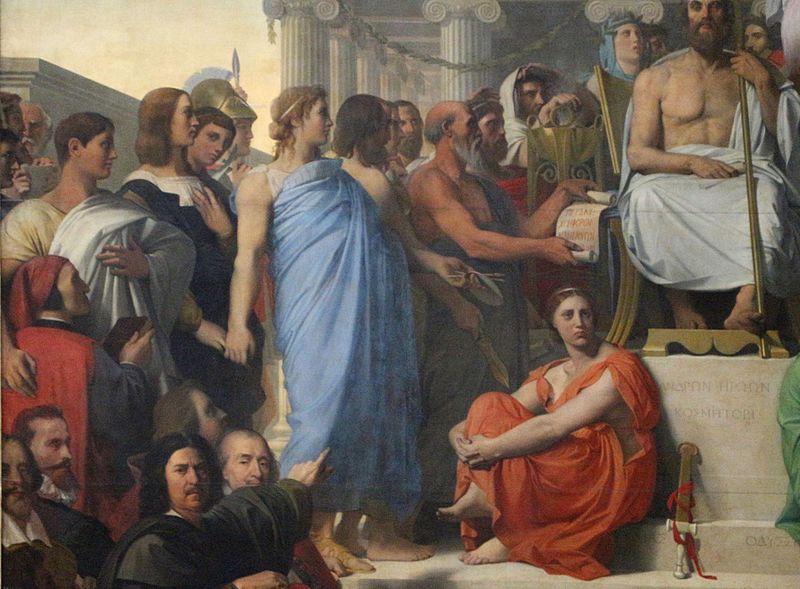
File:Jean-auguste-dominique ingres, uomo deificato, detto l'apoteosi di omero, 1827, 02.jpg
Detail of J.A.D Ingres’  “Apotheosis of Homer”


Changing Nature and Isolation’s End

Philo, On Rewards and Punishments 89-90

“At that time, it seems likely that bears, lions, panthers and those animals in India—elephants and tigers—and however many other creates have unconquerable valor and strength will shift from loneliness and isolation to a shared life. From imitating herd animals they will slowly become tame in the presence of human beings.

After this, they will no longer coil in anger as before, but some will be flabbergasted and behave humbly as if before a leader or natural master and others will get happily excited, showing domesticated affection and love just like those little dogs who signal their giddiness with wagging tails. Then, too, the races of scorpions and snakes and the other creepy critters will leave their venom unused.”

τότε μοι δοκοῦσιν ἄρκτοι καὶ λέοντες καὶ παρδάλεις καὶ τὰ παρ᾿ Ἰνδοῖς, ἐλέφαντές τε καὶ τίγρεις, καὶ ὅσα ἄλλα τὰς ἀλκὰς καὶ τὰς δυνάμεις ἀήττητα μεταβαλεῖν ἐκ τοῦ μονωτικοῦ τε καὶ μονοτρόπου πρὸς τὸ σύννομον· κἀκ τοῦ πρὸς ὀλίγον μιμήσει τῶν ἀγελαίων ἡμερωθήσεται πρὸς τὴν ἀνθρώπου φαντασίαν, μηκέτι ὡς πρότερον ἀνερεθισθέντα, καταπλαγέντα δ᾿ ὡς ἄρχοντα καὶ φύσει δεσπότην εὐλαβῶς ἕξει, ἔνια δὲ καὶ τοῦ χειροήθους ἅμα καὶ φιλοδεσπότου τῇ παραζηλώσει, καθάπερ τὰ Μελιταῖα τῶν κυνιδίων ταῖς κέρκοις μεθ᾿ ἱλαρωτέρας κινήσεως προσσαίνοντα. τότε καὶ τὰ σκορπίων γένη καὶ ὄφεων καὶ τῶν ἄλλων ἑρπετῶν ἄπρακτον ἕξει τὸν ἰόν·

British Library, Sloane MS 1975, Folio 13r

Just Acts and Raising Children

4 Stob. 2.31.38 = Aelian Frag 4

“Noble Socrates used to rebuke those fathers who failed to educate their sons and then, when they fell into poverty, took their boys to court and were suing them for lack of gratitude because they were not supporting their fathers. He said the fathers were expecting the impossible because people who have not learned just acts are never able to perform them.”

Σωκράτης ὁ γενναῖος ᾐτιᾶτο τῶν πατέρων ἐκείνους, ὅσοι <μὴ> παιδεύσαντες αὑτῶν τοὺς υἱεῖς, εἶτα ἀπορούμενοι ἦγον ἐπὶ τὰς ἀρχὰς τοὺς νεανίσκους καὶ ἔκρινον αὐτοὺς ἀχαριστίας, ὅτι οὐ τρέφονται ὑπ᾿ αὐτῶν. εἶπε γὰρ ἀδύνατον ἀξιοῦν τοὺς πατέρας· μὴ γὰρ οἵους τε εἶναι τοὺς μὴ μαθόντας τὰ δίκαια ποιεῖν αὐτά.

 Euripides, Herakles 586

“It is your right, child, to be a friend to friends
And to hate your enemies. But don’t do it to excess.”

Αμ. πρὸς σοῦ μέν, ὦ παῖ, τοῖς φίλοις <τ’> εἶναι φίλον
τά τ’ ἐχθρὰ μισεῖν· ἀλλὰ μὴ ‘πείγου λίαν.

Euripides, Herakles 631-636

“I will lead you taking you by the hands like a ship
That pulls smaller ships behind it. I do not refuse
Care to my children. All humans have this
Richer people love their children and so do
Those who have nothing. They differ in wealth.
Some have, some don’t. But every kind loves their children.”

ἄξω λαβών γε τούσδ’ ἐφολκίδας χεροῖν,
ναῦς δ’ ὣς ἐφέλξω· καὶ γὰρ οὐκ ἀναίνομαι
θεράπευμα τέκνων. πάντα τἀνθρώπων ἴσα·
φιλοῦσι παῖδας οἵ τ’ ἀμείνονες βροτῶν
οἵ τ’ οὐδὲν ὄντες· χρήμασιν δὲ διάφοροι·
ἔχουσιν, οἱ δ’ οὔ· πᾶν δὲ φιλότεκνον γένος.

Gift wine vessel

Clean Rivers and Peacock Tongues: Some Cures for the Plague

Diogenes Laertius, Empedocles 8.70

“When a plague struck the Selinuntians thanks to the pollution from a nearby river causing people to die and the women to miscarry, Empedocles recognized the problem and turned two local rivers at his own expense. They sweetened the streams by mixing in with them.

Once the plague was stopped in this way, Empedocles appeared while the Selinuntines were having a feast next to the river. They rose and bowed before him, praying to him as if he were a god. He threw himself into a fire because he wanted to test the truth of his divinity.”

τοῖς Σελινουντίοις ἐμπεσόντος λοιμοῦ διὰ τὰς ἀπὸ τοῦ παρακειμένου ποταμοῦ δυσωδίας, ὥστε καὶ αὐτοὺς φθείρεσθαι καὶ τὰς γυναῖκας δυστοκεῖν, ἐπινοῆσαι τὸν Ἐμπεδοκλέα καὶ δύο τινὰς ποταμοὺς τῶν σύνεγγυς ἐπαγαγεῖν ἰδίαις δαπάναις· καὶ καταμίξαντα γλυκῆναι τὰ ῥεύματα. οὕτω δὴ λήξαντος τοῦ λοιμοῦ καὶ τῶν Σελινουντίων εὐωχουμένων ποτὲ παρὰ τῷ ποταμῷ, ἐπιφανῆναι τὸν Ἐμπεδοκλέα· τοὺς δ’ ἐξαναστάντας προσκυνεῖν καὶ προσεύχεσθαι καθαπερεὶ θεῷ. ταύτην οὖν θέλοντα βεβαιῶσαι τὴν διάληψιν εἰς τὸ πῦρ ἐναλέσθαι.

Historia Augusta, Elagabalus 4, 5

“He had banquet and bedroom furniture made from silver. He often ate camel-heels and cock’s combs removed from birds who were still alive to imitate Apicius, as well as the tongues of peacocks and nightingales because it was said that whoever ate them was safe from the plague.

He also gave the the Palace visitors enormous serving dishes piled with the innards of mullets, flamingo-brains, partridge eggs, the brains of thrushes, and the whole heads of parrots, pheasants, and peacocks.”

Hic solido argento factos habuit lectos et tricliniares et cubiculares. comedit saepius ad imitationem Apicii calcanea camelorum et cristas vivis gallinaceis demptas, linguas pavonum et lusciniarum, quod qui ederet a pestilentia tutus diceretur. exhibuit et Palatinis lances ingentes extis mullorum refertas et cerebellis phoenicopterum et perdicum ovis et cerebellis turdorum et capitibus psittacorum et phasianorum et pavonum.

File:Empedocles. Line engraving after (C. V.). Wellcome V0001768.jpg
Empedocles Line Engraving