Truth, Testimony, and Treason

Plautus, The Ghost 181

“I love the truth, I want someone to tell me the truth. I hate a liar.”

ego uerum amo, uerum uolo dici mi: mendacem odi.

Agathon, Fr. 12

If I tell the truth, I won’t make you happy.
But if I am to make you happy, I will say nothing true.

εἰ μὲν φράσω τἀληθές, οὐχί σ’ εὐφρανῶ·
εἰ δ’ εὐφρανῶ τί σ’, οὐχὶ τἀληθὲς φράσω.

Seneca the Elder, Controversiae 10.1

“Look, I have letters here which are obvious proof of treason and have the plans of the enemy.”

teneo ecce epistulas, in quibus manifesta proditionis argumenta sunt, in quibus hostium consilia

Polybius, Histories 5.59.2

“…because of the style of his life and his treason against his country I believe he is worthy of the greatest punishment.”

….κατά γε τὴν τοῦ βίου προαίρεσιν καὶ τὴν εἰς πατρίδα παρανομίαν τῆς μεγίστης ἄξιον κρίνω τιμωρίας

Quintilian Orator’s Education 4.2 90-92

“For fictions which are developed entirely from matters outside of the situation betray our license to lie. We must take most special care—which often escapes those who lie—not to contradict ourselves, since some stories are flattering in bits but do not contribute to a coherent whole; that we then say nothing which countermands what is accepted as true; and, in academic exercises, not to seek ornamentation beyond the themes.

Both in training and in the court, the orator ought to remember the what he has claimed falsely during the whole action since false things often escape the mind. That common saying is proved true, that the liar requires a good memory. Let us see, moreover, that if we are questioned about our own deed, we must say one thing only; if it is about somebody else’s we can cast doubt in many directions.”

nam quae tota extra rem petita sunt mentiendi licentiam produnt. Curandum praecipue, quod fingentibus frequenter excidit, ne qua inter se pugnent; quaedam enim partibus blandiuntur, sed in summam non consentiunt: praeterea ne iis quae vera esse constabit adversa sint: in schola etiam ne color extra themata quaeratur. Utrubique autem orator meminisse debebit actione tota quid finxerit, quoniam solent excidere quae falsa sunt: verumque est illud quod vulgo dicitur, mendacem memorem esse oportere.  Sciamus autem, si de nostro facto quaeratur, unum nobis aliquid esse dicendum: si de alieno, mittere in plura suspiciones licere.

Marcus Aurelius, Meditations 6.47

“So one thing is worth much: to keep on living with truth and justice and in good will even among liars and unjust men”

Ἓν ὧδε πολλοῦ ἄξιον, τὸ μετ᾿ ἀληθείας καὶ δικαιοσύνης εὐμενῆ τοῖς ψεύσταις καὶ ἀδίκοις διαβιοῦν.

Augustine, Confessions 10.23.34:

“Why does truth produce hatred, and why is your person who tells truth made an enemy to others, even though everyone loves the blessed life, which is nothing but rejoicing in truth, unless it be that truth is loved in such a way that those who love something other than truth would wish to believe that what they love is the truth, and because they wish not to be deceived, they do not wish to be convinced that they have been fooled?

And so, they hate the truth on account of that thing which they love in truth’s place. They love it when it shines, they hate it when it refutes them. Because they wish not to be deceived but wish to do the deceiving, they love the truth when it reveals itself, but hate it when it reveals them. “

cur autem veritas parit odium et inimicus eis factus est homo tuus verum praedicans, cum ametur beata vita, quae non est nisi gaudium de veritate, nisi quia sic amatur veritas ut, quicumque aliud amant, hoc quod amant velint esse veritatem, et quia falli nollent, nolunt convinci quod falsi sint? itaque propter eam rem oderunt veritatem, quam pro veritate amant. amant eam lucentem, oderunt eam redarguentem. quia enim falli nolunt et fallere volunt, amant eam cum se ipsa indicat, et oderunt eam cum eos ipsos indicat.

Image result for medieval manuscript punishing a liar
The Infernal Torments of the Damned, illuminated French manuscript of Augustine’s City of God by an unknown artist (15th century).

Nothing To Write about: Cicero Gives Up

Cicero to Atticus, 129 (VII.6) Formiae, ca. 18 December 50 (Full Latin text on the Scaife Viewer)

“There’s clearly nothing for me to write to you about. You know everything worth knowing and I have nothing to expect from you. Still, let me keep up our practice so that we don’t let anyone travel near you without a letter.

I am really afraid for our country. I have barely found anyone who doesn’t think we should give Caesar what he wants, rather than fighting with him.”

Plane deest quid ad te scribam. nota omnia tibi sunt, nec ipse habeo a te quod exspectem. tantum igitur nostrum illud sollemne servemus, ut ne quem istuc euntem sine litteris dimittamus.

De re publica valde timeo, nec adhuc fere inveni qui non concedendum putaret Caesari quod postularet potius quam depugnandum.

I Hope this Finds You With Nothing to Write About

Cicero, Letters to Atticus, 128 (VII.5)

 “Right now I simply have nothing to write to you about. Certainly not politics, since we know the same things and we also know each other’s domestic matters. Jokes are all that remain, if that guy will allow it.

I am one who thinks that it is better to give in to his demands than start a war. It is too late for us to resist someone we’ve been raising against us for ten years!

What’s my strategy? Nothing unless by your judgment and nothing before I’ve completed my own affairs or given them up. Take care of yourself!”

Iam plane mihi deest quid ad te scribam; nec enim de re publica, quod uterque nostrum scit eadem, et domestica nota sunt ambobus. reliquum est iocari, si hic sinat; nam ego is sum qui illi concedi putem utilius esse quod postulat quam signa conferri; sero enim resistimus ei quem per annos decem aluimus contra nos. ‘quid senti<e>s4 igitur?’ inquis. nihil scilicet nisi de sententia tua, nec prius quidem quam nostrum negotium aut confecerimus aut deposuerimus. cura igitur ut valeas…

Top third of a surviving 4th-century Roman letter, from Vitalis to his dominus Achillio, from Franz Steffens’ Lateinische Paläographie (1903), table 13. The letter is reported to be Latin papyrus “Argent 1”, at Strassbourg.

Politics is Horrifying: Plato on Lykanthropy

Werewolf week continues

From Plato’s Republic, Book 8 (565d)

“What is the beginning of the change from guardian to tyrant? Isn’t clear when the guardian begins to do that very thing which myth says happened at the shrine of Lykaion Zeus in Arcadia?

Which is? He said.

That once someone tastes a bit of human innards mixed up with the other sacrifices he becomes a wolf by necessity? Haven’t you heard this tale?

I have.

Is it not something the same with a protector of the people? Once he controls a mob that obeys him, he cannot restrain himself from tribal blood, but he prosecutes unjustly, the sorts of things men love to do, and brings a man into court for murder, eliminating the life of a man—and with tongue and unholy mouth that have tasted the murder of his kind, he exiles, kills, and promises the cutting of debts and the redistribution of land. Is it not by necessity that such a man is fated either to be killed by his enemies or to become a tyrant, to turn into a wolf from a man?”

werewolf-1

Τίς ἀρχὴ οὖν μεταβολῆς ἐκ προστάτου ἐπὶ τύραννον; ἢ δῆλον ὅτι ἐπειδὰν ταὐτὸν ἄρξηται δρᾶν ὁ προστάτης τῷ ἐν τῷ μύθῳ ὃς περὶ τὸ ἐν ᾿Αρκαδίᾳ τὸ τοῦ Διὸς τοῦ Λυκαίου ἱερὸν λέγεται;

Τίς; ἔφη.

῾Ως ἄρα ὁ γευσάμενος τοῦ ἀνθρωπίνου σπλάγχνου, ἐν ἄλλοις ἄλλων ἱερείων ἑνὸς ἐγκατατετμημένου, ἀνάγκη δὴ τούτῳ λύκῳ γενέσθαι. ἢ οὐκ ἀκήκοας τὸν λόγον;

῎Εγωγε.

῏Αρ’ οὖν οὕτω καὶ ὃς ἂν δήμου προεστώς, λαβὼν σφόδρα πειθόμενον ὄχλον, μὴ ἀπόσχηται ἐμφυλίου αἵματος, ἀλλ’ ἀδίκως ἐπαιτιώμενος, οἷα δὴ φιλοῦσιν, εἰς δικαστήρια ἄγων μιαιφονῇ, βίον ἀνδρὸς ἀφανίζων, γλώττῃ τε καὶ στόματι ἀνοσίῳ γευόμενος φόνου συγγενοῦς, καὶ ἀνδρηλατῇ καὶ ἀποκτεινύῃ καὶ ὑποσημαίνῃ χρεῶν τε ἀποκοπὰς καὶ γῆς ἀναδασμόν, ἆρα τῷ τοιούτῳ ἀνάγκη δὴ τὸ μετὰ τοῦτο καὶ εἵμαρται ἢ ἀπολωλέναι ὑπὸ τῶν ἐχθρῶν ἢ τυραννεῖν καὶ λύκῳ ἐξ ἀνθρώπου γενέσθαι;

In ancient Greek myth, Lykaon (Lycaon, related to lúkos, “wolf”) was a king of Arcadia. According to Pausanias (8.31-5) , Lykaon sacrificed a newborn child to Zeus. In other sources he offers the infant mixed up with other food to test Zeus’ divinity (although some attribute the deed to his sons, see Apollodorus, 3.8.1). Zeus killed the sons with lightning; Lykaon was transformed into a wolf. Stay tuned for more of this in coming days.

There may actually be physical evidence of human sacrifice in Arcadia now.

The Omen Before the Wall

Homer, Iliad 12. 195–229

“As long as they were stripping them of their gleaming weapons,
The young men who were the best and the greatest in number were following
Poulydamas and Hektor, they were especially eager to break the wall
And set fire to the ships. They were still struggling standing before the wall
When a bird went over them as they were struggling to cross it,
A high-flying eagle moving its way over the left side of the army
Holding in its talons a huge dark red snake
Still alive, breathing: it had not yet lost its fighting spirit.
For it struck back at the bird who held him in the skin along the chest
As it bent double. And the bird tossed him away to the ground
tortured with pains. It dropped the snake in the middle of the throng
But flew away on the breath of the wind, sounding out in pain.
The Trojans shivered when they saw the winding serpent
Lying there, a sign from Aegis-bearing Zeus.

Then Polydamas stood aside and addressed bold Hektor:
“Hektor, you are always threatening me in the public assemblies for some reason,
Even when I advise well, since it is not ever deemed proper
For some member of the people to advise differently, either in council
Or in war. Instead, we must always increase your strength.
But now I will tell you what seems to me to be best.
Let’s not go to fight the Danaans around their ships.
I think that it will turn out this way, if truly this bird
Came over the Trojans as we struggled to cross the wall,
A high-flying eagle moving its way over the left side of the army
Holding in its talons a huge dark red snake
Still alive. For it dropped it before it could return to its dear home
And did not complete the task of giving it to his children.
In the same way we, if we break through the gates and walls
Of the Achaeans by means of great strength and the Achaeans yield
So too we will not find the same paths in order among the ships.
We will lose many Trojans there as the Achaeans
Strike them down with bronze will defending the ships/
This is how a prophet would interpret, one who clearly understands
In his heart divine signs and one the people obey.”

῎Οφρ’ οἳ τοὺς ἐνάριζον ἀπ’ ἔντεα μαρμαίροντα,
τόφρ’ οἳ Πουλυδάμαντι καὶ ῞Εκτορι κοῦροι ἕποντο,
οἳ πλεῖστοι καὶ ἄριστοι ἔσαν, μέμασαν δὲ μάλιστα
τεῖχός τε ῥήξειν καὶ ἐνιπρήσειν πυρὶ νῆας,
οἵ ῥ’ ἔτι μερμήριζον ἐφεσταότες παρὰ τάφρῳ.
ὄρνις γάρ σφιν ἐπῆλθε περησέμεναι μεμαῶσιν
αἰετὸς ὑψιπέτης ἐπ’ ἀριστερὰ λαὸν ἐέργων
φοινήεντα δράκοντα φέρων ὀνύχεσσι πέλωρον
ζωὸν ἔτ’ ἀσπαίροντα, καὶ οὔ πω λήθετο χάρμης,
κόψε γὰρ αὐτὸν ἔχοντα κατὰ στῆθος παρὰ δειρὴν
ἰδνωθεὶς ὀπίσω· ὃ δ’ ἀπὸ ἕθεν ἧκε χαμᾶζε
ἀλγήσας ὀδύνῃσι, μέσῳ δ’ ἐνὶ κάββαλ’ ὁμίλῳ,
αὐτὸς δὲ κλάγξας πέτετο πνοιῇς ἀνέμοιο.
Τρῶες δ’ ἐρρίγησαν ὅπως ἴδον αἰόλον ὄφιν
κείμενον ἐν μέσσοισι Διὸς τέρας αἰγιόχοιο.
δὴ τότε Πουλυδάμας θρασὺν ῞Εκτορα εἶπε παραστάς·
῞Εκτορ ἀεὶ μέν πώς μοι ἐπιπλήσσεις ἀγορῇσιν
ἐσθλὰ φραζομένῳ, ἐπεὶ οὐδὲ μὲν οὐδὲ ἔοικε
δῆμον ἐόντα παρὲξ ἀγορευέμεν, οὔτ’ ἐνὶ βουλῇ
οὔτέ ποτ’ ἐν πολέμῳ, σὸν δὲ κράτος αἰὲν ἀέξειν·
νῦν αὖτ’ ἐξερέω ὥς μοι δοκεῖ εἶναι ἄριστα.
μὴ ἴομεν Δαναοῖσι μαχησόμενοι περὶ νηῶν.
ὧδε γὰρ ἐκτελέεσθαι ὀΐομαι, εἰ ἐτεόν γε
Τρωσὶν ὅδ’ ὄρνις ἦλθε περησέμεναι μεμαῶσιν
αἰετὸς ὑψιπέτης ἐπ’ ἀριστερὰ λαὸν ἐέργων
φοινήεντα δράκοντα φέρων ὀνύχεσσι πέλωρον
ζωόν· ἄφαρ δ’ ἀφέηκε πάρος φίλα οἰκί’ ἱκέσθαι,
οὐδ’ ἐτέλεσσε φέρων δόμεναι τεκέεσσιν ἑοῖσιν.
ὣς ἡμεῖς, εἴ πέρ τε πύλας καὶ τεῖχος ᾿Αχαιῶν
ῥηξόμεθα σθένεϊ μεγάλῳ, εἴξωσι δ’ ᾿Αχαιοί,
οὐ κόσμῳ παρὰ ναῦφιν ἐλευσόμεθ’ αὐτὰ κέλευθα·
πολλοὺς γὰρ Τρώων καταλείψομεν, οὕς κεν ᾿Αχαιοὶ
χαλκῷ δῃώσωσιν ἀμυνόμενοι περὶ νηῶν.
ὧδέ χ’ ὑποκρίναιτο θεοπρόπος, ὃς σάφα θυμῷ
εἰδείη τεράων καί οἱ πειθοίατο λαοί.

Eagle with Snake from Olympia, c. 5th Century BCE

Politics Getting You Down? Here’s a Pep-talk from Cicero

Cicero, Paradoxa Stoicorum: paradox 2: That having virtue is enough for being happy

“No one can be really happy if they rely wholly on themselves and value everything with themselves alone. But those whose reasoning and hope depend entirely on fortune cannot have anything certain—nothing possessed can be expected to last for more than a solitary day.

Threaten that kind of person, should you find one, with these threats of death and exile. In truth, whatever will happen in so thankless a state will happen whether I am protesting or resisting or not. What have I labored over or what have I done or what of my worries and thoughts passing throughout the night, If I have actually accomplished or pursued nothing to put me in a state that rashness of fate or injuries to my friends cannot weaken? Do you threaten death so that I will completely withdraw from humankind or exile so I may abandon the wicked? Death is terrible to those who lose everything along with life but not for those whose praise can never die. Exile is dreadful to those whose home is a mere boundary line but not to those who think that the whole world is one city.”

Nemo potest non beatissimus esse qui est totus aptus ex sese quique in se uno sua ponit omnia; cui spes omnis et ratio et cogitatio pendet ex fortuna, huic nihil potest esse certi, nihil quod exploratum habeat permansurum sibi unum diem. Eum tu hominem terreto, si quem eris nactus, istis mortis aut exilii minis; mihi vero quidquid acciderit in tam ingrata civitate ne recusanti quidem evenerit, non modo non repugnanti, Quid enim ego laboravi aut quid egi aut in quo evigilaverunt curae et cogitationes meae, si quidem nihil peperi tale nihil consecutus sum ut in eo statu essem quem neque fortunae temeritas neque inimicorum labefactaret iniuria? Mortemne mihi minitaris ut omnino ab hominibus, an exilium ut ab improbis demigrandum sit? Mors terribilis est eis quorum cum vita omnia exstinguuntur, non eis quorum laus emori non potest, exilium autem illis quibus quasi circumscriptus est habitandi locus, non eis qui omnem orbem terrarum unam urbem esse ducunt.

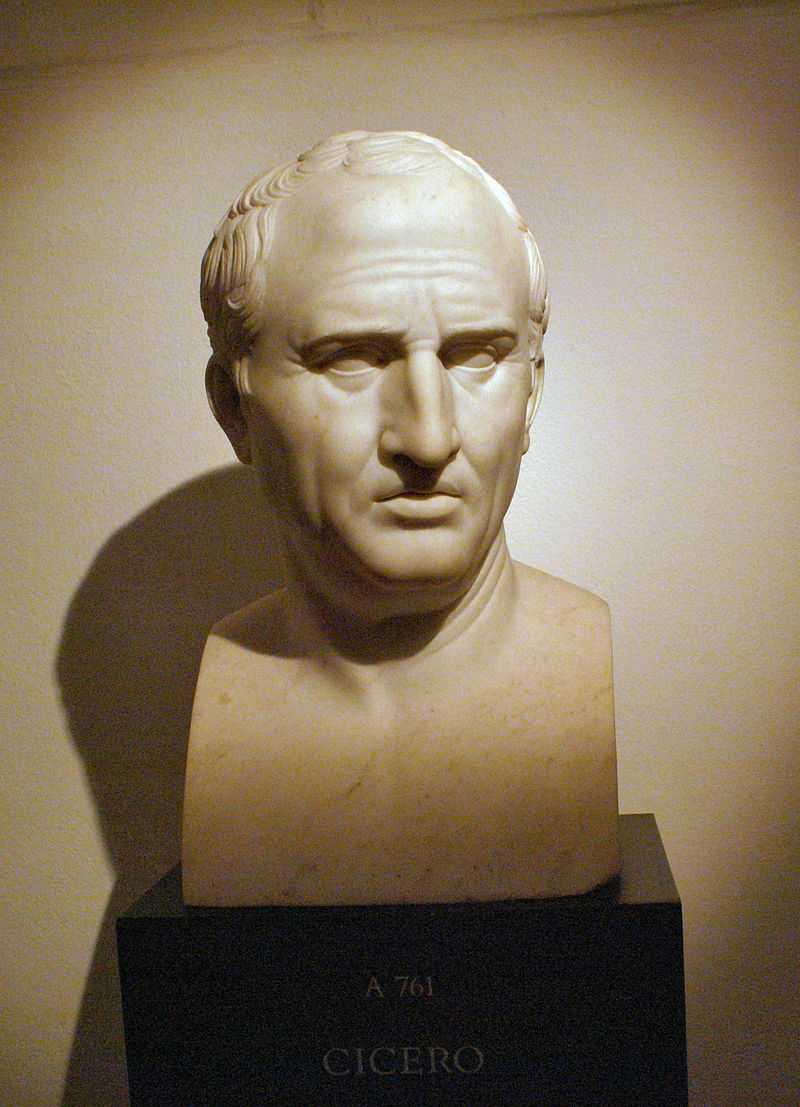
Cicero, copy by Bertel Thorvaldsen 1799-1800 of Roman bust

The Most Evil Pain: A Lot of Knowledge, But No Power

Herodotus, Histories 9.16

After dinner when they were drinking together, the Persian next to him asked [Thersander] in Greek what country was his and Thersander said Orkhomenos. Then he responded “Since you are my dinner companion and have had a drink with me I want to leave a memorial of my belief so that you may understand and be able to make some advantageous plans.

Do you see these Persians dining and the army we left in camp by the river? In a short time you will see that few of these men remain.” The Persian stopped saying these things and cried a lot.

After he was surprised at this confession, he responded, “Isn’t it right to tell these things to Mardonios and those noble Persians around him?”

Then he responded, “Friend, whatever a god decrees is impossible for humans to change: for they say that no one wants to believe what is true. Many of us Persians know this and follow because we are bound by necessity. This is most hateful pain for human beings: when someone knows a lot but has no power.”

I heard these things from Thersander of Orkhomnos and he also told me that he said them to people before the battle occurred at Plataea.”

2] ὡς δὲ ἀπὸ δείπνου ἦσαν, διαπινόντων τὸν Πέρσην τὸν ὁμόκλινον Ἑλλάδα γλῶσσαν ἱέντα εἰρέσθαι αὐτὸν ὁποδαπός ἐστι, αὐτὸς δὲ ὑποκρίνασθαι ὡς εἴη Ὀρχομένιος. τὸν δὲ εἰπεῖν ‘ἐπεὶ νῦν ὁμοτράπεζός τέ μοι καὶ ὁμόσπονδος ἐγένεο, μνημόσυνά τοι γνώμης τῆς ἐμῆς καταλιπέσθαι θέλω, ἵνα καὶ προειδὼς αὐτὸς περὶ σεωυτοῦ βουλεύεσθαι ἔχῃς τὰ συμφέροντα. ’

‘ [3] ὁρᾷς τούτους τοὺς δαινυμένους Πέρσας καὶ τὸν στρατὸν τὸν ἐλίπομεν ἐπὶ τῷ ποταμῷ στρατοπεδευόμενον: τούτων πάντων ὄψεαι ὀλίγου τινὸς χρόνου διελθόντος ὀλίγους τινὰς τοὺς περιγενομένους.’ ταῦτα ἅμα τε τὸν Πέρσην λέγειν καὶ μετιέναι πολλὰ τῶν δακρύων.

[4] αὐτὸς δὲ θωμάσας τὸν λόγον εἰπεῖν πρὸς αὐτὸν ‘οὐκῶν Μαρδονίῳ τε ταῦτα χρεόν ἐστι λέγειν καὶ τοῖσι μετ᾽ ἐκεῖνον ἐν αἴνῃ ἐοῦσι Περσέων;’ τὸν δὲ μετὰ ταῦτα εἰπεῖν ‘ξεῖνε, ὅ τι δεῖ γενέσθαι ἐκ τοῦ θεοῦ ἀμήχανον ἀποτρέψαι ἀνθρώπῳ: οὐδὲ γὰρ πιστὰ λέγουσι ἐθέλει πείθεσθαι οὐδείς. ’

‘ [5] ταῦτα δὲ Περσέων συχνοὶ ἐπιστάμενοι ἑπόμεθα ἀναγκαίῃ ἐνδεδεμένοι, ἐχθίστη δὲ ὀδύνη ἐστὶ τῶν ἐν ἀνθρώποισι αὕτη, πολλὰ φρονέοντα μηδενὸς κρατέειν.’ ταῦτα μὲν Ὀρχομενίου Θερσάνδρου ἤκουον, καὶ τάδε πρὸς τούτοισι, ὡς αὐτὸς αὐτίκα λέγοι ταῦτα πρὸς ἀνθρώπους πρότερον ἢ γενέσθαι ἐν Πλαταιῇσι τὴν μάχην.


Image result for Ancient Persian feast

Plutocrats, Listen Up: Equal is Better Than More

Diodorus Siculus, History 9.12

“There is also the story that when the people of Mitylene allowed Pittacus to have half the land over which he fought in single combat, he would not take it. Instead, he assigned an equal portion to each man, saying that an “equal amount is greater than more”. For, since he took the measure of what was greater by fairness not by profit, he judged wisely. He believed that fame and safety would follow equality while gossip and fear followed greed, and they would have quickly reclaimed his gift.”

12. Ὅτι τῶν Μιτυληναίων διδόντων τῷ Πιττακῷ τῆς χώρας ὑπὲρ ἧς ἐμονομάχησε τὴν ἡμίσειαν οὐκ ἐδέξατο, συνέταξε δὲ ἑκάστῳ κληρῶσαι τὸ ἴσον, ἐπιφθεγξάμενος ὡς τὸ ἴσον ἐστὶ τοῦ πλείονος πλεῖον. μετρῶν γὰρ ἐπιεικείᾳ τὸ πλεῖον, οὐ κέρδει, σοφῶς ἐγίνωσκεν· τῇ μὲν γὰρ ἰσότητι δόξαν καὶ ἀσφάλειαν ἀκολουθήσειν, τῇ δὲ πλεονεξίᾳ βλασφημίαν καὶ φόβον, δι᾿ ὧν ταχέως ἂν αὐτοῦ τὴν δωρεὰν ἀφείλαντο.

Cf. Diogenes Laertius, Lives of the Philosophers 1.75

“Then, the Mityleneans honored Pittakos powerfully and gave the rule of the state to him alone. During the ten years he held power, he also corrected the constitution and then surrendered power even though he lived ten years more. The Mityleneans gave him some land, but he donated it as sacred. The plot is called after his name even today. Sôsicrates says that he cut off a little bit for himself, saying that “half is greater than the whole.”

[75] Τότε δ᾽ οὖν τὸν Πιττακὸν ἰσχυρῶς ἐτίμησαν οἱ Μυτιληναῖοι, καὶ τὴν ἀρχὴν ἐνεχείρισαν αὐτῷ. ὁ δὲ δέκα ἔτη κατασχὼν καὶ εἰς τάξιν ἀγαγὼν τὸ πολίτευμα, κατέθετο τὴν ἀρχήν, καὶ δέκα ἐπεβίω ἄλλα. καὶ χώραν αὐτῷ ἀπένειμαν οἱ Μυτιληναῖοι: ὁ δὲ ἱερὰν ἀνῆκεν, ἥτις νῦν Πιττάκειος καλεῖται. Σωσικράτης δέ φησιν ὅτι ὀλίγον ἀποτεμόμενος ἔφη τὸ ἥμισυ τοῦ παντὸς πλεῖον εἶναι.

The idea of “half being greater than the whole” is likely proverbial, showing up as well in Hesiod’s Works and Days where the narrator uses it when he complains about how the judges act unfairly in their evaluation of cases (by taking bribes): “the fools don’t know how much greater the half is than the whole” νήπιοι, οὐδὲ ἴσασιν ὅσῳ πλέον ἥμισυ παντὸς.

Diodorus Siculus’ statement that “an equal part is greater than more” is probably a clever departure from the Hesiodic statement. Hesiod’s statement seems to be about greed (wanting more than your due), as glossed by Michael Apostolius:

13.77

“They don’t know how much greater the half is than the whole”: [this is a proverb used] for those who desire more and lose what they have.

Οὐδ’ ἴσασιν ὅσῳ πλέον ἥμισυ παντός: ὅτι οἱ τῶν πλειόνων ἐπιθυμοῦντες καὶ ἃ ἔχουσιν ἀποβάλλουσιν.

A unifying theme between the two versions is that in early Greek culture that which is isos is not fair in terms of being equal but it possesses equity in terms of being proper to the recipient’s social status. So, Diodorus’ isos share can map out onto Hesiod’s “half” share.

Image result for pittacus

Another proverbial moment for Pittakos:

Diodorus Siculus, History 9.12.3

“When Pittacus finally caught up with the poet Alcaeus, a man especially hateful to him who had mocked him savagely in his poems, he released him, remarking that forgiveness is a better choice than vengeance.”

ὅτι καὶ τὸν ποιητὴν Ἀλκαῖον, ἐχθρότατον αὐτοῦ γεγενημένον καὶ διὰ τῶν ποιημάτων πικρότατα λελοιδορηκότα, λαβὼν ὑποχείριον ἀφῆκεν, ἐπιφθεγξάμενος ὡς συγγνώμη τιμωρίας αἱρετωτέρα.

Human Sacrifice is Supposed to END Plagues

Clement, First Letter to the Corinthians 55

“Let’s offer some examples from other peoples as well. Many kings and people in charge, have given themselves to death after listening to an oracle, so that they might save their citizens with their own blood. And many private citizens have exiled themselves in order to decrease civil strife.”

Ἵνα δὲ καὶ ὑποδείγματα ἐθνῶν ἐνέγκωμεν· πολλοὶ βασιλεῖς καὶ ἡγούμενοι, λοιμικοῦ τινος ἐνστάντος καιροῦ χρησμοδοτηθέντες παρέδωκαν ἑαυτοὺς εἰς θάνατον, ἵνα ῥύσωνται διὰ τοῦ ἑαυτῶν αἵματος τοὺς πολίτας· πολλοὶ ἐξεχώρησαν ἰδίων πόλεων, ἵνα μὴ στασιάζωσιν ἐπὶ πλεῖον.

Stobaios, Florilegium  3.7.69

“When a plague was afflicting the Spartans because of the murder of the heralds sent by Xerxes—because he demanded earth and water as signs of servitude—they received an oracle that they would be saved if some Spartans would be selected to be killed by the king. Then Boulis and Sperkhis came forward to the king because they believed they were worthy to be sacrificed. Because he was impressed by their bravery he ordered them to go home.”

Τοῦ αὐτοῦ. λοιμοῦ κατασχόντος τὴν Λακεδαίμονα διὰ τὴν ἀναίρεσιν τῶν κηρύκων τῶν ἀπεσταλέντων παρὰ Ξέρξου αἰτοῦντος γῆν καὶ ὕδωρ ὥσπερ ἀπαρχὰς δουλείας, χρησμὸς ἐδόθη ἐπαλλαγήσεσθαι αὐτούς, εἴ γέ τινες ἕλοιντο Λακεδαιμονίων παρὰ τοῦ βασιλέως ἀναιρεθῆναι. τότε Βοῦλις καὶ Σπέρχις ἀφικόμενοι πρὸς βασιλέα ἠξίουν ἀναιρεθῆναι· ὁ δὲ θαυμάσας αὐτῶν τὴν ἀρετὴν ἐπανιέναι προσέταξεν.

Diogenes Laertius, Vitae philosophorum 1.110 [Epimenides]

“Epimenides was known among the Greeks and was thought to be extremely beloved to the gods. For this reason, when the Athenians were once afflicted by a plague and the Pythian oracle prophesied that they should cleanse their city, they sent a ship along with Nikias the son of Nikêratos, summoning Epimenides.

He made it to Athens at the time of the 46th Olympiad [c. 596 BCE] and cleansed the city. He stopped it in the following manner. After obtaining white and black sheep, he led them to the Areopagos and then allowed them to go wherever they wanted there. He ordered the people following them to sacrifice the sheep to whichever god was proper to the place where each sheep laid down.

This is how the plague stopped. For this reason it is still even today possible to find altars without names in certain Athenian neighborhoods as a commemoration of that ancient cleansing. Some people report that Epimenides indicated the pollution from the Kylon scandal as the cause of the plague along with a resolution for it. For this reason, they killed two youths, Kratinos and Ktêsibios and the suffering was relieved.”

(110) γνωσθεὶς δὲ παρὰ τοῖς ῞Ελλησι θεοφιλέστατος εἶναι ὑπελήφθη. ὅθεν καὶ Ἀθηναίοις ποτὲ λοιμῶι κατεχομένοις ἔχρησεν ἡ Πυθία καθῆραι τὴν πόλιν, οἱ δὲ πέμπουσι ναῦν τε καὶ Νικίαν τὸν Νικηράτου εἰς Κρήτην, καλοῦντες τὸν Ἐπιμενίδην. καὶ ὃς ἐλθὼν ὀλυμπιάδι τεσσαρακοστῆι ἕκτηι ἐκάθηρεν αὐτῶν τὴν πόλιν, καὶ ἔπαυσε τὸν λοιμὸν τοῦτον τὸν τρόπον· λαβὼν πρόβατα μέλανά τε καὶ λευκά, ἤγαγεν πρὸς τὸν ῎Αρειον πάγον, κἀκεῖθεν εἴασεν ἰέναι οἷ βούλοιντο, προστάξας τοῖς ἀκολούθοις, ἔνθα ἂν κατακλινῆι αὐτῶν ἕκαστον, θύειν τῶι προσήκοντι θεῶι· καὶ οὕτω λῆξαι τὸ κακόν· ὅθεν ἔτι καὶ νῦν ἔστιν εὺρεῖν κατὰ τοὺς δήμους τῶν Ἀθηναίων βωμοὺς ἀνωνύμους, ὑπόμνημα τῆς τότε γενομενης ἐξιλάσεως. οἱ δὲ τὴν αἰτίαν εἰπεῖν τοῦ λοιμοῦ τὸ Κυλώνειον ἄγος σημαίνειν τε τὴν ἀπαλλαγήν· καὶ διὰ τοῦτο ἀποθανεῖν δύο νεανίας Κρατῖνον καὶ Κτησίβιον, καὶ λυθῆναι τὴν συμφοράν

Ps.-Plutarch, Parallela minora 19A, 310B-C

“Kuanippos, a Syracusan by birth, did not sacrifice to Dionysus alone. In rage over this, the god caused him to become drunk and then he raped his daughter Kuanê in some shadowy place. She took his ring and gave it to her nurse as to be proof of what had happened in the future.

When they were later struck by a plague and Pythian Apollo said that they had to sacrifice the impious person to the Gods-who-Protect, everyone else was uncertain about the oracle. Kuanê understood it. She grabbed her father by the hair and sacrificed herself over him once she’d butchered him on the altar.

That’s the story Dositheos tells in the third book of his Sicilian Tales.

Κυάνιππος γένει Συρακούσιος μόνωι Διονύσωι οὐκ ἔθυεν· ὁ δὲ θεὸς ὀργισθεὶς μέθην ἐνέσκηψε, καὶ ἐν τόπωι σκοτεινῶι τὴν θυγατέρα ἐβιάσατο Κυάνην· ἡ δὲ τὸν δακτύλιον περιελομένη ἔδωκε τῆι τροφῶι ἐσόμενον ἀναγνώρισμα. λοιμωξάντων δὲ, καὶ τοῦ Πυθίου εἰπόντος μὲν δεῖν τὸν ἀσεβῆ <᾽Απο>τροπαίοις θεοῖς σφαγιάσαι, τῶν δ᾽ ἄλλων ἀγνοούντων τὸν χρησμόν, γνοῦσα ἡ Κυάνη καὶ ἐπιλαβομένη τῶν τριχῶν εἷλκε, καὶ αὐτὴ κατασφάξασα τὸν πατέρα ἑαυτὴν ἐπέσφαξε, καθάπερ Δοσίθεος ἐν τῶι τρίτωι Σικελικῶν.

Plague of Athens - Wikipedia
The Plague of Athens, Michiel Sweerts, c. 1652–1654

Hesiod, Works and Days 240-247

“The whole state often suffers because of a wicked man
Who transgresses the gods and devises reckless deeds.
Kronos’ son rains down great pain on them from heaven:
Famine and plague and the people start to perish.
[Women don’t give birth and households waste away
Thanks to the vengeance of Olympian Zeus.] And at other times
Kronos’ son ruins their great army or their wall
Or he destroys their ships on the the sea.”

πολλάκι καὶ ξύμπασα πόλις κακοῦ ἀνδρὸς ἀπηύρα,
ὅστις ἀλιτραίνῃ καὶ ἀτάσθαλα μηχανάαται.
τοῖσιν δ’ οὐρανόθεν μέγ’ ἐπήγαγε πῆμα Κρονίων,
λιμὸν ὁμοῦ καὶ λοιμόν, ἀποφθινύθουσι δὲ λαοί·
[οὐδὲ γυναῖκες τίκτουσιν, μινύθουσι δὲ οἶκοι
Ζηνὸς φραδμοσύνῃσιν ᾿Ολυμπίου· ἄλλοτε δ’ αὖτε]
ἢ τῶν γε στρατὸν εὐρὺν ἀπώλεσεν ἢ ὅ γε τεῖχος
ἢ νέας ἐν πόντῳ Κρονίδης ἀποτείνυται αὐτῶν.


Some other cures:

Diogenes Laertius, Empedocles 8.70

“When a plague struck the Selinuntians thanks to the pollution from a nearby river causing people to die and the women to miscarry, Empedocles recognized the problem and turned two local rivers at his own expense. They sweetened the streams by mixing in with them.

Once the plague was stopped in this way, Empedocles appeared while the Selinuntines were having a feast next to the river. They rose and bowed before him, praying to him as if he were a god. He threw himself into a fire because he wanted to test the truth of his divinity.”

τοῖς Σελινουντίοις ἐμπεσόντος λοιμοῦ διὰ τὰς ἀπὸ τοῦ παρακειμένου ποταμοῦ δυσωδίας, ὥστε καὶ αὐτοὺς φθείρεσθαι καὶ τὰς γυναῖκας δυστοκεῖν, ἐπινοῆσαι τὸν Ἐμπεδοκλέα καὶ δύο τινὰς ποταμοὺς τῶν σύνεγγυς ἐπαγαγεῖν ἰδίαις δαπάναις· καὶ καταμίξαντα γλυκῆναι τὰ ῥεύματα. οὕτω δὴ λήξαντος τοῦ λοιμοῦ καὶ τῶν Σελινουντίων εὐωχουμένων ποτὲ παρὰ τῷ ποταμῷ, ἐπιφανῆναι τὸν Ἐμπεδοκλέα· τοὺς δ’ ἐξαναστάντας προσκυνεῖν καὶ προσεύχεσθαι καθαπερεὶ θεῷ. ταύτην οὖν θέλοντα βεβαιῶσαι τὴν διάληψιν εἰς τὸ πῦρ ἐναλέσθαι.

Historia Augusta, Elagabalus 4, 5

“He had banquet and bedroom furniture made from silver. He often ate camel-heels and cock’s combs removed from birds who were still alive to imitate Apicius, as well as the tongues of peacocks and nightingales because it was said that whoever ate them was safe from the plague.

He also gave the the Palace visitors enormous serving dishes piled with the innards of mullets, flamingo-brains, partridge eggs, the brains of thrushes, and the whole heads of parrots, pheasants, and peacocks.”

Hic solido argento factos habuit lectos et tricliniares et cubiculares. comedit saepius ad imitationem Apicii calcanea camelorum et cristas vivis gallinaceis demptas, linguas pavonum et lusciniarum, quod qui ederet a pestilentia tutus diceretur. exhibuit et Palatinis lances ingentes extis mullorum refertas et cerebellis phoenicopterum et perdicum ovis et cerebellis turdorum et capitibus psittacorum et phasianorum et pavonum.

The Right To Criticize the King: The Iliad and Freedom of Speech

Homer, Iliad 9.32-34

“After a while, Diomedes good-at-the warcry, addressed them:
“I will fight with you first because you are being foolish, son of Atreus,
Which is right, Lord, in the assembly. So don’t get angry at all.”

ὀψὲ δὲ δὴ μετέειπε βοὴν ἀγαθὸς Διομήδης·
᾿Ατρεΐδη σοὶ πρῶτα μαχήσομαι ἀφραδέοντι,
ἣ θέμις ἐστὶν ἄναξ ἀγορῇ· σὺ δὲ μή τι χολωθῇς.

Schol. T ad Il. 9.32b ex

[“I will fight with you first”] “It is clear that he is also criticizing the rest of the Greeks because they are consenting to the retreat through their silence. For he says the fight in opposition to the speech.”

ex. σοὶ πρῶτα μαχήσομαι: δῆλον ὡς καὶ τοῖς ἄλλοις μέμφεται ὡς συναινοῦσι τῇ φυγῇ διὰ τοῦ σιωπᾶν. μάχην δέ φησι τὴν ἐναντίωσιν τοῦ λόγου. T

Schol. A ad Il. 9.33b ex

[“which is right in the assembly, lord”] This is the custom, in a democracy. It is established in the agora because it is the custom to speak with freedom of speech [parrêsia] in the assembly.

D | Nic. ἣ θέμις <ἐστίν, ἄναξ, ἀγορῇ>: ὡς νόμος ἐστὶν—ἐν δημοκρατίᾳ. | ἐπὶ δὲ τὸ ἀγορῇ στικτέον, ὡς νόμος ἐστὶν ἐκκλησίας μετὰ παρρησίας λέγειν.

Schol. bT ad Il. 9.33 ex

[“don’t get angry at all”] this is an anticipatory warning, since he is about to criticize him more severely than he has been reproached at anytime, [alleging that it is right] to speak against kings during assemblies. He asks him to set anger aside because he believes it is right to accept advantageous truth and he is clarifying the purpose of what is said—that it is not to insult.

ex. ἣ θέμις ἐστίν, ἄναξ, <ἀγορῇ· σὺ δὲ μή τι χολωθῇς>: προδιόρθωσις, ἐπειδὴ σφοδρότερον αὐτοῦ μέλλει καθάπτεσθαι ὡς ἐφιεμένου μὴ ἄλλοτε, ἐν δὲ ταῖς ἐκκλησίαις ἀντιλέγειν τοῖς βασιλεῦσιν. προπαραιτεῖται δὲ τὴν ὀργήν, ἀξιῶν δέξασθαι τὴν πρὸς τὸ συμφέρον ἀλήθειαν καὶ δηλῶν ὡς τοῖς εἰρημένοις, οὐκ αὐτῷ ἀπέχθεται

Image result for ancient greek political assembly
Painting of Perikles by Philipp von Foltz