The Sad Death of Hesiod and His Body’s Afterlife

According to the following account, Hesiod died for another man’s crimes. His corpse was moved by dolphins. Then he was the star of CSI: Lokris.

Plutarch, Dinner of the Seven Wise Men 19 (= Moralia 162d-e)

“Hesiod’s misfortune was rather human and like our own—you have probably heard the story”

‘No, I have not’, I said.

‘Well, it is really worth hearing. It seems that Hesiod was sharing hospitality and a place with a man from Miletus when they were in Lokris. When the other guy was secretly having sex with their host’s daughter and was caught, he had suspicion that Hesiod knew from the beginning and conspired to hide the offense—even though he was responsible for nothing, he wrongly encountered untimely rage and slander. For the brothers of the girl killed him after they ambushed him near the Nemeion in Lokris, and they killed his servant, named Troilos, too.

After the bodies were pushed out into the river Daphnos, Troilos’ was carried to a boulder washed by water, positioned a little bit out into the sea. And to this day the boulder is called Troilos. A pod of dolphins took Hesiod’s body right away and conveyed it first to Rhion and Molykria. It just happened that the Lokrian sacrifice at Rhion and their assembly, which they hold occasionally even to our time in that place, was in progress at that time. When the body showed up, carried as it was, they were amazed at the chance and they ran down and, when they recognized the corpse since it was still rather fresh, they considered everything secondary to investigating the murder, all because of Hesiod’s fame

They accomplished this quickly by discovering the murderers [a dog went barking and hunting the murderers with a shout]. They put them still alive in the sea and destroyed their homes. Hesiod was then buried near Nemeia. Many people foreign to the region do not know where the grave is. It is hidden because, as they claim, it was sought by the people of Orkhomenos who wanted to transfer the remains to their vicinity in accordance with an oracle.”

Image result for Ancient Greek dolphin vase

.

Plutarchi sept. sap. conv. 19 (Hercher): ἀνθρώπινον δὲ καὶ πρὸς ἡμᾶς τὸ τοῦ ῾Ησιόδου πάθος· ἀκήκοας γὰρ ἴσως τὸν λόγον. Οὐκ ἔγωγε, εἶπον. ᾿Αλλὰ μὴν ἄξιον πυθέσθαι.

Μιλησίου γὰρ ὡς ἔοικεν ἀνδρός, ᾧ ξενίας ἐκοινώνει ὁ ῾Ησίοδος καὶ διαίτης ἐν Λοκροῖς, τῇ τοῦ ξένου θυγατρὶ κρύφα συγγενομένου καὶ φωραθέντος, ὑποψίαν ἔσχεν ὡς γνοὺς ἀπ’ ἀρχῆς καὶ συνεπικρύψας τὸ ἀδίκημα, μηδενὸς ὢν αἴτιος ὀργῇ δ’ ἀκαίρῳ καὶ διαβολῇ περιπεσὼν ἀδίκως. ἀπέκτειναν γὰρ αὐτὸν οἱ τῆς παιδίσκης ἀδελφοὶ περὶ τὸ Λοκρικὸν Νέμειον ἐνεδρεύσαντες καὶ μετ’ αὐτοῦ τὸν ἀκόλουθον ᾧ Τρωίλος ἦν ὄνομα. τῶν δὲ σωμάτων εἰς τὸν Δάφνον ποταμὸν ὠσθέντων τὸ μὲν τοῦ Τρωίλου εἰς τὴν θάλασσαν ἔξω φορούμενον ἐπεσχέθη περικλύστῳ χοιράδι  μικρὸν ὑπὲρ τὴν θάλασσαν ἀνεχούσῃ· καὶ μέχρι νῦν Τρωίλος ἡ χοιρὰς καλεῖται. τοῦ δ’ ῾Ησιόδου τὸν νεκρὸν εὐθὺς ἀπὸ γῆς ὑπολαβοῦσα δελφίνων ἀγέλη πρὸς τὸ ῾Ρίον ἐκόμιζε καὶ τὴν Μολυκρίαν. ἐτύγχανε δὲ Λοκροῖς ἡ τῶν ῾Ρίων καθεστῶσα θυσία καὶ πανήγυρις, ἣν ἄγουσιν ἔτι νῦν περιφανῶς περὶ τὸν τόπον ἐκεῖνον. ὡς δ’ ὤφθη προσφερόμενον τὸ σῶμα, θαυμάσαντες ὡς εἰκὸς ἐπὶ τὴν ἀκτὴν κατέδραμον καὶ γνωρίσαντες ἔτι πρόσφατον τὸν νεκρόν, ἅπαντα δεύτερα τοῦ ζητεῖν τὸν φόνον ἐποιοῦντο διὰ τὴν δόξαν τοῦ ῾Ησιόδου. καὶ τοῦτο μὲν ταχέως ἔπραξαν εὑρόντες τοὺς φονέας (add. Plut. de soll. an. 36: τοῦ κυνὸς ὑλακτοῦντος καὶ μετὰ βοῆς ἐπιφερομένου τοῖς φονεῦσιν)· αὐτούς τε γὰρ κατεπόντισαν ζῶντας καὶ τὴν οἰκίαν κατέσκαψαν. ἐτάφη δ’ ὁ ῾Ησίοδος πρὸς τῷ Νεμείῳ· τὸν δὲ τάφον οἱ πολλοὶ τῶν ξένων οὐκ ἴσασιν, ἀλλ’ ἀποκέκρυπται, ζητούμενος ὑπ’ ᾿Ορχομενίων, ὥς φασι, βουλομένων κατὰ χρησμὸν ἀνελέσθαι τὰ λείψανα καὶ θάψαι παρ’ αὑτοῖς.

“No Mortal Could Rival Me In Work”: Some Greek Passages for Labor Day

laimPlutarch, Perikles 1.4 5-6

“Often and quite contrarily, we look down on a laborer while delighting in his work.”

πολλάκις δὲ καὶ τοὐναντίον χαίροντες τῷ ἔργῳ τοῦ δημιουργοῦ καταφρονοῦμεν

Xenophon, Memorabilia 1.56-57

“His accuser claimed that he selected the most wretched lines from the most famous poets and used them as proofs to teach his followers to be evildoers and tyrants. He is said to have used the line from Hesiod “there is nothing reproachable about work, but laziness is reproachable” (WD 311) to claim that the poet exhorted not to refrain from any work, unjust or shameful, but to do everything for profit.

Socrates, although he might agree that it is good and useful for a man to be a worker and harmful and bad for him to be lazy—that work is good and laziness is bad—he used to say that being a worker required people to do something good. Gambling or any other immortal occupation which takes from others he used to call laziness. Within these parameters, Hesiod’s claim that “there is nothing reproachable about work, but laziness is reproachable” holds true.

ἔφη δ᾿ αὐτὸν ὁ κατήγορος καὶ τῶν ἐνδοξοτάτων ποιητῶν ἐκλεγόμενον τὰ πονηρότατα καὶ τούτοις μαρτυρίοις χρώμενον διδάσκειν τοὺς συνόντας κακούργους τε εἶναι καὶ τυραννικούς, Ἡσιόδου μὲν τὸ: ἔργον δ᾿ οὐδὲν ὄνειδος, ἀεργίη δέ τ᾿ ὄνειδος·
τοῦτο δὴ λέγειν αὐτὸν ὡς ὁ ποιητὴς κελεύει μηδενὸς ἔργου μήτ᾿ ἀδίκου μήτ᾿ αἰσχροῦ ἀπέχεσθαι, ἀλλὰ καὶ ταῦτα ποιεῖν ἐπὶ τῷ κέρδει.

Σωκράτης δ᾿ ἐπεὶ διομολογήσαιτο τὸ μὲν ἐργάτην εἶναι ὠφέλιμόν τε ἀνθρώπῳ καὶ ἀγαθὸν εἶναι, τὸ δὲ ἀργὸν βλαβερόν τε καὶ κακόν, καὶ τὸ μὲν ἐργάζεσθαι ἀγαθόν, τὸ δ᾿ ἀργεῖν κακόν, τοὺς μὲν ἀγαθόν τι ποιοῦντας ἐργάζεσθαί τε ἔφη καὶ ἐργάτας εἶναι, τοὺς δὲ κυβεύοντας ἤ τι ἄλλο πονηρὸν καὶ ἐπιζήμιον ποιοῦντας ἀργοὺς ἀπεκάλει. ἐκ δὲ τούτων ὀρθῶς ἂν ἔχοι τὸ: ἔργον δ᾿ οὐδὲν ὄνειδος, ἀεργίη δέ τ᾿ ὄνειδος.

Hesiod Works and Days, 289-90

“The gods made sweat the price for virtue.”

τῆς δ’ ἀρετῆς ἱδρῶτα θεοὶ προπάροιθεν ἔθηκαν
ἀθάνατοι·

Image result for ancient greek harvest vase
The “Harvesters vase” from Agia Triada ( 1500-1400 BC). Heraklion Archaeological Museum

Xenophon, Oeconomicus 4.15-16

“Critoboulos, Some say that whenever the great king gives gifts, he calls in first those who proved their excellence at war because there is no advantage to plowing many fields unless they defend them. After them, he rewards those who prepare and work the land best, because brave men cannot survive unless someone works the land.”

Φασὶ δέ τινες, ἔφη ὁ Σωκράτης, ὦ Κριτόβουλε, καὶ ὅταν δῶρα διδῷ ὁ βασιλεύς, πρῶτον μὲν εἰσκαλεῖν τοὺς πολέμῳ ἀγαθοὺς γεγονότας, ὅτι οὐδὲν ὄφελος πολλὰ ἀροῦν, εἰ μὴ εἶεν οἱ ἀρήξοντες· δεύτερον δὲ τοὺς κατασκευάζοντας τὰς χώρας ἄριστα καὶ ἐνεργοὺς ποιοῦντας λέγοντα, ὅτι οὐδ᾿ ἂν οἱ ἄλκιμοι δύναιντο ζῆν, εἰ μὴ εἶεν οἱ ἐργαζόμενοι. λέγεται δὲ καὶ Κῦρός ποτε, ὅσπερ εὐδοκιμώτατος δὴ βασιλεὺς γεγένηται, εἰπεῖν τοῖς ἐπὶ τὰ δῶρα κεκλημένοις, ὅτι αὐτὸς ἂν δικαίως τὰ ἀμφοτέρων δῶρα λαμβάνοι· κατασκευάζειν τε γὰρ ἄριστος εἶναι ἔφη χώραν καὶ ἀρήγειν τοῖς κατεσκευασμένοις.

Plutarch, fr. 43

“Let no one find fault with this line because wealth is made to be much praised ahead of virtue. Know that wealth here is the product workers get from their labors—it is a just portion gathered from their personal toil.”

Μηδεὶς λοιδορείτω τὸν στίχον εἰς τὸν πολυάρατον πλοῦτον ὁρῶν τὸν πόρρω τῆς ἀρετῆς ἐσκηνημένον, ἀλλὰ πλοῦτον οἰέσθω νῦν λέγεσθαι τὴν ἀπὸ τῶν ἔργων πορισθεῖσαν ἀφθονίαν τοῖς ἐργαζομένοις δικαίαν οὖσαν καὶ ἀπὸ τῶν οἰκείων πόνων ἠθροισμένην.

Pindar, Isthmian 1.47

“Men find different payment sweet for different work.”

μισθὸς γὰρ ἄλλοις ἄλλος ἐπ’ ἔργμασιν ἀνθρώποις
γλυκύς

Hesiod, Works and Days, 303

“Gods and men alike dislike a lazy man.”

τῷ δὲ θεοὶ νεμεσῶσι καὶ ἀνέρες ὅς κεν ἀεργὸς.

Archilochus fr. 307

“The trap does the sleeping fisherman’s work”

εὕδοντι δ᾿ αἱρεῖ κύρτος

Euripides, Hippolytus 189-190

“The life of men is wholly grievous, nor is there any release from toil.”

πᾶς δ’ ὀδυνηρὸς βίος ἀνθρώπων
κοὐκ ἔστι πόνων ἀνάπαυσις.

Homer, Odyssey 15.321-324

“No mortal could rival me in work:
No one could best me at building a fire or heaping dry wood,
At serving at the table, cooking meat or serving wine–
All those tasks lesser men complete for their betters.”

δρηστοσύνῃ οὐκ ἄν μοι ἐρίσσειε βροτὸς ἄλλος,
πῦρ τ’ εὖ νηῆσαι διά τε ξύλα δανὰ κεάσσαι,
δαιτρεῦσαί τε καὶ ὀπτῆσαι καὶ οἰνοχοῆσαι,
οἷά τε τοῖς ἀγαθοῖσι παραδρώωσι χέρηες.”

Odyssey, 18.366-383

“Eurymachus: I wish the two of us could have a labor-contest
In the height of spring when the days are drawing longer,
In the thickening grass. I would grip the curved scythe
And you could hold the same thing, so we could test each other
At work, fasting right up to dusk where the grass was thick.
And then the next day we could drive the oxen, the strongest ones,
Bright and large, both stuffed full with their food,
A pair of the same age, equally burdened, their strength unwavering.
I’d wish for a four-acre parcel to put under the plow.
Then you’d see me, how I would cut a furrow straight from end to end.
Or if, instead, Kronos’ son would send me a war today,
And I would have a shield and two spears
Matched with a bronze helmet well-fit to my temples.
Then you’d see me mixing it up in the front lines
And you wouldn’t bawl about, belittling my hungry stomach.”

“Εὐρύμαχ’, εἰ γὰρ νῶϊν ἔρις ἔργοιο γένοιτο
ὥρῃ ἐν εἰαρινῇ, ὅτε τ’ ἤματα μακρὰ πέλονται,
ἐν ποίῃ, δρέπανον μὲν ἐγὼν εὐκαμπὲς ἔχοιμι,
καὶ δὲ σὺ τοῖον ἔχοις, ἵνα πειρησαίμεθα ἔργου
νήστιες ἄχρι μάλα κνέφαος, ποίη δὲ παρείη·
εἰ δ’ αὖ καὶ βόες εἶεν ἐλαυνέμεν, οἵ περ ἄριστοι,
αἴθωνες μεγάλοι, ἄμφω κεκορηότε ποίης,
ἥλικες ἰσοφόροι, τῶν τε σθένος οὐκ ἀλαπαδνόν,
τετράγυον δ’ εἴη, εἴκοι δ’ ὑπὸ βῶλος ἀρότρῳ·
τῶ κέ μ’ ἴδοις, εἰ ὦλκα διηνεκέα προταμοίμην.
εἰ δ’ αὖ καὶ πόλεμόν ποθεν ὁρμήσειε Κρονίων
σήμερον, αὐτὰρ ἐμοὶ σάκος εἴη καὶ δύο δοῦρε
καὶ κυνέη πάγχαλκος ἐπὶ κροτάφοισ’ ἀραρυῖα,
τῶ κέ μ’ ἴδοις πρώτοισιν ἐνὶ προμάχοισι μιγέντα,
οὐδ’ ἄν μοι τὴν γαστέρ’ ὀνειδίζων ἀγορεύοις.

Why Wives Should Learn Geometry and Plato. And, an Eclipse

Plutarch, Advice to Bride and Groom (Moralia138a-146a : Conjugalia Praecepta)

“These kinds of studies, foremost, distract woman from inappropriate matters. For, a wife will be ashamed to dance when she is learning geometry. And she will not receive spells of medicine if she is charmed by Platonic dialogues and the works of Xenophon. And if anyone claims she can pull down the moon, she will laugh at the ignorance and simplicity of the women who believe these things because she herself is not ignorant of astronomy and she has read about Aglaonikê. She was the daughter of Hêgêtor of Thessaly because she knew all about the periods of the moon and eclipses knew before everyone about the time when the moon would be taken by the shadow of the earth. She tricked the other women and persuaded them that she herself was causing the lunar eclipse.”

τὰ δὲ τοιαῦτα μαθήματα πρῶτον ἀφίστησι τῶν ἀτόπων τὰς γυναῖκας· αἰσχυνθήσεται γὰρ ὀρχεῖσθαι γυνὴ γεωμετρεῖν μανθάνουσα, καὶ φαρμάκων ἐπῳδὰς οὐ προσδέξεται τοῖς Πλάτωνος ἐπᾳδομένη λόγοις καὶ τοῖς Ξενοφῶντος. ἂν δέ τις ἐπαγγέλληται καθαιρεῖν τὴν σελήνην, γελάσεται τὴν ἀμαθίαν καὶ τὴν ἀβελτερίαν τῶν ταῦτα πειθομένων γυναικῶν, ἀστρολογίας μὴ ἀνηκόως ἔχουσα καὶ περὶ Ἀγλαονίκης ἀκηκουῖα τῆς Ἡγήτορος τοῦ Θετταλοῦ θυγατρὸς ὅτι τῶν ἐκλειπτικῶν ἔμπειρος οὖσα πανσελήνων καὶ προειδυῖα τὸν χρόνον, ἐν ᾧ συμβαίνει τὴν σελήνην ὑπὸ γῆς σκιᾶς ἁλίσκεσθαι, παρεκρούετο καὶ συνέπειθε τὰς γυναῖκας ὡς αὐτὴ καθαιροῦσα τὴν σελήνην.


Image result for Ancient Greek marriage advice

Reputable Tales about Ariadne; And Strange Ones

The following account is interesting for the variations in the story of Ariadne and Theseus but also for the strange detail of the ritual where young men imitate a woman in childbirth. Also, the counterfeit letters bit is precious. What would they say?.

Other tales about Ariadne, According to Plutarch (Theseus 20)

“There are many other versions circulated about these matters still and also about Ariadne, none of which agree. For some say that she hanged herself after she was abandoned by Theseus. Others claim that after she was taken to Naxos by sailors she lived with Oinaros a priest of Dionysus and that she was abandoned by Theseus because he loved another.

“A terrible lust for Aiglê the daughter of Panopeus ate at him” [fr. 105]—this is a line Hereas the Megarean claims Peisistratus deleted from the poems of Hesiod, just as again he says that he inserted into the Homeric catalogue of dead “Theseus and Perithoos, famous children of the gods” [Od. 11.631] to please the Athenans. There are some who say that Ariadne gave birth to Oinipiôn and Staphulos with Theseus. One of these is Ion of  Khios who has sung about his own city “Oinopiôn, Theseus’ son, founded this city once.” [fr. 4D]

The most reputable of the myths told are those which, as the saying goes, all people have in their mouths. But Paiôn the Amathousian has handed down a particular tale about these events. For he says that Theseus was driven by a storm, to Cyprus and that he had Ariadne with him, who was pregnant and doing quite badly because of the sea and the rough sailing. So he set her out alone and he was carried back into the sea from the land while he was tending to the ship. The native women, then, received Ariadne and they tried to ease her depression because of her loneliness by offering her counterfeit written to her by Theseus and helping her and supporting her during childbirth. They buried her when she died before giving birth.

Paiôn claims that when Theseus returned he was overcome with grief and he left money to the island’s inhabitants, charging them to sacrifice to Ariadne and to have two small statues made for her—one of silver and one of bronze. During the second day of the month of Gorpiaon at the sacrifice, one of the young men lies down and mouns and acts as women do during childbirth. They call the grove in which they claim her tomb is that of Ariadne Aphrodite.

Some of the Naxians claim peculiarly that there were two Minoses and two Ariadnes. They claim one was married to Dionysus on Naxos and bore the child Staphulos, and the young one was taken by Theseus and left when he came to Naxos with a nurse named Korkunê—whose tomb they put on display. They claim that Ariadne died there and has honors unequal to those of the earlier one. The first has a festival of singing and play; the second has one where sacrifices are performed with grief and mourning.”

Πολλοὶ δὲ λόγοι καὶ περὶ τούτων ἔτι λέγονται καὶ περὶ τῆς Ἀριάδνης, οὐδὲν ὁμολογούμενον ἔχοντες. οἱ μὲν γὰρ ἀπάγξασθαί φασιν αὐτὴν ἀπολειφθεῖσαν ὑπὸ τοῦ Θησέως, οἱ δὲ εἰς Νάξον ὑπὸ ναυτῶν κομισθεῖσαν Οἰνάρῳ τῷ ἱερεῖ τοῦ Διονύσου συνοικεῖν, ἀπολειφθῆναι δὲ τοῦ Θησέως ἐρῶντος ἑτέρας· Δεινὸς γάρ μιν ἔτειρεν ἔρως Πανοπηΐδος Αἴγλης. τοῦτο γὰρ τὸ ἔπος ἐκ τῶν Ἡσιόδου Πεισίστρατον ἐξελεῖν φησιν Ἡρέας ὁ Μεγαρεύς, ὥσπερ αὖ πάλιν ἐμβαλεῖν εἰς τὴν Ὁμήρου νέκυιαν τὸ Θησέα Πειρίθοόν τε θεῶν ἀριδείκετα τέκνα,χαριζόμενον Ἀθηναίοις· ἔνιοι δὲ καὶ τεκεῖν ἐκ Θησέως Ἀριάδνην Οἰνοπίωνα καὶ Στάφυλον· ὧν καὶ ὁ Χῖος Ἴων ἐστὶ περὶ τῆς ἑαυτοῦ πατρίδος λέγων· Τήν ποτε Θησείδης ἔκτισεν Οἰνοπίων.

Ἃ δ᾿ ἐστὶν εὐφημότατα τῶν μυθολογουμένων, πάντες ὡς ἔπος εἰπεῖν διὰ στόματος ἔχουσιν. ἴδιον δέ τινα περὶ τούτων λόγον ἐκδέδωκε Παίων ὁ Ἀμαθούσιος. τὸν γὰρ Θησέα φησὶν ὑπὸ χειμῶνος εἰς Κύπρον ἐξενεχθέντα καὶ τὴν Ἀριάδνην ἔγκυον ἔχοντα, φαύλως δὲ διακειμένην ὑπὸ τοῦ σάλου καὶ δυσφοροῦσαν, ἐκβιβάσαι μόνην, αὐτὸν δὲ τῷ πλοίῳ βοηθοῦντα πάλιν εἰς τὸ πέλαγος ἀπὸ τῆς γῆς φέρεσθαι. τὰς οὖν ἐγχωρίους γυναῖκας τὴν Ἀριάδνην ἀναλαβεῖν καὶ περιέπειν ἀθυμοῦσαν ἐπὶ τῇ μονώσει, καὶ γράμματα πλαστὰ προσφέρειν, ὡς τοῦ Θησέως γράφοντος αὐτῇ, καὶ περὶ τὴν ὠδῖνα συμπονεῖν καὶ βοηθεῖν· ἀποθανοῦσαν δὲ θάψαι μὴ τεκοῦσαν. ἐπελθόντα δὲ τὸν Θησέα καὶ περίλυπον γενόμενον τοῖς μὲν ἐγχωρίοις ἀπολιπεῖν χρήματα, συντάξαντα θύειν τῇ Ἀριάδνῃ, δύο δὲ μικροὺς ἀνδριαντίσκους ἱδρύσασθαι, τὸν μὲν ἀργυροῦν, τὸν δὲ χαλκοῦν. ἐν δὲ τῇ θυσίᾳ τοῦ Γορπιαίου μηνὸς ἱσταμένου δευτέρᾳ κατακλινόμενόν τινα τῶν νεανίσκων φθέγγεσθαι καὶ ποιεῖν ἅπερ ὠδίνουσαι γυναῖκες· καλεῖν δὲ τὸ ἄλσος Ἀμαθουσίους, ἐν ᾧ τὸν τάφον δεικνύουσιν, Ἀριάδνης Ἀφροδίτης.

Καὶ Ναξίων δέ τινες ἰδίως ἱστοροῦσι δύο Μίνωας γενέσθαι καὶ δύο Ἀριάδνας, ὧν τὴν μὲν Διονύσῳ γαμηθῆναί φασιν ἐν Νάξῳ καὶ τοὺς περὶ Στάφυλον τεκεῖν, τὴν δὲ νεωτέραν ἁρπασθεῖσαν ὑπὸ τοῦ Θησέως καὶ ἀπολειφθεῖσαν εἰς Νάξον ἐλθεῖν, καὶ τροφὸν μετ᾿ αὐτῆς ὄνομα Κορκύνην, ἧς δείκνυσθαι τάφον. ἀποθανεῖν δὲ καὶ τὴν Ἀριάδνην αὐτόθι καὶ τιμὰς ἔχειν οὐχ ὁμοίας τῇ προτέρᾳ. τῇ μὲν γὰρ ἡδομένους καὶ παίζοντας ἑορτάζειν, τὰς δὲ ταύτῃ δρωμένας θυσίας εἶναι πένθει τινὶ καὶ στυγνότητι μεμιγμένας.

Image result for Ariadne and Theseus ancient
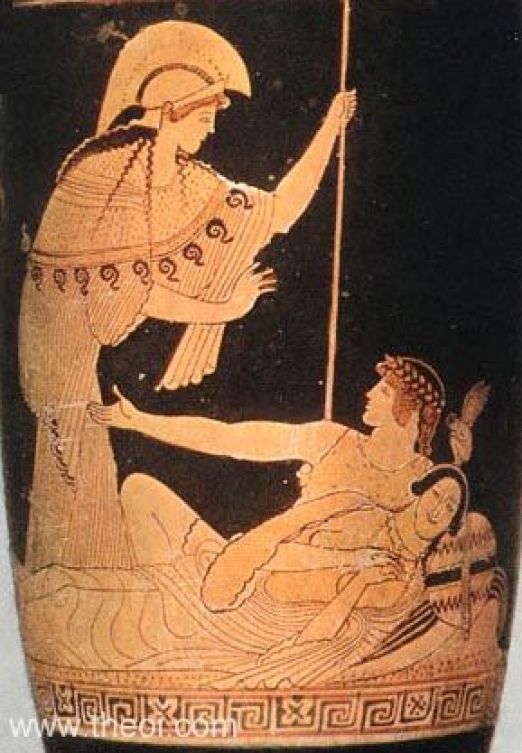
Athena, Ariadne, and Theseus: IL MUSEO ARCHEOLOGICO NAZIONALE DI TARANTO

The Scholarly Life is One of Pleasure?

Plutarch, On Stoic Self-Contradiction [Moralia 1033d]

In this passage, Plutarch is criticizing stoics for talking about the importance of government and ruling even though most of them dedicated themselves to the private lives of reading, writing and lecturing.

“Chrysippus himself, at least in the fourth book of Concerning Ways of Life, thinks that there is no difference because the scholarly life and one of pleasure. I shill quote his very words: “All those who think that the scholarly life is of special importance for philosophers seem to me to go astray from the beginning because they believe that it is right to do this kind of thing for the sake of [having some] job or some other reason like this, [that it is right] to drag out an entire life this way. This is, if it is examined clearly, [a life devoted to] pleasure. We must not overlook the core meaning of the many people who say this kind of thing clearly, nor the few who try to obscure it.” Who grew old in this scholarly life other than Chrysippos, Kleanthês, Diogenês, Zenô, and Antipater?”

αὐτὸς γοῦν Χρύσιππος ἐν τῷ τετάρτῳ περὶ Βίων οὐδὲν οἴεται τὸν σχολαστικὸν βίον τοῦ ἡδονικοῦ διαφέρειν· αὐτὰς δὲ παραθήσομαι τὰς λέξεις· “ὅσοι δὲ ὑπολαμβάνουσι φιλοσόφοις ἐπιβάλλειν μάλιστα τὸν σχολαστικὸν βίον ἀπ᾿ ἀρχῆς τί μοι δοκοῦσι διαμαρτάνειν, ὑπονοοῦντες διαγωγῆς τινος ἕνεκεν δεῖν τοῦτο ποιεῖν ἢ ἄλλου τινὸς τούτῳ παραπλησίου καὶ τὸν ὅλον βίον οὕτω πως διελκύσαι· τοῦτο δ᾿ ἐστίν, ἂν σαφῶς θεωρηθῇ, ἡδέως· οὐ γὰρ δεῖ λανθάνειν τὴν ὑπόνοιαν αὐτῶν, πολλῶν μὲν σαφῶς τοῦτο λεγόντων οὐκ ὀλίγων δ᾿ ἀδηλότερον.” τίς οὖν μᾶλλον ἐν τῷ σχολαστικῷ βίῳ τούτῳ κατεγήρασεν ἢ Χρύσιππος καὶ Κλεάνθης καὶ Διογένης καὶ Ζήνων καὶ Ἀντίπατρος…

Related image

Korinna Laughed: Making Pindar Better

Plutarch, On the Fame of Athens 348 a

“Korinna warned Pindar when he was still young and puffed up over his proper use of diction that he was an uncharming writer [a-mousos] since he did not include myths—this happens to be the work of poetry. Instead, he based his work on odd words [glosses], stretched meanings, periphrases, melodies, and rhythms, all ornaments for the subject matter. Then Pindar, trusting the things she said, wrote this line: “Ismenos or gold-staved Melia or Kadmos, or the holy generation of sewn men, or the overwhelming strength of Herakles, or the joyful rite of Dionysus.”

After he showed this to Korinna, she laughed and said one should sow with one hand, not the whole bag. In truth, Pindar mixed up and threw together every seed of myth and poured it into his song.”

Ἡ δὲ Κόριννα τὸν Πίνδαρον, ὄντα νέον ἔτι καὶ τῇ λογιότητι σοβαρῶς χρώμενον, ἐνουθέτησεν ὡς ἄμουσον ὄντα καὶ μὴ ποιοῦντα μύθους, ὃ τῆς ποιητικῆς ἔργον εἶναι συμβέβηκε, γλώττας δὲ καὶ καταχρήσεις καὶ μεταφράσεις καὶ μέλη καὶ ῥυθμοὺς ἡδύσματα τοῖς πράγμασιν ὑποτιθέντα.σφόδρ᾿ οὖν ὁ Πίνδαρος ἐπιστήσας τοῖς λεγομένοις ἐποίησεν ἐκεῖνο τὸ μέλος.

Ἰσμηνὸν ἢ χρυσαλάκατον Μελίαν,

ἢ Κάδμον ἢ σπαρτῶν ἱερὸν γένος ἀνδρῶν,

ἢ τὸ πάνυ σθένος Ἡρακλέους

ἢ τὰν Διωνύσου πολυγαθέα τιμάν.

δειξαμένου δὲ τῇ Κορίννῃ γελάσασα ἐκείνη τῇ χειρὶ δεῖν ἔφη σπείρειν, ἀλλὰ μὴ ὅλῳ τῷ θυλάκῳ. τῷ γὰρ ὄντι συγκεράσας καὶ συμφορήσας πανσπερμίαν τινὰ μύθων ὁ Πίνδαρος εἰς τὸ μέλος ἐξέχεεν.

Here’s another anecdote:

Aelian, Varia Historia 13.25

“When Pindar was competing in Thebes he encountered unlearned audiences and was defeated by Korinna five times. When he was trying to refute his own lack of poetic ability [amousia], he used to call Korinna a pig.”

Πίνδαρος ὁ ποιητὴς ἀγωνιζόμενος ἐν Θήβαις ἀμαθέσι περιπεσὼν ἀκροαταῖς ἡττήθη Κορίννης πεντάκις. ἐλέγχων δὲ τὴν ἀμουσίαν αὐτῶν ὁ Πίνδαρος σῦν ἐκάλει τὴν Κόρινναν.

We don’t have much from Korinna, but we do have the following line, which I think is appropriate for this anecdote:

“I sing of the virtues of heroes and heroines.”

ἱώνει δ᾿ εἱρώων ἀρετὰς / χεἰρωάδων

Here is a longer piece. Those who know Pindar might sense some similarities:

Fr. 2 (P.Oxy.2370, prim.ed. Lobel)

“Terpsichorê calls me
To sing fine tales
To the white-robed Tanagrean women.
And the city delights much
In my clear-voiced song.
For whatever great tales
[others have shadowed with lies]
We will sing [anew]
[over] the broad-wayed earth.
From the time of our fathers
I begin the tale for
The maidens just as I have sung
Many times, dressing up Kephisos
Our founder with words.”

ἐπί με Τερψιχόρα [καλῖ
καλὰ Ϝεροῖ’ ἀισομ[έναν
Ταναγρίδεσσι λε[υκοπέπλυς
μέγα δ’ ἐμῆς γέγ[αθε πόλις
λιγουροκω[τί]λυ[ς ἐνοπῆς.
ὅττι γὰρ μεγαλ.[
ψευδ[.]σ̣.[.]αδομ̣ε[
.[.]..ω γῆαν εὐρού[χορον
λόγια δ’ ἐπ πατέρω[ν
κοσμείσασα Ϝιδιο[
παρθ[έ]νυσι κατά [ρχομη
πο]λλὰ μὲν Κα̣φ̣[ισὸν ἱών-
γ’ ἀρχ]αγὸν κόσμ[εισα λόγυ]ς,

Little By Little: Memory and Education

Plutarch, The Education of Children (Moralia 9)

It is especially important to train and practice children’s memory: for memory is the warehouse of learning. This is why we used to mythologize Memory as the mother of the Muses, making it clear through allegory that nothing creates and nourishes the way memory does. This should be trained in both cases, whether children have a good memory from the beginning or are naturally forgetful. For we may strengthen the inborn ability and supplement the deficiency. The first group will be better than others; but the second will be better than themselves. This is why the Hesiodic line rings true: “If you add a little by little, and you keep doing it, soon you can have something great.”

Parents should also not forget that a skill of memory contributes its great worth not only to education but to life’s actions in general. For the memory of past events becomes an example of good planning for future actions.”

Πάντων δὲ μάλιστα τὴν μνήμην τῶν παίδων ἀσκεῖν καὶ συνεθίζειν· αὕτη γὰρ ὥσπερ τῆς παιδείας ἐστὶ ταμιεῖον, καὶ διὰ τοῦτο μητέρα τῶν Μουσῶν ἐμυθολόγησαν εἶναι τὴν Μνημοσύνην, αἰνιττόμενοι καὶ παραδηλοῦντες ὅτι οὕτως οὐδὲν γεννᾶν καὶ τρέφειν ὡς ἡ μνήμη πέφυκε. καὶ τοίνυν ταύτην κατ᾿ ἀμφότερ᾿ ἐστὶν ἀσκητέον, εἴτ᾿ ἐκ φύσεως μνήμονες εἶεν οἱ παῖδες, εἴτε καὶ τοὐναντίον ἐπιλήσμονες. τὴν γὰρ πλεονεξίαν τῆς φύσεως ἐπιρρώσομεν, τὴν δ᾿ ἔλλειψιν ἀναπληρώσομεν· καὶ οἱ μὲν τῶν ἄλλων ἔσονται βελτίους, οἱ δ᾿ ἑαυτῶν. τὸ γὰρ Ἡσιόδειον καλῶς εἴρηται

εἰ γάρ κεν καὶ σμικρὸν ἐπὶ σμικρῷ καταθεῖο
καὶ θαμὰ τοῦτ᾿ ἔρδοις, τάχα κεν μέγα καὶ τὸ
γένοιτο.

μὴ λανθανέτω τοίνυν μηδὲ τοῦτο τοὺς πατέρας, ὅτι τὸ μνημονικὸν τῆς μαθήσεως μέρος οὐ μόνον πρὸς τὴν παιδείαν ἀλλὰ καὶ πρὸς τὰς τοῦ βίου πράξεις οὐκ ἐλαχίστην συμβάλλεται μοῖραν. ἡ γὰρ τῶν γεγενημένων πράξεων μνήμη τῆς περὶ τῶν μελλόντων εὐβουλίας γίγνεται παράδειγμα.

Image result for Ancient Roman School rooms

This Current Time of Sickness

On the metacognitive deficit:

“Evils of the soul escape most people; for this reason they are worse—they prevent those who suffer from sensing them”

τὰ δ᾿ ἐν ψυχῇ λανθάνει τοὺς πολλοὺς κακά, διὰ τοῦτ᾿ ἐστι καίω, προσαφαιρούμενα τὴν αὑτῶν τοῦ πάσχοντος αἴσθησιν

This and the following passage are from Plutarch’s On Whether Sickness of the Body or Mind Are Worse (Moralia 500 ff). The following (especially the last line of the first paragraph) appears to perpetuate the stigmatizing of mental illness. And it does: many behaviors we today would see as parafunctional and requiring therapy, ancient authors viewed as issues of will.

“Just as, therefore, the storm which keeps you from docking is more dangerous than the one that won’t let you sail, the storms of the soul are worse when they do not allow a person to control or put down his troubled thoughts—this person goes without a helmsman, without ballast in confusion and wandering, taking off in steep and opposite courses until suffering a harrowing shipwreck and crushing his life. This is why it is worse to suffer sickness of mind than the body: For those who are sick, merely suffer; the sick of mind suffer and harm others.

But why is it necessary to repeat the great number of afflictions? Current events remind me of them. Do you see this immense, mix up crowd which clings together and mixes around the seat of government and the market?”

Ὥσπερ οὖν ἐπισφαλέστερος χειμὼν τοῦ πλεῖν οὐκ ἐῶντος ὁ κωλύων καθορμίσασθαι, οὕτως οἱ κατὰ ψυχὴν χειμῶνες βαρύτεροι στείλασθαι τὸν ἄνθρωπον οὐκ ἐῶντες οὐδ᾿ ἐπιστῆσαι τεταραγμένον τὸν λογισμόν· ἀλλ᾿ ἀκυβέρνητος καὶ ἀνερμάτιστος ἐν ταραχῇ καὶ πλάνῃ δρόμοις λεχρίοις καὶ παραφόροις διατραχηλιζόμενος εἴς τι ναυάγιον φοβερὸν ἐξέπεσε καὶ συνέτριψε τὸν ἑαυτοῦ βίον. ὥστε καὶ ταύτῃ χεῖρον νοσεῖν ταῖς ψυχαῖς ἢ τοῖς σώμασιν· τοῖς μὲν γὰρ πάσχειν μόνον τοῖς δὲ καὶ πάσχειν καὶ ποιεῖν κακῶς συμβέβηκε.

Καὶ τί δεῖ τὰ πολλὰ λέγειν τῶν παθῶν; αὐτὸς ὁ καιρὸς ὑπόμνησίς ἐστιν. ὁρᾶτε τὸν πολὺν καὶ παμμιγῆ τοῦτον τὸν ἐνταῦθα συνηραγμένον καὶ κυκώμενον ὄχλον περὶ τὸ βῆμα καὶ τὴν ἀγοράν;

Image result for Ancient Roman Mental health
William Hogworth, “The Madhouse”

Two Fragments from Plutarch Pertaining to Political Rhetoric

Plutarch, Fr. 186 (Isidorus of Pelusium, Letters, ii. 42)

“According to Plutarch, real Atticism is a clear and straight-forward style—for, he says, their politicians spoke in this way. Gorgias of Leonini first inserted that disease into public speeches, by polishing them with elevated language and poetic devices and muddying up their clarity. This very sickness—Plutarch says—afflicted even the wondrous Plato.”

Πλουτάρχῳ δὲ δοκεῖ τὸ σαφὲς καὶ λιτὸν γνήσιον εἶναι Ἀττικισμόν· οὕτω γάρ, φησίν, ἐλάλησαν οἱ ῥήτορες. Γοργίας δ᾿ ὁ Λεοντῖνος πρῶτος τὴν νόσον ταύτην εἰς τοὺς πολιτικοὺς λόγους εἰσήγαγε τὸ ὑψηλὸν καὶ τροπικὸν ἀσπασάμενος καὶ τῇ σαφηνείᾳ λυμηνάμενος. ἥψατό τε, φησίν, ἡ νόσος αὕτη καὶ τοῦ θαυμαστοῦ Πλάτωνος.

Fr. 197 (Prolegomenon in Hermogenis περὶ στάσεων Appendices)

Ἐκ τῶν Πλουτάρχου εἰς τὸν Πλάτωνος Γοργίαν·

From Plutarch’s Commentary on Plato’s Gorgias

The field of rhetoric according to Gorgias: Rhetoric is the art which has power over speeches—it is an instrument of public persuasion in political speeches about any idea which is targeted, it is about belief and not about teaching. [Gorgias] says that its particular concern [should be] just and unjust matters, noble and ignoble, beautiful and shameful affairs.”

Ὅρος ῥητορικῆς κατὰ Γοργιάν· ῥητορική ἐστι τέχνη περὶ λόγους τὸ κῦρος ἔχουσα, πειθοῦς δημιουργὸς ἐν πολιτικοῖς λόγοις περὶ παντὸς τοῦ προτεθέντος πιστευτικῆς καὶ οὐ διδασκαλικῆς· εἶναι δὲ αὐτῆς τὴν πραγματείαν ἰδίαν μάλιστα περὶ δίκαια καὶ ἄδικα ἀγαθά τε καὶ κακὰ καλά τε καὶ αἰσχρά.

Image result for Ancient Greek Rhetoric

Fire Increases Life: Plutarch, Against Water

Plutarch, On Whether Fire or Water is Better, 958

“Since we have come to this point in the argument: what is more profitable to life than art? Fire exposed every art and preserves them. This is the reason poets have made Hephaistos the first craftsman. Since humans have been given only a little bit of life and—as Ariston puts it—sleep claims half of life like a tax-collector, I would say that darkness is important: even if it were possible to stay awake through the night, this vigil would be useless if fire did not provide the advantages of day to us and strip away the difference between day and night. If there is nothing more important to people than life and fire increases life considerably, how could fire not be the most beneficial thing of all?”

Ἐπεὶ δὲ κατὰ τοῦτο τοῦ λόγου γεγόναμεν, τί τέχνης τῷ βίῳ λυσιτελέστερον; τέχνας δὲ πάσας καὶ ἀνεῦρε τὸ πῦρ καὶ σῴζει· διὸ καὶ τὸν Ἥφαιστον ἀρχηγὸν αὐτῶν ποιοῦσι. καὶ μὴν ὀλίγου χρόνου καὶ βίου τοῖς ἀνθρώποις δεδομένου, ὁ μὲν Ἀρίστων φησὶν ὅτι ὁ ὕπνος οἷον τελώνης τὸ ἥμισυ ἀφαιρεῖ τούτου· ἐγὼ δ᾿ ἂν εἴποιμ᾿ ὅτι σκότος· ἐγρηγορέναι ἂν εἴη διὰ νυκτός, ἀλλ᾿ οὐδὲν ἦν ὄφελος τῆς ἐγρηγόρσεως, εἰ μὴ τὸ πῦρ τὰ τῆς ἡμέρας ἡμῖν παρεῖχεν ἀγαθά, καὶ τὴν ἡμέρας καὶ νυκτὸς ἐξῄρει διαφοράν. εἰ τοίνυν τοῦ ζῆν οὐδὲν ἀνθρώποις λυσιτελέστερον καὶ τοῦτο πολλαπλασιάζει τὸ πῦρ, πῶς οὐκ ἂν εἴη πάντων ὠφελιμώτατον;

Image result for Ancient Greek fire