Pindar, Nemean 4.6


“The rumor of deeds lives longer than deeds themselves”


ῥῆμα δ’ ἐργμάτων χρονιώτερον βιοτεύει


How can we keep talking about sports without quoting some Pindar?

Pindar Olympian 2.2


“What god, what hero and what man will we celebrate?”


τίνα θεόν, τίν’ ἥρωα, τίνα δ’ ἄνδρα κελαδήσομεν;


Pindar eventually comes up with an answer…

Pindar, Isthmian 1.67-8


“Anyone who keeps his wealth secret and jeers at others’ doesn’t know that he consigns a forgotten soul to hell.”


εἰ δέ τις ἔνδον νέμει πλοῦτον κρυφαῖον,

ἄλλοισι δ’ ἐμπίπτων γελᾷ, ψυχὰν ᾿Αΐδᾳ τελέων

οὐ φράζεται δόξας ἄνευθεν.


Of course, Hades is also the god of wealth…

Pindar, Olympian 10. 7-8


“What was to be the future attacked from afar and shamed my deep need.”


ἕκαθεν γὰρ ἐπελθὼν ὁ μέλλων χρόνος

ἐμὸν καταίσχυνε βαθὺ χρέος.


(“The time about to be” (ὁ μέλλων χρόνος) in past tense? Thank you, Pindar)

Pindar, Olympian 8.72-3

“A man who has accomplished fitting deeds forgets about death.”

᾿Αΐδα τοι λάθεται

ἄρμενα πράξαις ἀνήρ.

Really, Pindar?

Pindar, Olympian 8.59-60


“Teaching is easier for someone who knows; not learning first is stupid. ”


τὸ διδάξασθαι δέ τοι εἰδότι ῥᾴτερον• ἄγνωμον δὲ τὸ μὴ προμαθεῖν•


The ancient Greek Laptop

Pindar, Olympian 4.25-27

“Sometimes even young men grow grey hair before the right time of life”


φύονται δὲ καὶ νέοις

ἐν ἀνδράσιν πολιαί

θαμάκι παρὰ τὸν ἁλικίας ἐοικότα χρόνον


Herakles married Hebe to defeat the grey–but he also beat up on Old Age

Pindar, Nemean 8.24


“No memory awaits the brave-hearted man who is speechless”


ἦ τιν’ ἄγλωσσον μέν, ἦτορ δ’ ἄλκιμον, λάθα κατέχει


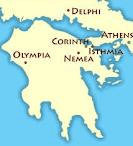
The Nemean odes were written in honor of victors at the Nemean games, held, of course, at Nemea.


Pindar, Pythian 3. 107-8


“I will be small in small things and big in large ones”


σμικρὸς ἐν σμικροῖς, μέγας ἐν μεγάλοις

ἔσσομαι


The Full text.


Pindar, Nemean 7.20-21


“I think that the story of Odysseus’ suffering was exaggerated by sweet-worded Homer”


ἐγὼ δὲ πλέον’ ἔλπομαι

λόγον ᾿Οδυσσέος ἢ πάθαν

διὰ τὸν ἁδυεπῆ γενέσθ’ ῞Ομηρον·


Pindar was a poet of Epinikion.

(but this line doesn’t seem to be about praise… for Homer, at least)