The Laws and the Soul of the State

Solon, Fragment 4. 30-33.

Lawlessness brings a city nothing but evil.
But upholding law makes things orderly and sound,
And, time and again, it locks up crooks.

ὡς κακὰ πλεῖστα πόλει δυσνομίη παρέχει,
εὐνομίη δ᾽ εὔκοσμα καὶ ἄρτια πάντ᾽ ἀποφαίνει,
καὶ θαμὰ τοῖς ἀδίκοις ἀμφιτίθησι πέδας.

The follwoing sayings come from the Gnomologium Vaticanum

112 “When Antagoras was about to cast a capital vote against someone he cried. Someone asked him “Why do you vote to condemn and cry?” He responded “It is necessary by nature to give our sympathy; the law demands my vote.”

῾Ο αὐτὸς καταδικάζειν τινὸς θανατικὴν ψῆφον μέλλων ἐδάκρυσεν· εἰπόντος δέ τινος· „τί παθὼν αὑτὸς καταδικάζεις καὶ κλαίεις”; εἶπεν· „ὅτι ἀναγκαῖόν ἐστι τῇ μὲν φύσει τὸ συμπαθὲς ἀποδοῦναι, τῷ δὲ νόμῳ τὴν ψῆφον.”

211 “Demosthenes used to say that the laws are the sinews of democracy”

῾Ο αὐτὸς ἔφησε τοὺς νόμους δημοκρατίας νεῦρα.

229 “Demosthenes used to say that the laws are the soul of the state. “just as the body dies when bereft of the soul, so too the city perishes when there are no laws”

῾Ο αὐτὸς ἔφη πόλεως εἶναι ψυχὴν τοὺς νόμους· „ὥσπερ δὲ σῷμα στερηθὲν ψυχῆς πίπτει, οὕτω καὶ πόλις μὴ ὄντων νόμων καταλύεται”.

443 “When asked how cities might be best inhabited, Plato said, “If philosophers are kings and kings practice philosophy.”

῾Ο αὐτὸς ἐρωτηθεὶς πῶς ἂν ἄριστα αἱ πόλεις οἰκοῖντο ἔφη· „εἰ φιλόσοφοι βασιλεύοιεν ἢ οἱ βασιλεῖς φιλοσοφοῖεν.”

Plato, Gorgias 484a-b

“But when a person comes around with sufficient nature, he shakes off and shatters all these things [laws], escaping them. He tramples all over our precedents and edicts, our pronouncements and all the laws that a contrary to his nature, and our slave rises up to become our master and clearly shows the justice of nature. This is what Pindar seems to indicate in that song when he says…”

ἐὰν δέ γε, οἶμαι, φύσιν ἱκανὴν γένηται ἔχων ἀνήρ, πάντα ταῦτα ἀποσεισάμενος καὶ διαρρήξας καὶ διαφυγών, καταπατήσας τὰ ἡμέτερα γράμματα καὶ μαγγανεύματα καὶ ἐπῳδὰς καὶ νόμους τοὺς παρὰ φύσιν ἅπαντας, ἐπαναστὰς ἀνεφάνη δεσπότης ἡμέτερος ὁ δοῦλος, καὶ ἐνταῦθα ἐξέλαμψε τὸ τῆς φύσεως δίκαιον. δοκεῖ δέ μοι καὶ Πίνδαρος ἅπερ ἐγὼ λέγω ἐνδείκνυσθαι ἐν τῷ ᾄσματι ἐν ᾧ λέγει ὅτι…

Euripides, Suppliants, 429-433.

Nothing is more hostile to a city than a tyrant.
Where one exists, there’s no law for one and all:
One man captures the law and rules by himself.
And that’s the end of equal justice.

οὐδὲν τυράννου δυσμενέστερον πόλει,
ὅπου τὸ μὲν πρώτιστον οὐκ εἰσὶν νόμοι
Κοινοί, κρατεῖ δʼ εἷς τὸν νόμον κεκτημένος
αὐτὸς παρʼ αὑτῷ· καὶ τόδʼ οὐκέτʼ ἔστʼ ἴσον.

Heraclitus, Fragment 44 (D-K).

The people must fight for the laws
as they would for their city walls.

μάχεσθαι χρὴ τὸν δῆμον ὑπὲρ τοῦ νόμου ὅκωσπερ τείχεος

Picture of oil painting of a violent landscape, dark
Jan Brueghel the Younger: Allegory of Law and Violence (Allegory of King Charles I of England)

The Laws and the Soul of the State

These sayings come from the Gnomologium Vaticanum

112 “When Antagoras was about to cast a capital vote against someone he cried. Someone asked him “Why do you vote to condemn and cry?” He responded “It is necessary by nature to give our sympathy; the law demands my vote.”

῾Ο αὐτὸς καταδικάζειν τινὸς θανατικὴν ψῆφον μέλλων ἐδάκρυσεν· εἰπόντος δέ τινος· „τί παθὼν αὑτὸς καταδικάζεις καὶ κλαίεις”; εἶπεν· „ὅτι ἀναγκαῖόν ἐστι τῇ μὲν φύσει τὸ συμπαθὲς ἀποδοῦναι, τῷ δὲ νόμῳ τὴν ψῆφον.”


211 “Demosthenes used to say that the laws are the sinews of democracy”

῾Ο αὐτὸς ἔφησε τοὺς νόμους δημοκρατίας νεῦρα.


229 “Demosthenes used to say that the laws are the soul of the state. “just as the body dies when bereft of the soul, so too the city perishes when there are no laws”

῾Ο αὐτὸς ἔφη πόλεως εἶναι ψυχὴν τοὺς νόμους· „ὥσπερ δὲ σῷμα στερηθὲν ψυχῆς πίπτει, οὕτω καὶ πόλις μὴ ὄντων νόμων καταλύεται”.


443 “When asked how cities might be best inhabited, Plato said, “If philosophers are kings and kings practice philosophy.”

῾Ο αὐτὸς ἐρωτηθεὶς πῶς ἂν ἄριστα αἱ πόλεις οἰκοῖντο ἔφη· „εἰ φιλόσοφοι βασιλεύοιεν ἢ οἱ βασιλεῖς φιλοσοφοῖεν.”


Picture of oil painting of a violent landscape, dark
Jan Brueghel the Younger: Allegory of Law and Violence (Allegory of King Charles I of England)

Legislation, For Drunks

Aristophanes, Acharnians 532-534

“[Perikles] used to make laws written like drinking songs:
That the Megarians were not to stay in the market
Nor the sea nor the beach in between”

ἐτίθει νόμους ὥσπερ σκόλια γεγραμμένους,
ὡς χρὴ Μεγαρέας μήτε γῇ μήτ’ ἐν ἀγορᾷ
μήτ’ ἐν θαλάττῃ μήτ’ ἐν ἠπείρῳ μένειν.

Schol. Ar. Ach. 532 

“[Perikles] used to make laws written like drinking songs”:

Timokreon of Rhodes, the lyric poet, wrote a drinking song like this against Wealth, which begins:

“Blind Wealth, I wish you had shown yourself
Neither on land nor on sea
Nor the beach in between.

You should have stayed underneath
living in Hell—thanks to you
all these evils for humans never cease.”

ἐτίθει νόμους· μιμούμενος τὸν τῶν σκολίων ποιητήν. Τιμοκρέων δὲ ὁ Ῥόδιος μελοποιὸς τοιοῦτον ἔγραψε σκόλιον κατὰ τοῦ Πλούτου, οὗ ἡ ἀρχή·

ὤφελέν σ᾿ ὦ τυφλὲ Πλοῦτε
μήτε γῇ μήτ᾿ ἐν θαλάσσῃ
μήτ᾿ ἐν ἠπείρῳ φανῆμεν,
ἀλλὰ Τάρταρόν τε ναίειν
κ᾿ Αχέροντα· διὰ σὲ γὰρ πάντ᾿
αἰὲν ἀνθρώποις κακά.

Mihály Zichy, “Drinking Song” 1874

Changing the Nature of the State

Aristotle, Politics 1307a-b

“And since all aristocratic states tend towards oligarchy, the upper classes bicker over wealth–which is the kind of thing that happened in Sparta, where the estates belong to a very few–and it is possible for the ‘nobles’ to do whatever they want to and to combine their families however they’d like. This is how the state of the Locrians fell thanks to marriage with Dionysius, which never would have happened in a democracy or a well mixed aristocracy.

In particular, Aristocracies experience revolutions quietly, through incremental loosening, as I have said before in general about most constitutions, that even a small thing might be the cause of revolutions. For, whenever they alter the laws of the state a little bit, they always follow it up with a less minor change later, until they have changed the entire system.”

Ἔτι διὰ τὸ πάσας τὰς ἀριστοκρατικὰς πολιτείας ὀλιγαρχικὰς εἶναι μᾶλλον πλεονεκτοῦσιν οἱ γνώριμοι (οἷον καὶ ἐν Λακεδαίμονι εἰς ὀλίγους αἱ οὐσίαι ἔρχονται)· καὶ ἔξεστι ποιεῖν ὅ τι ἂν θέλωσι τοῖς γνωρίμοις μᾶλλον, καὶ κηδεύειν ὅτῳ θέλωσιν (διὸ καὶ ἡ Λοκρῶν πόλις ἀπώλετο ἐκ τῆς πρὸς Διονύσιον κηδείας, ὃ ἐν δημοκρατίᾳ οὐκ ἂν ἐγένετο, οὐδ᾿ ἂν ἐν ἀριστοκρατίᾳ εὖ μεμιγμένῃ).

μάλιστα δὲ λανθάνουσιν αἱ ἀριστοκρατίαι μεταβάλλουσαι τῷ λύεσθαι κατὰ μικρόν, ὅπερ εἴρηται ἐν τοῖς πρότερον καθόλου κατὰ πασῶν τῶν πολιτειῶν, ὅτι αἴτιον τῶν μεταβολῶν καὶ τὸ μικρόν ἐστιν· ὅταν γάρ τι προῶνται τῶν πρὸς τὴν πολιτείαν, μετὰ τοῦτο καὶ ἄλλο μικρῷ μεῖζον εὐχερέστερον κινοῦσιν, ἕως ἂν πάντα κινήσωσι τὸν κόσμον.

Oil painting of three older women looking out at the viewer with stern expressions. There is a black and white version of the painting "washington crossing the delware" in their background
Grant Wood, “Daughters of Revolution”, 1932

Crooked Judges and Justice’s Roar

Hesiod, Works and Days 217-229

“Oath runs right alongside crooked judgments.
But a roar comes from Justice as she is dragged where
bribe-devouring men lead when they apply laws with crooked judgments.
She attends the city and the haunts of the hosts
weeping and cloaked in mist, bringing evil to people
who drive her out and do not practice righteous law.
For those who give fair judgments to foreigners and citizens
and who do not transgress the law in any way,
cities grow strong, and the people flourish within them;
A child-nourishing peace settles on the land, and never
Does wide-browed Zeus sound the sign of harsh war.”

αὐτίκα γὰρ τρέχει ῞Ορκος ἅμα σκολιῇσι δίκῃσιν·
τῆς δὲ Δίκης ῥόθος ἑλκομένης ᾗ κ’ ἄνδρες ἄγωσι
δωροφάγοι, σκολιῇς δὲ δίκῃς κρίνωσι θέμιστας·
ἣ δ’ ἕπεται κλαίουσα πόλιν καὶ ἤθεα λαῶν,
ἠέρα ἑσσαμένη, κακὸν ἀνθρώποισι φέρουσα,
οἵ τέ μιν ἐξελάσωσι καὶ οὐκ ἰθεῖαν ἔνειμαν.
οἳ δὲ δίκας ξείνοισι καὶ ἐνδήμοισι διδοῦσιν
ἰθείας καὶ μή τι παρεκβαίνουσι δικαίου,
τοῖσι τέθηλε πόλις, λαοὶ δ’ ἀνθεῦσιν ἐν αὐτῇ·
εἰρήνη δ’ ἀνὰ γῆν κουροτρόφος, οὐδέ ποτ’ αὐτοῖς
ἀργαλέον πόλεμον τεκμαίρεται εὐρύοπα Ζεύς·

Publilius Syrus, Sententiae 697

“A Judge judges himself as much as the defendant”

Tam de se iudex iudicat quam de reo

Hesiod, Works and Days 256-273

Justice is a maiden who was born from Zeus.
The gods who live on Olympus honor her
and whenever someone wrongs her by bearing false witness
she sits straightaway at the feet of Zeus, Kronos’ son
and tells him the plans of unjust men so that the people
will pay the price of the wickedness of kings who make murderous plans
and twist her truth by proclaiming false judgments.
Keep these things in mind, bribe-swallowing kings:
whoever wrongs another also wrongs himself;
an evil plan is most evil for the one who makes it.
The eye of Zeus sees everything and knows everything
and even now, if he wishes, will look on us and not miss
what kind of justice the walls of our city protects.
Today, I wouldn’t wish myself to be just among unjust people
nor my child, since it bad to be a just person
If anyone who is more unjust has greater rights.
But I hope that Zeus, the counselor, will not let this happen.”

ἡ δέ τε παρθένος ἐστὶ Δίκη, Διὸς ἐκγεγαυῖα,
κυδρή τ’ αἰδοίη τε θεοῖς οἳ ῎Ολυμπον ἔχουσιν,
καί ῥ’ ὁπότ’ ἄν τίς μιν βλάπτῃ σκολιῶς ὀνοτάζων,
αὐτίκα πὰρ Διὶ πατρὶ καθεζομένη Κρονίωνι
γηρύετ’ ἀνθρώπων ἀδίκων νόον, ὄφρ’ ἀποτείσῃ
δῆμος ἀτασθαλίας βασιλέων οἳ λυγρὰ νοεῦντες
ἄλλῃ παρκλίνωσι δίκας σκολιῶς ἐνέποντες.
ταῦτα φυλασσόμενοι, βασιλῆς, ἰθύνετε μύθους,
δωροφάγοι, σκολιέων δὲ δικέων ἐπὶ πάγχυ λάθεσθε.
οἷ αὐτῷ κακὰ τεύχει ἀνὴρ ἄλλῳ κακὰ τεύχων,
ἡ δὲ κακὴ βουλὴ τῷ βουλεύσαντι κακίστη.
πάντα ἰδὼν Διὸς ὀφθαλμὸς καὶ πάντα νοήσας
καί νυ τάδ’, αἴ κ’ ἐθέλῃσ’, ἐπιδέρκεται, οὐδέ ἑ λήθει
οἵην δὴ καὶ τήνδε δίκην πόλις ἐντὸς ἐέργει.
νῦν δὴ ἐγὼ μήτ’ αὐτὸς ἐν ἀνθρώποισι δίκαιος
εἴην μήτ’ ἐμὸς υἱός, ἐπεὶ κακὸν ἄνδρα δίκαιον
ἔμμεναι, εἰ μείζω γε δίκην ἀδικώτερος ἕξει.
ἀλλὰ τά γ’ οὔπω ἔολπα τελεῖν Δία μητιόεντα.

Quintilian, Declamation 388

“If there was a bad judgment, then there was something the judge was afraid of”

Si male iudicatum est, fuit aliquid quod iudex timeret.

Legislation, For Drunks

Aristophanes, Acharnians 532-534

“[Perikles] used to make laws written like drinking songs:
That the Megarians were not to stay in the market
Nor the sea nor the beach in between”

ἐτίθει νόμους ὥσπερ σκόλια γεγραμμένους,
ὡς χρὴ Μεγαρέας μήτε γῇ μήτ’ ἐν ἀγορᾷ
μήτ’ ἐν θαλάττῃ μήτ’ ἐν ἠπείρῳ μένειν.

Schol. Ar. Ach. 532 

“[Perikles] used to make laws written like drinking songs”:

Timokreon of Rhodes, the lyric poet, wrote a drinking song like this against Wealth, which begins:

“Blind Wealth, I wish you had shown yourself
Neither on land nor on sea
Nor the beach in between.

You should have stayed underneath
living in Hell—thanks to you
all these evils for humans never cease.”

ἐτίθει νόμους· μιμούμενος τὸν τῶν σκολίων ποιητήν. Τιμοκρέων δὲ ὁ Ῥόδιος μελοποιὸς τοιοῦτον ἔγραψε σκόλιον κατὰ τοῦ Πλούτου, οὗ ἡ ἀρχή·

ὤφελέν σ᾿ ὦ τυφλὲ Πλοῦτε
μήτε γῇ μήτ᾿ ἐν θαλάσσῃ
μήτ᾿ ἐν ἠπείρῳ φανῆμεν,
ἀλλὰ Τάρταρόν τε ναίειν
κ᾿ Αχέροντα· διὰ σὲ γὰρ πάντ᾿
αἰὲν ἀνθρώποις κακά.

Mihály Zichy, “Drinking Song” 1874

Legislation, For Drunks

Aristophanes, Acharnians 532-534

“[Perikles] used to make laws written like drinking songs:
That the Megarians were not to stay in the market
Nor the sea nor the beach in between”

ἐτίθει νόμους ὥσπερ σκόλια γεγραμμένους,
ὡς χρὴ Μεγαρέας μήτε γῇ μήτ’ ἐν ἀγορᾷ
μήτ’ ἐν θαλάττῃ μήτ’ ἐν ἠπείρῳ μένειν.

Schol. Ar. Ach. 532 

“[Perikles] used to make laws written like drinking songs”:

Timokreon of Rhodes, the lyric poet, wrote a drinking song like this against Wealth, which begins:

“Blind Wealth, I wish you had shown yourself
Neither on land nor on sea
Nor the beach in between.

You should have stayed underneath
living in Hell—thanks to you
all these evils for humans never cease.”

ἐτίθει νόμους· μιμούμενος τὸν τῶν σκολίων ποιητήν. Τιμοκρέων δὲ ὁ Ῥόδιος μελοποιὸς τοιοῦτον ἔγραψε σκόλιον κατὰ τοῦ Πλούτου, οὗ ἡ ἀρχή·

ὤφελέν σ᾿ ὦ τυφλὲ Πλοῦτε
μήτε γῇ μήτ᾿ ἐν θαλάσσῃ
μήτ᾿ ἐν ἠπείρῳ φανῆμεν,
ἀλλὰ Τάρταρόν τε ναίειν
κ᾿ Αχέροντα· διὰ σὲ γὰρ πάντ᾿
αἰὲν ἀνθρώποις κακά.

Mihály Zichy, “Drinking Song” 1874

The Laws and the Soul of the State

These sayings come from the Gnomologium Vaticanum


112 “When Antagoras was about to cast a capital vote against someone he cried. Someone asked him “Why do you vote to condemn and cry?” He responded “It is necessary by nature to give our sympathy; the law demands my vote.”

῾Ο αὐτὸς καταδικάζειν τινὸς θανατικὴν ψῆφον μέλλων ἐδάκρυσεν· εἰπόντος δέ τινος· „τί παθὼν αὑτὸς καταδικάζεις καὶ κλαίεις”; εἶπεν· „ὅτι ἀναγκαῖόν ἐστι τῇ μὲν φύσει τὸ συμπαθὲς ἀποδοῦναι, τῷ δὲ νόμῳ τὴν ψῆφον.”


211 “Demosthenes used to say that the laws are the sinews of democracy”

῾Ο αὐτὸς ἔφησε τοὺς νόμους δημοκρατίας νεῦρα.


229 “Demosthenes used to say that the laws are the soul of the state. “just as the body dies when bereft of the soul, so too the city perishes when there are no laws”

῾Ο αὐτὸς ἔφη πόλεως εἶναι ψυχὴν τοὺς νόμους· „ὥσπερ δὲ σῷμα στερηθὲν ψυχῆς πίπτει, οὕτω καὶ πόλις μὴ ὄντων νόμων καταλύεται”.


443 “When asked how cities might be best inhabited, Plato said, “If philosophers are kings and kings practice philosophy.”

῾Ο αὐτὸς ἐρωτηθεὶς πῶς ἂν ἄριστα αἱ πόλεις οἰκοῖντο ἔφη· „εἰ φιλόσοφοι βασιλεύοιεν ἢ οἱ βασιλεῖς φιλοσοφοῖεν.”


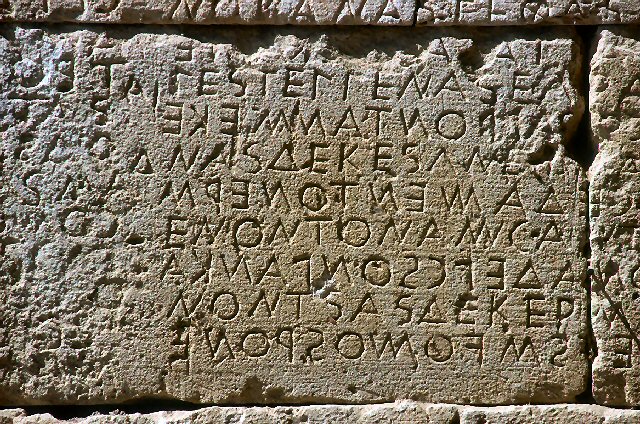
Image result for ancient greek laws

Crooked Judges and Justice’s Roar

Hesiod, Works and Days 217-229

“Oath runs right alongside crooked judgments.
But a roar comes from Justice as she is dragged where
bribe-devouring men lead when they apply laws with crooked judgments.
She attends the city and the haunts of the hosts
weeping and cloaked in mist, bringing evil to people
who drive her out and do not practice righteous law.
For those who give fair judgments to foreigners and citizens
and who do not transgress the law in any way,
cities grow strong, and the people flourish within them;
A child-nourishing peace settles on the land, and never
Does wide-browed Zeus sound the sign of harsh war.”

αὐτίκα γὰρ τρέχει ῞Ορκος ἅμα σκολιῇσι δίκῃσιν·
τῆς δὲ Δίκης ῥόθος ἑλκομένης ᾗ κ’ ἄνδρες ἄγωσι
δωροφάγοι, σκολιῇς δὲ δίκῃς κρίνωσι θέμιστας·
ἣ δ’ ἕπεται κλαίουσα πόλιν καὶ ἤθεα λαῶν,
ἠέρα ἑσσαμένη, κακὸν ἀνθρώποισι φέρουσα,
οἵ τέ μιν ἐξελάσωσι καὶ οὐκ ἰθεῖαν ἔνειμαν.
οἳ δὲ δίκας ξείνοισι καὶ ἐνδήμοισι διδοῦσιν
ἰθείας καὶ μή τι παρεκβαίνουσι δικαίου,
τοῖσι τέθηλε πόλις, λαοὶ δ’ ἀνθεῦσιν ἐν αὐτῇ·
εἰρήνη δ’ ἀνὰ γῆν κουροτρόφος, οὐδέ ποτ’ αὐτοῖς
ἀργαλέον πόλεμον τεκμαίρεται εὐρύοπα Ζεύς·

Publilius Syrus, Sententiae 697

“A Judge judges himself as much as the defendant”

Tam de se iudex iudicat quam de reo

Hesiod, Works and Days 256-273

Justice is a maiden who was born from Zeus.
The gods who live on Olympus honor her
and whenever someone wrongs her by bearing false witness
she sits straightaway at the feet of Zeus, Kronos’ son
and tells him the plans of unjust men so that the people
will pay the price of the wickedness of kings who make murderous plans
and twist her truth by proclaiming false judgments.
Keep these things in mind, bribe-swallowing kings:
whoever wrongs another also wrongs himself;
an evil plan is most evil for the one who makes it.
The eye of Zeus sees everything and knows everything
and even now, if he wishes, will look on us and not miss
what kind of justice the walls of our city protects.
Today, I wouldn’t wish myself to be just among unjust people
nor my child, since it bad to be a just person
If anyone who is more unjust has greater rights.
But I hope that Zeus, the counselor, will not let this happen.”

ἡ δέ τε παρθένος ἐστὶ Δίκη, Διὸς ἐκγεγαυῖα,
κυδρή τ’ αἰδοίη τε θεοῖς οἳ ῎Ολυμπον ἔχουσιν,
καί ῥ’ ὁπότ’ ἄν τίς μιν βλάπτῃ σκολιῶς ὀνοτάζων,
αὐτίκα πὰρ Διὶ πατρὶ καθεζομένη Κρονίωνι
γηρύετ’ ἀνθρώπων ἀδίκων νόον, ὄφρ’ ἀποτείσῃ
δῆμος ἀτασθαλίας βασιλέων οἳ λυγρὰ νοεῦντες
ἄλλῃ παρκλίνωσι δίκας σκολιῶς ἐνέποντες.
ταῦτα φυλασσόμενοι, βασιλῆς, ἰθύνετε μύθους,
δωροφάγοι, σκολιέων δὲ δικέων ἐπὶ πάγχυ λάθεσθε.
οἷ αὐτῷ κακὰ τεύχει ἀνὴρ ἄλλῳ κακὰ τεύχων,
ἡ δὲ κακὴ βουλὴ τῷ βουλεύσαντι κακίστη.
πάντα ἰδὼν Διὸς ὀφθαλμὸς καὶ πάντα νοήσας
καί νυ τάδ’, αἴ κ’ ἐθέλῃσ’, ἐπιδέρκεται, οὐδέ ἑ λήθει
οἵην δὴ καὶ τήνδε δίκην πόλις ἐντὸς ἐέργει.
νῦν δὴ ἐγὼ μήτ’ αὐτὸς ἐν ἀνθρώποισι δίκαιος
εἴην μήτ’ ἐμὸς υἱός, ἐπεὶ κακὸν ἄνδρα δίκαιον
ἔμμεναι, εἰ μείζω γε δίκην ἀδικώτερος ἕξει.
ἀλλὰ τά γ’ οὔπω ἔολπα τελεῖν Δία μητιόεντα.

Quintilian, Declamation 388

“If there was a bad judgment, then there was something the judge was afraid of”

Si male iudicatum est, fuit aliquid quod iudex timeret.

Color photograph of an oil painting. Three women, the on in the center represents justice with scales in her hand

Changing the Nature of the State

Aristotle, Politics 1307a-b

“And since all aristocratic states tend towards oligarchy, the upper classes bicker over wealth–which is the kind of thing that happened in Sparta, where the estates belong to a very few–and it is possible for the ‘nobles’ to do whatever they want to and to combine their families however they’d like. This is how the state of the Locrians fell thanks to marriage with Dionysius, which never would have happened in a democracy or a well mixed aristocracy.

In particular, Aristocracies experience revolutions quietly, through incremental loosening, as I have said before in general about most constitutions, that even a small thing might be the cause of revolutions. For, whenever they alter the laws of the state a little bit, they always follow it up with a less minor change later, until they have changed the entire system.”

Ἔτι διὰ τὸ πάσας τὰς ἀριστοκρατικὰς πολιτείας ὀλιγαρχικὰς εἶναι μᾶλλον πλεονεκτοῦσιν οἱ γνώριμοι (οἷον καὶ ἐν Λακεδαίμονι εἰς ὀλίγους αἱ οὐσίαι ἔρχονται)· καὶ ἔξεστι ποιεῖν ὅ τι ἂν θέλωσι τοῖς γνωρίμοις μᾶλλον, καὶ κηδεύειν ὅτῳ θέλωσιν (διὸ καὶ ἡ Λοκρῶν πόλις ἀπώλετο ἐκ τῆς πρὸς Διονύσιον κηδείας, ὃ ἐν δημοκρατίᾳ οὐκ ἂν ἐγένετο, οὐδ᾿ ἂν ἐν ἀριστοκρατίᾳ εὖ μεμιγμένῃ).

μάλιστα δὲ λανθάνουσιν αἱ ἀριστοκρατίαι μεταβάλλουσαι τῷ λύεσθαι κατὰ μικρόν, ὅπερ εἴρηται ἐν τοῖς πρότερον καθόλου κατὰ πασῶν τῶν πολιτειῶν, ὅτι αἴτιον τῶν μεταβολῶν καὶ τὸ μικρόν ἐστιν· ὅταν γάρ τι προῶνται τῶν πρὸς τὴν πολιτείαν, μετὰ τοῦτο καὶ ἄλλο μικρῷ μεῖζον εὐχερέστερον κινοῦσιν, ἕως ἂν πάντα κινήσωσι τὸν κόσμον.

Oil painting of three older women looking out at the viewer with stern expressions. There is a black and white version of the painting "washington crossing the delware" in their background
Grant Wood, “Daughters of Revolution”, 1932