Apropos of Nothing, Achilles Calls the Commander-in-Chief a Dog[-face]

Homer, Iliad 1.158–168 [Achilles addressing Agamemnon]

“But, you great shamepot, we follow you so that you feel joy,
As we collect honor for Menelaos and you, dog-face,
From the Trojans—you don’t shudder at this, you don’t care.”

ἀλλὰ σοὶ ὦ μέγ’ ἀναιδὲς ἅμ’ ἑσπόμεθ’ ὄφρα σὺ χαίρῃς,
τιμὴν ἀρνύμενοι Μενελάῳ σοί τε κυνῶπα
πρὸς Τρώων· τῶν οὔ τι μετατρέπῃ οὐδ’ ἀλεγίζεις·

Iliad 1.224–228 [Achilles Addressing Agamemnon]

“Wine-sod! Dog-eyes! You have the heart of a deer!
You never suffer to arm yourself to enter battle with the army
Nor to set an ambush with the best of the Achaeans.
That seems like death itself to you!”

οἰνοβαρές, κυνὸς ὄμματ’ ἔχων, κραδίην δ’ ἐλάφοιο,
οὔτέ ποτ’ ἐς πόλεμον ἅμα λαῷ θωρηχθῆναι
οὔτε λόχον δ’ ἰέναι σὺν ἀριστήεσσιν ᾿Αχαιῶν
τέτληκας θυμῷ· τὸ δέ τοι κὴρ εἴδεται εἶναι.

Elsewhere in Homer, the insult is used primarily for women and it builds on basic Greek associations between women and dogs—dogs as animals of shame who are expected to be loyal.

Odyssey 4.154-146 [Helen speaking]

“…Telemachus, whom that man left when he was just born,
In his house, when the Achaeans went down to Troy
On account of dog-faced me, raising up their audacious war.”

Τηλεμάχῳ, τὸν ἔλειπε νέον γεγαῶτ’ ἐνὶ οἴκῳ
κεῖνος ἀνήρ, ὅτ’ ἐμεῖο κυνώπιδος εἵνεκ’ ᾿Αχαιοὶ
ἤλθεθ’ ὑπὸ Τροίην, πόλεμον θρασὺν ὁρμαίνοντες.”

Odyssey, 11.424-426

“…that dog-face
Went away and did not dare—even though I was on my way to Hades
To close my eyes with her hands or cover my mouth.”

… ἡ δὲ κυνῶπις
νοσφίσατ’ οὐδέ μοι ἔτλη, ἰόντι περ εἰς ᾿Αΐδαο,
χερσὶ κατ’ ὀφθαλμοὺς ἑλέειν σύν τε στόμ’ ἐρεῖσαι.

In Greek myth , the ‘dog’ nature of women comes as well from forces outside the home—a dog is a thieving creature.

Hesiod, Works and Days 67–68 [from the creation of Pandora]

“And Hermes, the slayer of Argos, that master guide,
Ordered that she possess a dog’s mind and a thief’s nature.”

ἐν δὲ θέμεν κύνεόν τε νόον καὶ ἐπίκλοπον ἦθος
῾Ερμείην ἤνωγε, διάκτορον ᾿Αργεϊφόντην.

But in the crown jewel of Greek mythology, Semonides’ “Diatribe against women”—which presents a lists of complaints about women categorized by different kinds of animals—emphasizes the inability of men to control female voices through the symbol of a dog. Note, as well, that violence is described as a regular reaction but is considered useless.

Semonides of Amorgos, fragment 7

“One women is from a dog, a sinful beast, a thorough mother—
She listens to everything and wants to know everything,
Lurking around everywhere and wandering
She barks even when she doesn’t see anyone.
She can’t stop this, not even if her husband threatens her
Nor if he is angry enough to bash her teeth
With a stone. You can’t change her by talking nicely either.
Even when she happens to be sitting among guests,
She keeps on an endless, impossible yapping.”

τὴν δ’ ἐκ κυνός, λιτοργόν, αὐτομήτορα,
ἣ πάντ’ ἀκοῦσαι, πάντα δ’ εἰδέναι θέλει,
πάντηι δὲ παπταίνουσα καὶ πλανωμένη
λέληκεν, ἢν καὶ μηδέν’ ἀνθρώπων ὁρᾶι.
παύσειε δ’ ἄν μιν οὔτ’ ἀπειλήσας ἀνήρ,
οὐδ’ εἰ χολωθεὶς ἐξαράξειεν λίθωι
ὀδόντας, οὐδ’ ἂν μειλίχως μυθεόμενος,
οὐδ’ εἰ παρὰ ξείνοισιν ἡμένη τύχηι,
ἀλλ’ ἐμπέδως ἄπρηκτον αὑονὴν ἔχει.

Franco, Cristina. 2014. Shameless: The Canine and the Feminine in Ancient Greece. Translated by Michael Fox. Berkeley and Los Angeles.

4: “In the ancient Greek imagination the figure of the dog seems, in fact, to be interwoven with the disparaging discourse on the nature of woman in afar from casual manner…Moreover, the dog appears as a paradigm for the base nature of women in two cornerstone texts of Greek misogyny” (referring to the creation of Pandora in Hesiod and Agamemnon’s comments on Clytemnestra in the Odyssey).

See also:

Graver, Margaret. 1995. “Dog-Helen and Homeric Insult.” Classical Antiquity 14: 41–61.

Pyxis with Bust of a Dog. 1931: bequeathed to Walters Art Museum by Henry Walters


Hipponax’s Curse for a Former Friend and Other Fragments

Hipponax fr. 115 (P. Argent. 3 fr. 1.16, ed. Reitzenstein)

“Once he is struck by the wave,
And [comes] naked to a kind reception at Salmydessos
Where the top-knotted Thracians
Grab him—where he will suffer many evils
Eating the bread of slavery
He will shiver struck by the cold. When he emerges from the foam
May he puke up much seaweed
And let his teeth chatter, as he lies on his face
Like a dog in his weakness
At the farthest end of the sea…
I want him to see all of these things
Because he wronged me and broke his oath,
Even though he was once my friend before.”

κύμ[ατι] πλα[ζόμ]ενος̣·
κἀν Σαλμυδ[ησσ]ῶ̣ι̣ γυμνὸν εὐφρονε̣.[
Θρήϊκες ἀκρό[κ]ομοι
λάβοιεν—ἔνθα πόλλ’ ἀναπλήσαι κακὰ
δούλιον ἄρτον ἔδων—
ῥίγει πεπηγότ’ αὐτόν· ἐκ δὲ τοῦ χνόου
φυκία πόλλ’ ἐπέ̣χοι,
κροτέοι δ’ ὀδόντας, ὡς [κ]ύ̣ων ἐπὶ στόμα
κείμενος ἀκρασίηι
ἄκρον παρὰ ῥηγμῖνα κυμα….δ̣ο̣υ̣·
ταῦτ’ ἐθέλοιμ’ ἂ̣ν ἰδεῖ̣ν,
ὅς μ’ ἠδίκησε, λ̣[ὰ]ξ δ’ ἐπ’ ὁρκίοις ἔβη,
τὸ πρὶν ἑταῖρος [ἐ]ών.

I have placed in bold just a few of the fragments that remind me of Odyssean language. Although the phrase δούλιον ἄρτον does not appear in Homer, it does recall for me the phrase “day of slavery” (δούλιον ἦμαρ).

Athenaeus 15.698b

“Polemon in the 12th book of his Essay to Timaios writes on his inquiry into composers of parody:’ I would say that the parodists Boiotos and Euboios are clever because they toy with double meanings and surpass previous poets even though they are later born. Still, it needs to be said that the iambic poet Hipponax created the genre. He speaks in Hexameters:

Muse, tell me about the stomach slicing, sea-swallowing
Eurymedontes who was eating out of order so that
He was allotted a terrible death by the vote
Of all the people along the strand of the tireless sea.”

Πολέμων δ᾿ ἐν τῷ δωδεκάτῳ τῶν πρὸς Τίμαιον περὶ τῶν τὰς παρῳδίας γεγραφότων ἱστορῶν τάδε γράφει· “καὶ τὸν Βοιωτὸν δὲ καὶ τὸν Εὔβοιον τοὺς τὰς παρῳδίας γράψαντας λογίους ἂν φήσαιμι διὰ τὸ παίζειν ἀμφιδεξίως καὶ τῶν προγενεστέρων ποιητῶν ὑπερέχειν ἐπιγεγονότας. εὑρετὴν μὲν οὖν τοῦ γένους Ἱππώνακτα φατέον τὸν ἰαμβοποιόν. λέγει γὰρ οὗτος ἐν τοῖς ἑξαμέτροις·
Μοῦσά μοι Εὐρυμεδοντιάδεω τὴν ποντοχάρυβδιν,
τὴν ἐγγαστριμάχαιραν, ὃς ἐσθίει οὐ κατὰ κόσμον,
ἔννεφ᾿, ὅπως ψηφῖδι <κακῇ> κακὸν οἶτον ὄληται
βουλῇ δημοσίῃ παρὰ θῖν᾿ ἁλὸς ἀτρυγέτοιο.

Demetrius, On Style 301.

“Because he wanted to slander his enemies, [Hipponax] broke his meter and made it stumble instead of straight: he made the rhythm irregular. This is appropriate for surprise and attack. For rhythmic and smooth composition is more appropriate for praise than for blame. This is all I have to say about hiatus.”

 (301) καὶ ὥσπερ τὸ διαλελυμένον σχῆμα δεινότητα ποιεῖ, ὡς προλέλεκται, οὕτω ποιήσει ἡ διαλελυμένη ὅλως σύνθεσις. σημεῖον δὲ καὶ τὸ Ἱππώνακτος· λοιδορῆσαι γὰρ βουλόμενος τοὺς ἐχθροὺς ἔθραυσεν τὸ μέτρον, καὶ ἐποίησεν χωλὸν ἀντὶ εὐθέος καὶ ἄρυθμον, τουτέστι δεινότητι πρέπον καὶ λοιδορίᾳ· τὸ γὰρ ἔρρυθμον καὶ εὐήκοον ἐγκωμίοις ἂν πρέποι μᾶλλον ἢ ψόγοις. τοσαῦτα καὶ περὶ συγκρούσεως.

Hipponax, fr. 12 [Tzetz. ad Posthom. 687, “θήπεον”]

“The mother-fucker Boupalos
Was taunting the children of the Eruthraians with these words
While he was about to pull back his accursed foreskin.”

τούτοισι θηπέων τοὺς Ἐρυθραίων παῖδας
ὁ μητροκοίτης Βούπαλος σὺν Ἀρήτῃ
†καὶ ὑφέλξων τὸν δυσώνυμον ἄρτον.†

Most people who know ancient Greek will probably associate ἄρτον with its more typical definition (“bread”) than with foreskin. I think that the explanation for this homonym may have to do with the latter definition developing from τὸ αἴρειν:

Etym. Sym.

ἄρτος: παρὰ τὸ αἴρειν, ὅ ἐστι καθ’ ἑκάστην προσφέρειν

Fragments. 135, 135a, 135b

“Cock-shaker”

“Exhibitionist”

“Opening of filth”

ἀνασεισίφαλλος

     ἀνασυρτόλις

     βορβορόπη


Hipponax fr. 144

“Sister of bullshit”

βολβίτου κασιγνήτην.

Photograph of a terracotta penis with foreskin
Terracotta Vase, Metropolitan Museum of Art (c. 5th Century BCE; 1999.78)

Angry Poet and Killer Songs

CW: Suicide 

Greek Anthology, 7.351, Dioscorides

“By this holy tomb of the dead we daughters of Lykambes
Who received a hateful reputation, make this oath:
We didn’t shame our virginity or our parents
Nor Paros, the highest of the sacred islands.

No: Archilochus spat hateful rumor
And frightening insult against our family.
By the gods and the spirits: we never saw Archilochus
On the streets or in Hera’s great sanctuary.

If we were truly so lustful and reckless, that guy
Never would have wanted to have children with us.”

Οὐ μὰ τόδε φθιμένων σέβας ὅρκιον αἵδε Λυκάμβεω,
αἳ λάχομεν στυγερὴν κληδόνα, θυγατέρες
οὔτε τι παρθενίην ᾐσχύναμεν οὔτε τοκῆας
οὔτε Πάρον, νήσων αἰπυτάτην ἱερῶν,

ἀλλὰ καθ᾿ ἡμετέρης γενεῆς ῥιγηλὸν ὄνειδος
φήμην τε στυγερὴν ἔφλυσεν Ἀρχίλοχος.
Ἀρχίλοχον, μὰ θεοὺς καὶ δαίμονας, οὔτ᾿ ἐνἀγυιαῖς
εἴδομεν οὔθ᾿ Ἥρης ἐν μεγάλῳ τεμένει.
εἰ δ᾿ ἦμεν μάχλοι καὶ ἀτάσθαλοι οὐκ ἂν ἐκεῖνος
ἤθελεν ἐξ ἡμέων γνήσια τέκνα τεκεῖν.

Schol. C ad Ovid, Ibis 53-54

“Lycambes offered his daughter Neobule to Archilochus and promised a dowry which he refused to give later. So Archilochus composed invective in iambic meter about him and talked so savagely about him and his wife and his daughter that he compelled them to hanging. For they preferred dying over living with such foul abuses.”

Lycambes Neobulen, filiam suam, Archilocho desponsavit et dotem promisit; quam quia postea negavit, Archilochus in iambico metro invectivam in ipsum fecit et tam turpia de eo dixit quod ipsum et uxorem et filiam ad laqueos coegit: maluerunt enim mori quam sub turpibus obprobriis vivere.

Eustathius, Commentary in Hom. Od. 11.277 (1684.45)

“You should know that many have hanged themselves over grief. This is why the ancient account has the daughters of Lykambes doing so thanks to Archilochus’ poems because they could not endure the rumors from his insults. The man was skilled at offending. For this reason we have the proverb “you’ve tread on Archilochus” which is for people who are good at insults, as if someone claims you stepped on snake or a sharp thorn.”

ἰστέον δὲ ὅτι πολλῶν προσώπων ἁψαμένων βρόχους ἐπὶ λύπαις ἔπαθον οὕτω κατὰ τὴν παλαιὰν ἱστορίαν καὶ αἱ Λυκαμβίδαι ἐπὶ τοῖς Ἀρχιλόχου ποιήμασι, μὴ φέρουσαι τὴν ἐπιφορὰν τῶν ἐκείνου σκωμμάτων· ἦν γὰρ ὁ ἀνὴρ δεινὸς ὑβρίζειν· ὅθεν καὶ παροιμία ἐπὶ τῶν οὕτω σκώπτειν εὐφυῶν τό, Ἀρχίλοχον πεπάτηκας, ὡς εἴ τις εἴπῃ, σκορπίον ἢ ὄφιν ἢ κακὴν ἄκανθαν.

Cave of Archilochos on the Paros island, near Sacred cape in front of the entrance to the harbor of Parikia.

Wannabe Politicians and Lords of Lies

Euripides, Hecuba 251-257

“Don’t you engage in true evil in these plans
When you even admit that I treated you well
But instead of helping me you do as much harm as possible?

You are a thankless brood, you mob of wannabe
Politicians. I wish I didn’t know you
When you don’t care about harming your friends
As long as you say something the masses will like.”

οὔκουν κακύνῃ τοῖσδε τοῖς βουλεύμασιν,
ὃς ἐξ ἐμοῦ μὲν ἔπαθες οἷα φῂς παθεῖν,
δρᾷς δ᾿ οὐδὲν ἡμᾶς εὖ, κακῶς δ᾿ ὅσον δύνᾳ;
ἀχάριστον ὑμῶν σπέρμ᾿, ὅσοι δημηγόρους
ζηλοῦτε τιμάς· μηδὲ γιγνώσκοισθέ μοι,
οἳ τοὺς φίλους βλάπτοντες οὐ φροντίζετε,
ἢν τοῖσι πολλοῖς πρὸς χάριν λέγητέ τι.

Euripides, Andromache 445-450

“Inhabitants of Sparta, most hateful of mortals
To all people, masters of tricks,
Lords of lies, devious plotters of evils,
You never have a healthy thought but everything
Is twisted—oh, it is wrong that you’re lucky in Greece.
What don’t you do? Don’t you have the most murders?”

πᾶσιν ἀνθρώποισιν ἔχθιστοι βροτῶν
Σπάρτης ἔνοικοι, δόλια βουλευτήρια,
ψευδῶν ἄνακτες, μηχανορράφοι κακῶν,
ἑλικτὰ κοὐδὲν ὑγιὲς ἀλλὰ πᾶν πέριξ
φρονοῦντες, ἀδίκως εὐτυχεῖτ᾿ ἀν᾿ Ἑλλάδα.
τί δ᾿ οὐκ ἐν ὑμῖν ἐστιν; οὐ πλεῖστοι φόνοι;

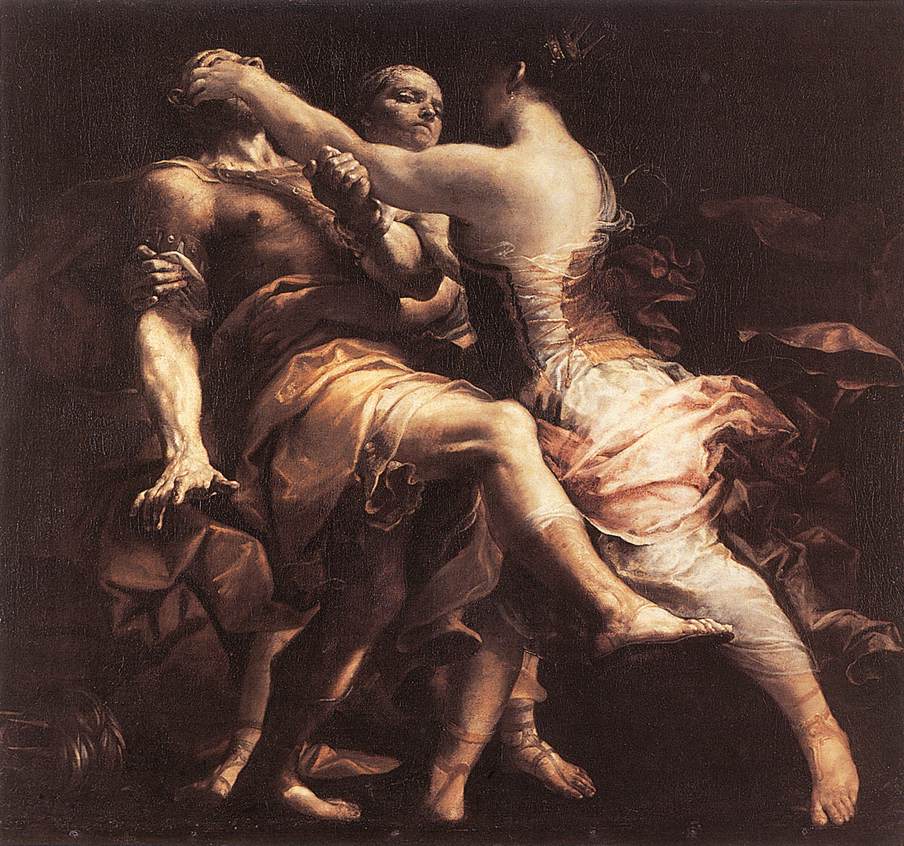
Oil painting of a woman reaching out and silencing a man
Hecuba kills Polymestor, by Giuseppe Maria Crespi. 18th Century. Royal Museums of Fine Arts of Belgium

An Essay About How Your Words Don’t Hurt Me

Seneca, De Brevitate Vitae 26.4-6

“Some Socrates—or any other person who has similar authority or talent for these human matters—says “I am persuaded by nothing less than your opinion that I should change my life. Pour the typical abuse on me from every angle. I won’t even notice that you’re attacking me because you’re wailing just like poor little babies.”

This is what someone says who has come to wisdom, whose soul has escaped vices and calls on him to correct others not out of hatred but in order to treat them. Someone like this might say to others, “Your opinion about me affects me on your account, not mine because despising and attacking virtue is foreswearing any hope of the good. You don’t hurt me just as mortals don’t harm the gods when they destroy the altars.

Yet an evil proposition and an evil plan is obvious even when it lacks the power to harm someone. I tolerate your prattle even as Jupiter the Highest and Greatest tolerates the absurd claims of poets: one gives him wings, one gives him horns, another even depicts him as a supreme adulterer, up all night, while others show him to be mean to the other gods, unjust to men, a rapist of freeborn boys or his own relatives, and a parricide and usurper of his father’s throne.

The poets have accomplished nothing more than relieving people of their shame at doing wrong if they have truly believed the gods are like this. So, even though your words don’t harm me, I’m still warning you for your own benefit.”

“Nihil magis,” inquit ille Socrates, aut aliquis alius, ius cui idem adversus humana atque eadem potestas est, “persuasi mihi, quam ne ad opiniones vestras actum vitae meae flecterem. Solita conferte undique verba; non conviciari vos putabo sed vagire velut infantes miserrimos.” Haec dicet ille, cui sapientia contigit, quem animus vitiorum immunis increpare alios, non quia odit, sed in remedium iubet. Adiciet his illa: “Existimatio me vestra non meo nomine sed vestro movet, quia clamitantis odisse et lacessere virtutem bonae spei eiuratio est. Nullam mihi iniuriam facitis, sed ne dis quidem hi qui aras evertunt.

Office Space Michael Bolton GIF - Office Space Michael Bolton Why Should I Change GIFs

Sed malum propositum apparet malumque consilium etiam ibi, ubi nocere non potuit. Sic vestras halucinationes fero quemadmodum Iuppiter optimus maximus ineptias poetarum, quorum alius illi alas imposuit, alius cornua, alius adulterum illum induxit et abnoctantem, alius saevum in deos, alius iniquum in homines, alius raptorem ingenuorum et cognatorum quidem, alius. parricidam et regni alieni paternique expugnatorem. Quibus nihil aliud actum est, quam ut pudor hominibus peccandi demeretur,  si tales deos credidissent. Sed quamquam ista me nihil laedant, vestra tamen vos moneo causa.

Does the examined life need a socrates bib?

Angry Poet and Killer Songs

CW: Suicide 

Greek Anthology, 7.351, Dioscorides

“By this holy tomb of the dead we daughters of Lykambes
Who received a hateful reputation, make this oath:
We didn’t shame our virginity or our parents
Nor Paros, the highest of the sacred islands.

No: Archilochus spat hateful rumor
And frightening insult against our family.
By the gods and the spirits: we never saw Archilochus
On the streets or in Hera’s great sanctuary.

If we were truly so lustful and reckless, that guy
Never would have wanted to have children with us.”

Οὐ μὰ τόδε φθιμένων σέβας ὅρκιον αἵδε Λυκάμβεω,
αἳ λάχομεν στυγερὴν κληδόνα, θυγατέρες
οὔτε τι παρθενίην ᾐσχύναμεν οὔτε τοκῆας
οὔτε Πάρον, νήσων αἰπυτάτην ἱερῶν,

ἀλλὰ καθ᾿ ἡμετέρης γενεῆς ῥιγηλὸν ὄνειδος
φήμην τε στυγερὴν ἔφλυσεν Ἀρχίλοχος.
Ἀρχίλοχον, μὰ θεοὺς καὶ δαίμονας, οὔτ᾿ ἐνἀγυιαῖς
εἴδομεν οὔθ᾿ Ἥρης ἐν μεγάλῳ τεμένει.
εἰ δ᾿ ἦμεν μάχλοι καὶ ἀτάσθαλοι οὐκ ἂν ἐκεῖνος
ἤθελεν ἐξ ἡμέων γνήσια τέκνα τεκεῖν.

Schol. C ad Ovid, Ibis 53-54

“Lycambes offered his daughter Neobule to Archilochus and promised a dowry which he refused to give later. So Archilochus composed invective in iambic meter about him and talked so savagely about him and his wife and his daughter that he compelled them to hanging. For they preferred dying over living with such foul abuses.”

Lycambes Neobulen, filiam suam, Archilocho desponsavit et dotem promisit; quam quia postea negavit, Archilochus in iambico metro invectivam in ipsum fecit et tam turpia de eo dixit quod ipsum et uxorem et filiam ad laqueos coegit: maluerunt enim mori quam sub turpibus obprobriis vivere.

Eustathius, Commentary in Hom. Od. 11.277 (1684.45)

“You should know that many have hanged themselves over grief. This is why the ancient account has the daughters of Lykambes doing so thanks to Archilochus’ poems because they could not endure the rumors from his insults. The man was skilled at offending. For this reason we have the proverb “you’ve tread on Archilochus” which is for people who are good at insults, as if someone claims you stepped on snake or a sharp thorn.”

ἰστέον δὲ ὅτι πολλῶν προσώπων ἁψαμένων βρόχους ἐπὶ λύπαις ἔπαθον οὕτω κατὰ τὴν παλαιὰν ἱστορίαν καὶ αἱ Λυκαμβίδαι ἐπὶ τοῖς Ἀρχιλόχου ποιήμασι, μὴ φέρουσαι τὴν ἐπιφορὰν τῶν ἐκείνου σκωμμάτων· ἦν γὰρ ὁ ἀνὴρ δεινὸς ὑβρίζειν· ὅθεν καὶ παροιμία ἐπὶ τῶν οὕτω σκώπτειν εὐφυῶν τό, Ἀρχίλοχον πεπάτηκας, ὡς εἴ τις εἴπῃ, σκορπίον ἢ ὄφιν ἢ κακὴν ἄκανθαν.

Cave of Archilochos on the Paros island, near Sacred cape in front of the entrance to the harbor of Parikia.

Water and Dirt: A Curse

Homer, Iliad 7.97-100 [Menelaos speaking to the Achaeans]

“This is going to be a truly awful disgrace
unless some Greek goes against Hektor now.
But I wish you would all turn into water and dirt
Each of you sitting there, similarly feckless, fameless.”

ἦ μὲν δὴ λώβη τάδε γ’ ἔσσεται αἰνόθεν αἰνῶς
εἰ μή τις Δαναῶν νῦν ῞Εκτορος ἀντίος εἶσιν.
ἀλλ’ ὑμεῖς μὲν πάντες ὕδωρ καὶ γαῖα γένοισθε
ἥμενοι αὖθι ἕκαστοι ἀκήριοι ἀκλεὲς αὔτως·

Schol. bT+T ad Il.7.99

“I hope you become water and dirt”. Water and earth are elements that don’t move by their nature, but other things move through them. So, he is rebuking them in this way for their paralysis.

Or, this means that they are made of these substances and he is praying they will dissolve back into them. So Xenophanes says: “we are all made of dirt and water / and everything from earth returns to earth again.”

Or, he says this because water destroys souls.”

ὕδωρ καὶ γαῖα γένοισθε: τῶν στοιχείων ὕδωρ καὶ γῆ κατὰ φύσιν ἀκίνητα, τὰ δὲ ἄλλα κινητὰ δι’ ἑαυτῶν. ταῦτα οὖν φησι τὴν ἀκινησίαν ὀνειδίζων·

ἢ ἐξ ὧν συνεστήκασιν, εἰς ταῦτα αὐτοὺς ἀναλυθῆναι εὔχεται καὶ Ξενοφάνης πάντες γὰρ γαίης τε καὶ ὕδατος ἐκγενόμε<σ>θα· / ἐκ γῆς γὰρ †πάντα καὶ εἰς γῆν πάντα τελευτᾷ.”

ἢ ὅτι τὸ ὕδωρ τὰς ψυχὰς διαφθείρει.

A photograph of a tan colored mountain in the background with a blue lake in the foreground
Placid water on Lake Powell

An Essay About How Your Words Don’t Hurt Me

Seneca, De Brevitate Vitae 26.4-6

“Some Socrates—or any other person who has similar authority or talent for these human matters—says “I am persuaded by nothing less than your opinion that I should change my life. Pour the typical abuse on me from every angle. I won’t even notice that you’re attacking me because you’re wailing just like poor little babies.”

This is what someone says who has come to wisdom, whose soul has escaped vices and calls on him to correct others not out of hatred but in order to treat them. Someone like this might say to others, “Your opinion about me affects me on your account, not mine because despising and attacking virtue is foreswearing any hope of the good. You don’t hurt me just as mortals don’t harm the gods when they destroy the altars.

Yet an evil proposition and an evil plan is obvious even when it lacks the power to harm someone. I tolerate your prattle even as Jupiter the Highest and Greatest tolerates the absurd claims of poets: one gives him wings, one gives him horns, another even depicts him as a supreme adulterer, up all night, while others show him to be mean to the other gods, unjust to men, a rapist of freeborn boys or his own relatives, and a parricide and usurper of his father’s throne.

The poets have accomplished nothing more than relieving people of their shame at doing wrong if they have truly believed the gods are like this. So, even though your words don’t harm me, I’m still warning you for your own benefit.”

“Nihil magis,” inquit ille Socrates, aut aliquis alius, ius cui idem adversus humana atque eadem potestas est, “persuasi mihi, quam ne ad opiniones vestras actum vitae meae flecterem. Solita conferte undique verba; non conviciari vos putabo sed vagire velut infantes miserrimos.” Haec dicet ille, cui sapientia contigit, quem animus vitiorum immunis increpare alios, non quia odit, sed in remedium iubet. Adiciet his illa: “Existimatio me vestra non meo nomine sed vestro movet, quia clamitantis odisse et lacessere virtutem bonae spei eiuratio est. Nullam mihi iniuriam facitis, sed ne dis quidem hi qui aras evertunt.

Office Space Michael Bolton GIF - Office Space Michael Bolton Why Should I Change GIFs

Sed malum propositum apparet malumque consilium etiam ibi, ubi nocere non potuit. Sic vestras halucinationes fero quemadmodum Iuppiter optimus maximus ineptias poetarum, quorum alius illi alas imposuit, alius cornua, alius adulterum illum induxit et abnoctantem, alius saevum in deos, alius iniquum in homines, alius raptorem ingenuorum et cognatorum quidem, alius. parricidam et regni alieni paternique expugnatorem. Quibus nihil aliud actum est, quam ut pudor hominibus peccandi demeretur,  si tales deos credidissent. Sed quamquam ista me nihil laedant, vestra tamen vos moneo causa.

Does the examined life need a socrates bib?

Wannabe Politicians and Lords of Lies

Euripides, Hecuba 251-257

“Don’t you engage in true evil in these plans
When you even admit that I treated you well
But instead of helping me you do as much harm as possible?

You are a thankless brood, you mob of wannabe
Politicians. I wish I didn’t know you
When you don’t care about harming your friends
As long as you say something the masses will like.”

οὔκουν κακύνῃ τοῖσδε τοῖς βουλεύμασιν,
ὃς ἐξ ἐμοῦ μὲν ἔπαθες οἷα φῂς παθεῖν,
δρᾷς δ᾿ οὐδὲν ἡμᾶς εὖ, κακῶς δ᾿ ὅσον δύνᾳ;
ἀχάριστον ὑμῶν σπέρμ᾿, ὅσοι δημηγόρους
ζηλοῦτε τιμάς· μηδὲ γιγνώσκοισθέ μοι,
οἳ τοὺς φίλους βλάπτοντες οὐ φροντίζετε,
ἢν τοῖσι πολλοῖς πρὸς χάριν λέγητέ τι.

Euripides, Andromache 445-450

“Inhabitants of Sparta, most hateful of mortals
To all people, masters of tricks,
Lords of lies, devious plotters of evils,
You never have a healthy thought but everything
Is twisted—oh, it is wrong that you’re lucky in Greece.
What don’t you do? Don’t you have the most murders?”

πᾶσιν ἀνθρώποισιν ἔχθιστοι βροτῶν
Σπάρτης ἔνοικοι, δόλια βουλευτήρια,
ψευδῶν ἄνακτες, μηχανορράφοι κακῶν,
ἑλικτὰ κοὐδὲν ὑγιὲς ἀλλὰ πᾶν πέριξ
φρονοῦντες, ἀδίκως εὐτυχεῖτ᾿ ἀν᾿ Ἑλλάδα.
τί δ᾿ οὐκ ἐν ὑμῖν ἐστιν; οὐ πλεῖστοι φόνοι;

Hecuba kills Polymestor by Giuseppe maria Crespi

Angry Poet and Killer Songs

CW: Suicide 

Greek Anthology, 7.351, Dioscorides

“By this holy tomb of the dead we daughters of Lykambes
Who received a hateful reputation, make this oath:
We didn’t shame our virginity or our parents
Nor Paros, the highest of the sacred islands.

No: Archilochus spat hateful rumor
And frightening insult against our family.
By the gods and the spirits: we never saw Archilochus
On the streets or in Hera’s great sanctuary.

If we were truly so lustful and reckless, that guy
Never would have wanted to have children with us.”

Οὐ μὰ τόδε φθιμένων σέβας ὅρκιον αἵδε Λυκάμβεω,
αἳ λάχομεν στυγερὴν κληδόνα, θυγατέρες
οὔτε τι παρθενίην ᾐσχύναμεν οὔτε τοκῆας
οὔτε Πάρον, νήσων αἰπυτάτην ἱερῶν,

ἀλλὰ καθ᾿ ἡμετέρης γενεῆς ῥιγηλὸν ὄνειδος
φήμην τε στυγερὴν ἔφλυσεν Ἀρχίλοχος.
Ἀρχίλοχον, μὰ θεοὺς καὶ δαίμονας, οὔτ᾿ ἐνἀγυιαῖς
εἴδομεν οὔθ᾿ Ἥρης ἐν μεγάλῳ τεμένει.
εἰ δ᾿ ἦμεν μάχλοι καὶ ἀτάσθαλοι οὐκ ἂν ἐκεῖνος
ἤθελεν ἐξ ἡμέων γνήσια τέκνα τεκεῖν.

Schol. C ad Ovid, Ibis 53-54

“Lycambes offered his daughter Neobule to Archilochus and promised a dowry which he refused to give later. So Archilochus composed invective in iambic meter about him and talked so savagely about him and his wife and his daughter that he compelled them to hanging. For they preferred dying over living with such foul abuses.”

Lycambes Neobulen, filiam suam, Archilocho desponsavit et dotem promisit; quam quia postea negavit, Archilochus in iambico metro invectivam in ipsum fecit et tam turpia de eo dixit quod ipsum et uxorem et filiam ad laqueos coegit: maluerunt enim mori quam sub turpibus obprobriis vivere.

Eustathius, Commentary in Hom. Od. 11.277 (1684.45)

“You should know that many have hanged themselves over grief. This is why the ancient account has the daughters of Lykambes doing so thanks to Archilochus’ poems because they could not endure the rumors from his insults. The man was skilled at offending. For this reason we have the proverb “you’ve tread on Archilochus” which is for people who are good at insults, as if someone claims you stepped on snake or a sharp thorn.”

ἰστέον δὲ ὅτι πολλῶν προσώπων ἁψαμένων βρόχους ἐπὶ λύπαις ἔπαθον οὕτω κατὰ τὴν παλαιὰν ἱστορίαν καὶ αἱ Λυκαμβίδαι ἐπὶ τοῖς Ἀρχιλόχου ποιήμασι, μὴ φέρουσαι τὴν ἐπιφορὰν τῶν ἐκείνου σκωμμάτων· ἦν γὰρ ὁ ἀνὴρ δεινὸς ὑβρίζειν· ὅθεν καὶ παροιμία ἐπὶ τῶν οὕτω σκώπτειν εὐφυῶν τό, Ἀρχίλοχον πεπάτηκας, ὡς εἴ τις εἴπῃ, σκορπίον ἢ ὄφιν ἢ κακὴν ἄκανθαν.

Cave of Archilochos on the Paros island, near Sacred cape in front of the entrance to the harbor of Parikia.