“Nothing is unexpected, nothing is foresworn and
Nothing amazes now that father Zeus the Olympian
veiled the light to make it night at midday
even as sun was shining: so dread fear has overtaken men.
From this time on everything that men believe
will be doubted: may none of us who see this be surprised
when we see forest beasts taking turns in the salted field
with dolphins, when the echoing waves of the sea become
Dearer to them than the sand, and the dolphins love the wooded glen…”
Julia Balbilla, Epigram 991 [from Kaibel 1878 with supplements from Rosenmeyer 2008]
In Memnonis crure sinistro. C. I. 4730 coll. Add. III p. 1202 sq.
“When I was near Memnon with August Sabina:
Child of Dawn and noble Tithonos,
Seated before Zeus’s city of Thebes
Or, Amenoth, Egyptian King, as the priests name you
The ones who know the ancient stories
Greet us and speak out to show your welcome, Memnon,
To the revered wife of Lord Hadrian.
A barbarian man lopped off your tongue and ears
That atheist Kambyses, but he paid the price
With a painful death under the same pitiful blade
He used to kill divine Apis.
But I do not believe that this statue of yours could ever be destroyed
And I cherish in my thoughts a soul immortal for all time.
This is because my parents and grandparents were reverent,
Wise Balbillus and the king Antiochus.
Balbillus was my Queen mother’s father
And King Antiochus was my father’s father.
I too have been allotted noble blood from their people—
And these are the words from reverent me, Balbilla.”
Rosenmeyer, P. (2008). Greek Verse Inscriptions in Roman Egypt: Julia Balbilla’s Sapphic Voice. Classical Antiquity,27(2), 334-358.
Brennan, T. (1998). “The Poets Julia Balbilla and Damo at the Colossus of Memnon”. Classical World,91(4), 215.
Plant, I., & Plant, Ian Michael. (2004). Women writers of ancient Greece and Rome : An anthology (University of Oklahoma Press ed.). Norman: University of Oklahoma Press.
Julia Balbilla is a Roman poet from the time of Hadrian. She composed Greek verse. For more of her poems see Rosenmeyer 2008 below and Brennan 1998 for additional historical context
Julia Balbilla, Two Poems
In Memnonis pede sinistro. C. I. 4727 coll. Add. III p. 1202.
“I, Balbilla, heard from the stone when it spoke
Either the divine voice of Memnon or Phamenoth.
I came here alongside my beautiful queen Sabina,
as the sun kept its course in the first hour.
In the fifteenth year of Hadrian’s reign
When Hathyr had made its twenty-fourth day,
It was on the twenty-fifth day of the month of Hathyr.
In Memnonis crure sinistro. C. I. 4725 coll. Add. III p. 1201 sq.
“Julia Balbilla [wrote this]
When August Hadrian heard Memnon
I’ve learned that the Egyptian Memnon, bronzed by
The bright sun, sounds out from a Theban stone.
When he gazed upon Hadrian, the kingliest king
He addressed him as much as he could before the light of the sun.
But as Titan was driving through the sky on white horses
Holding the second part of the day in shadow,
Memnon’s voice rang out again like struck bronze,
High-pitched: and he let loose a third sound greeting.
And then Lord Hadrian hailed Memnon in return
And left on this column for future generations to see
Inscribed verses telling of everything he saw and heard.
And it was clear to everyone how much the gods love him.
Rosenmeyer, P. (2008). Greek Verse Inscriptions in Roman Egypt: Julia Balbilla’s Sapphic Voice. Classical Antiquity,27(2), 334-358.
Brennan, T. (1998). “The Poets Julia Balbilla and Damo at the Colossus of Memnon”. Classical World,91(4), 215.
Plant, I., & Plant, Ian Michael. (2004). Women writers of ancient Greece and Rome : An anthology (University of Oklahoma Press ed.). Norman: University of Oklahoma Press.
“You lie there beneath Aphrodite’s golden ceiling,
Grapes, full with Dionysus’ drink.
Your mother, the vine, will no longer wrap her love branch around you
And protect your head beneath her sweet leaf.”
“Anigrian Nymphs, daughters of the river, you ambrosial
Creatures who always step on the depths with rosy feet.
Say hello to and preserve Kleonymos who set out for you goddesses
These wooden images beneath the pines.”
“[Agave] grabbed his left hand in her arms
As she tread onto the ribs of that unlucky man
And then ripped his arm from his shoulder, not with her own strength
But the power which the god placed in her hands.
Ino was working through his other side,
Breaking apart his flesh, and Autonoê and the whole mob
Of the Bacchae was attacking—there was just a single cry everywhere.
He was moaning out as much of the breath he happened to have,
And they were exulting. One woman was holding an arm;
Another had a foot still in its shoes; his sides were stripped
Nude, with flesh gone. Every woman’s hands were bloodied
As they played a ball game with Pentheus’ body’s parts.”
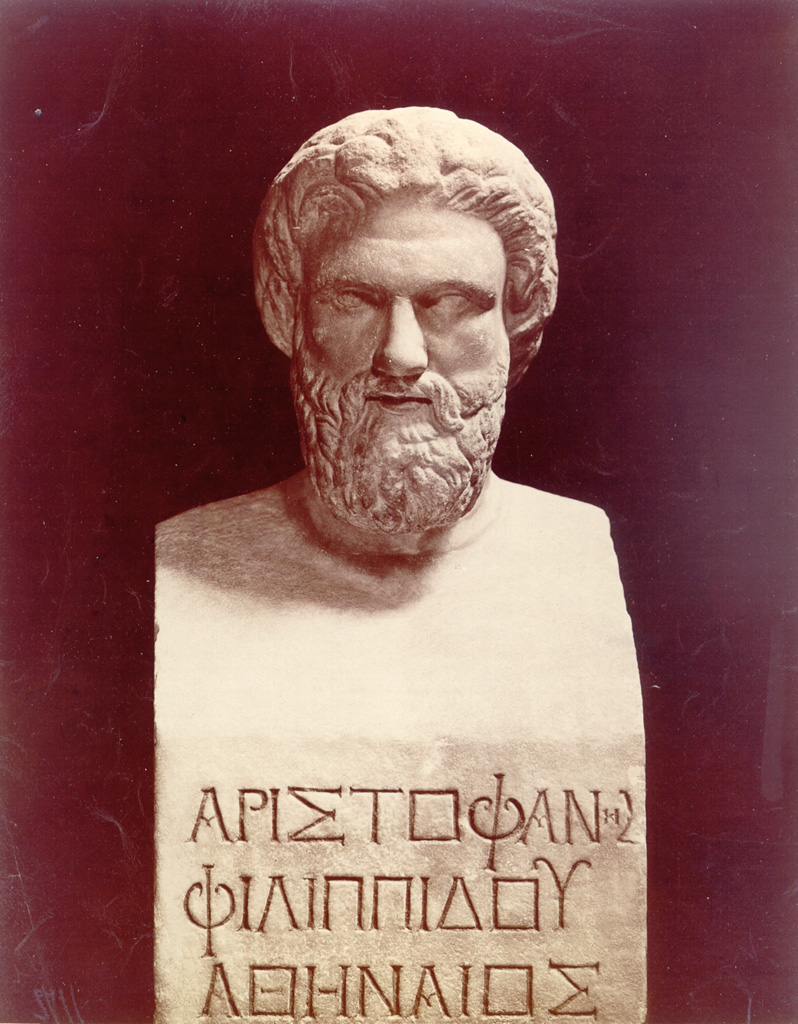
“The books of Aristophanes—divine labor—over which
Archanean ivy dangled its massive green hair.
See how much of Dionysus a page holds, how the stories
Echo, full of frightening charms.
Comic poet, best of heart, equal to the characters of Greece,
You both hated and mocked things that deserved it.”
“When they were waging war and many different kinds of things were happening in the battles, then indeed among them when the Athenians were winning, the poet Alcaeus went running and fled, but the Athenians captured his armor and dedicated it in the temple of Athena at Sigeion. Alcaeus wrote a poem about this and sent it to Mytilene where he explained his suffering to his best friend Melanippos. Peirander, Kypselos’ son, made peace between the Athenians and Mytileneans after they entrusted the affair to his judgment. He resolved it so that each side would keep what they previously possessed.”
“What does Herodotus say about what happened at [the battle between the Athenians and Mytileneans]? Instead of mentioning the excellence of Pittakos, he narrates the flight of the poet Alkaios from battle, how he dropped his weapons. By not describing great deeds and by not passing over the shameful ones, he has taken the side of those who claim that envy and joy at someone else’s misfortune comes from the same weakness.”
“Drink and get drunk with me, Melanippos.
Why would you say that once you cross the great eddying
River of Acheron you will see the pure light of the sun again?
Come on, don’t hope for great things.
For even the son of Aiolos, Sisyphos used to claim
He was better than death because he knew the most of men.
Even though he was so very wise, he crossed
The eddying river Acheron twice thanks to fate
And Kronos’ son granted that he would have toil
Beneath the dark earth. So don’t hope for these things.
As long as we are young, now is the time we must
Endure whatever of these things the god soon grants us to suffer.”
Julia Balbilla, Epigram 991 [from Kaibel 1878 with supplements from Rosenmeyer 2008]
In Memnonis crure sinistro. C. I. 4730 coll. Add. III p. 1202 sq.
“When I was near Memnon with August Sabina:
Child of Dawn and noble Tithonos,
Seated before Zeus’s city of Thebes
Or, Amenoth, Egyptian King, as the priests name you
The ones who know the ancient stories
Greet us and speak out to show your welcome, Memnon,
To the revered wife of Lord Hadrian.
A barbarian man lopped off your tongue and ears
That atheist Kambyses, but he paid the price
With a painful death under the same pitiful blade
He used to kill divine Apis.
But I do not believe that this statue of yours could ever be destroyed
And I cherish in my thoughts a soul immortal for all time.
This is because my parents and grandparents were reverent,
Wise Balbillus and the king Antiochus.
Balbillus was my Queen mother’s father
And King Antiochus was my father’s father.
I too have been allotted noble blood from their people—
And these are the words from reverent me, Balbilla.”
Rosenmeyer, P. (2008). Greek Verse Inscriptions in Roman Egypt: Julia Balbilla’s Sapphic Voice. Classical Antiquity,27(2), 334-358.
Brennan, T. (1998). “The Poets Julia Balbilla and Damo at the Colossus of Memnon”. Classical World,91(4), 215.
Plant, I., & Plant, Ian Michael. (2004). Women writers of ancient Greece and Rome : An anthology (University of Oklahoma Press ed.). Norman: University of Oklahoma Press.
Julia Balbilla is a Roman poet from the time of Hadrian. She composed Greek verse. For more of her poems see Rosenmeyer 2008 below and Brennan 1998 for additional historical context
Julia Balbilla, Two Poems
In Memnonis pede sinistro. C. I. 4727 coll. Add. III p. 1202.
“I, Balbilla, heard from the stone when it spoke
Either the divine voice of Memnon or Phamenoth.
I came here alongside my beautiful queen Sabina,
as the sun kept its course in the first hour.
In the fifteenth year of Hadrian’s reign
When Hathyr had made its twenty-fourth day,
It was on the twenty-fifth day of the month of Hathyr.
In Memnonis crure sinistro. C. I. 4725 coll. Add. III p. 1201 sq.
“Julia Balbilla [wrote this]
When August Hadrian heard Memnon
I’ve learned that the Egyptian Memnon, bronzed by
The bright sun, sounds out from a Theban stone.
When he gazed upon Hadrian, the kingliest king
He addressed him as much as he could before the light of the sun.
But as Titan was driving through the sky on white horses
Holding the second part of the day in shadow,
Memnon’s voice rang out again like struck bronze,
High-pitched: and he let loose a third sound greeting.
And then Lord Hadrian hailed Memnon in return
And left on this column for future generations to see
Inscribed verses telling of everything he saw and heard.
And it was clear to everyone how much the gods love him.
Rosenmeyer, P. (2008). Greek Verse Inscriptions in Roman Egypt: Julia Balbilla’s Sapphic Voice. Classical Antiquity,27(2), 334-358.
Brennan, T. (1998). “The Poets Julia Balbilla and Damo at the Colossus of Memnon”. Classical World,91(4), 215.
Plant, I., & Plant, Ian Michael. (2004). Women writers of ancient Greece and Rome : An anthology (University of Oklahoma Press ed.). Norman: University of Oklahoma Press.
“You lie there beneath Aphrodite’s golden ceiling,
Grapes, full with Dionysus’ drink.
Your mother, the vine, will no longer wrap her love branch around you
And protect your head beneath her sweet leaf.”
“Anigrian Nymphs, daughters of the river, you ambrosial
Creatures who always step on the depths with rosy feet.
Say hello to and preserve Kleonymos who set out for you goddesses
These wooden images beneath the pines.”