Like Blood Poured Over Milk: It Gets Worse When Achilles Dies


Quintus, Posthomerica 3.551-573

“Of all the women, Briseis felt the most terrible grief
in her heart within, the companion of warring Achilles.
She turned over his corpse and tore at her fine skin
With both hands and from her delicate chest
Bloody bruises rose up from the force of her blows—
You might even say it was like blood poured over milk.
Yet she still shined even as she mourned in pain
And her whole form exuded grace.
This is the kind of speech she made while mourning:

“Oh what endless horror I have suffered.
Nothing that happened to me before this was so great
Not the death of my brothers nor the loss of my country,

Nothing exceeds your death. You were my sacred day
And the light of the sun and the gentle life,
My hope for good and tireless defense against pain—
You were better by far than any gift, than my parents even—
You were everything alone for me even though I was enslaved.

You took me as your bedmate and seized me from a slave’s labor.
But now? Some other Achaean will take me away in his ships
To fertile Sparta or dry and thirsty Argos
Where I will again suffer terrible things working away,
Apart from you and miserable. I only wish that
The earth had covered over me before I saw your death.”

πασάων δ’ ἔκπαγλον ἀκηχεμένη κέαρ ἔνδον
Βρισηὶς παράκοιτις ἐυπτολέμου Ἀχιλῆος
ἀμφὶ νέκυν στρωφᾶτο καὶ ἀμφοτέρῃς παλάμῃσι
δρυπτομένη χρόα καλὸν ἀύτεεν· ἐκ δ’ ἁπαλοῖο
στήθεος αἱματόεσσαι ἀνὰ σμώδιγγες ἄερθεν
θεινομένης· φαίης κεν ἐπὶ γλάγος αἷμα χέασθαι
φοίνιον. ἀγλαΐη δὲ καὶ ἀχνυμένης ἀλεγεινῶς
ἱμερόεν μάρμαιρε, χάρις δέ οἱ ἄμπεχεν εἶδος.
τοῖον δ’ ἔκφατο μῦθον ὀιζυρὸν γοόωσα·
“Ὤ μοι ἐγὼ πάντων περιώσιον αἰνὰ παθοῦσα·
οὐ γάρ μοι τόσσον περ ἐπήλυθεν ἄλλό τι πῆμα,
οὔτε κασιγνήτων οὔτ’ εὐρυχόρου περὶ πάτρης,
ὅσσον σεῖο θανόντος· ἐπεὶ σύ μοι ἱερὸν ἦμαρ
καὶ φάος ἠελίοιο πέλες καὶ μείλιχος αἰὼν
ἐλπωρή τ’ ἀγαθοῖο καὶ ἄσπετον ἄλκαρ ἀνίης
πάσης τ’ ἀγλαΐης πολὺ φέρτερος ἠδὲ τοκήων
ἔπλεο· πάντα γὰρ οἶος ἔης δμωῇ περ ἐούσῃ,
καί ῥά με θῆκας ἄκοιτιν ἑλὼν ἄπο δούλια ἔργα.
νῦν δέ τις ἐν νήεσσιν Ἀχαιῶν ἄξεται ἄλλος
Σπάρτην εἰς ἐρίβωλον ἢ ἐς πολυδίψιον Ἄργος·
καί νύ κεν ἀμφιπολεῦσα κακὰς ὑποτλήσομ’ ἀνίας
σεῦ ἀπονοσφισθεῖσα δυσάμμορος. ὡς ὄφελόν με
γαῖα χυτὴ ἐκάλυψε πάρος σέο πότμον ἰδέσθαι.”

17th Century Tapestry based on Rubens’ “Briseis Returned to Achilles?

Judging the Days of the Week

Hesiod, Works and Days 822-828

“Some days bring great advantage to mortals on the earth,
But others are unpredictable, aimless, providing nothing.
One person praises one, another praises a different one,
But few know at all. One day’s a mother, another a stepmother.

Lucky and blessed is someone who knows all these things
And does all their work without angering the gods,
Judging all the bird signs and avoiding excesses.”

αἵδε μὲν ἡμέραι εἰσὶν ἐπιχθονίοις μέγ᾽ ὄνειαρ·
αἱ δ᾽ ἄλλαι μετάδουποι, ἀκήριοι, οὔ τι φέρουσαι,
ἄλλος δ᾽ ἀλλοίην αἰνεῖ, παῦροι δέ τ᾽ ἴσασιν·
ἄλλοτε μητρυιὴ πέλει ἡμέρη, ἄλλοτε μήτηρ
τάων. εὐδαίμων τε καὶ ὄλβιος, ὃς τάδε πάντα
εἰδὼς ἐργάζηται ἀναίτιος ἀθανάτοισιν,
ὄρνιθας κρίνων καὶ ὑπερβασίας ἀλεείνων.

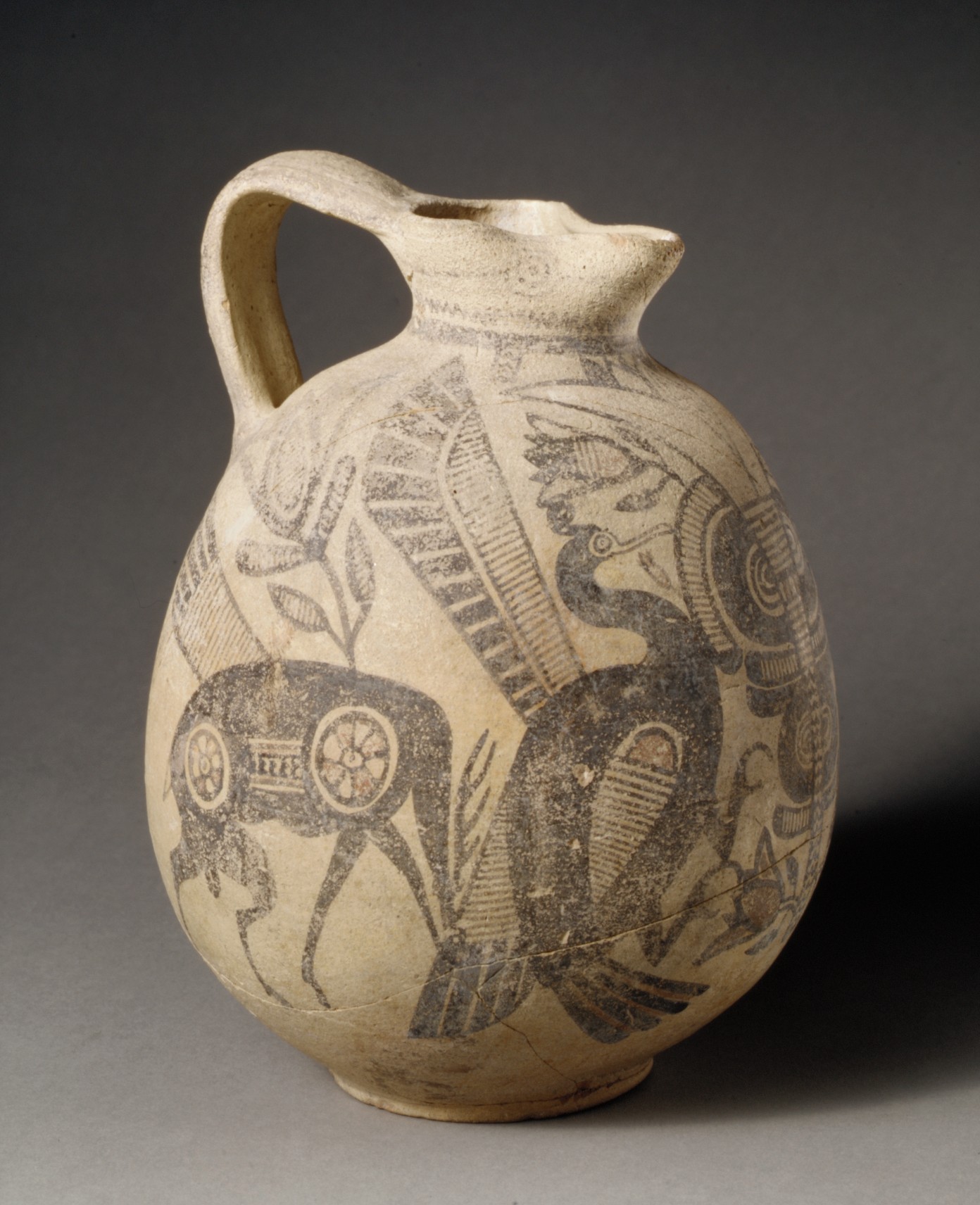
Terracotta jug Period: Cypro-Archaic I Date: ca. 750–600 B.C. ...
Cypriot Vase, c. 750-600 BCE, MET


Diary of a Towson CCA Worker – The Roar

News of the Achaeans

Homer, Iliad, 11.218-231.

Tell me now, Olympus-dwelling Muses,
who first confronted Agamemnon,
an actual Trojan or famed ally?
Iphidamas, Antinor’s son, bold and burly
and reared in rich-soiled Thrace, mother of flocks.
Cisses raised him as a child in his halls,
the father of his mother, sweet-cheeked Theano.

When the splendid youth reached maturity,
to keep him there Cisses offered him his daughter.
He wed, but quit his bridal chamber when news came
of the Achaeans. Twelve ships went with him.
He left the balanced ships at Percote
and made his way on foot to Ilium.
This is who confronted Atreus’s son, Agamemnon.

ἔσπετε νῦν μοι Μοῦσαι Ὀλύμπια δώματʼ ἔχουσαι
ὅς τις δὴ πρῶτος Ἀγαμέμνονος ἀντίον ἦλθεν
ἢ αὐτῶν Τρώων ἠὲ κλειτῶν ἐπικούρων.
Ἰφιδάμας Ἀντηνορίδης ἠΰς τε μέγας τε
ὃς τράφη ἐν Θρῄκῃ ἐριβώλακι μητέρι μήλων·
Κισσῆς τόν γʼ ἔθρεψε δόμοις ἔνι τυτθὸν ἐόντα
μητροπάτωρ, ὃς τίκτε Θεανὼ καλλιπάρῃον·
αὐτὰρ ἐπεί ῥʼ ἥβης ἐρικυδέος ἵκετο μέτρον,
αὐτοῦ μιν κατέρυκε, δίδου δʼ ὅ γε θυγατέρα ἥν·
γήμας δʼ ἐκ θαλάμοιο μετὰ κλέος ἵκετʼ Ἀχαιῶν
σὺν δυοκαίδεκα νηυσὶ κορωνίσιν, αἵ οἱ ἕποντο.
τὰς μὲν ἔπειτʼ ἐν Περκώτῃ λίπε νῆας ἐΐσας,
αὐτὰρ ὃ πεζὸς ἐὼν ἐς Ἴλιον εἰληλούθει·
ὅς ῥα τότʼ Ἀτρεΐδεω Ἀγαμέμνονος ἀντίον ἦλθεν.

[1] What does μετὰ κλέος mean in this passage? 

11.227: . . . μετὰ κλέος ἵκετʼ Ἀχαιῶν (“when news came of the Achaeans”)

Is the preposition μετὰ temporal (“after,” “when”), as I have translated it, or is it purposive (“in pursuit of”)? 

How you interpret μετὰ dictates how you interpret κλέος:

Temporal μετὰ should mean that κλέος is “news” (“he left when news came . . .”). 

But purposive μετὰ should mean that κλέος is “glory” (“he went in pursuit of glory”). 

The temptation to translate μετὰ κλέος as “in pursuit of glory” is understandable: preoccupation with glory is, after all, central to the epic, and men die in their quest for it.  

In this particular passage, however, I believe the understandable temptation leads to error. 


[2] What have the translators said?  

There are those who interpret μετὰ in this passage as temporal: for example, Robert Fitzgerald, Robert Fagles, Edward McCorie, and more recently Caroline Alexander.  

There are those who interpret it as purposive: for example, E.V. Rieu, Richard Lattimore, Peter Green, and more recently Stephen Mitchell and Barry Powell.  

Then there’s Stanley Lombardo who manages to treat μετὰ as both temporal and purposive: “[he] went chasing after glory when he heard/The Achaeans were coming.” 

This might be the place to point out that Iliad.13.363-366 (and perhaps others too) show the sketch of Iphidamas to be essentially formular. And for our purposes, what matters most is the reappearance of μετὰ κλέος in this later passage: 

For he killed Orthryoneus who was there from Cabesus.
He’d recently come, after news [μετὰ κλέος] of the war.
He had begged Priam for his finest daughter,
Cassandra, and without a bride-price.

πέφνε γὰρ Ὀθρυονῆα Καβησόθεν ἔνδον ἐόντα,
ὅς ῥα νέον πολέμοιο μετὰ κλέος εἰληλούθει,
ᾔτεε δὲ Πριάμοιο θυγατρῶν εἶδος ἀρίστην
Κασσάνδρην ἀνάεδνον . . .

Are the translators consistent in their handling of μετὰ κλέος across the two passages? Some are, some aren’t. 

I’ll only point out that Powell who treats the prepositional phrase as temporal in Iliad 11 treats it as purposive in Iliad 13. And Lombardo who would have it both ways in Iliad 11 interprets the phrase as unambiguously purposive in Iliad 13. 

Judging from the split among translators, just what μετὰ κλέος means in 11.227 is controversial.


[3] The Scholia: Modest support for purposive μετὰ?  

A single scholiast glosses μετὰ κλέος ἵκετʼ Ἀχαιῶν in a way which implies a stance on whether μετὰ is here temporal or purposive.  The scholion reads: 

“For this man’s undoing, there came the glory of the Greeks” 

(ή γαρ ήττα τούτου δόξα τών ‘Ελλήνων έγίνετο [Erbse.II.167.227d]) 

The word I’m rendering as “glory” is δόξα (“glory,” “splendor,” “repute”). The word I’m rendering as “there came” is “έγίνετο” (“it came into being,” “there was,” etc). 

I find it plausible that the scholiast is treating δόξα and  κλέος as synonyms, and έγίνετο and ἵκετʼ (“it came,” 3rd person aorist of ἱκέσθαι) as synonyms too.  

As such, I take the phrase “there came the glory of the Greeks” (δόξα τών ‘Ελλήνων έγίνετο) to mean something like “an opportunity came to win glory from the Greeks” (τών ‘Ελλήνων as an objective genitive). There’s the purposive preposition at work. 

Let me admit that this interpretation of the scholion might be strained, and this scholiast, like the others who commented on the line, does not help us. 


[4] A hint from the Hexameter: μετὰ is temporal. 

I’m going to suggest that Iliad.11.21-22, which tells why Cinyras gifted Agamemnon an elaborate corslet, supports interpreting μετὰ κλέος in 11.227 temporally.  

The Cinyras passage (11.21-22) reads:

For he heard, from far-off Cyprus, the big news [μέγα κλέος]:
Achaeans were about to sail to Troy in their ships.

πεύθετο γὰρ Κύπρονδὲ μέγα κλέος οὕνεκʼ Ἀχαιοὶ
ἐς Τροίην νήεσσιν ἀναπλεύσεσθαι ἔμελλον·

Cinyras acted when he heard “μέγα κλέος,” “the big news,” just as Iphidamas acted “μετὰ κλέος,” “after the news.” That’s the common theme. 

Now the prosody. μέγα κλέος and μετὰ κλέος are structurally identical: In both passages, the phrases come directly after the caesura (the word break in the third dactylic foot). The first syllable of both μέγα and μετὰ contributes the final syllable of the third foot (short); and their second syllable contributes the long syllable which combines with the long first syllable of κλέος to form the fourth foot. 

Simply put: Verses 11.21 and 11.227 have a common theme which is reinforced by common prosody. And the common theme is that of men acting on news.  

photograph of old style newspaper with giant banner headline that says "WAR"

Larry Benn has a B.A. in English Literature from Harvard College, an M.Phil in English Literature from Oxford University, and a J.D. from Yale Law School. Making amends for a working life misspent in finance, he’s now a hobbyist in ancient languages and blogs at featsofgreek.blogspot.com.

Tyranny, Terror, and Mutilation

CW: Violence, torture, killing

Homer, Odyssey 22.474-477 

“They took Melanthios out through the hall and into the courtyard.
They cut off his nose and ears with pitiless bronze.
Then they cut off his balls and fed them raw to the dogs;
And they cut off his hands and feet with an enraged heart.”

ἐκ δὲ Μελάνθιον ἦγον ἀνὰ πρόθυρόν τε καὶ αὐλήν·
τοῦ δ’ ἀπὸ μὲν ῥῖνάς τε καὶ οὔατα νηλέϊ χαλκῷ
τάμνον μήδεά τ’ ἐξέρυσαν, κυσὶν ὠμὰ δάσασθαι,
χεῖράς τ’ ἠδὲ πόδας κόπτον κεκοτηότι θυμῷ.

Ekhetos is mentioned again at 18.116 and 21.308.

Od. 18.83-87

“If this one defeats you and proves stronger,
I will send you to the shore, throw you in a black ship,
And ship you off to king Ekhetos, the most wicked man of all.
He will cut off your nose and ears with pitiless bronze
And after severing your balls, he will feed them raw to his dogs.”

αἴ κέν σ’ οὗτος νικήσῃ κρείσσων τε γένηται,
πέμψω σ’ ἤπειρόνδε, βαλὼν ἐν νηῒ μελαίνῃ,
εἰς ῎Εχετον βασιλῆα, βροτῶν δηλήμονα πάντων,
ὅς κ’ ἀπὸ ῥῖνα τάμῃσι καὶ οὔατα νηλέϊ χαλκῷ
μήδεά τ’ ἐξερύσας δώῃ κυσὶν ὠμὰ δάσασθαι.”

Schol ad. Hom. Od. 18.85 QV

“Ekhetos was the son of Boukhetos, after whom there is also a city named in Sicily. He is said to have been tyrant of the Sicilians. The story is that he did every kind of mischief to the inhabitants of his land and killed foreigners by mutilating them. He exhibited so much wickedness that even those who lived far off would send people to him to kill when they wanted to punish someone. He developed all kinds of unseemly methods. This is why the people would not endure so bitter a tyranny, and they killed him by stoning.”

εἰς ῎Εχετον βασιλῆα] ῎Εχετος ἦν μὲν υἱὸς Βουχέτου, ἀφ’ οὗ καὶ ἐν Σικελίᾳ πόλις Βούχετος καλεῖται. Σικελῶν δὲ τύραννος λέγεται. τοῦτον τοὺς μὲν ἐγχωρίους κατὰ πάντα τρόπον σίνεσθαι, τοὺς δὲ ξένους ἀναιρεῖν λωβώμενον· τοσαύτην δὲ κακίαν ἔχειν ὡς καὶ τοὺς μακρὰν οἰκοῦντας ὅτε θέλοιεν σφόδρα τινὰ τιμωρῆσαι καὶ ξένῳ περιβαλεῖν θανάτῳ ἐκπέμπειν αὐτῷ. πολλὰς γὰρ μηχανὰς ἐξευρεῖν τοῦτον αἰκίας. ὅθεν τὸν λαὸν οὐχ ὑπομένειν τὴν πικρὰν ταύτην τυραννίδα, λίθοις δὲ αὐτὸν ἀνελεῖν.

A lingering interpretive problem for the Odyssey is why the epic  introduces this torture and attributes it to a very bad person, only to have Odysseus commit the very same act later in the epic. A pressing question for modern readers of Homer is why so few of us have bothered to worry about this at all.

Combined with the hanging of the enslaved women, this should be an indictment of Odysseus and support for the rebellion against him in book 24.

From the Suda:

“Tyrannos: The poets before the Trojan War used to name kings (basileis) tyrants, but later during the time of Archilochus, this word was transferred to the Greeks in general, just as the sophist Hippias records. Homer, at least, calls the most lawless man of all, Ekhetos, a king, not a tyrant. Tyrant is a a name that derives from the Tyrrenians because these men were quite severe pirates.* None of the other poets uses the name tyrant in any of their works. But Aristotle in the Constitution of the Cumaeans says that tyrants were once called aisumnêtai, because this name is a bit of a euphemism.”

Τύραννος: οἱ πρὸ τῶν Τρωϊκῶν ποιηταὶ τοὺς βασιλεῖς τυράννους προσηγόρευον, ὀψέ ποτε τοῦδε τοῦ ὀνόματος εἰς τοὺς Ἕλληνας διαδοθέντος κατὰ τοὺς Ἀρχιλόχου χρόνους, καθάπερ Ἱππίας ὁ σοφιστής φησιν. Ὅμηρος γοῦν τὸν πάντων παρανομώτατον Ἔχετον βασιλέα φησί, καὶ οὐ τύραννον. προσηγορεύθη δὲ τύραννος ἀπὸ Τυρρηνῶν: χαλεποὺς γὰρ περὶ λῃστείας τούτους γενέσθαι. οὐδεὶς δὲ οὐδὲ ἄλλος τῶν ποιητῶν ἐν τοῖς ποιήμασιν αὐτοῦ μέμνηται τὸ τοῦ τυράννου ὄνομα. ὁ δὲ Ἀριστοτέλης ἐν Κυμαίων πολιτείᾳ τοὺς τυράννους φησὶ τὸ πρότερον αἰσυμνήτας καλεῖσθαι. εὐφημότερον γὰρ ἐκεῖνο τὸ ὄνομα. ὅτι καὶ ἕτεροι ἐτυράννησαν, ἀλλ’ ἡ τελευταία καὶ μεγίστη κάκωσις πάσαις ταῖς πόλεσιν ἡ Διονυσίου τυραννὶς ἐγένετο.

Theodor van Thulden, 1606 – 1669,

A Fragment of An Odyssey

P. Ryl. 3.487 = Exertatio Ethopeoiaca [TLG] = LCL 360 Select Papyri 137

“…Ill-fated Elpenor, the one Kirke’s home stole away–
Like Antiphanes and man-eating Polyphemos–
Of the immortal [ ] [stories like that] I will tell you..

[fragments]

…and the trials of Penelope.
Don’t disbelieve that Odysseus has returned home,
When you see the scar that not even Penelope has seen.
Quit the stable, Philoitios. I will relieve you
Of trembling before the suitors to wander with your cattle.
I will make your household free for you. But in turn
All of you take up arms by my side against Eurymakhos and the rest
Of the suitors. You are well versed in their evil
Just as Telemachus and prudent Penelope are.
Cowherd, pledge yourself…
Become….

δύσμορ[ο]ς Ἐλπήνωρ, τ[ὸ]ν ἀφήρπασε δώματα
Κίρκης.
ἴκελ[α] Ἀν[τ]ιφάτηι καὶ ἀνδροφάγωι Πολυφήμωι
ἀθανά[τ]ο̣υ̣ .εσ[..]ψ̣ατ̣[…..]ρ̣ητην ἀγορεύσω
α̣ἰγὸς ᾿Αμαλ̣θεία̣ς σ̣[έ]λ̣[α]ς̣ [..].[..]εν αἰγίοχος Ζεύς
[ο]ὔριος̣ ὁρμ̣α̣[ί]ν̣ουσι̣ν ο̣τει̣ο αρουρ̣[….].π̣ι̣σ̣
οὐ ρ̣α̣.[.].θ..ο̣υθο..[.]υ̣κ̣…[…].[.]ε̣ς̣ [οὐ]δὲν ἐο̣ῦ̣σιν
ειμ̣[ ] ἀ̣νδρῶν
[ ]ι̣
[ ]ο̣ι̣μ̣ων
[ ]ε̣ μάκελλαν
[ ]ε̣ ποθ’ ὕδωρ
[ ]η̣ν ἐπὶ βώλῳ
[ ]θιος ἀνήρ
[ ]β̣[..]ρες
[ ]κα.[]

[]..ρ̣α̣τ̣ι̣[]
[]μ̣ω̣ι̣[]

. . . . .
ἀ]θλήματα [Πη]νελοπείης.
μὴ σύ γ᾿ ἄπιστος ἐῆις ὡς οὐ νόστησεν Ὀδυσσεύς,
οὐλὴν εἰσοράαις τὴν μηδ᾿ ἴδε Πηνελόπεια.
παύεο νῦν σταθμοῖο, Φιλοίτιε, κ[α]ί σε μεθήσω
μνηστῆρας τρομέοντα τεαῖς σὺν βουσὶν ἀλᾶσθαι·
στήσω σοι τεὸν οἶκον ἐλεύθερον. ἀλλὰ καὶ ὑμεῖς
ἀμφ᾿ ἐμὲ θωρήσσεσθε κατ᾿ Ἐυρυμάχοιο καὶ ἄλλω(ν)
μνηστήρων· κακότητος ἐπειρήθητε καὶ ὑμεῖς,
ἴκελα Τηλεμάχωι καὶ [ἐχέφρονι Πηνελοπείηι.
βουκόλε κάτθεο̣ []
γείνεο μὲν ποτι[]

I wrote a whole book about the Odyssey and just found out about this fragment. It is dated to the 3rd/4th century CE by Roberts in Catalogue of the Greek Papyri in the John Rylands Library. The hexameter is clearly later than Homer, but the story it tells is interesting: the bulk of the fragment seems to have Odysseus trying to convince the cow-herd Philoitios to join him in the fight against the suitors in exchange for a promise of manumission. This concept is really alien to the Homeric Odyssey

Philoitios is something of a silent double for Eumaios in the Odyssey as one of the “good” enslaved people. He closes the door on the suitors in book 21 (240) but speaks rarely. When He does, in book 20, he asks Eumaios who this stranger is, and confirms that he looks like a kingly man. He expresses sympathy with the stranger and tells Odysseus in disguise how much he misses his former master. Odysseus tells him that Odysseus will soon come home.

Odysseus, zijn zoon Telemachus, Eumaeus en Philoetius verlaten gewapend het paleis en gaan onderweg naar de vader van Odysseus: Laërtes. Minerva verbergt hen in duisternis op klaarlichte dag, zodat ze ongezien wegkomen.

Contemplating the Pig-Man: Intuitions of our Shared Nature

People are much more closely related to pigs than we knew before. A surprisingly convergent evolution of humans and pigs lies behind recent medical advances in organ transplantation. These show that pig organs are viable in humans and can extend life. The first successful application of this procedure, called xenotransplantation, occurred in 2021, but the first xenotransplant into a human with a chance of survival occurred in 2022 and it extended the patient’s life by two months.

It may be surprising that xenotransplantation using pig organs is a major breakthrough happening now in the 2020s, which should save the lives of thousands of people experiencing organ failure in the next decade. We have heard more news about organs grown from a patient’s own stem cells or about bioartificial organs—the 3-D printing of transplantation medicine.

Maybe there is something less appealing about xenotransplantation since there are fewer dazzling technological advances involved in it. Pig-to-human transplants turn off people who are committed, for a variety of reasons, to the radical separation of human beings from other animals or who regard xenotransplantation as taboo.

Xenotransplantation works because of the convergent evolution of humans and pigs, which is another area of recent scientific advancement. Some scholars are advocating for a new classification of pigs, bringing them closer to primates in taxonomy. The underlying similarity between the species means that gene therapy can be applied to pigs, altering the organs so that human bodies won’t reject them as long as the patient adheres to a regimen of potent anti-rejection immunosuppressive drugs.

In recent years there has been a sustained movement encouraging people to extend their sense of humanity and human rights to other great apes, at least, and further to primates in general. Convergent evolution with pigs raises the question whether this sense of rights and dignity could or should be extended to swine, also.

child's crayon drawing of a person with a pig head

Figure 1: Pig-Man by the author’s nine-year-old daughter.

The convergent evolution seems clearer the longer you think about it. By nature, humans and pigs are similar in many superficial and fundamental ways. Among the superficial, there is notable variety in skin pigmentation and hair coverage. Among the more significant, the omnivorous diet, relatively high intelligence, aggression, and the maximal size of a well-fed adult all point to obvious similarities. I wonder if and for how long humans have perceived the close relationship between the species.

In ancient cultures extending from India to Britain, including Syria-Palestine, horses are considered closer in nature to human beings than any other animal. In traditional stories, horses sometimes speak and have heroic genealogies like humans do, and in rituals they sometimes take the place of humans or are honoured in human-style burials. Scholars have referred to this as a human-horse ontological overlap. Looking at the body of traditional stories, can we find evidence of a human-pig ontological overlap and how precisely are pigs configured in their relationship to humanity? Could myths involving humans and pigs demonstrate a human intuition of the convergent evolution of the species?

The most famous example of humans becoming pigs comes from the Homeric Odyssey, usually dated to the beginning of the seventh century BCE. Odysseus, lost with his henchmen in an unknown world, visits the island Aiaia, ruled over by the goddess Circe. She is a deadly goddess, who uses her powers, in the form of drugs, to harm people. The adventure on Circe’s island is one of a series where Odysseus and his men encounter threats to their safe return to Ithaca. The threat here is not immediate death, but rather the insult of being turned into pigs, who are food animals, and being trapped forever on Aiaia, awaiting some future feast where they would be cooked and served.

The transformation is because of Circe’s divine power not because of an underlying homology between humans and pigs. It highlights the appropriateness of pork as human food and the horror of being transformed into a dietary staple. Pork is characteristic of ancient Greek foodways and the heroic diet of the Odyssey is an idealization of Late Bronze Age Mycenaean food culture, such as is depicted on this boar-hunting fresco from Tiryns and in numerous Mycenaean texts that mention pigs.

Detail of terracotta calyx-krater, ca. 440 BCE, showing Odysseus moving to attack Circe while his companions undergo transformation into pigs and other animals, and reach out to him in despair.

Figure 2: Detail of terracotta calyx-krater, ca. 440 BCE, showing Odysseus moving to attack Circe while his companions undergo transformation into pigs and other animals, and reach out to him in despair. Metropolitan Museum of Art 41.83. Public Domain.

Significant for us is that the text of the Odyssey contemplates the pig-man, as the vase-painting above also does. These works imagine a hybrid pig-human being and a shared nature between humans and pigs. The vase painter, working at least two hundred years later than the date of the Odyssey, innovates in the tradition of this story by having Circe transform men into pigs and horses.

Reading the Odyssey, we are horrified and disturbed by the detail that, once transformed, Odysseus’s companions retain their human intelligence and so can perceive their grim fate, rather than dying, intellectually, in the transformation (Od. 10.237-243).

αὐτὰρ ἐπεὶ δῶκέν τε καὶ ἔκπιον, αὐτίκ᾽ ἔπειτα
ῥάβδῳ πεπληγυῖα κατὰ συφεοῖσιν ἐέργνυ.
οἱ δὲ συῶν μὲν ἔχον κεφαλὰς φωνήν τε τρίχας τε
καὶ δέμας, αὐτὰρ νοῦς ἦν ἔμπεδος, ὡς τὸ πάρος περ.
ὣς οἱ μὲν κλαίοντες ἐέρχατο, τοῖσι δὲ Κίρκη
πάρ ῥ᾽ ἄκυλον βάλανόν τε βάλεν καρπόν τε κρανείης
ἔδμεναι, οἷα σύες χαμαιευνάδες αἰὲν ἔδουσιν.

Now, when she gave and they drank the cocktail, straightaway
she struck them with her magic wand and penned them up in the pigsty.
Then they took on the faces, voice, hair, and skin of pigs!
Their minds remained sound, however, as they had been before.
Thus were these men confined as they squealed,
and Circe tossed them acorn nuts and cherry fruit to eat,
such things as pigs are always eating, after rooting the ground.

A period of several hours elapses during which Circe becomes favorable towards Odysseus and we learn that the human nature of the pig-men is recoverable. Hinting at the importance of pork as food, Odysseus will not eat what Circe serves him until she restores the men to their humanity. When they are transformed back into men they grieve the trauma of their lives as pigs but they are younger, taller, more handsome and healthier than they were before. This is a typical way that Homeric epic communicates divine favour for mortals but it is a revealing detail for our present concerns.

Figure 3: Wall painting fragments with a representation of a wild boar hunt. From the later Tiryns palace. Fragmentary, blue with brown and white animals

Figure 3: Wall painting fragments with a representation of a wild boar hunt. From the later Tiryns palace. National Archaeological Museum, Athens. Photo by I, Sailko. Creative Commons Attribution 2.5 Generic license.

Odysseus asks that the pigs have their humanity restored, but upon becoming men again their humanity is improved by the standards of the text, which values youth, height, and good looks as indices of well-being (Od. 10.388-396).

[…] Κίρκη δὲ διὲκ μεγάροιο βεβήκει
ῥάβδον ἔχουσ᾽ ἐν χειρί, θύρας δ᾽ ἀνέῳξε συφειοῦ,
ἐκ δ᾽ ἔλασεν σιάλοισιν ἐοικότας ἐννεώροισιν.
οἱ μὲν ἔπειτ᾽ ἔστησαν ἐναντίοι, ἡ δὲ δι᾽ αὐτῶν
ἐρχομένη προσάλειφεν ἑκάστῳ φάρμακον ἄλλο.
τῶν δ᾽ ἐκ μὲν μελέων τρίχες ἔρρεον, ἃς πρὶν ἔφυσε
φάρμακον οὐλόμενον, τό σφιν πόρε πότνια Κίρκη:
ἄνδρες δ᾽ ἂψ ἐγένοντο νεώτεροι ἢ πάρος ἦσαν,
καὶ πολὺ καλλίονες καὶ μείζονες εἰσοράασθαι.

[…] Circe stepped out of the palace
carrying her magic wand in her hand, and opened the doors
of the pigsty. She drove them out, in the appearance of fatted boars.
They then stood in front of her while she, approaching
one by one, anointed each with some other drug.
They shed the bristles from their limbs that the baneful
drug had caused earlier, which the goddess Circe gave them.
They turned back into men, younger than they had been before,
more handsome by far, and taller in appearance.

A human magically becomes a pig but full humanity, even improved human life, is possible after the ordeal. Through the intervention of magic drugs, human nature can become pig nature. Someone can be both pig (outside) and human (inside) and then their humanity can be enhanced after the porcine experience. The story reminds us of xenotransplantation since it promises improved health for some patients by bringing pig nature closer to human nature through gene therapy, and by compelling human nature to accommodate pig nature through anti-rejection drugs.

In the Odyssey the pig-man is an icon of the horror of losing one’s humanity and identity only to become food for men. Pork is very good food for humans that restores their strength but this connection between the species is idealized as one-sided, while failure and death are equated with becoming a pig. There is an unusual silver lining in this adventure, where the crew’s encounter with a deadly threat and with dehumanizing transformation leads ultimately to their improved condition through the magical and mundane interventions of Circe. In addition to the improved humanity of the crew, she hosts and feasts Odysseus and his men for a year before sending them on their way, at Odysseus’s request. Some good things come from this adventure but the audience’s overall impression is one of narrow escape from humiliating death, like in so many other stories in the Odyssey.

The Biblical story of the Gerasene demoniac, whose fullest and earliest account comes from the Gospel of Mark, ordinarily dated to the late first century CE, contains a contemplation of the relationship between the human mind and the porcine mind. The demons—minor deities in league with Satan—who call themselves ‘Legion’ in the story are causing great suffering to the man they possess. Jesus threatens to cast the demons out and they plead with him to be cast, rather, into a nearby herd of swine, and Jesus complies (Mark 5:11-13).

(11) Ἦν δὲ ἐκεῖ πρὸς τῷ ὄρει ἀγέλη χοίρων μεγάλη βοσκομένη· (12) καὶ παρεκάλεσαν αὐτὸν λέγοντες· πέμψον ἡμᾶς εἰς τοὺς χοίρους, ἵνα εἰς αὐτοὺς εἰσέλθωμεν. (13) καὶ ἐπέτρεψεν αὐτοῖς. καὶ ἐξελθόντα τὰ πνεύματα τὰ ἀκάθαρτα εἰσῆλθον εἰς τοὺς χοίρους, καὶ ὥρμησεν ἡ ἀγέλη κατὰ τοῦ κρημνοῦ εἰς τὴν θάλασσαν, ὡς δισχίλιοι, καὶ ἐπνίγοντο ἐν τῇ θαλάσσῃ.

(11) Now there happened to be a great herd of swine feeding on the hillside; (12) and the impure spirits called out to Jesus and said: “Send us into the swine so that we may enter them.” (13) So, he acceded to their request. And the impure spirits, leaving the man, entered into the swine, and the herd of about 2000 rushed down the steep hill into the sea, and they were drowned in the sea.

Jesus magically removes the demons from the man’s mind, freeing him from a horrific mental illness. He then places the demons in the minds of the pigs, who promptly commit suicide by running into the sea.

This well-known story suggests something new about the human-pig overlap. The minds of humans and pigs are similar enough to allow pigs to be possessed by demons the way humans are. One might think that there are Biblical stories about demons possessing all kinds of animals, but there aren’t. What do the demons want? It seems they want to torment the man to death, that is, until he commits suicide. Jesus saves the man from this fate. When Legion takes up residence in the herd of swine, the demons easily produce their desired result, which is death. Can the death of pigs satisfy the demons’ desire for death, presumably including the consignment of beings to their master, Satan? Apparently so. They want the pigs’ death as some kind of consolation prize. Does this mean pigs have souls that the demons can exploit for their purposes? Here we have come to an ontological overlap between the species. The story suggests that the metaphysical nature of humans and pigs is similar. We and they can similarly suffer possession by demons.

Ancient Celtic peoples have some positive associations between humans and pigs. Pigs were the most sought-after festive food in Celtic society, as many Iron Age middens of ritually butchered pig bones demonstrate (Aldhouse-Green 199). The Druids who oversaw these rituals were sometimes called ‘swine.’ The idea linking the priests and pigs is their shared dedication to oak trees. Acorns are a preferred food among pigs and the Druids considered oaks sacred and powerful. The diet of pigs rendered them sacred also, and it is this nature, the holy eater of acorns, that the priests invoke in their ‘swine’ titles. The connection between the species seems to be that, in religious devotion, some humans become more like pigs in a positive way. Pigs are religious, like humans, because they love oak trees.

Another pig-man worthy of attention is the spirit Zhu Bajie, ‘The Eight Precepts Pig,’ of Chinese and Taiwanese religion. He is a spirit honoured in this pantheon, but especially by people who practice trades thought to be morally dubious and on the margins of society, such as prostitution and gambling. He accepts offerings of liquor, flowers, food (but never pork), and displays of nudity in front of his statue.
While he is the patron god of vices and those who profit from them, he also appears in mainstream contexts where people risk over-consumption. An illustration of the mainstream recognition of Zhu Bajie is a nursery rhyme that warns children about over-eating.

豬 掙 大,
狗 掙 壞,
人 仔 掙 成 豬 八 戒!

Stuffed pigs get fat,
Stuffed dogs go bad,
Stuffed little kids become Mr. Horny Hog (Zhu Bajie)!

The tales of Zhu Bajie associate part of human nature with pigs. Human compulsion, addiction, lust, and fun-seeking are linked with the voraciousness of pigs, and personified by Zhu Bajie. Humans and pigs are not the same, but in our compulsive drive for pleasure, the human and the pig unite. Zhu Bajie’s pig-human hybridity is not the result of a temporary transformation, as in the ancient Greek story, but rather is the essence and appearance of Zhu Bajie. He’s a permanent pig-man.

This spirit features prominently as a dynamic, well-rounded, humanized character in the 16th-century Taiwanese novel Journey to the West by Wu Cheng’en, which has been adapted for film several times in the last twenty years. These have popularized Zhu Bajie beyond Taiwan and China, especially through toys associated with the films.

A lego figurine with a pig head and human body. Custom made Zhu Bajie Lego toy by Loot A Brick, Singapore,
Figure 4: Custom made Zhu Bajie Lego toy by Loot A Brick, Singapore, reprinted with permission from Loot A Brick.

Some of the stories we’ve reviewed here are negative, frightening imaginings of the shared nature of humans and pigs, while others are affirmative, associating necessary aspects of human life, such as our drives for food or sex, with a piggish nature. The ones involving transformation or transference suggest an easy transit from human to pig and back again, while Zhu Bajie and the acorn-eating pigs of the Druids reveal a positive assessment of the shared habits of humans and pigs. All these stories lead us to a greater understanding of our real shared nature, our actual convergent evolution, which permits pigs to be viable organ donors to human patients.

Many cultures in the past seem to have recognized the kinship of people and pigs. The ancient Greek and Biblical stories are designed to create sympathy for the human victims and antipathy towards the magical figures who attack them—Circe and the demons. The Celtic and Chinese stories posit human sympathy and identity with the pig, as part of our nature. Maybe these ancient stories can prompt us to extend our modern sympathies to pigs, as those who can suffer like us, can desire like us, and who have suffered in the service of humanity for millennia. Now, the fact that we share so much of our nature with pigs is serving and saving us yet again, in an unexpected way.

Bibliography

Aldhouse-Green, M. Caesar’s Druids: Story of an Ancient Priesthood, New Haven, Yale University Press, 2010.

Australian Academy of Science. “The Similarities Between Humans and Pigs.” 12 April 2017. https://www.science.org.au/curious/people-medicine/similarities-between-humans-and-pigs

Platte, Ryan. Equine Poetics, Washington, D.C., Center for Hellenic Studies, 2017.

Recht, L. The Spirited Horse: Equid-Human Relations in the Bronze Age Near East. London: Bloomsbury.

Reardon, S. “First Pig-to-Human Heart Transplant: What Can Scientists Learn?” Nature 601, 14 January 2022. https://www.nature.com/articles/d41586-022-00111-9

Kevin Solez, PhD

Humanities Instructor, University Transfer, Portage College, Lac la Biche, Canada (kevin.solez@portagecollege.ca)

Ms. Sydney Yuen, M.A., provided the text and translation of the Zhu Bajie nursery rhyme.

Kevin Solez composed this essay in honour of the seventy-seventh birthday of his father, Dr. Kim Solez, M.D., Professor of Pathology at the University of Alberta and co-founder of the Banff Classification of Kidney Transplant Pathology.

A Song of Swamp and Meadow: Reading The Homeric Battle of the Frogs and Mice on Online

Today, at 3 PM EDT, Reading Greek Tragedy Online brings you the first ever Live Streaming performance of the Homeric Batrakhomuomakhia (“The Battle of the Frogs and Mice”). Murder, Mice, Mayhem, and More!

Poster for Reading GReek tragedy online's performance of "The battle between the Frogs and Mice" scheduled for Wesdnsday May 31, 3 PM EDT. ON the right side are cartoon drawings of armed mice and frogs between geometric decorations. On the left is a list of the participants

We will be using A. E. Stallings’ translation and hosting the poet as guest, expert, and witness to the parodic slaughter!

Director

Hannah Barrie

Translator

A. E. Stalling

Participants

Aysil Aksehirli

Hannah Barrie

Eoin Lunch

Natasha Magigi

Rene Thornton Jr.

Sarah Finigan

Production Crew

Artistic Director: Paul O’Mahony (Out of Chaos Theatre)
Host and Faculty Consultant: Joel Christensen (Brandeis University)
Producers: Keith DeStone (Center for Hellenic Studies), Hélène Emeriaud, Janet Ozsolak, and Sarah Scott (Kosmos Society)
Director of Outreach: Amy Pistone (Gonzaga University)
Poster Illustration Artist: John Koelle

About the Battle of the Frogs and Mice (from Corinne Pache, ed. The Cambridge Companion to Homer)

The Batrakhomuomakhia (“The Battle of Frogs and Mice”, also Batrakhomakhia) is an example of epic parody (cf. Margites) and animal epics dated to the 6th through 4th centuries BCE or later (Suda lists “Battle of the Cranes”, Geranomakhia; and “Battle of the Spiders”, Arakhnomakhia; fragments remain of a “Weasel and Mouse War”). The poem’s contents (archaic diction and meter combined with elements from Attic Tragedy and Hellenistic authors) indicates later composition or editing. Ancient authors confirm this range of time: Plutarch (Agesilaus 15.4) has Alexander the Great referring to a Batrakhomakhia; the parody’s language echoes Anacreon (line 78 = fr. 460 PMG; see Bliquez 1977, 12).

The poem’s authorship is uncertain: Hellenistic sources attribute it to Homer; later sources credit Pigres of Halicarnassus (Plutarch, De Heroditi Malignitate 873). References to Athena, possible allusions to her rituals, and suggestive toponyms have suggested Athenian origins. Ancient testimonies report competitions for parody in the Greater Panathenaea during the 4th century BCE, but Aristotle places the parodic work of the Margites and Hipponax in the previous century (Poetics 1448b38-9a2). Although there is insufficient evidence to place the Batrakhomuomachia in this performance context, as a later composition it probably drew on oral performances and textual editions for influence. Indeed, its opening conceit echoes both the language of performance and literary composition (mention of Heliconian chorus, χορὸν ἐξ ῾Ελικῶνος, and “song”, εἵνεκ’ ἀοιδῆς, next to writing tablets: ἣν νέον ἐν δέλτοισιν ἐμοῖς ἐπὶ γούνασι θῆκα; 1-3). Whether or not there was an oral tradition of epic parody separate from or prior to the Athenian context, it seems likely that there were regular conventions shaping the practice and performance of parody. Hellenistic and later authors attest to a longstanding tradition from Classical Greece into the Roman Imperial period of written parodies in mixed meter as well as in dactylic hexameter.

Aesop, Fabula 302

“There was a time when all the animals spoke the same language. A mouse who was on friendly terms with a frog, invited him to dinner and led him into a storehouse of his wealth where he kept his bread, cheese, honey, dried figs and all of his precious things. And he said “Eat whatever you wish, Frog.”

Then the Frog responded: “When you come visit me, you too will have your fill of fine things. But I don’t want you to be nervous, so I will fasten your foot to my foot.” After the Frog bound his foot to the mouse’s and dragging him in this way, he pulled the tied-up mouse into the pond. While he drowned, he said “I am being corpsified by you, but I will be avenged by someone still alive!” A bird who saw the mouse afloat flew down and seized him. The Frog went aloft with him too and thus, the bird slaughtered them both.

A wicked plot between friends is thus a danger to them both”

ΜΥΣ ΚΑΙ ΒΑΤΡΑΧΟΣ
ὅτε ἦν ὁμόφωνα τὰ ζῷα, μῦς βατράχῳ φιλιωθεὶς ἐκάλεσεν αὐτὸν εἰς δεῖπνον καὶ ἀπήγαγεν αὐτὸν εἰς ταμιεῖον πλουσίου, ὅπου ἦν ἄρτος, τυρός, μέλι, ἰσχάδες καὶ ὅσα
ἀγαθά, καί φησιν „ἔσθιε, βάτραχε, ἐξ ὧν βούλει.” ὁ δὲ βάτραχος ἔλεγε• „ἐλθὼν οὖν καὶ σὺ πρὸς ἐμὲ ἐμπλήσθητι τῶν ἀγαθῶν μου. ἀλλ’ ἵνα μὴ ὄκνος σοι γένηται, προσαρτήσω τὸν πόδα σου τῷ ποδί μου.” δήσας οὖν ὁ βάτραχος τὸν πόδα τοῦ μυὸς τῷ ἑαυτοῦ ποδὶ ἥλατο εἰς τὴν λίμνην ἕλκων καὶ τὸν μῦν δέσμιον. ὁ δὲ πνιγόμενος ἔλεγεν• „ἐγὼ μὲν ὑπό σου νεκρωθήσομαι, ἐκδικήσομαι δὲ ὑπὸ ζῶντος.” λούππης δὲ θεασάμενος τὸν μῦν πλέοντα καταπτὰς ἥρπα-σεν. ἐφέλκετο οὖν σὺν αὐτῷ καὶ ὁ βάτραχος καὶ οὕτως ἀμφοτέρους διεσπάραξεν.
ὅτι ἡ τῶν φίλων πονηρὰ συμβουλὴ καὶ ἑαυτοῖς κίνδυνος γίνεται.

Note 1: ὁμόφωνα τὰ ζῷα, “common animal language”: It is unclear whether, in these halcyon days before the fall from linguistic harmony, a Frog would squeak or a Mouse would croak when in the other’s company.

Note 2: ἐμπλήσθητι τῶν ἀγαθῶν :”you will have your fill of good things”. If the Mouse knew his Pindar (῎Αριστον μὲν ὕδωρ, 1.1), he would suspect that the Frog will do what in fact does, which is to fill his lungs with water. This illustrates that good things are in fact relative. A Mouse and Frog will hold different things dear.

This fabula (and more!) appears in our book on the Homeric Battle of the Frogs and Mice. This is a periodic reminder that it exists: Here is Bloomsbury’s Homepage for the book.

A short Bibliography

Lawrence J. Bliquez. “Frogs and Mice and Athens.” TAPA 107 (1977) 11-25.

J. P. Christensen and E. Robinson. The Homeric Battle of Frogs and Mice. Bloombsury, 2018.

Adrian Kelly. “Parodic Inconsistency: Some Problems in the ‘BATRAKHOMYOMAKHIA.” JHS 129 (2009) 45-51.

Fusillo. La Battaglia delle rane e dei topi. Batrachomyomachia. Guerini e Associati: Milan, 1988.

Glei. Die Batrachomyomachie. Frankfurt Am Main, 1984.

M. Hosty. Batrachomuomakhia: Introduction, Text, Translation, and Commentary. 2020. Oxford.

Ludwich. Die Homerische Batrachommachia des Karers Pigres nebst Scholien und Paraphrase. Leipzig, 1896.

D. Olson and A. Sens. Matro if Pitane and the Tradition of Epic Parody in the Fourth Century BCE. Atlanta, 1999.

A. Rzach, “Homeridai,” RE 8 (1913) 2170.

S. Schibli. “Fragments of a Weasel and Mouse War.” ZPE 53 (1983) 1-25.

Ruth Scodel. “Stupid, Pointless Wars.” TAPA 138 (2008) 219-235.

A. E. Stallings. The Battle Between the Frogs and Mice: A Tiny Homeric Epic.  Paul Dry Books, 2019.

M.L. West. Homeric Hymns, Homeric Apocrypha, Lives of Homer. Cambridge, MA, 2003

H. Wölke. Untersuchungen zur Batrachomyomachie. Meisenheim am Glan. 1978.

P.S.: Look out for something like this


Angel" Smile Time (TV Episode 2004) - IMDb

The People We Are Today

Homer, Iliad 1.271-272 [Nestor Speaking]

“And I was fighting among them on my own! No one alive
Of these mortals who live on the earth now could fight with them!”

καὶ μαχόμην κατ’ ἔμ’ αὐτὸν ἐγώ· κείνοισι δ’ ἂν οὔ τις
τῶν οἳ νῦν βροτοί εἰσιν ἐπιχθόνιοι μαχέοιτο·

Schol. T+bT ad Il. 1.271a ex

“With those guys”: Centaurs. He introduces all of those who were bested by them so that he will seem to be superior in advice even to those who were stronger. He also doesn’t mention that Peleus was a friend of Agamemnon in order to avoid seeming to criticize Achilles, if his father obeyed him [Agamemnon] in something but he [Achilles] did not.”

κείνοισι: Κενταύροις. | παρεισάγει τοὺς πάντας ἡσσωμένους αὐτοῖς, ἵνα τῇ συμβουλῇ δοκοῖεν καὶ τῶν κρεισσόνων περιγεγενῆσθαι. Πηλέως δὲ οὐκ ἐμνήσθη ὡς ᾿Αγαμέμνονος φίλος, ἵνα μὴ δοκῇ ἐλέγχειν ᾿Αχιλλέα, εἴ γε ὁ πατὴρ αὐτοῦ τι πέπεισται, ὁ δὲ οὔ.

5.302-304 (cf. 20.285-287)

“…and Tydeus’ son grabbed a stone with his hand—
A great effort which two men couldn’t replicate,
The kinds of men mortals are today. Well, he lifted it easily, even by himself”

σμερδαλέα ἰάχων· ὃ δὲ χερμάδιον λάβε χειρὶ
Τυδεΐδης μέγα ἔργον ὃ οὐ δύο γ’ ἄνδρε φέροιεν,
οἷοι νῦν βροτοί εἰσ’· ὃ δέ μιν ῥέα πάλλε καὶ οἶος.

Schol. bT Ad Hom. Il 5.304

“The kinds of people mortals are today.” This means that they are much lower than the men of the heroic age. This distance of time makes the excesses of the heroes more believable.”

ex. οἷοι νῦν βροτοί εἰσι: πολλῷ κατωτέρω τῶν ἡρωϊκῶν ἐστι· διὸ τῷ διαστήματι τοῦ χρόνου πιστοῦται τὰς ὑπεροχὰς τῶν ἡρώων

Il. 12.447-449

“…a rock not even two of the best men of the people
Could heft easily onto a cart from the ground,
The kinds of men mortals are today. He lifted it easily even by himself.”

….· τὸν δ’ οὔ κε δύ’ ἀνέρε δήμου ἀρίστω
ῥηϊδίως ἐπ’ ἄμαξαν ἀπ’ οὔδεος ὀχλίσσειαν,
οἷοι νῦν βροτοί εἰσ’· ὃ δέ μιν ῥέα πάλλε καὶ οἶος.

Important People, oil with pencil on canvas, 134.7 x 170.3 cm, by George Washington Lambert

Blaming Odysseus

Why did Agamemnon set aside right and agree to the sacrifice of his daughter?

Aeschylus. Agamemnon. 224-227.

Chorus:
He let himself become
the sacrificer of his daughter
for a war to help avenge a woman,
and as the first rite in launching the ships.

ἔτλα δ οὖν θυτὴρ γενέ-
σθαι θυγατρός, γυναικοποί-
νων πολέμων ἀρωγὰν
καὶ προτέλεια ναῶν.

Jean Racine (1639-1699), in his adaptation of Iphigenia at Aulis, placed the blame for Agamemnon’s moral waywardness squarely on Odysseus. In other words, Odysseus made him do it:

Racine. Iphigenia.

Agamemnon to attendant (70-78):

I wanted to disband the army.
Odysseus seemed to support my wishes;
He let that first rush of words go unchecked.
But soon he marshaled his cruel techniques:
He conjured for me honor and country;
All the people, the kings, who obey my commands;
The Asian empire promised to Greece;
And how, sacrificing the state for my daughter,
A fameless king, I’d grow old in my household.

Je voulais sur-le-champ congédier l’armée.
Ulysse en apparence approuvant mes discours,
De ce premier torrent laissa passer le cours.
Mais bientôt rappelant sa cruelle industrie,
Il me représenta l’honneur et la patrie,
Tout ce peuple, ces rois à mes ordres soumis,
Et l’empire d’Asie à la Grèce promis.
De quel front immolant tout l’État à ma fille,
Roi sans gloire, j’irais vieillir dans ma famille!

Odysseus to Agamemnon (285-296):

Think! You owe your daughter to Greece:
You’ve promised her to us, and on that promise,
Calchas, whom the Greeks consult daily,
Has foretold the return of unfailing winds.
If what comes contradicts his predictions,
Do you think Calchas will stay silent?
That you can blunt his accusations?
That Greeks will say the gods lied, and not blame you?
Deprived of their sacrifice, who knows what Greeks,
Rightly angry, in their view, might do?
Beware of forcing an enraged people,
My lord, to choose between you and the gods.

Songez-y: Vous devez votre fille à la Grèce:
Vous nous l’avez promise; et, sur cette promesse,
Calchas, par tous les Grecs consulté chaque jour,
Leur a prédit des vents l’infaillible retour.
À ses prédictions si l’effet est contraire,
Pensez-vous que Calchas continue à se taire;
Que ses plaintes, qu’en vain vous voudrez apaiser,
Laissent mentir les Dieux, sans vous en accuser?
Et qui sait ce qu’aux Grecs, frustrés de leur victime,
Peut permettre un courroux qu’ils croiront légitime?
Gardez-vous de réduire un peuple furieux,
Seigneur, à prononcer entre vous, et les Dieux.

Roland Barthes characterizes Racine’s representation of Odysseus this way:

Roland Barthes. On Racine (Editions du Seuil. 1963.105).

“He possesses the traits of what Votaire calls with admiration ‘the great politician’: the sense of collective interest, the objective appreciation of facts and their consequences, the lack of self respect; and he shrouds all his pragmatism in windbag rhetoric and continual blackmail styled as high morals [honor and country].”

“Il possède les traits de ce que Voltaire appelait avec admiration le grand politique: le sens de l’intérêt collectif, l’appréciation objective des faits et de leurs conséquences, l’absence d’amour-propre, enveloppant tout ce pragmatisme d’une rhétorique phraseuse et d’un chantage continu à la grande morale.”

black and white photograph of a line drawing or etching of the philosopher and poet Jean Racine.

19th-century portrait of Racine.

Larry Benn has a B.A. in English Literature from Harvard College, an M.Phil in English Literature from Oxford University, and a J.D. from Yale Law School. Making amends for a working life misspent in finance, he’s now a hobbyist in ancient languages and blogs at featsofgreek.blogspot.com.

Horses to Die For

Odysseus and Diomedes have learned that King Rhesus, bivouacking with his Thracian contingent, has with him some especially large and handsome horses. The warriors want them:

Homer. Iliad.10.469-493.

“The two advanced through battle arms and black blood,
and pushing on, quickly reached the Thracian force.
The men, spent, were asleep on the ground. Their war gear,
so fine, lay beside them, neatly arranged
in three rows. Each man’s yoked horses stood by him.
Rhesus slept among his men, hard by his fast horses.
They were tied to the chariot’s upper rim.

Odysseus saw him first and pointed:
‘Diomedes, that’s him! And those are the horses
the guy we killed, Dolon, told us about!
Come on! Unleash your awesome force!
Don’t stand here armored for nothing. Untie the horses.
Better still, you kill the men. I’ll deal with the horses.’

He said this. Bright-eyed Athena then inspired Diomedes
with fury: left and right he killed. Awful moans came
from men struck by his sword. The earth flowed red with blood.

Just as a lion coming upon untended flocks
(whether goats or sheep) bears evil in his pounce,
Tydeus’s son coursed through the Thracian force
until he’d killed twelve.

As for artful Odysseus–
whenever Tydeus’s son struck a man with his sword,
Odysseus would drag him aside by the leg,
thinking: this is how the horses with handsome manes
will pass through with ease, their hearts not trembling
trampling on bodies. They aren’t used to that yet.”

τὼ δὲ βάτην προτέρω διά τʼ ἔντεα καὶ μέλαν αἷμα,
αἶψα δʼ ἐπὶ Θρῃκῶν ἀνδρῶν τέλος ἷξον ἰόντες.
οἳ δʼ εὗδον καμάτῳ ἀδηκότες, ἔντεα δέ σφιν
καλὰ παρʼ αὐτοῖσι χθονὶ κέκλιτο εὖ κατὰ κόσμον
τριστοιχί· παρὰ δέ σφιν ἑκάστῳ δίζυγες ἵπποι.
Ῥῆσος δʼ ἐν μέσῳ εὗδε, παρʼ αὐτῷ δʼ ὠκέες ἵπποι
ἐξ ἐπιδιφριάδος πυμάτης ἱμᾶσι δέδεντο.
τὸν δʼ Ὀδυσεὺς προπάροιθεν ἰδὼν Διομήδεϊ δεῖξεν·
οὗτός τοι Διόμηδες ἀνήρ, οὗτοι δέ τοι ἵπποι,
οὓς νῶϊν πίφαυσκε Δόλων ὃν ἐπέφνομεν ἡμεῖς.
ἀλλʼ ἄγε δὴ πρόφερε κρατερὸν μένος· οὐδέ τί σε χρὴ
ἑστάμεναι μέλεον σὺν τεύχεσιν, ἀλλὰ λύʼ ἵππους·
ἠὲ σύ γʼ ἄνδρας ἔναιρε, μελήσουσιν δʼ ἐμοὶ ἵπποι.
ὣς φάτο, τῷ δʼ ἔμπνευσε μένος γλαυκῶπις Ἀθήνη,
κτεῖνε δʼ ἐπιστροφάδην· τῶν δὲ στόνος ὄρνυτʼ ἀεικὴς
ἄορι θεινομένων, ἐρυθαίνετο δʼ αἵματι γαῖα.
ὡς δὲ λέων μήλοισιν ἀσημάντοισιν ἐπελθὼν
αἴγεσιν ἢ ὀΐεσσι κακὰ φρονέων ἐνορούσῃ,
ὣς μὲν Θρήϊκας ἄνδρας ἐπῴχετο Τυδέος υἱὸς
ὄφρα δυώδεκʼ ἔπεφνεν· ἀτὰρ πολύμητις Ὀδυσσεὺς
ὅν τινα Τυδεΐδης ἄορι πλήξειε παραστὰς
τὸν δʼ Ὀδυσεὺς μετόπισθε λαβὼν ποδὸς ἐξερύσασκε,
τὰ φρονέων κατὰ θυμὸν ὅπως καλλίτριχες ἵπποι
ῥεῖα διέλθοιεν μηδὲ τρομεοίατο θυμῷ
νεκροῖς ἀμβαίνοντες· ἀήθεσσον γὰρ ἔτʼ αὐτῶν.

black and white photograph of a horse lying on the ground with trees in the background
Alexander Gardner.
Dead Horse of a Confederate Colonel.
1862.

Larry Benn has a B.A. in English Literature from Harvard College, an M.Phil in English Literature from Oxford University, and a J.D. from Yale Law School. Making amends for a working life misspent in finance, he’s now a hobbyist in ancient languages and blogs at featsofgreek.blogspot.com.