How Many Angels on the Head of a Pin? How Many Oarsmen on Achilles’ Ships?

Scholia T ad Homer Iliad 16.170

“Achilles, dear to Zeus, had fifty ships which he led to Troy. In each of the ships there were fifty companions at the benches.” How, people ask, is it that the Poet who typically augments Achilles elsewhere, diminishes him in this passage? Is it because there is no excellence in numbers?

Aristarchus, however, says that there are fifty rowers [only] because of the phrase “on the benches”, meaning sailors as support crew. Dionysus, still, claims that the greatest number of rowers possible was 120 and that most ships had between these two numbers, so that the average amount was 86 men.”

πεντήκοντ᾽ ἦσαν νῆες θοαί, ἧισιν ᾽Αχιλλεὺς ἐς Τροίην ἡγεῖτο διίφιλος· ἐν δὲ ἑκάστηι πεντήκοντ᾽ ἔσαν ἄνδρες ἐπὶ κληῖσιν ἑταῖροι] πῶς, φασίν, ἐν ἅπασιν αὔξων ᾽Αχιλλέα τούτωι μειοῖ; τινὲς μὲν οὖν, ὅτι οὐκ ἐν πλήθει ἡ ἀρετή … ᾽Αρίσταρχος δέ φησιν ν̄ ἐρέτας εἶναι διὰ τὸ ῾ἐπὶ κληῖσιν᾽ ἢ ναύτας πρὸς ὑπηρεσίαν. Διονύσιος δὲ τὸν μέγιστον ἀριθμὸν ρ̄κ̄ τιμᾶι, τὸ δὲ λοιπὸν ἐν τῶι μεταξὺ τούτων ἄγεσθαι, ὡς φθάνειν πάσας ἀπὸ π̄ε̄ ἀνδρῶν.

Ah, another case study of that “morbus Graecorum”

Seneca, De Brevitate Vitae 13

“It would be annoying to list all the people who spent their lives pursuing board games, ball games, or sunbathing. Men whose pleasures are so busy are not at leisure. For example, no one will be surprised that those occupied by useless literary studies work strenuously—and there is great band of these in Rome now too.

This sickness used to just afflict the Greeks, to discover the number of oarsmen Odysseus possessed, whether the Iliad was written before the Odyssey, whether the poems belong to the same author, and other matters like this which, if you keep them to yourself, cannot please your private mind; but if you publish them, you seem less learned than annoying.”

Persequi singulos longum est, quorum aut latrunculi aut pila aut excoquendi in sole corporis cura consumpsere vitam. Non sunt otiosi, quorum voluptates multum negotii habent. Nam de illis nemo dubitabit, quin operose nihil agant, qui litterarum inutilium studiis detinentur, quae iam apud Romanos quoque magna manus est. Graecorum iste morbus fuit quaerere, quem numerum Ulixes remigum habuisset, prior scripta esset Ilias an Odyssia, praeterea an eiusdem essent auctoris, alia deinceps huius notae, quae sive contineas, nihil tacitam conscientiam iuvant sive proferas, non doctior videaris sed molestior.

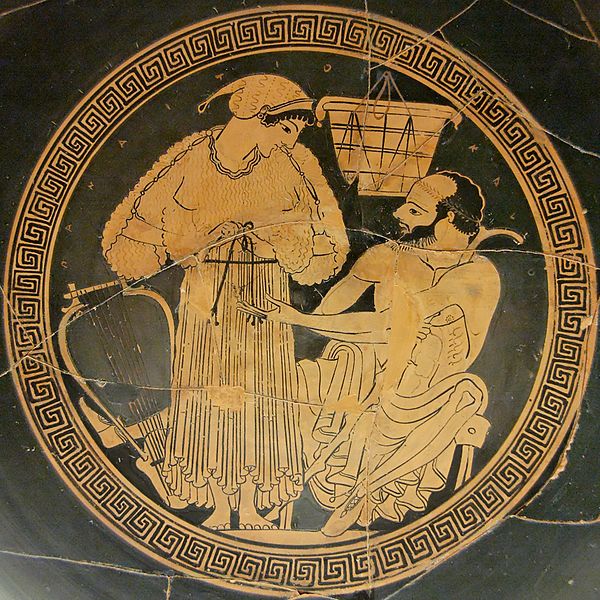
Lenormant Relief, c. 410 BCE

Nothing is So Simple. Nothing is So Great.

Lucretius, De Rerum Natura 2.1023-1039

“Listen, put your mind now on true reason.
For a new matter rises fiercely to meet your ears
and a new image of the universe strives to show itself.

Nothing is so simple that at first sight
it is not rather difficult to believe;
and in the same way nothing is so great or miraculous
that over time we don’t slowly fail to behold it with wonder.

Consider first the clear and pure color of the sky
and everything it holds, the wandering stars
the moon and the gleam of the sun with its bright light;
If suddenly mortals now saw all these things
for the first time with no prior experience of them,
could anything possibly be said to be more wondrous
or would the races of men have dared to believe they existed?
Nothing. I believe that is how striking the sight would be.
But now, since we are so used to seeing them,
no one thinks it worthwhile to gaze at heaven’s bright splendor.”

Nunc animum nobis adhibe veram ad rationem.
nam tibi vehementer nova res molitur ad auris
accedere et nova se species ostendere rerum.
sed neque tam facilis res ulla est, quin ea primum
difficilis magis ad credendum constet, itemque
nil adeo magnum neque tam mirabile quicquam,
quod non paulatim minuant mirarier omnes,
principio caeli clarum purumque colorem
quaeque in se cohibet, palantia sidera passim,
lunamque et solis praeclara luce nitorem;
omnia quae nunc si primum mortalibus essent
ex improviso si sint obiecta repente,
quid magis his rebus poterat mirabile dici,
aut minus ante quod auderent fore credere gentes?
nil, ut opinor; ita haec species miranda fuisset.
quam tibi iam nemo fessus satiate videndi,
suspicere in caeli dignatur lucida templa.


Image result for Ancient Roman Night sky
Image taken from Pinterest,

Judging the Days of the Week

Hesiod, Works and Days 822-828

“Some days bring great advantage to mortals on the earth,
But others are unpredictable, aimless, providing nothing.
One person praises one, another praises a different one,
But few know at all. One day’s a mother, another a stepmother.

Lucky and blessed is someone who knows all these things
And does all their work without angering the gods,
Judging all the bird signs and avoiding excesses.”

αἵδε μὲν ἡμέραι εἰσὶν ἐπιχθονίοις μέγ᾽ ὄνειαρ·
αἱ δ᾽ ἄλλαι μετάδουποι, ἀκήριοι, οὔ τι φέρουσαι,
ἄλλος δ᾽ ἀλλοίην αἰνεῖ, παῦροι δέ τ᾽ ἴσασιν·
ἄλλοτε μητρυιὴ πέλει ἡμέρη, ἄλλοτε μήτηρ
τάων. εὐδαίμων τε καὶ ὄλβιος, ὃς τάδε πάντα
εἰδὼς ἐργάζηται ἀναίτιος ἀθανάτοισιν,
ὄρνιθας κρίνων καὶ ὑπερβασίας ἀλεείνων.

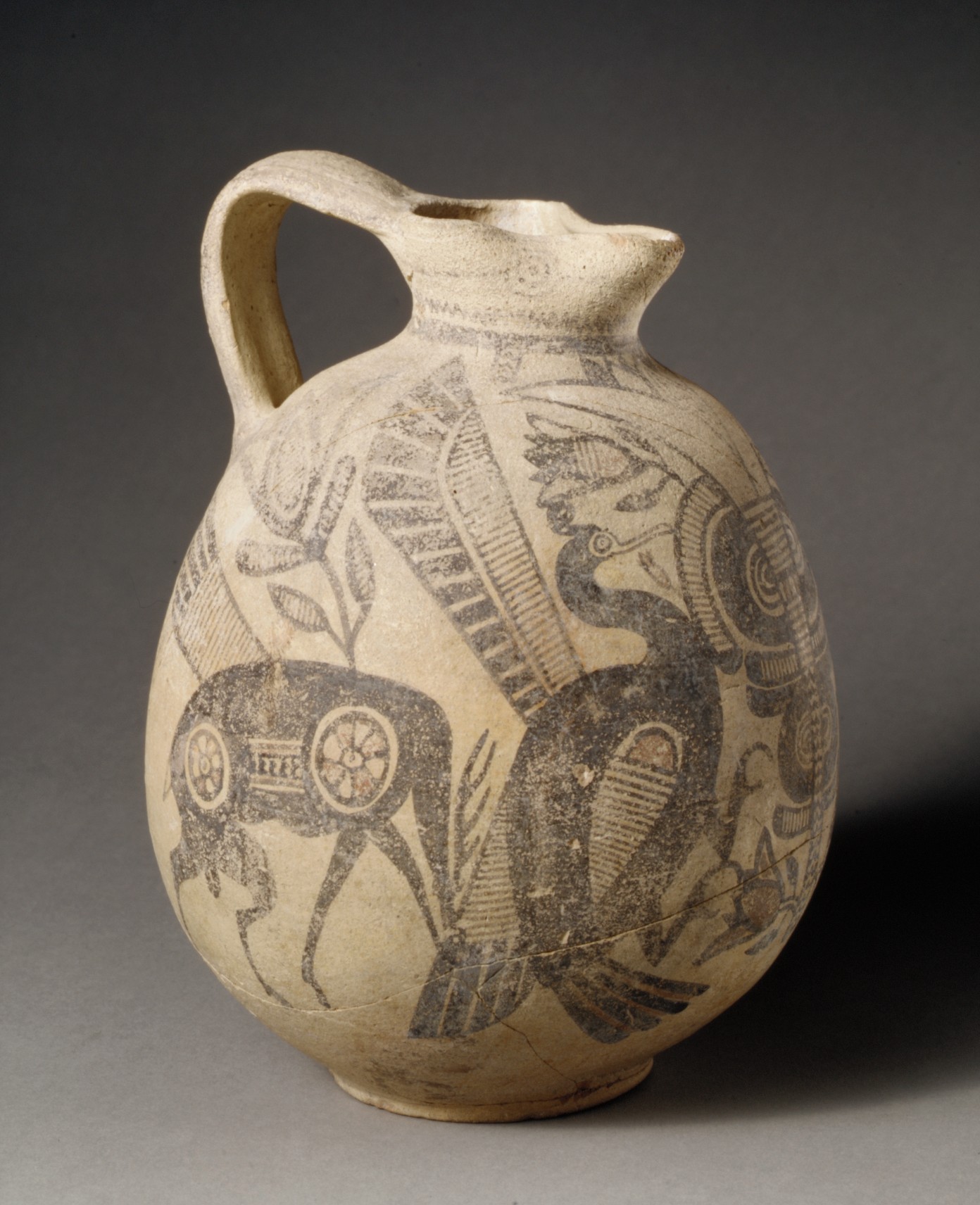
Terracotta jug Period: Cypro-Archaic I Date: ca. 750–600 B.C. ...
Cypriot Vase, c. 750-600 BCE, MET


Diary of a Towson CCA Worker – The Roar

The Cyclops Had Three Eyes and They Were His Brothers

John Malalas, Chronographia, V

“The wise Euripides put in his poetic drama about the Cyclops that he had three eyes, indicating by this that he had three brothers and that they cared for one another and kept a watchful eye on one another’s places in the island, fought together, and avenged one another.

And he also adds that he made the Cyclops drunk and unable to flee, because Odysseus made that very Cyclops “drunk” with a ton of money and gifts so he would not “eat those with him up”, which is not actually to consume them with slaughter.

He also says that Odysseus blinded his one eye with torch fire, really meaning that he stole away the only daughter of Polyphemos’ brother, a maiden named Elpê, with “fire”, which means he seized her on fire with burning lust. This is what it means that he burned Polyphemos in one of his eyes, he really deprived him of his daughter. The very wise Pheidias of Corinth provided this interpretation saying that Euripides explained this poetically because he did not agree with what the wisest Homer said about the wandering of Odysseus.”

ὁ γὰρ σοφὸς Εὐριπίδης <ποιητικῶς> δρᾶμα ἐξέθετο περὶ τοῦ Κύκλωπος, ὅτι τρεῖς ἔσχεν ὀφθαλμούς, σημαίνων τοὺς τρεῖς ἀδελφοὺς (50 F 2) ὡς συμπαθοῦντας ἀλλήλοις καὶ διαβλεπομένους τοὺς ἀλλήλων τόπους τῆς νήσου καὶ συμμαχοῦντας καὶ ἐκδικοῦντας ἀλλήλους. (2) καὶ ὅτι οἴνωι μεθύσας τὸν Κύκλωπα ἐκφυγεῖν ἠδυνήθη, διότι χρήμασι πολλοῖς καὶ δώροις ἐμέθυσε τὸν αὐτὸν Κύκλωπα ὁ ᾽Οδυσσεὺς πρὸς τὸ μὴ κατεσθίειν τοὺς μετ᾽ αὐτοῦ, <τουτέστι μὴ καταναλίσκειν σφαγαῖς>. (3) καὶ ὅτι λαβὼν ᾽Οδυσσεὺς λαμπάδα πυρὸς ἐτύφλωσε τὸν ὀφθαλμὸν αὐτοῦ τὸν ἕνα, διὁτι τὴν θυγατέρα τὴν μονογενῆ τοῦ ἀδελφοῦ αὐτοῦ Πολυφήμου ῎Ελπην, παρθένον οὖσαν, λαμπάδι, πυρὸς ἐρωτικοῦ καυθεῖσαν ἥρπασε, τουτέστιν ἕνα τῶν ὀφθαλμῶν τοῦ Κύκλωπος ἐφλόγισε τὸν Πολύφημον τὴν αὐτοῦ θυγατέρα ἀφελόμενος. (4) ἥντινα ἑρμηνείαν ὁ σοφώτατος Φειδίας(?) ὁ Κορίνθιος ἐξέθετο, εἰρηκὼς ὅτι ὁ σοφὸς Εὐριπίδης ποιητικῶς πάντα μετέφρασε, μὴ συμφωνήσας τῶι σοφωτάτωι ῾Ομήρωι ἐκθεμένωι τὴν ᾽Οδυσσέως πλάνην.

Ok, this story might be totally nuts, but there was a scholiastic debate about how many eyes Polyphemos had.

The Sorrow of Times Like These

Lucretius, De Rerum Natura 6.1230-1251

“This thing alone had to be mourned the most,
This lamented: how when anyone would give up
when they realized they had contracted the disease
As condemned to die, they would stretch out with a sad heart,
Surrendering their spirit while considering the rites of the dead.

For the spread of that greedy sickness did not stop
Even for a single moment from one to another,
Thick together as woolly flocks and horned heads—
That’s the reason why grave was piling on grave.
Whoever was reluctant to see their own sick,
For this very excessive love of life and fear of death
They were punished eventually with a foul and evil end,
As deserters without help, paid back for their neglect.

But those who stayed to help faced contagion too,
And the suffering which shame compelled them to meet.
The pleading voice of the weary mixed with cries of complaint.
Well, the best kinds of souls met death like this.

…Then some falling upon others, fighting to bury their masses
Of dead, worn out by tears and grief as they returned.
They surrendered to their beds for the better part.

No one could be found anywhere who was untouched by the disease
By the death, by the sorrow of times like these.”

Illud in his rebus miserandum magnopere unum
aerumnabile erat, quod ubi se quisque videbat
implicitum morbo, morti damnatus ut esset,
deficiens animo maesto cum corde iacebat,
funera respectans animam amittebat ibidem.

quippe etenim nullo cessabant tempore apisci
ex aliis alios avidi contagia morbi,
lanigeras tamquam pecudes et bucera saecla;
idque vel in primis cumulabat funere funus.
nam quicumque suos fugitabant visere ad aegros,
vitai nimium cupidos mortisque timentis
poenibat paulo post turpi morte malaque,
desertos, opis expertis, incuria mactans.

qui fuerant autem praesto, contagibus ibant
atque labore, pudor quem tum cogebat obire
blandaque lassorum vox mixta voce querellae.
optimus hoc leti genus ergo quisque subibat.
. . . . . . .
inque aliis alium, populum sepelire suorum
certantes; lacrimis lassi luctuque redibant;
inde bonam partem in lectum maerore dabantur.
nec poterat quisquam reperiri, quem neque morbus
nec mors nec luctus temptaret tempore tali.


Palermo-trionfo-della-morte-bjs.jpg
Triumph of Death Fresco, Palermo
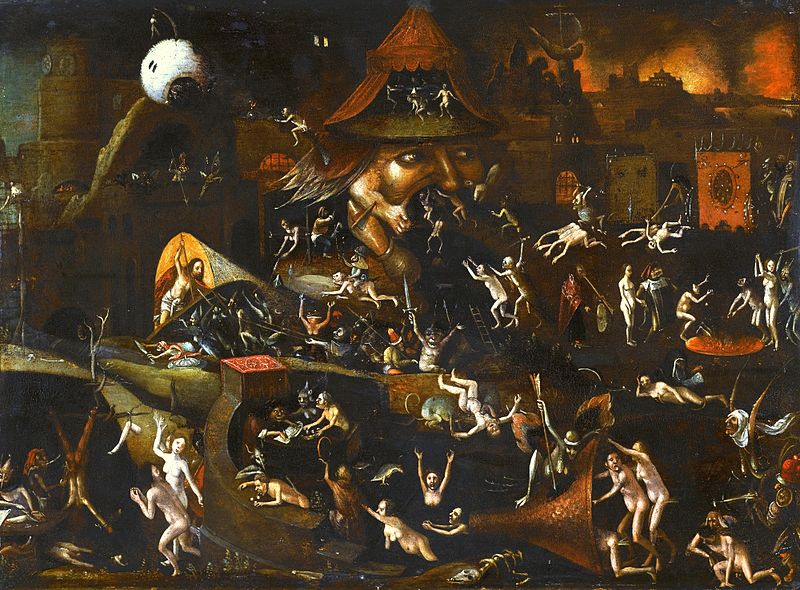
File:Follower of Jheronimus Bosch - The Harrowing of Hell.jpg
“The Harrowing of Hell” Hieronymus Bosch

Epic and Therapy: Helplessness, Loss, and Collective Trauma

“Alcidamas called the Odyssey a ‘fine mirror of human life’ ”

καλὸν ἀνθρωπίνου βίου κάτοπτρον

Aristotle, Rhetoric

Like many of the people I talk to, I find myself incapable of focusing on much these days as a I move mechanically from zoom ‘teaching’ to virtual meetings, all while doom scrolling on twitter. We joke about “the end of the world” even as it is in fact the end of an era. I often think of these repeated motions as a kind of paralysis: with no new goal, bereft of any way to change anything, just waiting for some report or action to show me the way. Then, at the end of each day, watching the news leaves me exhausted in the wake of intense, yet impotent, rage.

The image that comes to my mind too frequently is Odysseus on the shore of Kalypso’s island in the Odyssey’s fifth book. (5.151–159):

Kalypso found [Odysseus] sitting on the water’s edge. His eyes were never dry
of tears and his sweet life was draining away as he mourned
over his homecoming, since the goddess was no longer pleasing to him.
But it was true that he stretched out beside her at night by necessity
In her hollow caves, unwilling when she was willing.
By day, however, he sat on the rocks and sands
wracking his heart with tears, groans and grief,
Shedding tears as he gazed upon the barren sea.

τὸν δ’ ἄρ’ ἐπ’ ἀκτῆς εὗρε καθήμενον· οὐδέ ποτ’ ὄσσε
δακρυόφιν τέρσοντο, κατείβετο δὲ γλυκὺς αἰὼν
νόστον ὀδυρομένῳ, ἐπεὶ οὐκέτι ἥνδανε νύμφη.
ἀλλ’ ἦ τοι νύκτας μὲν ἰαύεσκεν καὶ ἀνάγκῃ
ἐν σπέεσι γλαφυροῖσι παρ’ οὐκ ἐθέλων ἐθελούσῃ·
ἤματα δ’ ἂμ πέτρῃσι καὶ ἠϊόνεσσι καθίζων
[δάκρυσι καὶ στοναχῇσι καὶ ἄλγεσι θυμὸν ἐρέχθων]
πόντον ἐπ’ ἀτρύγετον δερκέσκετο δάκρυα λείβων.

When we find Odysseus at the beginning of his epic he has been here on the shore of Ogygia, crying during the day for seven years (and, let’s not forget, having sex with a goddess each night, which has lost its charm). I think I go here because I have taught the Odyssey and I have spent the past five years writing a book about Homeric epic’s internal theory of the human mind, emphasizing how the Odyssey presents its characters responding to suffering and trauma in ways that correspond to modern psychological observations and interventions. I don’t know if this makes me any more capable of coping with what we are all facing, but it does remind me daily that the nothing we are experiencing  is something and that this drawn out, uncertain catastrophe is reshaping us.

What I have learned from these years of reading is that ancient poetry (and modern literature too) can come as close to anything else as offering a guide to our grief and providing a primer on how to stay human in inhumane times. And this makes it even clearer to me that not talking about these experiences while they happen is dangerous. I hear the trauma and fear in my own voice and in the words of my friends and colleagues, and I worry about who we will all be on the other side. Talking about this may make a difference. Acknowledging it might help us emerge a little stronger, if not faster, with fewer of us left behind.


Helplessness and Complex Loss

“The person who is sick in the body needs a doctor;
someone who is sick in the mind needs a friend
For a well-meaning friend knows how to treat grief.”

Τῷ μὲν τὸ σῶμα † διατεθειμένῳ κακῶς
χρεία ‘στ’ ἰατροῦ, τῷ δὲ τὴν ψυχὴν φίλου·
λύπην γὰρ εὔνους οἶδε θεραπεύειν φίλος.

Menander (fr. 591 K.)

One of the things I think that gets overlooked when people focus on the Odyssey’s heroic narrative is the extent to which the epic features characters who are trapped and deprived of control over their life in some fundamental way. Odysseus, of course, is clearly marginalized from action right at the beginning of the epic. But when Athena—as Mentor—first finds Telemachus, he is caught in a daydream, thinking about his father:

“God-like Telemachus saw her much the first
For he was sitting among the suitors, pained in his dear heart,
Dreaming about his noble father in his thoughts…”

τὴν δὲ πολὺ πρῶτος ἴδε Τηλέμαχος θεοειδής·
ἧστο γὰρ ἐν μνηστῆρσι φίλον τετιημένος ἦτορ,
ὀσσόμενος πατέρ’ ἐσθλὸν ἐνὶ φρεσίν…

In his recent book about Telemachus, Charles Underwood sees this daydream as a type of fantasy where Telemachus explores possible futures (2018, 25–31). I like this formulation a lot, but what I also see here is that it is not until after several conversations with Athena that Telemachus can even conceive of acting himself. He is, essentially, a grammatical subject but not an agent, which makes him an object of the forces in his world and goes a great way to explain his lack of action.

Telemachus is, I think, in a kind of paralysis that issues from his experience of the world (rather than in it because he has done so little).  And he sets us up to see other figures in the epic from the perspective of agency and object, of limitations that our views of ourselves in the world impose on whether we think we can act in it. Penelope, Odysseus, and even minor figures like Eupeithes the father of a slaughtered suitor appear in frozen states. In each case, the epic invites its audiences to see how a character’s experiences and context shape or constrain their ability to act in the world.

And here’s a simplified explanation for what the epic is reflecting. When we cannot run from a threat or rise to fight it, we are shocked into a moment of inaction, frozen in time like proverbial deer in headlights. From modern perspectives, this paralysis is rooted in a deferred fight-or-flight response. We have all encountered such moments when we do not know how to act, but deferment prolonged over time can have psychological consequences, creating pathological anxiety responses and forming an essential part of our relationship with trauma. Chronic activation of this stress response can have serious consequences for mental and physical health. Digestive issues? Yes. Sleep? Yes. Immune response? Yes, unfortunately 

In his book The Evil Hours, David J. Morris talks about how people suffering from trauma exist in a “liminal state” between life and death (2015, 6-7). To what extent people get stuck in this state has little to do with who you are before—no one can predict the overlapping impact of emotional and somatic responses. But a sense of helplessness can enhance the impact of trauma considerably. As a category, psychologists have discussed “learned helplessness”—the process of becoming habituated to a lack of agency and control over life—and its maladaptations for over a century. A developed sense of helplessness can make it hard to learn new things or demonstrate what you have learned; it has been linked to depression and anxiety; and it can prevent us from making plans for the future because we believe or suspect our own agency does not matter at all (see Mikuluncer 1994 for a full study).

A sense of lost agency—which contributes to depression on its own—is just not about helplessness: it has a recursive and reinforcing relationship with trauma. Prolonged helplessness changes the way we see the world and is itself traumatizing; helplessness in the face of prolonged suffering can be dehumanizing.

The Odyssey, I think, gives us a range of figures subject to helplessness and marginalization from different sources. Odysseus, of course, is the most obvious figure (followed by Telemachus, as I write about in a few places). But many major and minor figures are trapped in cycles of behavior from which they have little escape. Menelaos and Helen in book 4 are engaged in “off task coping” (drugs and alcohol), arguing about the past through the stories they tell, constrained by the decisions they made, the actions they committed, and the inability to imagine any different future.

The enslaved people of the epic have either completely internalized their worthlessness and commitment to their masters (Eumaios and Eurykleia) or they lash out with ‘misbehavior’ only to be murdered for it later (Melantho, Melanthios, the other enslaved women). Laertes has retreated to his gardens, repeatedly going over the same works again and again. Penelope reduces to tears amid her pacing from room to hall, expressing that most human of needs to feel something or give up. Her uncertainty is like the fragmentation David Morris describes in traumatized figures: their past and present seem disconnected and the future is hard to imagine at all. Trauma and helplessness undermine the internal assumptions of causality which makes it possible for us to act in the world.

The Odyssey also gives us a sense of trauma’s multiple sources: it is not just that people are marginalized by their sense of helplessness, but they are also undone by unresolved loss. Characters like Penelope, Menelaos, and Eupeithes (the father who lost his son and speaks in favor of killing Odysseus at the end of the epic) are shown undone by the grief that comes from not knowing if someone is dead or alive (in reference to Odysseus) or not being able to attend to their grief in a way they understand (as in Eupeithes’ desire for revenge). In recent years, researchers have called these types of emotion “ambiguous loss” or “complicated grief” and have explained how they create and perpetuate states of inaction (see Boss 1999) or paralytic returns to the topic of loss and uncertainty (see Hall et al. 2014).

So, if you feel paralyzed for events, stultified by your own response, or lost in trying to make some sense of each day, that’s your brain and body telling you something. The world is changing in ways we cannot fully understand, and it hurts. It is ok not to write a book during your isolation; it is normal to feel distracted and lost.  Overeating or drinking too much? Look at the suitors waiting for something to happen in their lives. Having trouble sleeping? Both Telemachus and Odysseus stay awake all night. Having trouble not sleeping? Penelope is overwhelmed with exhaustion (and weeping) by Athena.

File:Athena appearing to Odysseus to reveal the Island of Ithaca by Giuseppe Bottani.jpg
Athena and Odysseus by Giuseppe Bottani

Collective Trauma and Social Memory

Continue reading “Epic and Therapy: Helplessness, Loss, and Collective Trauma” →

Some Casual Misogyny in The Scholia to the Iliad

It is probably not surprising to hear that the Homeric poems express misogynistic ideology; even the ancient poet Palladas recognized that Homer was something of a misogynist. But, get this, the ancient scholia are pretty awful too!

In a recent article, Sarah Scullin collects misandrist myths and topics from Greece and Rome. Reading some ancient scholarship can make us see why someone might find such ideas attractive. The following lines and commentary from the Homeric Scholia come from the scene at the end of book 1 of the Iliad where Hera talks to Zeus about his recent conversation with Thetis.

Il. 1.539

αὐτίκα κερτομίοισι Δία Κρονίωνα προσηύδα·

“Immediately, she addressed Kronos’ son Zeus with heart-rending words.”

Schol. bT ad Il. 1.539

“heart-rending”: words which hit the heart. For, both of these things are womanly: to be suspicious and to not restrain speech.”

κερτομίοισι: τοῖς τὸ κέαρ βάλλουσι. γυναικεῖα δὲ ἄμφω, τό τε ὑπονοῆσαι καὶ τὸ μὴ ἐπισχεῖν τοῦ λόγου.

Il. 1.542-3

…οὐδέ τί πώ μοι
πρόφρων τέτληκας εἰπεῖν ἔπος ὅττι νοήσῃς.

“…never at all do you dare to willingly say to me whatever plan you are thinking up.”

Schol. A ad Il. 1.542-3

“not ever at all”: women get annoyed unless their husbands share everything in common with them.”

οὐδέ τί πώ μοι: δυσχεραίνουσιν αἱ γυναῖκες, εἰ μὴ πάντα αὐταῖς ἀνακοινοῖντο οἱ ἄνδρες.

Il. 1.553

καὶ λίην σε πάρος γ’ οὔτ’ εἴρομαι οὔτε μεταλλῶ,

“I never previously have been asking you or questioning you excessively”

Schol. bT ad Il. 1.553

“excessively you before”: women customarily deny it whenever they have been really annoying to their husbands.”

καὶ λίην σε πάρος: ἔθος γυναιξὶν ἀρνεῖσθαι, ὅτι ποτὲ παρηνώχλησαν τοῖς ἀνδράσιν.

Hera and Prometheus, tondo of a 5th-century BCE cup from Vulci, Etruria

“His Heart Barked”: Sex, Slaves, and Transgression in the Odyssey

Earlier I posted a passage from the Odyssey where the narrator tells us that Penelope raised the slave Melanthô and gave her toys. This detail is paired with the slave woman’s sexual behavior—she is now a bad slave because she is having sex with one of the suitors.

Odyssey, 18.321–5

“Then fine-cheeked Melanthô reproached him shamefully. Dolios fathered her and Penelope raised her, she treated her like her own child and used to give her delights for her heart. But she did not have grief in her thoughts for Penelope. Instead she was having sex with and feeling affection for Eurymakhos.”

τὸν δ’ αἰσχρῶς ἐνένιπε Μελανθὼ καλλιπάρῃος,
τὴν Δολίος μὲν ἔτικτε, κόμισσε δὲ Πηνελόπεια,
παῖδα δὲ ὣς ἀτίταλλε, δίδου δ’ ἄρ’ ἀθύρματα θυμῷ·
ἀλλ’ οὐδ’ ὧς ἔχε πένθος ἐνὶ φρεσὶ Πηνελοπείης,
ἀλλ’ ἥ γ’ Εὐρυμάχῳ μισγέσκετο καὶ φιλέεσκεν.

The meaning of this behavior might not be clear to modern audiences. Ancient audiences might have needed clarification too. The epic shows Odysseus witnessing this later.

20.5–24

“Odysseus was lying there, still awake, devising evils in his heart
For the suitors. And the women went from the hall
The ones who were having sex with the suitors before
Greeting one another with a welcome and a laugh.
And Odysseus’ heart rose in his dear chest.
He debated much in his thoughts and through his heart
Whether after leaping up he should deal out death to each woman
Or he should allow them to have sex with the arrogant suitors
a last and final time. The heart inside his chest barked.
And as a mother dog who stands over her young pups
When she sees an unknown man barks and waits to fight,
So his heart growled within him as he was enraged at the evil deeds.
Then he struck his chest and reproached the heart inside him.
Endure this my heart, you endured a more harrowing thing on that day
When the savage Cyclops, insanely daring, ate
My strong companions. You were enduring this and your intelligence
Led you from that cave even though you thought you were going to die.”

ἔνθ’ ᾿Οδυσεὺς μνηστῆρσι κακὰ φρονέων ἐνὶ θυμῷ
κεῖτ’ ἐγρηγορόων· ταὶ δ’ ἐκ μεγάροιο γυναῖκες
ἤϊσαν, αἳ μνηστῆρσιν ἐμισγέσκοντο πάρος περ,
ἀλλήλῃσι γέλω τε καὶ εὐφροσύνην παρέχουσαι.
τοῦ δ’ ὠρίνετο θυμὸς ἐνὶ στήθεσσι φίλοισι·
πολλὰ δὲ μερμήριζε κατὰ φρένα καὶ κατὰ θυμόν,
ἠὲ μεταΐξας θάνατον τεύξειεν ἑκάστῃ,
ἦ ἔτ’ ἐῷ μνηστῆρσιν ὑπερφιάλοισι μιγῆναι
ὕστατα καὶ πύματα· κραδίη δέ οἱ ἔνδον ὑλάκτει.
ὡς δὲ κύων ἀμαλῇσι περὶ σκυλάκεσσι βεβῶσα
ἄνδρ’ ἀγνοιήσασ’ ὑλάει μέμονέν τε μάχεσθαι,
ὥς ῥα τοῦ ἔνδον ὑλάκτει ἀγαιομένου κακὰ ἔργα.
στῆθος δὲ πλήξας κραδίην ἠνίπαπε μύθῳ·
“τέτλαθι δή, κραδίη· καὶ κύντερον ἄλλο ποτ’ ἔτλης,
ἤματι τῷ, ὅτε μοι μένος ἄσχετος ἤσθιε Κύκλωψ
ἰφθίμους ἑτάρους· σὺ δ’ ἐτόλμας, ὄφρα σε μῆτις
ἐξάγαγ’ ἐξ ἄντροιο ὀϊόμενον θανέεσθαι.”

Beyond whether or not the liaison was a good wooing strategy for Eurymachus, these closely paired statements show that despite being integrated into the family structure, Melantho has not internalized her position and has instead exercised agency in pursuing sexuality. (Or, perhaps more accurately, exercising control over her own body to choose a different master.) When the epic returns to the issue, it takes pains to depict the women as in control and to ensure that Odysseus witnesses it. When he reveals himself to the suitors in book 22, he accuses them of forcefully sleeping with the women.

22.35-38

“Dogs, you were expecting that out of the way I would not come
home from the land of the Trojans and you ruined my home,
Took the slave women in my house to bed by force
And wooed the wife of a man who was still alive…”

“ὦ κύνες, οὔ μ’ ἔτ’ ἐφάσκεθ’ ὑπότροπον οἴκαδε νεῖσθαι
δήμου ἄπο Τρώων, ὅτι μοι κατεκείρετε οἶκον
δμῳῇσίν τε γυναιξὶ παρευνάζεσθε βιαίως
αὐτοῦ τε ζώοντος ὑπεμνάασθε γυναῖκα…

The difference in tone is in part due to the level of narrative—in the first two scenes mentioned above, the sexual acts are observed through the narrator. When Odysseus talks about it, he characterizes the acts differently because he sees the sexual acts as transgressing his control of the household. If the women—who are animate objects, not people—have sex, then they are the sexual objects of aggressors against Odysseus’ control. This transgressive behavior on their part helps to explain why Odysseus decides to slaughter them.

Who should have sex with the slave women is implied by a narrative passage from the beginning of the epic (1.428–33)

“And with him Eurykleia carried the burning torches. She knew proper things, the daughter of Ops, the son of Peisênor whom Laertes bought to be among his possessions when she was just a girl and he paid a price worth 20 oxen. And he used to honor her equal to his dear wife in his home but he never had sex with her and he was avoiding his wife’s anger.”

τῷ δ’ ἄρ’ ἅμ’ αἰθομένας δαΐδας φέρε κεδνὰ ἰδυῖα
Εὐρύκλει’, ῏Ωπος θυγάτηρ Πεισηνορίδαο,
τήν ποτε Λαέρτης πρίατο κτεάτεσσιν ἑοῖσι,
πρωθήβην ἔτ’ ἐοῦσαν, ἐεικοσάβοια δ’ ἔδωκεν,
ἶσα δέ μιν κεδνῇ ἀλόχῳ τίεν ἐν μεγάροισιν,
εὐνῇ δ’ οὔ ποτ’ ἔμικτο, χόλον δ’ ἀλέεινε γυναικός·

It is exceptional here that Laertes does not have sex with Eurykleia. This indicates an economy of sexual slavery in which the slave women are the objects to be used by those who own them. If they are used without permission or act on their own, they represent perversions.

See:

Doherty, Lillian. 2001. “The Snares of the Odyssey: A Feminist Narratological Reading.” 117-133.
Thalmann, William G. 1998. “Female Slaves in the Odyssey.” 22–34

Related image
Red-figure Kylix, c. 490 BCE


A Penis on the Screen: Playing a Bard During a Plague

Homer, Odyssey 11.333-334

“So he spoke and they were all completely silent:
they were in the grip of a spell in their shadowy rooms”

ὣς ἔφαθ’, οἱ δ’ ἄρα πάντες ἀκὴν ἐγένοντο σιωπῇ,
κηληθμῷ δ’ ἔσχοντο κατὰ μέγαρα σκιόεντα.

Aristophanes, Peace 870

“Everything else is complete—but we need a penis.”

καὶ τἄλλ᾿ ἁπαξάπαντα· τοῦ πέους δὲ δεῖ.


Halfway through my 306th performance of my one-man folk opera retelling of Homer’s Odyssey in song, something happened that had never happened in the previous 305 performances. 

An audience member drew a penis on the screen.

That’s right. An audience member drew a penis on the screen and that penis was visible to the 75 other people who had logged in to Zoom to watch my very first ever virtual Odyssey performance.

Perhaps I should backtrack a bit and contextualize this particular penis because there is a clear hazard in leaving an uncontextualized penis out there.

A (not so) quick summary of how we got here: I graduated from University of Wisconsin-Madison in the late 90’s with a Bachelor’s Degree in Classics. Not long after I graduated I composed a 35 minute continuous one-man musical folk opera retelling of Homer’s Odyssey consisting of 24 first-person songs inspired by the characters and events of the epic poem.  

After years of development and long periods of hiatus, I built the program up to where by the mid-2010’s I was performing it at high schools and universities across the country.  In 2016, I wrote about my experiences as a “modern bard” for Eidolon.

Since writing that article, my reputation and calendar have grown and earlier this year I celebrated my 300th performance (which occurred in Arlington, Texas, at UTA) and performances in my 40th (Hawaii) and 41st (Wyoming) states. 

Some places to read and hear about my Odyssey performances are here, here, here, and here, and you can find a studio recording of the entire piece on YouTube.

2020 was supposed to be a banner year for me and my Classics-related music. By working really hard on booking, I started the year within shouting distance of getting shows scheduled in the remaining 9 states I needed to complete my goal of performing in all 50 states.  A month-long Odyssey tour of Europe in October and November was confirmed with dates in the UK, Ireland, Sweden, The Netherlands, Italy, and Greece.

And there was also new Classics-related music to start sharing in addition to my Odyssey.

The first week of March, just before the full-on coronavirus crisis began manifesting, I premiered a new cycle of songs called “The Blues of Achilles”, a reframing of Homer’s Iliad, as part of a wonderful program called Conversations with Homer at San Francisco State University.  Samples of this performance can be viewed here, here, and here.

The rest of the spring was to include three weeks of shows in Ohio, New York, Vermont, New Jersey, Michigan, Maryland, and Illinois, some Odyssey shows, some Blues of Achilles shows, an artist-in-residence opportunity, and a chance to perform Blues of Achilles songs as part of a program that brings classics to the incarcerated population. 

But of course by the second week of March I could see none of these shows were going to happen.  Campuses began to shut down and move online, travel became unwise, and by the third week of March my entire spring schedule, some 20 gigs, was gone, and the rest of my year’s touring (including Europe) was in doubt. 

I should interject here that I feel extremely lucky that I do not rely entirely upon performing music for my living.  These cancellations have resulted in a sizable loss of income, but I also have a guitar teaching practice (not to mention a partner with a job) to fall back on, so while these losses hurt (many of which I do hope to reschedule and all of which were done with compassion and understanding by understandably freaked and stressed out teachers and administrators), the pain was more from a standpoint of planning and momentum than the dire financial situation that many performing musicians have suddenly found themselves in.

Then last week something interesting happened: I got a DM on Twitter from a high school Latin teacher in Pennsylvania who wondered if I might try performing my Odyssey online through Zoom for some of her students. The sudden shift to online learning had left teachers scrambling to find activities and material with which to engage students. This teacher had seen me perform at the PAJCL convention in 2017 and thought my program would make for a good online event.  

I initially recoiled: so much of what I love about my Odyssey performances is wrapped up in the magic of the interaction between me and an in-person audience.  How would this online thing work? How could I truly encounter my audience if they were hundreds of miles away watching not me but 1s and 0s that represent me, listening not to my actual voice but to my voice as compressed through their computer speakers or earbuds, taking it in not as a group in the same room but in separate isolated spaces? 

But as I gave it more thought, I saw reasons to give it a shot. 

Some were practical, as in “this is the way the world is working now so you might as well try to adapt if you want gigs” and “if this format does work what kind of additional markets and opportunities might it open up for you.”

Some were artistic and intellectual as in “can I make these songs work in a new medium?” and “what might it illuminate for me as a classicist/Homerist about oral performance?” 

So I decided to go forward with it.  My contact and I had a conference call with a very patient and generous tech support guru from her district and we settled on using Zoom as the best platform to both accommodate both my performance needs and also comply with some of the privacy issues associated with educational institutions. 

We gave Zoom a trial run with a couple of students and teachers and it seemed to work well. We could mute all the cameras and microphones of the attendees and I could share my screen which would contain a powerpoint of the lyrics of my songs so the audience could follow along as I sang (I do this in every in-person show as well). 

I was nervous as I sat in my office with my wife sitting just out of the webcam shot to advance the powerpoint. I could see the online audience grow to 75 and after an introduction from the teacher, I was off and singing.  

It began well enough. My voice felt good and the teacher was texting my wife some feedback on the sound which seemed to be coming through fine.  I was just starting to settle in when suddenly some lines started popping up on my screen. Scribbled lines as if someone was able to draw on his or her iPad. 

Clearly we hadn’t quite gotten the settings right and the audience members had the capability to write things on the shared screen for all to see.

It was a little distracting to me and (I assumed) the audience but I pushed on.  I was on song 6 of my 24 when the scribbling became written words. I stopped singing and announced that if the scribbling continued, I’d have to stop the performance.  

This seemed to work for another 6 songs but just as I finished singing the song in which Odysseus finally lands on Ithaka in book 13, there is was:

That hastily drawn penis on the screen right next to my lyrics.

Image result for ancient greek phallus

Some quick observations: First, though in the moment I was not particularly thrilled with the phantom penis, it should be noted that the Greeks and Romans loved penises and were happy to have them in their art and theatre. One need look no further than the #phallusthursday hashtag on Twitter for ample evidence of this.

Second, I feel fairly confident that this penis was drawn by an adolescent male and the reason I feel fairly confident in this conclusion is that I myself was once (and sometimes still am) an adolescent male in whose life and psyche penis-related jokes and pranks figured prominently. To wit (and I believe the statute of limitations on this crime has expired), my senior year of high school the entire bass and tenor sections of our choir conspired to, in our performance of “The Battle Hymn of the Republic”, replace the word “truth” with the word “penis.” 

How disruptive could this be? you ask. Well, at one point in the arrangement the basses and tenors sing the phrase “truth is marching” over and over, something like 12 times in a row.  Perhaps now you can imagine our confused choir director searching around the room for why things didn’t sound quite right (sorry Mr. Hayes) as a group of 15 adolescent males melodically chanted the phrase “penis is marching” over and over.

So as I promised I would, I stopped the performance.  The teacher had determined the only way to fix the problem was by ending the Zoom session, creating a new one with the correct (non-screen writing) settings, and letting everyone log back in.

So that’s what we did: for the first time in 306 performances, I took an intermission.  Almost everyone came back online to the new session and I finished the performance without further incident, singing the remaining 12 songs that chronicle Odysseus’ reintegration into his home on Ithaka. 

Afterwards, I read and responded to audience questions from a Google docs as well as questions texted to me by the teacher. And then it was over.

Very suddenly, it was over.

In a regular performance, I’m used to a much more gradual ending.  Members of the audience often make their way to the stage to chat with me while I pack up my guitar. Faculty introduce themselves. There’s almost always a meal or a drink with a host or a group to get feedback and continue discussion.

But with my virtual performance, none of that.

Until I looked at my phone and saw social media messages and emails from some of the audience members.  Videos and pictures showing students glued to their computer screens watching me perform. Notes from teachers thanking me for giving them and their students something to break up the days stuck at home. 

https://twitter.com/magistradee/status/1240740810255224835

Suddenly the penis didn’t matter so much and I saw a number of truths about this unique moment both in history and for me as a modern bard. 

First, everyone is trying really hard to do their best in a tough situation. Teachers are trying to teach, parents are trying to parent, students are trying to be students, all in a largely new environment. There are going to be bumps and difficult moments and it’s going to take some time to figure out what works and what doesn’t but in general folks are trying so hard and succeeding.

Second, this quick change to fully virtual learning is putting incredible forced stress on the people involved but from incredible forced stress sometimes comes innovation.  I would never have even attempted a virtual performance without these extenuating circumstances and outside pressures, but now because I have I am excited to develop it as a complement to what I do with in person performances and ultimately as a chance to reach more people with my music and the experience of hearing Odysseus’ story sung by a bard. I’m thinking in particular of places and schools that don’t have the budget to bring me in for an in-person performance but might be able to facilitate an online performance.  

Third, for all my preciousness about my in-person Odyssey performances and how they recreate the original oral environment, this virtual performance embodies all the same concepts I detailed in my Eidolon article with some unique and beautiful twists.  I’m always fascinated with how performance space impacts audience perception and therefore meaning, and in this case there were actually 75 different performance spaces, all acting upon the listeners and resulting in different experiences and meanings. The teacher who initially reached out to me said that while she enjoyed my performance at PAJCL (which was for an audience of 400), she liked the online performance even more because it felt like I was singing directly to her.  For all my misgivings about the technological distance, there was actually something more intimate about my online performance.

Fourth, my online performance is yet another example of how enduring, adaptable, and resilient myths and oral tradition are.  For as different as my performance looked from Phemios’ in book 1 or Demodokos’ in book 8, it was essentially the same as what bards have been doing for three millennia or more: singing stories to groups of people.  My guess is that if you offered a Homeric bard the chance to do a performance from the comfort of his home, he would have jumped at it before you finished telling him he might have to endure interruption by phantom penis drawing. 

As Joel added in the comments when he so graciously edited this piece: “Antinoos would totally have drawn a penis on his screen if he had a screen.”

In the end, perhaps it’s best to think that my virtual performance relates to my in-person performances in the way that the text we have today relates to a Homeric performance. They are related, connected at some point, but ultimately different ways to communicate and pass on stories.  It’s not a choice of either but rather an embrace of both, and this embrace ensures that the names and stories will continue to echo through history for new audiences in new times.

You might even say that “time is marching” but that is dangerously close to the phrase “truth is marching” and… well, you remember where that road leads.

Joe Goodkin is a modern bard who performs original music based on epic poetry and other subjects.  He can by seen and heard at http://www.joesodyssey.com http://www.thebluesofachilles.coom or http://www.joegoodkin.com and emailed at joe@joesodyssey.com about bookings or anything else.


Penelope Gives a Suitor a Tongue-Lashing

Homer, Odyssey 16.418-433

“Antinoos, full of outrage, deviser of evils—they even claim that you
Are the best among those your age among the people of Ithaka
In council and speeches—but you really are not such a man.
Maniac! Why do you weave death and doom for Telemachus
While you fail to give help to suppliants over whom Zeus indeed
Is witness? It is not right to devise evils for one another.

Don’t you know that when your father came here as an exile
He was afraid of the people? For they were completely enraged with him
Because he had fallen in with Taphian pirates
And was harming the Thesprotians who were our allies.
They were willing to destroy him and crush his dear heart
And to consume his great pleasing life altogether.
But Odysseus defended him and held them off even though they were eager.
Now you eat up his dishonored home, you woo his dishonored wife,
And you are killing his child—and you are greatly aggrieving me.
I order you to stop and to compel the others.”

“᾿Αντίνο’, ὕβριν ἔχων, κακομήχανε, καὶ δέ σέ φασιν
ἐν δήμῳ ᾿Ιθάκης μεθ’ ὁμήλικας ἔμμεν ἄριστον
βουλῇ καὶ μύθοισι· σὺ δ’ οὐκ ἄρα τοῖος ἔησθα.
μάργε, τίη δὲ σὺ Τηλεμάχῳ θάνατόν τε μόρον τε
ῥάπτεις, οὐδ’ ἱκέτας ἐμπάζεαι, οἷσιν ἄρα Ζεὺς
μάρτυρος; οὐδ’ ὁσίη κακὰ ῥάπτειν ἀλλήλοισιν.
ἦ οὐκ οἶσθ’ ὅτε δεῦρο πατὴρ τεὸς ἵκετο φεύγων,
δῆμον ὑποδδείσας; δὴ γὰρ κεχολώατο λίην,
οὕνεκα ληϊστῆρσιν ἐπισπόμενος Ταφίοισιν
ἤκαχε Θεσπρωτούς· οἱ δ’ ἥμιν ἄρθμιοι ἦσαν.
τόν ῥ’ ἔθελον φθεῖσαι καὶ ἀπορραῖσαι φίλον ἦτορ
ἠδὲ κατὰ ζωὴν φαγέειν μενοεικέα πολλήν·
ἀλλ’ ᾿Οδυσεὺς κατέρυκε καὶ ἔσχεθεν ἱεμένους περ.
τοῦ νῦν οἶκον ἄτιμον ἔδεις, μνάᾳ δὲ γυναῖκα
παῖδά τ’ ἀποκτείνεις, ἐμὲ δὲ μεγάλως ἀκαχίζεις·
ἀλλά σε παύεσθαι κέλομαι καὶ ἀνωγέμεν ἄλλους.”

Image result for Greek Penelope
Penelope’s Suitors from Wikipedia