Education and Easy Burials: Two Socratic Anecdotes

Both of these anecdotes appear in Stobaeus where they are attributed to Aelian

Stob. 4.55.10

When Socrates was about to drink the hemlock, and those accompanying Crito asked him how he wished to be buried, he answered “however is easiest for you.”

ὁ Σωκράτης ἐπεὶ τὸ κώνειον ἔμελλε πίεσθαι, τῶν ἀμφὶ τὸν Κρίτωνα ἐρομένων αὐτὸν τίνα τρόπον ταφῆναι θέλει, “ὅπως ἂν ὑμῖν” ἀπεκρίνατο “ᾖ ῥᾷστον.”

Stob. 2.31.38

“Noble Socrates reproached fathers who did not teach their sons and then, when they were destitute, took their sons to court and sued them as ungrateful because they did not support their parents. He said that the fathers were expecting something impossible: those who have not learned just actions are incapable of performing them”

Σωκράτης ὁ γενναῖος ᾐτιᾶτο τῶν πατέρων ἐκείνους, ὅσοι <μὴ> παιδεύσαντες αὑτῶν τοὺς υἱεῖς, εἶτα ἀπορούμενοι ἦγον ἐπὶ τὰς ἀρχὰς τοὺς νεανίσκους καὶ ἔκρινον αὐτοὺς ἀχαριστίας, ὅτι οὐ τρέφονται ὑπ᾿ αὐτῶν. εἶπε γὰρ ἀδύνατον ἀξιοῦν τοὺς πατέρας· μὴ γὰρ οἵους τε εἶναι τοὺς μὴ μαθόντας τὰ δίκαια ποιεῖν αὐτά.


Image result for Ancient Greek Socrates

Naps Can Be Deadly: Acilius Aviola’s Flame Out

Valerius Maximus, Memorable Sayings and Deeds, 1.8.12

“Another spectacle for our state was the pyre of Acilius Aviola. Doctors and his servants believed that he was dead since he had stretched out still in his house for some time. When he was taken out for burial, once the fire overtook his body, he yelled that he was alive and asked for help from his teacher—for he had remained there alone. But, because he was already surrounded by flames, he could not be saved from his death.”

1.8.12a Aliquid admirationis civitati nostrae Acilii etiam Aviolae rogus attulit, qui et a medicis et a domesticis mortuus creditus, cum aliquamdiu domi iacuisset, elatus, postquam corpus eius ignis corripuit, vivere se proclamavit auxiliumque paedagogi sui—nam is solus ibi remanserat—invocavit, sed iam flammis circumdatus fato subtrahi non potuit.

Pliny the Elder presents a shortened version of this  (Natural History, 1.173)

“Aviola the consul revived on the funeral pyre and since it was not possible to help him because the fire was too strong, he was cremated alive.”

 Aviola consularis in rogo revixit et, quoniam subveniri non potuerat praevalente flamma, vivus crematus est

Image result for Ancient Roman Funeral pyre

Odysseus, Necromancer

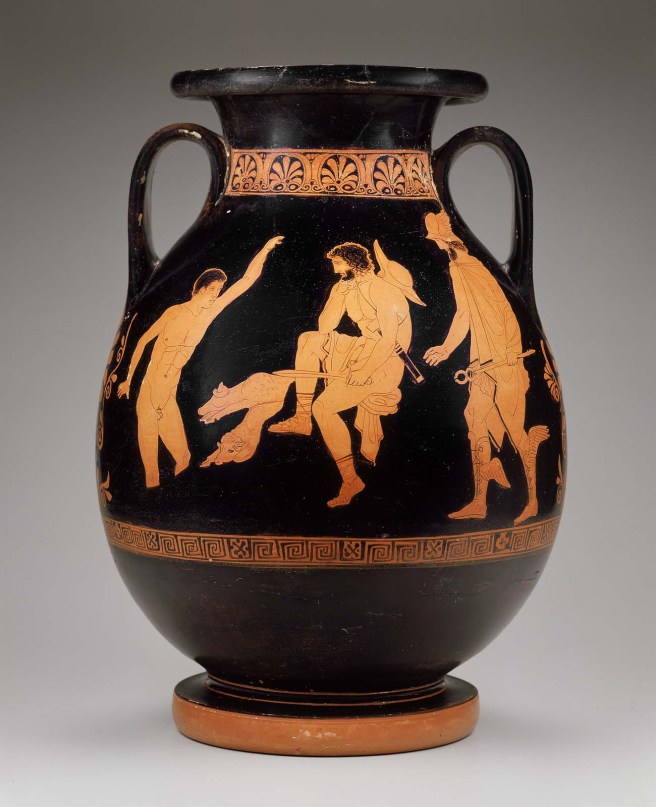
A student paper on the Elpenor Pelike at the MFA in Boston drew my attention to the following passage.

Servius ad Aen. 6.107

“For this reason the place is named without joy since, as people claim, it would not have been there but for necromancy or spellcraft. For, Aeneas completed these sacred rites when Misenus was killed and Ulysses did it with the death of Elpenor. This very scene Homer himself presented falsely from the detail of its location which he specifies along with the length of time of the journey. For he claims that Ulysses sailed for one night and came to the place where he completed these sacrifices. For this reason it is abundantly clear that he doesn’t mean the ocean but Campania.”

sine gaudio autem ideo ille dicitur locus, quod necromantia vel sciomantia, ut dicunt, non nisi ibi poterat fieri: quae sine hominis occisione non fiebant; nam et Aeneas illic occiso Miseno sacra ista conplevit et Vlixes occiso Elpenore. quamquam fingatur in extrema Oceani parte Vlixes fuisse: quod et ipse Homerus falsum esse ostendit ex qualitate locorum, quae commemorat, et ex tempore navigationis; dicit enim eum a Circe unam noctem navigasse et ad locum venisse, in quo haec sacra perfecit: quod de Oceano non procedit, de Campania manifestissimum est.

The relevant passages from the Odyssey don’t give any hint that Elpenor was intentionally killed for black magic. When Odysseus actually does summon the dead, now that gets a little dark.

Odyssey, 10.552–560

“I could not even lead my companions unharmed from there.
The youngest of my companions was a certain Elpênor,
He was neither especially brave in battle or composed in his thoughts.
He separated himself from the companions in Kirkê’s holy home
Because he needed some air; then he fell asleep because he was drunk.
When he heard the noise and trouble of our companions moving out,
He got up immediately and it completely escaped his thoughts
To climb down again by the long ladder—
So he fell straight from the roof and his neck
Shattered along his spine; then his spirit flew down to Hades.”

οὐδὲ μὲν οὐδ’ ἔνθεν περ ἀπήμονας ἦγον ἑταίρους.
᾿Ελπήνωρ δέ τις ἔσκε νεώτατος, οὔτε τι λίην
ἄλκιμος ἐν πολέμῳ οὔτε φρεσὶν ᾗσιν ἀρηρώς,
ὅς μοι ἄνευθ’ ἑτάρων ἱεροῖσ’ ἐν δώμασι Κίρκης,
ψύχεος ἱμείρων, κατελέξατο οἰνοβαρείων·
κινυμένων δ’ ἑτάρων ὅμαδον καὶ δοῦπον ἀκούσας
ἐξαπίνης ἀνόρουσε καὶ ἐκλάθετο φρεσὶν ᾗσιν
ἄψορρον καταβῆναι ἰὼν ἐς κλίμακα μακρήν,
ἀλλὰ καταντικρὺ τέγεος πέσεν· ἐκ δέ οἱ αὐχὴν
ἀστραγάλων ἐάγη, ψυχὴ δ’ ῎Αϊδόσδε κατῆλθεν.

Elpênor appears twice more in the epic: 11.51–80 (Odysseus meets Elpênor’s ghost when he summons the dead); 12.9-15 (Odysseus buries Elpênor).

MFA Boston, Accession Number 34.79; Caskey-Beazley, Attic Vase Paintings (MFA), no. 111; Highlights: Classical Art (MFA), p. 070-071.

Nekuomanteia, glossed by Hesychius as nekromanteia (i.e. “necromancy”) is an alternate name for the Nekyuia, the parade of the dead in book 11 of the Odyssey. From the Greek Anthology: ᾿Εν τῷ Η ἡ τοῦ ᾿Οδυσσέως νεκυομαντεία· (3.8); Scholia to the Odyssey, Hypotheses: Λ. Νεκυομαντεία, ἢ, Νεκυία. Cf. Eustathius, Comm. Ad Od. 1.396.10

Dog-Food and Autodidacticism: A Philosopher’s Death Scene

Diogenes Laertius on the Death and Early Childhood of Heraclitus 9.4-5

“Hermippos reports that he asked the doctors if anyone could dry his condition by emptying out his intestines. When they said they could not, he went out in the sun and ordered his servants to cover him with cow dung. He died the next day, stretched out in this way, and was buried in the market. Neanthes from Cyzicos claims that when he was incapable of peeling off the dung he stayed in place and, because he was unrecognizable in this shape, became dog-food.

Heraclitus was a wonder from a young age. As a youth he used to claim that he knew nothing, but when he was older he claimed he knew everything. He was the student of no one but used to claim “I inquired and learned everything from myself.”

heraclitus

῞Ερμιππος δέ φησι (FHG iii. 42) λέγειν αὐτὸν τοῖς ἰατροῖς εἴ τις δύναται ἔντερα κεινώσας ὑγρὸν ἐξερᾶσαι· ἀπειπόντων δέ, θεῖναι αὑτὸν εἰς τὸν ἥλιον καὶ κελεύειν τοὺς παῖδας βολίτοις καταπλάττειν· οὕτω δὴ κατατεινόμενον δευτεραῖον τελευτῆσαι  καὶ θαφθῆναι ἐν τῇ ἀγορᾷ. Νεάνθης δ’ ὁ Κυζικηνός φησι (FGrH

84 F 25) μὴ δυνηθέντα αὐτὸν ἀποσπάσαι τὰ βόλιτα μεῖναι καὶ διὰ τὴν μεταβολὴν ἀγνοηθέντα κυνόβρωτον γενέσθαι.

Γέγονε δὲ θαυμάσιος ἐκ παίδων, ὅτε καὶ νέος ὢν ἔφασκε μηδὲν εἰδέναι, τέλειος μέντοι γενόμενος πάντα ἐγνωκέναι· ἤκουσέ τ’ οὐδενός, ἀλλ’ αὑτὸν ἔφη (DK 22 B 101) διζήσασθαι καὶ μαθεῖν πάντα παρ’ ἑαυτοῦ.

Fragmentary Friday: Laberius on Democritus

From Aulus Gellius’ Attic Nights, 10.17

18: Why and How the Philosopher Democritus blinded himself; and the fine and charming verses Laberius wrote on the subject

“It is recorded among the accomplishments of Greek history that the philosopher Democritus, a man worthy of praise beyond the rest and blessed with ancient authority, deprived himself of eyesight willingly because he believed that his mind’s thoughts and reflections in considering the laws of nature would be clearer and more precise if he freed them from the incitements of sight and the eye’s mistakes.

Laberius the poet has described this deed and the method by which he accomplished his own blindness with a clever device in his farce named the Ropemaker, which describes the affair with just enough verses, written clearly. Laberius, however, created a different cause for the blindness and included it in the tale which he was writing, not inaptly. The character who speaks the following lines in Laberius’ poem is a wealthy but stingy wretch who laments the excessive spending and low behavior of his adolescent son. Here are Laberius’ lines:

“Democritus, the natural philosopher of Adbera
Placed a shield to face Hyperion’s arrival,
So that he might destroy his eyes with blazing bronze,
Thus he ruined his eyes with the rays of the sun,
So that he might not witness wicked citizens faring well.
Just so, I wish to blind the final portion of my years
Through the blaze of shining money
Rather than gazing upon my son’s extravagant prosperity.”

Democritus2

XVII. Quam ob causam et quali modo Democritus philosophus luminibus oculorum sese privaverit; et super ea re versus Laberii pure admodum et venuste facti.

I. Democritum philosophum in monumentis historiae Graecae scriptum est, virum praeter alios venerandum auctoritateque antiqua praeditum, luminibus oculorum sua sponte se privasse, quia existimaret cogitationes commentationesque animi sui in contemplandis naturae rationibus vegetiores et exactiores fore, si eas videndi inlecebris et oculorum impedimentis liberasset. II. Id factum eius modumque ipsum, quo caecitatem facile sollertia subtilissima conscivit, Laberius poeta in mimo, quem scripsit Restionem, versibus quidem satis munde atque graphice factis descripsit, sed causam voluntariae caecitatis finxit aliam vertitque in eam rem, quam tum agebat, non inconcinniter. III. Est enim persona, quae hoc aput Laberium dicit, divitis avari et parci sumptum plurimum asotiamque adulescentis viri deplorantis. IV. Versus Laberiani sunt:

Democritus Abderites physicus philosophus
clipeum constituit contra exortum Hyperionis,
oculos effodere ut posset splendore aereo.
Ita radiis solis aciem effodit luminis,
malis bene esse ne videret civibus.
Sic ego fulgentis splendorem pecuniae
volo elucificare exitum aetati meae,
ne in re bona videam esse nequam filium.

Decimus Liberius is a Roman playwright from the 1st century BCE.

The ancient testimonia about Democritus and his fragments make his blinding scene a little hard to believe:

Suda s.v. γλουτῶν

“Democritus of Abdera was called the “Laugher” because he laughed at the useless seriousness of human beings”

ὅτι ὁ Δημόκριτος ὁ ᾿Αβδηρίτης ἐπεκλήθη Γελασῖνος διὰ τὸ γελᾶν πρὸς τὸ κενόσπουδον τῶν ἀνθρώπων.

Athenaeus, Deipnosophists 2.46

“Democritus always had a fond partiality for honey. Indeed, when someone asked him how to live a healthy life, Democritus said, ‘Wet your insides with honey and your skin with oil!’”

ἔχαιρε δὲ ὁ Δημόκριτος ἀεὶ τῷ μέλιτι· καὶ πρὸς τὸν πυθόμενον πῶς ἂν ὑγιῶς τις διάγοι ἔφη, εἰ τὰ μὲν ἐντὸς μέλιτι βρέχοι, τὰ δ’ ἐκτὸς ἐλαίῳ.

Aelian, Varia Historia

4.28:  “I am unable to resist laughing at Alexander the son of Philip if, indeed, when he heard what Democritus says in his writings–that there are endless numbers of universes–he was upset that he wasn’t even master of the one we all share. How much would Democritus have laughed at him, do I even need to say, when laughter was his job?”

Οὐ γὰρ δὴ δύναμαι πείθειν ἐμαυτὸν μὴ γελᾶν ἐπ’ ᾿Αλεξάνδρῳ τῷ Φιλίππου, εἴ γε ἀπείρους ἀκούων εἶναί τινας κόσμους λέγοντος Δημοκρίτου ἐν τοῖς συγγράμμασιν ὃ δὲ ἠνιᾶτο μηδὲ τοῦ ἑνὸς καὶ κοινοῦ κρατῶν. πόσον δ’ ἂν ἐπ’ αὐτῷ Δημόκριτος ἐγέλασεν αὐτός, τί δεῖ καὶ λέγειν, ᾧ ἔργον τοῦτο ἦν;

A selection of fragments:

fr. 170 “Happiness and unhappiness come from the soul.”

εὐδαιμονίη ψυχῆς καὶ κακοδαιμονίη.

Continue reading “Fragmentary Friday: Laberius on Democritus”

Arius’ End(s): A Sh*tty Way to Die

Warning: Do not have this anecdote ready-to-hand when traveling in far-flung locales where it is typical to experience some gastro-intestinal distress. Arius was the man proponent of the ‘Arian Heresy’ regarding the divinity of Jesus.


Socrates Scholasticus, Ecclesiastical History 1.38.16-30

When it was the day of the Sabbath, [Arius] was expecting to congregate on the following day. But justice caught up with Arius’ overreaching. When he was exiting the courtyard of the peace he was followed by a group of followers of Eusebios through the middle of the city in a parade. And when he was near what was named Constantine’s Forum, where the pillar of porphyry was stationed, a fear took ahold of Arius from some kind of sudden understanding. Along with this terror a sudden loosening moved his stomach. When he asked if there was some place near to squat and he learned that there was behind Constantine’s Forum, he went there. Then a faintness overtook the man and as his bowels themselves fell out with their contents suddenly, followed by a mass of blood and the smaller intestines. His blood carried out his spleen and his liver as well. Then, he died right away. The scene is on display to this day in Constantinople, as I have said, behind the form of Constantine in the ruins of the colonnade. As everyone who passes by points out their fingers at it, an eternal memory is made of this kind of death.”


arius

Σαββάτου δὲ ἦν τότε ἡμέρα, καὶ τῇ ἑξῆς προσεδόκα συνάγεσθαι. Δίκη δὲ ἐπηκολούθει τοῖς ᾿Αρείου τολμήμασιν. ῾Ως γὰρ ἐξῆλθε τῆς βασιλικῆς αὐλῆς, ἐδορυφορεῖτο μὲν ὑπὸ τῶν περὶ Εὐσέβιον διὰ μέσης τότε τῆς πόλεως, περίοπτός τε ἦν· καὶ ἐπεὶ ἐγένετο πλησίον τῆς ἐπιλεγομένης ἀγορᾶς Κωνσταντίνου, ἔνθα ὁ πορφυροῦς ἵδρυται κίων, φόβος ἔκ τινος συνειδότος κατεῖχε τὸν ῎Αρειον· σύν τε τῷ φόβῳ τῆς γαστρὸς ἐκινεῖτο χαύνωσις· ἐρόμενός τε εἰ ἀφεδρών που πλησίον, μαθών τε εἶναι ὄπισθεν τῆς ἀγορᾶς Κωνσταντίνου, ἐκεῖσε ἐβάδιζεν. Λαμβάνει οὖν λιποθυμία τὸν ἄνθρωπον· καὶ ἅμα τοῖς διαχωρήμασιν ἡ ἕδρα τότε παραυτίκα παρεκπίπτει, καὶ αἵματος πλῆθος ἐπηκολούθει, καὶ τὰ λεπτὰ τῶν ἐντέρων, συνέτρεχε δὲ αἷμα αὐτῷ σπληνί τε καὶ ἥπατι· αὐτίκα οὖν ἐτεθνήκει. ῾Ο δὲ ἀφεδρὼν

ἄχρι νῦν ἐν τῇ Κωνσταντινουπόλει δείκνυται, ὡς ἔφην, ὄπισθεν τῆς ἀγορᾶς Κωνσταντίνου καὶ τοῦ ἐν τῇ στοᾷ μακέλλου, πάντων τε τῶν παριόντων ἐγειρόντων δάκτυλον κατ’ αὐτοῦ, ἀειμνημόνευτον τοῦ θανάτου τὸν τρόπον ἀπεργαζόμενος.


Orpheus-Poet, Philosopher, Sacrificial Victim

Orpheus, the legendary poet, is now well-known for his failed attempt to bring his wife Eurydice back from the underworld (Vergil, Georgics 4.545 and Ovid, Metamorphoses 10.8 love this tale. Here’s the version from Apollodorus.). Classical Greece, however, seems to offer little evidence of the popularity of this tale. Instead? Orpheus was a philosopher!

From Diogenes Laertius, Lives of Eminent Philosophers, Preface

“Those who attempt to credit philosophy’s discovery to the barbarians also offer as proof Orpheus the Thracian, claiming that he was a philosopher and that he was the oldest, but I do not know if it is right to call him a philosopher when he professed such things about the gods—and what is it right to call a man who refuses to attribute all human suffering to the gods and even the shameful things done by the words of just a few men? The story is that Orpheus was torn to pieces by women. But there is an epigram at Dion in Macedonia that says he was struck by lightning:

The muses interred here golden-lyred Orpheus
Whom Zeus on high killed with a sizzling bolt.

Οἱ δὲ τὴν εὕρεσιν διδόντες ἐκείνοις παράγουσι καὶ ᾿Ορφέα τὸν Θρᾷκα, λέγοντες φιλόσοφον γεγονέναι καὶ εἶναι ἀρχαιότατον. ἐγὼ δέ, εἰ τὸν περὶ θεῶν ἐξαγορεύσαντα τοιαῦτα χρὴ φιλόσοφον καλεῖν οὐκ οἶδα, <οὐδὲ> τίνα δεῖ προσαγορεύειν τὸν πᾶν τὸ ἀνθρώπειον πάθος ἀφειδοῦντα τοῖς θεοῖς προστρῖψαι, καὶ τὰ σπανίως ὑπό τινων ἀνθρώπων αἰσχρουργούμενα τῷ τῆς φωνῆς ὀργάνῳ. τοῦτον δὲ ὁ μὲν μῦθος ὑπὸ γυναικῶν ἀπολέσθαι φησί· τὸ δ’ ἐν Δίῳ τῆς Μακεδονίας ἐπίγραμμα, κεραυνωθῆναι αὐτόν, λέγον οὕτως (A. Pal. vii. 617)·

Θρήϊκα χρυσολύρην τῇδ’ ᾿Ορφέα Μοῦσαι ἔθαψαν,
ὃν κτάνεν ὑψιμέδων Ζεὺς ψολόεντι βέλει.

The bit about Orpheus’ death confused me too, so I did a little digging and found an explanation in Eratosthenes’ Star Myths 1.24:

“After he went into Hades for his wife and saw that things were there, he honored Dionysus no longer, even though he was famous because of him, and he worshipped Helios beyond the other gods, one he also called Apollo. He would wake every night before dawn, climb a mountain named Pangaion, and await the sun’s rays so that he might see Helios first. Dionysus was mad at him over this so he sent the Bassarides against him, as the tragic poet Aeschylus records. They tore him apart and scattered his limbs. The muses gathered him up and buried him at the place called Leibethra.

διὰ τῆς ᾠδῆς· διὰ δὲ τὴν
γυναῖκα εἰς ῞Αιδου καταβὰς
καὶ ἰδὼν τὰ ἐκεῖ οἷα ἦν
τὸν μὲν Διόνυσον οὐκ
ἐτίμα, ὑφ’ οὗ ἦν δεδοξα-
σμένος, τὸν δὲ ῞Ηλιον μέ-
γιστον τῶν θεῶν ἐνόμισεν,
ὃν καὶ ᾿Απόλλωνα προση-
γόρευσεν· ἐπεγειρόμενός τε
τὴν νύκτα κατὰ τὴν ἑω-
θινὴν ἐπὶ τὸ ὄρος τὸ κα-
λούμενον Πάγγαιον <ἀνι- ὼν> προσέμενε τὰς ἀνατο-
λάς, ἵνα ἴδῃ <τὸν ῞Ηλιον>
πρῶτον· ὅθεν ὁ Διόνυσος
ὀργισθεὶς αὐτῷ ἔπεμψε τὰς
Βασσαρίδας, ὥς φησιν
Αἰσχύλος ὁ τῶν τραγῳδιῶν
ποιητής· αἳ διέσπασαν αὐ-
τὸν καὶ τὰ μέλη ἔρριψαν
χωρὶς ἕκαστον· αἱ δὲ Μοῦ-
σαι συναγαγοῦσαι ἔθαψαν
ἐπὶ τοῖς καλουμένοις Λει-
βήθροις.

K20.7Kalliope
Kalliope, collecting Orpheus’ Head

Velleius Paterculus on the death of Augustus, II.123


“This is the time attended by the most fear. Augustus had sent his own grandson Germanicus to Germany to handle the end of the conflict there. And he was about to send his son Tiberius to Illyricum to shore up the peace where he had subjugated with war. Following him and at the same time intending to visit the athletic competitions which had been established in his honor by the Neapolitans, Augustus traveled to Campania. Although he had already at that point felt the growth of weakness and sensed the beginning of his own deterioration, he followed his son with a resolute strength of spirit—he parted from him at Beneventum and left for Nola. There, as his strength dissipated by the day, and he recognized whom it was necessary to summon if he wished for everything to remain safe once he was gone, he quickly recalled his son.

Tiberius returned back to the father of his fatherland more quickly than he was expected. Then, confessing that he has more content because he was surrounded by the embrace of his son, he entrusted to him their common efforts without any kind of an end, allowing that, if the fates demanded, he was ready. Even though he was renewed at first by the sight of his son and at the voice of someone dearest to him, soon, since the fates can conquer every kind of care, he released his elements and returned his divine soul to heaven in his seventy-sixth year, during the consulship of Pompeius and Apuleius” (14 CE).

Venitur ad tempus, in quo fuit plurimum metus. Quippe Caesar Augustus cum Germanicum nepotem suum reliqua belli patraturum misisset in Germaniam. Tiberium autem filium missurus esset in Illyricum ad firmanda pace quae bello subegerat, prosequens eum simulque interfuturus athletarum certaminis ludicro, quod eius honori sacratum a Neapolitanis est, processit in Campaniam. Quamquam iam motus imbecillitatis inclinataeque in deterius principia valetudinis senserat, tamen obnitente vi animi prosecutus filium digressusque ab eo Beneventi ipse Nolam petiit: et ingravescente in dies valetudine, cum sciret, quis volenti omnia post se salva remanere accersendus foret, festinanter revocavit filium; ille ad patrem patriae expectato revolavit maturius. 2 Tum securum se Augustus praedicans circumfususque amplexibus Tiberii sui, commendans illi sua atque ipsius opera nec quidquam iam de fine, si fata poscerent, recusans, subrefectus primo conspectu alloquioque carissimi sibi spiritus, mox, cum omnem curam fata vincerent, in sua resolutus initia Pompeio Apuleioque consulibus septuagesimo et sexto anno animam caelestem caelo reddidit.


Ancient Death Scenes: Gorgias on Sleep and His Brother (Aelian, Varia Historiia 2.30)

“When Gorgias of Leontini was at the end of his life and, extremely old, he was over taken by a certain weakness, he stretched out in his bed slipping off to sleep. When one of his attendants who was looking over him asked how he was doing, Gorgias replied “Sleep is now starting to hand me over to his brother.””

Γοργίας ὁ Λεοντῖνος ἐπὶ τέρματι ὢν τοῦ βίου καὶ γεγηρακὼς εὖ μάλα ὑπό τινος ἀσθενείας καταληφθείς, κατ’ ὀλίγον ἐς ὕπνον ὑπολισθάνων ἔκειτο. ἐπεὶ δέ τις αὐτὸν παρῆλθε τῶν ἐπιτηδείων ἐπισκοπούμενος καὶ ἤρετο ὅ τι πράττοι, ὁ Γοργίας ἀπεκρίνατο ‘ἤδη με ὁ ὕπνος ἄρχεται παρακατατίθεσθαι τἀδελφῷ.’

Gorgias of Leontini was an orator who lived nearly one hundred years. In Greek myth, Sleep (Hypnos) and Death (Thanatos) are brothers. Here’s the Euphronios Krater that shows the pair carrying off the mortally wounded Sarpedon.

Euphronios_krater_side_A_MET_L.2006.10