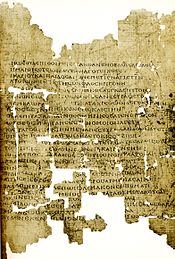
Mouse Meets Frog: Both Die Terribly

Aesop, Fabula 302

“There was a time when all the animals spoke the same language. A mouse who was on friendly terms with a frog, invited him to dinner and led him into a storehouse of his wealth where he kept his bread, cheese, honey, dried figs and all of his precious things. And he said “Eat whatever you wish, Frog.” Then the Frog responded: “When you come visit me, you too will have your fill of fine things. But I don’t want you to be nervous, so I will fasten your foot to my foot.” After the Frog bound his foot to the mouse’s and dragging him in this way, he pulled the tied-up mouse into the pond. While he drowned, he said “I am being mortified by you, but I will be avenged by someone still alive!” A bird who saw the mouse afloat flew down and seized him. The Frog went aloft with him too and thus, the bird slaughtered them both.

A wicked plot between friends is thus a danger to them both”

ΜΥΣ ΚΑΙ ΒΑΤΡΑΧΟΣ
ὅτε ἦν ὁμόφωνα τὰ ζῷα, μῦς βατράχῳ φιλιωθεὶς ἐκάλεσεν αὐτὸν εἰς δεῖπνον καὶ ἀπήγαγεν αὐτὸν εἰς ταμιεῖον πλουσίου, ὅπου ἦν ἄρτος, τυρός, μέλι, ἰσχάδες καὶ ὅσα
ἀγαθά, καί φησιν „ἔσθιε, βάτραχε, ἐξ ὧν βούλει.” ὁ δὲ βάτραχος ἔλεγε• „ἐλθὼν οὖν καὶ σὺ πρὸς ἐμὲ ἐμπλήσθητι τῶν ἀγαθῶν μου. ἀλλ’ ἵνα μὴ ὄκνος σοι γένηται, προσαρτήσω τὸν πόδα σου τῷ ποδί μου.” δήσας οὖν ὁ βάτραχος τὸν πόδα τοῦ μυὸς τῷ ἑαυτοῦ ποδὶ ἥλατο εἰς τὴν λίμνην ἕλκων καὶ τὸν μῦν δέσμιον. ὁ δὲ πνιγόμενος ἔλεγεν• „ἐγὼ μὲν ὑπό σου νεκρωθήσομαι, ἐκδικήσομαι δὲ ὑπὸ ζῶντος.” λούππης δὲ θεασάμενος τὸν μῦν πλέοντα καταπτὰς ἥρπα-σεν. ἐφέλκετο οὖν σὺν αὐτῷ καὶ ὁ βάτραχος καὶ οὕτως ἀμφοτέρους διεσπάραξεν.
ὅτι ἡ τῶν φίλων πονηρὰ συμβουλὴ καὶ ἑαυτοῖς κίνδυνος γίνεται.

Note 1: ὁμόφωνα τὰ ζῷα, “common animal language”: It is unclear whether, in these halcyon days before the fall from linguistic harmony, a Frog would squeak or a Mouse would croak when in the other’s company.

Note 2: ἐμπλήσθητι τῶν ἀγαθῶν :”you will have your fill of good things”. If the Mouse knew his Pindar (῎Αριστον μὲν ὕδωρ, 1.1), he would suspect that the Frog will do what in fact does, which is to fill his lungs with water. This illustrates that good things are in fact relative. A Mouse and Frog will hold different things dear.

This fabula (and more!) appears in our book on the Homeric Battle of the Frogs and Mice. This is a periodic reminder that it exists: Here is Bloomsbury’s Homepage for the book.

BM

Mirabile Lectu! The Book That Was Born a Blog

 “As soon as the opportunity arrives, give yourself over to your studies or to leisure”

ut primum fuerit occasio, relinque teque studiis vel otio trade

Pliny Letters, 1.9

Way back in 2014, Erik and I sat down to read the Commentary to the Iliad by Eustathius, the Archbishop of Thessaloniki, and before reading more than a few words, we ended up starting on the Homeric Batrakhomuomakhia.

[here is the publisher’s homepage]

Anyone who knows either of us or who spends time in our classes would not find this all that surprising–we (and especially I) tend to leap from topic to topic with fury and swoon under the emotional influence of texts and languages both living and dead. At the time, Erik was thinking about teaching high school and I was moving into my post-tenure malaise.

We got to know each other a few years before. I used to have students read Greek with me in the summer. Erik–who was not my student and had graduated before I was a faculty member at UTSA–joined and quickly demonstrated that (1) he knew Latin a lot better than me and (2) he cared a lot more about scholarly minutiae than I typically did.

I cannot say with strong enough force that the time we spent together over the next few years changed the way I taught, read, and thought about the ancient world. By the time we sat down to read Eustathius, Erik was in my mind an intellectual model and a true friend.

During the early years of this blog, I struggled a bit to find a partner who had the time, energy, and interest to make it into something more than it was. Erik showed pretty quickly that he had these qualities, but also a different vision–as is clear from his essays on varied subjects.

As I begin from the first page, I pray that the chorus
comes from Helikon for the sake of the song
I have just set down on the tablets at my knees;
a song of limitless strife–the war-rousing work of Ares–
because I hope to send to the ears of all mortal men
how the mice went forth to best the frogs
in imitation of the deeds of the earth born men, the giants.
Or so the tale went among men. It has this kind of beginning.

When I asked Erik if he wanted to read the “Homeric Battle of Frogs and Mice” instead, it was an easy sell. We used to spend time in my office once of twice a week, using multiple monitors and just spreading all the texts we could around the place, Sometimes we would get through two lines in two hours. Sometimes we would do ten times as much. At first, we just thought we were posting translations, as we did. But, over time, as we realized we needed a commentary in English to finish our work and that we might as well write the commentary we needed, the posts changed. And, as a result, the blog changed too.

1 ᾿Αρχόμενος πρώτης σελίδος χορὸν ἐξ ῾Ελικῶνος
2 ἐλθεῖν εἰς ἐμὸν ἦτορ ἐπεύχομαι εἵνεκ’ ἀοιδῆς
3 ἣν νέον ἐν δέλτοισιν ἐμοῖς ἐπὶ γούνασι θῆκα,
4 δῆριν ἀπειρεσίην, πολεμόκλονον ἔργον ῎Αρηος,
5 εὐχόμενος μερόπεσσιν ἐς οὔατα πᾶσι βαλέσθαι
6 πῶς μύες ἐν βατράχοισιν ἀριστεύσαντες ἔβησαν,
7 γηγενέων ἀνδρῶν μιμούμενοι ἔργα Γιγάντων,
8 ὡς λόγος ἐν θνητοῖσιν ἔην• τοίην δ’ ἔχεν ἀρχήν.

So, in a way, the story of the book that came out today (“The Homeric Battle of the Frogs and Mice”, Bloomsbury 2018) is the story both of how a book came from a blog and how a blog became a book. At our wildest fancy, we thought we would pitch it to some open source repository or present it more completely on the website.

But we were afforded the otium to pursue and complete this project. We built up several documents in Dropbox and spent hours apart adding and subtracting to the comments and what we thought should be in the introduction…While kids and pets were sleeping or eating, we typed away at additional bits or did extra word searches. We had help from excellent libraries at the University of Texas at San Antonio, the Center for the Anthropology of the Ancient World at the University of Siena, and Brandeis University. We tested the commentary online and with graduate students at UT Austin and Brandeis.

“Clearly, something must be published – ah, it would be best if I could just publish what I have already finished!

Est enim plane aliquid edendum — atque utinam hoc potissimum quod paratum est!

Pliny the Younger

And]along the way, I think we had a pretty good time. After we had completed the book’s parts, we had a few conversations with the classics acquisitions editor at Bloomsbury. She was interested in the project, and, believe it or not, the blog and twitter feed’s following. That meeting was in the spring of 2016.

During the summer I left Texas for Boston (to return to teach at my undergraduate alma mater, Brandeis University) and Erik continued his teaching at a local high school with a serendipitously similar name. Ah, we no longer have those long Monday afternoons staring at ancient Greek! But we have the memory and this book. Imperfect as it may be, I feel incredibly lucky to have been a part of it.

Seneca, De Tranquilitate Animi

“Still nothing lightens the spirit as much as sweet and faithful friendship. What a good it is when hearts have been made ready in which every secret may be safely deposited, whose understanding of yourself you worry about less than your own, whose conversation relieves your fear, whose opinion hastens your plans, whose happiness dispels your sadness, and whose very sight delights you!”

Nihil tamen aeque oblectaverit animum, quam amicitia fidelis et dulcis. Quantum bonum est, ubi praeparata sunt pectora, in quae tuto secretum omne descendat, quorum conscientiam minus quam tuam timeas, quorum sermo sollicitudinem leniat, sententia consilium expediat, hilaritas tristitiam dissipet, conspectus ipse delectet!

BM

Say Something Once, Why Say it Again? A New Edition of the Odyssey

So, a few days ago I received in the mail the first Classical text I have ever pre-ordered (by almost a year): M. L. West’s new Teubner edition of the Odyssey:

Even before I received it, I knew I would have some issues with it. West has long been a proponent of a strictly textualist view of Homer–which means his goal in editing the Iliad or the Odyssey is to restore the epics to something closer to what the ‘original’ ‘author’ had in mind. Even with modern authors, I think we emphasize individual agency, creativity and genius to the detriment of cultural contexts and audience reception far too much. For the Homeric epics, which arise from oral performance tradition and which have undergone generations of transformations in the textualized forms, the peril of overemphasizing the importance of an ‘author’ is even greater.

So, West’s final great work was going to ruffle my feathers–indeed, he announced many of his intentions in his Making of the Odyssey. What I was looking forward too, however, was an edition with an updated apparatus criticus integrating new Papyri and manuscripts unavailable to Von der Mühll when he edited the text. In the accumulation of testimonia as well as readings, West’s edition does not disappoint. The text is quite readable.

But there are some problems. Minor: he uses iota adscripts instead of subscripts and offers a more liberal application of the nu-moveable. These are merely aesthetic annoyances for me….

The major problem is that West excises many repeated lines or passages that have almost always been included in editions and relegated them to the apparatus if there is some papyrological or testimonial justification for doing so. In addition, he brackets lines that are not typically bracketed. So, West eliminates some lines that Von der Mühll preserves, e.g. 9.30 and labels others as spurious (e.g. 9.55). But really takes it further.  (See the group discussion on these issues for more examples and some fine defenses and explanations).

West, of course, does this because he thinks many lines have been repeated by the process of transmission and that the writerly Homer would never have repeated so much. West is welcome to this opinion–and it is not alone in it. But the relegation of some many lines is quite striking and renders the text useless alone (in my opinion). I cannot imagine using this with undergraduates or advising a casual reader of Homer to use this instead of the old Teubner or even Allen’s OCT.

The editorial choices will change some interpretation as well. Some are idiosyncratic but have support (such as West’s decision to go with the double accent ἄνδρά μοι ἔννεπε instead of the common and more widely accepted ῎Ανδρα μοι ἔννεπε for 1.1). Others may alter what the text means, as when he goes with ἄνθρωποι, μήδε σφιν ὄρος πόλει ἀμφικαλύψαι instead of ἄνθρωποι, μέγα δέ σφιν ὄρος πόλει ἀμφικαλύψαι for Od. 13.158. In his reading, the infinitive ἀμφικαλύψαι becomes negative command–thus Zeus is ordering Poseidon not to drop a mountain on the Phaeacians.

There are many issues like this throughout the text. I will probably highlight some now and then. But when I started posting about it on twitter, a dozen or so people joined in with enthusiasm, expertise, and bibliographies! I have storified the several conversations as a group review of West’s edition. Check it out–I learned a lot from those involved and we inadvertently illustrated how useful twitter can be.


Show Us Your Books: Compounds for Dystopian Travel

Recent reports allege that TSA agents will be asking travelers to show them their books starting this summer.

From the Etymologicum Magnum

Biblos: [“book”] comes from “throwing [ballesthai] lives [bious] in to the same place, or, from buô [“to pack full”], which means the same as sphalizô.”

Βίβλος: Διὰ τὸ τοὺς βίους βάλλεσθαι ἐν αὐτῇ·  ἢ παρὰ τὸ βύω, τὸ σφαλίζω.


Some Useful Book compounds for summer travel

[N.B.: I made up three of the following. Can you guess which?]

βιβλιογράφος: “writer of books”

βιβλιοδέτης: “Book-binder”

βιβλιοθήκη: “Book-case”

βιβλιοκλέπτης: “book thief”

βιβλιολάθας: “Forgetter of books”

βιβλιοπόπτης: “book-peeper’

βιβλιοπώλης: “book-seller

βιβλιοπωλεῖον: “book-store”

βιβλιοφυλάκιον: “safe-place for books”

βιβλιοφύλαξ: “book guard”

φιλοβίβλος: “book-lover”

κενοβιβλία: “bereavement of books”

Some other useful words

ἀναγιγνώσκω: “to read”

ἀναγεύω: “to give someone a taste”

ἀναγώρισις: “recognition”

ἀνάγνωσμα: “a passage read aloud”

ἀναγνώστης: “a reader”


From the Etymologicum Magnum:

Biblioaigisthos: Andreas the Doctor was called this by Eratosthenes because he wrote his books in secret.*

Βιβλιαίγισθος ᾿Ανδρέας ὁ ἰατρὸς ἐκλήθη ὑπὸ ᾿Ερατοσθένους, ὅτι λάθρᾳ αὐτοῦ τὰ βιβλία ἔγραφεν.

*Likely based on the mythological figure who plotted against his cousin Agamemnon while the latter was at Troy

Image result for Ancient Greek and Roman books


A Letter To a Miserly Father on Learning and Books

Libanius, Letter 428

To Heortios

“I am probably intervening by telling a father to care for a son he has decided to ignore, but after I saw Themistius crying I welcomed seeming like this rather than neglecting it. He was saying nothing harsh, but that some amnesia regarding him had overcome you. If you were not well off, I would think it proper for you to gather money from your friends to help your son. But since you do well and are among the wealthiest men, I am advising you to spend some of your wealth on your most worthy possession.  Poverty, perhaps, is also not completely useful to a young man. But now this argument is not about his stomach, but how he will get books: without them, he will be like someone trying to learn archery without a bow.”

Ἑορτίῳ

Περιεργάζομαι μὲν ἴσως πατέρα παρακαλῶν ἐπιμελεῖσθαι παιδὸς ἀμελεῖν ἐγνωκότα, δακρύοντα δὲ ἰδὼν Θεμίστιον μᾶλλον ἐδεξάμην ἐκεῖνο δόξαι ἢ τοῦτο παριδεῖν.

ἔλεγε τοίνυν τραχὺ μὲν οὐδέν, ὡς δὲ λήθη σέ τις αὑτοῦ λάβοι, ἐγὼ δέ, εἰ μὲν ἠπόρεις, ἠξίουν ἄν σε παρὰ τῶν φίλων ἀγείροντα τῷ παιδὶ βοηθεῖν· ἐπεὶ δὲ εὖ ποιῶν ἐν πρώτοις εἶ τῶν εὐπόρων, παραινῶ τι τῶν ὄντων εἰς τὸ τῶν ὄντων σοι τιμιώτατον ἀναλῶσαι.

ἴσως μὲν γὰρ οὐδὲ πεῖνα σφόδρα νέῳ χρήσιμον, ἔστι δὲ νῦν οὐ περὶ τῆς γαστρὸς ὁ λόγος, ἀλλ᾿ ὅπως ᾖ τῷ νεανίσκῳ βιβλία· ὧν ἀπόντων ὅμοιος ἔσται τῷ πειρωμένῳ τοξεύειν ἄνευ τόξου μανθάνειν.

Image result for Ancient Greek books

Marcus Antonius Offered Cicero Life, If He Burned All His Books

The following piece from the elder Seneca (Yes, Seneca the Elder, not the Younger) is based upon the imaginary story that Marcus Antonius offered to preserve Cicero’s life in exchange for the destruction of all his books. 

Seneca the Elder, Suasoria 7

Cicero Deliberates whether to burn all his writings since Antony has promised his safety if he did so

Deliberat Cicero an scripta sua conburat, promittente Antonio incolumitatem si fecisset, 11

Here the conditions [of the agreement] were intolerable. For nothing is so intolerable as to burn up the proofs of your own genius. In addition, this was an insult to the Roman people, whose language Cicero had elevated so that their eloquence outstripped the knowledge of arrogant Greece as much as their fortune in war. This would be a crime against humanity! Cicero would regret breaths bought at so high a price, since he would have to grow old as a slave using his eloquence only for one thing: praising Antony. This was a wretched sentence: to be granted life, but surrender genius.

Pompeius Silo proceeded to argue that Antony was not negotiating but instead was mocking Cicero. This was a not a condition, it was an insult: For even after the books were burned he would still kill him. Antony was not so foolish that he believed that burning the books was a concern to Cicero, a man whose writings were already famous over the whole world. Antony did not seek this thing he could do himself, unless of course he did not have the power over Cicero’s books which he had over Cicero. He sought nothing other than to kill Cicero after reducing him to a state of shame because he had spoken bravely and often about his contempt for death. Hence, Antony was not giving him life on a condition, but he was seeking his death in dishonor. Thus, Cicero ought to suffer bravely now what he would certainly suffer later in shame.

Hic condiciones intolerabiles. <Nihil tam intolerabile> esse quam monumenta ingenii sui ipsum exurere. Iniuriam illum facturum populo Romano, cuius linguam huc ipse extulisset ut insolentis Graeciae studia tanto antecederet eloquentia quantofortuna; iniuriam facturum generi humano. Paenitentiam illum acturum tam care spiritus empti, cum in servitute senescendum fuisset <et> in hoc unum eloquentia utendum, ut laudaret Antonium. Male cum illo agi: dari vitam, eripi ingenium.

Silo Pompeius sic egit ut diceret Antonium non pacisci sed inludere: non esse illam condicionem sed contumeliam; combustis enim libris nihilominus occisurum; non esse tam stultum Antonium ut putaret ad rem pertinere libros a Cicerone conburi, cuius scripta per totum orbem terrarum celebrarentur, nec hoc petere eum, quod posset ipse facere, nisi forte non esset in scripta Ciceronis ei ius cui esset in Ciceronem; quaeri nihil aliud quam ut ille Cicero multa fortiter de mortis contemptu locutus ad turpes condiciones perductus occideretur. Antonium illi non vitam cum condicione promittere, sed mortem sub infamia quaerere. Itaque quod turpiter postea passurus esset, nunc illum debere fortiter pati.


Image result for Ancient Rome Cicero and Marcus Antonius
Not a fan of Cicero.

On the Importance of Reading and Writing in Turns


Seneca, Moral Epistles 84

“I believe that these journeys which remove my languor are good for both my strength and my researches. How they profit my health is clear: my love of literature makes me lazy, neglectful of my body. On a journey, I may exercise incidentally.

I can show you how this helps my research too. But I in no way take a break from reading. My reading, I believe, is necessary: first, it ensures I will not be satisfied with myself as I am; second, once I have understood what others have learned, I may judge what has been discovered and what still must be thought out.

Reading feeds the mind and replenishes it when it is worn from studying—even though it is not without work itself. We should not restrict ourselves to writing or to reading:  endless writing saps our strength and then exhausts it. Too much reading can puff up or dilute our ability. Most commendable is to take them in their turn, to mix one with the other, so that the seeds of one’s reading may be grown anew with the pen.”

Itinera ista, quae segnitiam mihi excutiunt, et valitudini meae prodesse iudico et studiis. Quare valitudinem adiuvent, vides: cum pigrum me et neglegentem corporis litterarum amor faciat, aliena opera exerceor; studio quare prosint, indicabo: a lectionibus nihil recessi. Sunt autem, ut existimo, necessariae, primum ne sim me uno contentus; deinde ut, cum ab aliis quaesita cognovero, tum et de inventis iudicem et cogitem de inveniendis. Alit lectio ingenium et studio fatigatum, non sine studio tamen, reficit. Nec scribere tantum nec tantum legere debemus; altera res contristabit vires et exhauriet, de stilo dico, altera solvet ac diluet. Invicem hoc et illo commeandum est et alterum altero temperandum, ut quicquid lectione collectum est, stilus redigat in corpus.

I was reminded of this passage while contemplating Paul Holdengraber’s regular injunction not to read bad writing:

As we have mentioned before, this resonates with Leonardo de Bruni’s warning about reading trash. Of course, the statement should probably be tempered by Pliny the Elder’s suggestion that “no book is so bad it doesn’t have something to offer”.

I feel that Seneca offers good advice for anyone working on a long project, but especially for graduate students or anyone working on a thesis.  I know that the last line above is translated a little freely, but I have the following in my head. It is important to grow ideas in the garden of your mind.

Lending, Buying, Loving Books: Passages for #WorldBookDay

Callimachus

μέγα βιβλίον μέγα κακόν

“Big book, big problem.”


Cicero on Lending Books, Letters to Atticus, 8

“Beware of lending your books to anyone; save them for me, as you write that you will. The greatest excitement for them has gripped me, along with a contempt for everything else.”

libros vero tuos cave cuiquam tradas; nobis eos, quem ad modum scribis, conserva. summum me eorum studium tenet, sicut odium iam ceterarum rerum.


Vergerio, a Lament on the Books We’ve Lost: de ingenuis moribus et liberalibus adulescentiae studiis, XXXVIII:

“Letters and books are a record of things and the common treasury of all knowable things. Therefore, if we ourselves are unable to produce anything of our own, we ought to take care that we transmit those which we have received from earlier generations to posterity intact and uncorrupted. By this we can lend counsel to those who will come after us, and we will in this one way repay the labors of those who have come before us. In this matter, we may justly censure a certain age and the ages which immediately succeeded it. Indeed, we may feel indignant (though we accomplish nothing in so doing) that these earlier ages have allowed so many notable works of famous authors to perish. Of certain of these, indeed, only the names, though decorated with the highest praise, have come down to us. Of others, parts and fragments have come to us. Then, from the splendor of the praises and the noted name, we desire their works as well. We may be indignant that the rest of their labors have perished when we consider the excellence and dignity of those which survive; though it must be conceded that they are in many places so corrupt, cut up, and mangled, that it would almost be better if nothing of them had survived to our day.”

Nam sunt litterae quidem ac libri certa rerum memoria et scibilium omnium communis apotheca. Idque curare debemus ut quos a prioribus accepimus, si nihil ipsi ex nobis gignere forte possumus, integros atque incorruptos posteritati transmittamus, eoque pacto et his qui post nos futuri sunt utiliter consulemus et his qui praeterierunt vel unam hanc suorum laborum mercedem repensabimus. In quo iuste forsitan possumus quoddam saeculum proximasque superiores aetates accusare. Indignari quidem licet, proficere autem nihil, quod tam multa illustrium auctorum praeclara opera deperire passi sunt. Et quorundam quidem nomina sola, summis tamen laudibus ornata, aliorum etiam pars vigiliarum et fragmenta quaedam ad nos pervenerunt. Unde fit ut ex splendore laudum ac nominis opera desideremus illorum. Horum vero reliquos labores deperisse indignemur ex earum rerum quae superant adhuc excellentia ac dignitate, tametsi ea ipsa in plerisque partium suarum tam vitiose corrupta, quaedam etiam intercisa ac mutilata suscepimus, ut paene melius fuerit ex his nihil ad nos pervenisse.

Plato’s Book Purchases: Aulus Gellius, Attic Nights 3.16

  • This too has been entrusted to history by the most trustworthy men: Plato bought three books of Philolaus the Pythagorean and Aristotle acquired a few volumes of the philosopher Speusippus at inconceivable prices.

It has been said that the philosopher Plato was a man without great financial resources; yet he nevertheless purchased three books of the Pythagorean Philolaus for ten thousand denarii. That amount, some write, Dio of Syracuse, his friend, gave to him.  Aristotle too is said to have bought a few books of the philosopher Speusippus after his death for three Attic talents. That is as much as seventy-two thousand sesterces!

The acerbic Timon wrote a very libelous book which is called the Sillos [i.e. “Lampoon”]. In that book, he takes on Plato insultingly for the fact that he bought the book of Pythagorean philosophy for so high a price and that he cobbled together that noble dialogue the Timaeus from it. Here are Timon’s lines on the matter:

And You, Plato: the desire of education seized you
And you bought a small book for a vast sum,
This book is where you learned to write a Timaios.”

 P.Oxy. XI 1362

XVII. Id quoque esse a gravissimis viris memoriae mandatum, quod tris libros Plato Philolai Pythagorici et Aristoteles pauculos Speusippi philosophi mercati sunt pretiis fidem non capientibus. 

1Memoriae mandatum est Platonem philosophum tenui admodum pecunia familiari fuisse atque eum tamen tris Philolai Pythagorici libros decem milibus denarium mercatum. 2 Id ei pretium donasse quidam scripserunt amicum eius Dionem Syracosium. 3 Aristotelem quoque traditum libros pauculos Speusippi philosophi post mortem eius emisse talentis Atticis tribus; ea summa fit nummi nostri sestertia duo et septuaginta milia. 4 Timon amarulentus librum maledicentissimum conscripsit, qui sillos inscribitur. 5 In eo libro Platonem philosophum contumeliose appellat, quod inpenso pretio librum Pythagoricae disciplinae emisset exque eo Timaeum, nobilem illum dialogum, concinnasset. Versus super ea re Timonos hi sunt (fr. 828):

καὶ σύ, Πλάτων· καὶ γάρ σε μαθητείης πόθος ἔσχεν,
πολλῶν δ’ ἀργυρίων ὀλίγην ἠλλάξαο βίβλον,
ἔνθεν ἀπαρχόμενος τιμαιογραφεῖν ἐδιδάχθης.

Image result for ancient books

On Not Confusing the Author with His Book: Martial, Epigrams Book 11.15

“I do have drafts that Cato’s wife
And those dreadful Sabine women might read:
But I want this whole little book to laugh
and to be dirtier than other little books.
Let it soak up wine and not shudder
To be died dark with Cosmian ink,
Let it play with the boys and love the girls
And let it just name directly that ‘thing’
From which we are born, the parent of all
Which holy Numa called a little dick.
Remember still, Apollinoris, that
These verses are Saturnalian.
This little book’s morals aren’t mine!”

Sunt chartae mihi quas Catonis uxor
et quas horribiles legant Sabinae:
hic totus volo rideat libellus
et sit nequior omnibus libellis.
Qui vino madeat nec erubescat
pingui sordidus esse Cosmiano,
ludat cum pueris, amet puellas,
nec per circuitus loquatur illam,
ex qua nascimur, omnium parentem,
quam sanctus Numa mentulam vocabat.
Versus hos tamen esse tu memento
Saturnalicios, Apollinaris:
mores non habet hic meos libellus.


Plato’s Book Purchases

Aulus Gellius, Attic Nights 3.16

  1. This too has been entrusted to history by the most trustworthy men: Plato bought three books of Philolaus the Pythagorean and Aristotle acquired a few volumes of the philosopher Speusippus at inconceivable prices.

It has been said that the philosopher Plato was a man without great financial resources; yet he nevertheless purchased three books of the Pythagorean Philolaus for ten thousand denarii. That amount, some write, Dio of Syracuse, his friend, gave to him.  Aristotle too is said to have bought a few books of the philosopher Speusippus after his death for three Attic talents. That is as much as seventy-two thousand sesterces!

The acerbic Timon wrote a very libelous book which is called the Sillos [i.e. “Lampoon”]. In that book, he takes on Plato insultingly for the fact that he bought the book of Pythagorean philosophy for so high a price and that he cobbled together that noble dialogue the Timaeus from it. Here are Timon’s lines on the matter:

And You, Plato: the desire of education seized you
And you bought a small book for a vast sum,
This book is where you learned to write a Timaios.”

XVII. Id quoque esse a gravissimis viris memoriae mandatum, quod tris libros Plato Philolai Pythagorici et Aristoteles pauculos Speusippi philosophi mercati sunt pretiis fidem non capientibus. 

1Memoriae mandatum est Platonem philosophum tenui admodum pecunia familiari fuisse atque eum tamen tris Philolai Pythagorici libros decem milibus denarium mercatum. 2 Id ei pretium donasse quidam scripserunt amicum eius Dionem Syracosium. 3 Aristotelem quoque traditum libros pauculos Speusippi philosophi post mortem eius emisse talentis Atticis tribus; ea summa fit nummi nostri sestertia duo et septuaginta milia. 4 Timon amarulentus librum maledicentissimum conscripsit, qui sillos inscribitur. 5 In eo libro Platonem philosophum contumeliose appellat, quod inpenso pretio librum Pythagoricae disciplinae emisset exque eo Timaeum, nobilem illum dialogum, concinnasset. Versus super ea re Timonos hi sunt (fr. 828):

καὶ σύ, Πλάτων· καὶ γάρ σε μαθητείης πόθος ἔσχεν,
πολλῶν δ’ ἀργυρίων ὀλίγην ἠλλάξαο βίβλον,
ἔνθεν ἀπαρχόμενος τιμαιογραφεῖν ἐδιδάχθης.

Pisistratus, the First Librarian? Gellius on Libraries Built, Pillaged and Burned

Aulus Gellius, Attic Nights 7.17


17: Who was the first of all to provide books for the public to read; and what quantity of books were in Athenian public libraries before the Persian invasions?

Pisistratus the tyrant is said to have been the first to make books of liberal disciplines available to be read publicly in Athens. Afterwards, the Athenians themselves increased the collection eagerly and carefully. But later when Xerxes became master of Athens and the city was burned except for the citadel, he stole the entire collection and took it to Persia. Many years later, King Seleucus, who was nicknamed Nicanor, made sure that all of these books were returned to Athens.

At a later date, a great number of books—nearly seven hundred thousand volumes, were either collected or published in Egypt under the Ptolemaic kings; but these books were all burned in our first Alexandrian War during the sack of the city—this wasn’t done on purpose or by any orders, but accidentally by the auxiliary regiment.”

 XVII. Quis omnium primus libros publice praebuerit legendos; quantusque numerus fuerit Athenis ante clades Persicas librorum in bibliothecis publicorum.

1 Libros Athenis disciplinarum liberalium publice ad legendum praebendos primus posuisse dicitur Pisistratus tyrannus. Deinceps studiosius accuratiusque ipsi Athenienses auxerunt; sed omnem illam postea librorum copiam Xerxes Athenarum potitus urbe ipsa praeter arcem incensa abstulit asportavitque in Persas. 2 Eos porro libros universos multis post tempestatibus Seleucus rex, qui Nicanor appellatus est, referendos Athenas curavit. 3 Ingens postea numerus librorum in Aegypto ab Ptolemaeis regibus vel conquisitus vel confectus est ad milia ferme voluminum septingenta; sed ea omnia bello priore Alexandrino, dum diripitur ea civitas, non sponte neque opera consulta, sed a militibus forte auxiliaris incensa sunt.


[the War mentioned here is likely 48 CBE; the Library at Alexandria was rebuilt by 41 BCE. It was burned again in 272 CE and abandoned by the end of the 4th century CE]