A Day Of Freedom

ἐλευθερία: “freedom” Chantraine: sens “libre”, par opposition à δοῦλος

αὐτονομία: “independence”

παρρησία: “freedom of speech”


Iliad 6.450-455 (Hektor to Andromakhe)

“But no grief over the Trojans weighs as heavy on me,
Not even for Hekabê herself or lord Priam or
Any of my brothers who have died in their great, fine numbers
In the dust at the hands of wicked men,
As my grief for you, when one of the bronze-dressed Akhaians
Will lead you off and steal away your day of freedom.”

ἀλλ’ οὔ μοι Τρώων τόσσον μέλει ἄλγος ὀπίσσω,
οὔτ’ αὐτῆς ῾Εκάβης οὔτε Πριάμοιο ἄνακτος
οὔτε κασιγνήτων, οἵ κεν πολέες τε καὶ ἐσθλοὶ
ἐν κονίῃσι πέσοιεν ὑπ’ ἀνδράσι δυσμενέεσσιν,
ὅσσον σεῦ, ὅτε κέν τις ᾿Αχαιῶν χαλκοχιτώνων
δακρυόεσσαν ἄγηται ἐλεύθερον ἦμαρ ἀπούρας·

vase

Gnomologica Vat.

“Wise Periander, when asked what freedom is, said “a good conscience”.

Περίανδρος ὁ σοφὸς ἐρωτηθεὶς τί ἂν εἴη ἐλευθερία εἶπεν· „ἀγαθὴ συνείδησις”.


Plato, Rep. 564.a4

“Excessive freedom seems to lead to nothing other than excessive slavery both in private and in public.”

῾Η γὰρ ἄγαν ἐλευθερία ἔοικεν οὐκ εἰς ἄλλο τι ἢ εἰς ἄγαν δουλείαν μεταβάλλειν καὶ ἰδιώτῃ καὶ πόλει.

Cicero, Philippic 10.20

“So glorious is the reclamation of freedom that not even death should be avoided when freedom must be regained.”

Ita praeclara est recuperatio libertatis ut ne mors quidem sit in repetenda libertate fugienda

Naevius, fr. 5-6

“I have always considered freedom more powerful than money.”

potioremque habui libertatem multo quam pecuniam.

Sallust, Second Letter to Caesar 12

“I consider freedom more precious than fame”

Libertatem gloria cariorem habeo

Cicero, Letters to Brutus 5.2

“I [said] everything for the sake of freedom: without peace, it is nothing. I used to believe that peace itself could be achieved through war and weapons.”

ego omnia ad libertatem, qua sine pax nulla est. pacem ipsam bello atque armis effici posse arbitrabar.

Livy, 24.25

“This is the nature of the crowd: it serves humbly or rules arrogantly. Freedom, which is between these two things, they cannot manage to take or keep moderately. And there is no lack of indulgent assistants of their rage, men who provoke eager and unbalanced minds to blood and murder.”

Ea natura multitudinis est: aut servit humiliter aut superbe dominatur; libertatem, quae media est, nec suscipere modice nec habere sciunt; et non ferme desunt irarum indulgentes ministri, qui avidos atque intemperantes suppliciorum animos ad sanguinem et caedes inritent;

Livy, 24.29

“They were not happy with freedom unless they might also rule and be masters”

nec iam libertate contentos esse nisi etiam regnent ac dominentur

Seneca, De Vita Beata 15.7

“We were born in a  monarchy: freedom is obeying god.”

In regno nati sumus; deo parere libertas est.

Epicurus (Gnom. Vat. Epic, fr. 77)

“Freedom is the greatest fruit of self-sufficiency”

Τῆς αὐταρκείας καρπὸς μέγιστος ἐλευθερία.


Epictetus, Diss 1.12.10

“What, then, is freedom insanity? May it not be so, for freedom and insanity do not overlap!”

τί οὖν; ἀπόνοιά ἐστιν ἡ ἐλευθερία; μὴ γένοιτο. μανία γὰρ καὶ ἐλευθερία εἰς ταὐτὸν οὐκ ἔρχεται


Epictetus, Diss. 2.1.22

“What is the profit of these beliefs? The very thing which is the most noble and ennobling for those who are truly educated, tranquility, lack of fear, freedom. For we must not trust the masses who say that it is only possible for the free to be educated. No, we must heed the philosophers who say that only the educated can be free.”

Τίς οὖν τούτων τῶν δογμάτων καρπός; ὅνπερ δεῖ κάλλιστόν τ’ εἶναι καὶ πρεπωδέστατον τοῖς τῷ ὄντι παιδευομένοις, ἀταραξία ἀφοβία ἐλευθερία. οὐ γὰρ τοῖς πολλοῖς περὶ τούτων πιστευτέον, οἳ λέγουσιν μόνοις ἐξεῖναι παιδεύεσθαι τοῖς ἐλευθέροις, ἀλλὰ τοῖς φιλοσόφοις μᾶλλον, οἳ λέγουσι μόνους τοὺς παιδευθέντας ἐλευθέρους εἶναι.

freedom (n.)

Old English freodom “power of self-determination, state of free will; emancipation from slavery, deliverance;” see free (adj.) + -dom. Meaning “exemption from arbitrary or despotic control, civil liberty” is from late 14c. Meaning “possession of particular privileges” is from 1570s. Similar formation in Old Frisian fridom, Dutch vrijdom, Middle Low German vridom. Freedom-rider recorded 1961 in reference to civil rights activists in U.S. trying to integrate bus lines.

“Freedom’s just another word for nothing left to lose” Kris Kristofferson “Me and My Bobby McGee”


Pope’s Ignorance of Greek

Sir Leslie Stephen, Alexander Pope:

“The Iliad was to be published in six volumes. For each volume Lintot was to pay 200l.; and, besides this, he was to supply Pope gratuitously with the copies for his subscribers. The subscribers paid a guinea a volume, and as 575 subscribers took 654 copies, Pope received altogether 5320l. 4s. at the regular price, whilst some royal and distinguished subscribers paid larger sums. By the publication of the Odyssey Pope seems to have [Pg 63]made about 3500l. more,[6] after paying his assistants. The result was, therefore, a total profit at least approaching 9000l. The last volume of the Odyssey did not appear till 1726, and the payments were thus spread over eleven years. Pope, however, saved enough to be more than comfortable. In the South Sea excitement he ventured to speculate, but though for a time he fancied himself to have made a large sum, he seems to have retired rather a loser than a gainer. But he could say with perfect truth that, ‘thanks to Homer,’ he ‘could live and thrive, indebted to no prince or peer alive.’ The money success is, however, of less interest to us than the literary. Pope put his best work into the translation of the Iliad. His responsibility, he said, weighed upon him terribly on starting. He used to dream of being on a long journey, uncertain which way to go, and doubting whether he would ever get to the end. Gradually he fell into the habit of translating thirty or forty verses before getting up, and then “piddling with it” for the rest of the morning; and the regular performance of his task made it tolerable. He used, he said at another time, to take advantage of the “first heat,” then correct by the original and other translations; and finally to “give it a reading for the versification only.” The statement must be partly modified by the suggestion that the translations were probably consulted before the original. Pope’s ignorance of Greek—an awkward qualification for a translator of Homer—is undeniable. Gilbert Wakefield, who was, I believe, a fair scholar and certainly a great admirer of Pope, declares his conviction to be, after a more careful examination of the Homer than any one is now likely to give, that Pope ‘collected the general purport of every passage from some of his predecessors—Dryden’ (who only translated the first Iliad), ‘Dacier, Chapman, or Ogilby.’ He thinks that Pope would have been puzzled to catch at once the meaning even of the Latin translation, and points out proofs of his ignorance of both languages and of ‘ignominious and puerile mistakes.'”

Masturbating in Ancient Greek

Just in case the picture of a man’s final moment at Pompeii has inspired people this morning, Ancient Greek for (male) masturbation:

https://twitter.com/PersianRose1/status/881330662321655808

Aristophanes, Peace 290-292

“Now comes the time of for Datis’ song
The one he sang once at midday as he masturbated
“How I am pleased and I enjoy this and I am finding delight!”

ΤΡ.                Νῦν, τοῦτ’ ἐκεῖν’, ἥκει τὸ Δάτιδος μέλος.
δεφόμενός ποτ’ ᾖδε τῆς μεσημβρίας·
«῾Ως ἥδομαι καὶ χαίρομαι κεὐφραίνομαι.»

The small LSJ defines δέφω as “to soften by working by the hand, to make supple, to tan hides.” The 1902 LSJ uses Latin to explain: “sensu obscoeno, v. Lat. Masturbari.”

The Suda (delta 297) cuts to the chase on this one with “dephein: grabbing someone by the genitals. Also, “rubbing” (Dephomenos) instead of “flogging your genitals.” (Δέφειν: τὸ τοῦ αἰδοίου τινὰ ἅπτεσθαι. καὶ Δεφόμενος, ἀντὶ τοῦ ἀποδέρων τὸ αἰδοῖον). So, the active vs. middle voice is an important distinction (echoing something I have emphasized in teaching Greek: active voice is something you do to someone else, middle is what you do to yourself…).

Here’s a nice passage that shows the difference in active and passive voice:

Artemidorus, Dream Interpretation 1.78: 74-80

“I know of a certain slave who dreamed that he was masturbating his master—and he then became the teacher and nurse of his children. For he was holding his master’s genitals in his hands which was a symbol of his children. And again, I know of another who dreamed he was being jerked off by his master, and, later he was bound to a pillar and then he received many blows…”

οἶδα δέ τινα δοῦλον, ὃς ἔδοξε τὸν δεσπότην αὐτοῦ δέφειν, καὶ ἐγένετο τῶν παίδων αὐτοῦ παιδαγωγὸς καὶ τροφός· ἔσχε γὰρ ἐν ταῖς χερσὶ τὸ τοῦ δεσπότου αἰδοῖον ὂν τῶν ἐκείνου τέκνων σημαντικόν. καὶ πάλιν αὖ οἶδά <τινα> ὃς ἔδοξεν ὑπὸ τοῦ δεσπότου δέφεσθαι, καὶ προσδεθεὶς κίονι πολλὰς ἔλαβε πληγάς….

Most of the extant uses of this verb appear in comedy. And, not surprisingly, this means Aristophanes:

Aristophanes, Knights 23-24

ΟΙ. Β′                                               Πάνυ καλῶς.
῞Ωσπερ δεφόμενός νυν ἀτρέμα πρῶτον λέγε
τὸ μολωμεν, εἶτα δ’ αὐτο, κᾆτ’ ἐπάγων πυκνόν.

“Excellent.
Just as if you were masturbating, say it first now gently
“let us hurry” and then again pushing on, quickly.”

[Here’s a link to the whole play. Soon, one of the interlocutors stops “because the skin is irritated by masturbation.” (῾Οτιὴ τὸ δέρμα δεφομένων ἀπέρχεται, 29)]

The verb is not common, to say the least, so later commentators found it necessary to gloss it and explain Aristophanes’ joke. Through the explanations of the joke, it immediately becomes less funny, and the language used in the commentaries.

Scholia in Knights:

[1] “ ‘Just like dephomenos’: instead of “flogging your genitals” (apodérôn to aidoion). For, when men touch their genitals they don’t complete as they began, but they move more eagerly towards the secretion of semen. This plays on that, he means start small at first but then go continuously.

[2]dephomenos’: “having intercourse’. Flogging genitals.

[3]dephomenos’: They mean handling the penis. For, when men take hold of their penises they don’t move towards ejaculation the way they began, but more eagerly over time, as they are inflamed by the continuity of movement.”

 ὥσπερ δεφόμενος: ἀντὶ τοῦ ἀποδέρων τὸ αἰδοῖον. οἱ γὰρ ἁπτόμενοι τῶν αἰδοίων οὐχ ὡς ἤρξαντο, ἀλλὰ σπουδαιότερον κινοῦσι πρὸς τῇ τῆς γονῆς ἐκκρίσει. τοῦτο οὖν λέγει, ὅτι πρῶτον κατὰ μικρόν, εἶτα συνεχῶς λέγε. RVEΓ2M

δεφόμενος] ξυνουσιάζων, ἀποδέρων τὸ αἰδοῖον. M

δεφόμενος] ἤγουν τοῦ μορίου ἁπτόμενος. οἱ γὰρ ἁπτόμενοι τοῦ μορίου
πρὸς ἔκκρισιν τῆς γονῆς οὐχ ὡς ἤρξαντο κινοῦσιν ἀλλὰ σπουδαιότερον, ἐκπυρούμενοι τῇ συνεχείᾳ τῆς κινήσεως. VatLh

Aristophanes, Ecclesiazusae, 705–709

“It is decreed that the ugly and the wretched
Get to fuck first.
Take your pleasure on the porch in the meantime
Handling your fig-leaves in the courtyard”

τοῖς γὰρ σιμοῖς καὶ τοῖς αἰσχροῖς
ἐψήφισται προτέροις βινεῖν,
ὑμᾶς δὲ τέως θρῖα λαβόντας
διφόρου συκῆς
ἐν τοῖς προθύροισι δέφεσθαι.

The Suda interprets this passage as meaning that someone is masturbating with a fig leaf. Henderson ( The Maculate Muse. New Haven 1975) explains that the “fig-leaves” are the foreskin and the “courtyard” means outside of a vagina.

Image result for ancient Greek Masturbating vase

And just in case one might worry about moral dimensions of masturbation, ancient philosophers have already tackled the question:

From Sextus Empiricus Pyrrhonian Hypotyposes, 3.206-207

“Similarly, this seems shameful to one of the sages but not to another. For us it is wrong to marry your own mother or sister. But the Persians, especially those of them who seem to pursue wisdom, the Magi, marry their mothers just as the Egyptians marry their sisters. The poet also says: “Zeus addressed Hera, his wife and sister…”

Zeno of Citium even says that it is not strange to rub your mother’s genitals with your own, just as no one would claim it is wrong to rub any other part of her body with your hand. Chrysippus approves in his Republic of a father getting children from his daughter, a mother from her son, and a brother from his sister. Plato insisted generally that wives should be held in common. Zeno also does not disapprove of masturbation, which is shameful in our culture. We have also learned that others practice this wicked habit as if it were a good thing.”

οὕτω καὶ τῶν σοφῶν ᾧ μὲν οὐκ αἰσχρόν, ᾧ δὲ αἰσχρὸν ἐδόκει τοῦτο εἶναι. ἄθεσμον τέ ἐστι παρ’ ἡμῖν μητέρα ἢ ἀδελφὴν ἰδίαν γαμεῖν· Πέρσαι δέ, καὶ μάλιστα αὐτῶν οἱ σοφίαν ἀσκεῖν δοκοῦντες, οἱ Μάγοι, γαμοῦσι τὰς μητέρας, καὶ Αἰγύπτιοι τὰς ἀδελφὰς ἄγονται πρὸς γάμον, καὶ ὡς ὁ ποιητής φησιν,

Ζεὺς ῞Ηρην προσέειπε κασιγνήτην ἄλοχόν τε.

ἀλλὰ καὶ ὁ Κιτιεὺς Ζήνων φησὶ μὴ ἄτοπον εἶναι τὸ μόριον τῆς μητρὸς τῷ ἑαυτοῦ μορίῳ τρῖψαι, καθάπερ οὐδὲ ἄλλο τι μέρος τοῦ σώματος αὐτῆς τῇ χειρὶ τρῖψαι φαῦλον ἂν εἴποι τις εἶναι. καὶ ὁ Χρύσιππος δὲ ἐν τῇ πολιτείᾳ δογματίζει τόν τε πατέρα ἐκ τῆς θυγατρὸς παιδοποιεῖσθαι καὶ τὴν μητέρα ἐκ τοῦ παιδὸς καὶ τὸν ἀδελφὸν ἐκ τῆς ἀδελφῆς. Πλάτων δὲ καὶ καθολικώτερον κοινὰς εἶναι τὰς γυναῖκας δεῖν ἀπεφήνατο. τό τε αἰσχρουργεῖν ἐπάρατον ὂν παρ’ ἡμῖν ὁ Ζήνων οὐκ ἀποδοκιμάζει· καὶ ἄλλους δὲ ὡς ἀγαθῷ τινι τούτῳ χρῆσθαι τῷ κακῷ πυνθανόμεθα.

Final Resting Places and Ordered Memory: Cicero on Simondes’ Good Fortune

Ancient memory techniques go back to oratorical training in theory, but in practice probably much further back in human history. Philostratus records the reputation of Dionysius of Miletus and his “memory-men”. But one of the most easily abused and likely misunderstood method from the ancient world is the “memory palace” (or “method of loci“), made famous by Cicero, but credited to the lyric poet Simonides.

Cicero De Oratore 2.352–355

“But, so I may return to the matter”, he said, “I am not as smart as Themistocles was as to prefer the art of forgetting to the art of memory. And So I am thankful to that Simonides of Ceos who, as they say, first produced an art of memory. For they say that when Simonides was dining at the home of a wealthy aristocrate named Scopas in Thessaly and had performed that song which he wrote in his honor—in which there were many segments composed for Castor and Pollux elaborated in the way of poets. Then Scopas told him cruelly that he would pay him half as much as he had promised he would give for the song; if it seemed right to him, he could ask Tyndareus’ sons for the other half since he had praised them equally.

A little while later, as they tell the tale, it was announced that Simonides should go outside—there were two young men at the door who had been calling him insistently. He rose, exited, and so no one. Meanwhile, in the same space of time, the ceiling under which Scopas was having his feast collapsed: the man was crushed by the ruins a d died with his relatives. When people wanted to bury them they could not recognize who was where because they were crushed. Simonides is said to have shown the place in which each man died from his memory for their individual burials.

From this experience, Simonides is said to have learned that it is order most of all that brings light to memory. And thus those who wish to practice this aspect of the skill must select specific places and shape in their mind the matters they wish to hold in their memory and locate these facts in those places. It will so turn out that the order of the places will safeguard the order of the matters, the reflections of the facts will remind of the facts themselves, and we may use the places like wax and the ideas like letters written upon it.”

Sed, ut ad rem redeam, non sum tanto ego, inquit, ingenio quanto Themistocles fuit, ut oblivionis artem quam memoriae malim; gratiamque habeo Simonidi illi Cio quem primum ferunt artem memoriae protulisse.  Dicunt enim cum cenaret Crannone in Thessalia Simonides apud Scopam fortunatum hominem et nobilem cecinissetque id carmen quod in eum scripsisset, in quo multa ornandi causa poetarum more in Castorem scripta et Pollucem fuissent, nimis illum sordide Simonidi dixisse se dimidium eius ei quod pactus esset pro illo carmine daturum: reliquum a suis Tyndaridis quos aeque laudasset peteret si ei videretur. Paulo post esse ferunt nuntiatum Simonidi ut prodiret: iuvenes stare ad ianuam duos quosdam qui eum magnopere evocarent; surrexisse illum, prodisse, vidisse neminem; hoc interim spatio conclave illud ubi epularetur Scopas concidisse; ea ruina ipsum cum cognatis oppressum suis interiisse; quos cum humare vellent sui neque possent obtritos internoscere ullo modo, Simonides dicitur ex eo quod meminisset quo eorum loco quisque cubuisset demonstrator uniuscuiusque sepeliendi fuisse; hac tum re admonitus invenisse fertur ordinem esse maxime qui memoriae lumen afferret. Itaque eis qui hanc partem ingeni exercerent locos esse capiendos et ea quae memoria tenere vellent effingenda animo atque in eis locis collocanda: sic fore ut ordinem rerum locorum ordo conservaret, res autem ipsas rerum effigies notaret, atque ut locis pro cera, simulacris pro litteris uteremur.

thanks to S. Raudnitz for reminding me of this passage too!


Image result for ancient greek memory palace medieval giulio camillo
This stuff is still popular: The Memory Theater of Guilio Camillo

I Can’t Live Without You

Rufinus, Epigram I (Greek Anthology 5.9)

“I, Rufinus, wish my sweetest Elpis much happiness, if indeed you can be happy without me. Oh, by your eyes! I no longer approve of this solitude-loving, single-couch separation from you! Ever with tear-soaked eyes I go to Koressos or the temple of great Artemis; but tomorrow my own country will welcome me, and I will fly to you – wishing you endless health!”

Ῥουφῖνος τῇ μῇ γλυκερωτάτῃ Ἐλπίδι πολλὰ
χαίρειν, εἰ χαίρειν χωρὶς ἐμοῦ δύναται.
οὐκέτι βαστάζω, μὰ τὰ ς᾽ ὄμματα, τὴν φιλέρημον
καὶ τὴν μουνολεχῆ σεῖο διαζυγίην
ἀλλ᾽ αἰεὶ δακρύοισι πεφυρμένος ἢ πὶ Κορησσὸν
ἔρχομαι ἢ μεγάλης νηὸν ἐς Ἀρτέμιδος.
αὔριον ἀλλὰ πάτρη με δεδέξεται: ἐς δὲ σὸν ὄμμα
πτήσομαι, ἐρρῶσθαι μυρία ς᾽ εὐχόμενος.

Related image
‘Love in Idleness’ by Lawrence Alma-Tadema

Miscellaneous Reading, Cursory Learning

Sir Leslie Stephen, Alexander Pope:

“Like other lads of genius, he put together a kind of play—a combination, it seems, of the speeches in Ogilby’s Iliad—and got it acted by his schoolfellows. These brief snatches of schooling, however, counted for little. Pope settled at home at the early age of twelve, and plunged into the delights of miscellaneous reading with the ardour of precocious talent. He read so eagerly that his feeble constitution threatened to break down, and when about seventeen, he despaired of recovery, and wrote a farewell to his friends. One of them, an Abbé Southcote, applied for advice to the celebrated Dr. Radcliffe, who judiciously prescribed idleness and exercise. Pope soon recovered, and, it is pleasant to add, showed his gratitude long afterwards by obtaining for Southcote, through Sir Robert Walpole, a desirable piece of French preferment. Self-guided studies have their advantages, as Pope himself observed, but they do not lead a youth through the dry places of literature, or stimulate him to severe intellectual training. Pope seems to have made some hasty raids into philosophy and theology; he dipped into Locke, and found him “insipid;” he went through a collection of the controversial literature of the reign of James II., which seems to have constituted the paternal library, and was alternately Protestant and Catholic, according to the last book which he had read. But it was upon poetry and pure literature that he flung himself with a genuine appetite. He learnt languages to get at the story, unless a translation offered an easier path, and followed wherever fancy led ‘like a boy gathering flowers in the fields and woods.'”

Figures of the Mind: Plato and Quintilian on Memory and Imagination

Plato, Theaetetus 191a

Soc. “For the sake of argument, imagine that there is a single chunk of wax in our minds, for some it is bigger, for some smaller, and for one the wax is clearer, while for another it is more contaminated and rather inflexible;  for others, in turn, the wax more pliable and even.”

Th. Ok….

Soc. Let us say that this is the gift of the Muses’ mother, Mnemosunê, and when we wish to recall something we have seen or heard or thought ourselves, we show this wax to our perceptions or thoughts and find the imprint, just as we find meaning in seal rings. Whatever is printed can be remembered and understood as long as its image persists. Whenever it is softened or cannot be recorded is forgotten and not understood.”

Soc. Θὲς δή μοι λόγου ἕνεκα ἐν ταῖς ψυχαῖς ἡμῶν ἐνὸν κήρινον ἐκμαγεῖον, τῷ μὲν μεῖζον, τῷ δ᾿ ἔλαττον, καὶ τῷ μὲν καθαρωτέρου κηροῦ, τῷ δὲ κοπρωδεστέρου, καὶ σκληροτέρου, ἐνίοις δὲ ὑγροτέρου, ἔστι δ᾿ οἷς μετρίως ἔχοντος.

ΘΕΑΙ.Τίθημι.

Soc. Δῶρον τοίνυν αὐτὸ φῶμεν εἶναι τῆς τῶν Μουσῶν μητρὸς Μνημοσύνης, καὶ ἐς τοῦτο, ὅ τι ἂν βουληθῶμεν μνημονεῦσαι ὧν ἂν ἴδωμεν ἢ ἀκούσωμεν ἢ αὐτοὶ ἐννοήσωμεν, ὑπέχοντας αὐτὸ ταῖς αἰσθήσεσι καὶ ἐννοίαις, ἀποτυποῦσθαι, ὥσπερ δακτυλίων σημεῖα ἐνσημαινομένους· καὶ ὃ μὲν ἂν ἐκμαγῇ, μνημονεύειν τε καὶ ἐπίστασθαι ἕως ἂν ἐνῇ τὸ εἴδωλον αὐτοῦ· ὃ δ᾿ ἂν ἐξαλειφθῇ ἢ μὴ οἷόν τε γένηται ἐκμαγῆναι, ἐπιλελῆσθαί τε καὶ μὴ ἐπίστασθαι.

Image result for Ancient Greek wax signet

Thanks to S. Raudnitz for drawing my attention to the passage from the Theaetetus

Quintilian’s Inst. Orat. 6.2

“The fictions I have been talking about pursue us when our minds are at rest as empty hopes or certain daydreams so that we imagine we are on a journey, sailing, fighting, talking to new people, or distributing wealth we do not have—and we seem not to be considering but to be doing these things. Couldn’t we transfer this vice of the mind to something useful?”

quod quidem nobis volentibus facile continget; nisi vero inter otia animorum et spes inanes et velut somnia quaedam vigilantium ita nos hae de quibus loquor imagines prosecuntur ut peregrinari navigare proeliari, populos adloqui, divitiarum quas non habemus usum videamur disponere, nec cogitare sed facere, hoc animi vitium ad utilitatem non transferemus [ad hominem]

I do believe that, along with Aristotle and Plato, Lavar Burton might disagree with Quintilian’s dismissal of fantasy:

Mermaids in Greece and Rome?

My wife has a job at a remote island hospital on the weekends and we often travel with her by ferry. During the busier part of the summer it is too busy to get a vehicle on the ferry, so we took a taxi to the hospital apartment this morning. The driver had a pile of books next to the gear shaft and one was Claude Levi-Strauss’s The Savage Mind. I asked the driver what he thought of Levi-Strauss, and he said “Not much. But I do like what he says about mermaids. I have been thinking about mermaids since I lived in Montreal in 1969.”

The driver proceeded to tell me that there was a global conspiracy to hide the truth about mermaids from the rest of us: not only do they exist—and many have recently been captured alive and dead—but they leave coral spears in sharks all over the world, they can dive over 100 feet, and they are actually our ancestors. And, just in case I was interested, they don’t wear shells on their breasts.

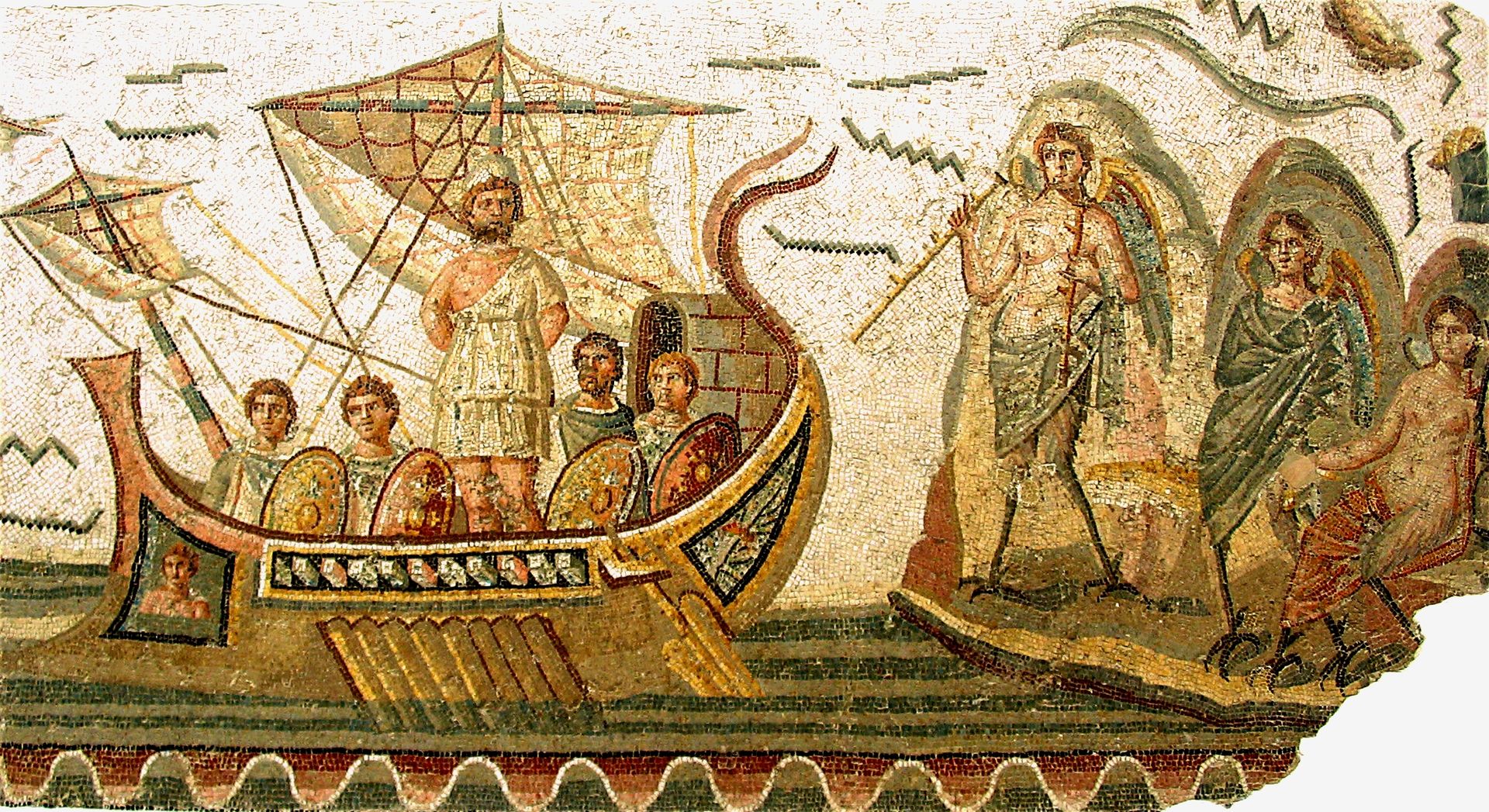
Now, I had not ever really given much thoughts to mermaids. Sea-nymphs and the like seem like obvious analogs in Greek myth occupying a positive angle—as in Thetis and the daughters of Nereus—or a negative one as in Skylla or the Sirens. And there are transformations like those of Ino the Cadmeid into Leukothea the ‘sea-nymph’ who rescues Odysseus in Odyssey 5. But there’s more! (thanks to Wikipedia and googling the truth about mermaids).

Picture Of The Goddess Atargatis As A Fish With Human Head On Ancient Greek Coin
Demetrios III Eukairos, Late 2nd, early 1st Century BCE (Derketo on back of coin)

Pliny, Nat. Hist. 5

“The following is about the interior lands. Hollow Syria contains Apamea which is divided from the tetrarchy of the Nosairis by the river Marsyas; Bambyx, which is also called Hierapolis and Mabog by the Syrians. This is where the fearsome goddess Atargatis, whom the Greeks call Dercetô, is worshipped.”

XIX. Nunc interiora dicantur. Coele habet Apameam Marsya amne divisam a Nazerinorum tetrarchia, Bambycen quae alio nomine Hierapolis vocatur, Syris vero Mabog—ibi prodigiosa Atargatis, Graecis autem Derceto dicta, colitur

Atagartis=Astarte

In the following example we find a typical motif of a figure turned into an animal because of an illicit love affair. The resulting blend imagined in this account is like the image on the coin above: fish-body with human head.

Diodorus Siculus, 2.82

“In Syria, there is a city called Askalôn and close to it is a large lake full of fish. Next to it, there is the precinct of the well-known goddess the Syrians call Dercetô. She has the head of a woman, but her body is completely fish for the following reasons. The most well-versed of the region tell the story that because Aphrodite was angry at this goddess, she filled her with love for a certain pretty youth among those sacrificing to her. After she had sex with the Syrian man, she gave birth to a daughter. Because she was ashamed for her actions, she killed the youth and exposed the child in a a deserted, rocky place. Beset by shame and grief, she threw herself into the lake and the shape of her body reformed into a fish. For this reason Syrians still abstain from the animal to this day and honor fish as gods.”

Κατὰ τὴν Συρίαν τοίνυν ἔστι πόλις Ἀσκάλων, καὶ ταύτης οὐκ ἄπωθεν λίμνη μεγάλη καὶ βαθεῖα πλήρης ἰχθύων. παρὰ δὲ ταύτην ὑπάρχει τέμενος θεᾶς ἐπιφανοῦς, ἣν ὀνομάζουσιν οἱ Σύροι Δερκετοῦν· αὕτη δὲ τὸ μὲν πρόσωπον ἔχει γυναικός, τὸ δ᾿ ἄλλο σῶμα πᾶν ἰχθύος διά τινας τοιαύτας αἰτίας. μυθολογοῦσιν οἱ λογιώτατοι τῶν ἐγχωρίων τὴν Ἀφροδίτην προσκόψασαν τῇ προειρημένῃ θεᾷ δεινὸν ἐμβαλεῖν ἔρωτα νεανίσκου τινὸς τῶν θυόντων οὐκ ἀειδοῦς· τὴν δὲ Δερκετοῦν μιγεῖσαν τῷ Σύρῳ γεννῆσαι μὲν θυγατέρα, καταισχυνθεῖσαν δ᾿ ἐπὶ τοῖς ἡμαρτημένοις τὸν μὲν νεανίσκον ἀφανίσαι, τὸ δὲ παιδίον εἴς τινας ἐρήμους καὶ πετρώδεις τόπους ἐκθεῖναι·ἑαυτὴν δὲ διὰ τὴν αἰσχύνην καὶ λύπην ῥίψασαν εἰς τὴν λίμνην μετασχηματισθῆναι τὸν τοῦ σώματος τύπον εἰς ἰχθῦν· διὸ καὶ τοὺς Σύρους μέχρι τοῦ νῦν ἀπέχεσθαι τούτου τοῦ ζῴου καὶ τιμᾶν τοὺς ἰχθῦς ὡς θεούς.

Sirens are more ornithogunaikes (bird-women) than ikhthuogunaikes (“fish-women”)

In other accounts we find an association with pigeons as well–perhaps a symbolic bleed from the association of women with birds (e.g. Sirens, Harpies etc.) and women with fish. The important thing for myth and genealogy is that this goddess becomes the mother of the famous Semiramis, a wife of King Nimrod and eventually ruler herself of Assyria). Here we get a description of mermaids closer to our own…

Lucian, On the Syrian Goddess 14

“There is an ancient story among them about the shrine of this sort. There are some who say that Semiramis the Babylonian, many of whose deeds are in Asia, built this temple but erected it for her mother, named Derketô rather than Hera. I saw an image of Derketô in Phoenicia, a wonderful sight. She is half woman—but as much of her as extends from thighs to the end of her feet was made up with a fish tail! But the statue at Hierapols is just a woman.

The explanations for this story are not really mysterious. For they believe that fish are sacred creatures—they don’t touch them—and they use the rest of the birds for food except they refrain from eating pigeons, which are also sacred. They think that Derketô and pigeons are holy for the following reasons. They think that Derketô takes the shape of a fish; and Semiramos turned into a pigeon. But I will accept that the temple in question belongs to Semiramos. I cannot believe that it is Derketô’s since even some of the Egyptians do not eat fish, and they don’t do it to please Derketô!”

     ῾Ο μὲν ὦν ἀρχαῖος αὐτοῖσι λόγος ἀμφὶ τοῦ ἱροῦ τοιόσδε ἐστίν. ἄλλοι δὲ Σεμίραμιν τὴν Βαβυλωνίην, τῆς δὴ πολλὰ ἔργα ἐν τῇ ᾿Ασίῃ ἐστίν, ταύτην καὶ τόδε τὸ ἕδος εἵσασθαι νομίζουσιν, οὐκ ῞Ηρῃ δὲ εἵσασθαι ἀλλὰ μητρὶ ἑωυτῆς, τῆς Δερκετὼ οὔνομα. Δερκετοῦς δὲ εἶδος ἐν Φοινίκῃ ἐθεησάμην, θέημα ξένον· ἡμισέη μὲν γυνή, τὸ δὲ ὁκόσον ἐκ μηρῶν ἐς ἄκρους πόδας ἰχθύος οὐρὴ ἀποτείνεται. ἡ δὲ ἐν τῇ ἱρῇ πόλει πᾶσα γυνή ἐστιν, πίστιες δὲ τοῦ λόγου αὐτοῖσιν οὐ κάρτα ἐμφανέες. ἰχθύας χρῆμα ἱρὸν νομίζουσιν καὶ οὔκοτε ἰχθύων ψαύουσι· καὶ ὄρνιθας  τοὺς μὲν ἄλλους σιτέονται, περιστερὴν δὲ μούνην οὐ σιτέονται, ἀλλὰ σφίσιν ἥδε ἱρή. τὰ δὲ γιγνόμενα δοκέει αὐτοῖς ποιέεσθαι Δερκετοῦς καὶ Σεμιράμιος εἵνεκα, τὸ μὲν ὅτι Δερκετὼ μορφὴν ἰχθύος ἔχει, τὸ δὲ ὅτι τὸ Σεμιράμιος τέλος ἐς περιστερὴν ἀπίκετο. ἀλλ’ ἐγὼ τὸν μὲν νηὸν ὅτι Σεμιράμιος ἔργον ἐστὶν τάχα κου δέξομαι· Δερκετοῦς δὲ τὸ ἱρὸν ἔμμεναι οὐδαμὰ πείθομαι, ἐπεὶ καὶ παρ’ Αἰγυπτίων ἐνίοισιν ἰχθύας οὐ σιτέονται, καὶ τάδε οὐ Δερκετοῖ χαρίζονται.

I can connect this to Homer too!

“Around the waters of the Kaustrios on the Asian plain…”

᾿Ασίω ἐν λειμῶνι Καϋστρίου ἀμφὶ ῥέεθρα , Il. 2.461

Schol. A  ad Il. 2.461d

“Kaüstros was the son of Penthesileia, the Amazon, who married Derketô and had Semiramis from her. Among the Syrians, Derketô is called Atargatis.”

(Porph. ?) Κάϋστρος υἱὸς Πενθεσιλείας τῆς ᾿Αμαζόνος, ὃς ἐν ᾿Ασκάλωνι ἔγημεν τὴν Δερκετὼ καὶ ἐξ αὐτῆς ἔσχεν τὴν Σεμίραμιν. | ἡ δὲ Δερκετὼ παρὰ Σύροις καλεῖται ᾿Αταργατῖς. A


Some addenda from our friends on Twitter:

Housman’s Contempt for Jowett

A.E. Housman is famous for three things: his scholarship, his poetry, and his scorn. He directed his venomous criticism at countless people over the years, but one of the early targets of his youth was Benjamin Jowett:

“The Regius Professor of Greek throughout Housman’s time was Jowett, and from the single lecture of Jowett’s which he attended, Housman came away disgusted by the Professor’s disregard for the niceties of scholarship.” [A.S.F. Gow, A.E. Housman: A Sketch (Cambridge : Cambridge University Press) p.5]

In his review of Gow’s book, G.L. Hendrickson circulates a rather embarrassing story about Jowett:

“The story is current in Oxford, I am told, that the particular offense of the Regius Professor was a false quantity, that cardinal crime of English tradition, the pronunciation of ἀκριβῶς, which from the English habit of applying Latin rules to Greek pronunciation yielded a monstrosity…” [G. L. Hendrickson, The American Journal of Philology, Vol. 58, No. 4 (1937), pp. 463]

This is not the only instance of Housman’s contempt for Jowett, who produced translations of Plato’s works, as well as a large commentary on The Republic. Housman noted of Jowett’s Platonic endeavours:

“Jowett’s Plato: the best translation of a Greek philosopher which has ever been executed by a person who understood neither philosophy nor Greek.” [C.O. Brink, English Classical Scholarship (Cambridge: James Clarke, 1986), p. 130]

In a more poetical vein, the following rhyme was popularly circulated when Jowett was Master of Balliol College:

“Here come I, my name is Jowett.
All there is to know I know it.
I am Master of this College,
What I don’t know isn’t knowledge!”

Benjamin Jowett by Sir Leslie Ward

Philosophical Benefits and Warnings

Seneca, Moral Epistle 5.4

“The first thing philosophy promises is a shared communion, humanity and friendship with others. Our differences from others will keep us from this promise. We must examine that those very values through which we hope to create admiration do not become laughable and hateful”

Hoc primum philosophia promittit, sensum communem,humanitatem et congregationem. A qua professione dissimilitudo nos separabit. Videamus, ne ista, per quae admirationem parare volumus, ridicula et odiosa sint.

Orphica fr. 334

“I will sing to those who understand: blockheads, close your doors.”
ἀείσω ξυνετοῖσι, θύρας δ᾿ ἐπίθεσθε βεβήλοι

Epicurus’ Maxims

“Nature’s wealth is the finest and easiest to obtain. But the ‘wealth’ of empty beliefs trails endlessly away.”

XV. ῾Ο τῆς φύσεως πλοῦτος καὶ ὥρισται καὶ εὐπόριστός ἐστιν· ὁ δὲ τῶν κενῶν δοξῶν εἰς ἄπειρον ἐκπίπτει.

On Melissos, Diogenes Laertius, 9.24

“It seemed to him that all of creation was boundless, unchangeable, unmoveable, and a single thing, uniform and multiple. That there was no actual movement, only the appearance of motion. He also thought we should not talk about the gods since we have no knowledge about them.”

Ἐδόκει δ᾽ αὐτῷ τὸ πᾶν ἄπειρον εἶναι καὶ ἀναλλοίωτον καὶ ἀκίνητον καὶ ἓν ὅμοιον ἑαυτῷ καὶ πλῆρες: κίνησίν τε μὴ εἶναι, δοκεῖν δ᾽ εἶναι. ἀλλὰ καὶ περὶ θεῶν ἔλεγε μὴ δεῖν ἀποφαίνεσθαι: μὴ γὰρ εἶναι γνῶσιν αὐτῶν.

Diogenes of Apollonia (D. L. 9.57)

“Diogenes believed these things: that the first principle is air, there are endless universes and empty space.

     ᾿Εδόκει δὲ αὐτῷ τάδε· στοιχεῖον εἶναι τὸν ἀέρα, κόσμους ἀπείρους καὶ κενὸν ἄπειρον·

Image result for Ancient Philosophy medieval manuscript